AI in Architecture: Inside the Final Architect Collective of 2025

The final Architect Collective of 2025 felt like the right conversation at the right time.
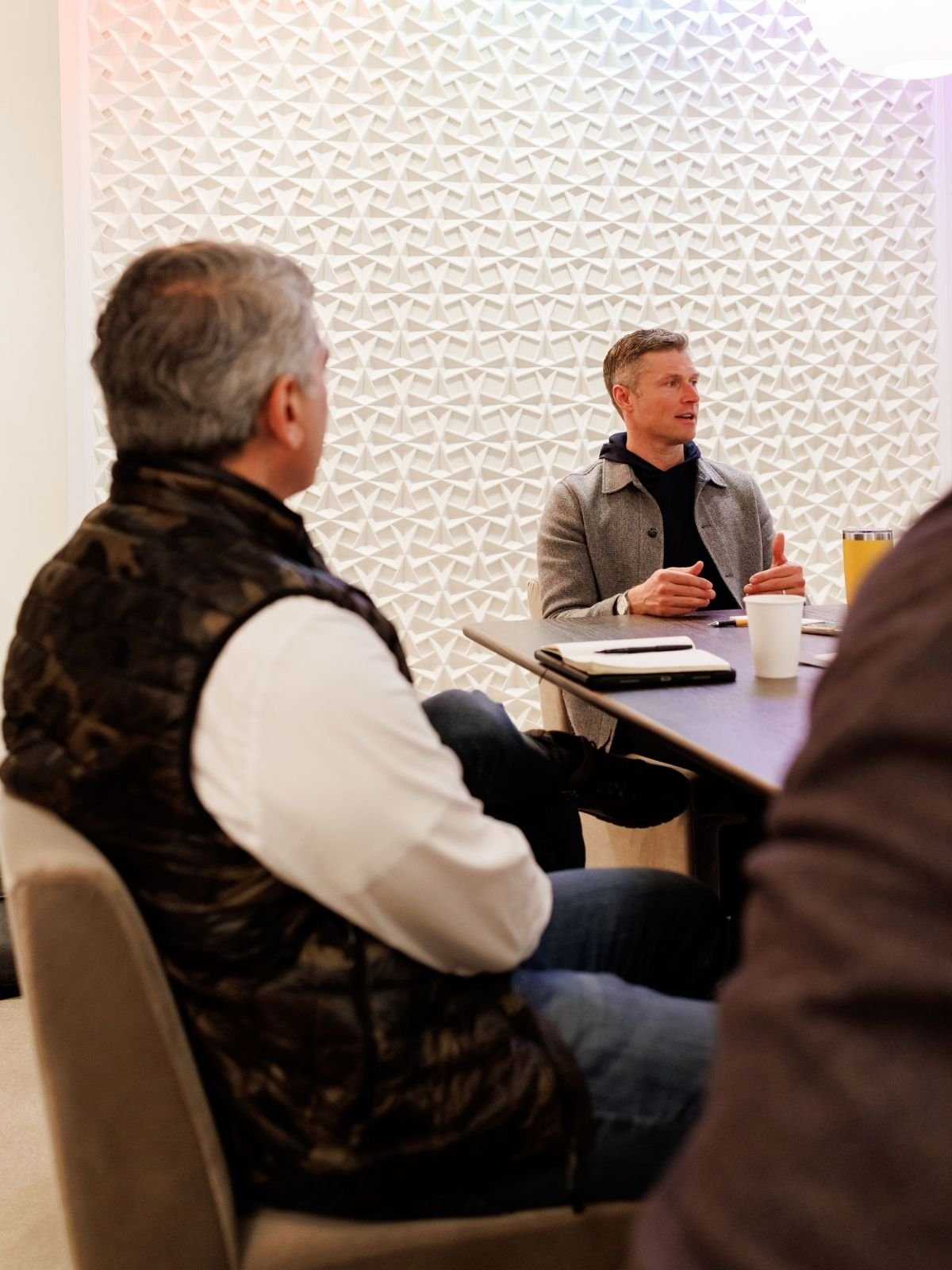
We gathered at Admit One in Minneapolis for our fourth Architect Collective of the year to talk about something that’s already reshaping how many of us work, whether we’re fully ready to admit it or not: artificial intelligence.
This was a room full of smart architects and designers sharing real experiences: what’s working, what feels uncomfortable, and what still feels unknown. And it might have been our most technical and wide-ranging discussion yet.
Before the event, we kicked things off the right way with a sponsor dinner hosted by Adaptive at Hand Cut Chophouse. Good food, great conversations, and the kind of relaxed setting that sets the tone for deeper dialogue the next day.
AI is Here
AI is no longer theoretical. It’s already showing up in workflows, proposals, renderings, and inboxes. That reality brought a mix of excitement, skepticism, curiosity, and healthy concern into the room.
No one was pretending to have it fully figured out. And that honesty made the conversation better.



How Architects Are Actually Using AI Right Now

One of the most valuable parts of the night was hearing specific, practical use cases.
Rendering and spec writing came up again and again. Several architects shared how they’re using tools like ChatGPT and image generators to:
Update outdated spec books
Automate repetitive Excel reports
Reformat lighting edits across entire drawing sets
Add seasonal landscaping or environmental context to renderings for client presentations
One architect talked about using AI tools to quickly generate multiple visual options early in the design process, making those early conversations more nimble and visually compelling without replacing human judgment.
AI adoption isn’t replacing the architect; it's speeding up the parts that slow momentum.
Check out another collective event here!
AI as a Business Tool
One of the biggest lightbulb moments of the evening had nothing to do with design at all.
Several people shared how their architecture firms are using AI to improve business systems and internal operations. These are things we all know matter, but don’t always want to spend time on.
We talked about using AI to draft standard operating procedures, summarize meetings and project updates, filter and respond to client emails, and write proposals or scope summaries.
I shared how I’ve been using Fyxer AI to sort my inbox and auto-draft replies. Time is our most valuable currency. And if AI can give some of that back, that’s worth paying attention to.
Concerns Around AI in Architecture
Of course, not everything felt rosy.
There was real concern in the room about commoditization: the fear that as AI gets better, clients may start to undervalue the architectural process or expect polished visuals instantly, and for free.
We talked openly about the pressure to keep up with technology while still defending the artistry, intuition, and nuance that make architecture what it is.
The consensus? In a sea of sameness, human creativity becomes more valuable, not less. Style, taste, judgment, and experience aren’t things AI can replicate. They’re the differentiators.

An Unforgettable Moment

One comment from the group really stuck with me. An architect shared that they’ve been using AI generative tools to make renderings less realistic. At first, that sounds backwards. But the reasoning was brilliant.
They wanted to bring presentations closer to a “clay model” feel so clients wouldn’t emotionally lock into a hyper-realistic image before the design was actually finalized.
That was a good reminder: AI architecture isn’t about speed. It’s a design tool if you use it intentionally.
Can AI Actually Build Trust With Clients?
Surprisingly, yes.
A few people shared stories where clients questioned cost estimation or timelines until AI programs provided third-party validation. Whether it was cost ranges, scheduling logic, or comparative data, AI sometimes acted as a neutral reference point.
Used transparently, it helped clients feel informed rather than sold to. That felt like an important shift. AI doesn’t have to erode trust. It can actually reinforce it, depending on how it’s used.
My Approach to AI
Right now, I’m using AI most heavily for organization and communication.
Things like Buildertrend updates, meeting recaps, proposal writing, and formatting long emails.
I’m not interested in AI replacing the creative parts of my work. I want it to handle the repetitive, energy-draining tasks so I can show up more present, more relational, and more focused where it actually matters.
That’s the sweet spot for me.
Closing Out the 2025 Architect Collectives
As we wrapped up the final Architect Collective of the year, the feeling in the room was energized but grounded.
Most of us are figuring this out in real time. And it’s rare to have a space where you can say, “Here’s what I’m struggling with,” or “Have you tried this tool?” without judgment.
That’s the entire point of the Collective. I’m incredibly proud of the community that’s formed through these Architect Collectives in 2025 and excited to see how these conversations continue to evolve as AI in architecture becomes less of a question mark and more of a tool we learn to use well.
More to come in 2026.
Thank you to our Sponsors: Pella, Aurora One, Admit One, Greenway, Walk Your Plans MN, Harnish