Episode 104 - Losers are Winners: Gabe Norcross on the Deposit Strategy That Changed Everything
Episode #104 | Losers are Winners | The Deposit Strategy That Changed Everything
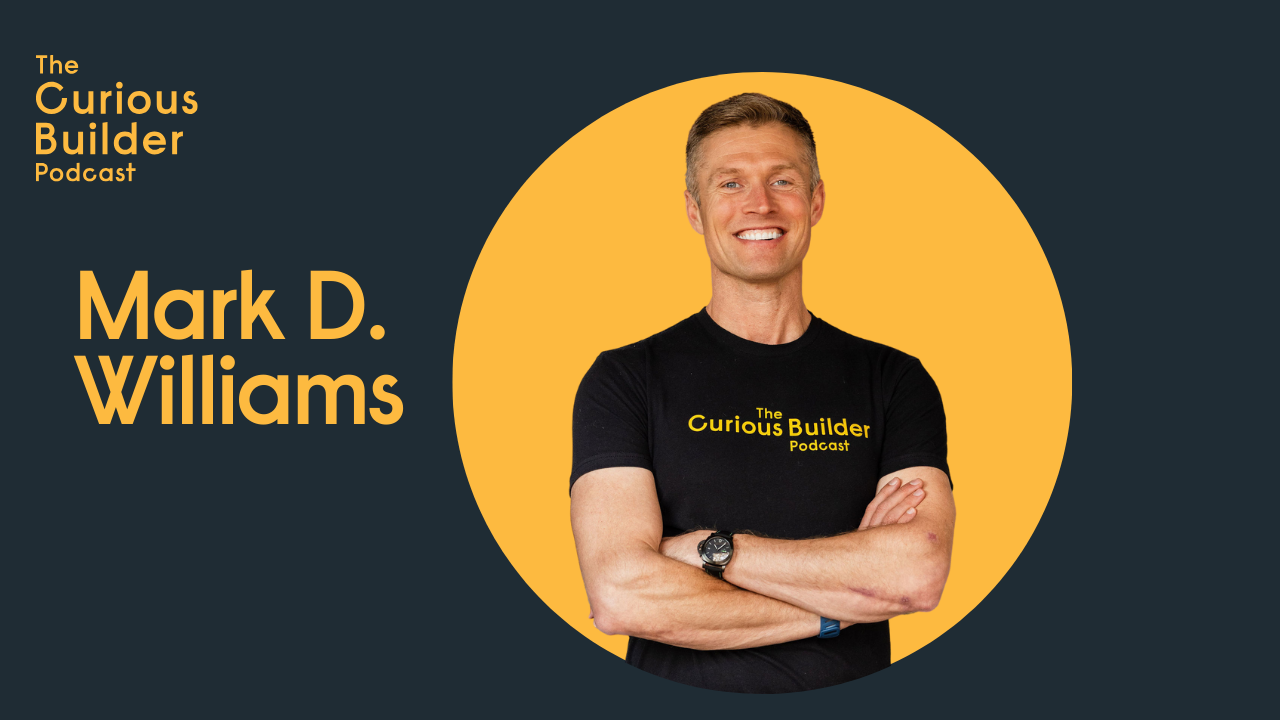
Gabe Norcross came back from Contractor Coalition, fired a bad client, set up an investment account, and hired a bookkeeper, all before the next coalition. He and Mark talk through the quiet financial discipline that finally started working, why most builders become the bank for their own clients without realizing it, and what it actually feels like to turn a profit and not feel guilty about it. Short, practical, and genuinely useful.


About The Curious Builder

The host of the Curious Builder Posdast is Mark D. Williams, the founder of Mark D. Williams Custom Homes Inc. They are an award-winning Twin Cities-based home builder, creating quality custom homes and remodels — one-of-a-kind dream homes of all styles and scopes. Whether you’re looking to reimagine your current space or start fresh with a new construction, we build homes that reflect how you live your everyday life.
Support the Show:
-
Gabe Norcross 00:05
Taking care of your clients if they don't have the resources to pay for their own project, you're not taking care of them, and you're not taking care of yourself.
Mark D. Williams 00:12
Name me another industry where this happens. Are you gonna go to a BM dealership and be like, "Can I just borrow this for a while? And I'll-it's like the scene from Dumb and Dumber, the IOU, like the Lamborghini. You might want to hold on to this one. Like, no, that's crazy. Today on the Curious Builder podcast, we had an extended losers or winners with Gabe Norcross, and the conversation was so good that I could not stop at 20 minutes. So this is going to be a two-part series. Obviously, you'll hear the first part today, and then next week we'll continue for part two. Gabe had a one-hour episode that was just absolutely riveting, full of emotion and deep story. This is a lighter but really deep and powerful episode as well with Gabe Norcross, and so without further ado, let's talk to Gabe about losers or winners. Welcome to the Curious Builder Podcast. I'm Mark Winchell, host. Today we are back at Misahu with Gabe Norcross, the one and only from Louisville, Kentucky, and we are doing losers or winners. You likely at this point have already heard Gabe's amazing episode, which aired on Monday. Gabe, 20 minute losers or winners. What we've already that last episode was a doozy.
Gabe Norcross 01:29
Yeah.
Mark D. Williams 01:30
What? Let's go with more. I mean, it can be anything. Business. You forgot your tools. You walked on a deck and fell over. What have you got for you know kind of a good story of like just things you've learned. I mean, even through the contractor coalition, what are some things that you've learned that before you're like, "Oh man, that was so stupid. And looking back now, you're like, "I learned so much. You know, we already talked in the last episode about working for a friend and not getting a contract. I mean, that one is an hour loses our winners, but maybe you've got something different. Yeah, your whole life,
Gabe Norcross 02:02
yeah. I can, I can touch on the biggest takeaway from the first coalition summit, and the it was it was learning to take deposits up front and not have them go against a particular line item, and I implemented that. I've always taken big deposits for projects, but instantly start purchasing materials or paying for labor right off the bat, and so that money goes away really quick. And so then I end up becoming the bank, you know, waiting for the next draw, waiting for the next draw, and so as soon as I got back from Chicago in November, I had two projects starting. I took two 10% deposits, and I put them in an account that I did not, I do not look at, so I pretend they're not there, and I've been able to protect both of those deposits. Never had to pull them back out, so that is my profit. So I guaranteed I would make 10% profit on that job, margin, not markup, and that money is still there. So while I feel I feel the ups and downs of my business waiting for cash flow, like I know that I'm still flush over here. I still have cash to work with if needed, but I've also now invested that money, and that money is making me money, and that was something I never did. I never thought that I could take that money and set it somewhere and have it work for me while I'm waiting to bill it back to the job. And so we bill it back. The last, depending on the size of the job, last three or four invoices will split it up evenly.
Mark D. Williams 03:38
Are you having someone on the inside, helping you with the financial side, like adaptive or builder trend. I use
Gabe Norcross 03:45
adaptive and builder trend and QuickBooks, and I hired a bookkeeper after I got back from Chicago. So they still need me to give them a lot of information, access to everything. That's something that we're still fine tuning. But 90% of that work has been done. I like I offloaded 90% of that work to them already, and we just have to streamline a few things. But it's like going home at night and having to think of all those things before you go to bed. You you never stop thinking about it, and and to know like, hey, the amount of money that I have been able to save since Chicago has paid for the the last two coalitions and the next two coalitions isn't that amazing, and that and so I guess there's a hesitation of like, man, it's expensive investment to go to to go to these events. 100% it will pay for itself.
Mark D. Williams 04:34
How much? What is the opportunity cost of not going? I mean, think about. I
Gabe Norcross 04:38
can lose $10,000 tomorrow really easily in this business. If I want to, I make one decision or I don't make a decision. It's easy to lose money, but to invest in yourself to get in this room with all of these other builders who are going through the exact same thing, like I would pay $50,000 to be in that room.
Mark D. Williams 04:57
You know, in the episode, it's just because I think it's such a visual. Memory, you know, and people-if you haven't listened to it, go back to the Monday episode with Gabe. But you know, you wrote in the sand, "I love you, Gabe, which we talked very deeply and emotionally about self-love. But it's a little bit like if you won't love yourself, it's hard, and we need to train ourselves to love ourselves. Sometimes some people have a harder time loving themselves than others, and sometimes we need our spouse or our kids. Like that's what's beautiful about children, right? Is that they love you just so purely. That's what is just so special about children. Where I'm going with this is, if you don't believe in yourself financially, if you don't believe in yourself as a company, why would your client? And so I think what you're talking about is, you know, those that would be sitting on a fence to invest in themselves. And it, I mean, obviously, I'm biased here. It's the Contractor Coalition. I'm a part of it, and but I believe in it so passionately. I'll never stop talking about it. But take that away from it. Just invest in yourself, and period. And there's a lot of things that are free. Reading a book is free. You can go to the library and get a book for free. I have learned so much in the podcast. I mean, if you're listening to this podcast right now, you know we do it for free. We thankfully for the generosity of our sponsors, Pella being our you know three and a half year sponsors. We've had a number of other sponsors, but right now they're our main sponsor and have been consistently from the beginning. We're able to produce this content so that the audience can improve their businesses, and that could not be possible without the power of sponsorship. That what they enable other people to do is no different than a library. Now, as if you look at your taxes, obviously pay for a library. But I mean, there are free resources in your communities wherever you live. Not, I mean, while we're saying like every investment you put in yourself, but I think the biggest investment is time, and if you do the work, and I think the biggest thing that I learned out of Contractor Coalition, having gone now four and a half, five years ago, was, you know, it's funny because they always say don't do. Everyone's wired the same, and everyone thinks they're special. I thought I was special, and I am. Thanks, mom. But the point being is that we think every oh that only do one thing. That's always the advice everyone gives you, and every single person in that room, did you do one thing?
Gabe Norcross 07:04
Yeah.
Mark D. Williams 07:05
No, you didn't. You did 20 things. You liar. The point is, is you we're we're told to keep it simple, but we have the hardest time keeping it simple because we try to do all of it at once. I,
Gabe Norcross 07:13
I mean, it was the the first thing I implemented was the deposit, and then I fired a client that I knew was going to be a bad client as soon as I got home, and I needed to go to Coalition to get the advice. And like I make decisions, and there's nobody behind me to support me. My systems and processes are my support network, and I didn't feel supported with what I had going into Chicago. And so, like I'm like I need to talk to Allie from Integro. I need to talk to now you guys. Now that I know you, like I just needed, I needed reassurance that this was the right thing to do, and it was a it was a seven $800,000 project. It would have been the biggest project to date in Louisville. I went home and I fired her, sent her pre construction check back because I want nothing to do with this, and I woke up feeling so good, and then I started taking deposits, set up a investment account with my investment broker, and like those are the two things that I took away. Now I've implemented implemented a bunch of other items since then, but when I went back to Denver, I also stood in the back of the room, not purposely not listening to everything you guys were saying again because I'm like I can't put too much in my brain. I just want to listen to the things that I know that I need to work on this next six months. This next six months.
Mark D. Williams 08:24
It's funny you say that because it's sometimes hard to know where to start. And there's kind of like just do the next thing and do the next thing. And I think the biggest I was talking to someone yesterday, actually after I left you, we were talking about ADHD. And I'm not as smart as this guy. He's a doctor, but he was talking about like there's actually gaps in the brain. Like Adderall has been a drug that's been around for a while, and I've always kind of remarked, like, why does speed? You think speeding up a speeding engine would be a bad idea, but it actually regulates it, and it somehow equals it out. And he had just talked about how you know it's the dopamine where ADHD is trained for dopamine hits, and so we keep on going to the next hit, the next hit. So it's hard to stay on a single topic, but we all have things that we don't like to do. You know, for me, I don't like doing estimates. I don't like doing contracts. Those are probably my two, and so I delay it, delay it, delay. I have lost business because I. So we had a big contract. In retrospect, I want to say at the time this was seven, eight years ago. So it was maybe a million and a half dollar new build. I was and this guy was in commercial real estate, which is sometimes people say is a red flag because they know too much but not enough kind of thing. But anyway, it was on a Monday, as I recall, and I never get sick. I got really sick, and so for like I had like chills and sweats, and for like 48 hours, which for me is like I just never get sick. It's just not. So I was like, the dog ate your homework, and so I texted the guy like on a Wednesday or Thursday. I said, "I'm really sorry, I've been super sick. It sounds like a super lame excuse. And Friday he fired us. He said I went with another builder because you couldn't even get me a contract. Now I had legitimate reasons, which I was sick, but the truth of the matter was, if I look in the mirror, I in hindsight's 2020. Yeah, I could. Have gotten him a contract the Friday before, or I could have had someone on my team, and so now what I do, I it's still I don't like doing it. So now what I typically I'm really good at talking and delegating. So what I'll what I'll do is I'll just get on the phone, and Joel, my controller, I'll just say, can I just can I can you just pull it up? It's simple. Here's the thing, the thing that I don't like to do, I can do in about five minutes. I just, it. I just can't. It just. It's hard. I don't know why. I. I can't. I could not explain to you why I don't like doing it. When it comes to quality, craftsmanship, and performance, Pella sets the standard. Whether you're building custom homes or designing a timeless space, Pella offers innovative window and door solutions that blend beauty and efficiency. With showrooms and experts around the country, Pella makes it easy to find the perfect fit for your next project and their team to support it. Build with confidence. Build with Pella. Visit Pella.com to explore products and connect with your local rep today. For more information, you can listen to episode one or listen to episode 109, where we bring on Pella owners and founders at Pella Northland, as well as their innovative team behind the SteadyStat innovation.
Gabe Norcross 11:14
I'm the same exact way. Same thing too. Same thing. Like I, I want to just, I just want to start working because I love the work. I don't want to sit at a computer and estimate, and it's that's what's bit me so many times. I'm like, oh, I missed this massive item, missed this big number, and so I've lost work over not getting numbers over fast enough or not responding, and and I'm terrible at delegating because I like I it's my way of keeping myself safe is to hold on to like, hey, if if I'm gonna ask you to do it, I need to be able to to be a leader. It's like if I'm not if I'm gonna ask you to do something, I also need to be able to do it. Like I want to show by example, I'm terrible about. I need you to go do this and then leave and or just disappear and go to do something else. Like no, I need to stay here and make sure or support you. And so I'm like, well, I'll just do it myself, and that's trapped me in this thing. But also, I do take ADHD medication, and it has been a life changer on how I can get my brain to calm down. And when I first started taking medication, I sat down and wrote, I don't know, 10 hard emails that I had been pushing on for like weeks in like 20 minutes. That email, I will work an hour to write four sentences, and I'll get up and leave for the day because that's how hard it is. And then the rest of my day is shot. That's how much energy it would take to do something that hard.
Mark D. Williams 12:35
The problem with that is because I've actually never been medicated. I've actually never been diagnosed, but just hearing you talk, I'm like, I for sure have it. And so, but I think we all find different coping mechanisms. My coping mechanism is exercise. I mean, one of the reasons why I exercise so much is it probably regulates me. I would imagine, but then also, you know, having multiple businesses and energy. The problem is you sort of like that we get addicted to the the dopamine hit, and so that becomes I think just being honest with yourself. I the one thing I don't have that you do is like I do not have an issue delegating. I'm happy to. That was something, but I also had that modeled. My dad was an amazing delegator. The funny part is my dad's been retired for 25 years. He had a heart attack when he was 52, and a couple years later he said I might die. You know who knows I'm gonna. And he's somehow been able to make it work for 25 years, which is actually really remarkable that he's been able to live without having a job for 25 years.
Gabe Norcross 13:30
It was so awesome. Like it brings a tear to my eye because when we met in Chicago, and we found out that we we have this longer connection that we didn't really know that we had until we started talking, but when your flight was delayed, your dad's like, "I'm just gonna drive down and pick you up, and I'm like, "That is like that, like it just hits. And I did not have that father. Yeah, the struggles that I've had personally in running my business and and my relationship with money is because the opposite was modeled to me. Money has always felt scarce. I've always felt like I don't deserve it, and so like if I make too much, I feel guilty. Like did I do something wrong because I actually turned a high profit on this project? Like I'm taking from somebody, and that's a breakdown. That's something I really have to like continue to to to work at to break that that thought process because I can only continue to do good if I can continue to make money and pay myself and and live and provide
Mark D. Williams 14:30
and I 100% agree with you, Gabe. I mean, you when people sometimes your clients because we do cost plus and they'll look at your margin and they'll say it honestly the here's what's weird, you know how they say at the bottom there's competition, at the top there's collaboration, which is what we're doing here and why we have the podcast and all these relationships. People sometimes people don't get it, but that's the true secret. But when you have good clients, they look at it. I would say the last several years I've had almost zero pushback on what we charge. Earlier on in my career, the early years and the middle years, and maybe it was the wrong clientele. Maybe I just wasn't. Maybe it was me. Maybe I wasn't confident enough in my own numbers. But I remember each time that I raised my rates, I thought, "Man, this is crazy. But each time I did, there was more confidence, and more clients said, "Yes, it sounds crazy. And I would say, if you haven't raised your rates in a couple years, if you're listening this episode, raise them by one or 2% But you need to believe you're worth it, because if you don't, the client certainly won't. But I think that the message that we have to tell the client and tell ourselves, and it's a true statement, is that we need to make more money because we do nobody any good if we're out of business in a couple years, and if someone wants to drive you out of business, they aren't worth your time, and they they don't appreciate what you're doing anyway. Get a better brand of client, and I'm sure there's people listening that may say, "Well, that's easy for you and and Gabe to say. You know, even further on your career, at no point in your career is that client someone you should work for, in my opinion, because all you're doing is reinforcing bad behavior in them and in yourself,
Gabe Norcross 16:04
and learning expensive lessons that you most likely will pay out of pocket for. If anything, I have a PhD, maybe a double PhD from from Harvard in what not to do. So, if you need any more advice on that, reach out. Yeah, reach out. Yeah, it's taking care of your clients if they don't have if they don't have the resources to pay for their own project is not you're not taking care of them and you're not taking care of yourself.
Mark D. Williams 16:35
I mean that's like here's what's crazy. Name me another industry where this happens. You gonna go? Are you gonna go to a BM dealership and be like, I really want this. I don't even know cars, 5m series, whatever. I don't know what it is. I know nothing about cars. And anyway, the point being is like, can I just borrow this for a while? And I'll. It's like the scene from Dumb and Dumber, the IOU, like the Lamborghini. You might want to hold on to this one. Like, no, that's crazy. And yet we're so happy to do it. And our industry, it is one of the the major faults that we have. Is I do think our humanity and good efforts and will, even if they're misguided, even if they're delusional a bit on our own side, because it's up to us to also hold the line too. Is that people just want to work hard? They just want to do good work. Most people don't get into construction, or it's a beautiful business that we're in. But you get into it because you like it. You're attracted. You know the normal path, of course, is you know you do the work, you fall in love with being outside,
Gabe Norcross 17:38
creating with your hands, and you get to see
Mark D. Williams 17:40
it. I mean, the biggest thing when I talk to the people, you know, you and I did a job site walk yesterday, and if you ask those guys why they like what they do, especially framers, they're like, I can come back at the end of the week and I literally built a house. Like, there's a second story. It's so visual in a world where you know you look at Instagram or you look at AI models or you look at spreadsheets and like you do that for 1520 years, you kind of there's a reason why corporate America they talk about taking your soul. You're just an absolute meat grinder. I the trades and building and creating is so powerful, but that but then we need to make more money doing it. We do it for free because we think that's there's not another way. You can do
Gabe Norcross 18:20
both. The yes, there is nothing. There is no better feeling in this trades. I've been doing this for 28 years now. That's crazy because I don't feel like I'm. I do feel like I'm old, older than that. But then I also don't. 28 years, and there's nothing better than having the lumber delivery dropped off in the front, and two weeks later, you have a structure that is, it's adult Legos, like it's real life, and there is nothing better than that feeling of like I built that, and my kids hate it because I, in California, I would get off the freeway. I'm like, I built that house, I did that, and they're like, just can we just keep going to where our destination is? And we're
Mark D. Williams 18:56
hungry. We want to go to Five Yeah, or In and Mount Burger.
Gabe Norcross 18:58
But
Mark D. Williams 19:00
yeah, it's it it is. There are so many moving parts to this business. Like, yeah, a car. Okay, it has a finite amount of parts. A house has a million parts. If you're on a project for two years, oh, did you forget that box of finish head screws? That's 35 bucks. Now times that by 100,000 other little $35 items that are throughout your house that you forget to charge somebody for, and now you've done that job for free. Yeah, I mean you call it spillage, leakage. I mean there's a number of different terms for it, and you can do it financially. I mean you mentioned early on in the episode, which I want to close the loop on now, is setting the deposit aside. I've talked to this. These aren't my numbers, but the if I have had a few financial CPAs and construction accounting companies on over the last three and a half years, and I think Chris Anderson, a very brilliant mind early on in my podcasting, and he had said he's interviewed, he's worked with builders, commercial construction, custom, all over. Remodelers all across the country, and he said that 2010-10 is a healthy business. You know, within a couple percent, you make the call on that. But essentially, it's 20% margin, 10% overhead, 10% profit. At the end of the year, you'll be in business 10 years from now if you at least line up to that. And most people, I would imagine, would hear those numbers and say, "I can't charge that, and I'm telling you, "Yes, you can. And every person that I've talked to thinks, "Well, that will work in your market and not in my market. And I can tell you again, I've had the same experience, the same thoughts, and yes, it can. And there are some markets that are drastically higher. I know a builder that came to Contractor Coalition; they're at 40% margin. They're remodelers, and they have a lot of it in house. And they fixed. And he's a phenomenal business owner. They have 4050, employees. They self perform almost anything. He's just a rock star. And then there are certain places. I mean, you go out to like California, like Newport or San Diego, and the the working population of where they work can't work where they live, and so they're driving a couple hours each way, which is insanity to me. I couldn't do it personally, but the margins have to reflect that. And because the the wage of living is so high, they can people can afford it. And so someone had mentioned that 20% margin in Minnesota or 20% margin in Louisville. One of the reasons why you went to Louisville is the cost of living was so low, so you know a million dollar house. I don't know. You told me if I'm wrong. If this is 6 million here, what would it be in Louisville? 542,
Gabe Norcross 21:30
and a half, three.
Mark D. Williams 21:31
No, really.
Gabe Norcross 21:34
Yeah, I'll show you. I'll show you the plans of this two and a half, $3 million building.
Mark D. Williams 21:38
That much less.
Gabe Norcross 21:39
Yeah,
Mark D. Williams 21:40
but the materials would be the same, so that's just labors. I mean, your your your wolf sub zero, your fish or pickle, or the all those things would be the same cost.
Gabe Norcross 21:47
I don't know if it's this. You might be able to get four and a half five for this. No, no, no, no, not what not
Mark D. Williams 21:54
what you can get. What it what it costs. What
Gabe Norcross 21:56
it costs. Oh, yeah, you might probably four. The materials are going to be saved. Labor is going to be less. They're going to beat you up on labor. All right,
Mark D. Williams 22:04
we know that this episode is going to keep going pretty long, so we're going to cut this into two. If you stayed with us this long and you want to hear the end of the story, tune in next week. We're going to break this episode into two, and we'll see you next week. Thanks for tuning in to Curious Builder Podcast. If you like this episode, do us a favor: share it with three other business owners. The best way that we can spread what we're doing is by word of mouth, and with your help, we can continue to help other curious builders expand their business. Please share it with your friends, like and review online, and thanks again for tuning in.
This episode is sponsored by: