Episode 110 - Losers are Winners: Mark on Big Goals & the Post-Mountain Blues
Episode #110 | Losers are Winners | Big Goals & the Post-Mountain Blues
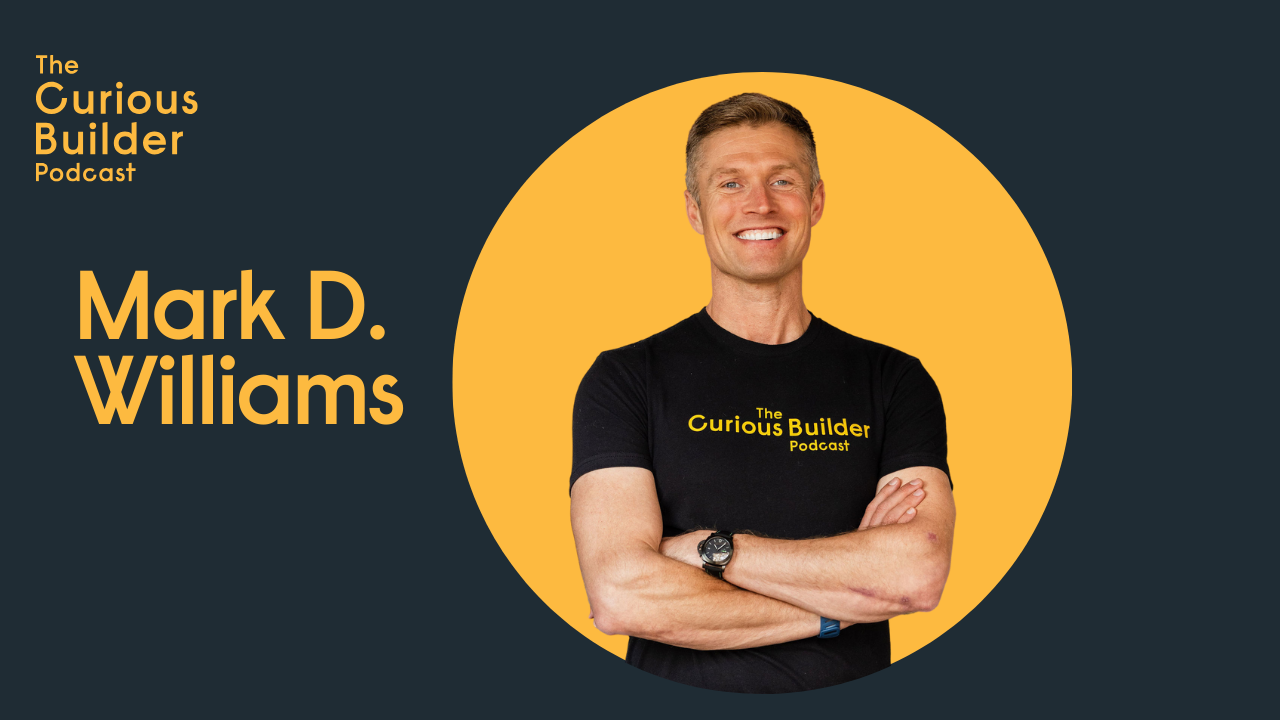
Big goals are great until you actually accomplish them. In this solo Losers are Winners episode, Mark talks about the strange emotional hangover that can follow a massive project, a 50-mile race, or any other mountain you've spent months climbing, and what he's learning about finding purpose on the other side. Expect some honesty, some philosophy, and at least one questionable analogy involving hay, caves, and being a shark who can't sit still.


About The Curious Builder

The host of the Curious Builder Posdast is Mark D. Williams, the founder of Mark D. Williams Custom Homes Inc. They are an award-winning Twin Cities-based home builder, creating quality custom homes and remodels — one-of-a-kind dream homes of all styles and scopes. Whether you’re looking to reimagine your current space or start fresh with a new construction, we build homes that reflect how you live your everyday life.
Support the Show:
-
Mark D. Williams 00:06
This episode is brought to you by Pella Windows and Doors. I've used Pella for 21 years as the exclusive window company on every one of my builds. When people ask me who I trust for Windows and Doors, it's Pella. Every time, their craftsmanship, their innovation, the top-tier service make them a no-brainer for any custom home builder or designer who demand the best. Whether you're designing something bold or building something with timeless elegance, Pella has you covered. They're also the only window company that has a lifetime warranty on all of their windows. I've gotten to know all their people at Pella Corporate as well as locally here at Pella Northland. I'm proud to call them our partners and our friends. Visit Pella.com to learn more and connect with your local reps today. Also, for more information, you can listen to episode one where I interview their founders, as well as episode 109, where we talk about the innovation at Pella. What do I want to leave with the person in the mirror? I want to be a positive person. I don't think it's delusionally optimistic, although sometimes I tend to go there. I think it's important to be realistic sometimes, but I just think I'd rather go through this life with more optimism and a more positive, upbeat attitude, and just just surround myself with Good people, welcome to the Curious Builder Podcast. I'm Mark Williams, your host. Today I am solo in studio. I have a few guests that could not make it, and we are up against our publishing deadline. So you just get me a little monolog of losers are winners. I was thinking about actually something I heard this weekend in church actually really resonated with me, and maybe I should preface this by I feel like lately the last couple weeks, maybe couple months, I'm a generally very happy person. I have a lot to be thankful for, and nothing has changed there. I think it's all about mindset, but for whatever reason, you know, I've I don't have a TV. Grew up without a TV, and I guess I shouldn't say that on Friday nights we do movie night with the kids. But I try to stay away from screens. And the reason I'm bringing this up is the news. I think the news is trash. You know, it's just a perpetual mud slinging fest, and I just don't have a time for it in my life. There's too many other things that I pursue and and do. I like to read books, spend time with my family, exercise, sleep, pretty much everything but that. And I've been getting the paper now for I don't know seven, eight years is how I read the news, and I like the news. I like reading it, but lately I just feel like it's been so negative, and it's really been wearing wearing me down. There's just nothing positive. It's you know AI is going to be the end of us. Terminator Two is coming. Skynet's going to take over, and that may or may not be true. I don't think that is true, but it's just constant, never ending negativity. And so I've kind of made a decision last week that I'm going to cancel the paper and just get it on the weekends. I still think it's important to know as a business owner and as a human and as a person on this planet that of like what's happening, be generally aware. But I think I'd be far better off with my time reading my Bible, spending time with the kids, sleeping an extra half hour. Honestly, anything versus that, I just find there's just not a lot of value in it, and it's really been affecting my mental space. And so these are some actions that I'm taking, but that's just kind of letting you know where I was and where I am today. And Sunday we heard this really nice just story, and it was that there the the sermon was basically the pastor was in a dark cave at a youth camp. They were cave exploring in Pennsylvania with a group of 30. They went spelunking with headlamps and ropes down through these cave systems and got a couple hours into their hike down underground. And the guide said, "You know, you're squeezing through rocks, and they get to this space.
Mark D. Williams 03:59
And he said, "As you come through, I want you to turn off your light. So they've got 30 people turn turning off their lights, and it's literally zero light, no ambient light, no stars, no glowworms, no phytoplankton, nothing. And it's the first, you know, for the first 1020, seconds. I mean, he said, "If you could put your hand in front of your eyes, you know, if you think you can see anything, it's just your brain trying to reason with absolute pitch dark, complete sensory deprivation. And after a while, not very long, 30 seconds, a couple minutes, you start realizing that you become very attuned to your breathing. You're like, if I had to get out, could I? Probably not. Like that is a lost feeling. And eventually, the tour guide leader turned on one light, and the entire room lit up. It was about a 200 foot by 300 foot cavern of stone, and you could generally see everywhere with that one little light. And the comment is both spiritual and natural. That one light took away all of that darkness, and it really hit me. Of just what do I want to leave with my kids? What do I want to leave with the person in the mirror? I want to be a positive person. I don't think it's delusionally optimistic, although sometimes I tend to go there. I think it's important to be realistic sometimes, but I just think I'd rather go through this life with more optimism and a more positive upbeat attitude, and just just surround myself with good people, and I certainly have. Last week was my 46th birthday, and my wife one of the best presents I've ever gotten in my life was she surprised me. My buddy Drew came over, my mom came over, my dad was out of town, and we don't often have people over at our house. My wife is very private, and that's just kind of her nature, and I just love having people over. So it was such a delightful surprise to have Drew, which I was so unexpected. That light in a cave, just having his joy there, and it just-it really just made me so thankful. I think when I come home and I see my kids, you know, with their enthusiasm to be near their dad, or I just find that reminding yourself of how much there is to be thankful in this world is such a great antidote to the darkness that exists. In fact, I would say that the darker it gets, the more optimism is needed to sort of fight that darkness. And it'll be interesting to see what the next, you know, six months lead to. I would, I kind of wish I had another person to talk to right now because I kind of like to get their sense of their point of view. Is it just me? Am I am I feeling the barometer of the people around me, or is it just am I in my own little dark cave right now in a season of life? And there's a lot of stress right now as well. You know, obviously, as any business owner that's listening to this, you know, it's stressful. I mean, sometimes we go through more stressful periods of time in our life where you know we're looking down the road at our business and the people that depend on us for their business. There's also a lot of optimism and a lot of hope. It's weird to be so enthusiastically optimistic about the future and what you're doing, but yet also in the present day, sort of be stressed in your day to day. It's kind of a weird dichotomy, and I don't think I'm alone in feeling that. Sometimes you feel great in the day, but if you look too far down the road, you're sort of, you know, like wait, that's a big hurdle coming up. And so I think I find it's better lately. There's that adage of you know, be where your feet are. That's what it is to be present. And someone mentioned to me the other day that like, do you spend a lot of time looking in the past, and I don't. I don't think I have great memory. I have great memories, and I have very specific memories. But I don't.
Mark D. Williams 07:29
I just don't spend a lot of time in the past, so I don't retain a lot of things. I'm very good, I think, at being in the moment and really looking forward. And I, I think that's why this gloomy cloud of looking down the road has been sort of negative for me. As I, I do think that better days are ahead, and when I think that, obviously, you're more positive. You're more. You're. There's so much to look forward to. But if you start thinking about things too far down the road, especially things that are out of your control, you know, wars and multiple wars and so much uncertainty, it really makes you kind of dig in on your foundation and just trust that foundation, whatever your foundation is, your faith, your family, the things you can control. And so I, I've just been thinking about the things that I can control, and I think that one of the biggest things is your attitude and your effort, and I've always been a big effort person. I've never been really the most talented person at really anything, but I'd like to think I give out a way above normal amount of effort, and I'm fine with that. I I think it's probably what draws me to towards endurance sports is suffering. My dad used to always have this line that you know the family trait was how did he say that? He said my super or his superpower was comfortable being uncomfortable, and it's kind of an interesting superpower if you think about it. Like basically, you're just good with pain tolerance, but it's so applicable in life. And so I guess the question I've been asking myself is, do you put on armor to protect yourself, but then you lose your sensitivity to things? I think sometimes I like to think I'm a fairly sensitive person, but there are other people around me that are way more feelers, you know, empaths, if you will. My wife being one of them. Some of my my middle son is very empathetic, but sometimes you just need to have a steady hand, and sometimes the sea is up, the sea is down, and just being steady at the helm. That was one of my actually. This last weekend we went up to visit my dad in Lake Superior about the boys and my buddy Nathan and his son. And I remembered a beautiful day, windy, and I just my dad has told me for 3040, years, you know, in business and in life, steady at the helm. Don't get too high. Don't get too low. Just be kind of constant, and so I think it's wise advice for entrepreneurs. Sometimes things are really rolling. Great, put some hay in the barn. You're going to need it someday. And some days you're like, man, I'm just trying to find hay for the day. Forget putting it in the barn, and that's okay too. There's seasons in life, and. I guess the the thing that always comes out of this, whenever I get reflective about just my mood or my not my mood really, but more my thinking, like where are my thoughts going? It's really if you start focusing on the things that you're thankful for, man, the sun gets comes out pretty quick. We do have a lot to be thankful for, and I my mom has this great quote that she said ever since I was a little kid. She still says it, and she just said, "Kindness is never out of style. And I think of that as as obviously thoughtfulness. The book that we're about to listen to on the podcast here for fourth quarter, for part of the Smile Tour, is Unreasonable Hospitality, and it was my favorite book in 2025. And what I got out of that book, and we'll talk more about it when I interview people here over the next several months. And if you haven't read it, I'm telling you, it's a must-read. It is. I gave it to my whole team. We're reading it as a team right now, just to I think inspire them. I think I think our industry construction is in need of a huge wake-up call around hospitality, and some of us do it really well. I mean, my team, Angie in particular, does a phenomenal job with our clients.
Mark D. Williams 11:07
But you can, and what I'm left of with that book is it's not about thoughtfulness. I think trumps money. To be truly hospitable is all about how you make people feel and how you make them feel welcome. You know, you could build birdhouses and deliver outstanding hospitality. You could build mega mansions and be an absolute terrible at hospitality. Where I was going with this is there's a story in the book, and I'll talk about it maybe later. But basically, this couple comes to a restaurant. The whole book is centered around the pursuit of five stars, the Michelin five stars, and how they got there, and so much of that-it's not only the good food; it's the service, the presentation, the attention to detail, really that pursuit of excellence, and it really coincides with kind of this thing that I've really been excited about, which is I want to build homes that, you know, 100 years from now, the people that own it will be like, "Wow, this was a really well-built house. Or if it was cool enough that someone in that family passed it down to someone in their family, like, "Wow, our family really invested in their home. And I want to base decisions in the home building industry that would look, you know, generationally down the road that they would be very impactful decisions, and I think the reason that my mind gravitates towards those things is really when you have a big goal, a big quest, kind of a big vision, that really coalesces the team, including yourself. You know, I maybe part of what I'm feeling and kind of this. Not I don't feel melancholy, but you know, there's I've spoken about this before about a misogy. You pick one thing that has a 50-50 shot of failing, and you put all your energy into it. Everything in your life sort of revolves around that one thing. It's a Japanese principle. You can do it for personal things. You can do it for business things. Whatever you might want to do. And misahus was one of those misogy challenges for me. And you know, I've talked a lot about it on the podcast. And we, two years, it was one. It was like pushing a rock up the hill, and it was just incredible amounts of effort for myself personally, for the team, just everyone involved. It was a colossal effort and so worthwhile. Hardest thing I've ever done in my career, but maybe one of the most rewarding things. But you know, now we're two to three months since we've finished it, and I'm not going to say that the glow has dimmed. We, you know, at the day of this recording, we actually just had a beautiful article that was released in the Artful Living, a local publication here that kind of does a four or five page review of it and beautiful photography that we started to release, and just just it's great. But that being said, there's a bit of a letdown in the sense that it it's not sold yet. We've had a number of people interested; they just haven't pulled the trigger yet. I'm hoping that you know this magazine article might reach somebody that is not on social media, that is not tracking you know things digitally. We're trying to cover all our bases-print media, social media-and sometimes just timing. You know, time and chance happens to us all at this price strata. It takes a long time for a home of this caliber sometimes to sell. So I, I'm trying to put together like the symptoms of like why is my would my mood feel differently about the future if Misa Hus was sold? Maybe it would. It's hard to say. And so, but there is this letdown thing is real. I remember a couple years ago, I trained for a 50 mile trail race. I'd never done one before. It was my longest ultra. And for the audience, not that you care, but anything beyond a marathon is considered an ultra distance. And so, you're ultra stupid is really what it means. And so, anyway, I did this 50 miler, and I had trained for like 10 months. And within a week after being done, I completed the goal. There was a huge letdown, like a huge hole in my schedule.
Mark D. Williams 14:49
It took me a couple months to kind of figure out, you know, what I was feeling, and it was just the letdown. And I think it happens a lot with physical pursuit. You know, you climb the mountaintop experience. You know, Mount Everest. More people die on the way down from Mount Everest than die on the way up. It's a very well known, documented phenomenon. You put all your energy into climbing that mountain. You get there, and you haven't left enough energy to climb down. So that's a problem if you're climbing a giant mountain. But I think it's true of these big milestone events. I mean, it could be like you know you're getting married the day of your wedding. You have all these expectations. Then the months that happen, that's really marriage. The wedding was not marriage. The wedding was an event. What you do after the the wedding is marriage. And anyone who's been married knows like it's really hard. It's really great. Kids are wonderful, but like marriage is hard. It goes up and down. You have to put energy into it. And so, but there are these letdowns, and so much of it depends on our expectations. This episode of the Curious Builder is brought to you by Olivin Vine Socials. If you're a builder, a designer, or an architect looking to grow your brand without dancing on TikTok or spending your whole life on social media. Listen up. Olivinvine Socials specializes in Pinterest marketing, blogging, and email strategy for luxury home brands that help you turn your beautiful work into a strategic SEO-driven content that drives real traffic and connects you with your ideal clients without burning you out. Ready to grow smarter and not harder. Visit oliveandvinesocials.com and tell them the Cures Builder set you. Just so you know, I've been working with Alyssa over at Olivinvine for three years. She helped us launch the podcast. She's helped us grow our brand at Mark Williams Custom Homes. I could not do what I've done without her help. We're happy to announce our latest sponsor, Real Wood Floors. What made them to be an ideal partner is the fact that they align so well with our high-end custom homes. They're located in 25 cities across the country. They're probably pretty close to you, and what really drew me to them is the fact that they're vertically integrated. So many times when you're dealing with wood floor, you know, procuring it from different companies, having it go through middlemen, you're either short material, it's the wrong material, and so we are looking forward to leveling up that and buying direct. The other thing that I really love is their floor-made perfect match. I can't tell you how many times I've had a beautiful wood floor, but the vents don't match, or I love the wood floor, but it doesn't match my treads and risers. Knowing that they can perfectly match that is something I'm really excited about. Go check them out at realwoodfloors.com and sign up for an RW Pro account. Tell them you heard about them from the Curious Builder. You know, going back to this Missogie principle in this case, the 50 miler. I had this gap in my schedule. was just it was hollowed, and I learned a lot from that. The following year, I ran. I trained for 100 miler, which was last year, and it didn't go according to plan. Smoke, forest fire sprung up, 18,000 acre forest fire kicked us off the course at mile 66, and you know you spent 910, 1112, months training for this thing, and then it literally goes up in smoke. I did not feel a letdown. I was anticipating and planning for a letdown, and so I didn't have one. And the reason I'm giving all this circumstantial evidence is sort of framing it up for the audience is like I kind of wonder if kind of this period a couple months after Mises isn't a letdown, and I've kind of told myself to expect a letdown, but I think you just get kind of tied up in the energy, and you get tied up in the excitement of a project. And a lot of us that love what we do, I count myself lucky to be one of them. It's really hard to detach your emotions and your energy from the thing you're creating.
Mark D. Williams 18:32
I know that architects and designers likely have very similar mental profiles when they put their you know their heart and soul into their work, you know, if something was to go wrong, I think one of the benefits of being a designer and architect is like once it's built, like you've sort of seen it through. I'd be really interested to hear their point of view. Like when a project is done, do they feel a letdown or a sense of relief, or is it kind of the next thing? People have asked me, do I with Misa Hu specifically? Will I be sad to see it sold? Absolutely not. That's why I built it. I'm not sentimental that way. Like I, I know I'm a builder, and we're good at what we do. And like I want a family to, you know, have all the privileges that home. I mean, no home that I can ever see has had that much thought and care and intention and just love poured into it for somebody else that was unknown. I think it's I can't wait for someone to experience that, and someone will for sure. I'm not really worried about that. It's just a matter of when. But going back to that earlier comment, I'm ready for the next thing. I thought it would take longer to be excited about the next thing, and I think maybe that is a little bit of sort of the dark cloud when you don't have a huge vision. For me, I like big goals. I just I don't know why. I find them motivating. I find that my life gets simpler. It brings order to my life. I find I've talked a lot about my supposed ADHD. I find. When I have a big goal or a big event, it helps me organize the rest of my life. It helps me organize my brain. It actually brings me relief. Oddly enough, I don't know if this could relate to anybody. I was doing some testing today before I came in. I was doing some last week. I did some blood work to test out my lactate threshold, which is just a fancy way of saying like, at what point do you start burning carbs, and you're no longer burning fat when you're exercising? It helps you predict how fast and how far you can run. But anyway, I was doing a metabolic test where they sit you on a table, they put a mask on your face, and you just sit there. And they said you have to sit there for 20 minutes, and they put noise-canceling headphones on your head, so like sensory deprivation, and they're like, you just have to sit here. And I had brought a book, thinking I'm going to pass 20 minutes and read unread. I was actually going to bring read unreasonable hospitality. They're like, you can't read. That's activating your brain. I was like, well, can I talk to someone? They're like, nope. And they're like, can I sleep? They're like, nope. Like, you just have to sit there. I found it really hard. About four times I almost fell asleep. I found myself. I'm someone who just has a phenomenal ability to fall asleep immediately. And anyway, I kept nodding and had to wake myself up and be like, "No, you can't sleep. But I've just found it very challenging to not do something. I have a really hard time being idle. I just-it's part of my makeup. It's part of who I am. It's not really something I. It's not a reason. It's not that I'm comfortable. A lot of times, people think, "Oh, it's he's uncomfortable with his thoughts or his emotions or his feelings. Nope. I'm just-I'm like a-I'm like a shark or a fish in the ocean. I just have to keep moving. It's just I simply enjoy movement, and so it's so hard for me to sit still, but it was it was in that sitting still. I mean, I think it's probably good for me to do every once in a while because I can read, I can do other things. Meditating's not doesn't really work really well for me. It's a big struggle, as you can imagine.
Mark D. Williams 21:54
But just sitting still is so hard, and I I'm the reason I'm bringing it up right now is just I think that's but like running right after this test they have you do a sweat test to see what the rate you sweat at, and I ran for an hour and didn't think a thing of it because I got do something no problem. I would way rather run for an hour than sit for 20 minutes and be able to do nothing. It was honestly it wasn't even a competition about which one was easier, which one was harder. I guess that's just more of a psych eval. I'm sure doctors out there could do something with that. But as to tie up this episode, I think the whole point is when you have a letdown or you have a kind of a frame of mind where you're melancholy or trying to get out of it. Some wise advice comes to me now, which was if you're feeling down. Try to help somebody else because you can't help somebody else and not feel better. Set a goal. If you set a goal, it gives you purpose. It kind of gives you out of that rut, and it doesn't have to be a massive, audacious goal. Although I think I would highly recommend those. I think you can do a series of small goals that gets you to the big goal. I think that's the whole secret of the big goals. You don't go from zero to 100. You got to go one to 99. You got to go one and maybe you can skip over a couple numbers, but you really got to do the hard work. But that's okay. You enjoy that journey. So anyway, hopefully this episode was either mildly entertaining or you maybe already turned it off at this point. Maybe you're not even here anymore. That's okay. This was just for me. Sometimes I just need to talk it out with myself, and in this case, I get to talk it out with you. So, thanks for tuning in to the Curious Builder Podcast. Monday episodes, one-hour interviews with builders, architects, designers, owners around the country. Thursdays, we often have guests, except for today. You've got losers or winners. We're going to be doing another series about inside the big wins, where we have people share some of their best success stories, and if you are interested in what we're doing, you can head to Curious Builder. You can find our collectives all around the country. We've got boot camp, which is coming up. Sonicamp is coming up in February. We haven't released those dates just yet, but boot camp we have announced. Although I don't know if it's out there publicly yet, we've invited our past alumni, and then we are going to Moab, Utah, the second or third week of May. Those tickets will sell out. We've sold out the last three versions of it, and that really is something where we're prioritizing mental mental health, physical health, getting away from your phones. They're two-day workouts out in nature with 23 other owners. You've got no phones, no alcohol. We're a glamping situation, which is really, really cool. The food's exquisite. I've got cold plunge, sauna, kind of all the things, and we'll be in the beautiful deserts of Moab, Utah. So, if that interests you, you can head to curiousbuilder.com under retreats and find the information there. Thanks for tuning in to the Curious Builder podcast. Thanks for tuning in to Curious Builder Podcast. If you like this episode, do us a favor: share it with three other business owners. The best way that we can spread what we're doing is by word of mouth, and with your help, we can continue to help other curious builders expand their business. Please share it with your friends, like and review online, and thanks again for tuning in.
This episode is sponsored by: