Episode 79 - International Builders’ Show Bound: Growth, Grit, & Getting Better with Mike Weaver
Episode #79 | International Builders’ Show Preview | Growth, Grit, & Getting Better with Mike Weaver
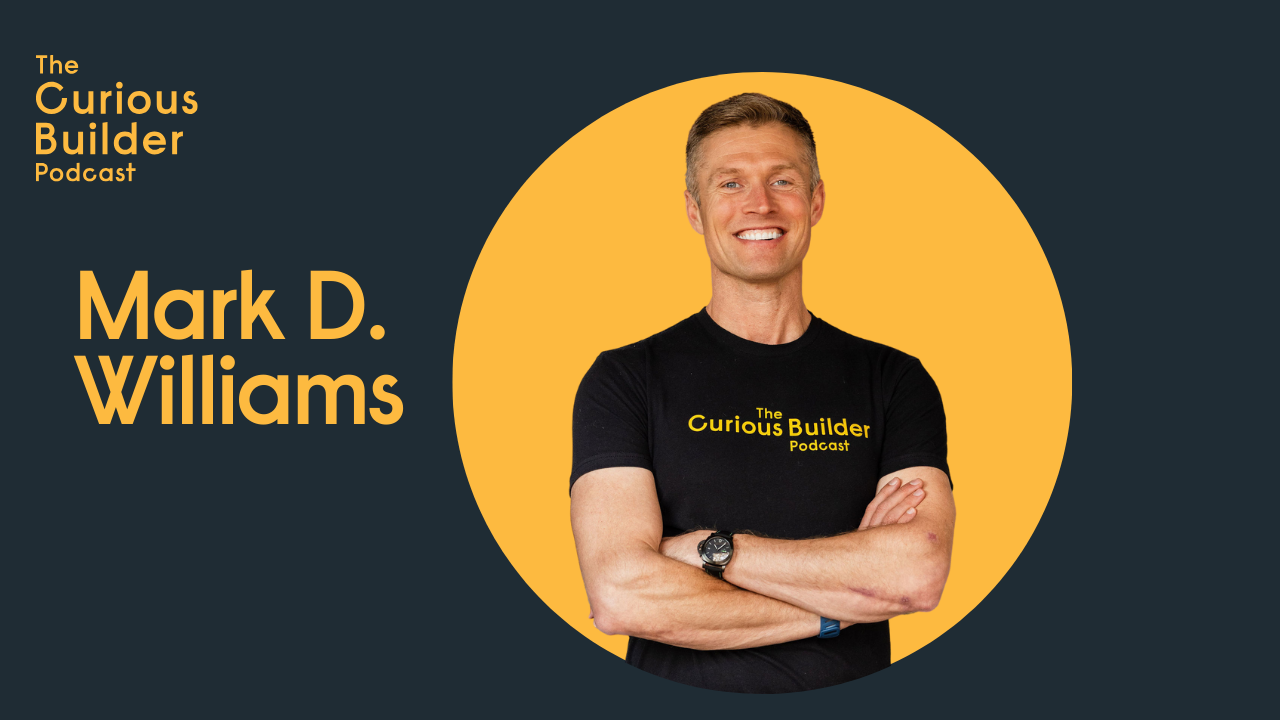
We’re heading to the International Builders’ Show with big ideas and even better people. In this episode, Mark sits down with Mike Weaver from Emser Tile to preview their upcoming IBS panel: “If You Could Do One Thing...” From focusing on fewer, better clients to compressing time through peer learning, this convo is a rapid-fire warm-up of real talk, reflective questions, and a few jokes about tile from Morocco. Plus, hear how the Curious Collectives are expanding and what makes this year’s IBS a can’t-miss.


About The Curious Builder

The host of the Curious Builder Posdast is Mark D. Williams, the founder of Mark D. Williams Custom Homes Inc. They are an award-winning Twin Cities-based home builder, creating quality custom homes and remodels — one-of-a-kind dream homes of all styles and scopes. Whether you’re looking to reimagine your current space or start fresh with a new construction, we build homes that reflect how you live your everyday life.
Support the Show:
-
Mark D. Williams 00:00
Like we do at every international builder show the Monday night, we do a meet up of contractor coalition alumni. So if you're interested in attending, we've got a great event from about six o'clock to nine o'clock. Stop by anytime you're gonna see builders from all over the country. You've got Brad Levitt, Morgan, Molitor, Tyler, Grace myself and nicker, as well as all of our sponsors over the years. If you've never been to the contractor coalition summit before, but you've heard us talk about it, it's a great place to come meet everyone, see what it's all about. So you can register for our May event in Colorado, or our November event in Charlotte, or just come and meet and greet and see if you like the vibe. All the details are contractor coalition summit.com
Mark D. Williams 00:45
Don't sleep on the people you already have relationships with, because that relationship can grow. And guess what? You've already made the sale. They've already made the commitment. So the ask to increase is infinitely easier at the end of the day. Would we all probably want less clients that are better clients and will actually yield a better revenue margin. Welcome to
Mark D. Williams 01:12
curious. We were Podcast. I'm Mark Williams, your host today, we've got a repeat guest. We got Mike Weaver with mzer tile. What's up? Mikey, what's up? Man, how are you good? So we're gonna change the narrative for our Thursday 20 minute session. Usually we're doing a couple different series. One is losers are winners. We're doing a whole series of MISA, who's but we got international builder showing coming up from the day that this episode airs. It's like five days later, and Mike and I are hosting a an event at the m zero booth that we want the world to know about. It's going to be 130 on Tuesday in booth s1, 7059, you won't remember that. Just remember the M child.
Mark D. Williams 01:51
And I think we're going to post that somewhere. We're going to booth number, yeah, we've got a whole bunch of graphics that Leah on my marketing team made that we'll share with all our panelists. And this was really, you know, you and I work a lot together. You're one of our main partners for the curious collective. You know, we're in seven we're in seven states now, and we'll talk about that a little bit at the end here, because you just had la yesterday, and that was our first time we've opened up on the west coast. So I'm really, I actually haven't talked to you. This will be a live like, how did it go, kind of thing, but you and I both chatted, like, how do we always want to provide a lot of value for not only the listeners in a podcast setting, but in a panel and at the International builder show, there's so many things to see, but this is, I think, my my fourth IBS, and I find that the education sessions and listening to people, I mean, obviously, seeing all the vendors and seeing all the new products is really cool and exciting, but honestly, it's the relationships and it's what I learned from my peers that lasts the most with me throughout the year. And so with that kind of in mind, you and I kind of came up with the topics, and it's we're going to have Brad Levitt, who leads our collective in Arizona. Most people know Brad. You've got Morgan Molitor here from Minnesota. She's, you know, obviously a best friend, BFF forever, and a contractor coalition co host with me. And then we also have Stacey Eckman, who leads our LA and Seattle one, and we've got you, Mike. And so the two questions are going to be because we want to keep it somewhat short. It's gonna be a 45 minute panel, and it is. The two questions are everyone's gonna answer is, what if you could go back in time and tell yourself when you first start your business, what would you tell yourself that would have the biggest impact on your career? And then the second question is, this year, if you were to focus on one thing that would have the biggest impact on either your life or your business, what would it be? And are you going to focus on it? And if not, why not? Like, it's kind of an accountability thing
Mike Weaver 03:44
anyway, those are the two questions coming in hot so I just have to share these two questions are really important from my perspective. On the one hand, it's fun to hear what people would do different, or, you know, if they could go back and tell their selves something different now that they become experts in the space. And really honestly, I'm honored to be amongst you guys in a panel of obviously, guys are brilliant builders and great business people, but for people that are just starting or in a phase of their business, every host of the panel is at a different place, and being able to hear that now is something that they can possibly implement today. And then I'd say the same thing about the second topic. What are they going to do this year? We all look at our year and think about what we're going to do to be better. And someone may bring up a topic that says, holy crap, they're right. I should do that this year. And if there's no other reason than to listen to other peers in the same space trying to get better that have maybe already gotten to where you are on a path to where you want to be. This is the kind of thing you want to listen to. I think the benefit of it being one thing is, last year, I spoke a lot about it the last two years, is there's a Japanese principle called misogi, and it's one thing. And like, what is the one thing that you do that your whole and it was meant for personal goals, but I use.
Mark D. Williams 05:00
One for personal and one for business. I found so much freedom in having the clarity of like one thing, like, what is the one filter that every single thing, every decision you make, every meeting you take, every marketing decision you make, every financial decision you make, what you do, like, if you could find the one thing and just concentrate on that. I don't think, even though, you know, I have a lot of personalities in this little brain. I don't think I'm unique in the sense that I think, Well, I think that most owners, we all try to do we Everyone tells us to do simplicity, but no one does it, myself included. And so last year I did, and it made a huge difference, huge I have. And this is, by the way, this is not what I'm going to talk about on the panel, but you inspired something. I didn't have much time we have, so I'm going to kind of try to keep this really quick. Okay, so, you know, so interesting over I've been with enzer for 21 years now, and I've been a sales leader for 10 more of 10 of those years, right? And one of the things that we, I think, as leaders, have always tried to do is manage a ton of accounts across, you know, we have 80 locations, so across 80 markets, and touch an account a little bit consistently. And one of the things that I decided to do, it really, and it started last year, but that'll, that'll continue to grow this year, is focus. Instead of getting my team to focus on all of the accounts and hundreds of accounts in every market is to really dive deep with your strategic partners. And you and I talk about partnership on almost every panel that we speak on together, we've seen almost 40% year over year growth with a very specific base of accounts. And it's because we double down in those relationships. We do every project together, we work on every program together, and it's interesting how much growth you can see if you take that perspective that sometimes less is actually more. And instead of focusing on every market everywhere, can you really focus on priority markets or priority customers, priority relationships, and watch how that changes your business and how much you can grow? I mean, that's so funny. You say that because it's literally what you preach every time I've ever heard you. In fact, I can do a pretty good mic impression. I've got it many times. I've done it so many times. Like the other day, when we were in the room, I was giving someone your sales pitch that you always do in front of people. I'll raise your hands, I'll take a meeting with you. Thing. I was like, that's the goal. Of course, you did. Of course, like, why would it's like breathing to you, it's so easy at this point, honestly, I can deliver it almost as good as you. But where I was gonna go with this is,
Mark D. Williams 07:30
I think a lot of partners, they think that more is more, and there is a certain part, like, we all are in sales, one way or another. That being said, if you can increase the order from a single builder, and let's just use myself, for example, like, while you and I, our relationship is fairly new, meaning that could spend, what, only two years, which is shocking, maybe three. Ian, right. It's actually two, two. It's only two, which is wild. That is crazy. But my point is, is, like, we had a couple down years, and now I have the next couple years look to be really good. And so while we have a deep relationship through the curious builder platform, Mark Williams Custom Homes is just beginning with Misa, who's is our first, you know, our flagship wellness home that we're we have huge aspirations for what we want to do with that, both locally and nationally. But you were a partner choice early on because of that relationship, so really, I grew the relationship with you and expanded it to all my projects. But you also did the same thing, because a lot of times a sales, and maybe you, I'd be curious to your point of view with salespeople, is that, you know, even like the collectives, like, just because you met, like, we always want more builders in the room. Like, if you're meeting with new people, and once you've met with them, you're like, well, now we want to meet new people. But what you just said actually is a really validation to all sales entrepreneurs and businesses of that don't sleep on the people you already have relationships with, because that relationship can grow. And guess what, you've already made the sale. They've already made the commitment. So the ask to increase is infinitely easier than going and acquiring, quote, a new, new prospect. And yes, I'm sure on the numbers, it'd be more sexy to be like, Oh, hey, we work with 500 builders this year. Next year. Goal is 700 like, I get the sales metric of why that's aspirational. I'm not saying we shouldn't do that, but if, at the end of the day, would we all probably want less clients that are better clients and will actually yield a better revenue margin, all of those things balance in life. I mean, what do you what do you think of that? Yeah, so I take a very simple perspective, and I think most people know I'm not the smartest tool in the shed sometimes. So I just I find a number and work backwards, right? So I have this theory, and we talked about this on one of our last podcasts. But my theory is, if I have a sales goal or sales expectation, it's you have to figure out how many customers you need at what consistency to get you there, right. And so while most sales people in the market would call on 100 customers and get a couple $1,000 a month for me from each of those, each of those customers, or something like that, instead, in my my expectation, if I have a.
Mike Weaver 10:02
a month in sales. To me, that's only 20 customers consistently that spend $20,000 a month. And the time and attention you can spend with those 20 customers is so much more, infinitely greater than you can spend with the hundreds of customers you're trying to land. You take that a step further and say that once you win your first project with a customer, I would much rather do 10 more projects with Mark Williams than I would do another new project for the builder I just met that I have no idea if our relation, if our if our styles are even going to vibe right well. And also, I often say this when I interview new designers, new architects, new partners, it takes me. I don't know why I picked this number, but I think it takes three projects before I really understand that person. And I'm reminded of a quote that I haven't said in a while, which is, don't judge me by my best days. Don't judge me by my worst days. Judge me what I do consistently between the two. And what I like about that? Is it, like, how you show up? It's a little bit, you know, I, you and I are both obviously wellness fanatics, and we love the gym. Like, there are some days we go to the gym and we don't like it. For you, it's every day.
Mark D. Williams 11:10
But for me, I know there's some days there's good days, some days there's bad days, but like, it's showing up consistently. That moves the needle. And I think like to have to build a reputation, whether you're a builder, designer, architect, it doesn't matter any business, any person. It's consistency over time. And that's what a relationship is. And usually a partner better nail it on the first one, because that's one like, Oh, this is a new one, right? But that being said, it's also unreal, realistic expectation. It's like a first date. Like, you know, my wife and I was, I was telling Jude, Charles was in town yesterday, we spent the whole day together, and he just, we were driving the car, he was asking me about marriage, and I was like, he's like, how long have you been married? I'm like, 13 years and a half. But wait, we dated for three years. Like, 16 years. Like, that's a lot. It's to be a long time now. And my point is, is, like, if I was to reflect back on my first date with my wife, versus, like, now, like, my depth of knowledge, because we've been together for so long. Like, I know a lot more, and I think that's true of our partnerships in relationships. And like, I know because I've been using my trimmer for however many years, or my cabinet shop, or whoever it is, they're not on their first rodeo, and so the relationship is a lot deeper. But I also think if you have a bad experience, don't be so quick to throw out the bathwater, like, see it through. Because I do think it takes three jobs, like the first two jobs and then the third one, better be you. Better be it. Better be smooth. And if it's not, then I think you re look at and say, You know what? This is probably not the best partnership, but it takes a lot of time. Like an architect, like I worked with an architecture locally that I just think is the cat's meow. I like them so much, and I think the feeling is mutual. And now we're both trying to find a project to work together, but we've only done one, so then it comes to and then three, and then my goal is to be, you know, kind of one of the main horses in their stable, but I know that's a multi year, maybe a decade long plan with this particular architect, and I'm totally fine mark that really goes both ways. You know, you know, let's say we our first project together, doesn't go terribly smooth, right? And it's easy for both of us. It would be easy for both of us to say, All right, that's probably not the smoothest. Let's go find other customers. Let's go back to what we're used to, or, you know, we've got plenty of builders, you have plenty of suppliers, etc, etc, right? But, you know, just like you shouldn't back away, let's give it another shot. Let's get through these three and better understand each other's processes and really nail it right. We have this. We have to have as suppliers and vendors and partners to have the same kind of expectation. If we don't get this first one, it's not time to pack up, be embarrassed and walk away. It's time to get better on the next project, and you better nail that third one. Like you said, This
Mark D. Williams 13:41
episode is brought to you by Pella windows and doors. I've used Pella for 21 years as the exclusive window company on every one of my builds. When people ask me who I trust for windows and doors, it's Pella every time. Their craftsmanship, their innovation, the top tier service, make them a no brainer for any custom home builder or designer who demand the best, whether you're designing something bold or building something with timeless elegance, Pella has you covered. They're also the only window company that has a lifetime warranty on all of their windows. I've gotten to know all their people at Pella corporate, as well as locally. Here at Pella Northland, I'm proud to call them our partners and our friends. Visit pella.com to learn more and connect with your local reps today for more information. You can also listen to episode one, where I interview the Pell and Northland founders, as well as episode 109 where we talk all about their latest innovation with the study set window. I
Mark D. Williams 14:33
think sometimes we have a strong friendship, sometimes that helps. Like, in the beginning, you know, like, I've learned a lot, even on me. So who's with Emser? Like, I know that we need to order, you know, especially when everything's coming from, evidently, my clay is coming from Morocco, which I had no idea. Like, wow. Okay. And so, like,
Mike Weaver 14:50
when you ask to custom design a mosaic made from scratch that's cut with scissors and put on a mesh, it takes time to create it. And.
Mark D. Williams 15:00
Best part is, is I have zero idea. So like, I really empower my design team, and they're super talented. And like, when I find out about this, it's kind of like when I was building a house during covid, we had an architect who SPECT all this wood from Africa. And my joke was, is there no wood in North America? Like, why do we have to go to Africa to get all this wood and so but actually, you'll get a kick out of this, just because I love marketing, I love graphics, I'm having my Angie on my team, my project coordinator, I am getting a list together of all the products and what their country of origin is. It is shocking how many we have, like, all of Europe covered. We've got parts of Africa. We've got probably some in China, South America, North America, Canada. And I'm like, I want to come up with a cool grip. So Misa who's is a very international, like brand, honestly, and like, what it appeals to, and the Scandinavian vibe, but I'm gonna have, like, all these cute little flags on a world map. Misa who's is a melting pot of the world, of what, of the lens that I've chosen to to partner with, and so I'm, I'm really cool to see. I want to see all these flags and see how it shapes. So I don't know what it's gonna look like, but I'm excited about it. Sorry. Morocco was cool. I'm like, Yes, I got Africa back. We're all over the place. What I was gonna say is, so again, we will have a bunch of graphics. No one has to register. I think we're gonna do keep people on their feet. It'll be standing room at the ends are booth. It'll be Tuesday of IBS, at 130 we're gonna have a stellar, stellar, stellar panel. My question, no, you first. Well, just the reason that we picked these panelists is a they're really good friends of ours, so the camaraderie and what we get, but they're also just baller operators, right? And they all lead my collective. So I kind of because of Emser and the cures builders partnership through the collectives. You know, our plan is to add two to three states per year. And so I really wanted to give, you know, these ambassadors a voice and hear what they have to say. You know, with that in mind, LA, we had our first one. So on the West Coast. Now we are in Seattle and we are in LA, and then then we obviously go. We've got the South, we've got Arizona with Brad. We've got Austin, Texas, which are still spinning up. And then we've got Atlanta and Charleston, of course, Minnesota. My question to you is, you've been to a lot of them. You've been to Arizona, you've been to Minnesota, you've been to Atlanta. This is Stacey's first round, although he's an absolute pro with a layer, and I picked him for a reason, a he's a contractor coalition alumni, which almost all of them are, which is just speaking to how special that group is. But tell me about the LA I don't know the LA market. What was your you know, we just launched there. This is the first one. How did yesterday go?
Mike Weaver 17:38
That's such a loaded question mark. Because, first of all, I think every single one has been amazing. I'll tell you that. First and foremost, it was unique for us, being such an intricate partner to the to the curious collective, hosting it at ms tile at our corporate office in a in it's kind of behind the scenes, right? We held it on the sixth floor, which no customer has ever really seen or had access to so in that conference room before we did the showroom tour was, for me, it was pretty monumental, right? Because, again, that group got to see something no one ever gets to see. Stacy, of course, is an incredible host and an incredible businessman has really built an incredible business. I think what I was most impressed about given that all of these builders and the vendors that were in attendance had never really met before, the fact that they were so open and transparent about where they were in their business, and then how attentive each listener was to the person speaking. Right and we were sharing, it was amazing to see like in the moment, sharing emails and sharing PowerPoints and our process documents and all of these things, you know, that really are created to help our own businesses grow. Everyone was so open to that information. And then Carrie and I were talking about, she was sitting next to me, and we were talking about how, like, you know, if they sign up to attend a curious collective that they're already ready to learn and share, which makes it so much easier in that space.
Mark D. Williams 19:04
It's interesting from our standpoint, like we know there's a lot of value. I know, if you I know, if anyone listening goes to any collective you will go to you go to the next one. For sure, for sure. It's always hard. We all if someone invites me for coffee or lunch, it's like it just we're all busy. Everybody is but when you when you make the time, when you prioritize your self development, and you go, it self selects, because only the people that are open minded, open hearted and want for sure go. I I've noticed sometimes that there are people I would love because I admire them. I think they have a lot to share, but they don't come. And I've always, I've always wondered, as someone who loves interacting with people, which is why I started all this. But like, I've always wondered why not, and I don't know the to this day, I still don't know why certain people, like, let's say, in Minnesota, there's so many talented people here, and I'm so well connected, I can't tell if they don't, if it's not a priority, if they don't want to go, if it's scarcity, is it? Do you have any insight on why? Why? Would people say no? Why would people resist when everywhere?
Mike Weaver 20:04
I only think that that because they don't understand the value well enough it's not a priority. That's it. Not that they don't trust you, not that they don't realize that it's probably a good venue to get and share best practices. I you know, I think about this a lot. Sometimes it's better to hear why they should attend from other peers that have attended, not the leader, right? And you and I have done enough panels and meetings together where you see how much I engage builder peers instead of selling, you know, ends there's value proposition. Sometimes there's more value in letting the peers speak. You know, we had a builder Ian la yesterday, honestly, I was surprised that surprised that he came. That's not the right thing to say. But this guy's a juggernaut builds 20 to, you know, $30 million homes all up and down Southern California. And to watch him share his best practices with another builder that's just starting to take over from his parents, and watching the two of them collaborate on how this one major builder has made so many changes to, you know, so he and his son can be in the business, and this other builder who's just starting to do that as looking for that kind of guidance. And I stopped the conversation midway, and I looked at everyone in the in the conference room, and I said, and this, this is why we're here. It was, honestly, it's life changing. I mean,
Mark D. Williams 21:20
that's I know, who the I know who the I know, who the one person is. I don't know, but I I love. I mean, that makes me super happy. I just I've seen. I mean, the whole reason we have the curious collectives, the curious builder. I mean, honestly, all of it is really just all the things that I have, personally have found value in, in how it's helped elevate my life, my career, my my everything, and so it's like, I just want to share that experience with other people. It'd be like, if you went to Christmas dinner and you've been to a Christmas dinner before, you're like, hey, you should come to Christmas dinner. Like, wow, look at all this food. This is amazing. Everyone's so happy. You're like, I didn't know. This is thing people did. I mean, honestly, it feels like, it feels like a, I don't know. It's like a boot camp for your mind, heart and soul, to like, learn from each other. And I think whatever you put into it is what you get out of it, the people that come with lots to share. And I think sometimes that's why it's important that the leadership is vulnerable. And that takes a special person, you know, to lead with vulnerability, to lead with obviously, being real. This isn't a put on. It's not fake. You know, I usually lead with all my mistakes and I got along.
Mike Weaver 22:22
It's also not, I love that you're right. It's also not perfect, the thought that the host of the collective runs a perfect business. It's really, it's really quite the opposite, right? And I think that's even breaks down some barriers and walls as you're kind of sharing and learning best practices, as you think this host I, you know, I look at you and think of you as like, you know, the third Messiah, or something I don't know. I think you're amazing. And and when we sit and have so many personal conversations, I almost every time I realize that we are all doing the same thing. We may be in a different spot in life, or built something different, but we're all heading in the same direction, and you have done things that I would like to do, and vice versa, and just taking even that simple perspective that someone in the room and the collective is probably one of the best places I've seen it. Someone in that room has already done what you are trying to do, and leaning into that and getting their understanding the mistakes they made and how you can collapse time so you don't have to spend the same amount of years trying to figure out what they've already figured out. If this isn't a reason to attend a collective or come see us at IBS and have a booth as we talk more about this kind of stuff, a reason doesn't exist. Yeah.
Mark D. Williams 23:34
I mean, I think you said it the best this time. You worded a different I like, what you say compressed time? Yeah. I think of like, I've never thought of this analogy till right now. But like, I scuba dive, and so like, you compress air into a tank, right? So you can get more air in a small space, so you can breathe longer. I'll have to work on this analogy. But I think essentially, by doing these types of things, you are compressing time in your career and in your life with what you do with it. That's why people go to the international builder. That's why you go to collective. That's why you listen to podcasts, that's why you read books. That's why you self improvement. I mean, actually, that's probably my thing right now. If I could go back in time and and talk to a 23 year old or 24 year old Mark Williams when he started his career, what would you do? I guess I would. I would say, you know, simplify it. I'd pick that masogi, that one thing, and it would just be like, What are you doing every day to make yourself better, a better version tomorrow? And I think the thing is, is when you do one thing, you actually do like 100 things, for sure, but it's the fact that you're focusing on one thing. It'd be like equivalent to, you know, marching down the sense of Super Bowl is coming up. It's like, you know, you're doing a drive and like you're focused on scoring a touchdown, but you're also doing like 100 also doing, like, 100 other things to make that happen, but it's the pursuit of the one thing that sort of gives clarity to everything else. And I think,
Mike Weaver 24:49
okay, so I have to give you my one thing. I know that we're running out so, and I'm not going to talk about this at IBS, or I may, but we'll come up. Okay, so I got to give it to you. I am 43 42 or 43 I can't remember my wife's gonna kill me. I can't remember how old I am. And if I could go back in time, I would tell myself to find someone who's already done it and be vulnerable enough to ask. And I never did that as a kid, as I was building my business, other businesses, or my professional you know, my time at my in the last 21 years at Emser, it wasn't until, really the last five or six years where I started really leaning in to people that have already gotten to where I'd like to be. And if we were humble enough just to ask the person we asked made me humble enough to share. And I would have done that so much earlier in life had I thought it was important,
Mark D. Williams 25:38
and I think that you'd be hard pressed if you said it honestly, if you ask someone for help, I have yet to see anybody say no. I mean, when there's something in humans, I think it's the most underused word in the English language. Help me. We just don't use it. And so I think, when I think, when you ask sincerely for somebody's help, they will help you. So with that, we'll keep our Thursday short, and thanks for tuning in the curious builder podcast. We'll see you in a couple of days at international builders show Ms tile Tuesday, 130 Be there or be square.
Mike Weaver 26:14
You do not want to miss this group of panel hosts. It incredible. See you guys. Thanks for
Mark D. Williams 26:22
tuning in. The curious builder podcast. If you like this episode, do us a favor. Share it with three other business owners. The best way that we can spread what we're doing is by word of mouth, and with your help, we can continue to help other curious builders expand their business. Please share it with your friends. Like and review online, and thanks again for tuning in.
This episode is sponsored by: