
Table of Contents
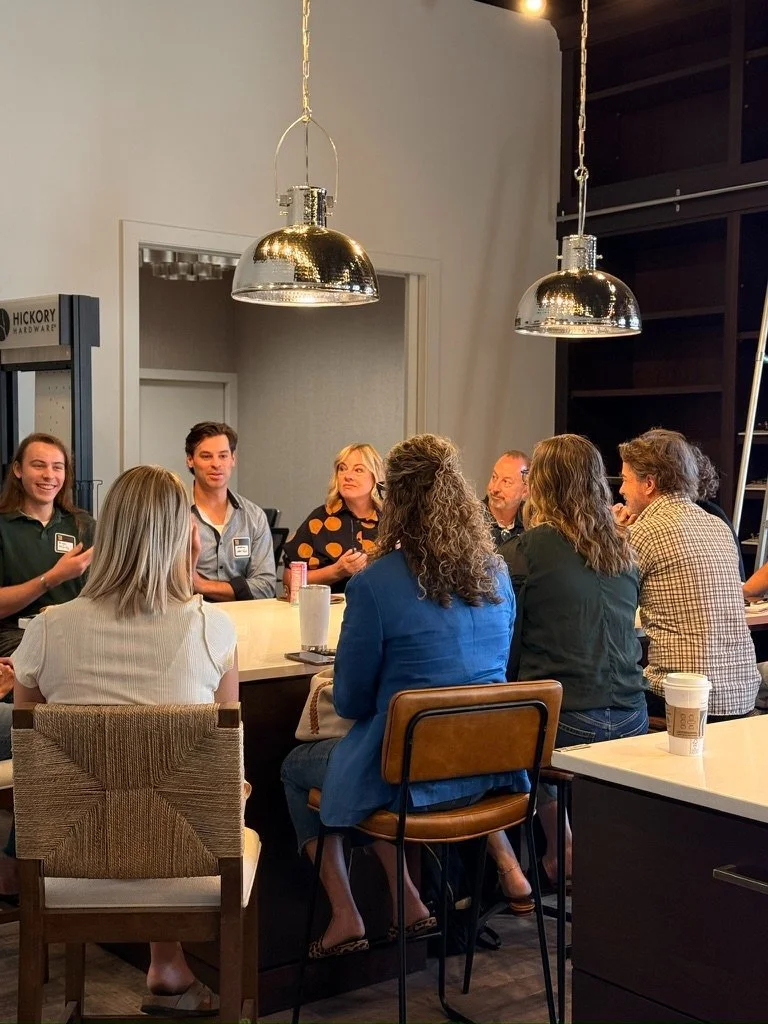
In September, we brought together interior designers, architects, builders, and trade partners at ALL Inc. in Plymouth, Minnesota to talk about three things that are changing how we do business: artificial intelligence, pricing and fees, and finding new ways to generate revenue. And as usual, some of the best takeaways came from people being willing to share what they're actually doing, what's working, and what they've learned the hard way.
How Are Interior Designers Actually Using AI?

AI is everywhere right now, but what's interesting is how differently people are using it. Some designers are creating repeatable workflows for scope documents so they don't have to start from scratch every time. Others are uploading inspiration photos and asking AI to help identify millwork details or trim profiles they can communicate to their builders.
We also talked about using AI to source lower-cost alternatives when a client's taste and budget don't quite align. And one of my favorite applications was using AI to review specification books. You can upload a massive document and ask it to summarize the information or identify potential discrepancies before they become problems on-site.
Of course, you still have to check its work. Probably twice. AI can make mistakes, and nobody wants to discover that the specification it confidently summarized was completely wrong. But when used correctly, it can take a lot of repetitive work off your plate.
Where Should AI Stop and Creativity Begin?
This might have been my favorite part of the AI conversation. Someone made the point that we should let AI handle the blocking and tackling (the documentation, organization, and other unglamorous tasks) but keep the actual art form human. I think that's exactly right.
The point of using AI shouldn't be to replace your creativity, but to give you more time for it. We talked about how clients can often recognize an AI-generated email immediately. And when someone is hiring you for a highly personal design experience, that kind of communication can make the relationship feel less personal.
Some designers are intentionally keeping AI out of their client-facing work altogether. Instead, they're using the time saved behind the scenes to make phone calls, send handwritten notes, sketch ideas, and create a more thoughtful client experience. Because if AI isn't giving you time back to do the things you're actually good at, what's the point?
Why Should Designers Be Building an Email List?
Here's something that surprised me: Very few designers in the room were consistently sending newsletters, and I think that's a huge missed opportunity. Designers often have incredible social media followings because their work is so visual. People love seeing beautiful spaces, before-and-afters, and the creative process. But social media platforms can change their algorithms overnight.
Your email list gives you a more direct relationship with the people who want to hear from you, and creating content doesn't have to be complicated. If you're someone who thinks better out loud, talk through a project, record your thoughts, and turn that conversation into a newsletter or blog post. AI can help organize the information while you keep your own voice. Newsletters are an important way to stay connected with potential clients and show them what makes your work different.
How Do You Charge What You're Worth?
The second part of our conversation centered on pricing, and this is something I think nearly every small business owner struggles with at some point. But clients are hiring you because of your experience, expertise, and past work. They want your opinion. They want your process.
And yet, it's easy to start second-guessing your pricing the moment someone pushes back. We talked about how the designers who charge the most often have the greatest control over their process. They know what they're offering, they communicate it clearly, and they don't apologize for it.
You're not just charging for the hour you spend sitting across from a client. You're charging for the years of experience that allow you to make the right decision during that hour. That's worth something.


Do You Know the Difference Between Margin and Markup?
This was one of the most practical conversations of the day. Markup and margin are not the same thing, and confusing them can cost your business a lot of money.
Let's say something costs you $100. If you apply a 20% markup, you charge $120. But your actual profit margin is only about 16.7%. If you want a true 20% margin, you need to charge $125. It's a small difference on one item, but across hundreds of purchases and projects, it adds up.
One person shared that they had spent 18 years not understanding the difference and believed they'd left millions of dollars on the table. That's a pretty expensive lesson. Understand how you're calculating profitability, make sure your contracts reflect your pricing structure, and don't assume that a markup percentage equals your margin.
Should Designers Charge Fixed Fees or Hourly?
There wasn't one universal answer to this question, which is exactly why it was worth discussing. With a fixed fee, the designer takes on more risk, but there's also an opportunity for greater profitability if the project is managed efficiently.
With hourly billing, the client takes on more of the risk, but that can create billing fatigue, especially when design has been going on for months before construction even begins. Some designers shared that they provide projected fee estimates at different phases so clients know what to expect.Others collect a larger retainer upfront and send statements showing how that balance is being used.
The important thing is establishing expectations early. You can't introduce a completely different fee structure halfway through a project and expect everyone to be excited about it. And when builders, architects, and designers are working together, it's important that everyone supports the process the client agreed to.
Where Are Designers and Trade Partners Giving Away Work for Free?
This question generated some really good discussion because when we started asking what people were already doing without getting paid, the answers came quickly.
For trade partners, bidding and revisions were huge. Some projects go through 10 or more revisions before anyone makes a decision. That's a lot of time spent estimating, sourcing, and coordinating without compensation. We talked about charging a small bid fee, including a set number of revisions, or billing for additional changes. Even a $100 fee can help establish that someone's time and expertise have value.
The same applies to designers who include endless site visits or extra services without clearly defining what's included. One example was establishing three site visits at two hours each, with anything beyond that billed hourly.
And I loved that someone pointed out how undervalued our trade partners can be. Their expertise matters, and builders and designers need to respect the time they invest before a project even begins.

Should You Discount Your Services to Win a Client?
Sometimes the better question is whether the client needs a lower price or a different scope. We talked about the temptation to discount just to get your foot in the door. And sure, sometimes that can be a strategic marketing decision. But if you reduce your price so much that you can't provide the level of service your brand promises, everybody loses.
Instead, show the client what can change to meet their budget. Maybe that means fewer deliverables, a different material, or a smaller scope of work. As someone in the room put it, "I could do that, but then I couldn't give you the service that you deserve." That's a much better conversation than simply apologizing for your price.
How Can Designers and Trades Add Value
The final part of our discussion focused on finding ways to add value to the relationships and services we already have. For example, service plans can turn a one-time project into an ongoing client relationship. Seasonal maintenance visits are one opportunity. Trade partners can also provide builders and designers with simple upgrade pricing when they submit bids, making it easier to offer clients additional options.
We also talked about storytelling. Showing clients how something is being made, sharing project videos, and communicating the care behind the work can create tremendous value. Small businesses don't necessarily win by being the cheapest. They win by providing an experience people can't get somewhere else.
What's Holding Most Small Design Firms Back?
We ended up coming back to something that applies to almost every business owner in the room. We're often our own biggest bottleneck. If it can't run without you, you don't have a business. You have a job.
When every decision, client question, and project detail has to go through the owner, there's only so much the company can grow. That's why getting clear on your brand, your process, and your team's strengths matters so much. And sometimes, the best thing you can do is hire someone who's great at the things you're not.
The Biggest Takeaway From the Minneapolis Curious Designer Collective
If there was one theme that connected all three conversations, it was this: Your time, expertise, and relationships are valuable. Start treating them that way. Use AI to eliminate repetitive tasks so you can spend more time doing the creative work you love. Price your services with confidence and stop giving away expertise simply because you've always done it that way. And look for opportunities to create more value for clients and the other businesses you work alongside.
That's what makes the Curious Designer Collective so valuable. You get a room full of people who are willing to share their experiences, challenge each other's thinking, and help everyone get a little better at running their businesses. The conversation might light the fuse, but the real work happens when you take those ideas back to your company and actually do something with them.
Want to join conversations like these? Learn more about The Curious Builder and the Collectives bringing builders, designers, architects, and trade partners together.