How to Build a Business That Doesn't Depend on You

Table of Contents
If you want to know how to build a business that doesn't depend on you, at some point you have to get comfortable with not knowing everything that's happening inside it. That's easier said than done.
As business owners, we're used to being the person with the answers. We know the clients, the numbers, the projects, the problems, and all the weird little details that keep the machine moving. But if every decision, question, and problem still has to come through you, you haven't really built a business that can operate without you. You've built yourself a very complicated job.
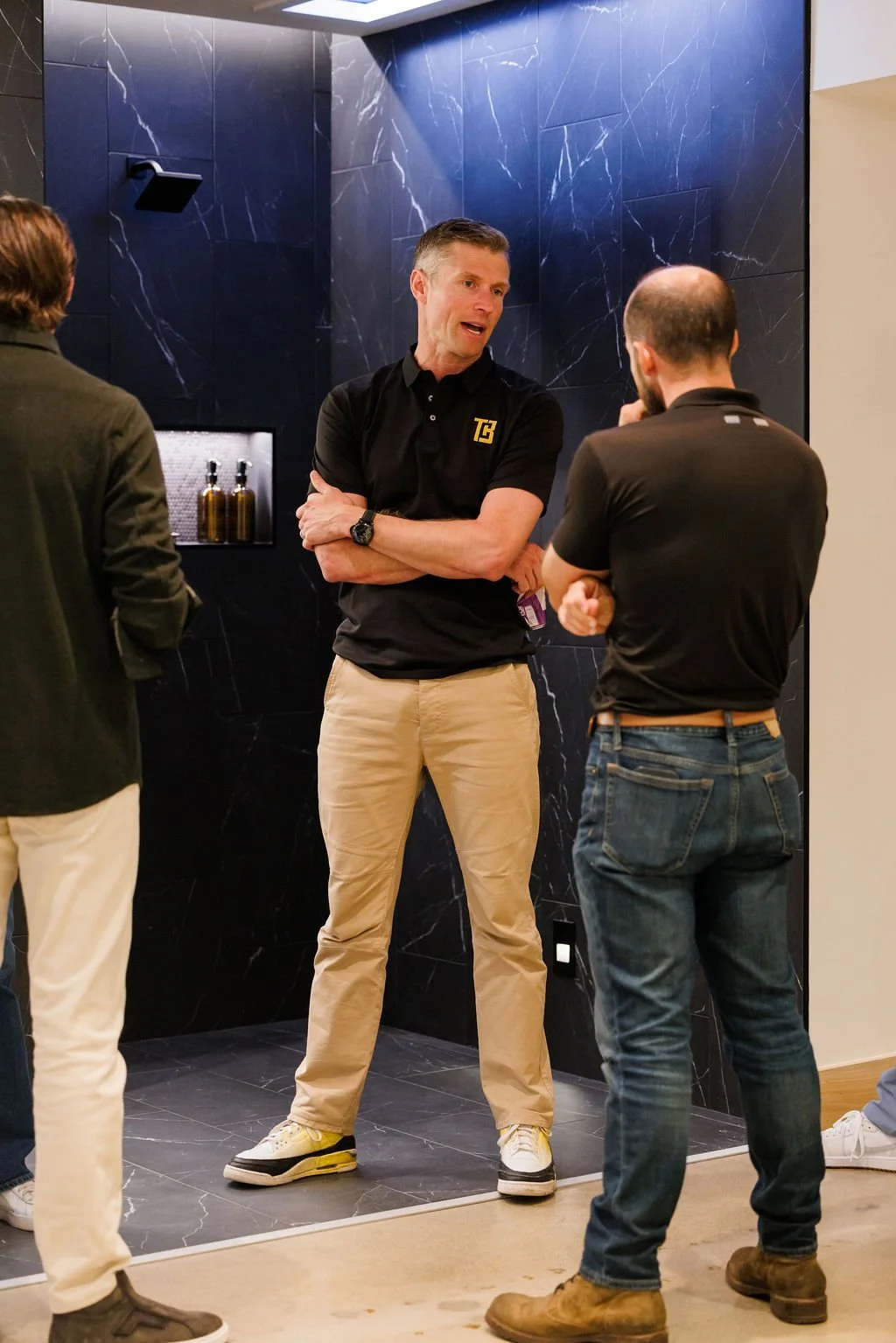
That was one of the themes that kept surfacing during a recent Curious Builder Collective conversation. It wasn't necessarily what we set out to talk about, but I’m glad we went there. Because once we stopped worrying about getting through every prepared question, we started talking honestly about what leadership actually looks like when you're trying to build a healthy company (and a life outside of it).
Thank you to our Sponsors: Pella, Emser Tile
How Do You Build a Business That Doesn't Depend on You?
You build a business that doesn't depend on you by giving good people real ownership, creating clear boundaries around your own role, sharing enough information for your team to make smart decisions, and learning to delegate outcomes rather than just tasks. The hard part isn't understanding that in theory. It's actually letting go.
Around the table, we had leaders at different stages of that process. Some were still deeply involved in the financials. Others were realizing their teams had solved problems they didn't even know existed. We talked about protecting family time, client boundaries, money, difficult conversations, KPIs, delegation, and what happens when your employees genuinely care about the business. Nobody had it completely figured out, but that's what made the conversation so useful.

How Do You Really Delegate?
One of the most interesting parts of the conversation was hearing what people still struggled to give up. Marketing and accounting both came up. Financial oversight definitely came up.
One leader talked about how closely tracking the company's numbers gave him peace of mind. But maintaining that level of involvement also required what he called "a daily mental gymnastics I have to go through."
We tend to ask, "Can someone else do this as well as I can?" But maybe the better question is, "Is this the most valuable place for me to spend my attention?" There are things I can do in my business that I probably shouldn't be doing anymore. Every hour I spend staying involved in something a capable team member could own is an hour I'm not spending on the things that actually require me. And sometimes, letting go gives your people the opportunity to surprise you.

One of My Favorite Leadership Moments
I shared a story about Angie during the conversation that, to me, is a pretty perfect example of what we're talking about. There was a $54,000 change order on a project. Not exactly a tiny detail. Angie scheduled the meeting, worked through the issue, handled the conversations, and got everything approved. I wasn't involved. Actually, I didn't even know about it. When I found out, my reaction was basically, "Yes, this is amazing." That's a big shift for an owner.
Another leader at the table had experienced something similar. His team was handling warranty issues and solving problems without bringing everything to him. In some cases, he didn't even know the problems had happened. That's exactly what happens when you’ve built a capable team.
If you're trying to build a business that doesn't depend on you, one of the best signs of progress might be discovering that something important happened, and your people handled it exactly the way they should have without you.
What Happens When Your Team Actually Cares?
We also talked about an Artisan Tour experience that illustrated another piece of this. There was a ton to get done. People were blowing leaves, picking up signs, staffing the event, reworking displays, and jumping into jobs that weren't necessarily written anywhere in their job descriptions. They divided and conquered. But what stood out wasn't just that everyone got the work done. It was that people wanted to be there.
You can create processes, write job descriptions, and assign responsibilities, but there's something special about reaching a point where your team sees the success of the business as something they're personally invested in.
As one person put it, seeing everyone legitimately care made it feel like they had "all the right people on the bus." That's the kind of culture that makes it possible for an owner to step back.
Still trying to figure this out for your own business? This blog can help!
Should Employees Know the Company's Financials?
This was another area where people around the table had taken different approaches. One company described gradually becoming more financially transparent with its employees. They started by sharing information like payroll and accounts receivable and eventually opened up more of the company's financial picture.
Why? Because employees are asking questions too. They want to know they have a job and that the company is healthy, as well as where they fit in the ecosystem. That really gets at the value of sharing the right numbers.
Financial transparency isn't necessarily about dumping a P&L in someone's lap and expecting them to understand it. It's about helping people understand how the business is doing, what matters, and how their work contributes to the bigger picture.
We talked about KPIs like sales, revenue, average sale price, profitability, revenue per employee, and weeks of work in the pipeline. That last one is especially interesting for builders. Knowing how many weeks of work are already lined up gives the team a tangible picture of business health and what lies ahead. When people have context, they can make better decisions. And if you want them to take more ownership, they need enough information to actually do that.

A Business That Doesn't Depend on You Needs Boundaries Too
Delegation isn't the only part of this. We also spent a lot of time talking about boundaries. For me, one of those boundaries is the end of my workday. I generally leave around 4:20 or 4:30, and I'm not taking calls afterward. Does that mean there are never exceptions? Of course not. We're in construction. There are seasons when things get crazy. But I don't want crazy to become normal.
Another person described the same intentionality at Curious Builder events: "If I'm at a Curious Builder event, trying to be fully present at that event and not on the phone taking phone calls or emails or texts for other things." That's the goal.
When I'm at work, I want to be at work. When I'm at an event, I want to be there. When I'm with my family, I want to actually be with my family. Building a business that doesn't depend on you means building a company where your constant availability is not the operating system.

Your Ego Doesn't Need the Last Word
Of course, stepping back doesn't mean avoiding hard conversations. We heard a story about a lighting designer who stepped onto a project after three rounds of revisions and immediately announced, "I would never do lighting like this, and I've been a designer for 20 years." You can imagine how well that lands.
Situations like that create an immediate temptation to defend yourself, your team, and your expertise. Sometimes you absolutely do need to push back. But we talked about the difference between defending good work and simply needing to win the interaction.
One phrase I shared was, "A soft answer turneth away wrath." There is a lot of wisdom in that, especially in our industry. You can be confident in your expertise without letting ego drive the conversation. You can try to understand where another person is coming from. You can stay humble. And you can decide whether a conflict actually needs your energy. That's leadership too.
The Best Business Conversations
The Curious Builder Collective is all about comparing notes. What's working? What's not? What are you still holding onto? What did you finally let go of? What happened when you trusted your team? Where did you screw it up? Those conversations can change the way you walk back into your business the next morning.
And if you're trying to figure out how to build a business that doesn't depend on you, maybe that's where it starts: realizing that being a great leader doesn't mean making yourself indispensable.
Sometimes it means building a team so capable, informed, and invested that they can handle the $54,000 change order, and you don't even know about it. That's pretty amazing.