
Table of Contents
I recently came a little too close for comfort to what appeared to be a sophisticated real estate fraud attempt involving one of our spec homes. And it didn't look like an obvious scam.
I've been building homes for a long time. We work with experienced realtors, banks, title companies, attorneys, and clients making very large financial transactions. You start to think you'd recognize something fraudulent when it comes across your desk. This experience reminded me that you might not.
When you're selling a high-end spec home, you're dealing with buyers you may not know, large deposits, earnest money, checks, and wire transfers. And sometimes everything can look legitimate right up until it doesn't.
I'm not interested in becoming suspicious of every buyer who walks through the door. But I am interested in making sure our process protects us when something feels off. Here are three red flags every spec home builder to watch for.

1. Don't Assume "Available" Money Is Cleared Money
This was probably my biggest takeaway. Money appearing in an account doesn't necessarily mean the transaction is finished and those funds are yours. Depending on the type of payment and circumstances, funds can appear available while the underlying transaction is still being processed or verified.
If there's a meaningful deposit or anything unusual about a transaction, talk directly with your bank and title company. Find out exactly what has cleared, what is still being processed, and whether there is any possibility of the transaction being reversed.
And if somebody overpays and then asks you to send part of that money somewhere else? Stop everything. I'd much rather have an awkward conversation with a legitimate buyer than discover later that we sent real money against funds that weren't actually good.
2. When Someone Creates Urgency, Slow Down
Builders are problem solvers. Something changes at 2:00, and by 2:15 we're figuring out how to keep the project moving. Usually, that's a strength, but when money is involved, it can get us in trouble.
Fraudulent transactions can rely on creating a window where you're asked to act before everyone has had enough time to verify what's happening. Maybe the money needs to move today, plans suddenly changed, or somebody is traveling.
Maybe there's an explanation for why the normal process won't work this time. Individually, any of those things could be completely innocent. Stack a few of them together and it’s worth paying attention to.
If someone is asking us to handle a deposit, refund, wire, contract, or closing differently because "we need to get this done today," this is exactly when we're going to slow down. A legitimate transaction can survive another phone call.
We all need to be careful of fraud, but young entrepreneurs may be particularly vulnerable! Check out these business lessons!
3. Verify the Buyer, Not Just the Money
I think we have an outdated picture of what fraud is supposed to look like. It doesn't necessarily arrive as a poorly written email from somebody obviously trying to scam you.
Someone can sound professional, know details about the property, provide documentation that looks convincing, and with the amount of information available online today, they can potentially know quite a bit about you and your company too.
That's why the buyer deserves the same scrutiny as the funds. If we don't know someone (particularly when we're dealing with a high-dollar spec home) we need to verify their identity through independent channels. That means leaning on the professionals around us: our realtor, title company, bank, and attorney.
It also means noticing when details don't quite line up. One weird thing can have a perfectly reasonable explanation. When you start collecting three, four, or five weird things, don't talk yourself out of paying attention.

The Biggest Lesson? Nobody Gets to Skip the Process
Good processes protect good businesses. There's excitement when someone wants to buy a spec home, especially one you've invested significant time and money into building. Of course you want the deal to happen. But that excitement can't become a reason to overlook something you would normally question.
Verify the buyer. Verify the funds independently. Be extremely cautious about returning or redirecting money. And if something feels unusual, get your bank, title company, realtor, and attorney involved before you move another dollar.
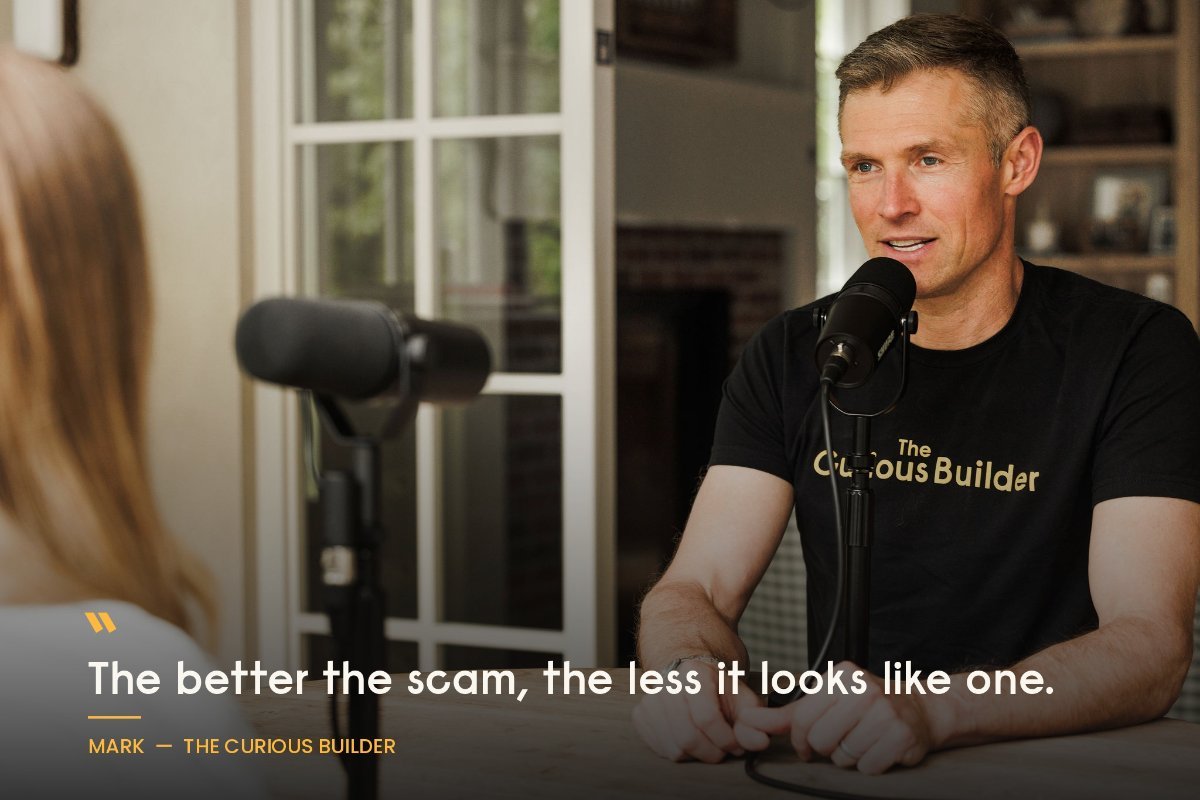
I'd rather lose 24 hours verifying a legitimate transaction than spend the next six months dealing with the fallout from a fraudulent one. And if you've been in this business long enough that you think you'd never fall for something like this? That was probably the most uncomfortable part of the lesson for me. The better the scam, the less it looks like one.