Business Lessons for Young Entrepreneurs
Table of Contents
For a lot of young people, the years immediately after high school follow a pretty predictable path: graduate, go to college, pick a major, and hope somewhere along the way you figure out what you actually want to do with your life. But what if there were another option?
On a recent episode of The Curious Builder Podcast, I sat down with builder and real estate entrepreneur (and one of our Atlanta Curious Builder Collective Hosts), Vincent Longo for a conversation that touched on everything from real estate investing and custom home building to family priorities and raising the next generation of entrepreneurs.
One idea in particular stood out: Vince's plan to give his daughter a very different kind of gap year. Instead of sending her straight into a classroom when she isn't yet sure what career she wants to pursue, Vince and his wife, Amber, want to take her through an entire real estate investment cycle. They plan to help her purchase a house, renovate it, sell it, pay back the bank, and see exactly what is left on the bottom line.
For young entrepreneurs interested in construction, real estate, or business ownership, there are some really valuable lessons there.
What If a Gap Year Looked More Like a Business School?
Vince isn't anti-college. For careers that require specialized education, credentials, or licensing, higher education obviously serves an important purpose. But, as he explained it, college doesn’t have to automatically be the next step for every 18-year-old, especially when they have no idea what they want to pursue.
His daughter, Olivia, is 16 and still figuring that out. So Vince and Amber offered her an alternative. The Longos operate a multifaceted construction and real estate business that includes custom homes, luxury spec homes, flips, and rental properties. That gives them an opportunity to turn one renovation into a year-long business education.
The plan is to purchase a flip and let Olivia participate in essentially every part of the project. Over the next six to nine months, she'll learn how the property was acquired, how the renovation was budgeted, how the work was completed, and how the finished house was sold.
Once the lender, contractors, vendors, holding costs, and other expenses have been paid, Olivia gets the remaining net profit to use for school or whatever comes next. That's a business education with some skin in the game.
Phase One: Learn How to Buy the Deal
The education starts before anyone picks up a hammer. Amber is a licensed realtor, so she'll work with Olivia to find and evaluate potential properties. Olivia will learn how to identify an opportunity, write a purchase contract, secure financing, obtain insurance, and understand the ongoing costs of holding the property.
That last piece is especially important for young entrepreneurs. It's easy to look at a flip and calculate the difference between purchase price and sale price. It's harder to understand all the expenses eating into that margin along the way. Financing costs money. Insurance costs money. Every additional month of construction costs money.
Understanding that early teaches one of Vince's most important business principles: you make your money on the buy side. Vince learned from experienced real estate investors that he should only purchase a property if the numbers work from the beginning. If the deal requires everything to go perfectly before it becomes profitable, it probably isn't a very good deal.
Phase Two: Turn Ideas Into a Real Budget
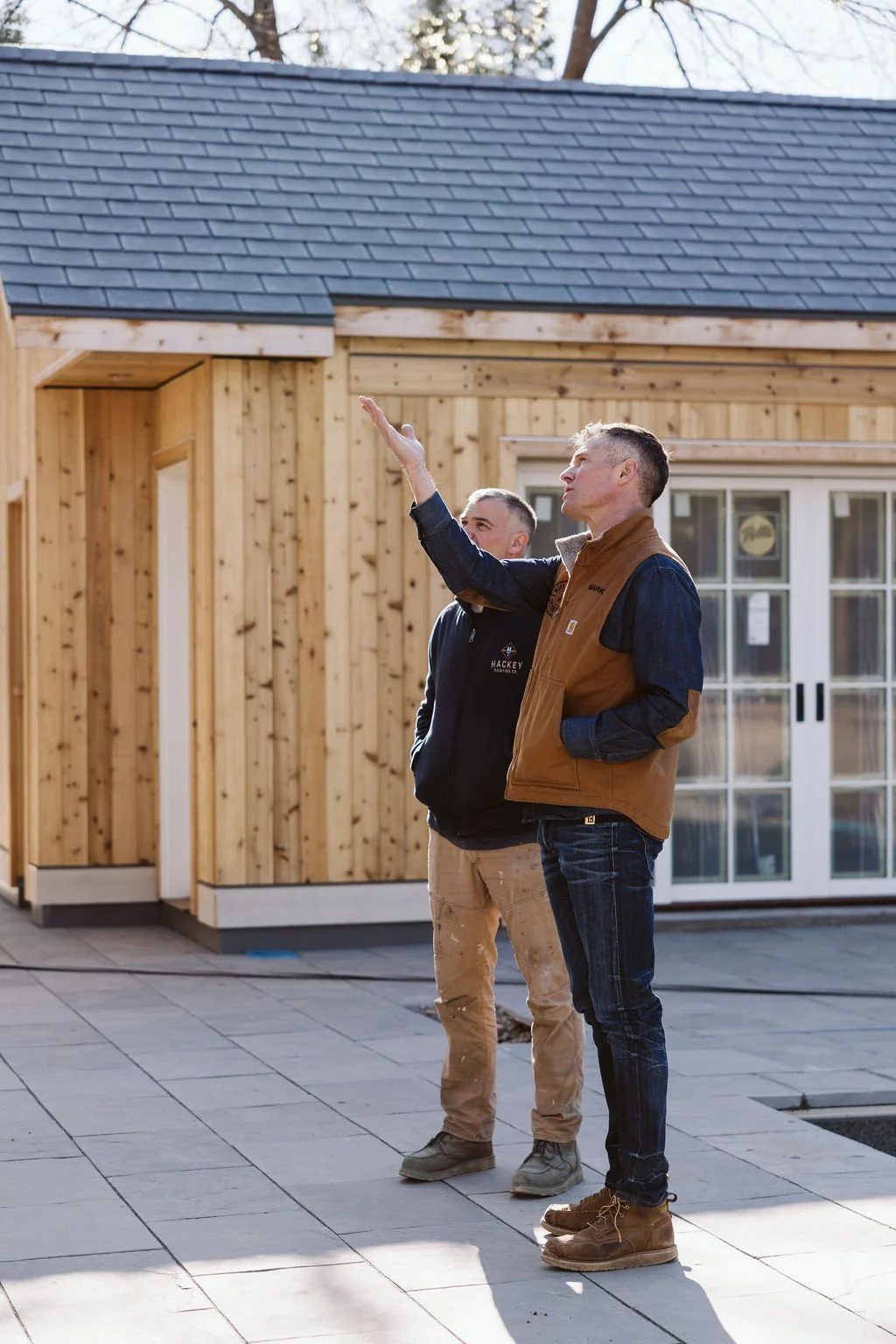
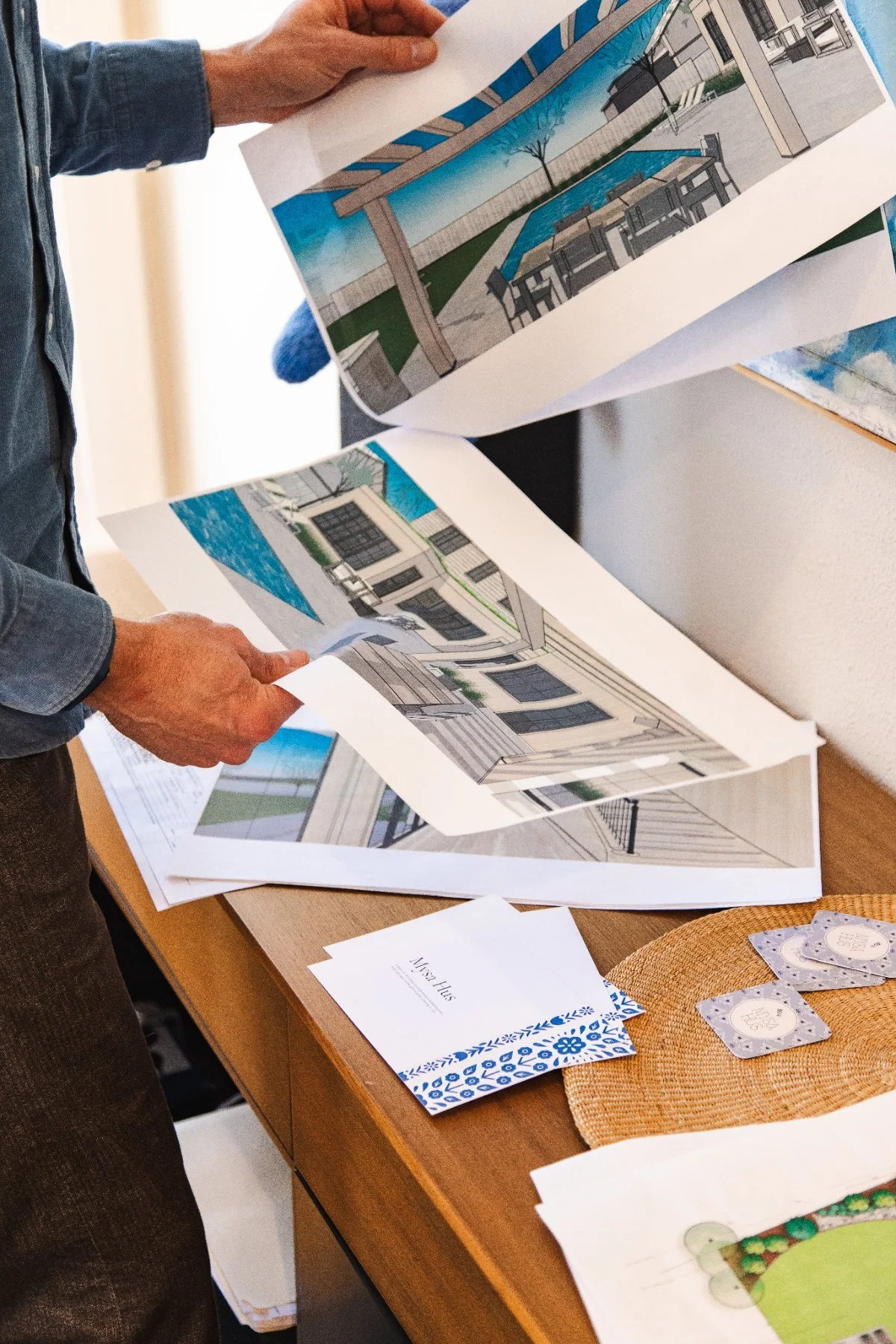
Once they've purchased the property, the project moves into design, estimating, and pre-construction. Amber will work with Olivia on layouts and finish selections, while Vince will bring her through site walks and estimating.
This is where another important connection happens. A beautiful design choice has a number attached to it. Moving a wall has a number attached to it. Changing a finish has a number attached to it.
Young builders sometimes encounter individual pieces of the construction business without seeing how they connect. They might understand estimating without understanding sales, or field operations without understanding financing. A project like this forces all those pieces into the same ecosystem. Decisions made during acquisition and design eventually show up on the final closing statement.
Phase Three: Put on the Work Belt
Then Olivia gets to experience the part of construction that can't really be learned from a spreadsheet. Vince plans to get into the field alongside her. She'll meet subcontractors and vendors, participate in the renovation, and learn about scheduling, trade coordination, materials, and jobsite management.
When you've actually watched skilled tradespeople perform their work, and better yet, tried some of it yourself, you begin to understand the knowledge, physical effort, precision, and experience involved in building something well.
Just as importantly, once you understand how a house goes together, you're much harder to fool. You have context for how long work should take, what materials are involved, and what questions you should ask when hiring someone. Even if Olivia never becomes a builder, those lessons aren't wasted.
Phase Four: Sell It
Finally, Olivia will work with Amber to stage, market, and list the finished house. She'll experience the sales process, closing, and the moment when all those decisions from the previous several months become one final number.
The bank gets paid back. The expenses are accounted for. The HUD statement is finalized. What's left is profit. And that's what makes Vince's idea so interesting to me. The lesson isn't isolated to construction, finance, design, or sales. Olivia gets to see the entire loop.
For young entrepreneurs, that's often where the best learning happens. Business decisions don't exist in isolation. The price you negotiate today can affect your margin nine months from now. A scheduling problem can become a financing problem. A design decision can become a sales advantage, or an unnecessary expense. Seeing the complete cycle makes those relationships tangible.
Don’t miss a moment by listening to the full episode!
Your “Buy Side” Matters With Clients Too
Vince's buy-side philosophy doesn't stop with real estate. He applies the same principle to custom home clients. In that scenario, the "buy" happens when you decide to accept the project.
I know how difficult that can be for young builders and business owners. When you're a hammer, everything looks like a nail. You want the sale. You want the win. You want the dopamine hit that comes from landing another project. The problem is that a bad real estate deal might cost you money, while a badly aligned custom home client can cost you money, time, energy, and sanity for months, or even years.
Learning to qualify opportunities is part of becoming a better entrepreneur. Does the scope make sense? Is the budget realistic? Are expectations aligned? Is this someone your team can work with successfully? Sometimes growth means learning to say yes. Eventually, sustainable growth also requires knowing when to say no.
You can make more money doing less for better people.
Give Young People a Chance to Think Like Owners
Vince's gap-year idea also got me thinking about how we teach kids to view money long before they're old enough to start a business. My nine-year-old daughter recently asked how she could earn money around the house. It's a small question, but I saw an entrepreneurial mindset underneath it: I want something. How can I create the money to pay for it?
What if kids learned to save part of what they earned into a future "gap year fund"? Over 10 or 15 years, that money could become capital for an experience that expands their view of what's possible. Maybe it's traveling or starting a small business or funding a flip. Maybe it's simply buying themselves enough time to explore their interests before committing to a career path.
I remember wanting to travel Europe with friends at 23 and asking my dad for help funding the trip. His response was essentially: the gravy train is over, go get a job. Fair enough. But I also know how valuable travel has been for my creativity and entrepreneurial thinking. There is something powerful about helping young people move from I want this to How could I make this happen? That's entrepreneurship in its earliest form.
Build the Business Around the Life You Actually Want
Maybe the most important lesson from Vince's story is really about deciding what the business is for. When Vince and Amber's daughter was born, they sat down and created one-, three-, five-, and 10-year goals. Family comes first. So they did family goals first and created a work schedule around it.
For roughly the first 20 years of his career, Vince intentionally kept the business smaller while his daughter was growing up. Even his real estate decisions reflected that priority. When Vince eventually needed an office and warehouse, one option put him closer to customers. Another property was only a couple blocks from his daughter's school. The second option was more of a financial stretch, but Vince chose proximity to his daughter.
Years later, that decision still pays dividends. Now that she's 16 and driving, she'll see his truck outside the office and stop in for a couple of minutes just to say hi and grab something from the fridge. Those tiny interruptions have become some of the best moments of his day.
It's a good reminder for ambitious builders: the biggest business isn't automatically the best business. If growth costs you the very life you were hoping the business would provide, the numbers on the bottom line don't tell the whole story.
The Best Business Lessons Usually Aren't Theoretical
Vince's "gap year flip" isn't really about convincing every teenager to renovate a house. It's about exposure.
Let young people see where money comes from. Let them understand what skilled labor actually requires. Show them how financing works, how a contract protects both sides, why margins matter, how sales connect to operations, and what happens when an estimate is wrong.
Most importantly, give them opportunities to make decisions and experience the consequences. For the next generation of young entrepreneurs and builders, that kind of real-world education can be incredibly valuable.
And whether Olivia eventually chooses construction, real estate, college, or something completely different, she'll enter adulthood understanding something many people take years to learn: Profit isn't just the number you sell something for. It's what's left after every decision you've made along the way.