Episode 148 - Framing Parties, Gap Years, and Bidding Wars: Behind the Scenes with Vincent Longo
#148 | Vincent Longo | Longo Custom Builders | Framing Parties, Gap Years, and Bidding Wars
On this episode of The Curious Builder Podcast, Mark Williams chats with his good friend Vincent Longo about all things building, balancing work and family, and learning from the ones that got away (including a wild story where Vince literally got knocked to the ground by fate!). They swap stories about growing their businesses, keeping family first, and even throw in some fun ideas like gap years and house signing parties. To top it off, Vince gives us some live play-by-play while he bids—and hilariously loses—on a house during the podcast.
Listen to the full episode:


About Vincent Longo
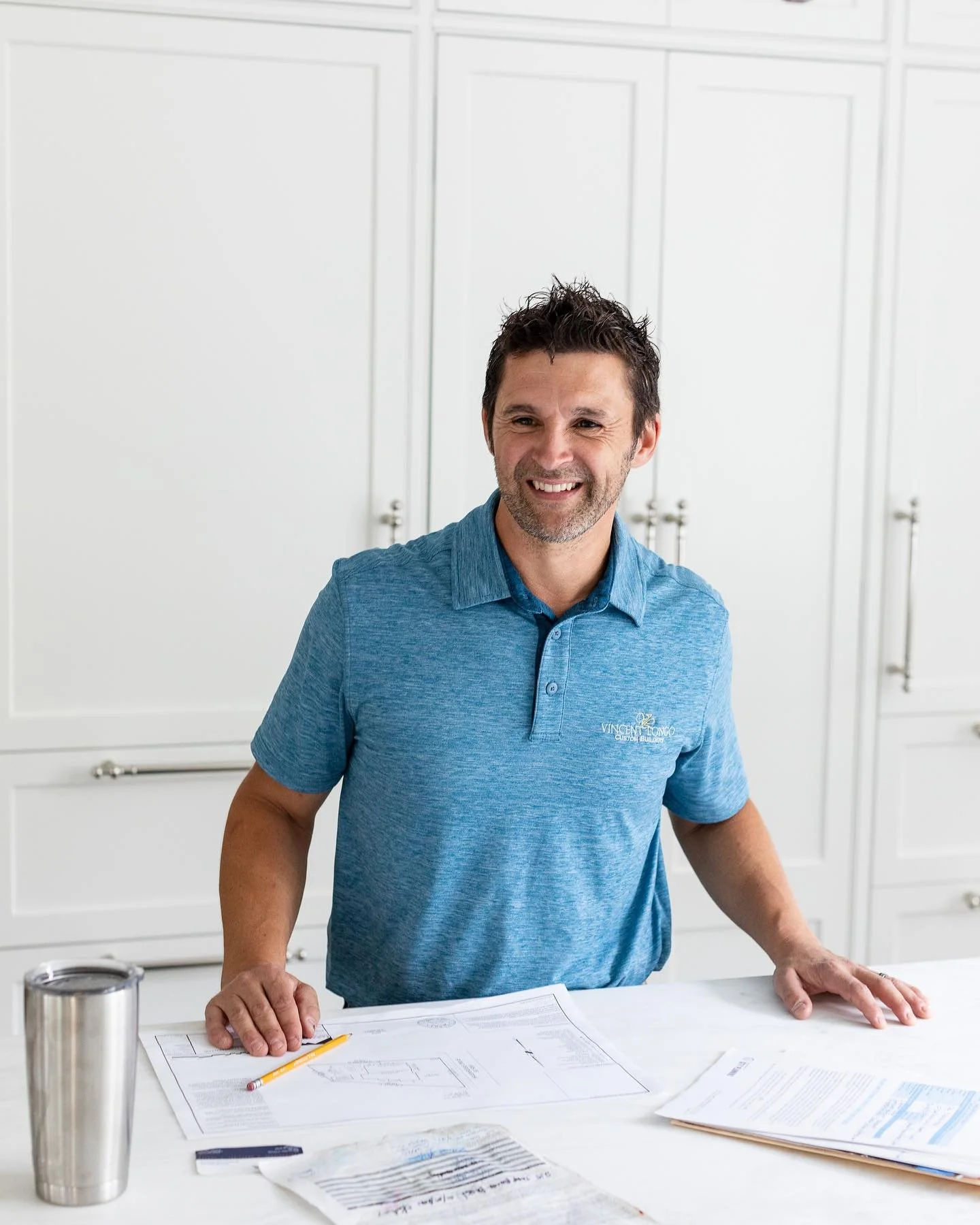
Vincent Longo is the President and founder of Vincent Longo Custom Builders, one of Atlanta’s premier luxury home building firms known for craftsmanship, integrity, and a client-first approach. With over 35 years in the building industry and more than 25 years in property development, Vince has built his reputation on transparency, trust, and education.
For Vince, building homes is more than a vocation, it’s a calling.
Resources:
Visit the Longo Custom Builders Website


-
Vincent Longo 00:04
I learned a long time ago from some real, real smart investors that whether you're buying a house or land or whatever it is,
Vincent Longo 00:13
I need to be able to know that if things change tomorrow, that you can turn around. And they used to say, Ian, kick that thing over your head. But really I need to know that I will only buy if I could turn around tomorrow and sell it and make a profit today.
Mark D. Williams 00:34
On the curious builder podcast, we have Vince Longo on longtime friend, part of my builder 20. He's our curious collective Ambassador down in Atlanta. We're going to talk all about boundaries, work, life, balance. And there's a whole bunch of firsts on this episode. You even have live bidding. Vince was bidding on a project while we were doing the interview. Spoiler alert, he lost the bid without further ado, here's Vince Longo. Welcome to
Mark D. Williams 01:00
curious builder Podcast. I'm Mark Williams, your host today. I've got a longtime friend. Vince Longo, out of Atlanta, Georgia. What's up?
Vincent Longo 01:06
Vince Yo, what's happening? Mark, thanks so much for having me on the podcast. I know it's been a long time coming. I feel like I'm finally ready.
Mark D. Williams 01:14
Finally ready. Well, it's funny. We met so we were in the same builder 20 for a couple years together. We were friends before that. I mean, you're kind of the one that actually encouraged me to join. You're encouraged me to join your builder 20, and now I'm out of the builder 20 because my wife basically said, you can choose, with all this travel I'm doing now with the curious builder and the contractor coalition, she's like, You have to get rid of something. And I was like, Oh, I don't want to get rid of anything. It's like, you know, it's a dog with like, five of their favorite bones, or, like, get rid of one. And so sadly, I don't get to see I actually I probably see you about the same amount now, because now you're one of our ambassadors for a curious collective.
Vincent Longo 01:47
That's right, yeah. And we really miss you. You know, we've had a real good run. I thought you were a great add to our builder 20 team. And I'm sure all the listeners may or may not know what a builder 20 is, but it's it was great collabing with the whole group of 20 of us at that time. And so I thought you were an awesome add to the group, and you brought a lot of flavor, that's for sure. And you know, I'm just glad to to see you at the collective, and not, oh, you know, and be part of the collective, but not only that, but all the other stuff you're doing.
Mark D. Williams 02:19
We were no short of personalities in our builder 20. I mean, between. I mean, I love our builder 20. I wish I was so helpful. And there are still. I do hope at some point to come back, we'll see how that all as the kids get older, maybe, like all of us, everyone's, you know, we all want to be this family first. You know, we're building custom homes for people. And the coolest part about our community is everyone kind of gets it. No one really makes you feel bad. They sort of realized, like, hey, we understand where we want everyone wants the best for everyone else, which is kind of the spirit of not only builder 20s, but the collectives, contractor coalition, and, honestly, just our peer group of entrepreneurs across the United States. So it's
Vincent Longo 02:52
pretty great. It is. And you know what's really crazy about it? It's funny because I totally agree with your wife, and my wife says the same thing. Although you have a couple children, I only have one, and she's older. It's we're in a business that we are have to be on all day, and we're always performing, whether it's with the vendors, subcontractors, designers, architects, and mainly our customers. And it's such a hands on, it could drive you crazy. One day, there's our minds are going in a different direction, like 800 miles a minute. And, you know, it's one of those things that it's weird, because builders like us, we have a tendency to not only do all that, but say, Oh, we've got more time to do all this other stuff. Let's do a podcast. Let's join the builder 20. And, you know, let's do all these things. And you know, God bless our lives. They got to look at us like we're just crazy. And and I'm glad that they pull us back in from time to time and say, no, no, no, no, don't forget, family comes before that. And so I get that a lot at home as well.
Mark D. Williams 03:51
No, Ian, I think you have to test stuff too. I mean, I think there's something to be, you know, to try something, see if it works. And I think, you know, you evolve like you evolve in your life, you evolve in your career. Obviously, your kids are at different ages, and so, like, it's kind of like you're always seeking equilibrium. I relate it a lot to balance. I'm not the type, you know. Have you ever done slack lining before? It's like, in a backyard barbecue, like those, you know, it's like those two inches of nylon you see, like, kids string them up in college campuses between trees, and they kind of walk on them, yeah. Like, I don't pretend to be good at it, but you I can make, like, a step, maybe two, and they'll fall off. The point is, is like, If someone asked you if you were balanced, like, you might be balanced for like, a second, but like, we're always sort of seeking that new balance, because your career changes, the market changes. Like, you know, sometimes you're ripping hot and sometimes you're colder than cold. I used to always say that, like, you know, when you're hot, like every phone call leads to a sale, but man, when you're cold, like you are ice, polar cold, and so it's like you're navigating all of this entrepreneurship, family business. It's just, there's a lot,
Vincent Longo 04:49
it is a lot, and it's such a cyclical business, right? And you're, you know, and you just try to do your best to time it. But you know, when those good runs happen, you want to be poised and ready. With the information and the ability to grab that work. And so you're, you're exactly right that it's to try to balance it. And then when you're a little bit low, right, you start to add things on. You do more of these events with other people in the podcast, and so and then you get hot again, and it's just so much, it spills over. I mean, like you were saying with the slack line, I can't even, it's much like my business, I can't even get on that thing because I'm bowlegged.
Mark D. Williams 05:23
They'll kick you right off. So one of the things that we're trying this year, which is kind of fun, is we're allowing every previous guest to leave a question to start the episode of the next question. So I had Jeremy and Sarah Imhoff, they're architects at imprint architecture here in Minnesota that this is the question that they left for you to start off your podcast. Give us a story about the one that got away in terms, I assume they're referring to business
Vincent Longo 05:52
I was gonna say in trouble. Now, hold on, let me close the door again. Oh man, you know I would say, and it's pretty and we talk about this a lot. Early on in my career, right? I had the opportunity to work on a unbelievable show house, and it's kind of a crazy story, because I sometimes feel like I was the one, it was the one that got away. But when I tell you the story real fast, you're going to say, I don't know, was it, but I still go back and reflect, was that the one that got away, because in our world of custom home building, one of the the kind of that you call it, the the precipice of the mountain there, you know, getting to that peak is to do what's called a show house. And we have show houses here in Atlanta, and it's one of those things that that you do them either for Christmas or spring, they have different events, and that's like the tops of the tops. And so I was invited one year earlier in my career. This has got to be about 12 years ago or 14 years ago, where it was like, Okay, you have the opportunity to do this show house, right? And I got brought in by a magazine, and the architects and architect I always wanted to work with. They do these massive houses, from architecture in and around Atlanta and now around the country, and it's like everything was aligning, but the financing, because, you know, these houses are four or $5 million and I was younger in my career, so I didn't have that financing ability to get it kicked off, and so they brought on, they said, hey, we'll help you with that. They brought on another financier who was also a builder, but also an investor, and it was awesome. We were going to get started. But things started not lining up, right? They just started wanting more and more information from me. Like, Hey, can I take a look at your books? Hey, give me the list of your vendors. And it just started getting a little bit fishy for me. And so there was all kinds of spotlight on it. You know, they didn't have back then mark, they didn't have the podcast and a lot of the social media that you have now to get get your name out there. So this was the big way to get the name out there. And I was so torn, because I knew this was something that, you know, you have your ups and downs, but this was going to be a trajectory thing. This was going to take us into the stratosphere, into high end luxury custom building, which is where I wanted to be. It boiled down to this. I was so torn that, you know, sometimes you'll want to do something. You might have something in your life, and I know you love to run, but do you do something where you just, it gives you time to think, but you're doing something monotonous.
Mark D. Williams 08:24
What is running? Yeah, that's what I figure.
Vincent Longo 08:27
And you kind of get, you get a lot of ideas. You get to clear your head, and yet you're doing something at the time, for me, it was mowing the lawn,
Mark D. Williams 08:34
because the total, Oh, totally. And so
Vincent Longo 08:38
I'm mowing the lawn, and I'm pushing the lawn mower, and I'm right at this point where I'm like, What do I do? And I heard it, and people think I'm crazy, but it's not. This is a real thing. I heard it clear as day in my head mark a voice, and it was a voice that I couldn't repeat, like I it was so eloquent that I could not re say it to myself, but, and I can't even like re say it to you, but it to you, but it was so eloquent that said, My son, if you do this job, if you take this, your career will be over. Don't do it. And I don't know where it came from, I kept pushing the lawn mower, like, oh, that's That was crazy. But there's no way Come out. Come on. I'm just overthinking this. So I'm pushing the lawnmower, and then I hear the voice again, say, Listen, you cannot do this home. If you do it, it will ruin your business and your personal life. It was much more eloquent, and I said, No, and you want to know what happened the next I woke up with my face implanted on the grass, the lawnmower like five feet away to my wife picking me up, saying, are you okay? Whoa. I was on my face on the ground in the lawn. One, and I had no idea I picked she picked me up, and I just immediately started balling. I'm like, Honey, I can't do this. And so, you know, it's funny, because it's like, okay, when you say, Is that the one that got away? I feel like it, right? Because the person that ended up doing it. His business went crazy, right? And he ended up doing multiple show homes, and it was like, That was right where I wanted to be. So I constantly feel to answer your question like, that was the one that got away. But then I look at the flip side of it and say, but that was something that clearly came from the higher power that clearly came from God that just said, I'm going to help you. And he stuffed me on my face. And ever since then, Mark, I really try to stop and listen to that voice, which I have only ever heard one other time. But I try to listen and tune in to what is it that I'm supposed to be doing, and not try to overstep my skis, because in this business, clearly it will take you out.
Mark D. Williams 11:01
I mean, that's an amazing story. I think, you know, I think, wow, yeah, there's a lot to unpack on that one. Yeah, it was the craziest thing ever. Yeah. I mean, I think, you know, it's like, that old saying, it's not odd, it's God, it's like, how do you finding peace? I mean, honestly, the only thing I can think of is, like, getting married, but it's a little bit different, because we know that marriage is a very significant step, and like, the way we value it and the way we think about it, but like, typically, I mean, everyone's different. I can only speak for myself, like I But anyway, there are certain points of time where you like, you stop and you like, is this the right thing to do? And clearly, you know, sometimes we have to, you know, boys, we're kind of dumb. We have to be wrapped over the head a few times. In this case, you literally had to be put face down in the mow in the yard for you to kind of dawn on you. And it is kind of funny. Sometimes the delivery is our kids saying something. I shared this. He shared it. So I guess I can share his name, but Nathan Marsala shared this, who I know, you know, from the contractor coalition. He shared a story about a year ago that when I tell it to you, it'll give you goosebumps, because it'll give me goosebumps just thinking about but I asked him a similar question, and he said he just sometimes we don't realize how hard we're working or how many things we're doing or and he came home one day, and Nathan and I used to talk a lot. We don't talk quite about as much as we used to, but we used to talk a couple times. Well, hello, he's in our what? Of course, yeah, he's in our builder 20. But anyway, he shared this story where he came home late from work, and he has to drive all the way across Utah for some of his jobs. So he got home pretty late, and his daughter had left a note on the garage door, a service door in his garage, and it said, Dad, when can I book a time to spend time with you? And I remember when he shared it, he was just broken, and it broke me, and he shared the story. And just like, sometimes we need, like, the voice of a child needs to tell us, like, we, Dad, I need your time. And all of us have been to a place, and likely we'll get there again. Like it's not like, once you have the answer, you have it forever, like I feel like, don't you feel like it ebbs and flows, like our balance and our time, and, you know, we're at in our life. And so I just, I so appreciate people sharing stories like yours and like, what Nathan shared of just because it allows all of us to sort of take a moment and realize, like, you know, whether we get this big deal or small deal. And like, yeah, we're all trying to be successful. We there's things that people depend on us, right? Like, if you and I don't sell a house, like, there are people that that depend on us, right, realizing too, that the other people that depend us are our families. And to realize that, like, We need time with them too, and they need it with us. And anyway, I just love hearing stories that sort of bring it into perspective, because who knows where what would happen to you, should you have chosen that job? I mean, evidently,
Vincent Longo 13:38
be rich and famous. I'd be rich and famous,
Mark D. Williams 13:41
yeah, but you'd be, yeah, you'd be, but you'd be a total insufferable bore, and none of us would have
Vincent Longo 13:45
liked you. Yeah, it was definitely, I'm glad I did it. I do. But as a guy, as you know, we always look back and say, although was I really, did that really happen? Maybe I just tripped over a root and hit my head on the handle of the lawn mower, and that's what happened. But no, it truly is. And, you know, it's funny, yeah, I've heard that story with, with Nathan, and, you know, and it made me think, because a few years ago I was, I was looking for a spot for my office, right? And like any builder, you want to have that office that that reflects what you do and the level of service that you bring in, the level of quality and and, you know, I had an opportunity between a couple of offices and, in fact, warehouses. In fact, there was one even better, just but it was about five miles in a different direction from my house and where I really wanted to be. But an office, a big industrial building, came available, and it was only two blocks from my daughter's school, and it was one of those things where it was a stretch by it was a, it was a, it was again, a godsend, that it was a challenge to buy. But we made it happen and and I made the strategic decision to say, you know, even though the one in the other direction would have been a little bit closer to my customers, this. One is going to be closer to my daughter, which, like you just said, Mark is way more important than customers, right? And just like you said, for our customers, their family is way important, more important than the house builder us. And you know, I made that choice and and here's what the cool result of it is. Now she's driving back and forth to school, and if she sees my truck, it's what us as dads always hope for that they just don't drop a drive by. She'll actually stop and drop in and just say, Hey dad, how's it going? And, you know, and it's just like, holy smokes, thank you Lord, because I get that. It's like, my couple minutes of the day highlight. And so yeah, and I think that's the biggest thing to not miss. We all get so busy with work and with customers, and the next big thing, right, that that we don't miss those little opportunities to spend time with our family and in our friends, right? And because that's important as well.
Mark D. Williams 15:57
I mean, since we're on this topic, and we're out in the holidays here, while we're recording this, what are things? I mean, you've had a 35 year career, I'm sure you've made a ton of mistakes, like any of us. What are some of the things that that you upon reflection are like, I got that right, or I didn't do that right, and this is what I learned from it, speaking of, you know, family and of just like time, and, you know, with the business. Because How old is your daughter. She's 16. She's 16. Now, you know, I've always kind of thought, just because we love it, and we, obviously, we talk about it, your wife's a real estate agent as well, correct? That's right, yeah. And so, like, I'm sure, and I'm sure you guys talk about it at home. Like, I think everyone sort of wars with like, how much do you not that you don't not share with your kids? But like, how much do you sort of encourage it? Is it just organic? How have you chosen as a couple to sort of talk about business and model it, you know, to your daughter, who's still formative. But, I mean, really, at 16, a lot of those formative years already passed, like she's well on her way to probably be, like, see a dad, but like, how walk us through a little bit of how you've sort of managed that.
Vincent Longo 16:56
Yeah, Amber, my wife and I talked about this early on where, you know, she really had a coming to Jesus meeting with me when our daughter was born. Because early on, when, when our daughter was born, my wife was still traveling, doing software sales. And so the cool thing is, I had to be at home because she was traveling, right? And so I, I purposely made the time I scheduled to pick my daughter up from daycare and and then finally, we decided, hey, I need for you as her mom, to spend more time with her. And she was like, Yes, please. I would love nothing more. And I said, Now, you know, we need, I need to work a little bit more. I'm going to have to get that extra job, that extra project, to get that money coming in. So I would say right from the start, it was open communication, really sitting down mark and spelling out, what are our goals as a family? How is it that we want Olivia, our daughter, or to remember us, to know us, to to interact with us as she grows, right? And so we made that purposeful decision to say, Okay, you're going to stay home. Now, I know not all people can do that, right, but we made it a point to sit down and talk about our goals. And so we did that early on, and we would do goal setting every year, between Christmas and New Year or Thanksgiving and Christmas, we'd go out and we'd sit down as a as a family. But my daughter back then was so young, she'd know who we're talking about, but it was okay, let's put into effect what our goals are for the next 135, and then 10 years, right? And you say, okay, so if our goals are there for our family, not the business, family comes first. So we did family goals first, and it was like, Okay, this is we would spoil it all the way down to this is what a great week looks like. And I created my schedule around it was there, yeah, now, was there days that it was tough? Were there projects we just didn't get because it was just going to be too much? Yeah? But if we both went in there knowing that she could always look at me and say, Now, if you do take that, it would be nice to have that money, but you're going to do this, we'd really weigh those factors out. You know? Sometimes it was like, Yeah, we got to do that, because we got to grow. And then sometimes it was like, No, this is really pivotal. Let's stay and and I'm just going to keep it small. And so for the first probably 20 years of my business, it stayed really small all the way up until the last I mean, I've been in business for 25 years, so probably the last 10 years, it's really started to grow. Once Liv hit about six and she started getting her groove and, you know, and Amber was able to pick her up, I started refocusing back on the business and starting to grow that and bringing more people. And I say grow, that doesn't necessarily mean more time I spend on it, right, but it's grow, bringing in great A plus teammates that can partner with me to help us grow.
Mark D. Williams 19:40
Ian, we're happy to announce that on March 20, Sonic camp will be coming back to Minnesota, out on Lake independence. We're going to do a half day event, and we're going to start out with a one hour podcast. We've got Alex Larson, who's an iron woman. She's out. So a professional nutritional is coached. We've got Ryan Rivard. He's completed multiple Iron Man's the Leadville 100 he's also climbed Mount Everest. And he talks a lot about addiction and leads a lot of similar like groups. So I'm really excited to hear Ryan's point of view. And then we also have Alex neist. He's from Minnesota. He invented hostage tape. It's actually the number one brand for stop snoring. It's a big part of wellness is how you sleep after that. We're gonna have a two hour session of sauna and cold plunge at people's own desires. We're gonna have different temperature saunas. We're also gonna have different theme saunas. And then my friend Chris hews it from Legacy chocolates in St Paul. He's one of our sponsors. He's gonna have drinking chocolate. It's Himalayan drinking chocolate. It's like nothing you've ever had. So your body's gonna be super starved for nutrients. And then we're gonna end the evening, which is always everyone's favorite part. The fumo Collective is an incredible wood fire grill, lamb on the bone, chicken. It's got tabbouleh baba ganoush, very Mediterranean Blue Zone type of cuisine. The food is amazing. So hope you can join us again. That's March 20. That'll be sauna camp. All the details can be found on curious builder podcast.com
Vincent Longo 21:13
you know, we talk a lot about custom, the customer experience, and I know me, and you have talked personally about that a lot, but I also remember that have to always thought about the family experience, because once we sift all this away mark and our kids are old and this and that, that's all the that's all the experiences that really mattered, and how did we make a mark in our kid's life? Fast Forward that there were definitely days where Amber and I would be both on the job site, and we pull and live with us, and she did not want to be there, but she also saw how much we would interact, right, and how we dealt with conflict and and that was one of those big things that we were always cognizant of, of, hey, we're not going to yell at each other in front of the kid of our daughter. We're not we're going to treat each other with respect. We're going to talk very highly of each other. If we have something, we're going to take that, we call that the parking lot, right? We're going to bring that out into the parking lot, and we're going to talk about it there where little ears of corn can't hear. We would do that on and I really think that that helped mold my daughter into always seeing us work together, always seeing us, you know, talking and being a family. And so I think that was a real lucky outcome, and we're seeing that now start to play out and lives life as she gets older. Now it's interesting, because here's what I'm trying you're going to love this and and maybe somebody listen to this will get a good tip that has a construction company or whatever business. There's a It's not huge in Atlanta. I don't know how it is out in Minnesota, but here there's or in North Carolina, South Carolina, Virginia, that it's pretty big to take a gap year after high school, before you go to college. Right? Sometimes, I think, listen, if you're not going to be a doctor, a lawyer, an engineer, something that needs that schooling, training and a license to work, if you're just going into to because you don't know what you want to do, but you're going to take liberal arts or something like that if you don't clearly know what you want to do. And that's my daughter's case. She clearly she doesn't know what she wants to do. She wanted to be a zoologist, until she realized that was research, not petting animals at the zoo all day. And so I told her, she's got this familiarity with construction now I'm still trying to sell it to, right? And some of the other guys in our builder 20 are like, I'm taking that. And so what I came up with is, you know, we also flip houses. So we build new luxury homes. We for customers. We also build spec houses, high end luxury spec houses. And we also flip and hold rentals, you know, so we do short term, quick cash with our customers, consistent cash, long shot, big hits on our specs. And we also diversify by buying rentals or flipping houses for the keep the guys busy and our long term portfolio, right? So we try to have a full, well rounded investment and business strategy here, right? And so since we know how to do all that, I told Liv my daughter. I said, Hey, let's do this. Take a gap year. If you don't know what you want to do, take a gap year and what we're going to do, me and your mom are going to take you through the cycle. So you're going to go, your mom's going to, with her realtor skills, take you to find a house, teach you how to get the financing, how to write a contract to buy a house, how to get insurance, all those things Realtors do, right? And then your mom's also an incredible designer. So we're going to identify the house. I'm going to help show you how to do a walk through pricing. I'm sure you having to put an estimate together. Where you get those numbers. I'm going to introduce you to all the players, the subcontractors, vendors, this and that, show you how all that structure works, the whole process. And we're going to buy that house. Your mom's going to you and your mom are going to learn how to design. Are going to design it. So you're going to learn Realty, you're going to learn design. You're going to work with me every day, and I'm going to put the gloves back on, the work belt back on, and we're. Going to get knee deep and working on this flip right, something that we can turn around in about six to nine months, right? We're going to do everything meanwhile, you're going to work with your mom to get it relisted and staged in all these things. So I'm going to teach you how to work with the trades. So little hint, you never want to do this. They're never going to take advantage of you in the future if you need to have something done to your house, because, you know what's happening. I said at the very end, we're going to sell this thing, you're going to go through the whole sales process, and then, you know, you got to pay the bank, because we got to get a bank so you can learn about interest, making payments, keeping track of books there, once everybody's paid and that, you know, and the HUD statements done, there's going to be a line on the bottom that says, you know, profit or what you're taking home, and all of that's going to be yours. And you get to use that however you want, whether you want to apply it to school or however you know, or life. But you are going to school, but at the end of that, you're going to have this full well rounded, I tried everything, and you can, and if something in there, you know, real estate might appeal to you, or finance, and you can jump into that. And so, you know, I still got her on the on the hook of a strong maybe, right? But, I mean,
Mark D. Williams 26:15
that's amazing. I love this story. It's so funny. The two thoughts come to mind, literally, I was having this conversation yesterday, but my gap year is a lot different than your gap year. I was thinking like, you know, I'm not someone who lives life with a lot of regrets, but there's a part of me that, you know, when are you the most free you're ever going to be in your life is between high school and college or right after college, assuming that the realities of life which are real, paying mortgages, eating food, like, all the stuff that you have to do. But I've wondered. I remember asking my dad when I was 23 I said, Dad, hey, I have some buddies who are traveling in Europe, you know, thinking like, you know, kind of like, basically, could help a brother out. And he's like, yeah, right. Gravy trains over buddy, you know, go get a job. You know, kick me out the door kind of thing. And I wouldn't have it any other way. He was 100% right to do so. But my thought is, is, like, I love traveling, and our parents taught us different kinds of traveling, and that's not my podcast. So I won't go into all those things that we did as a family. But like, I just love traveling. I get so many my ideas from traveling. You mentioned running, but honestly, a big part is, like, when I travel, my brain lights up like a Christmas tree with ideas, you know, especially overseas, like different kinds of construction or just, I whatever you just getting new stimulus, or in the mountains, whatever it might be. And you learn so much about life when you travel. I've thought a little bit recently, my daughter is nine, and she just asked about, like, an allowance, or she said, Hey, how? What can I do around the house where I could earn money? And of course, it's not. My wife is not nearly as into this as I am. And I'm like, Well, tell me more. Because to me, this is the early this is how an entrepreneur thinks, like I want something, I want to know how I can get that thing. So I'm going to go figure out how to do it. So I love the way her mind is working right now, and I want to reward her. So we'll figure that out. But my question is, is I had this idea yesterday that what if half of what she made went into, like, a gap year bank account, and your gap year, like I said, is different. I love yours, and maybe I'll do that too. But like, the idea is that they could self fund their own so they invest it. I help her invest it, and over the next 10, 1215, years, it goes into this thing so that if and when she's done with college or high school or whatever her path in life takes her, if she wants to use whatever she set aside, she doesn't have to ask me for it. She's already saved for it, and it's her money to use in if it's the gap year, like you're saying, between high school and college, I mean that money that she made on that rental, let's say it's 2050, 100 grand, whatever. She could use that money and go on a trip anyway. I just love this concept that we could come up with a way to empower our kids to just think about something a little bit differently. But I love what you're doing, because it's so tactile, either learning so many different parts of the business. What I assume your wife's all on board for this?
Vincent Longo 28:44
Yeah, she's totally on board. So she's working hard to try to convince Liv to do that as well.
Mark D. Williams 28:50
There was, it's funny, you say that. So I haven't, you know, haven't seen you a little while, but I'm constantly thinking of ideas that I need to say no to, right? So there was one about three, four months ago, and I thought of a family business that I want to do, and I want to call it Life lessons, one on one. So like, we all talk about, like, Hey, I wish in high school or college they are, like, entrepreneurship. Part of the reason we have the curious builder collective, which you help lead in Atlanta with Brad Robinson, is like, nobody. I mean, sure you could go to school for entrepreneurship or business. They have those now. But like, honestly, I don't know how much that helps you or doesn't hurt you. Helps you, because, like, you just got to go through a lot of crap to figure out all this stuff, and a lot of it is making a ton of mistakes. You and I have made so many mistakes, but that's how you learn. And so what I kind of want to do is like a 10 day boot camp in the summer for high school kids, where I would have members of the community like etiquette, balancing checkbooks, doing laundry, cooking, meals, nutrition, exercise, like, all these things that you need in life that no real school institution really tells you and your family's supposed to teach you, which is fine, but like, Wouldn't it be cool if there was like, kind of like, a little boot camp for life kind of thing? Like, I know a it'd be fun to be a part of it, which is why I'm thinking about creating it. But the second part is, like. How cool would it be to send your kids to, like a boot camp for life, to sort of reiterate something they wouldn't have. It's not like they wouldn't know any of these things, most likely, but everyone could use a refresher on whatever it might be that we decided to offer. So that's anyway, those are some things I think of when you were talking about your gap year,
Vincent Longo 30:16
I think that's amazing. I mean, think about it, Mark. I mean, I think you're onto something spectacular, because it seems like every year more and more, especially with the phones and social media, they're getting further and further disconnected. Hey, by the way, so are their parents, right. They're getting further and further disconnected with how it is to actually manage your life. Back to the basics of Okay, so if this doesn't work, how do I do this? Or how do I take care of myself? And, you know? And so I think a boot camp 101, back to like, basics would be huge. I think that's an awesome opportunity.
Mark D. Williams 30:52
I also thought it'd be honestly so what made me think of it was twofold. One, my mom is like the queen of etiquette, and so she really made a mistake with me, clearly. But the point being is, like, I think there'd be members of our community there. I think there would be, you know, business owners, but honestly, it's something I could own, and I could create a separate LLC with my kids, and my kids could help learn how to run this business, and it could be like theirs, like we've been in builder 20 before. Like, I don't know if Mark D Williams Custom Homes is a sellable asset when I'm done, maybe it isn't. It's just sort of it's difficult, because most business owners have a job. They don't have a business. And even though I've learned so much in the last four or five years, and like everyone's career, you hopefully gain more towards the end than you do in the beginning. Like right now, if I leave, I don't have a company. Now, I know my company could last for about a year, year and a half, like, they could build all the stuff I have in a contract, no problem. Like, we kind of already did this, like, Dr death episode, where it's like, hey, if I die, like, what will my team do? We've got that figured out. But like, beyond that, like, until you can replace yourself, you don't have a business. And so where I was going with this is, like, how cool would be to create a little business with your children, and it could be, like, their thing. And anyway, that's kind of what's got me excited lately.
Vincent Longo 32:04
That is exciting, you know, that's absolutely important.
Mark D. Williams 32:09
You and Nathan are good buddies. I haven't had Nathan on the podcast yet and but you guys started your podcast, you know, building brews and barbecue or barbecue? Was it? Building brewers and barbecue.
Vincent Longo 32:21
Building brews and barbecue, you know, we meant for it to be, well, it's funny. It's, we have a lot of fun with it, right? And it's fully, you know, it's fully videotaped, the whole nine yards. And, you know, the initial idea was, hey, we're going to get on here. We're going to going to be like a variety show. We're going to be talking building, we're going to be drinking brews, whether it's bourbons or beers and and then we're going to be making food. And then we once we did, like the first two episodes, and it was like, holy moly, that was a lot of work. And so now, you know, the name is still fun, but we do, we do the podcast, and we all drink different brews and, but we mainly talk shop. We either interview people. But one of the big things that we've done is, instead of it being a B to B podcast, right? We're going B to C like we want to educate consumers and our customers as to the entire process. And so we're just wrapping up now an a series called The house that wisdom built. And it's about a 24 episode series that takes someone it takes our listeners right from okay, you wake up and you want to renovate your home or build a new home. What do you do? Right? And we talk about all the the challenges, the problems, the highs, the lows, from start to finish. You know how important a good pre construction is, and what does that look like? And what does construction what are some tips and tricks and things that you need to know about during the build that a build, your builder might not tell you or might not learn online, but you know they'd be good for you to save money or just to be in the know. And you know, we take that all the way through to close out. And then what do you do after closeout? How does a warranty work? And then, how do you maintain your home, what are some good tips and tricks and places to go to have a great home maintenance plan? And so, you know, we're right in the midst of that, and we're having a lot of fun with it, and it's we're getting a lot of good reviews, a lot of good feedback, you know, we'll get, it's funny, you know, you don't get many people that will write reviews, but you'll go out and talk to people. They're like, I've listened to every episode. I love the one. And now I'm like, Oh my gosh, I gotta remember what I say
Mark D. Williams 34:22
half the time. I mean, you know what's interesting about that? And you're right, because, like, obviously this, this the curious builder was meant to be B to B, and I love that about your podcast. That's what I want to talk about. But you went right there about going to your clients, and it's interesting, because how many total episodes do you have right now until you release this 25 mini series.
Vincent Longo 34:44
I think with the we, we only had, like 10, I think, or so before the mini series, and then we did the mini series. And, you know, really, that came about Mark, because, you know how expensive it is to film these, you know, especially hard, yeah, yeah. And so we. Had four different we have four different cameras going on these, and we did the first and it was like, I'm getting the bill. And I'm like, oh my goodness, I don't know if they're the bank you told me. I mean,
Mark D. Williams 35:11
yeah, when you guys first started a year, a year ago, I was like, whoa. Because your video quality is amazing. It's so good. And when you told me what you were paying. I think I even pulled you aside. I'm like, buddy, have you thought about sponsors, or how are you going to pay for this? Because, you know, it reminded me the old line from Top Gun, son, you're writing checks your body can't cash. Like, oh boy,
Vincent Longo 35:35
yeah, and you're exactly right. And so when we started batching them. And also, Nathan, he comes, he flies in from Oklahoma, because he builds an Oklahoma City, Edmond area, and so he flies in. And so we've got all of that and timing. And so we, we'll sit down and we'll do four or six of them, you know, in a day or in a two day span. And so, you know, we've, we're doing it that way. And then after the series, we're, you know, still working up something that is going to be next, but it should be a lot of fun, and we're just having fun with it, you know. And I think that's the biggest thing, one thing, as, you know, I'm not as great with gathering or asking for sponsorship dollars, which is, I need to take a course on that. And so I need for you to create a master course mark so I can take it. Because I obviously need it for the collectives, but I also need it for to foot this bill. Because I feel like, you know, I always, I mean, you know how it goes. You always feel like it's not good enough that, nah, nobody's going to want to pick it up. It's that I don't, it's that self guessing. It's that, you know, limited, you know, limiting, where I think it can go and, and I always think that, oh, well, they won't, it won't be good enough for a sponsor to be interested, right? And I think those limited beliefs affect even us as builders or business owners a lot. I mean,
Mark D. Williams 36:47
if you don't believe the person in the mirror, why would somebody else? And so I think, you know, it's a little bit like, you know, just the things that you learn, it's a little bit, you know, like, one of the biggest things I learned at contractor coalition the first time is when Nick Schiffer said, I had a pre con agreement, but I used to credit the pre con agreement to the final contract. And he said, Why are you doing free work? And I was like, what? Anyway? So long story short, like we don't credit the pre construction work towards the job. And anyway, but it took me about four or five months of a practicing it and believing it. Now I don't even blink, and neither do clients. But again, I had to get to the point where I believed what I was saying. And part of it, especially if we have to untrain ourself from, you know, a practice or something that we're not doing, to do it differently. And I think sometimes the hardest person to sell is us and or like, you know, we're so focused on right here, but like, lift your eyes up and look beyond yourself. And I think that's where you know your friend group, your builder 20s, your collectives, people in your industry, podcasts like this, other book tapes. I mean, I know you and I are huge, avid fans of founders podcast. And you know, it's like, I love listening to those stories because you don't know how they matriculate into your brain and sort of affect your business. And like, Ooh, that's a good idea. Well, I should try that. Like, even this comment about gap year, like, now that's going to be living rent free in my head for a while, and I'm going to be like I had really, maybe I can do two gap years, one gap year to teach them the business ethics, and one gap year, and they can self fund. I like your gap year better because it'll help fund my gap year. If I can teach my kids how to run a business, then they can, then four years later, they can retire for a six month. You know, travel abroad, kind of a gap year, is what I'm thinking.
Vincent Longo 38:22
That's right, or, you know, into that is how you're confident, really confident in one thing. But then there's other areas where you're not, you know, it's funny. That is, yeah, little backstory as we're doing, as we're shooting this podcast. I have a split screen right here, and I have a bid on a on a house that's a government seized house right here going on, and I'm currently the highest bidder. And so it's funny how I'm really confident that I can do this podcast with you, but yet I'm still bidding on a $2 million house to flip over here on the left.
Mark D. Williams 39:01
This episode is brought to you by Pella windows and doors. I've used Pella for 21 years as the exclusive window company on every one of my builds. When people ask me who I trust for windows and doors, it's Pella every time. Their craftsmanship, their innovation, the top tier service, make them a no brainer for any custom home builder or designer who demand the best, whether you're designing something bold or building something with timeless elegance, Pella has you covered. They're also the only window company that has a lifetime warranty on all of their windows. I've gotten to know all their people at Pella corporate, as well as locally. Here at Pella Northland, I'm proud to call them our partners and our friends. Visit pella.com to learn more and connect with your local reps today. Also for more information, you can listen to episode one, where I interview their founders, as well as episode 109 where we talk about the innovation at Pella. This is amazing. This is amazing. Well, hey, give us live real time updates. If you need, if you need to poll the audience, which is just me, I'll. Just be like, bet it. I'm a buy person. I'm a I'm actually a terrible buyer, because I tend to overpay, because I What makes me a really good I don't know if this can relate to you, but I'm I feel like I'm really good if I meet with a client and getting their dreams on paper and really expanding what they believe. I'm a really good at remodeling, because I can see what it isn't and how to dream. You know what I'm bad at is buying things at a good deal, because I can sell myself better than anybody else, and I so I just I can pump up any value, because I start believing what I'm saying, and it just goes to the moon. I know you buy a lot of land. How do you how do you balance out your creativity and enthusiasm and desire to to create something with like because we all know that the money's made on the buy, or at least that's what I've been told. I usually just buy things too high. So I would not know that. But is that true in your experience? And how do you actually structure your mindset and your business so that when you buy, you buy, right?
Vincent Longo 40:54
Yeah, that's exactly right. I learned a long time ago, you know, before even when I was early in my career, right? So when I started the business, I was the only thing I was doing was flipping houses, right? And so I also belong to an investor group. It's a real, real estate investor Association, right? And I still belong to them. Now that's whole separate side of what I do. And I learned a long time ago from some real, real smart investors that just like what you said before, and I've always taken it to heart that if I you, whether you're buying a house or land or whatever it is, I need to be able to know that if, if things change tomorrow, I something happens to me tomorrow, something happens that you can turn around, and they used To say, and kick that thing over your head. But really, I need to know that I will only buy if I could turn around tomorrow and sell it and make a profit. And so, you know, a great example of that is just recently, I bought a house to bulldoze, right? Like you're saying, you know, how do I go about doing that? Well, you know, years in the business, you get really good at numbers. I actually have a full blown spreadsheet that I can put the numbers, it automatically, the gift of AI, right? But that's made it even better. But even before that, I had a spreadsheet that could pull numbers from Zillow and other things that have sold realtor information. And I can quickly do like you would do in any good pre con, but real fast the numbers, the fix and flip numbers, and the invest, you know, the how much investment up, what group is going to fund it, how much their points are, and what they're going to give me out of, you know, how they're going to lend me the money. I have a whole spreadsheet that does it, so I can quickly go through and see, does this thing make money or not, right? And then the second step is going and physically seeing it. And so, for example, I just had one that we bought probably 10 months ago that look great. Going to tear it down, do a new house there, but we can't get because we've had some inflation, right, and we've had some changes. I can't get the numbers to work, but I was able to turn that house around as is, and sell it to another investor that's going to find a way. I don't know how I couldn't find it, but they're going to find a way to fix it up. And I just quickly turned it and made 25 grand, right, because I bought right. And that's the key. You got to be willing whether, and this goes the same for customers, right? Is you got to be willing to walk away from something unless you get it at that number. That makes sense. Same thing with customers. You got to be willing to walk away from a customer that just is not a good fit, you know. And how do you figure that out? Well, you you do your due diligence, you do a nice pre con process, and, and so you do it tactfully, right? And, and that's always been my you make all of your money on the buy side. And I would argue, Mark, you make all your money with a customer in a custom home that you might be building on the buy side on when you're accepting to work with them, I think that's, you know, because go down,
Mark D. Williams 43:54
that's a really powerful way to look at it, that the buy is when you agree to work with them, because you're 100% correct. I look back on my career, no one can get it right all the time. I mean, the reason you know this is you've likely made all these mistakes, would be my guess. And you know, I look back at land I bought that was too high, or clients that I chased, this was hard. When you're competitive and you like sales, I'm lawyer told me this great phrase that I like. He said, when he's a hammer, everything looks like a nail and and I think when you're in sales and you're the hammer everything you want it, you just want to nail, everything you would. You just want to get win, because you're looking for the dopamine hit. I want to sell, sell, sell, sell. And it doesn't happen until sometime you either been burned or you had the one thing that's I think our industry is a lot different than many industries, not all, but many. Is the lifestyle we are with our clients for so long, and we value them, and this is not a negative thing, but it's just, it's just the nature of our industry. Like a good relationship is, it's 10x what it is because it lasts for decades and years and years and years. But so does a bad one too. And so you can't take the good without the bad, right? Otherwise, you and I would both. Be single, shout out to our lives. But the point is, is identifying your ideal client, like, I didn't even know that phrase, which is real popular now. I didn't even know what that meant until, like, probably three, four years ago. I honestly had no clue what that meant. And like, you look back early in your career and it's like there wasn't a ball you didn't chase if you were a dog, because you just thought, that's what, and it's and you become, what's crazy, right? Is if you go back and talk to a young Vince, and you'd say, you could, you can, you know, work smarter. Not how, all these platitudes that are kind of but they're true. You know, you can make more money doing less for better people. Now, again, we still make mistakes, so it's not either. Can't always be perfect, but it is kind of amazing as you get more experience how you sort of learn that and practice it. What are some other I mean, that's a great one. I love the idea that for you, the buy was when you agreed to work for the client, that was the win for you.
Vincent Longo 45:54
That's right, yeah. And because we're always buying, right? Always be buying. And the big thing is, don't forget, is that good people hang out with good people. And so if you're, if you pick your customers right, that align with you, right? And I'm not saying it's just oh, they're, they're jerks or whatever, but you know, they gotta align with how you live. It's just a good alignment. When you align with those, they're a lot of times you'll, discover, oh, we like a lot of the same things, or we have a lot of the same traits, and you know, and if you're picking those folks, they obviously have friends and colleagues that are the same as them. And so what you're saying is absolutely right, the lead, the less you do. But you pick the right customer, they're not You're not only going to have a win there, and sometimes it's not even about making more money. I mean, obviously we all want have to be profitable and make good profit, but you're making profitable relationships, and that's going to pay you dividends, because they're going to connect you with like people, and they're going to share their experience, because if they like you and you have a great customer experience relationship and process for them to fit into, you know, they're going to tell others about that. And so a lot of times you're exactly right, you're going to get further faster with good people.
Mark D. Williams 47:14
So I mean, that's it's so funny when you say it, it seems so simple, but I'm like, Why have I not thought about in those terms? I remember someone told me the sales line once that and this, I know you love to fish. In fact, the first time we ever met was because you were up here for a fishing tournament. Do you remember you came through one of my artisan home tours? And it was, I remember you're touching the wood, and you're like, This is not you're like, this is beautiful paint job. I'm like, that's when I knew you were a builder. Because that's the first that's what I always do. I always do. I always touch the paint job, because that's when, you know, if someone has 234, coats of paint on, you can feel it. Yeah, I was gonna say it was
Vincent Longo 47:49
obvious, because you didn't know it was me at first. And you're like, I think this guy needs to leave. It's, he's really weird. He's freaking everybody.
Mark D. Williams 47:55
You're it was when you were rubbing your face up and down the millwork. That was the weird part. Then you ask for razor so you could shave. Yeah, exactly like, if you want to catch a big fish, like you should fish, where the fish eat, you know, like, and so what that mean to me is, like, you know, I don't know the Atlanta market, but like, you know, in you would either buy land in affluent neighborhoods, you would advertise around either the high end boutique shopping malls or jewelry stores or restaurant but basically, you start, you have to think differently, right? You have to think like, how, where does my where? How does my client consume this product? But I like what you said, Where do my clients friends? How do they behave? And I guess where I'm going with this is, how do you, how do you acquire your clients friends like you have a strategy. I mean, do you just you say, Hey, Mr. Johnson, I really enjoyed working with you. You know, do you have any of your friends I would like. How do you engage with your past clients and your current clients that are that you want to get into their friend network? How do you do that?
Vincent Longo 48:54
That's really great. You know, we kind of have a model around here. Is that we don't aspire, right off the bat, to make our customers friends. We want you to have our customers be our friends. That's an end result of the of the awesome experience we deliver in our build process. We keep our build process very professional, and so we hope that we become friends later. And that's our goal. Is that, hey, we do get invited to something, but how do we do it during is we set up events during our build, you know, like we have a big home we're framing now that's coming up. I just had the customers in today, and they're getting and I get them super excited about the fact that we're going to have a big we're going to have a big meeting. I'll show you something here.
Mark D. Williams 49:42
Come in here, hon, how's your daughter? Just for
Vincent Longo 49:45
those of you not not watching, push on the end, come in the end. She'll drop in.
Mark D. Williams 49:51
I'm here in the office. This is awesome. You were just talking about that. When she sees your truck, she'll stop in. Yeah, come in over here. I'm gonna ask her about gap year, just so you know.
Vincent Longo 49:59
Okay, yes, yeah. Yes, that's perfect. Mark. You got a real thing. This is Hey,
Mark D. Williams 50:03
hi, Olivia. I'm Mark. That's mark. I hear you're I hear you're all excited to do your gap year in two years before you go to school and to start a business. I want tell me all about it. Don't worry. There's only an audience of 100,000 people listening to your answer. No pressure.
Speaker 1 50:19
Well, I didn't know this was happening, but I guess I'm really excited for
Mark D. Williams 50:28
it, all right. Well, I appreciate it. Well, we, you know, we'll have you tell you what. We'll have you on the podcast. Olivia, after you do your gap year with your dad and your mom. I'm serious, you reach out to me when you're done. I would love to hear about the lessons learned and what you do with it. So good luck to you, and thanks for thanks for stopping in and saying hi to your old pops. It means a lot to him
Vincent Longo 50:50
grab something out of the fridge. Thanks, Mark. I think we got her on the hook here. Hey, just talking fishing. I think we got her on the hook.
Mark D. Williams 50:58
You know, you needed to bring in the closer. So I guess this episode is over. We're calling this closing on gap year. That's amazing. That is officially the first time we've had a podcast guest just walk in and walk off stage. So I like, I like what we're doing here,
Vincent Longo 51:12
and complete the story, right? Complete the story.
Mark D. Williams 51:15
It was, yeah. I mean, wow. The idea that you were talking about it 45 minutes ago, it worked out really well. How to the question about asking, you're talking about events. So you have this big house that you're framing. The client was in here earlier. So what are some of the things that you're doing to sort of encourage that friends network to I think that's where we were going with this.
Vincent Longo 51:31
That's exactly right, yeah. So what we do is we have a framing party, right? So we'll get framing complete, and before we start bringing in all our mechanicals, right? We clean the house thoroughly. We make it look beautiful. We do the a roll out, almost like a red carpet, right to the front door. We and then we invite, we tell our customers, hey, we want you to invite your family and all your good friends to come out. We we fund everything, right? We do. We're going to cater it. We're going to have all the markers, all the different things. And we want you to have your friends come out and do whatever you whether, if you're you know, whether it's if you're Christian, you want to do Bible verses, whether it's something different. Oh, I love this. We're going to have a great time. And you just have your friends wish you well, however you they want to inside the house, on the framing, however it is, and we're just going to have a great time. And so that's, that's one of those things that we do. And then we'll do a and then once we get through the doldrums of mechanicals, and then into that fun part of, you know, sheetrock, and where the walls get closed up, we'll do a dinner with them, and we'll tell them, hey, invite whoever you'd like, you know, up to a certain amount, and we're going to host a dinner at a particular restaurant. And, you know. And so you start to see these folks, and they start to see you. And I think the biggest thing is they typically will say, other people will say, I can't believe your builder did this. Now here's the dirty little secret. You could have things that have gone fully wrong, right? But when you have an event like that, and it's jovial, do you do you think Mark, they're going to tell you? Start telling their friends. Well, yeah, but you know this happened? No, it erases the whiteboard, right? We're back at level ground because it's a fun time. And yep,
Mark D. Williams 53:20
that's amazing. You know how many people that are listening to this right now that are going to do like, I'm going to do it. I have four. I have three homes in for permit. I will send you photos. I'm going to take you and give you credit like, I love this idea. Mainly what got me is the signing, because I'm just really nostalgic that way. And also I love the idea of writing verses on the interior walls. I we just did for Misa, who's our spec home. I did something a little bit different, because we don't have a client. I had every single subcontractor sign the house while they were doing it with the Ian. I wish I had thought of it a little bit earlier, because that sort of was retrospectively. But if you know you're going to put your name on something, you're likely going to do just a little bit better job. You're gonna have a little bit more con, you know. And we work with amazing people, but there's something about bringing awareness to and also pride. Like I love it when the framers, you know, back when Facebook was first coming out, you know, whenever it was 2009 1011, 12, somewhere in there, I remember we had this framer named Johnny, and he would always take a picture and post it once a week on his Facebook, and I would see it, and he was so proud of how far he had gone every week. And like, I just love that they, the trade partners, took so much pride in what they were doing because, like, I told someone the other day, because I'm just so enthralled with, you know, what we're doing right now, on our spec home right next, I haven't done one like you. I haven't done one for 16 years. So I haven't done it for so long. I kind of forgot how and so, but Ivin the time in my life, and so I just looked around, I was bringing someone through, and I said, you know, I can't do any of this without all my people. Like, I'm not physically doing all the things. Like, I need my team around me to do this, and I'm so thankful that we have it. But there's something about taking a time out and, like, you know, just having a moment of reflection, that is so good for morale. So I love that story. So you do it at framing you. And then you do one out for dinner at what point, at sheetrock phase,
Vincent Longo 55:03
yeah, that's, that's what we call, you know, if you look, if you look at the emotional roller coaster, right? Yeah, you get down into the the where the maps in that real doldrum, we do it there, and then we make sure it's a nice, it's a nice event, right? It's a nice dinner. It's a hey, let's catch back up. Let's show where it's going, and then, obviously, at the end, we'll do it then, and typically what we'll do after it's all closed. Now I haven't done this in about a year or so because you don't typically do it with with spec homes, right? And but what we always do with the customs is, hey, we want to treat you in your home. And so what we're going to do is we're going to bring in whatever you all like to eat. You know, there's, there's a new sushi guy that we're partnering up with and collaborating with that does sushi parties, sushi party Atlanta, right? And so the idea is, we're going to bring in the sushi guy and but we're going to bring in everything. We're going to bring in the staff to staff it, to make drinks, to have music, to clean up, and everything's going to be spotless. We try to avoid using any of their the new range, or things like that. And we bring that, bring them in, and we say, Listen, invite. Would I usually ask? Would you like to have something more formal where it's a high end chef cooking in your home. If that's the case, we can do, you know, 12 to 15 people. If you want to have a bigger party, we'll throw you a bigger party, invite 40 or 50 people and have them come in and we'll cater it where it's more finger food style, right? And so we do that, and at the end they get to and I said, we just want you to sit back and be a guest in your own home, and be able to be with the folks, be with your friends and family and and that is unbelievable.
Mark D. Williams 56:49
I so I used to do that early in my career. It's kind of fallen out of favor. Well, I guess the last time I did it was I did maybe one or two homes. My question is, is like, if you did build 10 homes, forget the time frame. But let's just say, out of 10, how many clients say yes to that and how many say no to that? Because I used to offer it up to a lot of my clients, and a lot of times they don't want, they don't want to do it. And, like, I don't know how many, I don't know how many times to push before they're like, well, they it's just not for them, because it's a great event. I like to celebrate the team, like the architect, the designer, like a thank you for them. But also, we used to invite like, one or two prospects, or you just leave it hey, you just invite whoever you want. And you know, how do you handle that?
Vincent Longo 57:27
Yeah, I say you can invite whoever you want. Just send us the guest list, you know, with their names and email addresses. Email addresses being critical, right for a future contact. And we do. You're right Mark about 50% okay, no, okay, that's minus, yeah, that's fine, too. I think, I
Mark D. Williams 57:47
think part of it would be if we were talking a bit more on the front end, it's a little bit like pre con. Like, if you talk to people about pre con before you then when they get served, you know, they not served. That sounds a little aggressive when you, when you, yeah, exactly. But the more that we can communicate our cue, like I have something. And I took this from Brad Levitt. You heard it too, you know, he had mentioned that, you know. So every six months we have a meal with our clients, but I usually do just with my family. You know, being young kids, I tend to not do nights or just because my wife doesn't like it. And so what we do is we do breakfast and lunches so I can control that during the work day. And so what we've found, it's just really, I also now start talking about it with the clients. We put it on builder trend on the schedule, that every six months the whole the inner team just has it has a meal together. And I remember Brad saying, like, Hey, don't do it quite for this reason, but I like what he said. He's like, if you're eating with someone on a regular basis, the idea that they're going to sue you goes, you know, goes away. Like, I think his comment was, is like, if you're constantly and that wasn't why he did it, obviously, but the idea that is just like, if you're familiar, the the likelihood of them coming to you and saying, I have an issue is way higher because they feel more comfortable. And that's what we're doing. We're in such an intimate space. Like we're not trying to create an adversarial relationship, nor do they probably want one either. I think at the end of the day, there's very few bad actors. Every once in a while, there's a few. I've had a couple. But that being said, most people, they want to be communicated to. Life is stressful. They're trying to seek control. So if you can, I mean, we're not even on this podcast. We didn't even talk about competence, or all the things that make us great home builders. We're talking about how to structure, how to balance our life, how to make people feel like this is a huge dose of hospitality, which is one of my favorite topics, and one that I want to get a lot better at than I currently am. And so I love the things that you shared. I'm definitely going to try them out. I can't wait.
Vincent Longo 59:35
Yeah, yeah. And said, you know. And hey, that's many years of trial and error, you know. And we make and, you know, and you know, like the whole schedule thing is, we don't share that anymore, in case the things are not going great, or, you know, you don't have you don't share that. Build schedule. No, we share some, but we don't share the take the customer out to dinner on the schedule in case they we don't
Mark D. Williams 59:58
want to. Oh, no. Oh. Was I got you? I was like, I was thinking, like, I was thinking you had, like, your Gantt chart with your schedule. You're like, no, yeah, we don't even tell the client when we're building their house. I'm like, what I got you? Now, that's pretty funny, yeah? I mean, I mean, honestly with that, you know, it's a little bit like when you go to a restaurant, you want a nice meal, and some kitchens are open facing, so you can see it, but for the most part, like people are going there for the meal. I think I love restaurants because my favorite book last year was unreasonable hospitality. Yeah. And did you? Did you ever end up reading it? Or no? Oh, yeah, yeah. And it's so powerful. And I feel like our industry could use such a dose of hospitality training. I don't have the guts to do it, but I heard of a plumber once down and I can't remember what book it was that we were reading. It was down in Florida where, I think, was a plumbing company, and they couldn't find any they couldn't find any plumbers and their customer, and they were getting all these one star reviews. So the owner of the company, I think, was a much of a bigger firm. They went to the restaurant world and hired a bunch of Maitre D's and, like, like, really high end servers. They trained them how to be plumbers, and their company skyrocketed because they knew all the soft people skills of hospitality. They could treat they could train them how to do plumbing or whatever they were doing, but like, how to treat people was the skill that they valued the most. And I just think that's a really interesting way to think about it. I mean, there are technical things that, like a project manager needs to know how to assemble a house. You know, you could be the nicest person on there. She could be the nicest person on the planet, but if they don't know anything about construction, I mean, yes, you can teach them, but then you also better have a way to teach them.
Vincent Longo 1:01:33
Yeah, that's exactly right now.
Mark D. Williams 1:01:35
Well, I want to respect your time and the audiences as well. Thanks for coming on the curious builder podcast, buddy. I appreciate it.
Vincent Longo 1:01:40
Oh, man, it's been great being here. And you know, in this time, there's somebody by the name of Hondo 683 that just beat me on that house. So are you gonna?
Mark D. Williams 1:01:50
Are you gonna? Are you gonna bid him up a little more? No, it's, are you done? It just, are you this is the best podcast ever. So your dot, you talked about your daughter seeing your truck coming in. She came in. We convinced her to go to gap year. We heard about God throwing you face down on the yard so that you didn't do the magazine build. And now live stream. You're bidding on a project that you lost. That's probably, that's probably for the best too. Wow, you are. This is a while. This is a hot take here on curious builder. Today.
Vincent Longo 1:02:16
I had a max bid of 1.6 and he just got it for 1.64 guys.
Mark D. Williams 1:02:21
I mean, is it weird that I was texting Brad Robinson and he's really Honda, 18765, my Lord, be so funny. I appreciate it, buddy. Have a great day.
Vincent Longo 1:02:33
You got it, man. Thanks for
Mark D. Williams 1:02:35
tuning in to curious builder podcast. If you like this episode, do us a favor. Share it with three other business owners, the best way that we can spread what we're doing is by word of mouth, and with your help, we can continue to help other curious builders expand their business. Please share it with your friends. Like and review online, and thanks again for tuning in.
This episode is sponsored by: