Episode 149 - From Losing It All to Building the Dream: The Secrets Behind Imprint Architecture’s Success
#149 | Sara & Jeremy Imhoff | Imprint Architecture + Design | From Losing It All to Building the Dream
In this episode of The Curious Builder, Mark sits down with Sara and Jeremy Imhoff from Imprint Architecture, and together they dive into what it's really like running a business as a married couple—complete with all the ups, downs, and teamwork moments. They swap stories about starting their firm during tough times, the creative ways they keep pushing their designs, and why storytelling matters so much in architecture. It's a super relatable and inspiring chat about taking risks, trusting your gut, and finding joy in the creative process.
Listen to the full episode:


About Sara & Jeremy Imhoff
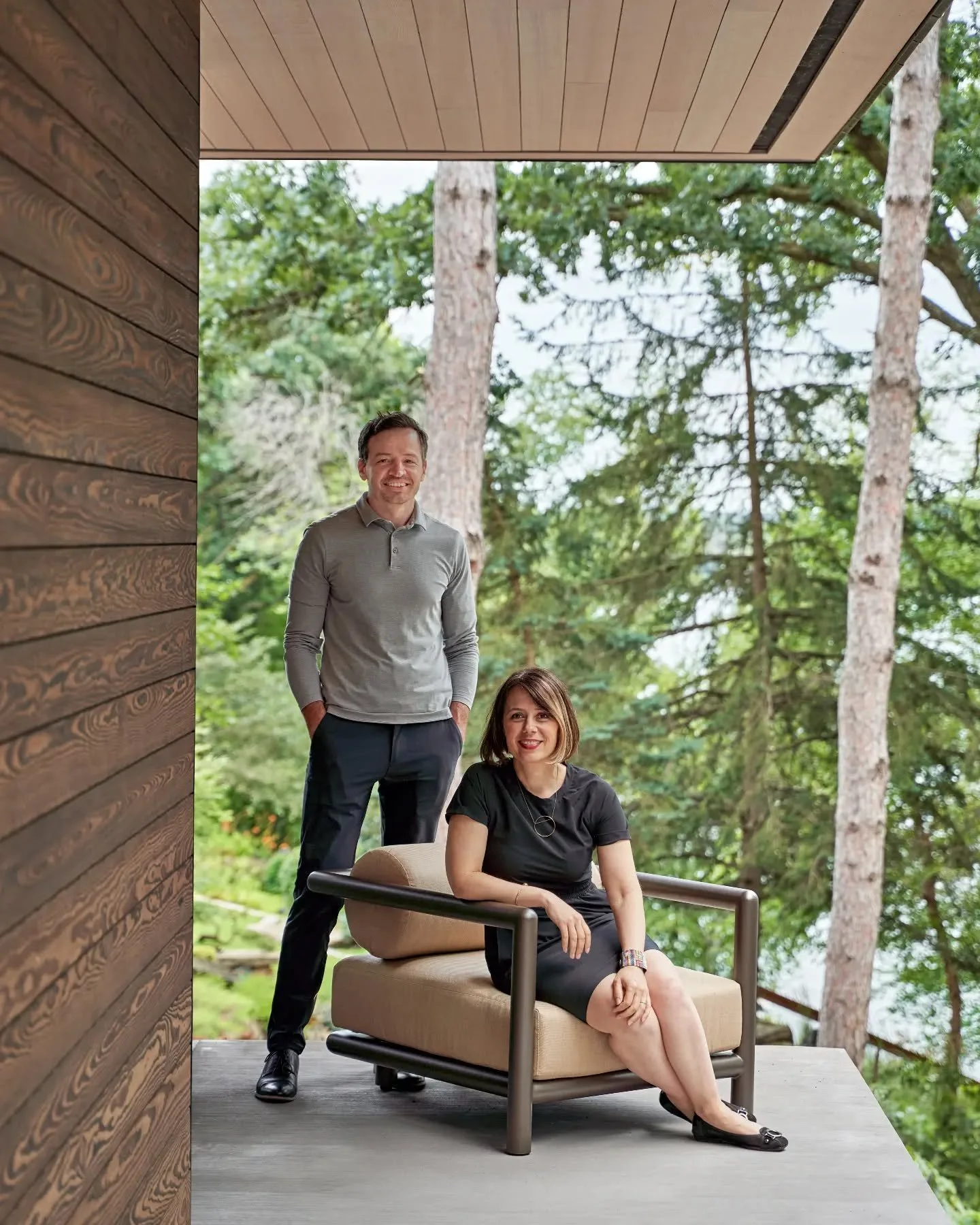
We are Sara and Jeremy Imhoff, the owners and founders of Imprint Architecture + Design. Since we met at the University of Minnesota Architecture program over 25 years ago, we have been dreaming about, designing, and creating architecture. We have been in your shoes...twice. First with a DIY renovation of our 1918 bungalow in Seattle, and then with a new-build in the historic city of Stillwater, Minnesota. It’s not easy and we know it. We’ve lived it. We have dreamed your dreams, we took the leap, and we have been rewarded.
At Imprint, you will find our strength lies within our partnership and our decades of experience. Your vision is our vision and you have our undivided attention. Your project is always at the forefront of our minds, focusing our energy into every aspect of its design. We pride ourselves on being open and accessible. With our guidance from concept to completion, we ensure that your vision transcends above the ordinary.
Resources:

-
Mark D. Williams 00:03
used to always post every single picture of every single home that, like, even the stuff that you shouldn't be showing pictures of, like everything. Like, more is better. And I've always appreciated architects, like, they'll show like, four photos or one photo with like a description. But now I realize, like, it's actually really smart, because that is your currency. Yeah, it's like and like contractors, conversely, are notorious for having horrible websites and horrible photos. Today,
Mark D. Williams 00:32
on the curious builder podcast, we had Sarah and Jeremy Imhoff from imprint architecture on the podcast. It was a great episode. You're gonna get lots of really heartfelt moments, a lot of stories. I think one of the things that comes out is just it's really fun to see married couples and partners that work together, how they treat each other and how it shows up in their work. Without further ado, here is Jeremy and Sarah. Welcome to cures, Twitter Podcast. I'm Mark Williams, your host today, I have special guests in studio, husband and wife duo, I've got Sarah and Jeremy Imhoff from imprint architecture. Welcome guys. Thank you. Thanks for having us here. Absolutely excited. Well, I've known about you guys for years, but we just met in person for the first time. Did I come out? This was it July, June? When did I come out to Stillwater to see your studio? Yeah, it must have been a few months ago. So sometime in the summer, and then after, was it, after the rave awards, we saw you at the rave awards, yeah, and that's when I because I've known about you and but the first time we met you was at the rave awards, so I was little star struck. Oh, yeah, you must have been confused for something. You're like, oh, I don't know why this guy, he's what a ninth grader. Well, you guys cleaned up last night because we were at the Midwest Design Awards last night, that was fun, and it just kept saying, imprint architecture, you guys, two golds and two silvers. Yeah. So congratulations. That's pretty cool. Thank you. Thanks. I think they do a really good job of rewarding the local talent and design. And I know from as a builder, and I love design too. I feel like there's more builder awards locally, and so it's nice to have our design counterparts, because that we're all one big ecosystem. And so it's like, I just, I've been telling our builder boards like, I want more awards for design partners, and so I just feel like all of us need each other to do our job. So it's like, why aren't we all sort of supporting each other more loudly and broadly? Sure, it was great, and we lucked out, because we got to the two remaining seats at a table filled with amazing, talented architects and our friends and colleagues. And so it is fun. It's a great event to be able to congratulate everybody and see what everybody's working on, cheer each other on, yeah, which, you know, we don't get a chance that chance to do it that often. So it's, it's nice to and then see what everybody else is working on. And yeah, all the creativity, yeah. I mean, it's a big group. I think there's what, 1000 people in the room, yeah, did you go last year? I did. Okay, I we didn't go last year, and we went the first year. And was this a fifth year? I don't know. I think I've got three or four years. Yeah, it's the fifth year. We went the first year, in the third year, and then now the fifth year to see how big it's gotten. It's wild. I think they do a great job of, you know, the hosting and, you know, shout out to Midwest design. I think they're doing a really good job with it. And so definitely, I think, like anything of growing pains, they continue to expand and try to, yeah, you know, you can't please everyone. So it's like, you always hear a little bit of the grumblings of like this, that are another thing, but you just continue to evolve and get better. Yeah, but they did great. And Jeremy said he, like so many people, are recognized there that they do do a great job of spreading love. So we're doing a little something new. When I interview the person I interviewed before you, and you'll get a chance to leave your question. They get you get to leave a question for the next guest, and we start with that so they're not gonna like,
Mark D. Williams 03:45
surprise that would it's like, I'll find a shelf very dramatically. What is the most difficult thing you've overcome in your career?
Jeremy Imhoff 03:54
Coming in hot with some heavy most difficult thing to overcome in our career, the most difficult thing I remember experiencing was just getting through 2008 and the years after that, I mean, that was just very stressful time. I somehow managed to keep my job through that whole time frame. A lot of people I worked with didn't, and I felt very fortunate that I was able to make through, make it through unscathed. We went from like the company I was with at the time, we went from two floors of office space down to one and around 60 to 70 people down to 20.
Mark D. Williams 04:31
That was, that was rough, and that was before you guys met and were married as well.
Jeremy Imhoff 04:35
No, this was we were married at the time. Sarah actually worked there briefly on contract. Yeah. So we were married in 2002
Sara Imhoff 04:42
and this was probably around 2008 or nine, because it took a while for things to trickle down. Yeah, yeah.
Mark D. Williams 04:50
Well, we'll get to the love story in a little bit. What would you say was your hardest part, sir?
Sara Imhoff 04:55
Oh my gosh. I mean the hardest part is just getting. Ian, building the business and getting people to believe in you, I guess, is just, would
Mark D. Williams 05:04
you count yourself in that? Did you have trouble believing how talented you were
Sara Imhoff 05:09
as well? Sure, definitely, but definitely. I mean, you just get more courageous as each year, as each client signs on the contract bottom line, and you get a little bit more confident, and then you get more courageous. And so yeah, but definitely growing the business in general, and just getting amazing clients, it's always hard just starting out, you've got to get those first few projects under your belt before people can see and trust that you're going to do amazing things for them.
Jeremy Imhoff 05:38
And I was going to provide a little background on that. So what I love about Sarah, and you know, we always kind of feed off of each other, like our strengths, I always tend to be a little bit more on the conservative side, side as far as the next step, what's the big picture down the road? And I always like want to hold back. Sarah's always good about jumping in and making it happen. And around that time, and we've already had a number of things that had happened in our lives together, where I started developing a trust for this and you know, like, I'm we're gonna go buy a house, and I wasn't even done with grad school yet. I'm like, what? I'm not my mind's not even there yet. But it worked out great. And so after experiencing this, experiencing this a number of times. You get to a point where we're having our first baby, Jonah, who's now 16, and she's like, I am ready to move on from my employer and start doing my own thing. Well, that was in 2008
Sara Imhoff 06:35
at the time when everything was slow, but we didn't have Jonah till 2010 Oh, yeah, right. And when things are slow, sometimes you just have time to think about what you want to do next. And so you never want your employer's employees to be slow. But I had time to think about it, and I was like, it's not going to be easy to start a business with a brand new baby. So we started in print, or I did in 2008 and then Jonah came along in 2010 Yeah? So we were thinking a little bit about foreshadowing. The economy was doing horrible things. It wasn't our business. Yeah, it wasn't a great time. But Jeremy always throws full trust in in these crazy, wild decisions, and it's panned out.
Mark D. Williams 07:14
There's a it's funny, it just came to me now. And I think it's actually my dad's superpower, and I've always related to physical ability, but I think it's actually a mark of entrepreneurs as well, which is comfortable being uncomfortable. And I think you know kind of what your story is, even kind of resonating with me is like, I'm sure, if we look back and you think about risk and how you value risk today, I don't know, do you feel like it's different, or are you just not aware of the risk sometimes, isn't it? You look back and you're like, wow, we really went out there, like, in a way that, but sometimes not knowing what the risk is, or maybe did you feel like you feel like you even knew the risk? Like, I look back at my career and I'm like, Man, first of all, I was 23 I wasn't married, no kids. Like, now it's laughable. It's Oh, man, what do you know?
Sara Imhoff 07:54
We had no safety net. We had nothing to lose. We didn't know what we didn't know. So we just went, sounds good. Same reason you go backpacking across Europe and sleep in a hostel or whatever. I would never do that now,
Mark D. Williams 08:08
but I think that's the creativity side. I mean, it just sparks incredible amount of creativity.
Jeremy Imhoff 08:12
Yeah. I mean, I guess they're, you know, getting comfortable with with risk. I don't know if I'm ever fully comfortable with it, because I'm always thinking about what can go wrong. And now we have employees, and so my mindset goes to, okay, you got to keep these guys busy? Yeah, you know, it's there, you know, they have lives. They're trying to support their families. And so that's like a whole nother layer that was a big jump for us, is when we were getting enough work where we could hire our first employee, and that kind of your your we were just worried about ourselves up to that point.
Sara Imhoff 08:43
And it's like we can always just go figure out how to drum up some work, even if it's not the most glamorous. But when you have a team that's around you, you want to make sure that they're enjoying what they're doing and having a good time. So yeah, I
Mark D. Williams 08:57
think, you know, sometimes I think when I was talking to someone recently about, you know, low spots. I think low spots proceed, you know, the high spots for myself, I think of like, you know, we had last couple years were really slow actually, but it was during that slow time that we really dug in personally on, like, the Kirst builder, the collectives, the retreats, all the stuff that I'm doing now. And I've had a couple of people come up to me and say, you know, that's that another thing like, how do you do this? Or, how do you do this? Or, how did this happen? And it's like, honestly, is because I didn't have a bunch of other things going on, so I had a lot of free space and free time. And so if you were, if you're always really busy, you don't have that time to innovate and self develop and and I don't know, one of my questions to you is, how do you continue to evolve and sort of push what the next level is for yourselves, is there been things in your career that, like, either, you know, real low points that made you evolve and get super scrappy, that sort of led to a new growth? Or how do you because you've been in business now for 11 years, or no, 15 years? Yeah, you know, since, since? Well, no longer than that. Yeah, because Jonah was born in 2010 so, yeah, so 2008 Yeah, yeah, almost 20, yeah.
Sara Imhoff 10:02
It's been a while. It's been a hot minute. I think, you know, we, I think it's to try to push ourselves into new boundaries. It's all baby steps, so you don't really realize you're there until you're there. And, you know, the there's small goals that you'll set, or that we might set in our head, not really verbalizing or thinking about it, but maybe the first goal was like, let's see if we can get a project that's over a million bucks or something. And then pretty soon the bar is higher than that, and then it's higher, and you're like, wow. How did we get here? And so I think it's always, you know, just setting those little, tiny milestones, and then eventually you get to a point where you're like, wow, it happened. So in terms of challenging design wise, I mean, we're just always looking at architecture all the time, and just in tune with what our colleagues and friends and people out in our Seattle base are doing, and we see their work, and it's awe inspiring and admiring and and so when we try to work on new projects, we're always trying to think outside of the box. What haven't we done yet? What might be interesting here? Let's push the boundaries a little bit. Yeah.
Jeremy Imhoff 11:15
We usually, you know, with each client, early on, we'll develop a couple of schemes. We all, I mean, starting out, we really listen to them, and what they this house that or building, or whatever we're doing is for them. And so we really stress the importance of that. We want them to send us images of what inspires them, tell us what inspires them. And a lot of that gets built into the design work. And then off that feedback, we usually develop a couple of schemes that can still start to tell that story. And oftentimes one of them will push the envelope just a little bit, maybe more than the other. Maybe one's a little more conservative and ones are one's a little bit more out there, because you never know how. You know they're going to respond to a design and and sometimes maybe they see something in both that they want to combine. And but I think that's just an example of where I feel like that's where sometimes we push the envelope, where we create something really unique, designed to cater to them.
Sara Imhoff 12:13
And, yeah, so the clients are, are striving that, like driving that creativity a lot, because, you know, we use the example a lot about our Driftless bluff project and our client who wanted the arch top door. That was her dream was to have an arch top front door. They also wanted modern architecture, so we were trying to figure out how to accomplish that.
Jeremy Imhoff 12:33
Well, yeah, blending that idea with a modern, Scandinavian style house, and our initial reaction in our heads, we didn't say it out loud, was like, Okay, how are we going to do this? This is going to be a challenge, but that really pushed us. We're like, okay, we can. We can probably figure out something here. And it became a main driver for the design. And I
Mark D. Williams 12:52
mean, one thing I think you do very well, and I think actually the field of architecture does an excellent job of this, is storytelling. And I feel like lately, the last couple of years, in general, in terms of marketing, we see, I know for sure, like, I love the word brand, I love storytelling, and I didn't realize that how much I loved it. I've always loved stories, but now I incorporate into everything that I do. But I feel like architecture, and I know it's on your website and how you guys convey but it's like the home has a story that and it seems like what resonates with the clients that you're designing for and that we're building for, is somehow you're architecturally able to capture the story of who they are as people, or the lifestyle that they want to live in this new home. And this home sort of takes shape around that story, and it provides a foundation piece that you sort of can design, kind of like a keystone around the whole project. Is that kind of an accurate way to describe of like, how storytelling? Yeah, definitely, absolutely.
Sara Imhoff 13:44
And even with that, like your honey Hill project, it has a personality. Just because it has it has a name, so it takes on a life of its own. And that's like a lot of architects have a name for their projects, or this or that, and it's part of the story. It's a character, and that story and the main focusing element,
Mark D. Williams 14:05
what we got to go back to, and we should have started there. But your name imprint, I know the story, but for the audience, how did you come up with the name imprint? Because I love it on three levels. But I'll let you sort of tell your story of how you came up with imprint. I'm much more impressed with your name than maybe you are. I just think that's a really clever I love clever word.
Sara Imhoff 14:22
You love this name because we've, we told you that in the past when we talked about it, that we thought about scrapping it number of times, but it has, it has I am in the beginning, which is the start of our last name, Ian Hoff. But we also didn't want to create a business name that couldn't encompass a whole team of people, and we wanted to think a little bit about maybe somebody wants to be an owner or buy in. Jeremy wasn't a partner at the time, so we didn't know everybody wasn't a partner, no, dude, you had to earn it twice. Is on paper he was, but on the Yeah, but no, he so we just didn't know what the future of the business was going to hold. And so we wanted it to encompass a little bit of our last name, but we didn't want to put a last name on it. The other aspect is the imprint of it all, which is the leaving your mark, exactly,
Jeremy Imhoff 15:21
whether, you know, just in the creative process, creating something creative, unique, and that resonates, yeah, I was going to also say, in regards to imprint the other, the other. The other thing I like about it is it makes it less about us as, I mean, we're kind of already relaying that information, but it's making it less about us. And again, going back to the client, it's about them. And, yeah, even the imprint mark, it's for them. And so it's not about Sarah and Jeremy Ian Hoff designed this. It's that collaborative process with everybody involved. Well, I
Mark D. Williams 15:59
would say, when we're designing with a couple. It's like, you know, it's a prototype. You know, you're never going to have this team together, meaning it's never going to be the same site, same client, same designer, same builder, same architect. I mean, it's just, it's never going to happen, ever, right? Even if you had all the other things, it's different site. Yeah, it's unlike you cannot go build the same house in the same place. You know, it's always going to be different some way. And so, you know, I always tell all our partners, including the clients, because they are a partner. I actually think building a spectrum is really hard. We're doing one right now. And the whole reason I created the brand around Misa, who's was Misa is, is my client. You know, you know, she is the philosophy that we run the filter through. And for me personally, I need, like, an object or a person or a thing to react to, for me to be my creative self, yeah, and so, you know, I guess in this case, it's an imaginary being.
Sara Imhoff 16:49
No, there's definitely a personality there, which is what we just talked about. So it's not just a run of the mill, cookie cutter, copy and paste house,
Jeremy Imhoff 17:00
yeah, it's definitely, it's definitely harder to be at least we found when you the more the less you have to respond to having this big open landscape is a lot harder to design something within. When you have neighbors and other, you know, things to primary view or
Sara Imhoff 17:17
but as a spec house, even if you don't have a client that's going to buy it. You have to have Misa, you know, to tell you what to do. Yeah.
Mark D. Williams 17:32
This episode is brought to you by Pella windows and doors. I've used Pella for 21 years as the exclusive window company on every one of my builds. When people ask me who I trust for windows and doors, it's Pella every time. Their craftsmanship, their innovation, the top tier service, make them a no brainer for any custom home builder or designer who demand the best, whether you're designing something bold or building something with timeless elegance, Pella has you covered. They're also the only window company that has a lifetime warranty on all of their windows. I've gotten to know all their people at Pella corporate, as well as locally. Here at Pella Northland, I'm proud to call them our partners and our friends. Visit pella.com to learn more and connect with your local reps today. Also for more information, you can listen to episode one, where I interview their founders, as well as episode 109 where we talk about the innovation at Pella kind of been using this line lately that if you build a house for everyone, you sort of build a house for no one. And I don't like that, right? Because I'm so used to being like I'd like to think I'm really good at building like I was building you a home, and you're not architects in this scenario, I'd be really good at extracting from you, and we all are. I mean, that's our job. We're really good at asking questions to sort of dig into. What do you want? Because a lot of times people don't know. They find a little bit daunting, you know, like, what? Well, how are you at the end, we're just responding to their answers, yeah, and there's no wrong answer. Like, every time they give us a response, that's like one more touch point for us to sort of create upon. Yeah, absolutely. What? How do you how do you how did you guys walk us through the love story a little bit? How did you leave an imprint on each other that you before you first met? Because I just love the idea that we've had a few other people that Jamie and Morgan maldor are builders. They were dating, and they started a company while they were dating, they were even married. I was like, that's next level dating seriousness. But like, we're in the we're in the because you were in grad school, and you guys had met, been dating for a while, or, like,
Jeremy Imhoff 19:23
it was actually undergrad. Okay, yeah. So we were at the University of Minnesota, and every year I would get my friend, usually a CD music. He was, he's obsessed with music, and so I went in the music store, got, got a CD. I'm like, You know what? I'm gonna dress this up a little bit. I'll go get a card and make it one more serious, formal birthday gift. And I walked into this card store on campus in Dickie town, and campus cards, campus
Sara Imhoff 19:52
cards, yeah, anybody remember it?
Jeremy Imhoff 19:55
Picked out a card. And then I went to go check out, and there's. This beautiful woman shoves this other girl out of the way. Starts like I immediately noticed, like something weird is going on here, and starts talking to me, and I immediately recognized her, because obviously we'd seen each other on campus, but never had classes together, didn't have a studio.
Sara Imhoff 20:19
Jeremy was a year ahead of me and in school, in undergrad at the U of M at the architecture program.
Jeremy Imhoff 20:24
So, yeah, so we, we talked. I think we were talking for about 20 minutes before you finally checked me out. Yeah. Oh, so you were Oh, so you were working there. I was working. Yeah, sorry I didn't. I didn't just, like, budged
Mark D. Williams 20:35
in line to like, wow, Jeremy, you really had it going on. Like, now, I've never had a woman like jump in line to talk to me. That's next level,
Sara Imhoff 20:42
some I don't even know who else was working there, but she was working the cash register, and I just knocked her out of the way so that I could talk to Jeremy. And then I asked for your phone number, yeah. And then I never called Yeah.
Jeremy Imhoff 20:56
So then I can't remember, it was a week or later. I think it was like a week later, a week later, Ian time, same time of the day. I made up an excuse to go back in there. It was close to, I think it was like three weeks out for Mother's Day, buying a card for months. And anyway that so then I saw her and talked to her again, and this time she gave me her number.
Sara Imhoff 21:17
And yeah, this is pretty good that you actually came back because I didn't call you. So nowadays, why didn't you call? I don't know. I mean, I don't know
Mark D. Williams 21:26
what I mean, it's pretty gutsy to ask for his number, and then not I know, but
Sara Imhoff 21:31
then gutsy to come back, if, because maybe, who knows what you could have been thinking about. Why didn't she call? I don't know that was back in the day before somebody could be ghosted, I guess, on a cell phone. That's so fun. But no. So then we went out on a date, and then we, neither one of us had a vehicle, so I was over by Santana's, which is near st Anthony, main and we walked over there, and that was pretty fun. Yeah, procnas, you probably don't know. I don't know if you know any of these places, but they don't
Mark D. Williams 22:01
buy I went to the U of M. I just did what year I graduated in 2003
Sara Imhoff 22:06
okay, yeah. Where did you stay on campus? I was
Mark D. Williams 22:09
on West Bank. Ian. Remember the name of the place, right? Yeah. I'm blank on the name of the Okay, the place. But then I was at Sanford on the on the west side for a year, and then we were in Seven Corners for
Sara Imhoff 22:19
a while. Okay. Did you play sports when you were there? Played water polo. Oh, cool.
Mark D. Williams 22:24
And then I was just, I had my, you know, for big school, my world was pretty small, just like, four people I hung out with. I didn't really, yeah, the social butterfly that I am now, I just went. It wasn't that I was any different. I just had four really good buddies, and we just kind of did everything, yeah, so we didn't really wander around, and I wasn't really into the night scene or anything like that.
Sara Imhoff 22:42
Yeah. Well, we never left campus because we didn't have a car, so all we knew about was the little st Anthony main area, which is a beautiful, fun space. And then we moved and we went to Seattle, so we don't really know any place.
Mark D. Williams 22:57
So you graduated, you went to so at this point, you're obviously pretty serious. Remarried at this time. No.
Sara Imhoff 23:02
So we had only been dating for a year, Jeremy a year, and then we moved to, like, a year and a half before we moved, yeah, then we moved to Seattle, but we didn't live together. So Jeremy got into graduate school. I had my plan was maybe I would apply once I once we lived there, I would get in state and then try to apply. And so Jeremy moved on campus and went to the University of Washington, and I got a job, and I was working, and then we ended up getting engaged, and then we got married in 2002 so we we met in 99 and we got married in 2002 and yeah, the rest is history. So what
Mark D. Williams 23:40
do you think that it seems like there's a strong influence between Washington and Minnesota? I always feel like, I always feel drawn to their architecture. And there's a lot of Washington Ian here. There are, yeah. Why do you think that is I've always been told that it's kind of like, it's almost like a sister city, yeah. Do you feel that?
Sara Imhoff 23:56
I do. We've met, I mean, we met a few people from Minnesota, but I would say a lot of people in Washington that we met, they were from other places, like our, our, my really good best friends that live there. One's from Maine, the other one's from North Carolina. There wasn't a lot of people that we met that through school that were locally from Washington. And so we did meet a lot of people from the Midwest as well, California and Wisconsin too.
Mark D. Williams 24:25
Yeah, have you now that you move back here, and you know, just to get this back more entrepreneurial, have you found that a lot of your clients, how have the relationships that you forge? Well, they were there for 15 years, yeah. And so you came because you have your license in three states, right? You have it in Washington, Wisconsin and in Minnesota,
Sara Imhoff 24:43
Jeremy's in Minnesota and mine's Washington and Wisconsin and probably Colorado, maybe because we got a project there, yeah.
Mark D. Williams 24:51
What is the need? So like, obviously, you can be a home designer or an architectural designer or an architect, and they all have different Well, only architecture needs a certified. License, correct? Yeah. So, so what would be the need or does to be? So you're an architect, obviously, in three states, why would you need your architectural license? Let's say in Colorado versus like you, obviously doesn't change your skill level, yeah, just a license.
Sara Imhoff 25:13
You don't it's really, it depends if you're doing a commercial project. Jeremy stamps everything for imprint to Minnesota, and we've worked on, we have a funeral home going. We've done brewery, distillery, Country Club, you know, a few things like that. So commercial work, more of a commercial application, yeah, you need it. Yes. And residential, we don't residential. As far as I'm aware, you don't unless it's, is it over? I thought it was over 5000 square feet at some point in time? Minnesota, well, I don't know.
Jeremy Imhoff 25:43
I don't I don't know about Minnesota, Minnesota. That applies. I know Washington state, if it's over a certain square footage, you need to stamp them.
Sara Imhoff 25:50
Yeah. But also, they're different jurisdictions, so in Washington and Seattle, if you're permitting there, you need to stamp your drawings, whereas in like, an architect needs to stamp drawings, residential could it be a third party, you can have a structural engineer. So most aspects of residential architecture, you just need a structural engineer to stamp correct.
Mark D. Williams 26:13
And that's it that I'm used to. We did that for a long time before we've had so
Sara Imhoff 26:17
and I think getting licensed or going through that process in any state you have to take the all states are different, so I won't I digress in that, but I took the AR es, which is a nationally recognized licensor process that people take for these standardized tests. And I think if you go through that process and you become an architect in a state, it just provides a clientele, somebody who doesn't understand what you know, what you're doing, or maybe what the process is, they might say, Oh, well, they've gone through some education piece or some testing requirement, and so maybe it makes them a little bit more knowledgeable. I wouldn't necessarily know if that agree with that, but maybe that's beneficial to people, if they see that you actually have a registration when they're looking to hire an architect.
Mark D. Williams 27:09
Yeah. I mean, I'm just curious, yes, but I don't know, yeah. And I totally get it from a financial standpoint, as you set up other businesses or attract other clients in different states. I mean, it seems like the one thing I've always really admired about our design community, both architects and interior designers, is the ability to work outside the state. I'm working with, oh interiors on Misa house, and they've got three people here in Minnesota, where they're based out of but Melissa and another are in Colorado, so they kind of handle the rest of the country, and there's a Minnesota base. And it seems like one of the questions I ask, I'll ask it to you, is, what percentage of your work is Minnesota based versus out state?
Sara Imhoff 27:44
Yeah, that's a great question. I mean, I've thought about this recently, but it has been like almost 50% Wisconsin these days,
Jeremy Imhoff 27:53
doing the math in my head, of the projects we have going on, we've gotten a number of projects in Wisconsin right now, at least five. Yeah, maybe six.
Mark D. Williams 28:01
Wow, that's a lot. Yeah, is that based on proximity, because you're in Stillwater, right on the border, or is it because you've done a few and they've sort of just kind of led a seating pattern?
Sara Imhoff 28:09
Yeah, I don't I think people find us on a Google search. I think it's all of the above. People find us because of proximity, but then they also find us on a Google search or those things. But we have one up on in Bayfield, and we have one as far south as Oshkosh, East.
Jeremy Imhoff 28:27
Sorry, East. Thank you, Oshkosh. And well, maybe when South, far south is the Madison area, yeah,
Sara Imhoff 28:34
so and then, and then a bunch in between. So, yeah, I don't it's interesting. So Wisconsin, yes, Minnesota, yes, all over Minnesota, down Rochester, up to Grand Marais, and then now Colorado. So really, we're not we're open to working anywhere. And the one great thing about the pandemic that everybody can maybe relate to was the ability to be able to work from anywhere, which is now everybody's pretty great at
Mark D. Williams 29:01
doing that. Yeah, forced practice. Now everyone's really good at it. Yeah, exactly. What do you what is the most challenging thing about owning a business with your spouse? Like, do you find that, is it always on? Do you have to set boundaries at home? Is it just really enjoyable so that it doesn't really become an issue? How have you navigated that? Because you've got, you said, two children, three, three children. Yeah, how do you have you guys navigated that?
Jeremy Imhoff 29:28
I don't we. I mean, we're always talking about it. I don't know. We just always, when ideas pop in our head, we immediately start talking about it. It's bright. It's always a continual conversation in our household. We don't ever turn it off. I don't think necessarily, sometimes that might not help. We're like, Okay, I just don't want to talk about this right now.
Sara Imhoff 29:46
Or the kid or the kids are like, can you please stop kids like talking about architecture. But I was gonna say too that I almost don't see a challenge. I only see things. Are easier because we're in the same boat with everything. Like we have one bookkeeper for both of us. We have, you know, one set of taxes for both of us. We have one set of, you know, we know what's going on. We can download. When you were working for other companies, I would often download information onto Jeremy, and he's like, my brain's already focused on these other projects, but now we are in it all together. So in a way, it's almost less work, even though it's a lot of work,
Mark D. Williams 30:28
we've got a helpmate. I mean, you've got someone that's basically handling load,
Jeremy Imhoff 30:32
yeah, yeah. I mean, when I was working for my last company, or just even before we started working together, I think we'd probably had getting more arguments back then, because, yeah, again, we weren't tired.
Sara Imhoff 30:43
We were also tired because we had three small children.
Jeremy Imhoff 30:46
Yeah, that too. They've kind of had, probably had a factory, yeah?
Sara Imhoff 30:49
But no, I mean, I think it's, I don't see a lot of challenges. I know we run into a lot of people that say that we they couldn't work together with their spouse, and I can totally understand that. I think that we've been married for so long. In the beginning, when we worked on our our house in Seattle, when we remodeled that, there were tons of arguments on that, but we've learned how to work together, and we now we just divide and conquer.
Jeremy Imhoff 31:15
Yeah, I mean, one of the roles we've kind of established when we our first kind of project working together on our own house for six to eight years. I can't remember actual timeframe, very long time. Early on, we would get into more fights about what we were going to do with our with our house, just trying to flush out what the final design was. And then Sarah came up with this idea. She's like, okay, one of us doesn't like where this is going. Let's just go back to the drawing board. We'll scrap both ideas. If you don't like it, I don't like it, then there's probably a better solution out there. And it and there was, and every time we went through this process, we learned it got better and so and that helped us. I mean, professionally, it helps to push yourself out of your comfort zone, what you're used to, and then the work gets better. So carrying that mantra through, we've learned, we kind of learned how to work together back and forth and in a very positive way. And now we've done we've done it twice. We remodeled our house, and then we built a new house. And just going through those two processes, I think we've kind of are stuck with each other now, yeah,
Sara Imhoff 32:27
but it's also good too, because in terms of our business, what's good for you is good for me, and what's good for me is good for you. And so we both want each other to succeed, because that's the only choice we have so it's but it's also we love each other. We're best friends, and so when we need to talk about issues or something's weighing on us, we have the other person to help, help with an answer, great solution or an idea. So it's been good.
Jeremy Imhoff 32:56
And we also really trust each other's opinions, which is huge, too. If Sarah says she doesn't like something. I'm like, I gotta rethink something's not quite right here.
Sara Imhoff 33:06
And likewise, yeah, yeah. So
Mark D. Williams 33:08
that's good. No, I think it's, I mean, what I love hearing back and forth is, like, I remember someone describing more rather than a husband and wife, but it was, you know, designer, architect, a builder, and they just talked about a healthy tension, how it was really good for the project. And what you're describing a little bit is that you're both, I'm guessing, correct me if I'm wrong, you're both better architects, you're both better people, and you're both better at entrepreneurship because of each other. Yeah, and it doesn't make it easy, but it does make you better. Is that Yeah, 100%
Sara Imhoff 33:35
Yeah, because we one of the wonderful things about this is that he can be Jeremy, can be brutally honest with any design that I have, and I'm not gonna hate him forever, like it, maybe briefly, maybe for a hot minute. But we, we have that closeness where you don't have to worry about, what are they thinking? Are they going to be mad at me if I say this? What? What's happening? Where you're able to just be totally brutally honest.
Mark D. Williams 34:03
You have a quote where you were talking about empathy, you know, and how it shapes architecture, you know, just hearing you guys talk to each other, you know, obviously you have a high degree, you know, as people that you know love each other and is married to each other, you would obviously be empathetic towards the other person, whatever they're feeling. But how do you use that sort of empathetic power in design with, let's say, a client, how does it inform
Sara Imhoff 34:24
your work? Yeah, that's a great question too. We're because we're married, and we understand this, it really helps with our clients as well, because they come and say they sit at the table with us, and they might have an argument or a discussion about things that they like or don't like, or somebody wants this, or somebody wants that. And we've been there. We've done that. We've had that same argument, that same discussion, or that same excitement about the process, or, Oh, we both love this, or the same discovery. So we've been there. And I think being able to put yourself in somebody else's shoes definitely helps with the. Empathy piece and helps you relate to what what they're going through, because we've already been through that as well. And even if they're not married, or even if it's just a single client, that's okay too, because they often want feedback, and they need that MISA or somebody to have, you know, bounce an idea off of.
Mark D. Williams 35:18
Or I think that, I mean the land. I always go back to the land. I mean the art. The land informs so much of not only the architecture, but honestly, everything. It's like, it's another it's not another thing. It's like one of the main things that you're sort of working around. I love the way that the land can sort of dictate and help shape it. We need these touch points, versus like a blank sheet of paper. I have to imagine, is it hard? I've always sort of Marvel that architects abilities to, you know, design and repeat designs. Because sometimes when I get something in my head, it's like, that's what I see and like, I'm sort of, like fixated on that. Sometimes it's hard to break that mold and to start again. Is it hard to sort of mothball an idea and get rid of it so that it doesn't impact the new work? How does that process
Sara Imhoff 35:59
work? Oh, that's a great question. We
Mark D. Williams 36:02
like, I don't know, yeah, no, but you've had that.
Sara Imhoff 36:04
You just had that recently where you're working on a design and working on it, working on it, and if you're working on it for a week or something, maybe we need to just wad it up into, you know, throw in the trash and start over, right? Yeah.
Jeremy Imhoff 36:16
And when since, yeah, that did happen recently, we just tossed it. I'm like, Okay, we have to give up on this one. Yeah, from now I'm remembering which one you're talking
Sara Imhoff 36:24
about, yeah, but it's true. If it, if it's too hard, and if you're working on it too much, then maybe that's not the right solution or the right answer, yeah.
Mark D. Williams 36:33
I mean, I have to imagine that there's some designs that just like, pour out of you, and it's just like, Yeah, super easy.
Jeremy Imhoff 36:39
Yeah, yeah. In some instances, it just comes right away. Recently, we worked on one project, I think we spent half the time we normally do on a on that one, specifically, it just, it, just the site and what the client wanted. Just brewed ideas instantly, and it all came together very quickly. Yeah. Other times it's more challenging, and sometimes it's just because, like, for instance,
Sara Imhoff 37:01
well, well, the site that you mentioned that. So we have, we have multiple projects with challenging sites. But one of the projects literally had the, you know, the cell a cell phone size of buildable area, yeah. And so we had to figure out how you guys were going to go ahead and and be able to build on this. And there's a lot of issues with the site. So if you get a challenging site, yes, that's a hard project to unpack.
Mark D. Williams 37:27
Exactly in the end, though, I always think of the value. I mean, someone has to take the risk, someone has to trust somebody. You have to trust yourself. Someone has to trust it financially. But I look at I drove by, so one of the things that and I gave you guys one when he came in, but I we make our client boxes to give to partners that we want to work with, that's being you, as well as our past clients and things like that. And one thing I really enjoy is it takes me about 45 days to visit every one of my past clients and hand deliver it. And I could go into their home. I hear a little bit about where they are. We catch up. I you know, some of them knew me before I was married or had kids. And so it's just this, really it's one of the things I love about our business is how relationship driven it is and how deep it is. Where I'm going with this is, I drove by a client's house and I was like, oh, man, I remember this one, three variances, super difficult, incredible climate in the area. It's actually it was in this town. And it's like, I was like, Darth Vader. I want to be Luke Skywalker. You know, everyone was like, builders are bad, you know, all this kind of stuff. And as like, the house is beautiful and it's easy to see it at the end, you're like, well, everyone's like, well, of course, that's great. I'm telling you. Well, I saw it at the beginning, and it was not a pretty picture, and so, but you're just glad that you somehow got through that process. And, like, look at what happens. And I wonder, just asking you guys, like, Are there projects? You look back and you're like, Wow, that was so difficult. But now you look back, you're like, Wow, that was an incredible project to be a part of, and I've grown so much as a person, business owner, as well as an architect because of it.
Jeremy Imhoff 38:53
Yeah, it definitely had a lot of those experiences. I mean, I mean, the one I immediately think of actually wasn't even, isn't even part of imprint. This was before. When I was working, I used to work on not only houses, but also much larger projects, like schools and what else did I wear, and larger commercial projects. And in those, in those in those instances, you're working with a lot of different people, lot of different interests, especially like schools, you got to like each class is set up a little differently, the music department, and getting through, getting all their input, absorbing it, coming up with a solution that everybody's happy with is extremely challenging, yeah. And then when you're all done, and then there's also the financing, making sure everything's coming on budget, because they it's very limited. They've got public funding. They don't want to go over that number. And so when you get that done, and then the kids are using it, and you see it, you're like, wow, we did it. We pulled it off. Yeah, so, and we have those instances with some of our projects we're working on right now. I mean, you know, Sarah's already describing the one that's in progress where we have a postage stamp to work with. How are we going to get this convince the. For the jurisdiction to allow us a variance, to modify this, to allow it to work and
Sara Imhoff 40:05
but So that part's challenging, and there's definitely always challenges with everything, but I'm sure that you found so now, like your experience with this project, that you got multiple variances on now on your next project, if something comes up, you're probably not. You're probably like, No, we can. We got this. We can feel right?
Mark D. Williams 40:26
I wonder. Like, well, so I agree with you, like you've been through it, you know how to get through it, and so you just kind of, it's like, anything it's, I sort of been learning more about the Japanese culture, because the more and more I read about the more and more I just find things I like about it. But like kaize Ian is a popular thing among corporate America. It's the 1% right? Like, just get 1% better each day, each year, each month, however you want to look at it, and so. But I think about that, like building a career, like the things and the skills that you, that you have developed and have done, same as me, is like, they've all added to who you are today. Like, I look back at the builder I was 1015, years ago, and I was a really good builder. I mean, I would crush that builder today. Well, it wouldn't even wouldn't even be a contest. And so it's like, you know, it's like, it's right, there is something really cool about the wisdom that you can but as long as you keep on maintaining the curiosity that you don't know at all, because there's so much, because back then, if you think back when you were in your mid 20s or 30s, you probably, like all of us, we all think we knew probably more than we did. And now looking back, you're like, just because you know more, you just only realize how little you actually really know. Yes, that's like, the more you know, the more, the more you realize how little you know right, which, yeah, just sort
Sara Imhoff 41:32
of erotic well, and I think being open to everybody's ideas, there's always a solution to the problem. And so if everybody is open to the solution and working together, it's not that stressful moment that we all had when we first started out, and if something went didn't go right, and you poured over it for days.
Mark D. Williams 41:52
Have you guys met Linda Engler from England? She's amazing, and so great. She gave me this great quote, and I've said it a lot on the podcast, and it's true. And she talked about how the designer, the builder, the client and the architect all need to be together, because the project will always fight you, and as long as you stay united, you can defeat the project. And it's like, because something will always come up. And I just, I love this unified, like, you know, this unified collective, but if this breaks apart now you have multiple you are not unified. Yeah? And you think of, I think of anything that's really gone long wrong? It's usually communication is usually the first culprit. Something broke down. Yeah, it's usually, there's usually, in my opinion, I'm a very optimistic person about people like I don't usually think that there's bad actors. I'm sure there are some, but in my experience, I just choose to believe that most people are good. And so usually it comes to people, somehow communication breaks down. Then there's a loss of trust. Ian, once trust is lost, it is very difficult, if not impossible, to get it back with a client relationship or a subcontractor or whatever it might be, but you know, at the end of the day, they're trusting us, and we're trusting ourselves too, that we can get through this. And so it's like, can you because you're going to hit rough water? Like, that's inevitable. My dad owned a business for 3040, years, and he used to always tell steady at the helm. Like, when it's sunny out, you know, be steady when it's windy out, be steady. Like, just be steady. And it's hard because life is emotional.
Jeremy Imhoff 43:16
I mean, as long as you're putting all of your effort in to do the right thing, that maintains that trust, and so the project can usually keep going, as long as everybody's pushing for that right solution, and you're not trying to hide anything. You're just trying to everybody's working together.
Mark D. Williams 43:30
Have you guys ever, have you guys ever been fired or let go of a project? Well, we fired a client.
Sara Imhoff 43:37
I'm like, Yeah, we won't go into the store.
Mark D. Williams 43:40
Come on, I want, yes, of course, I want the real
Sara Imhoff 43:45
stuff. No,
Mark D. Williams 43:53
we're happy to announce that on March 20, we are running sauna camp back for its second annual event that's gonna be out in Lake independence. It's going to be a half day event. We're going to start with a one hour podcast with three endurance athletes, someone who's climbed Mount Everest in the crater of hostage tape. We're then going to have two hours of sauna and cold plunging in between. We're also going to have Himalayan chocolate from Legacy chocolates, a good friend of mine, and a chocolate tour from St Paul. And then we are going to end with fumo, which is like their tagline in smoke, we trust. So if you're interested in community, if you're interested in learning some new experiences and really diving deep on your wellness, we hope you'll join us on March 20. All the details are on the curious builder podcast.com
Sara Imhoff 44:39
I don't think we've ever we've never been in a situation where it's been really deep into the process and then things blew up. So what? But knock on wood. I mean, I'm not wood right now. I mean, Mark's going deep with us. Well, no,
Mark D. Williams 44:52
the reason I ask is because I think to compare industries like I think it's a lot harder for a builder to fire. And to get fired on a project, because it could be, it gets super messy, legally, and also it's also not, it's not what is best for either party, where architecture or design, I'm saying is any better, but at least that there'd be a transition would be cleaner. Like, if you've gone far enough in designs, you could, like, someone could build this. Like, is it better if you stay on, obviously, but it this can still be built without you right where, like, as a builder, like, there's all kinds of legalities. Let's say you're a builder and I'm a builder, and let's say halfway through the project, you get let go at framing stage, my if I have a lawyer to write something up, but like, I'm not gonna just for my own protection, even if I knew you were solid builders, I can't warranty your foundation or the framing, which now this poor third party, well, who knows if the client is innocent in this? It doesn't really matter. At the end of the day, everybody loses, because that client is going to pay a whole lot more money for, let's say me in the scenario to come in, because I have to exclude, you know, whatever you've done already, and now I have to build it from there. But you think about the time it's going to take me to get caught up. It's three, four months to really get my mind around it. Schedule. Scheduling. It's just, what I'm trying to go with is just, it's almost always better to just see it through, even when it's difficult, especially if you're midstream. I think it's a little bit different if you're early on and you realize, like, this isn't going well. Like, I don't even consider that being really fired or not. It's just like this isn't a good match, right? We recently got let go of a project, one of the first time that's happened in a long time. And, you know, I've already talked around the podcast. I don't need to talk about it again. But long story short, they just, all I can say is, in hindsight, is just like when I asked them, What was the reason? They said communication, which I said, to be honest, I said, that's one of my strengths. Yeah, I'm really surprised. You're great. I'm really surprised, and so but I think the underlying thing is they just sensed and just felt it wasn't a good fit. Yeah, and that's totally okay, and I'm okay with it. I'm not upset, yeah. And like, obviously, would we have wanted to complete the project? Of course, yeah.
Sara Imhoff 46:51
But well, and like, conversely, would you take on a client if they had fired a builder? Would you go do the project?
Mark D. Williams 47:00
Ian, it's funny is I gotta be careful here. But there's several builders that called me because that client has been asking, and they've all said no because they knew. They said, Well, we know Mark, yeah, so, like, that's a huge red flag to them Sure, and saying, wait a minute. Now, what is this saying more about Mark? Or is this saying more about this client? And I don't know enough details to comment beyond wallet, but that would be my request.
Sara Imhoff 47:22
Like, right? It's a small world, and it's a small community, and designers and architects will do the same thing. If there's a client that goes around and say, Hey, did you talk to this person? Tell me the background. What should we look out for?
Mark D. Williams 47:36
I've always been super open. I mean, that's just my personality. I don't know if others are, but I think you guys are too. And you know, I was talking to, it's funny, she's talked about a public he's not gonna say her name, but like, Chris from PK and like, Kobe are really good buddies. And sometimes they'll go round and round. And like, the clients don't know that everyone's interviewing, sort of everybody, if you're, if you're looking at similar projects, yes, yeah. And so I think builders to like, you know, we got interviewed the other day, and Amy Handel and Rick. They're just down the street here, and you know? And I said, That's great competition. They're great builders. I told the client. I said, they're amazing. You'll be so happy if you build with them. You'll be really happy if you build with me too. It's really just, what do you think is the best fit? And they started smiling, like, that's exactly what am I and Rick said, I know, because it's how we both feel. I said, You are the one that has, has the real difficult choice here, yeah. And so the world is super small. And like, you know, we looked at a project maybe two, three years ago, and the builder said, You didn't hear it from me, and shared some other things. I was like, whoa. And I really wanted the, it was a, I really wanted to do this portion of this thing, and it was really neat. And but my, my my alert was on high alert, and I met with them, and I looked at it, and I was like, oh boy, considering the information I know right now. Like, you know, I was like, I just said, you know, I'm really too busy. We're over our capacity. We can't handle this right now. And it's hard for me to say that, because it it's not that it wasn't true, but it was really Minnesota polite, like, I mean, what am I gonna tell him? Like, no, like, it's just doesn't. So is
Sara Imhoff 49:05
that based on experience? Like, have you taken on a project that you had that there were red flags, and then you took it on anyways, and then you're like, Darn it,
Mark D. Williams 49:13
one in particular. I mean, the worst of my career by far, oh God. But it had nothing to do with other builders. I wish no other builder. I mean, it's hindsight. Is 2020, it's easy to look back three, four years ago and be like, Oh, it time reveals so many things, but
Sara Imhoff 49:29
there's but there's value in that, and there's a learning lesson in that. And that's why this builder of today would crush the builder 20 years ago. So and so. We always see the Silver Linings through everything, whether it's a client that that wasn't a good fit with another firm and we took them on, or if somebody felt like we weren't a good fit for them and they went somewhere else, like there's always a silver lining and a takeaway from that that we can use going forward to the next project and the next client, I
Mark D. Williams 49:59
think, try. Your instincts. Yeah, because you know, if you guys read any of Malcolm Gladwell stuff like Blink,
Jeremy Imhoff 50:05
have you I did read one book, but it's Jeremy reads more than
Mark D. Williams 50:10
I do. The short version of Blink, essentially, is like, well, the story that I like the best was there was like a butcher, but it's paraphrasing. It is like six they had like six people interviewing, let's say Sarah, and they got six seconds with her, and then they had another six people that got to interview for an hour. They all chose to hire. So let's just say there's 20 Sarah's. They all chose this Sarah. One did the hour interviews, and other ones did six seconds. The point of the six second ones is like, your instinct told you all the things that they needed an hour to sort of figure out. And so like, sometimes you meet with and I'm not saying not saying that we, you know, it's kind of like that old adage, right? Don't judge a book by its cover. But guess what? I guarantee, if you looked at artwork on books, when you go buy a book, like, you're probably tempted to, like, go pick up the book that looks really like it tracks you to it, either the title, the naming, yeah, whatever. Like, we are drawn. We are physical people that are drawn to things that are unique. Marketing works on us extremely well when, especially if you touch it. And so it's like, you know to lie to yourself and say that doesn't matter is while you're lying, right? Yeah, so it does matter. So trust yourself, and if your little inner voice is saying, run, yeah.
Sara Imhoff 51:17
Anyway, I love that, and it's it's great to be part of an architecture and design community where you can be honest and with your colleagues from other companies and other firms and and nobody's trying to hide anything because they're trying to compete. You can ask the questions and be open. And I've had one of my best friends out in Seattle. She has her own business, and it's beautiful because we she has sent me a 72 point font run in the past. So when you say run, you know, you're like, What do you think about this or that? You know? And you can bounce stuff off of each other and or, you know. But it's been great to have that relationship, and we've been forging those relationships here in Minnesota with the local community too. And I'm, I love it. It's fabulous. Yeah.
Jeremy Imhoff 52:05
I mean, we've become pretty good friends with a couple of other offices that we often compete with. Our mentality is, you know, they do good work, and you know, we don't, we can't, you can't win every project. Yeah, it's
Sara Imhoff 52:18
like, what you said with the with the guys down the street.
Jeremy Imhoff 52:20
Yeah, so, and it's good to kind of cheer each other on and then also keep engaging with the general community, learn from them, as you know, their creative process, see what they're up to.
Sara Imhoff 52:31
And that's why your builder collectives are so awesome. I interrupt Jeremy a lot. That's why he's that's why he puts up with me. Maybe that's not, but, but, no, that's why the collectives are so cool, because we all sit around and talk about open, honest questions that nobody wants to share because they're not sure if it's
Mark D. Williams 52:55
you touched on. I mean, the whole point is, I mean, you went to school for architecture, right? That doesn't necessarily make you a good entrepreneur. You had to learn that all about your on your own too, right? Like, we don't have another hour to go through all that. But, I mean, that's really what the nature of what this is, and what attracts me to, you know, I just love people number one. But number two, I love people's stories, and I love hearing how they evolve and how, you know, what can I learn from the relationship, or how you interact with your clients, or each other, or I just, you just don't know what sharing the story like the ripple effect it'll have on someone else's life. And even if no one else listened to, let's say this episode, it wouldn't matter, because we've just exchanged ideas and thoughts that affect each other. And so I think, to me, that's that I get so much energy and creativity out of this format. But also, the collectives were born because of that. It's, it's, you know, I want to accelerate not only conversations, let's say coffee, but because that's what coffee is, right? But now this is a more dedicated format, but then the collectives are like, Well, how about we get a group of 20 to 30 entrepreneurs together, break them up in groups of nine, and talk about, like, just marketing or because we we know how to do other things, architecture building, in my case, and not that we can't get better at it, but like, what about running a business who's teaching us? And how are we learning? How you implementing AI? How are you? Because that's, I think tomorrow's episode. Topic is AI, you know? So we have an architect collective tomorrow. It's like, okay, well, we're gonna run through all different ways, and we have so much to learn from each other.
Sara Imhoff 54:18
What is a I've got a question for you, which architect collective did you experience the most wild engagement from the people that were there for the
Mark D. Williams 54:31
audience that isn't in Minnesota, we have a collective where we get we have a builder collective, a designer collective, and architect collective, I think architects we have, I think maybe 14 that are in the collective. The reason it's hard to answer your question is, is I'm trying to build a community where they come for the season, not for a specific episode. Okay? And so that's what makes that one hard, because some people look at the roster and say, like, oh, I only want to come to the one on AI, or I only want to come on to the one of hospitality. But it's really meant for two things. One. Is for the continuity, okay? And then the second is the community. Like, my greatest joy would be that the architects or the builders or the designers that are in their respective groups talk about all these ideas, learn from it, but then what Forge? It's not another opportunity for you. Already mentioned, you have a couple other architecture firms that you're you become friendly with and like, Hey, I have questions for it. Like, I want that group to be kind of like their graduating class of like, you know, that's who they that's who they connect with. Hey, I've got a question. Like, I want it to keep on. I just want people to be open, to be curious. And so I couldn't say, like, there's one that had, I think they've all been at about the same attendance. So I want attendance, but I think tomorrow's AI one will be because anyone, if the thing that I find sort of ironic about all of them, is that regardless of which one you come to, you will get value every time, sure, because the people bring the value. Yeah, it's not me, yeah, it's the people, right? And so, and then the second thing is, like, I love it when, if people were to think like, they never say this, because the people, they people like self select, you don't go to the collective. You think you know it all, because you you, why would you go? Right? And so the people that show up are curious minded, and they want to know more, but like AI in particular, like the fact that's not like maxed full, who in the world is an expert in AI? The answer is, nobody. But honestly, I think the truth, it's true of all the topics, it's just that AI is easy for us to all understand that we're not an expert. But honestly, are any of us an expert in anything? I know I'm not. Yeah, right now. So Ian, it's hard. I don't know how to answer that question. Frankly.
Sara Imhoff 56:23
So there have, haven't been any, any Jerry Springer moments happening.
Mark D. Williams 56:26
I remember Jerry Springer, but I don't remember what, like, what would be a Jerry Springer moment?
Jeremy Imhoff 56:31
I'm still, I'm still waiting for
Sara Imhoff 56:32
somebody, people going crazy at each other.
Mark D. Williams 56:36
No, it's mostly, it's mostly laughter. They come out really refreshed and energized new ideas. And then I see people, you know, getting together. That's the part that Well, I
Sara Imhoff 56:45
loved the when I went to one, and I haven't had a chance to go to a lot of them, but when I went to branding one, yeah, Molly windmillers, yeah. And, and one thing that you brought forward at that one, which I never really thought about, and maybe my brain just started going off topic and dreaming while I was supposed to be focusing on something else, but I started writing down our list of clients and kind of where, who's attracted to hiring us, what, what is dry, you know, do we have a certain client type? You know, what's happening here? And so that right there led me to some discoveries on, on, not necessarily who we're marketing towards, but who's responding to whatever we're doing, which we're still trying to figure out.
Mark D. Williams 57:28
I mean, that one is cool, because there's no there's two ways to look at it. One is, what do you want someone had one time said, you know, I think architecture have always been light years ahead of builders in general. I think builders are now catching up, because they're finally understanding a little bit more about marketing. But one of them is, like, I used to always, like, when I was first, I would post every single picture of every single home that, like, even the stuff that you shouldn't be showing pictures of, like everything. Like, more is better. And I've always appreciated architects, like, they'll show like, four photos or one photo with like a description, and it's just like, it always, you always want more. It used to, honestly used to just frustrate me. It was like, Why don't they get why don't they give me more? But now I realize, like, it's actually really smart, because that is your currency, and it's how you get people to say, Hey, I'd love to know more about that house. Could you tell me more?
Jeremy Imhoff 58:12
This is an ongoing discussion with Sarah and I about how much we show on our website. Yeah, we're always like, I don't know about this picture. And should we pull back? Actually, I think we probably show maybe more. At least in my mind, we probably show more than we should.
Sara Imhoff 58:27
Yeah, Jeremy would love it if it were down to just like five photos.
Jeremy Imhoff 58:31
I don't know about that much, but just, I mean, I'm like, I mean, I like going to websites and seeing everything too. I think for our, on our end, for me, it's more about not showing like, the more catered shots where he like, where I feel like we've really succeeded in that project. And there's some spaces in reality, every room in the house is never perfect. We try to get there. There's always one that, like my old boss would say, if the design didn't quite work out the way he wanted it to maybe sometimes not because of him. You just say, I'm just not going to go in that room. That was his mantra.
Sara Imhoff 59:08
And we pare down the photos. And then the other day, we saw a photo pop up on Colby and Colby his website, yeah. And Jeremy's like, why isn't that photo on our website? And I'm like, because you made me only show like five photos so, but no, it's true. You're, you've touched on that. I think architects and designers are pretty good at just showing a little bit of what, what they want. And it's like and like contractors on conversely, are notorious for having horrible websites
Mark D. Williams 59:38
and horrible photos. Yeah. I mean, because it because because a no one told you about it, that was something you had to do when you're young, or whatever, right? And then, you know, I remember early on, you know, early early on, like in my early 20s. I mean, I would take photos of the home vacant because I didn't work with interior designers. I didn't work with architects. So it's like, again, you've obviously progressed a lot since then. But, like. I would take a picture of, like, empty rooms, right? Like, who wants to go to an empty room? Like, now I look back, I'm like, oh boy. I mean, you can't even, I don't think you can find those photos. I'd like snuff them out. Oh, that's
Sara Imhoff 1:00:10
hilarious, but no, it's true. It's a building process. I mean, we took photos of every project back in when we started in 2008 and then eventually, some of those come off the website eventually, but you need to have something for somebody to look at so they can hire you for the next job. So anybody who's starting out on your own right now, and new new firms invest the time and money to take photos of your work and get it up on the website.
Mark D. Williams 1:00:37
I've got a great story without saying who it is, because they're actually quite famous, but they're long story short, they were, they had such a powerful brand, and they had such powerful imagery, but they actually had never built a new home. They'd built like two and I always thought that they've been business for decades, and they had done mostly like commercial and remodeling and and they had the chops to do it. That was not, I mean, incredible operator. But my point is storytelling and branding. Can tell the story that you want to tell, sure, and if you can control the narrative, like, there's no really limit to what if that's your goal, like, what are you trying to attract? And, you know, it's kind of like, if you're fishing for, I'm not a fisherman, but if you're fishing for a muskie, like, you know, you have a musky lure, it's pretty big, yeah, you know. And so it's like, it depends on, I think, you know, putting work out there that you want to attract. And I know plenty of builders that don't market that they remodeled, even in our community, and they do lots of remodeling, but they're like, that's just not something they actively market, yeah, because that's not their idea. Now, they'll do it, but it's not their, you know, their bread and butter. And then there are some that they just cater specifically to remodeling or whatever it is. I think, honestly, whatever your story is, whatever your story is, whatever you're interested in, you can create a brand and attract the people for it. There's a story for it. The question is, is like, Do you know what you want? Yeah, right. And that takes a little time to figure out.
Jeremy Imhoff 1:01:50
Yeah, does? I mean, we've kind of always known where we wanted to get to, and we had to, well, we shouldn't say we had, we worked on a lot of projects in the past where maybe it wasn't our what we wanted to work forever on, but we took on those early projects. Like, actually, we're kind of doing that right now with our commercial work. We do have some great projects right now that we're really proud of, but it took on the commercial side, on the commercial side and but we've done like you've done a little grocery store, for example, we're not going to take pictures. We're not going to take pictures of it. We pictures of it. It was more of a permitting project, and we've done a number of those, but I want to keep doing those, because I'd like to, like our company, to be more than just residential work. It would be nice to have nice mix projects and just to keep those creative juices flowing. And, yeah. I mean, I guess my background, the last company I worked with, they had that nice mix I mentioned I work on as I worked on a school, I worked in a large commercial building and I worked on residential all the same time. It was so fun to jump between those different types of projects.
Mark D. Williams 1:02:56
What so you had mentioned 5050, in state, out of state, what percentage of your overall work is commercial versus residential right
Jeremy Imhoff 1:03:03
now, it's probably about 10 to 15% depending on the year. Yeah, not much. I was gonna say 8020, 20, I guess. I mean, I never do the math. I know
Mark D. Williams 1:03:11
it's more just a feeling,
Sara Imhoff 1:03:12
yeah, yeah. I do the invoicing. So I know Yeah. She's like, that's
Mark D. Williams 1:03:18
pretty funny. Go ahead.
Sara Imhoff 1:03:20
Oh, I was just gonna say too like to to put a bow on top of what you said about getting to where we're at. But we also are in a great spot right now too, because we finally have, like, this beautiful team that we're working with. And we love our team. They're so amazing, and they're all special in their own unique way, and they make it so that we don't have to work till 3am every night, and so we have more time for ourselves in the evenings, less stress, because we know that they're that they care about what they're doing, and they're invested and they so anyways, just getting to This point where we're at right now is just so fabulous, like we couldn't be more blessed and just grateful. So yeah, tell
Mark D. Williams 1:04:09
me about the yes house, the yes house, yeah, I just think it's I didn't, I didn't read the whole story behind it. But you have a yes House Project. I'd love to know more.
Sara Imhoff 1:04:17
Yeah, yeah, that one. So that one came to us through friends of friends and connection, local connections. But that one the reason why it was the yes house was just because the clients were so absolutely fabulous on just being involved, being excited about the process, and being open minded to ideas, and also trusting us to present an idea. And then they said, okay, yeah, let's, let's do that. So it turned out so amazing, and it was just because of the openness and the positive yes attitude about it all. Did you ever hear the story about how John Lennon. Met Yoko Ono, no, she had an art installation, and he climbed up on a ladder, and there was a magnifying glass just taped to the ceiling. And so he climbed up on the ladder, and he grabs the magnifying glass and he holds it up to the ceiling. And I think it said yes. I think it just said yes. So that, and I think I could be wrong, you might get a lot of phone calls or hate mail if I'm wrong, but that's the story that I remember about you have to have a lot of listeners first. But anyways, I just, I just love that positive attitude and spirit, and that's what the clients brought to their house and their project. And I don't even know if they knew what their project, what we saw their project could be, and they did. And just by saying yes to everything, it just became this, its own MISA. And so it was the yes house. It's beautiful.
Jeremy Imhoff 1:05:50
I love that. What was really great about the project too, is it was the house, was an existing house, and at the very early stages they wanted to. They were debating how much work they really wanted to do on it, and so we gave them three schemes. One was kind of just minor implementations to improve the layout and some updates to the exterior. The second was more involved, maybe taking off the garage and rethinking that whole thing. And the third was just almost starting from almost starting over, which is and it ended up the direction we ended up going, but we still were incorporating a part of this existing house into the into the project. So it became this kind of, really meld of, we don't even know what to call it, because it's really, I feel like it's a new build.
Sara Imhoff 1:06:37
We call it, yeah, a renovation addition, but it was new building, fancy house, yeah?
Jeremy Imhoff 1:06:44
But the whole, I mean, it's funny, if you look, if we had showed you a picture of what it used to look like, you'd be no way like it was a total transformation. It went from a more kind of typical suburban house to this really sleek modern design, yeah. But it's what's nice is that even built into that the new modern design, could still see the bones of the old part of the house. So there's still histories that's still preserved
Sara Imhoff 1:07:08
there, but there and there's like complexities in the design and complexities in the house. There's a lot of steel in the house. The steel had get had to get erected. It was happening during covid. So you remember those delays and everything, but yet the spirit and the attitude was still Yes. So it could have been, it could have gone so horribly wrong in many different ways, but with the clients just being on board and being like, okay, let's sure you want to erect a steel beam in my basement and then, and then do a cantilever on top of a cantilever. Yes, let's do it. You know, it's just, it's great.
Mark D. Williams 1:07:46
And, yeah, I mean, having a client say it, having the team also be open to it as well, right? I mean, it's like, Yeah, it's funny. I feel like a big part of my job now is like a coach or a cheerleader, you know, like the temperament, I'm probably a lot of times now I find myself less involved with the details, which is just fine. I find that I'm probably better off as the coach. Or if the client is sort of down, how do we lift them up and make because it is a longer process. It's, you know, we're used to this because we've been doing this for decades. You know, client, this is usually their first time that they've done it. And so how do we, you know, set expectations, you know, if they're used to sprinting, and this is an ultra marathon, I mean, this is going to take a long time. They really got to slow. They really got to slow down the pace and expectations. One of my favorite stories, and I tell it a lot to clients, is his name was Mac. He was seven years old, and we built a home for his mom and dad over in jaska here. In fact, it was my first artisan home on a lake I grew up on, on Lake Bavaria, and it was a Monday, and he came to the job site with his mom and dad, Dan and Jackie. And they said, fact, when I drop off their Christmas present, this story, because he now he's probably a teenager, you probably think it's funny, or you won't want to talk to me. We'll see. And anyway, I said, he said, Mr. Mark. He said, How long is it gonna take to build this house? And I had, I don't I think I had a daughter at this time. I think I had, like, a one year old or whatever. So I had enough experience know that this little kid was like, probably didn't grasp time very well. And I said, Mac, what is the biggest stretch of time that you can think of? And that's how long it's gonna take for me to finish your house. He's like, oh man. He's like, I have to wait till Friday. It was the sweetest little thing, right? You know, sorry, buddy. It's actually a year, but, yeah, you know, the biggest stretch of time that he could think of in my like, right now I have a little five and a half year old and like, time is like, they get their days so jumbled up. It's just really quite endearing. It reminds me a little bit as as I learned so much from my kids, but it's like to be more present in the moment. Yeah, and so I'm not always. I can always use a reminder to do a better job of it, but I love how present children are. Like, Dad, will you play with me right now? Yeah? Like, not tomorrow, not an hour, but like, what are you doing right now? It's hard as business owners, like, that's really hard because it's hard, you know, to come home and it's like, you're going 1000 it's like, Okay, put on the dad, mom hat. Like, you know, and like, be present for the kids. Kids. And the one thing I would say to be somewhat gentle on ourselves is, like, I think it's a great opportunity for kids to see how business is run. And like, Have you guys had those kinds of because your kids
Sara Imhoff 1:10:12
are teenage, you have a couple of teenagers, yeah, 15 year old and our twins.
Mark D. Williams 1:10:15
How have they sort of interacted with your company, or sort of either seen the good, bad and ugly, and what is their reaction to it? And how do you look at it as parents looking the other way, like, oh, man, did we do a good thing or a bad thing here?
Jeremy Imhoff 1:10:29
I mean, I think good question they so well. Ethan, definitely our 13 year old twin. He's definitely really intrigued by what we do. Always kind of has been I remember when he was in preschool, he was supposed to do his self like a drawing that illustrated who he was. And it ended up being a set of plans of our house and elevations, and he drew to the detail. I was so impressed. I was like, Where did this come from? So clearly he was kind of seeing what we were doing and that kind of replicating it. And he's always, he's, he talks about being an architect and and so I, you know, we're encouraging it, if he wants to.
Sara Imhoff 1:11:11
But I mean in terms of, like, do they they see us working all the time? Yeah, they do. We had Jonah, or our 15 year old, come in and we were going to have him do more work for us this summer, but instead, he just, he did a little bit of work, but we didn't have time to sit down and teach him how to do more work. That being said, he got a little taste of it. Got a taste of going into mom and dad's office and checking, you know, seeing what they're doing, but they see the behind the scenes, where we are up till 3am working, or 3am arguing about a design or going out, like to the Midwest Design Awards last night and coming home with, you know, a little glass trophy. So they're they see all aspects and facets and sides of it, and I think they're all very smart. And so it'll be interesting to see how they process that and what they want to do moving on when they're older. But I do respect I I've met a lot of builders who have children that go into building, and they usually encourage them to go work somewhere else first, before they ever come and work for dad or mom. So I think, I think that's interesting. And I've seen my own bosses do that with their children who've gone into architecture.
Mark D. Williams 1:12:28
It's a I've seen that a lot. I think it was episode five I interviewed Mark shear from shear brothers and, well, three years ago now, and he told me, and I think it's like, very common in multi generational family companies, and in their company, you had to go work, I think, like three to five years in another company and get a major promotion before you could come back and work for the family company. And I genius. I remember hearing it being like, well, that's amazing idea, just because obviously it fosters new ideas creativity. It helps avoid nepotism. And just like, you know, you just want to be something that being said, it's like, I've often early my career, I was like, Man, I sure hope my kids never want to get into building. Because it's like, it's a it can be real hard sometimes too. And now I'm like, actually, you know, what, if I just wanted to be, would do whatever they're passionate about, and if it is building, there's part of me, it's like, oh boy, I have to rethink my exit strategy because, you know, like, I don't want to work forever. I'm not sure I have enough time for them to go work for five years somewhere else. Like, I don't want to be working my so it's like, wait a minute, I'm gonna have to rethink about, like, how that works. But I think it's just a good idea for the kids to gain that experience. I just asked because my kids are younger than yours, and so it's kind of like, that's one thing with the podcast. I get to kind of steer some of the questions and like, Okay, what
Sara Imhoff 1:13:44
am I interested right? I think that's great. Yeah.
Jeremy Imhoff 1:13:46
I mean, I definitely feel like the kids, they see us working hard, and we see that at, you know, in their school performance, I think they understand the value of working hard. Will get get you to where you need to be, other than maybe doing chores, which they still struggle
Sara Imhoff 1:14:00
at our house. Well, they're pretty good at that too. They are, but we really
Jeremy Imhoff 1:14:04
have to push them. They don't just do it on their own. Maybe that's just natural, I guess. But at their age,
Mark D. Williams 1:14:10
well, we'll have a childhood podcast later that would actually be really fun. Allowances, allowances and chores. And like, yeah, my was it? My daughter came to me, there she goes, Dad, how can I earn some extra money? Because I'd like to do this. And I was like, this. And I was like, I like the idea that she came to me saying, How can I earn the money? And so, like, I want to find a way to, like, reward that, because that's that entrepreneurial spark. Like, she sees, like, Okay, if I want something, then I need to figure out a way to get it. And so it's like, yeah, anyway, not sure what I'm gonna tell her yet.
Sara Imhoff 1:14:38
Oh my gosh, I know that'll be tricky. It's funny, because some kids are motivated by money and other kids are not. And we have a mixed bag in our household, where some care about money and others do not.
Jeremy Imhoff 1:14:50
One of our kids, we find their money lying all over the place, and like you gotta
Sara Imhoff 1:14:55
I know I was cleaning out the room, and there's like, cash over here and a gift card over there.
Jeremy Imhoff 1:15:00
This is 20 bucks. Yeah? What I give for 20 bucks?
Sara Imhoff 1:15:03
So I suppose we're failing on that end. We need to teach our kids more about the value childhood pocket
Mark D. Williams 1:15:10
well, to respect your time in the audiences. We'll wrap it up, yeah. What would so here's your chance to ask. What question Would you like to ask the next guest? I It can be anything, I don't know. You can go at them hard. You could just, you could just rough them up whatever you want, or easy ball what? Whatever's on your mind.
Sara Imhoff 1:15:31
Who's the next guest? I can't tell you.
Jeremy Imhoff 1:15:34
Cheating could be any, anybody,
Sara Imhoff 1:15:41
man, I don't I guess I might go, what is your one that got away? And it could be a project. It could be a person, it could be a place, person, place or thing that's a good one.
Mark D. Williams 1:16:04
All right, well, you got to tune in next week to find out the answer to this one. Okay, thanks for coming on the curious builder podcast.
Sara Imhoff 1:16:10
Thank you. You're awesome. We are so honored. Thanks, Mark. Appreciate it. Yeah, thank you.
Mark D. Williams 1:16:16
We have a consulting page, one to one consulting. You can book my time for one hour. Perhaps you've heard a guest where you like one of the topics. Maybe you want an introduction to some of the guests that I've had on. Perhaps you want to talk about branding or marketing, or anything that we've covered on the podcast over the last two and a half years. You can book a time at curious builder podcast.com thanks for tuning in to curious builder podcast. If you like this episode, do us a favor. Share it with three other business owners. The best way that we can spread what we're doing is by word of mouth, and with your help, we can continue to help other curious builders expand their business. Please share it with your friends. Like and review online, and thanks again for tuning in.
This episode is sponsored by: