Episode 153 - From Burnout to Blueprint: A Mysa Hus Conversation with Jude Charles
#153 | Jude Charles | Jude Charles Co. | From Burnout to Blueprint
Jude Charles flew in and basically flipped the mic on Mark — and they went deep. This episode of The Curious Builder Podcast isn’t about countertops and cabinet pulls. It’s about burnout, fatherhood, slowing down, and the real emotional “why” behind Mysa Hus. Turns out, the wood-burning fireplace means a little more than Mark thought.
Listen to the full episode:


About Jude Charles
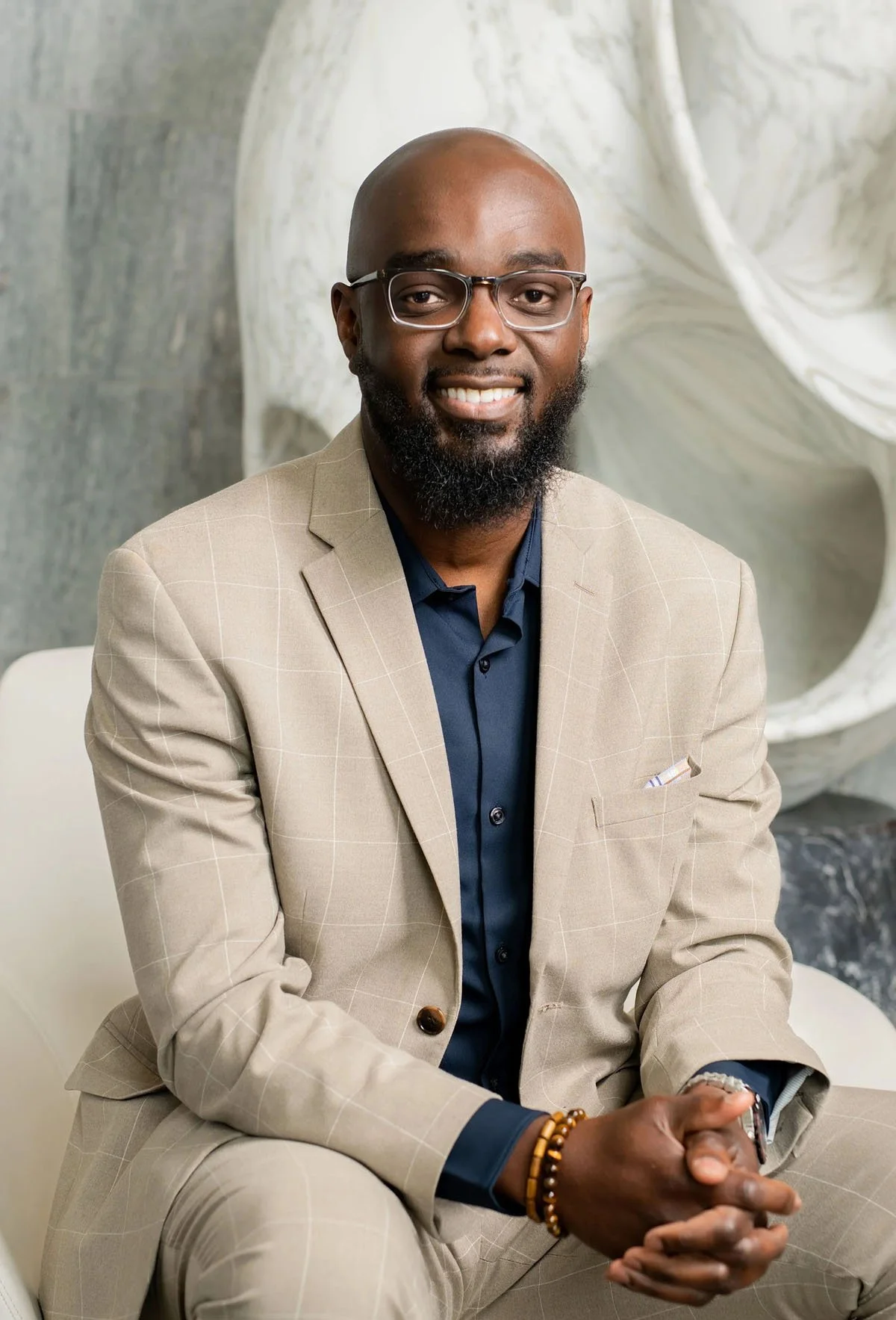
For over 18 years, Jude Charles has helped entrepreneurs bring their stories to life through documentary films.
He digs deep to find the compelling story that no one else knows and then leverages storytelling to strategically scale their business.
He’s been blessed to produce stories for Google, Coldwell Banker, and Steve Harvey (just to name a few). Plus, he’s been featured as a speaker on conference stages and on 100+ different podcasts.
Resources:
-
Mark D. Williams 00:00
It's a new year, and that means it's time to talk about contractor coalition Summit. We have got an extra event this year, so we've got our Monday night meetup at K biz. That's just a three hour deal at the International Bill of show. It's a great place to meet up at the beginning of May. We are going to be in Denver, Colorado for our first contractor coalition meetup. We're gonna do a standalone event in the middle of September in Minneapolis. It's a one day Crash Course, a much less reduced fee. Tickets are available now if you want that goal here is, it's a significant investment to spend a three four days away from your business and your family, plus just the expense of attending the conference. We wanted to create an event that was just a one day Crash Course. You can find all those details at contractor coalition summit.com. We also, in November, have our three day tail end of the year, which is going to be in Charlotte, South Carolina. So if you're interested in any of those four of events, please head to contractor coalition Summit. Calm. DM me for any information or email me Mark at MD Williams, homes.com, and thanks for tuning in. I was always pursuing this quiet state. Now, a lot of it is because my own personality.
Jude Charles 01:09
Why does that matter to you? Why does it matter to you? I don't want to put words in your mouth, but you love yourself. You love who you are. Of course, don't have an issue with that, right? But you are because you're so aware, so self aware you're chasing the idea of slowing down. Why does that matter to you?
Mark D. Williams 01:24
Though? Probably because I like to do hard things.
Mark D. Williams 01:33
Today on the podcast, we had Jude Charles, straight out of Atlanta, flew in for this interview, and we're gonna do live road mapping. So today's whole episode is really about Mysa, who's from a director's point of view, in trying to get out of me things that I didn't really even know that were there. And so it's a pretty deep episode. I mean, 99% of it is focused on Mysa, who's our spec home here in cottagewood. And one of the things that Jude really challenged me on is, like, what is the why? Like, we know what the what is we know about all the attributes, but, but why? And really, we both have a mutual love of storytelling that's going to come out very strongly in this episode. So buckle up buttercup. You're going to go deep on this one. Without further ado. Here's Jude Charles and Mark Williams diving deep on Mysa, who's Welcome to curious favorite podcast. I'm Mark Williams, your host. Actually, I'm giving up hosting duties today. I have got Jude Charles from Jude Charles co coming in studio. What's up, buddy? What's up? So we've met a couple years ago. You did a docu series with Brad Levitt. You've done a number of other ones, and every time I see you, I just keep finding myself gravitating towards you. And you're like, why don't I come to Minnesota? We were and we're gonna do a live road mapping. Yep. So you're going to take over this podcast. And I think we're we just toured Mysa, who's
Jude Charles 02:45
lovely, lovely. Getting an opportunity. You talk about it all the time. So now I get an opportunity. It's like talking about your kids, yeah. So I want to kind of set the tone for where we're going. We're doing road mapping. You've talked about Mysa, who's it's a brand. It's not just a home that you've created, it's a brand that you've created, and I know that you've seen the Docu series work, and you have always asked me, like, Okay, I know I love storytelling, but like, what would I even do with this if I told a docuseries around it? So normally, when a client thinks about doing docuseries, the first thing we work on is road mapping. Why? Well, road mapping is about alignment, essentially, right? You know where you want to go, you know where you are now, but how do you get there? How do you use those two things, where you are right now and where you want to go, to get you to where you're going? And so road mapping is that we create this story around your vision and then document it, right? But we create the plan. It's kind of like when you're building a home, you need the plan before you could ever build the home. You got to know how many rooms is going to be there, what how many bathrooms? What do they want? How do they live? Same exact thing with road mapping.
Mark D. Williams 03:53
Is that. I mean, is it equivalent? I've always wanted to write a book both. I don't know what I would say, but there's also part of me that wants to write a fiction book. I like sci fi fantasy. It's like, I've always wondered, like, do you wireframe out or roadmap, like, all these characters and all these things, and then you basically create a structure and then fill it in around the story? Yep. I've always wondered how, like, writers write.
Jude Charles 04:12
Well, writers usually will create an outline of like, well, what is this even about? How many characters are going to be in the story? Where are we going to take the story? What's the main plot? Right? So that, again, you don't lose yourself as you're 100 pages in, you don't realize, Oh, I'm kind of off track from where I really wanted to go. Same thing with road mapping. You talked about Brad Levitt project. I filmed that for eight months, and Brad is very much like you. There's a lot of things he has going on. And so without that road mapping piece, we could have filmed a whole lot of content, but not know where this story would go. What did you think? Because I know you've seen Brad's Docu series, what did you think watching it?
Mark D. Williams 04:49
I have a unique it's kind of like watching I mean, he's not actually my brother, but he's my building brother. I mean, we own a business together. I've gotten to know him very well over the last four years. I know a lot of personal. Things that even didn't show up that really added a lot of depth to what I was watching. I watched it as a fan of our industry. So, like, I My perspective is probably different than a lot of others. I just really enjoyed him expressing himself in a way, and Brad's very open. Like, that's the best part about Brad, right from a character's point of view in a film like it makes it very easy for him to just talk authentically about and he's very gifted speaker as well, but it's really just a stream of consciousness. I mean, he's able to deliver which makes him a great spokesperson, of course, and then as he weaves his tail, it draws people in. So I found it entertaining, educational, but to me it was more the humanity. I mean, the part that I liked was there's a lot around his kids and his team. And if you know Brad, you know he has 31 people in his company. When I met him three years ago, was 17, so, I mean, it's almost doubled. And you know, he's a big team first person, so like seeing someone scale and watching them empower their teammates. We just got back from cures builder boot camp, from when we're recording this, it's been, only been five days. Hence, my head cold from being in a airplane for a long time. But the point was, he brought five people on his team. Yeah, that is pretty cool leadership to say that I think this is a lot of value to their personal development as well as my team development. And so I don't know how to articulate better than that, but it just all comes out in that film. And there's more to come, right? I mean, there's more
Jude Charles 06:22
to come, but overall, the goal with that was, you know, Brad does a lot of podcasts, and he does a lot of speaking, as you mentioned, but there was a piece I felt like that was missing, which was Brad the human beyond just the builder. So like, obviously, he has a brad Levitt show, and he's, he's always speaking as a contractor coalition summit, but getting to see him as a dad, and getting to see like, the story that we start with is a story about him having the stroke, right? And like how that affected him, and even how he thought differently about his business because of that, right? It's the human, the human element, right?
Mark D. Williams 06:56
He has his friend and maybe someone who's very open that shares everything, much to my wife chagrin sometimes, is, I don't feel like Brad always shows you all the way the depth to a soul all the time, and I've actually never, this will be the first time he's heard me say this, probably. But like, you know, I don't know if that's deliberate. That's because it could be his personality, and that's just totally fine, right? But like, as his friend, like, I always want to know a little more. I was one a little deeper. And I think the thing that I've enjoyed most about the podcast setting and storytelling is I just like it when people are super real, and some people are very private about it. And there's another gentleman that I won't mention his name because he is very private, and his point being is like he is happy to have these kinds of conversations, but for him, that is between you and I, and I totally respect that I and I just want people to be comfortable wherever they're at. And so I felt like that video showed another layer to Brad, to the people that don't know him. And so for that, I was like, Okay, this is great.
Jude Charles 07:54
Yeah, it's another layer that allows you to realize this person is really human, right? And Brad said the same thing, that he's just not sure sometimes, when are you over sharing? And we are both lovers of storytelling. Story, how I categorize it and define storytelling? It's about a very specific moment in time, but the most important piece is the lesson that you learned in that moment in time. It's like Aesop's Fables. It is, it is, right? So, like, I'll give you an example. 2014 I went to a leadership conference, and I've always known leadership was important to me. This Leadership Conference was in Spokane, Washington, so it's the furthest northeast state, Northwest state. I lived in Florida for furthest southeast state, right? So, northwest, southeast, well, I had this crazy idea, you know, when you go to a conference, you take in all this information, you're writing notes, but then you go back home and it's like none of that even happened, because real life happens at this point. So I had this crazy idea that I would take a Greyhound bus from Northwest.
Mark D. Williams 08:59
This is awesome. Southeast. This is amazing. Just to download all the things you
Jude Charles 09:02
learn to download. Because again, I knew leadership was important. I was 25 years old at the time, and I'm like, You know what? I need to make sure what I just learned actually digest is in my system, so that I don't go back home the same. Because, again, you go to these conferences, you take it in for three days. It's exciting, but then you don't really download it.
Mark D. Williams 09:20
That is such a cool my What up, old soul? Thing to do at 25 at 25 What did you so? Tell me about that. Like, so,
Jude Charles 09:27
how did that get? Was not the smartest idea. Being on a Greyhound bus for three days was miserable. By day two, we got to Chicago, Illinois. Now I had my phone off this whole time. We talked off camera about, you know, having our phones off. And again, it's just one of those things that I'm like, I need to not be connected to anything right now, I had my phone off. We get to day in. Day two, we get to Chicago, and I turn my phone back on. And of course, I'm getting all these I'm flooded with text messages. But there's one text message in particular that sticks out. It's from my sister. She says, Call me back. It's urgent. Now I brace myself, because at this point, this is July 2020 July 2014 at the beginning of the year my mother had attempted suicide, and obviously was still alive. My dad, though had was diagnosed with prostate cancer. So when I get this text message from my sister, it's either mom or dad, so I brace myself, I take a deep breath, and I call her, and she says they found my dad unresponsive in the home. Now I know what that means. They won't tell me, because I'm on the road, that means that he's passed away. I take the first flight from Chicago, Illinois to Fort Lauderdale, Florida, back home, and when I land, my brother comes to pick me up with his daughter, my niece, Ian, I hug my brother, I don't say a word. I hug my niece, and I don't say a word, but I sit in the back seat with my niece, Ian, she's nine years old at the time. I'm 25 I'm staring out the window as we drive to my father's house, and I'm thinking to myself, you know, I feel really lost right now. I'm 25 the youngest of 10 children, so my dad would never get to see me get married. Have kids. Never imagined I would even lose him at this point. And Ian, who's only nine years old, looks over at me, and she's like, Uncle, why did grandpa have to die? And I just stare at her because I don't know how to answer. A nine years old, a nine years old, a nine year old, first time going through death, she says it again. Why did grandpa have to die? That question rang in my ear as we're making funeral arrangements, trying to decide what to do with his things, and I got the answer. August 9, 2014 as we went to go lay my father to rest, my family asked me the youngest of 10 to give my father's eulogy. How old was the oldest child? So she's 19 years older than me, so in her 40s, right? Like I'm not the oldest at all, right? I'm not the oldest male even. But I learned in that moment going through that that leadership wasn't just important, it was leading through difficult moments earlier I told you that my purpose I figured out early in life. It was at that moment I figured out that my purpose is to lead and empower entrepreneurs to have relentless courage. Why that's so critical is because I realize entrepreneurs that I work with are coming to me a very critical moments in their life where they need to have a little bit more courage to show up, to tell their story in a different way that allows them to get to that next level. So why did I go down that route? I just told you that whole entire story, right? I told you about a very specific moment in time that my dad, I lost my dad, but I told you about the lesson I learned in that moment in time that was so critical for me. It's a very deep story, right? It's a very intimate, vulnerable story. And it's stories like that that people think about, should I share that? Like, what's the point of me sharing that? For me, the point is one for people to get to know me, but two to realize I know my why. I know my purpose. Now, normally, in road mapping, I start with that story, and at the end I'll say, Well, I told you why I know I exist. I told you why I know why I'm here. But you tell me, why did you invest in doing this road mapping session? You're going to spend three hours with me going this deep. Why did you decide to bring me in this room? Story is about a very specific moment in time, and the lesson you learned in that moment in time. The lesson is what people remember, but the story is what makes it matter. Now I want to use that to open up with with our road mapping session for me. So who's? Because I've been listening to you talk about me, see who's for a year now, I'm sorry, after contractor coalition summit, the last one in Chicago, you sent me a bunch of information on me. So use, Oh,
Mark D. Williams 13:53
we did the present. Were you there the day? We did the bonders create freedom? Did? Yeah, the me. So use one with Nick for now, yep,
Jude Charles 13:59
I saw the one with the Nick. S, Oh, you didn't see the night before. You have done podcasts on Mysa, who's with Melissa and with the one most recent Drew, right? You've talked a lot about Mysa, who's and here's where I really want to challenge you. And I want to know the story behind me, see who's beyond the tactical why. I want to know the emotional why. Because you've hinted at it, but you haven't really gone deep into the emotional why of MYSA who's for you. And it might be, I don't want to put words in your mouth, but it might be because you feel like, oh, that's just too much to share. You hint that's definitely not I'll share anything, but you hint at it, but you don't really go deep into it. I think a
Mark D. Williams 14:38
lot of times people don't. I mean, Mysa, who's is interesting. I can tell you the whole story. We can we can dive into it here in a minute. I think, for me, as I know I'm a creative person in certain respects, and not like I look at someone like a drew Beason who can do art like I can't do art. I guess I'm a creative thinker, because I'm always thinking like I can't stop thinking of new businesses. I joke that I. I create five businesses between Monday and Wednesday and then Thursday and Friday. Have to tell myself No, and so I'm constantly coming. I like that iteration. I love the dream state. I love forward thinking, and when I get really excited, I the easiest person to sell is the guy in the mirror. I nobody can sell that guy like me, and he believes most of the things I tell him, poor guy, and so. But a lot of times I don't know my why, and I it's kind of a journey of self discovery. It's a little bit, honestly, I'm much better at ad libbing than I am at planning. So if I have to do a podcast with someone where I or even, like, ad reading, like, I don't have any aspirations to be an actor, but, like, if I had to memorize a script, I'd be bad. You know, who's good at it? Brad Levitt is amazing at memorizing scripts. I'm terrible. But you tell me to talk about anything and leave it open. I mean, I can, I can shoot with wider I can go all day long, right? And so, but part of it is I'm sort of discovering how I think about it. I think out loud, okay? And so I don't spend a lot of time in deep meditation. That's why I go to bed in four minutes every night, like I'm out like I just don't that's not actually a challenge for me. In one of the things that we did at Boot Camp is to have an hour of silent journaling. I did that because that's the hardest thing for me to do, for me to sit still, for me to be quiet with my thoughts. It's not that I don't enjoy it. I just don't know why anyone does it. And so it's more just like it's way easier for me to have a conversation with somebody, and I've practiced a little bit on the podcast and monologuing, and I can do it, I just I don't enjoy it nearly as much as I like having a conversation. But back to the why for me, it's like I sort of enjoy the self discovery of figuring out my why while I'm talking my one of my dad jokes is, I like to know. I like to finish what I'm saying, because I want to know what I'm gonna say too. Like There literally is no forethought and what I'm going to say, which makes it pure, but also can lead to mistakes
Jude Charles 16:43
too, right? When you How long has it been that you've been that you created me, see, who's How long has it been?
Mark D. Williams 16:48
Two years? I mean, if I want to get really philosophical, my whole life, but it's it really started. I mean, the origin story is I haven't done a spec home in 16 years. I did a spec home in 2008 right before the stock market crashed, and I was only three years into building. And luckily, I didn't have much to lose, because I didn't have much and so, I mean, I rented out my couch. I slept on the floor. I remember my dad. I've told the story many times. I'll keep this one short, because people can go back and listen to it, but my dad was kind of the first person who told me that failure is not a bad word. Like, like, as soon as that, like, you know, think of a trapeze artist where the net is taken away, where, like, the fear of failure is gone. That's really when my career took off. And I remember, I remember I asked my dad for money, and no one really wants to ask their parents for money because it's uncomfortable. You like, you want to make your business yourself. You think that if you go bankrupt, you're failing. And so for me, the I'm have so much respect for my dad. Someday, I hope to be able to do that if my kids ask, because having a kid look up to you and then and saying no to them when they're in their moment of need, it's got to be a really difficult choice or decision. And But anyway, he said, famously, he said no, because I asked him for $30,000 back in 2008 and he said no, because if you can't fix the problem, the ship's gonna sink anyway. So you got to fix the ship, you got to plug the holes. And he said, and then he this, I love this. He goes, What's the worst case scenario? So I'm what? 25 at the time, 26 whatever. No, 28 and I said, Well, I don't know. I guess bankrupt. He goes, and what's so bad about that? And it's like, I don't know. I thought is that bad? He's like, I don't know. Is it? And he's like, you're gonna, you're gonna, you're gonna sell your house, you'll move home, you'll sleep in the basement. Your mom's gonna make you, you know, Swedish pancakes. And I'm like, oh, that sounds pretty good. So anyway, I say that because it's kind of humorous. But I think when we get a perspective, like, what failures, the reason bringing it up now, it had been six that when you that's the only house in my career I've lost money on. And so fast forward 16 years. I have this lot in Cottage which, which is just five minutes from my office. We had actually had the property sold twice. We won't go into that story. Both of those fell through, and I'm stuck with this beautiful piece of property. I've designed two homes for other people on it. And I thought, and I thought, You know what? What would happen if I entertain this idea of building a spec home? And the reason I'm not good at building a spectrum, or what I tell myself, why I'm not good is I do things too nice and I fall in love with the project, so I lose sight of the marketplace, so I can over invest. And I'm certainly not the first builder to do this, but that's the main reason why I haven't done spec homes in 16 years, because, but at the same time, after I'm now in my 22nd year of building like, I'm really good builder at what we do. We have amazing team. Like, if I'm building your house, Jude, like, I will kill it. Like, we do such a good job of really getting into you, understanding your story, pulling it into the house, and that's a really crucial piece. But I felt that if, and this is just for my opinion, there's other builders that do a good job at this, but I didn't want to just build a vanilla house, because that's not interesting to me. It's not exciting, like, I don't want to buy it, why? I know I can sell something if I'm excited about it, but if I'm not excited about it, how I can't fake it, like I'm just, I'm just, I am what I my emotions are right there for everybody to see. So if I need to be, like, in love with this house, and so for me, I needed a story, and that's something to cure. Builder taught me. So this is kind of all kind of a story that's sort of woven into Mysa house. And so I sat down, I knew that, like, branding is really important. I had considered rebranding Mark Williams custom homes because just a mouth fill, nobody tells you when you're 23 don't name the company after yourself. I'm like, Oh, great. It doesn't fit on signs. It doesn't fit on anything. Maybe a semi trailer. And so because I'm not in trucking, so when I was going through that experience, that's really what led me to the curious builder. And then my life just could dramatically change in my career too, based on that knowledge. And so I think it was just all these past experiences sort of led up to what would become Mysa, who's I took all the things that I'd learned from the curious builder in terms of branding, relationships, storytelling, and it came in. So before I even started a house, before I came up with the floor plan, I'd even look at demographics of what would sell, I met with a brand strategist, and Molly windmiller Is her name, and I and she had helped me with curious builder and boot camp and these other things that I'm doing. And I said, Molly, here's what I want to do. You know, I'm a Scandinavian mutt, you know, my I've got Lindquist and Luckies, you know, which is totally Scandinavian names, but, you know, I'm German and Swiss and all these other things. And not that it has to identify with a specific country, but like, I'm Nordic. Look at me. So like, I love sauna, I love the culture, I love the simplicity, I love nature. I love mountains. I want this to have a and I, like, I was very aware of, like, branding and storytelling, like, I wanted this house to embody all these natural things that I get energy from. And so, I said, so she said, Tell me what you want. And this next sentence is really all of what happened to me. Sous is, is how I describe this. She said, What do you want this house to feel? I said, I gravitate towards natural sunlight. It's It's six o'clock in the morning. The sun is rising. It's cold. The snowflakes are falling. I have a hot cup of cocoa in my hand, or coffee. I've got a wool blanket over me. I'm reading my Bible or a book. I'm looking out, and it's just quiet in the snow is just falling. And she's like, that's Mysa, who's that's what it is. And so I so we didn't know what Mysa meant at that time, but I said, That's what I want this house to feel like. We talked about Maya angelou's famous quote. My wife uses it all the time. Maya Angelou is gonna have to copyright my wife pretty soon. About people forget what you say, but they never forget how you made them feel. And our homes have done that for a long time. Mysa, who's is gonna do that on a level I can't even imagine.
Jude Charles 22:20
What's the moment that MYSA, who's brings you back to when you were growing up like as you walked through that so you gave me a tour earlier today, right? And that's this, is why I say you hint at it, because you told this one specific story before. I don't know that it's the why story, but you've told this one specific story before on a different episode, and you told it today as you were giving me the tour. What is the moment that you go back to when you're walking through me? Suz, I don't even
Mark D. Williams 22:50
know what the story is actually. I'm curious what you think it is. I if I was to think I've never thought about it in this term before, but right now, we had a cabin in Glacier Park, Montana for 25 years, and out the outdoors have been a big part of my life, you know, skiing and hiking and out Ultra running and all these things. And like, when we sat in the front yard at Mysa, who's I had that cool timber, and it has the the sign, like a trailhead sign in Europe, where you have, like, this wood sign pointing to, like I did it all kilometers, because Mysa house is, you know, Scandinavian. So I was like, Hey, it's 6300 kilometers to Stockholm, Sweden, or Glacier Park, was on there, oddly enough, and then it's in the colors of the Swedish flag. And so for me, I love being I wanted to create a I want a home that's urban. I mean, we're in an urban city setting, if you will, a neighborhood. But I wanted a cabin experience, I guess at the end of the day. I wanted that quiet, off the grid, complete detachment from Soraya, that serenity, it's so hard to get that, that full peace and quiet, where your mind is calm, there's no there's nothing drawing on your time. Or that's why that morning is so important to me, in that those quiet moments, you know, Melissa calls them moments of delight. And so I wanted the house to embody all of that and all the things that we ended up sort of the philosophy of, like picking we didn't stumble into wellness till about six months into Mysa, who's we can talk about that maybe a little bit. But for me, it was I wanted like I was going up to a cabin in northern Minnesota, off the grid, no phones, like just a silent retreat. And family is super important to me. I grew up without a TV. My grandparent or my parents did as well. And until just a year or two ago, we didn't even have one in our home, and now we just do Friday Night Movie Night, which is fine. I only give that up for perspective because the first house ever built, I forgot to put a TV in it. I almost couldn't sell the house, because my lifestyle is not how most people live. I'm sure I have undiagnosed ADHD. I have and joke about it, I don't have a TV not for moral reasons or any of that stuff. Maybe that's how it was a choice for like, my parents generation, but for my generation, I don't like the distractions. I want to read a book. I want to do a puzzle with my kids. I want to play a game of chess. I want to I just I need that quiet to recharge. And so Mysa, who's this kind of this? I. Uh, this melting pot of all these different emotions and things that give me so much joy in all these wonderful because I am the archetype of the of the home as well. Because, as I mentioned, though I haven't mentioned it yet, but like for me, I felt like, if I build a house for everybody, I build a house for nobody. In the hardest thing to do is have a blank sheet of paper and say, draw me a house. Well, it could be everything. Could be a two story. It could be a sing. Could be a single it could be and so I wanted a philosophy that would dictate my selections, because I didn't have a client. And I'm certain many builders have built a home for themselves, of course. And that's a very successful tactic, and I am very it is. There's a lot of leaders, Ian, huge amount of me in it, of course. But the philosophy is, a different sort of, like, a very, more purified version of what I find valuable.
Jude Charles 25:46
Yeah, so there's the philosophy, there's the you're really great at telling me the philosophy. You're really great at telling me the what I want to know, the why, when you walked it through. This is the story, and I didn't want to give it to you, but this is the story, because I want you to bring how often do people know the why you do, you do, but I think you It's like what you said earlier. Sometimes you don't talk it out loud, so you don't realize that's the why. When you walked me through the House earlier today, there was, and you've told this story on a podcast before, but it was the fireplace. It brings you back to that moment that you were passing your dad wood through the window, right? What about that moment was so special to you that you had to create, recreate that moment in this
Mark D. Williams 26:29
home. That's a great that's a great point. This
Mark D. Williams 26:37
episode is brought to you by Pella. Windows and doors. I've used Pella for 21 years as the exclusive window company on every one of my builds. When people ask me who I trust for windows and doors, it's Pella every time. Their craftsmanship, their innovation, the top tier service, make them a no brainer for any custom home builder or designer who demand the best, whether you're designing something bold or building something with timeless elegance, Pella has you covered. They're also the only window company that has a lifetime warranty on all of their windows. I've gotten to know all their people at Pella corporate, as well as locally. Here at Pella Northland, I'm proud to call them our partners and our friends. Visit pella.com to learn more and connect with your local reps today. Also for more information, you can listen to episode one, where I interview their founders, as well as episode 109 where we talk about the innovation at Pella, so to frame it for the audience that doesn't know. So when we, when we got into so the house had multiple levers were sort of unlocked into new avenues, the wellness, once I stumbled upon, like wellness, it's a huge part of my natural personal life, and I didn't, it wasn't part of MYSA, who's originally it was about four or five months into the branding, and me talking about it, I iterate out loud, and as I'm getting into it, there was something missing. I felt like there was a burr in the mechanics. There was just something that was just not working. And when we hit wellness, the whole thing unlocked. It was just like yellow brick road all the way here we go. And that's really when things started, really galvanizing quickly. But the reason I'm bringing it up is Carl, who's the architectural designer on he's also my neighbor, and Carl's The reason I got into Ultra running, and so he was the perfect partner on this project, because so much of about wellness is our lifestyles. We bike together, we run together. And so he's so talented, and so all these different things are just, it's just like, you can't even make up the story, just like evolves. So that was the way perfectly. And so we, I could not land the plane on this fireplace, and it was gas or wood, and I must have chosen five different wood fireplaces and five different gas fireplaces. And when we went into wellness, I thought a lot about what we breathe in last summer, we had a ton of Canadian smoke, fire, and it was like, you know, I was just marveling, like, man, what we breathe I'm amazed at how incredible our lungs are to process all this stuff. And so I was thinking, like, in a house that is really tight, one things that often happens with a wood burning fireplace is they Backdraft, and you get that black soot on the front. I mean, that's that's carbon monoxide, that's poison, like, I don't want that in my air, especially if I'm going to make this house about wellness. I was thinking about it in terms of health, and Carl unlocked this for me. He said I told them the story that when I was a little kid, we had a home with a wood burning fireplace. My dad is basically unregistered Pyro and love to burn everything. And so every winter he would be outside in a snowmobile suit, in this orange sled that would be stacked, you know, six feet high and eight feet long. He'd pull it from the wood pile, and I would be inside. Part of my chores to work with that would be, I would grab the logs through the window, and then I would put them in the in the wood box, and I'd sweep up the floor. And it was this, I'm very close to my dad, and I have 1000s of stories, but this is one. I don't know why. It just was just so clear and and when I told this story to Carl, he looked at me like, Can you not hear what you're saying right now? He's like, do you think that wellness might also be more than health like? Wellness might be a state of being like. Wellness might be a. A memory well, and so when he and he's very philosophical, and sometimes I need to be hit with a philosophical hammer to be like, Oh yeah, okay, this is now the easiest decision I've ever made. It's a wood burger fireplace. Let's go. And that is the story. So I mentioned before, we're gonna do like a little audio tour. These little elves are gonna be holding these little q, q, r codes. And I record a podcast like this with three minutes or less, and we're gonna have them around the house for these moments of delight so that other people can hear this story. Because it takes me sometimes a little time to get into the story. I'll have to truncate it up a little bit. But anyway, so now this house has a place where some other family member can hand wood through the window. They can fill this cool metal lined box and then fill up the wood burner. And there is something deliberate, starting a wood fire for sure, takes longer, but I think that's the point of this house is to slow people down a little bit.
Jude Charles 30:48
Why does that matter to you? So I agree with Carl that wellness is definitely more than just health for you, I think it is a state of being, but I'd like to hear more about why. What was it about that moment with your dad that stays in your mind about slowing things down?
Mark D. Williams 31:10
Probably because slowing things down is the hardest thing for me to do this house, in this lifestyle, is something that I need. You asked me, it actually goes to marriage a little bit you asked me, I've been married for 13 plus years, and you asked me, What is the secret of marriage? And I stumbled around because I don't know the answer, but just shared a bunch of experiences. But you know, I'm a better person because of my spouse 100% I wonder if she said to say, what she would say the same thing. I don't know. But the point being is, like I a lot of the things that now I talk about on the podcast in boot camp and Sonic camp and all these things really stem from my relationship with my wife in the sense that I'm very flexible, like right now, if you said, Hey, let's get let's stop this podcast and come back in an hour. Great, no problem. I could roll with it. And so, like the laissez faire works well with my personality and the ad lib version of it, my wife is much more structured. Family Time is super important to me as it is to her, and so I've talked about this a lot, so I'll just reiterate real quickly, like I'm home every day at five because we have dinner at 530 I don't open up my computer again till I get to the office the next day, usually around 830 I think it's unhealthy to constantly on call to your clients, into your team. I just don't think it's sustainable as a culture, as a society, and for sure, myself. So my wife has has helped me get quieter the home. Mysa is sort of embodies some of those principles. Brad Robinson, who we have joint friends with. You know, a year ago at Ian Nash at boot camp, we both joint made a promise that we were gonna leave our phones downstairs so it doesn't even come into our bedroom. I actually had this funny story about Mysa, who is where, I wanted to know if I could click a button in, like a Faraday cage and lock the house down. And I thought I had just stumbled on, like, the next billion dollar idea. I thought this idea, I'm gonna patent it. Parents and people across the world are gonna want this idea. And, you know, I'm gonna make more money with this patent that I could ever make in the home building. Well, turns out it's a federal offense and it's illegal. You can't do it. People save that for another type. But anyway, the point I was always pursuing this quiet state. Now, a lot of it is because my own personality.
Jude Charles 33:05
Why does that matter to you? Why does it matter to you? I don't want to put words in your mouth, but you love yourself. You love who you are. Of course, don't have an issue with that, right? But you are because you're so aware, so self aware. You're chasing the you're chasing the idea of slowing down. Why does that matter to you?
Mark D. Williams 33:21
Though? Probably because I like to do hard things. I don't run ultra marathon distances because it's easy. I do it because it's a challenge. I sort of like, I don't know there i My dad, we have a family quote, and my dad's quote is, and now it's become mine. Is we're comfortable being uncomfortable in that in more like pain tolerance and like your ability to suffer. Maybe that's masochistic. I have no idea why, but we smile while we're doing it, so I don't know what to do about that. I know that I'm better when I have that time to recharge. It's not easy for me to do it. I have to my favorite quote the last couple years has been boundaries create freedom. And the point like you can't wake up at 430 in the morning if you don't go to bed early, but just or you're just gonna crack it's not gonna work. And so what is sustainable? And so as I keep getting older, and I am around amazing people, or I talk to other people, or I just discover things about myself, like there's freedom in those, some of those constraints. And so I would love nothing more than to come home and put all of our phones in like a Faraday box and did not touch them again until the next day. I understand that's probably not reasonable to a certain level, but I do think there's a lot of value in the world that keeps getting spinning faster and faster and faster. I don't think it's good. And even if we can handle it and we adapt to it, which we certainly do, we have to take preventative measures to sort of slow life down and enjoy the moment. And I tend if someone was to ask me, How much time do you spend looking in the future? How much time do you spend in the past, and how much do you spend in the present? I spend zero time in the past. Like zero I mentioned, like, I don't really have regret. Not that I shouldn't have regrets. I just I give it no, I can't do anything about it. So I don't spend any time there. I spend a lot of time in the future. I love dreaming. Airplanes are like, my airplanes and airports are like, one of my favorite places on the planet, because it's like, with a credit card and passport, I could go anywhere I want in the world right now. And I like that freedom of like, I use that as an analogy because I think it's true of life like I love the future state, I need help being present. And so I think by getting rid of these distractions and MYSA, who sort of helps people and hope, I hope, helps a family, helps me, even in talking about it, do that for myself, because
Jude Charles 35:36
when you're present, when you're present in the moment, what happens? What happens to you when you're present?
Mark D. Williams 35:42
What are I slow down? I mean, I stopped writing, I stopped dreaming, I stopped doing to do lists. I stopped creating new businesses. I can read
Jude Charles 35:50
a book in quiet. How do you feel, though, when you slow down like that? How do
Mark D. Williams 35:54
you call I mean, it's calming. It's very calming. It's kind of like a Zen, a Zen state, like honestly, probably one of the hardest things for me to do, because I'm so active and I like to move like you talked about how when you take your time off like you like to go wander the forest, this would be, actually, this sounds painful to do is I wonder if I could sit like at a place alone for like, a day, an hour. I don't know how far I could go, probably not very long, because a it's hard. And so what I've done now is, when I run, I don't have music, or I had sometimes I do a course, but now I find that that's that free. I get all these ideas. I get very rejuvenated, but I have to put them in place. Otherwise, I'll default to, you know, what my something to distract myself
Jude Charles 36:37
with, right? When you were in high school, so you told me about, how old were you when you with the fireplace? You were probably, what, eight or nine years old. Yeah, so when you were in high school, what's a, what's a core memory you have of you and your dad in high school?
Mark D. Williams 36:49
Oh, wow. Remember playing catch by we had a little lake, and so we would play catch, and we just, you know, throw the baseball to each other. That's a kind of a, I don't know. I just remember him squatting with a catcher's mitt and me pitching. I never even got into baseball. That's just the first thing I thought of was that we spent a lot of time hiking and skiing in mountains together. That was something dad's wood shop. Actually, this story is really funny, one of my core memories, mainly because it's so ridiculous. Actually. This actually sums up our whole family personality very succinctly. So my dad was a builder and had a wood shop in his basement. And Don can't remember his last name. He back then a custom home was a round top window. That was it, because nobody could you could build round top windows back then, they had to be done by hand. So if you built with David Williams, you got a round top window. And that was like, Whoa, custom. So anyway, we had this cool wood shop. And my dad's always putzing around building stuff. He's very he'll tell you that he's not a great woodworker, but he's constantly woodworking, which is what anyone who's good at something says. Anyway, he said that Don taught him how to think, and he enjoyed my dad was a pilot, and he loved thinking about stuff, and like how to get from A to B. So anyway, we go down in this wood shop. I think I was six or seven, so my sister's two years younger, so she's five or whatever. And dad gets three cigarettes, one for him, one for me, and one for Ashley, gets them all lit up and puts them all in her mouth. And we're like, what is this? And he's like, these are called cigarettes. And he's like, take a deep breath and swallow. My sister pukes. I start hacking. We've never touched a cigarette since. The point is, is, like, am I'm saying this story that's a core memory, because I've told it many times. I think it's really funny. I joke with dad now that he either would have had chain smokers as kids or, like, what happened happened? But like, I think sometimes we, our family, just does things not for shock reaction. Like, there's a pure, innocent and then pure joy of just like most people say, that's terrible idea. I'm not telling anyone listening to this podcast. Like, go light it up for your kids. You for your kids. It has crossed my mind whether try on my own kids, though, although I don't think I would, but I think trying stuff and failing, like just being creative, being just going for it, doing. I think our dad taught us to just be really, don't worry about what other people think about what you do, like if you're happy with it, if you have peace with it and it brings you joy, that's probably a noble pursuit.
Jude Charles 39:04
So that was six seven. Wait, that was when you were 67 Tell me about your making reference to six seven. Tell me about high school, though. Tell me about high school. What do you remember about home and family life in high school?
Mark D. Williams 39:19
I remember, and this is viewed now as a business owner and a dad, I remember calling my mom and dad and thanking them for just an amazing childhood. You don't realize. You just think your childhood is your childhood. Everyone has the same childhood because you don't know any different, right? And then as you get older, you're like, wow, I had a very special childhood, and it's actually informed what how my wife and I want to raise our kids in two things. If we can do just two things for our children, we will both feel like we've been successful parents. One is that they feel loved and that we love them. Number two is that we instill confidence in them, and where that came from is like my wife says, you are just unnaturally happy at. It gets your Scandinavian upbringing, but like my wife or sorry, my mom is very optimistic, and she's probably even more cheery and rosy than I am, and my dad is very optimistic as well. My wife her confidence. She struggles with her confidence, and part of it, I'm sure it was her upbringing. Part of it is self doubt, like any of us may or may not experience, and so she feels that a lot of my happiness is tied to my confidence. And confidence can be tricky. I mean, you can put yourself in dangerous situations by being overconfident, so you got to temper everything. But I just thought, as a parent, could you teach your kid that you love them and that they feel loved in that confidence? And so I felt like that was my entire childhood, and I've had a number of my friends that have you know over the years and family that are just like, you don't know any different. And they would just say, Do you realize what a special gift you have? And you're like, No, I have no idea, because I these are my only parents I've ever had, and so I I've thanked them as I've gotten older countless times. And I bring that up, it's like, it's the little things. It's I used to play chess with my dad. We'd play one game, and I'd beat him, and I'd say, you want to play game? He said, no one is enough. And so we would play chess together. My they were always at every sporting event we ever did. So I don't ever remember my dad working, which is really interesting. We had that was before emails and cell phones and all those things. But so we had an office on our property, and Dad would meet people. He must have like we were always had dinner as a family, and then it must have been when we were doing homework or whatever. He must have gone, you know, 100 yards to the office and met people at night, because that's what you did back in the 80s and 90s. Yeah, but I remember my dad always being available, and always when we had a question, he would always stop, and he always had time for us. But we just spent so much time together. I mean, again, hiking and skiing and vacations and things together, he always invited us into whatever he was doing. I think that was something I've learned deeply is, you know, even now, when my kids come, like I've had, may interview me on podcast. And so just, I mean, I don't know if anyone wants to listen to that, but I sure enjoy it. And so I think just, I don't need them to grow up super fast, but they can be part of my life, like explain to them. I've kind of came up this idea that whatever my kids ask me, I will tell them the honest answer, because my parents did the same thing. And so actually, the other day, yeah, we had quite the conversation on the way, they were sick, so they got to come to the office, and weren't they? Actually, I think sometimes fake being sick because I have a bunch of Legos here, and my boys love doing Legos, and so whatever my dad did, he included us. So I guess I don't have a specific like memory that comes to mind right now, but I remember, I mean, I guess now I think about training. He wanted to climb Mount McKinley up in Alaska. I think it's called Denali now, and he trained. I remember him in the middle of winter having a green backpack on, and he load it with 240 pound salt bags, you know, like you put your water softener. And he just walked around her late for like hours and and so again, he would, he was demonstrating to us, like, commitment objective. So even at a young age, we saw, we saw it being modeled of just like, if you want to do something, the only whole person holding you accountable is really yourself. And so, like, if you hold yourself accountable, you can do anything you want. Yeah, and
Jude Charles 43:05
so when, so far, we've talked about we've talked about marriage, we've talked about your upbringing, we talked about this core memory with the fireplace. Do you as you're creating misos, and these philosophies are coming out as people are interviewing you and asking you questions on like, what matters to you, wellness is a state of being, but is it also for you, what love and confidence represents that you got from your childhood because you mentioned how much you've appreciated how your parents raised you, but a lot of how they raised you was in that Home, was the time that they spent with you. Do you feel like you're trying to recreate, in some ways, your childhood in the home itself, the home itself?
Mark D. Williams 43:47
Yeah, I think, for sure, I think big, I mean, a big part of just me. Because obviously, as I've, you know, aged and, you know, I guess I'm in 45 I guess I'm in middle age, adulthood, I still feel like a nine year old kid with a bouncy ball at a park, sort of throwing it to myself against the wall, but yeah, I mean everywhere I look in the house. I mean, I even mentioned to you the reason that that dining room Nook is the way it is is because I took myself and like, okay, if I'm up early in the morning reading the paper, having coffee, I want to sit in like a breakfast nook. I've always wanted a breakfast nook in my own home, and we didn't have enough room in this house. And I didn't want the house. I wanted the house. The other thing is, I didn't want the house to get too big. You know, we live in 3000 square feet. I'm a family of five. Our culture like more more, more, more more. And so it was a very deliberate choice to actually put some constraints on Mysa, who's it's odd enough that the cost goes up when you go smaller sometimes, because now you're like, oh, now I'm gonna put more detail into it. But anyway, there's little there's little pieces in the house that have a story, you know, that was another one of them. And I remember my, you know, maybe that I didn't think about it till just now. But like, you know, every morning, why to wake up? My dad was a very early riser, and so, you know, he would be. I always remember him reading his Bible by the lake. Nose with a light on want to come down in the morning for school. And that was just a childhood memory I always saw, I guess I'd be fun to ask him, like, what age did he start doing that? Because now that I go to bed so early I wake up, it's like, every year I wake up a half hour earlier. Like, two years ago, I was to wake up at like 530 right now I'm waking up at like 423 not by choice. It just keeps at some point I going to bed at like, 5pm and waking up at 1am I don't know what's wrong with me, but I love those early, quiet morning hours, mainly because it doesn't take away from from Kid time. So like all the training I do for running or with the guys that I train with, it's like, you know, I'm home at seven. Because every day I take the I wake up the kids, brush their teeth, get them ready for school, so they don't really know that I'm training. It doesn't really impact them at all. Take them to school. I pick them up from school, and so, yeah, I don't know if I answered the question, but there you go.
Jude Charles 45:47
Well, I asked you if you're you're trying to recreate your childhood, but what I'm hearing is like these moments mattered to you. These were moments that you paid attention to, whether it was handing your father wood, whether it was watching him down in the wood shop basement, whether it was him waking up early to read his Bible, and you're you're recreating these moments in MYSA, who's we're getting to the core of why. Why does all of that matter to you? Like you said earlier, slowing down. But what is it that matters to you so much about slowing down? That is become a philosophy of the MYSA who's house, or the MYSA who's project.
Mark D. Williams 46:25
I think this represents, I mean, the house represents all these things that have meant a lot to me. I mean, essentially, Mysa could be mark. I mean, now I think about it, when you say it that way, I mean, like, literally, the house is me, or what I should say, what I aspire to, because I'm obviously not all those things all the time, but I would like to that's a it's aspirational in the I think home builders in general are aspirational. So we're designers like we are creating spaces that we aspire to help people live a better whatever their values are. We hope to create a space that they can have their best lives, their best memories. And so we're very aware of that. I think, as a I hope we are as home builders, as remodelers. In the we affect people's homes, it's super intimate. You know, a lot of times on the podcast we we talk about the things we struggle with meaning, like, you know, difficult homeowners, or difficult situations, or just liquidity and finances and all these things that every entrepreneur has to deal with. But the flip side of it is home building is so emotional in a good way. And like, you know, I've seen people cry. I've seen people, you know, you walked in, you know, outside of our studio here, I've got, you know, 20 Christmas cards. Half of those cards have pictures of them, of those families in their homes. And it's really, I don't know a home builder that wouldn't look at a Christmas card if they see that family in the home that they built. Wouldn't feel something, you know in their heart, like I had a I had a part to play in that family's life. They might never know what the kids might sometimes they have kids, obviously, after you have have built their homes, and so I don't know, we impact people more profoundly than most industries.
Jude Charles 47:56
Do you feel like you're okay? So if someone you're gonna eventually sell this house? Yes, is Mysa, who's making a bigger impact, not taking anything away from the clients you've already built homes for. But this is your personal thesis of life that is implanted in this home. Do you feel like you're making a bigger impact with Mysa, who's
Mark D. Williams 48:20
great question. I do like your statement there. That's my personal thesis. It is, I hope someone else also wants that personal thesis, right? Because there's always the danger that you built something that somebody doesn't want. I mean, if you go too extreme, you know what? If you had a room with no bedroom, so you're, like, we believe in communal sleep, like, I mean, honestly, you go to, like, Native American culture, they had a giant teepee, and you all slept. You know, in fact, this is actually funny. One of the gentlemen that came on curious builder boot camp the second time, on the first time, when we went to Ian, we had the glamping situation. We had all these individual tents. He thought we were all gonna sleep in one tent together. I'm like, I'm impressed you paid $5,000 to come to this thing. You were all gonna bunk up with each other, buddy. But we have anyway. I'm saying that is, like, I think you still have to be mindful of the market. Like, I'm still like, I'm still, well, I'm not, I don't feel like, historically, I've been great at it. Yeah, I'm better at creating something that's artistic and an expression that's really unique. And I was so dialed in under the story, because I feel like the I don't ever want to talk about price. I don't want to talk about even product, although it sounds like I'm good at talking about those, I want to talk about the story because I feel like the story, the goal is that you by sharing so much that's so personal, it's gonna latch one of those stories, hopefully put some hooks into your heart, and you're like, I cannot live another day without being in this home and having whatever aspirations that family wants. I do. Think I'm just a better storyteller today than I was five years ago. I'm a better builder today, too. That being said, we've done really good work for a long period of time. So a lot of the things that we're doing in business, we've done for a decade or more, and it's just I'm better at telling about talking about it now. And so I think the other thing too is it's sort of freeing the idea with. To have the philosophy, the filter of MYSA who's and we're still developing. I mean, the other thing is, it's still iterating. Literally, about every 30 days, I'll get a new idea and it'll somehow we're not done iterating on what Mysa who's is, and that has been why I'm so excited about it, yeah, is because when you're with something that's live and evolving and changing. I mean, it's, I joked today when I left, like I patted it, like it was a little kid, like, it's literally, like, watching, you know, a kid like, grow and change and like, I look back even a year ago at, you know, Simon, I'm like, wow, has he changed in the year, my middle son and so, how
Jude Charles 50:30
have you changed? How it's working on these issues? Good question.
Mark D. Williams 50:35
I'm not sure I want to build a house again that doesn't have a story. I We're excited to announce that we're bringing back Sonic camp 2.0 on March 20, from two to 8pm we had this last year. We had 42 owners. This year, we're maxing out the capacity of the camp, which is going to be 60 people. We're going to have a wellness panel with some Everest summiters, as well as some iron men and women to compete, and all about wellness and how they prioritize their health and wellness, not only in training, but in their lifestyles and in their business. And then we're gonna have a two hour window of sauna and cold plunging in the lake, and then an amazing wood fired grill, Mediterranean style food at the end of that. So if you're interested, please head to curious builder.com under retreats, you'll find everything there is about sauna camp on March 20 in Minnesota. I want to do. I already have my next idea, actually, not surprising. And so I like, I like. I really have enjoyed the journey of creating something that's unique and that has a wonderful story to share. I love collaboration. It's building any entrepreneur. It feels lonely, and so that's one of the reasons why I gravitated so strongly to the contractor coalition's Summit and the podcast and all these things that I'm doing now. I just feel like I've sort of sort of just exploded in my trajectory in terms of, like, what is possible. Because I thought my head was so down. I thought, like, Hey, I'm in Minnesota. I'm just a little builder, and I am, but like, the idea that just a little tiny pebble can have a actually, a huge ripple effect on a pond. And so I think now, as I look up and just sharing, sharing our story, sharing what's exciting, it to me, it's at the underlying its passion. And I think when you just are so passionate about something. How can you not? I don't if you're anybody that's passionate about anything, you'll listen to it. Like, when you're when my kids come home and talk about this terribly colored drawing, but they're so worked up about it, like, you've got my attention, like you didn't hit one single line, buddy, but darn it if you didn't color that thing. Like, you know, nobody's business. And so, like, I think we just really like it. When people are passionate. We're drawn to it.
Jude Charles 52:41
I want to push you on that, though, because so contractor, coalition, Summit, curious, builder, Mysa, who's all of this came after burnout, 100% but Mysa, who's is a whole beast in itself, 100% right? You hadn't built a spec home in 16 years? Yeah, part of it was fear. Part of it would have now you're but now you're doing it? Yeah, right, what changed? And that's why I'm actually, I want to push you on what changed in you, because I think all this was iteration. But from the beginning of Misu, who's when it was just an idea, not even a name, just an idea, to today, where it sits today, I believe you've changed. But what is it? What is it about Mysa, who's that changed you?
Mark D. Williams 53:27
I would say that because of the failure of 2008 and I would tell you that I'm not afraid of failure, but maybe latently, it was down there that you're afraid that by doing a spec home, by doing something like that people are going to judge or look at I don't it doesn't really usually bother me, but I'm sure it's in there somewhere. Like, obviously. It's like, you want people. I keep relating it to like a child, because I don't know what other analogy it is, but it's like, obviously, you love it when people love your kids, yeah. And if someone doesn't love your kids, you're probably not gonna like them very much. And so like, you know, but some people have a deep fear that they don't want to put themselves out there, because if what they put out there people don't like it, like, I will love this house. No matter if no one likes it, I'll figure it out right, like I like it. So I'm not really I don't need other people's approval. I just need my own. But I think part of it is I want to know, how good of a home can I build? How creative can I get when there aren't guardrails and there are always guardrails, budget usually being one of them, but I have to give a huge to give a huge shout out to you know, I have a business partner on this project, a silent partner, and I sat down with him the other day and I thanked him, and I said, I am best when I am not burdened by how am I going to make payroll and how I'm going to make pay for this, and that you have given me freedom to be the most creative version of myself, and that is a gift. I don't think you realized you I didn't even know I was getting it at that time. And maybe he's like, Oh man, shoot. I really wish I hadn't done that either. I don't know the end. The proof will be in the putting it'll all depend on what happens at the end, because I want to do this again and again and again and again. Yeah, but each one will be different. And like, right now, I could not if you told me, Mark, go build a house for yourself. I don't think I could. I am so emotionally into this home. I mean, I dream about it. It's pretty wild, I believe and so so I'm just so tunnel vision, because I have such clarity of purpose on this house, it has really allowed me to just no one else could really, at least in our market. I'm not saying other people don't have creative ideas or anything like, that's way too pretentious, but like, I just don't know anyone that does this. I mean, nicker is the only one other person that I know that is either this crazy or this passionate about his project, and he has totally different reasons for doing his project. We talked a little bit about that at contractor coalition. Mine are totally different than Nick's, but there's a lot of similarities too. And so I have absolutely enjoyed this ride so much, and we still have five, six months to go before we're done.
Jude Charles 55:53
Yeah, you said two things I want to go deeper into. You said clarity of purpose, and then you said freedom to be the best version of yourself. I want you to think about this. I'm give you time to think about this, but I want to know, Are you essentially trying to give that to someone else, the freedom to be the best version of themselves? Because a lot of what you put into this home is slowing down, cutting off technology, even though you can't do that anymore, but you know, like you have created this philosophy, this thesis that you believe in, and all of it has led to you having this freedom to be the best version of yourself. Reason, I'm going down that rabbit hole. I But while we were talking, I pulled out these Jenga pieces in July 2023 I made the very conscious decision to go all in on the design industry. Now I had, at that point in 2023 I had designed, I had created a docu series for Luann igar, who is a podcast host in the design industry, very popular podcast called a well designed business. And I saw this opportunity, business opportunity to niche down into interior design and the design market. So interior designer, architect, builder, from July to November 2023 I had reached out to over 100 interior designers, only interior designers. Not one person said yes to the new offer, really not one person. And in November, I was headed to Luan. She has this event called Luann live, 200 interior designers show up in the room, and I was asked to speak on burnout. So in 2020 I woke up one morning, opened my eyes, but I couldn't physically move my body. No matter what I did for two hours, my body would not move. I ended up later being diagnosed with burnout, depression, anxiety, all of it with burnout, right? And I realized like at that point, I'd been in business 14 years, and I just wasn't happy. It wasn't happy I was working too hard the pan during the pandemic, I continued to work. I wasn't one of those people that slowed down. And so I was looking for something different. And so when I found the design industry, I got really excited, because I'm like, I'm working with Ian iguera. Everybody loved her docuseries. She had a big docus premiere.
Mark D. Williams 58:17
So even after hers aired, you had 150 people that you interviewed after
Jude Charles 58:21
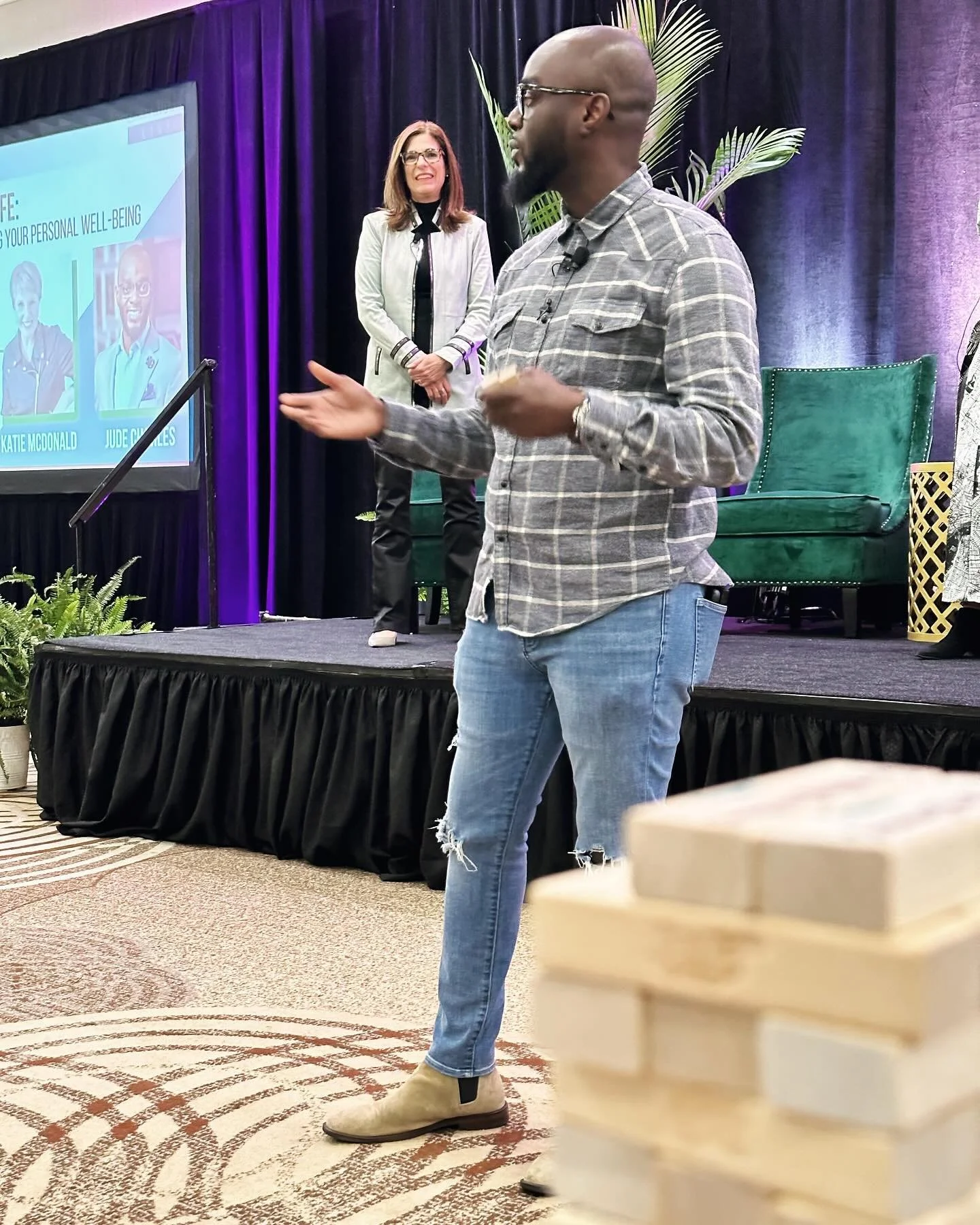
hers aired that Yes. 100 people that I asked yes, some of them I had already known that had said to me, Hey, I want to work with you. But then when I came back, gave them the offer, and everyone, in their own way, said no, so I go to Luan live, and I'm speaking, but when I get there on the first day, what I wasn't prepared for is many of the people that told me no were there. So I'm walking through the hallways and I'm saying hi to people, and I'm like, that name looks familiar, that face looks familiar, and I realized this is person that's told me no. Rejection was easy on a zoom call, right? But now having to face them and so many in the same room, I was just like, What is this? So I almost didn't speak at the event, but I have this in my phone. I have this folder, I have an iPhone, and then I have a photo album. That's a confidence folder. So it's anytime someone has given me a compliment, testimonial, that kind of thing. Just to remind me, on those days I have imposter syndrome, which one of those days was that day I read through that I pray, and then I remind myself of my purpose to lead and empower entrepreneurs to have relentless courage. This is a moment I need courage, but I only need to show up for the one that needs it most in the room. So I do that. Go to speak on the second day, and I do this exercise called the Jenga exercise, which is why I pulled out these pieces. The Jenga exercise is, you know, when you play Jenga, you take out the piece, you put it back on
Mark D. Williams 59:51
top, played it last night with my kids, perfect.
Jude Charles 59:55
Well, the way that I do the Jenga exercise, because in burnout, I had to learn this. I put. Pull out the piece, but I never put it back on top. So on the pieces are words that are written, like, stop creating a new website, or start maintaining control, or start speaking, start sharing your story, stop hustling. There's all these starts and stops that we need to do. The point of the jingle exercise is that when you pull out the piece, don't put it back on top. And so I think, when I do the exercise, I pull out 12 to 14 pieces. There's 54 pieces in a Jenga set, but you pull out 12 to 14 and what you realize the structure still holds you didn't need all the pieces. There's three last pieces that I leave to the end. There's a there's a core values, courage. And I forget the third C. There's three C's, but courage, I always leave last for the person that I feel like in the room needs it most. Always changes who that person is, different what I'm looking for, but I'm just intuitive about okay, who needs this in the room? Well, while I'm giving this talk at Luann live, there's an interior designer in the room sitting towards the front, who is crying uncontrollably the whole time I'm giving this speech. And normally I throw the pieces. So I'll ask people, hey, who needs to, you know, start maintaining control, or start speaking, or start sharing their story. And so they raise their hand, and I throw the piece. It's very interactive and engaging. It keeps people interested, right? Few black eyes, a few black eyes. Yes, hey, you in the back. So this lady that I see crying, I don't want to draw attention to it, so I hold on to this last piece called courage. And at the end, when everyone stands up and claps or whatever, and in my speech, I go walk over quietly and hand it to her. Hand her the courage piece. And so about 510, minutes later, she comes up to me, and she's like, I don't know how you know I needed this, but I needed this so much right now, life has been crazy, and I don't feel like I can continue on, but this is the piece I needed to continue on. I was so worried about people saying yes to this new offer that I have. I was so worried about, can this business even continue? And what I discovered more was purpose, another iteration, another example, another piece of evidence that who you are matters more than what you do. Right? For me, that changed everything and how I approached this Docu series for interred, for the design industry. Because when you look at a brad Levitt Docu series, or you look at Luann igar, or you look at any of the other interior designers that I've worked with, I am trying to show who they are, more than what they do, and more than that. It gives me an opportunity to fulfill my purpose. My purpose is to lead and empower entrepreneurs to have relentless courage. A lot of what happens behind the scenes, it's not really about the Docu series. It's about the one on one conversations where they do need to talk about who they are, where they do need to talk about, I don't know where I'm going next. I don't know how to lead my team. Right now, there's all these deeper conversations that people aren't having we're surrounded by people, but striving for real conversation, and that's what I bring, is that challenge of having a real conversation that you know you need to have. It's much of the way that I'm challenging you now to, like, go deeper, go deeper. Like, why this freedom to be the best version of myself is that what you're really trying to give people, because I know what I'm trying to give people, is that same feeling that I once had that, you know, when I burnt out in 2020 I lost myself because my identity. I started this business at 17. By the time I was burnt out, I was 32 I think it was my identity was in this business. It's all I knew. And I had to learn that who you are is not the work that you do. It's not about that. It's about the being. I'm listening to you talk about all these things, and I feel like with a missing piece from Mr. Mysa Hughes, although you share and like I said, you share it in tangents, but it's not a full No, this is what Mysa, who's is. This is why you should care. I know the tactical why I know like you are, you have created this beautiful home, and so many of what you're doing is very creative, but I think there's an emotional why? An emotional? Why? Knowing having been through the same journey of burnout is in some ways, this gave you new life that you didn't have before, and so like to hear the words of like freedom, to be the best version of myself, or clarity of purpose. For me, it was those same things, and that's why I can understand it. That's why I could care about it more, and that's the pieces I want to push more. Because why all of this matters so much? When you go to create the story, or even do the audios, like you talked about doing where people walk through the house, passion is important, but the passion comes from a different place when you understand this, the depth of what it really means, because then you know the gift that you're giving someone else.
Mark D. Williams 1:04:52
Ian, it's interesting to hear you talk about it like that. I can't decide if I'm not self aware enough to understand what it is, or it's not even on my. Radar. Because I think sometimes having the outside perspective of what it is that drives you, because you're right in the sense of being burned out. So for sure, being being burned out of just building, or business in general contractor coalition, the curious builder, sort of reignited that, so that that was whole. But, you know, I mentioned earlier, I think I'm a marketer who just happens to build right, so, like I Mysa, who's made me fall in love with building again. And so from that standpoint, you're absolutely right, because now I take that creativity, you know, to my other clients. And you know, I've always loved people, and I love them being happy, but like, I like empowering the team. Like I don't need to be a part of every decision. They're better at it anyway. This home was more about just reigniting my love for the craft itself. Because, yeah, I had, you know, after, after doing it for two decades, you just are kind of like, Okay, another piece of wood floor. It's the same, you know, cabinets. And it doesn't mean that they weren't good. It doesn't mean that. But there was more. There's more that you could do. And I think the story in the pursuit of it. It really just gives you, okay, you said it already clarity of purpose. It really made things clear. I'll be very interested to know, like, a year from now, or two years from now, if I do a spectrum, like, can I even do a Mysa who's 2.0 or, well, everything. Because, I mean, I do have multiple plans for this. Like, we copyrighted it. Like, there's another couple other builders in the country that want to build, from a business standpoint, I absolutely want to pursue
Jude Charles 1:06:23
that, and that's why I think it's so much bigger, because you you have, really, you already have the cures builder, which you kind of created a big brand around, but this is the first time you created a big brand around a home that you've built correct to the point that you are licensing It, potentially to other builders so that they can build homes just like the MYSA, who's philosophy, not even just like the MYSA, who's house, but the philosophy of it.
Mark D. Williams 1:06:48
I'm less concerned. I want the I'm less concerned about the actual house, because it could be a different builder, a different architect, a different designer. I would like the philosophy, which I'm still figuring out. Like, honestly, I feel it's not hypocritical. But, you know, I guess we use the term imposter syndrome all the time, like, I speak about it on the fringes, because I still don't know what it is, yet. I'm still discovering, like, when you when you're pushing, and I love it, but like, I'm not sure, like, we're squeezing this, we're squeezing this lemon. I'm not sure what else is left in there, because I'm still figuring out what it is. Yeah. And so, like, this other builder that we're going to do a partnership deal on, I said I need to get through the home because I want to be a value to you, but I honestly don't even know what it is yet. I haven't had time to stop and reflect. I'm still I'm still in it, like I'm at mile 30 of a 50 mile race, like I've got a long ways to go yet, and while we're downhill sledding at this point, there's still a lot going on in the home, and it's still evolving. And the one thing that I love about building homes is that the end is always is aspirational as it is in the beginning, there's nothing quite like reality. And when the house is actually done, there's going to be a moment where I'm I'm sure I'll go have coffee there, because, like, well, I can't I joked like I can't afford my own work, like I'm going to want to go stay at the house, like, I'm gonna go, I'm gonna do a dinner event for like, you know, 10 people where it's cooked, like I want to have. I want to do it also for myself, like, I want to hire a chef. I want to have, like, a sommelier, like I want to have. And then, you know, maybe 1012, people that I think might want to buy the house, like, do a very unique, curated dinner party where someone serves you in potentially your future home. But like, I want to be a guest in my own home, because I want to see what it feels like. I don't know until you live in a house and and feel like it I'm excited for that moment. Or sitting in the backyard. I mentioned this old grandpa thing I had at Boot Camp is like, I want to sit like in the backyard and have hundreds of people at the house, like, just going, Wow, look at this. Or just like mingling, or just maybe they don't even know what they're doing, there will be a deep satisfaction in seeing people experience the home, or touching it and feeling it. That will be a wonderful thing to witness for me.
Jude Charles 1:08:55
Have you tried doing that already? Meaning, because, you know, I thought I had, as you were walking me through the House today, is like, Have you sat back to appreciate where you even are? Right? Now, no building this definitely not because this was just an idea, and we're both the faith based men, right? This was a lot for two other families that it didn't it didn't work out for whatever reason. Oh, sure, I see it. You mean, right? This was a lot that two other people looked at and were like, they started the process. You started design work, and then they were like, Nope, we changed our mind, and now you've got the lot, and this house is almost done. Like, you're only five, six months away. That's not that far away. It'll be here before you know it.
Mark D. Williams 1:09:38
Yeah, my pm would like a few extra months.
Jude Charles 1:09:41
But have you said so the reason I'm asking that I actually just had an experience like that really felt like an out of body, outer body experience. I won't go into the long, drawn out story, but I created this new Docu series called breakfast with Jude. And breakfast with Jude is, I know it now. It is the work I was called to do, like it took 20 years to get there. But. It was the work I was called to do. The thesis of the show is, or the Docu series is the messy middle of ambition. So it's much of everything that I kind of talked about, but I bring people in the design industry around a table to talk about this messy middle that they're going through. So I recorded the first episode in Connecticut. January 10, amazing. That's kind of this is brand new, very brand new. I'll tell you the short version of the origin story. So origin story is that I went through a bad breakup in January. January 5, my girlfriend broke up with me. January 7 is when I did the podcast with Brad, and then Brad ended up becoming a client, right? And in the design industry itself, my business kind of took off, and I couldn't reason in my mind, why was I going through this bad breakup? But the business is doing really well, right? And I'm celebrating and I'm happy that the business is doing well, but personal life doesn't feel that great, and I'm trying to there's this messy middle of all of that. There's other things that happen throughout the year, but October, I go to an event with one of my clients so and this is in California, first time that I have five of my clients in the same room. And I'm like, Oh, this will be nice. Let me put something special together for these five clients. The week before this, I did some filming, and I asked my behind the scenes camera guy, Slav that we talked about earlier, I asked him, Hey, how do you think that went? This was a week before this actual breakfast. And he was like, I think it was good. We got some good content, but you seem more quiet than usual. And I was one. I didn't feel that great about it, because I'm like, we're shooting behind the scenes, and that means I didn't really show up. The week later, when I go to this client event, that actual client walks up to me and he's like, are you okay? You seem more quiet than usual the breakfast. So he says that on a Tuesday, the breakfast is on a Wednesday. And I realized I need to snap out of whatever this is that I'm feeling, because now people are noticing. And so at the table the next morning, I asked just one simple question, what was the hardest part of 2025 and how did you get through it? What I didn't know now I'm asking that question for me. I'm asking that question because I need help, and I don't know how to ask for help. What I didn't realize is everyone at that table needed to answer that question, and by the end of it, we were having such deep conversations two hours later that they all, at the end, were like, we needed this. And there's two specifically, two people specifically at the table who are best friends and didn't know what the other person was going through at the time. But it's all this messy middle of ambition. There's one that's a designer that leads a team of 16. There's another one that leads a team of 14, like, there's all these big companies and they have big responsibilities. And one of the clients at that table text me later on that day, and she was like, I see a new series in the works breakfast with Jude. That was October 8, I think we I ran with it. January 10. We had already filmed the first episode, but last week in Vegas, I went to Vegas market, and then I decided to have this breakfast with Jude, recreating this first time that it ever happened. Is what essentially I was just so the same five people were at the table in California. I had them in Vegas, and before I could even get the episode started, I don't know what happened specifically, there were moments that sparked this, but I I go to sit down at the table of this diner, and something shifts, and I start to have this outer body experience where, not only am I do, I feel like this is the work I'm called to do. I almost don't believe it's happening. And I don't, I can't fathom, why am I sitting here like this is really happening, that I've created this atmosphere in this room for people to come and have these deep conversations. And so I my hands start shaking, and I'm and I can't get words out, and I'm like, I'm just gonna have to tell them what's happening. And so I start to tell them what's happening, right? And for some reason I start crying uncontrollably, and I can't I don't know what's happening, because I had already recorded the first episode. I had already gone through the feeling of, oh, this is the work I'm called to do. But then that happens, and so that's why I'm asking you, like, have you slowed down long enough? Because I know for me, I didn't slow down long enough to appreciate No, this is the work you're called to do, and it's really happening like you're on Episode Two, and there will be more. And it's really happening where, for most of my life, I love the work I do. I know I'm great at storytelling. I know I'm great at helping people tell their stories, but if I'm honest, I wasn't always happy with the business. I was always ambitious, chasing after the next thing, and for once, this was like I was truly happy with it, and it was something I avoided for a very long time. I had spent time as a guest being on a podcast. I'd. Been, I'd been on 150 podcasts as a guest, and people that always ask me, Well, why don't you start your own podcast? Why don't you I just didn't want to do the work. But I know one thing that happened in Vegas, which was part of like, why I had this reaction, is that we went to the diner the day before just to look at it. I'd never seen it before, and I wanted to make sure it looks good, and that my team knew what they need to do with setting up lights and cameras. And as we're doing that, I'm just standing outside on the phone, and this homeless guy walks up to me and he asks me for money, but I don't carry cash. So I was like, Look, if you want food, I can go and get you food, but I don't have any cash on me. He's like, No, I want food. So we end up not actually going to the diner, but across the street to this taco shop. It's nine o'clock in the morning, but he wants to go to a taco shop. I started talking to him, and he's telling me his story. His name is Brandon, and he's from Chicago, makes his way to Vegas. He doesn't he's not married, doesn't have any kids, but there's one piece that he tells me that really messes with my mind. He tells me he's 37 years old. I'm 37 and in that moment, I feel like I'm looking at myself and I'm thinking to myself, we weren't even supposed to be at this diner the day before. What are the odds that I run into this homeless guy and running into him, I'm maxing him like his story, and this is his story. And I realized this whole time, everything that I've been doing is so much bigger than me, that what I needed to let go of is being selfish and thinking, Well, I don't want to do this podcasting Docu series thing for myself, but people need it right when we slow down to appreciate, and not even appreciate all The time, but just to connect the dots of, like, where you are right now, where you've been, there's so many things that had to go right for that to happen, and sometimes wrong, like going through burnout. But like, can you appreciate the journey of that? Can you see, like, stop and look and realize Mysa who's nothing two years ago, just an idea, just a thought. It wasn't even a name two years ago, but now it's almost done. The fireplace that you once dreamed of, that you experienced as a kid will be in this house. The thing that was complicated to create is created in this house. All the crazy ideas you've had over time is in this house, I'm walking you through all of that, because what I think people need to experience is that I think the details is great and that will have its time, but what people need to experience is the heart of what you've created, and that's why I'm asking you, like, have you slowed down to Think through all of that? Because passion is important, but I think what I connect with is Mark and knowing like because I had very much somewhat of the same upbringing. My dad was in construction as well. He didn't own his own business, but he was in construction as well. And what I appreciate about the way that I was raised is what my parents did for me when they didn't have anything. And so again, I'm going through this whole entire journey with you, because I want to understand. I want you. Road mapping is about alignment, but it's also about how do you when you get that alignment? How do you then share that with other people so that this purpose, this clarity of purpose, this freedom that you've now experienced, actually gets implanted into someone else, and now you give to give that gift to someone else, that gift of freedom, of clarity, of like, Yes, I went through this long 20 year journey, but now I'm really happy in what I'm able to do, so much that it's going to be a national thing done for other people, Even if you haven't figured out completely, but you're you completely, but you're there are other people who are going to create the MYSA who's projects based on your philosophy. That was just one idea.
Mark D. Williams 1:18:50
Yeah, I mean, to answer your question, I definitely have not got to the point where I've stopped and considered, and I probably won't till I'm done, and then I'll have to make a mental note to to stop and reflect on it. And I think a as I mentioned before, the hardest thing for me as a personality thing to do is to stop it and to reflect it's just I'm in motion. That's where I'm my best, but it's also where I'm most comfortable. So I'm fine with doing uncomfortable things, and so sort of being pushed to reflect on it. I had two stories that come to mind. One was, I can relate to your story very well, because I feel that I was able to achieve that through the cures builder brand specifically, oddly enough, each iteration leads to another one that is like so boot camp. We just had it. I received the nicest compliment I've ever received from a person, maybe except for my mom and dad, which I couldn't actually tell you what it was, but, I mean, I've got to believe there's there they have one. But this person wrote about the Jefferson Ian dinners that we talked about and seeing people and how they connected. And he said, Whatever led you to be. Be who you are, and to do all of these things that you're doing through the curious builder brand, specifically getting people together and creating these environments where people can be this really like, I believe that's a God given ability that only you have, and you should realize how special that is. And I remember seeing this comment, and it's, I'll tell you off offline who this person was, because you know him. And I was just like, that is like, the nicest thing anyone has ever said. It was, like, so deep. And, yeah, I have not experienced that in the form of Mark Williams custom homes or Mysa house, yet, hearing you talk about it sort of that was never my also was never my aspiration. Like neither one I had no idea what I was doing. It's kind of like the dog chasing a ball and finding five more. It's like, I'm just chasing the ball in front of me. I'm not that smart, and so it's like seeing how it impacts people. I mean, I know I'm aware of my own for lack of a better word, charisma and passion. Like I know I can get people excited about this, because when I'm excited, you're gonna get excited. I'm really good at eliciting emotion, right? But it's real. It's authentic, like I honestly feel that way. And so I do get a lot of laughs, and I'd like meet people. I like to make people laugh. So, you know, my design team is very well aware of my passion and my ideas, and sometimes it can be fatiguing. I mean, honestly, I'm a lot for a lot of people on my team, and so it'll be very interesting to see, when we're done, what they experience out of it. And you know Melissa oland, you know the interior designer on I chose her very specifically for this a I've known her. She used to be a wedding photographer, and she took pictures of my of May my oldest when she was a baby. And so we have kind of a shared story. But like, hearing compliments or observations from her is just really interesting, because she's known me for quite a while, and so it'll be interesting to see how it affects people. And some people are probably like, whether they listen to this far into the episode or not, they're probably with us. But the point is is, like, some people this will go over their head, like, it's just a house, you know, you do, you know. But some people will be like, Wow, we can feel right. And this house is for those people, yeah, and honestly, I hope everyone enjoys it like there's really, I have no judgment, and I do 100% agree with you. And it's a fine line between pouring yourself out into something and wanting people to partake of it, but not having your self identity in it, that if it's not accepted, you collapse, right? And thankfully, back to my mom and dad love and confidence. Like, I don't really lack either one of those apartments. I will be fine if people don't love this house. Like, obviously, I want people to love it, but I'm not doing it for them. I'm doing it because it's a manifestation of myself and all the creativity. And I'm offering it to the world and saying, Hey, this is kind of fun. I'm kind of creating this. It's like, what's that Harold in The Purple Crayon? Remember? Did you read that as a kid? It's a very famous kid's book, okay, I'll get it in the mail. It to You and but I just, I don't want him thinking about this. But basically, whatever he can create on the crayon becomes a real thing. So he creates a spaceship, and then he flies away. And so it's like, anyway, this creativity thing, yeah, so anyway, I'm curious to see where it goes and even the next ideas. And like, I won't stop innovating, because this process has been what I enjoy, and I'm sure the end destination, I've learned so much, but in the partnerships, seeing all, I mean, we have 35 brand partners on this deal, I never, in my wildest dreams, I learned all that through the here's builder. So again, all of these things I can see now, why when you're older and you're more experienced as a business owner, like, why a lot of success comes in those years? Because you're using all of these things that have happened to you in your life to create something. You kind of have to go through that failure cycle. Yeah, that losers are winners. You have to do a lot of losing in order to kind of get, you know, this great idea,
Jude Charles 1:23:37
yeah, but you get there, I want to so normally, this is three hours. We're not gonna do three hours, but I do want to wrap up the point of, like, why all of this matters, right? So normally, when I work with a client, we do road mapping, we will go through three different phases, dramatic clarity, which is where we spent a lot of time today. Dramatic clarity, dramatic demonstration, and then dramatic leverage. Did you come up
Mark D. Williams 1:23:58
with all these words, or is there's like, a philosophy that you follow, like, you have a very like, well thought out like, Well, I've been
Jude Charles 1:24:03
doing it 20 years. Yeah. Okay, so dramatic demonstration is what I before breakfast with Judas, what I called my life's work. There are these five dramatic demonstrations that I look for in every story. So there's behind the scenes, live illustration, like Jenga pieces, social proof, transformation and unique mechanism. I won't go into the detail of each but with dramatic demonstration being the most important piece, then you have dramatic clarity, which was comes before that, and then dramatic leverage. All of this is a roadmap to getting you to eventually what your end goal is. Your end goal might be with miza, who's to actually sell the house, right for someone to buy it, or it might not even be that. It might be these 32 partners, Brand Partners, that you had with me. So who's you want to make sure they get seen right and get acknowledged for helping you bring this project to life? There's different reasons, but that's why we go through road mapping. There's a question you asked me back at contractor coalition, because you've seen me do these Docu series, and you're like. Okay, but what do I do with this? Like I get the idea, package the story, tell the story, go deep into it, but what do I do with it? Every client I work with has a different reason for doing it. You and I know Jen Davidson, who Jen Davidson wanted to connect with more architects and builders by telling her story. That's why she has a six part Docu series. Brad was different. Brad wants to get to higher level homes that he's producing for clients. He works on these really creative, sometimes massive projects, but it takes a long time to get there, to even get the client to trust you. That's what this Docu series does. He sends that Docu series to clients before to leads, before they ever become a client, right? And then there's another interior designer that I'm working with right now. She used to work her name is Lauren. She used to work at a plumbing showroom before she became an interior designer, and she worked there for six years now. Has run her interior design firm for 13 years, but she wants to get back to creating products for plumbing industry. And now this Docu series is a better introduction to that, to her telling her story of one, the credibility that she has, but also how she sees these products being created, even though she hasn't created them yet. Everyone has a different purpose, but this Docu series gives a better introduction that opens the door to these opportunities, rather than passion or rather than you not being able to package this story in a way that makes it compelling to someone like, why should I care about this? Like you said, some builders might look at this and think, okay, great, you built a home like you did a spec home cool, whereas others might look at it and think they might not be thinking about a spec home as much as like they might be thinking, I'm going through that journey now where I've kind of feel like I'm not really happy doing this building business. Mysa who's could give me, or the brand, whatever that brand is, could give me that fire again, that
Mark D. Williams 1:26:50
is definitely something I didn't think. That's not why I'm doing it, but I certainly that is definitely one of the top things that I hope happens, that MYSA who says me, because it's so we already just spent the last hour and a half talking about all these things that I'm not saying. No one could have created visa who's because Mysa who's is just a word, but like how I've done it, how I've created it, I'm unique on myself, so no one else could have done it exactly how I did it. Doesn't mean someone else can't do a Mysa who's however they want and whatever brand they create. Or I love the idea that maybe people could use this to get the best version out of whatever they're excited about, whatever they're passionate about, and and I hope that by having you on talking about, Hey, I didn't know much about road mapping, and I'm just so intrigued by, I'm always curious about how this works. I'm like, What do I do with it? Because, like, what I really need is an endless budget of money just to do all these amazing things. Because, like, I just love the I love the journey. I love learning from from my peers, from you, from other people. I've just like they, I don't know what they do, but I'm just, I'm just, I'm guessing people have said this to you. You have a magnetic quiet about you. I'm very loud in people's faces, right? So it's like they hear me coming. Like, I'll be at the airport and be like, Oh, we heard Mark, you know, like, down the road. But like, you have the tell me if you've heard this before, but I feel like people are drawn towards you. Do you feel like people, like are attracted to you? Yeah. And I think it's if I was to articulate it. I think it's you have this quiet, confident, very safe, like deep and you're also your voice is kind of like honey, unworn bread. So that helps. But you have this very you have this engaging way that people feel very comfortable around you, which obviously makes you perfect at your job, because you're asking people a lot of questions.
Jude Charles 1:28:28
Yeah, what you said to me before is, I could have been a good CIA and Terry. They would just
Mark D. Williams 1:28:32
tell you everything. You wouldn't have to, like, drug them up, or, like, you know, waterboard them. You just be like, Tell me your life story. You know,
Jude Charles 1:28:39
it's interesting. I never really liked my voice, right like yet, I've realized over time that's part of the purpose too, is to lead and empower entrepreneurs to everyone lose courage with my voice, but
Mark D. Williams 1:28:50
it's your cadence, yeah, and it's your delivery. And there's so many little intricate things that go in some people, you just want to talk to them. You are one of those people for sure.
Jude Charles 1:29:01
Yeah, thank you for having me on I want to, like I said, I wanted to make sure to help you with me serious, because I think I love the idea. I think what's been missing is that emotional, why, the why that really draws people in to care about it in a way that goes beyond just the project itself. Because I think what you've again, what you've created, is more of a personal thesis than just a home. It is Mark Williams, and the way that Mark Williams lives that can go beyond you just being a builder. It goes into curious builder. It goes into the curious collective as well, right? Or boot camp, right? That for me, the hardest part for some people to understand is not so much the docuseries doesn't matter as much as, like, what you do with it after, right? This project that you're working on, it matters, but so what happens after is what matters a lot more, right? Because you will sell the home, and you will have a family that lives in there, and it will be because of the philosophy that you've created that wood burning fireplace. It. Not in many homes. It's not done in many homes today. But you were like, No, this had to happen. This is what I wanted. And your team helped make it happen.
Mark D. Williams 1:30:08
It'd be interesting. Actually, tell me if you think what your thoughts on this are when you train for when I two years ago, I trained for a 50 mile race, and so I spent it was my misogy It's a Japanese term for, like, your one thing and my two one things last year was Mysa, who's and the 100 miler, that's a separate conversation. But the 50 miler, I trained like, eight months for it, and I did the race. It was great, and I enjoyed the journey. So it wasn't just about the destination. I enjoyed the journey and but for the next three, like, two or three months, it was like this hollow Fielding, like I've I accomplished my goal, but I didn't. I didn't realize that there was this huge letdown. And when I trained for the 100 last year, I didn't have a letdown. Oddly enough, I actually didn't complete my goal either, because at mile 66 actually, the town we were finishing in was burning. So it was out in Oregon, the wildfires went from 800 acres to 18,000 acres. So they pulled us off the race at 1030 at night. But I had zero regret, zero more. So there was no let down after that race. But I had also learned that lesson that I wasn't if you focus too much on one thing, when you achieve that one thing, you drop up too much of your self identity in it, right? And there's a cliff you can it's not sustainable. Yeah, I haven't thought about it till you just said this, when Mysa, who sells, I predict that there'll be, I mean, now try to combat that, but I bet there's gonna be part of me that's like, now, what? But how can I have
Jude Charles 1:31:33
the now? Yeah, maybe we'll see. Because you've, you've made it this brand that goes beyond the project that sits here in Minnesota. I think you already have that, and I think that's also why it drives you so much more. Is because you realize, Oh, I get to come and not only get to complete this, but I get to continue this. This is not just a moment.
Mark D. Williams 1:31:54
I mean, we are actually right now in the middle, speaking of Molly windmiller, she had she told me to maybe this, I'm better at talking than I'm at writing. I think she told me to write a bunch of me. So who stuff down? Maybe that'll qualify Molly. I'll send you this. But I want a soft pivot Mark Williams Custom Homes, so that basically all the homes that we built going forward really are around wellness as well. They don't all have to be me. I don't know yet on the brand iteration of like, how to I'm still that's why I need a brand strategist to help me sort of work out that road mapping of like now, my marketing director, Leah, had an interesting comment yesterday. We were in meeting downstairs, and she said, she said, I think that MYSA house will be more successful than Mark Williams custom homes, and I think you can sell Mysa who's in what you're doing with it, where Mark Williams, I don't think you can, which is, I've often said that, like, I have a job, not a business, like Brad has a business, right? He's built. He's much better at scale, and he's I've just not, it's not something I've been good at. I need to now, oh, wow. I gotta wake up and figure out a way to make my business so it is sellable. But she's probably not wrong that. Now, if I have kind of this guiding principle around misuse. Can I kind of do this soft pivot? I mean, who knows? Maybe Mysa who's is what Mark? Maybe there is no Mark Williams custom homes in five years from now, maybe Mysa whose is just what I am, I have no idea. I mean, who knows what the future will hold. Or maybe it'll be the next deal I'm holding up my sleeve. It'll be that one. I don't know.
Jude Charles 1:33:18
Well, I'm excited to see. Because what you've done with misuse is it's inspiring. It's inspiring because even seeing the presentation at contractor coalition summit like it really was, although it's been iterations, it's a really well thought out idea, like people have had to pull it out of you. But yeah, it's really well thought out, and you were intentional about, no, this is going to be a brand like you started with a brand strategist before you ever actually built the home or even did the design plans for it, you were like, No, this is going to be a brand. So it's inspiring to watch what you've been doing. 45 white oak is the same thing, right? What Nick has done, and it hasn't been done in this industry, and now you guys are doing it, and that's inspiring to watch.
Mark D. Williams 1:33:58
Yeah? No, I appreciate it. And Ian, kudos to people that can help, even you doing this interview, like pulling it out, because it's in you. I It's a little bit like doing an interview when I am usually the interviewer. When I'm interviewing other people, you know, you want them to give more. I sort of was, I had this like out of body experience where I was sort of appreciating the fact that you're trying to get more out of me, but I didn't know what, how to get it out of me. And I'm like, I was like, Ah, this is what client, this is what, this is what people feel like, give me a little more. Give me a little more. Like, I don't know what they want, right, right?
Jude Charles 1:34:25
What you gave me a lot. And I think, like I said, I want to push you to there's two things you said that at least stick with me. It's freedom to be the best version of myself, and clarity of purpose as human beings. We search for that. We don't always vocalize that we're searching for, but we search for that, that freedom to be the best version of ourselves and what that looks like.
Mark D. Williams 1:34:46
One of the questions I mentioned to you at these Jefferson Ian talks that we had at Boot Camp, one of the ones was, what is the thing that you fear the most? In the most common response, there's three or four people that said this is that they would fail to be, that they would. Fail to reach their full potential, that which kind of speaks to what you're talking about. I just thought that was interesting that
Jude Charles 1:35:06
they were aware of that. Again, that's what we that's what we chase after, right? Because what is the point of six? What is the point of success if at the end of it, you weren't what you did didn't matter, and there wasn't any significance behind the work that you did or the significance behind the impact that you made on people. For me, it's it's been that too. It's Chase is going after? Can Am I being the best version of myself? Am I actually executing on my full potential? Am I showing up? My intention this year, as we're recording this, I have zero goals. My one intention is to be is to show up, to be present. That's it. If I'm present in each moment, because I felt like last year with me in this messy middle, I just was thinking too much about it, versus even when I'm sitting with someone thinking too much about it, versus no I'm sitting across with Mark right now. We're having a conversation. Are you present? Be present show up, and I think half the time we aren't as present, and we are afraid of, like, what could happen five years down the road that we're thinking about that, versus sitting here in the moment. And so, yeah, that's again. That's why I know that there was something deeper, and that's why I wanted to pull it out of you, because I feel like knowing part of your journey now there's something different here, like this is a different Mark than even five years ago or even two years ago before he ever started this. And it's because of this project.
Mark D. Williams 1:36:28
I love that intention. Now it's gonna make me think about, well, I love I love that because when you I think that's why we also gravitate towards deep, thoughtful conversations, or we like those really deep ones, because when you're in a really deep conversation, there's no chatter out here, though. You're not thinking about what's for lunch or what's next, or an email like, and because this has been a, you know, at least for me anyway, like I haven't had, I think for me, it also, it cuts out all the chatter of, let's say, ADHD, or all the other things, right? Because you are super focused thing, one of the superpowers of having a lot of this, probably the hyperactive side of is that you can, when you are full beams on like, it's a lot of full beams, there's a lot of light coming out, yeah, but if you can direct it right, and I think that's what I appreciate about, you know, artists like yourself and other people in my life that were, you know, you might be a shining bright light, but how can people around you help shape it and direct it? Because otherwise it's just an explosion of light, yeah? And that's not that
Jude Charles 1:37:20
helpful. Well, hopefully this is, this is super helpful.
Mark D. Williams 1:37:24
Thanks audience for tuning in to another episode of curious builder. If you want to find out more about Jude, we'll have everything in the show notes. And thanks for coming on, buddy. Cool. Thank you. Thank you for having me. You're actually the first guest. Oh, that's not true. I was gonna say the first guest that's flowing in. You're definitely the first guest that is flowing in. And I picked you up at the airport. I'm taking you back to the airport. There's other people that have flown in, but thank you for making the journey up in person is always
Jude Charles 1:37:45
just Yeah. So much better. So much better. Yeah. Thank you for having me on.
This episode is sponsored by: