#192 | Melissa Oholendt, Cate Ragan, & Patrick Biller | Mysa Hus | Three Creative Minds, One Very Photogenic House
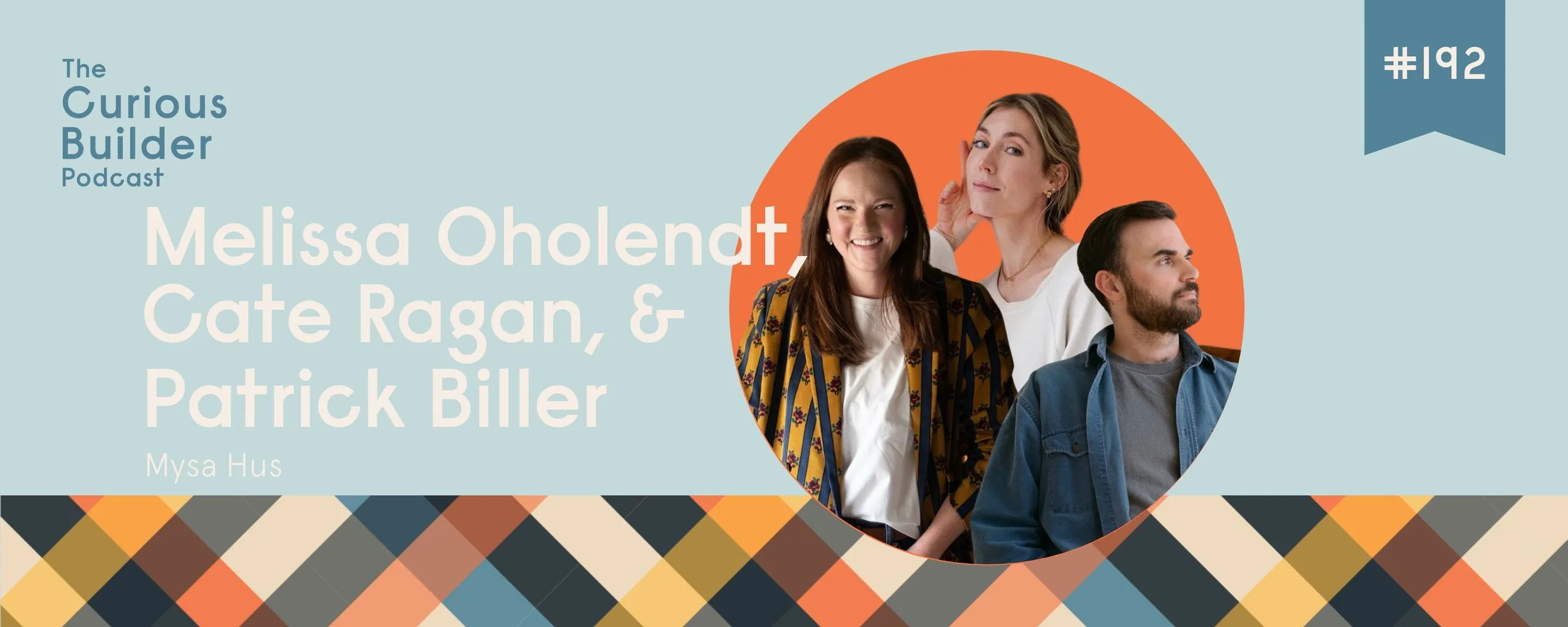
A beautiful home doesn't photograph itself. Melissa Oholendt, Cate Ragan, and Patrick Biller join Mark to pull back the curtain on the Mysa Hus photo shoot, from scouting and lighting to styling, florals, and the little details that bring a space to life. They share what it takes to create images worthy of national publications, why the right creative chemistry matters, and how sometimes the best thing you can bring to a photo shoot is a really good pair of pruning shears.
Listen to the full episode:


About Melissa Oholendt, Cate Ragan, & Patrick Biller
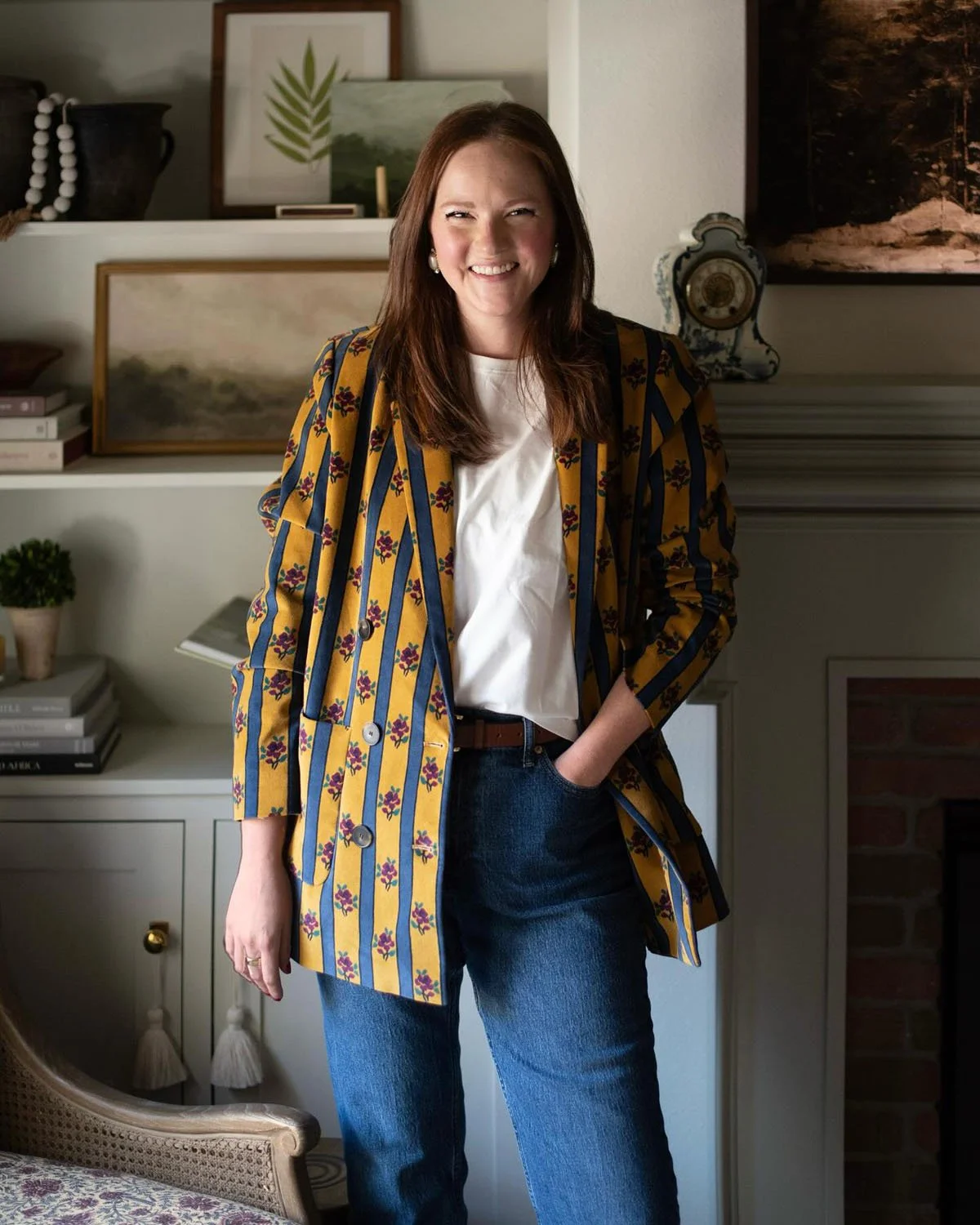
Melissa Oholendt found her passion for interior design in her youth; buying shelter magazines with her allowance from picking strawberries in the backyard and painting her bedroom that perfect shade of navy blue. However, after beginning her interior design college education in 2001, it took more than 15 years, a fast paced career for a distressed debt hedge fund in Minneapolis and a decade long entrepreneurial career in photography, for Melissa to step into her purpose in 2019, where Oho Interiors began.
Resources:
Visit the Oho Interiors Website
Visit the Oho Interiors Instagram
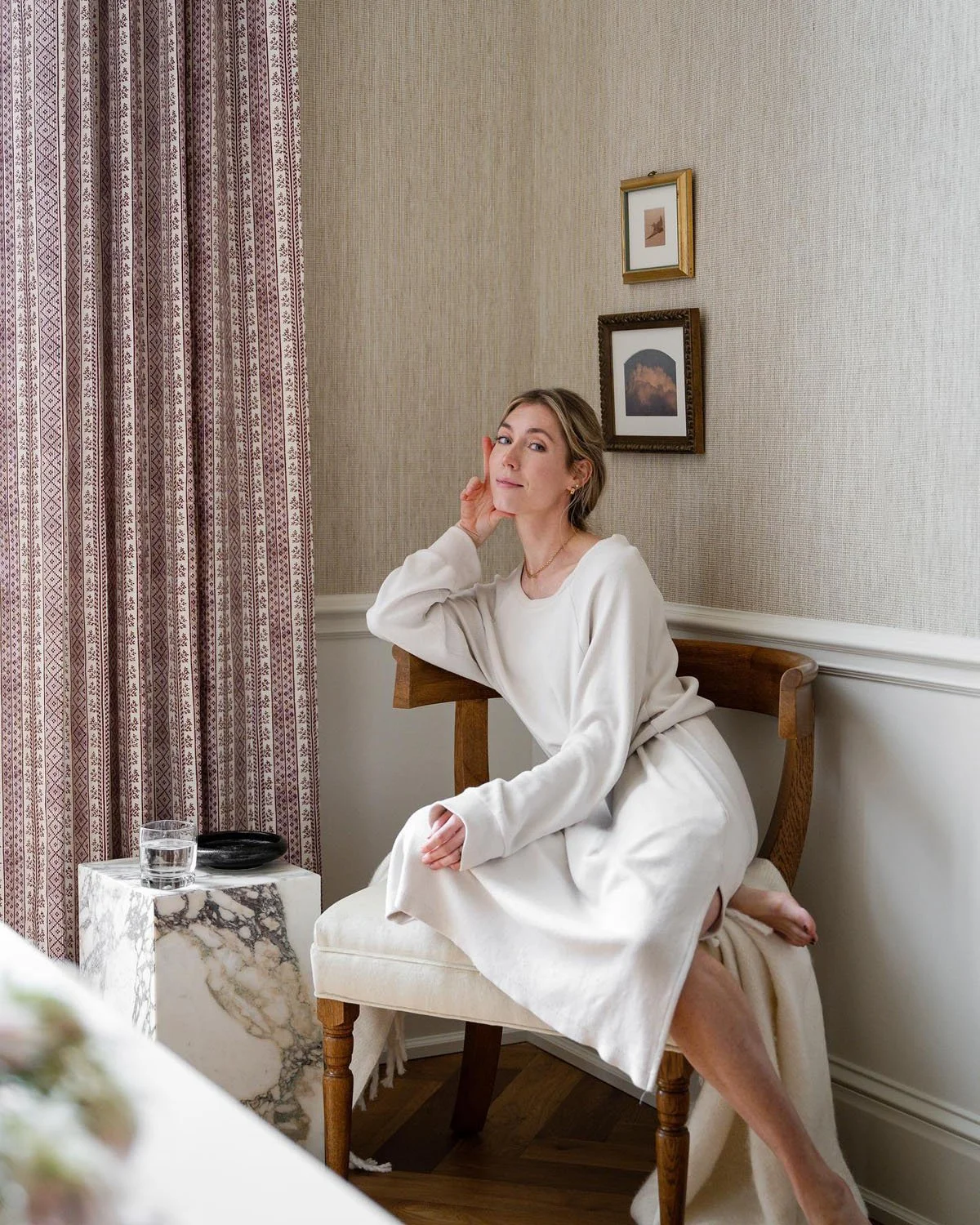
Cate Ragan is a Chicago-based editorial interior stylist and art director whose work has appeared in Architectural Digest, Frederic Magazine, Milieu, Veranda, Traditional Home, Elle Decor, House Beautiful, Flower Magazine, Better Homes & Gardens, Luxe and Modern Luxury. Her creative perspective is informed by an unusual combination of experiences: she trained as a ballet dancer, studied history and fashion, lived abroad in Switzerland and Sweden, and worked in fashion and marketing before building her own styling practice.
Cate has described her aesthetic as equal parts masculine and feminine, with timeless pieces, clean lines, relaxed compositions and occasional romantic or whimsical elements.
Resources:
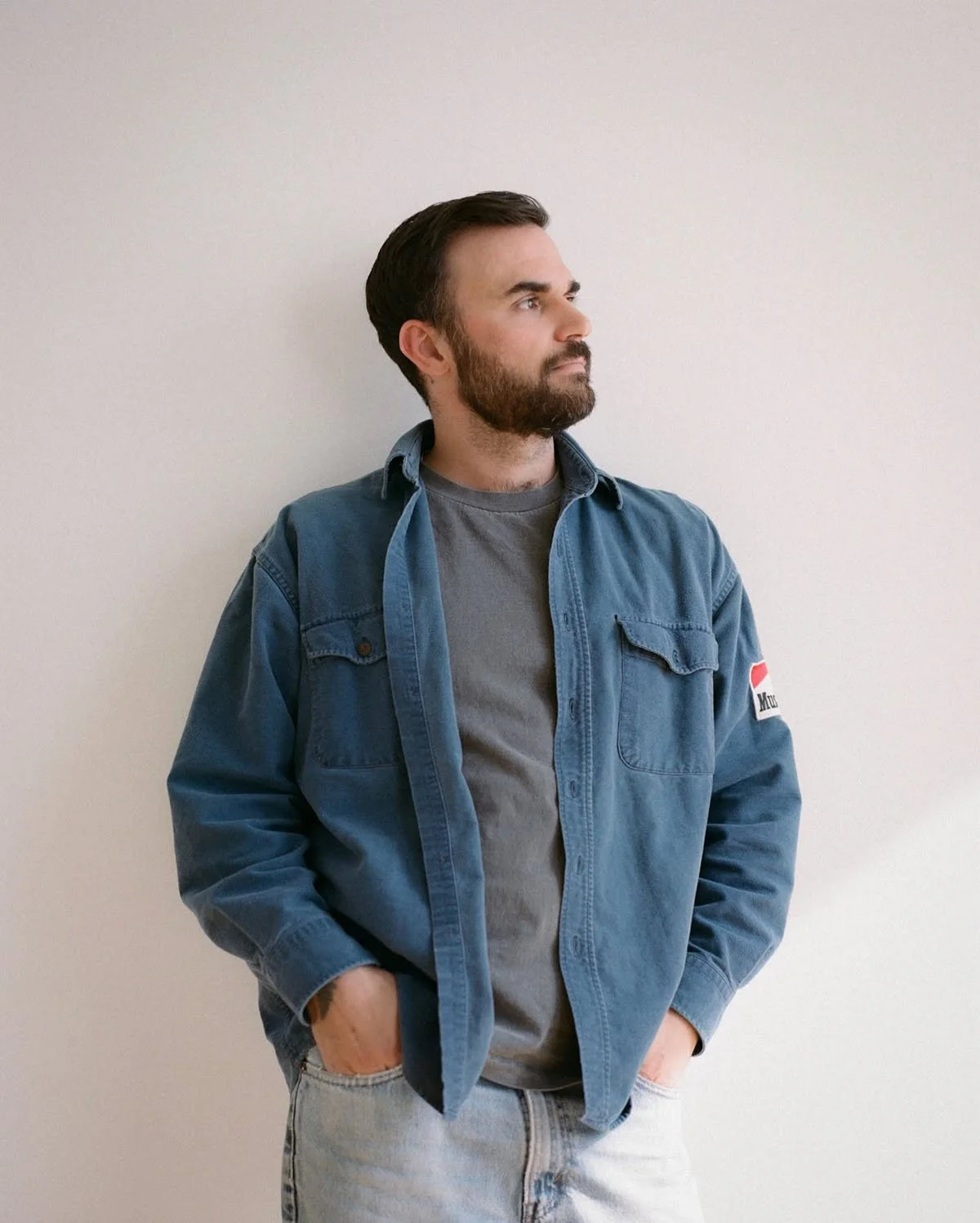
Patrick Biller is an interior design photographer based in Toronto, working across North America.
His work is defined by atmosphere. Images that feel considered, warm, and alive. He doesn’t simply document a space; he builds the mood, shapes the light, and creates images designed to hold up in print as well as online.
Patrick is as collaborative on set as he is behind the camera. He brings a keen eye for design and styling to every shoot, moving elements, adjusting details, and staying hands-on until everything in the frame is right.
His work has appeared in AD, Elle Decor, House Beautiful, Veranda, Traditional Home, Country Living, Homes & Gardens, and others.
Resources:
-
Mark D. Williams 00:03
One thing that doesn't get captured enough is how good people are to each other. And I know it's a little woo-woo, but am I wrong in saying that? I'm guessing Patrick and Kate, while you guys are both talented, you probably know other talented people. But you keep on working with people that you really enjoy. That's a huge part of this industry. Today's episode, we had Patrick Miller, Melissa Olent, and Kate Regan on. This is going to be behind the scenes of what it takes to do a high-end photo shoot, seek national publications. You've got three people, one house, and three different ways to see it. Without further ado, here is the Curious Builder team at Misahoos. Welcome to the Careers Builder podcast. I'm Mark Williams, your host. Today I have a special treat. After 20 minutes of glitches, three platforms, and five recordings, three rescheduled. We have three. Well, we have two new guests and one seven-time returning guest. We have Melissa Olent. You can check her out on episodes 1-234-567-8910, 1112, 1314, 1516, 1718, 20. And we and we have Patrick Biller, a photographer from Toronto, Canada, and Kate Regan from Chicago, who is our stylist at Misahoos. Welcome to the show, guys.
Melissa Oholendt 01:20
Hello. Hi.
Mark D. Williams 01:23
So I the reason I well a I just love you guys and I miss you especially Kate and Patrick. I I don't get to see you as much as I get to see Melissa and I miss you. You guys I'm so FOMO. Whenever you guys do like a photo shoot and all three of you are on another OHO shoot, I'm like, how do I not get an honorary like ticket to come? Like, come on.
Melissa Oholendt 01:40
We have one coming up in October, Mark. You're invited, Tennessee. I
Mark D. Williams 01:44
think what this is really saying is that I just have to pay you to be my friend, so that's fine. That's fine. Whatever. Hey, if you
Patrick Biller 01:50
if you help us on the shoot, you can come for free.
Mark D. Williams 01:52
Hey, I'm six foot two and I've got long arms. What do you want me to reach for? You want me to like hold stuff up?
Patrick Biller 01:57
You have to hold art on the walls for us.
Mark D. Williams 01:59
That's fine. I'm game. You would be so
Speaker 1 02:01
good at that. So
Mark D. Williams 02:03
what I wanted to do to frame this up for the audience, we've done tons of Misahu's episodes, and I wanted to do individual episodes with Kate and Patrick, and I'm still going to try to do that. But we knew that this one, you needed therapy pets to be on on a podcast to be recorded. So I'm meeting you wherever my people are at. But I don't think a lot of people truly understand all that goes into a super high-end home photo shoot, and I'm going to ask the questions, but really try to keep my mouth zipped as much as a thicker builder can, and really let Melissa, Patrick, and Kate explain like how it is. You know, you see this beautiful imagery. You guys have all been published in Country Living and Architectural Digest and all these beautiful magazines, and I don't think the average person, even the educated person, has any idea of how that is accomplished, the process, the thought pressing, like how your eye, how it all gets accomplished. And so I really want to get out of this episode, like basically how you work as a team, but really what you
Mark D. Williams 03:00
see and how you do it, and how you pursue it, because I'm really in awe. I've been on a lot of photo shoots, and I haven't been on one quite like the one that I was on with you guys. And so, I just really want the world to hear about it.
Patrick Biller 03:12
Well, first of all, I can't believe that you got us that you got Kate and I on a podcast because that that is not a thing that happens. We are very much behind the scenes people. We're not forward facing. We like being behind the camera, not on camera. But Melissa, I know you like being in front of an audience. I just saw you a few days ago at what? What was that event?
Melissa Oholendt 03:33
What's new? What's next? And I gave Patrick a shout out and pointed at him, and I thought he was going to melt into the ground. Poor Patrick. Sure, he hated
Speaker 1 03:42
that.
Patrick Biller 03:43
There was like 100 people there, and she pointed me out, and everyone looked at me.
Cate Ragan 03:50
You do deserve a shout out. I
Mark D. Williams 03:52
agree. You guys are all uber talented, so let's do this to frame it up because a lot of people probably don't know who you are. Let's just do a quick, rather than giving obviously a full hour dive. We'll save Melissa for last because the audience is very familiar with Melissa. But for those that aren't, we'll have her do a quick little intro at the end. But Patrick, why don't we go first with you? Just like four minute, basically who you are, kind of how long you've been in the industry, just a little bit about what you like to do, and then we'll really contrast more the three of you into like how you work together. But just to set the stage, let's bring on the actors of each one. So, tell us a little bit about yourself. I know you're a high-end photographer, but tell us a little bit about how you got into it, and really what your what your ideal photo shoot looks like.
Patrick Biller 04:33
Well, I came from a completely different background, not photography at all. I actually studied horticulture, landscape architecture, and ecology in university, and I did that for about 10 years. And I didn't see myself moving up in that industry. I was working outside a lot. I felt very creatively stifled in that job, and I realized that being creative is something that I really I need in my job. I've been very interested in interior. Design since I was a kid. I've been reading design magazines since I was like eight years old. I grew up in Niagara on the Lake, which is like the wine district near Niagara Falls in Ontario, Canada. And I've lived in Toronto for the past almost 20 years now. I got into photography not because photography was a passion, but because design was a passion for me. But I do feel like I'm lacking that part of the brain that can picture and imagine something from scratch, like designers can do. Like they can look at a space and they can imagine what it can be. I feel like I don't have that. So I thought, like, what is a way I can be a part of this industry, like adjacent to it, but be a big part of it? And so I learned how to use a camera. That was in, I think that was in the end of 2019. So right before the pandemic, big career change, age 30. But honestly, that was kind of an interesting time to start this job because interior design exploded at that time. Like everyone wasn't traveling, they weren't spending their money elsewhere, and they were like at home. They were stuck, so everyone was spending their money on redoing their home. So it felt like a really good time to get started. I just reached out to designers on Instagram and said, "Hey, can I do this shoot for you? I'll do it for free. I'll do anything. Like please." I begged them, and this one designer, her name's Tiffany, was the first designer I worked with. Melissa knows her, Tiffany Lee Design. I shot her cottage, her beachfront cottage, and it was in a national design magazine. My first shoot. Whoa, crazy. So that was kind of crazy, and it's just kind of like exploded from there. I'm working 90% in the U.S. now. I have a creative visa here, so I've been, as you guys seen, traveling all over the U.S. every week, which has been very exhausting but fun. And I'm living part time in New York now, so this is my new place behind me. If you can see me, and yeah, loving it.
Mark D. Williams 07:01
So I have I have two follow up questions on that, and then we'll go to Kate. One is, I've seen it either written on your website or a little bit about you. Was that you feel like there's photography can basically tell two stories? There's a design story and a lifestyle story. Tell me a little bit more about what you mean by that.
Patrick Biller 07:19
Well, I think editorially, I think lifestyle. It's good to have lifestyle involved in an editorial shoot. A lot of magazines require lifestyle elements, and it's not always we're not always so lucky that we can get lifestyle because a lot of times homeowners are very private. They don't want to be involved in the story. Sometimes designers are private too, and they don't want to be involved in the story, so getting those kind of lifestyle moments are challenging. But whenever possible, I try to convince designers to get lifestyle in the shoot because it has a better chance of getting published. And I think that's something like Kate as well would agree that, and stylists always agree that like let's get some lifestyle into the shoot because it helps tell the story, and I think you, Mark, as well, you spearheaded that at the Misahu shoot. Like you wanted it to feel like a home that someone lives in, and that's the only way it's going to get published.
Mark D. Williams 08:11
I've and I've always thought, and I don't know, this is maybe just me. I'm more attracted to images with people in it, like even if they're blurred or whatever. And I've even noticed from our social media team, if I want engagement, if we put a person on the first slide versus like a home shot, it could be the most beautiful home in the world. But I think people are generally interested in people. Is that? Do you think that's a fair statement?
Patrick Biller 08:32
Definitely. Yeah. Not blurry people though. I think you guys know I'm really against the blurry people. That's so funny. Photo. Yeah, that's very 2018.
Mark D. Williams 08:43
Yeah, I, you know, I want to have Kate have her moment here, but it was one thing I just noticed when you said that all three of you have something really unique in common. All of you are in your second or third careers already, and you've achieved such huge heights as I can see in what you're doing, and it it really was the close of the first one, and you all need to have separate episodes diving on each one of you. But that's really interesting. I had that's bananas that you're only seven years into your photography career from an architectural standpoint, and this lightning in a bottle. I mean, you are just going places, dude. Appreciate
Patrick Biller 09:20
that. Thank you. All
Mark D. Williams 09:21
right, Kate. Thanks for coming on Central Standard Time. Let's go Chicago. Tell us a little bit about yourself, your journey, and how you got to Misu's.
Speaker 1 09:31
Yeah. Oh, how I got to Misahoo's. So, I mean, just like Patrick, and just like you were saying, I didn't even know that styling for. I didn't know that this even existed as a job. To be perfectly honest, I had wanted to work in fashion, so I got my master's at Stockholm University. I was living in Sweden, and always thought I wanted to do the fashion thing. And I was hired by H and M's sister brand. And other stories. So I was working in their fashion marketing department, but my desk was positioned near all of the near the studio. So I worked closely and next, like physically next to all of the stylists, the art directors, the photographers, and I just always wanted like I felt myself creeping into the studio all the time. That's where I knew I wanted to be, and I was kind of like stuck at my desk, stuck at my computer. And I was a copywriter, so I was working a lot more in the advertising side. And I never just felt really fulfilled by that. Fashion didn't isn't really doing it for me, and then I took some time off of work. I had kids. I have two kids. I moved back to Chicago with my Swedish husband. I brought him here, and and then I was a stay at home mom for a few years, and I felt like I really wanted to go back to work, but I I didn't know what that would be. I didn't know really what I was good at or what I wanted to do, and I started. It's very strange to explain because I don't know why I was doing this. But truly, when my kids were napping, I would start creating these little vignettes and like taking photos of them because I was bored, and I had this iPhone and I liked what I was doing on my with the camera and just creating like beautiful little scenes around my apartment. It was truly just boredom, and I and like working with flowers, like I'd bring fresh flowers in from the grocery store that week, and I would arrange them in a vase and put them on the table. And then I'd think, oh, maybe that looks so pretty. I'll throw a tablecloth in there, or that chair isn't quite in the right place with the camera. And this is where that started to come into play. It was like not just creating it for me at home, but also for the camera. And a friend one day said, "Hey, you should try like assisting a local photographer who works in interior spaces." And one day, a a local photographer who did just that was like looking for a last minute assistant, and I just DM'd her and was like, "I have zero experience. I don't know what I'm doing, but I would love to just come on set with you." And after, like, we met and we hit it off. And it's true, I didn't know what I was doing, and but I wasn't a liability, and I think I was helpful, and it just grew from there. She just started taking me on all of these shoots with her, and I just quickly started moving things for the camera without being asked, and it it just turned into this job that I never had any intention of it becoming anything, but I loved it, and but and I I also enjoyed meeting all of the crews along the way. So it was like the designer friendships and the photographer friendships and the builder friendships were really motivating to me as well. It was like I love being on all of these projects with these really creative, special people.
Mark D. Williams 13:27
That's amazing. Is it fair to say? I was just thinking about it when you were saying it out loud that you know we you build a home. Patrick comes in and like captures a moment, but it's almost like the stylist is like a further zoom even on that moment, because you see, is that a fair? Like you see even more depth into that little moment, or maybe Patrick, how would you take that moment? Because you're the one setting the frame, but then it's like she's lifting it, or how would you articulate like how a stylist brings more life to that photo?
Patrick Biller 13:58
Well, I I always say that stylists are important on a shoot because they know how to style for a photograph, and designers love working with stylists because designers are good at styling for living, and that doesn't always translate into photography. The example I always use is sometimes you photograph a table, and the one of the chairs is seven feet from the table to look good in a photograph, and a designer might not know that, but someone like Kate is going to know that. And like Kate, best in the business. She's so good at florals; it blows my mind. Like her floral arrangements are why I followed her to begin with, why I stalked her on Instagram and her DMs for like two years before we met. Her florals add so much life to rooms in photographs. It's amazing.
Speaker 1 14:47
That's so sweet. Thank you. Well, and I think that the florals, you know, I think that they're so important to spaces because when you were talking, Mark, about how does how. How do you make it seem like somebody is living there? How does it? How do you make it come to life? Well, what brings a space more to life than actually something alive? So I do think, I think it's always nice to pull something from nature inside. If it's not a space that is screaming for florals, you know, maybe it's a small potted plant, but I think bringing a little bit of something that is truly alive does lend that human connection to the photography in some way. Or like
Patrick Biller 15:34
with Misa, who sits like 42 potted
Mark D. Williams 15:37
plants on one side.
Melissa Oholendt 15:39
Yep,
Mark D. Williams 15:42
Melissa, why don't in case someone has not heard one of your six or seven episodes with me, why don't you give us a quick intro of who you are and how you found your way to Misa?
Melissa Oholendt 15:51
Sure. So I'm Melissa from Ojo Interiors. We are based in Minneapolis and Colorado, and we are the interior design team for Mesa Hoos. Mark and I have a long history. You can probably listen to episodes one through 20 on that if you want to. But we, Mark, brought us in on Misahus, and that was. I think that is the rest is history. Is that? I mean, I think it's what I think is interesting is that we all, the three of us, started around the same time, around that 2019 time period, which is just wild to me. That I had, I don't think I even knew that until we were on set together, and I was like, "Holy cow, that's pretty remarkable that all of us started at that same time." And you two have certainly reached an echelon of success that is is wild to watch. So have
Patrick Biller 16:39
you, Melissa? I so I'm I'm I'm
Melissa Oholendt 16:41
Midwestern. I can't take I can't take any compliments. It's on sale, but I just think it's wild that we all kind of started around the same.
Patrick Biller 16:48
You're a house beautiful next wave designer.
Melissa Oholendt 16:51
That's yes, that's true. I am.
Mark D. Williams 17:01
When it comes to quality, craftsmanship, and performance, Pella sets the standard. Whether you're building custom homes or designing a timeless space, Pella offers innovative window and door solutions that blend beauty and efficiency. With showrooms and experts around the country, Pella makes it easy to find the perfect fit for your next project and their team to support it. Build with confidence. Build with Pella. Visit pella.com to explore products and connect with your local rep today. For more information, you can listen to episode one or listen to episode 109, where we bring on Pella owners and founders at Pella Northland, as well as their innovative team behind the SteadySet innovation. I think one thing that's encouraging to entrepreneurs, maybe listening to this podcast, and is not taking any way anything away from people that have been doing their career for a long time. I think there's a lot of value to that. But what I find really encouraging, and what I'm hearing in the three of you, is on all metrics, you guys are superstars, but honestly, I didn't pick any one of you because you're superstars. I picked you because you're good people and you're good at what. And the reason I'll work with you in the future, like I obviously was introduced to you by Melissa, and that's how I met you. But now I've become friends with you, and I just like you. And I've often I was meeting with some other designers today. At the end of the day, the thing that matters most to me as a person, it's just people that I like, and it's like when you find people that are super talented and you also like them, you're like, what? Honestly, what more? I just need to build more homes so I have more reason to hang out with you guys. But I think one thing that doesn't get captured enough is how good people are to each other, and I know it's a little woo-woo, but am I wrong in saying that? I'm guessing Patrick and Kate, while you guys are both talented, you probably know other talented people. But you keep on working with people that you really enjoy. That's a huge part of this industry.
Speaker 1 18:54
Yes, absolutely. And I'm fortunate enough now to be able to, and I know you are too, Patrick, to turn down jobs where I'm like, it's not worth that project, perhaps because the chemistry on set is not right, and I will work with the good people as much as possible because they're long days, and you value those relationships. You value you value the people that are kind and hardworking for sure, and there are so many of those people in this industry.
Patrick Biller 19:28
Completely aligned, definitely, yeah.
Mark D. Williams 19:31
Melissa, I had a question. I mean, you were a wedding photographer at one time. Does that help you, hurt you, or what is your perspective on? It's rare that someone would have a previous career as I mean I know wedding photography is a lot different than what Patrick does, but like you know more than the average person about how composition and camera is that an asset? Is that a help? Is like walk me through like your eye when you see Patrick capturing shots. On set,
Melissa Oholendt 20:01
I think it's both. I think it helps and hurts from the perspective of when I first sort of engaged with a professional interior photographer. It definitely the pace of it was so much slower than I was used to with weddings, and so I remember feeling like, oh my gosh, we are not moving fast enough, and that's something you kind of have to get used to, and certainly something I'm used to now. But I think what it did do for me is that it really enabled me to choose photographers that a I really love their work to begin with. Like I'm not there to provide critiques on framing. That's not what I want to be doing with my time. And so I hire the best possible people that I humanly can to execute on being able to a give fresh eyes to a project. I think that's important, but also to be able to just truly trust that like photographer and styling team, they really have it in an ideal, honestly, an ideal photo shoot. And this is, I think, I tell other people this, and they think I'm insane when I say this, but the the ideal photo shoot is where I can kind of sit back and work on my computer. And Patrick and Kate call me over, and they're like, "Hey, this is final shot. Any anything you want to change?" And I'm like, "Nope." Like 99% of the time, it's like, "Nope." And then I go back and sit down, and they do their thing. That's the best thing.
Patrick Biller 21:19
That's what we love too. No, it's the best. It's because you trust us to give you what you need, and that's why I like working with people like Kate and other talented stylists because they almost act as like a brainstorming. They they're an art director as well on shoots, and they help me. I know some photographers have a hard time letting go of that control, and Kate and I have talked about this before. But when I'm on a shoot, I'm collaborating with the stylist, and I'm collaborating with the designer, and I want them to come to my computer and press Command K to take a photo. Like I want them to say, "I think this should be warmer. Can the light come from this way?" Like I love that Collaboration.
Mark D. Williams 22:03
It's funny, and correct me if I'm wrong, Melissa. This was the first Misa Hus was your first shot with Patrick. You had not worked with him before, correct? Yeah,
Melissa Oholendt 22:10
correct. Yeah, he was on my list of people I wanted to work with. Can I? And actually, can I tell you about how I brought like got introduced to Kate and Patrick? Is that okay?
Mark D. Williams 22:19
Yeah, please. I'm
Melissa Oholendt 22:20
gonna steal your time. So, Kate, I, I, and I say this because I think it's really important for people to a find their people. Like we've, at least most of us have been on a photo shoot where 3 p.m. starts rolling around and everyone gets a little crabby or a little tired, and like getting past that hump sometimes is not possible for, or it has been in the past. Yeah, Diet Coke helps for sure, but or cold brew. But sometimes getting over that hump is like not possible on shoots because like attitudes go down or there's just not enough energy in the world to like make it. And then those last like two or three hours can be such a like slog to get through, and I've been on those photo shoots where like the chemistry is not there, and it it's exactly what Kate said. It is like not worth it in a million years because it is so painful. And those last three hours, you really just lose the spark of magic that's happening. But to kind of back up, I was introduced to Kate's work. Like what we found is we make creative briefs for every photo shoot that we do. We kind of gather imagery of like stylistically. Here's where we want to land. Is Kate and I early in our you know kind of earlier in OHO when we were we had decided to bring a stylist on set. What I was finding is that like I was pulling the same imagery and they were all it was all credited to Kate. Almost every image was credited to Kate, and I I remember that realization and being like, "Huh, I think we should try and hire her." And before then, we had really never worked with a stylist that was out of state for us, and so that felt kind of like a big move for us. And so we had a big project in Iowa that we were photographing. It was 2023, I think. Is that 2024? Maybe 2024, and we were photographing. It was like a it was like a monumental project for Ojo, and so I was like, "Well, we're gonna bring in like Kate to do this." I put a creative brief together and sent it to her, and she was like, "A lot of these are my image, or a lot of these are images that I worked on." And and like we had that moment of being like, "Yeah, I know that's 100% like why we brought you," but that photo shoot was magic. Like it was two days of like hard work together in Iowa, and it was wonderful. And it was like any time we can hit a project where it makes sense to bring Kate in, which is really a level of project that makes sense for that financial investment, like because it is it is an investment and it is something that you have to plan for and work towards, but anytime we do that, like we bring Caden, Patrick, as he said, had shot for my friend Tiffany up in Canada, and Tiffany and I had met at a Haven conference, and we had just gotten on the topic of photographers, and we had been wanting to like we love our local photographers; they're really incredible and have done a. Incredible work for us, but also like this is a relationship game, and we know that we had wanted to kind of level up both our photos, but also where they had the potential to land. And so when we had been looking around for other photographers, a I loved the way that Patrick uses light. Like there is no one else in the business, as far as I'm concerned, who uses light the way Patrick does, and so, like when we were considering Misa and knowing like what a landmark project for Ojo it was going to be, it was like, okay, well, we've got to bring in someone that we truly like.
Melissa Oholendt 25:30
This is a level up opportunity for us from our photography work, and so Patrick was only the only person on my list that I was like, okay, we have to like we have to make this work, and we did, and that like that the magic that was created on set that day at Misa. Mark and I talk about the Misa curse all the time, but that was like, I mean, like you know, like photo shoots have gone so south at the point where like I'm like I'm planning for like a 3 p.m. cookie or dessert or Diet Coke or something to like help manage the like this south decline of shoots, we didn't have that on our shoot. I don't do
Patrick Biller 26:04
I don't do slumps on my on my shoots. The 3pm. slump doesn't happen. A lot of times designers are like feeling tired and getting sleepy, and I'm like, don't,
Melissa Oholendt 26:15
don't. How dare you? Yeah, yeah, yeah. You
Patrick Biller 26:19
can't. You just cannot. We have a job that has to be done, and we have to have our creative minds going until it's over. And if you're tired, have your Diet Coke, have your cold brew. You have to keep going.
Melissa Oholendt 26:31
There's nothing that I can say that is exactly the magic that was created. And so we had at that point, I think we had already hired Kate and Patrick, sort of taking a chance for our Tennessee project next month, but that was it. Was the magic that was created on set that I was like, "This is like this is what it's supposed to be like for sure."
Mark D. Williams 26:50
I found it was, and I talked to about this to Melissa because it ended up being your dream photo shoot. Because you know we spend so much as the builder; the last 60 days of any project is super stressful. I made Misaho's 100 times more stressful than it probably needed to be, only from the standpoint that I wanted all. I had two photo shoots and two video shoots before the home was going to be actually available to the public, and so plus I I sort of romanticized this idea because I hadn't met you at this time. Like we had an international photographer. It sounds very James Bondish, like oh, we have a consultant coming from. I like saying overseas, but like it's Toronto. I mean, you're not that far away, but it sounds way cooler if I say. Don't
Melissa Oholendt 27:28
downplay it. It's bougie.
Mark D. Williams 27:30
My international photographers. I wanted you to come off like your private jet with like a you know the sweater like crisscrossed over your you know if like like does someone hold my Versace handbag, but anyway, long point is we're we're sitting. Melissa and I sat and cackled for three days. We I laughed so hard because Melissa and I had been so stressed for a year on this project, maybe more. And that was honestly one of the highlights of the entire build for me was those couple days, and mainly because Melissa, at that point, I was just getting to know you, but I Melissa and I just got to sort of bond as friends and like as someone like as the ship is kind of coming into harbor, like all the hard sailing had kind of been done. Like it's kind of like the fanfare. Like once you get to the photography part, you know your your work has just begun, Patrick and Kate. But for us, it was kind of like the the coronation, the fireworks going off, and it felt like very celebratory. It totally was, and and it felt so good and so relaxing to just laugh with Melissa. And so anyway, it was a for me. It was a memory that I will very much remember as part of Misa. Have
Patrick Biller 28:32
you heard that that quote that a project isn't complete until the photographer has been?
Mark D. Williams 28:38
No, but it's a good quote. I can see why you like it.
Patrick Biller 28:40
It's an unknown. I've seen it 100 times everywhere, and a lot of photographers say it, but it's so true. It's a time to celebrate. It's seeing the project when it's complete at its absolute best. It's the best it will ever look. As soon as somebody moves into that house, they're going to ruin
Mark D. Williams 28:55
it. I don't know if I agree with that last part because if you're going to go back to your earlier part about lifestyle, a home that's lived in because I give Kate a lot of credit for this idea. We actually just mailed it actually today, and Patrick, I need your address to give you yours. But we made a self-published little mini book just for people that are most interested. We have other ideas for what we want to do here, but Kate was really the person that planted that seed in my brain, and she had mentioned a few like Rizzoli or some of these books I'm not familiar with of like hey you should really and then we talked about like having Patrick come back and like with Kate and doing like a photo shoot in the winter and then doing one like basically have like a seasonal book which is a big commitment you'd have to find a way to get a client to go for that but like Melissa knows me well enough that once a seed has been planted it's pretty hard to shake tree like it's gonna happen. It's just a matter of when and who. Yeah. And for the audience, if you can't tell, we may have lost Kate due to some internet issues, but we'll keep going in case she comes back. I had a question for both of you. When you arrived, Patrick, to a home to to photo shoot, let's we'll just use Misa, who's as an example because that's one. We're talking about what did you know about the house beforehand? How does that influence your work? You obviously always want to do good work. That's what you do. But how do you sort of adopt? Because everyone else on the team has been working on this for years. No matter what photo shoot you're going on, the home, the designers, everyone's been working on this for a long time. And here you're kind of the new kid. You come flying in like James Bond, and you've got to solve the problem over a couple days. Like, what's your mindset as you get ready for a job? Because I know you've been socially engaging with us. Like, I saw you engaging with us on our Instagram, and like, you're like, hey, this looks cool. I mean, you're very much invested from a from what I can tell, having never met you. Like, I can see at this now have, but going back into like January, February, March, like we hired you early on. We said, "Hey, this is your date." And like I know from my point of view, but I really took it as a really cool compliment. Like the way you were engaging and and saying, "Oh, I'm following this." But walk us through your mindset of like, do you do this for all of your projects? Was Misahu is unique that way?
Patrick Biller 30:58
First of all, I just want to say it was a 45 minute flight from Toronto to it's even closer than New York, I think. But yeah, anyway, not that luxurious. Yeah, Patrick, don't ruin
Patrick Biller 31:10
it. Sorry, don't ruin the illusion. So I, it does depend on the project for sure. If it's a flagship project like this one, I know that for Melissa, this was a really important one, and for you, Mark, this was like upper echelon project for you. It was really important to you. So I'm an anxious person by nature. So I engage because I'm trying to calm my nerves before a shoot. I want to know as much about that house as possible. I want to know the exposure. I want to know what angles like it faces northeast southwest. What time does a sunrise that day? Like I'm really trying to learn that stuff. I'm messaging you on Instagram because I want to look good to Melissa. I haven't met her yet, so I'm going to ask you the questions instead. What what direction does that dining room face? Because I need to think about my lighting beforehand. And like Melissa said, I use a lot. I use a lot of lighting on my shoots. I create a dimension with with artificial lighting. Not to say that shooting ambient light isn't great. It is. I'm very envious of photographers that do that really well. I like to have the control. I'm a control freak, so I'm always blasting every shot with light. So I'm also planning like, do I need to rent certain things for this shoot in advance? Oh, that bathroom looks particularly challenging on the second floor, the third floor. Do I need to rent a 25 foot stand to put a light outside that window, or is there a terrace outside that bedroom that I can light from or a roof like on Misahoo. I put lights on the roof a bunch of times too, but yeah, it's really just rooted in a wanting the best results possible. I'm a perfectionist, but I also want Melissa to have the best photos ever so that she can get published and keep growing. And yeah, and to feed my anxiety before a shoot. I have a lot of. I'm a terribly anxious person. Yeah.
Mark D. Williams 33:04
No, I mean, I. I mean, I appreciate the rituals. You know, I was watching the Raphael and the Doll documentary recently, and they talked about all. I don't know if you've seen it, but he, if you follow tennis at all, I mean, he. I mean, I'm a big tennis fan, but like, regardless, you know, he'll he adjusts he adjusts his eyebrows. He picks his shorts. He scuffs his. He has like seven or nine things that he does every single time. And they mentioned how anxious he was. And he did that because by doing that methodology every single time, it gave him a process to sort of eliminate that. And that's kind of honestly, that's being compared to Rafael Nadal is not the worst comparison in the world. And so you know, hearing you go and go through that process. Totally makes sense. You're kind of you're bringing clarity to kind of the chatter of what could either a go wrong, but just it's part of your process, if you will.
Patrick Biller 33:48
It really is just checking off like what could go wrong here and being prepared in advance for when that happens because it does happen. There are a lot of things that can go wrong on a photo shoot. For instance, at Misahoos, I don't know if you guys remember, but one of my $5,700 strobes fell over in the driveway and smashed. So, like, that's just stuff you have to plan for in advance.
Mark D. Williams 34:12
When you, Kate, when you walked into Misahoos, I was asking Patrick. You guys engaged with the project a lot before you even arrived there, and you know Melissa and I have been working on the project for a year, and so we're very in tune with what it is. When you show up on a on a job site to style it for the first time, how important is your process knowing like what the house is, or I guess what is your process, so that to sort of honor, you know what the home is, what is from an art piece, but also having your voice in it too. We might have audio issues here. Oh, and we lost her. What she was about to say was that Misahoos. If I could speak for her, that Misahus was probably the pinnacle. Of her career, and she was honored to be a part of it. Thank you, Kate. I appreciate you. Wait, am I
Melissa Oholendt 35:06
back? You're back.
Mark D. Williams 35:08
Oh yeah, we can hear you now. I'm back. Okay.
Speaker 1 35:10
Okay. Well, what I would say, I couldn't get the final part of the question, but I think you were asking what the preparation is like. Is that correct?
Mark D. Williams 35:19
That is correct.
Speaker 1 35:21
Okay, so I will say that this is the part, and any other stylists who are listening to this, feel free to DM me, send me a message, and let me know how they feel. This is the part that I've just never gotten over how this part is a little stressful for me, because even if I have seen the scouting images, if it's an out-of-state project, I have not walked the space, and walking the space is what gives me a true sense of scale. And my job essentially boils down to understanding scale. Like every single accessory, every flower, branch, plant, chair, everything that I how I'm going to approach the space has to do with the scale of the space, and so there's always this moment when I'm about to walk in to the house or apartment or whatever that I just think, gosh, I hope we have all of the right accessories. I hope that we have things that are going to be big enough for that dining room table or big enough for that kitchen island. So there's always like this little teeny amount of stress when I walk in. But I mean, I've worked with Ojo before and feel so esthetically aligned and had such full trust. Obviously, in this being a show house, also that it's just so complete. It you know not a not every home that you walk into has that many accessories to work with, but I mean it was just a such a wild success. Does that make you so happy to hear that?
Melissa Oholendt 36:56
Yes, it does. Honestly, it does.
Mark D. Williams 37:00
Well, you bring up a good point, Kate. I mean, I remember looking out the window and seeing you outside, like cutting down some of my trees for like florals. I was like, "Where is she getting these from?" And then I see you out. I know, but that was I just see you with like a pruner, just like getting after him. Like she's really what we call a local botanist. Like she's getting after the local foliage here. You know, I was DMing you the week because like you literally you flew from my. I think you were doing like four homes in a row. Like Patrick, you guys know how to move, and you were out at Studio McGee's out in Utah for a giant home. I think for the Crumble Cookie home, if I recall, and the scale was enormous. I mean, it was like 10x the size of Misaho's. How do you prepare for a scale when a home is that much bigger? I mean, Misa is kind of honestly easily to style because it's not that big. How how what do you do when you know home is going to be that large?
Speaker 1 37:46
Well, I mean there is a certain amount. So I mean it's pre-production is important. So we had a series of calls with that team to make sure that we were going to have all the accessories that we need. And I could tell from the scouting images that this was that was a very large home, right? But it does inform. Then again, you know, I knew that I they weren't going to be as forgiving with me going into the backyard and flipping off the trees. So you know, it's it's making sure I had to go off property for that.
Mark D. Williams 38:21
Yeah, the neighbors' yard. We're gonna go cut down their tree. I love it. You're the best. Like Edward Scissorhands has got nothing on Kate.
Melissa Oholendt 38:29
But I do. I
Speaker 1 38:30
always, I always have clippers with me.
Melissa Oholendt 38:33
I do think it brings up a really important point, though, is that like what what can designers do to better prepare the photography and styling team for you know our shoots like that. That is one of the you know we do the scouting shots, but like would a video walk through like you know it's it's one of those questions that's like how can we better prepare you guys for those shoots because honestly a lot of times it is flying people in for these things or flying together as a team, so like, how can we better do that?
Patrick Biller 39:04
You guys already do 10 times more than most. Honestly, the documents you guys create in advance, you and Grace, that's sending to Kate and I. Wow, amazing, so helpful. I do think videos are very helpful as well because Kate, I don't know if this happens to you, but designers will always send me one 0.5x wide angle phone photos of rooms, and I'm like, "Whoa, this space is massive!" And then I get there, and it's the smallest room I've ever seen. And I can't plan my lighting, and Kate can't plan her styling with those shots. So videos, I think, would be really helpful. Actually, that
Speaker 1 39:41
brings up a really good point. And Melissa, you're giving me an idea. Like maybe I send out a what I need, like a little PDF, even in the beginning, especially for new clients, people who aren't used to the photo shoot experience. Because Patrick, I feel like I have the opposite problem. I feel like I'll here's our living room. And it's one slice of the corner with like the you know one armchair and a hint of the bookcase. You know, I we need to see the full expanse of the room, and then I want to see inside people's drawers. You know, there are all sorts of things tucked away in there. Do they? Does this homeowner collect china, for example, do they have this amazing collection of China? Can we use that? Can we integrate that into the story of this home? Does it lend itself in a way to who lives here and and give that home more life? So yes, the I think the pre-production. I'm curious, Patrick, because I've met I've met photographers who actually have told me that they don't like to look at a single scouting image before their shoot, and so I everybody has a different process. Where do you fall? Do you like looking?
Patrick Biller 40:53
I I want to see every millimeter of that. Sorry, sorry, every inch of that place in a photo in a scouting shot in advance, but because that just helps give me comfort and orient me to how I'm going to shoot, how I'm going to compose, how I'm going to light.
Speaker 1 41:11
So, are you composing those a little bit? I'm sure everything changes still, but are you? Is that part of your planning, your mental planning?
Patrick Biller 41:19
You know what I do? I tend to get caught up on one particular shot. So when I see a bunch of scouting shots, it like with Misahous, that corner potting area that we shot with all the plants in the window. In my mind, that was like the shot to get. It just looked so good to me. It was my favorite little corner in the house, and I fixate on that shot, and it's really the only shot I think about.
Speaker 1 41:45
I am exactly the same, but don't you think that's interesting? Because I think what ends up happening is you have. Maybe I'm speaking for you. I should just do for myself. I have, I have decided that one place is informing the rest of the story in a way, so it's like the center, and from there, I it's an anchor. I now know how I'm supposed to approach the rest of the space based on that one shot that was really clear to me in my head.
Patrick Biller 42:14
Absolutely, yeah. And in photographically and lighting-wise and style, like how warm the photo is how moody it is. I always think about those things with that shot, and yeah, it informs every other shot we do. I always try to start with those shots. I really fixate on the one I want to start with. It doesn't always happen, unfortunately, but I love when it does because yeah, it informs everything for the rest of the shoot.
Speaker 1 42:37
Really interesting. It's like a tone of setting a tone of voice, almost
Mark D. Williams 42:42
Melissa. With that in mind, I've heard designers have different parts of the home that they like to start with because it helps them get the center of the house for their story. Are there certain as you design a home? Is there a place that you usually like to start because you feel like it sort of is the heart of the story?
Melissa Oholendt 42:59
Yeah, I mean, if I'm designing. I certainly like to start with a kitchen or a living room because it does it does exactly what it does for you guys. It helps me set the tone for the rest of the house, and especially because those two rooms are you know one of two of the heavier design lifts in any project. It definitely helps kind of inform everything else. And if I can solidify brain around that one, like everything else, feels like cake.
Mark D. Williams 43:29
We're happy to announce our latest sponsor, Real Wood Floors. What made them to be an ideal partner is the fact that they align so well with our high-end custom homes. They're located in 25 cities across the country. They're probably pretty close to you, and what really drew me to them is the fact that they're vertically integrated. So many times when you're dealing with wood floor, you know, procuring it from different companies, having it go through middlemen, you're either short material, it's the wrong material, and so we are looking forward to leveling up that and buying direct. The other thing that I really love is their floor made perfect match. I can't tell you how many times I've had a beautiful wood floor, but the vents don't match, or I love the wood floor, but it doesn't match my treads and risers. Knowing that they can perfectly match that is something I'm really excited about. Go check them out at realwoodfloor.com and sign up for an RW Pro account. Tell them you heard about them from the Curious Builder, you guys have a lot of experience. The three of you, particularly Patrick and Kate, and Oho coming up here, and hopefully me someday too. With just some national publication, and it's it's nice for our business. I think from the photographer standpoint, you guys can travel a lot more than I can as a regional builder, and Melissa can obviously travel. But talk the audience a little bit through like how does one? I think it's always kind of this mystery. I ask you both so many questions, Kate. You were offline for a little bit. You kind of put the seed in my head about the book. I talked a little bit about that, and so we'll see where that goes. But in terms of like seeking out national publications, it seems like from what I've gathered, photographers sort of hold the key relationship. To getting that done, let's spend five to 10 minutes talking about this because I think a lot of builders, designers, and architects just don't know how this is done. I had no idea how far out these publications plan, how they like to keep a lid on all these photos. It's really quite challenging from my point of view. Maybe just Patrick. Why don't you speak first a little bit? I mean, since you're for the golden child, your first job was nationally. I mean, man, you just got the golden ticket. But what is it that they're looking for, and how does somebody get published on national scale? I think that would be really helpful for a lot of people to hear this process.
Patrick Biller 45:39
Well, the process is different with every shoot I find and every client. I think one of the big reasons why I get hired a lot is because I take on that task of kind of acting like a PR agent for a lot of my clients. I know OHO works with a PR company, so that's amazing. I know they got a shoot we did together placed just recently in a national publication, so that's great. I congrats. I'm thinking about what publication would be the best fit for this project before I even do the shoot. I'm in the planning stages. I'm like, I know that House Beautiful is the perfect place for this, and I'm kind of. I know Kate does this too. Like, she'll plan her styling for what publication she thinks it's a good fit for. I'll plan my style, like lighting-wise. Like I know if it's for House Beautiful, I might do it a bit lighter. If it's for Elle Decor, they like moody, they like warm. So it's good to like come up with those decisions beforehand. I think the pitching process is one of the hardest parts of this industry, especially for designers, because designers are like their projects done. They've been working on it for three years. They're ready for these images that they've spent so much time and money on to get out there to the world. And then a magazine will take three months to respond and say no. And then you reach out to another one, and they take two months to respond and they say no. And then the third one says yes, and they're like, "Oh, but it's going to be next fall. It's like a year and a half that you have to wait." And they embargo those images from use on social media and on your website for that long. And I think that's why designers like they need to constantly be pumping out projects to get published because if that's your only project and you're waiting two years for those images to be seen, it might not be worth it because you might want to grow your business another way. But if you have 10 projects in the pipeline, then waiting two years for one of them is not going to affect your business. And I think OHO is pretty good at that. Like we have one project that's getting published really soon, but something like grand, like Misahous, might have a longer lead time. Yeah.
Mark D. Williams 47:46
What What's your point of view on that, Kate? Have you seen? I mean, I don't know how much you interact with publications from your point of view the way Patrick does. But the root question was because you blinked out there for a second with the internet was basically how do how does the field that's listening designers builders anyone that's listening how does whaty how does somebody set up their project and how do you seek the relationships with the end in mind of like I would love to be have this published in a national publication or for broad exposure
Speaker 1 48:16
yes I mean I find that stylists tend to be the furthest removed from that relationship because we don't have. You have to reach out to the photographer to be using those photos, so I feel like automatically they have this better connection. What's interesting, and I I almost want to hear what Melissa's thoughts on this. I've been having a lot of conversations recently with designers where absolutely publication makes absolute sense. But I have a lot of clients who have huge followings on Instagram, and so so much of the material after you know after they've waited for about a year, and if they feel start to feel really impatient, and they have all these great assets that they want to share with the world, and if they have a good following, I've seen them actually start to release them. Start to say, "Okay, I've waited a year; it's not worth me waiting any longer." I went to the first round of publications that really meant a lot to me, and I was really hoping to get these into, and now I'm going to release them. And that they see a lot of new business comes in that way too. So I would say, I would say that I try to encourage designers not to be too discouraged if something doesn't get picked up because it doesn't mean that there still isn't value to that imagery.
Melissa Oholendt 49:36
Yeah, I agree with that, and I think that there is to you know we kind of approach photography from a this needs we know that this will be held will be put at some point under embargo or we're going to pitch it until it gets picked up or we're shooting this so we can use it on our social media. What I have found so surprising lately is that we because we have editors watching what we're putting. Out in our feeds is that sometimes we will get projects that get picked up after we have already released it, and so either the the publication wants to reshoot it. That's actually happening right now in Minnesota, or there are things you know we've it got, or we have projects that get released. They get published in one place, and then we release them, and then suddenly they get picked up by 234 other publications, and sometimes really major publications like my the one project that Kate and I shot with Judith, my my carriage house that I'm sitting in right now just got picked up for Magnolia Journal, and it has been published probably three or four other places, and so that it's a very exciting thing, but that I think that there is what I'm seeing is that you know there are projects that we want to hold because there are publications who will not publish it if it is too public. Like that is one of the commentaries that we heard about Misahus is that it is too public of a house for certain publications. So if you're right, Kate, if those publications kind of if we go down the line of like those not being picked up like sometimes it's beneficial for us to just release it widely and see what happens.
Patrick Biller 51:10
I've had a lot of clients have luck with that. Tiffany, who we were talking about, does that all the time. She'll just start releasing a project because you don't know whose eyes are in your social media. Even me as a photographer, I have editors and writers and art directors that follow me. And what I do, like I did this with Misahous, I will take the eight best images from that shoot and I will put them in a grid and I will share it as an Instagram story. And you wouldn't believe how many times a writer will be like, "What is this house? Who did this? I think it's a great fit for X, Y, Z. So teasing a project, I think, can really help. And also, I have some clients that will compartmentalize a project. So, like, say there's six bedrooms and seven bathrooms in this house. When you pitch it to LDCOR, you can be selective with what you send them, and you can share the four other bedrooms that you didn't send in the pitch, and have some content to parcel out.
Mark D. Williams 52:07
Interesting. What is what is the? I'm trying to think of a fun question here as we land the airplane on the interview. What are some hallmarks for disasters? You know, we've talked a lot about what makes a project successful. Well, I was just thinking, like, I think we have the series on Thursdays called Losers Are Winners, and people just love it. I mean, who doesn't love a good fail story? Like you showed up to a photo shoot and you didn't have your cameras, or you you showed up. Yeah, that would be pretty bad. Or like the Diet Coke truck didn't deliver Diet Coke to anybody's residence. I'm just trying to think of some things that have gone, you know, really poorly. Anything that comes to mind. That's like wow, and what'd you learn from it, or what happened? Patrick's like, I mean,
Patrick Biller 52:45
I have a lot of these. Like, I don't know about you guys, but I mean, I'm shooting every week, so there's there's always things that go wrong, and I think things go wrong with photographers a lot more than everyone else because we're traveling with like four bags of gear on airplanes and having connections and flight delays and missing bags and rental shops being closed and like there's a million things. I mean, at Misahoos my light fell over and smashed. That's an insurance claim that I'm still dealing with now. It's like one thing after another. But with like, if I can think of one example, like recently, I had a shoot in Indiana, huge house. It was an NFL player, like a Dallas Cowboys football football player. Don't make fun of me. Sports sports guy. And I had I don't know if you guys know about cost sharing, but sometimes multiple parties will share costs on a shoot, like Mark, you shared costs on Misahu's as the builder. Sometimes it's the architect, sometimes it's the flooring company, lighting. There's lots of people involved in projects, and they want they all want images. So, I had five parties sharing the cost of a shoot, and one of them was the architect. And obviously, architects want big exterior images that show the whole project, my least favorite kind of photo, but I have to get them right. And I showed up, and the entire exterior of the house wasn't finished. It wasn't painted. The landscaping wasn't done. There was like 60 tradespeople like hammering and jackhammering and laying stone and cutting down trees, and like it was crazy. And then after the fact, like I already have deposits from these people for the photos, and I have to reach out to them say, "Here's your money back." Also, I can't give you photos, and yeah, I'm not. I'm losing out on $5,000 or something.
Mark D. Williams 54:36
That is crazy. I mean, did they not take any responsibility that the house wasn't ready, or did you not know beforehand that it wasn't even close? I mean, that's not even the same hemisphere being done.
Patrick Biller 54:45
In that case, I didn't know it was going to be done, and actually, it affected the window company wanted to buy photos from me too, and they had to back out as well because I had to close the sheer curtains in every single shot because the outside was all dirt.
Melissa Oholendt 54:58
Whoa!
Mark D. Williams 54:59
Yeah.
Patrick Biller 55:00
So sometimes it affects me financially. That's a pretty
Mark D. Williams 55:03
good fail story. You win. That was that was pretty good.
Patrick Biller 55:05
I don't know. Let's see what your guys's fail stories are.
Mark D. Williams 55:08
I'll let Melissa go since Kate just dropped off with the internet there again.
Melissa Oholendt 55:13
Yeah. I well. So I this that shoot that I mentioned in Iowa with Kate a couple years ago. I had during the install. This is classic, Melissa. Fallen out of the van of that held out our styling materials and jacked up my knee so badly that I literally was sitting up with my knee iced the whole time. Like this was like this was. Kate was like almost nine months pregnant at this. I feel like this always happens when Kate's like so pregnant, and she is carrying like these loads of like books by the foot that we ordered to fill this office space, like in by herself while I'm sitting there with ice on my knee because I basically retort my ACL. It like it was awful. It's like a bunch of girls show up on site, and it's like you don't need to do anything. You sit there, like we'll get everything, and they're like moving me around the house so that I can still be a part of the shoot, but not like in their shop. It's like one of the worst case scenarios where you're like, you just make it work, like in that. Well,
Patrick Biller 56:15
it's a good thing Kate was there.
Melissa Oholendt 56:16
It's a good. It is a good thing Kate was there because I would have that would have been a disastrous situation for sure.
Mark D. Williams 56:23
I mean, I can't think of one off the top of my head, other than the fact that I look back now and I cringe. Like when I was a young builder, like 2324, 25, like you just don't know any better. I mean, I remember taking photos of a house that was empty. Forget stylists. Like I didn't even have a designer. Like it was just an. Again, I think you everyone. I think we're at a very high level, and that should be commended. And and but not everyone is there. I think that's okay. I think that's kind of part of the learning journey. As you look back, and now I'm looking at these empty. I'm like, why did I? At what point did I think that this was a great idea? No, you laugh, but like at least you guys got to you guys got to skip the ugly duckling phase of your lives. I will be happy to show you my ugly duckling phases of some of these. In fact, that Melissa, he
Patrick Biller 57:07
think Melissa, he thinks that we didn't have ugly duckling phases. Oh my gosh! Okay, I have images that I took in the beginning that people tag me in them, and I untag myself. Yes,
Mark D. Williams 57:16
I can't look at
Melissa Oholendt 57:19
100% that. Yes, I didn't do that. That wasn't me. I
Mark D. Williams 57:23
might be your best. I might be your best sales pitch ever, Patrick. Of like, if you had a book of like a Patrick Biller at Mises, and then like Mark Williams without Patrick Miller, it'd just be like all these photos of just like a the houses were not nearly as articulated anyway. But like that would actually be a funny little parody. That'll be your that'll be your April Fool's gift for me.
Patrick Biller 57:42
I already have a book in mind. Actually, I think a lot of a lot of interior photographers would agree that they could make an entire book out of photos of them holding art on walls. Yeah, I have, and I always stick my butt out really far in the photos because they're really hilarious. So you know, maybe I'll start an OnlyFans or something and sell
Mark D. Williams 58:01
images.
Melissa Oholendt 58:03
It'll make up for the money you lost on that shoot, so it'll be great.
Patrick Biller 58:06
No, I'm hoping for like millions.
Melissa Oholendt 58:08
Yeah,
Patrick Biller 58:09
not not 5000. Okay, okay,
Melissa Oholendt 58:11
that's fair.
Mark D. Williams 58:12
Yeah, I got a lot of a lot of equipment. Well, thank you so much for your time. We've lost Kate several times, so hopefully, hopefully her audio comes through. I want to thank all of you guys for your generosity and coming and telling your story. And don't think this will be the last time you're coming on, Patrick. You're amazing. Mark's
Melissa Oholendt 58:28
already planning on being in Tennessee next month, so.
Mark D. Williams 58:31
Oh yeah. No,
Patrick Biller 58:32
you should come. It'll be fun.
Mark D. Williams 58:33
Yeah, I just need an address. You laugh. You, I might bring my assistant May Simon and Tate. I'll bring my kids. That would actually. You want lifestyle? I'll bring the lifestyle. Bring all your
Patrick Biller 58:45
golf friends too.
Mark D. Williams 58:46
I don't have any golf friends
Patrick Biller 58:48
with your or what is it? Tennis and their pink shirts. Yeah, blue shorts.
Mark D. Williams 58:52
Yeah, we'll see where we can go. Thanks for tuning in to the Curious Builder podcast. Thanks for tuning into the Curious Builder podcast. If you like this episode, do us a favor: share it with three other business owners. The best way that we can spread what we're doing is by word of mouth, and with your help, we can continue to help other curious builders expand their business. Please share it with your friends, like and review online. And thanks again for tuning in.
This episode is sponsored by: