#193 | Stephen Yoch | Felhaber Larson | If You Die Tomorrow, Who Runs Your Business?
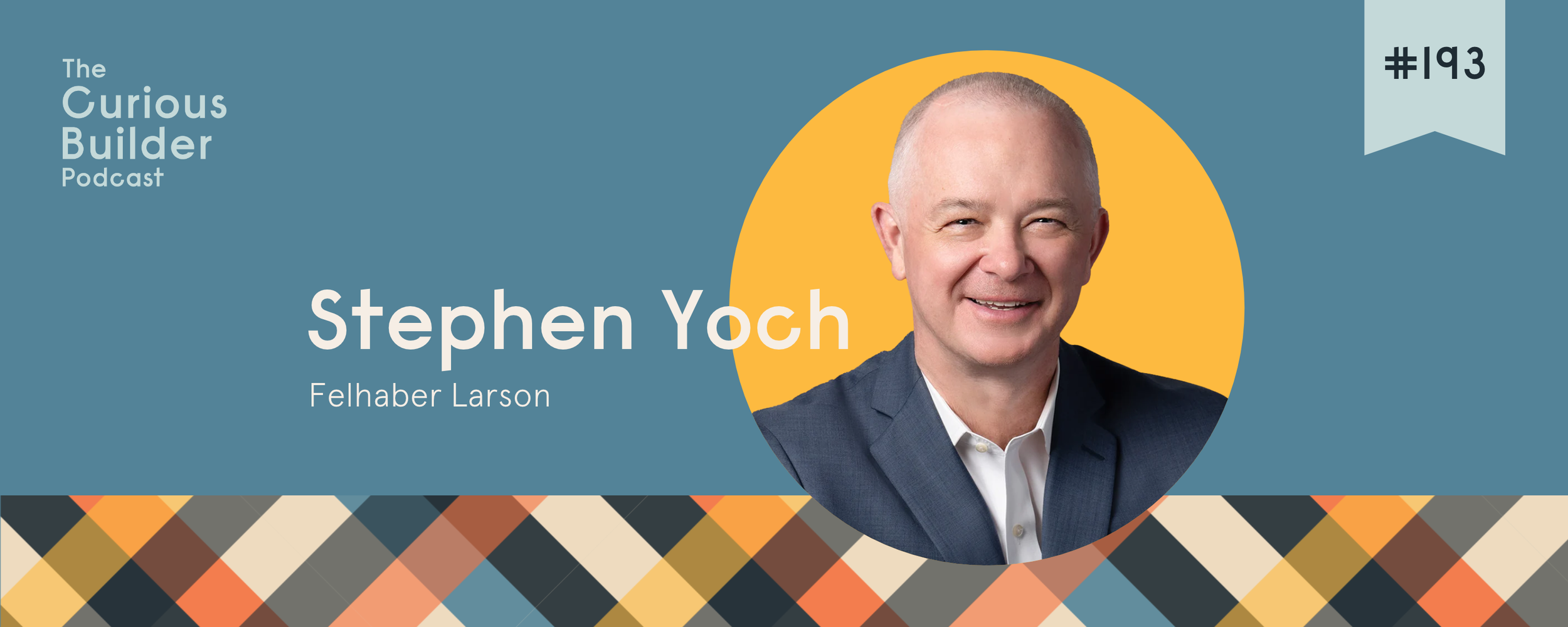
What happens to your business if you don't show up tomorrow? It's not exactly a fun thought, but as I learned from my longtime attorney Stephen Yoch of Felhaber Larson, having a plan can be the difference between protecting your family, your employees, and your customers or leaving everyone with a pretty big mess to clean up. We get into the Death Binder, succession planning, estate planning, and the practical steps every business owner should take before they run out of tomorrows.
Learn more about a death binder here | Purchase the Full Edition Death Binder here
Listen to the full episode:


About Stephen Yoch

Stephen Yoch brings extensive experience as a business attorney at Felhaber Larson, providing comprehensive legal counsel to a diverse range of clients. His practice spans multiple industries, including manufacturing, construction, technology, real estate development and trade associations.
As outside general counsel, Steve assists clients with business acquisitions and sales, construction agreements, land transactions, business contracts, and cybersecurity prevention and response. His broad legal knowledge and responsive approach have earned him a reputation for delivering efficient, effective solutions to complex challenges.
Steve’s commitment to service extends beyond his practice. He currently chairs ARAnet (parent of Brandpoint) and serves on the board of We Invest in You. He has served as a volunteer attorney with Southern Minnesota Regional Legal Services for over 30 years and contributes his legal expertise to Housing First Minnesota Foundation.
An accomplished author, Steve has written and taught extensively throughout his career on legal topics. He is also an award-winning historical fiction writer.
Steve particularly values long-term relationships with his clients. His goal is to evaluate all alternatives when facing legal challenges, while working alongside a team that genuinely cares about client success.
Resources:
Visit the Felhaber Larson Website
-
Mark D. Williams 00:05
You have a talk that you give called Happy Trails. I'm doing something that we're going to push out on the Curious Builder platform called the Death Minder. And the whole point is, it sounds a little Machiavellian, but about a year ago, I had a client say, "Mark, you're great. Love your team. Love you. We're working with you because your name's literally on the side of the company or the truck, and if you died, like what would happen? Today in the Curious Builder podcast, we had Stephen Yakin. He's been my personal lawyer for as long as I can remember, and an important question was asked to me a year ago: was if I died, what would happen at the company? And for the last year, I've been working on strategic planning. Something I call we joke a lot about it called the Death Binder. Basically, two levels of like what are some practical steps you can take with you and your company so that if you had an untimely demise, like what would you do? We talk a lot about estate planning and wills, and just the common pitfalls that a business owner would would have to sort of overcome and their family in the event of an untimely death. Without further ado, here is Steve and Mark chopping it up. Welcome to Curious Bur Podcast. I'm Mark Williams, your host. Today I'm in studio with my good buddy Stephen Yock with Fall Hallberg Larson. What's up, buddy? It's great to be here. We have had you on several times. The infamous Dirt Lawyer was. I think you were in season one, like in the top 10 episodes for a long time. You were our number one downloaded episode. You always cried wolf on that, but that's true. You people love a good death and destruction mayhem, and you're really funny. Well,
Steve Yoch 01:39
I think it it goes to show that sometimes a monkey can type his own name. So I think it it was a a rare beautiful moment that we had together. No, it was it was wonderful. It's always fun talking. So
Mark D. Williams 01:50
this one, you have a talk that you give called Happy Trails. I'm doing something that we're going to push out on the Curious Builder platform called the Death Binder. And the whole point is, it sounds a little Machiavellian, but about a year ago, I had a client say, "Mark, you're great. Love your team. Love you. We're working with you because your name is literally on the side of the company or the truck. And if you died, like, what would happen?" And of course, I said what most entrepreneurs were quick on their feet, like, "Hey, my team would take care of you. You know, no problem." And you know, they were satisfied signing the contract, and away they go. But then I really started digging into it, like what would happen, and so I tackled it like any good entrepreneur. We're really good problem solvers, so I went after it. Like I went up and talked to Joel, my controller, and we came up with a plan. You know, in about 10 minutes of like, hey, you know, I'll talk a little bit about it. What my plan was of like, hey, I'll double your salary. You get to keep some of it. I want to make sure the team doesn't fracture. You know, we finish all of our jobs. My family's taken care of, but really, you guys, you know, we have a large amount of money that our clients have given us. Let's be responsible to it and build it. I called you. I called my banker, my lawyer, or sorry, my insurance agent. Kind of, that's not how the real world works. Evidently, let me just finish this. So, what I did do, though, because I still think there's some practical stuff. Because hopefully, if I die suddenly, at least my wife will know all the passwords. Like we're creating a worksheet to like just some practical stuff. It's not rocket science, but we've tried to streamline it. Like most people don't know all of your passwords or even where stuff is, and so some of it's just it's obviously needed goodwill and the structure of estate planning and all that, we're going to get into that. But that's the background for the audience of like where we came from. So, with that in mind, you recall what you what you told me when I called you.
Steve Yoch 03:31
I don't remember exactly what I said, so but you will remember. So go.
Mark D. Williams 03:35
Well, basically, you're like, yeah, that's not going to work. All right, I do remember that part. Yes. Okay. So let's. So the whole point of this is it's going to be an open conversation. I'm actively trying to come up with. I think the short answer is it's a good thing to think about an exercise that I want all entrepreneurs to to go. That's why we're having you on. But it's bigger than that. Ultimately, if you do die, we'll talk about what actually happens in the short term. But a better plan is more of along by getting your company ready to transition or sell, like a partnership or somebody else, is really the best form of defense for if you were to suddenly pass. And so, really, to me, it's like scale your business, get it set up so it's really it can operate without you because now you have an entity that can easily transfer hands in the event of an untimely demise. Is that really the summary of it? Yeah, but I think the most important thing people are going to learn by the end of this podcast is you told them you're going to tell them what happens when they die. So people are going to find out about the afterlife. This is the the whole goal of this podcast is to find out at the afterlife. No, look, it's my happy trails, which I've taught at the at Housing First and for others. It really make yourself dispensable, right? At the end of the day, can you go on vacation? Will your company come to an end, right? I think that is the best business plan to have a succession plan and a.
Steve Yoch 05:00
A business plan that allows others to be able to step up if something happens to you. It also puts your position, your company, in a position where ultimately you could sell it or transfer it or whatever. That and that's creating real value. If the company is you and you are the company, if something happens to you, I'm sorry to say to folks that are listening to this that a lot of times the company just collapses, and I've been through that with folks, and that puts the surviving spouse and the employees in just a terrible situation. So I think what you're doing is actually super important. And if you care about the people you work with, and you care about first of all, if you care about your family, you should have a will and trust in place. And if you have kids, it's inexcusable. You got to go get a will. I know nobody wants to do it, but go get it done. Don't call me calling a state lawyer. I'm a dirt lawyer. But second is you want to have a plan that takes care of the business, the people you work with, and then ultimately, I think what actually drove you, which is kind of why you're you, is your concern was well, what about my customers? What happens to them when I'm dead? And and that a lot of people don't think about that, and I'm and you do, which I think is kind of wonderful, and why we're having this discussion. This
Mark D. Williams 06:05
episode is going to be sponsored by Hallmark, a Christmas special that makes you feel good when you off your contractor.
Steve Yoch 06:12
Yes, the Death Binder Hallmark special.
Mark D. Williams 06:14
I mean, I did get aggressive with the name. It's clickbait. Let's start there. The short answer is because you did the research on it. I paid you for it. I think otherwise. This might be a short conversation, Mark. If you had to pay the meter, but I believe in the state of Minnesota, your clients are pretty screwed.
Steve Yoch 06:29
Yeah, it's like what 253 50. What was the the amount that they can recover? Well, the fund I think is currently 75,000 bucks, which is a lot. Oh my word! And so I mean, what happens is, I mean let's take the worst case scenario if we want to yeah let's go there worst case you know you're you're a mom and pop shop you've got a you're running through an LLC they sign a contract with you you have a heart attack and keel over you don't have any partners they have a claim against your entity which is an empty shell and they can get aligned with other creditors if you have a line with the bank, line of credit with the bank, well, you guaranteed it, and you're dead. They're going to pull the line right away. A lumber company is not going to give you any more lumber. That project is just going to stop. And I have seen that happen. And then the poor homeowner is in a terrible situation because they do have a claim against your entity, and whatever assets your entity has left, they would have a right against those claims, and then they also could, to the extent they can't recover, they can make a claim against the recovery fund with the state. But that's it. And now they got it. They have to go find a new builder to finish their partially built house. And if any builders out there listening, nobody wants to do that. And there's all kinds of issues about warranties and those sort of issues. So it is a really terrible situation, and of course, if the spouse is not involved in the business, he or she is is really struggling too.
Mark D. Williams 07:48
How how often has have you seen this, or how often does this actually happen? I wonder.
Steve Yoch 07:53
Oh, not often, because I I mean I've been practicing for over 30 years, and I think I've been involved in three or four situations where someone's just keeled over unexpectedly and left a spouse in a bad situation. I've had people keel over where they had a partner, and that was hard. But we much
Mark D. Williams 08:16
easier from a transition standpoint. It's already in place.
Steve Yoch 08:19
And I've had also people keel over where they had a good plan, and I had one where they had key man insurance and they had a partner.
Mark D. Williams 08:26
If you have key man insurance, so let's just I mean that's a simple insurance step that most people could take. You could take key man insurance umbrella, and how would that how would that work?
Steve Yoch 08:35
Yeah, I mean there's two different ways of thinking about insurance. One is you have life insurance for your spouse and kids, so they can go to college, and your family is the beneficiary. Key man is different. Key man is the company is the beneficiary. So you have you're paying for insurance on yourself to keep the company going. Now, normally, key man is used so that the remaining partner can use that funding to buy out the interest of the person that's dead, and then the the other partner isn't in the situation where they have to run a business that's just lost a key person, and suddenly they got to go give money to give to the surviving spouse. So, key man in my experience has always been when they tend to have a partner. I've never actually had someone who is a sole proprietor. Let's call it. You know, you own 100% of the company, and then you turn around, and you are going to get key man insurance on yourself to protect your customers.
Mark D. Williams 09:28
Actually, kind of smart. I mean, it'd be because I mean, I've been doing this for about a year, right? So this this this conversation actually happened a year ago. You and I were going to do a series. I just got busy with Misahoos and everything else. I am trying to do. You need to do more stuff. I need to do more stuff. Yeah, yeah. Says no one. That actually, that'd be ironically silly if that's what killed me. I'd be like, no, no, no, no. You're
Steve Yoch 09:50
look. You're gonna look. You're gonna get. You're gonna fall to your death or get run over by something because you are overheat in a sauna. Yeah, that's what you're gonna do. A sauna. You're gonna have a sauna.
Mark D. Williams 10:00
We're going to boot camp in Moab next May, and one of the boot camp attendees they just had a base jumping thing, and they're like, "We should do base jumping." I'm like, "You know what? Probably not in the cards." I think that the kids are a little too young. Yeah, yeah. No, I plan on being around, but anyway, my point bringing this up humorously is I don't think enough people just talk about death. I have a very this isn't necessarily about me, but to frame the audience is like because people I love talking about things that people don't like to talk about. I'm a contrarian. I know you're like, yep, this is Mark. But I think it's important that we have this discussion. I think my wife is a physician and she handles a lot of end of care life. And the hardest part for doctors, and they all say this, is that most people, because they've not talked about death, because they haven't talked about how maybe feelings and families and all these different things that most of her time doctoring and doing medicine is not actually around medicine. Most doctors say this that it takes a huge emotional toll on her as a physician because you see families breaking apart and sad and grief and that's all normal as part of life, but because they've swept it under the rug for their whole lives, she's there in the last 30 days or of their lives trying to help them transition. And it takes a massive toll, obviously, on the family, of course, but on my spouse. And so I, I just think it's a healthy thing to talk about. I think it's good to talk about.
Steve Yoch 11:16
Yeah, I mean, there's two different. I mean, I I have been. It's the worst and best part of being a lawyer, right? People call me often in the hardest moments of their lives, and I can help them. Or and sometimes the I've gotten the call from the spouse, the husband unexpectedly died. And on your death binder, I'm one of the first people that gets called, which is wonderful and horrible, but it's part of the covenant I have with what I do and my clients. And the more they've talked about it ahead of time, the better prepared they are. The more they have ideas in place, the better it is for the surviving spouse. It's sort of the ultimate act of love is to think about your own death and how it can help take care of those you care about. I mean, you got your circles, right? Your your children, your spouse, your family, your business, your partners, your customers, and you really do want to think about that. And a lot of people don't. A lot of I've experienced. I got a lot of clients. I'm like, they have kids. I'm like, do you have a will? And they're like, that's because they don't want to make the hard decision of where the kid goes or the plane goes down. If you don't decide, a court's going to. It's taking control of your life while you're still alive, because when you're when you're dead, things don't always go well.
Mark D. Williams 12:26
I mean, it's a little bit like you know, you know, people that you know, if you have cancer or a terminal illness where you can see the uncoming. I haven't been a lot of part of them, but I do I do like the celebration of life while they're still alive. Like I think that's kind of a beautiful thing that you get to see people. It's very emotional, but I think it's actually kind of a beautiful moment. I'm I'm very comfortable at funerals. I've been going to funerals a long time, and I actually I like them from the standpoint that it's it reminds me about the brevity of life and like why we're here. And I give another topic speech called Boundaries Create Freedom. And like no business owner signed up to be a business owner to work 24/7. We often do, and we lose sight of what that goal is. And it's no different. Like I was just thinking in my mind of what you were saying about these concentric circles. While we're in the business space, we're humans at first. We often forget that. And so going back to like, what is the point of all this? Our families and our loved ones. And it takes time and intention. And going back to where I started is like it took me. I've had a will for a long time. Right now, I'm working on the revocable trust and some of that stuff. And that's I've had that sitting in my inbox for like a year. And now with AI, I'm crushing it because I'm like, okay, help me math, help me map this out because that's a lot. Yeah, and you just really need to block and tackle it and just get it done. And once you do, I was thinking that the ultimate expression of love is like you pick out your own casket and pay for it ahead of time. Like it's think of the stress that puts on your family. I have a good young friend of mine. He's only 44. He and his wife went and picked out cemetery plots the other day. They're like, let's just get it done. I was like, dude, that's awesome. I mean, very unconventional. I just thought, huh, all right. Well, my my wife
Steve Yoch 14:00
has told me she's going to throw me in a dumpster, so I'm not I'm not that concerned about my she's called me.
Mark D. Williams 14:04
I'm like, don't worry, I've got lots of dumpster action. Right, right. So that
Steve Yoch 14:06
that's not a problem. But it is. Look, it depends on who you are, and a lot of people deal things differently. I've written my own eulogy, by the way, which is really fun. Oh wow, yeah. People should think about that. But before they do their own eulogy, they should actually look. I think at your death binder because if you're running a business, you really need to think about if you care about the people you work will work for you, right? One of the reasons to do it is is that if if your business continues, if you want it to continue, and by the way, if you don't want to think about this. No problem. Everybody you work, everybody that works for you, is going to get fired. Your vendors and all the people that you've built your business relationship. They're not going to get paid. By the way, that could even include your lawyer, which is really, I think, the real saddest part of this. Let's have a moment of silence, right? And and your customers will get screwed. Yeah, their house will not be complete. Initial, I mean, it'll eventually get done, but it's going to cost them a bunch more money. They're not going to be made whole, and if that's not what you want your legacy to be, if you if you don't care, that's fine. But if you care, actually, by creating a plan, you can create some value in your business, which means that business can maybe then be sold to someone else. Now, if you've done your if you've done your due diligence right. Your business is separate from you, and you ultimately created some liability protection from your spout for your spouse, and so your creditors on the business can't pierce that corporate veil and come after you. But if you can actually create a good transition plan, you then, in theory, can have your spouse sell that business or transition your or have that partner or someone else pay for that interest in the business, which becomes an income stream that will go on to your spouse that otherwise wouldn't be there. Your life's work will be worth something, and so I think that if from a purely sort of mercenary aspect, you've spent if you're a successful entrepreneur and you've built your business, you've thought a lot about money and how to succeed. Well, the last act of succession and success is to make sure that you have a good plan.
Mark D. Williams 16:14
This episode is brought to you by All Inc. For the last decade plus, we've been working with All Inc. for all of our clients' needs. If you're local here in Minnesota, please check out allinc.com and tell them the Curious Builder sent you. Yeah, I mean, so you know, maybe we'll talk a little bit about specifics because I think people listening can get. I think ultimately where this is going to go is you need to work with your local lawyer. If you're here in Minnesota, you can work with Steve elsewhere. You can probably still work with Steve, but I mean, whoever. But really, make sure the will work with an estate planner, obviously to work on your trust. The the easy stuff is really what the death binder was created for. So we have a light version on our website. There's also the full version. You know, it's taken me a long lot of time, so there's some value in this. But the first one is really just a it's a printable PDF of all your accounts, your passwords. It's something you could give your spouse or you know whoever you're kind of the person that's going to execute your estate. Goodness forbid both of you you know pass. You know who's going to know where everything is. And so that's and then the second version one is much longer. You and I were joking ahead of time that your first call is probably to your lawyer, your CPA. But I thought it was kind of interesting that maybe your banker's not on the top list. Maybe wait for him to read about it in the paper. Because basically, if the banker finds out and you're tied to it, like all the money dries up. And when all the money dries up, it's pretty hard to pay your employees. It's pretty hard to pay your subs. The things, man, when the when the liquid stops moving, things that doesn't go real well.
Steve Yoch 17:38
Yeah, I mean, especially if if you have personally guaranteed the debt, and you're a small business. As soon as the bank knows you're dead, they're going to usually suspend payments, right? So it and and I can't blame them, right? Because what have we talked about? If you don't have a really good plan, you're going to go broke, and the creditors might get hosed, and the bank doesn't want to be giving more money. So I don't blame the bank, but you want to be strategic about when you tell the bank, and ideally you want to go to the bank with your accountant. This is your spouse now, because you're or your business partner, and say, "Hey, look, just to let you know, all is well. All is well. Keep giving us money. The business is going to be fine. We're going to change the signatories on the loans or whatever." And and again, it's different if you have a partner. Partners are really interesting because partners are a pain, right? Partners are a source of potential, obviously conflict when you have two parts, especially 50-50, which is the worst. But on the other hand, when you die, they're pretty great, right? Because then you've got someone to take over, right? So it is it's a balance. But really, the ideal thing is to have build. You can own a business alone if you have ideally a generational succession plan, whether it's your children or junior partners who someday will want to buy you out, or at the very least, those junior partners can take over your business, and you can go to Bora Bora or Costa Rica or wherever else you're going to go and go abuse yourself on your Iron Man stuff, or like me who would go on a beach and perhaps have a pina colada. We'll have a race to see who dies first, living like that. But the but you need it is creating a plan and a structure that ultimately makes yourself dispensable.
Mark D. Williams 19:24
I think this is this is not a quick fix conversation. This is going to take multiple years. For those that don't want to hear that, sorry, that's reality of it. Because I think step one is I actually was just mentioning. So last week I was in Charlotte for a contractor coalition, and I had I had everyone in the the attendance stand up, and I said, if you can go one month, and your company would operate without you, sit down, and so those people would sit down or more, whatever it is. And then the second one would be, can you go three months without your company or without you being there, whether vacation or whatever, stay standing. Can you go six months, a year? By the time I get to about six months, there's only like one or two people standing in a room of like 50 people, and I bring this up that five years ago I could have maybe gone 30 days, and here's where I'm saying this is like my dad. This is a funny little timeout. You'll enjoy the story. I was 12. We went to Europe for a summer. It was a lifelong goal to go take three months off. You told me about this, yeah, and my dad, and it had a huge, profound effect on my family, me, everybody, for a lot of reasons. But anyway, as a 12-year-old, what do I know at that time? But I remember my dad telling me later. He said, "What do you think a good reputation and a good name is worth after 30 years of building it?" And I thought I was going to be a really smart and be like, "Oh, it's worth like five years, or it's worth your rest of your life. He goes, nope, your reputation's worth 30 days because if you can't pay somebody on day 3130 years of reputation doesn't do a lot of good because the plumber can't fill up his truck, he can't pay his people, the framer doesn't know. And it was a my dad. I really he's got a great take on that, and he's right. And wise guy, yeah. And where I'm going with this is I have the best controller I've ever had in my career. I have my team has never personally been better ever. I couldn't get more work, but right now I could leave and my my team, and I say this proudly, not bragging, but just very proud of my team that my team could execute work with architects, work with designers. We could do bill pays, we could do draws, we can do all of it. I don't need to do any of it. I couldn't say that five years ago. Like my point is, this takes a little time to evolve, and there are some businesses that are way more evolved than mine was. But I'm really proud of that. But this is also what's led to this discussion. That's step one. You have to actually build the machine that can build the machine. Step two: now document it. You know, with the but this is all stepping stones to be able to sell your company, which is kind of where your happy trails kind of dives into in more detail, right?
Steve Yoch 21:44
I mean, I at the end of the day, it is it's really then about the money, right? So you've got your team in place, but if you die, let let you have a sauna accident.
Mark D. Williams 21:58
I like that you want me just to overheat and die for me. It doesn't. It would totally serve you right. By the way, get that hot. Okay. Well,
Steve Yoch 22:05
we can hope. So the um, but the question is, if you built your team, is there someone on your team if you die that they would step in and want to buy it?
Mark D. Williams 22:13
No.
Steve Yoch 22:15
That is sort of a. Then it's okay if the team could run on its own. How long? By the way, we would launch your team to be able to continue to run on its own. You'd say, "Well, who cares?" At the end of the day, I mean, let's let's be that guy who says, "Look, I don't really care. If I'm dead, I don't mind. I'm going to be gone. My wife is going to be okay because I've built the walls. There's going to be no piercing the corporate veil. I don't have any personal guarantees, or they're minimal. So my wife will be fine. My employees will get new jobs. Sorry, customer, you were unlucky. You were the last one. That's you could take that attitude. And if you're if you're a small builder, that's fine, one house at a time. But if you're building more than a couple houses at a time, and you've really built a a real brand like you have, why let that brand die? Why not allow then your spouse with the help of the banker and the lawyer and everybody else in your in your team to sell the business, right? And that and by the way, that's when maybe you, for example, might want to consider Key Man.
Mark D. Williams 23:13
Well, I wrote a note about Key Man Solo. So the way I I remember telling you this about, and I'm still working through this. I mean, I'm not done for the audience. Like I'm, I've for me sometimes it's like when I state something publicly, like this podcast, it sort of makes me then go do the work. I've been doing a lot of the work behind the scenes, but now you know having this out there, I don't want to be hypocrite. I want to go through the process and kind of see it through. I'm interested. I'm curious. I want to know how to do it. And so my original, as I mentioned, entrepreneurs are great at solving problems. This was my original plan, and I still think it's the one I want to do. I just need a legal structure to sort of help facilitate it, right? So I'm just going to pick fictitious numbers, but I'd like to give real numbers to the audience. Is like, let's just say we have four homes going, and it's going to take a year to finish them. Let's just make it really equal. Let's just say I have four employees, and I pay them all 100 grand. Just keep this math really simple. I would say their salaries are going to double because if you're going to asking your people to stay on for a year after you die, like there has to be some financial incentive because like they're scared. They could easily go get another job. That's the easy thing to do is just leave. So I don't want them to leave. So you get you get your base salary plus you get paid a little bit more, but then you can only get paid up to 50% of that extra. So, if a fictitious example, if you were giving them an extra $100,000 bonus to finish all the jobs, they can only get 50,000 of it within that calendar year. The other 50,000 is held in escrow account for the very end when all the jobs are done. Your project manager leaves. Everyone leaves at the same time. The controller would be the last one out. They'd write the last check. Everything is paid. Everything is closed out. Everyone gets their bonuses for staying the whole time. The client is happy. That's like the high level. That and then how you do that is obviously much more not litigious, but much more complicated. I understand. That's what I'm working. Through now, but that but that is the practical side of what I'm trying to do.
Steve Yoch 25:03
Yeah, I mean, this I remember rip it apart. Okay, I remember our discussion. Yeah, okay. There are a number of challenges there. One of it, who will have the builder's license?
Mark D. Williams 25:12
Well, we talked about this. So Joel, in this particular case, my controller, I've already talked to him. He's already he's the one that helped me sort of create this. So my my team's already bought into this concept. So that's number one. Talk to them about it. Number two is it's more the intention. And then I think the state of Minnesota allows for I think it was what a 60 day or 90 day window where someone because I have the GC license that would allow them it transfers to them in the meantime, and then they have 60 days or 90 days to go get it. Go get it. And Mike on my team, my PM used to have his license. He could go get it. Joel could get it. It's a matter of that. That's
Steve Yoch 25:44
it's someone going to get the license, and then then it's the cash flow issue. It's because it's all about money. Because again, is the lumber company going to give the lumber? Is is the window company going to give the windows? Is
Mark D. Williams 25:58
here's the benefit and of today is we don't do. I think this would be really challenging if you're a spec home builder, like almost impossible. But as someone who's all the cash is given to us by the clients, we're on a monthly draw schedule. So I can't. Why would a lumber yard not as long as you're paying them? Why why would it matter? Or you could prepay for every draw. That's
Steve Yoch 26:18
and that's what if you could set it up as a prepaid. They're going to switch to a prepay if you're dead.
Mark D. Williams 26:22
Well, that's fine because
Steve Yoch 26:23
they're they're not going to float it, right? So as long as you can figure out, they're not
Mark D. Williams 26:27
on the list. They're not going to know you're dead for right. Wait, nowhere. Just
Steve Yoch 26:31
to be clear, I've got. I'm not calling. By the way, I don't know. People can see this, but this is this is the for those can hear the sound. I mean, this is this. We're looking. We spent a lot of work on that. It's a lot of. There's a lot of pages, and it's interesting. I don't see the lumber company. The lumberyard's not on there. It's really long. And where does it say? Tell the lumber company. Plumber, electrician. No, they don't. They don't find out. And the banker now finds out later for the original draft we were on. Yeah. Yeah. So I mean, it. There. I'm not saying that can't work. I think, especially with the refinements you've made, I think we're getting there. It's an unusual plan, but then that that plan is a shutdown.
Mark D. Williams 27:05
Yes,
Steve Yoch 27:06
right. So at the end of this year, we then gage in the steps and ultimately dissolve the business. As opposed to some who might say, "Well, our goal is to have the business continue as an ongoing business, and then we're going to hopefully be able to sell it or give it." So let's talk.
Mark D. Williams 27:20
Let's talk about that. How would you? So, so I die. My team finishes it, and Happy Trails 2.0, the first original Happy Trails. How would somebody design it so that could be sold, sold? Sorry, to someone external. I mean, the easier thing to do is sell it to your own employees, but a lot of times people don't want that responsibility, right? I know for sure that nobody on my team would want to, you know, step forward and do all the things that I do. You'd have to either hire, you'd have to sell it out as a broker and say, like, does someone want to come in and take over this company? Here's our team.
Steve Yoch 27:55
Yes, that's it. And you'd say, we have all the systems in place. We've got a lot of goodwill in the name. A lot of times, people are buying the name, so we've got a lot of goodwill in the name. We've got a system in place. It's turnkey because I, dead guy, have made myself dispensable back to your. He can be gone for a year. He's kind of here. He's not necessary to do the business now. I think one of the things for you, for example, is while you really have done a great job in figuring out how to have a lot of people run the business, you are the ultimate sales guy. I mean, you're the guy out with a vision, and people hire you in many ways, not just because of the quality of your bill, but the vision of what you
Mark D. Williams 28:34
100%. You would need to solve that. I mean, I think most owners have that similar problem unless they've partnered or unless they've had like a sales team, if they're big enough, now you have a salesperson. Yes, and that's different. I happen to just wear multiple hats because I like to sell.
Steve Yoch 28:50
Yeah, and so I mean, I think if I don't think your I think your plan is right for you right now. But let's say you clicked out another level and added another layer of folks that were sales slash design slash used car salesmen like you who could love it sell an Eskimo refrigerator that that additional level could argue for your business to be ongoing, but your plan is not that. Your plan is to figure out an orderly ship.
Mark D. Williams 29:17
And I think for the audience too, I think this plan evolves. This is just where I'm at today. I think, God willing, my kids are my youngest is only six. Like, what am I going to do for the next 14 years till they're in college? I might as well work because I like it. So my point is, is like maybe five to 10 years from now, or whatever it is, I'm going to start looking at, or even sooner, could I fill that sales role? Because it is a goal of mine now. It wasn't before to make this a sellable company, I don't know if my kids, whatever my kids want to do, I want them to be excited and passionate about. If they want to get involved with the business, I hope not, because I'd have to stay on a lot longer. That means I have to work a lot later. But I love the idea of like working with the kids. Also, it sounds amazing as well. But I just want them to have their own career and their own life. My point is, is if that's the case, whether. Whether you transition it to your children, which a lot of family businesses do, why not build it so that you can sell it?
Steve Yoch 30:07
Well, business succession is a lot like estate planning. So, first of all, if you have an estate plan and you say, as now as someone with grown-up kids, who they went to when they were six and eight is different than who that we had them going to when they were 12 and 14, and when they were 16 and 18. Now they just get a check, but that so we did update our estate plan about every five years because we looked and say, okay, my parents can't take care of them anymore. Who can do it now? And so your business is similar, right? With your business, who are we now? And that succession plan, which is what we're talking about, is subject to evolution too. Who are my team? How has my business grown? How have I changed? What are my goals? And ideally, your ideal world is you're going to build a business that either your kids come in, they become your succession plan. By the way, that's very common. It's also difficult, right? Because when you have kids at succession plan, well, one is a coming in, the other one wants to become a forest ranger, and the other one wants to become a doctor, and one wants to work in construction. How do you pay? How are they being treated equally? Are you benefiting the kid who came in more construction, and you're not supporting the forest ranger is enough.
Mark D. Williams 31:21
Dying might be easier than right. So, so
Steve Yoch 31:25
we I I have had these issues. And by the way, that's interestingly that first generation, which is what you are.
Mark D. Williams 31:31
Yeah.
Steve Yoch 31:31
The second generation is usually the harder.
Mark D. Williams 31:33
Yeah. Your kids'
Steve Yoch 31:34
kids.
Mark D. Williams 31:35
Yeah. I mean, mine is really unique because I'm actually third generation, but it's broken. My grandpa had service stations and a small building company. Then he, you know, shut it down. Then my dad started his construction company with my mom inter designer for 30 years. They, I had no interest. Yeah. And then five years after they retired, I started my own. So it's kind of this weird third generation. Yeah. Everyone is broken, so there was none of that transition stuff.
Steve Yoch 31:57
Yeah. You you you didn't have your dad looking over your shoulder in the same way that a lot of folks do, and then, and it's really the grandkids of a true succession that usually is, in some ways, from the that that first generation sees how hard dad worked. They come in, they do the same thing, and then the kids come in, and they're they don't understand how hard it really was, and that that often becomes hard, and that's often when we sell
Mark D. Williams 32:22
it. I, you know, we've had so many business owners on that have been family, and we had Mark Sheer on. I know you know him well, and he had, I think he was episode five. He had a really interesting point that Sheer Brothers, I think, is like fifth or sixth. I mean, there are many generations, but you that you have to work for another company, or you don't want nepotism. You want growth. I think the Marvin family does it. Most family operations that have been around a long time have some way of making sure that it's just not handed down because it'll die. And it's truly rare. This is not a negative thing. I think everyone has to also contemplate. I think that's the whole point of this discussion. Like some people really legacy is important to them, and I'm not gonna. I'm not. I guess I won't come on to that because I I feel differently about what I think the stereotype of what people think of legacy. But the the actual fact of the matter is, very few, like less than a couple percent, of businesses will last beyond a generation, and for sure not last more than 100 years. We read the book Psychology of Money for a quarter two, and it was shocking. If you you start looking over time, there's very few brands or businesses that last more than 100 years. Like shockingly few, because it's so hard. And what you just mentioned, each generation they have to find, they have to evolve, they have to change to the times. Even like you know, a lot of this stuff is based on Rockefeller principles and Carnegie principles. And one family is basically completely broke. You know, billionaires; they own half the world at one time, did like nothing. And the other family is still among the world's wealthiest because they understood how to create the family structure. That's a separate podcast, and I'm not the expert. Let people go research that themselves. But it's a pretty wild story of how that worked.
Steve Yoch 34:00
Yeah, and and and by the way, one of the things is if you're if you own the business and your kid wants to be in the business, it doesn't mean that's necessarily the right solution. You got to have, for lack of a word, the right kid, right? They might be really great on the job site, or to be a true entrepreneur, especially in construction, you got to do a lot of things well, right? First of all, you got to be a good salesperson. You got to be able to connect with people who trust you to build the most important thing in their life, right? You've got to do the accounting. You've got to know how to actually build a play a house well that isn't going to be a rat trap that's going to fall down. You've got to do all these many, many, many things well. Oh, and then you got to manage all your people and everything else.
Mark D. Williams 34:45
You know what? I think it's funny. I didn't think about it right this second, but you know we have the series on Thursdays: losers are winners, and I love that series because we all relate so. In fact, I can think more about the things that I've done wrong than I can think about the things that I've done right. And I don't, and I'm an optimist. I think what makes an entrepreneur is somebody who is like an expert at failing. And when I say expert, like you have to fail a lot. If you fail a lot, that means you've gotten up a lot. If you've and I think the hardest part as a parent, you know, now I didn't realize this at the time, and now this more of a parenting thing. I'd love to see how you did it with your kids, but like, how do you know you want to give your kids stuff? You want to help them, but actually, one of the best things you can do as a parent is teaching them responsibility and teaching that failure is okay. Because if they don't learn that lesson young, the world is a whole lot harsher than you will be. What's your thoughts on that?
Steve Yoch 35:35
On parenting or on both? Well, both in terms of like the
Mark D. Williams 35:39
importance of failure and like how do you if you remove all failure, you don't learn very well.
Steve Yoch 35:44
Well, I think the helicopter parent is. Everyone agrees it's a bad idea, and we were not, and we also were not their friend, right? Parent is not your friend, and we're not there to take care of them, where to love them and support them. But at the end of the day, we were pretty strict and pretty firm, and also, but gave them unconditional love and support. And I think we are really blessed because we have two really cool guys that are now grown up and on their own and off payroll. Although I don't know, I'm still I'm still paying for their phone. I figure probably half your listeners are, as far as I know, I'm paying for my my wife's aunt, my kids, everyone's on my phone plan, as far as I can tell. So except for the phone plan, they're largely on their own. And I think with businesses, it's kind of the same way. When you when you if your kids are coming into business, first of all, I completely agree that you need to go out and get a life on your own. I'm actually my own personal experience. I'll share it is that we have a PR marketing business called Brandpoint, and we're based in Hopkins. And I am the chairman of the board along with my father of that company. And I came in much later in life as the chairman. By that time, I was already a, I'll call it a successful lawyer if I could say that, and had been on a lot of boards. And I still felt a little nepotism behind my shoulder, right? Yeah, I think if you're a 20 or 30 something and you come in, or 20 something, and you come in and suddenly you're the VP of something, that nepotism is really actually a hardship on the kid coming in. Let them go out, let them see that the world is hard, let them build some new skills, and then they come into the company, and they've actually done some stuff in their life on their own, and they may actually choose when they do other stuff not to come in the company, right? And that's okay. And what I've what I've seen over the years is that those that had had experience and came in have done really well. The ones that sort of automatically done it. Now I'm going to give you one other interesting thing: is sexism. So I've had bunch of times where the oldest son comes in and he is going to take over the company, and he's a mess. And the middle daughter is a dynamo, and it takes a while for them to figure it out. But she's the one that should be running the company. I'm hoping that we're beyond that. That was a few years ago when I was experiencing that more. But you know, if don't don't think the daughters don't have a place in construction because they really do, and they can really they can be the engine where the oldest son should have been a forest ranger, right? Don't put them in a box. Let them be. And a lot of them also. I've had a lot of clients that have said, you know what the construction business it's really hard which it is, right? All those things I said you have to be and the liability and I as you know have taught a class called How to Deal with a Crazed Homeowner. I would argue the percentage of crazy people has increased because of social media and the ability to just yell at people, which is part of our society now, which I I don't like. So they decide they're going to sell. So part of your long, if you know long term, I'm not going. I have kids, but I'm not going to do it with the kids. You should be building your business with an eye to whether you can sell it, or with an eye that you're going to wind it down. But that's the planning that that this discussion is about, and what what you're thinking about, which a lot of people don't.
Mark D. Williams 38:59
Well, and I think I've talked to business brokers before too. Like the act of a partnership or even selling a company takes a year to three years, and so it's not it's not a simple thing. Like no matter what avenue you pick, I mean honestly, the easiest thing to do is just die. Right. Well, that I mean that's how we started. That's how we started. Like you're like I think I think you said this verbatim, but you're like Mark. If you're gonna do this all the way and you're gonna talk about it publicly, like you are assigning yourself for multiple years of work to like do all this thing, and I want to do it because I'm I just want to do it. That's just who I am, and I'm curious about how to do it. But like the easy thing to do is to do nothing and just you know walk off the cliff without a base jump parachute on it. I guess yeah, that's it. Now you're dead, so that's the con there. Yeah,
Steve Yoch 39:42
and and the it's great. If by the way, if you're Rockford, you live alone in a trailer on the beach, would be pretty great. But if you have no possessions and no no family, great. But most of us have family and people we care about, and we. About employees, so if you let if you just let the whole thing collapse, I can tell you because I've done it. It's pretty ugly. And you how long
Mark D. Williams 40:07
does it take? What are the logistics of that? So oh, to
Steve Yoch 40:09
clean it up. Yeah. Well, it happens really fast. So when they die, the bank stops, the lumber company stops, the construction stops. Everyone freaks out. What is the other thing? I actually, I'm glad you raised this because I had one really tough situation where that happened. The guy died very unexpectedly. Heart attack. Wife is not in the business, and the bank is saying, "Hey, she had an insurance policy. She was the beneficiary," and the bank is saying, hey, you know, we'll extend the line of credit so that this project can get finished, and all these employees can still be employed if you will agree to sign a promissory note and put some of this money in escrow, and then when the project turns out at the end, if it turns out, you know, we'll release the escrow. So now her life insurance policy that he set up to be her lifeboat, and there she's getting the the hard luck story. They're saying, "Hey, you know, all these employees are going to be out of business. Your husband cared about his business, and look, there's going to be a default against his business, and the last thing his legacy will be is a judgment. Is that really what he and she wants?" And she had a lot of pressure on her, and she ultimately, over my objections, did it. She put the money in escrow, and she ended up losing a lot of money.
Mark D. Williams 41:30
Is that because the corporate veil was pierced, and she mixed personal? No, she just simply gave what was her, or
Steve Yoch 41:37
she felt it was her duty to carry on her husband' legacy. He had done a really good job of creating corporate separation. She could have kept the insurance money. Everybody could have been fired. The project wouldn't have been done. Because
Mark D. Williams 41:47
I could see another scenario, which is where I thought you were going, where the controller comes and says, "Hey, I need you to sign this so that we can do payroll, self-interested, but also doing keeping the running afloat." All of a sudden, now she's taken on a personal line of credit, and now perhaps that well
Steve Yoch 42:01
that's what she ultimately did right over my over my objections right I said over objections over my advice I I and she did make she got a lot less money at the end of the day than she would have if she had just let it collapse yeah but that and she exposed herself right the entire system that was created was set up to to protect her, so that your the spouse was left in just a terrible situation. Why? Because there was really no plan. They were to your point, right in the middle of the project, and people really pushed her. You know, you know, his legacy, and like, well, back to those concentric circles is your like, what's your legacy? You'd like your legacy to be your business. You liked this, but what in three generations, most of us are forgotten anyway.
Mark D. Williams 42:51
When it comes to quality, craftsmanship, and performance, Pella sets the standard. Whether you're building custom homes or designing a timeless space, Pella offers innovative window and door solutions that blend beauty and efficiency with showrooms and experts around the country, Pella makes it easy to find the perfect fit for your next project and their team to support it. Build with confidence. Build with Pella. Visit pella.com to explore products and connect with your local rep today. For more information, you can listen to episode one or listen to episode 109, where we bring on Pella owners and founders at Pella Northland, as well as their innovative team behind the Steady Step innovation. How do you think about legacy for yourself?
Steve Yoch 43:31
From an existential standpoint, your legacy is the life you built and the quality of the life you lived. I also view my legacy, of course, as my children, and then for me, my legacy is the people that I helped employ and help them have a better life, and did the same for their children. And then finally, my legacy is is my writing, which will outlive me, as you know. I write, yeah, I write a lot, and so my books are part of my legacy. So my leg, I'm hoping my books will be read by my great grandchildren.
Mark D. Williams 43:58
That's pretty cool. I told my daughter the other day she's 10 and we're going to she's trying out for play and she's my daughter's turning into a theater kid and it's so funny to watch like she's all in but I bring it up because I just said she was talking that the other day she was doing a little art project at home on the weekend and I was out of town and she put on I just think it was really endearing moment she said I sometimes Dad when I'm tired of music I'll put on your podcast and just listen to your voice. And she's like, "You have a really nice voice." And I was like, "You know, like as a dad, like you know, your 10 year old is like, 'Oh, this is so nice.'" And I told her, I said, "You know, some someday, May, I said you can listen to. I mean, I didn't. That's not why I did it, but like, I have thought about doing private podcasts just to each one of my kids on their birthday to like have it. I still want to do it. I just haven't figured out a way with all the other things to do. I I want to do you know how like I wanted this idea that you would write letters. I'd write 21 letters each year on their birthday, and that 21 they would have a year of how my my thought and advice to them. But I found I'm a lot better talker. Than I am a writer, takes less time as well. That I thought I would do a one-hour podcast every year, and I would stitch it all together to have a 21-hour deal. I still love the idea. I just haven't done it. But right now, it's like if I did die tragically, which I hope is not the case, but if it happens, but like they would have all your thoughts in on on record along with the rest of the world.
Steve Yoch 45:24
Well, okay. Well, two two things. First of all, I didn't do the letter thing, but I did write my boys every week while they were in college.
Mark D. Williams 45:30
Really, a
Steve Yoch 45:30
handwritten letter every week,
Mark D. Williams 45:32
every week for four years. For four years, yeah. And that
Steve Yoch 45:35
that was that was a a thing I I covenanted to do, and they cherished those letters, which is was really fun. Obviously, with my books, there's no way I could do an audio book since, as your listeners are experiencing, my voice manages to be both nasally and gravelly at the same time. It's a rare gift to be both nasally and gravelly, so I couldn't do the audio books. But that's why I have others reading them, but it. I think a legacy in that sense, that communication to your children about who and what you are. As they grow, they begin to see you are. They see the warts, but also they kind of hopefully see the good side too. And you become beyond just dad.
Mark D. Williams 46:16
Well, and I think I like to drill down on this a little bit more. Not that my idea or someone else's is right or wrong. I think everyone can have their own opinion on what legacy means to them. I sometimes like to challenge a little bit when people say, "You know, I'm doing this for my family." I think that's what we're trained to say. That's what we would like to say. And I'm not saying it's not even true. I'm not even saying that we don't think it's true. I just think that sometimes it's actually a lie that we tell ourselves. And you know I think it's hard to put the hammer down as a metaphor. I don't actually swing the hammer, and so shock news alert. I don't build anything, but spoiler. But but but where I'm going with this is like we work hard and we do get fulfillment from our careers, and I feel like a lot of us are very thankful that it's not hard to work. It's hard to not work, and I think if our if our I think it's helpful for people in my life that have said yeah but why are you doing this what like what is and I think sometimes think of legacy is like hey is my name gonna live on like personally I don't care if my name live like I have no attachment to my name I love the way you said it more eloquently than me is like I just want people to know that, like, I cared about people. I encouraged people, and that my kids knew their dad, and I got to spend a lot of time in their lives. And but even so, all that's true. Life is for living, and I think it's an okay thing to say. I think you know, my my my grandma is 99. She passed away this year. Amazing woman. And I asked my dad the other day, and he's the one who has framed a lot of this thoughts on death about this. But he said, "I said, how often do you think about grandma?" Because I knew he's asked this question to other people. He goes, "I think about her right away. You think about her once a week, then once a month." And his comment is, "Is like that's just the normal part of of living." He was like, "When I die, I don't want my family, you know, like crying in anguish for their whole like, nor will they. They're just like in the normal passage of time, it's life. And as you just mentioned, within a generation or two, it's gone.
Steve Yoch 48:08
Well, I think the the other, if you care about your legacy a little bit, it's back to sort of our discussion here is then get your ass together and don't leave them a big pile of crap to take care of, right? I mean, part of the reason to do this. There's anything that comes out of this discussion, is to me, it's you do this because you do care, because you do care about your legacy, and you don't want to leave them this mess when you're gone, right? This is this is your friend who bought the their grave sites ahead of time, right? It is you want to make life, you want your legacy to not be. Yeah, he was a good builder, but man, he did not. He just left us a pile of crap to figure out. And mom got put in a terrible situation, and she had to decide whether or not to give the insurance money to meet payroll. He he could have figured all that out, right? And you can really figure it out, especially if you do some planning. And I think that's why your decision to create your, you know,
Mark D. Williams 49:09
death binder,
Steve Yoch 49:10
death binder, which is such a lovely name. It's like a binder, and folks can't see it, but it's death, and then death is highlighted, italics, so it's death binder, right? I mean, death. That's
Mark D. Williams 49:24
really tell me you're born in '80s and I just didn't reference a binder. That's how you know I'm old. That's true. Like a binder. Like who knows? No young kid under the age of 20 knows what a binder is. Yeah, if you
Steve Yoch 49:33
just doctor death right there. No, it's but but this is super important because if you care about your legacy, if you care about the people you leave behind, leaving all this stuff to clean up is really unkind to them.
Mark D. Williams 49:46
Make your bed, so if you don't come back, it's clean. Right. Well, and
Steve Yoch 49:49
and by the way, right, you can be like me and write your eulogy and think you get the last word. But if your last word is you were disorganized and leave your business in good condition, then what's the bloody point?
Mark D. Williams 50:00
I think it's funny. It's it's uh I mentioned the other day, like because I love brand, just and I know you're like oh Mark, I'm aware, but the I didn't mean to like roll my eyes. No, but it's true because I I just love it. It's fine, but my my thing is like brand speaks even if you don't. But I think you leave a legacy. I think we all leave a legacy. I was just kind of poo pooing what some people think about legacy. That's not really the point. I guess we all leave footprints in the sand. I'm just, I just know how temporary life is in general, and I think it's okay. It's just, it's sort of accepting and being at peace with that, whatever it might be. And I think you and I have talked about this before. I think everyone comes to their place of peace. I don't know if they have to do it multiple times, but I think it's a, I think it's a healthy place to get to when you're at peace, and it's a, it can be a tough journey. It might be a spouse, it might be yourself, it might be health, it might be your children. I think things change when you have children for sure. You think about life differently, and I, I don't know. I just I like deeper, authentic conversations, and I think wherever people are, I just want to cheer them on to have the best life that they can. Agreed. Thank you for coming on the podcast, buddy. It is
Steve Yoch 51:06
always so fun to be with you, and and and so joyous to talk about dad. Really, really, yeah. But but actually, super important. So I'm really thanks for having me. This is really fun.
Mark D. Williams 51:17
Absolutely, we'll have everything in the podcast. Thanks for tuning in. If you found this episode was helpful or funny, then you know what? Please share it with other business owners, with anyone you want. If this helps you bridge some difficult discussions, I hope it does. If you want to know more about the Death Binder, it would be on the curiousbuilder.com. You're welcome to check it out. And happy trails, my friend. Happy trails. Thanks for tuning into the Curious Builder podcast. If you like this episode, do us a favor: share it with three other business owners. The best way that we can spread what we're doing is by word of mouth, and with your help, we can continue to help other curious builders expand their business. Please share it with your friends, like and review online. And thanks again for tuning in.
This episode is sponsored by: