Episode 107 - Losers are Winners: Adam McChesney on the $113,000 Check That Blew Up His Business
Episode #107 | Losers are Winners | Adam McChesney on the $113,000 Check That Blew Up His Business
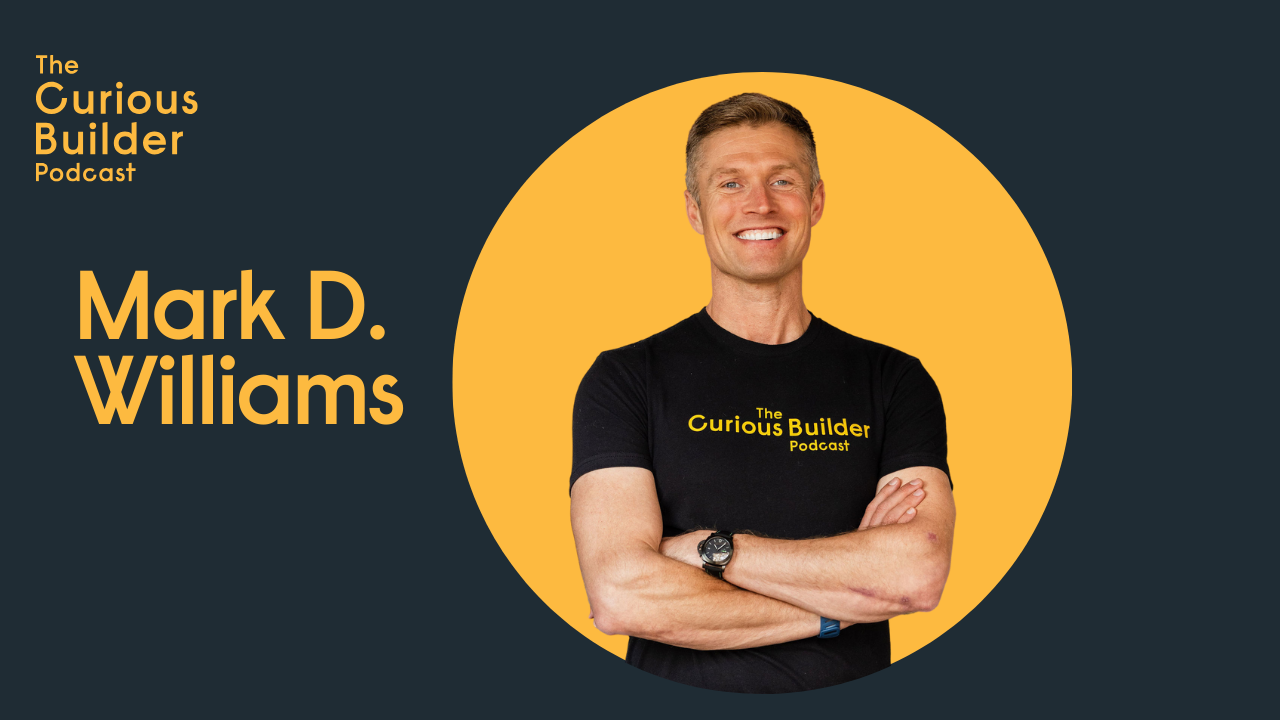
Losers are Winners is back with Adam McChesney, who signed away equity in his business for what sounded like a great deal and ended up in an eight month legal battle instead. Mark and Adam talk about the self confidence gap that almost sank him, why he rebuilt bigger and better once the dust settled, and why he now believes collaboration happens at the top while competition happens at the bottom. Mark even breaks out a horse analogy about pulling three times the weight together, and somehow it lands perfectly.


About The Curious Builder

The host of the Curious Builder Posdast is Mark D. Williams, the founder of Mark D. Williams Custom Homes Inc. They are an award-winning Twin Cities-based home builder, creating quality custom homes and remodels — one-of-a-kind dream homes of all styles and scopes. Whether you’re looking to reimagine your current space or start fresh with a new construction, we build homes that reflect how you live your everyday life.
Support the Show:
-
Adam McChesney 00:04
So at the time we were growing rapidly, we were hiring more people, and you know there was a lot of good stuff happening. But I was getting ready to be a father for the first time, and so I was trying to hey, how am I gonna you know manage all of these things? Am I still gonna be able to do this? But in reality, I now have proven to myself because I've rebuilt it bigger, faster, stronger, more profitable.
Mark D. Williams 00:34
Welcome to the Curious Thriller Podcast. I'm Mark Williams, your host. Today is Thursday, which you know what that means. It is losers are winners. We bring on a guest to talk about some epic fail stories, so we can all learn from someone else's mistakes. So you don't bludder your nose on the doorstep. I've got Adam McChesey from Missouri with Build Authority. I was on his podcast a couple weeks ago, and thought we'd return the favor and bring you on. Hey, Adam, thanks for coming.
Adam McChesney 00:57
Man, it was an awesome episode a couple weeks ago. I know it'll be Aaron here pretty soon, but thanks for having me, and looking forward to being here.
Mark D. Williams 01:04
Yeah. All right. So straight to it. What are what are tell us give us some stories here, some lessons learned from stories of the scar. What have you done that you, in hindsight, realized that was a really dumb idea, but maybe you were thankful for it because you learned something.
Adam McChesney 01:21
Yeah. So I I had my own digital marketing agency when I went full time. I left medical device sales in 2020. About nine months later, I became a franchisee of a digital marketing agency, and so it was kind of the first of its kind. I was the number one franchise of 29 for two straight years, and then they kind of positioned it for me to become a partner of everything. So they were like, "Hey, why don't you have a bigger piece of the pie? Merge your agency that was doing about $2 million a year, but also we need some cash. So if you could write a check for $113,000, you'll get a little bit more equity. And I was basically promised, you know, all this stuff, painted a very pretty picture, and then it only lasted about nine months. And so I realized very quickly that I should have just stayed where I was at. But thankful in the process, because if I didn't do that, one, I would have still had that franchise agreement up until a couple of months ago. So this all went down in about 2023, 2024. So I still would have been stuck on that. I wouldn't have been able to kind of restart the agency under the Builders of Authority brand. And although I had to go through about eight months of a legal battle and had to not compete, and everything came crashing down and burning, if I didn't go through that, I'm 100% positive I wouldn't be where I'm at today.
Mark D. Williams 02:38
Yeah, I mean, I think it's like every every entrepreneur has several, if not more, stories like that in their career where that happens. And I think there's a verse that says, "Time and chance happens to us all. You don't really know. You kind of you ever wonder like if that did not happen, like where what would the ripple effect of your life be? It's like that. Was that old movie with Ashton Kutcher? The butterfly effect. Every decision yields endless possibilities in the future. Yeah. Well, what I mean, what did you what did you learn through that process? Just as you were telling it, I already had the red flags up. Like, wait a minute, you you you you know, it sounds too good to be true, right? Anytime someone's asking for a lot of money after you first sign, like that's a red flag, but you're just like, yeah, more stake in the company, more equity. That sounds like a great deal.
Adam McChesney 03:25
Yeah, yeah. No, I I learned a lot about myself about some issues that I've I kind of always swept under the rug, both personally and professionally. Right. So every time I've gotten a little bit of success in in a direction, people have started to come to say, hey Adam, can you help us? Right, and so I'm kind of the guy that I always see the good in every situation. I always try to see the good in people, and I I flock to a lot of times people that need my help, and sometimes that's a good thing just because of the nature of everything. But a lot of times it ends up being at a hindrance of my own personal self. So I saw the the franchise model struggling as a whole, the business struggling as a whole, me doing fine over here, and I'm like, hey, I can help fix this. I'm a fixer, right? And this one came to kind of bite me in the back, and unfortunately had to go through all of that. I also learned that I lacked a lot of self confidence. So at the time, we were growing rapidly. We were hiring more people, and you know there was a lot of good stuff happening. But I was getting ready to be a father for the first time, and so I was trying to, hey, how am I gonna you know manage all of these things? Am I still gonna be able to do this, or is this gonna outgrow me? And everybody else was telling me all the right things of like, hey, you need us, we need you, you know, all those different things. We'll be able to help you out with this, but in reality, I now have proven to myself because I've rebuilt it bigger, faster, stronger, more profitable, better results than I did before. That I could have done it. I was just not having the self confidence and allowing myself to listen to other people and have other. People's opinions, because it would have positively impacted them more than me, reflect my personal self
Mark D. Williams 05:07
worth. Out of curiosity, how did you fix your self confidence? How did that failure help you improve your self confidence?
Adam McChesney 05:15
Yeah, so I went through basically an eight month legal battle where I started a mastermind teaching people personal branding, and then I did some CMO stuff and consulting. I just couldn't offer digital marketing services, and the entire time I said, "Hey, I do not want to start another digital marketing agency. This is the last thing that I want to do. And then the longer it went on, and the more money I was bleeding between all the different avenues of going through that and having a non-compete, people started reaching out to me. Hey, I want to come work for you. Clients started to say, Hey, whenever you relaunch an agency, I hope you do. We want to hire you. So throughout that process of not doing anything and kind of sitting still, I realized, okay, hey, I can actually do this. And then when we relaunched and I signed the paperwork in October of 2024, we not even two full years in business, and we're already doing $3 million a year run rate. I have almost 50 team members all built within the last two years, over 100 contracting clients, and so the last two years has really just been a constant reaffirmation of "Hey, you can do this. But every single day, they're not all easy days, as you know, of being an entrepreneur, but I'm still having the confidence in riding off that high of the trouble that I went through, the downfalls, and all those mistakes that I made.
Mark D. Williams 06:36
This episode of the Curious Builder is brought to you by Olivin Vine Socials. If you're a builder, a designer, or an architect looking to grow your brand without dancing on TikTok or spending your whole life on social media, listen up. Alvin Vine Socials specializes in Pinterest marketing, blogging, and email strategy for luxury home brands. They help you turn your beautiful work into a strategic SEO-driven content that drives real traffic and connects you with your ideal clients without burning you out. Ready to grow smarter and not harder? Visit OlivinvineSocials.com and tell them the Curious Builder set you. Just so you know, I've been working with Alyssa over at Olivenvine for three years. She helped us launch the podcast. She's helped us grow our brand at Mark Williams Custom Homes. I could not do what I've done without her help. Failure often is a building block of confidence because once you've gone through something really difficult or where you've failed, as long as you don't quit, it allows you to continue and sort of build yourself back up. And that's why I think it's so essential this particular series, but just for life. I saw something showed up on my algorithm the other day, and it was two basketballs, and they said from the outside they are both they both the same. And then he dropped them, and one bounced and one didn't. And he said one is filled with air; that's the one that bounces, and one doesn't. And it was a spiritual deal. He was talking about the Holy Spirit, but that's not the point I was making. The point was he's like one allows you to bounce back up, like one quits because it had no air in it. It just failed, and one continues to get back up. And you know, all they're very common the these sayings, but it doesn't make them not true. Which is, you know, success is just getting up one more time than you failed. And pretty much every single person in history that is successful has a litany of failures. I think like Abraham Lincoln. I don't have it in front of me right now. It just comes to mind. But I think he like ran for office like I want to say like 13 or 14 times and failed like every single time. And eventually, he became the president of the United States and one of the most famous presidents we've ever had. And same deal with Winston Churchill. And so it's just so interesting that history celebrates the winner, but they don't really talk about the failure process that it took to get there. That's kind of the nature of this episode and of these episodes in general that we do is to remind people, and hopefully they're out there realizing that you know whatever success means. And honestly, success is not as great as people think it is, or as a lofty. And neither is failure. Failure isn't that dark or bad either. And I think the sooner we realize that failure isn't the end of the road, but just really part of the road, I think the better we all are. And now it's not that we necessarily look forward to failure, but how quickly can we reset our mind to be like, what can I learn from this, and how can I apply this to get better? Maybe this makes me a bad dad, but like the other day, my maybe I have to allow him to be beyond eight. But like he was all bummed out because he got a Nerf gun that's broken, and he started crying. I'm like, buddy, we're gonna return it. You're gonna get a new one, and he's like, I'm just so sad that it's broken. I had no time for this. It was the end of the day. My patience was out, and I was like, I was like, buddy. I said, What are you crying about? Like, you're we're gonna return it. They're gonna warranty it. You're gonna get a new one. There's nothing to cry about. Now I'm speaking from a 45 year old person like knows how this is, and it's an eight year old boy. I get it, but like it was also just like sometimes you have to let people kind of go through their own grieving process because like.
Mark D. Williams 09:59
I'm at a different place than an eight-year-old is, but anyway, it's hard to watch people go through failure when it's hard to go through failure. But it honestly, it might be harder to watch somebody go through failure. Do you have any examples where you've had either your kids or other people on your team where you sort of had to have watched them go through parents or through failure, and then you the only thing you can do is just watch and support.
Adam McChesney 10:22
Yeah, well, so mostly through the mastermind. So I had about 100 people that were in my personal branding mastermind. So I grew my first agency very quickly through just creating content. You know, the podcast, YouTube, Facebook, Instagram, all the different aspects of it. And then in that, I started coaching about 15 people one to one. A lot of them were other marketers. Some of them were other business owners that are just like, "Hey, I want to create content and I want to grow my brand. But literally coaching people and walking them through the aspects of building a personal brand, starting a podcast, doing all this stuff-it doesn't happen overnight. You're going to invest time, money, resources, and energy into all this stuff, and then you're going to be like, "Why did that post get one like? And it was my mom. Why do I have five podcast episode number 30? I want to quit. They say most people quit their podcast, as you know, by like episode six. And so going through all those things and and doing it myself, I knew if people would just follow the plan and eventually get over that hurdle and not be so focused on the vanity metric, but more so the lasting impact of everything and the compounded effectiveness of stuff, you would watch people start, stop, quit, start again, all those different things, and then be like, "Oh my gosh, I can't do this, and just sitting there and being like, but seriously, if you just continue, you will never truly, fully realize the full impact until you keep going through this stuff. Like it's not all sunshine and rainbows, and so I think I got a lot of that stuff coaching people in a group setting, and then also one to one.
Mark D. Williams 11:57
Yeah, I mean, I think that's powerful. I think I used to coach cross country running for 10 years, and just the thought process. I think what's unique about running, in particular, in terms of competition, you know, right now I love this phrase that collaboration over competition among our peers, you know, and we create the masterminds of the Cures Builder Collectives just to celebrate, you know, knowledge and education to make us all better. And you know, the old guard kept all the information to themselves because they thought that was their differentiator to their client base, and I don't think I don't believe that, but I understand that was a mindset that people had at one time. And going back to the running thing, what I, you know, when you have teams like football, there's a winner, there's a loser. Baseball winner, there's a loser. Tennis, whatever sport you're in, most sports have winners and losers. There is a probably two to 300 people that run a let's say a cross country event, or let's say the varsity is about let's call it 70 or 80 people at a varsity race because you only have seven on a team. There's only one winner. I mean, truly, like one person wins the race. But what's so unique about running is that no one is really racing. I mean, maybe the top five are really racing for the win. That means 95% of everyone else is racing themselves and challenging themselves. And what's super cool about it is I've watched parents on the sidelines that they will cheer for any kid who's suffering, anyone who's running, because everyone can see the pain on their face while you're, you know, while you're going as hard as you can for 5k in high school. But they applaud the effort, and what I love about that is I think that running is much more analogous to life, and as much more because I think as a business owner, like yeah, you might compete against another builder in my career, you might compete against another marketing firm or whatever your industry may or may not be, but at the end of the day, like we sort of are fans of of people that continue to survive and continue to thrive because I do think that as our competition gets better, it makes us better too. And you know the reason Michael Jordan was very good is Scottie Pippen was also on his team, one of the all time best defensive players ever to play the game was a you don't think Michael learned a few of his moves by trying to figure out a way to counter Scottie's tenacity and his length that makes us better and competition is not a negative thing. Competition is a wonderful thing. I someone just told me recently that a horse you know don't know how many pounds let's say it can pull 100 pounds two horses tied together, yoked together. They don't pull 200 pounds. They pull like 300 pounds. It's a force multiplier. And when you have people that run in the same direction, what you can do as a team or as a collaborative effort is far superior to what one or two can even do. And it's just I just think it's a really cool thing that needs to be shared.
Adam McChesney 14:41
Well, I agree. I mean, I the mission inside of our company. We have our own internal mission, and the vision that we've created for the company is that we want to change the way that digital marketing agencies partner with small businesses. And I have to lead by example, and our company has to lead by example to do that. To the exact point. That you mention is collaboration happens at the top, competition happens at the bottom, right? So I know that there's a saying out there that a lot of people have talked about over the years, and I can agree with that more. Is if we're raising the standard of the industry as a whole, it requires us to get better. But it also I learn so much from other people, right? My competitors, where I see them do this, or we have conversations. And when you have that mindset and you're willing to give, you have the then of the ability to take, and you can learn so much more by doing it with other people, even if they're your competitors, versus trying to do it alone.
Mark D. Williams 15:40
This episode is brought to you by Pella Windows and Doors. I've used Pella for 21 years as the exclusive window company on every one of my builds. When people ask me who I trust for Windows and Doors, it's Pella every time. Their craftsmanship, their innovation, the top-tier service make them a no-brainer for any custom home builder or designer who demand the best. Whether you're designing something bold or building something with timeless elegance, Pella has you covered. They're also the only window company that has a lifetime warranty on all of their windows. I've gotten to know all their people at Pella Corporate as well as locally here at Pella Northland. I'm proud to call them our partners and our friends. Visit Pella.com to learn more and connect with your local reps today. For more information, you can also listen to episode one, where I interview the Pella Northland founders, as well as episode 109, where we talk all about their latest innovation with the steady set window. I mean, ultimately too. I think I just had a I was meeting with someone at our Misu who's project as part of a family office, and he asked briefly, like, "Why do you like partnerships? And I was like, honestly, at this phase of my life, it's just more rewarding to do it with other people. It's also it's not necessarily giving back, but it's more collaborative. I mean, I am a social per. I'm an extremely social person. I understand. I'm on like the far end of the spectrum of like sociability. I get energy from people, so it's not fair to compare how I receive energy to, let's say, my wife, who's a classic introvert. Like she gets energy alone, and being around people sort of takes energy from her. That being said, you know, I took the kids recently. We did a little father son deal, and my daughter was with my her grandma, and my wife was alone for three days, which I thought would be like as an introvert, she must have been just rejoicing, and she was lonely. I'm like, I am so confused. You know, you say as an introvert you don't want to be around people, but like you, she's like, I sort of like people to be where I can see them, but I don't want to like interact with them, which is like it's kind of like maybe a goldfish. Like you want to be in the bowl, but you don't want to actually swim with other fish. I don't know yet. I'll work that out. But I just anyway going back to this bad analogy of like partnerships, I I have found so much more value in in having half of the pie versus the whole pie, and and I would way rather have 80% of something than 100% of nothing, or just think of the risk. I mean, you look at like some of these bigger financial deals that some companies get into in the building world, you know it's very risky to do, let's say, a huge development, especially high-end custom homes, to say do 20 a 20 lot subdivision all by yourself. The classic model would be you get four partners and you each take down you know five or six lots and you do it as a whole. That's a it's better for everybody. It's better for the clients. It's because not every, not every client should build all 20 homes with the same builder. I think that that that home that the neighborhood is likely to get a little homogenous and just not have enough diversity and look weird. And so I think that's where personalities I think really help shape you know what you're doing. So I don't know. I love partnerships. It's and it's something I've been slow to wake up to. But man, am I a late adopter? It's like now I don't want to do anything alone.
Adam McChesney 18:44
Yeah, that's awesome.
Mark D. Williams 18:46
What you know, as we kind of wind down, do you? I can't remember. Do you have children?
Adam McChesney 18:51
Yes. So my son Murphy is-he'll be three in just a couple of weeks.
Mark D. Williams 18:56
What are there? If you were to tell Murphy something about you know losing and sort of evolving. What have you have you tapped into your dad brain yet? He's still pretty young yet for that kind of advice. But have you started thinking about? I mean, you see. I mean, honestly, even at that age, right? They fall over. It's like, do you help them up? It's like, do you helicopter parent? Do you let them fall down the stairs a few times? Like, what are what what sort of things have you learned from watching your son sort of grow and learn through trial and error.
Adam McChesney 19:22
Yeah, you know, one thing that I always struggled with growing up is I thought it was absolutely terrifying to fail, and part of that came from my dad, who was also like the coach of the soccer team, and he's a lawyer, so he's very like tense, and so I was always scared to fail, whether that was in school, whether that was in sports, whether that was like in a video game, like I was like, oh my gosh, and I let all of that stuff crumble me. And so, looking back on it, you know, I don't necessarily know if it was real or if I had it in my mind. But one of the things that I've been trying to do with my son is, as an example of of just helping him understand. And like he tries to hit the baseball at home, and then he doesn't get it, and he's three. I'm not even three yet. I'm like, hey, you just hit a far one. Like that's okay. You're not going to hit every single ball. To try to have like a happy medium of not just like coddling, but then not getting to the mindset that I did, where I was like scared to do things because I'm like, oh my gosh, I know that I failed that I did it last time, and so trying to take what was from my childhood and take my experiences, and then especially like in life and business sense, and then making it for him is really what I'm focused on doing.
Mark D. Williams 20:33
Yeah, well, I think that's great. I love it. Thank you for coming on the podcast, and appreciate you sharing some good stories. And have yourself a dandy weekend.
Adam McChesney 20:42
Yeah, thank you for having me.
Mark D. Williams 20:45
Thanks for tuning in to Curious Builder Podcast. If you like this episode, do us a favor: share it with three other business owners. The best way that we can spread what we're doing is by word of mouth, and with your help, we can continue to help other curious builders expand their business. Please share it with your friends, like and review online, and thanks again for tuning in.
This episode is sponsored by: