Episode 108 - Losers are Winners: The Construction Mistakes Brad Leavitt Won't Make Twice
Episode #108 | Losers are Winners | The Construction Mistakes Brad Leavitt Won't Make Twice
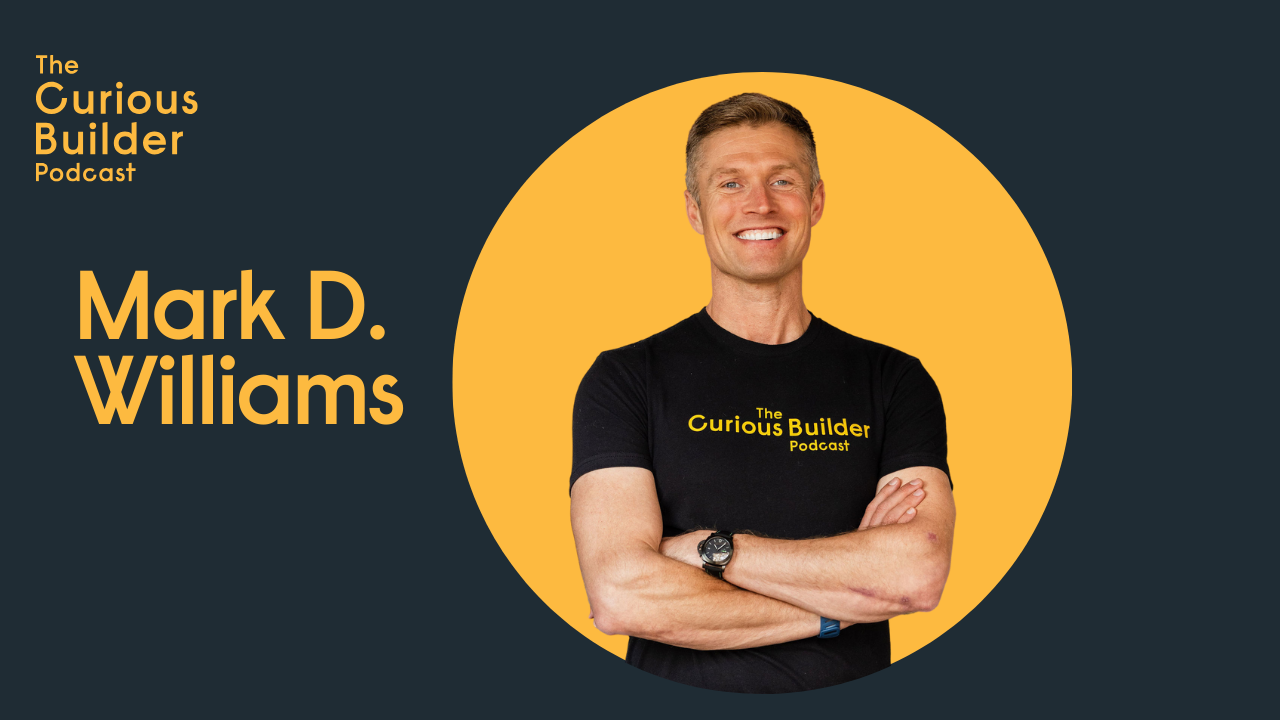
Brad Leavitt is finishing his own house, past his original move-in date, and has never felt more empathy for his clients in his life. He and Mark cover the SOP gaps that keep showing up project after project, why ghosting in real estate is somehow legal and completely maddening, and what it actually costs when a spec home sits longer than expected. Also: scorpions versus mosquitoes, and Minnesota wins.


About The Curious Builder

The host of the Curious Builder Posdast is Mark D. Williams, the founder of Mark D. Williams Custom Homes Inc. They are an award-winning Twin Cities-based home builder, creating quality custom homes and remodels — one-of-a-kind dream homes of all styles and scopes. Whether you’re looking to reimagine your current space or start fresh with a new construction, we build homes that reflect how you live your everyday life.
Support the Show:
-
Brad Leavitt 00:04
What I've learned is like we we we're just taking more time to say okay here's the problem at the end of a project we sit in a conference room and we do this call it like an autopsy and we kind of reevaluate the project we're trying to catch a lot of these things at these analysis you know with the group and it's not to single out any superintendent or coordinator, but it's just a learning experience for the team.
Mark D. Williams 00:31
Welcome to Curious Builder Podcast. I'm Mark Williams, your host. Today we're going OG, the man who helped me start the Curious Builder Podcast. We got Brad Levitt down in Phoenix, Arizona, coming back on his um teeth time. What's up, buddy? What's up, Marky Mark? How are you, man? I'm good. Good to see you. I. It's funny. I think I get asked a lot, like, "Hey, you, you and Brad must see each other all the time. It's like, no, I look. We our voice. We never actually. This is the most we ever actually get to talk because it's like dedicated time on the podcast. We should almost like have a scheduled time to talk where we don't record, where we can just catch up. Because you and I have so much, so many things that we love to talk about that are off the pod. But we're just both so busy with life and with kids and building, and your two-hour time change is is always a bit hard for us to connect on. But honestly, that's why I love Contractor Coalition. Well, I love being there and educating and meeting all these amazing builders, honestly, I just love to go. Also, because I just love to catch up with you and Nick and Morgan and Tyler and the rest of the team. And so I know we've got our next one coming up in Charlotte, the first weekend of November. I was looking at my calendar, like that's coming up fast.
Brad Leavitt 01:36
Yeah, it's coming real fast. That's the hard thing. Is I mean, even though we're two hours apart, I feel bad. I'm like, I think the last 10 times you've called me, I've missed every call. Like, you know, it's just tough. You know, like I'm in the middle of a meeting, or like the time change. You know, maybe I'm getting the kids ready for school. Whatever, it's just tough. But that's why I do appreciate, you know, these get-togethers like the summit. You know, IBS, these things, because you know, it's work is just so busy and it's so brutal. Like what we do, that it's just nice to kind of get that I don't know that energy from each other. Just hey, Mark's doing the same stuff I am, but our worlds don't collide. You know, it's like ships in the night. So you kind of have a little breathing moment in person, which you know kind of reenergizes you.
Mark D. Williams 02:15
Oh, for sure. I also think that you maximize your life. You you feel like I think you're a little bit like me. Correct me if I'm wrong, but I tend if I have vacant time, I fill it with something. It's part of my personality. I have to put things in my life to carve out quiet time. It's what makes me, it makes me good at my job, but it also makes it a challenge for my own self. One of the reasons why I started Cures Bitter Bootcamp, which you went to the one in Costa Rica, was I need those things on my calendar to recharge? Because if there are, I'm amazing with my calendar. I think you are too. But I have to block that out six months to a year in advance. It sounds ridiculous, and I'm not even saying it's healthy. But it's what I need to do to create time. Otherwise, if I have blank things on my calendar, I can go about four hours by myself, and then I'm like, who wants to come do something?
Brad Leavitt 03:02
Yeah, exactly. It's so true. I mean, it's we're busy bodies, and it's like I wish I could just sit down and kind of recalibrate, but we're just not built that way. So
Mark D. Williams 03:11
I think being honest with yourself. Today's our Thursday series, which is going really well. So I guess we're not going to change it. Might be forever losers are winners. You know, you can't go through life without some good old scars, but you know you're building. You're coming up on really your house being done. What are some either lessons learned or some losses? You know, you'd think. I think sometimes people think like, oh, you know, you're building your own house must be awesome. I'm guessing if it's anything like Nick's 45 White Oak or my Misa who is like building your own house is so hard, and I'm guessing you've broken a lot of rules that you would never break for a client because we always break rules for guess who the person in the mirror. Are there any of these things hitting home with you? And like, what are some stories you can share about you're currently you know finishing up your house? I don't know how many months you have left till you're done. You know, it's funny. I think one of
Brad Leavitt 04:00
the I'd say on the benefit side of building your own house is, I feel like we become numb in some ways to building, and what I mean by that is, you know, doing this every day, change orders come across, things are missing bid. I don't want to say we're insensitive, but it's just part of business, right? It's part of like the operation. You're you're essentially having open heart surgery for everyone to watch, and so, you know, when you're on the customer side, like I am, you see the pain points of things taking longer, right? I mean, I have a construction loan on my house, and I'm way past the delivery date for a lot of reasons. The client's a pain in the ass. Just no. The reality is, it's like you know, my my house is definitely going to be second in line over a client, right? And so, but where it's painful is like I'm trying to plan where I'm at now, and my kids are excited. Like, Dad, why are we moving in? Why are we not moving in yet? You know, you kind of have, you know, my kids were kind of hitting birthday season where all my kids are having their birthdays want to have the party at the house, and it's like it'd be done. And so you start feeling just some of these things that maybe we become. Hey, it's part of doing business to the client without-I don't want to say urgency, even though there's cause and effect that led us here. And I think one of the big things that I'm kind of dealing with with some clients is, you know, we often talk about SOP and what we try to do. Like you can't read people's minds, and so as mistakes happen, and I don't want to give specific examples in case our clients listen to this, but essentially, we we do a pretty good job of having designers and architects and having things every always spelled out. Notwithstanding, there's always going to be gaps, and you know some of these could be appliance locations that, even though we've gone through this and the end results installed, and the client's like, hey, I'm not happy with the configuration or height or access or whatever it is, and you're like, man, we went through protocol A, B, C, and we're still here trying to figure out, okay, what do we do? And the client's upset, like, how did you not catch this? And it's tough because it's like, well, how are we supposed to catch it? Because we can't read your mind until we're operating, right? Be these these are very complex builds, and I have this across the board on like five different projects right now, and case in point, on my house there's a few gaps. Right, there's some gaps that are costing me money because I didn't catch it, my trades didn't catch it, my team didn't catch it, and now we got to make these changes. And there's no perfect elixir, but all I can do is say, okay, we have these 10 problems between five on my project and one on each of these five projects is really create a checklist and say, "Hey, when cabinetry and appliances are going through this phase, let's clearly, if we're doing something different than normal, let's clearly, you know, express that to the client. Patio pavers, for example, do we want a grout joint? Do we want these pavers set tight with no grout? And clearly set the expectation. I've had issues with thresholds. Like here, we deal with critters a lot. You know the benefit of having a zero threshold. You depress the slab. You set the threshold. You have this nice clean transition inside to outside, which we use a lot of. And that means there's no lip, there's no step. It's nice and clean. The only problem with that is critters can get in,
Mark D. Williams 07:00
right? What do you mean by critters getting in? Is it because there's nothing, nothing for them to have to go over or climb in? They can just walk straight in. Is that what you mean?
Brad Leavitt 07:09
Okay, so when you do a flush threshold, you're only going to have like a little lip barely over the wood flooring or tile flooring, and then patio paver, and so there's a little air gap. It's small. You can't fix that. And so scorpions who can get under spiders, different insects here in Phoenix.
Mark D. Williams 07:29
Doesn't scorpion have the big hook tail? They can't move that. They just get stuck. They can't walk into that. See, if you were in a northern climate, hey, we made it until seven minutes before I'm going to rip on your hot climate. If you're up here in Minnesota, you don't have to worry about scorpions. You still got mice, but nothing that's going to kill you, buddy.
Brad Leavitt 07:45
Dude, you got mosquitoes galore, man. They're like not this year. It's
Mark D. Williams 07:48
it's so dry this year. There's been no water anywhere. There's like no mosquitoes, literally none.
Brad Leavitt 07:53
Just 1000 lakes. What are you talking about?
Mark D. Williams 07:55
Well, no water that's coming down out of the sky. Anyway, for the audience, we love to harass each other about our climates. Minnesota's clearly better. I mean, I just saw that with Lake Mead draining to nothing because you won't stop building homes in a desert because your aquifers go forever. You guys are gonna, Minnesota is gonna be just an oasis of place to come because we've got water here. You guys are out of water, buddy. You have to figure something out. Confusing
Brad Leavitt 08:20
us with Vegas and California, we're good in Phoenix, but sure, yeah, I know. But who knows? It's still so. Anyway, you
Mark D. Williams 08:27
have this air gap. So anyway, right now with the flat, they're getting in somehow.
Brad Leavitt 08:30
Well, yeah, and so there's there's an air gap if you're setting a zero threshold. But if you do like a traditional track where the track sits, call it an inch above the flooring, you know those sliders set in the track, and so a bug would have to go up the track underneath the door, and it just is a lot more call it bug resistant. Well, the problem is you pick one or the other. You pick the bug resistant one, but now it's a trip hazard when these multi sliders open. Your kids will run through the house, and no matter how many times you go through this, and so now it just comes to the point where we have to create these documents for signature, and so just in years in business, it's like, look clearly, if you don't want bugs, then you're doing this, but it's a trip hazard, and you're going to sign this waiver because when it's installed, the client's like, well, I wanted this flush, like all your pictures on your Instagram and your website. I'm like, okay, well, you were adamant. You don't want bugs, and this is only what it keeps them out. So, I think a lot of, and it's no disrespect to the clients. It's just creative amnesia. And in fairness to them, they're not doing this every day. And so, it just shows that it's really easy that we can kind of become numb to the day to day of running a business and doing construction. That we under-explain, you know, we don't set expectations. We don't have documentation to back it up, and then we get in this finger pointing. And so what I've learned is like we we we're just taking more time to say, okay, here's the problem. At the end of a project, we sit in a conference room. I'm actually going to speak about this in our Build a 20, and we do this call it like an autopsy, and we. Kind of reevaluate the project. What went good? What went bad? Why were the clients upset? At what phases? What trades performed? Which ones didn't perform? Should we look at removing them off our bid list? This is a new trade; they're phenomenal. Make sure they're bidding on other projects. We're trying to catch a lot of these things at these analyzes, you know, with the group. And it's not to single out any superintendent or coordinator, but it's just a learning experience for the team.
Mark D. Williams 10:31
This episode is brought to you by Pella Windows and Doors. I've used Pella for 21 years as the exclusive window company on every one of my builds. When people ask me who I trust for Windows and doors, it's Pella every time. Their craftsmanship, their innovation, the top-tier service make them a no-brainer for any custom home builder or designer who demand the best. Whether you're designing something bold or building something with timeless elegance, Pella has you covered. They're also the only window company that has a lifetime warranty on all of their windows. I've gotten to know all their people at Pella Corporate as well as locally here at Pella Northland. I'm proud to call them our partners and our friends. Visit Pella.com to learn more and connect with your local reps today. For more information, you can also listen to Episode One, where I interview the Pella Northland founders, as well as Episode 109, where we talk all about their latest innovation with the Steady set window. This episode of the Curious Builder is brought to you by Olivin Vine Socials. If you're a builder, a designer, or an architect looking to grow your brand without dancing on TikTok or spending your whole life on social media, listen up. Olivin Vine Socials specializes in Pinterest marketing, blogging, and email strategy for luxury home brands. They help you turn your beautiful work into a strategic SEO-driven content that drives real traffic and connects you with your ideal clients without burning you out. Ready to grow smarter and not harder? Visit OlivinVineSocials.com and tell them the Curious Builder set to you. Just so you know, I've been working with Alyssa over at Olivinvine for three years. She helped us launch the podcast. She's helped us grow our brand at Mark Williams Custom Homes. I could not do what I've done without her help. So here's my question, because oddly enough, I think later today I'm doing it with my team on Misahoos, and while it wasn't my personal house, we obviously the amount of time and care that went into it, it was like it was my own house. So we feel the same pain. In my, I was nodding my head the whole time you were talking because you're right. I think it's if you're not a spec home builder, I think you should do one one every 10 years or at least do a build for yourself because you're right. I have learned so much from building Misahuas of things that I took for granted or I forgot. Like, wow, wait, I'm asking my client to do all this stuff. Like, holy crap, this is a lot of work. Now we also probably care more than the average person because it's our brand, it's our home. You kind of know all the stuff, so you inevitably are maybe a little too invested in it. But my question is: is on these autopsies, we've done them before. We have a great team meeting. We put them all up on the board. We put them in a Google Doc, and then they go to the Google Doc and die. Like, what do you do with them? Like, how do you? Is it or is it okay? It's a little bit like taking a shower, like you know you're clean for that moment in time, but you take a shower every day. You can't depend on one shower to keep you clean for a whole year. Like this, this or even like reading a book. I think sometimes I feel guilty that I'll read a book, I'll remember everything, I'll remember the spirit of it or some key things, but then do you hold it over your head like oh I don't remember everything in that book? And where I'm going with this is like, how much do we expect the team to change from these autopsies, or is it just good for each person to sort of take some of this in, kind of in the story setting, so that inspires them to build better? How do you handle where you go from the autopsy meeting to actually making your company better?
Brad Leavitt 13:39
Yeah, I think it's multifaceted. What we found is there's a few things that impact estimating. For example, if this thing is missed continually, continually is missed for our field team, we're going to make sure the estimators have that in a checklist. You know, they're doing the bid abstract with these bids, and so part of that is getting a checklist for our precon team so that they're sending this out to the subs, like don't miss X, Y, or Z. You know, a common thing is how we want to do our. We we have some building standards. We met with Mark Labertte. We have those. So these checklist items that we're putting in now that have to do with framing, have to do with windows, they have to do with mechanical, have to do with even wood flooring. Some of these checklist items that are that continue to burn us in the field. The second part of that is now the coordinators as we're updating this SOP or checklist as they're going through cabinetry sign off. A big one is is countertops. Before we can you know release countertops into production and you know once they've been templated into fabrication, we're going to make sure that the client has sign off on the seam placement, the designer has, and we have, you know, because what happens is, you know, our countertop companies bidding based on usage and the best, you know, waste factor to do these seams. Sometimes it's not ideal where the customer wants them, and so now you don't want to have to rip out countertops. So we're trying to create checklists, so it's not just hey, we talk about the meeting and then. Hopefully, someone remembers. Ideally, hey, we're hitting countertop. Okay, let's go to SOP. Here's the checklist we need to hit for countertops as we're going to contract. You know, yeah. Well, I'm diving a little on the specifics. I think for the audience and for me, the how is important. So, who takes ownership of that? So, you're at this meeting. Is it the project coordinator, like a Megan on your team, or who's like responsible for? And then you have a master checklist that every time you edit it here, it it imports to your master checklist. Or who kind of owns that document? Because you've
Mark D. Williams 15:30
got a number of projects going on in a number of different autopsies. How do you make sure that the master checklist is continually being updated with kind of these new sign-offs?
Brad Leavitt 15:39
Yeah. So we started. It's kind of cool. Spencer started this thing called AFT 360, and it's really just a 360 view of the whole company. And so everything lives in our cloud, and we're updating this now in the meetings. And this is a new thing. So I do have someone who's taking the lead. They're actually an estimating assistant estimator that's going to be updating this document. But then the responsibility, the coordinators, who are like the PMs on the job, are responsible to go into that document as they're subcontracting because they write the contracts for each sub that they're going through and going through this checklist. And if it includes the homeowner, they're getting that in front of the homeowner because my superintendents need to build, they need to worry about quality and schedule and daily logs, you know. And so that's their focus. So, yeah, you have to. The only way this is going to work is you have to have certain people in charge of those documents, or else it'll never happen.
Mark D. Williams 16:30
Agreed. Wow. So, how many more months before you move in?
Brad Leavitt 16:35
Okay. Well, you know, I again, this goes back to I was hoping for sure that it was going to be August, September. Then I was hoping it would be in time for my son's birthday late in October. Now I'm hoping first week in November. So now,
Mark D. Williams 16:52
so maybe this year.
Brad Leavitt 16:54
Yeah, I think for sure before Thanksgiving. But again, here's the thing for me: this goes back to the SOP. I hate moving people in. If you're not in by Thanksgiving, you're out. Really, it needs to be January. Trying to get people in during the holidays, I don't even want to do that for myself. But the reality is, because of construction loan and other terms, I got to move in. My loan's going to expire. I got to get in. But for me, it's a little bit easier because the situation is a little bit different for me. But yeah, I think it's going to be first, second week in November, and really, what it comes down to is we have a ton of trim, and it's my painter is like it's going to take me longer than I thought, which is okay. My trades have been incredible. You know, they've done a lot of extras. I mean, there's a lot of detail in the house, so it's my model home. It is what it is. It's fine. It needs to be done right, and part of the reason why the schedule has been pushed out is I know how it is trying to get a project done for a client with little time, and it is so stressful. My team doesn't need that for my house. Like if it delays a month, it's not the end of the world. So,
Mark D. Williams 17:53
yeah, I mean, I was talking to Casey from Raycon and and my house at Mesa. We were on the same guidelines, getting it ready in June for the tour. He was getting his ready for the Salt Lake tour in mine for Minnesota. It's like the tours are rough because that date doesn't change. No, and it's a whole
Brad Leavitt 18:09
color's coming.
Mark D. Williams 18:10
Yeah, yeah. Not only that, we're Casey. I had this is you know you set up your own. It's a little bit like you know running the race of life, but like if you're going to run a race, you're going to put out a time that you want to be, like you don't. No one is forcing you or chasing you to run this time, but like you put yourself under nine months of like pressure and training to just pick some arbitrary number to hit. Like in the grand scheme of life, like none of that matters. But what makes us and what makes you competitive is like picking these milestones to do what you want to do. But anyway, I had two international photographer, no, one international photographer, two videos, and my my what I sold myself on a year in advance was if I get the house done 30 days ahead of time, I can take advantage of free marketing for like Channel Five or some local TV stuff. I can get all the photos done before time. Here's the ironic part of all. So we did all of it. I put my team through Hades to get it done, and we did it. And everyone's still here. No one stroked out, shockingly, and including myself. We got it done, but now because we're going after national publications, I can't even use any of the photos I got because because the OHA team, you know, has submitted to like AD and yes, country living else, and they and they like we want to wait for a year and a half. And I've got we made 35 brand deals, and we have products from 22 countries, and I can't use any of the photos that I kicked my butt to get. And I'm like, "Oh, I didn't really think about that beforehand. Anyway, you live and learn. That will be my losers or winners. Is Miso
Brad Leavitt 19:34
Miso house yet?
Mark D. Williams 19:35
We listed it Friday, so we had 3700 people through the house. I had five or six parties, and it just-I think it's just the our market is super weird right now. People with money just don't-I, you know-I come-I've kind of come up with this new five thing: marriage, divorce, having kids-not losing kids, but like they're going downsizing, like they're going to college or whatever-and then like relo. Other than those five things, like the e. Easiest thing for someone to do is to not move. It's way easier to not move than it is to move or build a custom home. Like I, you know, you've learned, you know, the process for relating to your clients. I've realized that it takes a lot for someone to say, "I want to build a home. Like they're they're signing up. They honestly don't know what they're signing up for. For the first time in my career, I have an active client I'm building for right now, and he's told me on a number of occasions. I'm like, thanks. It's also like, as your wife was like, you know, if I could do it again, I wouldn't have married you. I'm like, oh, thanks. That's really nice. But like the the client is like, if I had to do this again, I don't think I would build with you. I wouldn't build at all. Like the and not that the process has been good. He's like, you've done a great job. It's not that. He's like, it's just a lot more than we really want to do in our life, and he's like, "If I knew what I knew today, we wouldn't be building a new house. We would have just bought something existing. And I just said, "Thank you for your honesty. I said, "We're gonna we're gonna do a killer job for you. You know, they're halfway through. They'll be in before Thanksgiving or right around there. Anyway, it just speaks to how much has to happen for someone to either buy a house of, in my case, $6 million, or to build a home, you'd think it would be easier to just go buy a home, though. So, like, I'm a little surprised with Misa. Like, you can skip that whole two or three years. Plus, it doesn't even exist in our market. A wellness home with like that horse. I thought, you know, like Nick, I thought for sure we'd roll that thing out, and the third person that would walk through, and we've had about seven super interested parties, two people at the one yard line that were going to write offers and then just disappeared into the ether. I don't know. I don't know why. I hate it when people ghost you. Isn't it in sales? There's nothing more infuriating than someone that just doesn't return your phone calls, your emails, and just like disappears. You're like, couldn't you just say like I don't want to buy it? Like I that would be a reasonable thing for somebody to say, but like to just disappear, I hate it. Oh,
Brad Leavitt 21:45
and they do it all the time. Yeah, especially I mean, they just rather not respond. I mean, it's just like human nature. But it is weird. The economy, I think, it's a little interesting everywhere. I mean, we still have things moving out here, but it's it depends. There's so many specifics right now. I think it's definitely a buyer's market, you know, not a seller's for sure. Yeah. So anyway, we listed it last Friday, so we're we're not even a week. We have a broker open tomorrow, actually. Nice. So we'll see. I mean, I've gotten it's been kind of flattering. I've gotten a number of letters from people in the real estate community saying we see what you did. We appreciate that you tried to do something different. Like I tried to tell a story. I I have nothing against real estate agents. Like I love them. They're our partners. Happy to work with them. But I wanted to tell the story. I got what
Mark D. Williams 22:30
I wanted. I told the story the way I wanted to tell it, and I'm super happy. No one could have ever brought 3,700 people through a single house in a month. Right.
Mark D. Williams 22:37
That's I'm very proud of what we did, but we still don't have a buyer, and it's also being realistic. Like most homes of this nature take 10 to 12 months to sell, which is not what you want to hear. And and ultimately, they're not going to be that profitable. We could do. I'll come on your podcast and talk more about it some other time if you want. But like it's building a spectrum, at least for me and for Nick too. Maybe for Casey. Casey, it turned out great. You know, he sold that thing in the first in his first three weeks. You know, I'm super happy for him. It's it time kills you, and what stinks about the whole process is that if you build something that's that it's like a moment in time. If it sells in that moment in time, it it works out great. But if you don't, man, your time just eats you alive. And I don't. I really, my hats off to people that are successful, high-end spec home builders. I don't actually know any, and I think everyone wants to come in and do it a different way, and I did. But we're all governed by the same gravitational pull of if it doesn't sell, it sucks.
Brad Leavitt 23:36
It sucks because I don't think people realize the cost involved and what that looks like, you know, that monthly, that monthly bill is coming every month, and every month that it takes, that's another dip in the, you know, the net return. So makes it. Well, you're
Mark D. Williams 23:50
not, you're not, but you're not living there. See, I think the difference is like if you could go buy a house for 6 million. Let's say, let's say I buy your house, Brad. It's like, well, your family's living there. Like you don't, even if you don't sell it, like you're living there, like you're enjoying the home itself, and so what I don't think people, you're right, people don't factor in the cost of money and they don't factor the burn of money because it's assumed that if you bought the house, like that's not part of the sale price. Like if you go on the open market and just buy an open house, they're not factoring in the mortgage. Like why would they? That someone lives there, and I think that's what changes the game in spec home building, I would love to bring on high-end spec home builders and just ask them, like, how do they think about it? And I think we've you and I've talked about this before, and we got to shut this episode down because you and I'll talk for five hours. But like, or mainly me, is certain markets are more resilient or better off. Obviously, Utah has just been a banger one for vacation markets and things like that. There are certain markets that exist. Just Minnesota isn't one of them.
Brad Leavitt 24:45
Yeah, and that and that goes into it. I mean, market and Utah's just in a different world. That's even more than Scottsdale. So I'm jealous of our Park City friends.
Mark D. Williams 24:54
Yeah. Nope. Well, we I want to respect your time and the audiences too. I'm looking forward to seeing you in. November. If anyone wants to come to Charlotte, I'll ask you hot off the take. I love that we evolve every year, and we haven't talked about this. What are some things that you think you want to change about some of the things that we talk about at the Contractor Coalition in November? Is there anything kind of in the back of your mind that you're like, I'm thinking about like obviously White Elk Misa for me, but even your own house. I think there's things that, as it applies to our business, are there things that we that we teach? I think of how many alumni, for instance, that keep coming back over and over and over again, and they always comment like, "Well, the content keeps changing. It's like, "Well, yeah, because Brad, Nick, Tyler, Morgan, and I, we keep changing. Any any thoughts on some of the content that you'll be sharing or educating that might be different from Colorado. Yeah,
Brad Leavitt 25:42
we're kind of going down this AI thing too, and so there's just a lot of opportunities as you're looking to streamline your business, which everyone's trying to do. Be lean, be mean. We're talking about the economy; it's uncertain. I think there's going to be some practices we'll talk about that allow you just to be more lean and more efficient, which is what we're looking for to build a better product for more cost effective, so you're more competitive and your your overheads lower. Love it. We'll see you guys in Charlotte, and I'll see you in Charlotte too, buddy. Thanks for coming on the Cures Builder Podcast. Thanks for tuning in to Cures Builder Podcast. If you like this episode, do us a favor: share it with three other business owners. The best way that we can spread what we're doing is by word of mouth, and with your help, we can continue to help other curious builders expand their business. Please share it with your friends, like and review online, and thanks again for tuning in.
This episode is sponsored by: