Episode 142 - Women in Construction Spill: How Empathy, Integrity, & Guts Change the Game
#142 | Live at Roth Living | Women in Construction Spill: How Empathy, Integrity, & Guts Change the Game
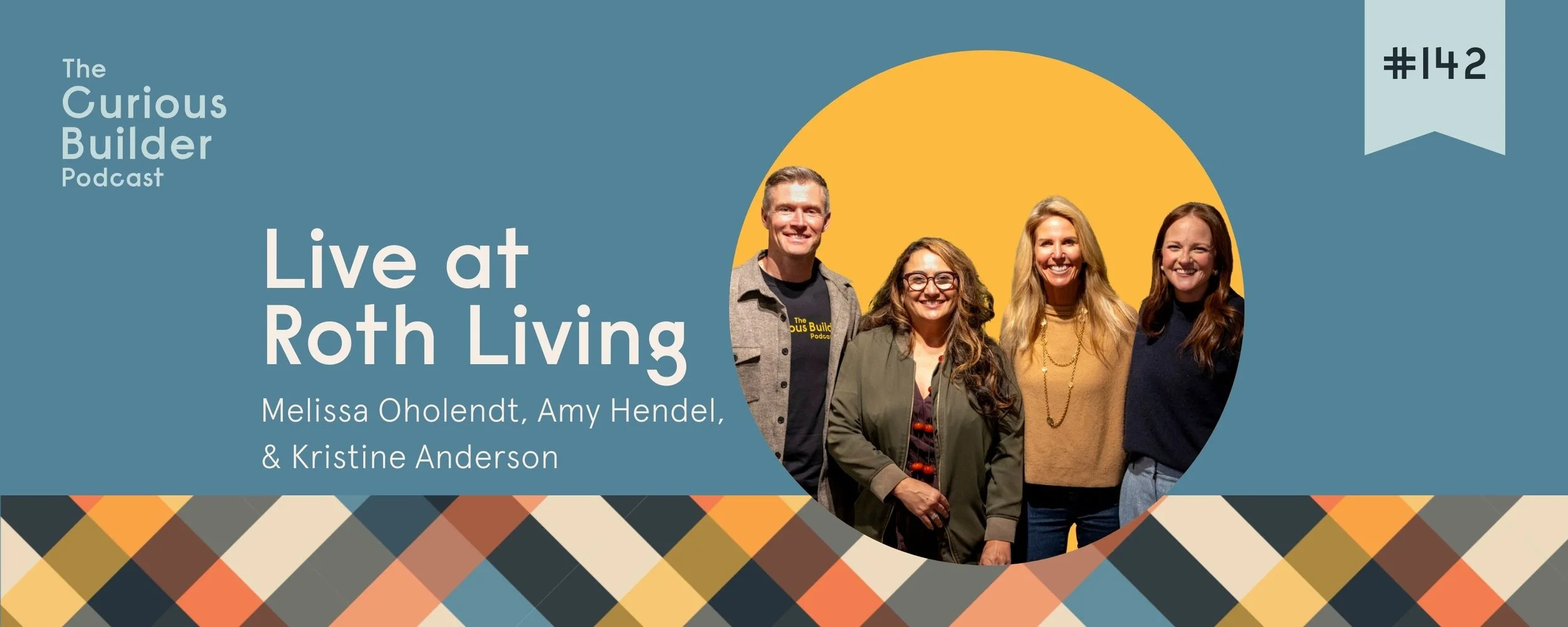
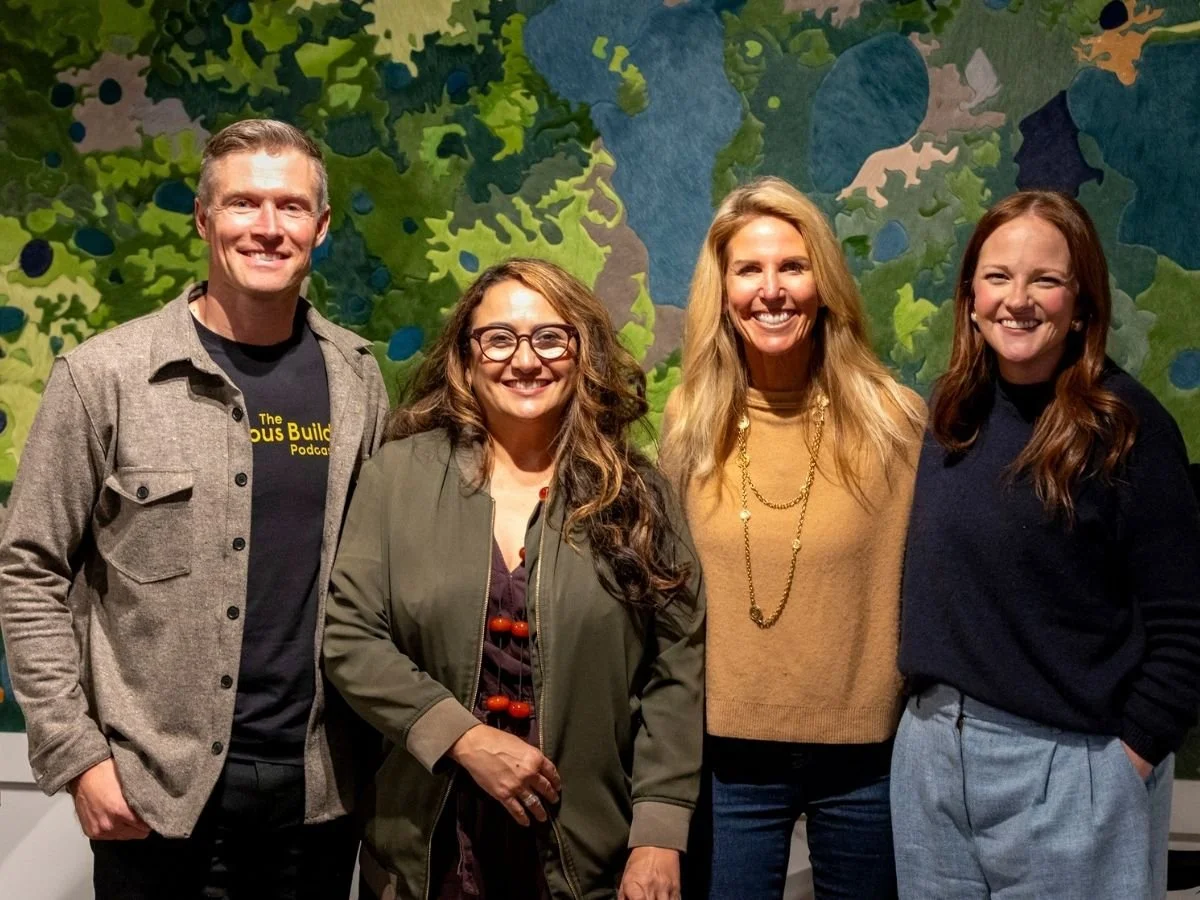
This episode of The Curious Builder Podcast is a masterclass in building (and keeping) awesome relationships in the design and construction world. Mark Williams gets real with Amy Hendel, Melissa Oholendt, and Kristine Anderson live at Roth Living as they swap stories about winning dream clients, surviving tricky situations, and why being honest and caring always pays off. If you want to hear what really makes a job memorable (hint: it’s the people!), you’ll love all the insights and laughs in this episode.
Listen to the full episode:


About WINC
Women in Construction is a diverse group of people dedicated to the advancement of women in the construction industry. We encourage strong mutual support networks among members through philanthropy & mentoring opportunities to share strengths, talents, and experience.
Resources:

-
Mark D. Williams 00:00
We're excited to announce that we're bringing back Sonic camp 2.0 on March 20, from two to 8pm we had this last year. We had 42 owners. This year, we're maxing out the capacity of the camp, which is going to be 60 people. We're going to have a wellness panel with some Everest summiters, as well as some iron men and women to compete and all about wellness and how they prioritize their health and wellness, not only in training, but in their lifestyles and in their business. And then we're gonna have a two hour window of sauna and cold plunging in the lake, and then an amazing wood fired grill, Mediterranean style food at the end of that. So if you're interested, please head to cures builder.com under retreats, you'll find everything there is about sauna camp on March 20 in Minnesota, Ian,
Amy Hendel 00:40
even creating, like, I knew this client really loved this style of home, and so I was like, Oh, I'm gonna create a Pinterest board for them like that. With I have tons of pictures, I'm just gonna throw all of them in there and invite her to it. And she's like, Oh my gosh, you just saved me so much time. And I mean, it was just just throwing ideas in, but all of a sudden she's like, Oh yes, this is it. You guys get me you understand our our design style.
Mark D. Williams 01:12
Thank you everybody. All right, well, as you know, welcome to curious builder Podcast. I'm Mark Williams, your host. Tonight, we have a great lineup, so I'll give my intros because I made some special intro notes. So we have Kristine Anderson, also known as the velvet hammer.
Mark D. Williams 01:32
We have we have Amy Handel, more charm than a bracelet. And we have Melissa oland, moments of delight. Oh, all right, well, let's kick it off. What do you think we did? They weren't that scary. Come on, nailed it. All right, we've all been in the spot of trying to work with a company that we want to work with. Hey, Ian, do you want to hit the silent on my phone? That's my bad. Probably my kids calling me. We've all wanted to work with a company. If you guys have a story and well, maybe we'll just go down the line. Maybe Melissa will start with you. You know, where you're at in your career. Now, you had an amazing rise, and you know, you still have a lot of places that you want to go. But you know, early on there were brands and partners and builders architects that you wanted to work with. Maybe you share a story of basically how you broke into someone that you wanted to work with. And I'll everyone have an option. I have a follow up question on that.
Kristine Anderson 02:30
Okay, can everyone hear me? Do I need to make this Okay? Great. Well, I'm gonna actually tell the story about how I'd like to work with you, how I wanted to work with you? Because I think Mark and I have had a long friendship prior to me being in the design industry, and so I when I entered Ian, I was like, Well, I have an easy Ian, we're friends like, you'll work with me right away, which we didn't get a project to be able to work together on until, honestly, last year, and that project actually ended up not happening. As we all have projects that end up not happening, and now we have a project together that's really ongoing and something that we're both really passionate about. But I think, for me, in terms of investing in relationships like that, that's the foundation of kind of any of these things that it's like, it's not the right opportunity, but we were always speaking each other's names in the right rooms, or at least I assume you were, I guess,
Mark D. Williams 03:24
hey, I chose you for me, so I know I was doing my
Kristine Anderson 03:29
part it. I think like waiting for the right opportunity is is certainly a big piece of it. But in that timeline between when you know we had our first project together, I knew that working with Mark would probably be a level up for us, and so that really incentivized me to make sure that, like myself and my team, that we were buttoned up, that we had we were experts in our space, that by the time he called, I could confidently walk into the room and be like, I know exactly what I need to do. I know exactly what you need from me. And it took, I mean, it took years for us to do that, or for us, like as a firm, to be able to do that, but by the time that opportunity arrived, like I was ready for that. So that's probably my story.
Mark D. Williams 04:11
How about you? Amy,
Amy Hendel 04:13
oh, I would say bringing work to somebody else is really important. A lot of times, we can say, I want to work with them, but if you really want to work with them, find the opportunities. So find the projects where, Hey, I am bringing this, this person, this project, to you. And I think it goes a long way. It's all about relationships. So, you know, sending things in the mail or emails, they will probably fall short if you don't know them. And so it's a face to face. It's an interaction. It's um, it's just, it's getting to know the person. We're all people, and the more that you know about each other, the more you're willing to work. And then it's just being in front of them non stop, so that they're always remembering you in the back of their head. I
Kristine Anderson 04:58
think for can you hear me? Oh, everyone hear me? Okay, you know, oftentimes, I'm always thinking about putting ourselves in a place where everybody is and whether it's at a thing like this, or I'm going to events, or not even events that's work related, but getting to know people that's really important, because then you start to see, I think the only way I can describe it is who your people are, you know, and if you have people that are like minded, that you see, that you see in yourself, and you see, you know what? I love their integrity. I love their craftsmanship. I love their authenticity. I mean, those are things that are important to me. Creativity, in that way, I gravitate like a moth to flame, you know. And, and then I think, then that partnership can then just build and get better and better. And then future projects come along with that. And and then, when you're in the project with that person, eventually you get to see how they work. They get to see how we work, and then how the teams are, I would say, respecting the value that each one brings. And I think that's really important so because everybody has value for what they do. So
Mark D. Williams 06:13
going back down the line, one of the questions I had for a follow up is you guys are all at a very high level in your respective fields. Where do you go from here? Can you give an example of somebody you would like to work with, or something of that nature? I think the point being is that we are all innovating. We're all trying to do something we haven't done. And I've worked with all of you in different aspects, and so like, where, what's a relationship you would like to have that you don't currently have?
Kristine Anderson 06:45
Boy, I don't know. I mean, you mentioned it, and then I was thinking, I mean, it's just you've been around for so long, and you work so hard, and you do all these things. You just want to work with good people, right? That's it. I don't care if they're the most elevated of builder, interior designer here, or they're just starting out, right? They're good people. They just, they want it. They have a work ethos that is matching yours and that drives you to be better and to not like fail for them, right? You don't. You just, you want to be good for them, too. And I think it's just, you really just want to work with good people, because life is so short, that is it. And you want to have fun. I know I throw that word out all the time, but I really do just want to have fun. I just want to have fun with what we do. And I want the clients to have fun. I want them to come back and say, design something again, and they, you know, that is it. And I just want them to keep coming and keep coming and keep coming. And, you know, we have clients that I have one that I've done 10 projects with. It's like, keep them coming, let's go. You know, I just, I love it.
Amy Hendel 07:55
Well, we're working with PK, but I want to work with you. We can make that happen. That can make that happen.
Amy Hendel 08:04
But it's, it is. It's relationships, it's, there's always people out there, even clients that come to us and maybe their budget is like borderline, but if they're good people, we don't care. I mean, we're just, we're more invested in actually providing more value to them, probably because, like, Okay, how do we make this look even more, I don't know, detailed, than maybe their budget can allow. So it's just, it's, it's working with the people that, like you said, are creative, are talented, are trustworthy. Trust is a big part of it as well. But, yeah, it's, it's always, always not. It's never ending. You're always trying to find really good people
Kristine Anderson 08:47
to work with, yeah, and I mean, same echoing, I would love to work with both of these ladies. That would be amazing, but to give you kind of a real life application. So we are, we are building, we will be building a personal home in Colorado. And I there's an architect out there that I have admired since before I was in the industry. So when I was kind of thinking about architects, I reached out to him, thinking, like, oh gosh, our project's gonna be way too small. Like, we're like, like, this is not gonna be a good fit the care with which he has treated us in this we're in very, very beginning stages, but the care with which he has treated us in our project, even though I know it's on the smaller scale of what he does, is so I think, I think it goes to the crux of exactly what you're saying. Like, work with good people, because they will take care of you, and they will absolutely, like, carry your dreams in their hands too. So that is, I mean, that's like a tiny little anecdote, not that I'm telling all of you to go out and build a house right now, because I know that's not the answer for everyone, but that was one of the ways that I thought I could use to, you know, something that's happening in my personal life, that I could use to kind of capitalize on the moment. Seems like a. Really harsh way of saying that. I don't mean that, but really be able to work with someone who I admire. So I mean, I
Mark D. Williams 10:05
think both what you and Amy both shared something I know I've experienced, is that you want to work with someone. And I figured, who said it probably like Carnegie or someone old, but it was like, basically, the best way to grow your business is help someone grow their business. And I think we can all sense genuine care, you know, especially like a thought, thoughtful note or a gift or something that has no strings attached. You know, it's hard, because we're all in sales in some level or not, and so how do you communicate to people that your intentions are because you care and it's okay to care and also want to work with someone like that's totally reasonable, but I think if you just want to work with someone, but you don't care, it becomes transparent and kind of hollow. Literally, it's kind of our next question, which is, you know, how do you build a relationship? And you know, certain industries feel guarded and competitive. Do you feel that our industry can be that way? And what, what sort of insight would you have on that, or observation, really?
Kristine Anderson 11:04
I mean, I always consider the industry, it's a it's a big sandbox. I think there is so much talent in the Twin Cities. There's so much there's it's it's inspiring, it's awesome. And there's enough work, I believe, for every I mean, there's enough work out there. And, I mean, I was just joking with a friend of mine, who's principal at another firm, that you're working I think you're working with Colby. And, you know, we constantly are interviewing against each other, you know, and he'll call me and he's like, Hey, I didn't, did you get that call from them, because I didn't get it. And I'll say, Ooh, how are your kids, you know, and then, and then I'll call him and say, Hey, did you get a call from that? He's like, Oh, how's your husband? You know? We were hanging out the other day, and I'm like, Ah, you know? So I just, but we respect each other. We we know that it always comes down to also the fit, right? There's a connection. It's okay that they made a connection that way, or this person made with me. It's I, it's okay, right? Because I just think there's enough work out there for everybody so well.
Amy Hendel 12:14
And you have 45 minutes an hour to, you know, interview with some of these clients. I'm like, I mean, that's a lot of pressure. So either you're gonna win it or you're not, and you have to be okay with it. I think I know I'm very competitive, but Rick, my husband partner, he's always like, let it go. There are so many clients out there, and I'm like, then there's enough work for all of us. All of us can have, like, our pick of who we want to be with. So I mean, I
Kristine Anderson 12:39
will say, when there is a project that comes to the door, I will move heaven and earth to be the first one out there, like I will. I once traveled to Madeline Island. I took a boat. I drove a car. I mean, I just went out there. I was going to take a scooter if I had to to get that project. And we got it, you know, I mean, but I just, I wanted a place. I wanted to get a project on Madeline Island, you know, because I love that place so much, you know, and so,
Amy Hendel 13:07
but that shows through so, like, when she went, you know, had like she made her way there. That is why she probably got the
Kristine Anderson 13:12
project, because, and they were interviewing other people, I knew that you showed that you really cared. I kept, you know,
Mark D. Williams 13:19
softly bugging. It was the canoe in front of their residents. Here's muffins. What is something that's worked for you to build trust within this industry? You know, maybe it's a supplier, maybe it's a trade partner. How do you develop trust with your partners that you do work on projects with?
Amy Hendel 13:47
Oh, go ahead. No, no, no, you go.
Kristine Anderson 13:51
I really think that the aspect of approaching everything with the aspect of being a team player, of saying like, Hey, we're in this together, building, I mean, Mark has said this to me repeatedly, like, building is hard enough. Like, what? Like, there should be no reason that that we're against each other and that, not that we are against each other. But I'm just saying that, that I've heard him say it, it's wise. I think it has changed the tone of projects. Because I think we've all encountered, in my case, as a designer, builders or architects who have had bad experiences with designers and who come to the gate kind of feeling really apprehensive and to just break the ice by saying like, Hey, we're I want to view this as a team. We're collaborating. I don't want to step on your toes. I want to know where your boundaries are. But I want us to do this together, because we this is very hard thing, and it is, there are 100 million ways with which this can go wrong. Just that kind of moment of setting the tone has been very, very helpful for us in projects, especially we do them all over the country. So we're always kind of having a new experience with a builder or a new architect, and needing to break that ice pretty quickly. Approaching it that way has been incredible vulnerable. Is also something that, like, I can't stress enough that that's how I prefer to operate in life, is just by being as vulnerable as possible and being like, Hey, I messed this up. And like, I want to own this. I like, we will, you know, I can give you a very specific example, Ian, but this week, like, we will pay for this financially because we messed up. And, like, leading the gate with those kind of conversations, instead of being like, well, who's gonna pay for it? Like, that's not fun for anyone. So I think, I think being vulnerable and saying, like, we messed this up and like, we're gonna make it right and we'll cover it financially, like, that's those are the right things to do.
Mark D. Williams 15:35
So the full quote was actually, well, the full quote was actually Linda Engler shared that quote when I interviewed with her, and she said that you have the designer and the architect, the client and the builder versus the project, and as long as you stay united, you can defeat the project, but basically the project is always going to fight you, so how about we just stay united? And I was like, my girl, let's go. I liked her
Mark D. Williams 16:07
being in a woman in a male dominated industry. What's your perspective on that? Were you aware of it when you got into it, when you pursued it? I mean, obviously we are other than a handful of us. You're all women here. So I'm, I'm just curious, like, what inspired you to come into the industry, and what sort of opposition Do you feel you're facing, or that you do face, or is it a superpower,
Kristine Anderson 16:34
or all of them? I mean, I can give a story from really short story. In the very beginning, I was an intern. This was years ago. I was an intern at an architecture firm in town, and the owner came up to me and said it was a guy, and was asking, So, what are your plans? Are you gonna go to grad school? And I said, Well, yeah, I am. I plan to go to grad school. And he said, why? And I said, What do you mean? And he said, Well, are you gonna have a family? And I said, this is not that long ago, all right? I mean, well, it is, but, sorry, that was okay. It was late 90s, but, and so. And I said, Wait, what? And he's and he said, Well, if you're gonna have a family, why would you go to grad school? Whoa. And I said, huh. And I said, do you say that to all the guys in your office? And he went, Oh, I've just stepped in something like, that was the face. And that was my like, That's what I heard. And then I went to grad school. And I remember in grad school, there was four studios of 12 people, and it was four women, and the rest were guys in each studio. But now at the College of Design, it's more than half. It's like half or more are women. So I mean, it's changed over time, just because of the times have changed. And so we all know it's a male dominated, at least for architecture, it's male dominated and but I do see a rise of women. I see, I mean, we have more women in our office than guys, so, I mean, it's just the sign of it so, and it's not that we're going out and saying we're only going to hire women. It's just that's what's happening. And I love that. I love seeing it, you know.
Amy Hendel 18:19
So Meister is a little different. Rick, what? Rick started our company, and I was doing IT consulting, actually, on this, that was my job. And then after our first child, I decided to be all in and was kind of behind the scenes. And I was like, Oh, this is your company. I'll just be back here and be the puppeteer for you. Kind of move, move you around a little bit until a advertising, anyway, someone in advertisement came to me, and I respected and and to both of us, and he's like, Amy, like, you need to be out there with him. You need to just you guys are together in this, like, why are you kind of always behind the scenes? And that was kind of just this, like, yes, especially a builder. I mean, there's hardly, there's not that many women builders, and so just to have that confidence of like this, and it's awesome to be in a partnership, because there's just the female side and the male side, especially with building very emotional process. So you have two perspectives that can really meld well together and give that confidence to the client, to the team, but it's, it's taken from my own personal thought process and journey with this. It's been it I kind of was wanting to be on the back until, like, No, this is actually really fun and exciting and and there's a place for me, there's a seat for me, which is a good way to see it.
Mark D. Williams 19:42
I it comes to quality, craftsmanship and performance, Pella sets the standard whether you're building custom homes or designing a timeless space. Pella offers innovative window and door solutions that blend beauty and efficiency with showrooms and experts around the country. Pella makes it easy to find the perfect fit for your next bride. Project and their team to support it. Build with confidence. Build with Pella. Visit pella.com to explore products and connect with your local rep today. For more information, you can listen to episode one or listen to episode 109 where we bring on Pella owners and founders at Pella Northland, as well as their innovative team behind the study set innovation
Kristine Anderson 20:21
design is, is female dominated, but construction is not. And I don't think I I've always kind of come from male dominated film, for sorry, of male dominated career history, I worked in finance. I've pretty comfortable operating in rooms where I'm the only woman. But I think it was kind of, it was probably project, maybe, like number four for me, where it was like, Oh, the girl is here. And I was like, Okay, we're gonna Okay, we're going there. Perfect. And I think, and I hate to harp on this, but I really do think that it was the thing that spurred me on to trying to become the expert, and I don't. And I say that humbly, if there are things I know, I'm not going to falsely claim I do know them. I am very curious, and want to, you know, rely on the true experts for things. But in terms of my field of being confident and able to say, like, I know what I'm talking about, hey, we did that on a project three projects ago. Like, why can't you do that? Can you explain it to me? I do think in some ways it can be a superpower in use, used in a way that is not manipulative, but in a way that is is beneficial. It definitely depends on the crew. But I do think it is something that, like we do face every day. And I do think that in a lot of ways, we do have to, you know, operate in a world where we can be viewed as someone that we're not. And I think it can be challenging, but I also think that it requires resiliency, and that, you know, makes us all better business people, for sure, but I don't, I guess I don't know how to answer the question, other than to say it has been challenging, it's been challenging to try to be viewed as anything other than, like, just a designer who works at our island and, you know, shows up on site. But the way I've tried to conquer it is by really, like, knowing my stuff and showing up and with my technical drawings and being like, I know what I'm talking about. Like, let's talk about substrate. And they're like, You know what a substrate is? And like,
Amy Hendel 22:22
really, not that. And to your point, like, when you can solve problems with the trade partners, you are very respected. And so like, you are showing up knowing what they're doing, and when they say no to you, and like, challenging them in a positive way. Like, tell me why you can't do that. Yes. Like, they actually, like, Oh, you're interested in my trade, yeah. And so it's this another constant. It's a conversation with them, and you're helping them, and all of a sudden they're going to come back and be like, I'm going to do this. Just to show you, I can do it. I'm not going to charge you for it. And you're like, oh my goodness, that was a win. It's so kind of Yes, so, but you're building that trust with with the partners that you're working with.
Mark D. Williams 22:57
They definitely charge me for it. It's been my experience that I feel women are more empathetic and better at creating connections than men at baseline. Do you agree? And if you do, how? How do you see that being a superpower in in our in our profession, and even with clients as well.
Kristine Anderson 23:23
I mean, I think about it with clientele, and I don't know I usually when I'm in a client meeting, I'm constantly reading the room and kind of taking the pulse of if I see one client that's really interested in one who is just slipping away, you know, and either they're not being heard. It might be a couple a dynamic, or one's really like, this is my project, and the other one is like, I'm not really being heard, you know. So I'm trying to find that and then give them attention as an example, you know, that kind of thing. But I think it is something that I think is, as women, I don't know what it is. I think we just have, there's a different connection. And there's certain projects where I will give more attention to certain people in the room, clients, because I can sense that they need it or they want it, and and I'm not trying to shower them with, you know, like wrap them in a down comforter, but I'm trying to, I'm trying to make them feel comfortable that they can be themselves and that they're in a safe room, that they can say anything to us. And you know, I think the one thing that I always see in like in a design meeting, is I try to tell them all the time, in the very beginning, you will never offend me if you don't like the design. We're trying to make this the best thing for you. It's not me, it's not my house, right? It's I have no ego about it. It's like, this is your house. I'm not going to live here unless you invite me over. You know, that kind of thing. So we want them to be able to be comfortable, to share themselves. I'm sorry. They're they're fuse. Not sure. Of the death anyway?
Amy Hendel 25:02
Yeah, no, I agree. I think women are, are very good at pulling emotion out of a person or in a room or in a project and just asking those questions like, Well, how do you feel about this? I think we it just comes out of us. A lot of us just very easily. So it's, I think, and these projects are very can be very emotional. And so you're, you're creating this space that they want this feeling when they walk into the room. And how do you, how do you create that feeling? And what's the even from lighting to color to texture to depth of all the the layering in the room, you're trying to bring that to life. And so it's, it's, and then you're reading them. And so we always say, the more we get to know you, the better your project will be, because we can really pull who you are into into the home. But I think we do a pretty good job of that as women, yeah,
Kristine Anderson 25:53
yeah, yeah. I think it's, I mean, both a client and on, you know, kind of the Build Team side of things, especially exactly what you said of being able to, you know, hold someone's hopes and dreams and turn it into a functional reality is, is incredible. We have to be able to pull that out of our clients and be able to be a safe space for them to share. Like, hey, yeah, I do want to have three more kids. Or like, Hey, we're really struggling to get pregnant. I don't know if I will get pregnant. So, like, what do we do with the extra bedrooms? You know, we to be a safe space to have those conversations, but I also think to be a safe space within the Build Team as well. You know, I just Just this week, had two conversations with builders that we're working with across the country where that we're having a challenging moment, and one of them confided to me that this was the biggest project he's ever done, done on his own. Because right as the project was kicking off, his dad really declined from MS, and now can't be a part of his company anymore, and he was sharing that with me in a very, very vulnerable moment, but it was a great moment for us to be able to build each other up, and for me to say, like, You're doing a great job. I never would have known that this was the first large scale, big project that you've done on your own. And, you know, another project that we're doing where it has a particularly challenging client who never really looks at budget numbers until they do, and then it escalates. I think he's a builder on the edge right now, and being able to have those compassionate conversations with him and say, like, Hey, I understand where you're coming from. Like, here's what the client needs right now, right now. Here's what they need to hear. I know that you're in it. I know that you feel lots of feelings right now, because I'm feeling them too. But like, we got it. We got to figure out how to move forward with this client and and I think being able to have those conversations, I don't, you know, I I guess I don't know if males are males to males are having those conversations, but I would like to think that they are. But I also think that, like that is one of those things that as women, we really can help, facilitate and really help our vulnerability. Can help other people feel vulnerability and willingness to share too. So I love it.
Mark D. Williams 27:59
I'm told I share too much, so I'm just listening to you talk. I mean, who wants to have the three of them build them a house? What going back to relate? Thank you for those are really helpful answers regarding relationships. Are there any relationships that you've had that eventually changed into a partnership. You're excused from this one because you already basically did it. But have you ever had a relationship with someone you know, personal or whatever, and eventually down the road, you're like, oh, it turned into a partnership where you work with them or built a house for them. I mean,
Amy Hendel 28:38
one of our Yeah, one of our largest projects was with a subcontractor trade partner who was going through a really, really hard time, and Rick just took interest in him, and he was going through some marriage issues, and he just was, was there for him, and that was five years ago, and then all of a sudden he's like, Hey, I've got a friend. And he goes, you're, you're the one, you're the one that's going to build their house. I just, there's no one else and but it was all because of that partnership, that that friendship, of just knowing this being who he was, and just saying, Hey, I'm here for you in those moments. But it's it that's like, Wow, that's pretty cool.
Kristine Anderson 29:18
But, yeah, I mean, I have there is, there's a builder that I worked with years ago, and it was going to be kind of a, kind of a short stint kind of thing. And then it, you know, it was going to be really short. And then the client hired us longer, and ended up being like a seven year thing. But then I started working with this builder more, and he would refer me, and I would refer him. And and then his wife secretly hired me to help finish designing their house. And, and I said, so when I show up, is he going to be here, you know? And she said, I don't know. I don't think so, you know. And so, so. And then, when I showed up, she said. Oh, he's really embarrassed that you're here, you know. And I'm like, No, I don't want him to be embarrassed. Let's just see what's going on, you know. And so I helped him get through it, but it was really fun. He finally calmed down. He was just very nervous. And I'm like, It's fine, it's great. And so, so it was just things like that. And I loved that, that she called, reached out, you know. And and again. It was just more like projects here and there that became a nice, just relationship in that way. Yeah,
Mark D. Williams 30:26
how do you think you balance thinking of the perspective of maybe some of the businesses out there in the how do you balance being top of mind without being pushy? And so for the audience, maybe they want to work with you. But also from your point of view, it really, everyone has a client or has a relationship. They're seeking it. And we've all experienced this when we have a client who says, Hey, call us in four months. We call them in four months. Oh, we went with another builder in the meantime, like, oh, you told me to call you. We had one actually, around Christmas, where the gentleman, they're having a baby in like two weeks. And he said, this was, like two years ago, amazing project, darn it. And anyway, he said, You're I seem really good. We'd love to sit down with you after we have our baby the first week of January. So I called them January 5, and he said, You know what, we are a Christmas party. And we decided to go ahead with the builder that was at the Christmas party. I'm like, Oh man, I did exactly what he what he asked. Anyway, I don't know why I shared that story, but there you go. It's therapy for me to people I'm talking a lot less than I normally do on a podcast. How? So anyway, I do this all the time. So I guess the question is, how do you how do you balance being pushy and staying top of mind? Or how do you balance? Because no one wants to be pushy, because a lot of times when you're pushy, it drives the client away, right?
Kristine Anderson 31:49
I always feel like there's, you know, you can give there's a limit of when you can contact people. I mean, it's really three is a nice number, right? And but
Mark D. Williams 31:58
what's the cadence like? Three times in a day. No,
Kristine Anderson 32:02
no. It's like, you send a proposal, you wait a little bit, you follow up, you know, and say, hey, just checking in, you know, I, you know, it's fine. I know you're traveling and and then I'll wait maybe a couple more weeks, and then I'll try again, you know, and then, and the funny thing is, that I had this happen three years ago and and then they would write me when they came back to town, like, oh yeah, we really want to start this project. Great. And then they disappeared again, and I'm like, Oh my gosh, I don't know. Is it me, you know? I just act like, I don't know, you know, maybe I said the wrong joke, I don't know. And then And then, and then later this summer, I decided to just reach out to him, like, a year later again, that we're going into three years. And they said, Oh my gosh. We were just talking about you last night. And I said, Yeah, we want to get going. I'm like, Oh my god. So now it's like a new house on Lake Minnetonka, right? And I just thought, what sounds great, let's do it, you know? And so, so things like that, you like, you nurture them, you pour water on it, you get some fertilizer, you know. You just keep going and going. And you just try to, you wait. You don't want to be pushy. You never want to be pushy. I don't. I will literally just not not contact them anymore, because I don't want to bug them. I just don't, because I probably have moved on, or I'll give them like an out. I'll say, Hey, if you went another direction, that's cool. Just let me know, you know, and but I, I just carefully, you know, tread. I tread lightly a little bit, because you never know they might come back after three years.
Mark D. Williams 33:47
That's very Minnesota. That's very passive aggressive. That's very just for three years. No, three years, six years, I'm just going 939, every 12 come back.
Kristine Anderson 33:58
No. I mean, it was no. It was shocking. I didn't know they were going to come back. I know, I can't tell, yeah, like, wow. But anyway, I
Amy Hendel 34:07
think it's just hit or miss. I mean, either there for you or or maybe there's a season of their life they're just not ready for it. But you do your best. You're all you. You know, you have your cadence of how you are in front of them. You know, reaching out, maybe a phone call, maybe it's like, we try and over, like, Thanksgiving, Christmas time we send, like, our kind of, our gifting. And so that's another way just to be in front of them. So it's just this constant. But we think we all can read people pretty well and not be pushy. You just because otherwise you just, I don't even feel good. I'm like, Yeah, too much so and, and as much as it's like, Oh, I wish they would just call me, you know, you have everyone feels the same way, but sometimes they do, and sometimes they just kind of go to the wayside, but there's enough work out there for everyone. I'm very curious
Mark D. Williams 34:55
to see if that's the difference between men and women. We don't have any men on the panel other than myself. But and I'm also hyper aggressive. So it's like, I would, I would not wait. Like, it's so funny to hear you're like, maybe they'll call me. I'm like, I'm calling them like I was telling my staff, like, you know, they sent an email. I'm like, Well, did you call them? Like, I want to know the answer, because I'd rather know. I'd rather know, Are we, are we a good fit or not? Like, it's I'm cool. Like, I'm a little bit like you like, it's cool if you went another direction. But I guess I would like to know. I just want to know
Amy Hendel 35:23
well and always wish them the best. So even if they didn't go with you, you wish them. They say, if opportunity comes back around, we're always here for you. So don't really fish for why. I mean, just doesn't. And
Speaker 1 35:33
sometimes they do end up coming back. We actually, we had a project in Golden Valley, we worked with them, and then it stopped, you know, as projects stop, and then they ended up hiring, I think, a design build. And then that stopped, and then they came back to us a year later and said, Okay, we want to reboot. And then that's when we found out that they had hired a design build. It just didn't go the way they thought. That's all. It wasn't a right fit. And so now it's in construction, you know. So it just, but it took them four and a half years to get there, and that's, that's a long time of investment on their part in design fees and design fees and design fees, you know. And so
Amy Hendel 36:17
we had a project just recently. We just finished it, but they interviewed us. They went with a different builder. They're in. They poured the foundation, they stopped construction, and they came back to us. So, I mean, you just never know. Really, yes, wow, yes. So you never know,
Mark D. Williams 36:38
and that concrete must have been crooked, I'd be like, little worried about framing on that report. How about you? Melissa,
Kristine Anderson 36:47
yeah, we, I, my operations team would love me to follow up more than I do. I don't, I'm, I'm the least sale I tell people, I'm the least salesy person you'll ever meet in your life. I just don't love doing it. We have a spreadsheet, Google Sheet, that I'm supposed to, like, check mark and, like, put the date when I follow up, and I can count on like, one hand the amount of times I've done that. So I'm not a great representative of that, but what I do do is that we do get a lot of our business off of Instagram. It's probably our most powerful marketing tool. And I hear repeatedly from people that I talk with that, like, hey, yeah, we I followed you on Instagram for years. I followed you on Instagram. I know who you are, and so I know that they're watching. And so my way, my passive aggressive way of following up is often just, obviously, I'm just showing what we're doing. But sometimes, if I know, if I've had a conversation with them about how they want to build a European cottage. Like, occasionally I'll drop in my stories, like, Hey, we're working on this other European cottage, and it's going really great. Look at this arch in here, you know. And you know, of course, I can't control what people are going to do there, but just actively being a presence and reminding people of what we're doing. Like, that's really all at the end of the day that we can do without feeling like knocking on your door again and seeing how you're doing, which I think is actually, I love that you did that over the course of three years.
Speaker 1 38:11
That's check in with them. Yeah, you know, I mean, we had a project, another project, that was in North Dakota and and I caught wind that they were going to build a lake place, but they hadn't talked to us yet. I'm like, Uh, nope, nope, nope. Okay. Like, we're gonna put together this package. We're gonna see them. We're gonna go see them. And we went to town, and I walked right up to her, and I said, So I hear you're gonna build a lake place, you know? And I just started talking about it and and then we got, they hired us and we got the project. So
Mark D. Williams 38:41
it's just, what did she say? Like, how did you know? Like, oh, yeah, yeah. Who? Well,
Speaker 1 38:46
her sister in law told us who was also our client. So, yeah, yeah, and so, but, but it was great in that way. And then when I went back to the office, I then told the project manager who we were I worked with on the other project. I said, we need to put together all the lake places that we've done, and we're going to send it to him today, you know. We're just going to send him a package, you know? And we did. And then then her husband called me and said, All right, let's get going. We want to do it. And I said, sounds great.
Mark D. Williams 39:17
No, you dropped the passive on that one that went straight aggressive. I went right. So aggressive, I know, I know, drove to their house.
Speaker 1 39:24
Well, we were, we were informed. We were in Fargo for a project, so I just went down the street. So,
Amy Hendel 39:30
you know, to that point, though, that's a reminds me, and that's a great idea, and but, and some of them like to stem from, okay, what would this client need or want, or be, like, over and above what I normally would do. And so, like, even creating, like, I knew this client really loved this style of home. And so I was like, Oh, I'm gonna create a Pinterest board for them like that, with I have tons of pictures, I'm just gonna throw all of them in there and invite her to it. And she's like, Oh my gosh, you just saved me so much time. And, I mean, it was just, just me just throw. Ideas in, but all of a sudden she's like, Ah, yes, this is it. You guys get me. You understand our our design style, our focus and and again, we were just the builder. We're not the architect, the designer. They hadn't picked anyone yet, but just ways to just be creative in like, just another thought ahead of them.
Mark D. Williams 40:22
I This episode is brought to you by adaptive. If you're still chasing checks and juggling spreadsheets, it's time to upgrade. Adaptive is revolutionizing how builders get paid with AI powered bill pay, automated draws, one click payments and built in Lean waivers, Faster Payments, fewer headaches and total visibility. Adaptive takes care of the back end chaos, so you can focus on what you do best. Building. We've used adaptive for two and a half years, and trust them to keep our projects moving and payments flowing. Learn more at Adaptive dot build and simplify the Pay Process today. For more information, you can also listen to episode 10 and episode 15. I was just thinking about like a major D at a restaurant, like, is there anything I can help you with? Like, they're actually not your server at that time, right? They're just coming around to check on you. I think a lot of businesses gotten just because someone says, Hey, can I be of help? Right?
Speaker 1 41:11
How can we help get you to where you need to be?
Mark D. Williams 41:16
Along that line, is there any qualities or stories that stand out to you, where somebody new came to you and wanted to work with you, and you were just really impressed, because I think all of us have long standing relationships, and I would imagine most of us are open to new ones. But it's also like you have, you also have a stable of really talented people already. How? How does one work with somebody when they already have, like, a pretty robust team?
Kristine Anderson 41:48
Like, how do you break in? Yeah, I'm trying to figure that out right now. In Colorado, we have a I live in Colorado. We have a second office in Colorado. The business is based here. So we have a team in Colorado, and we haven't had much traction in terms of, like, kind of getting in with Colorado builders yet. I also haven't had a ton of time to concentrate on it, so that's part of it. But I, I have thought a lot about this, about how, how do you kind of break in with someone who already, you know, works with amazing people like they don't, they don't need me. They also don't know I exist. So I think part of it is putting yourself in the right rooms, being a part of networking events such as this. I think that that's a huge piece of the puzzle, making sure, again, like I said before, that you have your P's, your T's, and I's whatever that is. I'm really good at analogies. My team knows I'm really good at analogies. But I think other than that, like just being genuine and reaching out, like being a presence in their life, before you are become a presence in their life. So I My plan is to and I don't, I don't have any success with this right yet. So this is I'm this is a testing ground. I am trying to follow Colorado builders that I really admire and that I think I want to work with one day and commenting on their socials, sending them DMS when I see something like really cool that I that they've done just complimenting, just being a part of their lives in a very passive presence. So by the time I'm emailing someone in their business development department, they're like, oh, oh ho, I know that name. Why do I know that name? Oh, probably because they've been blowing me up on Instagram. And then I can say, hey guys, I'd love to bring your whole team coffee one day. I'd love to just kind of share about who we are, like, no pressure. I'm sure I'll have like, a, you know, maybe 25% hit rate on that. But I feel like that. That's my plan. I don't you know, I've not tested it yet, though.
Mark D. Williams 43:47
I mean, Brad Levitt, down in Arizona talks about it all the time. You know about relationships, and so he's one of my business partners in the contractor coalition Summit. If you don't know who he is, he builds incredible homes down in Arizona, and he often says, because he has just such a massive following, he often gets on the other side where people are seeking him. And he said that I show up for people the way I want them to show up for me. And he's like, I'm basically doing exactly what you're doing, Melissa, he's commenting and engaging on their social profiles, LinkedIn, Facebook, whatever, for like, years. When he first broke into the market in Arizona, he said I picked the top 10 of each field, and I just was religious about it for a couple of years, and eventually that just broke through. And I've heard other people say sometimes that I want to be your first next option. I always like that turn of phrase because it puts it in a positive light. And a lot of it is people that keep showing up for you and keep it you do notice. I mean, who's not going to notice? People like complimenting their children, right? Like, if you're complimenting somebody's work, that's a that's a part of you. And so it does, and it needs to be genuine and easy to be sincere, obviously, but I think you're keep doing that, yeah,
Kristine Anderson 44:57
working on it. Yeah. There is
Speaker 1 44:59
a builder we work with. Well that we now work with up north on the North Shore. And he used to he he started following me, following me on Instagram, and they would comment on certain things, like just constant and then he called me and said, Hey, I want you to meet a client of mine, you know, that's out on the lake in Minnetonka. And I'm like, Okay, that's great. And it didn't work out, but I love that he just allowed us to get our foot in the door. And that's really, right, it's, it's starting that relationship and and then I was happy to tell him about two projects that were up north, and now he's working on those, you know. So it's, it's been a nice relationship. So it's been great, you know, so, but I do think it's putting yourself out there. I mean, if I want to interested in working with someone, I'll reach out to them to see if we can have coffee, you know, or a happy hour, you know, whichever, whichever is that day, you know, and so, but just, or even a lunch, I mean, just to kind of brainstorm and see how we can work together, you know. And then people do that with us too. So do
Mark D. Williams 46:06
you have any examples of where someone just completely, just dropped the ball big time, where you were like, Okay, I'm never gonna work with this person because they did something or somebody, unless it's like, I got this one. I mean, we just talked about, I think sometimes understanding the flip side, you know, we talked about, you know, balancing being aggressive or being top of mind. But when someone comes in, you're just like, okay, they, you know, the way they presented themselves and the way they acted, you're like, I mean, it's a huge turn off. What are some of those triggers? And do you have any stories to sort of illuminate that go ahead, Melissa, you're just bursting at the scenes. Wait, is it me?
Kristine Anderson 46:48
No, no, no, i i No, um, I was, I was, I'm trying to gently, um, I was at an industry event, and it was there, the alcohol was there, and it was flowing, and it a very intoxicated person in the industry came up to me and was like, I really want to work with you. And I was like, That's really great. I like, I'm Melissa, by the way, it's nice to meet you. And it the conversation that we had where they continually the intoxication is one thing like, let's, let's have a good time. That's one thing. I don't care. The conversation that followed was very much about them bad mouthing everyone that they had ever worked with. And I was like, I don't want to be the person that you're at a situation like this bad mouthing one day. So like, I will say very nice to meet you, and I probably am not going to follow up ever again with that person. I think that people talking badly about other people, and very explicitly, is is a huge red flag for me, because inevitably, you're going to be on the you'll you'll be the person that they'll talk about in that way one day, no matter what. So totally
Speaker 1 48:02
agree. Yeah, I think we worked with a building once that they just started talking bad about so many people. And I thought, oof, I hope. What do you say about us when we're not in the room? You know, I and they kind of laughed, nothing. I don't say anything. I love you guys. I'm like, but I mean, it's you kind of think, wow, either they don't have filters or they're really stupid, you know? And, I mean, it's just, it's such a bad move. It might be both, yeah, I mean, I just and so it's so red flag. Don't need it, don't want it. Have great life, have fun, you know? But, yeah, that I'm trying to think of other stories, but I can't think.
Amy Hendel 48:46
I don't know if I have any like, of where I'm, like, a client comes in, you're like, ooh. I mean, there's just, you can kind of just read the you can read the person and know if they're going to be a good fit or not actually. I mean, sometimes you're like, Yeah, this person could be a little tricky or quirky, and you're like, do I want to deal with this? And so you, you kind of make that gut move. It's, it's a lot of it's in your gut of, like, whether or not this person is going to be a good fit or not.
Mark D. Williams 49:17
I agree with the gut thing. I mean, I've been faced it where it's like, I don't know. I'm an optimist. I I've never met someone I didn't think I would probably like, and which is why I'll never hire anyone again. I've told my team. I said I am not responsible for hiring anyone. I can't. I'll just hire everybody. So I said, you have to hire people. I just like everybody, like a dog at a dog park. Everything's a ball, and it's a true story, lots of dog analogies, but I derailed my own question. What was the question sucked into that one? Dang it. That happens all the time. Oh, I know when you when you override your gut with your logic and your optimism. And I've had. People that come in, and if I it's usually only with the benefit of hindsight. You look back and you're like, Man, if I just trusted my gut, that's true of clients. That's true of, you know, vendor partners or whatever. And in your mind, you're like, oh, I can make it work, or oh, you know what? I they're just trying their best. I'll do what I can. But like, what you ignored was your senses, which are really valuable. There's a book. Has anyone read the book? Blink by Malcolm Gladwell, incredible book. But basically, we know way more than we think we do. We just don't know how to articulate
Amy Hendel 50:30
it well. And do you want to deal with this person for a year, two years, your entire life? I mean, we always say we're in your life, in your life forever. And so this person can be in our lives for a very long time, and can I deal with the personality and it's going to be painful. It is not worth it. It's never worth it. It's just, yeah, agony. So you you have to, when you have those gut instincts, you have to listen to it. And I think too, you get to a point in your career where you're like, I don't need this. Like, you're just, you're you just know yourself, your family, you're like, I just, I'd rather one less project, right? I
Speaker 1 51:07
once, I once had a client like, flew to town to yell at the design team, and it was inappropriate. It was not right. And this was years ago, and but I remember the team came to me. I was out of town, and then I took a call, but then I came back and listened to the team, listen to everybody, talk to the client. And then ultimately, I called the client and I fired him big. And they like, what? No, I don't want, I didn't mean for that to happen, you know? And I said, Listen, I it's not a right fit. It's it's like a dear John Levitt, hey, it's you, it's me, it's not me, you know, it's fine. You'll move on. It'll be fine. And, and the team was very appreciative of it, you know, because they were abusive in that to that point. And, but they said things like, Well, what about all the publicity? Don't you care? And I said, I said, Do you love your home? Do you love the design? He said, We love the design. Like, that's all I care. That's all we care about. There's no ego. You don't have to put our name on anything. You can have all the Giants go for it, and, like, ah. And then he was like, dang it. He didn't want to hear that. And I said, But, but then full circle, like, a whole year or two later, we made up, you know, and he let us have all the photos. I mean, everything's fine though, you know, we just, just had to take a break, like Russ and Rachel, right? And so, and it was like, But, and, and now it's fine. It was fine. We probably will never do a project together again, but it's okay. I just could not see that happen with the team. The teams work so hard in the office, and they're putting their, you know, just everything into it, and they just trust the team, and I respect everything that they do, that they just don't deserve that. And so we're here to protect that team and make sure that they're getting everything they need to do their job.
Mark D. Williams 53:15
That's funny. I appreciate that. I think of like we as owners, can take a lot, but if you come after someone on our team, like, I think that's awesome, yeah? Like, I mean, I'm well, I'm even thinking of like, I've never been faced this situation. Because if I'm hiring people that respect women, like, if they would never disrespect, like, my my designers that I work with, right? But if they ever did, like, now I kind of want it to happen only because I could, you know, kick them and, you know, I want to know what would happen. Like, very unhappy.
Amy Hendel 53:46
We had, we had, we've had somebody in our Molly who, she's one of our project managers. We had a subcontractor make her cry, and Rick's like, he will never work for us again. Like, she was adamant. He's like, he will never work for us again. He will never have any of our work just because, like, she's such a value to us and just like her, just who she is. And you're like, Nope, none of that. And he was just rough and gruff and and that was his personality. He's like, No more. So it's true, like, you stand up for your people. I had
Speaker 1 54:17
another person. There was a there was a carp cabinet maker that made one of our staff members cry too, and and I heard about it from five people in the office. So I was again, I was out of town at an event, and then came back, scheduled a meeting and had the clients there called out that person in front of my you know, colleague, and said you gave this person career advice to be like other women that you work with, unacceptable, you know? I'm just like, This is ridiculous. I mean, I and then he got fired by the clients, because it's just It was awful, you know? And so again, it's like, mama bear comes out. Out, right? I just whether it's a guy in our office, a woman, whatever, I just, you know, if we're wrong, we own it. If we're wrong, we own it. But if it's unsolicited, Bs, have a nice life, right? So, yeah, I like you. I like you.
Mark D. Williams 55:23
What turns a one time project into a lifetime project, and what I mean by that a relationship, I guess, you know, right? Everyone had a first one. So I mean, I mean obviously Pella or Anthony, I mean, I can speak for me, but I'm kind of curious your point of view. Like, there are people that have come into your lives that at one time, it was their first project. And everyone fights so hard for that first project because you just want to get in the door. You've had this first project. How? How does somebody prove to you that they are a long term project, and what are you sort of looking for during that relationship?
Speaker 1 56:01
Well, with like builders and people trade partners that we're working with, we ask for the same thing that we're going to do for everybody. We were transparent. We're communicative, you know? We know that everybody has value in what they do. We want to make sure that value is respected across all teams, and that carries a lot of weight. You know, I always say, like we just, we have our integrity, and I follow that my instincts with that and and I would hope that people are the same way that they're just, they're respecting all the teams, and we're all working for the client, trying to do this, trying to give them the best of everything. And, and it's possible to do that so that when builders and everybody, interior designers, everybody is like that, it makes for such a great project. It's so great. And, you know, and when it's not, it's like, it's like a rock in your shoe, and you're trying to fix it, and you're trying to help it and and eventually you'll get there, right? But it just takes it takes time. And then with clients, you know, you have one project with them, the same thing. You're your honest self with them. They hire you to tell them the truth, not to sugarcoat it. They'll respect it, and then they'll just keep coming back. You know, that's how I feel about that.
Amy Hendel 57:20
But for from the client perspective, like we, you know, who do we want and who is, like, the repeat client we love, like, just that they trust us when they trust you. You're you just, you know, you have a lifelong relationship where they're like, you just tell me what to do. And so those are the best clients, because you're like, sweet, I get to do whatever I want, but from the trade partners perspective, like we need the collaborative. Collaborative relationships are probably the best where we're just working so well together. They're super organized. They have to be. They're trustworthy. They they have your back. We're always trying to make everyone on our team look the best. And always I'm my job is to make you look better and better and better, from from architecture to design to the wood floor guy to I mean this everyone. It's, How do we make everyone just shine? Because, like you said, it's not not us. It's really the project, like the project needs to succeed. So how do we make that work?
Kristine Anderson 58:23
I very much echo everything that Ian Amy have said it is, you know, it even when projects have their challenges, or we run into tough situations. And Mark, we have had it, Misa, whose has had its challenges in different ways, but it still is something that like as I think about future projects, it's never something that I'm like, Well, I'd never want to do a project with that guy again, because of the integrity and because of the authenticity and because that, you know, we're trying to do something that has really not been done before, and it brings with it challenges, for sure, But again, it's all of us against the project versus anything else. And I think when that approach is taken like it, it just breeds wanting to work together more and more. So
Mark D. Williams 59:11
I think of actually, Anthony had we had a really difficult client a couple years ago, and you know how, like when you're in the trenches, you've had a partner or someone on your team, or a trade partner, or anybody show up for you in a way that was so far beyond the call of duty. You're like, you know, for lack of we just had veterans days, and I've never been in war, so it's not to minimize that, but like we're in the trenches, like we're in war, like this is really hard, and they show up for you in a way that you're just sort of like, humbled by what happened. And there's a handful of them I could go to all the stories, but like, when people show up for you that way, like they're a partner for life, like they did something that was so far beyond like, you ever wonder, like, I'm not sure if I was in their shoes, if I would do what they did for me. And it's super humbling, and it kind of, you know, gets you this we're not super emotional. Know business, I often say on the podcast that other than, like, planning a wedding, like you name, something that has more emotion tied to it than building a home, anyone got one other than those two childbirth I'm gonna have to do a lot of editing on my that's good. All right, you know what? Fine. Number three, okay, fine. We're gonna do a quick poll here. We're in the hierarchy, wedding, childbirth, home. What's the top dog here? By show of hands, I'm just glad I got some new touch points. I've been doing that one for a couple years. Thank you. A group of men, a group of men would definitely not have come up with that one. That's amazing. I love you guys.
Speaker 1 1:00:48
I remember just, I've defended like a builder once that we were working with that, and I don't even think I ever told them, I just because the client was really kind of, you know, upset about a bid and upset about and I isolated one part of it. Well, let's talk about this part. And I'm looking at it, I'm looking at it, and I kind of look up and I said, Well, you know, I hate to say it, but you have amazing taste. You have to own it. That's what it costs like. I can't believe it costs that much. Like it does. It does. And that's it, you know, I mean, I just, and from that moment I've had, and that's the one I've had, like, 10 projects with, she's like, she just tells her, like, it is, I tell it, tell her. And, you know, because it's, that's the moment, it's like, he's not trying to rip you off. It's, here's the product, here's the labor, here's the warranty. That's it. That's it. And then also, I knew I wanted to work with you again in that moment on a site visit where this house, cool house, something's rotting. It has to be changed. Fought so hard, she looks at me and she's like, it doesn't have to be changed, Chris, it really doesn't. I said it's falling apart. It's literally falling apart. Oh no, it'll it'll be fine, like, he cannot cover it up, and he won't. And I would, would not recommend that. I won't even support it, you know, and just how you handled it. I was like, Oh, this is great. I really loved it. You
Mark D. Williams 1:02:22
called me after, and I was like, because I was like, this is our first time working with PK. I'm like, I would like to have a future relationship with them. They're like, this client is going to a place that I feel unethical, like I can't go there. And when it was faced that way, it became really easy for me, honestly. And so then you just do the best political tiptoe dance I could try to come up with
Speaker 1 1:02:42
a wonderful I loved watching it. It was great. No, it was great. It impressed me.
Mark D. Williams 1:02:47
So thank you. Last question, and we'll move to Q and A. Here it's been that hour went pretty fast, at least for us or me. That was a pretty quiet laugh. Like it feels like it's been 10 hours out here, man, there we go. Don't worry, I'm changing my top three. You guys win. We've all evolved in our businesses throughout our career. How do relationships? What happens you get a relationship where they can no longer go? Where you're going, assuming for this, because I would you correct me if I'm wrong. Where you're at today is not where you started. You've grown. You've reached higher heights other partnerships or people that either couldn't execute to your vision, or simply you not. I don't like the phrase, I outgrew the relationship, because that seems I just don't like the way that's worded. But you get the point, like you, you've evolved into something different than you were when you started. And if the people don't evolve with you, they can't really go on the journey you're going on. How do you handle that?
Amy Hendel 1:03:51
Well, I think, like at our level, like, it's always the question is, like, what? What can't you do? Like, you're constantly like, I can, I can. We're doing all these things. They're asking us, can you do this? We're always like, Yeah, well, yes, we'll. We're going to figure it out. And if you don't have the trade partners with you that will figure it out with you, that's where I think you start to go two different directions. So it's the complexity of the projects, and then having the right team that is always with you saying, we'll figure it out, like we'll, let's put our brains together. Let's, let's work on this. But quality for us, like, if you don't hold that quality at that level and consistency with the quality, it's not going to work. So it is. It's something that and it's not that we're but I guess it's just your brand, it's who you are, it's what you hold really tight to. So you just want to make sure that, I mean, every there's hundreds of trade partners on these projects, and so we all have our part. And you just want, you want the best. And I think the clients come to you because you have the Rolodex of the best. And so they want, they want access to that. And so. It's, it's important to us.
Mark D. Williams 1:05:02
What maybe just, it'll, I'll just add to this. What about people on your own team? Have you ever had people on your inner team that didn't have the same vision that perhaps you and Rick had of where you want to go? And they either sort of, yeah, they just sort of were dragging it
Amy Hendel 1:05:19
back. Rick's like, Yep, you're fired. I'm kidding, not kidding, but I'm like, it is,
Amy Hendel 1:05:27
those are hard conversation, Crucial Conversations and hard conversations. But I mean, you do, you you and people change too, and so you think you know someone, and then there's a lot of things can happen, and you just have to have those hard conversations where, yeah, we're going in two different directions. And most of the time, well, the two things, most of the time, they can see that they know, like, Yeah, I'm not a good fit. And so we hire on three things. One is humility. You have to be humble. Number two, hard working. You have to be super hard working, and just go after it, and then good with people. Can you read the room? If you have those three qualities, you're lifer like we love that. And if one person is missing one quality, it usually does not work. And so you try and figure that out in the interview and in the first year, but sometimes true colors just come out a little bit further on along the way. And then you start having those conversations. And if they can't change, sometimes they can change one of those qualities. Then you know. And they know, they know before you do,
Kristine Anderson 1:06:29
yeah, yes, I think that. I mean, yes, I've had people on my team that have not made it to this point, and that has been really challenging for me. I'm, you know, as if you know the strengths finder. I'm a woo so I want everyone to just love me, even if I don't want them to love me, I like, can't even control it. Um, but it's really challenging. I've and I have, especially as a young company and someone who is never, was never taught how to be a boss or a leader. I have made some wrong decisions, and have had to kind of own up to those decisions. And, you know, eventually apologize to the team when I say, like, I made a bad call, and it may be created some toxicity in the workplace or things like that. And I think part of that is, is owning up to it. But aside from my mistakes, um, I do think from an evolution perspective, like I believe so strongly in in relationships, that I never want anyone, I mean, any, that I never want any builder to feel like or general contractor to feel like, oh, like Melissa's Oh, who's too big for us at this point, because we just never know what's going to happen in the industry and in business. And I mean, six months ago, I probably would have said, like, we probably wouldn't take on, you know, a one to two room kind of renovation project. But now we're in a position where, like, if someone came with a compelling reason, I would say, like, yeah, absolutely, we'll take it on. And so while these contractors that we've worked with in the past that we might have moved beyond quality, is one thing, I will not compromise on quality and finish level. But if that was a great experience, and they just don't take on projects of the scale with which we're doing like we're potentially going back to doing those projects, those smaller scale projects again. So I never want anyone to feel like they've been outgrown and still foster those relationships, because you just never know when you may need each other, may need each other again. So I think that that's the biggest thing for me is just like fostering relationships and never making anyone feel like they're too small, because that I never want anyone to feel that way.
Mark D. Williams 1:08:38
So maybe I'll just share one story I heard recently. I was out in Boston two weeks ago, Nick Schiffer from NS builders, and he and I last week were in Chicago, and we gave a talk about brand, and we've talked a little bit about Amy talked a little about brand. I love brand. Anyway, he is maniacal about quality and execution, and anyway, he went to a job site on this 45 white oak project, which is the spec house that's completely out of this world, amazing. And anyway, I got to tour it. And he told me the story about his project manager things. Name was Jeremy. And Nick showed up one day, and he Jeremy said, Hey, I think we should tear this thing out. And Nick said, Nah, it's fine. You can, you can just leave it. And Nick is a serious operator, and he doesn't really joke around like I do. And so anyway, the next day he came back, Jeremy had ripped it out and replaced it, and he told Nick, he said you weren't in the right frame of mind. It needed to be done. Don't worry, boss, I got you that left a huge impression on me, that his that Nick's vision, was so big and so grand, that his entire team was so bought into his vision that even when the captain of the ship missed it because he had other things on his mind or whatever, he was having an off day. We all have off days. That's fine. But when you have other people on your team to pick you up, like, I don't know, I'm going to keep sharing that story because it meant a lot to me. Let's do why don't we do a couple questions here we're at the toward the end, and then I'll repeat the question, just for the microphone sake. So if you don't mind standing up, saying your name, who you're with, and whatever you want to address your either a specific person or just a general question is just
Kristine Anderson 1:10:25
fine, we nailed it. They don't have any
Mark D. Williams 1:10:35
why the nickname velvet hammer.
Speaker 1 1:10:37
No, it actually so I so I used to, I was a professor at the College of Design for about 11 years when I was when it was PK architecture, before it was pKa and I, we may have hired some former students at our office, and I found out through them that that was the nickname that They gave me as a professor, and then, and then it carried over into conversations and relationships with trade.
Mark D. Williams 1:11:11
That's the best nickname.
Speaker 1 1:11:13
And then, so they would say so. And then, or like another example, we have a lot of clients who do not want their projects photographed. Well, that is our currency, that is our bread and butter. Even if it's in our contract, you know, it's still, it will go out of it, and I will pursue that carefully. And I remember one, it was a project, what was it? It was the biggest house we had done at the time, and it was with Streeter and and all of a sudden the client showed up the day we were leaving, you know, and walking out, we just did a punch, and I went right to him, and I shook his hand, and I didn't let go, you know. And I said, we would be, I'm going to ask you again, we would be so honored if we could photograph this house and memorialize it, because we all work so hard on behalf of everybody. Can we please photograph it? You know? He's like, okay, but you can't do this, this. I'm like, Oh, great, great, great. Thank you. And we photographed the whole thing. You know, it was, I was so excited. And so I'm always so excited when I can get something photographed. I come to the office. I'm like, I got we got it. We're gonna photograph it. So, so for me, that's a little bit of velvet hammering. You know, great hammering, but it's very soft, very Soft.
Mark D. Williams 1:12:32
Anybody else? Masha, people in the room?
Amy Hendel 1:13:00
Car catch me on the right day. Seriously? I mean, it's very true. We get a lot of phone calls and you're like, oh, but the moment I say that they become the winner, like they're like the best partner. So it's like, I'd have to also check myself. So it's a mixture. But you, you, you know the people you I research you as much as you research me. So when somebody calls, I'm looking at who is this person. So from drywall to, you know, AV, to anything I'm we're always kind of doing the homework back and forth, but, and then you just, you if they want to come to the office, that's the easy one, because it's like, I'm still, I'm here. So it's selfish again, I'm being selfish. And then from there, you just kind of, it's being in front of them over and over again, and then a lot of times too, like, partners can, like, fall in and fall out, like, it's like this. So sometimes we're, you know, we're doing a lot of work together, and then sometimes something happens, and you're like, Okay, we need another framer. So we gotta, you know, who are we going to use this time? So I say, just don't give up. If you know that you're going to be in a good relationship with somebody, you just don't give up. You just keep going after it. I don't know. What do you guys think?
Speaker 1 1:14:25
Yeah, I mean, we, you know, we probably, we do have a lot of people that a call, and there's some people in the office that either I get the call or someone else does, and we'll vet it to see if it is something in the realm of the needs of the projects that we have, you know. So we're mostly do residential of every scale, and then we do some commercial projects too. So, you know, kind of like, ask the office, and then, you know, eyes have it. Then we do it, you know. But we we kind of do a survey with everybody to see if it is a value for what we do, because we don't want to. Waste anyone's time either, but, but generally, almost like everyone. We're like, Yeah, come on in, you know, tell us who you are, you know, that kind of thing. So, yeah, yeah, because sometimes there's so many people we just don't know everybody, right? I mean, so it's great to meet new people. Yeah,
Mark D. Williams 1:15:15
I think consistency is super important. You know, most calls, most emails, most everything is like one and done. That's that you're hunting, you're not farming. And so I think people that show up continually, you know, Melissa was talking about her strategy for the Colorado in terms of, like a social media campaign, you know, but people that like not that's one of many, many things, kind of a sentimental person. So it's like, you're on the holidays, you know, people stop by or they, you know, and it's hard. It's hit and miss. I mean, we're all really busy, and it's like we'd like to respect other people's times, but honestly, I also respect our own time and our own clients. It's really hard to you'd like to make time for everyone. So a lot of it just is consistency and timing. Sometimes there is an opportunity. And again, if you know, it seems like architects do a better job of this than than at least I do is, like, the lunch and learns, right? Like, all the trades are all like, Hey, can we do a lunch and learn? But you get, you get credits. So, I mean, not all of them, but yeah, the other thing too is, don't be afraid to ask for help. I mean, if you have a client, I mean, Amy and I, I've talked to Amy many times. Hey, I'm looking at, you know, working with so and so, what do you think of, you know? I mean, your community is really small, and obviously, if you are two competing companies, you know. But honestly, as builders, like, we had a client we actually lost just recently to to to handle. We didn't follow up to see all that. Yeah, but, but, but the world is really small, and I think I've gotten later in my career. Well, like someone will come in and they'll interview with us, and I'll just flat out asking, like, who else are you interviewing? And if they won't tell me, it's not a good fit, because you're lying and you're hiding. I'm just not that's fine. I'm not lying is a bit of a strong word, you I just don't. I just That's not how I roll. Like, I will tell you, and, you know, and so, like, This couple was interviewing with Amy and I, and another one, and we said, I said, and I know they said the same thing, they're amazing. You're gonna have a great experience, which is true. Back to what Chris said, pick who's the best fit for you. That was my advice to them, like I hope it's us, but honestly, I'll be cheering for me over here too, because there's enough work for everyone, and I think for the for and I will tell you this, if you call on somebody and your attitude is that way, they'll remember, Chris will remember, I will remember, and later on, there's an opportunity to pay it back. How we handle loss probably says more about us than how we handle success.
Amy Hendel 1:17:28
Another thing too, for like, trade partners and relationships with builders, architects, designers, like, if you like, research the person and what they love to do. Like, just make it personal, your interaction with them, of like, just knowing something about them, knowing their hobbies, knowing just who they are, like that goes a long way. Like you're we had a someone came in for an interview just last week, and she memorized our core values and in the interview, and she recites them all. And I'm like, Whoa, could I even do that that quick? And like, that was really good, but it was very memorable, of like, she really wanted to work with us, and it went out of her way to show that she really cared. But it made it very personal.
Kristine Anderson 1:18:10
Yeah, I think, I mean, from a design side, those of you who know this, it's all about kind of billable hours, right? And as a business owner with a large team, I'm always thinking about billable hours. It haunts my dreams, and I and I'll give you a real life example, like Jeremy at Oxbow over here, like makes our life infinitely easier, because unless we're like in that area and swing by the showroom and can do that, he will go out of his way to bring us things and to bring us things in an urgent way and like that is, that is why we will, you know, without fail, start with Oxbow, because they will go out of their way to help us in a moment where we can't leave the office, or where it's really inconvenient for us to leave the office. And same with, you know, showrooms like Schumacher or AJ Maison or Francis King, like, they will bring like. Their reps will bring us samples and bring like. While they're bringing us samples, bring us little treats, because inevitably, we haven't eaten that day. I do feed my employees. Just it sounds like I don't I do, I do feed them. We have snacks, but like, we all work very, very hard, and so having a trade vendor that goes above and beyond and really kind of is there for us in moments where we need them, and then also moments where we don't even know we need them, but they show up with samples, and they're like, here's our new collection. And we're like, oh my gosh, thank you. We were going to go to IMS, and now we don't have to. And like, those kind of moments live just in our brains always. So when we are thinking about who that next person is that we're going to bring in on a project, or, you know, like, you know, Jeremy, I brought Expo in on a project that we're doing in Tennessee because, like, I knew I could get samples from him versus the known entity of the of the flooring vendor from the builder in Tennessee. Like, those are things that matter in relationships that we want to foster. And not because, like, they always go above and beyond for us, but because they have a track record of that. Like, we will. Always go to them, even when we don't ask. You know, Jeremy just shows up with things. You know? Yeah, I got you. I'm gonna
Amy Hendel 1:20:07
call Jeremy tomorrow. I
Kristine Anderson 1:20:10
know. I wait till tomorrow. He's right over there. I mean, it matters. It I think it's again, it's a relationship thing. And then if I'm in a room with someone who's like, oh, I need a new flooring vendor. Like, guess whose name I'm sharing. Like, those, those things really matter.
Mark D. Williams 1:20:24
So thank you everyone for coming and for your attention. Thank you for coming to share your experiences. Thank you again to Roth living for having us and all the sponsors that help us put us on this will air in a couple of weeks, if you want a reminder on the your friendly, curious builder podcast, whatever you listen in on. Thanks for coming. Appreciate it.
Mark D. Williams 1:20:53
Oh, one last thing, if you guys are going to start a podcast, you want Ian from Studio Americana. Shout out to Ian. This guy makes everyone sound really good, and sound is what matters on a podcast. Thanks for tuning in the curious builder podcast. If you like this episode, do us a favor. Share it with three other business owners. The best way that we can spread what we're doing is by word of mouth, and with your help, we can continue to help other curious builders expand their business. Please share it with your friends. Like and review online and thanks again for tuning in.
This episode is sponsored by: