Episode 143 - Chris Freytag on Getting Strong, Staying Real, & Growing in Every Season
#143 | Chris Freytag | Get Healthy U TV | Getting Strong, Staying Real, & Growing in Every Season
“You don’t just want more years—you want good years.” That’s the mindset Chris Freytag brings to wellness, content creation, and building a life you love. In this episode of The Curious Builder Podcast, Mark sits down with the powerhouse behind Get Healthy U TV to talk about entrepreneurship, reinvention, and why failure is often the start of your best chapter. From selling workout DVDs in the 90s to surviving Google algorithm chaos, Chris shares how she’s stayed ahead in the digital fitness space—and what builders and designers should consider when creating truly healthy homes.
Listen to the full episode:


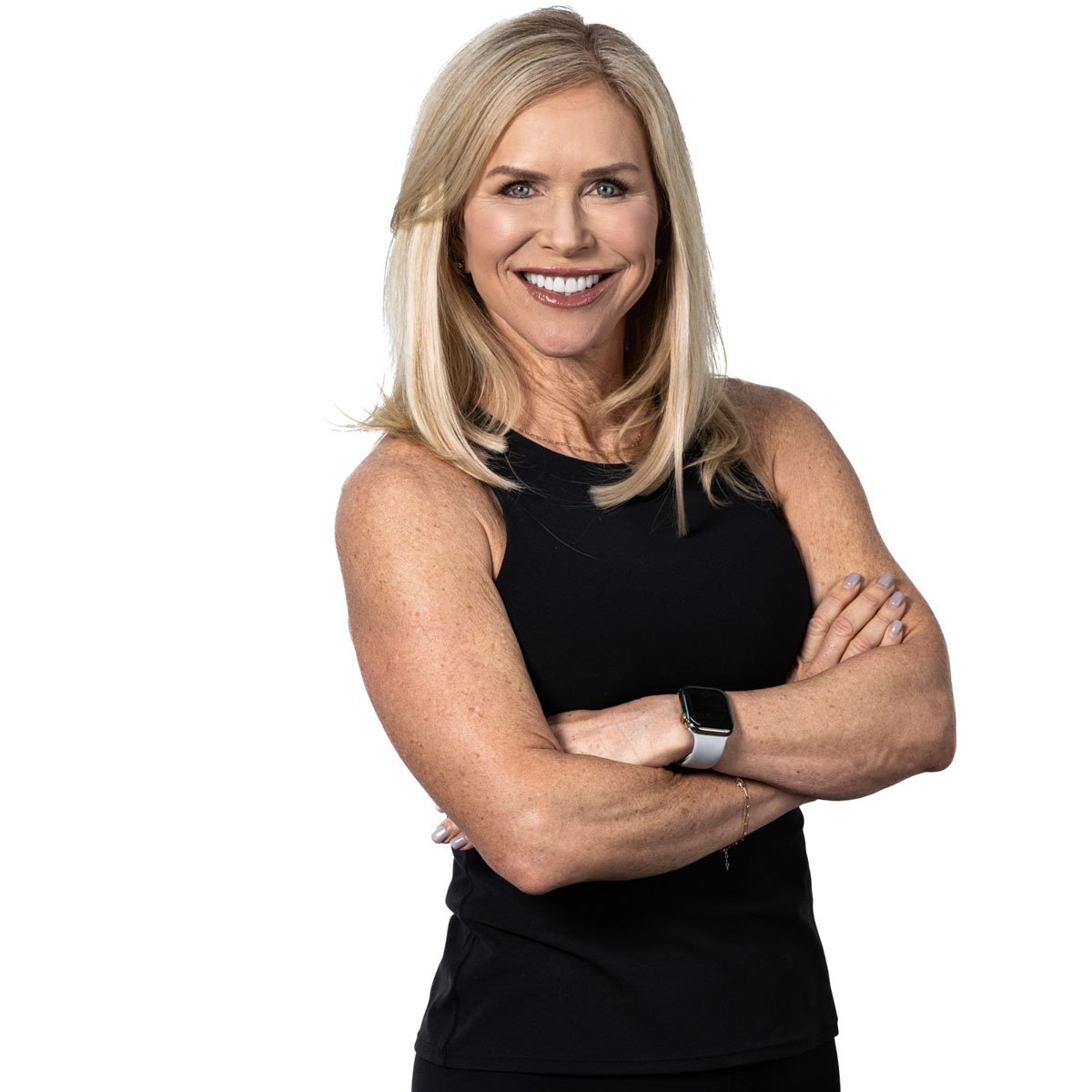
About Chris Freytag
Chris Freytag is a nationally recognized fitness expert, health coach, and personal trainer with over 35 years of experience helping women take charge of their health. As the founder of GetHealthyU.com and GetHealthyUTV.com, she has built a thriving wellness community that reaches over 2 million women each month with expert advice, motivating workouts, and real talk about aging, fitness, and mindset. GetHealthyUTV.com also offers a companion app, making it even easier to stream full-length workouts anytime, anywhere. Chris is the author of five books and the creator of hundreds of streaming workouts, all designed to help women stay strong, energized, and confident through every stage of life. With her approachable, empowering style, Chris inspires women to take action and embrace healthy living—on their own terms.
Resources:
Visit Get Healthy U TV’s Website


-
Mark D. Williams 00:00
We're excited to announce that we're bringing back Sonic camp 2.0 on March 20, from two to 8pm we had this last year. We had 42 owners. This year, we're maxing out the capacity of the camp, which is going to be 60 people. We're going to have a wellness panel with some Everest summiters, as well as some iron men and women to compete and all about wellness and how they prioritize their health and wellness, not only in training, but in their lifestyles and in their business. And then we're gonna have a two hour window of sauna and cold plunging in the lake, and then an amazing wood fired grill, Mediterranean style food at the end of that. So if you're interested, please head to cures builder.com under retreats, you'll find everything there is about sauna camp on March 20 in Minnesota. You a
Chris Freytag 00:44
lot of us that are a little older see our own parents, and we see the state of physical health that they're in. And we say, I don't want just more years. I want good years. So I'm like, set yourself up. I don't just want three more decades. I want three more good decades. And you know, that's what really matters. It's a conversation that I never get tired of. You want to talk about my to talk about muscle. Let's talk about it
Mark D. Williams 01:05
all day long. Today on the curious bird podcast, we had Chris Freitag Ian, and what an episode. I had questions prepared, but we didn't need them. You're going to hear a lot of energy in this one. So without further ado, here's Chris. Welcome to cures beverage Podcast. I'm Mark Williams, your host. Today, I'm in studio with Chris Freitag from get healthy. You straight out of Wayzata, just 20 minutes away from our hometown shop. Welcome to the studio, Chris. Thank you so much. Well, we have some mutual friends. Katie Cath put us in touch. She's been on the podcast a few times, and actually just interviewed her brother in law, the police chief Ian Ian, a couple weeks ago. Wow. So she is a great guest. Get her, but turns out, you know Morgan Molitor too, who's been on the podcast. I think the most amount she's been on three times, has she
Chris Freytag 01:49
really? I love Morgan. Her energy is the
01:52
best. Yep, we Well,
Mark D. Williams 01:54
Your vibe attracts your tribe, as she loves to say, that's her thing you have. I'll let you kind of introduce yourself. You're a little bit different guests than we've had before, but just given how much the curious builder in particular, with sauna camp, with boot camp, with Misa, who's my wellness home that we're doing it, you don't know about the audience, does. I'm just really interested in wellness companies, wellness businesses, and how we can incorporate that, not only into our business, our personal lives, but also really everywhere we look around us, I feel like it's having its day, and maybe it's always had its day, because if you're into it, you think it's there all the time, but I feel like now it's impossible not to go somewhere and see some form of wellness being marketed to us. And so I'd love to talk a lot about what that means to you personally, how you've run your business around it, and we'll just kind of riff from there.
Chris Freytag 02:39
Yeah, I've been in the wellness space for 40 years. I guess you could say I was really an OG like before, people were talking about wellness. I started, I became a personal trainer in 1989 I think it was. I started teaching group fitness in 87 and so that was a time when women weren't lifting weights. It was more of an aerobic people did, as a matter of fact, was called Dance aerobics back then, and so I was really probably a little ahead of my time in terms of, like, hey, women should lift weights. Hey, let's be healthy. Like it was like, Uh oh, here comes the health nut. You know? Oh, she's Debbie Downer. Whereas now people want to be healthy, it's a status symbol. It's like, if you are healthy, you're taking care of yourself. You're, you know, mentally and physically sound and so, so it's, it's changed, but I became an entrepreneur, like at that time too. I didn't, honest to goodness. I have to think back. I don't even know if I knew what an entrepreneur was at the time, I graduated from college and took a job in marketing and was enjoying myself, but I met this guy who was an entrepreneur, and I ended up breaking off and working with him in the direct mail and advertising and marketing world, and he was just the epitome of the most intense entrepreneur. And to this day, I thank him. I run into every so often, not, you know, maybe once every 10 years, but he changed my life because I learned the whole yes we can, yes we can, yes we can do that, like, let's figure it out, and working for yourself, not working for a large corporation. And from that point on, I had kids, got certified in fitness. Fitness was my hobby. Back then, after I left that company, it became my career. Yeah, that's amazing.
Mark D. Williams 04:17
I love the yes thing because I think every entrepreneur can relate to it. Because, you know, if you're waiting for someone to give you approval, or if you're waiting, you know, it's like, I'm thinking about a bird getting kicked out of the nest, yeah, you know, it's like, maybe the best thing is just like, go out and do it. Just go out and try, just give it a whirl, see
Chris Freytag 04:30
where it goes. And I was also in the era of the Tony Robbins area when he was right on the scene, right? You know, we all know who he is, and he's still around and great. But I was really feeding into that of like, oh my gosh, I can be an entrepreneur. Oh my gosh. Learn how to say yes, learn how to do hard things. Learn how to fail. That was all part of my late 20s, early 30s.
Mark D. Williams 04:50
Well, it's funny, because the topic never gets old and it never stops being relevant. You know, one of my favorite books last year was do hard things. And, you know, whatever that means to different. People, you know, I used to be a coach for cross country running for a decade before I have three kids. And when May was first born, but when Simon was born, I said, you know, I can't do a job and coach. But I always loved coaching. I loved the kids. And I used to always say that, like, it doesn't matter to me whether the kid who can run a five minute mile or a 10 minute mile. In fact, the kid running a 10 minute mile might actually be putting forth more effort depending on his skill level and weight and all these other things. Like, I just want people to try and have their best experience. And so I I feel like as a in the entrepreneurship world, like, you just want to see people succeed, right? And you know, wellness means so many different things to different people. Maybe we'll start there. What does wellness mean to you?
Chris Freytag 05:35
So in today's world, wellness means to me the whole body, the whole thing, your mind, your body, how you take care of yourself, all the facets of life, sleep, mental health, friendships, relationships, physical health. Back 40 years ago, just meant exercise. Wellness meant exercise. Like, do you exercise? And I was always like, a big believer in healthy eating back then, too. And people were like, Oh God, I don't want to hear about it. Don't want to hear about it. Don't talk about it. Oh my gosh, she's going to tell us not to eat something. Now it's the whole world has changed. But I, like I said, I got married early. We had kids when I was in my 20s. And fitness I just when I left my job, I was like, fitness could be a really great job for me as a mom, right? I could make my own hours change, decide how and when to make it all work. So I got certified as a personal trainer, which was very different for women back in the little ahead of your time, early 90s. And I started training moms at home because I had this I was teaching group fitness at Lifetime Fitness, which I still do. I love it. Plymouth. I've been there for 27 years. Taught this morning.
Mark D. Williams 06:44
Yep, I was, I'm at the I would down by Lake Harriet. So I always go to the Ian one awesome. But what I was
Chris Freytag 06:49
gonna say is, I had these women who are all coming to my fitness classes, and they all had little kids, and they'd be like, I want to lift weights. I'm hearing that I need to do that. I just can't keep my kid in the childcare that long, or every single day or whatever. So then I would train them in my home, and I was like, bring your kid to my home. I have kids too. It's all fine. So I had this, like, really nice training business for a long time at home, and then I decided that I was going to make fitness videos, and I financed my first fitness video. And I can't even believe I did it, honestly when I look back, but I went to this catalog back then there was no internet, so people shopped for home workouts in a catalog. Women did like their dance aerobics and their fitness, and they'd look through this catalog and go, Okay, I'm gonna buy this VHS tape. Not really solid. No, I remember dating myself and I went to this catalog. The biggest catalog in the United States was located in Brooklyn Park, Minnesota. Yeah. Park, Minnesota. So I drove over there, and this gal who owned it at the time, and she's still around, and I still think her Jill Ross, will never forget her. I said her, I'm a local fitness person. I have no following. I made this VHS tape. Would you put it in your catalog? And she said, Yes, I will support because all the big names were in there, and so forth, and so, to make a long story short, that little video, large corporations found it and were calling me and saying, Hey, do you want to do our videos for us? Hey, do you want to get involved? And I started making fitness videos, and then DVDs for large corporations. And when you say large corporation, like, give me an example. Well, for instance, Rodale publishing, I started doing a lot for them in the Prevention Magazine brand, and I made dozens and dozens of DVDs for them for exercise TV, which was a cable channel, and I was actually on exercise TV for many, many years. And then, oh gosh, Anchor Bay. Anchor Bay made tons of like, yoga for Dummies, strength training for Dummies, like I did yoga for dummies. I did a lot of those. But anyway, that opened my world to having people who are working out with me. And then when the internet came to be, people started finding me and being like, hey, I want to do your workouts. I want to do your workouts. Like, where do I find you? Exercise? TV went off of cable, and that's when I started, like, my own business. I have to own my own content. I have to do my own thing. But when I worked for Rodale, I wrote a column in Prevention Magazine for over 10 years too, so I got a lot of following there. But I guess my point is, I had this entrepreneurial spirit. I didn't have a plan. To be quite honest. Do you
Mark D. Williams 09:17
know what most successful entrepreneurs don't I mean, as you act around, I feel like there's a couple things, like, many of them have ADHD undiagnosed, like, tons of energy and ideas everywhere, and then you also just have a lot of drive and passion, and you're just like, and I'm not saying like, I often relate it to building a home. Like, I don't advise somebody to build a home without a blueprint or a plan, right? Like, you're gonna get a better product by thought process. That being said, you can spend your entire life planning and never actually go anywhere. And I just heard it yesterday. I was interviewing for Moses, a well known entrepreneur, you know, on Instagram and whatnot. But he basically is like, good is good enough? Don't let you know. Don't let perfection, you know, get in the way of good enough. And like, you need to keep moving Absolutely.
Chris Freytag 09:57
And believe me, I've made so many mistakes. I. But I think back, the other niche that I kind of got involved in was when video came out to be So all of a sudden it was like, well, there's this thing called the internet. Now people are putting videos online instead of just having manuals or written things about fitness. And I had this unique proposition where I was a personal trainer, so I understand fitness, but I also am a journalist by degree, and I had spent a lot of time making videos on film, so I was able to talk to the camera. So I was somebody who would talk to the camera and understand fitness. And I became very hireable, if that's a word, because there were fitness companies are like, we want you to talk about these machines, and you're personable, so you can get on in front of the camera, but you also know what you're talking about, so you're you don't have to have a script in front of you.
Mark D. Williams 10:43
Mixed, I think the two most potent things, education and entertainment, yes, because I think when those two combine, it makes it enjoyable to watch, or it's a pleasurable experience, but you're also learning
Chris Freytag 10:53
something, right? Yeah, yeah. So I did that for long time, so I had all these weird jobs, like I have had so many weird jobs, and then I got into home shopping and selling stuff on TV, because I'm one of those people. Like, if I have something great, I'm gonna tell you about it, Mark, and I'm gonna like, and you're like, people will say, are you trying to sell me on that? I'm like, I guess I sound like I am, but it's just because I want you to have the experience too.
Mark D. Williams 11:13
But isn't that true? Like, when you're so passionate about something you're it's not that you're it's not that you're not selling, but you're just sharing what you're so passionate about? Yeah, I think that's what people what draws people in, and when you're sincere, I mean, I'm taking a second out like the sponsors that we have, not only for the show, but for our homes, that we build and whatnot, like, these are things and partners that I actually use in all my homes. And so I think there's enough relationships that we all have in our businesses that if we go to our partners and say, This is what I would like, will you help me get there? You know, the podcast you're sitting in right now. So Pella windows has been our longest sponsor. I've worked with him for 21 years. You know, three years ago when I started the podcast, I mean, I didn't even know what a podcast was. I listened to Audible book tapes, and I was just like, I went on someone's Podcast. I'm like, This is amazing. People get to do this. This is not work. This is a blast. I just get to meet people like, oh my word. This is way better. And and I said, Would you help me launch this? And they said, We believe in your passion. Like, yes, we will. And so I guess where I'm bringing this, to make it tangible, even for me, is like, I think anyone out there who is either an entrepreneur already or wants to be like, there's places for your business to keep evolving, but you can go to your your network that you already have. I don't feel like you have to keep upcoming with everyone feels the pressure to come up with, like, a great idea or, like, something magical, and not that saying that it can't happen, or something won't happen. But, like, just if your passion will take you there, it will unveil itself as on your pursuit to it.
Chris Freytag 12:30
And I think every entrepreneur would tell you that a word that is just has to be prevalent all the time is pivot. And I always go back to the Friends episode that it's up the stairs, Ross is screaming pivot. And it's kind of a joke with my team, because I am like, we have to pivot. Everything is always changing. If you're not good at pivoting and realizing that, like, my business today, is 100% different than it was, like a year and a half ago, really based on, well, there are different facets of my business, but just based on what's happened with AI overviews and Google and some of the things going on in the world of the internet. And so you have to be willing to say, Okay, this income stream is changing now. We have to go over here and do this, and we have to, like, just be willing to fail and try it out. And how big is your team? Entrepreneurship is quite weird. But so I have two different parts of my business now. So once I decided to take my workouts and own them, so to speak, because I was making content for so many other companies, I didn't own it. My kids were at an age. They were in high school, and they were like, Mom, nobody has a CD player anymore. Like nobody's gonna play your DVDs. And it was an investment to make DVDs. So I started this thing called streaming 11 years ago. I honestly didn't even know how to explain it to my friends. They'd say, where are your workouts? And I'd be like, Okay, you go on the internet and, like, it was hard to explain now. I mean, streaming is just a word, right? You know, in the English language. So I started streaming my workouts, and at the time I was deciding, do I make this small? Do I own it? What do I do? In hindsight, like I could have gone the YouTube route. YouTube is a great route. So many fitness people are on YouTube, and they're you can make great money on YouTube, but I decided I wanted to do something where it was a membership, and I ended up partnering with a marketing firm here in Plymouth, Minnesota, somebody that I knew was just the timing was right. They contacted me. I'm like, I'm trying to get this thing off the ground so they have the back end, they manage subscriptions and memberships. So they have 15 different verticals. None of them are fitness. They're all different things that they remember, like craftsy, woodworking, stuff like that. And so we partnered in this business, and they said, we'll do the business engine side of it. You be the content. And so I have, for 10 years going on 11 managed all the content. I have five other trainers besides myself. We work together in synergy, but that is a partnership with a management company. We have 100,000 members. We have an app, Roku, Fire TV, like all that. And then the other side of the business is, I'm a journalist. I love to write. I started a blog 10 years ago when blogging became. Became a thing, and I just kept growing this blog, and that is where Google and AI overviews and all that stuff comes into play when it comes to traffic. And if anyone runs a digital and I have two full time employees on that side of the business, I'd love to
Mark D. Williams 15:15
just take a pause minute to talk about blogging. I'll just share a bit of my story on this and some of my own biases and stereotypes, and, you know, shout out to Katie cash. She's a brilliant blog. She's very good writer. So does Morgan, and they were the ones that kind of brought it up to me. And I feel not that men can't be good writers, but I just feel like as a stereotype, women are, it seems like that's who consumed them. Like, I look at my wife, I look at my wife's friends, or, you know, my female friends, and like they consume blogs. Like, as a man, you know, sometimes we're, I'm not saying that we men don't read blogs, but that's my been. My bias is seeing like, well as a builder. The reason it never dawned on me is, I don't consume it like, for health and wellness, like I consume it all the time. So that's easy for me to talk about, but like, where I'm going with this, from a marketing angle, is, we hired someone that helps us write, and so, you know, I'm weekly now, I talk about it all the time. The power of is, we've been doing it now for three years, and it has been way more powerful than I ever could have possibly imagined. And anyone listening to this, you know this episode, whether you do it, whatever you do do consistently, but whether it's weekly, daily, monthly, quarterly, whatever you want, like, there's more power in it than you could possibly think. I've seen huge results in terms of Google and ad finds and rankings, and I attribute most of it to our dedicated writing team. Now I fill in the content verbally, because I can speak for days. Writing is not my strength, but you know, they prompt me with whatever questions, and you know, while I'm driving or running or whatever, I'll just punch all through all their questions, and then they write. I'm like, oh, that sounds great.
Chris Freytag 16:35
That sounds great. Yeah, it is. It's still a powerful tool. And you know, written Word will never go away. It's just the game has changed. Google has changed, and it depends on the type of niche and business that you're in, and small businesses like mine in the wellness space got really pummeled by Google a little after covid. What do you mean by pummeled traffic? We just lost our traffic. You know, it used to be like, if you picked a keyword and you wrote about it, you were going to get organic traffic. Now it's like, no. Google has kind of cut off all small businesses, and especially in the wellness space, like I'm not going to compete with very well health or Mayo Clinic there are going to get up at the top of the rankings before me. Ai overviews, though, has been interesting. We're getting into some of those. And we just started writing. I started writing from my heart. Instead of for a keyword. I started writing, what do midlife women want to know? And I was actually kind of happy to go back to that, because there was a point in time in the last 10 years where we stopped writing about what we wanted to write about and what Google would want us to write about. Oh, this keyword is ranking, you know, jumping up and down. So let's write about jumping up and down. Even if I didn't want to write about it, we were going to write about it to try to get Google traffic ridiculous in hindsight. So now I'm writing about, what are women my age group struggling with? Let me write about it. Let me tell them what I know as a trainer for 40 years. Let me talk about, I'm through menopause. I'm turning 60 next week. Like, what can I help women with in the 40s, 50s, 60s? Space, and it's way more fulfilling.
Mark D. Williams 18:00
Well, it's authentic. I mean, I just, I have a good friend of mine, I have a sauna in my backyard, and we Ian, probably three, four days a week, I'll send out a text to a couple of my neighbors, couple buddies, and say, like, hey, tonight's going on? Who wants to come over? And for us, it's a place of, like, cathartic talking. Last night, the conversation was about authenticity, and the thing that I was commenting to him, I said, I don't think he's ever listened to a podcast, because he's got the sauna. What is he gonna listen to me? Why does he need to listen to me twice a time? And I was like, the thing that I enjoy the most is authentic conversations, and when people are passionate about whatever they believe in, like it's infectious, like it's interesting. And so I could totally relate to you know, you writing about what you think someone else should write about, versus like, I'm gonna write what's on my heart. Ian,
Mark D. Williams 18:45
I This episode is brought to you by Pella windows and doors. I've used Pella for 21 years as the exclusive window company on every one of my builds. When people ask me who I trust for windows and doors, it's Pella every time. Their craftsmanship, their innovation, the top tier service, make them a no brainer for any custom home builder or designer who demand the best, whether you're designing something bold or building something with timeless elegance, Pella has you covered. They're also the only window company that has a lifetime warranty on all of their windows. I've gotten to know all their people at Pella corporate, as well as locally. Here at Pella Northland, I'm proud to call them our partners and our friends. Visit pella.com to learn more and connect with your local reps. Today for more information, you can also listen to episode one, where I interview the Pella Northland founders, as well as episode 109 where we talk all about their latest innovation with the study set window.
Chris Freytag 19:38
I totally agree, and I'm just thinking also about entrepreneurs right now is that we had started that conversation. I was thinking, you know, so that writing's like a lot of people don't even know that I write. So most people who belong to get healthy UTV, it's called Get Healthy UTV, just our members. They use the app. They work out with us. We drop two new workouts a week. We you know, so they get on their app, or they open up their Roku, and they work on. With us. They don't even know. They're like, Oh, you write articles, but they'll get my email there. Oh, I saw that you wrote an article about whatever, like, that was so helpful. Thank you so much. So people don't differentiate between the two sides of the business. For me, it's like, one I have a partner, the other one, I run myself. And then I would say, if you're an entrepreneur out there, you probably have a lot of side hustles, and don't feel bad about it. That's where I was going with where I do video for fitness companies. I sell stuff on QVC. I'm doing this, I'm doing that. And people like, why are you doing all that? And I'm like, Okay, first of all, I don't know, because I love it. And second of all, because, as you're getting your business going, it's a side hustle where someone says, Okay, you can make money doing this, and you love it. Okay, do it. So it's just there's I would never say that entrepreneurship is linear. That's what I always tell people, like, if you are a linear person, you're going to struggle, because I have the most squiggled line in the world. Like someone will say, Oh my gosh, I saw you on Home Shopping. I saw you selling something on TV. I'm like, Yeah, I was in Philadelphia yesterday, you know?
Mark D. Williams 20:59
Well, I mean, it's more it's also very fulfilling, because you you get to fulfill your passion. Some people have this argument that you shouldn't follow what you're passionate about. I don't subscribe to that. No, because
Chris Freytag 21:08
I agree, and I think that sometimes in entrepreneurship, as I'm sure anybody listening or you things happen by accident. So I'm talking about Home Shopping. I always sold on TV. I stopped after covid Because I just got sick of all the travel. And I was like, I'm not doing this to I am not doing this anymore. And then I started having so many of our members, they work out at home, and they're like, Chris, we don't want to buy $110 leggings to work out in our in our basement. Do you have any affordable fitness clothes? They'd always say, what are you in the trainers wearing? What are the clothes you're wearing? So I started sourcing affordable fitness clothes, and I started finding stuff on Amazon, and we would all test it and say, does this stuff hold up? Is it good? And all of a sudden, I had this new business, just kind of by accident, like they're like, oh my god, I love that top. Where's it from Amazon? Okay, so next thing you know, I go and I apply for the Amazon influencer program. Well now that has become a huge part of my business, working with Amazon. So I want to have known that five years ago.
Mark D. Williams 22:02
I mean, there's a figure. It is where opportunity and, you know, passion meet. You know, there's a new business vertical right there. You know, I think for myself, just to make it somewhat relatable, is I have this, whether it's true or not, I believe there's a stereotype about builders. I think there's 800,000 contractors in America, and the stereotype is that fat, lazy, hairy, alcoholic, flannel wearing fatties. And I'm like, I'm good with, I'm good with everything but the alcohol and the fatty like, we can, we can do better. And it's a stereotype, because, anyway, my point is is, like, I've been interested in fitness my whole life, been lifelong athlete. And I, I was like, You know what? I'm not alone, like when we go to these where I'm part of the something called the contractor coalition Summit. Yeah, I know, with Morgan. Yeah, exactly. Hello. And so we get together, and it's like, you know, in the morning, you get up before the classes, and there's 12 people out of 30 that are in the gym, and you go up for run, and there's a bunch of people you see running, and before you realize it, you're like, these are your people. Like, to your earlier comment, like, wellness is so many different things to so many different people. And anyway, so I said, You know what, I'm gonna do a sauna camp. It's like, you know, we're in Minnesota. I love sauna. So last year we did this thing right down here by Christmas lake. And you know, I think we had 42 people show up. We did. We had someone come in, Dr Mel Krug, did some breath work. And I thought everyone was gonna, thought that was gonna be too Woo, because I'm open to anything. And everyone loved it. I was shocked. I was like, these big burly dudes were like, Oh, I loved hearing about breath work. I'm like, Well, consider me flattened. I didn't think that would be something you'd be that interested in. And then the sonic gold plunge was amazing. But then it was the food and the community after we did this really cool meta training. Anyway, we're doing our second round here in March, and now we've launched boot camp, which was getting I had this big thing about taking things that you love something that I love, and how can we share it with someone else? And if no one comes to it, great, I still had a great time. But if a bunch of people come to it, we'll see what happens. And the boot camp idea was, I love going to the Boundary Waters once a year, no phones. You're off the grid. You're connecting with people, you're in nature. And I said, you know, I want to I want to builders. I wonder if there's other builders in America that would like that. So we went to Ian Park last year. No phones, no alcohol, two a day. Workouts in the mountains. We had 12 people. We sold out for Costa Rica, we have 32 people. I'm sorry, 23 people coming to Costa Rica. And I think you listen to her interview, Kyla Seabrook, from California, who builds gyms. She's actually there on Morgan's retreat to build her retreat the weekend before, and she said, I'm canceling my return ticket or changing it, I'm going to stay for the boot camp. And so anyway, you just, you start finding people, and they start gravitating towards because it doesn't exist, at least not in my world, in your world, right? That's all you are.
Chris Freytag 24:31
Well, yeah. And like I said, in my world, it's just changed over the decades. Because it used to be like, if you were the healthy person, you were a little odd man out. People are like, Oh God, Debbie Downer is here. And now. It's like everyone wants to know, tell me more. Tell me more about nutrition. Tell me more about my body and and muscle and metabolism. And you know, it even translates as a contractor into the home. I mean, people are looking for more wellness in their home, better taking better care of their family, taking better care of themselves. And I'm also at a. Age of my life, too, where I'm an empty nester and I'm a grandma and I have a little more time on my hands, my husband, I, neither one of us are retired, but like I have more ability to think about my wellness and do things in my home that are thoughtful, that make a difference for me, and do things with my body. And so I'm just my mission. So when I look at my home, my mission is to encourage people, but women in particular, to understand that their health is their wealth and you can live. And I think a lot of us that are a little older see our own parents, and we see the state of physical health that they're in, and we say, I don't want that for me. I'm going to make sure that I can because you want to be able to move you want to be able to have great I don't want just more years. I want good years. That's kind of the thing. So I'm, like, set yourself up. I don't. I don't just want three more decades. I want three more good decades. And you know, that's what really matters. So I feel like it's a conversation that I never get tired of. You want to talk about muscle, let's talk about all day long. I'm so excited. You want to talk about menopause. You want to talk about wellness, you know, hacks, let's talk about it. That's my passion well. And I
Mark D. Williams 26:02
think honestly, being a man like I'm actually very interested in some of those things, partly because, you know, I'm 45 and I don't know that much about period, menopause, or menopause, or any of those things. But, like, If a man was to say, I don't want to know that there are women in your life, once you want to know, yeah, for men too. Men have their own personal health stuff too, and, like, everyone's on their own journey. And I think it's just really being for me personally, it's just I'm curious, like, what does it mean? Like, how does it affect you? Like, how? Yeah, I'm just curious about it.
Chris Freytag 26:29
Aging is so interesting, isn't it? It's like, you when you're in your 30s, you look and you think, 60, I'll never be 60. I can't I don't want to think about I don't want to know about it. And then also, I'm like, I'm 60. Like, how is that possible? And the changes in your body, they actually say that your body again, don't hold me to it. But the science that I've read about is that your body really drastically changes at about age 44 and at age 60, like, there are some very different things happening, and I'm talking in your organs and in your body, and you really start to notice it, and you start to pay attention to different things. Like, think about how all these wellness gadgets we've all become accustomed to wearing and having now, and how we're really, yep, we're looking at our sleep and going, oh my gosh, sleep is part of the equation. Who knew? And we're looking at what we're eating and the number of steps we're taking. And I mean, I think it's amazing. I think it's awesome. I love seeing the change in people's mindset about their own health and their family's health.
Mark D. Williams 27:23
We've had so many people both have boot camp, and we've had them on the podcast too, where you know their relationship with all those things, the common things, food, exercise, sleep and, of course, alcohol. And I think we've seen a huge explosion in like na drinks. So what started some of the boot camp stuff was a year ago, I decided just to get a bunch of people together a group Texas. Said, who wants to do hard wants to do hard 75 together? And you know what that is? Yeah. And so it was just, it was really fun. It was more of a camaraderie thing, because half the group was Mormon. They didn't drink anyway. And that wasn't the point. The point was just community. And there are, I feel like people are craving real, authentic interactions the world that we're in now. We get so bombarded with digital content, and I'm a part of it, you're a part of it. Like, it's it's not necessarily bad, it's just that we still crave real things like, and so like, how is our community bonding together? How are we having meaningful interactions? And we've seen a huge draw towards like, our curious builder collectives, or anything that we can get to gather people together seems to be way more prevalent than it was earlier in my career.
Chris Freytag 28:26
That's interesting, because covid kind of changed things, and it certainly changed it in the wellness space, the physical wellness space. So when covid hit, you know, people were saying, well, first of all, our business boomed, because everyone was working at home. So we did have a huge boom right then, but we knew we'd have attrition after that, because people are going to join a program while they have to, and then they might go back to something different later. But I remember people saying, oh, people are never going back to gyms. They're never going back to gyms. I'm like, yes they are. Yes they are. I worked at a gym for 2727 years, just at lifetime. I worked at other gyms, but there is community, there is camaraderie, and whether they can articulate it, there is something that they love about that coming together. And I so, and I think what's really I've seen a lot is a hybrid of workout. Then people said, Oh my gosh, does is the gym like a competition to you? And I'm like, no, because I love the gym. I teach at the gym myself, live classes, but I also work out at home on days when it doesn't work for me. And I also know that when I was a young mom, I wasn't going to the gym seven days a week. I couldn't do that. I couldn't do that with my kids. I also know people travel. I also know people have different schedules where they do a hybrid they work out at home some of the time. They go to the gym some of the time, but lo and behold, the gym's repopulated, and everyone's so
Mark D. Williams 29:45
that's, I mean, you've kind of answered the question. I was just curious, what observations you have on people that work out at home versus people that work out at the gym? That'd be the first part of the question. And then the second is percentage of women to men. I'm. On the floor versus like in classes,
Chris Freytag 30:03
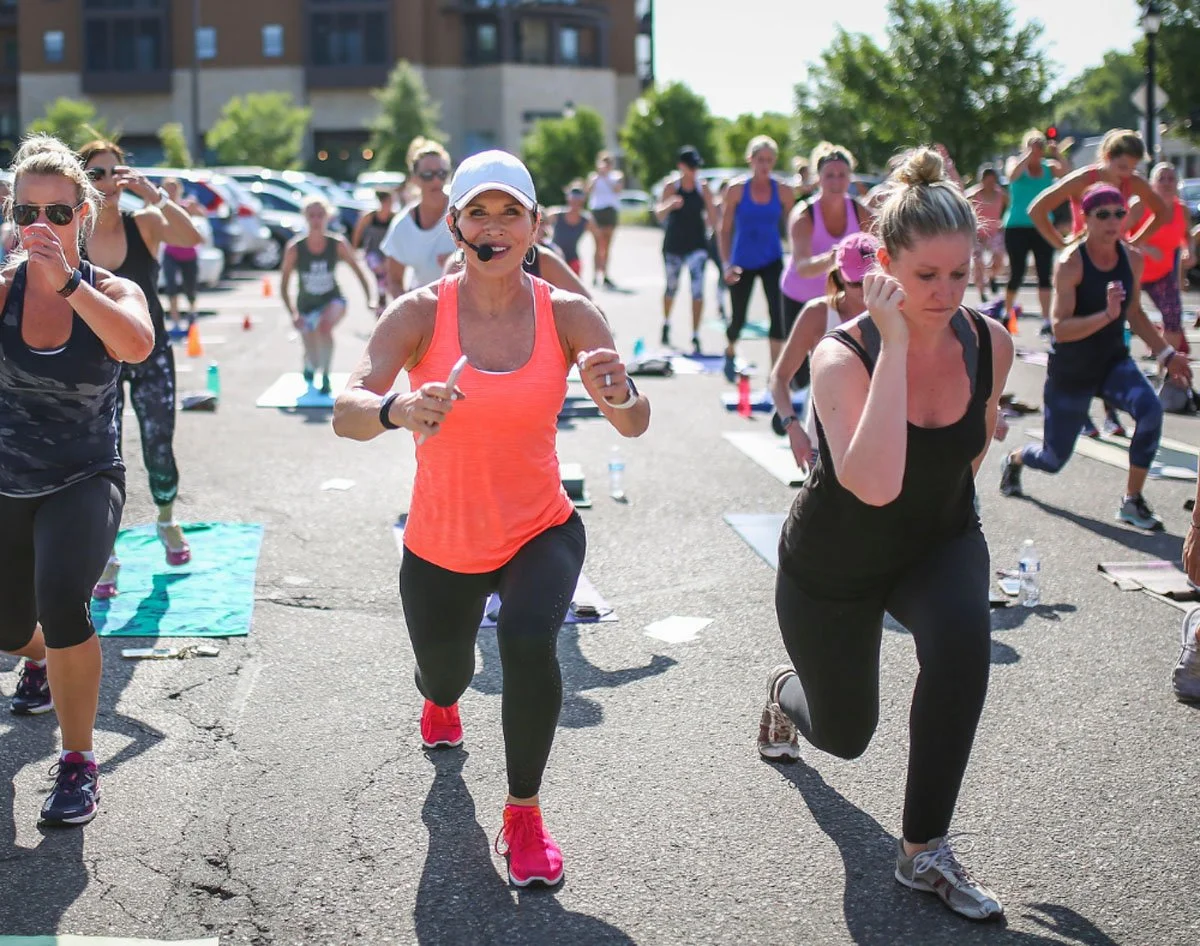
you mean at a gym, yeah. Okay, so when you talk about men versus women, it's very interesting, because back in the day, classes were mostly aerobic dance. And then I remember when I started at lifetime, 27 years ago, we had like, five and eight pound weights in the studio so we could pick up weights in between doing cardio type things. Now we have inside these studios up to 25 pound weights. And I teach like, for instance, this morning, at 5:30am the rack is cleared. Everyone has the 25 to 20 the 18th, the 15th. And women are lifting heavy. Men are lifting heavy. But I'd say like, for instance, 5:30am this morning had like 62 people, and I would say at least 20 of them were men, so predominantly women. Yeah, well, 20 to 30, I mean, a good percentage of men are coming to classes because they're, you know, I'll toot my horn about group fitness is that people think, oh, that's dance. No, it's not. It's just organized fitness. So if you want someone to tell you what to do in certain time intervals and make sure that you're working different body parts and using good form. Go to group fitness. I mean, these OGS who have been coming to my class forever. 530 in the morning, we all show up, and it's like, they don't know what we're going to do. They're just, they're like, Hey, tell tell me what to do. Well, there's a lot of freedom
Mark D. Williams 31:16
in that. I mean, I have someone that writes my programs for me. Weight wise, I actually so I was always more of an endurance athlete, you know, running and tennis and sports, and I like the sport more than the training for it. And as I So, covid made me get into weights. I got into kettlebells. And so I really enjoyed kettlebell work, and I saw some dramatic body transformation. I was like, Well, this is cool. I didn't know you could even do this, just because I was too interested in running, you know, around, I guess. But now it's interesting. I see, like, the classes that I see, like, this morning on the floor. I don't know the exact numbers, but I feel like I see more and more women on the floor that I used to see, yes, yes. And then, you know, classes. I don't go to the classes because I have a small group of guys that I bike with and run with. So I'm out. I'd like to be outside, if I can. But what I used to do, like warrior sculpt it like the core powers back when in my 20s, and it seemed like the yoga classes was predominantly women. If I had to guess, I'd be maybe in the 10th percentile of men. But now the sculpts are combo, oh man, yeah. It's yeah.
Chris Freytag 32:09
Anyway, and I used to go out on the floor to lift weights, because that was the only place weights were. Now the weights are in the in the fitness room, so I don't need to go out on the floor, but it's a combo. And also it's a combo of people who work like the people who work out at home. I mean, I've just learned this from working for some national corporations and doing a lot of work, for instance, with Prevention Magazine. And there are a lot of people who, a, can't afford the gym, B, their commute is too high. See, they're single parents. Their work hours are weird. There are a lot of things that will keep you from going to a gym, and so having a space to work out at home, or a program that you can work out with or something, because very hard to say, Well, I'm just going to go my basement lift weights by myself and stare at the wall. I mean, like, what are you going to do? Right? You need something to motivate you so. But there is, like I said, there's a hybrid people who do both gym and at home. There's people who are only gym goers are only at home. I think a lot of people crave that community, so they go to the gym. But it's interesting because, like with my program we've started, we have an online community. We have a Facebook group that's super active. It's got 1000s of women in it, and those women are working out at home. But then every day, they post, I did this workout today. You guys should try this one. This is what's going on in my life, and they share. So it's kind of there.
Mark D. Williams 33:24
That's powerful. I mean, that's so that's that hard 75 group I have, it's morphed into, I have two group chats. One is the boot camp group, and the other one is the former hard 75 group, and we've just maintained the camaraderie. And so, like, this morning, everyone just and I, I guess I sort of lead it in the sense of accountability, like I'm always taking a picture every morning of if I'm running outside on a bike or in the gym, just as an accountability measure, yeah, not necessarily for myself, although sure it is for myself too, but it's kind of like a way to keep the glue of the group together. It's, I mean, but you have 1000s of people, you know, I just think there's so much more power to that. We have a couple builder shout out to Heather Tankersley out in Sacramento, but she sent this really kind text there day she was traveling, and she said, Hey, I'm in the gym early this morning. And she said, I just want to thank this group. I said, you know, I find it's been a year since, you know, I coursed them all into doing it and that. And they're like, We love this group. We love what it does for all us, and it's just really empowering for you, and I, let's say, to be sort of at the leadership roles of some of this stuff, even though mine's obviously way smaller, it doesn't matter. The feeling of just like people getting improvements in their personal life is just really there's something really satisfying about it. It really is. Yeah, what speaking the last thing about the maybe this is bias, because you said most of your online subscribers are women, but the people? What percentage do you think of people that subscribe online are women versus men? Well, our
Chris Freytag 34:49
particular program, get healthy UTV is geared towards women, so we have a lot of women say My husband works out with me too. I see, but we you know, when I started this 11 years ago, I was really passionate about helping females feel. Comfortable with weightlifting, and so you can't be all things to all people. And you know, we had the competition of body. Oh my gosh. Why am I forgetting their name? They're b o d i Now, B O D I beach body. Oh, okay. Beachbody was a competitor at the time that no longer is. I think they're now, B O D, I body, I think. And there were other little programs online that also cater to men. But I was like, women are really where I want to focus and help women understand that they can lift weights so But surprisingly, we do have a lot of people, like my husband does the workouts with me now too, because we do have a variety like we do a lot of the strong. We have a program called strong, and it's all about heavier lifting, slower and heavier, then we have like the bar and the yoga and the dance and kickboxing, and we have a lot of hits and all different things. So we cater to all all types.
Mark D. Williams 35:57
This episode is brought to you by adaptive. If you're still chasing checks and juggling spreadsheets. It's time to upgrade. Adaptive is revolutionizing how builders get paid. With AI powered bill pay, automated draws, one click payments and built in Lean waivers, Faster Payments, fewer headaches and total visibility, adaptive takes care of the back end chaos so you can focus on what you do best. Building we've used adaptive for two and a half years, and trust them to keep our projects moving and payments flowing. Learn more at Adaptive dot build and simplify the Pay Process today. For more information, you can also listen to episode 10 and episode 15. If you were to give advice to home builders myself, what are things that you would design into a home around the wellness. And you can talk about the gym if you want, but just in general, like, what is wellness you mentioned? It means so many different things, but let's talk about it in turn, in the terms of, you know, a large part of our audiences, designers, architects and builders, from your point of view, what would be things that as we're building, designing and, you know, putting into our homeowners homes? What are the things that we should be bringing up, and what are things do you think that we should sort of say like, Hey, we should encourage our clients to have in their homes, to sort of have a a better life? I love what you said, Good decades, not just a lot of them.
Chris Freytag 37:13
Yeah. More good years, not just more years. Yeah. So I think it's a question that every builder should ask their client is like, what's your view of wellness? What do you plan to do in your home, and how are you going to use it? So I've seen a lot of people make a lot of mistakes with their fitness space in their homes. People used to do like areas where, and I know, like a lot of people want a squat rack. They want big equipment. But there also is this a trend towards you don't need that big equipment. You don't have to have a squat rack. I actually have a squat rack in my basement because my boys used to use it when they were younger. I don't use a squat rack because I use dumbbells, kettlebells. But you want that space to be designed so that it's user friendly. You want it, my personal opinion, if you can get some daylight, I cannot believe the amount of homes where I see they make a box in the corner of whatever in the basement, and there's no daylight, and it's tiny little box. And then I hear people say, Oh my gosh, we put this gym in I've never stepped foot in there. Well, yeah, because it's not very motivating. You know what I mean? So you need to have a window in there, if you can. Not everybody can do that. Do you need a TV in there so that you can listen to something, or you can watch, like, if you're going to do my program, you can just put it right on the big screen TV. What kind of equipment do you want, and what kind of space do you need? And then there are a lot of people who work out in their family room. Quite honestly, they go get their dumbbells, they keep them in a closet, they go in their family room, they do it on their big screen TV with the sunlight coming in, and then they put their dumbbells away. That's the only equipment they use. I mean, we have a peloton in our basement. My husband loves to he used to peloton more, but he loves the peloton. We have a sauna. We have a prefab sauna in our home. Our home is older, so it's not something that we built in. I'm sure you're probably putting saunas in every house.
Mark D. Williams 38:57
I mean, the last three, four years a because I'm enthusiast, so I'm bringing it up strongly. Even if they say no a couple times, I'm still like, for me, I'm like, sometimes maybe a little too I usually say, I'll push three times, and then in fourth one, I don't want one, right?
Chris Freytag 39:10
But you have to. I would say the questions you ask is, what are you good like, how do you work out? What is your wellness routine? Look at, are you a gym goer? Are you going to work out at home? Like, what would make you happy to work out? What would be a deterrent like this little room with that's a box with no windows, and it's smelly and small. Are you going to go in there? No, you know. So you have to, like, plan it out so that it works for their lifestyle. Do you have little kids? Because a lot of times, like, I know moms, they're going to work out in the family room space, maybe in the basement, because they have to have their kids around them so they can see them. You know, you can't just go put yourself into this room, shut the door and let your two year old run all over the house. Goodness, we know what can happen. So I think you have to ask them a lot of questions about what they're in their mind's eye, what they see, and then come up with how it works. And it's getting esthetically good looking racks. Putting them in the right place for your dumbbells, having a place that it stores, you know, having maybe a rack where you can put some resistance bands and different things, and some people, yes, like my daughter is a professional ballerina. So when we were building this house 19 years ago, she was doing ballet at home, so we put a little ballet bar in where she could do ballet. Would anyone want that when we sell the house, probably not, but we did that for our lifestyle, you know. So if someone would have asked me what I want,
Mark D. Williams 40:26
I think you're 100% right. You know, sometimes people get so focused on what resale is going to be, right. And a big part of my job is also a financial responsibility. You know, you're building a beautiful home, making sure that, you know, like in our market, I saw a home the other day down by Lake Calhoun that sat forever. It had one bedroom oof, that's rough. Like, you maybe went a little too specific on that one. But my point is, like, I'm gonna give you some some context, but that being said, like, it's your home, like, Let's build this for Chris. Like, what do you want? Right? And no different than you're writing about a blog, the more that it relates to you, the more that that blog attracts your people and your lit, your viewers, your listeners, your readers are more in tune with you, because it's what you're writing about. I think that's true of a home. I you know, we're doing this spec home right now called Misa, who's in the whole home. I won't do the whole thing, but you don't know much about it. I'm guessing is I didn't want to come to market just like, like we are stereotypically come to market. Okay? It's a four bedroom house. It's this price. I didn't want to if I design a home on a blank piece of paper without a client, it can be anything to anybody, and then it's not special. It's not special to me. It doesn't have anything unique. What's always really unique is, if I build your house, it's really unique. And if I put your home on the artisan Home Tour, or the Parade of Homes, or whatever show home, like the builder and the design team gets a lot of credit, but we're extracting your family values into the home, and we do a really good job at that. So I'm not saying that, but like, as a spec home, like I wanted something different, so wellness is what unlocked the key. And we could talk a whole episode about this, but like, all these things that I'm doing in this home have varying degrees of wellness associated with it, and also running through the filter of what I find to be wellness to me, obviously, I'm impacting the house, but one of the biggest things was, and I credit to Carl, my neighbor, who is the architectural designer. It's he's how I got into Ultra running, but he we were down the path of, like, the stereotypical exercise room for the majority of builders in America is a basement bedroom that could be retrofit. It's still nice. I mean, it's great, but to your point, not a lot of daylight. It's an afterthought. You talk about the kitchen, you talk about the pool, you talk about indoor, outdoor living and grilling, and you talk about everything else. And it's like, exercise like, Oh, and by the way, I want to exercise room. And Carl's like, well, for this house is about wellness. And he goes, I know you love wellness, and I do too. He's like, let's do the detached casita the house, like the pool house. Let's make that a Wellness Center with giant, you know, multi slide pellet doors that open to the pool, vaulted ceilings with natural wood, Asana cold plunge all in like this building, but that's all you open up on a nice day like today. Open up all the doors you're inside outside. I'm like, why has it taken me 21 years to even think about this? This is crazy, amazing. Well, and you just
Chris Freytag 42:58
said something that's so important when you're probably, I'm sure when you're building a house, people like, I love house, people like, I love my family room. I want my family room to be cozy. I want everybody to go in my family room. Why aren't you saying that about your gym like you want to build a space that you want to go in, where you go in the morning, I just want to go in that space. It's so beautiful. I want to work out. So to your point, it's always this little corner in the basement. I've got
Mark D. Williams 43:20
a really funny story that just reminded me of, there's also the reason of like, so I work out really early in the morning, right? And so if I'm have the bumper plates on, I'm doing deadlifts, those vibrations in your own home gym make a lot of noise, and they wake up my wife. So I'll get a text. I'll get a text, like, what are you doing in like, caps, yeah, I'm like, I'm in the I meant. So our 1919 house was clearly not designed for an exercise room. It's in a deep it's in an attached garage in the basement. But I'm like, they're two levels up. How are they hearing the bumper plates that high up and but here's the funny story. So anyway, going finishing the story in the wellness duty, like having the building detached, it actually does make a lot of sense for noise and things like that. I wonder if my neighbor will ever listen to this. I had an old neighbor. We didn't always see eye to eye, and anyway, they sold their house. And I saw him for coffee, and he this was right after covid, right after I got into kettlebells. And he said, Hey, I'm, you know, we sold our house. I'm like, Hey, good to see you. And he said there was something we could never figure out in the inspection report. It didn't happen all the time, but early in the morning we'd hear this clanging, and we didn't know if our pipes were bursting or what. And I knew what it was. It was me doing dead lips and kettlebell dropping them on in my my basement exercise garage was right next to his house. He could hear it was going through the wall, sideways into his house. And I didn't I never told him. I just had this giant joy in myself just knowing that, like I sort of irritated him with exercise. You're like, what it was like a year after they sold the house, and I remember telling my family about it that just thinking it was the funniest thing
Chris Freytag 44:46
I'd ever heard. I love it. I love it well. And so to your point, you know, I just think about a space in your home needs conversation. It can't be the last thing you talk about. I also will imagine mirrors. You know, a lot of people go, nope, I don't want a mirror. I don't look at myself. I don't. To feel bad about myself, but form is everything if you can't see your body. And you know, I am always giving cues when I teach classes, like in a deadlift, you know you need to lead with your chest. You need that long spine. You got to have those back extensors working. Your core is tight if they can't see themselves. A lot of people, the body awareness is just not there unless they can see their body. So I'm like, You need mirrors, you need daylight. You need esthetically pleasing. Well, a
Mark D. Williams 45:24
mirror usually also makes the space feel bigger too. Yeah? So, I mean, there's spatial things, you know, vaulted ceiling, obviously, if you've got it, or all those kinds of things. But you're right. It's funny, whenever I go to the gym, the mirror spots are usually taken first, yeah, but, and I used to, when I first started lifting, I didn't realize much, oh, you know, maybe they just want to see themselves. Or, you think there's maybe a vanity aspect of it, and I don't think that's what it is, because you're right. I will always go to there if I can as well, because you're right, you know, on a squat or a deadlift or whatever, especially like, you know, overhead rotations. Like, I'm not very good at cleans, but like, when I even with, like, a PVC pipe, oh man, my it's like, I better not do hard weight, so I'm going to tear off my shoulders, because, like, I don't have the, you know, the thoracic mobility to do it properly and so, but the mirror really exposes it. You can feel it, but, man, when you see it, you're like, Oh, that is not what it needs to be.
Chris Freytag 46:12
I just think it's a conversation that really relates to home building, like asking people about their wellness thoughts. Because people are trying to get away from plastic in their kitchen, right? People are trying to make sure they have the right water system, water filtration, air filtration, all this stuff. It all makes a difference. You posted something on
Mark D. Williams 46:28
your LinkedIn that I was reading. It was just about the amount of bacteria that is in your average water bottle. I was like, wow. Now I also am subscribed a little bit of like, I rarely get sick, but I also think I exposed myself to so many things that, like, my immune system is like bulletproof. That being said. So I'm holding this, and I got you one of these, actually. So this is a lark, water bottle, but check this out. I've never seen it. It's the first self cleaning water bottle. There's a UV filter in here and a water filter. I could go into a stream in Montana, Africa, Amazon, fill it up with water. And there's, if you hit it twice, it's adventure mode. Within two minutes, your water is sterilized and pure and you can drink. But the self cleaning part, you no longer have to wash it every day because I saw on your Oh my gosh. I love that, right? So you can check it out. And so this is our spec home. Misa means cozy in Swedish. Oh my gosh. So anyway, that there's a whole branding kit, and I thought we've only handed this away for our homeowners, which maybe you'll be one. But the point of it was, is someone who loves water bottles. I'm like, you have to have one.
Chris Freytag 47:27
I love it. Thank you so much. Well, that is because we kind of giggle about the standard, you know, lady who carries her Stanley Cup, yeah, and never washes it, and you unscrew that top, and there's like, black mold in the, yeah, in the, you know, the grid area, or whatever you call it, and you're like, Huh? When's the last time you washed that straw? You know, we're all trying to get away from plastic water bottles. I try not to use as many of them. But then you look at your own water bottle, you're
47:51
like, well, that needs to be washed, yeah.
Mark D. Williams 47:53
Or your immune system just needs to be bulletproof. You're building it up. It's like, penicillin, you know? I think it's a little bit like, it's no different than filters in a house. As a home builder, I'm more, you know, attuned to this, but like, you'll go into these high end homes and, you know, we'll do our one year callback, and I'll ask the homeowner, I'll say, oh, when was last time you changed your filter? And they'll look at me like, this blank guy, right? What filter like, Oh, boy. And like, you go and pull it out and it's just black. And, like, I've always been sort of amazed. And again, it's only been really this house, and my focus on it. I'm amazed at how incredible our bodies are at processing toxins. Like, blown away, it'd be fun to have a doctor actually come on to talk about it, especially respiratory like, this summer training, so much running, but we've had terrible smoke, the Canadian smoke, right? Yes. And like, I'm just gonna run anyway. Maybe it's a good idea. Maybe it's not. But like, I'm just gonna do it. But like, but like, it clearly affects your performance. Like I can see the miles, my heart rate, I mean, it affects you. And it was kind of an ominous sign. My race was in August, so I trained seven months at mile 64, at 1030 at night of the 100 mile race. They canceled it because of wildfires, which is sort of ironic that I trained all summer with all the wildfires here, I'm like, because so when we landed in Oregon, it was out in by bend, and we finished in the sisters. It was an 800 acre wildfire had started like Tuesday before the Friday race, or Saturday race, or whatever it was. It went to 16, 18,000 acres, like within two nights. And so that night they canceled it because we were going to finish in the town. They were evacuating and so, but it was sort of ironic that as a smokers that are like, man, well, I've trained all summer in this stuff, so it's, you know, some people are just like, coughing up along and like, we're done, and I'm like, Yeah, this is just like, Minnesota trading right now. Anyway, a side tangent about, I'm amazed at what your what our bodies can process and handle.
Chris Freytag 49:37
It's amazing. So true. And just when you look in your own home too, at the toxins, and you go, wow, I got to eliminate this. Or, like, we say, the air quality, or, well, in my case, dog hair. I'm like, Oh my gosh.
Mark D. Williams 49:50
So it's funny. So this house that's I wanted to build a philosophy, so we've kind of, and we're still working on it, but the idea is that we'll have it very well documented, and we'll share it. But the idea. Is that anything that you touch in the house would be through a philosophy of wellness. So like, where to use all the wood is has linseed oil on it, which is a common practice in Europe, but not so common here, because it doesn't off gas. It doesn't have those chemicals in it, that it's almost impossible not to have some chemicals in a home. Just there's so many manufactured products. But I've learned so much over the last year of like, what we put in the home, and a lot of it is born from the standpoint, like, if there's no issue, people don't try to solve it. And if you have a client, that's really but it doesn't mean we shouldn't be aware of it. And I just met with a client the other day that their daughter has incredible sensitivity towards EMF electromagnetic fields, yeah. And so, like, there are ways that you can design a house with conduits around your electrical and so we're interviewing for the job, and turns out Misa, who's just a pretty good calling card, like, Hey, we've built an entire brand around the wellness house. You know, hopefully that's something that they see and like, clearly, they're very passionate about. So I think there's always going to be a lane as an entrepreneur to sort of like, not only what you're passionate about, but it's going to draw people towards you. And my, my world has sort of opened up. I didn't realize how many consultants there are. I'm really lucky to be healthy and my kids as well. But, like, I can't imagine if your kids had all these kinds of allergies or, you know, sensitivities to a chemicals. Like, I would have to be an expert on it too. And just because there's not enough people that are going through this process where it doesn't seem to be as common knowledge to most people, and so I'm really interested to sort of learn about it and really talk to the average person about just because it might not affect you doesn't mean that your body's not processing those toxins
Chris Freytag 51:32
anyway, right? That's really an interesting concept of like in your home, like building from a wellness thought process.
Mark D. Williams 51:39
Yeah, we attracted this one company called visium. And you know, this has the lark bottle has the UV filter in it. And we put UV filters in the plenum of our furnace, so the UV filter kills like 99% of bacteria, and then the filter strains out whatever it's killing, right? But there's actually, what do you think the dirtiest place in a house is?
Chris Freytag 51:57
Oh, gosh, the bathroom. Yeah,
Mark D. Williams 52:00
yeah. It's a bathroom in the kitchen. And so this light from vis IAM is a UV light that goes above the toilet and it kills fecal bacteria particles in the air. And so now there's we also partnered with Toto on their bidet. So we don't have it because it's very expensive, but there is the highest end toilet they have. Not only is a bidet cleaner than a traditional toilet, but it actually has a UV filter in the bowl shining up at you now, pretty wild, right? And you're like, Why does no one talk about this kind of going back to like, what we're talking about? And so I am just so interested to talk about it, and maybe it resonates with someone. Maybe it doesn't. Maybe they're like, now you know what, I'm fine either way, but like, at least now you know something you didn't know before. So we're actually putting that UV filter in every bathroom on the ceiling so that it shines down hard to know what the actual effect will be on your overall health. But doing nothing isn't going to change it, so you might as well try
Speaker 1 52:50
something, right? That's really interesting. Yeah, I thought so too. We'll see, see if anyone else finds it interesting.
Mark D. Williams 52:56
What you know, as we kind of close in, what are you'd mentioned that your business has changed a ton in the last year. And pivoting, I can't stop thinking about Ross and everyone else laughing that video, because that video is so funny. If you haven't seen this video, by the way, go on YouTube and just type in Pivot friends and you will die laughing. Is one of the funniest videos I've ever seen. Yeah, it was one of the greatest episodes. That's really good. What are you mentioned this pivot? Like? Was it a pivot? Because that's where you saw opportunity. That's where you saw more profitability a new business venture like, why is your business so different a year to you know, a year ago, from profitability
Chris Freytag 53:30
with the membership side of the business is always is changing, not as drastically, but is always changing. We're always finding new ways to attract new members. We get feedback. So we talk about our technology, what are your sticking points? Are the things that are wrong on our Roku channel, or the way you have to search, or what type of calendar programs do you want from us for training? We set up 28 day calendars like so that's more like changing. But the blogging side of business, anybody who blogs or writes and earns money off their blogs, so we have ads on the blog, right? That's display ads is it's all traffic based more people who view your website or spend time on it, you get paid for those ads. All of a sudden, it went from, you know, 100 to 25 it was just Google just cut us off at the knees, and it's anyone who's in the SEO world, the search engine optimization world. All of the sudden, I want to say it was like 2022 they had a huge update. That was an update after what they called the helpful content update. And what they did is they said there's too much unhelpful content, which is true on the internet. There were so many spammy websites out there, they just, like, cut everybody off at the knees. And there were certain criteria they used. But unfortunately, some of us smaller publishers that have good information, but I'm not a doctor, so you know, you go for credibility, you go for you know what I'm saying. So like, even though I am a journalist and I am a trainer, I'm a personal trainer and I'm certified in lots of different things, I'm not going to compete with some doctors review of osteoporosis. Process, or those kinds of things. And so we lost traffic, like dramatically, overnight. And then Google kept saying, Oh, guess what. We're going to fix it. We're going to fix it. We know, we heard a lot of people, we're going to fix it. Well, after about a year or so, the masses of digital publishers said, No, you're not going to fix it. You know, we need to look elsewhere for income. So how have you pivoted? So we've pivoted that I stopped, writing, and honestly, this is a good outcome. I stopped writing for keywords that we do because there's all these tools you can do keyword research and figure out what's going to get people. What are people searching for it? So I started writing articles that I thought my audience would be interested in, and that would solve a problem for them, and where I could help them. We started beefing up our email list, because your email list is the one thing you own. Those are people who are interested in you and want to read what you have to say, versus the social media. You never know it's here today, come tomorrow. You know, gone tomorrow. So we beefed up our email. We started writing from the heart we so our email traffic quadrupled, because started putting more, more time and effort into what we what I say we because, you know, my editors help me get it up online, but I write everything, what I was writing. And then we also leaned into Pinterest. Pinterest has been a good search engine for us, a little different than Google.
Mark D. Williams 56:14
Morgan always says, Whenever she speaks about a contractor coalition, she'll say that it's the second biggest search engine behind Google.
Chris Freytag 56:20
Yeah, and it's not a social media it's a search engine. So if you, you know, know how to work with Pinterest, you can get good traffic. And then we started branching out to other ways to make money, Amazon, Amazon influencer has become a really big part of our business. And it started out with athletic wear, where I was really sourcing affordable and quality athletic wear. And I kind of started this whole thing where I will try it before I show it. So I never put stuff up on social media or in our newsletter of something I've never tried. I wear the leggings for a workout. I wear the top. I put on the shoes and walk. I do all the things. So we've just created this huge, I mean, crazy. Like, Amazon has just boomed for us. So, like, you don't know where the, you know, when Google started falling off the mat, and we're like, wow, we're losing money every month. We don't have that Google traffic anymore. Pivot, what other income stream
Mark D. Williams 57:13
is there? How have you so, you know, and affiliates too, yeah. Closing it down with, you know, like, you know, AI and sort of how you mentioned the AI overview. But also, even with writing, do you know, from either trial and error? So, like, if you're writing, you know, with AI versus writing organically, or what a lot of people do, which is the combo, combo. Like, even, like the notes here, like I wrote a bunch of the questions, then I dumped it him in, although we never even used a single one of them. You're too interesting. I don't even need I don't even need any questions. Yeah, I know, right. It's like, yeah, you can take them home later see if they're accurate. That would be podcast number two, you know, Mark, that would have been a lot better. I just like the organic nature of where the conversation goes anyway. The three ones is, like, you write, you have AI, write it or use the combo. What are you finding in your writing? Like, what tracks with an audience?
Chris Freytag 58:00
Definitely the combo, definitely not all AI. You can tell a website that's all AI. There's no personal touch. The one thing is that AI doesn't know my personal experiences, doesn't know my personal habits, doesn't know and uses words that I wouldn't use. And you kind of know when something's AI because it always says, like, real talk or like, I don't know, there's certain phrases that always seem so AI to me, or the M dash, the long dash, or whatever AI puts into your writing. So what I tend to do is dump all my thoughts into AI and then it spits it out for me, but then I still end up reworking it. It's not ever anything that I feel is the final and because in our writing, we're doing a lot of interlinking, like, I'm always linking to other articles I have, or, let's say I, you know, just read something about my daily supplement routine. We get so many questions about, like, Chris, do you take supplements? Or what do you take? And why do you take it? I couldn't put that in AI like, I have to write that. It would take more time to tell AI what it is. And then, of course, I have to link to everything, because then everyone wants to know, well, where do I get that supplement? Or why are you taking it? And so it's a combo. It's definitely helped, like it's helped organize things, but it's not the be all, end all. And you know, people say, Oh, it's going to replace humans at some point. But I think people really want to know your experiences.
Mark D. Williams 59:18
Well, I think it's getting better. I mean, Morgan teaches the whole thing on AI. I mean, obviously you can train your bot with your own voice, yes. And I've done, we've already done that, yep. And so I'm still working on some of those things for, you know, my different businesses. But I noticed even today, and I haven't used the audible, I'm just like, speaking is so much easier. I'm on the move all the time, in the car, whatever. So, like, I'm preparing going out to Boston next week, and I'm going to be doing a episode, and I said I was just chatting on it was top of mind coming home from the gym. And I was like, so I just started playing with it, and just said, Hey, come up with three just, I just need outlines. Because, you know, a lot of creatives, we just need to get it out of our head. And I find, like, AI is amazing for getting out of my head and just a structure.
Chris Freytag 59:56
And that's I use it a lot for note taking and structure. And, like. I have all these thoughts, just list them for me so I can come back to them later. But a lot of times I kind of giggle. We've trained a bot to talk in my voice. But like, it'll write things where, let's just say I'm writing something, I'll go, well, there's no hook in the beginning of this. Like, this caption doesn't seem good to me, and then AI will write back to me. You're right, it's not good. And I'm like, Well, then why did, you know, put it up like, it's hilarious, right? So you have to, I still in the world of digital marketing and social media and writing, still, you know, always learning about, like, how do I wrote people in everyone has supposedly, we have a attention span worse than a goldfish. Now, it used to be like a goldfish. Now it's worse than a goldfish. And so how do I get people to watch my video? You know, what do I need to do in the beginning of the video with that hook, like, and I can ask AI for ideas, but often my ideas, I just end up going with them. But I definitely think it's very helpful, and I think people just need to know how to use it.
Mark D. Williams 1:00:56
Yeah, well, I appreciate your time. You and I could talk forever. Thank you for coming in the studio. Thanks for having me. Yeah, we'll have everything in the show notes. And do you prefer people reach out to you on your LinkedIn profile, through your Instagram handles?
Chris Freytag 1:01:08
Or what's the best way, any of those ways? You know, Instagram, Facebook, LinkedIn, we check them all. Yep, sounds great.
Mark D. Williams 1:01:14
Well, thanks again for tuning into the curious builder podcast. Thank you. Thanks for tuning in the curious builder podcast. If you liked this episode, do us a favor. Share it with three other business owners. The best way that we can spread what we're doing is by word of mouth, and with your help, we can continue to help other curious builders expand their business. Please share it with your friends. Like and review online, and thanks again for tuning in.
This episode is sponsored by: