Episode 144 - Cozy Spaces and Smart Design: Inside the Making of Mysa Hus
#144 | Mark D. Williams Talks Mysa Hus | Cozy Spaces and Smart Design
In this episode of The Curious Builder, Mark chats with friend Drew Beson about the journey of creating Mysa Hus, a cozy, wellness-focused home that’s all about thoughtful design and those comfortable, cabin-like vibes. They swap stories about everything from finding the perfect floor and fireplace to assembling a dream team and leaning into Scandinavian inspiration. It’s an easygoing, behind-the-scenes look at how a house can feel like a warm hug—plus plenty of fun side tangents along the way!
Listen to the full episode:


About Mysa Hus
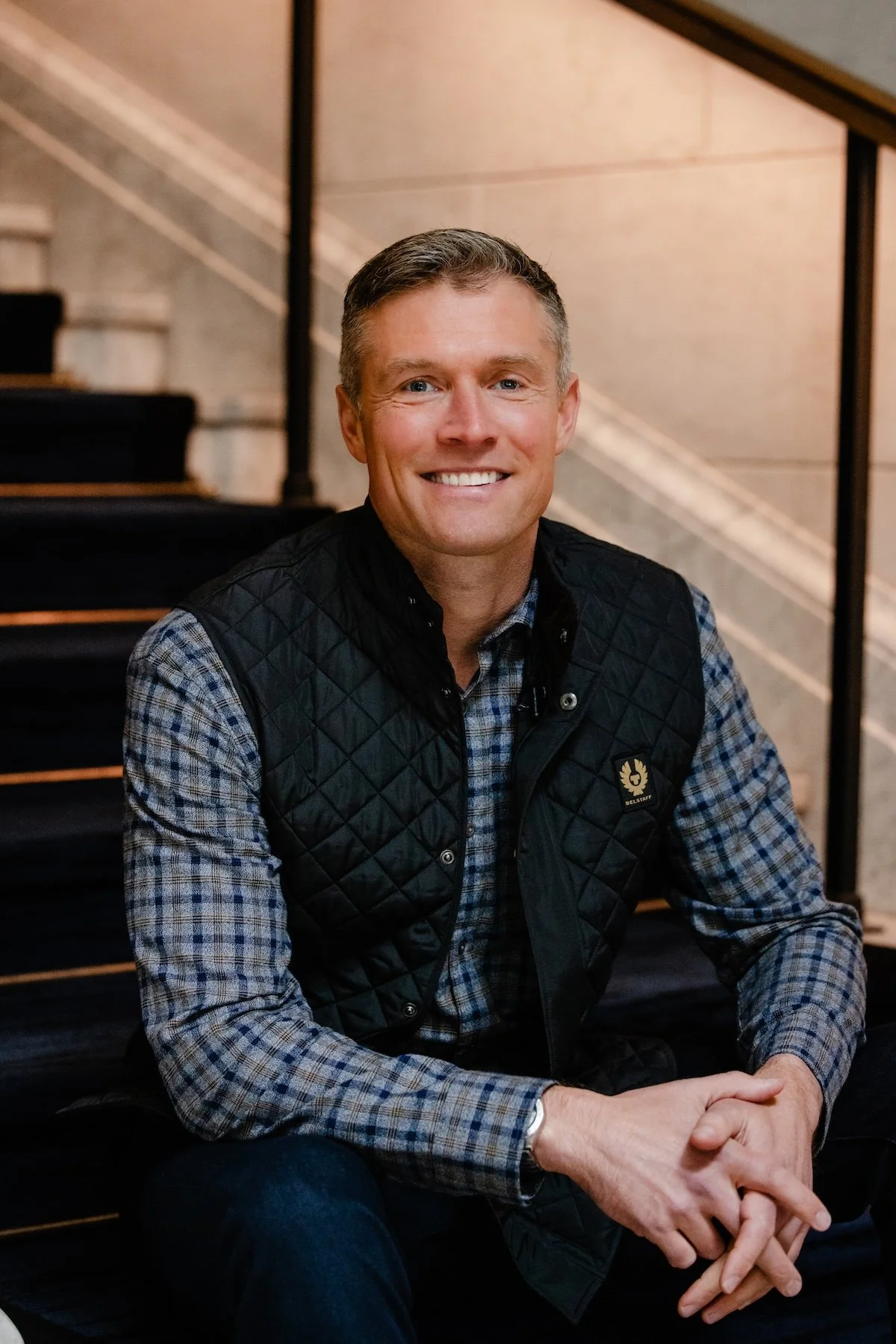
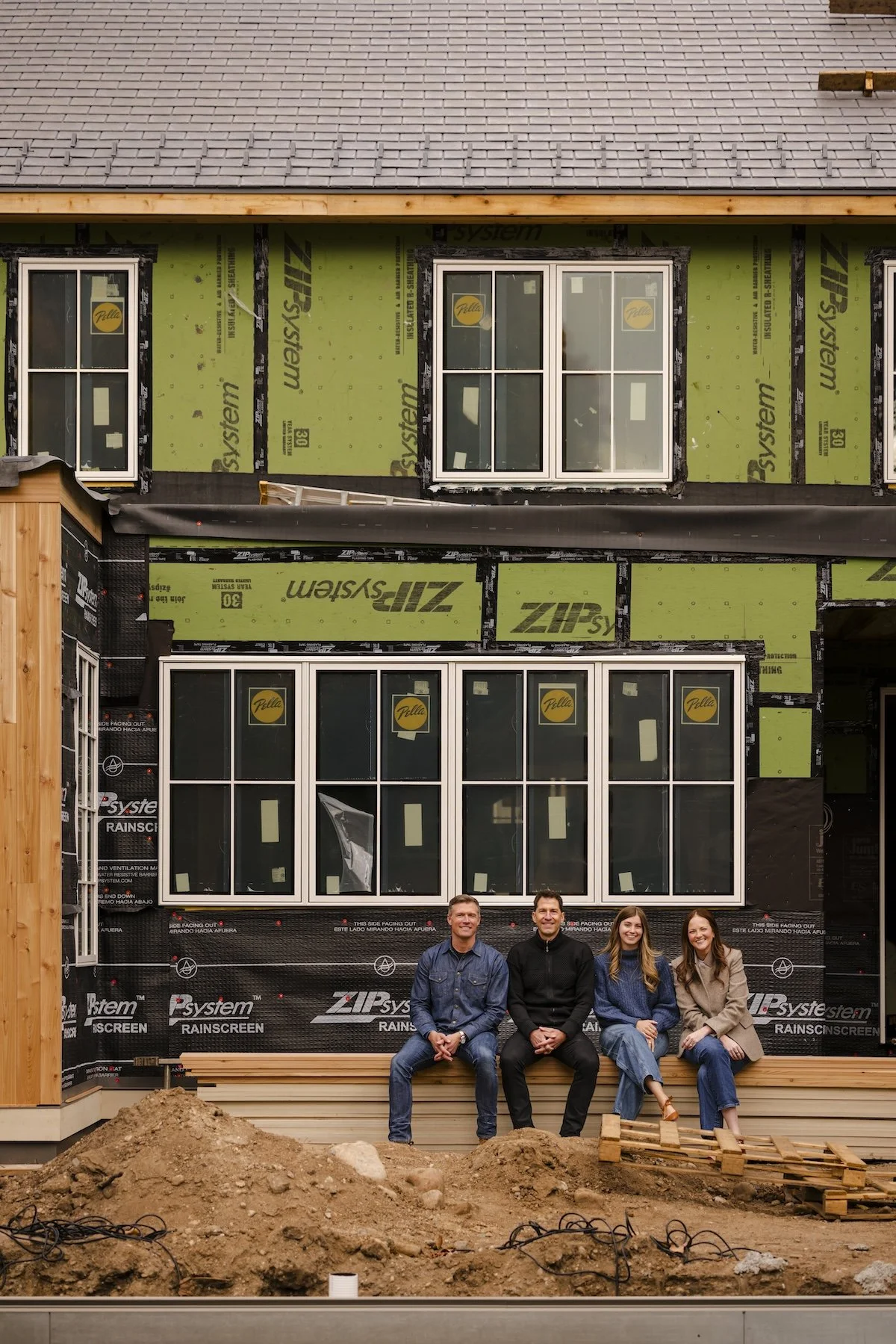
While the Swedish term “mysa” doesn’t have a direct English translation, the phrase is more of a philosophy in Swedish culture meaning, “to cozy up, especially at home, and spend time together.” Stepping into Mysa Hus (mee-sah hoos) feels like a warm cup of cocoa on a snowy day, or dozing off in the grass while lying in the sun. Created with warmth, balance, and connection in mind, Mysa Hus embodies what it means to dwell with intention, bringing everything (and everyone) you need under one roof. We distill every element of the home down to its most essential, well-loved state, leaving space for your family to thrive. We aren’t building this home based on a blueprint, we are building it based on this philosophy. At Mark D. Williams Custom Homes, we believe in creating intentional spaces for families to dwell well, rooting our spaces in both feeling and function. We’re proud to partner with Oho Interiors and KA Designs to bring Mysa Hus to life, adopting their forward-focused design ethos of honoring the past and designing for the future.
Resources:
-
Mark D. Williams 00:00
A lot of people have been asking for tours. I've given some architects and some professionals tours. Just everyone knows about it. My the neighbor down the street is one of my other designers, and her and her family refer to it as MYSA. How's Mysa doing today? You know, like a person, like a person got its own life force, yeah. So that's, uh, that's the story of Mises, and it's still evolving. Welcome
Mark D. Williams 00:30
to career splitter Podcast. I'm Mark Williams, your host, today is a special day. Every day is a special day, but today is a very special day. It's the day before Thanksgiving, and I wanted to bring in my good friend Drew Beeson art to be my compadre in talking about Mysa, who's so I have been talking a lot about me. So if you follow our social channels from Mark Williams Custom Homes, I allude to it a lot. We have our own dedicated channel, but I want to spend at least an hour just talking about from the beginning idea, the reason why, what we've learned partners that we brought on and where Mr. Hoos is at today, I've brought on to this date. I brought on Melissa oland, one of our designers, or the designer, Carl Adelbert, his episode just aired episode 140 who is our architectural designer. And so I thought maybe at this point it's probably time for me to come on, share my point of view on it. And so Drew was kind enough to
Mark D. Williams 01:21
give me someone to talk to. I'll be carrying probably the majority of the low, but drew will ask a lot of questions. So Drew, welcome back to the podcast. Thanks for having me. Yeah, we just had a yummy ramen. It just snowed. So I feel like this is very time we toured Mysa, who's together. What was your you've heard a lot about it. Was your first impressions?
Drew Beson 01:42
Well, first impression of the ramen. First. First things, first when the weather dips like it did today, and we go from being pretty mild and doing all the last of the season wrap up stuff yesterday, to all of a sudden, waking up to snow and it being cold and windy and you got to scrape a car, you know, when you when you're able to have lunch like we did today, which makes my cheeks nice and rosy. A hot ramen was fantastic, and kind of warms you on the inside. And doing our walk through just right before that was interesting, because I hadn't seen the space I've been seeing little tidbits on social and, you know, hearing about kind of what's happening, and kind of the idea of some of this. And then I was listening to and reading and learning more about it, but then to see it in person, I think, is huge. I'm a tactile, visual person, and I thought the space was great. A lot of times when we probably are going to talk about scale and why that stuff is important, talk about the setting and why that's important, but feeling comfortable or cozy, which is kind of the principle that this is built on, I think it's a perfect time of year to be talking about this and to see it for the first time was great, and I'm looking forward to knowing more.
Mark D. Williams 03:04
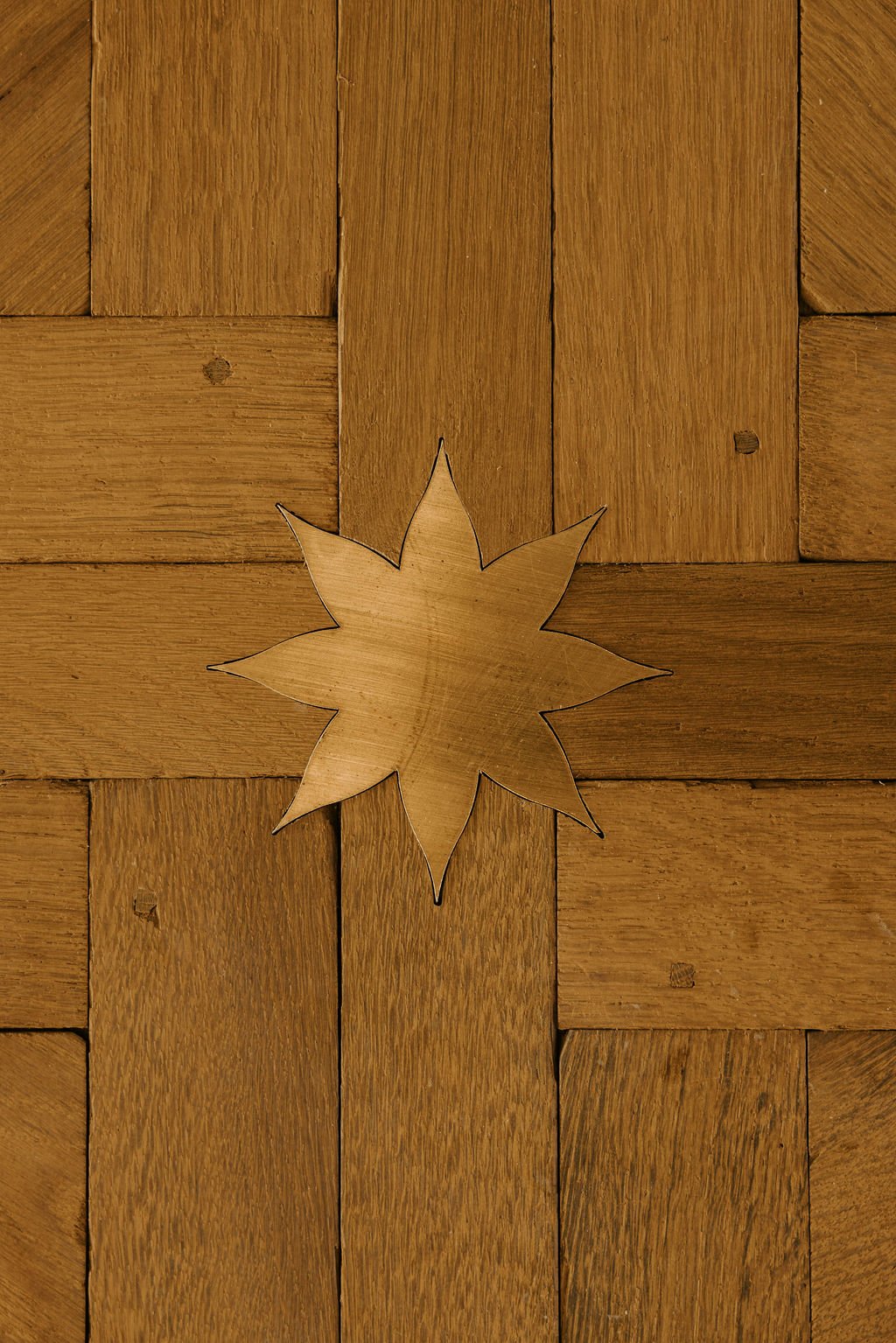
Yeah, well, I mean, just to set the stage for the audience, you can again go to our Mysa who.com's to follow the actual build on the website, and to see what we're going to talk about today, which is the philosophy that we've built around Mysa who's and then obviously our Instagram handle Mysa who's is probably the most up to date stories today, we walked in and we were actually drawing out all the flooring. It's actually from a company called arboni, and we get it locally in Minnesota from a company called Oxbow. It's installed by a company called Alpine
Mark D. Williams 03:35
and but anyway, it comes from Belgium and so anyway, so it's kind of cool from from Europe, and the reason I picked it is it has a lot of linseed oil, or that's how they treat it, and linseed oil is just a lot more sustainable than maybe some of our polyurethanes and some of our water based finishes here that we use, that I've used mostly in my homes. And we'll kind of go back to the beginning, but that's where the house is at right now. We're actually letting it dry for another week, and so they'll start installing the floor the Monday after Thanksgiving. So those floor, the boards that were down, they've been sealed in the linseed oil. Yes, because everything smelled neutral or good in the house, I think the alternative that you mentioned, like polyurethane or whatever, that stinks to high heaven and it stays stinky for days. Yeah, I mean, the old way we used to do it with oils. It did the water based finishes that we most commonly use now, just water base. It doesn't have that smell. I can't remember last time I even did oil. It's been a long time, but this is actually was pre finished in their factory. And then we'll put one coat of linseed oil on at the end. But it's a little bit like soapstone I think you put on for care, like if it loses its it has a really nice, organic matte finish to it. And I think it towards the like, every couple years you would just either have alpine or do it yourself, just put on some linseed oil, rub it in, almost like you're treating the wood, almost like shoe leather, like, you know, a nice pair of, you know, leather shoes, you'd want to buff them and oil them so that they that linseed oil kind of soaks and saturates the wood.
Mark D. Williams 05:00
Well, let's start at the beginning. This property is in cottagewood, Minnesota, about five minutes from our office. And I the neighbor, I was doing a remodel two years ago, maybe, and they called me and said, Hey, we saw your sign on your remodel, and we had a death in the family, and we'd like to sell our home, and the home was way overgrown. You know, really bad shape had been added on, kind of a Frankenstein house had been added on, like, eight or nine times over, probably 5060, years. But it was kind of just hidden. It was so overgrown you couldn't even see the house, honestly. So, long story short, I called a good friend of mine, a past client and a mentor, and I said, I think we should buy this together, and then we'll get a build job off of it. So we did, we sold it, like maybe four days after we tore it down to to somebody in that neighborhood, actually, their mom was gonna buy so we designed a house for them. It didn't work out. They ended up moving to Charleston or Raleigh or somewhere in South Carolina's. And so we got the lot back, and then we sold it again. Four days later, we put some balloons on the mailbox, and we were just out there one day. Carl Adelbert, who was the architectural designer on the first home, was out there with me, and a couple drove by, and they said, We love this lot we've been looking so we quickly designed a house for them, very fast, faster than we ever normally would design, because they were still kind of in that interim phase. They ended up deciding a lot, was it big enough for them, and decided not to build so that we got but that. But keep mind these, this probably took a year. So the first one, we went all the way through almost permit set like we went a long way, six, seven months. And then the second one, that was about three, four weeks. Long story short, we spun a year what looked like a slam dunk. We sold it right away. Ended up being a year, year and a half later. We're stuck with this lot. We can't sell it. And, you know, there was temptation to maybe sell it to another builder. And I was like, Man, I have Carl has drawn two plans that he didn't get. You know, really paid for. I've spent a year of my life designing on this beautiful lot. And you know, I wasn't really upset. I just at the people life happens. I'm fine with that. It was mainly just, this is just a gem. I really got to know it. So I, you know, decided, In for a penny, in for pound, let's go all the way. So I knew that I didn't want I hadn't done a spec home since 2008
Mark D. Williams 07:19
Well, we 2008 and 910, were really bad years for building as a really massive correction, right? So I've really been Gung shy. I've often thought that maybe I've, I've held back my own career. I've seen other builders that maybe have been more okay with leveraging and borrowing money, and I just, I just always ran a cash business and so, and I'm not saying it's right or wrong, it's just more of an observation. And I also knew that I tend to do things too nice. So one of the biggest I'm really good custom home builder. Like, if I'm building for you drew like, I will knock it out of the park, because I really get interested in what you know. I'm curious about you, your family, what you want. And I always say, like, the land dictates it, the client dictates it, the architect, the designer, all that together makes that home really special. But I didn't want, I wasn't interested in just doing like, a four bedroom house that was a couple million like it just, it was too vanilla. I've kind of said that if you, if you build a house for everyone, you sort of build a house for nobody. That's how I feel. I'm not saying it's right or wrong. That's just how I feel. And so I really felt the need to come up with something special, something unique, something that I would love. Because in absence of a client, I sort of am the client. Now. I'm not. I'm certainly not the first builder that has built a house for themselves, except my joke is, I can't afford my own work, so Me neither. Yeah, exactly. And so
Mark D. Williams 08:40
I was like, Well, how do I do this? Because I what I wanted. It's too like, do I build a two story? Do I build a Rambler? Like, and actually, the first client we had, we built the Rambler, main floor, living ranch style. The second client, we built a two story. So we had actually built two completely, like, it would have been easy to do either one of those plans. We'd already developed it. But like, it wasn't, it was their home, so it wasn't the home that I wanted to create. So you could have fulfilled both of the dry runs and seen either one of those to fruition, but instead,
Drew Beson 09:12
you didn't fall back on one of those. You probably learned as much as you could from both of those tests. And then you go, it's a plus b, and it can be X, Y or Z. It could go any direction from there. So what did you learn from the first two that made it into the final cut? And what is, you know, totally different? No, that's a great question. I one of the things that happened in the first home was, is she wanted a really long she was a swimmer, so she wanted to wake up in the morning, exit her bedroom and go swimming in the pool. So we toured it today. The detached wellness studio is exactly where her owner suite was, and that's where the pool. So the location of that, well, we have that. We built a two story. So we built it for a traditional family. I mean, it could be anybody, but.
Mark D. Williams 10:00
But the bedrooms are all upstairs, to minimize my square footage on the main level. But that detach Wellness Center, if you attach, it could easily have been an owner suite, so that, I would say, in concept or lot placement sort of was similar.
Mark D. Williams 10:14
That home was really contemporary, where Mysa, who's is not contemporary. The second one really nothing other than it's a two story. So nothing specific. There was that was more Cape Cod, and that really doesn't play into Mysa Hus. We did play around a lot with Rico orientations. So, but no, I would say nothing, really. I shouldn't say that the golf simulator. We did add the golf simulator. I did that for other reasons. This neighborhood has a lot of ex hockey players in it, and it seems like a lot of hockey players get into because their Ian coordination seem to get into golf. And so the idea was, I'm guessing that whoever buys this home will likely either be an extension of somebody in my network, a past client and someone they know, or likely the neighborhood itself, either someone within the neighborhood, or someone who knows someone in the neighborhood because they come on holidays or whatever, because this community is very special. I think there's only 264 home sites in cottagewood, and just having driven through today, I think I'd maybe been through the neighborhood. It's It's private. Once or twice, I was at a big fundraiser, probably in that 2008 range that that year. I remember it being special and feeling much more like township or like a small community rather than a city. And you explaining to me just about kind of how cottage would works, or that it falls within the larger city of Deephaven, but that it's it's unique because of that, and
Drew Beson 11:42
really a unique community as a result, and with a general store and some other things that are very unique to the article. Yeah, the
Mark D. Williams 11:48
general store is, it's just this old fashioned picture. You went to a local resort town and, like, you're at a hotel, and you walk down the street, like cobblestone street, and there's a little general store that you can get ice cream or toffee or kind of old world things that don't really exist. Here you see it on the East Coast, you know, Kenny bunk pert Maine, or something like that comes to mind, and that's in this little town. It's just the most charming thing ever. And you like, well, as soon as you do it, once, you're like, I want this for my and I have young kids. So I have three young kids I'm thinking like may Simon Tate riding their bike down the streets, like a block away, you know? And it sounds like you put your name on a till, so you just cash out at the end of the season. So you put in, let's say, 1000 bucks or whatever, and the kids can it allows for this really cool community, and they're very we're actually one of the sponsors. I want to be very ingrained in the community, so we're one of the main sponsors each year. And, you know, we support, like we have the Santa Sleigh Ride coming up. They do all kinds of other, you know, pet, your puppy, llama stuff. I mean, they've got all kinds of stuff, because there's a lot of kids. When I first went to the home there was like, I think the neighbor had five kids and two twins. And I was like, Oh, my kids. I really felt this really strong desire that I wanted to be there. And I've always kind of used myself as a litmus test of, like, if I like it, somebody else will. So back to me. So I'm I didn't want to come with just a, you know, blank piece of paper, vanilla. I wanted something special. I wanted when we I knew, oddly enough, I knew the team before I knew the project. I knew Carl. I mean, Carl's my neighbor down in Minneapolis. He's one of the reasons why I got into Ultra running. So, you know, trained for 50 miles, 100 miler. He used to do a lot of Iron Man. They'll come up later in the story, because we didn't figure out the wellness thing till about four or five months into design that actually now it's like one of the primer things of me, so who's but this is very much a discovery of like, not who I am, but it's a big part I look. I mean, I'm all over this house myself, personally, but I've discovered a lot about what I'm really interested in, as after a 21 year building career, and then my personal life, my family life, all these things have sort of melded into this now, this brand Mysa, who's so I had just gone through rebranding with Mark Williams custom homes. I had the cures builder podcast for three years, or at this point, two years. And so I was really keen on branding. I wanted a story that was sticky. I wanted the brand. I just love stories. You told me just an amazing story. Like, I will listen. It's interesting. I wanted the sellability and the brand of this home to be so sticky that it would sell the home before anyone even saw it. Like, how could I create a story? And I don't think people think about homes this way, especially not a spec home. You think about a personal home, maybe like I can do you remember the address of the home you grew up in? What's the address?
Drew Beson 14:25
19690, very memorable, actually, because my uncle made the joke when my dad bought the house. He said, Look, Dave like 1969 the year you graduated from high school in zero. What you were?
14:41
19690, that's pretty funny. Actually.
Mark D. Williams 14:50
This episode is brought to you by adaptive. If you're still chasing checks and juggling spreadsheets, it's time to upgrade. Adaptive is revolutionizing how builders get paid with AI. Powered bill pay, automated draws, one click payments and built in Lean waivers, Faster Payments, fewer headaches and total visibility. Adaptive takes care of the back end chaos so you can focus on what you do best. Building. We've used adaptive for two and a half years, and trust them to keep our projects moving and payments flowing. Learn more at Adaptive dot build and simplify the Pay Process today. For more information, you can also listen to episode 10 and episode 15. I've asked that question before, because as children, now we're adults, we're both 4544 Whoa, boy. Well, man, yeah. Well, you look like you're 34 so come on now, thank you. It must be that ramen. That's the youthful but the point being is, like we have very strong memories and stories with the home that we grew up in. For sure. I had coffee with my dad the other day, and he asked me, What home we lived in was the most memorable, and it was, without a doubt, the address I just mentioned. We moved a lot. I mean, I think they're on home number 19. I remember probably five or six homes, but that home we lived for 10 years, and all my childhood memories are that house. Anyway, going back to story, I wanted, how could I create that in a one off? So I worked with Molly windmiller, with lab Minneapolis. She's helped me with some brand work for curious builder. And I sat down with her, and I said, Carl, my neighbor. He's going to be my architectural designer. He had also designed the other two. So I definitely wanted to reward him for his patience. I mean, having two clients, you know, jump off the ship is rough for any artist. But I knew that if Carl and I left alone, it would probably be very dude, bro. It'd be very and I don't Carl could design anything, but it probably would have been me. I would have gravitated towards something very manly, very, you know, more Scandinavian, modern. I knew also just being Scandinavian myself, you know, I'm a, you know, Norwegian, Swedish, German, Swiss, you know, European mutt, right? Which is fine, but I love that culture. We'd actually done our honeymoon there as well. We went to Iceland, Norway, Sweden, and all these places. And so I just love the culture. My mom, Lindquist, you know, very Swedish name. And, you know, all those stereotypes are true. We like all those foods. And anyway, so I'm like, I want that's a big part of me. And so I approached, oh, so picking the team. So Melissa oland from Ohio interiors is just a lovely human being. I just just adore her. She's warm. She's inviting, very traditional. And I knew that most of my clients are women who pick the home, right, the husband. You know, my one i designer one time that used to say, Happy wife, happy life and and so I was thinking about that, like, if Carl and I are alone, like we need this designer, this tripod, you know, to be really stable in design. And I wanted everyone to have some ownership of this. And so I famously told, or infamously told, Melissa, she has a five to one veto power over me, because I have a strong personality. She got voting shares, she does, and so I wanted her, If I ever got down to it right, would pick something to against the grain or against what, Mysa, who's we didn't know what it was called at that point, I gave her kind of the authority be like, No, she'd wave her fingers like, don't let you use my voting power. She's actually never had to do that. I kind of just joke with her. So anyway, I went to Molly windmiller, and I said, I want to be Scandinavian. I like Scandinavian design, not modern. So I kind of just painted this picture. And she's great at getting stuff out of me. So I, you know, we talked about heritage, we talked about things that I like. I gave her a bunch of images and homes that I like. I used, you know, oh, Ho's brand, you know, just like her as a person like she Melissa oland actually took May my daughter's baby photos. Before she was a designer, she actually took her daughter's baby photos like you can't make this a legacy together. Yeah, there's this huge backstory I needed people I could trust, people that believed in me personally, but also the brand and people that I just really was comfortable with. And I just adore both Carl and Melissa anyway. So it's like I'm assembling this dream love team and so. And I said, I want something. So she said, Well, describe what you want this house to be. And as you know me, as my personal friend, you know this is how I talk. And I was just like, I just start. I just started talking out loud about I said, it's like, today I want a cold, blustery, cold winter day. I want to sit on a chair looking at snow falling with a novel in my lap and a cup of hot coke with marshmallows in my right with a warm, fuzzy blanket, I want to feel cozy like that's I want. Can a house elicit this kind of emotion? That's what I want to feel. And she was like, that's exactly what we're going to do. So we went through a bunch of word searching and MYSA means cozy and Swedish, that's how we came up with it. Was my description of what I wanted the home to feel like in the story that grabs was all based on that. What I just said this warm, fuzzy feeling in a sun room with a blanket. And so as soon as I we wrote, we had a few other names, and high G had been a very popular name for like, the last four or five years, and I just don't like the word high key, and didn't come off my tongue the way I liked it. And Mysa was like, Ooh, Mysa. I like Mysa a lot. It's quick to say. It invites curiosity. I love it when people ask me, like, Mysa, Mysa. I love it when people mispronounce it, because that's when, you know, it's like, they want to say it. And I was like, well, it's Mysa who's and it's cozy. This home is gonna be cozy. So any. That's so we create. They created all the brand assets for us. So now we have a brand. So Mysa, who's is the brand is the story. We haven't started designing the house yet, by the way. This is just all coming out. So then I sat down with Carl, and I just, I, we needed Carl's amazing, but he's like, it's a blank piece of paper. Where do we go? So we have one of the principles in the whole Well, the whole when we're still discovering this. But one of the things that was really important, the reason I spent so much time I never would have thought about this other than I would have been bored to come to market just like, I'm really bad at just matching what other people do, or just going into the market and saying, like, hey, what's selling? Most people do it that way. Who knows? Maybe that's a better way to do. It's just, it's a not interesting to me. It's not my skill set. It doesn't get me excited. It doesn't make me want to get out of bed. I never could have done what I did unless I just the sparks of curiosity were just flying off of me, and so I didn't, I couldn't do it if I wasn't excited. So this other way excites me. We'll find out at the end whether it was a good idea or not. And so I we have to. He's like, was it a is it a two story, or is it a one story? It's like, Man right out of the gate. What do we do now? I wanted a philosophy that when we got to decision making, the philosophy dictated what the decisions were, because I didn't want to go through this build and just do. I don't want to have to have every single decision be my decision. I wanted the philosophy, like independently, to make to decision, to make the decision like it would like. I wanted the philosophy to be our client. I wanted it to be a filter, so that by the time it got to me, it was like, Oh, well, that's obviously what it is. It's that. And so the only thing I really had to pick was this one decision, which is it still, you know, because something that's cozy could be one story, two story. I mean, there's still some variation there. So I said, Well, I'm going to use my life and my family as the archetype. So, you know, pretty simple. People have done that before. So I have three kids and my wife, Melissa, so we're like, tell you what we're going to make it a two story, because that's what I would want. It also helped. You know, there's hardcover percentages. So in order for I knew I wanted a pool, because big, long backyard, the first design we had done with the other client had a pool too. And so anyway, so we knew that if we got too big on the main level, we wouldn't be able to do pools. So that was another reason. So we did the two story. We started laying out things that were important. Like, I love a sunroom so in my personal home that actually the windows that look at Carl's house. Oh, by the way, funny part of the story, Melissa Olin's primary designer, Kate Sikorsky, is Carl's neighbor, so you've got mark the builder, Carl the neighbor, and Carl's neighbor is Kate Sikorsky. So the three of us are literally three homes in a row in South Minneapolis. You can't make this stuff up, no. And I'm very serendipitous person. I'm like, That's cool. That's all part of the story. We did this video. I don't know if you saw it on Instagram, where we all came out and raised our coffee and wave it. Someone asked if we rented homes to do that like, no, but that wasn't in the budget. That wasn't in the budget. Easier to live that method of an actor, right? That's what I would
Drew Beson 22:59
do, that kind of convincement. Yeah, right.
Mark D. Williams 23:02
So anyway, I Yeah. So then I guess the next part was, oh, I wanted things that meant a lot to me. So we started going through because Carl's a very good question. Asker, he's asking me questions. Tell me more about Mysa, who's so I'm like, well, the sun room is I have experienced in 21 years that my clients the most, the thing that they love the most is a small, well lit room in the house that's cozy so it fit all of the things that miso, who's is our The nice part about our lot is it's straight south facing off the back and straight north on the front. It's a right long rectangle, well, the pool, the sun room, everything is just these amazing Windows coming in. You know, I've been a supporter of Pella for 21 years, and there have been a big, big reason for my success as well. So I knew that I wanted to Windows as many windows as possible. And so the sun room was probably room number one. Have to have a sun room. I wanted the rooms to feel cozy. So a bit going back to the philosophy. One of the philosophies for me is, you know, I grew up without a TV, and one of the huge benefits of that is we spent a lot of time, you know, doing games, doing puzzles, going outside, just spending time as a family, reading books, you know. And while I understand that people need to have a TV potentially in their house, I actually my first house ever built funny story. I didn't put a place for a TV, and I almost couldn't sell it, because no one knew where TV could go this way before Wi Fi TVs existed. And I've never made that mistake again. So I'm like, well, we will have a TV in the basement. If someone wants TV somewhere else, whoever buys it can put a TV wherever they want. But that wasn't the spirit of it. I deliberately made the rooms, like the bedroom smaller, not they're nice sized, but smaller. So I wanted I've heard stories my kids are younger, but I've heard stories like, when kids get in their teenage years like I don't want them just disappearing into the rooms. I want common spaces so the kids come spend time with us as a family. I wanted this home to be a refuge. One of the early ideas that I had that made its way all through the home was I love going to like a cabin. You know, in the mountains or up north in Minnesota, there's no cell phone or service. Yes, there's no one around. It's quite it's relaxed. You can literally feel your body just like, relax. Heart rate goes down, for sure. You just it's very cathartic. It's just like, Oh, this feels good. I wanted, I was fascinated with his ideas, like, Could I make a home in an urban environment feel like a cabin? That was very much part of this philosophy, spirit of what I didn't know it at the time, but I was seeking like that, to me, is wellness as mental wellness? Yeah? A retreat, right? Retreat? Yeah, a refuge, getting away from your phone. So early on, I had this idea. Do you know what a Faraday cage is? Yeah? So for those that don't know, a fair day cage is like a electric cage around an object that, if you electrify it, signals can't come in. They use it to protect, you know, like NSA, CIA, I'm sure they have sort of fair day cages. But in old homes, oddly enough, my old, my home from 1919 has lath and plaster everywhere. It's not electrified the metal in my walls. You basically can't call me at home, which is great, except what I'm trying to call someone, it stinks. Where I was going with this is I had reached out to admit one Kristen Reince, who, oddly enough, you play kickball with. I do. She's great. She is and so I asked Kristen, I said, I have this idea. I don't want, like, when my kids get older, when they like, at dinner time, could I click a button not just turn off Wi Fi, because our cell phones will just jump to the cellular network, or just to the neighbor's Wi Fi. I want to shut off all services in the house so that it's like, like, going to a cabin. And she said, that's a fascinating day look into it. And so she spent a couple weeks looking into it, and couldn't find anything. And in my mind, I'm, like, on my way to create Mysa Hus, I just came up with a generational idea that I could make millions of dollars off of because I was thinking, I was already thinking of how to sell this. I'm like, I could license this copyright it. How many parents in America would pay for this technology to, like, have dinner with their kids? Long story short, one of Kristen's, one of Kristen's security experts, called, out of the blue, called her and said, because she had told him this parameter, and she goes, he's like, do you mind if I ask who this person is? Like, you're raising some very concerning things. To me. She's like, Kristen like, Chris Ian, like, Well, what do you mean? Like, what? No, Mark is great. Like, he's like, No, these are, like, illegal things. And she's like, What do you mean? She's like, it's a felony to do what Mark is trying to do here. I am trying to do this amazing thing. Turns out it's a felony. So it would operate on the same technology as, like, a radio jammer, a police jammer. So now no cell phone service, no emergency signals, carbon monoxide, security, emergency alerts. Nothing can get out of the house. So if something tragic happened, emergency services couldn't be notified. Evidently, that's illegal. But he was joking with Kristen, like, Yeah, this is like what the mafia would want, like Hannibal Lecter, like, people want to torture people. This is so far away what I wanted it to be, just
Drew Beson 27:41
trying to have quiet dinner. I just want a quiet dinner. You want to just tune out for
Mark D. Williams 27:45
a little bit? So does Hannibal Lecter, Yeah, apparently. So anyway,
Drew Beson 27:48
fava beans and a bottle of Chianti.
Mark D. Williams 27:52
So evidently, apologies to the audience. So evidently, that was off the table. Okay, so I said tell you I was laughing my head off. I'm like, Oh, funny. Is there a light version that isn't a felony? Well, this is what I'm gonna do. I am working with a metal company to make like, a metal platter that says Mysa, who's like the, you know, like the graphic on it, and then you'll just put all your phones on this metal thing. I'll just put a lid over the top of the metal be like, three quarter inch steel. Nothing's getting through that so much cheaper, by the way, I'm sure, I'm sure. So, yeah, anyway. So anyway, we're still on this journey of trying to figure out what is we haven't broke ground. We're not done with design. This is probably for the audience right now. It is. We're recording this the day before Thanksgiving of 2025, so this was about a year ago. This was probably October, November of 2024 somewhere in there. You don't have exact timestamp on that. And when you were digging. Was there snow? No, we weren't digging at this point. We're still designing. We didn't break ground till June of 25 got it, yep. So this is still, you know, this a year ago from their podcast, but it was still covering Ida show phase. Yeah. We're designing the house. And so the other things that were important, and I give Carl a lot of credit for this idea, when we were designing the so I the sun room was me, the main floor, the living arrangements. One thing that was really important was I'm not a private person, so I didn't want a lot of blinds or shades. So the front quarter of the house is actually the staircase bisects the house, so all the windows in the front of the house could stay windows, because most women don't want to be seen in the kitchen. If someone comes to the front door, FedEx, UPS, neighbors, whatever, if they don't want to. But I still wanted all the natural light to flow freely through the house, so Carl cleverly came up with the staircase left to right versus, you know, in a different orientation. That's why it's done that way. It came from a very direct request from me. That's what's great about our architect partners and design partners, is we give them the ideas I would never have thought how to put that together. But it's all sort of a manifestation out of these, these thoughts and ideas and philosophies, and then they sort of interpret it in their own way, and that's how that came
Drew Beson 29:48
to be. So as a unique solve it is for that need, yeah?
Mark D. Williams 29:53
Cool, for sure. I mean, very deliberate. It did just randomly happen, yeah? We played around with maybe moving the stair, but it always was in conflict. Right with my goal for it to be open, but yet also be private for the future, eventual Mrs. Homebuyer, the big thing. So obviously, we have four bedrooms up laundry, all that basement. I wanted a game area I showed you. So I love games. If this was my home, I would have ping pong, foosball arcade, probably a hockey bubble Dart room, a place to set up the puzzles. Like, I just love tactile games to play with my kids, because that's the age that we're in. I just love plus, I just love it in general. So we deliberately made an area in the basement that could have all that stuff, but we still had, we didn't forget, there's a big place for a TV or a screen or whatever, and then there's a walk up bar. And then we did the golf simulator. So that we did the golf simulator, as I mentioned before, it could be, it could be a It's not tall enough for football, or, sorry for football, for basketball, but you could do hockey rooms. You could do a place for the kids, you know, whatever they want. It's just all purpose rec room. You could honestly use that as an exercise room if you wanted to. And here's Carl gets a lot of credit for this, because, as I mentioned, Carl and I spent so much time running and biking together outside. Together outside. He and I both just love being outside. He said, most people like I was just doing you're telling me, I want four bedrooms. You want a guest bedroom in the basement, all these things, and then exercise room, which is I exercise, as you know, every single day for multiple hours. Why? Why is it the last thing that gets prioritized in the house when based on time other than your bedroom and maybe the kitchen. Like, what else do you spend that much time in? And why is it always an afterthought in a dark basement, the big key word there was dark. So Carl was the one that said, and he just threw it out as an and this is what's beautiful about architects, where they'll they'll tease out different ideas. And then, you know, they may have done seven or eight editions, and then show you, like, two or three. And so anyway, he pulled this out, and he said, what about, what if the wellness, what if the Wellness Center, or what if the exercise room was detached from the house, instead of a pool house? It was, this is, so you have all this natural light, so we're doing these big Pella multi slide doors. You've got your, you know, peloton, full weight rack, sauna, cold tub, kind of this whole little Wellness Center, and by the way, it's right adjacent to the pool. So after you work out, you know, you've got a saltwater pool. I didn't know it at the time. You got your your grill, your pergola. I'm like, Well, yeah, this is, like, the Garden of Eden. Let's go and so that that really unlocked a huge portion of of the design. And so now I've brought it up for other clients that I'm working with is like, you know, depending on how much the exercise, like, what do you think about seeking natural light so and featuring wellness, right? Yeah, yeah. And I didn't know what at the time, I find I found this out much later, but the wellness industry currently United States is $1.8 trillion it's going to double in the next nine years, so it's a priority for my health and my life and what I love. But I didn't realize what an economical advantage, and honestly, just smart thing to focus on. So back to the house. So I knew I wanted natural products. So now I'm starting to think, we haven't jug anything. We haven't picked anything. This is still all iteration, right? And we wanted, or I wanted, we're still haven't, still figured I haven't figured out the philosophy yet. This is right now we're getting there as kind of going backwards and like how this all came to be. But I thought, I asked myself, What do my clients want? Like, energy efficiency? Because I really wanted, with it being a spec home, I could do some things I've always wanted to work with. Wanted to work with Rockwell, but in the past, my clients hadn't been willing, but I had reached out to, you know, Chris Jessen and the Rockwell team, and they're like, Absolutely, we're here to support you. Let's do it zip Huber. I'm really fascinated with we usually do an r6 so that's two inches or an inch of insulation to the outside, and our 12 is two inches of rigid foam to the outside. So they're on board. So I got to try some new things that have to really push our local market or local industry energy performance to a different level than normally I probably would have been allowed to a client would have asked me, Well, Mark, what's the payback? Mark, what's the and I'm not saying that those aren't good questions. I certainly asked them, but I knew I wanted to go well above that to also say that I've done it, I do it. And we were one of only the like, I think there's only, like, four homes in Minnesota that had done an R 12 at that time.
Drew Beson 34:07
And so just the idea of exceeding expectations, if the expectation doesn't exist because there isn't a client, you're building this on spec, you're basically just have to scratch your own itch at this point, and you're thinking, what's important? What are things that I would do or would tell someone to do, if I didn't have to convince anyone that it was the right thing or was a good idea to exceed whatever expectations might might be out there. And certainly it's the kind of thing where somebody looks at the ROI and goes, well, can we get that and we scratch back some of that cheddar? And the answer is, of course, a person could. But because you're doing this ahead of someone asking for it, you can, you can do it better than what would be expected, or what the industry even above average is. And I. A result, you go, this is a premium product. This ends up being much nicer than most people would would ever get if they were building it for themselves, and it'll be more efficient as a result, 100%
Mark D. Williams 35:19
This episode is brought to buy Pella windows and doors. I've used Pella for 21 years as the exclusive window company on every one of my builds. When people ask me who I trust for windows and doors, it's Pella every time. Their craftsmanship, their innovation, the top tier service, make them a no brainer for any custom home builder or designer who demand the best, whether you're designing something bold or building something with timeless elegance, Pella has you covered. They're also the only window company that has a lifetime warranty on all of their windows. I've gotten to know all their people at Pella corporate, as well as locally. Here at Pella Northland, I'm proud to call them our partners and our friends. Visit pella.com to learn more and connect with your local reps today. Also for more information. You can listen to episode one, where I interview their founders, as well as episode 109 where we talk about the innovation at Pella. You hit on a really key thing. I mean, you know, we both love good food in restaurants, but like, you know, when a when the food is served to you, you the experience the maitre d, how they treat you, the hospitality of the space you're in, the food you eat, but you didn't see the fat being trimmed. You didn't see how it was prepared. You didn't see how it was brined for 15 weeks in a cellar in Northern Africa and then shipped over on a on a handmade skull. So to be tenderized in the Atlantic Sun, like, what
36:36
that'd be amazing. It's like, ah, that's rotted meat by now.
Mark D. Williams 36:40
But like, the point is, is like, when you see the how the sausage is made, you're less likely to, you know, say you want the end. So when someone comes through this house at the end, remind me, at the end of this, I'll tell you, like, what my plan is for marketing and stories at the end. But I get to do all this stuff, because right now, at face value, they're like, how does this benefit me? Because when most people come through the home, they see the cabinets, they see the windows, they see the jewelry of the house, but all this other stuff. To a lot of people, some people, it's sexy, but a lot of people, they're like, yeah, they're not that interested.
Drew Beson 37:08
It's more the skeleton or the behind the foundation system or whatever else that that. People go, Well, if I see a finished house, I wouldn't know anything about that. In fact, there could be whatever back there, and as long as it looks pretty, they go, great. The last time someone
Mark D. Williams 37:22
came to you and be like, you and be like, drew you have a phenomenal rib cage. It's been a couple weeks. Been a couple of weeks, no, but, I mean, we're looking at the show. We don't, you know, the ribs support, you know, the rest of us are bones or whatever. We're using this for analogy. So, you know, back to the house, that was really important to me. And so, you know, I am. I'm really good friends with Nick Schiffer out in Boston. He's one of my partners on contractor coalition Summit, and he's about a year ahead of me on his kind of prototype house called 45 white oak. And I didn't you were just out there. I was, I was just out in Boston a couple weeks ago, and I did a whole podcast episode about that visit. Nick's work has had, definitely has impacted me. For sure, it wasn't the root cause of it, but it's interesting how we both got to similar paces places for totally different reasons. You can tune into that episode to learn more about it, but that was really interesting how we both arrived at very similar like, ethos and philosophies to some degree, but we got there so differently.
Drew Beson 38:19
I think it's called Parallel thinking, Okay, it's where things are, like invented at the same time, oh, sure, without any nefarious activity, they just arrive at the same destination, like land on the same shore, whether it's electricity or, you know, some sort of big leap in technology or philosophies, yeah, Someone comes up with an invention, and they could be on other sides of the world from one another, and it's just parallel thinking, whether it's vibrations or whatever it could be a multitude of things that makes that happen. But the idea that you guys ended up doing something with a similar mindset at similar times, maybe as an indication you guys are moving the right direction, yeah.
Mark D. Williams 39:03
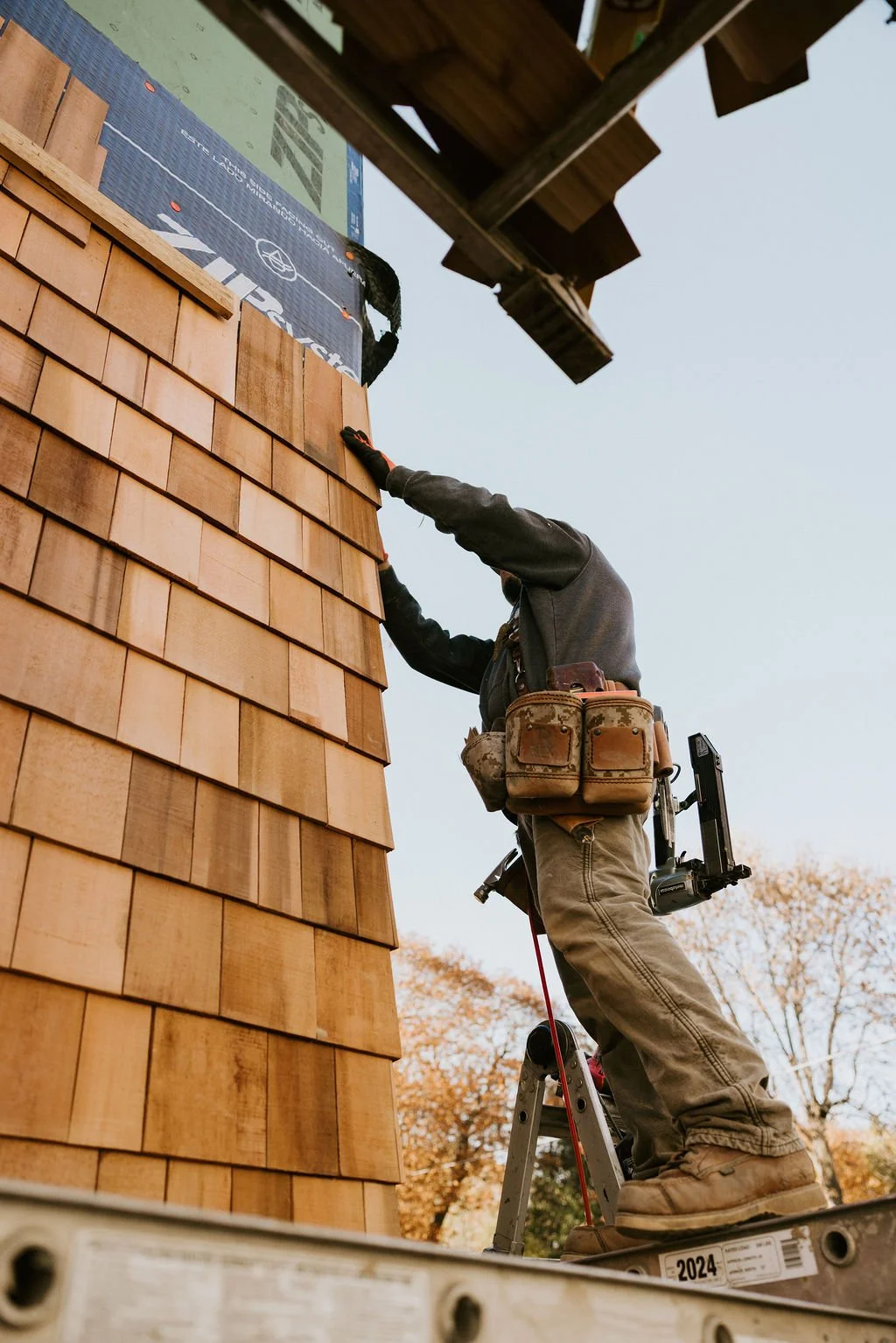
And I think, you know, we love to innovate, back to the partners that I was picking, or even the house. So, like, you know, putting this together with a zip in the rock wall. The rock was definitely influenced specifically to Nick. I mean, Nick does all of his he does. I chose zip to have two inches. Nick actually does, like, eight or 10 inches of rockwool the outside. I knew that in my market, I couldn't afford the labor to do that, or I didn't want to, so I went, I put Rockwell to the inside. And I love Rockwell because of its sound deadening quality. So one thing I became very obsessed with later on, once I unlocked the wellness and maybe we'll get there right now, is I, well, we'll go there right now, and I'll come back to the rock wall. So I asked myself, this home is becoming very energy efficient. I'm putting insulation to outside. I talked to Pella and I wanted to do triple pane windows. I've never done triple pane windows in my 21 year career, and I really wanted to, and they said, We'll support you. Let's do it. And so as I was going through the energy performances, I started thinking, I'm really good friends with Paul crumrich from Greenway solar. And I thought, well, let's. He wanted me to do solar panels. He does Tesla roof. So I went around, drove around, and looked at Tesla roughs. I'm like, I don't like the way they look. They're too contemporary, they're too modern. They're too they're not me set, they're not cozy. They don't they don't give me off the same vibe that I want. So I wanted the technology, but I didn't want the look for me. And then, and I was thinking, Well, do I do geothermal? But I was thinking about all the costs started ringing up really quick. And I thought I just stopped myself, because my dad has always been someone who builds economically. He builds what the clients want, and he just and he's done very successful career, probably more successful than mine in terms of financial freedom and financial I've always been more of the pursuit of curiosity and interest of like the art form, for better, for worse. That's just what interests me. And so I thought, this is where my dad is. Like none of my clients, I've done one geothermal in 21 years. I've never done a solar. And I thought, Well, then why am I putting on a spec home? And once, and then here was what unlocked the whole thing. I can't, I don't know, honestly, I can't remember how it came into my brain, but somehow the word wellness came into my brain, like live. Well, oh, I know it was we did some mnemonic phrasing, or not mnemonic, but like, play you on words, like dwell well. And I think when I saw dwell Well, or like Mysa, who is dwelling well. And so that made me that came from Molly windmiller. Somehow it was in this washing brain, it just came out that wellness that was the missing link for the whole house. When I stumbled on that this house, because I knew it was going to be cedar exterior because I I've always liked biophilic design, anything that resembles nature or is nature is real. We as humans, it seems like we gravitate towards fire to water. You know, I used to always joke with Sven Gustafson, who owns Stonewood. He has the best name in the business, Stonewood. Like, that's such a powerful name. And I joked on the podcast I had with him, I was like, Well, I can't you have Stonewood. So I can't be fire and water builders. Who wants fire and water, builders like that does the very negative connotations to a structure, but we do love those things, and so I when wellness hit on me, it unlocked for me. It was like the magic key. The whole house coalesced together. Now Mysa, who's had its philosophy intact, wellness is my filter for everything. So now, like the cedar shakes, those are natural the product we're putting on them are natural based, no like VOCs or any chemicals, things like that. I then pivoted away from spray foam as much as possible, because spray foam off gasses. Now there is some spray foam because it's really good at air sealing, and there's some flat roof center that so sometimes you have to, it's like, I think what the one thing else I learned during this process is that wellness means different things to different people, like the wood floor. We talked about the linseed oil in the very beginning, like that is much more of a wellness based product. Honestly, the triple pane window stayed not because of their energy efficiency, but I became really fascinated with the pursuit of quiet. Back to the refuge thing. So a triple pane window, that extra pane of glass, really quiets things down a lot. Now I became, like kind of obsessed with it. So all the interior walls have rock wool. Now rock wool has been often used for deadening sound. It's great at that, but I did it in all the exterior walls. I did all the interior walls. You were walking in the house with me just a minute ago. We have 90% of it sheetrocked, but the Owner's Suite, we're putting wood so in it just you walk, it sounds like a sound vacuum. It just sucks up sound well.
Drew Beson 43:14
And there were fans and heaters and all the things on that were trying to get the humidity right in the in the flooring. And we would leave one room and go into the primary suite, and it was so quiet, and that's with noise down the hall, which is that's so strange. I mean, I live in a house built in 1951 if somebody's walking in the living room, you can hear them on the other side of the house. This is the opposite of that. And the just because I was going up and down the stairs too, I was seeing 18 inches between the levels of floor and and insulation in between there too. So, I mean, just the entire thing sounded so quiet and felt peaceful as a result. I mean, it really was, there's a cool sensation to be, to be in a space that's like that
Mark D. Williams 44:06
one thing that, and we obviously have to put sheetrock on. But when we had none of the sheetrock on, it was only Rockwell and I was downstairs. Have you ever gone scuba diving or snorkeling when you know, when you first go underwater, and all the ambient outside noise like you go underwater and you can hear like it just deadens everything. That's what it felt like coming into the house. You almost feel like the air pressure on your ears change. It was, it was kind of wild, actually. And it almost felt like you'd have a down pillow over your ears. That's kind of what it felt like. It was just really muffling and sheetrock ads, of course, echoing back on. So what we did is, we have all that sound insulation, but we also it's called Silent RX. It's actually a rubber fiber in the sheet rock. We didn't do it everywhere, but we did it between the main floor and the basement floor. So the whole idea is, like, Could I be in the kitchen or great room, and if someone's walking on a wood floor? Because traditionally, if you have wood everywhere, because the whole The other thing is. Down to wellness is like, I didn't want a lot of carpet in the house, because carpet is notorious for dust and bacteria and things like that, so I wanted as much hardwood as possible. So the whole main level is hardwood, the whole second level is hardwood. But you know, impact rating is different than sound rating. I've learned a lot about sound transfer, so I knew that the rock wool in the rooms, the way we compartmentalized them upstairs, would stop sound waves, but would it stop the impact of a shoe through wood? So what we did to help with that is we have our extreme Advantech for our subfloor. That's our subfloor that one of our partners as well. Then we have 18 inch floor trusses that we netted and blowed. We do that on all of our homes. But in addition to that, we have the rubber in the sheetrock. And we also did a 16th inch layer of rubber on top of the subfloor, so that the wood floor would sit on top of the 16th inch rubber. Then you've got subfloor, then you've got 18 inches of net and blown then you've got sheetrock with a j channel clip. Then it also has rubber in the sheetrock. So I've gone almost as far as you can go. You can go. You can go a couple steps further, but it became so cost prohibitive to go any farther that this is about as far as I would could reasonably go to dead and sound. And I'm really excited when it's all said and done. Plus, when you add fabric and couches and rugs, I know that someone will walk in and within 10 Steps, they'll say, this home feels different, and I'm just going to smile. They won't know about the year long process that I went through to sort of get there, but that's what they'll say, and I'll just smile. So that was, that's the sound. So that's the sound part. That's been a huge, huge, huge, huge part of all of it. I could go into all the selections. You know, the we're using a lot of antique white oak. It has that really just organic. It makes you want to touch it, kind of a natural, dry feel to it. I didn't want anything shiny. The hardest thing to do in the house, oddly enough, by far, not even close. The hardest thing that we struggled with around wellness was the fireplace. Hmm. So I knew I want to talk about that, yeah, so I knew that the I knew I wanted electric appliances. So we're using Fisher Pakeha, New Zealand, and we went with all electric because I had read an article a couple years ago, and luckily, all my kids are very healthy, but that the amount of people that have respiratory illnesses and asthma, there's a huge correlation between natural gas being burned in the house and that. And this was an article that was very pro electric appliances, and so I don't have any gas appliances in the house. They're all electric, even the washer and dryer. And we have two sets of washer and dryers, one by the pool house and one up above. They're kind of the European style. So smaller, spin faster, those kinds of things more economical, or, sorry, more efficient, but the fireplace, I wrestled with this for like, four months. It was the hardest decision, because having a gas unit, well, first of all, I should back up at one point I was gonna have electric. The whole house is gonna be electric. And then someone came up. I think it was someone just practically said, What happens if power lines go down? Then what? Like, oh, that's a good question. He's like, having a redundant fuel source is really just smart. And this area in cottagewood, you know, there's a lot of trees in shorter wood and surrounding areas. And whether we do a generator or not is yet to be determined. But even if you do an electric battery, like a Tesla battery wall, they're only good for like, a couple days. And so I said, You're right. So we did, do we have gas boiler in the basement, but that's all the hydronic heating. Everything else is electric. So the idea is that you could heat your house in that slab. Would take week, you know, many, many days to cool down, but electric could still have a furnace. So having that dual fuel source is actually just redundantly smart, but no appliances in the house that would like, open atmospherically, you know, gas or anything that people could inhale, like a, you know, obviously a gas burner while you're cooking things like that. Back to the fireplace. So I'm like, well, gas fireplace is easy. I could just point my remote at it, start it up, and Bob's your uncle. Instantaneous, instantaneous. And I went back. We picked designs. We didn't like them. I mean, all our images were wood burners, everyone. It was like, you know, oh, ho and I, you know, it's very traditional, very Carl would put a couple modern, cool Scandinavian and ones like stove and whatever. And we kept, I kept going to appliance stores and picking ones that I liked, or picking a stove, and I just none of them really felt right. And we just went round and around and kicked the ball and month and like, Finally, Carl was like, we have, you have to tell me, you have to decide like that is, that's a decision. Mark had to make. Oh, whole couldn't make it. Carl couldn't make it like that. Was when, you know, the, how does the philosophy dictate that? And I struggled with it is, does the philosophy because a wood burning fireplace, when it starts, it often, it often backdrafts. So, you know, like, you've seen the front of a fireplace where could sit on it. That's carbon monoxide. Well, that's not healthy. So that I felt like that was betrayal of the philosophy here. I thought, man, we spent all this time developing this philosophy, but it's failing me. It's not it's not doing what I wanted to do. And then I thought, if it's gas, then it's great, but it's also like, well, it's just easy, it just point and shoot, and doesn't really fit the vibe. You don't hear the fire crackling, and Carl was the one that really. Helped draw my attention to it. He said, What is wellness? To you? Mark Williams and Ian, I love stories. I said, when I was a little kid, we always had wood burning fireplaces at our house at 1535 the very choice drive. We had a wood box behind the fireplace in our great room, and my dad would get dressed up in his blue ski suit with white diagonals, you know, very 70s. And I would be inside Chevron. Yeah, totally. Chevron's 100% man, you nailed it. And I'd be inside with my dad's leather gloves, or whatever. He would have an orange sled, and he would load up the sled, he'd pull it to the side of the house. I'd open up the window, January, minus, five degrees cold, and my cheeks would get all rosy red like yours are right now. And I would and I would bring him in, he would hand him out, and I'd lower up the wood box. It was like this memory I have that's very strong, of my dad and I, and when I thought of that it was over, I said, That's decision, the decision made. That's what we're doing. Because wellness isn't just what we breathe. Wellness is also like a place of being, like a place of how we feel, how we're balanced in our universe, our world, our house or family. Like that's wellness, too. And so from that point on, I was like, it's a wood burner. And now, because our house is so tight, because of all this insulation back drafting is a real concern of mine. Now we have this really cool glass guillotine door, so you can shut it, so as it cools down, that it'll probably billow and stay in there. But we it cost eight grand. It was pretty expensive. We actually have a fan in the top of the chimney, so you can click the fan and it will power vent it out. So that was my way around. It cost me more money, but I got the wood burner and I can eliminate backdrafting To the best. Because the other idea was like, we'll just crack open a window to let it not vent. I'm like, very analog, yeah. How am I going to build a multi million dollar home? And then just seemed like, that's not gonna fly. Or if they sold it and forgot, what am I gonna have some poor little kid get carbon monoxide because of that? Yeah. So we solved that issue anyway. That was the heart. That was honestly the hardest, hardest decision. And once we made it, just felt right. Yeah. So that's the design. So wow, this is gonna be a lot longer than this is great. So just
Drew Beson 52:16
let her I found myself chopping logs wood last couple of weeks, just right before the weather turned and, yeah, we had a big sack of cut down birch and couple of the hardwoods up the lake, and I thought it made sense to go out there. And it is true that burning or doing a fire like that will warm you three different times. Have you heard that? I have heard Yeah, say it again though. Well, it's chopping the wood, the stacking the wood, and then burning the wood, yeah, and it is hard work, but the truth is that being having a reason to go outside when the weather is cold, and that experience that you described, I mean, I don't remember feeling as good this year as I did right after chopping and stacking a big thing of wood, and whether you want to go through all of that or you just want to hear the crack of the fire, I love a real fireplace, so I'm on board with that.
Mark D. Williams 53:10
Well, I remember when May was little, we had a we had an old home, like a 1926 home down in Minneapolis, and my wife wasn't as thrilled by it. And so I would May was like six months old, she'd be in a little, you know, snuggly blanket, sleeping in my arms, and I would light up a fireplace fire, and I would sit by the fire and let it crackle while may just slept on me as a little kid. So that was, I mean, I wasn't thinking about the time. I just thought of it just now, yeah, you get a warm the fourth time when a little kid is snuggling. Yeah, kids are warm too, right? So anyway, that's the fireplace. So we have the plans, we have the design. So, oho now is making the selections. And I kind of stayed out of I let them make their selections, because I wanted to have them inform it. But we knew the structure. I was very involved with the structure from rockwool to Huber Da Vinci is that we synthetic slate. So I wanted that to feel very European and very just love the way that looks. We worked with Pebble design on landscaping, so I'd never done a living green roof before. So the back of the home actually has a living green roof. It's all the flat roof. You can't see it now, because it'll happen next spring. It'll all be green grass on the flat portion. Wow. And so I can't wait to see because Ian, how you feel like you want to look at a black tarred mat out of your bedrooms. How about a green field? That's cool, pretty amazing. So that's gonna feel really good. And then plaster. I should go back to the inside the plaster. I love plaster. I've always wanted more plaster. And so on the East Coast, oddly enough, I was just out, as you mentioned, seeing Nick All they do on the East Coast is plaster everywhere. So you don't have to tell them anything. It's like, what's sheet rock? Everything's plaster. So I love the way it feels. I love the way the light hits it in the way it feels when you're in it. So I'm really excited. That was a kind of a kind of a bit of a budget buster, because I had a lot of it, but I felt it was really important to what I would want and how you feel. So at this point it is, let's say December or January. The team is working on permit sets. We haven't final priced it out or any of this stuff. It's now brand time. So now I've used what I've learned from the curious builder and. Having brand partnerships and trying now understanding how that works with bigger companies. Of like I want to I have a story. I have Mysa, who's I have a very well defined philosophy around wellness. I have a plan that I needed really good rendering. So you know, nicker, shout out to him. Vincent of on possible is the architect he works with. They have insanely amazing renderings. They're not even renderings. They look like photos, like you would think. The house is done. And so I use that as a I think those ended up costing him. I think he said like four or 5000 per image. Yeah, no small tasks. They're very expensive. So I worked with a local company, Jake Williams, no relation, from nomen. I found him and interviewed him, and we're about 2000 to 3000 per image. I knew that I couldn't market or sell this. I didn't want to wait till the end like I wanted to be telling the story all the way through. I have this great logo, I've got this great brand, I've got this great story. But people need an image. People need something they can sink their teeth into. So, and I didn't want to do, you know, if I'm working for you as a client, we would never spend that much money in a rendering, because renderings are really there to inform like, Hey, do you like this? They're moving too much. I kind of you need for rendering of that quality. You have to make all the decisions on the front end, all the way, like, every single stain color, pink, color, piece of furniture, everything has to be selected. It's the only way you can get these renderings to look that good, even, you know, AI, it's good, but it's not that good. So we spent a couple months getting it's worth
Drew Beson 56:23
it, because you have to be selling the dream at this point. It's not executed 100%
Mark D. Williams 56:26
Yeah, I'm selling the dream. So, so that's all done now. So we did that over the winter. So the international builder shows coming up. It was last February's coming up again this February, but at the time, so I made these little cards with the QR code, and I said, Now I put on my marketing hat. I've got to go sell this dream to all my brand partners. So I created a website, or I had already had a miso who's website, we'd copyrighted it. I had big plans for this, you know, for this dream. I mean, I maybe should put a pin in it. My big dream for this whole thing was not just to sell a house. I wanted to. I want to sell this house. Obviously, I want to build two to three homes off of this house, because it's gonna be the artist at home tour in June of 26 but I would like to build between 10 and 20 Mysa Huss in the balance of my career. Meaning, and it doesn't have to be the same architect, the same designer. It doesn't have to be the same builder, like, if it's in Minnesota, I'll build it. But my big, big plan is to figure out how to license this and sell it to other builders in other states so that they can do a Mysa Hus. And so we kind of have, we kind of ownership of MYSA who's and so I've actually got two builders that want to do it. So I have one in Atlanta and one in Bozeman. Oh, sorry Missoula, Montana. And they're both, we're both right now in early stages of what that looks like. And so I kind of need to finish this house to sort of prescribe what this is. But that's the big dream. Don't know how to get there, but I'll figure it out. And so back to IBS. So I'm going to these brands. I know that if you go to pitch a brand, this is last February, last February, at the International builder Show in Las Vegas, there's millions of people that come to this convention every year, and hundreds or 1000s of exhibitors. All my normal brands that I already mentioned to a lot of them already knew ahead of time, had ahead of time, had a big kind of conditioning that I'm coming to talk to you about this. But Melissa oland came because cabez, which is the kitchen and bath section of so there's the building side, which is like concrete and windows and fasteners and hammers and every other thing that goes into a house. And then cabez is kind of like the glitzy, fancy stuff. It's the appliances, it's the countertops, it's the plumbing, it's all the pretty stuff. And so anyway, we went there together as a coordinated effort. I spent one day just courting all my sponsors for the shell so like, Huber, zip, DaVinci, M tile, everyone that I had relationships with already, I sort of solidified them, and I came up with, like, three tiers. And say, Hey, here's the three tiers. Here's the deliverables that I'll do for you. So at tier one, this is what I'll do. Tier two, this is what I'll do. Tier three, you get all the other tiers, plus this. And this is where I leveraged the curious builder podcast platform and Mark Williams custom homes. So years ago, I had someone that worked with me that was not real impressed with my love of the curious builder. He never saw the value of what it could become. But I never could have done this without the curious builder platform, because these brands not only want builders, and doesn't matter if you have a platform as big as mine or not as big as mine, doesn't really matter. It's just that having a coordinated plan where they all together is just much more attractive to a brand partner, because they can see, they can sell the clients, they can sell the other builders, you know. So you know, so you
Drew Beson 59:20
have multiple so better package, it's a better package, and it's hand in glove. One helps the other 100%
Mark D. Williams 59:25
Yeah, so that's so I've made it really simple, just three, three tiers. I was blown away, but I still am blown away at how the brands responded to what I came with. I'm too close to it to understand why. I guess we'd have to ask them. But a big, big, big, big, big, big part of it was the wellness side of it. They already knew these big companies. They're not idiots. They know where the trends are going. They knew that this was the tip of the spear for kind of the wellness and we're having a huge day with thermal culture. I mean, the lie if you if you haven't seen a sauna cold tub or a sauna ad on your. Instagram the last three years, you must not be on social media because they are pushing that hard. And anyway, that's just a part of it. There's so much more to wellness than that. But anyway, so we went to Vegas, landed a bunch of brand relationships, kept pursuing them, kept talking to them, finished all the design. Melissa helped me on the interior side of it, like House of roles, one of our big partners on the inside, so plumbing and sinks and things like that are amazing. I could go through all the brand partners, but we will save that maybe for another episode. We did do well. We ended up doing a live podcast in Mysa Hus at the framing stage. So one of the things that I've tried to do is get creative on marketing. And so I had, I did a live panel. We did a blog, and it was an episode, I don't know. Yeah, it aired about two weeks ago, so I think episode maybe 138 somewhere around there. And it was, we had two people from Pella, someone from zip Huber and someone from Rockwell. And then I had, I had a closed audience of just my sponsors.
Drew Beson 1:00:56
I did see a little snippet of that, yeah, yep.
Mark D. Williams 1:00:58
And so we'll do one at the end, when the house is 100% done, we'll do a closed door room, or now it's just, it'll be like the finished products. And then we'll do an open to the public one that'll be quite large. Anyway, back, so we anyway, so we started construction Ian, I think what May or June of 25 and and really just been pursuing that. I'm sure there's a lot more to it, and there will be a lot more that we talk about. But we're about halfway through the build now. We're currently the exterior is all done. The pool is in filled. All the siding is done. The pool is filled. We don't want to do without the spring. We have road restrictions, and we only have about one month to get ready for the tour in June. So we got really lucky. It snowed today and we got just enough done to it took a lot of pressure off us for next year. So right now we we've got basically all of December will be tile, January and February will be cabinetry and trim. March and April will be painting and plaster, and then April will be, I guess across over there, April will be all the finishes, and then it'll be, we'll do a photo shoot beginning of May, and then you have a completed Mysa who sits done to sound a shame, yeah. So that's that's kind of, I'm sure there's something I'm Forgive me if I've missed anything, but that's the lie. I spent a lot of time in the front. I really wanted this episode to be about how it came up with the idea, how it nurtured, how it evolved that wellness thing. Oh, two things that came out, the wellness thing. What's cool about brands being attracted to wellness is they bring forward process. Forward products I didn't even know existed so pent air, I think, is the second largest like filter company in the world. They do a lot of pools, and they're doing our Mysa who's pool, but they're they realize that water is one of the is the most precious resource on the planet, and they're developing a self contained system that will purify your water ro it reverse osmosis, but we'll also add minerals back into the water on a whole house system. And our house will be one of the first in the country that beta test this. And so that'll, in fact, they've done it on a few other I put them in touch with Brad Levitt down in Arizona, he's building his own personal house right now. And Brad Robinson, down in Atlanta, Georgia, he's building a house too, but ours would be the first well. The other ones are on city water, so they've got a Jahan. Is my contact there? I'm like, how's the well? The well purifying coming? Because it's coming in hot. You better get this thing ready. So Ian Sheila should be fine. But so brands come to me and say, Hey, we're excited about this. We have something that's in the wellness segment segment, and if it aligns again, the philosophy be like, Yeah, let's grab that.
Drew Beson 1:03:21
What I think is so impressive about what you're describing, and having seen the house and heard about the house, is that there's a tremendous amount of technology that is involved in making this house great, but it's not like a technical project. It's not the kind of thing that as a user, that you need to be a engineer in order to live here. I think it's fantastic that you're getting kind of the leading edge stuff in the house. The efficiency stuff is premium level. But at the same time, it's not the kind of thing that's going to be a complicated place to live, if anything, it's more simplified. It's a kind of place where you want to live your ideal day.
Mark D. Williams 1:04:08
No, I appreciate you saying that when you just said simple, like the house is not simple. But if the outcome could be simplicity, I would feel like that would be a goal worth accomplishing in a place called, you know, it's not too big, you know, it's all relative, right? I mean, it depends on what big everyone's, you know, I think it'll be 52 or 5300 square feet total, if you include the wellness studio I live in, 3000 square feet. So for me, that's a pretty big house. For someone that's, you know, building a seven, 810, 1000 square foot. It's small, it's just relative, but it feels very cozy, and people will come in not knowing what the size is. The likely in past that people have always said the home is bigger than it is. I don't know if this will be the case on this one, because we've deliberately made all the rooms feel very snug, or they're really right sized. One thing I noticed in going on a tour recently is these homes were beautiful, well executed. For me personally, this is no shade on the homes that I walked through. They were out of balance. They were too big. I don't like being a little pebble in a big box. I was out of state recently, and I was touring some monster homes, 1015, 24,000, square homes. I'm just like, I have so I have zero interest in that. Yeah. How many places do you need to sit? You know, it's weird. Some of them are like, three bedrooms house. How could you have a 24,000 square foot house with three bedrooms? I house with three bedrooms? I don't even know how that's possible, like a hotel lobby. Yeah, I just I feel a refuge. I feel I want to feel comfortable, I want to feel relaxed, and that this home is what makes me feel that way. Maybe for somebody else, it's it doesn't work, and that's okay. I think that's what's beautiful about it. Is this is my litmus test, you know, and hopefully it appeals to
Drew Beson 1:05:41
somebody else. I think it will. And even to see how the outside can kind of be in, with the big doors in the wellness space that opens to the pool, and even being kind of in that L shape configuration with the pool in the center, I think Vantage makes a big difference which way you're looking. Having a lot of light, all that stuff, makes things feel bigger, right? Without actually having to have additional square footage, agreed.
Mark D. Williams 1:06:09
You know, the other thing that was, I am, as you know, I'm not a very subtle person. The front of the house is quite subtle. It's a, you know, some people call it a salt box Cape Cod, where it's very simple. I knew I wanted the form to be simple, understated. It's hard. It's I can appreciate it now that it's been built. But at the time, when we were designing in a paper, I was like, oh, boy, that's Is it too simple? Is it too it's a it's a credit to Carl who drew it. Like, I don't know, you get that wrong, and it falls bad, you get it right. And you're like, they know what they're doing. Like, it's hard to be, I think, of like an Apple iPhone. Like, its beauty is its simplicity, you know, in terms of, like, its shape and just like, clear, clean kind of thing. Or even, like, you know, these Mysa whose tiles I'm, you know, I've learned some things along the way that I've just become obsessed with. So I'm right now. I'm holding up on camera, you know, shout out to Melissa oland. I didn't know what a Delf tile was. Turns out it's from like, the Netherlands, a little town. And so these are hand baked clay tiles with Indigo handwriting on it. And there's a local artist up in Duluth who's making all these. So I actually made I love gift giving and I love marketing. So here's the combo. So I'm handing these out to clients, architects, designers. I work with little QR code on the back for miso, who's website. But, you know, they're coasters, they're little pieces of misuse, if they're not super inexpensive, quite expensive. I had thought, because we're going to get 1000s of people that come through this house, I had wanted to make 1000s of these and hand out one to every single person that came through. I still want to, but the cost is, would be a lot. So I don't know. I thought maybe that's one place I could save some money. And anyway, so you know, back to the house where we're at right now, there was something I wanted to mention.
Drew Beson 1:07:54
Well, you were saying that if it was simple from the front, that it, if not executed correctly, that it could fall flat like a plane or something, or, I have heard that the thinking about when the Michelangelo's David was being carved, that it was just more removal of what wasn't David, rather than than an addition, right? So it's, in my estimation, a similar thinking, right? You go, what doesn't need to be there more than what needs to be added. Just that's extraneous, right? No, I think
Mark D. Williams 1:08:29
that's extremely well said, and I'm excited the landscaping will help shape and form that as well. Oh, I know two little things, just on marketing again, extracting things from my own personal story into the home, the fireplace, that whole story, the Wellness Center was a big part of it, just because it has, you know, some obviously Scandinavian inspired roots and some European influence. The sign I showed you, it was covered in snow, so I came up with this idea just out of the blue one night, and I wrote it down and did it the next morning. So manoma and Risan timber shout out to them. They gave me a big reclaimed timber. But you know, when you're hiking in Europe, or honestly, anywhere in the mountains, they have those little wood arrow signs, that's like 5.3 kilometers to the next for way finding, yeah, way finding. And like these cool little directional arrows. I see them in Europe all the time. So I wanted to make one for Mysa Hus. And so I made one that said, like Excelsior, where my office is 4.3 kilometers. General Store, 200 meters. Stockholm, Sweden, 6300 kilometers, Glacier Park, where we had a cabin for 25 years, had meant a lot to me. Forget the distance, 1200 miles. I don't know what that is, in kilometers. And then the last one, the coup de gras, was 20 meters, Mysa Hus. So, like, kind of like your home, that was kind of the play on that. And so I've really enjoyed thinking about marketing, you know, I mean, this water bottle here from Lark. It's got a, it's the first self cleaning UV filter. Oh, so this light here, can see it on the camera. It filters. So just anything I can find around wellness I'm putting in the house because it fits the story so well. Yeah. So anyway, I'm really, really enjoying and we still have a long ways to go. I mean, right now. We are looking at furniture, and, you know, I'm thinking about Final photography and then selling it. I think, you know, kudos to our buddy Ben Ganga. You know, I brought, you know, him and Aaron through a couple months ago, because I'm not a private person, as you know, and I like to show I want to sell this. The goal was to originally have all these tiles, all these water bottles, interact with every one of my past clients, bring every one of them through the house. Through the house. Interact with all the neighbors, bring them through the house with the idea that they would then go forth and dispel the gospel of Mesa and sell it. And after Ben looked at the house, keep in mind this at the skeleton phase. And Ben knows Holmes. There's a no shade on Ben. Ben knows he's an amazing, you know, purveyor of architecture and design and whatnot. I told him what the price was, yeah, or sorry, I had him guess. After I spent an hour telling him what it was going to become, showing him pictures, showing him the renderings that I hadn't walked the space, and he was off by over a million dollars. And I told him what the cost was, and kudos to him. He looked at me and he said, don't show this house to a single person, not one, until it's 100% done, until the flowers are in the vase. The wind is blowing, the sun is coming through. That cup of coffee, you know, is on the in the sun room, because only, there's only, like three people that know this house that see it being Carl, Melissa and I, because we're we've been in it for a year and a half that time it's done. And I've used this analogy of like, you know, if you sat in a Ferrari, well, it was just the metal phase. It's just a metal chassis. How is this different than a BMW or a Ford or a Ford Focus or anything? It's just metal. You know, sure you could maybe recognize parts, but that's about it. But if you sit in at the end and the black leather stitching, and you've got a little line of red stitching on the leather seats. And by the way, you put your hand on the leather, and it's been like lamb hide Tanner. I don't even know, because I'm not a car guy, but something amazing, like, when you feel it, you feel the difference. You don't know about all the other thing, but like, if they took this much care on the stitching that has this red and the black stitching. Did they do that? I can't see and so, yeah, so we're gonna, well, we're gonna wait till the end to bring prospective clients through. A lot of people ask about it. A lot of people have been asking for tours. I've given some architects and some professionals tours just so that they can see it. But they're not really my client. And I Ben, kind of, was one that says you've got one shot, you know. And, you know, the neighbor, everyone knows about it. My, the neighbor down the street is one of my other designers, and her and her family refer to it as MYSA. How's Mysa doing today? They refer to it like a, you know, like a person, like a person got its own life force, yeah. So that's, that's the story of Mises. That's how, like, my kind of, came to the whole brand, the whole story, and it's still evolving. You know, my I don't claim to be Walt Disney, but I am inspired by him, and I listened to on the founders podcast, he had a great episode about Walt Disney. They asked him, how much would Disneyland cost? You know, his answer was, I'll let you know when I'm done in I'll let you know when I'm done innovating. And I've said that a few times a because I want to copy it, because I think it's really cool. Ian to say, but two, it's true. We every week that goes by the home takes a subtle change. You know, we added something the other day that wasn't on it. We moved the cold tub to a different location. We added an outdoor shower. I mean, it continues to evolve, which is also a good reason not to say the price, because the price keeps changing, right? And so does what we're going to do with it well.
Drew Beson 1:13:27
As the project improves, right? You add things that are different, you do. You see something that can be adjusted or improved, you go, it's going to have to take a little bit of a turn, right.
Mark D. Williams 1:13:39
There was two companies that I've got to bring up around wellness that were super cool. One is visium. So Jonathan Kramer, C, R, E, M, E R, not John Kramer, as people in Minnesota would know him, oddly enough, I told I looked him up one time, thinking I was speaking with John Kramer locally here, and it was Jonathan Kramer. And everyone was very confused, because John Kramer was like, I'm not speaking at anything. And Jonathan Kramer is like, yeah, I am. And it was just this really funny thing. So I like to give them both hard time now. Anyway, Jonathan Kramer has a company called eversphere, and they do a lot of commercial testing around the around the world, actually. And they have a lot of cool wellness, health things. We even talk about the HVAC system in terms of like UV light, purifying your air filters. Well, that's all we can talk about that some other time. Anyway, he comes with this vis Iam light. It's just light. It's a UV light that you put above the bathroom. And UV kills bacteria up to 99% the light. And so in a bathroom, you obviously people poop, news alert. So it kills fecal bacteria in the air at the point of source. And so we're, we're, they're pretty expensive. They're $2,000 per light. So there's a lot of we put them in each bathroom. But it is going to again, it's going back to that clean, that that health aspect, it's a new product. People have never seen that light because it's brand new. The other thing we're doing is, I've always really wanted to do a bidet, so toto makes the best bid. Days there are. I was in Chicago. We worked out some brand deals. With them. So we're gonna have, I think, three bidets in the house, and we're putting one in the powder room, because I want everyone to have a chance to use it well and very on purpose. And because it was super funny, because the total guys, of course, this is their life, right? He's like, it's the difference between, like, you know, if you do you want to take a shower with like, a wet toilet and just wipe your sweaty arms, or do you go take a shower like a shower feels way better than like, why? When we poop, do we use paper? Guess what? How about washing it with water? When that? Would that be a lot more hygienic? And so he's like, I have no idea why. In the US, bidets are such. It's a cultural thing. You know, in Europe, it's completely the opposite. So I'm really excited I will be one of the first people ever, usually on your on your toilets. You say, do not use. I'm gonna say, on my toilet, please use. And so I actually have this really funny idea. Social media is gonna love this. I'm gonna do a deal where I'm gonna have, like the project manager, Carl myself, you can be on it if you want. And everyone's gonna go, just take a picture of their face, a video of their face while they use the restroom and then do it, and then flush the bidet. And it's gonna be like, just your face going like, oh. So be like, you know, one of the most successful ad campaigns of all time was in the cities, was faces of death. Remember the old meth commercials? Are the meth boards? Yeah. So they would show like a normal person, and then as they use meth, their teeth would fall out, their face would fall off, and all that. And mine, it's gonna be, I'll come up with some plan where it's like faces of the day or something like that, like astonishment, or whatever. That's the idea. Don't know how that's gonna work, but I love it. It'll be funny. No shortage of ideas. No shortage of ideas. I actually have my next idea, yeah, but I'm not gonna tease it here. But this has made me think, like, I don't think I'll ever build a house without a brand around it. And I've already got my next I think I was talking to you today. I've got the next site for Mysa 2.0 I'm also developing, potentially a cabin property where that would embody the MYSA philosophies as well. So I've, I haven't been this excited about building house since probably my first house is completely after being sort of burned out a couple years ago, I said the curious builder sort of saved me and gave me the life to want to build again, talking with other builders, designers, entrepreneurs around the country, but a Mysa who's taught me to love building again. And so for that, I'm thankful.
Drew Beson 1:17:10
Well, thank you for sharing your enthusiasm and all these creative solutions and and what a cool project.
Mark D. Williams 1:17:16
Well, thanks for sitting and being, being a very good listener. I love it. I'm curious too. Well, you are. Thanks for tuning in everyone here. If you want to find out more, you can head to Mysa, who's calm Instagram is also Mysa, who's Mark Williams custom home sign up for a newsletter. You'll get all kinds of information. If you want to see the house, it'll be on the artisan Home Tour in June of 2026 and also available for for someone that wants to live there. So if you're interested in the home and you want it to be your home, please reach out to mark at Mark D Williams Custom Homes, calm or any of our many social channels, and I'll be sure to put you on our waiting list and give you a tour in May. Thanks for tuning in at the cure spider podcast, and thanks for Drew Beeson with Drew Beeson art for being such a amazing co
1:18:04
host. Thanks, Mark. We're
Mark D. Williams 1:18:08
excited to announce that we're bringing back Sonic camp 2.0 on March 20, from two to 8pm we had this last year. We had 42 owners. This year, we're maxing out the capacity of the camp, which is going to be 60 people, we're going to have a wellness panel with some Everest summiters, as well as some iron men and women to compete, and all about wellness and how they prioritize their health and wellness, not only in training, but in their lifestyles and in their business. And then we're gonna have a two hour window of sauna and cold plunging in the lake, and then an amazing wood fired grill, Mediterranean style food at the end of that. So if you're interested, please head to curious builder.com under retreats, you'll find everything there is about sauna camp on March 20 in Minnesota. Thanks for tuning in the curious builder podcast. If you like this episode, do us a favor. Share it with three other business owners. The best way that we can spread what we're doing is by word of mouth, and with your help, we can continue to help other curious builders expand their business. Please share it with your friends, like and review online, and thanks again for tuning in.
This episode is sponsored by: