Episode 154 - Delegate to Elevate: How Stacy Eakman Bought Back His Time
#154 | Stacy Eakman | Alair Kirkland | Delegate to Elevate
In this episode of The Curious Builder Podcast, Mark and Stacy Eakman unpack the mindset shift from running a builder job to building an actual company you could step away from (or someday sell). Stacy shares why he joined Alair, how their system and software creates accountability, and why writing things down matters more than we admit. Bonus: an all-time excavation story that will make you laugh and also never start a side business ever again.
Listen to the full episode:


About Stacy Eakman
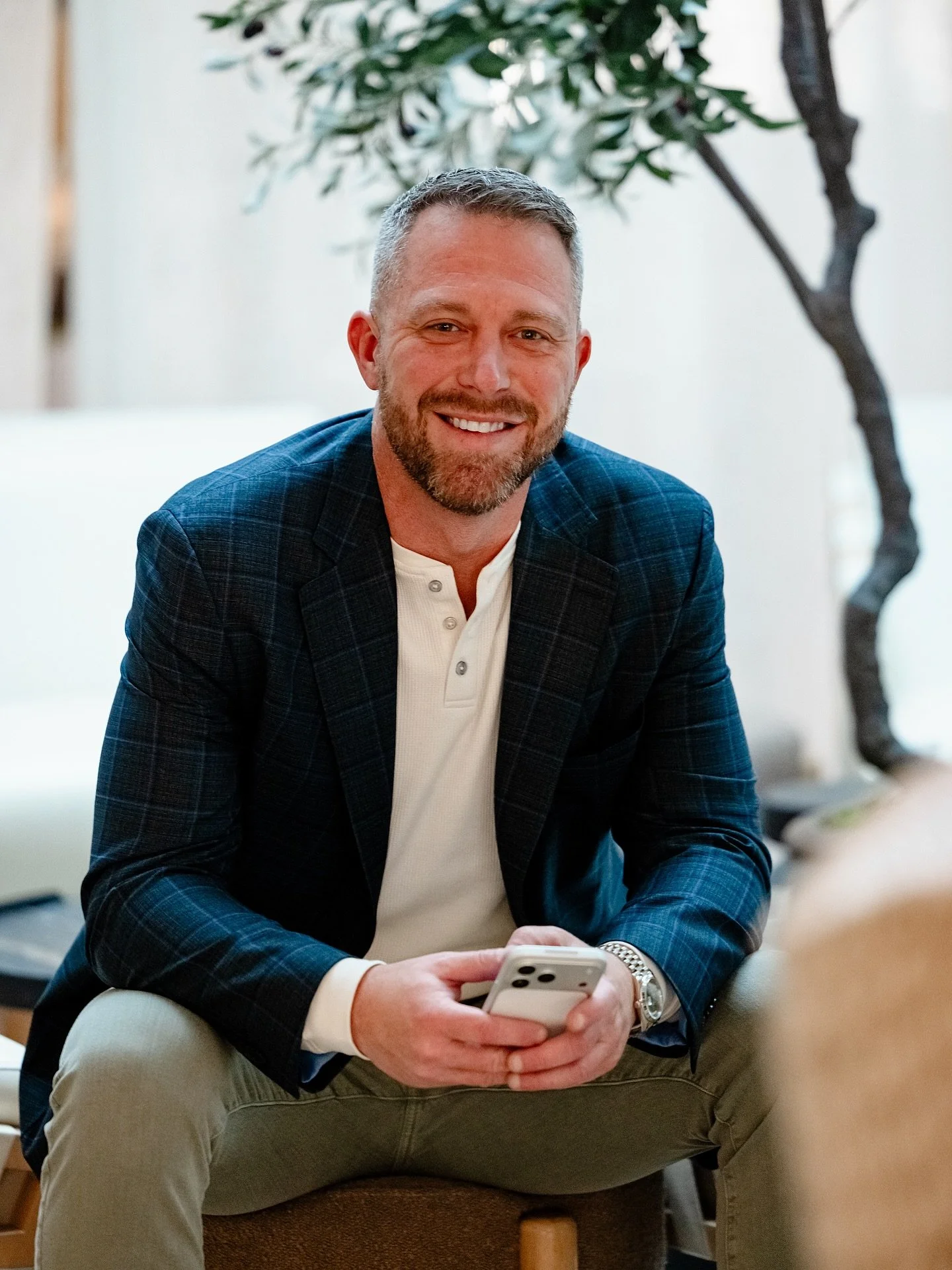
Stacy Eakman is a Partner at Alair Kirkland and was President at Eakman Construction Company, a company he founded in 2012. His passion for construction started at a young age, as his father had a remodeling company, and he learned the trade by working with him on job sites and around the house. This experience, combined with being unemployed and knowing he had the skills to build things, led him to start his own company.
Some of the most notable achievements in his career, include being chosen as one of Remodelers Magazine’s 40 under 40 honorees in 2019 and earning the magazine’s BIG 50 Award for being one of the top 50 remodeling companies in the country. In 2020, he was honored to be selected as one of Puget Sound Business Journal’s 40 under 40 honorees.
Resources:
Visit Alair Kirkland’s Website

-
Mark D. Williams 00:04
I my wife is a physician. She has no interest in business or any of these things. So like, I'm thinking, like, if I die in Costa Rica this this weekend, or get hit by a semi, she even know who our lawyer is, or, like, our bank accounts or any of that stuff. And I only bring this up by saying, like, we have to write stuff down. I mean, I'm just speaking for myself, but I suspect a lot of people think like this, we're gonna do it. We're gonna do it someday, but like ultimately, you got to do it today.
Mark D. Williams 00:29
Today the kisser podcast, we had Stacey Eckman from alert Kirkland out in Washington. And great, great episode The first probably half hour, 38 minutes, we dive really deep on why Stacy chose systems, and really he was a great operator, but really leveling up and having a business that has an extra strategy that can really level up your business. We're gonna hear all about a layer Kirkland and the alaire system. And then towards the second half of the episode, we talk about the book a little bit, buy back your time, and we get a little bit more deep on the personal stuff of what we can do from your greatest losses, what you learn from them, but also really how you can apply some of these principles to your life, into your business. So without further ado, here is Stacey Ekman. Welcome to CRISPR Podcast. I'm Mark Williams, your host today is our first guest of our smile tour around the United States. We're going out west to Seattle, to Stacy Ekman from Alaric Kirkland. What's up? Stacey, Hey, Mark, how you doing? I'm good buddy. So for the audience that's been tuning in for the last three years, hopefully you know a little bit about this. We're this year, we're going down the West Coast, and we're starting with Stacy, going all the way from Seattle to LA and q1 and we're overlaying it with a book. This year's book is buy back your time by Dan Martell. The whole podcast is not going to be about that, but just so the audience, if you're not aware, I'll be asking Stacy a few questions about this book through the whole quarter, so all the way through April, questions of the guests will be around this book. And so we're obviously going to dive into Stacy's business understand a little bit about him. Stacey also leads our curious collective in both Seattle and La so we'll dive into that. Stacy, why don't you give us a quick elevator intro of who you are, what you've been doing, and we'll kind of go from there to get the audience caught up to speed with you. Sure. Thank you. I didn't know I was the first on the tour. So
Stacy Eakman 02:16
the book, it's been a while since I read it, so hope it's not too tough a quiz. But I, you know, I'm Stacey Eckman. I live in Bellevue Washington, which is just outside of Seattle. And I am owner operator of olair Kirkland, custom home builder here in Kirkland, Washington, and also what we call regional partner inside of a layer of Washington State and Southern California, which means that the other offices here and locally in those two regions, I oversee and guide and mentor anything I can do to help grow a layer as a whole in those regions. And you've got also the LA branch as well. Yeah, we've got two offices down there. We've got the one in Camarillo, which is just right there outside LA and then also one in Encinitas, which is just north of San Diego, so we kind of bookend Southern California,
Mark D. Williams 03:08
okay? And you've been building for what, two decades now,
Stacy Eakman 03:11
not quite about 15 years I started building. But, you know, Dad was a builder in Yakima, Washington, small town in eastern Washington, and so I grew up around it.
Mark D. Williams 03:21
Yeah, it was funny, because you and I met almost four years ago. This Mayo before years we were both at contractor coalition in Nashville, and I remember meeting you, and I remember thinking like, Dang, this guy has got it going on. Every single question that I asked, or like Brad Levitt was talking about, you know, you were, you know, you've always been a high class operator. I feel like one thing I'd really like to get out of this particular episode is, and so many of our people in our audience are interested in too, is like scaling. I feel like you've been such a systems guy, even from those first conversations, I don't remember the details. I just remember the spirit of it, like you had a very clear vision of where you wanted to go, how to get there, and how you operated. And I'd love to, you know, dive pretty deep on on those topics.
Stacy Eakman 04:03
Sure, yeah, it sounds like a trick, and yeah, back then, making it seem like I knew what was going on. But yeah, I have absolutely always had a vision for where I wanted to go. It's been bumpy. But, you know, figured it out along the way,
Mark D. Williams 04:16
and at that time you were, I mean, you had your custom home, because you haven't When did, at what point did you join forces with a layer? Because it was probably right after that, right
Stacy Eakman 04:25
right after that. That was May of, what May of, I guess, 21 that we were there to 2020
Stacy Eakman 04:33
I joined. Well, I signed up and bought the license in, what was it? September of 23
Stacy Eakman 04:41
and then, no, I'm sorry, of 22 and then we launched, did our launch party announcement in March of 23 so that's when we went to Ian. So before that, I was Ekman construction and did the same thing. I built custom homes, did large scale remodels, but just, you know, out here on my own and trying to build.
Mark D. Williams 04:59
Systems and processes all by myself. So let's start with that. Because I think, I think, you know, I don't know a ton about the layers family and system, and you're very passionate about, I mean, again, what was it about their system and about their sort of approach that drew you in and said, you know, hey, in year 13 or year 12 of your business, you're like, you know, what if I'm going to kind of scale up and do this next thing, I want to join and kind of learn from this. And I'd love to hear a little bit about your mindset, and then kind of why you chose to do it, and now you're on the other side of it, you know, you're, you're one of the regional managers, and so you've kind of done this really interesting journey through their programs.
Stacy Eakman 05:37
Yeah, I think, you know, it took me a long time to make the decision. I talked to them. I was talking to them when I was in Nashville, there with you, and they didn't have a didn't have a presence out here on the West Coast yet. And so, you know, from my perspective, kind of, my mission has always been, our mission has always been to change the way people feel about residential construction companies. And I wanted to when I say that, I don't mean like, one or two clients at a time. I mean, like, how do we really change the way people feel about the industry and us as builders? Because we, as we all know, have kind of earned it as an industry bad reputation. Sometimes there's, there's been a lot of builders that don't operate properly. Take deposits, they disappear, they can't hit a schedule, they can't hit a budget. It takes twice as long, cost twice as much, all the things that you hear and everybody's got a friend who's got a horror story about construction companies and people. What I noticed my dad when I was little, you know, he was pretty small operator, really small operator. And so his office was like our dining room table. And when I was little, I would, you know, Mom would get the house ready and get ready for clients to come over and meet dad and go through their plans and all of that. And people would sit down. And my dad is literally the most honest human on the planet. And fair, sometimes you know too much. You know he'll get taken advantage of if he's not careful. And even with that, me, knowing my dad was that way, people would sit down, and I just noticed that their initial it's can be a little bit combative, or like he's trying to get over on them, right? And so kind of attributed that to just like, okay, there must be a problem with the industry, because it's definitely not my dad, right? And and so how do we fix that to where it's like, when people go in to buy toilet paper at Costco, right? It's like, you don't they don't look at the price. They know they're getting value, because it's Costco. Throw it on. It's 36 rolls and 360 sheets per roll. And they just throw it and they buy it, and they go home and they know it's they know it's fair. They probably could get it cheaper at Walmart, you know, they could probably find a special or a deal somewhere, but there's value, because it's Costco and it's a trusted it's a trusted thing. And so the way, I kind of decided early on that that needed to be changed is with some consistency in process. Every house we build is a prototype, right? Everyone is different that we don't do the same one twice ever. So you can't do necessarily consistency in in the product, because it's you're kind of lot of times figuring it out as you go. It's first time it's ever been built. But how do we, like create some sort of confidence in the market with some consistency in the process? At least, you know, you go buy a Mercedes, and it's the same at every Mercedes dealership, right? And it's really kind of every car dealership you go in, you talk to them, you drive it, you go sit down and finance. You don't like you do a little like, hey, is there any room on this? You go back and forth. All that's fine. But then at the end of the day, you don't get to red line the contract and send it back to the bank and tell them how you want to do it. And it's a trusted process, right? And so when I was doing that as Eckman construction. I was, you know, starting work at three o'clock in the morning and ending at eight, nine o'clock at night. Because there's a lot that goes into that to create that trust and build those processes that are consistent and predictable.
Mark D. Williams 09:13
And so when a layer came to me, and we're talking to me about potentially, let me stop you there for a second, because I think that's interesting. So they sought you out. Oh, yeah, yeah, they did. And because they knew Washington was a market they wanted to go into. Because are they they're based out of Canada. Is that right? Yeah, right across the border from me, very close in Nanaimo. But their US presence has been more on the southeast. I mean, big, big Florida, the the Carolinas. They got a couple in Arizona, but nothing here in California or Washington. And so they, they knew that Washington was a big market. But they, they work, we now work really hard to that kind of, that first office, that pilot office in the in the region. We want it to be a good office and have a good presence. Because.
Stacy Eakman 10:00
There's not a regional partner here to help guide that transition. So they've got to be pretty aligned in in the way they have built their business to be the first one in the region. And so, yeah, they reached out to me, and I talked to Shane there for, I mean, every other week for, I mean, no exaggeration, two and a half years. We just kept talking, and I was a no, no, no. Okay, well, let's think about it. No way, you know, like my ego was in the way, you know, it was this big thing, like, it's my name on the side of the building. Why do we want that as builders? I don't know. But everybody does it, you know. So it was, it was hard decision, but then once I was on the other side of it, you know, I just wish I would have done it sooner. You know, what was it that finally got you to flip the switch? Like, what was it that sold you on, on doing it? It was mindset I, like most people would do in this, in the moment, is like, hey, what's a layer gonna do for me? Like, what am I going to get out of this? And I just couldn't, I couldn't equate it dollars and cents wise as to why this would make sense. I'm already doing this. I already have different divisions of the company. If I just keep doing it, my the way I'm doing it and growing the way I'm growing someday, it'll run itself and be a sellable entity, and all the things I thought it would do. But what changed my mindset was when I or what changed me was when my mindset changed from, you know, what is a layer going to do for me to, like, what can I do inside of a layer? What can I do with this? And that led to me realizing that, hey, I can really help shape the way people feel about residential construction companies on a big scale, because there's 108 offices, and we're all doing it the same way. And so it's not just 12 clients at it a year that I was doing at the time. You know, it's 100 offices doing 12 a year. So it's 1200 people a year, really 2400 because it's usually a partnership, right? So really, that mindset, that mindset shift, well, how old were you as a kid when you noticed that concept? I mean, I was pretty advanced for your age, to even, well, even any age, really, to look at your dad and realize, wait a minute, if, if this is how people look at my dad, who, obviously, you knew your dad, like, this is an industry. That's a pretty profound revelation. How old of a kid were you? I mean, it started when I was little, little, but didn't it wasn't like a profound revelation. It was just like, that's weird. I don't, I don't look at dad that way, you know. But then in middle school, seventh, eighth grade, when I was old enough to kind of think, like, what do I want to do with my life? And I thought I wanted to be a carpenter, and my dad was like, Well, I'm gonna cut both your hands off if you want to do that, because that's a terrible career. And I was like, Wait a minute. Why is that? And so it just kind of the pieces all started coming together that dad felt like people treated him bad. He I saw people, you know, their first feeling I get from people, and still to this day, sometimes they sit down and they're they're scared, they don't know who to hire, why to hire. Why would I hire? You? Everybody's telling them what they want to hear, you know. And so that, you know, in probably seventh, eighth grade is when I started to realize that there was the system, was, was has, you know, I've always said, like, oh, the system's broken. But a really good architect, friend of mine, who I'd go around and talk about this, you know, he said, Stacey, the system's not broken. It just was never, it just, it's just never been any way. But this, right? So I tried it. He said, I think you should be careful using the word broken. I'm trying not to use that the system just needs some development, you know.
Mark D. Williams 13:27
I mean, I think, you know, I think our industry because, I mean, building and construction has been around since, you know, Adam and Lee left the Garden of Eden, right? So that, you know, been building from a very long time. But like, everyone does it a little bit differently. And so because we don't have a universally adopted system, even with, like, the building codes, which you think would bring some order, and maybe building wise, a lot of but even geographically, you know, we know, like, obviously you and I are much colder climates. I've always kind of considered Seattle kind of a sister city to, you know, Minneapolis here where I am, but like, you know, but operationally, business wise, you and I have bonded a lot on that, and we'll continue to do so. I mean, the whole point we even have the curious collectives, is because, you know, most people got into building or designing or architects because that was their passion, or they're good at it. But who teaches how to run a business? Which is what I'm hearing right now, is that, you know, that is really where systems really come to play. I'm not saying you don't need systems to build. You certainly do. And, like, certainly do and like you look at but a lot of everyone's developing their own look at trimmers. I mean, I used to have a trimmer Todd is amazing. He would walk into a room, he would sit up like one of those camp chairs, the cup of coffee and a notepad. He'd sit down in like a great room, you know, looking this was before we had, you know, architects, even if you did have architects that design all the conference ceilings and all the details and all the measurements. He would sit down for a day, no lie, he would just look at the room, and he was building it in his mind, like, how do I do this? And and that was his process. And I'm like, Well, I didn't know any other trimmer, so I thought every trimmer did it that way. Todd is a very rare individual in how he pre thinks I've never seen.
Mark D. Williams 15:00
Anyone else do that, but Todd anyway, I use that story just as an example of, like, everyone's system is slightly different, and you can actually get to the end with far different systems. But man, how much better would our industry be if we all had a similar ethos and a similar system? So I assume that's kind of where what drew you into that a layer system.
Stacy Eakman 15:18
Yeah. I mean, if you look at it and like, again, we don't build the same house three times, but if, if you built three of the exact same houses and hired three separate contractors, it'd be totally different. It's a different contract. It's a different what's in overhead and profit, what do you produce a schedule? Program do you use to produce a schedule? How do I see the information? Are you transparent? Are you really transparent? Are you billing monthly? Are you billing on milestones? Would be three different ways. And then if you really, like, break it down, even if you hired the same builder three times, but had three different project managers, it's a totally different system. It because you hire a project manager knows how to build a house. And most guys are like, okay, you know how to build a house. Go build it, you know? And so they're bringing their systems from the other guy in, right? And so
Stacy Eakman 16:03
it's, there's no consistency, right? And so if we had that which, which was really what drew me to a layer, because I was, I don't have a business degree, don't really, didn't really know how to run a business. When I started my business, I didn't know what Microsoft Excel was. I had a past of, you know, I played baseball, and that's all I did. And then I did drugs, and that's all I did. And so I didn't learn how to use a computer. I didn't know how to do estimates, I didn't know any of that stuff, you know, I was trying to get my life back together. And okay, well, next I guess I'm gonna start a business. And so that's what I did. And so everything I was doing was I was just making it up as I went. So I surely wasn't doing it the right way, and I wasn't doing it the way the other guy across the street was doing it. And so how do I so I got to a point a size of a company. We were pretty substantial company that I was looking at things. It was my 10 Year party, like, the actual like decision I was having my 10 years since I actually changed from a sole prop to actual Corporation, and like real business, I was having a party here at my office. I was it was middle of it was August, so it was hot. I was standing out on the asphalt giving a speech. I was sweating, I hate to talk in public. And we were going through this list of things, like, where we where I'd come from, where all the different subcontractors, we hired, this many subs, this many employees, yada yada yada. And I was reading it off, and I was like, so overwhelmed, like, how am I going to do this again? Like, I got more, you know, I got another 10 years in me, or 20 years of me. How am I going to do it again? And so then I put the microphone down, and I said to a gal that was working with me at the time, I said, book me a flight. I'm going to see Steve Kendrick in South Carolina, who had a beautiful office. He had an awesome company before he signed up. And so I was like, why did he do this, you know? And I went and saw him for a day. Then I flew to Naples and talked to Shane in person and threatened his life like, if this doesn't work, then my, you know, my life is on the line here. And then, you know, within a week or two, I've made the decision to join this
Mark D. Williams 18:13
episode is brought to you by Pella windows and doors. I've used Pella for 21 years as the exclusive window company on every one of my builds. When people ask me who I trust for windows and doors, it's Pella every time, their craftsmanship, their innovation, the top tier service, make them a no brainer for any custom home builder or designer who demand the best, whether you're designing something bold or building something with timeless elegance, Pella has you covered. They're also the only window company that has a lifetime warranty on all of their windows. I've gotten to know all their people at Pella corporate, as well as locally. Here at Pella Northland, I'm proud to call them our partners and our friends. Visit pella.com to learn more and connect with your local reps. Today for more information, you can also listen to episode one, where I interview the Pella Northland founders, as well as episode 109 where we talk all about their latest innovation with the study set window, those first, I mean, looking back now, what were there any kind of, like, really key things, mindset, operational things, or how would you look at your business through the lens today of where you were and what, what did you
Speaker 2 19:18
change? You mean, from when I was, yeah,
Mark D. Williams 19:21
I mean, because you were a good operator, obviously. I mean, that's why they're attracted to you. But what have you looking back now, I assume you're, how would you equate your skill level, entrepreneur level, systems level, on a scale from one to 10 now to what it was five years ago?
Stacy Eakman 19:36
Well, my systems now are, are a 10. As far as construction goes, it's really dialed in, and a layer provides that right before, I think I was, I was I was good. I was I was seven, eight, I was really good. As far as construction companies, you know, that just start up on their own go, that the problem with it was, is that even if I wasn't doing it, I had a general manager, I had a. Counting. I had all the departments they're supposed to have, and they operated effectively. But at the end of the day, like I was the one confirming that that stuff got done. I was the one telling them, Hey, we need to improve this or improve that. And now I've got a layer with this, which is the systems and processes behind it that that the software pops up those red flags that, hey, project managers aren't turning in their receipts properly, or this isn't coded right, or whatever it may be, that then I don't have it's a peace of mind thing. So that I'm able to buy back my time here with what we're talking about. I'm able to do what my highest and best value is, which is talking about a layer motivating other layer, offices selling to the big clients. You know, I still meet with those people, but it just gives me an ability to elevate and delegate and trust that it's getting done, and if it's not getting done, somebody's going to flag that for me,
Mark D. Williams 20:58
I like that elevate and delegate. That's a That's a good one. Or maybe you delegate so you can elevate. I guess that works. That works both ways. I like that. It's like your attitude affects your altitude. That I mean, that's what are I mean. So, for instance, a lot of businesses around here, you know, EOS is a very popular operating system. Is it like, give me some parallels to the business owners out there? Is it kind of like a business system that you operate in. Or, how would you, how would you describe the layer, sort of infrastructure? Because I'm sure a lot of bills right now are like, Mark, ask this question I want, I'm trying to, like, what question would they want me to ask? I'm thinking like, what, what systems are they bringing? Like, how are they doing this? Like, this is very intriguing.
Stacy Eakman 21:39
Well, first and foremost, we operate and live by and require everybody's using EOS. We all use the OS as as a company a layer wide. So all of our meetings are that way with our other offices, things like that. So that's just kind of how we communicate and run our business. But what a layer has, has created, developed a software that, you know, is like builder trend, but we were builder trend. I was builder trend at Ekman. The difference I see isn't necessarily that it's it's definitely not better than builder trend, but what it does is that we cannot operate outside of the software. So what I found with builder trend is that it's amazing. Works so good, but the owner of the company still has the ability to use it 80% of the stuff, or 90% of the stuff. And so maybe accounting isn't done through there. Maybe you aren't doing your finished selections through there. Maybe the budget doesn't match the billing, right? And so it's not used 100% then 90% that you are using it not accurate, right? And so, and for a client's perspective, from a client's perspective, what you're not putting in there is really the problem, right? That is like, because that's their access to the project. So the software that we have developed. It was a big build, a very complex software, robust software, everything is housed in there, and we can't do a single thing outside of that. So that gives me controls over the team. It gives clients comfort in the process and trusting that nothing's happening outside of there. We can't send them a bill unless there's a bill to back it up. We can't pay a subcontractor unless it's in that software. Nothing can happen outside of that software. And so that is kind of the, I don't know, the anchor that holds us all together. Now I wouldn't suggest somebody, hey, sign up because it's because we have a software that's ridiculous, right? But it is what once you're here, you really learn to love that software, because it gives me the ability to do what I do now, the other beautiful thing about a layer is it's just a brain trust of you know, there's 108 offices. I think it's 160 individual owners of these offices, and that we meet every Wednesday on a teams call. We have, you know, coaching sessions, all these things. I just got off the all company call. And any question you might have, there's literally nothing we haven't done as a group, and we're all moving in the same direction. We've all been a part of builder 20 groups, or even contractor coalition, awesome, beautiful things, but there's still a little bit of ego attached when we go to those things and everybody's doing a little better than, or everybody's doing a little better than they actually are, right? And like things, you know, things are good within a layer, like, we're all moving in the same direction. We all know kind of what everybody else is doing. And so when somebody's struggling, we can pick them up. When somebody's doing really good, we can look to them and say, Okay, what are they doing? And it's just open information.
Mark D. Williams 24:54
Do they sort of break it down into like regions, or like you have us, like you have your own mini sessions, like, hey, these 10. Builders, or 20 builders sort of meet quarterly just to keep it like that, smaller meeting versus all company.
Stacy Eakman 25:05
Yep, we call it a teams, which Darren and I, my, my business partner in the regional partnership side of things, Darren and I lead our A teams. And it is we have eight different companies, different alert offices, that that meet and join, and it's structured very similarly to a builder 20
Mark D. Williams 25:25
group, and I so that therefore they'd be in non competing markets, most likely,
Stacy Eakman 25:29
yes, yep. And we don't actually, don't believe that there's any competition within a layer. I'm happy to have another alert office next door to me. Here in Kirkland. There's plenty of work for everybody. More trucks we can have on the road the better. Like there's no we don't, we don't, I'm not worried about and actually, to be honest with you, Jed just joined over in Seattle. He's hilarious Seattle, and he's in our a team. So he would be considered competition. It's, you know, it's 12 miles away, you know, it's, he's right there. So he would be considered competition. But we just don't look at it. We are one big company. We're the biggest construction company in the world, and moving as such.
Mark D. Williams 26:08
And when you say biggest in the world, I assume that's residential,
Stacy Eakman 26:11
residential, custom, home and large scale remodel.
Mark D. Williams 26:14
Yeah, that's amazing. How, in from a from a modeling standpoint, is that like, a franchise model? Is that, like, how does that exactly?
Stacy Eakman 26:22
Yeah, exactly. It's a franchise model. And really, you know, it operates like a franchise, except really that the founder of a layer, he wanted to kind of build this thing, and didn't know another model to use, other than franchise, that the controls and things, we do believe that there's, there's freedom and structure that they provide. But it's not like, we're not required. It's not like, like McDonald's, where you got to buy the fries from the McDonald's Friday. We buy our nails wherever we want, right? Not that way. There's not those type of controls. It's more on the finance side of things, making sure that everybody's doing the right thing and clients are taken care of the way they need to, obviously, on quality control and things like that that's put on us as a regional partner to deal with in our region. So, yes, it is a franchise. You buy a franchise license to be a part of it.
Mark D. Williams 27:17
Yes, I mean, one of my favorite quotes the last two years, I haven't come up audience who's heard this quote 10,000 times. I need to come up with a new quote for 2026 because this quote, I mean, I'm still another one replaces that. I can't unhear this one, but it's boundaries create freedom. And essentially, what EOS and what you know a layer system is doing is you have freedom because you have boundaries. I like what you said, like your the system doesn't allow you to do X, Y and Z, I'm sure, their protocols, their communication to the client. And you're right. I mean, we use builder trend, we also use adaptive which I love, and, you know, and, but you're right. We're sort of building it, and we build amazing homes. We have a great process, but the process is like, honestly, I suspect I'm like, a lot of builders, like, how much of it lives in my head versus how much is written down, and it's too much, and now I have the best team I've ever had my career. And I haven't been I haven't felt this free and this excited to sort of do what I'm really good at, which is be free. But you know, life happens to all of us. If someone leaves, if someone gets sick, or if my team grows, like every builder has to consider this, and most of us just aren't willing to do it. Or, face it, it's a little bit like, honestly, I didn't mean for this to go there, but, like, I'm 45 and I have a group of friends. We meet every other month to talk about financials, financial stuff. So like, financial friends, like we get deep, like, anything about our life is fair game for these two people that we we talk about we talk about doing deals together. We talk about life and death and finances. But anyway, my buddy is like, have you taken care of your funeral arrangements? I'm like, what? He's like, Yeah. Last week, my wife and I just decided we didn't want that to be burden for our kids, so we went and paid for a casket, a funeral plot, and paid it out. I'm like, wow. And so now it's become like, a race of like, how many things can you iron out and be done with so you never have to deal with them again? So like I did last week, I just did I call it the death binder. I'm gonna do an episode on it where, basically, like, my wife is a physician, she has no interest in business or any of these things, and, like, so like, I'm thinking, like, if I die in Costa Rica, this this weekend, or if, like, I've, you know, get hit by a semi, like, is she even gonna know who our lawyer is? Or, like, our bank accounts, or any of that stuff. And I only bring this up by saying, like, we have to write stuff down. And we always think we're going to do it. I mean, I'm just speaking for myself, but I suspect a lot of people think like this, we just, we're going to do it someday, but like, ultimately, you got to do it today. Like, you can't keep putting this stuff off. You got to start handling it. And so anyway, what I love, what I'm hearing, is just this system allows, I bet, a lot of peace of mind and a lot of clarity.
Stacy Eakman 29:39
Yeah, it does. And and it, it just, it really is peace of mind, without going too deep into personal stuff, I went through a thing over the last few years, and it kind of all kicked off right after I signed up for a lair. And I had to spend a lot of time away from work, and I was away, I was able to do that. And. Came back. Of course, there were some challenges. It was during transition and all of that, but I just wasn't able to be here. And you know that first year that I was within a layer, and I do not recommend anybody do this and and I'm lucky that that Allaire didn't freak out on me. I had a really good team again. But you know, I spent like, six or eight weeks in Mexico and, like, phone off, trying to, like, you know, trying to put my life back together. Ultimately, that didn't work, but I but I came back, and the business was still here, and everything was fine. And so in that, I attribute to the fact that Darren, who's my VP of operations and business partner in the other in the regional partnership piece, he had a layer to lean on and say, like, okay, what are we supposed to do next in this transition? What do we do when Stacy's not selling? What should I be doing? They're like, well, maybe we should find somebody to come and help you sell. You know, like, what are we going to do here? And so it really creates a business. It turns it from a job to a business, which also, the other big thing is it, it makes it a sellable entity within, within and again, I'm not looking to exit anytime soon, but when I'm ready, Ian, because, you know, I don't know if you've ever sold a company, but when you do, you know, typically, there's, There's there's a broker involved, and they're getting a big cut. There's due diligence that's insane. You got to, everything's got to be cleaned up just perfectly to present. And then, as a custom home company, you know you're lucky if you get like, two times earnings, and you got to stay on for three years, because make sure to get paid out and hope, hope and pray that the economy doesn't fall apart. So you get your money and all of that within a layer. It's not that way, like I can raise my hand on a Wednesday call and say, Yeah, Kirkland's up for sale, and then you're going to start getting some offers, because the accounting is all at home office. We all trust the accounting. We know what it is. Deliver the deliver the documents. It's all there. You don't have to hire a broker, so they don't get a chunk, and your multiplier is significantly better, because, in theory, they could come and sit down in front of this computer that I'm sitting at and the leads are coming in based on our marketing, based on the thing leads are coming in. The sales process is the same. The estimating process is the same. All the project managers have been trained by a layer the same. The software is the same. It's, it's the same.
Mark D. Williams 32:24
I mean that part. I mean, there's either a ton of value in that. Do you have to be in market? Or do they do, like, Could I be one if I wanted to be in Minneapolis? Or do they geographically lock them?
Stacy Eakman 32:33
You know? Yeah, you absolutely could be. You would reach out to me and we would talk it through. We don't have one in Minneapolis yet, but we are
Speaker 2 32:41
hot take people. This is Stacy's Stacy's pitch.
Stacy Eakman 32:46
But we are. We're actively looking to grow especially we the software. The new software has been online now for a year. Year and a half, it's really ironed out. And so we are. We have a big initiative to start talking to builders again. And that's one of my jobs as regional partner, is to grow my regions and the new regions that need to talk to somebody that I'm happy to talk to them and talk talk about it. The the one thing you have to do, you could, as long as you qualify, and all of that, but which I'm sure you would, you have to be a builder. It's transition only model or conversion only model. You can't buy a franchise license if you're an architect and just start building. You have to have an asset, because once you're wearing the same shirt as me, you better not screw it up, because you screw it up, you screwed up for everybody, right? So I get it. It's like vetting process is
Mark D. Williams 33:40
pretty heavy. It's like the All Blacks for the New Zealand Rugby team, right? It's like, you're wearing the USA, right? It's Herb Brooks, Minnesota folklore, right? Like, it's not the name on the back that matters. It's the one on the front, absolutely. Yeah, yeah. So walk me through your exploring la market. So that's really unique. Very few builders that I know are able to transition out of a single market, and I've even with, like, the curious builder enterprise and like, you know, like my Misa, who's project, which is a spec home I'm building here in Minnesota, really excited about it. We'll save that for another episode. But like, I want to, we're going to develop, like, licensing for the philosophy that I'm kind of creating with this wellness house. But like, if it's in Minnesota, like, I want to build it because I'm here. Because I'm here. But like, if someone, if I have a great client, who wants to build a home in Bozeman, Montana or Colorado, or just, I'm picking mountains because I love skiing and I love the mountains, like, I'm sorry, I'm only as good as my people. That's always been kind of the common answer for most builders, because we always say that, hey, we're only as good as our people around us, which is true. We're like, I feel like interior designers and architects, man, they've been having their day the last decade. They can go all over the country, all over the world, and still do their job at a very high level. I think some builders are able to navigate that a little bit, because they can go set up teams and freelance it out. But it's not quite the same with that's my prejudice. Tell me if I'm wrong and then walk me. You like, how, how does, how does la fill? It fit into your you know what you're doing. And why? La, why not a different, different city?
Stacy Eakman 35:10
Well, first, the way we do that is we bring established builders in to a layer. So it is one of the benefits for like architects and designers who are designing and stuff all over the country or all over North America, we probably have an aller office somewhere close to their mark to the market that their client here is wanting to design a house in Florida, a second home. Well, that architect doesn't have a builder to recommend. Well, they do now, they can recommend a layer, and they know that process, and they know what it is, because it's the same, right? So it is really architects and designers love it because they've got us everywhere. Okay, that's pretty cool. And so, but LA and, and, well, Southern California in general, it's, you know, on the west coast, it's easy for me to get there. So that's nice. The other it's sunny most of the time. That was attractive, you know, but there, there was two offices down there before I signed up, and they didn't have a regional partner. And regional partners are really important just because it's boots on the ground, it's somebody they can call. We help them grow. We deal with architect meetings and things like that. We help with marketing events operationally. Darren goes there and helps them operationally be profitable and hit their schedules and all of that stuff. So for me, it was a pretty easy decision, and then the fires happened this last year, palisade fires and I saw that, you know, was talking to those builders down there, and they were telling me how people just they didn't know what to do because they're not getting enough money from their insurance companies. They're they're afraid to be the first one to build because they're going to be surrounded by construction for the next 15 years. They don't want to be the last one to be the last one to build, because it's going to be three times as much, because everything's going to be and so I wanted to figure out a way that I could make a difference. And so I said, Okay, and that's when I started talking to a layer and saying, Hey, these two offices can use some support. I believe that I can go down there and it's a it's an opportunity to plant a flag for a layer that, hey, we're here and we're going to do a good job and potentially bring a couple more builders in. It's just a huge market. And so that was kind of why we why we ended up doing it. And I'm able to do that because, you know, my team here does the everything day to day. Darren is the best thing that ever happened to me was hiring Darren. He's really highly qualified and holds everything together, and so I'm able to do those, those type of things. So I spend a I spend one week a month, at a minimum, down there in Southern California. Yeah.
Mark D. Williams 37:53
I mean, that makes a total sense, especially when you're whether you're building teams or kind of that regional manager, it's a little bit different role. I mean, I'm really intrigued. I mean, obviously now I'm gonna have to go offline. Now I'm really curious. It's like, I want to see the demo. Because, of course, my curiosity is, like, what is the secret system look like? Is this like, you know, I'm kind of very curious about how that'll work. Let's shift it a little bit, you know, to the narrative some more. You know, just personal stuff you had, you had said once, I was just doing a little research, and it was just kind of interesting, because I agree with you. You said that you believe that sales is the single most important KPI for builders. Why is that?
Stacy Eakman 38:28
Because if you want to build a company, you need cash flow, like you need money, right? Like you've got to have work, you've got to have stuff. If you run out of that, then you lose your good people, you lose your presence. You don't have trucks on the road, you don't have signs in the ground. And so ground, and so it's a snowball going the wrong direction, right where you're Wait,
38:47
the snowball can go uphill.
Stacy Eakman 38:49
You don't want it to. I'll tell you that. So, I mean, I just believe that, and I also believe that, you know, sales, it fixes a lot of, a lot of problems, and for me, I don't know when I said that, but for a long time in my business, I wasn't profitable when I was probably when I was sitting with you, I was just barely figuring out how to be profitable, and I it was imperative that I continue to sell so that I just gave me time to figure it out. You know, I needed, I needed to buy time to figure out how I can do this in a profitable way. Who should I be hiring to do this thing that I'm terrible at, which is being profitable on the jobs. I'm really good at getting the jobs. I'm really good at making people excited about working with us. And then I turned around, I was like, man, there's no money left over. What happened? Well, you weren't paying attention to that. You're paying attention to the next one, right? So I needed to find somebody to pay attention to what was happening on day to day. We're
Mark D. Williams 39:52
excited to announce that we're bringing back Sonic camp 2.0 on March 20, from two to 8pm we had this last year. We had 42 owners. Years. This year, we're maxing out the capacity of the camp, which is going to be 60 people. We're going to have a wellness panel with some Everest summiters, as well as some iron men and women to compete, and all about wellness and how they prioritize their health and wellness, not only in training, but in their lifestyles and in their business. And then we're going to have a two hour window of sauna and cold plunging in the lake, and then an amazing wood fired grill, Mediterranean style food at the end of that. So if you're interested, please head to cures, builder.com under retreats, you'll find everything there is about sauna camp on March 20 in Minnesota. You know, it's funny. I mean, I do think experience matters way more than I used to when you were younger. You know, regardless of where I was in life, I sales was always something I was good at, or I thought I was good at, or I like to do. So maybe it's all of them. But I was telling someone today, like, as I've gotten older, like there's no question that the builder I am today, like I could mop the floor of the builder I was 510 years ago. I mean, I just know more. I'm just a much better operator. I'm much more profitable. I understand way more about running a business than I did before, and some of it is just trial by Aaron. I was, I was speaking with a good mentor, friend of mine today. We had lunch, and I just asked him. I said, you know, give me some, give me some. Give me some pearls. And he gave me a great one. He said, try to learn from the mistakes of others, so you don't have to, I'm sure it's been said, but it just, it's like, wow, that would have been really helpful. And like, you know, some of them you have to do, right? There's no question, right? I mean, some of them you just have to learn yourself. There's no substitution for, you know, hands on experience. But that being said, like, not every you don't have to go through every single thing to understand every single thing. And I think that's why, I think podcasts have done so well because people were able to share stories. I mean, that's honestly one of the biggest reasons why I enjoy doing it, a because I love hearing people's stories, is my goal has always been to take that a listener, and myself included, could get two to three business ideas out of what you're saying and apply to to my life. And one of our series right now is losers are winners. On Thursdays, I have people come in and just share, like, the worst thing that's ever happened to them, but the whole intention is that like, by them sharing that story. Could it be something we either a relate to or B, could we avoid, you know, and why not? Like, why? And I don't know, there's something about human nature, we continue to make the same mistakes, including ourselves, like I now I like say, with some humility, is, like, I've learned that mistake, that being said, I likely will make it again, hopefully not as bad, but it's probably going to happen. I'm an idiot and, like, I have a short term memory. And so anyway, with with that being said, if you could go what was, and this was actually a question, and you get a chance later, at the end of the episode, to ask this. But David worship, from worship from worship homes up in St Cloud, Minnesota, was here last week, and we're letting each guest ask a question for the next guest. So his question, which is in spirit of this line of thinking, his question to you today is, what was the biggest mistake financially you've made on a job, and what did you learn on it?
Stacy Eakman 43:01
Biggest financial mistake. I mean, I've had a few pretty significant ones where we, I mean, we've rebuilt stairs seven times, but one time we had to, like, do it after the house was done, and we tried to,
Speaker 2 43:17
like, was it just because it failed? Code, or like, why'd you have to rebuild that?
Stacy Eakman 43:21
Yeah, code and up the floor that we didn't actually have the flooring picked out before we did them, so the heights changed. And of course, I didn't ask for a change order. I was like, oh, I should have known that. You know, we just kept redoing it. But anyways, and code, code got us on another one. But that's probably not the biggest business mistake I will say, I made, is I thought that I remember I was, it must have been 10 years ago. I was looking at quotes coming in for a project and and excavation quotes, it seemed to me like, why are these guys charging so much money to dig out dirt, right this, they must be killing it. So I decided, knowing nothing, oh no, excavation, I started an excavation. Oh no, and it would have been fine if I was just digging foundations for my projects and things like that. But I had these two guys. They were brothers, and they knew, they knew excavation. They came from excavation world, right? So, okay, great. I put these guys in charge of it. My first project, somehow, this guy, somebody told somebody that I was starting a company. My first project was this, like six house development out in Redmond, who's got the hardest codes in the world, and we needed to put this big, huge vault in water retention vault, oh, man, long story. We did everything wrong. We hit power lines, shut the power down. We were in the process of about to be sued like it was. It was a nightmare. We ended up getting fired on that job. Shot. Ian, I closed the excavation Company immediately. Best Story ever paid out. I paid out, you know, six figures to make it go away. And it went away, and I wasn't insured properly. I was like, running the insurance through the construction company. It was, Oh,
Speaker 1 45:16
my long time. My cheeks hurt. I'm laughing so hard. Oh, that is, I that is a, that's a whopper, right there. So my
Stacy Eakman 45:23
biggest, yeah, my biggest mistake is thinking I know something I don't, and just going for it, you know, and thinking, I mean, I remember when the it was, like, a, I don't know, like, a $500,000 excavation contract. I signed the first one, I thought I made it like, This is it?
Speaker 1 45:38
Yeah, you're right. Like, this is 80% margin. Like, I mean, oh man,
Speaker 2 45:45
closing the house building company we're building, we're digging holes.
Mark D. Williams 45:50
Oh man, that's good. That's, that's a good one. You know, kind of going in line as we kind of wind down here for the last 15 minutes of kind of going around the buy back your time is, you know, just some of the questions I'm only about, honestly, about honestly, about 30 pages into the book, so I'm going to keep it fresh for the audience. Kind of will, basically, the framing of questions will either be written in by the audience or as I kind of go through the book. But one of them was really early in the intro was, Do you have an example of during your career where you made a mistake and somebody gave you a second chance?
Stacy Eakman 46:22
Yep, yep. I built a house for a guy. It was one of the first ground ups that I built, and I really messed up underneath that, like I really messed up in another excavation debacle, but I wasn't managing the excavator properly. I didn't know what I was doing, and I didn't read the civil plans, right, and we got way further along before we could fix it. And obviously the guy was really upset with me, but we just sat down and had a conversation, and I said, Hey, his name was Abe. I said, Hey, Abe, I am, you know, really sorry I screwed this up. I took full accountability from Jump Street. Schedule is going to be heard a little bit. But to do this the right way, we got to go back and we I got to go in reverse a little bit. And you know, am I, you know? Do you trust that you know my intentions are right? And of course, because of the relationship and because he trusted me, he did give me a second chance. And I mean, there's been a lot a lot of a lot of things along the way that people, I believe, if you're just honest, you know, you deliver bad news before or faster than good news, they don't catch the mistake before. You tell them there was a mistake, you'll get a second chance to fix it. I also had a project that remodel that didn't go very well. I mean, this was really, really early Ian in my career, and then a couple of years later, they called me up and said, Hey, I see you're still doing good. We need another project. You know, you made it right the last time. So, you know, you want to come try again. And we knocked the next one out of the park.
Mark D. Williams 48:00
So that's I know those are great. I love that thinking from a leadership standpoint. Do you Well, first of all, let me ask you a two part question. One is, what is the difference between a cheerleader and a coach, and which one are you better at? Are you better at coaching your people, or are you better at being a cheerleader?
Stacy Eakman 48:20
I believe that a good coach has some cheerleader in them. I think that it's important to remind people when they're doing a good job, but the coach doesn't avoid when things are not going well, right? And so I do believe I'm a good coach, and I think that I think of a coach as more like a leader than than somebody standing beside him saying, Hey, come on, we can do this. Let's you know, you're doing great. And so I really try to lead by example. And you know, none of us like hard conversations, but I I make those a priority. And I say, Hey, we're This isn't going well. Here's how I see you getting out of it? And hey, by the way, I'm going to be your biggest cheerleader along the way, and we're going to get there. You know,
Mark D. Williams 49:07
I like that. You know, we don't probably have time to dive into it now, though, I do want to hear more about it sometime, for sure, in person, because I know Morgan has spoken highly about it as well. But who, who believed in you before you believed in yourself. And the frame of this question is, is like, you know, there's that saying out there in business, which I think is partially true, fake it till you make it. But you know, sometimes you look back and you're like, you're like, Where does confidence come from? Sometimes we have self confidence. Sometimes people give us confidence. Sometimes we learn confidence. But if you were to look back on your career or your life, however you want to interpret this question, Who do you think was believing in you and who you could be as a as an entrepreneur, before you realized you believed in you.
Stacy Eakman 49:50
I think I mean a few people, but I think you know, my mom and my sister, they always just like, saw something in me, and then even today. A I look at my team, we, I think we probably all, you know, some of the time, I look at myself and I think, like, Man, I hope people don't figure out that I don't know what I'm doing, right? It's like, one of these days, everybody's gonna realize that I'm just making it up as I go. But my team, there's, there's one, well, they're all of them, but Eric, specifically, he's one of our project managers. I mean, he reminds me all the time, like, Hey, man, we're we're behind you, and this guy, you're gonna he I hear him back there telling the team, anytime anything happens or we have a little slow down, or he's worried, wherever he's worried about something, he's telling them like, Hey, I've worked for a lot of guys, and the guys I've worked for that are, like, Stacy, they're super successful. So we're going to do it the way Stacy wants to do it. We're going to follow him. We've got his back. And so I think that, like, the first one was probably my mom, my dad, in baseball, he believed in me, probably too much, like, you know, like he shouldn't have but, but he believed in it. And so that gave me, gave me a lot of confidence growing up. And then I also think that, you know, we touched a little bit, you know, I had the time in my life where I wasn't such a good human, where I was doing drugs and ended up, you know, going to treatment and getting through that and all of that. But like coming out of that, although people believed in me, what, what really mattered in that moment is I believed in myself. I said, I'm gonna put this back together and I'm just gonna go do it. So I think a lot of times you need people to believe in you when you're when you're having a hard time, but at some point you're the one really who drives your own confidence.
Mark D. Williams 51:34
I am 100% agree with you. It's funny because on a from a parent standpoint, my I'm a lot more confident, maybe false, confident, than my wife is. And we've talked, we have three kids, nine, seven and six, and we've just talked about, you know, every parent kind of thinks about, like, hey, how do we want to raise our kids? Like, at the end of all this, because, no, it's not like, there's, I always joke, there's no, no handbook came out of the uterus when May was born. You know, like, everyone's kind of figuring this out on the fly. We're all parental frauds and like, we're asking everyone like, what to do. And anyway, my guess, my point is, is we kind of decided that at the end of the day, if we could teach our kids to be confident and to feel loved, like, if we taught them nothing else but those two things, they would go into the world feeling loved and feeling confident. Like I feel like I would be a good parent. And the reason I'm bringing that up is like, I feel like failure. My next question for you is, what has failure taught you, and maybe just for myself, because I'm on this line here, is like, I think failure is so important to our confidence, and I think failure is so important to our self love and to like, our belief in herself. Because if you never fail, like you don't. And honestly, failure is such a huge metric. I mean, I want it's not my podcast, it's yours. But, like, I remember what I thought was gonna be failure. And at the time was my dad, and he explained, like, that's not failure. Worst case. I was worried about going bankrupt. He goes, worst case. Consider this is like, I was like, 27 at the time. He's like, worse. I was, you know, single he's like, worst case scenario, you move home, you live in the basement, your mom makes you Swedish pancakes and eat Huckleberry pancakes all day. I'm like, dang, that failure sounds pretty nice. So like my point in bringing it up is, like, failure is not really failure. It's just we put so much pressure on ourselves as entrepreneur and as humans, where we think we define what failure is, but it's kind of this construct that doesn't exist. That's my opinion of it with that terrible question, what would be your response to to kind of what I said, and how you view it for your life?
Stacy Eakman 53:32
Well, I want to touch quick on what you said about being a parent, and I think that one of the things was to teach them how to feel loved and like that, I believe, goes back to cheerleader or coach. And like, actually learning to feel when somebody loves you is actually like a skill at first, right? It's not just like, Oh, I love you a lot, and they automatically feel it, right? So it's not just cheerleading. I'm saying, like, Man, I love you. I love you. Levitt, it's like, actually, how do they receive it and hear it and feel it? So I think that's really, you know it. That was a long way of complimenting that, like, goal you guys have as parents. I think it's so important, because if you don't know how to feel it, then, then you certainly can't give it right? And so it's a hard, it's a hard thing to learn. And so that's that's really cool that you're doing that, as far as you know, failure. And what failure has taught me, what it's taught me is, is that everything's going to be okay, right? I've had some things that that felt like the end of when the excavation debacle happened. I mean, I thought it was over, right? My identity, my business, my everything, failure in it when you know. And I learned that when baseball, I really believed I was going to be, you know, a major league baseball player and take care of everybody. And when that didn't work out, that was a huge failure. And I thought, literally thought, life was over. I've had girlfriends, um. Um, that you break up with, and you think, that's a huge failure. That was the one. And then you look back, you're like, whoo. Good thing that didn't work out, you know. And so it I believe that failure for me just teaches me, you know, one of my mottos, you may have heard it or seen it on social media or whatever, I say it all the time, is like, just do the next thing. And I learned that in trying to get sober and get off of drugs, was, like, it got really granular. Like, okay, today, okay. The next thing I brush my teeth, the next thing I got it, the next thing I just need to walk out to my truck, and then I need to go to the store and get that energy drink, because I feel like garbage, so I need to get some energy and, like, it was, like, really granular. And when things get really hard, or I have a failure, or things fall apart, I go back to that, and pretty quick, you know, a week goes by, a month goes by, 10 years goes by, and you look back and you're like, Whoa, look at what those little tiny steps did, you know
Mark D. Williams 55:52
you're so, you're so right, that perspective is so needed. And, you know, it's, it's kind of like you can endure a lot, not forever, but for, obviously, for a short period of time. I mean, obviously short is somewhat, I mean, people do years might be short in the grand scheme of life, but like, those one moments I, you know, I think about just because I've gotten into, you know, ultra running the last couple years. And like, there are points of, you know, mile, 40 mile, 50 mile, 60, like you're not feeling so great and, but like, there are times where you feel really good to get, like, these second wins that you can't really explain. Really explain, but like, ultimate gets really if you everyone I've ever talked to, it's a mindset thing. And it sounds like a crazy mileage, and maybe it is, but like, you normalize it, you think, okay, it's four miles to the next aid station. And you're like, and you could break it down, like, you know what? I just need to make it four miles. And so in your mind, you think back, you're like, Okay, what's a four mile loop that I run every day once around Lake area? Great, I can do that. No problem. I do and so you reduce to the ridiculous, you know, or you know what, I'm only gonna run to the to the next tree, that's fine. It doesn't matter. And I think that's true of business too. Like sometimes, you know, especially when there's, like, debt, or their sales, or super pressure, all that stuff. It's like, what am I going to do next quarter? What am I going to do next year? And I think it's fine to look down the road, but man, dude, what are you gonna do right now? What you know? How many people can you call right now and ask for help, whatever it is, sales or a reference, or whatever it is? And so I I think having a healthy dose of fear can sometimes help get things real close real quick, like, everyone's had a scare on the roads, in your in your adrenaline spikes. You're not tired anymore. Oh, dude, and you're and you're, like, laser focused for like, that one second, like you are, like, you are ready to roll. And so I anyway, business gives you maybe more than we probably need. But, man, getting real clear real quick is super helpful.
Stacy Eakman 57:40
And I know that I don't know who said it first. I think I always say Bill Gates said it, but I think he was quoting somebody else. But when he said people grossly overestimate what they can do in one year, but grossly underestimate what they can do in 10. And it is so true. You know, every year I don't quite get to my goals. But if you would ask me, 10 years ago, will I be here. No chance, you know? Like, there's no way
Mark D. Williams 58:03
that is very, very well said. I think I've heard that. I don't know, yeah, I don't know who said it, but no, I'm glad you shared it. I wrote that down. It's like, Okay, I gotta look into that one. That is a good one for sure. Well, it is kind of that. Actually, we should close with one thing about the collective so for the audience listening, Stacy is a rare two time guest in q1 because he's down in LA. So we're gonna probably, you'll be the last guest that we have in q1 actually, and we'll check in on the we didn't talk a lot today about the curious builder collectives. If you're interested, obviously we'll have everything in Stacy's layers in the show notes. And if you are on the West Coast, or we're actually in seven states, but we can talk on the next episode more about the curious builder collectives and Stacy's role in it. We'll probably save that for the next episode. But what year it's your turn to leave a question for the next guest, Stacy. What? What question Would you like the next guest
Stacy Eakman 58:50
to answer? What is your exit strategy? Oh, that's a good one. Make sure they know I'm the one who asked that so that they reach out if they don't have one.
Mark D. Williams 59:03
Well, it's funny you say that. So like, when you were saying that, like, I was already going through, like, okay, because I I've been building for 21 years, and about five, six years ago, I thought about doing a name change right before I came down to contractor coalition, we had just won Builder of the Year in 2019, or 2020, I can remember the covid time warp changed my reality, time stamp and and I'm like, Why did I ever think naming a company after my name was a good That's the dumbest thing we all and everyone in America does, seems to do it, probably because everyone does it. We keep doing it. And so it's like, first of all, Mark D Williams, custom homes. Like, what could you have? I mean, the stadium isn't big enough to fit that name. Like, I just, I love, like, a short, you know, very simple name. And so I didn't know anything about branding or any of that stuff. And not just a brand is going to sell like, you need systems and processes. So as I went through this whole process, the company I was working with was like, and I got great advice from a local mentor, and I said, What do I do? He's like, Well, you have a three generation name, so people know your name. So. Know that if you're changing it, you know that there's that. But he goes, honestly. He goes, if your name was changed, could you sell your business? I'm like, no, because Brad Levitt had just told me, after being a contractor coalition, do you have a you know, do you have a job or a business? I'm like, crap. I have a job. I don't even have a business. And so I had so I was like, Well, no, it's no more sellable. And so, you know, now I got to figure out how to get that, you know, those systems in place, like we were talking about. So I find I this a layer system, like I'm going to dig into it. You and I are going to have to have a chat offline, because I'm very intrigued, if nothing else, to be a brand ambassador for you with the podcast. And just understand that I'm always just very interested in how that all works. Is we're giving an EOS a very serious look, because you don't do
Stacy Eakman 1:00:38
EOS now, no, oh, it's life changing if you don't do anything else with your business. And I'm not. I mean, I should be selling EOS. Maybe I should get a code or something where I get kicked back on this, but I don't it changed. I switched to EOS long before I was with a layer, and it's a struggle. You got to stick to it. You got to write it out. Because it's, it's, it's, it's clunky. For a while. Hire a integrated implementer. Yeah, or yeah implementer. Hire an implementer and work with them and just stick to it. It changes the way you do business. It's the, probably the biggest bit, maybe even bigger than joining a layer, the biggest like benefits. I mean,
Mark D. Williams 1:01:17
there's a local there's a local lumber company, another local builder I'm friends with, and, like, I've, it's one of those things. It's like, when do I prioritize it? And the answer is, now, the sooner the better. And we have a lot of pieces ready. I mean, like I said, I'm, well, this isn't about me. So anyway, I will we actually have an interview with an EOS implementer, someone I've, it's funny, you know how, like, sometimes they just have to, I guess it's sales in reverse. Sometimes people just have to call you on the right day. Like, for years, this EOS implementer would call me every quarter, like, are you ready? No, no. And then, like, just, like, literally, last week, somebody sent me an email like, Hey, we're going through us. I think you'd love this guy. And it just hit me at the right time. I'm like, let's do this. Set it up. So I have a meeting with the implementer here locally, and I just want to kind of get into it. And now that I have my team, my team is so healthy, I think when I looked at it, before I had my team was not the right team. I didn't have. There was a lot of other things going on. So now that that is like rock solid, I think now I'm ready.
Stacy Eakman 1:02:09
That's the same philosophy I have with with architects. You know, we call an architect, say, just checking in, how you doing and and when, and you never, or almost never, get a project. You meet an architect, you have a really good conversation. They say, Oh yeah, we'll send you something if we get it. Okay, great. You'd never hear from those people again in three weeks or a month when they get that project. They forgot all about it. But if you accidentally call them when that project is sitting on their desk, and they're like, Oh, actually, and they're looking around, actually, I do have one for you, and you're like, bingo, but it's just the right time. You know, you got to call it the right time. That's sales
Mark D. Williams 1:02:43
like, yeah, and you're right time. You're gonna be down at IBS, right? Yep, yeah. All right, I'll see you. I'll see you in a couple weeks. Thank you very much for coming on and audience. If you're interested to hear more, we'll have everything the show notes. And thanks for tuning in to your curious builder podcast. Thank you. Thanks for tuning in to curious builder podcast. If you like this episode, do us a favor. Share it with three other business owners. The best way that we can spread what we're doing is by word of mouth, and with your help, we can continue to help other curious builders expand their business. Please share it with your friends. Like and review online, and thanks again for tuning in.
This episode is sponsored by: