Episode 164 - No Blueprint, No Budget, No Problem: Stephanie Dailey’s Historic All-Women Build
#164 | Stephanie Dailey | Steven Dailey Construction | No Blueprint, No Budget, No Problem
From rallying women across the country to build the nation's first all-female built house, to turning a social media following into 50% of her business leads, Stephanie Dailey has never done things the conventional way — and it shows. Mark and Stephanie get into the real stuff: the emotional weight of watching a parent's identity become intertwined with a business they built from nothing, why more women in construction changes everything, and how losing Ron Jensen at a Contractor Coalition Summit changed the way Mark thinks about open mic night forever. Bring a tissue. Seriously.
Listen to the full episode:


About Stephanie Dailey
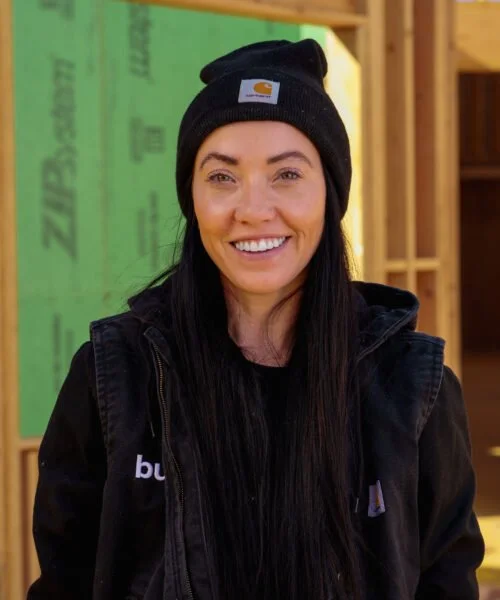
Stephanie Dailey is a second-generation builder, licensed general contractor, and one of the most recognizable voices in modern construction media. Working alongside her father at Steven Dailey Construction, Stephanie builds high-end custom homes across Utah while also leading StephanieBuildsIt, a platform dedicated to educating, inspiring, and advocating for the next generation of builders, especially women entering the trades.
With over a decade of experience in the architectural and design fields, her journey has led her to become a Contributor at The Build Show and a Co-Host at Grizzly Habits, helping bring corabuild.ai, a new software for builders to launch, while also running her own venture, StephanieBuildsIt. At the heart of her mission is the empowerment of others through education and the sharing of knowledge. StephanieBuildsIt is not just a business; it's a platform that reflects her values of diversity and inclusion within the industry. Through her content, they are building a community that values craftsmanship and sustainability, aligned with the cultural ethos of my current engagements.
Resources:
-
Stephanie Dailey 00:04
After the project was done, a lot of these women came back to tour the house that was in the Parade of Homes when it was done, and a lot of their husbands said, like, Yeah, we did, like, a deep dive on you, because we weren't totally sure if this was, like, a serial killer situation or what? It just seems so odd.
Mark D. Williams 00:30
Today on the Ketter podcast, we had Stephanie daily Ian from Salt Lake City, and it's a beautiful podcast. We it gets pretty emotional. We talk a lot about, you know, the dynamics of being a woman led company working with her dad, what that transition and identity looks like. And we talk a little bit, gets pretty emotional towards the middle and end, just talking about people that we've lost this last year in our community, and what we can do as business owners and entrepreneurs to really help each other and help our community. And at the end, there's a hot take. There may or may not be a collective coming to Utah. Finish the episode to find out. Without further ado, here's Stephanie Daley. Welcome the cares better Podcast. I'm Mark Williams, your host today, a very special guest. I've got Stephanie Daley out of Salt Lake City, Utah. Hey, Steph, how are you
Speaker 1 01:13
good? How are you
Mark D. Williams 01:14
good? Do you go by Steph, or is it always Stephanie,
Stephanie Dailey 01:17
anything? I'll take
Mark D. Williams 01:18
it anything in a positive tone. Yeah, I
Stephanie Dailey 01:22
think that's a good one.
Mark D. Williams 01:22
Like, when you have a dog, and I always tell people, like, Hey, come here, idiot, as long as it's positive, I'll respond for sure. Well, we just got to see each other. Just randomly, you were with Callie sunbrook on the construction stage at IBS. And is like, I knew we had this interview coming up, but I wasn't expecting to see you. And it's like, we actually have not. I know you and I do a lot of collab stuff with Pella specifically, and I've been a big fan of you know, your social media for years, but I've actually never met you in person before, until that random IBS meetup.
Stephanie Dailey 01:51
I know it was perfect, perfect timing.
Mark D. Williams 01:54
Let's, let's get straight into it. In fact, I'll switch it up. Usually we go into a little bit of the history. I'm going to go straight into we're gonna do the history at the end, because we let each guest leave a question for the next guest. And so I literally just got done interviewing Renee bush in Salt Lake City. She does strategic planning for interior designers, and she knew you're coming on, so I said, this one is for Stephanie. So this is her question, what is something that you used to believe was essential to your success, but now you realize it isn't.
Speaker 1 02:27
It's
Mark D. Williams 02:28
a good question.
Stephanie Dailey 02:29
That's a really good question,
Mark D. Williams 02:31
just coming in hot
Stephanie Dailey 02:33
I know this one might be a little controversial. I don't know. I think used to believe that the Parade of Homes and our like, heavy involvement in the HEA was essential to Stephen Daley construction as a whole. And I think that that did hold true for a number of years, and times have just changed. And there are other things that are, you know, kind of stepping into the place of that. But not to say that we don't, we're not heavily involved still, but I think we relied for a number of years on the Parade of Homes to really like stand as your reputation for your company, as success, and it's just the world has grown so much. There's so many other platforms that do just that. So,
Mark D. Williams 03:19
I mean, that's really insightful. I got to be careful I don't get in trouble too. In trouble
Speaker 1 03:23
too.
Mark D. Williams 03:23
I mean, you were the first female president of the Utah Valley Home Builders Association as well. So it's not like I assume you're not no longer the president.
Stephanie Dailey 03:32
I'm not so last year. Well, I was immediate past president, so two years ago, as President and I, we're still heavily involved. My dad is president of the State. I'm still really involved in the Utah Valley HBA, but it's just changed a lot. Yeah, explain that
Mark D. Williams 03:48
to me. I mean, I agree, by the way, 100% agree with you. I'd love to hear it in your point of view. And all, my dad was a builder. I'm third generation. I know you're second, and we I mean, the Parade of Homes back in the 80s and 90s in Minnesota, and the Parade of Homes actually is the oldest. Shout out to Minnesota. We're the oldest in the country. I think we're at 78 years old. So it started here, and it's all the it's all the Germans and the Swedes, you know, and their craftsmanship way back, yeah. But they it was hugely, I mean, that was, like the marketing thing you did, but that was that predated, obviously, the internet, for sure, social media, which is, I assume, where you're going to go a little bit. But give me your point of view. Why do you think that is? And I'd love to hear your point of view on that.
Stephanie Dailey 04:29
Yeah, I think for sure. You know, the parade has always been a part of my life. As a kid. I remember sitting at my dad's parade at home houses. He did one every year. It was really important to him. It was a way for him to get his company name in front of the general public, because he's always done custom homes and never did like spec homes or spec projects. That was that's how he found his customers. And I think social media has changed that. The Internet has changed that. And now, you know, we have the ability. Ability to promote our cus, promote our company, promote our what we do for our customers and our brand and our team so easy, like at the click of two, two seconds on your phone, you can do what the Parade of Homes used to do for us in the 90s. I also think, like from my perspective, our clientele has changed drastically. We used to have a lot of clients that would want to be in the Parade of Homes, and now I feel like we have a lot of clients that are just very private, and it's not something they're interested in. So it did used to be like the backbone to a really good reputation and to success was, you know, having your name and that Parade of Homes, and it's just changed. It's still great, and they still do a really awesome show every year, and they're still really beautiful, big custom homes, but it's just changed. I
Mark D. Williams 05:51
think it's
Stephanie Dailey 05:52
not essential,
Mark D. Williams 05:53
yeah, I think you're right. I think it goes really well. It's like Peter butter and a jelly sandwich. I think it goes better when it's all together. And, you know, I think they can complement each other. And like you, I grew up, you know, I was born in 1980 so I remember, in fact, in the room next to where I'm recording, I have one, a 1981 Reggie award trophy from the home. So it's like, it's the oldest one I could find. I grabbed all my dad's old ones he was gonna come in a dumpster, and I was like, I think just kind of a cool memorial to like, you know, the continuity of building and craftsmanship and so much has changed, but the commitment to people and I do appreciate, well, I build homes to a way higher level and craft than my dad did. I still I appreciate my dad's point of view to sometimes bring me down to earth, like, because I do love the craft, and I love like, the design and the architecture and that higher end experience. Like, oddly enough, I build four homes a year. Dad built 40 homes a year, and our revenue number was the same. Like, how wild is that? Yeah,
Stephanie Dailey 06:52
it's crazy.
Mark D. Williams 06:53
However, I appreciate what my dad says. You know what? This the couple that bought a $200,000 house back in 1980 had the same memories with their family and appreciated that roof over their head just as much, maybe honestly, more, than the person who's building an eight, nine, $10 million home. And I'm not this isn't really meant to be the comparison is just simply like since Adam and Eve left the Garden of Eden, we've been looking for shelters in homes, whether it's a cave or a tree for it, or the beautiful homes that we build, but, like, I'm just a big fan of, like, housing, and so that's where I think the Parade of Homes is just a, you know, it's an 800 pound gorilla, where I'm just, like, you know, a little monkey in a tree for this analogy.
Stephanie Dailey 07:34
Yeah, exactly
Mark D. Williams 07:38
what? When did you first realize that
Stephanie Dailey 07:41
I think probably 2020 i 2020 was when I really started, like, getting on social media and doing something with it, other than, you know, just talking to friends and family. And it was a project that I had worked on the house that she built during covid, that really got me interested in posting on social media. And so I didn't really even have a social media following before covid, and once that happened, and I realized how big of a platform it was, and how many people I could reach, not only from future customers, but also other trades, people, other builders and mentors, like it has been. I mean, it's game changing for our industry, right? Like my dad growing up and your dad like they, they didn't have the easy access to be able to call someone like you and say, Hey, we build similar type of houses. Have you ever ran into this issue, or have you ever used this product like it was just so different back then? And once, I finally realized, like, how big of an impact social media can have on your business, your team, it really just became like, this is so much easier and so much easier to get our name out and what we do and show off what we're doing 365 days a year, instead of two weeks in the middle of July.
Mark D. Williams 09:06
Yeah. I mean, I Yeah. I Amen. I think the one thing that social media does, I think, particularly well, is it showcases who you are as people, assuming that whoever's on camera is camera facing and talking. I mean, I know I follow your feed, right? So, like, you speak to the camera and you're very knowledgeable. You're way more knowledgeable on the technical details specifically than I am. Like, like, very impressively so and but it comes across as very trustworthy and very authentic and, like, very genuine. But like, I would imagine your clients that are regardless of what your interests are, right? Could be architecture, it could be design, it could be whatever the point is, is whatever your brand is, if you're representing it, people get to know you and like a like, like attracts alike. You're people aren't going to call you if they don't like what they see right, where a website might be. It's not that it's sterile, but it's a it has a different vibe. To it. And I feel like they probably go to your website first to see the work, but then I think to understand who Stephanie is, they go to into they go to social media. Do you agree with
Stephanie Dailey 10:08
that? Yeah, yeah, I do. And it's changed a lot over the years. Like when I started doing it, it was more or less just because I could see, like, this is really cool, I can get to connect with a lot of other people. I wouldn't say that I ever thought I was going to get business from it when I started. And that has totally changed to my thoughts on social media today, which is
Speaker 1 10:30
more
Stephanie Dailey 10:30
than 50% of my business comes from that this
Mark D. Williams 10:33
wasn't where the interview was going to go, but now I'm self serving. You know, we don't have nearly the following you do, but we have a for our market. We have a, you know, we're very large following locally. I have never gotten a single lead from social media, not one. And I can't figure out what it is. It's not the number of followers. We have plenty of engagement and all that kind of stuff. I'm curious, do you because, like, Katie Cath, that you know, Katie Cath here in Minnesota, yeah, J Cath, so like, Katie gets like, 90% of her work through social media. And I'm just curious. Like, when you said, you know, 50% what is it about, you know, from where you started, six years ago. I mean, let's talk about a meteoric rise. Like, my goodness, girl, way to go. But like, how have you noticed? Like, it was, it calls to action. Are you thinking about like, how would you attribute that? Half of the leads come through social media?
Stephanie Dailey 11:25
Yeah, so I think people are. They're finding me first one of two ways, either on social media or on build show. And that's odd anyways, because we always thought build show was for builders, connecting with other builders, right? Like builders, educating builders. And that was always kind of the the idea behind the content that we're producing as contributors is, hey, you're producing this to educate other builders. But I have three clients right now that came because they were build Show fans, and then they found out that I was in Utah, and it just kind of like all worked out. I think if, oddly enough, people are finding me in one of those two places first, then going to the website and digging into the website, and then we just have, like, a I've gotten a couple, like, direct messages on Instagram, but that's like, rarely the way they're connecting with me. Usually they're going to the website and filling out the contact us form, which just happens to come directly to me, and I respond, and sometimes it's like, oh my gosh, I can't believe Stephanie actually responded to me, like I expected this to be some other person. But I also try and do a really good job of asking everybody that we meet whether it's a contact us form or a referral from a friend or something like, anytime we meet someone, I always try and ask, like, So how'd you hear about us? Or How'd you find us kind of a thing? Because I think that's how we can do better as business owners and really understand, like, where we're putting our time and energy and what we're valuing, we're putting that time and energy into to get business. And you know if, if I was on social media for six years and I've never heard anyone like coming to me from it, or I've never connected with other trades that I've gotten on my job sites, like, if it was purely just to post and chat with my friends, I probably wouldn't focus as much time and energy as I do now, but I think all of us as builders have found it valuable in a way of like, even just connecting with another trade.
Mark D. Williams 13:29
Yeah. I mean, I can only speak for myself in this situation, that even if I Well, I haven't even I was gonna say even if I haven't gotten a lead, which is sort of true. I think with Misa, who's, we're getting a ton of traction with that particular one, because I've that's, well, it's not my podcast, but that's a whole nother story. But where I'm going with this is I would still find it very valuable, and I would do it regardless, mainly because I'm just such a big fan of our industry and my world was so small, and I don't know why I thought I was just this little builder in Minnesota, which is what I am. But when I went to contractor coalition summit in Nashville four years ago, this may i My mind was blowing. And I was just like, meeting Brad and Nick, who I didn't even know who they were. My wife is the one that followed them, which I think is hilarious. I didn't know who Morgan was. She's
Speaker 1 14:14
in my
Mark D. Williams 14:15
Yeah, and so,
Stephanie Dailey 14:15
like, you know, you're
Mark D. Williams 14:16
just head down doing your thing, and you're doing a great thing. But like, why would I network with builders all across the country? That's what like fortune 500 so I think the thing that I've learned so much over the last couple of years, and I think builders in general are waking up to this, is like, people think it's not like networking for fun, and if that's your game, fine, there's no shame in that. There is so much to be gained in terms of relationship building. I mean, now I'm I do a ton of brand work. I know you do as well, and like that is very important. Profitable and so and without an audience, or without a following or but at the end of the day, for me personally, if I am sustainable doing this because I love it, like the podcast, even I joke that even if it was just my mom who listens to these episodes, she definitely does. I. Yeah, is that I just love meeting new people, and I love hearing from you. And so I think people often ask, I don't know if they ask you this, like, Stephanie, how do you put out that much content? But like, I suspect you actually enjoy doing it. Am I wrong?
Stephanie Dailey 15:14
No, I do. I love it. If I didn't love it, I it wouldn't be possible to the level that we do
Speaker 1 15:20
it
Mark D. Williams 15:20
right? Yeah? Now it's, it's both when you like something and you're good at it, and you get monetarily rewarded for it, and you get client, it's like, it becomes kind of like, well, man, I feel like I've got the cheat code here. You're having ice cream, you know, for three meals a day.
Stephanie Dailey 15:33
Yeah, exactly,
Mark D. Williams 15:35
assuming you like ice cream. I
Speaker 1 15:37
do tell
Mark D. Williams 15:39
me a little bit about so my daughter's nine. I've got a seven year old and a six year old boy. And one of my huge passions my mom was an interior designer, and she told me early on, when I was a kid, I had zero interest in being a builder. By the way, I used to sweep the homes and play rafter tag, and I used to steal the framers hammers, and I was a nimble little kid. I'd run up into the rafters and like, they're like, What do we do with the spider monkey? But it wasn't until my mom and dad actually retired that I became a builder. So it's kind of like, I needed them to, like, sunset so I could do my own thing. Anyway. Yeah, bring that up with, like, I really want entrepreneurship to be front and forward. Like, I doesn't. Our industry has so much opportunity, especially with what's happening with AI, and our future looks extremely robust and bright, but specifically around women. My daughter's nine, like she is a baller. Whether she's in our industry or not, it doesn't matter to me, but if she's passionate about it, I will do whatever I can to help her tell me about the house that she built. I bought that book for my daughter. Meg billings, actually, I think maybe mailed me a copy or gave me a copy up in Idaho after I interviewed. Yeah, and I just don't know enough of the story give me. I'm sure there's plenty of people that I should know, but I don't
Stephanie Dailey 16:51
Yeah. So we started a professional women in building chapter in Utah in 2019 and we had a pretty good group of women that were part of, like the Home Builders Association, a handful of female builders, like four or five of us, but there was enough women in our industry and, like in the trades and owning businesses and everything that we thought this is perfect, like we're going to start this group. And in one of our first meetings as a group, we were trying to decide, like, what do we want to do? What we got to do something, you know, we're watching all these other HBAs volunteer at Habitat and, you know, do all of these cool things. And we were trying to come up with, like, something cool we could do. So we all kind of came together and just said, what if we built a house? What if we tried to build like the first female built house, and we were in way over our heads. We were so ambitious, and it hit us like reality hit us when we started it. But it just, it was just a kind of a collaborative thing. Everyone came together and said, this would be really cool. Let's try it. So we just started asking questions like, all right, who would sell us a lot? Is there anybody out there that would borrow us a lot or lend us a
Mark D. Williams 18:14
lot? Did you for so you there are four different principles, or four different people in the industry? Did you form an LLC to be partners in or how did you manage
Stephanie Dailey 18:21
them? No, no. So we had no clue what we were doing. We originally just had the professional women and building group, and we were just like lost over our heads. How do we how do we do this? We ended up connecting with Oakwood homes production builder here in Utah, and they had a bunch of land in Saratoga Springs, which is kind of like an up and coming first time housing kind of development. And I went to lunch with their CEO one day, and one of the other women, who actually owns a local like hardware shop, is the one that set that up. She used to sell them hardware and he's like, look, I'm I don't have a lot of time not really interested in whatever you're trying to sell to me, but I'll meet you at the Pancake House for breakfast at seven o'clock in the morning, and you get 30 minutes of my time. And I was like, Okay, we'll figure it out. We showed up there and just had breakfast with him. I kind of gave him my pitch. I had put together a deck of, like, bios of all the women that were involved so far, and kind of an idea, like a little business plan of what we wanted to do. Like, all it really consisted of is we want to build the nation's first all female built house, and we need help. He spent more time asking me about my history and what I do and what my education is, and what like my qualifications to be sitting there with him were, and then we went our separate ways, and I didn't hear from him for like a month and a half. I got an invitation to come out to their opening of their new subdivision, which is where we were asking for a lot, and went out attended. At and within a few weeks, he called and said, All right, we got a deal. So Oakwood homes actually financed the project. They gave us the lot on loan and let us pay it back when the house sold, and then they financed any costs that we had, like, throughout the build process, it was tricky, because, like, we just, we didn't know what we were doing. We just had this really great idea and wanted to see it come to life. So
Mark D. Williams 20:29
after What year was this?
Stephanie Dailey 20:30
2019,
Mark D. Williams 20:31
okay,
Stephanie Dailey 20:32
so after Oakwood kind of committed on IBS was coming up, and so I made all these little flash drives with all the women's bios on them. And I put kind of like a little pitch about, here's what we want to do, here's the lot we're going to build on. Here's our idea. And I took my business cards and laminated them and put them on a little key ring and tied them to all these zip drives. And I took like 150 zip drives to IBS with a following of 5000 people, maybe on social media, and just walked around and handed them out to brands and like tried to sell myself to whoever was sitting in that booth, like anybody and everybody, but the goal was to get donations as much as possible. We were trying to build the house with donations and with all women. So
Mark D. Williams 21:25
would that mean every single person, every like on a concrete crew, like every person on that crew, would also be a woman.
Stephanie Dailey 21:31
That was the goal. Yeah, that that was the goal. I think when all was said and done, we probably had 60% of the house built by women. So still, no small feat. It was amazing accomplishment. But, yeah, I mean, you start to get into it and you realize, like, I don't know any females that work in footings and foundations,
Mark D. Williams 21:51
right? Yeah, that's funny. That was my first one. I thought, like, I've seen women, you know, lots of other roles, but I've seen a woman on a concrete crew, actually,
Stephanie Dailey 22:01
yeah. So we realized pretty quick, like we're not going to get all women on the on the job site. So then there was two other female general contractors besides myself, and the three of us were really just trying to tag team this together, because we're not being paid to be there, and we're spending far too much of our own time at this little charity project than we are at our own companies. So we really started to enlist the help of our trades and just say, like, Hey, are you willing to come out and teach a group of women how to set foundation forms like Ty rebar? Like, I know this is your time and you want to get paid for it. But like, are you willing to do a job that would take you two hours in two days? Because there's a bunch of women that want to learn how to do it. So for the most part, like, we were able to gather a bunch of people like that who just said, like, yeah, we believe in the cause we get what you're doing. There definitely needs to be more women in the trades. We'll help you. And I think you know, when all is said and done, we ended up coming out of pocket something like three or $400,000 the house sold for 750 so it's a pretty good chunk of change. And now the Utah professional women in building, just year after year, takes that money and puts it back into like getting trades colleges set up for women who want to go into different trades programs, or buying tools for new trades women who are coming into the industry that maybe don't have the money to get their company set up, or different things, but they're taking that money and putting it back into getting more women into the trades, which is just super freaking cool, and
Mark D. Williams 23:41
that's so important, that's amazing story. When it comes to quality, craftsmanship and performance, Pella sets the standard whether you're building custom homes or designing a timeless space. Pella offers innovative window and door solutions that blend beauty and efficiency with showrooms and experts around the country. Pella makes it easy to find the perfect fit for your next project and their team to support it. Build with confidence. Build with Pella. Visit pella.com to explore products and connect with your local rep. Today. For more information, you can listen to episode one or listen to episode 109 where we bring on Pella owners and founders at Pella Northland, as well as their innovative team behind the study set innovation.
Speaker 1 24:29
Yeah,
Mark D. Williams 24:30
looking back now in that experience, what are some things that you gained that change your perspective on your own business, as well as just the industry at large?
Stephanie Dailey 24:38
Yeah, you know, most of the women that we got to come work on the house I found on Instagram. And oddly enough, like I would just get on Instagram and search like hashtag trades, woman, hashtag trading, lady, like anything I could find. It was a hot, hot hashtag back then, but I was just trying to find women, and then I'd send them a direct message. Saying, like, Hey, I'm Stephanie. We're trying to build this house. Can I buy you a flight to come and work for free in Utah for a week? And probably 10% of the women I sent messages to responded, and it was funny,
Mark D. Williams 25:12
high conversion, to be fair. Yeah,
Stephanie Dailey 25:14
it was funny when it all got down to it, like, after the project was done, a lot of these women came back to tour the house that was in the Parade of Homes when it was done, and a lot of their husbands said, like, Yeah, we did, like a deep dive on you, because we weren't totally sure if this was, like a serial killer situation or what. It just seemed so odd. But there was enough women out there that believed in what we were doing. And I think, you know, one of the big things I learned is like, you could never dream too big. Like we had a dream to do something that is still to this day, never been done, and we gave it a really good shot. And I think even though it's not 100% women built. If you look at what the house that she built has done for our industry, just some silly little project that a group of women came up with. Like it's mind blowing. It's so cool.
Mark D. Williams 26:11
So it's funny to say that I think I just finished this first quarter. We've been reading Dan martell's buy back your time, and the last chapter talked about goal setting. And last year, are you familiar with the Japanese principle, masogi?
Speaker 1 26:26
Yeah,
Mark D. Williams 26:27
yeah. So you set like a very difficult goal that is that base your whole year revolves around, for those that don't know what it is, and it can be business, it can be personal. I've done other episodes about it. People can back, check that one and look at it up. But what Dan was saying is, like, for your business, in this case, was the house that she built, you know, you pick something. It's a little bit like when, you know, Kennedy challenged the country back in the late 60s to go to the moon, right? You know, it's not what you can what your country can do for you, but what can you do for your country? And like, you have this giant aspirational thing. And like, what I still think is wild is like, right now, for those not watching, I'm holding up my iPhone. There's more technology in this phone than was in the entire spacecraft. It's probably wild. I mean, it's just crazy, and we haven't been back since, which is just insane as well, right? Anyway, I'm just saying, like, put, I think, fear, you know, looking fear in the eye, whatever that is. And it doesn't mean we have to do stupid things, but like, having a big dream, and even if it doesn't succeed, the amount of innovation, the amount of how it pushes you as a business, as a person, is you could never have gotten there without whatever that big goal is. Anyway.
Stephanie Dailey 27:35
Yeah, it's amazing what you can do. And if you're just willing to, like, get a little risky and dream and try and do something, even if it's not 100% success of what you wished it was. It changed my world, like the house. If it weren't for the house that she built, project, I wouldn't have ever started posting on social media. Wouldn't be where I am today. There's just so many great things that come from it in my own life and in my own career, but also I just look at like Molly had this aspiration to write a children's book after she saw what this group of women was doing now that children's book is changing lives and making a bunch of money into a foundation that's going towards women in trade. So it's just really cool. And I think part of the problem is we just have to get over our fear of failure and be willing to just, like risk it.
Mark D. Williams 28:29
Well, I've often said, there's a, there's a local builder here in town. Shout out. Her name is Danielle yegi from style instructor. I love her. She's, she's a first class operator, like, just a baller, awesome woman. And she but she has like, seven women on her team. And like, I swear, like two guys and like her, her social media keeps, like, doubling mine every year. Like, well, Danielle, I wish I had as many women on my team as you do, because, like, I would you guys are just killing it over there. And like,
Speaker 1 28:55
yeah,
Mark D. Williams 28:55
I just, you know whether it's my daughter, whether it's my mom, whether it's I just, I remember early on, going back to what my parents told me was, my mom said that if you can't relate to women, you won't make it as a business person, and life is going to be pretty hard, especially in she knew early on, like one of my designers was, he said, Happy wife, happy life. And that was before I was married. I didn't really get it. I get it now being married, but obviously we're working with people on their homes, their dream homes, or whatever home it is for them, it's their dream home. And there's a lot of decisions, but I mean, it's such an intimate process. And the respect that we have for our homeowners and the respect that they have for our teams, I actually find that when you have too much of one thing, whatever it is, it's not. You need a balance. And what I'm going with this is like women on the job site, like, I wish we just had more women the job site. Every time they are like, I feel like they're treated with more respect and more deference. And if I've never seen it my career, but if I ever saw someone disrespect, like one of my lady designers, or, you know, one of my women led painting groups or something like that, like. Like you. I'm not a very controversial person. I would get real controversial, but it's never happened like I've never actually seen it. I'm so no, this is actually gonna be my next question. Have you felt? I mean, do you feel any sort of sexism in the industry? I mean, do you feel resentment from stereotypical older men, but are just in general? I mean, do you feel that, or do you not? Or is it mostly not a thing anymore for you? Or maybe not,
Stephanie Dailey 30:25
yeah, not in the trades, not with the people that we're working with. I've definitely felt it with clients and more so when I was younger. We just live in a heavily LDS, heavily religious area like the LDS religion is very, very prominent here in Salt Lake. And a lot of the people that we were working with early on were just like really wealthy, really successful LDS businessmen, and they had a tendency to work with my dad, and I was his assistant, and they weren't ever disrespectful, like I've never had someone be disrespectful, but you could definitely tell like they were going to him for everything. I could be the one sitting at the job site all day long, running the cruise, directing people, handling everything. And he would never come to the job, but they would call him with questions. So I think that's probably the extent of anything I've ever seen. And you know what? It's also generational. I think for the people that we're building for, and I think you probably are in this same ballpark too. A lot of the times that people we're building for are older, they're later in life, they have lots of money, and they want to build these really luxurious, beautiful forever homes, right? And to see a young female come in as the person that's going to do that for you, sometimes it's just a little awkward for them. So I think it's becoming more normal, and it's not ever something that really concerns me. But as far as like, trades and other people on the job sites and suppliers, like, I've never had an issue.
Mark D. Williams 32:12
Yeah. I mean, honestly, I'd be to me, it'd be a kudos to you. I'd be like finally, because honestly, my joke is to my team. So Leah, she does not like being on camera, but she basically helps me run the entire curious builder world. And when we have these different ambassadors, you know, around the country, they know who they are. You know, they're constantly being like, Hey, Leah, where's this? And she they because men, I always tell her, Leah, men don't read. Men don't read. Men don't read like, you know, like they just, they're terrible. I think just in general, it's a stereotype, because there are certain men that read and that are that are organized. I'm not saying but as a stereotype, I find that that's why I gravitate a lot to designers. I love working with designers that are stereotypically mostly women, which is, oddly enough, I met a man the other day who he said, just to be clear, he goes, I'm straight. And the reason I say that is most men, again, as a stereotype, that are designers, they are they're not straight. And he's like, he goes, I actually find it's very difficult to actually be a designer as a straight man. And I was just, it was, it's just funny how each industry has its own little thing that they have to get over. And I don't for sure podcast, I don't know if you'd be willing to absolutely just because we all face challenges. And the thing is, I have never been on job site, or, I shouldn't say never, I'm sure there's times that I'm not aware of right now. But like, just people mutually respect each other and most of the stereotypes we put on ourselves or on other people. And if you would just have a conversation with someone, if you would just ask them a question, like, Oh, come on, even if you're even if your Spanish is terrible, like mine, like, I always say good morning to all you know, to my Latino crews. And I wish I knew more, but I do the best Ian, like they're just glad you're interacting with them. And like there's so many stereotypes that if we just move past it and just focus on humanity, like that is honestly what I see when I see construction, is the human human to human thing. And it's a beautiful thing.
Stephanie Dailey 33:59
Absolutely. I mean, this whole process is hundreds of people crafting something for someone that they're going to experience their entire life in. Babies coming home, people graduating like these big life events that are life altering you. All these people are like hands on crafting this place for these people to live and experience life forever, like it's just so it's such a beautiful thing. There are so many amazing people involved in it. And I think that there are definitely not enough people out there just enjoying who's around you and the the trades and skills and like all these different things that these people have, because every person has a story to tell, and if you'll stop and listen to it, I think you'll enjoy what you're doing and where you're at far more than you already do.
Mark D. Williams 34:53
How is your dad? Is your dad still active in the business?
Speaker 1 34:56
Yeah,
Mark D. Williams 34:56
as you've grown up, I mean, I know it seems like you got into. It, what, 16? Yeah, you know, I mean, you look like you're 22 now, so you've only been in the business for six years. But, you know, as you go, like, I have to imagine, like, as a dad, like, what's it like working with your dad? And how is he sort of, like, has he kind of ever had those moments where he sat down with you and has been like, Stephanie, this is just like, well, what is his point of view, and like, my daughter is like this badass personality and home builder across the country that people know like, that's got to be kind of a surreal experience for him, considering where he came from.
Stephanie Dailey 35:33
Yeah, I did. I started when I was really young. At 16, I worked in an architecture firm, and I actually worked for the architect that drew all of his houses. And so oftentimes that architect would put me on my dad's projects for a reason, like he want, you know, I was young, really young, and they just wanted to teach me everything they could. And so I owe both of them like a ton of credit for that. And I spent a number of years at that firm, until the recession, and then I went and did something else for a little bit. Got back into construction, and I went and worked for a different builder. I didn't come and work with my dad, and I probably could have gotten a job with him when I was 16 if I wanted, but I didn't. I really wanted to, like, learn elsewhere and fail elsewhere, and have the opportunity to, like, see how it works somewhere else. And so I started working with him in 2017 and you know he, he's always been great. Anything you want to do, you want to get your license, you want to do classes, you want to do anything like go do it. It's always good to have this education. And then I think when this whole social media thing happened, like, even to today, I don't think he fully understands, like, the size of it or the gravity of it. Like he was flipping through a Pella, the Pella magazine the other day that trades the new friends book that they sent out, and he's like, Did you know your pictures in here? Yes, I did, but I don't, I don't think he fully understands, like, how big it is, until maybe the last six months to a year, which is interesting. I've kind of done like, little brand deals here and there, or worked with brands on, like, video stuff. And, you know, I, I teamed up with Milwaukee over the last year. And you know, he saw plenty of tools start to get delivered here to the job site. And our guys, all these trades guys that work for us as Steven Daly employees now have, like, full Milwaukee setups. And you know, he's asking, like, how much did this cost us? And I'm like this, let me explain this to you. And so I think he's starting to realize it a little more, and he realizes that it's not necessarily just like Stephanie's little Instagram that she's posting photos of what she's doing all day. And now, so when we have so many clients currently under construction that came to us because of that, everyone's kind of looking at it with a different lens. Like, wait a minute, this is really valuable to not only Stephanie, but also all of us. Like, it's it's bringing in business for hundreds of people that work for us, which is just very, very cool. So I know he's super proud. He is very, very quiet, very reserved guy. Doesn't say a lot, man, a few words, but he's really proud, and it's really fun to be able to he came to IBS this year with a couple of our other employees, and it's really cool to be like, up on a stage and see your dad out there, and for him to be like, That's my daughter. Like, it's just, it's really cool. He came back over to the Huber booth multiple times with his friends and, like, it's just really neat. And I think it's cool that we get to experience it together. There's not a lot of people that work really well in, like, family businesses. Sometimes that can be challenging or just doesn't work. I
Mark D. Williams 39:01
think there's a disproportionate amount of people that do in construction. However, I agree with you, for sure, holistically with that, but you see a lot of, oh, you see a lot of husbands and wives. You see fathers and sons. Never met a daughter. And, I mean, if your dad, he's there, but he's really quiet, folks, you can't see him. Yeah, yeah. I think my next question was going to be is, do you have other siblings, and are they involved with the business
Speaker 1 39:25
at
Stephanie Dailey 39:26
all? Yeah, I do. So I have a sister who's a professional chef. She's actually, if you own a Traeger grill and you've cooked any of triggers recipes, they're horrors. She's so she basically does what I do in the construction industry. But for trigger on your family
Mark D. Williams 39:44
is just like shaken up this, I love this.
Stephanie Dailey 39:48
Yeah, she, she does a fantastic job. She's she's just wonderful and really good at what she does. And then I have a brother who's a mechanical engineer for Mercedes Benz. So neither one of them are. Are in the business. The closest thing I have to family. Other family in the business is like my brother's fiance runs our Office, so she does all of our billing and bookkeeping, which is one of the best things we ever did for our business. And you know, I have a brother in law who works in project management for another contractor, and I have another brother in law who's an electrician that does a lot of residential stuff, but no one else that really kind of works in our family business. The
Mark D. Williams 40:31
thing that I love about what you said about going and it's really wise beyond your years, which anyone listening to you can tell you are, is the fact that you after you work for that architecture firm, and then you went for a couple of years, and then you went and worked for another builder, that's super I would imagine just a lot of the success that you have with your dad and your family. It was due to that decision. However, it came about and only share this story. It was episode five, a long time ago for us. Now, Mark shear is a third generation lumber yard here in Minnesota, and I interviewed him, and the shear family is three generations. They had it for a long time. And he said something that kind of really opened my eyes to like, how do you avoid nepotism, or how do you ensure there's new ideas? And he said they have a family. It's in their bylaws of their country, because they have like, 300 employees. And you can't just have, just have, just because you're, just because you're blood related, doesn't make you good at your job. Now, it doesn't mean you're not loyal to your family. But, and there's a lot of companies like this, that anyway, you have to, you have to work five years or get a major promotion at a different company, outside of the family company, which I just thought it was so and I come to find out that she actually a fairly standard practice for large families like, I know, like the Marvin family has something similar to that, where they have to go through that, and then I think they have to, they have to be like, I forget what it is. Like 31 or 35 they have to either say, like, I'm in or I'm out of like, the family, however, their hierarchy system works. But I it's just really interesting, because most construction companies don't think like that, but a lot of bigger companies that are structured more like, you know, inks, if you will, have succession plans that are way beyond what most entrepreneurs think about. And I just think I used to, for me personally, like I mentioned, my daughter's nine, I'm 45 so it's like, I think, like, Well, wait a minute, 20 years from now, I don't really want to build for another 20 years, I'd be 65 now. Maybe I will, maybe I won't. But I used to always say, like, I don't want my kids to get in this business. I've changed my tune. Now. I would love it if my daughter got into building only if she wants to. I don't want to have any sort of onboarding for her. But I'm like, Well, if she has to go work five years for somewhere else and I have to do 20, I'm doing the math here. I'm like, that means I have to work like I'm 75 like, I do not want to be building when I'm 75 and so, like, I'm like, so anyway, I only offer that as up as like, I can see as a parent how it also might, if you want to work with your children, it could be harder, almost on the parent than it would be on the kid, because they have all the time for sure. But as a parent, you don't,
Stephanie Dailey 42:54
yeah, I think that's personally, I think for me, that's one of the biggest lessons I've learned over the last year is, you know, my dad started this business himself with the money in his pocket. He never took money from a bank. He never took money from investors, like he did this on his own. And he was a one man band. Up until I started with him in 2017 he did everything besides he had two carpenters, but that man did all the bidding, all the estimating, all the client meetings, all the invoicing, all the billing, all the draws. He did all of it by himself until 2017 like
Mark D. Williams 43:32
literally, the opposite of Dan Martel's books. Buy back your time. That is like you have no time.
Stephanie Dailey 43:36
Polar opposite, yeah, and I look at it. Now today, as my dad's almost 70 years old, I'll be 40 this year, and looking at like, what's his plan? Like he can stay here for the rest of his life if he wants to. I would love for him to just hang out and be here every day, because I get to see my dad every day. It's cool. But you know, like, at some point he's going to want a break, and he's going to want to retire or vacation more, or whatever it may be. And I'm looking at it a little differently from like his perspective now of how would it feel to build an entire business, your whole identity is this business that you bought, and you're reaching a point in your life where that may not be yours anymore, or that might not be like your identity anymore, like it's still part of you, obviously, and it will be forever. But that is, I can't imagine how that feels emotionally or just in general, like it's so interesting. So I think over the last year, I've taken a lot more of time to just kind of understand, like, how is he processing this time in his life, and what this next change looks like, and what works for him, and how is it comfortable for him? Because he's built this entire thing, the reason this whole company exists is because he was willing to take a risk.
Speaker 1 44:59
You.
Stephanie Dailey 45:00
And how does it feel now to get to a different point in life where you're, you know, even though he trusts me and trusts the rest of our team and fully believes in us and can go on a two week vacation and not not worry about his phone, it's still it's his whole identity. So I think it's been interesting, just from my perspective, to kind of look at things a little differently over the last year and see it a little more from his side. You know, I know he's proud, and I know he he loves everybody that works here and everyone that's a part of this team, but it's got to be tough. You know, it's got to be tough to build something that's your whole identity, and then, you know, what do you do at that point?
Speaker 1 45:41
If you're
Mark D. Williams 45:53
looking to level up your business in 2026 and beyond, please consider contractor coalition, amazing people, incredible builders from all around the country. Then our second event of the year will be a one day Crash Course. Will be September 15, Ian Minneapolis, Minnesota. This is really meant to be a much abbreviated version, but obviously at a much lower cost. And then our last three, four day event of the year will be Ian Charlotte, North Carolina, on November 6, for all the details, please head to contractor coalition summit.com. My dad told me, as a little kid, I didn't make sense to me at the time. He told me, it makes a lot of sense now, but he said, and back in the 80s and 90s, this would have been very rare. My dad's a rare bird this way. But he said, If you don't have hobbies as a young man, you won't have hobbies as an old man, and his point was, and again, didn't realize it at the time. I wasn't wise enough, but now I look at it that, I think as a cautionary tale. I'm not saying we don't love our business, and I don't. I'm not saying that it doesn't shape in our personality, but I think there's a real danger if our self worth is tied up into our business to a degree that is so high that if our business fails, that we think we're a failure, that's we've gone too far, in my opinion. And I agree, and I think it's super healthy to like, and this is where I think we have to talk to other builders and other owners and our spouses and just really understand like, I think it's fine if you live and bleed for your company. And you, you, you know, some people are motivated by legacy, and that's great. I support whatever their dreams are. Go for it, but it's a little bit like an addict personality, the little I understand it, like, if you, if it becomes the addiction or the rush, or like, the thing you can't live without, the end is going to be pretty bad, in my opinion, yeah, like, there's going to be a reckoning. And so I, I think there is a way to balance it. And like we're and I think I've often said that balance is a moment in time. Anyone that tells you they got balance figured out
Speaker 1 47:48
as a liar.
Mark D. Williams 47:49
Now it's like surfing. You could surf for a couple seconds, maybe 10 seconds, but then you're gonna fall over, but, and, but that doesn't mean you don't get back up and try again. And so I don't know what your thoughts on this are, but, you know, and it's, it's not meant to be accusatory, but like, I just see people that they're so they're just devastated if their company fails. But like, what is failure? Like, failures? Yes, it just means you have a setback and try again.
Stephanie Dailey 48:14
Yeah, yeah. I think you know, for him, and a lot of it is generational too, right? We see how they just, they had to work so hard to build this thing. And not saying that, that we don't today, but like, everything was just harder then. And so, you know, I think he's got tons of hobbies, and he loves it, and I think for the rest of his life, even 20 years from now, there's going to be moments where he's sitting in the office for a day just because he enjoys it. But I think just as builders, we are not the best at prioritizing our own health, both mental and personal, and I that could be a whole hour podcast about that particularly, and I think it rings so true, and it hits so close to home when you see people struggling. And a lot of these people who are struggling are doing just that right. Their whole identity is this business, and if something goes wrong, or if something just isn't perfect, or, you know, if it fails, God forbid, like their whole life is upside down, instead of looking at it maybe from a different lens of like it's all right, we just pick it up and start again or do something different. And I, I don't know what the right answer is with that. You know, we've lost way too many people in Utah over the last five years from suicide that are all in this industry, and it makes you kind of take a step back and look at it and go, What could I be doing better to support other people? Like, what could How could I help? How could I support other people? And I always try and be very real on my social media, like, failures and wins. Because I think. Like part of the problem is social media always just looks so perfect and shiny and and you never really know what's going on. So I don't know. I think are the newer generations that are coming into this industry are doing a much better job of doing just that, like paying attention to your mental health and like, what you guys are doing with that retreat, all these different things are. It's really starting to change. And it's also not a stigma anymore for these people to talk about, like, how are you feeling? 100%
Mark D. Williams 50:29
and honestly, going back to the where this started, more women in construction, women, yeah, again, as a stereotype, I think women are more empathetic than men. You know, men are, yeah, problem you know, stereotypical. They're problem solvers, or, you know, or Hunter and killers and you know, versus gatherers and nurturers and like all that, which is true to a large degree, but you know, you touched on something that's really, I didn't realize I was doing it at the time. But honestly, this podcast is a little bit of that, and it's meant to be entrepreneurial and positive, but like, we have a series on the podcast for the last year, and it's been very successful, which is, losers are winners. I have people come on on Thursdays, and the only thing I ask them is, what was your biggest mess up? How are you a failure? Because we learn ourselves so much. Like, if you were to ask me, like, What are the five things that I would think of, all the things I failed at and what I learned from I couldn't even think of a single success story? No, I'm sure there's absolutely that's
Stephanie Dailey 51:18
our biggest like, biggest learning lesson is what we failed on,
Mark D. Williams 51:22
yeah, and and it feels so fortunate for people in our lives that have been with a word in season. I'm not saying that we don't get blue or you don't get tired or you don't but like, how do you recharge? And that's I have been surrounded by amazing individuals. And so it's like, whenever I can help someone, or if someone who's listening to this wants to call me, call me, yeah, I will talk to you. And Ian, you probably know this person. I was gonna bring it up, but you sort of did. So Ron Jensen, yeah, we he was a contractor coalition alumni. And this is, I got goosebumps, just telling the story. So in Chicago this last fall, it was a Friday night, and we had all these new builders from around the country. And as we do for our kickoff, we usually have Mark la Liberte from construction instruction do like a talk. He missed a flight or something happened. And I just said, piggybacking on this Thursday episodes that I do about losers or winners. I said, Why don't we do an open mic night. It'll break the ice. It's night one. All these builders, know, let's all go up there and just talk about our biggest fails. And so I went up there and talked about almost going bankrupt, which, in hindsight, was like the rosiest thing that was here. And then, like, Nick talked about getting sued. You know, Schiffer talked about getting sued from this guy who took advantage, then the next guy, he knows he is G Man. He talked about wanting to take his life, and he had a friend that every 15 minutes called him, for like, two weeks straight, he goes, the only reason I'm here is because my friend called me, and then the next guy talked about something, and just kept going on. And there's people crying, but it was a beautiful moment. It was the best, I mean, this is crazy, but that was the best three day conference I've ever been to and and they're always amazing, but like the depth and the emotion, fast forward Monday night. We find out that Ron had passed away, yeah, and we found out later that he had taken his own life. It was that Friday night of open mic that had happened, and wow, which is pretty sobering for us. Yeah, Morgan monitors crying like I'm everyone's pretty, like, emotional about this, and we're talking about So internally, we decided this next contractor coalition coming up in Denver on May 1, the open night from here on out will be called the Ron Jensen open mic night, and we will, we will share what I just shared and why we're doing it. And yeah, it's just that this industry, in the past, has been a very self abusive industry where we don't talk about our feelings, we don't share what we're struggling with, and we're human. We all struggle with it, and so I share that with you and with the audience, so that they maybe there's someone in their lives that you know if you're if you're listening to this right now, and there's someone that comes to mind, stop listening to this podcast and go call them, because there's a reason they're on your mind. And I think that's so important.
Stephanie Dailey 54:17
Yeah, it's the industry's just changed so much, and it is. It's tough to see mind blowing. Unbelievably successful Ron's homes were just, they were a step above everyone else's right, like he was just this goal of a contractor. And you never know. You never know what's going on with people. And I just, I'm thankful for the groups and the people and like the conversations like this, that we have to be able to just reach out and talk to other people and change kind of the stigma on our industry in ways, from women in the trades to talking about our failures because. Yeah, that's part of the beautiful thing that social media and podcasts and everything else had brought to us.
Mark D. Williams 55:06
Well, and think of how and we're we're uniquely situated, honestly, to have these conversations. Because what, there are very few industries that are as emotional as building custom homes for families. I mean, every builder can relate to the emotions. I mean, I told a couple the other day, and they had one child, and they said they'd like to have more. I said I was just in a goofy mood, which is pretty much every day, and I said to the lady, her name's Ashley, I said, You know what? I said, the most important decision that you'll make when you choose who you're going to work with is someone you feel comfortable with. Because I got a news flash for you. I will probably be the second person that knows you're pregnant, because, hey, I have three kids, so I know what I'm looking for. You know the emotional changes I get, like the, you know, all that. But I said, you know? I said, Honestly, I can't tell you how many times people have sat down in my office and all you know you ask. You know it's not an inappropriate question, and I will refrain from asking it here, but like you're asking questions, like, I can't build you a successful house unless I understand your lifestyle, your life you're at. And so, like, I'm asking, like, do you Would you like more children? I'm sure they didn't come in this meeting to be like, Hey, are you thinking about having more children? And like,
Speaker 1 56:16
yeah,
Mark D. Williams 56:16
or now children, or what's your goals? Or whatever they might Yeah, and, and so I've had it, so I've had it at least two or three times where they'll get red in the face, and I'll literally write that in their color. You're pregnant right now, aren't you, and they're like, We haven't told her parents,
Stephanie Dailey 56:34
your builder becomes literally part of your family. Like you're just so ingrained you're talking to these people more than anybody like you become a piece of their family. This is the most emotional thing you'll ever do. And I swear, like I tell my dad probably at least once a month, I feel more like a therapist today than I do a contractor.
Mark D. Williams 56:56
Honestly, I've joked that before I had a designer once who she told me Kate Regan, and she said she actually went to school to be a psychologist. I'm like, Well, man, did you pick a good I want to go for communication and business. That's not helping me at all. I could have definitely gone back for psychology. That would have been super helpful. Yeah,
Stephanie Dailey 57:16
for sure.
Mark D. Williams 57:18
Or like a social worker, like anything to do with, like, conflict resolution, honestly,
Stephanie Dailey 57:22
oh, yeah,
Mark D. Williams 57:22
debate, probably
Stephanie Dailey 57:23
debate would have been a good one. That
Mark D. Williams 57:25
would have better. Yeah. I feel like now it's, yeah, I heard a great quote the other day. I forget, I don't think it was Winston Churchill, but something an old timey quote that tact is the art of making a point without making an enemy. And I was like, Ooh, that's
Stephanie Dailey 57:37
like that a lot, right?
Mark D. Williams 57:39
Yeah, that's a good
Mark D. Williams 57:40
one. We have to, we have to stand our ground, but like, they're still our client, like you can tell them no, but you sort of have to take, you kind of have to give them no with, like, some chocolate on top.
Stephanie Dailey 57:49
Yeah, yeah, exactly.
Mark D. Williams 57:53
Oh, man, um. Last question, actually, two last questions, as we wind down here. One is Nitro Circus. What is that all about? So I just like, is this like the guys, like, yeah, like, Travis Pastrana, like that, Nitro Circus,
Speaker 1 58:09
yeah.
Mark D. Williams 58:09
How are you?
Stephanie Dailey 58:12
2008 obviously, the construction industry was not thriving. I was working at the architecture firm at the time I was I graduated in 2002 so I was early 20s, late teens, early 20s, and quit working at the architecture firm. There wasn't enough work for me, and I needed to find a job. I mean, I was just kind of hanging out, and I had a bunch of friends that I grew up with, the Godfrey family, who is the ones that started Nitro Circus. They were they lived 10 minutes from me, so I knew I'm in high school, and I just started spending more time with that group of friends, which meant I was hanging out at the Godfrey entertainment offices very often, and that's where they produced and filmed Nitro Circus. And so I just would hang out there because I had nothing better to do. And obviously I stood there a little too long, and someone gave me a job, and I started as a production assistant, just like running errands, or like, Hey, will you go over to the bike shop and pick up these two dirt bikes and bring them back? Like just someone's little errand runner, and it turned into something really great. I ended up staying there for almost six years. I traveled the world with Travis and Jolene and all the rest of the crew, and we just traveled around the world. And they did these live action sports shows and arenas. We filmed a 3d feature film while I was working there. So, like a film that was in movie theaters around the country was when 3d movies were hot. It came out in 2012 and so I got the opportunity to work alongside, like, all these producers and investors who were like. The brains behind things like Jackass and all Utah is just this like crazy hub for super smart producers and filmmakers and really, really wealthy business owners and investors who all kind of have this weird passion and hobby for dirt bikes. And so I stayed there as long as I could, honestly, like, I learned more there that I don't know that I could have learned anywhere else, like how to sell yourself as a personality, how to pitch like your brands and ideas. Like, I owe Nitro Circus a lot of credit for the guts that I had, for the house that she built. There's just so many things that I watched these guys who are literally just normal dudes that like to ride dirt bikes, that are trying to find
Mark D. Williams 1:00:48
normal. Let's watch ourselves. Normal air while doing a backflip will be lit on fire. Totally
Speaker 1 1:00:54
I
Stephanie Dailey 1:00:54
know, totally normal, but their whole goal, all of these guys, all they wanted to do was make money doing what they loved, like they didn't want to work. All they wanted to do was find a way to have people pay them to be able to do this thing. And I learned so much there. I got to see more of the world than I ever would have thought I would. I got to sit on a big wheel and jump a mega ramp that was 60 feet tall with a 30 foot gap between the landing and like, I learned how to ride a dirt bike. Travis and Jolene taught me how to ride my first dirt bike. Parks, Bonifay taught me how to ride a wakeboard. Like all these really, really cool opportunities, and I just am so thankful for them. And I still to this day, talk a lot to Greg Godfrey, and I spend a lot of time with the people that I worked with at Nitro Circus. I see Travis every now and again when he's in town. I see all the rest of the crew, but I just owe them a lot, like they taught me a lot. I was literally sitting around there doing nothing, bothering someone during their work day, and they just put me to work and gave me a job, and it turned out to be one of the best things I ever did
Mark D. Williams 1:02:02
that is a, I love that story. That's a whole, that's all another podcast in itself. I mean,
Speaker 1 1:02:06
yeah,
Mark D. Williams 1:02:06
you know, we buried the lead. We waited for an hour before you get into Nitro, kind of lit this episode on fire. I mean, this one's got everything. We've got heart, we've got family dynamics. We've got,
Stephanie Dailey 1:02:16
I know,
Mark D. Williams 1:02:17
we've got some fire at the end. This is amazing. I told you I was gonna do this live, so no pressure. Oh, first of all, before I did realist, you get to leave a question for the next guest. So what? Okay, your question? We're doing this for each episode. You get to leave the next question. So what would be your next question? I don't even know who the next guest is, but that's they get this. I
Speaker 1 1:02:38
would
Stephanie Dailey 1:02:38
say, if you could do one thing to make a big impact on the next generation of trades people that are coming into this industry, what would it be
Mark D. Williams 1:02:49
you could so if you could do one thing to affect the trades of the next gen
Stephanie Dailey 1:02:54
or help the encourage or help the next generation of trades people like, how could you Get more people to enjoy the trades or to want to be a contractor or a designer or tile setter, I think that's been my a huge focus of mine lately is like, what can we do better to get more young people excited about what we
Mark D. Williams 1:03:18
do? I actually think you're doing it right now.
Stephanie Dailey 1:03:20
I'm trying,
Mark D. Williams 1:03:20
but I mean, I think it's telling your story. I mean, I think that's the power of podcasting, and that's the power of social media. And, you know, there's so much interest because you don't fit. I'm sure that's actually why you have one of the reasons, not the reason, but it's a contributing factor. It's funny how some might a weakness is a superpower.
Speaker 1 1:03:39
Can be
Mark D. Williams 1:03:40
a weakness, whatever, however you want to look at that, but like I would imagine, it doesn't take anything away from like your I mean, the knowledge that you have that your dad unlikely, Ian taught you. I mean, if your dad was doing that stuff and you were observing it like your depth of knowledge is mind blowing. But on top of now this night, I mean, nitro service probably taught you, obviously confidence. You can't learning confidence. I've often my wife and I talk about this, but like, if there's two things we can do for our children, I think this is true of honestly, anything I want my children to feel loved, because if you if you come from a place of safety, and if you come from a place of love, just oh my word. What a gift,
Stephanie Dailey 1:04:16
amen. And
Mark D. Williams 1:04:17
then the second one, confidence, if I can do those two things, I'll consider myself a successful parent. And the reason confidence is so important is, like my wife has often commented on me specifically, I might have too much confidence, like gapping. Maybe Travis Pastrana might have a little too much confidence, got a lot of broken lives, would be my guess. But anyway, going back to complimenting you is you're already doing it in what you're modeling, what you're storytelling, and how you allow people into your life. And so I think, don't you think that sometimes people correct me if I'm wrong, but I think sometimes people I don't really give them much time, but if there even were people that call them haters, I don't even believe that. Yeah, like people that are disparaging about the things we do. Like, Oh, why? You know the trolls that you guys? I think it's hilarious, so funny to me, because it doesn't affect me. I just think it's hilarious that someone took much time to write something that detailed. And like, what are you doing anyway? This is a terrific question, but it's when I lost my way on that one with the trolls, but just that you are putting it out there and where people like it, love it, hate it. It's authentic to you, and because it's authentic to you, it's going to inspire a little girl, it's going to inspire me, it's going to inspire anybody else. And so you literally are doing the thing you're asking someone else to do, to affect the next generation. Because honestly, we all affect the next generation positively or negatively is really up to us.
Stephanie Dailey 1:05:42
Yeah, you're the one that makes that decision. But I just think, you know, that was the whole idea behind why I started posting online in the first place. Was I just wanted to show people how cool this job is and how fun it is, and like all the cool things we get to do, and all the beautiful homes that we get to build, everything else has just been a bonus from it, right? The fact that you can make money doing it, the fact that you can get clients from it. But there truly is nothing I love more than getting, like, a direct message from a dad. Who's I got one today, has an eight year old daughter that went to her class and told her class she wanted to be a contractor when she grew up, and they made fun of her. And so he sent me a message today, saying, like, what can I do? And I put together this huge package, and right before you and I jumped on the Zoom, I had my Office Manager Go ship it over to her. And we get kids all the time that say, Hey, are you hiring? Like, is there anything I can do to get a job? Like, it's just cool. It's cool to be able to do something to help someone else, and to do something that helps our industry so positively.
Mark D. Williams 1:06:44
I mean, that's yeah, Amen, yes, is awesome. Okay, here is, here's the you don't have to commit one way or another. But we are so do you know the guys at Old Mill, Tyler, and yeah, the rest of the crew, and then so we have the curious collectives in seven other states and cities. So we're in Washington, la Phoenix, Austin, Georgia, Minneapolis, Ryan and South Carolina. We are launching into Utah. This is the first time we publicly announced it
Speaker 1 1:07:13
sweet
Mark D. Williams 1:07:13
Salt Lake in third quarter. And I would like to know you want to help lead it. Trapper is going to be the other person? Yeah. And we usually go with two people in a new market, and yeah. So anyway, hot take. This is I'd love to enjoy our collective head. So it'd be Yeah. It's just, I can tell you more about it later, but it's really
Speaker 1 1:07:34
Yeah.
Mark D. Williams 1:07:35
It's just really fun. And wait, I love Utah. I've so enjoyed this last three, four months, I've interviewed majority of people from Utah. And it's like, I don't know what's a lot of they're my people. I'm just loving that. I am loving the episodes and interviewing the builders out there. You have such a beautiful community.
Stephanie Dailey 1:07:52
It's amazing. And there's, I always tell people all the time, you really can't go wrong. Like, there's a lot of very talented, very amazing Builders here in Utah. And the thing I love most is that everyone is just like, so friendly and so collaborative, like I call other builders that I probably bid against all the time to ask questions or see if they know a trade or whatever. And I don't know, Utah just has a really cool construction market. There's a lot of very talented people here. And I just, I think it's a great place to be, great place to build, great place to live. I love
Mark D. Williams 1:08:28
it. I've skied there a lot, so now I'm glad not this year, not this year. Yeah, Trapper sent me a photo. It was kept showing up on Park City. It was just like dirt. Like there was no snow. Like, yikes,
Stephanie Dailey 1:08:40
we're building a house like trapper and I have. Are in the same neighborhood right now. We have we're one street away from each other, so we can see each other's projects every day. And that neighborhood should normally get probably four or 500 inches of snow in the winter. Whoa. And we had maybe three or four good snowstorms where Snow's maybe five or six inches, and it stayed on the ground for a couple days, and it was gone. Like it's been great for us, but it won't be great when fires start.
Mark D. Williams 1:09:12
No, I know. Oh yeah, I know. That's always a tricky one. My My sister was in the well, she still is in the Forest Service, but she's done a few details out in Tahoe and also in Oregon. And man, the fires you guys get. Oddly enough, I I trained eight months for a race last year. My masogi Last year was 100 mile trail run. Oh
Stephanie Dailey 1:09:29
my gosh,
Mark D. Williams 1:09:29
that's awesome. And I was in Bend Oregon and running to three sisters. They pulled us off the course at 1030 at night, at mile 66 because the wildfires went from 800 acres to 18,000 acres.
Speaker 1 1:09:40
So we
Mark D. Williams 1:09:41
didn't get to finish. So now I'm like, oh,
Stephanie Dailey 1:09:43
and those 100 mile mountain races are tough, but, like, those are long, tough races.
Mark D. Williams 1:09:47
Well, you run a lot faster when there's a bunch of spider
Stephanie Dailey 1:09:50
chasing you.
Mark D. Williams 1:09:51
Thank you very much for coming on. It was a delight. Have a longer conversation with you, and I guess we'll be bringing. The collective later this year to Utah.
Stephanie Dailey 1:10:03
Sounds great. Let me know. I'd love to know more about it, and I'm always happy to be a part of it.
Mark D. Williams 1:10:07
Thanks for tuning in the curious builder podcast. If you like this episode, do us a favor. Share it with three other business owners. The best way that we can spread what we're doing is by word of mouth, and with your help, we can continue to help other curious builders expand their business. Please share it with your friends. Like and review online and thanks again for tuning in.
This episode is sponsored by: