Episode 170 - Enough Is Enough: What Two Books Taught Mark About Time and Money
#170 | Mark D. Williams | What Two Books Taught Mark About Time and Money
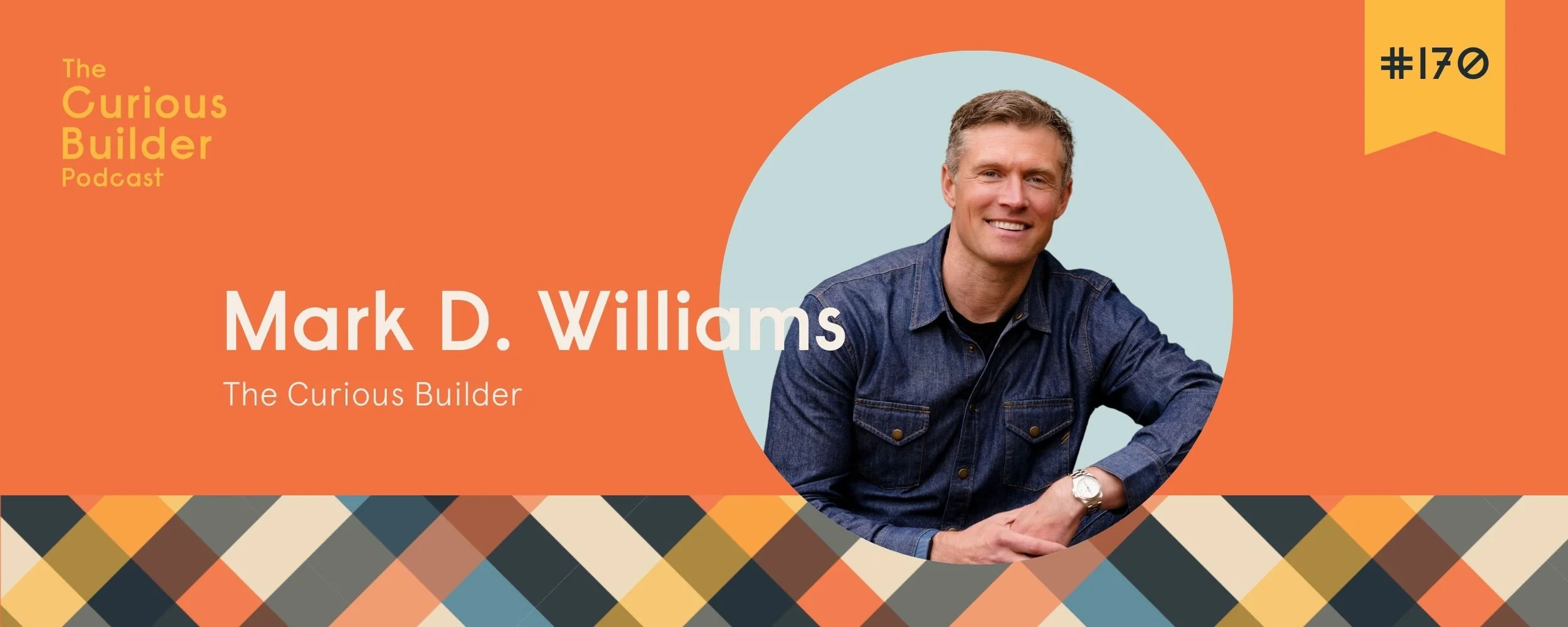
Six months into the Smile Tour, Mark parks himself inside Mysa Hus with a heavily highlighted copies of Buy Back Your Time and Psychology of Money, and he has a lot of thoughts about money, time, and why your inbox should not be your boss. He hits the big ideas from both Dan Martell and Morgan Housel, connects them to real moments from his career, and reminds everyone that a $10 million company was not built on $10 tasks. Consider this your permission slip to hire help, go to bed at 8:30, and stop letting your calendar run your life.
Listen to the full episode:


About Mark D. Williams

Mark Williams is the founder of Mark D. Williams Custom Homes, a high-end residential builder in the Twin Cities creating dream homes through thoughtful remodeling transformations and ground-up custom builds.
With 20+ years of home-building experience and continual learning and growth—and fueled by Mark’s endless curiosity and ability to adapt—Mark D. Williams Custom Homes has established itself as an award-winning builder and was named Minnesota Builder of the Year in 2021, an incredible honor considering the high quality of builders in this market.
Mark credits this success to his collaborative approach with trade partners and homeowners, and his nonstop quest to be a fun, trustworthy, highly-skilled, and creative partner in the process. He surrounds himself with dedicated craftspeople who share his company’s mission to bring homeowners joy while helping them create their dream lifestyle.
Resources:
-
Mark D. Williams 00:05
I personally, I like experiences more than I like things, but at the end of the day, my kids don't care if they're in the mountains or in my backyard. If we're camping in a tent, like they're gonna remember that they all got to snuggle up in a sleeping bag, and so I think thinking about experiences and things that matter, that's kind of what I look at when I see keeping money, like what are you going to do with it. Welcome to Pierce Builder Podcast. I'm Mark Williams, your host today. It's just going to be me, I haven't done one of these in, I don't know, like a year, a long time. I am live at Misa Hoose, our spec home in Cottagewood had a little remote studio set up. I've been doing little 20 minute segments here. Actually had a couple architects that were going to come in today, but last minute they had a deviation. There was actually a storm, and so you get just me and I thought I would do a recap, a little bit of the goals of this year's podcast, and this is actually, again, this is a shout out to Tyler Grace from The Modern Craftsman, and a good friend of mine, one of our co-owners at Contractor Coalition Summit, and he had brought this plant to the seed a year ago of just how to keep the interviews interesting and fresh, and he had come up with this concept of because a lot of us are like to read or listen to podcasts, but as we interview guests on the podcast, while we love their stories and we love their businesses, sometimes it can be a little formulaic, and while each person is interesting and dynamic, How do we add something that's entertaining, something that's educational? And basically it was kind of like an informal book club, and so when he decided that they were not going to do it, I asked him if I could, and he said, "Go for it. So we are doing what we call the Smile Tour. It's been about six months now of the Smile Tour. Some of you guys that are listening regularly likely know what it is, but I'm guessing a lot of us need a reminder of what the Smile Tour is. And so in the past we had the podcast for about three three and a half years, most of the first year was almost all interviews in person in my studio in Excelsior Minnesota. So, by default, it was architects, designers, builders in Minnesota, because that's who was close. Nobody was flying into the Kears Builder. You're welcome to do so. We've had a few people do that. Shout out to Mike Weaver, he flies in every time we interview him, but outside of Mike, most people were doing virtual interviews, obviously, to respect people's time and, of course, finances. But this year I wanted to have another layer, and so I picked four books. Quarter one was Buy Back Your Time by Dan Martell, and I've got my book here. If you're watching this on clips or video, this thing is marked up. It looks like a fourth grader marked it up with a blue highlighter, so I'm just going to go through some of my favorite things and sort of how they've left an impression on me and what I'm doing about it, and then Q, which is we're basically just wrapping that up now, is The Psychology of Money by Morgan Housel. That book, honestly, I think I bought eight copies of buy back your time, it was very impactful to me, very helpful. I think every entrepreneur needs to read it. We all need to figure out a way to get our time back, but psychology of money changes how you think about money. I bought 15 copies at first, I bought 10, and then I bought another five, because my new favorite hobby is buying a book that I enjoy inscribing on and giving it to people I know, and so that book, more so than any other book I've bought, and probably in my life, is a book I've given away, and it's very, very impactful. Q, which is going to be our next book here coming up, is Relentless by Tim Glover.
Mark D. Williams 03:33
That book is actually, he's the trainer for Michael Jordan, Kobe Bryant, Dwayne Wade, and I remember reading it last year. I listened to it. I don't think I read it, and it was so inspiring. Of well, you'll have to read it. It's in, so it'll, it'll be an a lens or a filter in which I do a lot of the podcasts here in August and September. And then our fourth quarter book was my favorite book last year, by far, which was Unreasonable Hospitality. Many of you have likely read it, but I feel like it's like, again, the last time I listened to it, and so this time I want to slow down and be more intentional, and also I feel like, for me personally, I don't know if this is true for you guys when you listen, but I find sometimes that I listen to things and I don't always write them down, but I do think they make your way into your subconscious, and for a long time I used to feel bad that I didn't, I didn't write what I was thinking down, or I didn't immediately make a plan, that's probably the OCD or Type A nature, like you have to implement it right away, but I think I think when you're constantly immersing yourself in these ideas and these books that they do make their way into your subconscious and they come out six months, here a year later, a year and a half later, and I look, a lot of the things that I have done in the last year are things that I've heard or picked up, and they weren't deliberate. It wasn't like I grabbed onto one lightning bolt idea and put it into my business. I mean, every once in a while that happens, but it's a lot of pressure on yourself and on the idea, really. And so I think it's just. A culmination of all these ideas, and I think for me the analogy that has really rung true is I think it's a little bit like taking a shower, you know, you or exercising, you know, it's not like you can take one shower and be clean for the month, you take showers on a regular basis, or at least I do exercise, I kind of think it's the same thing, it's not like you can run one time and call yourself a runner or a weightlifter or basketball player, or anything that you do, like it's a cumulative, it's the 1% getting a little bit better each day, and it's the continual habit of doing it over month after month, week after week, year after year, decade after decade, that really proves what it can do for you. So, anyway, the smile tour, and why I named it that, is instead of being in the Midwest for the majority of my interviews, 90% of the interviews this year have been along the coast. So, in Q, I really, I started with Stacey Ekman up in Seattle. He leads my Cures collectives in both Seattle and LA, and basically I went down the West Coast, so I went, you know, Washington, I did a couple up in Vancouver with some architects up there, we went down to Utah. I was really in Utah for a long time. I think I interviewed like seven, eight, and I could stay almost a year in Utah. There are so many fabulous personalities, and maybe I should call it the Utah tour, and just go there for six months and just hang out a bunch of interviews, because there are some really dynamic people out there. I really enjoy the community out there, and so, because of that, honestly, we start - we're starting in Q, a curious builder collective in Utah, Stephanie Daley from Steven Daly Custom Homes, as well as Trapper Roderick from Roderick Builders, are leading our collectives out there, so kind of funny, actually. And then down the West Coast, and now just with my Misa, who's have kind of fallen behind on some of my guests here, which is why you're getting me solo today.
Mark D. Williams 06:43
Is we have to go through the South, so we'll get Brad Levitt, we'll get some other builders in Phoenix on, go down through Texas, we'll get Frank from Moon Tower, Nick from Southerly Homes on, from who leads our collectives down there, and then through the South, and then fourth quarter will be up the East Coast, we'll get Nick Schifrin, we'll get Tyler Grace on, and that's kind of just wrapping the country, hence the smile tour. So, if you've been following along, you've likely read Buy Back Your Time, it's a famous book, a lot of people have read it. If you, if you haven't, this is going to be terrible Cliff Notes, but more just like, as I'm just going to go through some of the highlighted things and comment on what they meant to me. So, one of the first things was, and I'm actually doing it right now. So the whole principle of the book of buying back your time is, what do you want to do with your time? I need more time to be more creative. I'm literally sitting in one of the most creative things I've ever done, which is Misa Huss, and we want this episode won't be all about Misus. I've done previous episodes about it, and we'll do future ones with Melissa Olint and Carl, and I, the architectural designer, but I needed time and space to create Misa Whose, and so you know, a little bit like losers are winners. Misa Whose really came about because I was slow in building. Like, two years ago, we had a big four and a half million dollar job that was canceled. I had to fire essentially half my team, small team, so it doesn't sound bigger than it was, but I let go of two people, I think we had four or five, and but because of that time it made me kind of like necessity is the mother of invention, I was really, it allowed me to have this time and space to get really creative, and it was through a series of failures that house failed, and so we didn't get to move forward with it, and then, of course, dealing with losing a couple key people, you know, going through that, and then really trying to figure out, like, where is our next job going to come from, like, anybody, there's seasons and valleys, the ups and downs, and anyway, what we had to on the lot that we built our the spec home on and the story home on we actually had it sold twice and both times one client moved to Charleston after nine months of design and then another client bailed us on honest after 60 days and we and so that's it was really those hardships that now I'm sitting here two years later in this incredible career-changing home that I've developed with my team, and I could not be happier with the outcome, but at the time it definitely seemed like sour grapes. So, I go with that of just saying you need time, and so the whole point of buyback your time is I think I want to create time, or I can't create time, I want to buy back my time, so I can spend it on things that I love to do, you know, with my family, you know, vacations, trips, you know, trail running, all the activities I like to do, being with people, I get recharged, and I love being around people, but if we, as a home, as an owner, we always seem to try to do everything, I know I do, and it's like the more we can delegate off of our plate, other people are happy to take it, but we really have to give up the torch, and so Dan only talks about, like, how do you, how do you go about figuring out what to get rid of, and I do know that just looking back at my career, every time I hired somebody, it was a relief, and I think back, I'm like, wow, how did I exist without them now.
Mark D. Williams 09:59
If I look at my overhead today, there's no question that my overhead is bigger today than it was five years ago or 10 years ago, but I do have - I feel like I have more time because of it, and so currently, right now, after reading Dan's book, I decided just because I have three different companies - is that I needed, call it an executive decision, call it a success client manager, you know, put whatever label you want on it, but for me, I feel like I have a toxic relationship with email, and so for me, kind of this fun idea is like I would love it if on Mondays. So first of all, I want someone that can manage my schedule, manage all my appointments, all my sponsorships, kind of like track everything for me, all these deliverables. I want to be with people. I want to be in the creative space. I want to be selling. I want to be out and doing. I don't want to be sitting behind a desk champing out emails like we all have to, and I know it has to get done, but it is, you know, you don't make any money on email, you make money face to face. And I know that email sometimes leads to that face to face, but it's really, I think time is important, and so for me it's finding some that can help do a lot of that for me, and so basically I got right hand, and so we'll see what happens. In the past, I've never thought I could have enough money, but what Dan points out so helpfully is he just puts it here, says you can always get more money, but you can never get more time, so you need to ensure that the stuff you spend your time on makes the biggest impact, and so I find, like, even today, you know, I find that I get stressed out on Sunday evenings, almost going back to, like, college and high school, that you knew you had to do homework that was delayed, and then when you get a career, you don't really get, you know, you don't get the Monday scaries, or I don't, but you, I do, I always keep Mondays completely free because I want to catch up on all my emails. I don't like owing people a response. I really try to get so, for me, my personal hot button is communication, which is why I'm trying to have someone help me do that. And I think one of the things that this buyback principle is, you know, you don't hire to grow your business, you hire to buy back your time, and by doing that you are growing your business, and I think one of the, one of the comments that Dan had shared is like, let's say you make 150,000 a year, you know, you can boil it down to an hourly rate of what you pay yourself, I think it was like 200 bucks an hour, or whatever it was, and I don't have the numbers right handy, and then basically, if you can find someone to do it at one quarter of that amount, you should immediately hire it. So, in that scenario, if you pay yourself 150,000 that's 200 bucks an hour. If you can find someone for $50 an hour or less that can do whatever task you need them to do, you should hire it out. And, like, 50 bucks an hour is a really good salary. And so, like, right now the executive person that I'm looking for, it's like 25 to 30 bucks an hour, so that's well below that threshold for that scenario. So I should immediately buy back that time. I think this goes into, like, you know, do you manage your own social media or do you hire it out? Do you handle your own marketing or do you hire it out?
Mark D. Williams 12:54
And so I know most of us that are owning, let's say, small business or architecture firms or designers, you know, we have people on our team that handle a lot of the day to day, you know, ordering and procurement estimating things like that, like it's just taking it one step further again, you know, I go back to if I could have more time to spend on creating the next mishu, so the next idea, how much more beneficial is that to my company, to my family, to my community, or to me, to my brand, to all of it, it is. I sort of owe it to myself to give myself the freedom to be the best version of myself. And so that was something that, you know, that really helped me just kind of open up my eyes. And so I'd say, in the last six months, I've said, you know, enough is enough, I need to actually move forward. So I actually have my second interview with somebody later this week, actually, by the time this airs, it'll be two days after I interviewed him, so see how it goes. One of the key things is the buyback loop, and so one of the things that Dan talks about, he says the buyback loop occurs as you continually audit your time, determine the low value tasks that are sucking your energy, then you transfer those tasks optimally to someone who's better at them and enjoys them. Lastly, you fill your time with high value tasks that light you up and make you more money, and you start the process all over again. Audit transfer fill. I remember when I first read this, you know, three, four months ago, I actually took a two week time audit. I believe it's still sitting on my credenza. I did the audit, but I have not reviewed the audit, and I think it's going back there, like, how can you.. it's a little bit like hot potato, or like a the baton toss, and a four, but not baton toss, but like a four by four relay. Like, how quickly can you get it to your next teammate? Like, you might be able to run a mile fast, but there's no way you can run it faster than four individual people working as a team. And I think that's really what auditing and transferring and filling is really all about. And so, I think that was just a super powerful part of your, you know, sort of your business audit, like, what are you going to do, and then I think understanding, like, what are you going to fill your time with, like, for instance, I think one of the questions that was asked is, you know, if you had 10 extra hours in a week, what would you do with it, would you spend it with your kids, would you spend it on self care, I actually think it's important. Them to write down the goal of what you would do, so I actually did this. I wrote this in my book. I got a pen and I wrote it down, and so this is what I would do with the extra time. I said it said I would read more, I would explore curiosity, which is interesting. I would have coffee with friends, dinner with family, and play more tennis. So, if I had 10 more hours a week, those are the things I would do, and you know, I haven't looked at this now in a couple months since I wrote it. It's actually, I am definitely reading more already, and I would say I'm exploring curiosity. There's tennis, I haven't picked back up yet, because I have other priorities at the moment, but I think I think writing something down and then looking at it, that's why it's so powerful, kind of like that old line that you can't change what you don't measure, and if you're not measuring it, how can you change it? And so, anyway, that was just kind of fun. As I look at some of the notes that I've had in here, the other thing I think that's sort of helpful, I did this just recently, is I cleared out my schedule.
Mark D. Williams 15:53
I used to time block, where I still do, you know, time block all these things, but sometimes I had so many time blocks, nobody could actually schedule any time with me, and so I sort of hate looking at my calendar, because it's just like a rainbow of time blocks, and I think basically once a quarter I try to make a time to like actually just clear them all out and reset them, because I think our priorities change. I think you owe it to yourself to, you know, we've all had time blocks in there that we don't use, like I have Fridays where, you know, whenever I go to the Contractor Coalition, I hear Nick Schiffer or Morgan Moller talk about AI. I leave so inspired, and then I think, well, when am I gonna have time to start working on implementing that? And I know I need to, but I need to time block it, so I have every other Friday for like three, four hours. But as it turns out, I've actually never used that time block to actually look at AI. I want to, I mean to, but then when something comes up, I put something else in its place. A client calls, okay, I've got to slide the client in there, that's more important. And so I don't know the answer to that. I don't know how to escape, uh, escape that. If you do come on the podcast and figure it out for me, even setting time aside to grow your business was really important, uh, concept that was discovered, and one of them was this was laughable. I've talked about this many times, but you know, if you remove yourself from the business, will your business succeed or fail? And if your business can't succeed without you, you have a job. You don't have a business, you have a job. And that's pretty sobering to hear. I remember the first time I heard that, I realized that I have a job, and at the time I think if I remove myself from the business it would last maybe a month, a couple payrolls, and you know, I'm not sure how much longer would last than that. I would say right now I feel very comfortable our company would last for all of our current contracts, no problem, at least a year, year and a half. We have a couple of big contracts, there's no question our team could handle all of it, but I do not have a sales mechanism to get new clients and new contracts. I would have to replace myself in order to do that, but at least now I'm aware of that, and so I think is the more we're aware of kind of where the gas runs out of our car and how we're going to fill it up again, the more you know, just a better business owner we can become. One of the things that was really interesting was, you know, maybe about 50 pages into the book, it talks about the dysfunctional family theory, and most entrepreneurs are really good at handling stress. We're really good, probably because we have ADHD, handling multiple things, multiple topics, multiple personalities, you know, different stresses at all the time. But you know what, we're not good at is stopping. We're not good at relaxing or meditating, most likely. At least I know I'm not, or taking that quiet time, because I think here's what actually happens. We're really good at putting out the fires, and so we think we're firefighters. We're not firefighters, we're builders, we're architects, we're designers, we're relationship ninjas, because think of all the relationships that you have to manage, but we get addicted to the chaos. I know that this is definitely true. You know, when it's quiet, what happens? Do I seek more quiet? No, I pick up the phone and I look for stimulus. You know, you look to see, has anyone commented on a story you posted or a message? Or you look at your, you know, your text messages. Has anyone texted me? I'm guilty as anyone.
Mark D. Williams 18:58
I've tried to set boundaries, and I think I do a pretty good job, but you know, no one is above it, and certainly no one is above their own psychology, and so what does it take to sort of reduce the addiction of sort of the dopamine hit of always being needed, and I think I think this is very true for a lot of owners, I don't know the answer to it, but I'm glad that he brings it up, I you're looking to level up your business in 2026 and beyond, please consider Contractor Coalition, amazing people, incredible builders from all around the country. Then our second event of the year will be a one day crash course, will be September 15 in Minneapolis, Minnesota. This is really meant to be a much abbreviated version, but obviously at a much lower cost. And then our last three, four day event of the year will be in Charlotte, North Carolina, on november 6. For all the details, please head to Contractor Coalition summit.com The five time assassins that kill your success. One is the staller, so you sabotage your own success by hesitating on big decisions, or the speed demon. You make super fast decisions, but you, you never really look at what you're doing, you just constantly going fast. You're or the supervisor, you don't really train, you micromanage other people, you fail to empower them or the saver, you save all your money, but you never do anything with it, and the last is the self medicator: you turn to food, alcohol, or other vices to reward yourself when you have success. So, these are all things that will kill your time. And so, anyway, not going to go into each one of these for how I kind of viewed them, but anyway, I think it was really powerful. That's what I like about these kinds of books, is it makes you.. I think that's why I think reading the book versus listening to it is so much more powerful, because actually, even now, as I'm going back and looking at the book on this podcast, looking at what I highlighted and look at what I read, like I keep this in my office, and it's something that I'll periodically crack open, you know, once a year, kind of skim through it, and see what, you know what, what appealed to me. I actually think I'll put timestamps on it and see if things changed. So, this is kind of interesting. One of the things talking about your time is they basically talk about list the top 10 major decisions that sort of shook it up, and so I'm looking. I wrote this back on 311 of 26 So, number one was Misa Whose, and that doesn't surprise me. I'm sitting in Misa Whose now. It's really consumed my life in a good way, and sometimes a negative way, for the last two years. That was number one. Number two was there was a lot two blocks away here from where I'm building, and that was the client that actually canceled their contract that led me to fire someone that allowed me to have the space to then design create the brand of Misa Whose, so that was my one two. I now own that lot, and I have three people interested in it, because as people come through Misa Hoose, I am basically pivoting them to that lot to do a custom build, which is pretty wild. Now to think of, like, that was the first domino that set all of this in motion, and now it's kind of like that playing card is now back in my hand, pretty wild. Joining the Contractor Coalition, I mean, I've made no secret that this podcast would not exist. The Curious Builder likely would not exist. So many of the things that I've done were because of that choice to go to Nashville to go to Contractor Coalition, but then being part of the leadership and now teaching, and just really just for me, I feel like I don't teach, I feel like I'm better at just sharing my experience with people, and so that has been a profound decision that for me, starting the Curious Builder, the wellness retreats, you know, training for the 100 miler, you know, going to bed early and getting up early, you know, that was a huge decision.
Mark D. Williams 22:46
I mean, I've always kind of done that, but I would say the last five or six years now, you know, my kids go to bed at 8o'clock every night, we're very, you know, pretty routine on that, and so it means I go to bed between 830 and 845 which means I wake up at 430 that has allowed me to do the training. Someone at my sister actually called me today and had just asked, like, how am I doing with Misa, who's just because she knows it's been just all consuming and getting this ready for the tour and trying to sell it and all those things. And I said, yeah, my training hasn't been affected at all. I still go to bed at 830 and I still wake up at 430 because that's the only time I know I can control and get exercise, and so those have really not changed. There was a big change in our fellowship. I won't go into it now, but that was one of the most prominent things that happened to me in the last couple of years. Hiring Angie, I call her my unicorn, my project coordinator, has been one of the biggest things that I've done in the last, well, several years, she's just amazing. She's freed up so much of my time. I can't imagine not having the company I have right now without Angie, which makes me so much more excited about the next hire and the next hire, because I'm like, well, what if there's another Angie, and there is another Angie? There's always another Angie. We just have to find them, you know. And then this last one was firing two of my key people, which kind of goes back to one and two, those were all synced together. So, anyway, it's just kind of fun. I would encourage you to even stop this podcast, write down the top 10 things that have happened to you in the last 10 years, and look at how they've affected your business and your personal life. You'll be surprised. Oh, just a couple of things coming to my mind here. One of the things I underlined that I really like, that you know, a $10 million company was not built on $10 tasks, and I think, you know, Martell's whole point was just remember that when you trade time for money, make sure that it's a good exchange, and I think of if you're going to spend, or if you're maybe rather than use the word spend, if you're going to invest your money in something, think about it more deliberately. I know this is, I'm giving my advice to myself right now. If I could choose to go have lunch with a couple of architects, and really, you know, rather than being rushed to the next meeting, like, you know, have that meeting, like be calm, like be there for an hour and a half, like ask them questions, like that money that you spend. That lunch, and more importantly, probably the time that you carved out to do it. I think the time we give people is very impactful, and I think the busier we all get, I think the more and more we are humbled, and we appreciate when people give us their time, because I think that is, I think we are starting to understand, or maybe it's just me, I'm really starting to understand just how valuable a gift time is, and I look at the people that I think is are more successful, not more successful, that's wrong word, but I think of like some mentors in my life, and they're always so calm, they have time, they always have time to be happy, yeah, can I come down tomorrow, can I do, you have time to talk now, and so it's like the people that I feel like have really understood the value of money and the value of their business, like they seem to have created time, but I think it's just because they're better at prioritizing the small tasks and the big tasks and really focusing on the things that have the biggest return, and it doesn't always have to be money, and so I think that's something, as I've been reading through this book, that kind of hits, you know, really hard.
Mark D. Williams 26:06
And I remember, I think it was Brad Robinson down in Atlanta, had mentioned this too, you know, build the machine that builds the machine. I think he's a phenomenal operator, he's got five or six businesses, and you know, he's just, he's an incredible operator, he's very good at building businesses and then letting other people run them, so building the machine that builds the machine. I found that as I've gotten older, I certainly love construction, and I love, you know, what I do, but I find that my team is way better at it than I am, and I'm good for like an hour, but everyone knows that when I come on site, like, I'm good for 30 to 60 minutes, but really my best work is creation and ideas and inspiration, but for me to sit there and create a task list and tell everyone what to do, like, you know, those days are long gone. I'm not good at it anymore. No one wants me to say it anyway. And just to let the team build it, they want to do it, they're better at it. I just need to get out of their way, and I think that's something that really I know I'm happy to do. It is not disappointing, but I'm glad that I'm finally aware that that is following your passion. It's just not exciting anymore to sit on a job site for six hours. I'm fine in a shorter period of time, and I can give the client 100% of my energy for that time, but really I do the client and the team a disservice if I stay there too long. Oh, I forgot. This is probably one of the harder things for entrepreneurs to do, but, like, you know, we all think that we can do the best job of it. But they're one of the key lines is, remember that 80% done by someone else is 100% freaking awesome. I have it underlined and highlighted, and we're talking about in this chapter, they're talking about sales, in that typically the best salespeople, they always, they aren't always the best salesperson, even for their own company, mainly because we get too tied up or too emotional in it, and sometimes emotion is really good. I know I've sold a lot of homes based on emotion, but I think a lot of times that emotion can sort of blind us, where I think sometimes someone who can just, you know, really, you know, get after it a different way, they can make more. And my uncle, I'll give a little story here. I have it written in the margin here. My uncle Dwayne owned a company down in Kansas City called Skyline Displays. I think he still owns it. His son runs it now and has been very successful, very successful. And he, he was the owner of the company, and I don't know the number, so I'm just going to make numbers up here for this, but let's just say he sold 100 million a year in revenue in sales, and he had a, he had this amazing.. I want to give him on the podcast, because him telling it would be amazing, and he created his own trophy, which I think is awesome. Also, tells you a little bit of our family, we're not afraid of creating our own, our own trophies to reward our own success, but he..
Mark D. Williams 28:40
it was a really good trophy, like cast iron, it was this big bulldog, like think of like a Georgia Bulldog, you know, like dead lifting like 600 pounds, big plates, and it was he was holding it up, and it was called the Heavy Lifter Award, and it was like it goes to Dwayne Williams, the owner of the company, and you know, this example, I don't know if it's the factual, was let's call it 100 million in sales that year, or whatever, let's call it 10 million, doesn't matter, and anyway, you got, I think, at the time it was like a $250,000 bonus, and he said anybody that could beat him would get that bonus, and the next year he won the award again, and the next year he won it again, but something happened in that third or fourth year, one of his key salespeople outperformed him, and you would think in those first couple of years, like, well, it's not fair, how could we ever outperform the owner of the company? But I actually think having a high mark, you know, think of like a high, you know, high bar for jumping, like having that high mark makes you jump higher than you think you can realize, and so what Dwayne was really doing was putting it way out there, saying, like, I'm not going to lower my standards so you can beat me, I'm going to raise my standards, and if you beat me, there's a massive financial reward, and I'll have to check in with him, as a couple years since he told me this story, I think at this point, you know, his salespeople now, he has several people that far exceed what at. One time was the heavy lifting award. I'll have to get him on the podcast, because it's just telling the story again, getting his point of view on it would be amazing. And so, depending on how we incentivize people on our team, like don't be afraid to put a high mark out there, whatever it might be, and then reward them and let them get after it. And at the end of the day, like, as owners will benefit from it, you know, think about it. If one of your sales people sold $10 million you know, how much revenue does that help to the bottom line? You could easily do the math and have someone on your team, your controller, or HR team sort of figure out a bonus structure so that you could reward that person for it. But I think that's just, I mean, it's a great story, and I'd love to hear Dwayne's point of view on on on how it's transpired since then. This episode is brought to you by Pella Windows and Doors. I've used Pella for 21 years as the exclusive window company on every one of my builds. When people ask me who I trust for windows and doors, it's Pella every time. Their craftsmanship, their innovation, the top tier service make them a no-brainer for any custom home builder or designer who demand the best. Whether you're designing something bold or building something with timeless elegance, Pella has you covered. They're also the only window company that has a lifetime warranty on all of their windows. I've gotten to know all their people at Pella corporate, as well as locally here at Pella Northland. I'm proud to call them our partners and our friends. Visit pella.com to learn more and connect with your local reps today. Also, for more information, you can listen to episode one, where I interview their founders, as well as episode 109 where we talk about the innovation at Pella. One of the things that I still haven't learned yet is how to free myself from my inbox. As I mentioned a little bit earlier in the podcast, one of the reasons why I want an executive assistant, or kind of a right hand, is for someone to run my calendar for me. Like, I want to sit down with them, explain my quarterly goals, yearly goals, three year, five year plan, have them in the once they know the goal, like I'm too emotional for my own calendar, and I like what it says here on page 105 It says I'm not in charge of my own calendar.
Mark D. Williams 32:07
They are like, I love the idea that I would not be in charge of my own calendar, like someone else is. They're holding me accountable to my own calendar, which sounds very simple, but also kind of crazy. But I think there's a lot of power in this, because we always make exceptions. A friend calls us, and I'm not saying we shouldn't make time for that friend. A client calls us, a subcon, someone calls us, and we always make exceptions. Here's the problem: if you make 10 exceptions, you now have no plan, you have no rules, you have no structure, and we're right back to where we were before. We're just fighting fires, but if you actually clear out your schedules, you could leave, say, half day Fridays or full day Fridays, or you could do whatever you want, and you could just tell someone on your team, like, 'Hey, this is meant to be open, go ahead and fill it, this is your time, you can fill it here. And so I love the idea that someone else is going to be less emotional about your inbox, and kind of like this idea that, like, newsflash, your inbox isn't your boss. For decades, I have let my inbox - I still let my inbox be my to-do list. I still let my inbox be my boss. That is probably my number one priority. If I was to say it out loud, of what I would like to fix in the next six months, I'm tired of my inbox ruling my life, I've created templates, I think, also with AI being able to, you know, we're able to do a lot more with a lot less. Mainly, I can have, I know, right now I use a program called Fixer that auto drafts a lot of my emails, nothing like deep work or anything like that, but for a lot of that, the quick responses, it's just so much simpler to sort of have it already pre-drafted, you can edit it, and then fire it off, but how much better to have someone help you manage that on top of it. I just think it's, yeah, I can't wait. Just reading this, my dad used to give me really good advice about priorities, and he used to say that, and this was probably more of a spiritual advice, really, but I think it's true in a lot of things, and he said there shouldn't be priorities in your life with an s, there should just be a priority, like a singular thing, and you know whether you're spiritual or not, or whatever your primary goal in your life is, like realize, like, if you know what your main priority is, then the other things become real clear. I give this talk at, and many of you have heard it before too, it left a huge impression on me. I saw it years ago, but it's still good to say it's even good to talk about it right now. Like, you get a glass and you know, you talk about the most important things in your life, and so you've got rocks, that's your family, your faith, it's your friends. You put those rocks in first, those are the big things. And let's just call this as like a gallon jug, if you will. And then the next thing is, you've got like rocks or pebbles. Well, those are emails, you know, those are not emails, those are probably like meetings, or you know, some things you have to do at work, or take your kids to a band practice, or whatever it might be. Those go in next, and then the next thing would be like sand, because you think, well, this is this jar full, and like, yeah, it's full, but guess what, you throw the sand, and that's e.
Mark D. Williams 34:59
Else, that's lunch, that's breakfast, that's maybe exercise, whatever your priorities are, and that goes in between all the things, and then you would ask the class, is this full, and they're like, yeah, and then you take a glass of water and you pour the whole thing in, and that's all the in between things, and the point is, is that if you reverse that, if you filled that whole glass up with water, all the little things, like that, let's call it the $10 tasks, as soon as you plop in one rock, that whole thing overfills in a bus, and I think constantly reevaluating, I think this is why Dan Martell talked so much about going back and re-auditing your time, is you got to make sure that just the rocks are there, and the sand, and the pebbles, and the water, those will come for sure, but as long as those rocks are being taken care of, you can handle the other things as they come, and going back to the schedule concept, where it's like the key is not to prioritize your schedule, but to schedule your priorities. That's really impactful. I'm gonna read that again. The key is not to prioritize your schedule, but to schedule your priorities. Like right now, I would think taking my boys out for a little boys movie night with another, with another family. I'm, I've talked about this a lot on the podcast, because I keep sharing it, not because I have it that it figured out, but because it has been so helpful for me organizing my life. People ask all the time, you know, how do you do all the things that you do, and I don't know, honestly, but I can tell you what I do do, and it's I am home every day at 5o'clock and that I have to give all the credit in the world to my wife, you know, 568, years, 10 years ago, whenever we started doing that, that has been one of the single best things I've ever done in my career, just because it set the habit and the expectation that is what we do as a family, because that is the priority, like 10 years from now, like today has, as it happened to be, was the last day of school. So I took a little video and a little photo of the kids, like I get to drop off my kids at school every single day. I get to pick them up from school every single day, and those, that's a priority for me. There are times where I've missed, I miss a lot of events, industry events, and they're very valuable. I mean, I put on a lot of them, so it's not - I'm not saying that they're not important, but like, if I had a choice between attending something with my kids or, you know, meeting a new designer, a new architect, like, even the architect would tell me, "No, go be with your kids, and we would give that advice to someone else as well. But why do we often not do that ourselves, and so I share that as hopefully just inspiring wherever you find yourself in your life, whatever your priority is. It doesn't have to be your kids, it could be your family, your friends, your marriage, whatever it might be. Maybe it is your job, maybe that is your priority, and everyone's choices are their own. But I think, understand, I think the worst thing we could do is have priorities, but not understand what they are, and so I think just actually taking a time and a minute to realize, like, what are we devoting our time to and our energy? We only have one life to live, and I think a book like this really sort of like solidifies that. I think for me, anyway, I don't want to - this is turning into one podcast about just only buy back your time.
Mark D. Williams 38:00
I still want to talk a little bit about psychology of money here at the end, so maybe I'll just finish this up with maybe two more thoughts, and then going back to the point of this book, which is, what are you going to do with your time, you know, as you read through the book and you think, okay, I'm going to put these things in place so I can get my time back, what are you going to do with it? There's this great quote I got to read, it just says, if you're an entrepreneur, you wouldn't last long sitting on a beach, you'd sit on your butt in the sand for a few days while getting antsy, and after staring at the umbrella for too long, you'd probably invent a better one. Start a new company, hire the pool boy as your first employee, like that's just the DNA of an entrepreneur. And so, again, I remember some advice my dad gave me a long time ago, which is, if you don't have hobbies as a young man, you won't have hobbies as an old man. There are, there's so you guys have so much talent in your brains, and in what you do, you deserve to give yourself more time to be the best version of yourself, to innovate, to grow as a person, as a business owner, as a, as a dad, as a, as a friend, whatever it might be. I think that's what makes life so interesting, and why curiosity is so important, because you can keep, you can keep innovating and keep pushing it up, and one of the things was talking about dreaming big, like really big, and one of the things here, I think it was on page 202 here it just talks about, I can promise you this, that if your dream is not big enough, you won't have a reason to try very hard, and in the margin of my book here, I put Misa, whose.. I did not realize it at the time, and I keep coming back to this, because this has been my two-year sort of like big goal, I believe. Looking back, this will be one of the single biggest things I've ever done in my career, and it started with an idea, a concept, and a story, and I keep telling people that this has been the hardest thing I've done in my life, other than I should say, hardest, I think this is the most energy I've put into something other than my marriage, my faith, and my family, for two reasons. One is it's been a long haul, it's been two years to get to where we're at, and we're not done yet, we're not sold, for one thing, we got to sell the house, but then two, you know, I have a lot of other plans for what I want to do. With this concept, and so it's really just the beginning of what it's going to become, but I guess the point of this book is like, pick something big, you know, kind of it sounds cheesy, and it kind of is, but you know, kind of like the deal of like aim for the stars and you'll hit the moon, aim big, like pick a big dream, think of how that gravitates other businesses, other people, other partners to what you're doing, and I think we look around. I think if we're driven by curiosity and passion, I think we need to make sure we're not being driven by, of course, like by envy or fear of loss. Those aren't, in my opinion, very good motivators. They don't last very long, for one thing, and if you're running scared, you're running away from something versus running towards something. I think you can run a lot faster to the finish line than you can run away from the start line, and I just think that's just something really important for us to recall. One of the other things that was really great was the bigger the necessity, the bigger the invention, and I just think about history, some of the best inventions we've ever seen have really come from, you know, mother, you know, necessity is the mother of invention, but just like the bigger the need, the bigger the invention.
Mark D. Williams 41:06
I mean, you look at the atom bomb, you look at, you know, what's happening, you know, SpaceX, or some of these huge innovations of our day and time, is because there's been a huge driving force, or a big need. It'll be interesting to see, as you know, obviously, we kind of go in and out of energy crisis, as it seems like every decade, but I think water is going to be one of those things that we're going to have to get some serious innovation on. I know batteries - we've kind of been stuck with a lot of battery technology, hasn't innovated that much, but I think the EVs, you know, love them or hate them, they're evolving battery technology and we'll benefit in the future because of that. Oh, maybe we'll close down. There's a, there's a lot more, there's a lot more to be said. I'll leave it with one quote here by Yogi Berra, that if you don't know where you're going, you'll end up someplace else. And so I think the benefit of setting a big goal is at least you're going towards that goal. All right, we're going to switch into our book two here. Sorry, I didn't leave much time for it. 18, I got carried away with buy back your time, so I lost track of time. Psychology of Money was book two, and interviewed a lot of people. This book was probably the one that was talked about more often than the first one in more detail. Basically, if you haven't read it yet, there's 20 chapters that have 20 different stories about the psychology of money, and it turns out that one of the most important things about money and how you view it is how your parents viewed it. So, give that some thought about how you view it. You know, maybe you grew up and you know money was not that important. How did that impact your life? Or maybe money was too important, was such a big focus, so you have a negative relationship with it. Whatever that is, realize that a lot of your attitude towards money was really formed, shockingly or not shockingly, I should say, as a child, and so, as any of you are raising family, and your kids realize that the attitude that you have towards money and how you demonstrate it is going to impact them to the great, to a greater degree than any other thing in their life. I think a little bit about, like, allowances, you know. When I was a kid, we had an allowance, we had to work for it and do different things. And my wife is very much against allowances, because the way she was raised was that, as a part of the family, you just did stuff, you didn't get an allowance. And so, being that I came from a family of business owners, I don't have a negative relationship towards money. I don't.. I feel like I have a very healthy relationship towards money. For our family, it was always like a means to an end, like if you do this, like money is freedom. And so just understanding it, talking about it. I think one thing that was really opening my eyes was I went to this Aspire conference in Minneapolis last September, I think it was, and they had all these people from real, real famous people like a Mark Cuban or Al Rodriguez, James Cordell, some of these other really very powerful, wealthy people, but and all they did was talk about money, and it was eye opening at how knowledgeable they were, and just talking about stuff. I mean, honestly, the podcasts, you know, we try to talk about having real talk with other people, doesn't always have to be on a podcast, but it could be in person, just I think business owners love to talk money, not because they're comparing, but because they're trying to learn, and they're in, you know, it's like understanding the sports score. Hey, what is Lebron James' shooting percentage from the three point line compared to Steph Curry's? It's just data, so that you can make inferences, you know, based on your own basketball game.
Mark D. Williams 44:17
For this analogy, one of the things that starts off in the book was history never repeats itself, but man always does, and so there's a lot of things with money that seems to repeat over and over again, but the biggest one is like how we process it. I remember some of the first memories I have of my dad teaching me about business, I didn't realize that he was teaching me about business. I remember one of the things I just repeated this yesterday was, if you make $100 and you spend 99 you're going to make it, and if you spend 101 you're going to go broke. It's such a simple concept. My six year old, Tate, he could understand that concept, and as a business owner, sometimes keeping it simple, stupid is the best way, you know, having. Clear analytics on where you're at. I've really benefited from, you know, people on my personal team, you know, my controller, Joel. He's amazing with numbers, and so we sort of developed a system between our WIP reports and our cash burn. Like, I can see into the future and see exactly on the date that we'll run out of money. Like, that is very valuable. I don't need to spend a lot of time on it, Joel computes all those numbers, but that's really, really helpful, and unfortunately, some lessons they have to be experienced before they can understand. Last night at dinner, I was at dinner with some architects and builders from the collective that flew in to see me, so who's.. and we were just talking about some.. someone asked me how I got into building, and I won't go through the whole thing right now, I've talked about it before on the podcast, but man, looking back, there's been some really rough lessons, but I wouldn't trade them for anything, like those were those were foundational MBA education worthy classes, and they took years to go through, and they cost me hundreds of 1000s of dollars, but I've learned that lesson, hopefully I don't have to learn it again, it's kind of like, you know, you might have a scar on your hand from touching a hot stove. Hopefully, you don't have two scars. Talk a little bit about luck and risk. It's a great quote here. It says that luck and risk are siblings. Nothing is as good or as bad as it seems. And it goes through a little bit about in 1968 you know, Bill Gates was at the beginning of, obviously, a technology revolution around computers. I won't go through all the stats, but it basically just talks about, well, I guess I will, because it says, like, there's roughly 303 million high school people in the, there's 18 million in the US, 270,000 lived in Washington state, a little over 100,000 of them lived in Seattle, only 300 of them attended Lakeside School, so there's only 300 in this class that had access to this computer in the entire world, and so he was the right person at the right time in the right place. He was super smart, hardworking, one in a million head start, and won't go into that whole story, you likely already know it. But what was crazy is he had there were three people that were having had the same access to this computer, it was Paul Allen and Bill Gates, who are the founders of Microsoft, and went on to have a trillion dollar company, but there was another gentleman named Kent, and he died in a mountaineering accident, but it says the odds of being killed on a mountain in high school are roughly one in a million, so Bill Gates experienced the one in a million success, but one of his friends, who also experienced that, experienced the opposite of that, and I, I think a lot of times we can make successful decisions as a business owner, but we're just at the wrong place, the wrong time. I look back at 2008 I had a home that finished one month before the stock market crashed. Had the stock market crashed, was that a the home that I remodeled at that time? I was taking a pretty big swing.
Mark D. Williams 47:46
It was my first big remodel, and as a spec home, in fact, it was the last spec home I did before the home I'm sitting in right now, which is Misa, who's 16 years later. That scar left a deep imprint. It may have prevented me from doing many things, like taking risks in that department, but maybe it saved me from some things too. I just don't know. Was that risk or was that luck? Was a little bit of both. I mean, honestly, I don't know. I think as we look back at the things that have helped us or hurt us, understand that there's even a verse in the Bible Causal, it says time and chance happens to us all, and so I often say I'd rather be lucky than good, and luck is not to be. I do think that the harder you work, the luckier get. But realize that sometimes you can make fantastic decisions, and it can still not work out great. Bill Gates had a great quote to end this chapter. He just said, "Success is a lousy teacher, it seduces smart people into thinking they can't lose. In the later chapters in the book, they talk about people that had amazing returns and financial investments, but then they lost sight of the principles that made them money, and they lost it all. I mean, it's a little bit like gambling. One of the stories that has resonated with you, without even reading it or looking at the underline, was Joseph Heller wrote Catch 22 and he was sitting at a party somewhere on the East Coast, let's say, with a, you know, multi, multi million dollar hedge fund manager, and they're sitting at dinner, and this man looks at him and says, I heard you sold your book, how much did you sell it for? Sold it for 10 million, or whatever it was, six, and he said, you know, I made 10 million this month, you know, just bragging about it, and Joseph's response was, Well, that's fine. He goes, but I have something you'll never have, and the man said, What's that? And he goes, enough. And the chapter goes on about, like, when is enough is enough, and how do you, if you keep moving the goal posts of success, like let's say you say, you know what, I want to have a million dollars in cash, a million dollars in real estate, and a million dollars in retirement, but then when you get there, is that enough? Are you going to keep changing the rules? And so I think it's human nature, we tend to always look to the future and change things, and I'm not saying that you can't change your plan, but I just think that's a pretty sobering chapter about when is enough is enough, and I think I know I have there been in my time, and times in my life where it's like. Something went really well, and you're like, "Oh, I deserve that. I think when we start working on those words of deserve or I need that, it's probably a good time to check our ego at the door. One of the key, I think, underlying principles of the whole book is time and how we invest our time in money or operations, but one of the things that talked about was that you don't need tremendous force to create tremendous results, since they talk about ice, or the ice age, obviously took millions of years, or glaciers, things like that, but they talked about Warren Buffett, which was that, really, excuse me, his extraordinary returns was 22% over his lifetime, which is amazing, but there's actually another guy who is John or Jim Simmons, who is 66% annually, but the biggest difference is, is Warren Buffett is worth 84 billion, and Jim Simmons was worth, I think, like 21 billion, that's a massive 6 billion or, sorry, $60 billion difference. What was the only difference? It was Warren Buffett's skill was investing, but his secret was time.
Mark D. Williams 51:08
And I think Charlie Munger also talks many times in the book that once you've begun compounding, that kind of the cardinal sin is to stop cardinal compounding, so as you invest in whatever you're investing in, that it's over time, and I think one of the things that I took away that was really interesting, and this is probably more from like a financial equity position, is like just putting your money in and not micromanaging it, and just letting it grow that over time, as long as you can let it sit there, like it continues to grow over time, and I think one of Warren Buffett's key things that he told his kids was don't bet against America, that was one of his biggest. He only had like three or four principles, but that was one of them that kind of left a big impact on me. I think another one was like, what's the difference between getting wealthy and staying wealthy, and just sort of how you think about it, you know? Sometimes getting money requires taking risks or being optimistic, but keeping money is actually the opposite of taking, taking risk. It takes humility, and you know, basically, are you are you taking money off the table and putting it into something? How are you deleveraging your risk? You know, I think just being a home builder, I actually think owning a home, paying down, and a lot of times financial people are like, let's say, you have a three or four or 5% mortgage, and I think smart money says keep that mortgage because you can put that money in somewhere else and make more returns. That's true, but one way to deleverage your risk is just to pay off your house. I mean, how great would it be if your house is paid off and you weren't paying 3456, 8000 whatever you pay a month in your mortgage, because you have the financial discipline to sort of put that down. I just know that when you, when you're younger, it doesn't sound very sexy to pay down debt. I know that was kind of a foundational thing that my dad taught me, is to not carry debt, and there's been a lot of advantages to being a cash-run business only and not have debt, you know, I've seen a lot of business owners, and, and I've run into trouble with that too. Before, it's not like I don't think anyone, if you've been in business long enough, you have likely been challenged by debt. I think having lines of credit that you can tap into, you know, I think I know I have some financial friends now that we get together once a month just to talk about personal finances, and, and just discuss, like, what could be done, and how do we think about different things, and from three different industries. I think that's actually the biggest takeaway for me is, well, I think there's tremendous advantage of being surrounded by, if you're architects, talk to other architect owners, if you're designers, other designers, builders, but I think there's a lot of value in actually talking to people outside your industry, because they just see it through a different lens, and I think having that diversity, that's like a mutual fund of advice. I think you just get different points of view, and it helps sort of temper, I mean, you know what you need to do with your money, but getting other people, you know, their point of view is really helpful. I think one of the other things that I really appreciated was, you know, maybe should be the next book about, you know, Die with Zero, like how we view money and what we do with it. This is my own personal belief, but, like, I don't think just gaining money for the sake of gaining money is not really that interesting to me. Like, I would, I want to do stuff with my money, and so I could probably save more money, I could probably be more financially disciplined, but I do spend my money on things that I like. I like to, I personally, I like experiences more than I like things, and I like things as much as the next person.
Mark D. Williams 54:29
But at the end of the day, like, if I could have experience of like going to the mountains with my family and having that memory of, you know, skiing or a train trip or whatever it might be, or honestly, it'd be just as much fun to just go camping. My kids don't care if they're in the mountains or in my backyard. If we're camping in a tent, like they're going to remember that they all got to snuggle up in a sleeping bag. And so I think thinking about experiences and things that matter, you know what you want to do with your money, that's kind of what I look at when I say keeping money, like what are you going to do with it. Going back to that comment I. Mentioned earlier about what Warren Buffett's advice was, not betting against America. There's this great.. if you have your book, or if you want to look at it, page 65 just talked about the US economy performed over the last 170 years, and it's just like this 45 degree incline, but you know, we tend to think about things recently like what did the stock market do this month or the last six months, we don't often look at, like, what did it do over the last three years, five years, 10 years, 20 years, 100 years, and so I'm just going to read some of these, because these were my favorite. In the last 170 years, we've had 1.3 million Americans die fighting nine major wars, roughly 99% point nine of all companies that were created went out of business. How crazy is that? That's over 170 years, which makes sense. 170 years. Most businesses don't last three, four generations, but at face value, I mean, we know how hard it is for a business to say to stay successful, but for it to be successful for decades and even centuries think about that 99.9% so like you know people like to talk about their legacy or longevity, but you know if that's important to you, then great, build your company or your business to do that, but I think being realistic that the likelihood of, for instance, the Curious Builder being around after I'm dead and gone is highly unlikely, and there's no judgment. That's not good or bad, it's just likely what will happen. Four US presidents were assassinated in those 170 years. 30 separate national disasters killed at least 400 Americans. 30-three recessions lasting a cumulative of 40-eight years. The number of forecasters who predicted any of those recessions rounds to zero, so basically no one predicted any of the 33 recessions accurately. The stock market fell more than 10% from a recent high at least 102 times. The stock lost a third of its value at least 12 times. Annual inflation exceeded 7% in 20 separate years, the word economic pesos, pessimism appeared in newspapers at least 30,000 times during those 170 years. So those are all things that happened in 170 years, and yet if you look at the graph, the meteoric rise of wealth is undeniable. Just incredible amount of money has been generated in that amount of time, and so I guess what I took out of that is, again, leave your money in the market when you invest, don't view it in the short term, view it in the long term. I think that's a really important part of this book, is just how we think about money. We're so focused on the day, the week, the month, and I get it, you know, you still have to put gas in your gas tank, but if we take a bigger view, it's going to help sort of stable those lows and those highs. Really, George Soros had a quote at the end of that chapter, was, "It's not whether you're right or wrong that's important, but how much money you make when you're right and how much you lose when you're wrong. You can be wrong half the time and still make a fortune. I think this kind of goes back to our Thursday episodes of Losers or Winners. I think realizing that losses are going to come, and no successful business owner I've ever met doesn't have scars, hasn't learned a lot of lessons. That's why they're wise, that's why they have a lot to share, is because they've been through a lot of trials.
Mark D. Williams 58:21
I mean, some of the most successful builders I know. Nothing is ever as good as it looks on social media and on websites like it. Life is hard, business is hard, and I think we all do ourselves a disservice if we don't talk about it, and if we don't realize that that affects all of us equally. Chapter eight was the shortest chapter in the book, but actually had a really interesting premise. I'll just read it real quick. A letter to his son, it says you might think that you want an expensive car, a fancy watch, or a huge house, but I'm telling you, you don't. What you want is respect and admiration from other people, and you think having expensive stuff will bring it. It almost never does, especially from the people you want to respect and admire you, and then it goes on to say, towards the end, if respect and admiration are your goal, be careful of how you seek it. Humility, kindness, and empathy will bring you more respect than horsepower ever will. I just think that's a powerful statement, and I think, I think you know, earlier in the previous book, you know, making a list of the things that impacted you the most in the last year, but I think it'd be kind of worthwhile to create a list of the things that you admire and people that you admire that have the things that you admire, and the reason I separate them like that is I think if we were just a no, if I was just a list, like I would admire someone that was kind and empathetic and gentle and wise, and all of those things, like those are separate traits, but then if I was to identify people that have those traits, how many of the people that I would identify as people I admire would also have those traits, and be kind of curious to see if they line up or not. One of the things I like the most about this book is that it's very practical. I keep on talking about just how practical I feel like a lot of these conversations I've had in different forms with, like, grandparents or wise people or people over coffee, but one of, I think, chapter 11, it talks about you're not a spreadsheet, you're a person, a screwed up emotional person, aim to be pretty reasonable. Reasonable is more realistic, and you have a better chance of sticking with it for the long run, which matters most than managing your money. I think one of the things that is so beneficial about this book is realizing that, like, we don't live in a vacuum, we're not an Excel spreadsheet. Yes, if we were a formula, if we were a math equation, we could put in x and get out y, and our results would be z, but we're not. We're humans, we have emotions, we have families, we have the stresses of life, we have impulses. But the question is, is can you sort of regulate that to do pretty good most of the time? You're gonna mess up. I think, honestly, it's a lot like exercise or diet. Just because you miss a day of working out doesn't mean you're fat the next day or out of shape the next day, like it takes if it takes you weeks and months to get in super shape, it's going to take you weeks or months to get out of shape, and so it's I think just being good most of the time, and then forgiving yourself for the times you make mistakes, and kind of making sure that you stick to that plan. Anyway, I like the advice, I feel like I'm talking to an, to an old wise person, when I read this book, speaking of which, one of the best lines says, in fact, the most important part of every plan is planning, and your plan, not according to plan. Remember, I think Dwight Eisenhower said something like that about plans being indispensable to war, but yet every plan won't go according to plan, and again, having to be flexible for it. So, as much as people try to plan and be rigid with their plans, know that if you're not flexible, that plan is certainly going to break.
Mark D. Williams 1:01:50
There's so many good one-liners in here, it's hard not to just read one-liners. Talking about nothing's free, I think this is very pertinent to home construction. I think the biggest thing that I've learned in my career as a home builder is to realize that, you know, we, I have to educate the client on what they're getting, that if I just talk about price or bedrooms or square footage, we're really missing the story of what we're doing, and you know this line that everything has a price, but not all prices appear on the label, and I like the word value, like when you find out what people value, price becomes less important, and there's a great quote. It says everything has a price, and the key to a lot of things with money is just figuring out what the price is and being willing to pay it. The problem is that the price of a lot of things is not obvious until you've experienced them firsthand when the bill is overdue. You know, right now I'm training for a marathon, and I have a goal time that I want to make to try to qualify for Boston, and am I willing to pay the price to achieve that goal? And my friend Tony is always saying this. I didn't realize I thought Tony was really wise. Turns out he just reads this book a lot because he's the one who recommended this book to me, and I recommended it to you. But the point is, is like, when you want something, are you willing to pay the price for it? And if you didn't get what you wanted, it could be a thing, it could be a goal, like this marathon, if you will. If I look back and I don't achieve that goal, is it because I wasn't willing to pay the price? And I think mentally coming to terms with whatever that is is super important if we truly want to achieve that goal, and you know, I think as we go through and look at, you know, the things that we have to do, it says every job looks easy when you're not the one doing it. I think of, like, you know, sitting in a house, and you know, I'm sitting again in my Misa, whose project right here, and looking up at the ceiling, the plaster guys were here for, I think 45 days, and people walk in like, we love it, and I'm glad they do, because I love it too. But, like, I saw Scott and Ty working their buns off for a month and a half to make it look like this, and they had Joey doing it, and they were paid accordingly, and they did a great work. I just, I think, sometimes, like, do people really understand the time and effort it takes to accomplish something that they want. All right, as we close the podcast, maybe just a few final thoughts here on the psychology of money. It was kind of a recap. Basically, it says no matter how much you earn, you will never build wealth unless you can put a lid on how much fun you can have with your money right now today. I think that's wise advice. I remember someone once telling me that, you know, in your mid to mid 20s to late 30s, like the spending habits in that decade will really determine your lifestyle and how much you spend in the decades that follow, because those are years that you have to learn and earn. You're likely, if you're in your 40s or 50s, you're likely making a lot more money than you did in your 20s and 30s, but the lifestyle that you had then sort of sets your how often are you going to eat out, how much are you eating at home, what kind of cars you drive, and if you've learned how to balance it with less, you'll likely be able to balance it with more. I think that's what it's speaking to. It also just talks about using your money to gain control over. Your time understanding that that's still the most important asset that you have. One of the other key things was be nicer and less flashy. No one is impressed with your possessions as much as you are.
Mark D. Williams 1:05:10
You might think you want a fancy car or a nice watch, but you, but what you probably want is respect and admiration. The more likely you are to gain those things through kindness and humility than horsepower and crumb, and I think of just ask yourself that someone once said, "Show me, show me your five best friends, and I'll show you your future. And I think doing an audit on who you spend your time with. I was just explaining this to my kids the other day, because we've had some bullying behavior at school for my fourth grader, and it's been a hard year for her, and I was just telling her the importance of your friends and your classmates and who you're with, but that's true for adults too, I think. Communities, places we live, you know, as a home builder, I build homes and communities, and like the communities we live in, like it matters. And so, anyway, these are all none of these things are new, but to me, I find them always refreshing to hear, you know, make sure that you have room for air. Room for air often looks like a conservative hedge, but if it keeps you in the game, it can pay for itself many times over. I remember one of the biggest lessons I ever had, again in 2008 this house that I really, to this date, the only house I ever lost money on, but I had someone come in and pay me a year in advance for rent, was 54 grand for the full year to rent this million dollar home that I had as a spec home in 2008 but I remember taking the deal, I took all the money I needed, the money, but I gave it all to the bank ahead of time, and I prepaid my, my mortgage for the full year ahead of time, and what that allowed me to do was it bought me a year, it bought me a year of time to get another job to figure out other things, and so I just think about this hedging against the future. If we can just buy time to the next day, I think sometimes some of the best advice I've ever got is, you know, tomorrow's a new day, a new day, go to bed, wake up early, and then maybe the last line is from my favorite book, which is Born to Run, whether you're a lion or a gazelle, when the sun comes up on the Serengeti, you better be running. Thanks for tuning in the Curious Builder Podcast. Thanks for tuning in to Curious Builder Podcast. If you like this episode, do us a favor, share it with three other business owners. The best way that we can spread what we're doing is by word of mouth, and with your help, we can continue to help other Curious Builders expand their business, please share it with your friends, like and review online, and thanks again for tuning in.
This episode is sponsored by: