Episode 174 - Don Forsman on Why Precision Beats Perfection Every Single Time
#174 | Don Forsman | Welch Forsman Associates Inc. | Why Precision Beats Perfection Every Single Time
Don Forsman has 45 years of building homes and is currently building his own, which means he has never been more dangerous in a conversation about never evers and always always. He and Mark cover why you can't blame the drywaller for a bad HVAC vent, how external insulation brought wood siding back from the dead, and why precision is the goal and perfection is a trap. This one is basically a masterclass disguised as two guys talking in a sunroom.
Listen to the full episode:


About Don Forsman

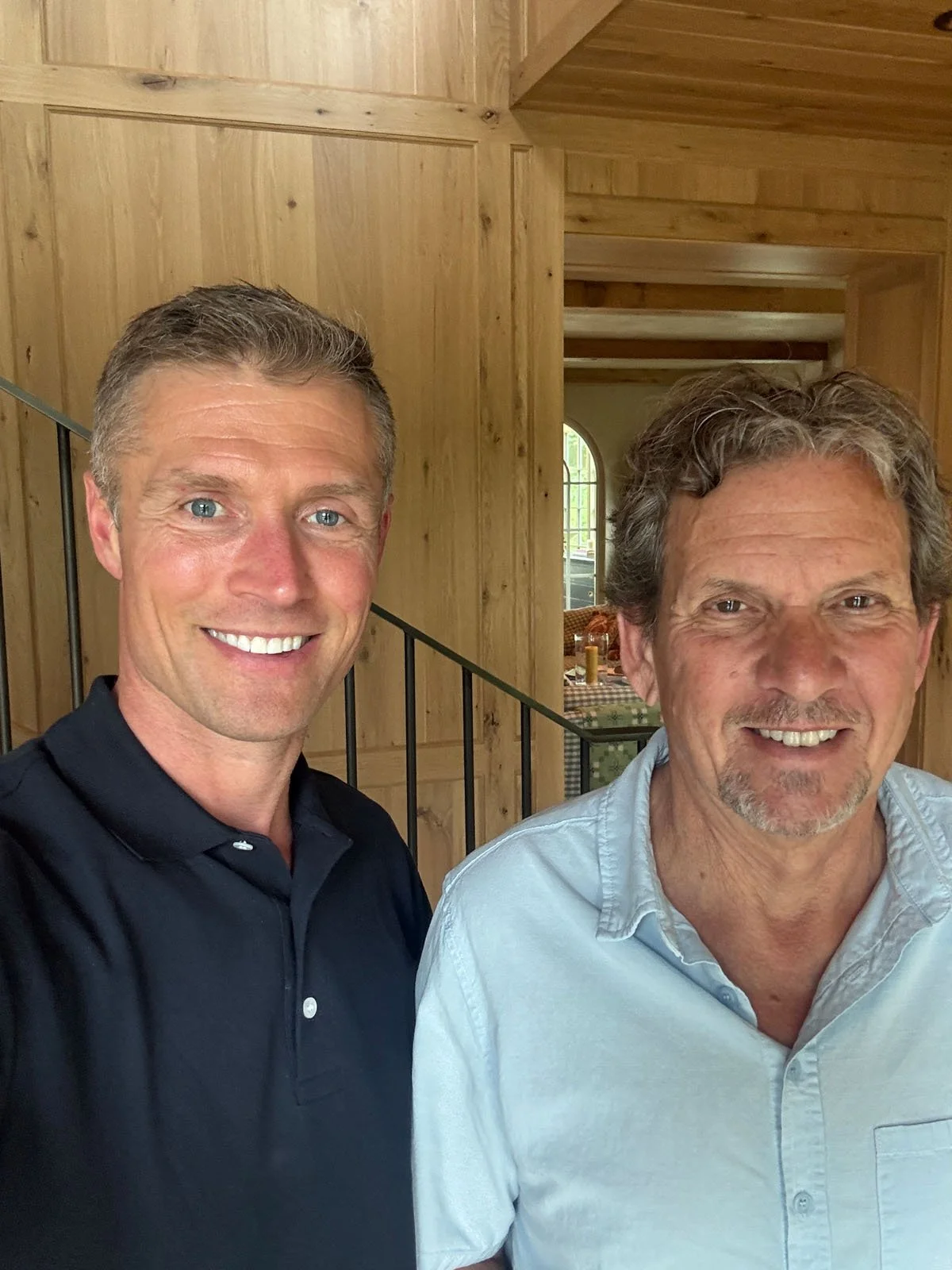
Don has spent the better part of his life pursuing the work he loves, having started in the trades at age 17. After studying engineering and architecture, he joined Welch Casey in 1985, adding his name to the firm.
Today, as president of Welch Forsman Associates, Don takes great pride in the team of carpenters, woodworkers, cabinetmakers and project managers behind the company. He has a passion for fine design and enjoys seeking out beautiful architecture and art on his travels — and loves canoeing, camping, and motorcycling with family and friends.
Resources:
-
Don Forsman 00:04
You can't blame the drywaller for a sad-looking HVAC vent in the wall when they installed that in a way that it was impossible to make it look good, and that's where a great house really starts with the foundation and the framers, you have to give them the opportunity to provide, I don't like the word perfection, but precision
Mark D. Williams 00:31
today. In the Kierkes River podcast, we had a returning guest, guest 115 Don Forsman, in, and Don's been kind of an icon and a legend here locally in Minnesota for 45 years, his career, and it was really fun to have him come in and chat about never ever things that he never ever would do in his homes, and things that evolved and changed in his career. We talked a little bit about always always things that he would do on every one of his homes. We talked about the goal of building 100 year home as a craftsman, and really the attention to detail that all of us should really be concerned about, and probably most importantly, how to build a team and communicate and really educate our homeowners, so they can appreciate all the hard work and the craft that our industry puts into the homes. Without further ado, here's Don Forsman. Welcome to Curious Builder Podcast. I'm Mark Williams, your host. We today are live from Misa, whose with the legend, the one and only Don Forsman. Hey, buddy. Hey, oh, you're doing good. For those that don't know who Don is, you can check out episode 115 where we kind of go into Don's story. What, 40 years, 50 years? How long have you? I should go back over there, somewhere in there, a long one. And we've become friends over the last couple years in the collective, you've taken on this cool mentor role in and out as you're building your home, and I just thought it'd be fun, you and your wife came through, Misa, who was a couple weeks ago, and Julian Miller had shared something, as well as Mark Stanke from Plaid, about just quality, and when you do a spec home, why we don't see more of it, and this episode doesn't have a clear line of sight. We'll just kind of go where Don and I go with it, but I think the nature of what you and I are going to talk about today is basically like how to educate the buyer on all kinds of things, the need for architecture, the need for craftsmanship, and I think we'll just kind of go like the value of what we find valuable, and you have such a huge career, you can kind of offer some perspective that I wouldn't be able to have, just I'm 22 years in, so I'm no spring chicken, but you're two to three times that, and I'd love to talk about what you've seen in terms of craftsmanship and how it's evolved or dissolved over your career, whichever way you want to go with it. So, with that clumsy intro, let's talk a little bit about the state of what you see now.
Don Forsman 02:48
Yeah, well, there's great design out there, there's great craftsmanship out there, they're finally coming together more. At least the end of my career, that was definitely what we were all about is combining craftsmanship with great design. You can, we've always been craftsmen in my companies, but not always, maybe should I say, necessary to complete the vision that might have been produced or by the architect or the design team, because they didn't have the means and methods to really design the house that required our craftsmanship, if I can put it that way.
Mark D. Williams 03:33
Reframe that one more time, just so early on in your career, you're saying that the architecture wasn't as sophisticated, or your team wasn't
Don Forsman 03:40
a little bit of both, we brought a lot of sophistication to it again way back in those days. I think I mentioned last time largely commercial architects that were doing the homes that we were doing, and there was not necessarily a lot of detail, so we were bringing the detail to some of these things, not nearly as much interesting. I don't mean to run them down. The architecture was different, let's put it that way. Where we're getting much more information these days about what something should look like versus well, just do it the way you used to do it. Here's the box of the house, here's some details, there's some materials, just do it like you usually do it.
Mark D. Williams 04:21
Who do you think drives that, meaning like, is it the client, is it the builder, is it the architect? I mean, I know the simple answer is, it depends, but how would you say that's evolved? Because when you have a more educated buyer, they, you know, we were just chatting about some people that are interested in Misa, whose, and I was, you know, we have three parties at the time of this recording that are quite interested, which is great. We'll see where that goes. Maybe the time this airs, it'll sell. I don't know. That's not really the point of this podcast. The point is, is all three of them either have worked with really high architects or really high-end designer. And for me, I'm not only, of course, flattered, but I'm actually relieved, because now I know that they know what. Are looking at, and a big part, I think, as a builder, and the point of the show, a little bit, is to educate all of us. I learned so much from the person sitting across in the microphone. Sure, but going back to the question, where do you think the drive has been, and how has it evolved over those decades?
Don Forsman 05:18
Yeah, I think it's evolved in the last 20 years from the architects in this town, they're very, have become much better at their craft, it seems from my perspective.
Mark D. Williams 05:30
So, you just mentioned how you know the last 20 years architects have really sort of leveled up the specification, is that, or is it even more than that,
Don Forsman 05:38
more specification, more sophistication, and I think part of what's happened in our town is that people from other parts of the country, customers have come here with more ideas, more sophistication on housing. Frankly, I think we've always built a fantastic quality home around here, because you have to, because of the climate. We've talked about that, but I think there's more customers accepting that high-value design that we didn't used to have around here. Frankly, there are plenty of sophisticated people in our, in our community here, but I think a lot more are willing to spend the money to see that in their home these days, really. So it's kind of the forces from everywhere, and I know that the architects gravitate toward builders that can really bring their design to fruition down to the last detail. That's where kind of the back and forth of this industry is, if you get good enough at what you're doing, you'll get it built, and you'll continue to build them, because people now really appreciate those fine details. Design is design, but the craftsmanship of those design details is critical. Otherwise, it's just a drawing on a paper with a real thick pencil, you know. I
Mark D. Williams 07:04
brought this up. You had mentioned a few episodes ago we had interviewed plaid architects, you know, Mark and Matt, and something that came out of there too is like it's a double-sided coin, yin yang. You know, we all do ourselves a disservice if we don't listen to the craftsmen in the field, you know. If my roofer is saying, hey, if you don't kick out flashing in this location, you're going to have an issue. That's true. We should listen to them in that situation. That being said, there's also the danger of just doing whatever you've done in the past. I'm not talking now about kick outs flashing, but just like a lot of times people have a hard time trying something new or a design detail, and it doesn't mean that it shouldn't be done. It doesn't, it doesn't really even mean it should be done either. It should be a healthy debate, and for me personally, as in some ways I think I've benefited. I'm not a know-it-all. In fact, I feel like I know very little, because I didn't grow up as a craftsman. That's not my skill set, and so I've always benefited from asking a lot of questions and trusting people, but if you know, if I look you in the eye, and you said no, I want to say that is this gonna, is this house gonna last 10 years, 20 years, 30 years beyond? We'll talk about that a little bit later. Like, I want to chase those details, because it's a peace of mind, but I also feel like it's the correct thing to do. And how many of these builder classes have you and I attended, where they scare the crap out of you, where they show like a roof gable going to the side of a window with no kick out flashing in the window, shockingly rots out. I mean, terrible design, bad execution. The idea that three people didn't do it, the architect or designer in that project should have said something, the builder should have said something, the roofing and siding contractor should have said something. So, how in the world did that detail happen,
Don Forsman 08:42
yeah. And I, you know, it's just all about that collaboration. I don't know how these things happen. I'm really glad that people like you and my old firm were just really firm in the collaboration. You have to talk everything up, and yes, there is the new idea, the new code, the new product out there that we all have to think hard about, and look at to see if it's going to work, and that takes that takes everybody. It's Bev and I started building our own house here, and it's just a phenomenal amount of.. well, I've been building for 45 years, and it's hard for me. This is a shout out to everybody I've ever worked with. I'm sorry, how hard it was from your perspective, because it's just an incredible, incredibly difficult thing to build a house that functions well. This is gonna.. I agree with you, if you're not building for 50 or 100 years right now, you should get out of the industry. It's too expensive to replace homes, and there's just a lot to know, not. And then there's the design that's got to come through, otherwise it's not the thing that you wanted. I spent a little bit too much of my career. Worried about the functions, I brought that to the table, and I'm stand hard on it, but that's not to mean you can't do this and that, like you're the never ever that the Platt office talks about. I get it, and yours is yours is a skylight, I get that. I have several of them, I also have several always.
Mark D. Williams 10:22
Let's talk about those. Actually, I think they'd be quite relevant. So, for those that didn't catch this, I joke with Mark Stankey from Plaid. He has these never evers, and that was a previous episode. What are some of your.. let's actually, I think this would be super interesting. Let's talk about some never-end evers that you have, and then let's talk about the always, always. I love this. The
Don Forsman 10:42
never, never, never is just like Mark suggested. They always come with a caveat, thinking hard enough about it. I never use an exterior. I never use an exterior product anymore that I don't believe in. I'm loath to build a wood deck anymore, even though there's products, plastic, all those things, stone, concrete, almost anything else is better, siding materials. There's so.. let's
Mark D. Williams 11:07
dial on that for just one second. So, are you saying, because that really comes down, obviously, architecture and design, but that's even site. Are you saying, like, all things being equal, like a walkout with a deck, you'd avoid a deck. Period. Yep, yep. I mean, that's funny you say that, because I've always.. so we're sitting at Misa, for those that can't see right now, the cameras are on us, not outside, but I prefer full basement, because I want to walk outside, and with the advantage, or the innovation of the multi slide doors and the bifold, it's really the main level, regardless of age, I mean, you're older than I am, but I want to walk straight out to the pool, straight up to the deck, and I like stone. I don't have to maintain it, it's stone. So, is that kind of what you mean by that
Don Forsman 11:46
exactly? And now there are actually some good products out there, fake stone, whatever, porcelain, that can be put on another substrate. Point being, it's not wood laying flat out in the yard in Minnesota, because unless it is plastic, and even it's plastic, problem is
Mark D. Williams 12:06
it warps,
Don Forsman 12:07
yeah, or minus 20 to plus 90, it grows or shrinks by a tremendous amount. So, at any rate, I like to keep any exterior materials to something I don't need to worry about for 20 or 3040 years.
Mark D. Williams 12:19
Does that include siding too? It
Don Forsman 12:21
does, and now that we've gotten to the technology of exterior insulation and airspace behind siding, we suddenly.. I mean, I was just pushing stone and brick and stucco forever. Now we can put wood back on the house because we're treating it truly the way it should be treated. It's thermally modified, so it'll never rot, and the bugs don't like it. We put an airspace behind, so it dries out. All these sightings used to dry out in the old homes from the inside air blowing out through them.
Mark D. Williams 12:53
Right, well, we took that away, so now we put an airspace behind, and they can dry out, so we can use those products. So that's where it was. It never under for a period of time, but it's evolved, right? Because I would imagine, like in the 80s, 90s, early 2000s before external insulation. Well, really, only the last five, six years has it been? I mean, it's been around for that, I think that perfect wall assembly has been taught for decades, but no one ever did it. Now, with the advent of, especially of rigid foam, like a zip product or rock wool, it has greatly, and I think I heard code is changing, where you have to have a minimum of one inch in Minnesota soon.
Don Forsman 13:25
Soon, yeah, I hope to get there. It's been up in Canada for a long time, that and triple pane. Those are my always, always exterior insulation. Absolutely, even if you can only get a little bit, do it. I love the Rockwell product, I love the airspace, I love triple pane windows in Canada. You don't build without triple pane windows, and we live in the same place as north of the border in terms of climate.
Mark D. Williams 13:50
It's, you know, magically change climate zones, and you go one foot lower,
Don Forsman 13:54
and the other always, always for me is redundant heat in floor. I think hot water heat for this climate is just the perfect thing, and maybe you need to back it up with some forced air for environmental quality or pushing air conditioning around, but those are always, always for me. Now, I just.. I've never had anybody complain about a warm floor in this climate.
Mark D. Williams 14:20
It's funny you say that, so we, so funny, I think I've had mine are actually quite similar, and now triple pane, this is actually the Home Arena, is actually my first triple pane, and you and I were chatting about, in fact, about three hours ago, I was just doing some Pella video content with Mark Cabrera from your Pella Local, and I was just mentioning how now the fact that I, it for me was changing the framing of it, you know, in the early 2000s everything was about greenwashing, and not that it didn't exist, but, like, a lot of my clients wouldn't pay me for solar or for geothermal, I've done some, but that wasn't their primary driver, but when I switched the narrative to wellness, to comfort, to condensation, now three. Of my four current clients all want triple pane windows, because I modeled it here, and they're like, well, what are you doing at Misa? And I think there is some value when you put a house out there. I don't, and we can talk a little bit about later in the program, if you did any spec homes or anything like that, but I think one of the advantages of sort of leading it without the client is you can experiment with some assemblies and some things, like we tried some things here that I've never done before, that now will be sort of a staple, like we went to an R 12 two inches of rigid foam to the outside, and we're going to build a cabin, and I'm going to do four inches of rock wool. I just, I'd rather practice on my own projects, obviously, to work out sort of what works and what doesn't work. But we were commenting back on the triple pane, I picked it for sound, it's a lot quieter. I live in the city, as you know, and I'm in the flight path of, and so it's quite loud, but with triple pain it drastically reduces sound, and I think that's everyone loves going to a quiet cabin, where you don't, all the stimulus of noise and traffic and things like that is really peaceful, but in our climate the condensation is huge. On Monday, here it was, what, 95 degrees, and the humidity was out of this world high, and I was downstairs, where it's cool, in a window, well, in the windows were sweating on the outside, and that's the first time, because this is the first triple pane window home that I've done, I've seen them sweat on the inside on double pane windows when it's minus 30, and a client has the humidity too high in their house, the relative humidity, you've got a problem, and it just literally to watch it, and I was like, that exactly right there, that is why you do triple pane windows.
Don Forsman 16:27
It absolutely is. There are many. You're right, it hasn't been framed correctly for a long time. It's been for years. It was well, that's a 30% upgrade on your window package. Well, now it's 12 or eight,
Mark D. Williams 16:42
definitely narrowed,
Don Forsman 16:43
definitely narrowed, and it's not only energy, it's comfort, the condensation thing is huge, like you talk about, and so I would, if I were still in this industry, I would be definitely, I'm not being paid by Cardinal Glass here, but it's really an incredible product that we should be doing here again. Moisture has always been my, as the builder, my, my crisis. Well, a sweating window is just more moisture that ruins something that was beautiful once and needs to be replaced now. So, there's lots of benefits. Just one more of those. What I would move forward as, and always, always, because it's worth it in this climate, comfort if nothing else. And you sound is absolutely true. I'm building a little house right now with a lot of triple pane glass, so I'll report back a year from now. How beautiful is these? Are I probably have 10 sheets of glass that are four foot wide by eight feet tall.
Speaker 1 17:45
Wow,
Don Forsman 17:46
so we like the indoor outdoor aspect of living in Minnesota, even though there's more indoor than outdoor. So, I'll let you know, it's kind of an experiment for me,
Mark D. Williams 17:56
you know. This is just because you're mentioning indoor outdoor, and you're right, that design has been, you know, having its time, which is great. I don't think it's, I don't think it's a fad. I think it's a, I think it's a good thing. And I think we as humans respond very well to, I think they call biophilic design, when you're incorporating nature into your designs, but also the way we interact with our spaces has always been crucial. But again, our climate rears its ugly head. I heard this crazy stat that 80% of your life is spent indoors, between being in your home, sleeping, which is a huge part of it, and at work. And I thought, as someone who spends a lot of times outside, I'm like, there's no way that's true. But then I got to thinking about him, like, that's crazy. So then I have this new hypothesis, and I've this Liverstone, I've talked about it publicly, builders, the United States, actually builders in the world, other than your genetic code that you were given by your mom and dad, we as an industry have more impact on your well-being than any other thing and any other choice you'll make in your life. Do you think that's true? Because we spec all the products, we build all the air systems, so again, other than, like, you might have high cholesterol, I can't change that with how I build your house, that's your genetic code, but the space you live in, the air you breathe,
Don Forsman 19:07
I agree, and I applaud the idea of wellness, and it isn't only materials, but it's, you know, I've said this before, that the space that you exist in has an impact on you mentally and physically, that's a scary part about what we do sometimes, is especially over my career, when we are creating this horribly built halfway energy finish energy efficient science experiments, and now we're done with that. I think, yeah, we have a big impact, and that's why it's important that we start elevating our industry to the importance that it has to people's life and lifestyles and health.
Mark D. Williams 19:51
This episode is brought to you by Pella Windows and Doors. I've used Pella for 21 years as the exclusive window company on every one of my builds. When people ask me who I. Us for windows and doors, it's Pella. Every time, their craftsmanship, their innovation, the top-tier service make them a no-brainer for any custom home builder or designer who demand the best. Whether you're designing something bold or building something with timeless elegance, Pella has you covered. They're also the only window company that has a lifetime warranty on all of their windows. I've gotten to know all their people at Pella corporate, as well as locally here at Pella Northland. I'm proud to call them our partners and our friends. Visit pella.com to learn more and connect with your local reps today. For more information, you can also listen to episode one, where I interview the Pella Northland founders, as well as episode 109 where we talk all about their latest innovation with the steady set window. Obviously, it's easy to say we're sitting in a multi million dollar home, and someone could say, well, that's, you know, you can afford to do that because your home is, you know, more expensive. And there is some truth to some of those products, like there's no question that triple pane window is more expensive than a double pane, but maybe you design a smaller home,
Don Forsman 21:01
I'm all for that. I'm all for that. And also, when you talk about expensive, it's - is it going to last 15 years, or going to last 50 years, or 100 years? That factors into the expense of the home.
Mark D. Williams 21:14
Well, and what is the cost of your health? Right? I mean, so how can you put a price? I think, again, going back to reframing, and I think that's where other companies or people that are smarter than I, that can run studies and help us with this information, because a big part of it is educating our, you know, ourselves first, of course, but then educating the client, because I think the story is there. I was mentioning someone that's interested in this home had done work with a very high-end designer here in town, which I was grateful for, because she understood what she was looking at, but she was on a 20 year wellness journey, because she had some respiratory issues, and she said the main reason I'm considering Misa, who specifically is because of the wellness aspects of it, and I know why I did it, but it's cool to see other people choose this type of lifestyle or the products that we're putting into a home like this of what's drawing them to it, and I think you know I've mentioned this many times in the podcast, but the wellness industry is 1.9 trillion in the United States. The money is there now, that's a huge gambit, that's not just housing, that's from NA drinks to athletic wear to gym memberships to housing materials to undyed natural wool, I mean, it's the whole game, but I don't even know all the lists of products, but it tells me that people care about how they feel.
Don Forsman 22:28
Yeah, definitely, and there are very basic elements to any house that we build that it's not that hard or not that expensive, just because you have good air in your house, and you have quality materials to create a beautiful home that isn't all of the expensive part. You don't have to put granite and Swedish oak, or whatever you got going in here, on every surface to make it a healthy home.
Speaker 2 23:01
It's and
Don Forsman 23:03
I just thought that, you know, since you're out there educating everybody, you should start a program to teach homeowners before they're going to go build. You can have some classes for them, bring in a couple builders, just set expectations about never nevers and always always, maybe that's it's a valuable thing that you could do for the industry as well, or mark someone else,
Mark D. Williams 23:33
and all my free time. I do like that. The problem with you and Colby is you guys give me an idea, and then I have to feel like I have to go do it, and that just more like, wait a minute, I had someone a couple years ago ask me, they're like, do you even build homes anymore, and this is before me, so it was because Curious Builder was really banging, and I have kind of found that, you know, we have that Thursday series, losers are winners, that all I look back at my own life, the reason I started the series is pretty much every success I've had, air quote, whatever success means to you is different has been preceded by air quote failure, sure. And you know, me say, who's standing right now, this is actually a product of two failed sales that came. I don't know if I told you this story. So we had actually designed a home here for a lady, spent 910, months in design, priced it out. Anyway, long story short, she ended up moving out of state, and so then we're, you know, we lost that whole time window, and we sold it four days later to another couple, spent three months designing them, and they decided we're not going to keep going, we are going to go buy a bigger lot and design with someone else. I'm like, what? So I was like, and then at that point it was like, you move on, and at that point I was so emotionally invested, but those failures is what gave me the time and space to then do this anyway.
Don Forsman 24:45
Yeah, we always need to remember that the failures are there's no success without failures, and they're the best teacher.
Mark D. Williams 24:52
Well, speaking of never evers and always always, do you have any examples of, let's say, a reason I never ever became a never ever because of. Failed or an always always became an always always, because it works so well.
Don Forsman 25:06
Well, the never nevers was so many exterior products that I've used in my career that have failed.
Mark D. Williams 25:14
Yeah,
Don Forsman 25:15
just it'd be interesting now that we know more the science of putting exterior products on the home, if some of those materials might have succeeded if they were installed in a different system. That's an interesting thought. I mean, we did.. I'm not going to name names, but there was one that came out 25 years ago that was basically glued together sawdust and meant as an exterior, but it never had a chance to drown, so there's no chance it was going to succeed. Maybe that material would succeed, so it's not only material, but it's the technology behind the installation. So, most of my failures have been exterior materials. I would say really skittish about all of that, did drywall return to windows and doors is one of those two that doing it in I'm doing it in my house. Oh, that's amazing.
Mark D. Williams 26:14
You're never ever putting in your own house, that's awesome.
Don Forsman 26:17
But I'm not doing the doors, I'll do the windows. The doors I also believe in a real door, so my doors are going to weigh, you know, 150 pounds, and drywall is not going to hold up to that.
Mark D. Williams 26:28
Are you going to do like that little curve cut, or like the little shadow line around the door?
Speaker 3 26:32
Yeah, yeah,
Don Forsman 26:33
or there may be some two inch casing. I don't know. I've harped, I'm doing some things on my house that I didn't expect. Let me put it that way, but part of that is creating the space that you really want. Sometimes you have to go into that. There's the caveat, like Vlad was talking about. There's.. I put.. I'm putting a flat roof on my house 30 years ago that was a never-never in Minnesota. Now all of those products have improved too. The
Mark D. Williams 27:02
ease of use with external insulation has completely changed design and capabilities and comfort. From my point, we're sitting below a live green roof. There is literally plants on the roof of.. if you had told me 10 years ago, Mark, you're going to do a pool on top of your roof, you're gonna plant green plants in it that are supposed to survive, and if you needed to, we don't actually have irrigation up there, because we were told that drought-resistant cyclones don't need that. You can plumb water and actually water your house. I would have said, "Get out of here, you crazy lunatic. I will never ever do that. And here we are.
Don Forsman 27:37
The last five years have done it on virtually every home. It seems like it's, but again, we got smarter products, got better, and mostly the the assemblies got better. We just got smarter about that. So that's a never, never, that's not an always, always, but it's definitely in the in the game again.
Mark D. Williams 27:57
What are when you walk into homes and you see things, he's laughing already. I'm trying to frame up this question for some juicy information, but I guess let's take away the assemblies, because we know the older homes breathe, and that sort of.. what are some telltale signs that you know that builder knows what they're doing in terms of craftsmanship. Are there a few things like, oh, maybe I'll just lead and give you a moment to think. I always touch the woodwork. I'm like, you know, it's like smooth as a baby's butt, that old adage. I always rub my hand on people's millwork, because I can tell you within a coat of how many coats of paint you have on your trim. Now that's not necessarily craftsmanship, because you're covering it up, but, like, it tells me actually three things: how good is your trimmer, how good is the material you use, and how good is your painter? And I just happen to be a complete paint snob. I really, I mean, it's just flat out true. I really, it really bothers me when I see a bad paint job, and it's never perfect, because you could, you know, we've all gone to the edges of trim, and you know, some impossible angle, and like, but I'm the fact that I'm even describing it tells you that it's my hot button.
Don Forsman 29:06
Yeah, and I get that you can't have beautiful finishes without everybody along the way. That's that's you can't blame the drywall drywaller for a sad looking HVAC vent in the wall when they installed that in a way that it was impossible, make it look good, and that happens all the time, and that's where that's where a great house really starts with the foundation and the framers. It's you have to give them the opportunity to provide.. I don't like the word perfection, but precision..
Mark D. Williams 29:39
ooh, I like that.
Don Forsman 29:40
Precision is a good word that I can't pronounce right now for everybody to understand, because we, we ended up working with people all the subs along the way who knew what was going to happen to their finishes if they didn't pay attention along. Way, and that's just an important deal of the whole teamwork collaboration, you know. I've heard you talking about the teamwork before, and there really is - it's a Venn diagram between the HVAC and the plumber and electrician and the drywall. If they don't cross paths and communicate well, you've got a disaster. That's not to run down National Builders, but that's how that works. You got 12 hours on august 6 to run the HVAC in this house, period. You know that's a different method than we're into, and you'll never get any precision out of that. So, a lot of teamwork needs to continue to happen, and that's usually what I notice in homes that I walk into, is there was that lack of, I'm the HVAC guy, I'm going to do what I always do, and good luck to the taper, and then good luck to the painter.
Mark D. Williams 30:57
I think that's, you know, teamwork is so important, and I heard a good keep repeating, it's an old adage, but if you want to go fast, go alone. If you want to go far, go together. And I like that, and I think this is where a story and a vision, and this really starts in my case with the GC or the architect, or whoever. I mean, in this case, it's probably more the builder, honestly, because they're the ones that have consistently shown up with your product, and it's not just the builder, it has to be the project manager, the project coordinator, and you really have to.. there's a number of things that we've educated people on on this particular home, but over the course of my career, things that.. and also I always say I have a vendetta against outlets and vents.. like I cannot stand seeing vents and outlets.. like I'll do whatever I can.. I mean, on this house alone, I'm just throwing up a wild guess between all the baseboard outlets that are matching tone on tone, and all the stuff. I bet I spent 15 to $20,000 to it's not without cost. There's no cost, but it's important to me, and so it happens to be my hot button. Doesn't have to be yours, but I think also explaining to your client, like if you're showing them that you care about something that they didn't know that they cared about, but they sort of like, well, they'll sort of, they sort of appreciate that you care about that, because if you care that much about an outlet and event, man, how much must he care about like really cool stuff, like the refrigerator cabinets? Turns out I really don't like outlets, and I love my electrician, so it's not that I don't love my electrician, I just don't like outlets.
Don Forsman 32:19
Yeah, that's in the last decade or so, we call them unsightly electrical devices now, because they used to go wherever the electrician wants to put them, and they usually pushed out the drywall a little bit because of the electrical code and the electrical, our manufacturers don't care at all about it, they want it to work, and that's right, but you can do all those things in harmony with Finnish, so this
Mark D. Williams 32:44
is actually kind of the reason it costs me so much for the audience, is like, oh, it shouldn't cost that much, so I had vents in this entire house, and I went, this is the value of going to look at other products and other homes and other high-end builders in your, and not in your competition, but your peers, and just looking right, I think that's where social media actually is really helpful, because you get exposed to a lot of things a lot quicker. Anyway, long story short, I, as soon as I saw my first Fitz vent, which is this home has all of them, we'd actually already done an HVAC, and we're already done with all the fans and everything, and I said, I want to rip them all out. And Tony Lido at Perfection, shout out to him, he's such a great attitude. He goes, You want to rip them all out. I said, "Yeah. He said, "We're already.. they're already installed. I said, "I know. I said, "I can't unsee what I just saw, and now I can't ever look at a ceiling vent ever again. It has to be that, assuming it still moves airflow. I still, to your point, it still has to work. You know, that's where I think form and function can get really messy sometimes, where we chase a look and lose sight of thing has to function, especially the 100 year goal, or something like that, exactly. Anyway,
Don Forsman 33:45
well, you're that builder that is also a nightmare client.
Mark D. Williams 33:48
Yeah, but yeah, say it with a smile. I'll never ask them, but I'm willing to pay for it. Sure, I mean, so I don't, I mean, if you want to do a better build, and one of their guys, actually really, I think his name was Len, and he's like, "You really care about these bat fence, don't you? And I said, "I really do. And so it's like, but part of it is just explaining to the team what your vision is. I think it's really important, especially if going back to the teamwork thing, you can't execute all of these things at a high level, in like what an architect said, if I drew every single detail, we would never actually build anything in our career. You would have a 10,000 page set, so let's get a set that's good. Let's get into the field. Let's keep our biweekly meetings, and when we come to a detail that neither one of us completely understood, because I feel like builders unfairly say architects should have figured this out, and and architects unfairly sometimes say, well, I wish the builder would ask a question, because the builder is like the guy in the field is just like, well, I'm going to build it to the best of my ability, no, no, no, you both, both parties, the builder and the architect, just simply need to meet and talk, and I've never met someone yet, and part of this is choosing good partners, of where someone says, like, oh yeah, that does. Mark, let's figure out a way, because the answer always has been with our architects, partners is just okay, you're right, let's figure out a way around this, we can do it together, and, like, hello, that's great, your perfect response,
Don Forsman 35:10
yep, it, you could easily spend as much on your architect as you do in your house if you were to go like you say to every single detail, I think they need to represent their vision. We need to implement it. I think otherwise it really is a costly. It already is a costly, which I'm come to more realize now out of the industry, and hiring an architect myself there. they do a lot. I got, you know, again, I want to apologize to some, a lot of interior designers and architects that I've worked for over the years. It's a gargantuan task to bring it all together. We, as builders, obviously have a huge say in how it's accomplished, but to have that vision out there first and enlighten everybody with that, and then they have the architects are really saddled with you got to get this homeowner this to understand why and how and why it's worth it, and how it's all going to work together. That's it. I'm seeing now how much more complex that is. Why it took me 50 years to figure that out, I have no idea, but it really, so many moving parts, and if I were a homeowner walking into, or a customer walking into the idea, I want to remodel this or build this. The only way to do that is to select your entire team, down to the electrician, really, before you start anything. It's just too much knowledge out there that needs to flow into this thing that's going to end up on paper and then flow back out to this beautiful building.
Mark D. Williams 37:09
I think you mentioned earlier, and we actually, I won't talk about it publicly right now, because I haven't ironed it all out, but we actually are contemplating what you were referring to earlier about an education for homeowners and one of the things that I try to talk to our homeowners about, and you don't want to scare them away, because building a custom home is obviously our business, we want to do it, it's not meant to be scary, but there is a lot of time involved, and whether you're involved or just time in general, you can spend as much time designing, bidding, getting all the ducks in a row, as it takes to actually implement the actual build right, and I think most builders are afraid of saying that, because they're, if you're a homeowner of Don, you come in and you see this beautiful home, and it used to be, especially early on in my career, How soon can you start, and how soon can I get in? The first thing that's on their mind is great, and the builder, of course, is thinking, how soon can I get them to sign a contract, because then I know I'm good, and the client is thinking, how soon can I move into the house, and both of those, actually, I've never thought about this, I think this is accurate, both of those starting points are terrible, the builder should not be thinking about signing the first thing being the contract, although I understand the financial aspects of needing to do that to be solvent, and I understand why the first question the builder or the client has is to move in, but both of them should be really concerned about the process, and how do we make this journey beneficial for both of us, and you know, luckily we're at a point of our career where we can be a little juicy, and chooses the wrong word, I think, by just demonstrating what we value, your like attracts like. I mean, it's like a magnet, you attract the type of people that want to work with you. And to me, it's like there's a lot of talent in this town. You should work with who you think is going to be the best team that not only you can work with, but honestly, that you enjoy for the next two years of your life, because, like, you know, there's a builder in town right now building a three four year house. I mean, I mean, you better, you better really enjoy spending time with those people, and it could be great. I mean, what is great is great.
Don Forsman 39:10
Yep,
Mark D. Williams 39:11
but man, if you got a burr in your saddle, that's going to be one unpleasant ride.
Don Forsman 39:15
Well, especially since even when they're great, when everybody's got a great relationship, every project hits that point where
Mark D. Williams 39:22
you're tired,
Don Forsman 39:22
you're tired, the fatigue is real. It's either taking too long, it costs too much, or I'm tired of making decisions. It's happened with every single customer I think I've ever had. It's a drag. I mean, it's.. I mean, if you've got a full normal life and you throw building a house in in the middle of it. Wow, that's a lot of time, a lot of time, a lot of interest that you need to give it. And so it's not an easy thing.
Mark D. Williams 39:49
It's funny because I'm, we're sitting in a spectrum here, right? And I have, I have two coins. One is normally, because I haven't done this in 18 years. If you want to skip that whole process, I've got two years of work right here, you can buy this. Is, and then the option is, if you want to build a home, it's going to take time. Are you willing to invest it? There's.. I've always kind of felt that there is a price point when you get to a certain price point, people are going to be like, if I'm going to spend that kind of money, I'm going to build what I want. What? And I think that's moved, but today, what do you think that price point is for Minnesota, because I think it's different all over the country.
Don Forsman 40:26
Yeah, I don't know. I always contended that I don't know what the number is. I guess a few million dollars, if you're going to buy a house more than a few million dollars, you wanted to have a lot to say about it. I think million dollar home, you can, you can find them around and probably love it. Less than a million dollars, there's plenty of homes around, and you may or may not love it. Yeah, I'm really curious. It sounds like you have great interest in this, understandably confuses me a little bit again. Is that paint color right? Is that floor right? All the things that people could decide. On the other hand, as I'm having decided all those things for myself, it's like, yeah, somebody else can decide that. That'd be great.
Mark D. Williams 41:15
Well, look, look at, like, the custom. I don't know the stats on this, but it'd be really interesting in housing. Let's take remodels out of the picture. New homes, I mean, I'm sure there's stats for this. I'd be curious to know how many new homes are built in the United States. How many of them are custom versus how much of them are, let's say, production build? Let's say any, any builder that's building more than 50 homes a year, that's considered production, regardless of the semi-custom or not. For this, and now I don't know the number, but my point is we, we as high-end custom home builders, you were too, and are is I still think we need a healthy ecosystem, meaning like you need a huge price range, and just because I operate at the higher end doesn't mean I don't value, and I do know from a housing point of view we just need more housing. Now, I do like you have concerns about the how the speed in which they go in the in we're building temporary structures that won't last as a separate conversation, but my point is, is the nationals really do have a few things figured out very well, which is the ease of use, how quickly and the clients come in signing up, knowing that they get to make three decisions right, and they sign up for it now. There's a core corresponding value, they know they're paying less, they're getting American more. Just I don't personally assign that, like bigger is not better, like I would rather have quality, obviously. But my point is, is they outsell us 100 to one, 1000 to
Don Forsman 42:36
110,
Mark D. Williams 42:37
1000 to one, a lot, because the other side of it is, even if you could afford it, do you want to spend two years of your life or more building a custom? Maybe you do, maybe you don't. I don't know. I'm curious, your thoughts on that.
Don Forsman 42:51
Yeah, I'm not sure. Back to the homeowner education, I'm not sure that people know what they're getting into most of the time for
Mark D. Williams 42:59
new construction. Yeah,
Don Forsman 43:00
yeah, it's there's how could they possibly know, and it's remarkable that they'll go by other things sight unseen. No, I guess they know that it's a quality product, it's a great watch, or it's a great car, or whatever, but they don't really - most of our customers don't come into this knowing 10% of what of this decision making, or 10% of the things you know, we often get a customer saying, I know we want this and this window, or that siding, or whatever, or this kind of kitchen cabinetry, but there's 10,000 other decisions that are around that, and they have no clue, and I, in some ways, I love the I love the National Builder idea that given three choices of layout and three choices of window and whatever, I would just wish that build them better at the same time, you know, they're not at the
Mark D. Williams 44:00
forefront of new technologies, they're at the forefront of building a house that can be built in a short amount of time and looks good enough, right. And you know, we've been around this, this question of housing is a difficult one. We're very fortunate that we get to build these fantastic spaces, and there's most of the populace that just needs a space. Agreed. I give my dad a lot of credit. I've mentioned this a lot on the podcast recently, mainly like this every year we usually go to the Bond Waters, and you know, sleep in a tent. My tents, like, fits three, four people in it. It's pretty snug, not a lot of room to move, certainly no running water, that stuff. And the point is, whenever it's raining really hard out, I always look at this little thin Gore Tex fabric that's above my head. I'm like, it's pretty nice in here, it's pretty nice. And the point being is, like, I'm thankful for people in my life that remind me that we are. Still building homes for families, for shelter. I mean, I always laugh, or use this analogy, that you know, as soon as Adam and Eve left the Garden of Eden, one of the first things they look for was a cave or a shelter. Shelter is part of what it is to be human, and there's, you know, that I'm not prepared to talk about it, and it'd be really interesting to have some sort of economics, but understand, like the psychology of housing. I don't know enough about low-income housing or donated housing or small housing, but we have a massive problem with, of course, home ownership, of course. But even just this fundamental desire to have a place to shelter, and it's in animals, it's in humans for sure. But anyway, back to the credit for my dad, he often reminds me he's like, don't lose sight of what you're doing, because sometimes he knows I fall in love with the craft, and you know that concerns him, because it gets expensive, and, and those types of things, but he's like, in the day, it's a family, and it's their memories, and don't lose sight, that's what's the most important,
Don Forsman 45:55
yeah, and I've always appreciated the homeowners who keep that in mind, doesn't mean you can't also make art out of great space.
Mark D. Williams 46:04
100% agree with you,
Don Forsman 46:05
and that was my goal, is to be able to keep doing that for people. I don't know how to address housing, especially in this climate. The industry needs to come up with a whole brand new idea, I think, and actually, too much of the housing for the less fortunate again is only built to last 20 years without replacing all the siding, all the windows, all the flooring, all the roofing. If we could look at the 100 year idea, if we could look at European values of housing, and bring that here to me. It's the same thing. Canada builds a Trans Canada Highway, and it's got like 12 feet of base under it. And we build highways here with, I don't know, somebody could correct me, probably three feet, and we end up, I come down 94 a lot. There's always a section of 94 being rebuilt. Why didn't you build it right the first time and have it last for a really long time? Just that's what we need to invest in our housing here, not only individually, but as a society, invest in real shelter for real people. It's going to be there 100 years from now, that's the only answer, but short sighted is the only thing we do here. If
Mark D. Williams 47:33
you're looking to level up your business in 2026 and beyond, the Contractor Coalition Summit is the place for you. If you've been a listener to the show, you know that this has been the single biggest factor in how I've leveled up over the last couple years. It's had a huge, profound impact on my business, my personal life. It's what helped me launch the Curious Builder. In fact, September 15 in Minneapolis, we are doing a one-day event, so for the last four years, we've always done three day events, sometimes four day events, and we wanted to recognize that it's a significant investment in yourself, which is definitely worth every penny. I've talked many, many times about that, but for some people it's just out of reach. So we wanted to do a one day crash course event. Obviously, we can't cover all that we can cover in a four day event, but this will be a major, major upgrade to whatever you are doing, if you haven't been to one. So, that'll be september 15 in Minneapolis, and then our last one of the season will be another three, four day event in Charlotte, North Carolina. All the details can be found at Contractor Coalition summit.com I do think the unhappy consequence of housing getting really expensive in the United States, which it is right now, and I don't see how it's going to come down. I think people are going to live longer in their homes, which the pro of that is people start thinking longer term in the sense of the investment in I remember being in Switzerland, visiting a family, and they had three generations of family: grandparents, the parents, and the children were all in the same home, and remodeling is obviously a thing, as they recondition the spaces or do add-ons, and they're in, let's say, Switzerland's a much smaller country, of course, in the US, but they would never even dream of, like, because if you do something short-sighted. It's not only hurting you, it's hurting literally your own family. And to your point about thinking about time, sort of changes the narrative on almost anything, the decisions that we make over time, and in a home. And again, I think it goes back to the narrative I've before you came in. We were going to chat about this and chat about it now. Like, I would love to tell my clients that my goal is to build 100 plus year house. Why shouldn't that be my goal? I know legal would have a field day with that, because, like, you can change, you can have a stated, but, like, that's the goal, and I'm actually less concerned of whether I do it or not. It's more for me about the intention to do it, because products change. I mean, look at the 90s, they didn't know what their. Doing with, you know, the code made you put Polly in the basement, and it sweated like a greenhouse. And talk about the never ever, my goodness. So, there are things that will happen. There's something in.. there's something I'm sure in my career that will come back to bite us at some point in time. We'll learn from it, and we'll evolve. But why shouldn't we think in those types of terms?
Don Forsman 50:19
Sure. Yeah, and I think it's again after seeing technologies change over the length of my career, I feel really good about where we are right now in terms of materials and technology on building these homes. The home I'm building right now definitely could be considered a generational home, it's small, but it'll be there for 100 years, and maybe you know, maybe my sons or my granddaughters, or their kids are gonna still have that. I hope so, because I'm building a house inappropriate for the neighborhood, but it's ours, and we're going to enjoy the heck out of it until it's no longer our option to be there, and I just think we should all have that goal in mind. Absolutely, what's the point of putting in a window that you know is going to leak and be useless in 10 years, or put siding on a material on the building that you know is going to be gone in 10 or 15 years, and there's just a ton of those products out there, so even if you're building small houses or as a builder, I think you need to know there's some great technologies and great materials, and a lot of it is technology, we're not, we're not bank putting all our money on a certain material that's going to last 100 years, that is never going to do that, but we have technology, we understand how the system systems work, the envelope of the building, the environmental controls on the inside, we know that stuff now, we can control that now. A homeowner can ruin it. He can turn his humidification up to 60, and then when it's 20 below, and there'll be water everywhere. I mean, everybody can ruin some things, but most of these houses, like they build in Europe or even Latin America, they're gonna stand there for 100 years or more, finishes may come and go, and they may be ruined by the storm, or that storm, or bad maintenance, but the building will be there, and will always be there to be able to be provide shelter for somebody. It's not that hard.
Mark D. Williams 52:37
Have you noticed? I don't know if this is true. I'd heard this one, so I'm curious, your take on it. That one of the hardest things that you can do to home is if no one is in it.
Don Forsman 52:47
Yeah, the other, the flip side of that is, remember how much moisture your inhabitants bring to your home, so it goes both ways. You need to understand that humans are mostly moisture, and they do all that thing, all the things, the showers, the cooking, the breathing, but also a vacant home. Well, it's funny, 100 year old home in Europe, or I spend a fair amount of time in Mexico these days, they can be vacant because there's nothing to go wrong, everything isn't based on the electricity and the technology to keep them alive, they're going to survive everything, and that's what we need to do is to create a structure that'll survive vacancy, or 20 people taking showers in the morning, all those things are doable these days. We have the smarts. We need to educate builders like you are doing. We need to educate homeowners. I really think that's one of the most for us as builders to continue to be successful in using new, new ideas and old ideas that work is to make sure that the homeowner is buying in
Mark D. Williams 54:08
as we close this episode down. What would be 345, whatever, if you had, if you had 100 homeowners in front of you, and you're on a live panel, you have a builder, an architect, a designer, couple, maybe a couple builders, whatever. What are.. what are some things off the top of your head would you want them to know that you've experienced that they don't know? And it could be some.. I'm guessing there's probably some pretty simple stuff, but what are some things that you would seek to educate these homeowners about?
Don Forsman 54:38
One thing they need, maybe at the top of the list, has nothing to do with the building itself, but it's the amount of communication that's necessary, the amount of education they should get from their team, because the team knows all the valuable things that they need to know, so. That maybe is the top thing. We live in a climate where everything, the technology is way too important now. We need to follow that, and they.. I've been in, you know, 1000s of hours of design meetings, and I've been, especially when there's like an HVAC guy or electrician or a plumber part of that, we start talking a different language, and I can always already see the homeowner glaze over, because they got no clue. We're talking a language they've never learned, but they need to learn that, they need to understand that, or they need to have absolute trust in the GC or the architect when they say this is how this is going to go, because that's what you want, or problem is most of my clients are sophisticated enough to not accept that as truth, partly because us general contractors have that name of not always being the best and brightest at what we do, so that that trust is incredibly important, and the other thing that I don't think is talked about enough is what the process is from start to finish. It's an incredibly.. if you were to write a book on the process of building this house, how many pages would it be? A lot. So those are all the things that hardly even matter to what the actual building is, but the process, you know, you get to go buy a $250,000 car off the lot, and you trust in all those things, you have no quite.. you're not going to ask how did that, what nut did they use on that engine part, but they have complete trust in that, and that's how we need to up our game in this industry, so people have complete trust, and that's.. I don't know, I'm a homeowner building and buying a home, and I've been doing it for 50 years, and it seems really difficult. There's every decision has fingers that go in 100 directions, you think you made one the right one, and then you find out, well, I didn't know that, and I didn't know that, and I didn't know that, and I think that's what homeowners must be going through all the time, so they have to either either play along and learn and be very curious or trust their team completely, and to let me know when it's
Mark D. Williams 57:28
done. I mean, I haven't had too many clients like that. I've had maybe one or two that I can think of. It's rare that you have someone with complete.. I can't decide if it's the quality, for instance, it's like, let's just let you answer the question versus hypothetical. Have you had, can you think in your mind, how many have you had? Were they
Don Forsman 57:49
only a few? Some of these were from, they were long distance,
Mark D. Williams 57:53
yeah,
Don Forsman 57:54
and they were totally trusting their team, for sure. Lot of communication, usually from one of the design professionals that was really the conduit, but they didn't have a lot, you know, they trusted the design team, and we built it, and of course we were never cutting corners because the homeowner wasn't there, I mean it was a team effort and they were distant and never had any trouble with that,
Mark D. Williams 58:19
I was curious about it's funny you say the two that I was thinking of were there, were out of towners too, and sort of, you sort of, you sort of have to, obviously, Minnesota is such that there's, it's not really a vacation destination, so we don't get that as often as you do in other climates. Brad Levitt, a friend of mine, down in Arizona, and he gets a lot of people that build down there, and his clients will come down once every couple months, I mean, they obviously, the advent of virtual meetings has drastically changed that communication tree, of course. He has something back that's to a homeowner thing. We've actually implemented it. We do a breakfast every six months with the entire team, the client, the designers, the architect, mainly just because I have young kids. I try to stay away from dinner time, but every six months, Brad was the one that, who kind of seeded this idea in my brain. A couple years ago, he takes out the entire team to a nice steakhouse, and his comment is, it's a good way for everyone to remember, hey, Don's human, Mark's human, we're just talking about our life, our family, you're actually not talking about anything about work, you're just spending time together. And then, at the end of his little speech, he goes, also, it's very rare that someone who has dinner with you is also going to sue you, and, but it was actually a little twinkle in his eyes. I think he's right. I mean, if you are breaking bread with someone, you realize, especially if you're an honest actor, like mistakes are made. And I love what you said earlier, it's precision, not perfection. And I like that school, because oftentimes, if someone ever throws up, I call it the P word, you know, perfection. It's, I mean, I do, I'd nip that thing in the butt right away, because it is a dangerous line of thinking. Like, honestly, name one perfect thing that there is. I can't think of any, you know, that's natural. I mean, it just doesn't exist.
Don Forsman 59:53
There is another way to understand that word, but in the way that you understand it, you're absolutely right. Of in some ways everything is perfect, even when it's
Mark D. Williams 1:00:03
flawed, flawed. Oh, I agree with you with that, because it's real.
Don Forsman 1:00:07
Yeah, there's but the idea of perfection, seeking perfection in what we do. You could seek perfection in the process, but yeah, it's a dangerous word to use. What
Mark D. Williams 1:00:19
I like, and I think maybe this is what you're hinting at. The edges is authentic.
Don Forsman 1:00:23
There you go.
Mark D. Williams 1:00:24
I'm fine with authentic. Like, in fact, I've even kind of made this particular home. I've tried to pick everything that mostly natural materials, they're organic. Guess what? A tree splits when it's struck by lightning. It ages. I'm older. I have wrinkles on my face. That's supposed to happen. That's what happens when you know you get older, and it's also character. It's, you know, I look at my grandma, she passed away a couple years, or a couple months ago. She's 99 She's a beautiful woman. She might not have thought so, but I found her as her grandson, very beautiful, because.. but it was her age and her experience, her authentic self. And I think our homes.. that's why I'm so obsessed with storytelling lately, and so someone will own this home, and five years from now they're going to call me, and like, Mark, there is a some.. this thing is cracking, and my response is going to be good. It's supposed to, you know, it's authentic. I mean, that's real now. It's a little bit of a tongue-in-cheek response. I mean, it depends on obviously what it is. If you have a crack down the middle of your window, that's probably not a good thing,
Don Forsman 1:01:21
maybe not the bottom of your pool either.
Mark D. Williams 1:01:23
No, that's also a bad idea. I was thinking more of the plaster, because plaster does crack, and you know that's how it anyway.
Don Forsman 1:01:29
So, I have to ask you, yeah, now that you're done, how many second thoughts? How satisfied are you with the process and the result, and do you agonize over this, that, or the other thing? Still
Mark D. Williams 1:01:46
000, regrets. I'm also not somebody that really thinks in the past. I think that's just a blessing. My dad's a lot like that too, but I spend a lot of time thinking about the future and what's next, and that's a hard, actually the hardest part, and a big reason why this home has a lot of the features it does. I need help being present, and I heard a great quote recently. It says, "Be where your shoes are, and I like that. And I'm not always.. and that's.. I'm not very good at that sometimes. And I've actually.. I kind of made a promise to myself the other day. My kids are still pretty young, and like, all of us were busy, and Tate six, and when he asked me to play chess.. actually, when he asked me to play any game, I sort of made a promise with myself, he doesn't know this, or we'd be having real problems, but I've always, I've sort of resolved that anytime he asked me, I'll say yes, because there'll be a time and age where he won't, and the point is, you know, as you know, being an entrepreneur, it's like there's our list never ends,
Speaker 3 1:02:35
right?
Mark D. Williams 1:02:35
I could always work, and I enjoy working, it's not hard for me to work, it's actually enjoyable, I like it, but to answer your question, I think, are there is everything perfect? No, is are things precise? Absolutely. Yeah. Actually, it's funny you say that. So, Melissa Olint, Carla, and I are actually gonna sit at this table. We actually had.. we're gonna do the podcast last week, but something came up. We had to switch it. We are gonna do.. Melissa and I specifically are gonna do an episode called, like, all the things that went wrong. I mean, there was a lot of things that didn't go right, but sitting here now, answering that question, I could not be happier with the end result. I'm very satisfied with every single decision, and to your point, sometimes things happen. We, I mean, we had a fire in the house, and we fixed it, but like my entire career never had a fire in a house, that's crazy, and like you know we had to hand paint this wood that got burned, it was very small with some from a welding of a railing and the sparks came down and right, but of course it was two weeks before pictures, which is like oh great, well that's great timing, and so like you know, so my point is no, we're gonna do a whole episode probably after the house sells of all things that, and from different points of view, you know, my I was kind of a delusionally optimistic person, as you would come to expect, knowing me a little bit more, but also I was the main energy driver, the Energizer Bunny of the Clear Vision, that's why I think it's also coalesced so strongly, but that doesn't mean that my vision didn't sometimes, you know, upset the applecart, sometimes, you know, so from Melissa's point of view, I definitely stressed healthy to your design team plenty. In my biggest mistake, I'll leave you with this, and because this episode we're crossing over the hour here, respect your time in the audience, but my biggest mistake wasn't I stopped being the GC, and I've done a whole episode apologizing, I think this was in November, I apologized to Kate Sikorsky, specifically, who was our principal designer at the time on this project, and here's what's ironic, I thought I was giving them the best gift they had ever gotten, because I told the designer, you have a five to one veto power for me. I didn't pick Oho Interiors because I'm going to tell them what to pick. I picked them because they're so talented, like you, you design this, you know the spirit, you know what I'm after. Yes, I have a say in it, but like you go, and if you ever need to prompt me, just wave your five fingers and I'll shut up, because I trust your vision. I didn't hire you to listen to me, I hired you to listen to you. Well, the problem is, and there's - I've quoted it many times - there's a great verse in Proverbs where it says, "The people perish where there is no vision. Well, you know what else happens if there's no captain of the ship, has it doesn't know which way it's going, and it was not fair for me at that time. And Kate's a younger, younger professional, she's very professional, but she's not a GC, she's a designer and a very good one, but she's not a general contractor, and I made her, and what happened was, it was right, of course, the most stressful time of the job is rough ends, and it was in the middle of rough-ins, you know, my cabinet guys upset, my electricians upset, and actually was really funny. My electrician sent called me, he was a little upset about something, and I called him, trying to calm him down, like, what's going on. And so I talked to Mike, my PM, and Mike is so calm, his resting heart rate must be like three, he's just like he never gets worked up, and I said, Mike, so and so is little worked up about this. He's like, actually, everyone hates this job, and I'm like, what are you like? I thought I was just like, this is the rainbow, like unicorns, like this is the best build anyone's ever been a part of.
Mark D. Williams 1:05:51
And he's like, no, everyone has said that this is the most difficult and their least favorite job they've ever been on. And talk about my balloon getting popped, and it was because I gave up the captain's chair, and so I apologized to Kate many times. This is another apology, Kate. If you're listening, you're amazing. And I sent out a wide email to every single one of my subs, and I said, I want you to know it's my fault. Any issue you have with a designer is 100% my fault. And it was. I learned a very valuable lesson. And here's the thing: it's because I hadn't built a spec home in 18 years. If I'm building your house, Don, I would never do that. That's crazy. And so, why is it when we do our something different, we change our process? That was a dumb thing to do, kind of like you're probably experiencing right now. You're starting to change some of your processes, because not only are you the client, you're also the builder, and you can see it in your eyes already. If you want to do therapy, we can do that after. So, anyway, I don't know if I answered your question, but that's at least a hinting at some of it.
Don Forsman 1:06:50
Sure. Well, I do highly recommend. Maybe this is kind of what you're talking about, but that time I'm going back to Jude, your podcast. Yeah, but you, Charles, the reflection and the moment to reflect, I know we always look forward to same, me, I was looking for the next opportunity, maybe could have throughout my career spent a little bit more time reflecting, this is how it went, what are the pros and cons of that, what do we change, and
Mark D. Williams 1:07:18
I think, and I don't think it's unique to me, I think this is, this is true of most entrepreneurs. You spend all this effort building this home, now my effort is selling the home. And then you always think, oh, next week, next month, when that time, it just never happens. You have to make the time, and I appreciate you reminding me. I had some time set aside to, like, honestly just sit in the house, and I have actually, it's sort of like sometimes I think it has to happen organically. I've been sitting in this home now every morning, working, doing video shoots, photo shoots, and this house is gonna be the most documented house that's ever existed. And, but the point of it is, is I see this house now at so many different points of the day, and that has made me a better builder, and I've tried to include, you know, even on the I like, as you know, I like to showcase things, I like entertaining, and so we've had a number of industry events here, as well as like open houses and cottage wood events, and things like that, but I've tried to include people in my team that they don't like that, and I'm doing it almost like a dad teaching their kids different things, so my PM, as you would imagine, stereotypically he loves building stuff, right, and he's great with people, he's an amazing people person, but, like, you know, sitting in a house and interacting with 2000 people is not really probably his cup of tea. I did have him at a few of these events, because I want him to see other people seeing his work, because he needs the validation, even if he doesn't know it, right. And so, anyway, you know, this as someone who's been in a career, a lot of the I've never really thought of myself as like a leader or a coach or any of those things, but like I think because I care about people, I think it probably just happens sort of naturally, but I do care about their development as craftsmen and as people, not only to help our brand but also to help them realize how special their talents are, and I've only recently sort of woken up to that thought process. So, anyway,
Don Forsman 1:09:04
well, good luck with that. The way you treat people is probably the most important thing that you got going, and that's what makes all this work.
Mark D. Williams 1:09:14
Well, thanks for your time and coming in, and thanks for the audience for tuning in. We've got Monday episodes for our an hour, and we've got Thursday episodes. Our 20 minute losers are winners. Thanks for tuning into the Curious Builder podcast. And we're gonna try something new. We always have this in the ad reads at the end of the five star rating and all that stuff. It does matter, and we do appreciate it. But I will challenge you, if you are listening to this episode right now, I challenge you to send it to three people that you know, it could be someone in the industry, it could be another designer, an architect, but that is how these grow. But if you enjoyed something that you heard, my guess is someone else was too. So, thanks again for tuning the Curious Builder Podcast. Thanks for tuning in to Curious Builder Podcast. If you liked this episode, do us a favor, share it with three. Other business owners, the best way that we can spread what we're doing is by word of mouth, and with your help, we can continue to help other curious builders expand their business. Please share it with your friends, like and review online, and thanks again for tuning in.
This episode is sponsored by: