Episode 176 - Louise Woehrle on Fear, Vision, & Why Your Story Is Worth Telling
#176 | Louise Woehrle | Whirlygig Productions | Fear, Vision, & Why Your Story Is Worth Telling
Louise Woehrle started over at 40 with a video camera, no film school, and a mission statement she wrote during the hardest season of her life, that eventually led to her becoming an award winning feature documentary filmmaker; her latest, A BINDING TRUTH, is now airing on PBS. She and Mark talk through how a story finds its shape, why authenticity cannot be manufactured no matter how good your equipment is, and what a filmmaker and a home builder have in common when both start with a vision and no blueprint. It ends with a genuinely great question about whether it is harder to dream or to achieve.
Listen to the full episode:


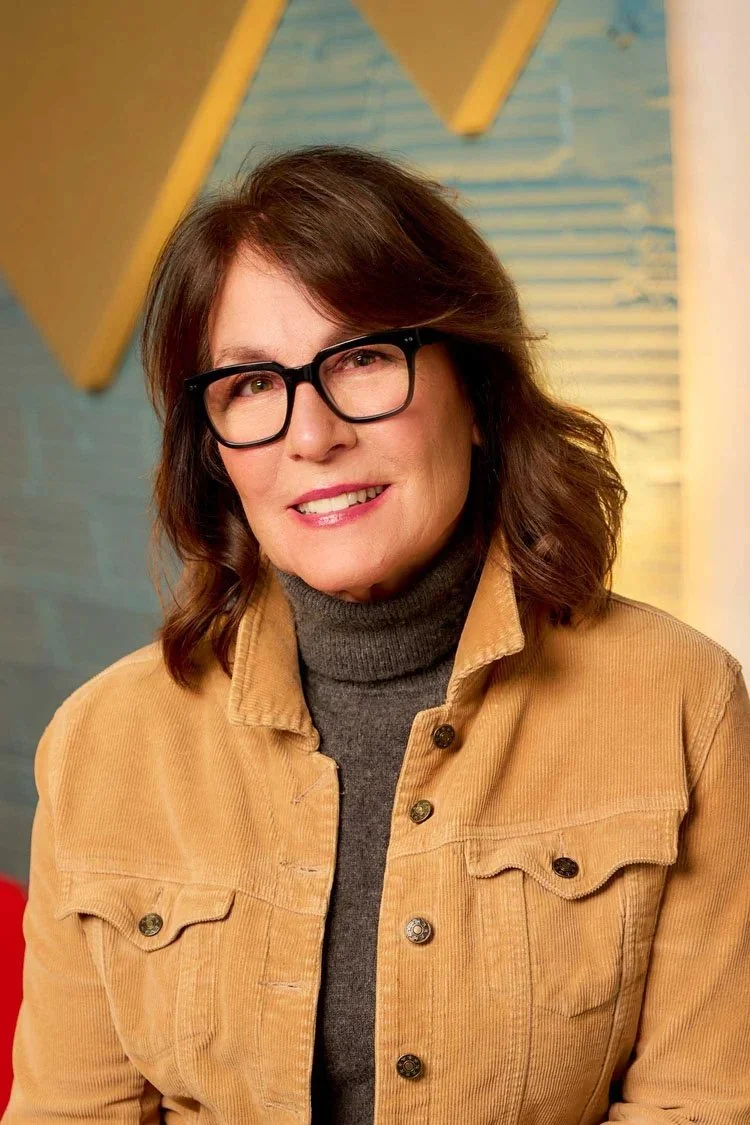
About Louise Woehrle
Louise Woehrle is a passionate storyteller whose mission is to shine a light on stories that need to be told with the hope they will serve as catalysts for change. In addition to her work as a documentary filmmaker, she is an Emmy regional award-winning Executive Producer (Grandfather’s Birthday), book publisher/editor for Suicide Survivors’ Club - A Family’s Journey Through the Death of Their Loved One - awarded first place in the Midwest Book Award, and co-founder of the Collaborative Theater that produced an award-winning all-women original play, Women: Scenes From Life.
Several projects Louise has led have received awards, aired on broadcast television, and woven their way through many nonprofits, educational institutions, and organizations.
Awards and Highlights:
Several "Best Documentary" awards for "Stalag Luft III - One Man's Story" (2019)
Midwest Book Award - Publisher
Regional Emmy Award for "Grandfather's Birthday" (Executive Producer, Casting) Tundra
Films
"New Producer of the Year" for an all women's theatrical production
Special Screenings and "Best Doc" awards for "Pride of Lions", "Critics Choice" for an all women's theatrical production
Resources:
Visit the Whirlygig Productions Website here
Visit Louise Woeherle’s LinkedIn Page
-
Louise Woeherle 00:04
If I'm going to invest this kind of time in my work that I care passionately about, I want it to count. I want to. I want it to serve in a larger way than just me making art. I want it to have a greater purpose, you know.
Mark D. Williams 00:29
Today in the Curious Builder podcast, we had Louise Worley on, and we had a really good time. And I mean, this is going to be a little bit different. So, Louise, I met her at the Misa Hus Artisan Home Tour. Her son was playing guitar for me, and we just got talking about the storyline of Misahuas, and she's a professional storyteller through the art of filmmaking. And I just thought it would be really interesting, regardless of what you do for a career, to think differently about how you market yourself, how you come about your craft, honestly, how you even think about yourself. It's going to be a very deep episode. Without further ado, here is Luis Worley. Welcome to the Curious Butter Podcast. I'm Mark Williams, your host. Today we are joined in person with Luis Worley from Whirly Productions, a filmmaker, storyteller,
Louise Woeherle 01:12
Whirly gig, Whirly. He said Whirly Productions.
Mark D. Williams 01:15
Well, you know, you just got a new company.
Louise Woeherle 01:17
Well, there you go. It's a spinoff.
Mark D. Williams 01:18
You know, this is part of filmmaking. You just kind of run and gun. We met during the artisan tour. We had Misuhus on it, and we're in Misuus right now. Was it your was it your son that was playing guitar?
Louise Woeherle 01:29
Yes,
Mark D. Williams 01:30
and he's amazing. He was a friend of Nelson Devereux, who's my brother in law, and Nelson was traveling, and your son played, and so you came. Some of your family came, and you and I just got chatting, and here you are, a storytelling production filmmaker. And the reason I'm so I keep saying storytelling is this home, and you're going to be a very unusual guest for the podcast, which is why honestly I'm so excited to have you on. Is this particular home that we're in? Everything changed for me about building when I sort of went through this process, and to me, it's storytelling. I don't even want to sell anymore. All I want to do is tell a story. In your profession, I'd love. We're going to dive into it right now. Tell us a little bit about yourself. But what I want the audience to get out of this episode and from you specifically is, I think everyone has a story to tell, both in their business and in their personal life. And I think what we relate to in other people is the story that connects us. And how can they listen to your story? And what a lot of my questions will be around, like what what's your eye? Like how does how do you weave a story? Because I think a lot of people might get intimidated with this idea that they have to be a storyteller, but I think the audience architects are amazing at it. Designers follow a story; it's the client, and I think the audience is actually very well trained. They just don't know. They don't know how to put words to what they're already doing. And so, what I'm trying to get from you today is how should people think about their business and what they're doing in the framework of storytelling. So, that was in the back of my mind of what I was really interested. I want to hear about how you do it, how you film, how you create the stories, and I think that will come through in how you do it. But I'm trying to prep the audience to like why do they want to listen to you and what are they what are they listening for to apply it to their business.
Louise Woeherle 03:16
I think you said it perfectly at the beginning, and that is everyone has a story to tell? I think that people don't realize that they don't think their story is important enough. Maybe it's what's interesting about me or what I have to think. I find that interesting and you interesting, but I don't see that in myself. And I think for me, the reason I'm drawn to storytelling is because over the years of doing several films, documentaries, shorts, a lot of shorts for nonprofits starting out, is I could see the power and the effect a story, a human story could have on an audience, and with that comes the ability to, for self-reflection, and for them to say, "Oh, I can relate to that, or "That was really moving, or "I just really learned something. But in the process of watching a documentary, for instance, which are authentic, true stories. Those are the stories that I tell. They're human stories. I like to approach it specifically for the the story it is, but also I'm hoping that it has a universal reach, meaning it isn't specific to just one kind of audience. It may draw a certain audience, but I think that anybody who would see, for instance, my latest film could walk away having a new insight or maybe a little more hope or. New understanding. So, in terms of storytelling, I think it's part of the human condition. I mean, this goes back centuries.
Mark D. Williams 05:09
I mean, troubadours. For those who don't remember what a troubadour is, I mean, before we had written word or the Rosetta Stone or ways to track, I understand. Correct me if I'm wrong, but I think it was stories passed down through song, that's what Shubador was. They would they would tell your oral history in the form of a song because songs are catchy. I mean, even now I can recount songs or pledges like Pledge of Allegiance or things like that. Like I haven't said the Pledge of Allegiance in 3040 years. And the other day the kids were at a little conference thing, and all of a sudden everyone starts you know doing the Pledge of Allegiance or whatever, and like it comes back to you, and it's set to a rhythm. And so, like I do know that we are primed, as you mentioned, as the human condition. Like we love telling stories,
Louise Woeherle 05:49
we do. And I think that it's also a way to connect with someone to learn their story creates. First of all, I'm interested. I'm curious. I get to learn something about you, and it's meaningful. People feel like if you're interested in them, which I genuinely am when I do my stories, that you care, and I think that the story itself informs us as we embark on this journey.
Mark D. Williams 06:32
I think we also want a through line. You know, as someone who likely suffers from ADHD, and even this podcast. Thank you, audience, for staying with me. Sometimes it's like I don't always have a clear end where I want to go, and I'm sort of just chasing ideas, and that lead. There's some benefit to that. There's creativity in there, but a lot of times, especially if people have a hard time with all the energy, is we like a beginning, a middle, and an end. I mean, think of like the classic book structures or classic movie structures. There's usually, I'm sure, there's a sort of a blueprint, for lack of a better description, of like how you carry, like what's expected. And oddly enough, well, I think that's normal. Some of the movies that I enjoy the most are when they play with that, and they change they change it. And so sometimes, if you get too clever, you lose the audience. But I think for someone who loves, let's say, movies or like we're sitting in a home, like we love, I love home building. But like, if your story is creative and it changes it enough, it makes it interesting. Because a lot of times, people have, if they see something too often, they get they tune out. Like, what makes it special? And so, then, how do you stand out among the other sea of, in your case, 1000s of other documentaries? So, like, the story is captivating. But if no one will come to even hear the story, that's a problem too. It is,
Louise Woeherle 07:44
but you make a really good point. I don't follow a blueprint, so I never went to film school, and I feel that has really served me because there aren't boundaries and rules in place that I have to follow. My education was music. I studied music therapy, and I studied music my whole life. And so, music is, although it is technical, so much of it is feeling. And I would say that I was told by my instructors that I had feel. So someone might be more technically proficient. I wasn't planning on playing in an orchestra, you know, but you can't really teach feel. I think you can develop it if you allow yourself, but I just think great musicians and people who are very creative, sometimes yes, you have to have a structure. But I never start with a blueprint. I start with a vision, and what I call a nugget. So the nugget for me is what is if you had to strip this story down. What is this story about? Don't get too detailed. What is it about? What is it that you want to say? What is it you want to capture? And then you get to dream with that. You get to go. Okay, this is what it's about. What do I imagine where it could go, if you start on the right foot, which I feel is the foundational piece, then you start doing your research. You learn more about your subjects if you haven't already done so. In my case, I had before I embarked on this project, but you really have to develop that research because the more you know, the more you know what you have to work with, and the more directions you can go. But you always have to remind yourself, and it's really easy to get lost in the creativity of what is the narrative, what is the through line, and then the through. Line takes you back, and because if you if you get too far away from the through line, then you're going down rabbit holes. And how does that really serve the narrative? And the other thing I want to say and add to that real quickly, and it reminds me so much of home design, because you know there's these bells and whistles, like oh I went to this home and I saw this, or I went to this movie and I saw oh they did this really cool treatment and they did this and they did that. So I really stay away from watching too many other films and trends. I really look at, for instance, let's say there's a moment in the documentary where we need to breathe, because documentaries can be very talking heads, and I want to minimize that. It's like we can only handle so much information at once, so I like to insert lyrical pieces. Gives us a chance to breathe and to process and to let it in, and that is done through maybe some animation or visual effects. Music for sure is huge, and that really informs my storytelling too. So, anyway, I think there are so many similarities in my mind between the creating a home like this one, which is not a template at all. It is completely intentional and very unique. In the reason it is, is because you put so much. It's so clear. You put so much thought and collaboration into this. This is an has evolved. It's not a cookie cutter house at all. And so I try to do the same with my my films. Is I sort of like maybe you in a little way. I sort of have my style now of how I like to approach a film, and it would be lovely if someday somebody said, "Oh, that reminds me of documentary filmmaker Louise Worley. She does that. That's kind of her style. And you know, I don't. I'm not doing it for that. But I kind of have seen a pattern in how I approach.
Mark D. Williams 12:34
Well, that was going to be my next question. Actually, what do you are you aware? Because I think sometimes people have a style, but they're not aware of it. I think sometimes clothing is like a style, of course, but like I think a manner of speaking, or you know, Maya Angelou has that great quote, which actually has a large degree to do with the home that we're in, which is people forget what you say, but they never forget how you make them feel, and that was an emotion I was trying to elicit in a home, which is odd that a inanimate object could do that, and I feel like this home does that, and it was very much an intention. I think people we very much recognize there's people in our life that we we love, we feel comfortable, and there's certain people that you meet immediately, and you're just like I could hug this person, like you just feel I don't know, I don't even know sometimes to to quantify it or use words. Almost, it's I mean, look at me. I'm I'm having a hard time even describing it. There are just certain people you meet them, and you know, like that's my person. And our intuition, whatever those feelings are. I remember recently I I shared this stat. I think like 83% of communication is nonverbal, and it's the head nods, it's the body language, and it's one of the reasons. Actually, when I started the podcast the first year and a half. I only did interviews in person. Now to grow the podcast over the last two years, I've had to do more. You know, I want to. You know, we run the Smile Tour right now for or most of our regular Mondays, which is you know it was the West Coast, the South, the East Coast, and the Northeast, and then special guests like you that I can't help but bring in and just be in person. But going back to feeling, people make you elicit an emotion. Explain, maybe, are you aware of your own style, and if so, what is your style, and has it evolved in your career?
Louise Woeherle 14:12
Absolutely, it has evolved because I think the more you do your work, the more it informs you, the more you learn, the more you evolve, the more you know what not to do. Those kinds of things. But I believe, for me, I am really all about authenticity. You can't manufacture that. It has to be real, and if it's not, the audience is smart and they feel it. And I don't like anything to be just pat. Okay, cut to now. I know what's going to happen next. Now I know what's going to happen next. I I like. Prizes, and my work is very similar to what has been reflected in this home. Is and I'm saying this from my heart, everybody. I'm not marketing this house. I'm that blown away by it. And when you mentioned storytelling was a big part of your mantra, your mindset, your engagement with people-it is for me too. I love people, and I love getting to know this. I like peeling back the onion to get to the real deal. And also, you know, for me, I think the if there's no emotional takeaway from people: I have not succeeded. So,
Mark D. Williams 15:44
yeah, I mean, I think we connect with emotions in general. I mean, we're emotional people. Humans are made that way. We elicit feeling, and sometimes, like if you have no feeling, like I was actually describing a little bit, like the other day. I think this is accurate. Well, let me ask you.
Louise Woeherle 15:59
Yeah,
Mark D. Williams 16:00
do you like vanilla ice cream?
Louise Woeherle 16:02
Yes. Is
Mark D. Williams 16:02
it your favorite?
Louise Woeherle 16:03
No.
Mark D. Williams 16:04
Everybody says that. In that, you you thank you for answering perfectly. But we did not rehearse this, people. Yeah. The the point is, is I think the problem people make in black homes is that most builders try to appease everyone. Yeah. But in doing so, you don't delight anyone. I'm not saying you don't offend anyone, because but that was kind of the goal. But if you do that, it's kind of blah. It's not special. It's ordinary. It's great. Everyone loves vanilla. It's no one's favorite, and I think it is. You know, you could go with a specialized gelato. I love gelato, but there's a lot of people that might not like a hazelnut pistachio gelato. I love it. It's great. Little espresso knocked me out. Love it. Right. But do you
Louise Woeherle 16:47
have any?
Mark D. Williams 16:47
No, I wish I did. If I did, I would have already eaten it. But like you know, when we get unique, that's what makes things memorable.
Louise Woeherle 16:54
And you know what it is too? It's having the courage to have your own vision and be open to what. What I like to do is, I like to be open to other people's input if they have an idea. I never dismiss it. It's not my way or the highway. But if you're if you're doing your job as a leader, as a director, that's established that you're you're the lead vision person, but with that, if you're smart, I bring in the people who are best at what they do, because why wouldn't I? And I ask them for their input. What do you think? And it's it's such a beautiful collaborative, but you have to lead. You need to lay out a vision. That doesn't mean you filled in all the colors or you've you know, but you need to trust the creative process. And that's what people also say to me. People who don't understand how you do a film, which you know I didn't either at one point. There's again, there's no script, not with documentaries. You have you can have an outline. That's a good thing. Some people storyboard, but like I said, if you've done your research and you've got your pieces, this could fill out this documentary. You think you have your pieces, then you start, and something happens totally unexpected that leads you refines this direction. It kind of shifts course. Then you go, ooh, okay. And then before you know it, the project is taking on a life of its own. Then it's kind of leading you, and that's when you know you've done it. You're doing it because of that. If
Mark D. Williams 19:08
you're looking to level up your business in 2026 and beyond, the Contractor Coalition Summit is the place for you. If you've been a listener to the show, you know that this has been the single biggest factor in how I've leveled up over the last couple of years has had a huge, profound impact on my business, my personal life. It's what helped me launch the Curious Builder. In fact, our last one of the season will be another three, four-day event in Charlotte, North Carolina. All the details can be found@contractorcoalitionsummit.com I've mentioned this several times in the podcast, but there's a verse in the Old Testament, I think it's in Proverbs, where it says, "The people perish where there is no vision. And I keep thinking about that. The thing that has led this home to be so successful is very difficult. I mean, we'll do a podcast later with the whole team. Of this is one of the most difficult bills I've ever done, and part of it is a journey of self. Discovery, you know, and understanding what breaks, what doesn't work, what works. But where I'm going with this is the story. We created such a strong main character in Misa, and now I call it my fourth child. The story is so strong that it became the filter, so that when anyone had a question, they went back to like, what is the story? What is the character? And that vision allowed everyone to sort of make it their vision, and a little bit like you, you know, I in some ways I think this has been a superpower. I can't really do anything from the standpoint. Like there are people in my life that you know they're like, well, Mark can't actually build. That's true. These calluses are not from working on your home. That's not my skill set. Everyone has different skill sets. There's no really right or wrong. It's just taking your skill set and maximizing it. But I am really good at trusting other people that are very talented, and like yourself, surround yourself with a lot of talented people, and then give them a vision. Be their cheerleader, and let and then the home is 100 times better than I ever could have imagined it because it's everyone's shared vision, and I think that's really what leadership is. That's what sort of that strong vision of a story can do. And so, anyway, it's very gratifying. And I've you mentioned you gave me a nice compliment before. You know, from a storytelling standpoint, I didn't realize that's what I was doing until I was about halfway through it and sort of done. It's kind of like you don't as you're creating and innovating. You get to the end and you look back and you're like, "Oh wow, okay. It has way more significance because at the moment you're just you're to the grindstone. You're creating something, but you honestly we didn't know what we were creating and not in its full totality.
Louise Woeherle 21:35
No, and you don't. And at the beginning until it starts to morph, and I love what you said about the vision and the team. When the team feels like they're being respected for what they're bringing and they're appreciated, there is a level of investment they have. Then, so they're not going to cut a corner just to get out of the job a couple hours early, they're gonna hang in there and get it right because they see what this is. And now, me as the buyer or an audience member, they may never notice, but my people do. And I don't know about you, but I am when it comes to this stuff, I am like very Type A and a perfectionist. Now nothing can be perfect, but and I try. I know that about myself. Like when I sit with an editor, no. Can you just cut off a few more frames? Frames can stretch. stretch a little more, a little more, and they'll go, and they do. But I always say, I please forgive me, allow me this, because I'm not sitting there moving the buttons. You are, and it's it's been wonderful. And as long as you respect them and their time, and I haven't. It's unbelievable, but I feel so blessed and so lucky that I have been able to work with people who are just wonderful people, and they get to know me, and we're like a family, and it is like a child. And I always kid people. They'll say, you know, I just get finished with a film, and then you go on the festival journey for about a year. And people will often ask, "What's your next project? And I always like to say, "Well, I feel like you know I've been working on this one for three years. I feel like I just had a baby. And it's like, when you're going to have your next kid? Can I have a minute? Let's just enjoy this for a while. And and I also feel because I'm an independent filmmaker like you, in this way, I made this film without an end buyer, distributor. That's a whole nother thing. But what I did have was it's the first time I've made a feature documentary where I haven't had to raise the money myself. It was based on my previous work, and the people who came up with the funds were from one was from here, who was my executive producer previously on my last film, and he gave me the startup funds to get the pieces together in order to pitch this, but they were all from Charlotte, North Carolina, where this takes place, and they believed so much in the subject matter that they wanted to get involved, and I did it all through a fiscal sponsor. So I don't owe anyone any money back. What I did owe them was a film that I promised them and their trust. I didn't want to betray that in any way, and they've been a part of the ride, and they've been. To enjoy this film along with me, and that's the other fun thing. Because, and then it got on PBS, and it is on PBS now nationally. So check your affiliates if you want. What's the
Mark D. Williams 25:11
name of it?
Louise Woeherle 25:11
A binding truth. And anyway, I think that I guess where I was going with that is, you know, we all have our our methods and our process, but I think the point I wanted to make, and I kind of went off track a little, is the process informs you. Like so, when people say, "Well, I don't know, I don't know, I just say trust the process. So that's what I've learned is I have a process that I can trust because I know where I need to start. I know where I need to research. If I don't, I find out who. That's the other thing. You've got to, and I love what you said. These hands aren't the ones that are pounding the nails. Mine aren't either, and yet sometimes I do contribute some stuff, but I give that over to the experts in those areas. But I think that by trusting the process, you you make your discoveries, and you don't put up these strict guardrails. And yet you've got to remember, and like building a home, there's a budget. Okay, so do I want to spend more money doing this, this animated piece, or augmented reality, or green screen stuff that costs money, or do I want to maybe cut back and figure out another way that I can do the same thing. Well, the fortunate thing about this last project for me is there was a significant amount of money raised, so I got to play in the sandbox, and it was really fun, really fun to not stop myself.
Mark D. Williams 26:58
That's funny you say that. So a lot of things. What you're saying, it's so related to this house. For one thing, I think you know you're on a journey of self-discovery. Imagine the story opens up for you as you're filming, or you know, we can talk a little bit about the nature specifically. But I was thinking about the freedom of financials, and you know, I have a business partner on this particular project, and I've given them a lot of compliments from the standpoint that this has allowed me to be the most creative and unique way to go through this because I didn't have the guillotine over my head of always constantly worrying about the money being raised. It wasn't that I wasn't frivolous with it or wasn't mindful of it. I certainly was, but it was more about the freedom and creative expression of what we were trying to achieve, and you know we obviously still have to sell the home at the time of this recording. We have several people interested, but it's not quite there yet. Yeah, and we're getting really close. But that's not even the point. The point is it's already been a success from my standpoint because it's completely. I've kind of mentioned that the Kiers Builder at year 18, I was burned out, and I started the Curious Builder podcast, and that made me fall in love with entrepreneurship again. Just talking to other business owners and understanding that we all ultimately go through the same sort of cycles of stuff. But Misa Hus made me fall back in love with building again. And how do you put a price on that? Because this will add another 1015, 20 years to my career because I found a new way to sort of evolve and do something differently. And you know, you mentioned a little bit earlier about like what your style is. I would imagine like your earlier films have a different style or different care because you evolve, you get more talented, you're open up to newer. It's just like life. I think you just continue to keep on evolving. And if you don't, I think that's why you need to keep reinventing yourself. Why curiosity has to be such a important thing because it leads to self discovery. And I don't think I think you can be 100 years old and still discover new things about yourself.
Louise Woeherle 28:51
Oh, it's for sure. You know, I look at my life now. My kids are grown. My son Luke, the guitarist, has a little boy. I'm a grandmother for the first time, he's 15 months. My other son is doing well. He's an entrepreneur. I have the freedom now with nothing really tying me down, and I started this when my kids were little, and it's a lot. And yes, you do evolve, but isn't it like anything else? And I think that's what music taught me: the hours and hours and hours of practicing alone, and there's no shortcutting with music. If you either can do it or you can't, and and so I think what that discipline taught me was that whatever it takes for research, for editing, for hours and hours, I could never put an hourly wage on the amount of time, nor would I expect to. Nor would I say feel sorry for me. I get to live my dream, and like you, I was very conscious of my. Finances, and I really had to say, okay, if we're going to try this and it doesn't work, then I can I fall back on this. You're always thinking of who do I need to pay, how much do I need for my safety, how much further can we go, and so that's a whole nother business side of it. And I think that has evolved as well. I've gotten more savvy, you know. I kind of
Mark D. Williams 30:25
one of the things that I'm curious about, and you'd mentioned it a little bit. That one of the first things you start with is that golden nugget or that vision, like what the through line is. A lot of times we want to know the how, and I had Jude Charles on. He was a documentary filmmaker that really specializes in documentaries for builders and designers, specifically in that field, and he loves to start. You know the why, and it's obviously a very popular discussion. I'm curious, like, what is your why, and when did you discover what that is? Because I think that comes to different times in people's life. When did you know, like, your why?
Louise Woeherle 31:02
What a great question. Okay, so I got divorced when my kids were nine and five, and it was the most brutal time of my life. Horrible, lowest of lows, and my faith is very important to me, and you know I had love around me. I'm sorry, I'm getting emotional, but I had been I'd studied music my whole life. I went to the University of Minnesota for music for music therapy, and then I realized I needed to get a job, and I was disinterested in the U. It was too big for me, so I started flying as a flight attendant, saw the world, and was doing theater on the side and on-camera stuff on the side. That wasn't really my calling, and then I did experience creating my first theatrical production with my good friend, and it was all an original play. Long and short of it is, it was the first time that we had I'd had a vision. I shared it with this friend who was very talented, and together we created a play. All women funded it through first time I ever did the fiscal sponsor deal. Funded it that way, and the reason we wanted all women is we wanted to give women an opportunity that they weren't getting because it was a very dominated male-dominated field at the time. Anyway, it turned out that it it was a lightning rod, and it got critics' choice, and we got producers of the year. It was crazy, and so
Mark D. Williams 32:51
was this nationally, locally, locally. But they,
Louise Woeherle 32:54
but then it was talk of should we take it to New York off Broadway? It was called Women Scenes from Life. Jack Ruler at Mixed Blood Theater said, "Can we put it up here? What did you guys do? Like, how did this happen? And really, it was because it was coming from a genuine place, right? That we wanted to provide opportunity for for women, and we wanted the story to represent women from all socioeconomic diverse walks of life, and so you ask, where did this start? I think that's where the seed was planted, and then when I got divorced, right before I got divorced, I did a little film for my dad with just a video camera. Like my brother had a video camera. I didn't know what I was doing. He even did it. He set it up with my dad and his twin brother, and it was their birthday. And so then I needed to put it together after we filmed it, and I had photos and everything else. And I went in all organized, and my brother gave me the name of a little production company. Why don't you try that one? And they said, "Sure, we'll help you out. And when I went in, the woman who owned the production company said, "How long have you been a producer? And I said, "I'm not a producer. And she said, "Well, you are. And if you ever want a job, I would like to hire you. The divorce happened. Got a job. I learned how to do this stuff? Write, direct, write up pitches-the whole thing. They weren't films I wanted to do, but that was my learning ground. It was like I got a degree. It fell in that until I was ready to go out. Well, in the meantime, I met someone who was a marketing person, and she said, "We should all come up with a mission statement, and I said that's a good idea. So this was at a time where I'm starting over. What do I really want to do? And so I have a mission statement, and it holds true to this day, and it's telling stories that help us see our. And others in new ways, promote healing, and connect us as human beings. And that has been, if you want to say, what is my blueprint? That's the blueprint. So those are the films that I do. If I'm going to invest this kind of time in my work that I care passionately about, I want it to count. I wanna, I want it to serve in a larger way than just me making art. I want it to have a greater purpose, you know. So I feel like it's my calling, and I feel just so lucky that I get to do it, and then I've had the opportunity to do it. But if if that hadn't happened in my life, that horrible time in my life, I wouldn't be doing this today. So through
Mark D. Williams 35:52
why is that? You wouldn't have had that kind of like the jump off the dock, or kind of like the push that you.
Louise Woeherle 35:58
Yeah, I would have been a wife and mom, and and you know, not pursued my dreams. Yeah,
Mark D. Williams 36:05
the reason I I bring it up because I wanted to know is we have a series on Thursdays called "Losers Are Winners, and the whole point of the series is I have owners come on and they only talk about their losses, and the whole point is is I kind of believe now at this point that well for sure, we lose. We we learn more from failures than success. Think about little kids when they like. We as very controversial move as a parent. We didn't. I didn't like the way they looked, so we never did baby gates. Every one of our kids fell down the stairs once, but only once. They learned. They learned. They all fell once. I was like, oh, they didn't go paralyzed. That would have been bad, but and I maybe not the best parenting advice, but they definitely learned. They learned, and like I think about like burning your hand, or like I had the scar on my on my thumb where I was whittling the wrong way with a knife as a kid, and I you know stabbed myself with a pretty big knife in my and it just I remember the blood just squirting out. Well, I have never carved backwards with the knife
Speaker 1 37:03
since you
Mark D. Williams 37:03
know I learned that lesson, and so I those are silly little things. But I do think in business, like when you make mistakes, when you when if you get in a lawsuit, if you have a difficult client situation, marital conflict, friends conflict, everything is a teachable moment. And I have a there's a gentleman named Tony. He's our HVAC. He's amazing, but he every time he answers the phone, he goes, "Every day is a school day. How can I help you? Not a new day, a school day. And I love that attitude.
Louise Woeherle 37:29
Oh, it's so good. He's
Mark D. Williams 37:30
like, "I'm learning every day, and I'll ask him something. He's like, "Well, I've never heard that before. And although I do have a reputation that a lot of people, when they answer the phone after I get done, they're like, "Well, I've never been asked to do that before. So I evidently I have that effect on people. But going back to the original statement, which is, don't be afraid of failure. I think fear. I think fear is the thing that we need to overcome. Yes, because you think about, and I think we're all succumb to it, even if some of us have a thicker skin or shell to it. Is that you know when when something passes and you're done with if you either dealt with the fear or you addressed it, it's you know horror movies. The scariest thing is it's the music and it's the unknown. As soon as you see the monster, it ceases to be scary because your mind makes it way scarier. Yeah, but that's true of life in reality. Yes, and I can think of several examples around business, bankruptcy, things like that, where when you you know kind of like that old adage, "Name it to tame it. You know, when you address it head on, it sort of loses its hold over you. I think it's true in life, our personal relationships. It's certainly true in business. It is.
Louise Woeherle 38:31
It is true, and of course, yes. Through the process, has I've evolved not just as in in an artistic way, but in business, that yes, lessons have been learned. What do you do up front to make sure this doesn't happen? What agreements do you need to have in place? Things like that. Those are things you learn as you go, and hopefully, you know, you get through it. But I think fear is the thing that stops a lot of people, but at the point I was at, I'd already been through the scariest thing, and I thought if I'm going to dedicate my life to something, I don't want to just not just get a job, but I was a flight attendant, and I didn't want to just have a job anymore. I wanted real meaning in my life, and also to tap into my potential, because it was always there, and I'd always achieved what I wanted to when I tried. But I think when you're in a situation, in my case, a marriage that was kind of chipping away at me, I had to take that into my own hands and figure it out, and I'm so glad I did. And I think my kids are are happy I did too. But I think through that doing that, I also ignited on. Entrepreneurial in them, so they saw that mom started over. I was 40, and starting over, and that's a positive thing. It's don't be afraid to step into your own light, your own passion, and it's like my dad would say this, and it might come off wrong to anyone listening, but to me it makes sense. Do something, even if it's wrong. And what he meant by that was, don't let fear stop you. Just do it. And if it's if it wasn't the right move, it's going to teach you. And I think anytime we think we have all the answers, that's not a good place to be.
Mark D. Williams 40:44
No.
Louise Woeherle 40:44
And the older I get, the more I realize how much I'm learning, and so much of documentary filmmaking too, by the way. And this has taught me a lot over the years: is listening. Because if you're not listening, you're not gonna get the good stuff, but I also like what you said about the intuition and the connection and creative people when they get together. Especially, it's just fun.
Mark D. Williams 41:20
This episode is brought to you by Pella Windows and Doors. I've used Pella for 21 years as the exclusive window company on every one of my builds. When people ask me who I trust for windows and doors, it's Pella every time. Their craftsmanship, their innovation, the top-tier service make them a no-brainer for any custom home builder or designer who demand the best. Whether you're designing something bold or building something with timeless elegance, Pella has you covered. They're also the only window company that has a lifetime warranty on all of their windows. I've gotten to know all their people at Pella Corporate as well as locally here at Pella Northland. I'm proud to call them our partners and our friends. Visit Pella.com to learn more and connect with your local reps today. Also, for more information, you can listen to episode one where I interview their founders, as well as episode 109 where we talk about the innovation at Pella. I I 100% agree that you can have your cake and eat it from this standpoint. That you can surround yourself with amazing people that you like to work with, and I think it's find your find your people, find your magnets, find the people that attract. And I we had the video hasn't aired yet, but you know, shout out to Melissa Oland from Ohio Interiors and Carl Adelbert from KA Designs here who worked on this home with me. I didn't pick them because they were the best architectural designer, or that Melissa was the best interior designer. They're very talented.
Louise Woeherle 42:39
Yeah,
Mark D. Williams 42:40
but that's not why I picked him.
Louise Woeherle 42:41
Why'd you pick him?
Mark D. Williams 42:41
I picked him because Carl is my neighbor in Minneapolis. He's how I got into ultra running. He knows me extremely well personally, and I knew that this-if I was the main character in the story of Misahuas I need someone who knew me personally, and he knew me better than anyone else that also happens to be an architectural designer, and then secondly, I picked Melissa because her warmth of character. I said, "Left Carl and I left to our own. This will be a dubro cave. You know, be great for Batman and Robin, but you know, no one else is going to live here. You know, it's going to be modern. It's contemporary. Mike, my my clients, I've always related very well to women, probably thanks to my mom as an interior designer, but also realizing that most of my clients, you know, stereotypically, the woman makes the majority of the decisions in a home, and you know the way it feels. Men are, you know, the hunter and gatherers, or the hunter, sorry. And from a just not that some men aren't good stylistically, but really they're deferring. I had one designer that said, "Happy wife, happy life, and so you know, yeah. And so, and men, I love it when couples share in that responsibility. But as a stereotype, it has been mostly true that they're much more invested in like you know the fabrics and how the home feels, and mainly because women are probably more empathetic than men as a general rule. Well,
Louise Woeherle 43:58
and it's their it they bring cozy to their family and their world, and some are very good at it, and others want to be good at it. But they know how to turn to someone that can help them achieve. Again, maybe they aren't doing it themselves, but they get a designer who can understand them and bring that to life for them.
Mark D. Williams 44:20
It's those. Don't be afraid to be the star in your own story.
Louise Woeherle 44:23
Yeah,
Mark D. Williams 44:23
and that's really, I think, a talented designer. I think they bring their talent, but it's really any home that I've ever built that people love. Yeah, it's because it was the client's home. We get credit for getting their story out. Yeah, this home, the story character just happens to be me. Didn't have to be. That was just how we chose to go through it, and so going back to why I chose Melissa is just I told her she's such a lovely, warm. If you're going to spend two years with someone, you better pick someone that you want to spend time with. And I often tell my clients that you know if you don't like me, I don't think you should pick me as your builder. I mean, it sounds like an obvious statement, but you know why would you choose to work with someone as intimate as a. Process as this, and I go to your career. I don't know much about it, but like look at movies. Like you look at some famous directors, like a Quentin Tarantino or like a James Cameron. They have similar or a Martin Scorsese. They have a lot of actors that show up in all their movies because they know that they can trust their vision to that actor to like bring like Leonardo DiCaprio is in like half the Martin Scorsese movies, I'm sure they've developed a relationship that a they enjoy each other, b they both trust each other as artists to bring out the best in each other. And I would imagine as you're going about choosing your story, you're probably thinking a lot of like, is this a story I want to tell? What's my why? What's my vision? What's my nugget? Yeah. But also, is this person someone that I think I can get it out of? I don't know. I'd be curious to hear. Like, when you have that vision, how do you know if the person you're going to do a story on is someone you either want to work with or feel comfortable working with? Not the team, because I know you can assemble the team. Yeah, yeah. But more the subject matter.
Louise Woeherle 45:58
Well, I think that's where it's like you know we hear a lot about doctors and do they have bedside manner, and I think it's my job as the director working with the subject to in this in my in the documentary world for me to for them to trust me. So I have to establish trust a relationship. I need to be authentic, and not bullshit them, and not tell them what I need. But one thing I do do with my and so so if I see that a subject, for instance, is reticent of really opening up, and we've been at it now a while. Let's just say that
Mark D. Williams 46:39
is this? Would this be on camera, off camera. This would be
Louise Woeherle 46:41
off camera. Okay,
Louise Woeherle 46:43
so I'm interviewing him. I'm not. They're not going there. I'm trying to take the horse to water, but the water horse doesn't want. Are they aware
Mark D. Williams 46:49
of it? Are they actively resisting the bit?
Louise Woeherle 46:51
I think they're not aware of it. I think they're just afraid, or they aren't. It's not a natural state for them. I mean, my gosh, this is the first time they've ever been on camera and being filmed. This is their life, and so what I I do I have done because I think it's respectful is I'll say, hey, we're doing this right now, and your story is so rich because I know what your story is, and I'm sure there's things I don't know, but you-if we don't get to a more vulnerable place with you, then we're not getting what we could get for this story to be great and to really touch people. But you have to be willing to go there, and and I hope that you can because your story is that good and it has that much impact potential. So I hope you can work with me, you know, and allow yourself to go there. And they go, this one case, oh, I got you. Okay, then all of a sudden, switch went on because they knew this was bigger than them, and I find if people know that this isn't just about them, that their story can impact others in a way that's really positive, then they're invested. They get it from a different perspective, and it kind of unlocks something in them.
Mark D. Williams 48:23
I think it's funny you just touched on one of my favorite topics and something that I'm very passionate about, which is I think the strongest phrase that's also the most underused phrase in the English language or all languages is "help me. Yeah, and I think two things happen if you if we're friends and now we are. If you ask me for help, it takes you have to submit to ask for help. You have to admit either can't do it or you need help. But what we often forget in that exchange because our pride, our ego gets in the way of asking for help. But what we often forget with our friends is we're empowering the friendship by asking. We're giving them an opportunity to serve us. Yeah, I don't know what your faith is. You mentioned it, but like Jesus washed the disciples' feet. He got down on his knees, and it was an act of humility. And as a younger man reading that, I didn't totally understand that. I realized that serving other people is extremely powerful, and you feel like my wife went into healthcare because her dad English was not the first language. She felt that as an interpreter her whole life, she felt like there was a language barrier. That there are people out there that couldn't advocate and help themselves. So her calling is to help other people that can't help themselves, which is really powerful.
Louise Woeherle 49:39
Very powerful.
Mark D. Williams 49:40
And I think when we ask people for help, it could be in a business setting, a personal setting. But if someone calls you when you're off this this call, and for sure, I mean, we know like our family and our your son. If he called you, you'd be there. You would shut off this podcast and you'd be out the door, right? But like, if someone just it's the random call, hey, Louise, would you ever sit down with me? I just want to chat with you. To be there or not, you can hear it in the voice. You know, there's something in you as a human. So anyway, I, I just love your what you touched in that individual. Sounds like was he realized he was either helping someone or he was called. But that goes back to the vision, the story, a common rallying cry. It's unifying.
Louise Woeherle 50:16
It is. It really is. You're not in it alone. You need each other, and I love it when when people show up and are willing to go there. It's oh, it's just so gratifying. It's just you know when you've got things happen organically. It's not manipulated. That's what I'm trying to say.
Mark D. Williams 50:39
Yeah.
Louise Woeherle 50:39
So I'm not going to sit there and tell him what to tell me. I have an idea of what might be in there, but that would make it inauthentic, and it wouldn't come across right, and I wouldn't feel good about it.
Mark D. Williams 50:53
But that's also kind of the joy of the discovery, right? I have to imagine behind the camera as you're watching it unfold. Yeah, part of the joy is like watching the plant sort of open up-it's
Louise Woeherle 51:01
the best. It's so gratifying. It's so rewarding. I can't tell you, and I can't. The other thing you ask, "What is your faith? I am a Christian, and before every project, God is a part of every project I do from the very beginning. So I don't do. I enter this in partnership, and the goal is always just help me not miss anything. Guide me. It's not tell me what to to say. It's really for me about capturing the truth of the experience. It's in the truth. I'm all about that, and and the you know the truth shall set you free. Truth is a powerful tool in terms of, or not tool even, but just if you if we can tell the truth, then people it's it connects us with people in an authentic way, if we're masking that truth with pretense or saying what we think we should say in order to give the right answer and be accepted, it's just you know.
Mark D. Williams 52:12
I think one of the first things that happens is when you because we and we use the word more and more. I know I use it now a lot. Just being authentic, like the interviews. Having done this now for three and a half years, the interviews like I honestly don't care what we talk about as long as it's real, because I mean if you're listening to something, you want something that's real. Then I like a good story and and all that, and that's all great. And I think you can have both. I think you can have a great story, and I mean, obviously that's the the power combo. Yeah, you know, it's a great story and it's real and all these wonderful things. And like, who doesn't want to be entertained? So like, I can handle that too, but like real life, real conversations. The older I get, the more I like these one-on-ones. I didn't realize it at the time. My wife is very introverted. I'm very extroverted. But the podcast setting is a very introverted setting in sense, in the sense of it's one-on-one. There's not a bunch of other people. It's just a conversation between you and I. It's
Louise Woeherle 52:59
not performance.
Mark D. Williams 53:00
No, it's not.
Louise Woeherle 53:01
No, it's a conversation.
Mark D. Williams 53:02
Yes,
Louise Woeherle 53:03
and I think that for me, in terms of this project, so a binding truth is my is it? It's Misahu's. Is my Misahu? It's for me. It's I don't know if you feel this way with your homes, but you get to a point where you go, I could still do maybe tweak that, or I could, oh, I could probably tweak that a little bit. But at some point, you just have to say it's good. We're there, and now that it's there, and I've done three different versions of it. You know, I had a an hour and 54 minute. Well, that was the first one, and I did that for the the man in Charlotte who was doing the fundraising for me because he was so eager to share it with other donors, and and so we did that, and then I did a 90 minute version, which is the version I wanted, and then we festivaled that, and the response was incredible, and we won awards and stuff, and it was a great feeling. Just like when you submit for awards, it's not what you. That's not why you're doing it, but we do it in the film world because it it's just kind of some cachet, you know. Oh, it won some awards. Oh, best documentary. Oh, cool. And so, and then what that does then it really helps with, for instance, getting PBS to pick us up, you know. Oh, but then I had to cut it from a 90-minute down to a 50-seven minute. So it there were these major steps.
Mark D. Williams 54:31
It is so similar. I mean, there is so many similarities to what you are saying. I think now for the last two hours, Lee and I, who you met on the way out, were submitting for all the awards for this fall, which is really funny, and you're right. We just happen to we. You don't really do these things to win it. I think honestly, even the Olympics. I don't think runners run to win the gold medal. I think they run because they love running and they love training. They love the pursuit. I think if you are so focused on the goal that you lose sight of the journey, like you've sort of lost. It's an empty thing, and everyone has to discover. On their own, I'm not saying I haven't gone through that incorrectly. But the end of the day, like I've you know, I can't know if you can say this, but I know I can. I've I've never been bored in my career. I've been tired. I've been you know spent difficult, all those things, but like not boring, never. And so because you pursue something with honesty and with integrity and with full effort, I sleep like a baby. I'm tired. I'm exhausted at the end of the day because I'm I'm giving it everything I've got.
Louise Woeherle 55:24
Yeah.
Mark D. Williams 55:24
The balance is is like how do you give your passion in your in your life to something that you believe in, but realize too that like you also have to lay the hammer down. You know you got to you got to be with your family and with your kids, and you have to go to those sources that give you the inspiration.
Louise Woeherle 55:38
Yes.
Mark D. Williams 55:38
So anyway,
Louise Woeherle 55:40
it's very grounding. I'm so grateful for my family, my kids, my close friends, people who care about me and me them. But I don't know about you, but I'm not an extrovert. I'm an introvert. I can behave like an extrovert when I have to, but then it's like I'm exhausted. You gotta
Mark D. Williams 55:59
recharge. Well, this conversation, if it's one on one. Will this recharge you, or does this take energy for you?
Louise Woeherle 56:05
No, this is what I like.
Mark D. Williams 56:06
Yeah,
Louise Woeherle 56:07
and if like a dinner party, four to six people max, because I don't have, I have a little bit of that ADD going on too, and so it's hard for me to filter out anything, and I kind of take it all in, but anyway, getting back to I knew that when you said I want to have you on my podcast because of the storytelling thing we have going here, I thought to myself, "Oh my gosh! And I don't know if I've said this yet, but I have two audiences after a film festival. I have related making a film like building a house, and I used to say before I thought about it more deeply that you know you need to have a strong foundation. But in that, I don't mean just the cement or your foundation pieces. It's really you have to have a strong vision, and it's like what you said before. Then you get people together, and then you've got the expert who says that's a great idea, but did you know that this is going on and that would interrupt this? And well, the same with me. For instance, I'm going to give you an example, and maybe some of your your audience will relate to this with their projects, even though it's a film. So there is an app in Charlotte, and I learned this from Dr. Willie Griffith, who is the head of the Levitt Museum, and it's he's African American, and there is an app called No CLT K N O W C L T, which is Charlotte. And he says, you know, if you go around the city, you can go to places throughout the city where the Charlotte, the black community, Charlotte was torn down, and now there's a highway going through, or businesses, or whatever. So what we've done is we've put where those historical buildings are, or whatever it is, a park or whatever, on this app, and you go to the footprints, the green footprints on the sidewalk, and it'll get you there. And then you put your feet there, and you hold your camera up, and then all of a sudden, the image of what had been there appears.
Mark D. Williams 58:22
Oh wow, that's pretty cool.
Louise Woeherle 58:24
I know. So when he told me that, I'm like going, "Oh man, how could we do that? Oh, that's so cool. So I had my guy in Charlotte go around and take show me what was popping up at these different locations. Well, one of them was Second Ward High School, where our central character Jimmie Lee Kirkpatrick went to an all-black school in the '60s and played football, and he was an amazing football player, football star, a phenom. And that school, he loved that school, but he had a chance to go to Myers Park, which I equate to this very similar school I went to, like Edina High School at the time. Now there's many other schools that have surpassed Edina in terms of they're just they're wonderful. But at the time, Edina back in the '60s, if you went to that school, you had great workout gear, great fields, great everything. Okay, he had a chance to go to this school, and there was a little window where he could he could go, and it was his senior year, so he does. So that's part of the story. I'll leave them hanging there to see what happens after Jimmy transferred. But anyway, here's where his old school stood. It was long gone now, and it pops up on the app, and there it is. So I say to my team here in Minneapolis, who, by the way, incredibly talented people. They can match anything, in my opinion, that LA can do. And I said, can we incorporate the image, and can. Jimmy and his son, when they're looking at this app and the school, step into then the reality they're in front of the school. Yeah, we can do that. I said, "Oh my gosh, okay. Well, here's what experience taught me at this juncture in my career. I thought to myself, I'm not just going to lay this on my DP and the other camera guy in Charlotte. I want to talk to my guy who's doing this virtual reality and my visual effects in Minneapolis. Let's have a meeting. Let's all talk. Let's get a game plan. If so, we don't have to do it over again and waste a whole day of shooting or half a day of shooting. Let's see exactly what you need. So we all got it, and he had a storyboard ready. Okay, guys, this is what you got to do, and you want to shoot it from this angle, and if you want have this tree in to do, and he went through everything. And because these guys are so smart and good at what they do. You know that when we shot that, it turned out perfectly. We gave them everything they needed to create this virtual reality. It was amazing. But what I learned in that moment was, don't be afraid to to try something, because even if it isn't that something that you're envisioned, you've envisioned, it could end up being better. And the other thing I've learned is sometimes when there are budgetary constraints, it forces you to be more creative, and in the end, it's better. So I think what's so fun about talking to you today is that the creative process in building something from nothing, in creating something of beauty, and meaning, and love and wonderfulness-it's just so great. And don't stop yourself because you think, "Oh, I can't do it, or whatever. Well, at one point, any of us have probably thought, "How am I going to do this? You you figure it out and trust that.
Mark D. Williams 1:02:15
Agreed. I mean, I think you know, going back to the very beginning, a blank piece of paper is very difficult to design from, write a movie from, do anything from. I mean, you have to start with something, and that's where I think the vision. I mean, we used to have this age-old question that I used to torment my cousin with, and maybe I'll ask you this: There's no right or wrong. What is harder to dream or achieve?
Louise Woeherle 1:02:40
I think to dream.
Mark D. Williams 1:02:45
Why?
Louise Woeherle 1:02:47
Because we're afraid that we can't. It, I, it's not important, or it's it wouldn't happen anyway. And I need to be practical.
Mark D. Williams 1:03:00
I agree with you. I mean, I've often contended, even in middle school and high school, and we used to have this age-old debate. And my cousins hate this conversation. That's why it was interesting to ask you. I haven't asked that question in decades now. But the reason why I think it's harder to dream than to achieve is how can you achieve something if you haven't dreamed dreamt it? You know, the little kid who's throwing up. You know, right now the World Cup is going on. Yeah, you know. Right now, my six-year-old is in the backyard with a soccer ball, pretending he's Messi or Mbappe or whatever star he wants to be. And then, you know, when it's hockey, it's the hockey players or Michael Jordan or whatever. It's like you're dreaming, you're you're visioning, and so like I think it's I think it's wonderful, and it should be encouraged to have a dream phase state where you think about like what does success look? Ask anyone listening to this, including myself. Like right now, it's a great question. Even if you've done it before, you should do it again. What does success look like? What does success look like in your business? What does success look like as a parent? What does success look like as a spouse, as a sister, as a brother? All those things, and spend some time thinking about it because I think that whatever comes from that thought process is worthy of your attention and your effort.
Louise Woeherle 1:04:09
I love your thinking; it's so true. Those are just fundamental good tools for life, and I think what this conversation is why it's so fun for me is that this is light. It is does art imitate life? Does life imitate art? It's like if we are in this place of intention and using. I like your tools. That you. What is success? Is it harder to dream, or it get it gets us thinking? And for me, when I was going leaving my marriage and starting over, going, I want this to count. Whatever I'm going to do, I want it to really matter. I was at that place in my life, and I got I could have gone more the safe route and gotten a. Conventional job, and I did get a job, but it didn't pay much. But I learned a lot. I just wanted to believe in myself and tap into. I believe the other thing is, and I think everybody has gifts, and it's to recognize what are your innate gifts, and how do I honor those? How do I build on those? Because it's those very gifts that allow the dream to come to fruition, and hence achieve. But if you don't believe in yourself, nobody else is going to believe in you, and and that doesn't mean completely fake it till you make it. There's a little bit of that at the beginning because that's what you feel like. Oh God, I don't know what I'm really doing, but I'm gonna. And then all of a sudden, you start knowing what you're doing more, and you realize how much you don't know. And I think the biggest lesson I have learned is embracing. embracing what I don't know and knowing where to find out.
Mark D. Williams 1:06:06
That is well said. Well, I can't end any better than that. We're at the hour. Want to respect your time and the audiences, and that was that's a mic drop right there. Thank you so much for coming on the podcast. What your your latest obviously episode can be found on PBS. It sounds like can they go on just Google and YouTube it? Is it available?
Louise Woeherle 1:06:24
I actually they can go to my website. So that's whirlygigproductions.com and it's a Y in Whirligig And for those of you, it is a Whirligig and and then you can go to your local PBS station. It's an affiliates all over the place, but if they aren't running it right now, request it. And I can also send a link if you want to send it out in your newsletter.
Mark D. Williams 1:06:52
Yeah, they can
Louise Woeherle 1:06:53
watch it just on their own.
Mark D. Williams 1:06:54
Yeah.
Louise Woeherle 1:06:55
Or the other thing I I just want everybody to know is this film is getting picked up by faith communities. Actually, Wooddale Church is going to do something in the fall. Other churches here in Charlotte and all over the place, social justice groups, conferences are showing the film and then doing facilitated discussions afterwards. So, if there's anybody interested, happy to talk to them. They can reach me through WhirlyGigProductions.com.
Mark D. Williams 1:07:19
Well, and I'll have it pigged in the show notes on the website as well, so I like the idea of putting it in the in our email blast as well. Oh,
Louise Woeherle 1:07:25
thank you.
Mark D. Williams 1:07:26
You're welcome. Yeah,
Louise Woeherle 1:07:27
I want to share
Mark D. Williams 1:07:28
it. Well, I'd love to look at it, and I can't wait to watch it.
Louise Woeherle 1:07:30
Okay, well, I appreciate that.
Mark D. Williams 1:07:32
Thanks for tuning into the Curious Builder podcast Mondays and Thursdays. And if you enjoyed this episode, please send it to one or two business owners or someone that you think might enjoy it. The best way to grow the show is by you, as the audience, sharing what you got from it. And we appreciate you tuning in to Curious Builder. Till next week. Thanks for tuning in to Curious Builder podcast. If you like this episode,
Speaker 2 1:07:53
do us a favor: share it with three other business owners.
Mark D. Williams 1:07:56
The best way that we can spread what we're doing is by word of mouth, and with your help, we can continue to help other curious builders expand their business. Please share it with your friends, like and review online, and thanks again for tuning in.
This episode is sponsored by: