Episode 177 - Gabe Norcross on Depression, Construction, & Deciding You Are Worth Saving
#177 | Gabe Norcross | Norcross Builders | Depression, Construction, & Deciding You Are Worth Saving
Gabe Norcross built other people's dreams while quietly drowning in his own, and for eight months he told nobody. He and Mark talk through the project that cost him everything, the photo he took of himself on a beach that he still pulls up when he needs it, and what it looks like to rebuild a life from the inside out when you finally decide you are worth saving. This one will stay with you.
Listen to the full episode:


About Gabe Norcross
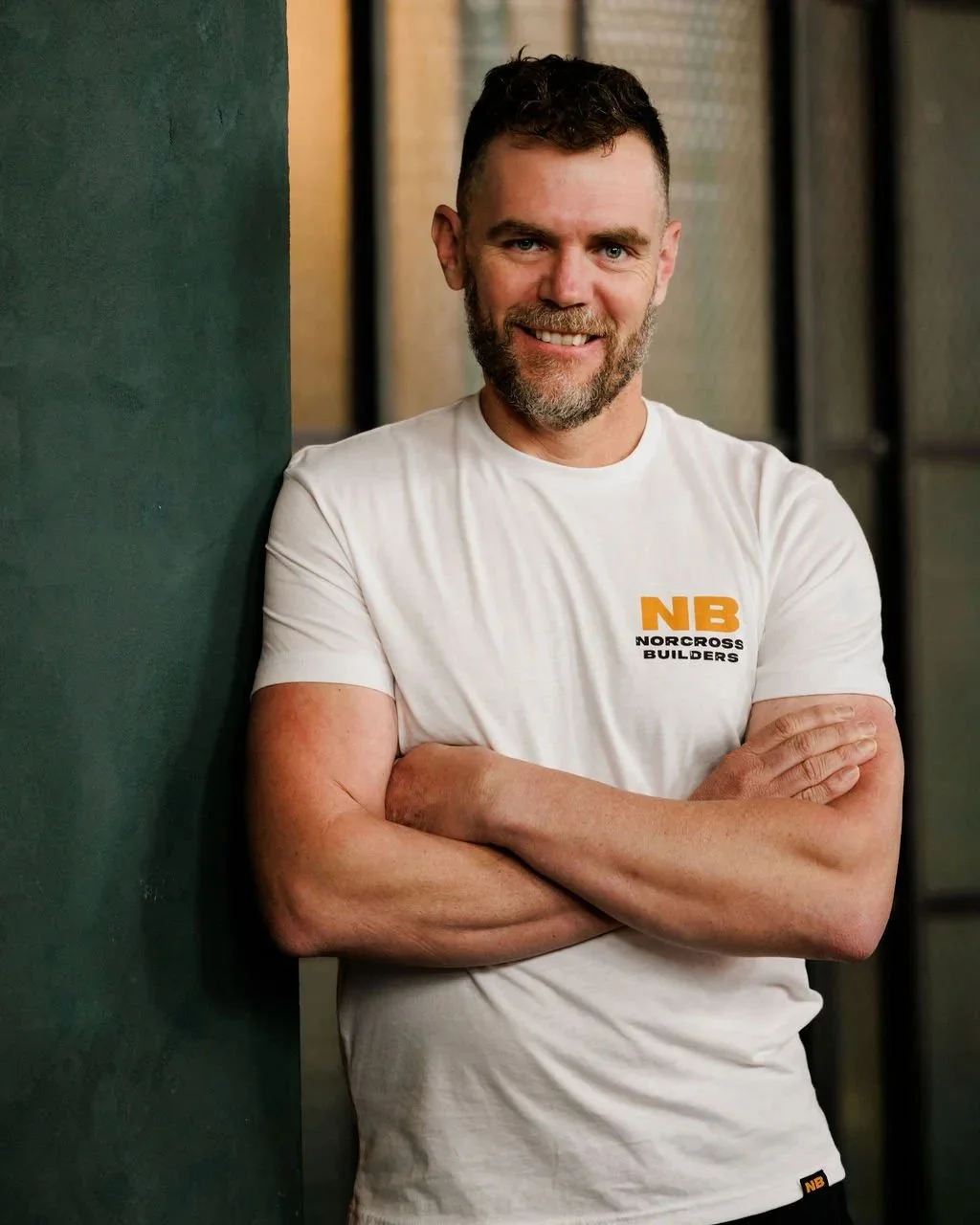
Gabriel Norcross is the owner of Norcross Builders, a boutique renovation and remodeling firm specializing in historic homes in Louisville, Kentucky. With over 25 years of construction experience built primarily in the San Francisco Bay Area, Gabe relocated his family to Louisville in 2023 after a financial and personal breaking point on his final California project pushed him to rebuild everything from scratch — the business, the boundaries, and the life around it.
Today, Norcross Builders operates on purpose: three to four carefully selected projects per year, every one paired with a designer and a formal pre-construction process. Alongside the build work, Gabe is channeling his lived experience into something bigger, developing Resilience Through Reform with Morgan Molitor to address the mental health crisis quietly devastating the trades.
Resources:
-
Gabe Norcross 00:04
That whole process really, like, separated the people that in my life that were giving me energy or taking my energy, and I had a best friend since sixth grade. We no longer talk because I realized he just could not meet me in the space that I needed him to be. I was a different person through that period, and he just he couldn't handle it.
Mark D. Williams 00:32
Today in the Curious Builder podcast, we had Gabe Norcross in from Norcross Builders, flew up in from Louisville, Kentucky, which is amazing. I can't believe we had someone willing to fly here. We're cool, but I don't think we're that cool. And anyway, this episode is the most emotional episode that we've ever had on the Curious Builder podcast. And I, I had a feeling it would be because Gabe shared a story about 10 months ago at Contractor Coalition about depression, about suicide, about the stress of being a husband, a dad, and when things go really bad and they go unchecked for decades at a time, it gets really bad. And so there's light at the end of this story. It's a beautiful story of overcoming, of dreaming, and not quitting. Without further ado, here's Gabe Norcross. Welcome to the Curious Bureau podcast. I'm Mark Williams, host today. I've got a special guest at Misahoos, flew in all the way from Louisville, Kentucky. I've got Gabe, the one and only Norcross, Norcross Builders. What's up, buddy? Thank you. You flew in for this interview. You also wanted to see Misahu's, so I felt like, and you're gonna see Morgan. So you got a lot. You might have to have a satellite office in Minnesota. I did just recently for an assistant. You could have been my. You would have been a waste of your talents.
Gabe Norcross 01:54
I wanted to catch. I wanted to catch visiting these people for the house council, and there was no longer that chance, and then it just coincided with doing these, doing this podcast, and then Morgan and I have something that we're working on, so I just was able to back to back all of it, make it worth my while. Well,
Mark D. Williams 02:15
I appreciate it. There, I wanted to have you on. You know, obviously the audience has been tuning into the Curious Builder for a couple of years now, three and a half years actually, and I think the episodes that people gravitate towards the most is the real, the meaty ones. I mean, we're all human, and we talk about business. I mean, you're not going to learn the craft of building a home, you know, on the Curious Builder. I mean, that's a physical apprenticeship that's doing the skill. I love to talk about entrepreneurship. I like to hear about people's life, the boundaries, how to balance it, and your story is so powerful. And maybe I'll just preface with this, and then I'll let you share this because that's really what I wanted to start this episode. Super emotional is we had Contractor Coalition Summit last fall in October, almost coming up on a year, and we had Mark Labrite from Construction Instruction usually does a kickoff speech that night, and he either missed his flight or had something come up, he couldn't come, and so we had been doing the Losers or Winners series. We had just started on the Curious Builder, and I said, "Well, what if the kickoff night? Because the thing that makes Contractor Coalition so special is you're there for three days, and it's very rare that you spend three days with the same people unless they're your family or unusual situation, and especially with complete strangers. So honestly, people bond really quickly. It's super intimate. You really the depth of relationships gets really fast, and so that night we decided to galvanize it. Let's do an open mic and let's do our biggest fails. So Nick and I went. I shared a. In retrospect, it was a pretty silly story, but it's all I could think of. And you don't really know who the audience is, or you know. And honestly, I just don't have that many really terrible dark stories anyway. That's not the point because you don't want to compare your story to someone else's. It's your own journey, and so for me, it was I something recent was I had some AI notes that you know that that architect and I were talking shop, nothing terrible. But long story short, is my AI auto taker sent it to the client, had a big blow up. I thought we're going to get fired. We ended up salvaging it. It ended up working out great. Nick talked about getting sued, and then the third person up was you. And I'll let you tell your story again, and we'll kind of go through it. But you changed Contractor Coalition with that story. I got goosebumps just thinking about it. And everyone that spoke after that, I'll never forget that Contractor Coalition. That was the most intimate, the deepest, and not you don't want to compare future contractor coalitions or past ones, but that one was so special, and it was really because of how open and vulnerable you were with your story, and and we will talk just how far you've even come in the last 10 months too, so the audience is like, would. Just shut up and let him tell his story. So I will. So I would love you if you would start with, and we'll talk later about Ron Jensen and some of the things that happened literally the night that you shared your story. But let's talk about you're sitting in this room. You see Nick and I go up there. What made you go grab the mic and share the story that you're going to share now.
Gabe Norcross 05:24
The thought was going through my head that it was a space that I could tell the story, and the weight of the story, or the in with the people who were listening would be able to understand. To get that many contractors and builders and tradespeople in the same room and they're engaged is a rare thing, like you said. And but there's also this fear of going to the the first coalition. I'm a pretty outgoing person. I can become friends with anybody very fast, and but I was reserved. I see, you know, I see Nick and Tyler and Brad and Morgan and yourself. I've watched your lives unfold on social media and Instagram, and so very kind of just kind of taking it all in first night, not knowing where I wanted to position myself, and and so I kept looking at Reese Barnes, and
Mark D. Williams 06:29
did you know him before?
Gabe Norcross 06:30
I did. I knew him from Villager, actually, and I had talked to him a little bit earlier, briefly about my story, and he just kept looking at me and looking at me. He's like, oh, like no. And then finally, he was like, Gabe's got something shit. And and so, so they handed me the mic, and something switched because it's not it's not a story that I can sugarcoat. It's still raw. It's if I if I can if I spend the time thinking about what I went through, like I'll I can break down again, which is why I also talk about it because I don't want to keep the pressure inside. And I coming out of coalition that night, I realized that the story resonated, and I meant to share it. So maybe someone else doesn't have to go through what I went through. I could go way back to childbirth, probably where the origin of this story is, but we can start really at the beginning of COVID, where I was a one-man show, and then COVID happened, living in the Bay Area, the construction market just blew up, and I was not being proactive with my company. I was being reactive, and so I needed warm bodies to come in and and work, and I was purely reacting to whatever was being thrown my way, and I hired a lot of people I shouldn't have hired, and I didn't fire them either, and so it put a lot of financial stress on me, and I kept saying, "Oh, this next job will recover. This next job will recover. I'll have more time. I invested in Build a Trend, but thought, "Hey, I have it. It's going to do its job now. Not really spending the time to build it out, so it's actually doing what it's supposed to do. And so I was keeping everything in my head. My wife had no idea what I was going through because she is not part, did not want to be part of the business, did not want to be part of that world.
Mark D. Williams 08:42
How many kids did you have at that time?
Gabe Norcross 08:44
Two,
Mark D. Williams 08:45
and you still have two.
Gabe Norcross 08:46
Two, yeah. So we, my son would have been five. Daughter was four at the time, and at the beginning of COVID, and so we, I really just kept all of these struggles and how I was running my business to myself, and most of it was was inside of my head. And I'm running multiple multiple projects, maybe five or six projects at a time, and we landed probably the I would say it would it was the biggest project to date that I had had standalone without any other working with any other contractors, and it was a it was a house by the ocean. We're adding a second story to pick up an ocean view, and it was for a friend. And I did the thing that you don't do, and I signed, or I did not sign a contract. I shirked their hand, and I let them dictate the budget of the bill.
Mark D. Williams 09:48
How many years in business had you been at that time?
Gabe Norcross 09:51
Started my business in 2013.
Mark D. Williams 09:52
Okay, so a while.
Gabe Norcross 09:54
Yeah,
Mark D. Williams 09:54
and long enough to know better.
Gabe Norcross 09:57
Plenty of time.
Mark D. Williams 09:58
Yeah,
Gabe Norcross 09:58
to know better.
Mark D. Williams 09:58
I mean, to be clear, everyone. Made this mistake at one time or another, this bite ensures that you will never make this mistake again. The
Gabe Norcross 10:05
red flags are flapping in the wind right off the bat now, but there's also fear that I could easily go down that route if I take like uncalculated risk, and so I'm much more reserved on what opportunities that come my way, but what had happened was I let them dictate the budget. They had X amount of dollars to spend, cost escalations. You know, we went to go pour concrete, and the engineer came back and said, "Actually, we need all these other pad footings. You got it, and we had 26 cubic yard footings under every corner of the house with a hold down and all thread, and that added about $26,000 to the foundation budget right off the bat. And so,
Mark D. Williams 10:52
did you communicate that to the client at that time?
Gabe Norcross 10:55
No, I did not. I'm like, oh, we'll do a lot of this work ourselves in house and not step out, so we can keep try to keep holding budget.
Mark D. Williams 11:03
What was the out of curiosity? What was the fear? You were afraid of telling him that it was the change. You're afraid that he. What? Why did you not share that information at that time? Do you remember?
Gabe Norcross 11:15
Like I needed the cash flow. I see. I needed the injection of cash in my company. My fear was that we're starting this convers, we're starting this project right off the bat. Like he doesn't know what he's talking about, and it's already go. The cost is already going through the roof.
Mark D. Williams 11:29
Right. Like
Gabe Norcross 11:30
their budget was originally was $450,000 for this entire job, and we knew right off the bat that that was not going to happen. And we had they ended up coming up with another $300,000, so they went to 750. Their job was one one by the time, and and so
Mark D. Williams 11:51
was it a cost plus? I mean, wasn't a contract. How were you making money on it? Was it going to be a margin cost plus or or a flat fee?
Gabe Norcross 11:59
I it was.
Mark D. Williams 12:01
What was your? I hope
Gabe Norcross 12:01
that I can pay my bills this next influx of cash. I get a check, I pay all my materials, and then hopefully there's money enough to pay me and
Speaker 1 12:10
the the team, the
Gabe Norcross 12:11
the employees, and then me.
Mark D. Williams 12:13
Right.
Gabe Norcross 12:13
But I might be stealing from myself to pay myself.
Mark D. Williams 12:16
Right.
Gabe Norcross 12:16
And so, and I wasn't tracking that. I was keeping it all in my head and just moving money around to just try to keep things going and keep my nose above water, and then it then it came to framing. Couldn't find a framer that wasn't jacking the prices up because they were busy and lumber was through the roof, and so we're like, we'll frame this in house, and I love framing. I just don't like paying drill frame, and so I was working every weekend. I would go leave the guys at home, and I would work and go frame Saturday and Sunday every weekend for five weeks, lifting 24 foot PSL, like six by 12 PSLs, by myself because I didn't want to have to bring somebody in to lift these massive beams. Just doing ridiculous stuff to try to move the job along, but my family wasn't getting me. I was gone all the time, and I was.
Mark D. Williams 13:08
How old were your boys at that time?
Gabe Norcross 13:10
That would have been 22, so 8666, yeah, six.
Mark D. Williams 13:18
Did your homeowner? Did he know what was your homeowner's temperament during this time? While he sees you working all these weekends,
Gabe Norcross 13:24
oh, they loved it. They loved that I was like grinding it out, getting their house ready for them. That we were staying on on schedule, and then we did not stay on schedule because the burnout happened. I was working so much, then I couldn't show up because I knew that I was hemorrhaging money, so I had to go take another project in order to get cash flow back in. I got to pay, so I'm I'm just literally stealing from one job to pay for the last stealing from one, and so then I like I'm calling in favors. Just I had a couple vans and a work truck. I sold one of the vans. Like I'm just moving money around to try to to get this thing to a certain point, and then we had to have a hard conversation. We had to have a hard conversation like, "Hey, you're going to need more money. Here's where, like, there was a breaking point where I couldn't come up with any more money. I had nowhere, no corners to dig in to find you know loose change to pay these bills.
Mark D. Williams 14:15
And at this time, they'd already paid you seven to 50, or how much had they paid you at that time? No,
Gabe Norcross 14:19
they no, they did not. They we were, they had to go borrow money from their parents, and you know they're 48 and 50 years old, and like having to go ask their parents to borrow money, and their parents were actually more understanding. They're like, yeah, you got into, you got into a multi million dollar house. Your house costs 1.3, and now you're putting a million dollars into it, and like we understand that it's going to cost a lot of money, especially these times. But they, they were also the clients were also trying to figure out how they were going to afford it after the house is done. Are we going to keep it? Are we going to be able to hold on to it? Are we going to sell it? And you know, and now we have debt for a house we don't own. And so, I'm a caretaker. I want to make sure everybody around me is happy. So I did everything I could to make sure all my employees were happy, that the homeowners were happy, even though there was tension. But like when they would come over the meetings, like I was faking it. I like I had to summon that part of me that's like I want to sugarcoat this, let it down softly, and eventually I couldn't do it anymore. But I had a I had a a pretty sizable balance at the lumberyard. I had four credit cards maxed out, and for the tune of $250,000 plus or minus, and that was the point that there was no coming back from. There was no way for me to dig this out, dig out of this. I couldn't take any more work to go dig out of this, and we got a report saying that the water table was actually higher than original, originally estimated, which put us above the flood zone. So, in order for the hardwood floor to be warrantied, we had to put we had to put a waterproof glue down underneath the hardwood floor. It's all white-out floors, and because of that, we had to sand and plane all of the original one by eight subfloor, and also remove a bunch of it to put three three-quarter plywood down. Try to so we didn't have to sand and plane everything, but a lot of the walls that were already underneath, we weren't going to lift up walls and slide the subfloor. So we spent, well, it was $14,000 worth labor to have my guys go in and do all of this work, labor materials. And the client looked at me in the eyes and said, "You're paying for it. I'm not. And we had two days before that we had had the conversation that I'm out of money, and I'm sitting on all this debt for your house, and he looked me in the eyes and said, "You're paying for it. I'm not
Mark D. Williams 17:10
for all of it. All all 250.
Gabe Norcross 17:12
All of it. Yeah, that and the subfloor. The work that still had to get done.
Mark D. Williams 17:16
What stage was the inside of the house at?
Gabe Norcross 17:18
We had floors. The kitchen was done. We just had to put floors in, and then install baseboard and paint it.
Mark D. Williams 17:25
So you were 80% done, 85% 9% done.
Gabe Norcross 17:28
Yeah, but that last 10% is really hard to get through. Yeah, especially if you don't have money, and you're dealing with a mental health crisis. If
Mark D. Williams 17:45
you're looking to level up your business in 2026 and beyond, the Contractor Coalition Summit is the place for you. If you've been a listener to the show, you know that this has been the single biggest factor in how I've leveled up over the last couple of years. It's had a huge, profound impact on my business, my personal life. It's what helped me launch the Curious Builder. In fact, our last one of the season will be another three, four-day event in Charlotte, North Carolina. All the details can be found at contractorcoalitionsummit.com.
Gabe Norcross 18:18
I left that meeting. My eyes glazed over, and I do not remember the next 30 minutes of my life, except for about 15 seconds of it, right in the middle. And we lived on Highway One. The job was in in a town called Pacifica, and it's Highway One down to Appin Bay, where I lived. And it's a pretty winding road along the ocean. There's multiple barriers where they've had to put up because people purposefully and not purposefully have drone off, drove off the cliff into the ocean. And I left that meeting with so much rage in my body, and I've never felt that amount of rage before, and it scared me. But I don't remember leaving that house and getting to the midway point, and then a thought came through my, a thought came up where I had decided that I wanted to run my truck into a tree, and I don't know if I wanted to kill myself, but I wanted to get the pressure out of my body. And the thought must have entered that if I do this thing, it'll redirect my energy, and I'll have to deal with this other thing instead of dealing with actually what is happening. And I came around a corner, and there was a red Mustang that had hit a trip, and it snapped me out of whatever thought process I was having, what I was going to do. And then I don't remember driving home from there. It was about another two or three miles home, and I opened the front door, and it was early. It was probably like two of the. Afternoon, so I don't usually come home that early. And I walked in the front door. My wife said, "You're home early. How was your day? And I just mumbled like there was no coherent words that were coming out of my mouth, and I collapsed like I couldn't even hold my body up. Like collapsed on the floor, and I had to drag myself maybe 50 feet to the bedroom. My kids are looking at me like, "What's going on, Dad? My wife's like trying to talk to me, and I'm just like I'm bawling, bawling. Like I couldn't, I couldn't, I couldn't say anything, and I was probably in there for two and a half, three hours, and my wife laid down next to me, and she said, "This is just a house. Just a house. We don't have to live here. It's just a house. Like we had worked our tails off to buy a house near the ocean, and we could never save up enough money to get over like the cost of living increase for such a long time. And during COVID, we found a dump that we could buy at a low interest rate, and like finally we have this thing that like I want to surf for the rest of my life. The biosafes, the dream that we've had for so long, it was a nightmare. It was not the dream that any of us envisioned, and like wasn't a good husband, wasn't a father that was present. I was never around, even if I was physically there. I wasn't emotionally or energetically there. My life was all consumed by other people's houses, building other people's dreams, but yet I'm financing them, and I'm giving every ounce of energy I have to somebody else that's not the people that matter in my life, and taking care of them instead of taking care of the people that need to be taken care of, and to to hear those words from my wife was like, it was such a huge relief, but then there's also this amount of guilt that it's like I did this thing that now my family is the recipient of this decision that I that I decided to hold hold close to my chest and not tell anybody, and so like the next day, the next day, for the first time in my life, like I called a mental health professional, and I, because I was scared that I was scared that that I needed more help than I could give to myself.
Gabe Norcross 23:05
That I needed professional advice, and so that those conversations led down a path, and it made me understand like all of the other things that have happened in my life and how I held onto them and not processed them, and so I don't know if I would have gone through that had I not I would understand myself better had I not gone through that. But it also this that whole process really like separated the people that in my life that were giving me energy or taking my energy, and I had a best friend since sixth grade. We no longer talk because I held resentment towards him for a long time, but then I realized he just could not meet me in the space that I needed him to be. He, I was a different person through that that period, and he just he had he couldn't handle it, and that's okay now. Like I am, I've made peace with that. Like he just he did not have the ability to to be there for me, and but then I had another friend who checked in with me 15 minutes every 15 minutes. I call him like I'm leaving for work. I have to drive on the coast right past that tree, and then he would call me, or I would call him. He's like, "You make it to work. Yes, I make it to work. Then call 15 minutes later. What are you doing? How are you doing? It was like clockwork, and to this day, we talk five times a day. It could be just, "Hey, love you, love you later, and then just that's it. But like I, I have becoming. I've become much more aware of the people that that that don't need me to take care of them, but that we can have a mutual relationship of give and take. And I want. I have done everything in my life to feed people's energy, and those are the. Type of people I need. Otherwise, I will slide. I I feel like I'm balancing a knife edge all the time. I could easily slide back in to these this place where I once lived, where everything was just was so difficult, and I give myself. I will constantly fight this battle, giving myself all my energy to everybody except myself, and I think so. I like I even before this whole before this this mental health struggle, I had a therapist. I've had therapy. I've talked about things that had happened to me when I was a child, when I was a young adult, that I had not processed. So, like, I have become good about sharing what is hard in my life with people. Did not share this because because the person that it affected, I lived in the house with, and I kept I had the outlets and I had the resources to talk about this thing that was happening. I just chose not to because I didn't want to burden anybody. It was this thing.
Mark D. Williams 26:09
And then I'm guessing that it got so far down the road that you're like, well, it's almost like it it got it metastasized. It got gotten so big. I'm sure you thought, well, if I bring it to my wife now, and then now you're living with this added guilt of I should have done it, but now you're keeping essentially a secret, and you have this burden of I'm sure you felt like you either were lying, whether you articulate it in those words or not. I'm sure guilt, lie, there's all these terrifying things that make war on our subconscious, and are you know you're carrying a burden on top of the financial stress that's fully real. All these things, all you had, yeah, a complete mental breakdown.
Gabe Norcross 26:49
Yeah, and is she going to find out about it today? Not for me. Is someone else going to tell her what's going on? Like, was so scared about like this information getting out, so I didn't tell anybody.
Mark D. Williams 27:01
Right,
Gabe Norcross 27:02
I didn't want to say anything to anybody because I didn't want her to know I was going to dig out of this myself, and I can't do anything by myself. That's not how you. That's not life. It takes a village. Being alone is, it's not how this is supposed to be. And the added layer to this whole story that I don't know if I've ever discussed or shared is that during this time of having this crisis and suicidal ideations, I had to compartmentalize what I was going through because I had a friend who took his own life, and I volunteered myself to go clean up the suicide scene in his surfboard factory, so his wife didn't have to go in there and see it. And I don't know how I did that, but I was able to shut my brain off. Be like, I need to I need to make sure that she doesn't have to do that, so I will take this on. And now my psyche is like, oh, did this did this put in there? Oh, this is maybe a possibility to get out of this problem. Is now that Joel made that permanent decision? Maybe I should make this decision. Maybe that's the way to get out of this thing. I knew that I never wanted to do that, but it's pretty scary when it creeps into your mind like that. While it would relieve my pain, it's not going to relieve the pain from my wife and kids, and it's a very selfish decision, decision, at least for me. So, like, I don't know how I, I don't know how I survived that that time period of my life.
Mark D. Williams 28:51
How long? How long did you have to endure that time period?
Gabe Norcross 28:57
Eight months.
Mark D. Williams 28:58
That long?
Gabe Norcross 29:00
Yeah.
Mark D. Williams 29:00
Was that sorry? Was that eight months leading up to this decision or this incident?
Gabe Norcross 29:04
Six months.
Mark D. Williams 29:06
Six months leading up to it when your client said, "I can't pay you, and
Gabe Norcross 29:09
then,
Mark D. Williams 29:09
and then two months after you drove home.
Gabe Norcross 29:11
Yeah, and I I was scrolling through some photos on my phone looking for a work phone and a work picture, and I I found a picture that I. This was after I had the breakdown, and Julia and the kids had gone to live with their in-laws because I was getting the, I was getting the her in-laws, my in-laws, her parents, was getting the house ready to sell because we made a decision that night, like we're going to put the house on the market, we're going to sell, we're going to move on from this thing. And I had went down the beach, and I was I was struggling still, and
Speaker 2 29:51
took some selfies, and I had written in saying like "I love you, Gabe, to myself. And I never shared these photos with anybody, but I use them to remind myself that I need to be here still. I'm finding that photo. It was only maybe three or four weeks ago. Like it brings back like it was yesterday. It did not.
Gabe Norcross 30:34
I did not have. I did not have a a childhood where I could share the hard stuff with people and feel safe, and so this is this like all of that training left that led up to this. This is the thing that needed to be shared, and I this is like the one thing that I put my foot down. Like no, I'm not going to share this, and it manifested into almost not being here, and I got grateful every day that I survived that time in my life, and that I have the people in my life now that understand that that journey that I went on, and will listen when I need to let the pressure out, and I need to share the story again because it is-it's still raw, obviously. It's, and I know that if I don't talk about it for a certain amount of time, then the most big emotions show back up. Like the pressure, the pressure will build, and I know that I am not a anomaly in this world, especially in the trades. I am not an anomaly. Like this is a very real experience for so many people, and they haven't tell anybody or don't tell anybody. And the the suicide rate in this industry is second across all professions in construction, and I was so close to becoming a statistic, and so I will continue to talk about it because I know if I don't, then like my fear is that I can slide back into that dark space, even though I know that I have all the help in the world and all the people that will pick up the phone. It it can it can still can still show up and manifest, even if I don't want it to, having an outlet to talk about it is something I need as well. But I also want to break these stigmas that, like, this isn't a journey to go on alone. If you're having these struggles, like that, there are people that are willing to listen and show up for you, and I'm I'm living proof of that.
Mark D. Williams 33:06
I remember sitting in the room in Chicago, looking around, and it was you could drop a pin, as you can imagine. I'm sure if you're listening to this right now, wherever you are, you're likely it's you would almost have to check yourself to see if you're a human or not. To not have an emotional reaction, whatever that emotional reaction is, is to each their own. Everyone processes emotions differently, and for me, it was respect. I saw Nick; he's experiencing pretty dark stuff, and just it doesn't matter. Just people can also realize when people are being authentic and awesome and just real. And I think there's something in all of us as humans that there it unlocks empathy and compassion in another human being, which I think is important. And I think you have an outpouring of love. I would imagine I haven't asked you this question before. I mean, I know how I felt, and we whether we talk about it on the podcast later or not. I mean, you and I have a pretty wild additional backstory to all the stuff that may or may not come out later, but it doesn't really matter. But the the point being is like, I would imagine after you were done, and even that night and later, I would be hard pressed if people then come up to you, even if they didn't know what to say. I'm guessing somebody put their hand on your shoulder and said thank you, or someone shook your hand, and they didn't have to say anything, but there was a transaction of emotional care and love. Did that happen?
Speaker 2 34:29
Yes, it did.
Mark D. Williams 34:31
Yeah. And the reason I bring it up is these are the types of conversations we need to have, and hearing you say you need to share them. You know, this isn't about even if nobody else. I always say with the podcast, even if no one else heard any of these conversations, I would still feel like it's worthwhile endeavor because I get to hear it, I get to share it, and you know, I actually know it's funny when you were sharing this story. You know what went through my mind of the four people I want to hear this, my mom. My dad, my sister, and my wife, for personal reasons that you and I know outside of this, but I think because I think humans, I think God made us in a way that we want to love other people because we want to be loved, and so I don't know how people don't have an outpouring of care, knowing that when someone is hurting, I think that's why people. As a teacher, I've interviewed. I have a really good friend of mine who's a teacher. I think people are called to the teaching profession because they want to help others. And he recently wrote a book. We'll talk about it on a future podcast. It's amazing. I'm halfway through right now, but most teachers don't just teach the all that you are some of the biggest beacons and light to another person's life. Think as like a, and I was trying to think like I can't remember a single thing a teacher taught me, but I remember teachers by name by the way they treated me, and you know how you show up in other people's lives, and how you share and show care to another people; they'll remember that. And so, when you share a story as powerful as yours, it is more than a pebble in a still pool. I mean, you threw a fricking avalanche into a goldfish bowl, and the ripple. Watching the tide just rock across the room, and then each story going back for the audience. If you lost track of where we're at, we're still in Chicago hearing Gabe tell this story on this open mic day to a room of 50 strangers you'd never met before, and and so anyway, watching that room and then having people come up after that said I wasn't going to share anything, but I had a very similar story about wanting to take my own life, and then having another one come up, and another one, and another one, and we looked around the room and like, what just happened? Amazing, an amazing way. And just to condense this part, we will never do a contractor coalition summit again without having the open mic night first, and if that wasn't powerful enough for you, this is about to get real. So that was a Friday night. We had the contractor coalition all day Saturday, all day Sunday. Monday's our last day, and we leave. We got to know each other. Maybe that shows up later in the podcast. I don't know. We're at 37 minutes. We would probably not show up in that this part of the podcast. We get a text message: Morgan, Nick, Tyler, Brad, and I, that an alumni of Contractor Coalition from Utah named Ron Jensen had died, and he he had come to a couple Contractor Coalitions with his wife before I'd met him. I can't remember which ones they were. Doesn't matter. Beautiful human, and obviously we're very sad to hear that. A couple conversations happened later in that week, and we found out that he had committed suicide. He'd taken his own life. He had suffered from depression. We found out later in the week that he had committed suicide Friday night, the night that you shared your story. I didn't know Ron very well. I know you a lot better than I know Ron.
Mark D. Williams 38:08
It kind of rocked the Utah community, and it really rocked, obviously the Contractor Coalition, our alumni, but really the five of us, because nobody wants anybody to get into a place where they think that the place out is to take their own life, and well, but like you just said, so much better than I can say, is that Ron had people in his life that loved him, his family, and so often I haven't known that many people's stories that have survived. Obviously, the way you have survived, and then shared your stories, and I'm not here to talk about it because it's not my experience. It's just as someone who is like, how do you help other people other than say like, if you find yourself in this situation, reach out to Gabe, reach out to me, reach out to your family, reach out to anyone. But I, I would actually, after hearing you say this, I'd say reach out to yourself. I love. There's always love in everything. I love the fact that you wrote in the sand. I love you, Gabe. And I recently have told this story, and I think it's true that I will consider myself as successful dad if I can do two things. If I can, if my kids know they're loved and feel loved, and if I can bestow confidence upon them, because if you can go in this world, remember with love and confidence, oh boy, that has some powerful armor. But I think we live in a world where people don't talk enough about self-love, and I think it's important. Now I understand that if you only love yourself, that's selfish, and and the world loves to talk about that. And I and there's some validity to it. I'm not a psychotherapist, so I'll stay out of out of those lanes. But I do know this: it is important to love yourself. You can't pour from an empty cup. You can't. You can't show. For your kids, your wife, and you can't show up for the person in the mirror if you don't like the person in the mirror. And I'm not saying we're always proud of everything we've done, but we can ask for forgiveness. We can we can we can find love. We can find joy even in the darkest pits. If you look up, there's light. For me, it's God. For me, it's my family. For me, it's love. But even if you wrote it in the sand, do it for yourself. I think that part of your story is so powerful, and I love the fact that you still have that photo that says, "I love that I love you, Gabe. I think that's. I think that's beautiful.
Gabe Norcross 40:40
We would never treat another human being how we treat ourselves, and like it's something that I have to constantly remind myself. But I also don't listen to it all that often because it's
Speaker 3 40:59
easy not to.
Mark D. Williams 41:09
This episode is brought to you by Pella Windows and Doors. I've used Pella for 21 years as the exclusive window company on every one of my builds. When people ask me who I trust for Windows and Doors, it's Pella. Every time, their craftsmanship, their innovation, the top-tier service make them a no-brainer for any custom home builder or designer who demand the best. Whether you're designing something bold or building something with timeless elegance, Pella has you covered. They're also the only window company that has a lifetime warranty on all of their windows. I've gotten to know all their people at Pella Corporate, as well as locally here at Pella Northland, I'm proud to call them our partners and our friends. Visit Pella.com to learn more and connect with your local reps today. Also, for more information, you can listen to Episode One, where I interview their founders, as well as Episode 109, where we talk about the innovation at Pella.
Gabe Norcross 42:00
I now know that I have suffered from depression and anxiety my entire-I could probably say childhood, but also my entire adult life. I was constantly pushing through burnout. I would work hard because I needed to prove to everybody that I could work hard and I could build cool things, and no one would ever outwork me, and then I would burn out, and I would disappear, like emotionally, sometimes physically, or disappear, and then I would. Then it's like, oh, new project, new shiny thing. Do it again. Do it again. Do it again. The highs were high and the lows were low, and I operated life that way forever. And then I had a family and other people that depend on me. Then it became harder. Then I had to mask that depression and anxiety. Couldn't the even if I had the lows, they couldn't be shown. I couldn't show that I was in a low, and the amount of pressure that took in my body to get through those periods just led to this this full blown Breakdown that, and now like now having
Mark D. Williams 43:07
how many years ago was that? You know, after the six months and then the two months, you put your house up for sale.
Gabe Norcross 43:13
Yeah, January, February. When it was, I think January, late January of 23. So three and
Mark D. Williams 43:20
three and a half years ago.
Gabe Norcross 43:21
Yeah,
Mark D. Williams 43:22
remind me again. So you you sold your house, the your dream house. This all with ended up not being the dream as you put forward. You used that money to pay off your debt.
Gabe Norcross 43:34
By the time I shut my company down, the residual cost of that project cost me over 400,000 stars, And I had enough equity in the house that I had fixed up because I had bought it down that I was able to pay it off. The silver lining is that I had the equity in my house to pay it off, but that's also like that's a huge long-term financial hit to my family that I no longer have $600,000 of net worth, and now have $100,000 of net worth. We paid off our vehicles. We paid off all of any any personal debt we had. So we, when we moved across the country, we didn't owe a dime to anybody.
Mark D. Williams 44:20
Why Louisville? You went from surfing to definitely not surfing. Well, I heard
Gabe Norcross 44:26
the surf was really good. So, yeah, why Louisville? The we were moving to Richmond, Virginia, and because we had done some research on cost of living, and it was a couple hours from the ocean, so it was an ocean state still. We were unschooling our kids at that point, and we they had good alternative education.
Mark D. Williams 44:52
What do you mean by unschooling?
Gabe Norcross 44:54
Unschooling is like homeschooling, but without a curriculum. You learn through life doing. Playing in nature,
Mark D. Williams 45:01
I like that. Never heard that before. I like that.
Gabe Norcross 45:03
But they're not strict in the. It's kind of like how you would have learned if you grew in a grew up in a cave. But they have they had actually unschooling campuses where kids learn through play and and being in nature and touch and feel and and at their own pace. And they interact with kids that from five to 15, so they're they're teaching each other, and so Richmond had that in 2015 2016. I went to Greenland randomly, the very first job I ever did for my construction.
Mark D. Williams 45:33
Greenland, international, like Greenland, like up by the Arctic Circle, Greenland, not like some random town. And okay, just making sure.
Gabe Norcross 45:40
Greenland, and
Mark D. Williams 45:42
sorry, why are you going to Greenland now? So
Gabe Norcross 45:44
conversation on a on a Victorian renovation in downtown San Francisco, like or and it was with a painter up on scaffolding, and he's like, "Yeah, I went to Greenland last year. Like what? And he said, "Yeah, I was working at Stanford Research Institute headquarters, and they said we need a painter to go up to this research facility. And he's like, five weeks later, I was in Greenland, and I made a backhanded comment. I said, if they ever need a carpenter, let me know. I started my company maybe seven weeks later, and I got my contractor's license on april 30, may 1, Stanford calls me and says, "Hey, we got your name for Mike. Can you go to Greenland? So I was in business for one day, and I had to figure out if my liability insurance could cover me internationally. And so
Mark D. Williams 46:38
it's amazing.
Gabe Norcross 46:39
And they, I'm like I don't know how to bid a job in Greenland, and they're like, well, there's one other big commercial company, and he's going to be very expensive. I'm like, what do I charge? They're like, long as it's 100, 100, 150 bucks an hour. I'm like 149.50, and they're like, sold. Okay, here's. Do you think you can be ready in three weeks? Do you have a passport? I'm like, what? Yeah, and so, but there was this whole thing about am I going to be able to get workers' comp to cover me because they're like, we need to make sure you have workers' comp if you get hurt. And my father-in-law is a workers' comp attorney, and he's like calling Lloyd's of London and like trying to figure out if I need it. And eventually, they came around. It's like, no, you can't self-insure yourself, so you don't need it. And we figured it out. But it was like it all happened super fast, and it was wild to fly. And the Air Force flies you up there and out of New York on a C-130, and and so we got paid for travel. I made more money sitting on a plane than I've ever paid my life. But the sun didn't go down, so I didn't have to go to sleep at a certain time. I just I'd work from 11 to 230 in the morning, and my sleep schedule never got thrown off. And but it was just facility maintenance on this research site in the middle of nowhere, and the engineer that lived there on site is from the states, and so they shut that site down in 2019, and so he came back to the headquarters, and he we both lived in the Bay Area at the time, and he sends me a text one day. He's like, "Hey, I'm buying this house sight unseen in Louisville, Kentucky. Look at the inspection report. Tell me what we think. So I look at it. Like the roof needs to be replaced. Foundation looks okay, but just have somebody inspect it, see if there's any water penetrations. I now own the house. There is water penetrations.
Mark D. Williams 48:19
You own the house.
Gabe Norcross 48:20
I now own it. So that's I got ahead of the story. But I own this house, so he buys the house, and then two weeks later or two months later, Rivian headhunts him to work at their battery factory, and so he moves into this house, and so we're driving across the country, like we moved in, we moved, we came to Louisville a year to the day that he sent me this text, literally the same day one year later, and so I texted him when we woke up in the middle of Illinois. I said, "Hey, you in town? He's like, "Yes, come through. They just had their first child, and so we we stopped in Louisville that night. We didn't know where we were going to stay, and we could have chosen a bunch of different cities to stay that night. And but we were on our way to Virginia, and we we stayed in Louisville for two days, two and a half days, getting lost in neighborhoods and looking at fantastic architecture and trees, like massive trees, which was not very all that common. Like there's no tree-covered streets in Happy Bay or San Francisco, and so we fell in love with the city, and we just kept reminding ourselves we got to go. We go to Richmond. We're going to Richmond. We're going to Richmond. We'd already prepaid for an Airbnb, so like we need 30 days to set our life up. And we get on the way out of town. He's like, "Hey, go buy and check this house out. It's vacant. And we go, we go to the house, and oh my goodness, we love this. We love it. It's a massive yard. It's the biggest yard in the entire subdivision. There's about 160 houses, and it's the biggest. It's like almost. It's like just hair under half of an acre. It's on the outside edge of a bend in the road, so it fans wide open. Two massive trees in the backyard, and so we're like. He's like you. You can rent it from us, and I'm like, Richmond. Got to move to Richmond. We didn't even get to Richmond before my wife and I looked at each other with big old smiles on our faces, like Louisville, is it Louisville? And we spent one night in Richmond, and I texted him like, send over the send over the lease agreement. We're moving back. And in the next 20 days, I set up my business in sitting in Airbnb in Richmond. I set up my business and like got to Louisville 20 days later. I had a job lined up, and that's how I ended up in Louisville. It was at that point, like I wasn't. There was no permanent decisions being made. Like whatever happens, happens, and it felt so easy. You had a house. I didn't have to work to find a house. I didn't have to work to find work, and I needed that at that point in my life because it it I don't know what would have happened had I got Richmond, or how hard it would have been to find a place in that town, like to find my niche in Louisville. It was easy, and I have found I found a great lane to be in in that town.
Mark D. Williams 50:59
Where did you find, and maybe it's okay if you're still finding it. I think you found it though. At what point in the journey did you find peace? And what I mean by that, mainly for the audience, because I think you know what I mean. Yeah,
Gabe Norcross 51:15
the first 13 days I spent in Motan, my grandparents have a cabin down by West Yellowstone, and I, I would go there for a month at a time. When my grandfather died in 2010, I grew up going there with my grandparents. But when my grandfather died in 2010, I took three years off of construction and moved in with my grandpa to take care of her and take care of my grandpa's properties and like clean everything up. They had 28 years, and he loved to collect things, but she knew nothing about what was outside the house, and so I took two years. It was two years, two years completely off my life. I didn't make any money. I didn't, I didn't do any construction besides just keeping her house up to date and keep things working. I took her to Montana for a month at a time, two or three times a
Speaker 4 52:00
year.
Mark D. Williams 52:00
You mean your wife, or oh your grandma? Okay. Oh, because she was
Gabe Norcross 52:04
very young.
Mark D. Williams 52:04
Yeah, yeah. Yeah.
Gabe Norcross 52:06
And so, and I drove her around, and she-that was her happy place. They had bought a house, built a cabin, and that's where she wanted to spend a lot of time. So I would go up there with her, and my kids and my wife and kids had never been there, and so knowing that moving east, the chance of going back there was going to be very rare. My wife had been there one time, but my kids had never this this place that I love to go to and have probably accumulatedly spent a year and a half of my life at at this point. That they probably wouldn't get a chance to go there anytime soon, and there's a chance that they may sell family may sell the cabin. So we took 40 days to get across country, and we spent 13 of them in Montana. And I got to go stand in the water. Water is calming to me, so surfing, disconnecting from the ocean, walking off the beach into the water, is one of two ways that I've truly disconnected my mind from what I have going on. The other one is standing in a river fly machine, being in water is the calming thing for me, and which is why I want to live near the ocean. I don't have that now, and I'm finding other ways to try to get that back into my life. But I do need to. One of the reasons why I don't want to build as much, I don't want to do as many projects, is so I can pursue these other things that give bring that back into my life. I want to be able to travel. I want to bring my family back to Montana so I can stand in a river or fly to the beach somewhere and just stand and play in the ocean. The thing that feeds me, Kentucky just took the pressure off of how much it costs to live and what it takes to actually provide for my family. And I didn't know that Louisville was going to be that until I, I just felt it when we were in the city. It's yeah, it it just happened, and it's the first time my wife and I traveled around the country. Maybe like the year prior, like we knew that we were probably gonna relocate, but it's the first major city that we went to. We were both like, yeah, this is it. There's a lot of places I want to move, and she's like,
Speaker 2 54:00
yeah, no.
Mark D. Williams 54:00
It's pretty amazing that you both found peace. I mean, well, together, but to, and it's also, I mean, we don't have time in this podcast to talk about. I mean, I'd love to meet your wife at some time too, and your kids, but like hearing their side of the story as well. And now she's heard you actually open up and share the story, and obviously you're brave enough to you've shared the story in a room full of people. Now you're sharing the story with 1000s of people, and like I, you know, again the ripple effect, the the avalanche that hit the goldfish bowl, you know, now that bowl just got a lot bigger, and how it helps people is a remarkable thing. And I think stories like this never not only did never get old, but they never ceased to be inspiring, and I think you realize that because I look at, you know, I've now you've sort of been in my life now for 10 months, and even seeing how much you've transformed your confidence is what I see from when I met you in Chicago to when you were in Denver Contractor Coalition, in these. Happen to be the places that you and I are seeing each other because we have lives and busy things and kids and jobs and all these things and so it's something we both prioritize in our life to go to these to teach and learn from each other. But it's you came as an attendee, and we can talk maybe briefly about what you were seeking or what caused you to go there. But now I feel like you're kind of like the spiritual gemstone on the mood ring of Contractor Coalition because you represent such a powerful. It's been felt previously, but it's always been there in undercurrents in a way that there's been emotion and care. Certainly, other people have shared difficult stories in the private dinners, but never in such a public way, and in never such a for certainly not an opening might. You know, there was a couple gentlemen there that said, "I have a story to share, but I just can't share it, and I respect that. And so you talk to them quietly, and and and people find humor. I mean, we've had Teddy Seipel on the podcast. I mean, oh my word! If you haven't listened his episode, it was right around Christmas. You know, $2.4 billion lawsuit, four years of his life, and I mean he has such a funny you know his delivery is killer. You hit the heart, and he tickles your funny bone the whole way. But I'm sure he, I'm sure he got to places you know in a similar way, and it doesn't really matter because when you're swimming, regardless if it's an anchor or a cannonball, like it's more than you can swim with. It doesn't matter who can carry more weight. Doesn't matter. You're drowning, drowning. Yeah, drowning is drowning. Yeah, and so yeah. Anyway, do you feel it? I mean, do you feel more? Do you see that confidence in yourself that I see in you? That from when I met you only 10 months ago to to well today, but let's just let's go from October when contractor was in coalition was in Chicago to when I saw you last in May. Do you feel how much you've changed in that even that short period of time?
Gabe Norcross 56:57
Yeah, I do. I sometimes I have to step back from myself and like look at myself from outside myself.
Mark D. Williams 57:02
Yeah, I got you. I got you,
Gabe Norcross 57:04
because you get into the daily rut and like, oh, you're doing the same things you did before. Like you could easily go down these paths that put you in this position before, but I check myself more, which like gives me the confidence that okay, you're aware, like you're much more aware of of your habits that can create problems or issues or things, but also not giving an F as much. Like I Denver was a flipping point, so for me, nudge. to share a second time the same story. Like I don't think I've mentioned this to you. I'm like I've already like I've shared this story at the coalition. I'll share it again, but at at what point do you just share it to hear yourself talk, right? And you said to me, it's not about me and you having this conversation and hearing the same things, obviously I could say it a lot and still invoke the emotional toll it still has on me. But it's about the 2030, people in this group who have not heard the story and have not have not listened to your lived experience and survive survival experience. Those are the people that need to hear this. Those are the people. It's the same thing with all the other information that is shared and content that is shared throughout the coalition. Those are the people. They're in that room because they need this information to better their businesses, better their life, better their boundaries, better all the things. It's the same thing with my niche happens to be like surviving a mental health crisis, and I also have got the point. I don't need to prove to anybody that I could build great things, and I felt like that was the that was like the most important thing that I could prove to everybody that I could do this at a high level and execute. And but the cost that what it was costing me, eventually was not worth it anymore. And so I just like really endeavor having a conversation with Morgan about like how do we talk about this more? And I straight up told her I'm like I'm gonna be whether you like it or not, I'm gonna be a part of this coalition from here on out. Like I'm gonna keep showing up until you just like until the invite is is you know just assumed, but I want to talk about this. In what capacity can we do it? And it kind of spurred to say, I'm just going to ask for what I want. You can tell me no. Great. What happens? Okay, no. I'll move on. I'll ask something else. I'll ask something else. And I just have started asking for things that I want in my life, and I am in another state filming a podcast, doing a podcast with somebody I highly respect. That would have never happened because I wouldn't. I wouldn't have put myself in a position for it to happen. And all of that said, like I ended up in Chicago from a like a a one line comment to Ali from Integra Builders. Come see the Sears Tower, and then two days later I got an invite, and a week later I was in Chicago, and here we are today.
Mark D. Williams 1:00:07
So I never heard that part of the story. How did you know Allie?
Gabe Norcross 1:00:11
Oh, so Ali. So three years ago, and
Mark D. Williams 1:00:14
for the audience, Allie was one at. Actually, she was at the first Contractor Coalition that was ever done in Nashville, where I was. That's when I first met her, and then she's of course part of Build Her Retreat and all that. So how did you were you following her?
Gabe Norcross 1:00:26
I just followed her on Instagram. I knew she was in Chicago, the iconic yellow hat. That weekend that I got this
Mark D. Williams 1:00:32
yeah yeah hat
Gabe Norcross 1:00:32
that shows up in
Mark D. Williams 1:00:34
90% same with your shoes.
Gabe Norcross 1:00:36
And I belong to a men's group, and we actually have a mental health and construction group, and I that would meet once a month, and it got too much for me that I didn't like. So I kind of like backed out of it, and like it has me thinking. There's other avenues that I were brainstorming to bring this back, but I was heading up there for to to hang out for the weekend with this group of friends, and I knew I was going to be in Chicago, and I just wrote to Allie. I'm like, I'd love to see an Integra Builders project, and I'm like, I'm going back on Monday. It was over the weekend, but I'm like, I'm heading back on Monday. She's like, Great, let's have lunch. Come by Ukrainian village. Let's have lunch. We'll walk project. And I did not expect. It was like a minute later. I did not expect a response. I was just going to say it and forget it, and so then I got nervous. I'm like, oh, I'm gonna meet Alex and take her billers, and so then I go. Then we go meet. We walk her job. We go to get shawarmas. Within 15 minutes in there, we're crying because I'm telling her this story. Like I felt so comfortable around her that I unloaded this story on her, and she understood because the real part of building is what you have to endure. Instagram is the cool product turned over after all the pain and suffering is over, and
Mark D. Williams 1:01:50
and
Gabe Norcross 1:01:51
so
Mark D. Williams 1:01:51
it's the diamond after all the pressure,
Gabe Norcross 1:01:54
and so like we just we connected, and and so then I just there was dialog back and forth, and that was, you know, that was two and two years later. We just messed back and forth, comment on each other's posts, and and I just happened to comment on her post about doing the Willis Towers tour, and she's like, "Do you want to? And I'm like, "I don't know. Is it an option? And then she's like, "Hold, please. And a day later, Kayla sends me an email, and she's like, "Here you go, come to Coalition. Here's your, here's your. I
Mark D. Williams 1:02:26
can't remember if it's Morgan that says this, but I mean, I've definitely I've heard this before. You know, it's it's not odd; it's God, and just all these things that have happened. I mean, some of them obviously are not, but how you respond and how you go through it, and the opportunities and the doors that open-it's hard because, as business owners, as humans, as dads, as spouses, you know, some doors are closed to us, and we don't know why. And we try so hard to open them, and I don't know the answer. Maybe we should. Maybe we shouldn't. But then there are doors that are open that we don't go through, and they're right there. And I don't know why we don't go through them. And then you reach to a certain point of your life that you just start like we when you guys were you kind of just you came to peace with yourself and wherever you were and you're driving through Louisville, and that's an open door, and you're like we're gonna go through it, and I love the fact that you and your wife are so in sync, and you both look at each other and she's like Louisville, and you're like, yeah, Louisville. I think that part's great, and you know, to your comment about contractor coalition, you and I have a lot of similarities, but that's one of them too. Because I think I went to the first four contractor coalitions in a row, and I think you know, the first time you know this going to the knowledge base, not all the emotional stuff that we've been talking about, but it's like it was like drinking through a fire hose. There was so much stuff, and I've been building for 18 years, so it wasn't like I was a spring chicken. I was like, "Oh my word! And then the next time you hear it again from me, it was six months later, just like you. And I was like, "Okay, now I've implemented some of this. Third time, you're like, "Okay, now I'm really starting to get it. Fourth time, like, "Okay, I think I could teach this. And I'd always Morgan was in my home state of Minnesota, and I kept telling her, like, "Hey, at this point, I had Builder, because that that had not existed. That was in me, of course, but it came out through these other avenues and and sort of encouragement from Brad and Nick and Tyler and everyone else. And anyway, I basically likened myself into you know the stray dog that shows up your at your Mexican hacienda, and you're like, I just kept showing up to their village all the time, and I was like, hey, if there's ever an opportunity to be a part of this, like I want to be a part of it because, you know, these are my people. These are this is what I want to be passionate about. This is what I want to do and help. And each one of us are so unique in what we have to offer. It makes us a great team. So anyway, I don't remember exactly how. And you know, all of them are like, well, yeah, of course. You you've come to all of them anyway. It's like you're you know Brad and Nick. Yeah, I was sitting in the front row, just raising my hand. I mean, I was the curious builder before I knew what the curious builder even was. And anyway, so you're, yeah. Anyway, welcome to the team.
Gabe Norcross 1:04:54
It is like fear has kept me in a small circle, like. And that bubble has not always felt safe, but it's like, hey, if I can control as much, this is this is as much chaos as I can control in here, then I'm you know this is this is where I'm going to stay, and then the coalition just popped that bubble completely. The I think the biggest testament, and I, I want to. I asked my wife to write a letter, and this was on Morgan's kind of this this platform that Morgan and I are relaunching. But part of it is, I'm not the only one affected by my actions. My wife has an experience of being on the other side of me. What is it like being married to a contractor who's going through this, or just a person in general, a human in general? My kids have an experience. What and good luck getting them to sit down for five seconds to write anything. But like, what they have an experience of what it was like to have their dad go through something like this. It's not us. It's not just my experience, and I don't know if I could get Julia on a podcast. I think I probably could at some point, but I had her write me a letter, and like her reading that to me, like like I'm proud of her for writing it, and I love hearing it because I know it's true. I know that's the experience. That's what they're living, and sometimes still, even though have all this work that I'm I've done and still doing, it's still their lived experience. So that I work a lot, I'm trying to create boundaries, and it's not as easy as saying, "Oh, I'm going to create boundaries, and I'm going to I'm not going to answer a phone call or an email. It's I wish it was that easy, but it's not our own experience. And so, even getting more people to talk about it outside that are intertwined with builders and and tradespeople and craftsmen and anybody in this industry, getting them to voice they have a voice and to share their stories as well, I think is super important because that is. is, if you have a family, there's more people experiencing it than just you.
Mark D. Williams 1:07:07
You're you're 100 right. It's funny because you know we have the Thursday series, losers or winners, and it's been a really great up. You know, it's what honestly led Russ to that topic for open mic night, which led to all of our conversation today. But I've often wanted to interview the wives or the spouses or the partners or the family members of some of the builders that I've interviewed, and I actually tried. I won't say who they are because it doesn't make their wives upset, but I tried, and turns out the wives didn't want didn't want to talk to each other, so that didn't work out very well. But it is you just you're hearing you say it reminds me again of that is a worthy cause for them to comment on it, and it's no different than my wife is a physician, and so I see her cry when you know her patients die. You know she does a lot of end of life stuff. Her patients don't see that, or they might because she's pretty emotional. But like no one, not no one. There's a reason why your closest friends and your closest families know you and love you and understand you differently than a lot of people do. They see all aspects of you, the good, the bad, the ugly, the great, the unfortunate, the burrs, the scars. But that's what makes that. Those are your best memories. That's I don't like the word flaws because none of us are flawed. But the scar, the things that make us unique, is what makes it special. And honestly, it's kind of like this analogy I've been using a lot lately, and you know ties into Misus a little bit. But like vanilla, most people like vanilla ice cream. Nobody says it's their favorite. There's not anything remarkable about it, and like each human is remarkable, but do we know the full story? And that is the point I think of our deepest relationships and our deepest friendships is when we truly value the other person not for who they want to become or who you want them to become, but who they already are. And I've been talking lately. I was on. I don't know if you listened to it yet, but a couple weeks ago, I was on the Modern Craftsman, and we were talking about you know midlife crisis. I mean, you you literally what you just talked about. I mean, that if that doesn't qualify as a midlife crisis, I don't know what does. But colloquially, like when you see in movies and things like that, it's it's you know it's I think, and I'm not discounting that there are. I mean, yours was a true. I mean, that is the definition of just a combustible explosion of years and decades. Of we already went through it all, but where I'm going with this is that when people stop evolving and they stop changing and they stop dreaming, they stop hoping, they stop loving. That's when they die. That that's when they cease to sort of have that spark of life. And everyone, I think, goes through it at a different age. I think they call it midlife crisis because people either reach the idea that their mortality is coming at some point, that they have less days on the back nine than they did in the front nine, or maybe their health or something in their life has. It's either. Gotten so bad, which was your case, things were so bad that it forced you to greatly accelerate potentially what the end may or may not be. But I actually think it's it ends up being a lack of dreaming and a lack of evolving, and so we people turn to different things. Not your your particular case; it was obviously different. But I think the average person goes through; they get it's burnout. It's maybe cheating on a spouse because. But if you really dial down to what it is, that's not what it is. It's you're unhappy at your job. You want something different. You think it might be money. You think it might be whatever it is. It's human nature. It's it's as tale as old as time.
Mark D. Williams 1:10:38
And so anyway, I I think what I've really come to discover is it really is when people stop, like being excited about the future, and when people stop exciting about getting to evolve to the next version of themselves. Because when you do fall in love with that, kind of back to that earlier comment about you falling in love with your not not falling in love, but like telling yourself that you're worthy, telling yourself that you're good enough, that you love yourself. Those are all another way of sort of evolving to the. It's the caterpillar to the butterfly. And I know to the audience, we're. I mean, this episode. If you're with us this long, you're here for the full ride. I mean, this is an emotional, emotional episode, and and and rightly so. It's just that everyone has so much to be thankful for and so much love in their life, and if they don't feel that yet, you can and you will, but don't stop dreaming, don't stop swimming, keep reaching for more, and you can find joy in the process because you can find joy in the struggle. You really can. It doesn't mean that there's not struggle. Anyway, thank you for. I want to respect your time, and we have a lot of other things we need to do on your day trip here, but thank you for coming. Thank you for sharing your story. Yeah, well, you'll be back. We'll have every all of Gabe's details in the show notes and reach out to him on Instagram if you're in Louisville. You better stop by and see his house and take him out for coffee. Might change your life because he certainly changed Ali certainly changed yours, and it's amazing how simple just saying yes to will you talk to me, will you have coffee with me, how can change somebody's life. So thank you for being a life changing person and having life changing stories. Thanks for tuning in to Curious Builder Podcast. If you like this episode, do us a favor: share it with three other business owners. The best way that we can spread what we're doing is by word of mouth, and with your help, we can continue to help other curious builders expand their business. Please share it with your friends, like and review online, and thanks again for tuning in.
This episode is sponsored by: