Episode 175 - Stop Underpricing Your Work: Etinosa Agbonlahor on Money Conversations Nobody Wants to Have
#175 | Etinosa Agbonlahor | Decision Alpha | Stop Underpricing Your Work
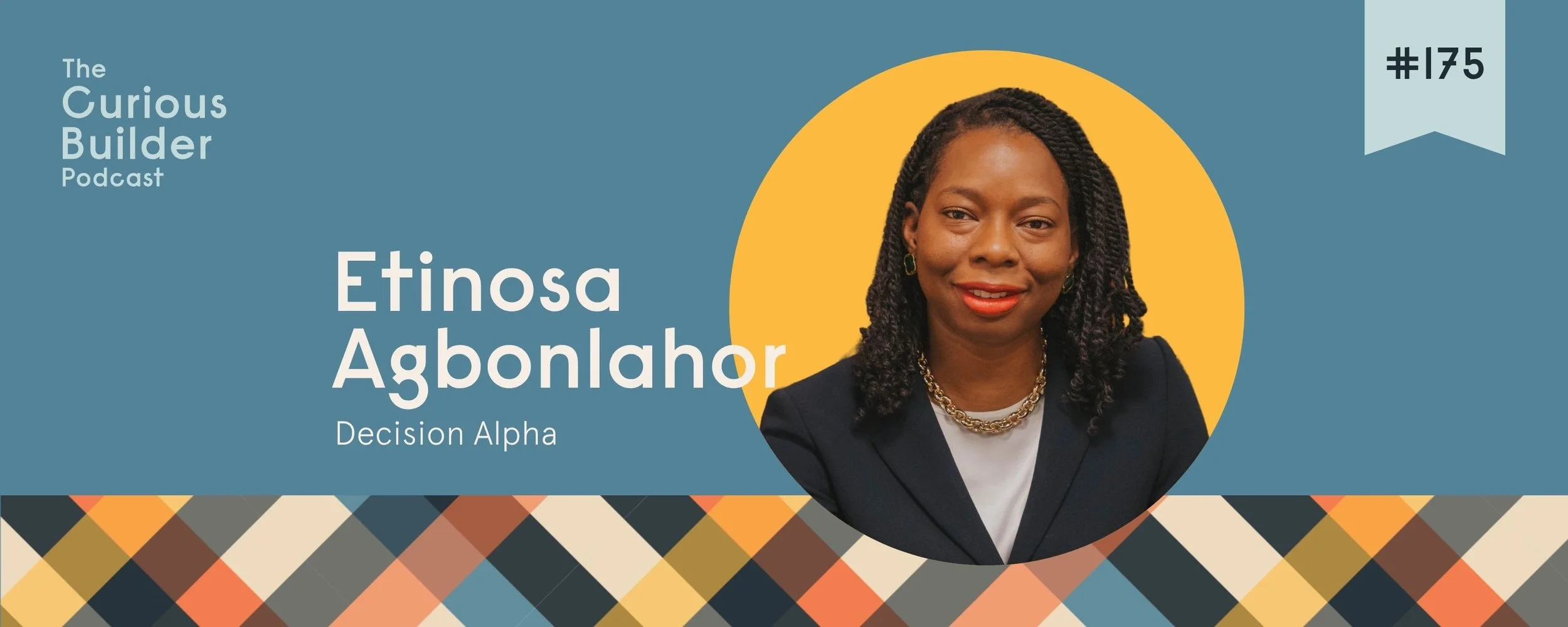
Most business owners underprice their work not because the math is wrong but because their fears show up in the numbers, and Etinosa Agbonlahor has built an entire firm around fixing exactly that. She and Mark talk through the psychology of pricing, how to have money conversations with the people who matter most before it becomes an emergency, and why a blank price tag on a truly unique home might actually work against you. It is one of the most fascinating episodes in recent memory, and the wine study alone is worth the full hour.
Listen to the full episode:


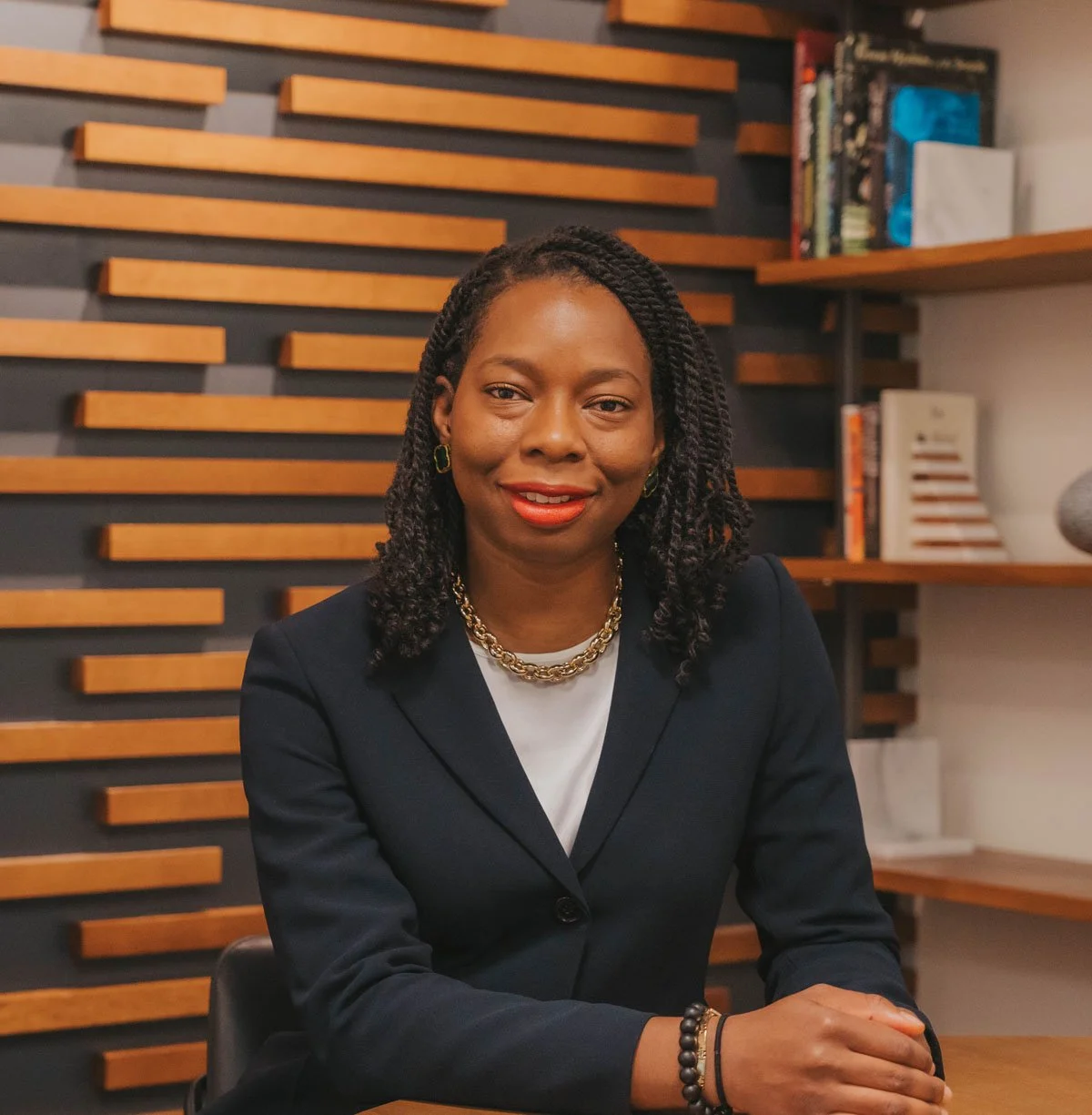
About Etinosa Agbonlahor
Etinosa Agbonlahor is a behavioral economist and CEO of Decision Alpha, a behavioral pricing firm that helps businesses improve pricing for growth, traction, and stronger perceived value. With over a decade of global experience across the U.S., Australia, Africa, and the U.K., she has shaped pricing, engagement, and customer-behavior strategy for major financial institutions and venture-backed startups.
Her work has been featured in MarketWatch, Morningstar, and other leading platforms for her insights on how behavior drives financial outcomes. She is also the author of How to Talk to Your Parents About Money, a guide to navigating complex financial conversations.
Resources:
-
Etinosa Agbonlahor 00:04
I have a brother who's very young. We have the same parents, but he was born much later. So, how are you thinking about him and setting him up? What are the things that you want to happen, and so on and so forth? And even with that, it took many conversations over many visits over many years to get him to the place of okay, yeah, I should talk to a lawyer and like get some things written down on paper.
Mark D. Williams 00:29
Today on the Curious Builder podcast, we had Eddie Osa out of Florida, and we talked all about the psychology of money, price testing A and B, how to know your value. Most business owners devalue their own work, and there's some psychology about the reason why. This episode, regardless of what you do for a career or for business, you will make more money by listening to this podcast. Without further ado, here is Ediosa. Welcome to the Curious Builder Podcast. I am Mark Williams, your host. Today we're going down to Tampa, Florida. We have Etiosa, or Etty, as she prefers to be called here, on our first name basis with Decision Alpha. Welcome to the show, Eddie.
Etinosa Agbonlahor 01:10
Thank you for having me. I'm excited for this conversation.
Mark D. Williams 01:13
Yeah, you have a very unique background, and so maybe just for the audience before we get going, why don't you? I mean, really, you have a behavioral economics firm that basically helps people do price strategy, and there's a lot more to it than that. But I wanted to have you on. It's a little departure from our typical business, you know, builders and owners and designers. But I think your insights from behavioral psychology and it really works out well because our q2 book, as I was mentioning with psychology of money. I think how we price things and how it relates to our our confidence and our values. I think you're just going to bring a lot of insight to the audience and whoever they might be. So why don't you give us a little brief overview of what you do, your background, and kind of what your company does, and then we'll kind of go into storytelling because I have 1000 questions. As the audience well knows, I am very intrigued by your background.
Etinosa Agbonlahor 02:05
Yeah, absolutely. So, as you mentioned, I'm a behavioral economist. What that means is I essentially study the psychology behind how we make financial decisions, and I've used that for more than a decade to help banks, investment banks, businesses build better tools, better experiences, better products that help customers get to a better place financially. And so, what we do now in my firm, Decision Alpha, is that we bring those same insights to helping businesses price better, price more sustainably. Because a lot of times we think that pricing is about the numbers and the math and the margins, but a lot of it is our psychology as business owners that comes directly to affect our price, and then it's also understanding the customer's own psychology that helps you then back out and create a price that is both sustainable and helps your your customers as well. So essentially, that's kind of what we do and who we are. But also happy to take you through the how did we even get here in the first place?
Mark D. Williams 03:03
All of it is fascinating. So this is so I can't believe this timing is perfect for what I have to for some questions. But one of them to frame it, you had mentioned about knowing your clients, and I've been in business for 22 years. I have a much clearer picture of who I am as a builder and as a person, as well as what I do for a client. And I, I think the clear Brene Brown has that famous quote, "Clear is kind, and I think that goes for ourselves as well as business owners. Like the more we can keep it clean and clear to our client, the less explaining we have to do. Like I've been on people's websites, and like even like studying for these interviews, like I very clearly know what you do because you have a very clear proposition. But I've I've interviewed people where it took me a whole hour, and at the end, I still had no idea what they were doing, and that's obviously bad messaging, and it's not clear. Or I'm just an idiot, and it could be it could be the latter. I'm not quite sure, but I guess my point is, you talked about knowing your client. So what do you think is more important? As kind of my first question, is it knowing yourself or knowing the clientele that you are trying to target with whatever you're trying to sell or do?
Etinosa Agbonlahor 04:11
I think that knowing your client is very important. There's a symbiotic relationship, right? Knowing yourself and knowing how you present and knowing what you offer, of course, very important. But then also knowing your clients is very important because they are the ones who are making the decision as to am I going to buy this, am I going to work with you, am I going to invest in this relationship, am I going to continue to be a good person to work with? Will I then refer you afterwards? Right, knowing your client is very important, and also more than knowing them, knowing what they value, what do they care about? A lot of times, as business owners, we think they care about costs. They care about making sure it's done quickly, right? We think we have these heuristics for what people care about. Oftentimes, that's not quite the case. I've got a great story about this. I had a, I have a friend who he's an investor and he invests in real estate. He's in his 80s, so he's been investing since before I was alive, right? A while ago, you know, in the 70s, I think in the 70s or in the 80s, he made an offer on a house. This married couple-they've been investing for a long time. They're done with it. They're ready to sell this duplex and move on with their lives because they're retiring. He makes an offer on the house. They say, "Not really. Don't, not really interested in selling this to you. Don't want it. Don't want your offer. Thank you, no, thank you. A few months later, he runs into another investor friend, and the investor friend tells him, "Oh, I just bought that duplex. You made an offer on. And he's like, "I thought they weren't selling. They said they weren't interested in my iPhone. I thought I had made a good offer. So what went, you know? So he goes back to the couple because he's so offended by this. He goes back to them to check, "What's the deal? And they said, "Oh, your friend offered to pay for our anniversary to pay for a cruise on our anniversary every anniversary for the next 20 years. So what they cared about was not the price. It was the friend was like, 'Hey, I'm happy to pay for your cruise every anniversary for the next 20 years. They're like, 'Sure, okay, let's figure something out. So in that instance, it wasn't just the money. It was what actually do you want to use the money for? So it goes back to understanding your customer as the foundation. If you're a business owner, and then that, of course, then bleeds into how do you understand yourself and how do you present, etc. to your customers.
Mark D. Williams 06:16
So I think, and I agree with you. I heard someone once told me this great analogy. I'm not much of a fisherman, but I appreciate what he said. He's like, if you want to catch a big fish, you should cast your lure where big fish eat. I mean, it's very simple. Like a child could understand that. But I remember when it was shared to me, I was like, wow. So like, I build high-end custom homes, and so where do they shop? Where do they vacation? Like think like basically like Zunzu, like the art of war. You know, like think like your enemy, or in this case, think like the person who is consuming your product. I guess my question is: is I understand like high level, like obviously I could come up with stereotypes of like who would afford. Let's say in my case, you know, we have a you know $6 million spec home right now, like I have an idea of who that homeowner is and like likely lifestyle, but they're all generics. Is there a way, regardless of your price point, whether it's 500,000 1,000,010 million, 20 million, whatever it is in the home builder space, how do you actually get more specific and actually just really drill it down? Because once I know that, and then I'd love to know how do you market to that. So let's say we know. Let's just use an example because I like watches. Let's just say that it's likely that somebody that would buy a high-end home likely has a watch valued at over $10,000 I would say if it was true or false, I'd say true. That's likely true. So like, am I then am I sort of in magazines where Rolex, Rolexes, and other high end watches are? Like, how do you actually you first of all how do you find that information, and then two, what do you do with that information?
Etinosa Agbonlahor 07:52
Yes, that's a great question. Most of the research that we do, especially when we're helping businesses figure out what do we price this thing at? What do we price this product, this service? It starts with us talking to customers and prospects, and we are trying to understand how do you value something like this? What are you know? Is it? It saves you time. It saves you money. Is it more efficient? It helps you bring your family together. But outside of that, if you weren't using this, what would you be using? If you weren't going to buy the spec home, if you were looking for a spec home, what would you do instead? Would you just buy one that already existed? In what neighborhood would you buy it? What do you care about? Is it the schools, etc. You're trying to drill down into not just how do you value this, but also if you weren't using this, what's the alternative, and also what are the things that matter to you, and how do all of those things stack up, right. That all starts to get you towards a theory of this is the perceived value of what you have to offer, and then we can quantify that using our different kind of pricing instruments. But everything starts from that conversation of go talk to customers, talk to prospects.
Mark D. Williams 08:55
That's it's funny you say that. Like it's what you just said is so simple, and I've been overthinking it for years, I just realized that like genius, like hello, Mark, you're a moron. Like I just wrote down, I should go interview my past best clients, yeah, and develop 10 questions, and not only say like why did you pick me to begin with, because your your past clients will inform, I assume, your likely future clients, correct?
Etinosa Agbonlahor 09:19
That's right,
Mark D. Williams 09:20
and and their behavior patterns and like that would actually be really interesting. So do you think it's good? I mean, how often are you telling your clients? What is your advice when someone comes to you and says, "Help us under understand what are we pricing this widget at or service" I mean, there are plenty of people that listen that are architects, right? It's more of a service based or interior designers, or in my case, I'm a builder. That's you know, but process matters too. How are you? Are you asking them all to develop 10 questions and then go pull their past clients? And how do you recommend they do that?
Etinosa Agbonlahor 09:49
Yeah. So we do it usually. We'd be doing it for them, and usually they're coming to us with something where we're saying, let's understand who the different types of folks who could buy this are. It might not just. One customer archetype. It might be multiple customer segments that you can market to if you package it in different ways. So let's talk to those different segments, understand what they value, how they value it, etc. Let's use that to back out the price. Let's look, take a look at what's going on in the market in terms of your competitors and alternatives, and then we'll walk through. This is the right model for the price. This is what your price it as this is how you frame it, and then let's take it, test it, continue to iterate. But to your point earlier, and I don't, I didn't want to move on without forgetting this. If you do sit down to talk to customers yourself, there's a great book you can use for those conversations. It's called The Mom Test, and it teaches you the Mom Test, M O M, like Mother. It's a small pink book. It's really short to read, but it teaches you how to have conversations with your clients in a way that's debiased, so that they're not telling you, "I love the house, I love everything about it, because I don't want to offend you. But you can get and extract real useful data from them. So that's a good book if you're going to have those conversations yourself.
Mark D. Williams 11:00
I just wrote it down. That'll be that'll be being purchased quite quickly. That sounds like a great. Also, I'm a small. I mean, every business is so different, right? I still think you can take what we're listening to right now and apply it to your business. In my case, if I do three to four high end homes a year, like that's what I need. So for me, I actually plus I love staying in contact with my past clients. I mean, to me, it'd be sort of fun to actually go interview them in person, you know, just an excuse to spend time with them and interact with them.
Speaker 1 11:27
Yeah. Um.
Mark D. Williams 11:27
What one of the things that you had mentioned in sort of doing a little research about your company is why do people chronically underprice their work? And I can say that one of my missions with the Curious Builder is I try to keep conversations very real and share. Like I've said this, the audience has heard me say this many times. Some of it is ignorance. Like I honestly did not know the difference between markup and margin. So I, for decades, was charging markup, and I thought it was margin, and so I was always making about 2% less than I thought. And this, in the field that I'm in, construction, most people do not have financial degrees, if you will. And I've often said that you can be a good business owner and a bad builder, and you can make it. And you could be a good builder and a bad business owner, and you'll go bankrupt. And hopefully, you're good at both. And part of what I'm trying to do with the podcast and talking so openly about my mistakes and others around us is that it's okay to make failures. The question is, is like when you know the knowledge, like make the change. And so I immediately, as soon as somebody told me, I think this has been six, seven years ago, the difference between the two. You can imagine how that affects your bottom line if you're adding 2% and that's just simply a calculation that has that has nothing to do with the quality of work that I've been doing for decades. It just you're owning your story, and even beyond that, I do make more per home now than I did at any other point in my career. And you could also say, well, yeah, Mark, you have 22 years of business. You obviously are, you know, smarter. Your craft, you're more elevated. I think that's true, but that being said, like that, I've been undercharging honestly. Every client I've ever worked for, you're welcome. I've made you a lot of money because when you sell their homes, and I'm actually very thankful. Like I am glad I was still able to be operational. I mean, you can't survive 22 years without doing something right. But that being said, most of my clients, when they sell their homes, they make money. And I'm not saying I believe in win-win scenarios. I think builders and architects and designers in our industry in general all need to make more than they're currently making. The amount of risk that we take on as an industry and the hard work that is done, I do believe, as an industry, we way undercharge. I'm curious your point of view. I don't know how many builders or architects or designers you have had as clients, but as an as just as business owners in general, it seems like your messaging is saying that most business owners undercharge. Can you explain why that is exactly?
Etinosa Agbonlahor 13:59
Yes, there's a couple of reasons for that, but the biggest one is our fear, our uncertainties, our anxieties come out in the pricing. There's also something around in behavioral economics. We have this notion of the IKEA effect, right? Because you built it, you understand where things are, you understand where it's held together with duct tape. You know where your knowledge is. Like I know this thing, but I'm not really sure about it, right? You know how everything kind of came together, and so you underweight the effort, the time, the expertise that you put into it relative to what it's actually valued at and how much value it offers to the person who's buying it. I was talking to somebody recently. Her business is all about she helps couples who are going through a divorce value their business, right? And so she was saying she had just spent a couple of days at a pre-trial for something, and she was going to have to charge her customer, her clients, about $10,000 for the three days. And she was like, "I might offer them a discount. I don't know. I don't feel comfortable like you know getting this much. But you just spent three days away from your family. Include on a Sunday to like work on this pretrial situation, right? And I was trying to explain the difference between what you would offer for your service because you are the expert, and therefore it's easy for you to undervalue it, versus the amount of value it gives to somebody who has no clue how to do what you do and who you actually saving millions of dollars by being in the room with them and for them. So the biggest, one of the largest reasons for underpricing is just that notion of uncertainty. Our fears and anxieties start to feed into how we are charging. We're worried about people saying no to us, especially when you're smaller and newer as a business, and you honestly do need the money, right? It's important to your point earlier. Sustainability-you need to eat. So that there's a lot of fear, there's a lot of anxiety that's showing up in that pricing, but also the practical morality of I need more people to say yes than I need them to say no. How do I continue to figure out that balance? So that's one of the reasons.
Mark D. Williams 15:54
No, it's funny you say that. I had a I can't remember my lawyer. I don't remember what he charges, 456, 100 bucks an hour, whatever it is, and I remember, and he's got a hilarious sense of humor, and he says, "You are, you know, we're talking about hourly rates, and I think this is true for designers and architects because they often charge an hourly rate, and you know, obviously, the more senior you are, usually the higher the rate. And the point is, is if someone was to question like, why do you charge 500 bucks or 800 bucks or 1000 bucks, like an hour. That seems like a lot. And the response would be, you're paying for 40 years of schooling and situational awareness and knowledge that can't really be quantified in a deliverable. That's experience based on our knowledge. And to your point, it sure it's easy for them because they have that knowledge. But compared to someone who doesn't have that knowledge, and it would seem like a Herculean effort to do something like that. And I think your earlier comment about like a plumber-you know-if you're a plumber and you can swap out a valve in 10 minutes, there's a reason why they have service charges because if you built that by the time, you could never get paid enough to or electrical worker, HVAC worker, apply it to any business you want, honestly. And so I totally that what you said totally resonates. Just because you're used to doing it, I think sometimes in our career, I think this is true. We very often, as business owners, we don't stop and reflect on what we are, what we've become. We're too focused on where we're going, and I know for me, I feel like a lot of business owners have ADHD, and that's honestly what makes them really good. They're drivers, but what makes them really, yeah, totally. But I have a hard time being. Someone said recently, and it's resonated with me greatly, which is be where your feet are, and about being present, and one thing I have not done very well is just because it's hard is to stop and just to reflect on. I look at let's say the person that I am today, not even the business owner, but like who am I am? Who is Mark Williams? Who am I as a person? And how far have you come through life? As you know, I have three kids and father and marriage and all these different things, but to really reflect, all those experiences have led me to be a better business owner, a better person, all these different things. But I just know as, and maybe it's not just me, maybe it's the human race. I don't know. Do you think that most people don't really stop and consider how far and how much they've actually developed, and therefore we underprice psychology wise because we don't really value what we've even done because we're too busy thinking about the next thing versus like where did we come from? Do you think that's accurate?
Etinosa Agbonlahor 18:32
I think that's absolutely accurate. There's a great book. It's Ben Hardy and I think Dan Sullivan maybe. It's called The Gap and the gain.
Mark D. Williams 18:41
Oh yeah, yeah, yeah. The
Etinosa Agbonlahor 18:42
whole premise is this: is that you don't. We focus so much on where we're going, and we don't look at the incremental wins that we've made over time, right? Look at the difference between where you started 22 years ago and where you are now. It's probably like completely different planets, completely different continents. And if we don't stop to reflect and understand that, then we miss out a lot. And the same thing happens with pricing. I tell people pricing needs to be a feature and not a reaction. And what that means is that the same way you're intentional about the features you put into your business, your expansion, the new product lines, the new quality materials that you use, you have to be intentional about your pricing to sit down with yourself, your business partner, whoever, once a quarter, and just look through: Are we doing things differently? Have we gotten more efficient? In what ways are we delivering more value to the customer? It doesn't mean that you're changing your price every quarter or even every year, but it does mean that you are being intentional about understanding we are delivering more value to customers than we were a quarter ago, and we just want to recognize that. Because then, when you do go to increase your prices or change how you price, you have the evidence to back it up.
Mark D. Williams 19:46
This episode is brought to you by Pella Windows and Doors. I've used Pella for 21 years as the exclusive window company on every one of my builds. When people ask me who I trust for Windows and Doors, it's Pella every time. Their craftsmanship, their innovation, their. Top tier service make them a no-brainer for any custom home builder or designer who demand the best. Whether you're designing something bold or building something with timeless elegance, Pella has you covered. They're also the only window company that has a lifetime warranty on all of their windows. I've gotten to know all their people at Pella Corporate as well as locally here at Pella Northland. I'm proud to call them our partners and our friends. Visit Pella.com to learn more and connect with your local reps today. For more information, you can also listen to episode one, where I interview the Pella Northland founders, as well as episode 109, where we talk all about their latest innovation with the Steady Set window. So I have a. You are a very unique person, and you can speak to this. But I was-you've worked on four continents. You know, North America, Australia, Africa, the UK. So the question I'm going to ask you was asked to me recently in the US. We were talking, so maybe I'll frame the question for you and for the audience too. Is like Americans live in their homes, about on average nine years. So we don't think about our homes as multi generational because we move too much. Post World War II, you know, the baby boom generation in the in the late 1940s and early 50s, it was like, how many homes can we build? We had an exploding population, so nobody can build homes faster in the world than the United States. We build homes so fast that doesn't mean it's good. It just means we're fast. You go to Europe, for example, and they think everything long term. Like for instance, we don't-they don't even have double pane windows. Everything is triple pane, and because they're thinking like, yeah, if you think about things in 10 or 15 years, you're right, the payoff is not there. But if you change the dynamic and say, hey, this home is 30 years, 50 years, 60 years, 100 years, whatever I invest, not only am I protecting it for me and enjoying it, but the next generation of people who, my family, my kids, my grandkids, who live in this home most likely are going to benefit from those decisions I make today. So that's the framing of the question I'm about to ask. One of the issues with, and this could be a cultural thing, which is really what I'm getting at with you, since you've had more experience in working with people in other parts of the world. Culturally, the stereotype about Americans is bigger, faster, better. A bigger house is better than a smaller, well built house. We size, value, price-all those things are stereotypes of the American culture. I believe they're true, but the stereotypes exist for a reason, but like for instance, I'm chart. I'm trying to challenge that status quo with what I'm doing right now at this current house I'm sitting in. It's an incredibly detailed house, but I told the architectural partners I wanted the house to be much smaller. It's much more expensive than the average house, but it's it's much smaller because I care more about the detail, and I can put more detail in a home if it's smaller. If it gets too big, it just gets too expensive. So here's my poorly framed question: Is that an American issue? With like, for instance, if I price a house for let's just say 6 million, people we expect people to offer less than what I tell you it is, and a lot of people price products knowing that there's going to be negotiating, so you say it's at 6 million. You play this psychological game, like, well, I take 5.7 The buyer comes in at 5.8 and you do this the song and dance. I don't know.
Mark D. Williams 23:11
Okay, why don't we just say like, hey, this is what the house is. There's really no negotiating. Like, I know what it is. It's this, or reverse. It's actually this is one of a kind. It should actually be 7.1 way above it. Where I'm going is how much of that is cultural to the U.S. versus like India or the U.K. or Africa. What is your kind of response to how you price things compared to the culture?
Etinosa Agbonlahor 23:37
Yes, I think that culture plays a big role in our understanding of value, so it's and it's also not just culture; it's commercial reality, right? So, for example, I'm Nigerian and American, right? So, the house that my family owns in Nigeria, it took many many years to build. Big huge project, but it's a concrete house. Everything is is well made, but took a lot of time, lots of effort in Nigeria. More often than not, you're going to build a house, and you expect it's going to be a long, complex project, and you're going to pay for it out of pocket. You're probably not going to finance the building of it, right? And so the building is with an eye towards this is going to take a long time, and so we're using sturdy materials, and it's going to have to last a long time because how often do you gather enough money to build a house by yourself and pay for it straight out, right? There's not. Let me ask you that:
Mark D. Williams 24:25
Is that because financing is not of it? So I traveled to when I was climbing Mount Kilimanjaro. Duma I think means cheetah, and I can't remember if it's Swahili or what language. They that was been 20 years there, but anyway, bottom line is he said that the exact thing. We helped him out. He said we could only build like it took him like seven or 10 years to build his family home, and mainly because they didn't have access to financing. So is that because other places in the world, let's say Nigeria, financing is either a too expensive or because like in the U.S. obviously most people would build a house with a 30-year, let's say, mortgage or a finance or something like. Is that about right? Yeah, that's what I
Etinosa Agbonlahor 25:02
mean by commercial reality. Meaning, for a lot of people, they're not going to get the financing to be able to build a house or to buy a house, and so they need to build it with the money that's available in their pocket, right? And so that affects building materials. It affects also the long term nature of how you think about the usefulness and the purpose of the home, right? On the other hand, where it's easier to access money, it is also easier and cheaper for you to, relative to building a house by yourself and paying for it, it's cheaper for you to be able to buy a house and pay for it over 30 years. You can spend less than half of your salary every month paying off of your home. It means that there's more, there's more of an incentive to think short term, and it's also just the it's the water, right? It's the cultural nucleus. It's the expectation of the culture that when you buy a home in the U.S. you have your starter home, and then you have the next home, and then maybe you have the final home that you're retiring, and then after a while, you might choose to then move into an access delivery facility or whatever, if you cannot age in your home, whereas in other countries, if you bought this home phenomenon, you're going to live in it, and your children might live in it too, and you're going and they're going to inherit it, and then you know, like it's a different expectation. So I think part of it is yes, to your point, it's the culture, but I also think it's the commercial reality of the countries also affects how they look at things.
Mark D. Williams 26:23
That's interesting. What about the UK or Australia? Because you've had some time there. Is that more similar to the US, or is it somewhere in the middle of the two?
Etinosa Agbonlahor 26:31
It's somewhere in the middle. I will say the Australian housing market is just insane. However bad we think we have it in the US, with the cost of things and and who can afford to buy a house? How quickly at you know at what stage of their lives? It is 10 times worse in Australia.
Mark D. Williams 26:47
Why?
Etinosa Agbonlahor 26:48
In Sydney, houses are millions of dollars. The housing boom. Everyone has been waiting for the housing bubble to explode, and we're still we're still in it. It hasn't exploded. We're still in it. Those prices are not going anywhere. I don't know what has driven it. I do know they have a lot of external investment pointing to the country, and that naturally, when you have a lot of money coming in from outside, that can drive prices up and make it less affordable for folks who can't, who don't make the same amount of money. That's been part of the narrative, but honestly, I think it's also just it's a small country. There's only so many places you can build in, and so that starts to affect you know demand and supply. I
Mark D. Williams 27:24
mean it's funny. I was too young at the time. I was 21 I went to school in Wollongong, just south of Sydney, where you grew
Etinosa Agbonlahor 27:29
up. Oh, cool, cool, cool. And so
Mark D. Williams 27:31
you remember the glass house? There's like a restaurant bar down there that everyone knew. But anyway, but to your point, I mean Australia is a large country, but most people they haven't traveled there. I think the population is only what 20 to 30,000,090% of the population lives within 20 miles of the ocean. So basically, it's just the it's like a salted margarita glass. It just the edge basically is where people live, and so because you'd think like, but most of it's a giant desert, right? And so anyway, it's been so long since I've been there. We have some family down there. My kids were just asking. My kids are 10, eight, and six, and they want to go see kangaroos. So anyway, we might, we might. Yeah, I actually really love New Zealand. I just love the mountains. So, how long were you in the in Australia for?
Etinosa Agbonlahor 28:17
About four and a half years. I was working with a bank, they're running a behavioral advisory kind of portfolio. So similar work down there, but loved it. Yeah, just a phenomenal place to be.
Mark D. Williams 28:28
Yeah, let's talk a little bit. I want to talk about two things here specifically, and then we'll kind of open it up. One is, and it was our book in last quarter, the psychology of money. You, I think, in the opening chapter, I think was chapter one or two. It Dan Hausel was talking about the basically the most important or not important the most influential way that you and I look at money is based on how our parents looked at money. And you wrote a book, How to Talk to Your Parents About Money. You've got to tell me about what prompted you to write the book. What is the book about? And let's talk about that a little bit because I think that's yeah perfect,
Etinosa Agbonlahor 29:04
absolutely. So what prompted me to write the book is at the time I was working with a massive investment bank, and that bank we had huge financial, like almost 30,000 financial advisors having conversations with clients every day, and clients across all types of networks, right? From got a couple of dollars help me figure this out to like we have a family office and you help us figure out our family office, and the conversations that they were having with me about what's going on as we have what's called the great wealth transfer happening about 10s of trillions of dollars are going to transfer across generations across the next 20 years, and parents would go into their financial advisor's office, and the advisor would say, "Okay, tell me how you're thinking about you know moving the company down to Young Ben. Tell me about how you're thinking about estate planning. And they'd be like, "I don't know. Parents and children would finally get into the office together, and it would be tense, awkward, and nobody's quite sure how to have the conversation. And so, part of that, and also having friends whose parents are getting older, and started to come to me about when I talk to my parents about retirement and what their expectations are, but I don't want it to seem like I'm trying to grab their money. I don't want it to seem like I'm asking about the whale. How do I have that conversation with them? All brought me to understanding that we're at an inflection point, money is moving across generations. People need to start to understand how these things work, and nobody has the tools to have the right conversation, and nobody has the tools to have a transparent, open conversation that guides everybody and gets us all to a good place without fracturing the relationship, which is all what we're all scared of, right? So that was kind of the the impetus for writing the book, and what I love about having written it is, I've had so many people come to me, have conversations with me about this. Helped me have conversations with my dad, or my friend is also Nigerian, and in our culture, it's very hierarchical. So you know, you don't say whatever to your parents; they're not as casual with your parents. And she's like, "We finally had my conversation with my dad about like the American tax and how expensive it is here and why I can't send money to him all the time and blah blah blah blah blah and all of those things. Somebody else here in the U.S. His father's partner had just passed away, and right away his dad was trying to like sell the house and do all these incredible things. And he said, "I read the book and he helped me have the conversation with my dad about let's just slow down, let's not do anything dramatic yet. You're still in grief, and then when we come out of this in six months, we can sit down and make a plan together about what you want to do with your money and the next stages of your life. So, I've loved that the book has really helped gender good conversations between the generations, which is what I was really trying to like accomplish with it.
Mark D. Williams 31:44
Interesting, you know. It's I was at a financial conference about 10 months ago, and it was really interesting. It really opened up my eyes to you know money and wealth that I was not you know not that I wasn't comfortable talking. I'll talk about anything, and but I just you know if you're not around it, you don't know even the language that is being spoken. And they talked about wealth at the very top, the 1% of the 1% if you will. And they were talking like I didn't even know what a family office was, and so like you know the Rockefellers and the Carnegies and all this stuff, and kind of how it's structured was really fascinating to me. And they said, you know, and I get as a business owner, one of the reasons why we have the podcast is most business owners are very comfortable talking about money because it's interesting to us. Like we have conversations because we want to learn from the other person. It's usually not an ego thing. I think when you're not in business and you hear business owners talking about money, I think it's very easy. Like actually, my wife, you know, she's a physician and she's married to me. Sometimes I I think she thinks when I'm talking to other business, like I want to know what stuff costs. How much did you make? It's I'm not comparing. I'm I'm trying to learn. I'm trying to understand what you're doing in your business because I'm I'm generally curious about it and how can it's no different if you're if you're in if you're in fitness now, if you're a runner, like hey, what's your training tips? What do you eat before the race? Like, how do you get? It's no different, honestly. It's just curiosity, and I think sometimes when we're not, most of the people listening to this podcast are business owners, most likely, so like they totally get what I'm saying. But like, it is interesting. Like the family offices, going back to this conference, they said, "What do you think? What do you think the Carnegies talked about, and Rockefellers talked about at the dinner table or Thanksgiving? They talked about money, they talked about like how to protect it, what to do with it, how
Speaker 2 33:29
to invest
Mark D. Williams 33:30
it, and like if you grow up as like a five-year-old kid, a seven-year-old kid, and just talking about this, it becomes you normalize it. It's no different, and this wasn't meant to go this way, but like as a parent, I have three kids. Like, I have sort of made a promise to myself that whatever question that my kid asks, I will honestly answer, whether it be sex, drugs, money, whatever. Because and and I haven't had any of those uncomfortable conversations just yet. But I guess my point is, is like by being honest and authentic, like as a parent, wouldn't you rather the information that you talk about with your children because they're going to learn it one way or the other? They're going to learn it at school. They're going to learn it through pop culture, wherever you'd rather have the conversation. Or that's how I feel about it as as a dad. And I think that generation. Luckily, I had parents that were very open minded that way, and we talk about finances all the time. And I, I feel like a lot of my business sense came from my dad, from very simple conversations. And one of I've shared this before, but it was like, you know, if you if you make $100 a month and you spend 101 you will go broke. And if you spend 99 you will make it like that. Is a simple enough concept that I'm pretty sure my six year old could understand. And yet, even as a 45 year old now, like that is still applicable to running a business. And yet, we often forget it at our own detriment.
Etinosa Agbonlahor 34:55
Yeah, I agree to all of that. I think that. How you're raised plays a big role in how you view money. It plays a big role in what you think is normal. In the book, I talk about before you even go to anybody else and have this conversation. First, you need to examine your own internal manuscripts. What do you think is normal when it comes to money? You might have been raised in a situation where everything is about saving, and if you're not saving, you're dying, and oh my God, you need to save all the money. And you run into a partner who is about balance, right? We save some money, but we're going to die with zero. Let's spend it all, and let's figure it out, right? And so you have to understand what are the biases and what is the the manuscripts, internal things you've learned about money that you're going to bring. It's the lens through which you view the world, and all of that is then going to impact how you have the conversation and when you have the conversation and what you hear in the conversation and how you hear it. The other thing that you mentioned I wanted to touch on was also like the timing of these conversations, because a lot of times we wait until we're adults and our parents are retiring, and then now we want to talk about what you want to do with your estate. You need to start it as early as possible and get everyone comfortable with having these discussions about money. How do you manage it well? What do you do with it? What is the life you want to live? Is that lined up with the money that you're bringing in and how you're spending it right now, right? Because then that builds trust, that builds confidence for down the line when you do need to become the power of attorney, when you do need to take on more responsibility for them or whatever that looks like. There's trust, there's confidence, and there's openness of that communication, but all of that matters.
Mark D. Williams 36:25
I 100% agree with you. I mean, it's funny. Like literally two weeks ago, I asked my dad because I would be the executor of the state. He's 75, and they're very healthy. But you know, we've been very comfortable with death for a long period of time. I mean, even as a little kid, we talk about it, and I know that's likely abnormal for most people, but I remember asking my dad, "I'm like, okay, we always use drastic scenarios. I'm like, "Cause you just bought a new sailboat. I'm like, "Okay, Dad, you you die in a squall, or you get hit by a, and you use a pilot for a long time. I said, "You crash your airplane. Mom survives. What do you want me to do? And then we talk about it, and it's like, "Okay, mom is with you, and you both go down. What do you want me to do? And like, I like real scenarios because storytelling. I'll remember. I have a very comfortable relationship. I've been talking like that with my dad for my whole life. My question to you is: for those that are listening, how would you encourage them to engage with their parents if they haven't had this kind of conversation before? And if their parents shut them down. Like it's pretty hard, you know. If you come to your parents and you're like, "Hey, Dad, if something happens to you and Mom, I'd really like, and they're like, "No, no, no, nothing's going to happen to me. You know, don't worry about it. I mean, they're just-it's honestly-it's the ostrich. They're sticking their head in the sand. Have you engaged or thought about this? Or in your book, have you given tools? How do people overcome those objections?
Etinosa Agbonlahor 37:40
Yes. So first of all, once you've gone through your manuscripts and you understand what you're bringing to the conversation, I tell people to start from a place of care and curiosity, right? So it it might not be like, what do you want me to do with your money when like your your plane goes down? That might be hard for some people. That's how we were all. But it might be you start from the simple place of what do you think you want your retirement to look like? Or now they're retired. What what do you think you want the next couple of years to look like? What are you looking forward to? You've got maybe they've got grandchildren. How are you thinking about setting the grandkids up? Start with things that they care about. Be curious about it, right? They're really into gardening. How are you thinking about you know what do you want the garden to look like in 10 years? You want to get them thinking about like the future, and approach it from very safe areas that they're interested in. Approach it from a place of curiosity and care, and then you might go into having a conversation around there are things that we need to know, things that you want to happen if you're not here, right? And it's never going to be one big conversation all at the same time. It's going to be five minutes here, 10 minutes here, 15 minutes here. There's going to be times when they say they just they don't want to think about it yet. That's totally fine. Talk about something else, bring it up three weeks later, and ask them the question again. Right? You're trying to get them familiar and comfortable enough with it. And I also think, and this is why I keep going to the point about you're building trust because I had to do the same thing with my parents, right? In my culture, again, the hierarchy, and also we do not discuss death. We pretend like it's a thing that's not going to happen until it does happen, and so I can't just go up to my dad and be like, "Hey, by the way, when this happens, like yeah, I bet you my example
Mark D. Williams 39:17
was like, "Oh boy, you should try that with your dad. That's
Etinosa Agbonlahor 39:20
not gonna. That's not gonna fly, right? So it had to be. And I have a brother who's very young. We have the same parents, but he was born much later. So how are you thinking about him and setting him up? What are the things that you want to happen, and so on and so forth? And even with that, it took many conversations over many visits over many years to get him to the place of okay, yeah, I should talk to a lawyer and like get some things written down on paper. So I think that it's just having patience is approaching things from a place of care, and it's also not trying to a impose your will on them. This is not about what you want to do. We somehow have this notion that our parents' money is our money, and I don't understand that. It distresses me a lot. It's not right. I know you have opinions on what they should do. They made the money. Let's sit down and figure out what they want to do. I really prioritize that.
Mark D. Williams 40:07
My grandpa has one of the greatest lines ever. He's passed now for 1015, years, and he had this great line that he told my mom. He said, "I've done enough for you. I hope my last check bounces. I always thought that was so funny. Just such a funny sense of humor. You can see where I get it from, and you can imagine like some of the conversations, right? And so, I think the
Etinosa Agbonlahor 40:31
other, yeah, the other part to that is we also don't want to feel like we need to be the expert in the room, right? You're having these conversations. You're not a financial advisor, you're not a financial planner, and you're not a certified, you know, exit planning attorney. It's okay to not have the answers. It's okay to just have the questions. It's okay to ask the questions and say, "All right, like maybe we need to talk to a financial advisor. Maybe we need to talk to a planner. Maybe we need to talk to your cousin Betty who went into the assisted living facility, and let's figure out like what that looked like for her. Right. So it's okay to not be the expert. Don't feel the pressure that you need to have those answers. Just care enough, have the conversation, and then go from there.
Mark D. Williams 41:09
I mean, I think that's wise. It's interesting. I mentioned that my wife is a physician. She does internal medicine, so she handles a lot of end of care life, and she sees people at their worst and sometimes their most beautiful. You know that my grandma was 99 and she just passed and and really had a beautiful life and you couldn't ask for a better exit. I mean, we could only all dream to exit the way Grandma Lou did, and I know we don't get a say in how that happens, but watching it and my my wife has just commented like, you know, she sees people that have not had these conversations, and the parent is on their deathbed with a few days, few hours, few weeks left to live, and the infighting and the terrible things that are said, and the stress it puts on the doctors and the staff, and I mean it's super uncomfortable. And my wife has often said that if she could just do medicine, she would love her job. 90% of her time is handling family dynamics well, and I'm sure they have some. You know, you'd imagine a doctor that goes to school for eight years or whatever. Most of it's probably about medicine. They probably have one or two things about handling conflict. But like, honestly, that's you need the knowledge, obviously, to do medicine. But like, if most of your time is, you really need like a marriage therapist, like maybe a hostage negotiator. I had this great idea actually that for next year I want to do a panel, and on the panel I literally want to reach out to a police department. I want a hostage negotiator. I want a marriage counselor. I want like people that specialize in conflict management because most business owners, one way or another, are learning the psychology of conflict management. I mean, that's just what you do, and I just think it'd be sort of a funny way to sort of poke fun at ourselves of like what we're sort of what we have to do, but we're not really trained to do. If that makes sense,
Etinosa Agbonlahor 42:57
I have a talk on navigating clients' emotions, and a lot of it is that how do you systematically understand what's going on when somebody's experiencing anger, when they're experiencing grief, when they're you know spinning their wheels and refusing to make a decision? What what's that uncertainty about, right? And it's something that you have to be trained for. You have to be equipped to understand. Otherwise, you end up just learning it, learning by experience, which is the less fun way to to learn anything, and also if you do need a hostage negotiator for that panel, I think I know. I think I have
Mark D. Williams 43:26
a real used to be
Etinosa Agbonlahor 43:28
retired from the police first, and part of what she did was
Mark D. Williams 43:31
amazing. Yes, please, I'll make a note. I'll send you an email. I, if nothing else, I'm gonna have her on the podcast because I mean that's baller. If you're looking to level up your business in 2026 and beyond, the Contractor Coalition Summit is the place for you. If you've been a listener to the show, you know that this has been the single biggest factor in how I've leveled up over the last couple of years. It's had a huge, profound impact on my business, my personal life. It's what helped me launch the Curious Builder. In fact, our second event of the year is a little change. september 15 in Minneapolis, we are doing a one-day event. So for the last four years, we've always done three-day events, sometimes four-day events, and we wanted to recognize that it's a significant investment in yourself, which is definitely worth every penny. I've talked many, many times about that, but for some people, it's just out of reach. So we wanted to do a one-day crash course event. Obviously, we can't cover all that we can cover in a four-day event, but this will be a major, major upgrade to whatever you are doing, if you haven't been to one, so that'll be september 15 in Minneapolis, and then our last one of the season will be another three four day event in Charlotte, North Carolina. All the details can be found at Contractor Coalition summit.com Let's switch gears a little bit. You had talked about. Or you have mentioned, I think, on your website about a four-step proprietary pricing format. Can you speak a little high level for the audience, just from a kind of a storytelling way? Like, what is that? So, as we talked about earlier on, setting your pricing, understanding your value, what is this kind of pricing framework, and how does it work?
Etinosa Agbonlahor 45:19
Yes. So, I'm going to explain it in an analogy that you really like. Explain it to people as a house, right? You think about pricing as a house. You first of all have your cost floor, which is what does it cost you to actually deliver the service to each individual person. That's your admin, your tools, your labor. Everything goes into establishing the cost floor. You must make this much to exist, right? That's your cost floor. You also then have your willingness to pay ceiling, which is what is the highest your customer is willing to pay for the thing that you have built, right? That establishes as far as you can go with your pricing. The in between floors are then what are your competitors doing and what are the alternatives to your service, and so that forms kind of the entirety of like the pricing architecture. The four-step framework then looks at first. I will start by establishing your cost floor. What are your costs? And it's very interesting the amount of people who we actually have to sit down with them and have a costs session because a lot of people don't actually understand and know what their true costs are. They end up underweighting their costs, but we're starting with costs. But we're also then deciding, and we we call it we're mapping out your monetization zones. We're trying to understand for your product, for your service, are there different people who you can offer this to, and how do you offer them to them? Are there different customer segments that you serve, right, with your processes, your service, your tool, etc. Who actually your customers? Because it's not one monolith, even if your product is the same thing, right? You might be a lawyer and you service small businesses who are setting up their who need help setting up their business, and then you also serve larger businesses who need more defense and IP, etc. So we map out monetization zones. We understand your class floor. That is step one. The second step then is we're taking all of the things that we know about who your customers are, who your product, your prospects are. Those different areas that you want to try and monetize, or taking that into doing the willingness to pay research, right? So we've done the floor. Now we're going to go do the ceiling. In the willingness to pay research is where we're asking about perceived value. We're asking about who else would you be using if you weren't using this product. We're asking about what would be too cheap, too expensive, too high, too low. We're asking about for this feature, how much are you willing to pay, etc. We're doing the pricing research and using the pricing instruments to deduct and come out with a range for each of your different customer segments around what they're willing to pay for your product. So those are the first two steps: is you've got the floor, we've got the ceiling. The next thing that we do then is that we want to understand how to frame your price, and this is the one thing that a lot of people kind of don't do well: is understanding that how you frame your price is going to influence and inform how your customers interact with it. So, for example, I see a lot of folks who are in the service business just offer one price. They say this is our proposal. This is what it costs. Like take it or leave it. The research shows that if you do that, 90% of your customers will choose to either walk away or go get other opinions. Because human beings make decisions relative to a reference point. We cannot make decisions in a void. We need something to compare it to. Now, if you took that same proposal you had and then create another proposal and say we can either do this or we can do that. 30 to 30-4% of people will make a choice immediately. Look how much money you've just saved, right? So that's the psychology of this. We want to bring that psychology to bear and say, okay, we know what you should charge for it. How do you charge for it? What is the model? What you put in front of people?
Etinosa Agbonlahor 48:38
So we do that price framing, and that's where a lot of the behavior economics also comes into play. And then finally, we have our testing and our refining, the iteration. Put it in front of your prospects, or sometimes clients choose to put it, put the new pricing on the new models in front of everybody. We help them. How do you have those conversations? How do you make sure you're onboarding everybody into the new price in a way that doesn't affect your retention or drive up churn. You're testing that in front of prospects, new clients, and then you're refining based on what you're learning. And then we're making sure we're accompanying you through that journey of implementation. And then a quarter in a quarter, we want to talk about your value again. After that, we want to talk about value again. In a year, or two, we want to see is it time for you to take a look and see what you can adjust in your prices, so those anti-wind are the four steps.
Mark D. Williams 49:24
I really well, I love the part about the A B versus a price, and I think you're right. I think like I'm in the home building business. It's one thing if you can if you can come into this home that I'm sitting in, our Misa Hus project, and then you go into one of our competitors' home. Like there's not even a remote question how different this house is, but you you sort of but if you have not been in another house, you can't really appreciate the nuance of this. Or you know if you drive a you know if you if you've only ever ever ridden in a Ford, let's say a pickup truck, and then you go drive a Ferrari, you're like wow, I didn't even know this was possible. So I love the idea that you need some. Some contrast because we're not great at, and it's true. I mean, I didn't think about it till you just said it because we actually do it instinctively without thinking about it. Gas stations, as you drive down the road, they're different gas prices or service or restaurants. The menu obviously is is you know you can go by budget by food, but a lot of you're right. A lot of service industries we don't do it. Is there a point where there's too much? So, like, I like three, for instance. Like, and maybe for homes it doesn't work quite as well, but for like services it does. I know I do this actually a lot for my sponsors. So I have like three tiers of sponsorships for the Curious Builder for our collectives and different things. It's like you know, tier A. Here's the cost. Here's the deliverables. B here is the and like you know C is like it gets watered down and so then they can say like oh man I don't have the budget well great then I can do this it it goes back to that clearest kind that the simpler we can ask the take it just makes them feel like they're kind of in charge of their own budget
Etinosa Agbonlahor 50:56
yes
Mark D. Williams 50:56
but if I give them 10 like that's too many so is there a psychology of like the right numbers?
Etinosa Agbonlahor 51:01
Yes, there is absolutely. There's a great book called. There's a great book by Barry Schwartz. It's called Super Psychology of Choice. The Paradox of Choice is what it's called. The Paradox of Choice. Barry Schwartz.
Mark D. Williams 51:12
I'm gonna have to take a week off of work just to read all. You
Etinosa Agbonlahor 51:15
read all the books, yeah. But great book. It's based on research from behavioral economics where they've shown that the more choice you put in front of people, the more you create what we call cognitive overload. So it takes our brains effort, right, to make a decision, to evaluate decisions, to evaluate choices. When there's too many choices, it just creates too much of our mental load on us. We don't want to make the decision. Your clients are going to walk away if you put too many decisions in front of them. We worked with a financial advisor on this last year. Actually, she was putting eight packages in front of her clients. You could do this and this and the other thing and the other thing, and so she wasn't converting most of her prospects. And we had to say, okay, you've got different types of people who are coming to you. Let's segment them out, and then for each person, yes, it's you can do this or this. If the different architect comes, you can do this or that, right? Let's just simplify, and that was one of the ways we immediately added value without even touching the price. But if you're getting beyond the four mark, right? If you're putting more than four things in front of your prospect, they're probably going to walk away. There's really not that. There's no reason to put that many. Oh, it's so it's two or
Mark D. Williams 52:21
two or three is the right number?
Etinosa Agbonlahor 52:22
Two or three is the sweet spot. The human working memory is like five plus or minus two things, but truly you want to go two or three. You don't really want to go beyond that. Otherwise, you might see the opposite happen where people are walking away because it's too much effort you're asking them to do.
Mark D. Williams 52:37
Man, I think if if there's one golden nugget so far, I think that's it. I mean, I'm just thinking of all the things to simplify. And I was listening. There's a great podcast called Founders, and he was talking about Steve Jobs. And when Steve Jobs was came back the second time, I think Apple had like 140 products, and he's like, absolutely not. He cut them down to like seven or 10. That's a massive cut. And Johnny Ives, who designed the iPhone, you know, basically they let design they let design lead, and they just became amazing at just a few products. And I think industries in general, when you drift away from you know you what your core tenant is, we and this is what's hard. I've had other people on the podcast, I don't know the answer to this, but like, what is the difference between when people get really successful, they get they start getting bored, and then they start thinking they have to start something new versus just stay true to what they are. The hard part is, is like all of us, and I talk about this before in some other keynote stuff that I do of like alternate revenue streams. So sometimes you know if you are you know if your business is just one thing, it's nice that you have maybe a few other things that you can get some sort of other income in in case that one thing falters. But the problem is if we get so distracted by these other things that we lose our core tenant, that's not good either. But yet not innov. I mean innovation somewhere falls in between the pursuit of some of these new ideas, and so I don't don't pretend to know the answer to this, but I do know that you know staying with your sort of your core. I mean, core four just sounds good because it rhymes, but like you know, staying with something that's very not too far away from what your core business is is probably somewhere in there is probably the right thing.
Etinosa Agbonlahor 54:21
Yeah, I use the analogy of building a bridge. Right, you want to build the bridge and finish building the bridge before you start trying to build other bridges. So you've got a business, build it, get it to the get it to where you're comfortable with, and then maybe the next thing you work on is how do I make sure this business functions without me being in the room? That's a big challenge. It takes entrepreneurs a very long time to like figure that out. That's a big goal on its own, right? So that could be the next thing, as opposed to let me go build another business before this business is fully mature. So I think there's something around that focus too.
Mark D. Williams 54:50
I think that's a great analog. I'm just thinking a river with just a bunch of half finished bridges. That's that's kind of a funny picture, but you're. So right, I think it happens all the time. Anyway, you know, as we sort of close the interview here in the last few minutes, one thing I forgot to do that maybe I'll I'll do it now. Here, we usually start every episode with one question that was left from the previous guest. So you're going to get an opportunity to to to respond to a question that was left by a previous guest, and then you're going to leave a question for the next guest. So the question is more of a personal nature. What is the single most important thing that do you do every day?
Etinosa Agbonlahor 55:33
Oh, very open. It could be
Mark D. Williams 55:34
personal. It could be business. It could be anything.
Etinosa Agbonlahor 55:36
Yeah. Okay. Single most important thing across all the things, right?
Mark D. Williams 55:41
I think go anywhere you want with the question.
Etinosa Agbonlahor 55:44
I'm gonna go with prayer. I think that it's just for me personally. It's very important to be able to, regardless of whatever you believe in, who you believe in, where you believe. I think it's important to have the ability to say, "This is what I'm worried about. This is what I care about. This is where I'm holding the balance between my effort and like hoping that good things happen and like you intervene, right? I think when you become a business owner, it really stretches your faith and your ability to like walk into the dark and just like keep building and figuring things out without really knowing what's going to happen. And prayer helps me keep walking through the dark every every day, so I would say prayer is a big. I do that every day. Not do it. I mean, I don't know. I don't think I've ever not done it, but that's the one thing I would say.
Mark D. Williams 56:30
I love that answer. I think I remember some advice my dad gave me, and you probably have seen the example of like the jar of water, or sorry, the empty jar where where you put the important things in first. Have you seen?
Etinosa Agbonlahor 56:41
Yeah, yeah, the big stones. Yeah, the big
Mark D. Williams 56:43
stones and all that. But anyway, he used to always encourage me as a young man in college because prayer and reading and faith was a big part of our life and still is. But he would always say it's not about priorities with an S. He'd always say it's about priority with a Y, like singular. Like if you prioritize the thing that gives you the most, then the rest of the things in life will will come the way they come. And and I can't say I've always done that perfectly. It's I think you know someone else once said it's it's better to have ups and downs than it is to have ins and outs. And I think the comment was was like even if you feel like you failed, like get up and try again, and I think it's wise advice. Okay, so now it's your turn. What would be a question that you would leave the next guest? Could be about anything, business, life, anything you want.
Etinosa Agbonlahor 57:31
Okay, I'm gonna ask. I was recently a strategic coach, and this was a question that they opened up the whole conference with. What have you learned from your greatest failure?
Mark D. Williams 57:41
Oh, that's a good one. What? Just writing it down. She's actually coming in. I met her at a tour. She's actually a documentary storyteller for film, and she's had stuff submitted for like film festivals. And she happened to come through my home that we're sitting in right now a couple weeks ago. And I'm just fascinated by storytelling. And this house, we don't have time to go into it right now. Was all based on a story, and so I'm gonna just like you are a unique guest that we haven't had on. I really appreciate the insight that you had. I think it's gonna be really valuable to the audience. But this next guest is all about storytelling, like you talked about pricing, which I think is super valuable. I think her. I'm real. What I'm trying to get out of her is, as a filmmaker and a documentary, someone who films documentaries, essentially, you're thinking about the story, like not only so someone will consume it and watch it, but like what is the authentic version of this person or this subject matter or whatever you're trying to get across. Because one of the things that I would like to do more in building, and I'm sort of just slowly waking up to this process now with this current home, is we developed an entire story before we ever built this house. Because this house that I'm in right now does not actually have a buyer, right? So we created the story to be the client. Like we created it's Visa who's, and again, the audience probably knows a little bit more about it than you do, but like I'm just fascinated by storytelling, and so I don't really want to sell. I just want to tell you a story, and then if you feel that you could be a character in this story, or in this case, it's a house.
Etinosa Agbonlahor 59:14
Yeah,
Mark D. Williams 59:15
that is really powerful, and it's a different way of creating value. Anyway, so I'm really curious to see what she says about filmmaking and how I could sort of incorporate her eye as she interviews people, you know, into a story. Whatever you do for a business,
Etinosa Agbonlahor 59:30
yeah, I think storytelling is an important part of selling, and it's very different to say, "Do you see yourself as a character in this story than what are you willing to pay for this? Yeah. So when that comes out, I definitely want to keep an eye out for it. Actually,
Mark D. Williams 59:45
I'll I'll end this. I have a question for you. I don't have enough money to do this. It sounds you know it's like some friends of mine. We won't go there, but the point of it is, if you didn't worry about selling it, which most of us have to worry about selling things, it'd be really cool, and it's really coming from a bunch. Or confidence, right? I would love to build a home and have no price on it, and just tell people there is no price. What do you think? What is this home worth to you? And it have to be really unique, and it have to because at the end of the day, like, is the market dictate what the value is, or do you dictate the market by what the story is? And honestly, I could argue anything, but I'm really curious. You have the knowledge in this
Etinosa Agbonlahor 1:00:30
psychology based. I know we're at time, but I'm going to tell you. Can I tell you a story about
Mark D. Williams 1:00:34
please? Yeah.
Etinosa Agbonlahor 1:00:35
So in Sierra Business School in France, did a study where they got a bunch of people hooked them up to fMRI machines, had them taste different boxes of wine. Only thing on the boxes of wine was the price tag, right? So you're tasting wine, and you only know how expensive it is. Medial orbitofrontal cortex, literally the part of your brain that deals with like value and things like that, lit up when they were drinking the more expensive wine. When you're drinking the cheaper wine, brain is like, eh, whatever. Of course, you're drinking all the same wine. The only difference was that they saw the price first. So while this sounds great that you can just say no price and you guys come to me and tell me what it is, unless somewhere in the story you had planted the two seeds of this other house that we told a story around like this was like $17 million and this other one somebody paid 25 Now what would you pay? It would work in that sense because you've created little reference points, little anchors for them, and so they're coming up with a price. But you framed it for them. However, if you just went blank to it, what would you pay? Very difficult for them to make that decision, and they might end up you might end up losing money on the house.
Mark D. Williams 1:01:38
Well, and I that I love what you just said about that the wine thing. That is so because I mean I know psychology is super powerful. I've been using example. It's not a real one like yours is, but you know again I mentioned before I sort of like watches, and so we were talking about what you price something at, and if if if you went in and a and you saw a Rolex at a high end jeweler for $1,200 someone would say that's broken. It's stolen. It's fake. It can't completely be real. What's wrong with it? And then if the Rolex right next to it is $29,000 you'd be like, "Wow, that must be a really special watch. I bet the $29,000 watch would sell before the $1,200 watch would.
Etinosa Agbonlahor 1:02:20
Absolutely, 100% would and and
Mark D. Williams 1:02:23
so I've been that's been living rent free in my head on like you know of like how to price a home that's really unique that doesn't really have the problem with some of the price testing is like I like what you said about A and B and usually in most markets you can look at the market and you know that, like a real estate agent, that's what they're trained to do. The you know we look at what what else can you get for 5 million, 8 million, 10 million. Like you could you could do a filter and see what's out there. Then ultimately the clients decide which one is the best in their budgets. But when you have something that doesn't exist, a true unicorn, there is no B. It becomes really hard to, and I now I realize why. From what you just said, there's no A B. They don't know. They don't. They don't know what to do with
Etinosa Agbonlahor 1:03:09
it. Yes. So then the the it becomes incumbent upon you to create the reference point. You have to sit them with with sit down with them and do the willingness to pay research and understand how do you value the footprint, how do you value the location. How do you value the eco friendliness, the sustainability, all of these different elements, and all of that comes together with a price range, and then you say it could be this, or if we finance it, and or however other way you create the alternative, it could be that, right? But that's a lot of what we do when people are building something brand new that's never been done before. Let's go sit down and let's figure out what the reference points are going to be that you're going to put in front of your your prospects.
Mark D. Williams 1:03:45
This is amazing. I'm so glad your team reached out to me. This is one of my favorite interviews I've had, and I mean I like all my interviews, but this one is just so your timing of all the things I've been thinking about is so perfect. And you're such a fascinating guest. Thank you so much for coming on the Curious Builder for the audience, we'll have all of your contact information and website on the show notes, and obviously businesses I assume can reach out to you. And this is what you do for a career. So if you need help going through this, actually, I know you go by Eddie, but I actually love saying Ediosa. Like that is such a beautiful name. Thank you. So anyway, thank you for coming on the show, and thank you for
Etinosa Agbonlahor 1:04:19
having me.
Mark D. Williams 1:04:20
Thank you to the audience for listening in, and I, you know, we've been doing this lately with the audience. is just a reminder versus cutting into ad reads right now. Is I would challenge anyone listening right now if you found value in this episode. I know I've written like two pages of notes actually here, and I've already thought of four or five people I need to send this episode to us. I challenge you to send this to three business owners that you think could know more about pricing strategy and psychology of money, like how that would help their business, just like it helped yours. So don't wait; just hit the hit the tab and send it to three other people, and that would be my favorite ask. To the audience, I appreciate it, and thanks for tuning into the Curious Builder. Thanks for tuning in to the Curious Builder podcast. If you like this episode, do us a favor: share it with three other business owners. The best way that we can spread what we're doing is by word of mouth, and with your help, we can continue to help other curious builders expand their business. Please share it with your friends, like and review online, and thanks again for tuning in.
This episode is sponsored by: