Episode 180 - Lauren Riddei on Why Her Phone Has Been on Airplane Mode for a Year and a Half
#180 | Lauren Riddei | haus Holistics | Why Her Phone Has Been on Airplane Mode for a Year and a Half
Lauren Riddei's body basically staged an intervention on her career, and the fallout turned her into one of the sharpest voices in healthy home design working today. She and Mark talk biomimicry, why your front door should act like a filter, and why bigger houses might be making us sicker instead of happier. It ends on birds building the perfect nest, which somehow makes total sense by the time you get there.
Listen to the full episode:


About Lauren Riddei
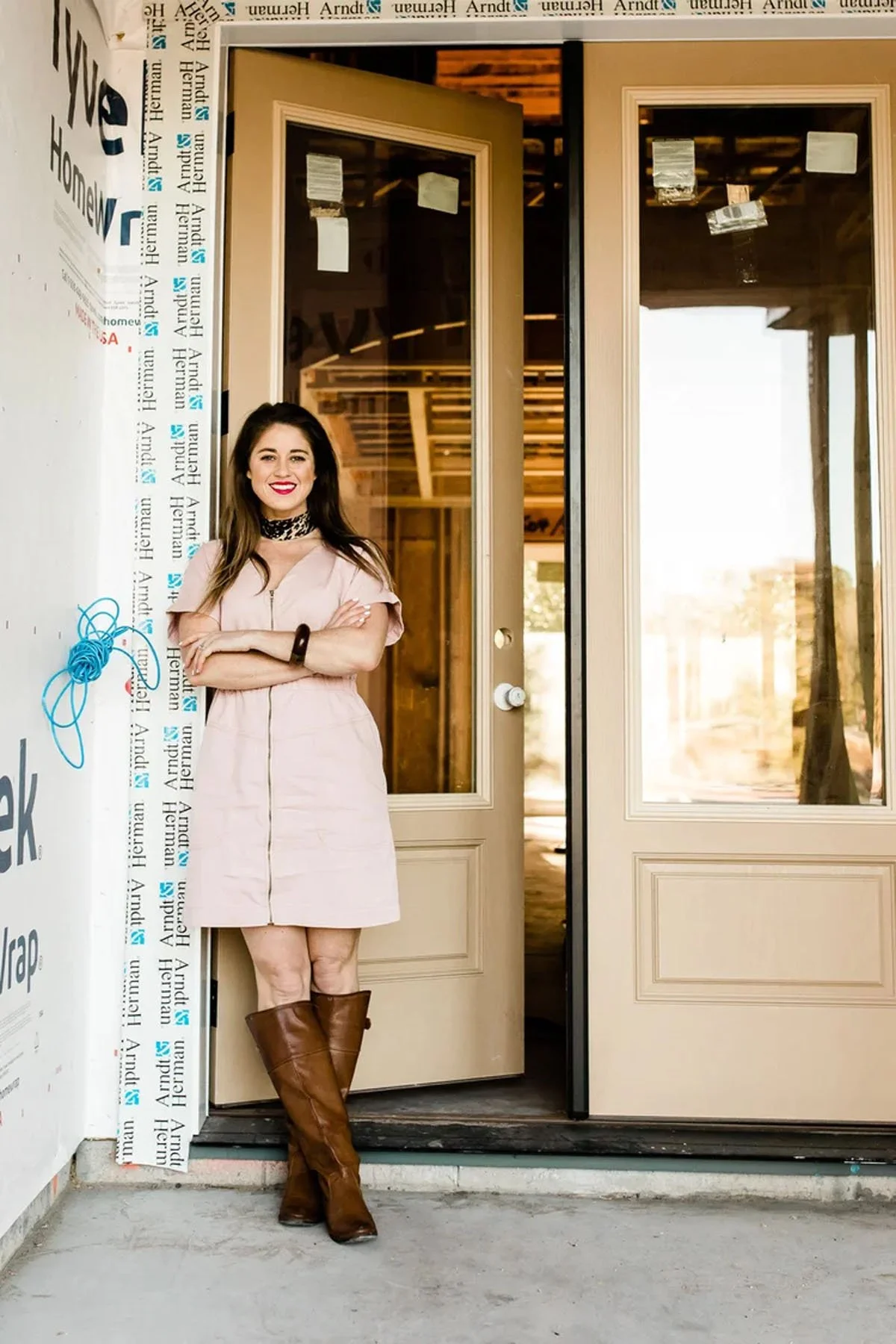
Lauren Riddei is the Founder of haus Holistics, an environmental health, design, and build consultancy based in Myrtle Beach, South Carolina. She is among the first interior designers in the United States to earn triple certification (BBEC, BBNC, EMRS) from the International Institute for Building Biology & Ecology, having trained under respected proponents in the field including Paula Baker-LaPorte, Larry Gust, and Stephen Collette. She is also the co-author and co-developer of a new professional training track within the Building Biology Institute that integrates interior design practice with holistic Building Biology principles. The first cohort of interior designers and architects completed that training in June 2026.
Resources:
-
Lauren Riddei 00:04
Nature has done all the R and D for us. Like we just simply have to slow down enough to observe what nature is are is already doing. We've just lost our way. Like especially in construction, we have lost our way for foams and synthetics and plastics, and we've really severed this relationship that we once had with nature.
Mark D. Williams 00:31
Today on the Curious Builder podcast, we had Lauren Raday in from Myrtle Beach, South Carolina. And if you are in for home health, if you are in for wellness, or if you are excited about the information that you can learn, so that you can get more clients. You're going to love this episode. Get ready to level up, and here's Lauren Raday. Welcome to the Curious Bitter Podcast. I'm Mark Williams, your host. Welcome to a Monday episode, and today we've got Lauren Raday from House Holistics out of Myrtle Beach, South Carolina. Welcome to the show, Lauren.
Lauren Riddei 01:04
Thank you, Mark. I'm very excited to be here. It's it's an honor.
Mark D. Williams 01:09
I'm so excited. I mean, a it worked out well because we're on the South and East Coast, which is where you are. Yes. But more importantly, I can't remember if it was you or someone on your team reached out to me. I am so excited about this because we've been on sort of a wellness journey with our Misahoos project, and I'll reference a lot of that during the interview. So your whole entire business is set around it as an interior designer. You you have a big you know personal health journey. You know what you do now to educate people. So like I wish I had met you a year two years ago when I first started our Misahoos project. But you know you live and you learn, and so I am so interested as you're an expert and I'm not, but I'm more of an armchair quarterback at this point because now I've built an entire home around what wellness means to me. I have a I have a lot of questions about it that I can't wait to talk to you about. So let's introduce you to the audience and then let's just get at it. Okay, I'm
Lauren Riddei 02:00
excited.
Mark D. Williams 02:00
Well, first of all, tell us a little bit about your business. My understanding is that you are, I mean, you started as interior design, but you had just walk us. I want to start with really your personal story because I think a lot of people, I mean, most businesses, especially small businesses, they're also personal. Yeah, meaning like we are informed by obviously it's obvious our surroundings, our life, our our parents, our business-you know how we grew up, of course-but especially yours was such a health one that I assume that's a huge catalyst to what has led you down, you know, where you're at today. And I I kind of want to start with like what you were doing as an interior designer, and then the less how those years transitioned into what you're doing now.
Lauren Riddei 02:40
If you had asked me five years ago, 10 years ago, that I would be in the world of environmental health, helping people create homes that are of the highest health standards, I'd be like, "That's interesting. I'm an interior designer. Like, how did I get there? Well, how I got there is dramatic, and I really couldn't have written the story better myself. And I love a good story, but I'll start from the beginning. So, in really mid midpoint, Mark in 2021, I was at the top of my game working on beautiful luxury interior design projects, and I was really excited about what I was doing. Basically, overnight though, I got really sick from my job sites, and this came out of left field. I was sensitive to sounds, to light, to smells. I would end up going to my job sites for not even 30 minutes. I'd get this instant brain fog, confusion. I would be at a loss for words. I had digestive issues, just tons of chronic fatigue, joint pain, muscle pain, and it really scared me because I was like, "Well, what's wrong with my body? Like, what what happened? And why am I getting sick and sensitive all of a sudden? So this put me on a healing journey to try to figure out what in the world was wrong with my body, what and why? Why am I not healing some of these things that had been ongoing? And so I saw so many doctors, Mark, that had no clue what to do with environmental sensitivities, and then the mix of other things that I was going on that I'll share in a second, but they just gave me a lot of unanswered diagnoses, and I had a lot of questions. They threw surgery at me at one point, and it just was a really disheartening experience because I was seeing Eastern practitioners and Western practitioners, so I was giving the best of both worlds, and it wasn't until-and this is about two and a half years later-mark. Okay, I ended up having-I had to step away from my design career. I wasn't able to work anymore, so that I could focus full time on healing, and I had a naturopathic doctor run blood work. We did. Live blood analysis, biofield testing, and she was like, "Girl, where are you living? Where are you working to have results like this? And I said, "Oh well, I'm an interior designer. Like I'm on, like you, Mark, you're a builder. Like I'm on dusty job sites, like face and tile measuring cabinets, and I'm an antique dealer. So
Mark D. Williams 05:20
she's like you have the blood work of a radiologist, like working with a hazmat suit at Chernobyl, cleaning up nuclear waste.
Lauren Riddei 05:28
Literally, I mean, it prompted her to ask me that, and I have never. I've been in the holistic world at that point for eight years. No one ever asked me about my environment, and and I am an antique dealer, so I'm in antique stores, you know, in moldy, musty, dusty environments as well, and I basically was like, "Well, why does that matter? She's like, "Well, that's probably why you're not healing. You're getting sick from everything, and I really didn't want to believe her that my live, work, and play environments were impacting my health negatively, not allowing my body to heal. Some pretty chronic things going on, because what I didn't tell you is that around the same time I had a serious back injury, and then I also had this kind of like application running in the background of depression and anxiety. I had unexpressed trauma and grief from when my dad passed away, and I had dealt with high school and college eating disorders. I had church hurt and religious trauma, and I was also let's throw this in the bucket. When I got really sick, I was trying to figure out if I was going to stay in this religious community that I grew up in, and that's a big one.
Mark D. Williams 06:43
Well, I mean, all the ties to it. I mean, plus, oh, by the way, running a business-we haven't even-we haven't even talked about being an entrepreneur and all the stress that that comes with. I mean, these are all the personal, physical things. I mean, it's kind of like that old adage: you can't pour from an empty cup. And I don't know if you have kids or not. I mine are 10, eight, and six, and it's like you know when you you know you come home after being exhausted physically, you know, and I have a great job, I love what I do. It doesn't mean it's not stressful, but it's like you're just tapped out of energy, right? And it's like now you got to show up as a dad because you you know you spent eight hours with your clients giving them your energy, the best part of your days, and now you've got to regenerate like a whole new. I mean, that's what that that's like called normal life. You had that plus you had all these other crazy things you were trying to solve at the same time. I can't imagine
Lauren Riddei 07:30
and stressful clients on top of
Mark D. Williams 07:32
and stressful clients. It
Lauren Riddei 07:33
was really an implosion point for me. So when I say Mark that I got sick from my job sites, that was true, and also we never just get sick from one thing. It's usually a conglomeration of things that have not been worked out. The dough has not been kneaded out. They're still running in the background. So this was a really big moment for me, though, to really wake up and realize, oh my gosh, like my job sites pulled me out of my slumber to realize I need to resolve this and I need to resolve that and I need to work on that and I need to let go of people pleasing and I need to set boundaries and I need to believe my self worth. So this was a big catalytic moment for me.
Mark D. Williams 08:18
I mean, is it fair to say you had a mental and physical remodel going on. I mean, you had two, right? I mean, plus, I mean, I can't, and we can go there if you want, but I mean, I can't imagine kind of the spiritual journey as well as untangling all the things that would come through years and decades of belief with whatever that trauma was manifesting itself as as well. It's just a lot of stress on your body, even if the house wasn't making you sick through lead poison or whatever it was, you know all the other things. I'm a total respecter of if you are not in a good place mentally, it's pretty hard. I mean, it does have an effect on your body. And I've had a recently we had Gabe Norcross on, who's become a friend, and and he talked about suicide. In in his was through stress, but he had some childhood trauma stuff as well that sort of manifested through that stress later in life. And it's just, you know, as a human, just connecting with other humans, you just you know the the podcast is meant to obviously talk about entrepreneurship and the challenges of it. But at the end of the day, we're all human and we're all trying to just have a better life and do better work. And now it's kind of cool because wellness is having this much deserved day in our vernacular and our talking and interviewing people like you and Misa Hus and it's really just beginning wellness is you know multi century topic that's not the point it's just I feel like our society at least in the U S is very much a waking up to it and I think financially there's some I keep saying this stat because it left a huge point of view. Because maybe someone's listening to this and like, oh, that sounds good. You know, Lauren had a lot of things that she had to work with. I don't have that. Maybe you do. Maybe don't. I don't. I can't speak to the audience. But what I can say is that's a $1.9 trillion industry in the United States and expected to double in the next nine years. I saw that. And if you are, and if you are building a house for some. Because I've been saying this to people lately, other than your genetics, Lauren, and what you eat, what you drink, I think that's it. I, as a builder, which is creating the home that you spend 90% of your life in, have the biggest effect on how you feel and the health, your health. So I'm like the fourth down on the most important things, like obviously your genetics, you can't nobody can change that. Do you think that's a fair statement for me to be telling people?
Lauren Riddei 10:26
Yeah, I think what's interesting about what you just said that yes, we spend 90% of our time indoors. Well, one in three of those buildings that any of us are living in actually have some sort of health hazard, whether it's poor ventilation, lack of health with building materials, chemicals, mold, etc. So, if one in three homes, then that's impacting one in three people. That's pretty significant. So, I would say I don't think I could actually classify an order because we're.
Mark D. Williams 10:55
I don't think order is important. I just want to know. I mean, I don't think I impact your health more than your genetics. So, I do think there is some order to that, but like, I mean, I could counter your, you know, I mean, I could make you, I could make you sick no matter what your genetics are. So I, I mean, maybe it is higher. I don't know.
Lauren Riddei 11:09
Well, there's actually there's a German architect, and I'm gonna probably butcher his last name, Hunden Wasser, Hunden Wasser, and he actually had the same agreement that the built environment, the home, is our third skin. Our clothes being our second skin, and and then we have our dermal layer, which is our skin. And later, he actually gave a lecture about this. I think it was in the 70s. He gave this lecture butt naked to kind of prove a point.
Speaker 1 11:38
Yeah,
Mark D. Williams 11:39
that's amazing. I
Lauren Riddei 11:39
know you've got to look it up. But he later came back and said that there's a fourth and then a fifth skin that represents our life, and the fourth being our relationships and our community, especially like your community, and then the the last layer being the greater ecosystem. So I think to me those five layers actually are pretty significant.
Mark D. Williams 11:59
Okay, I'm gonna have to you're gonna have to email. I'm gonna put that in the show notes because that sounds fascinating. I I want to dive deeper into that maybe later in another episode or something because that sounds really cool. Like I said before we came on, we're gonna run out of time before we run out of things to talk about because that's fascinating. Back to your story, actually have a question to pause you there. I mean you you were on a two year journey to check your health before it dawned on you that it was your environment, and I want to get to like obviously how you changed it and how it evolved into the rest of stuff. We'll talk about, but I have a question for you. Like, I mean, it's kind of personal. I live in a 1919 house. I'm a family of five. How does the average person check if their house is healthy or not? Like, how do you know? You might get your water tested to see if you need carbon filter RO or mineralization or what you might need. Like I get like a new home. You know we have much more modern air scrubbers, and it's honestly I think the new homes are. I mean they're a lot tighter. But the way we ventilate them, I would imagine with air to air exchangers and all that stuff, it's got to be it's got to be a lot healthier. Like like how do you know you live in a healthy house?
Lauren Riddei 12:57
Yeah. So twofold answer to your question is so like I said, I I had been on my job sites doing design projects and didn't get sick at all. I was fine. It was it was overnight that I got sick essentially. And so if you're familiar with Dr. William Ray's work, he was an environmental scientist. He came out with the rain barrel analogy. Have you heard of it before?
Mark D. Williams 13:18
No, but I can predict where it's going. It basically fills up far enough, and then finally, it tips over.
Lauren Riddei 13:22
Yeah, you reach a critical mass, and then for me, that was my overflow. It was too much for for my body and my mind and my heart to handle. So, some people's thresholds just might not be there yet. Maybe they haven't had enough exposure to toxins or chemicals, or they're living in a home that is has a lot of natural materials and natural finishes, and it's breathable in a sense that it's vapor permeable, and it's not airtight and accumulating a lot of toxins, which a lot of our modern homes are. They're essentially not considering all the furnishings and the decor and the rugs and the foam we had in the furniture.
Mark D. Williams 13:58
Yeah, it's funny you say that. So have you? Do you know who Andy Pace is out of Wisconsin? Yeah, he's
Lauren Riddei 14:03
in the business biology community.
Mark D. Williams 14:05
Yeah. So he actually his book just showed up on my on desk. I haven't read it yet, but he, I had him on the podcast. I don't know, year year and a half ago, and he one of the stats that he shared with me that was really interesting. You just touched on, which a lot of the homes where people were sick, you know, Andy would come in or test or do whatever to help them. They found that it wasn't the house; it was the furniture, and especially inexpensive furniture. The glues, the formaldehydes, the fabrics were soaked in who knows what chemical. And I just and then in this example, he took all they took all the furniture out of the house, and the client instantly was better. And I've actually talked lately. One of the things that we did at Misahu's because I told our interior design team, the OHA team, I wanted everything to be as much as possible. I didn't want anything synthetic. I wanted everything natural. And you can't do 100% but I got pretty darn close. And I told them with furniture, it was a lot more expensive, but it's all custom. It's all undyed natural. And it's beautiful, but you know, there's an. I think sometimes people think of just the cost, but what is the cost of not feeling well? And I, I know that for the builders of America, you know, and designers and architects listening to this show, I can tell you that when people have come through Misahu, while it's a beautiful home, obviously you don't know that, but it is. The people that have been most interested in the home. I asked them why it wasn't the style, it wasn't the craftsmanship. The number one reason why people were considered buying it is because nothing like it exists in our market, which a whole home built around wellness. And each one of them was on a different wellness journey. Some of them had been sick. Some of them were just very keyed into what that meant,
Lauren Riddei 15:41
totally. And I will say that myself and my colleagues are inundated with healthy home clients. We need help. We need a new build. I'm leaving a moldy environment. I'm sensitive to electromagnetic radiation. I need a low EMF home. The need has been there for decades, and it's really finally time that people are realizing that the third skin, the built environment, is and could be the missing factor. I mean, because I was eating organic at the time, I was there was movement, a lot of movement in my life. I had been turning off my Wi-Fi for years, so I was doing all the wellnessy things, and yet I still got sick. You know, there comes a point where we can just have too much coming in, and we just need to detox and rest and allow allow our bodies to heal. Now, one of the things I will say with a home that meets wellness standards, like look at our walls, for example. That's five walls actually, including our ceiling. That's a significant circumference of space that can either tank somebody's health or increase vitality. And when we look at latex paint, that's really doing like it's doing nothing. It's kind of a net zero, not actually net negative, because it's not adding to the environment. And building biology emphasizes bringing materials, anything in the building envelope and furnishings that they don't just like meet net zero targets. They actually increase the indoor air quality by helping it through natural methods. So, for example, if you were to bring clay paint into your environment, clay is this like wizard magical substance that can absorb odors and neutralize scent.
Mark D. Williams 17:27
Is that is that where? So I was going to go there. At Misus, we did about 50% was plaster, which would be in the clay family. Yeah, that's true. What? So what is it about clay? Or because I I didn't know it at the time when we picked plaster. I like the way it makes me feel. I like the way that light goes is dappled and moves off of it. But I didn't realize till after I picked it that well, a plaster is hydrophobic, which is repelling water and and mold and things like that. But it's it has the same properties I think as clay. Like is it absorbs or is like a carbon sink? Do I have that right? Like it's taking what's it taking out of the air by its qualities. How does it do that? And am I right?
Lauren Riddei 18:03
Yeah. So it's hydroscopic too, which means that it can absorb impurities. So, so what that means is that if you put plaster, does the same thing. But if you put clay or plaster in a humid area, it can basically regulate the humidity. It can buffer the humidity in the space by absorbing water molecules, and then when it deems appropriate, it will release the moisture back into the earth.
Mark D. Williams 18:26
Okay, that's it's massive
Lauren Riddei 18:28
technology that that we just have forgotten about in our trades, and that's why it's so expensive today.
Mark D. Williams 18:42
We're happy to announce our latest sponsor, Real Wood Floors. What made them to be an ideal partner is the fact that they align so well with our high-end custom homes. They're located in 25 cities across the country. They're probably pretty close to you. And what really drew me to them is the fact that they're vertically integrated. So many times when you're dealing with wood floor, you know, procuring it from different companies, having it go through middlemen. You're either short material; it's the wrong material. And so we are looking forward to leveling up that and buying direct. The other thing that I really love is their floor made perfect match. I can't tell you how many times I've had a beautiful wood floor, but the vents don't match, or I love the wood floor, but it doesn't match my treads and risers. Knowing that they can perfectly match that is something I'm really excited about. Go check them out at realwoodfloors.com and sign up for an RW Pro account. Tell them you heard about them from the Curious Builder. It's it's funny because I have a gentleman. His name is Michael Wright. I can't remember the name of his book. He's. I'm actually meeting him tomorrow, and he has another company, and all he it's like Bioverse or something along those lines. But his comment is like, "Look out the window. There's 6 billion years of R and D outside. He goes, "Don't you think we should use some of it? And his whole concept is they help companies create crazy cool technologies that are based on nature. Like they have one where he's talking about the wind turbine for the air. They're using the same fin pattern, for lack of a better, as like an orca whale. So when an orca whale glides through the water, the shape of their fins, they're using that shape and whatever to like create wind turbines that would be more efficient through the air. And I'm just like, sounds so cool. It's
Lauren Riddei 20:21
biomimicry. Biomimicry in action.
Mark D. Williams 20:23
That's what it is. Biomimicry. Yeah. There you go. Nature
Lauren Riddei 20:26
has done all the R and D for us. Like we just simply have to slow down enough to observe what nature is are is already doing. We've just lost our way. Like especially in construction, we have lost our way for foams and synthetics and plastics, and we've really severed this relationship that we once had with nature by essentially building a barrier from nature. And and I think just to go back to the paint example, because what a lot of people say is, oh well, is this like a luxury industry? Like you know, are are these natural materials and these natural methods? Is it for you know the 1% I would simply say if my whole goal with house holistics and building biology is to reconnect the built environment back to nature, and if we are in a biomimic sense observing nature, well, how are how is nature building homes? I think the perfect example is just observing birds. How do they build their home? They're building the perfect amount of space for their baby birds. They're not building these like McMansion birds' nests. They're not building more than they need. They're not. You know, I'm in South Carolina. I'm not. The birds aren't flying out to California for their lumber, they're maybe flying two miles away, so they're shopping local, keeping it sustainable, and they're using nurturing materials. So when people say, "Oh, well, it's too expensive, I would say, "I think we're building too big than our needs are. And when we look at history, we see in 1970 the average home was 1,800 square feet. The average home in 2020 500 square feet. So this is the first time Americans are living with the most square footage than we've ever had, and yet household sizes are decreasing.
Mark D. Williams 22:16
It's funny you say that. I one of my goals with Misa Hus, which was a spec home, was I my old and we do very high end homes so I realize I don't build for the normal or just the average person but it's just my craft and what I'm good at but what I've observed is that my empty nesters who often have a home in a second location they don't want eight 710 1000 square feet is huge it's that's too much to take care of young families like me you know, I live in 3000 square feet, a family of five, and it's plenty of space. I know I'll build whatever my clients want. I'm in the business of, of obviously like you, pleasing my clients, but like I also wanted to challenge the status quo. Like it's honestly easy to build a big house. It's hard to build a a very cozy, tight a home that makes you that that is just right size. I love the example of the birds. That it just is the right size nest, and I like the idea that you'd have like you know these multiple nests for each room you know bird to kind of go. But like, if I was to say more holistically, what does? Because I'll answer this question too. What does wellness mean to you?
Lauren Riddei 23:18
It's real simple. It's one Word balance wellness to me is balance because we are all unique. What makes sense for you, Mark, might not make sense for my health, and what makes sense for the editor of this podcast might not make sense for you. So there's actually we can't put wellness in a box actually, and I know that sounds kind of cliche, but it for me that's how I interpret it. It's balance for all of our individual journeys and our paths. Because if I tend to, you know, now that I've increased my life force and my vitality, and I have more energy and I'm feeling better, I'm doing things that I I prayed I could do one day, but back then I didn't. I couldn't expose myself that much to all this energy. I needed to live in balance then, and now that I'm getting all this vitality again, sometimes I have to slow down a little bit. Hey, Lauren, let's slow down. Let's move forward. So it's like a constant state of figuring out where are we moving too far, too fast, and then where are we slowing down and not meeting our potential?
Mark D. Williams 24:26
I mean, beautiful answer. It reminds me, honestly, a verse in the Bible and about just an unjust balance is an abomination. And it's like, really, just what is balance? And I was talking to another couple recently about kids. Like, we started the design process for them. They had no kids. They've had a baby, and they're looking at a second, and like their life has changed a lot. Like your balance, I mean, your now your your marriage looks different. Your your work environment, like it just keeps balance keeps changing. And I'm not a surfer, so I like to use this analogy. I think you surf is like you know, like I could spend two hours in the ocean and get up for three seconds, and like that was. Fine, but like that. It's like all I remember is all the hard work. But I remember the three seconds that I, I, you were. But I was. Am I surfing? It's subjective. I was up for three seconds. Does that matter? And so where I'm going with this is, I think a balance is an elusive thing that we maybe get it in a moment in time. But I would be very suspect as a 45 year old person if someone says I am perfectly balanced, I it's like that. Okay, wait a minute. The older you get, the more I'd say I'm unbalanced. Yeah, and like I'm seeking. I think it's kind of like this never ending pursuit of trying to find equilibrium. But it's like somehow in the process that is balance. I don't know how else to describe it.
Lauren Riddei 25:36
It's like art.
Mark D. Williams 25:39
Yeah,
Lauren Riddei 25:39
it really is. I mean, and it's going to be confusing from one person to the next because we're all trying to find that that center line.
Mark D. Williams 25:49
One of the things that I lost my way on, and you started talking about the clay paint, is I want to go back to a question that I asked earlier that I didn't do a good enough job following up on. But how does one know if their house is unhealthy,
Lauren Riddei 26:01
so there are building biology consultants all over the country and the world that this is their main gig. This is their job. They go into people's homes and they consult with them, run a bunch of different tests. It can be the gamut of air quality tests, VOC tests to see what's emitting from your materials, from your furnishings, they can test the electromagnetic radiation pollution. So any sort of EMF hazards that can come from radiofrequency technology, like your Wi-Fi and Bluetooth, and then your wall wiring as well. They can see if there's wiring errors that can contribute to headaches and brain fog. So there's a gamut of tests that you can do to see how healthy is your home. Do you live close to power lines? I mean, there's so many things that a building biology consultant can come in and say, "Hey, if you make these tweaks, then you can have a better, healthier, safer living environment. And
Mark D. Williams 26:57
I mean, just to just to frame it up, I mean, we can list resources, and maybe you're one of them. But like, what does something like that cost, and how many days does it take to do? Like, honestly, I'll probably do just knowing how I do brand deals. I'll probably reach out to whoever's closest to Minneapolis and be like, "Hey, I want to document and video this, and then talk about it because I want people to know more about this as a viable resource. Because I get now that I'm, you know, talking a lot more about this at our Misu's project, and of course on the podcast, I'm getting a lot more questions than I. And I'm not an expert. How would you go about going back to the question? What would something like this a day audit cost? And is it a one day? Like, what kind of price range are we talking about?
Lauren Riddei 27:34
Yeah. So let me just say though that there are different certification tracks within the Building Biology Institute, and like you said, you're not an expert in solely understanding the architectural plans or the cabinetry. In building biology, each of these sectors-EMF, air quality, and assessments-and then what I do with wellness design and material specification-those are whole careers in of itself. Same thing. It's just under the wellness umbrella. So let me just say that. So I don't particularly offer the the consulting one on one because I got all this other stuff that I'm doing right. But I'm happy to recommend that person and that person that person. So I don't know their prices. I do know that they can come in for a day. I do know depending on the square footage, it can take a couple days, and if they're if they're assessing land because that's a big one to assess if somebody's buying 25 acres, where where's the geopathic stress lines? Is this land near power lines? Where you plan on building your structures? So there are there is a gamut of different type of assessments, but I would love to connect you with. And actually, if you go to the Building Biology website, you can find a consultant in your area, and a lot of these consultants will travel to you. So if you don't see one in Minnesota, you're in Minnesota, right?
Mark D. Williams 28:53
Correct. Yeah. If you don't see one in
Lauren Riddei 28:54
Minnesota, most consultants will travel. And I'll think I'll think through to some of the ones that are closer to you that I would recommend it.
Mark D. Williams 29:02
Yeah, I mean, and I don't even know if Andy does this too. I mean, I could. I think
Lauren Riddei 29:05
he does in-home consulting.
Mark D. Williams 29:07
Yeah, I mean, he's. I mean, just because I know him, it'd be easy. But I mean, just because I'm just already picturing like having a camera crew follow us along because I think it would just be really interesting. I mean, I I know I'm not the only one who's interested in this. So sorry about that wormhole. Okay, so we're back to the surface level. Actually, you had mentioned something about your environment, and I was reading through your website in prepping for this interview. And I love quotes, but I wrote this one down in my personal quote tree because I like it. When a flower doesn't bloom, you fix the environment in which it grows, not the flower. I thought that was so powerful. That seems also very personal for you. I'm guessing with all that you went through, hearing something like that.
Lauren Riddei 29:44
Yeah, I love that you have a quote tree too.
Mark D. Williams 29:47
I
Lauren Riddei 29:47
love that. Well, so I will say that the built environment woke me up, right? But ultimately, I learned that it's actually just a mirror for us for what's going on in our in. Internal landscapes. So yes, like we may experience certain things on the outside, but it's all triggering something that we haven't quite resolved on the internal side. So that's really important. And I remember, I remember feeling like the most broken entrepreneur, the most broken person, the most broken physically, like in the the the rut of my valley, and I remember going to church every Sunday, and I'm in this midst of like, do I stay? Do I go? This tension that's building, and I'm trying to build affirmations in my life, like I am strong, I am healed, I am safe, I am courageous, and then I start hearing the message from the pulpit of, you're broken, you're a sinner, and you need a savior. And I start going, wait a second. I'm trying to be well, like I know I'm not perfect, but I'm trying to heal. And so that environment for me in that season was not helping me because I was trying to grow and blossom, but I was in these environments that were suffocating my flower. Because I want to believe that I am healed, that I am courageous, that I am worthy, and so I had to be really careful, and I had to audit the all the environments that I was in, including my job site environments. I had to audit my relational environments, my community environments, so that I could really boil down what was the most life-giving environment for this flower to blossom. And I think that's the hard truth for a lot of people. We get stuck in these ruts of like, oh, well, I'm in this mastermind group, and you know, there's some negative people in it. Like, I'll just deal with it. But like, we really have to clean up every single environment to be the best version of ourselves, so that then we can help more people that way. Because if I'm stuck in the people-pleasing way, I'm not actually helping anybody.
Mark D. Williams 31:58
Well, I think you need. I mean, from an energy standpoint, I mean, I've talked about this before. You know, classic extrovert versus introversion. Like, it's just how you were made, but like people gain energy different ways. But also how we spend energy. I, for instance, I I love. I've always loved athletics. I love endurance sports for whatever reason. I think I gravitate towards the training cycle, the routine, the journey-I don't know-must be masochistic. I don't mind suffering. I mean, I don't mind suffering, but there's something in that that's also kind of purifying as well, right? In sort of that struggle. But I think we can still do hard things. But I think hard things can give us energy. Sometimes we have to do hard things, and they just suck, and we just have to get through it. You know, I think that kind of the good old boy mentality has always been like just buckle up, Buttercup, get it done. Like you know, pull yourself up by your boot. All these old things. I'm like, sure, there some of those things. Like, yeah, sometimes you're in the mud and you just got to walk through the mud, and it just is what it is. I get that. But that being said, like, if you have things in your life that are just leeching your energy, like at some point you got to put those. You got to put that down. Like that's not serving you. That's not helping you. And I think that's more of what you're talking about. Is that accurate?
Lauren Riddei 33:05
Yes. It was not adding to my energy. It it was definitely, and I like how you said that. It was leaching my energy or leaking my energy. And but it come it came with a loss. Like if I decide to leave these places and these environments, it's going to come with a loss of my family or my community, or my safety and my security. So it was a risk. It's a risk when you start to really level up your environments and start to change and evolve and grow because you do have to leave behind your old self. You have to leave behind what was not growing, what was stifled. The roots weren't deep, so it's not easy to do that. It's actually very challenging and can really rock your identity when you actually decide to evolve beyond what you thought was even capable that you were even capable of.
Mark D. Williams 33:56
So two questions here: one would be for you, and two questions would be for your clients, steering it more towards the entrepreneurial side of your business. Now, one is looking back. What are two things that you did that had the biggest effect? And because of those changes, explain what happened.
Lauren Riddei 34:12
So when I learned more about electromagnetic radiation and and how EMF can impact our minds and bodies, I my phone went on airplane mode for like, it's still in airplane mode, but it went on solid airplane mode for like a year and a half.
Mark D. Williams 34:28
Explain that to me.
Lauren Riddei 34:29
So airplane mode, as in like I'm not available, but actually I had airplane mode on to reduce EMF, but that was to create boundaries for myself so that I could so that I could not feel this overwhelming sense of just oh my gosh the world is coming at me, but also the health effects of EMF. So it was really good for me. So I ended up like having to work with friends like, hey, I'm not ignoring you. I'm just like I'm just in a season where I gotta heal, and so you know in the same way that I might you know we might go. Want to retreat for a year and separate ourselves so that we can really come out a changed person? I had to do that in my own environment, in my own community, and just folks, you know, realize I've got to heal and I got to do anything possible so that I could actually feel better. And that's confusing to people because they're like, "Where'd Lauren go? You know,
Mark D. Williams 35:19
no, I, I, you know, it's funny. Correct me if I'm wrong. The only thing that I can relate to is we have something that I started a couple years ago called Curious Builder Bootcamp, and you know how I've always been bad at predicting what other people might like, but I'm really good at telling you what I like and what I get energy from. And so for me, I love going to the mountains. I love being off the grid where no one can get a hold of me. I likely have high doses of ADHD. I would imagine, and so like I like going to the Boundary Waters. I'm going in a couple months or a month or two, and it's it's five days, no phones. In fact, we've had this well before it was discovered. You know, before now it's more popular to turn off your phone or have set boundaries. But you know, we've been doing this for two decades, where if anyone had their phone on during the trip, they would not be invited back the next year. And I did it as a business owner, just saying like, I need these five days to not worry about like, is a job site cleaned? Does a client approve a change order? Like, I just need the mental clarity. Just be like, I'm making a fire. I'm finding fish to eat. I'm just talking to my friends. Maybe I'll read a book, but probably just look at a sunset and just restore with nature. And it is-I come back with-I would usually bring a journal, and the number of ideas I would generate-not the first day-it was always like the second or third day when finally you you stop like checking your pocket for your phone and all that stuff. And I'll tell you what-it becomes really triggering if you get rid of it, but other people don't because it reminds you that you don't have yours. So you kind of almost have to do it as a pod. Anyway, I bring this up by saying that when we did this boot camp thing here the last two years, we have a it's a three day retreat for owners, entrepreneurs. No phones, no alcohol, two a day workouts. The whole idea is just to be present. Like someone said recently to me, be where your shoes are. And I, as someone who I'm constantly thinking down the road, it's kind of a. I love dreaming, and I'm not. I don't spend hardly any time looking in the past. I do have a hard time of being present right in the moment. And honestly, one of the things that's been very therapeutic for me with the podcast is like I'm very present. Like I'm not thinking about anything else right now. I'm just so present on our conversation, and I I find that very calming for me personally. That's a part of my wellness. But anyway, that when you said that boundary, that's these are the stories that I connect with.
Lauren Riddei 37:32
Yeah, I mean it's pretty significant when we can practice mindfulness because I think that's when our body starts aligning and healing. That's big. I mean, research even shows two to three days in continued immersion of nature is when our our immune cells start turning over and start healing, and so it's pretty significant. And that's the whole point of what I'm doing is trying to reconnect the built environment back to nature because when we are in nature, mindfully aware of nature, present in nature, our bodies aren't doing anything else but healing, and our home should be this place that we could-we don't have to go on a retreat. We should feel that all the time.
Mark D. Williams 38:15
This episode is brought to you by Pella Windows and Doors. I've used Pella for 21 years as the exclusive window company on every one of my builds. When people ask me who I trust for windows and doors, it's Pella. Every time, their craftsmanship, their innovation, the top-tier service make them a no-brainer for any custom home builder or designer who demand the best. Whether you're designing something bold or building something with timeless elegance, Pella has you covered. They're also the only window company that has a lifetime warranty on all of their windows. I've gotten to know all their people at Pella Corporate as well as locally here at Pella Northland. I'm proud to call them our partners and our friends. Visit Pella.com to learn more and connect with your local reps today. For more information, you can also listen to Episode One, where I interview the Pella Northland founders, as well as episode 109, where we talk all about their latest innovation with the steady set window.
Lauren Riddei 39:08
So I would say to answer your question originally, the biggest things that I can do is is to tell my clients treat your front door like a filter. Anything that you bring into your to your house, if who's the filter? You become the filter. You are filtering the VOCs and the phthalates and the PFOS and the fire retardants. You are filtering all those things, and so it's really important to to just eliminate as many synthetic and composites materials and furnishings as possible. So when I have done that with clients, there have been significant amount of just relief, and I think there's a part of your brain goes, "Oh my gosh, like the problem child is gone, and and I can like relax now. But I I think the home conversation has been left out of the holistic conversation. I don't know intentionally or not. I have a couple theories about that, but I do. Think that the health of the home has been suppressed, and I think it has to do if you just follow the money, you know. But I think we've looked at we've looked at our food, we've looked at big pharma, we've looked at our clothing. There's all these other sectors that the holistic thing has been going on for a while, but the conversation around home health has been pretty severely suppressed because the the subject of building biology is being taught in higher levels of education in Europe and other parts of the country, but not in the United States.
Mark D. Williams 40:32
So those were some things that you changed. How do you let me dial down on that? How do you still as an like I get retreats like what I've done as a retreat? Like you have to come back to life. Now I'm big on boundaries. It's my favorite quote: "Boundaries create freedom. And yeah, exactly, huge, huge. And there's a lot of power in that. My question is: is It's hard for entrepreneurship and to be a business owner and to understand boundaries. And rather than me sharing mine, which I've done plenty on this podcast, what are some boundaries that you have created, either then or even now, that help you. I mean, you still have a business to run. You still have to answer the phone or answer an email. You can't leave your life on airplane mode. That's called solitary confinement. So, so like, how do you how do you navigate being an entrepreneur, but also setting boundaries? What are yours, and how have they helped you? I
Lauren Riddei 41:20
think a really simple one that helped me is anytime I'm working with clients one on one, I let them know, hey, I I don't text to decorate, I don't text to design, I don't text to make conversations that need receipts. So anything that has to do with the home, one, we need a paper trail so that details aren't lost, but that's a that's an email thing. Email me. I will happily check my email and get back to you. But that's a hard boundary for me. Is I don't text anything job site wise. I don't text anything specific because texts get lost. And then also I I feel like to your point too, the ADHD brain it gets overwhelmed really quickly. So I've had to learn over the years how can I decrease the overwhelm so that I can still be available and and be patient, more patient and more compassionate. Because if I start to get overwhelmed, it's harder to do those things.
Mark D. Williams 42:17
Yeah, I think that's great. So it's funny we we have in our contracts actually that our homeowners can't text. Me too. Now I say that that's true because it's really there for the worst case scenarios. But I do I do it to protect my people because I have a team of six that I want to protect their lifestyles and their nights and weekends as well. But we do. I took it one step further to reverse the narrative. Is like you can only text positive things. I didn't. I didn't create this. Another builder mind came up with this, and I was a little suspect of it. He said, "As long as you, the the owner, don't break the rules, the homeowner won't either. And so, once a week, I'll take photos or videos of the job site, and I I do like a fun thread, just photos of the house, and like it's just based. It's almost like on a group thread with your family if you have siblings. It's like you know, thumbs up emoji, or I love it, or I like it. Like that's it. It's just a fun vibe. Yeah. And so, and anyway, that's just a fun thing that we. I like
Lauren Riddei 43:11
it. I love that. Maybe I should lighten up mine. Mine is like, if you need to change your appointment, you can text me.
Mark D. Williams 43:18
Yeah, yeah. I'm like, text is good for like I'm running 10 minutes late to the meeting, or hey, could you bring me a spot of lunch on the you know the way in, or something like that. But you know nothing serious. What any other what other boundaries have you helped sort of implement that have helped you free up your both either mental space or or wellness space on the business side? Yeah.
Lauren Riddei 43:36
Well, so I will say conventional design is very different from helping people that have concerns with mold or EMF or VOCs is a very different client because a lot of these clients are coming to me and they are stressed out. They are in fight or flight. They you know are usually living in an RV because their home had mold, so they've either demoed it or they've sold it. They're not in their safe environment anymore, and they need a new home built, or they need a renovation, or they need help finding a safer home. So they are not in a place of balance. They are in this place of I am stressed out and I need help. So I have found that part of what I do is helping calm people down and helping people relax their nervous systems in the way that I needed back then, in the way that I actually learned how. One of the things that I like to recommend clients do is, and I don't want to overwhelm them because it is an overwhelming process to figure out how do we get in a healthy safe home. But I like to eventually encourage them to pursue some sort of nervous system regulation training or brain rewiring program, which one of the ones that I highly recommend and I've been a member of now for two and a half years is called Primal Trust, and basically Dr. Kat works with folks who have had any sort of chronic illness, complex or non. Chronic pain, mental illness-it's the gamut of different things-but she helps people through a bunch of different modalities. puts it in a nice little package, and through the form of breath work and visualization, vagal work, trauma work, and basically helps people come to a place of realizing that they are safe here, and when they feel safe here, this is home. This is home base. Sometimes our outer environments are triggering us, but if we come back here, we are still safe. Even if there's mold in the house, we're still okay. We're still safe. If you can control this, it doesn't matter if you are Daniel in the Lions Den and the lions are coming at you. You're still safe. So my whole goal is to help clients. Yes, we can build you the healthiest, safest, cleanest home on the on the planet, and it will be. But if you don't feel safe here, there's no point. You have to come to a place of alignment of being like, okay, I'm actually safe now. I'm okay, then everything else starts to make sense. So it's kind of coaching clients and working them through another phase.
Mark D. Williams 46:07
No, I think that's interesting. How that you answered one of my questions was going to be what two things would you advise a client as they are considering what changes to make to their life? But you kind of already did. It's kind of an audit through this primal trust, or kind of rewiring, making sure that you feel safe, and maybe this, maybe there's not any. There's probably no blueprint. It's probably more like wellness. It's so subjective. I'm guessing to the people that reach out to you that it'd almost be like asking a doctor randomly, like, what are two things you could have someone do for their health? And it's like that's too generic because everyone's who knows what. So I'm guessing is that probably fair to say that we can't even go down that road because it's too specific to whoever the person
Lauren Riddei 46:46
is. Yeah, I think though, to really boil it down, it would be helping one of my clients and even you and I learning how to to take self ownership over our life and practicing authority over our life, and not dishing out our sovereignty-that that that you're going to build me a healthy home, and then I'll be okay. It's like actually, I want you to feel okay now.
Mark D. Williams 47:13
Yeah, I like that. Yeah.
Lauren Riddei 47:14
So it it's, and I think that's a theme that can overlap anything because if we are if we're looking to a white lab coat to tell us we're okay. We're actually not okay. We need to be the victor of our lives.
Mark D. Williams 47:26
I think that's well said. There's a I don't you know who Jocko Willick is, and so he has he wrote the book Extreme Ownership. And what you just said is very kind, polite, more approachable version of I think what what essentially he is saying is like you know you got to own extreme ownership is you own everything. Like if you if you go to a doctor and it's not that you don't ask you ask questions you you get you have to do some amount of self learning. It's not it's not Willy Wonka and the Chocolate Factory. As humans, we love the idea that one a one size fits all or like give me this one thing I can take this one pill and and all my other issues are solved. But to your point about extreme ownership or taking it's it's a lot more nuance. It goes back to your comment honestly about balance. It's seeking balance, and probably what worked for you, I'm guessing what worked for you yesterday will likely work today. But what worked for you two years ago probably doesn't work for you today. And here's why: you're a different person today. And so, like as we evolve, I think our places that we inhabit and our practices in them also evolve. And I think as long as we continue to be interested in evolving, you can continue to find balance. Heck
Lauren Riddei 48:29
yes! And and the and we can be okay with each other evolving, because I think sometimes we get uncomfortable. Like, oh, they're really evolving fast. Should I evolve or should I stay the same? Like, we really need to recognize that evolution is actually how flowers grow from seeds to petals, and if we never evolved, then we would always be stuck and we'd always stay the same.
Mark D. Williams 48:51
That's well said. I I thought it's funny. I tell me if you agree with this. A lot of people in their late 30s to their early 50s, society likes to tell us that that's our midlife crisis, whatever that means, you know. And usually people associate that with like drug or alcohol abuse, or infidelity, or marriage breakups, or just all kinds of crazy stuff. But I think it touches on the word that you said, evolve. I think what really is happening is we evolve in our life, and we don't know who we are, and we don't know what our identity is. And if you don't know who who you are or what your identity is-it's pretty hard to be satisfied with anything in your life, no matter what
Lauren Riddei 49:26
it is. Totally, I used to tell people it's like I'm in-I'm in all my clients' underwear drawers, like literally and physically and financially and emotionally. Yes, I am in their underwear drawers. Not that I want to be there at all, but that's-that's where I am. But you know, I will say, I think when I woke up to realizing that I was not designing and building healthy homes, that I was actually building beautiful homes that were plastic, synthetic, foamy homes that were conventional, I will say because it's such an intimate experience, I felt a lot of shame. Because when I realized, oh my gosh, like I could be actually designing homes that have natural materials and that are safe methods that are using no chemicals and low EMF and all things, I struggled with the shame piece because I realized, well, I didn't learn this in school. Nobody taught us how to make environmentally safe homes. We just talked about how the color green makes us feel inspired. You know, nobody is telling me that that LVP flooring could cause issues for children. Nobody told me that that wallpaper and wallpaper paste could cover up water damage. Like nobody was informing me of that until I went back to school for environmental health, and I really believe that like the the home health has not been on the forefront because it's such an intimate place. It's yes, we are in this intimate place with our clients, but the entire philosophy of home is intimate. It's kind of like this sacred space, and whether we want to realize it or not, I think the world is ready to address what needs to be elevated and what needs to evolve from conventional construction that is lacking health, that is lacking a connection to nature, and it's time we move forward. It's time we take cues from our past of how they used to do it, but then it's also time that we apply all of our wisdom and knowledge now.
Mark D. Williams 51:25
I think that's great. As we wind down the episode, I have a few questions. Where would someone, you know, maybe you're listening to this episode and you're like, you're obviously not as far down the road as Lauren is, or most likely not, unless it's all your fans and peers that you work with listening to it to make sure you're on the level, but where where would someone begin for resources? Is it you know is it is there some books you would recommend? Is there some tutorials? Is there education? Like how? Because I think the one thing that's kind of daunting about this is like everyone's busy in life. Like you're not going to become an expert overnight, and you have to have some genuine interest and curiosity in discovering it, but like there's stepping stones here. Like, yes, where where would somebody start in understanding? Because I think there's if it's you personally listening, your your journey was very personal because you had to solve a problem. I'm guessing that most of the people listening don't have that same impetus. Like yours was like kind of life or death, honestly. Like you had to figure it out. Like you had no other option. Where like somebody like me, I'm just generally curious about it. But I'm also like I also know that I have clients that I could attract, and I now feel a duty that I can no longer like undo what I know. Like I can no longer go back to putting in toxic materials if I know it's toxic. Like that's, I mean, that's you're a terrible human being. Like if you know, if you know that is toxic and you're gonna put it in someone's house, what are you doing? Like I now have some non-negotiables. Now there are certain things that you know they might be toxic for a minute, but it doesn't mean they're toxic forever. That's a whole nother podcast. What are some resources or steps that someone should take as a next step from this episode to sort of learn or kind of begin their their journey and trying to understand like what they should be telling their clients honestly or designing around.
Lauren Riddei 53:09
Okay, well I've got three tier steps for you, but I will say as Maya Angelou says, when you know better, you do better, and I love hearing you say like now that I know better, it's like you can't unsee what you know, and that that is that's true of my story. I can never go back to conventional design ever because I know too much about the environmental impacts. I know too much about abusive work conditions and the facilities and the people living there. I know too much now. I know too much, and so I think it's really powerful when we as colleagues, as building industry professionals, learn too much together, and then that's how we change the future of building. Okay, but so the three tier steps I would say for like entry level for somebody that doesn't want to go all in but wants to start the journey, the book Prescriptions for a Healthy House by Paula Baker Laporte and John Banta, that is going to cover everything in the home from glues and caulks to mortar. So that's going to cover every single building material in a home from the the minute stuff to like plumbing glues, all the way to the building envelope, from sheathing, water resistant barriers, foundations, and roofs. I mean, it is jam-packed with all the little details, and then what you can use instead of the conventional options that are on the market. So that's an amazing resource, and it takes study. So like, you don't have to do it overnight, but if you are renovating right now or you are you are building, that's going to be your best friend. Now, the second resource would be if you're somebody listening and you're like, I don't have time, and you want to cut to the chase, hire a consultant to come to your environment, whether it's your live, work, or play environment, and have them run a run a some sort of testing session. And building biologists are huge educators. So they're gonna want to educate you. They're gonna tell you what they found. They're gonna tell you why it's there, and and just hang out with your assessor for the day and just learn as much as you can. And they love that. We're all a bunch of nerds and we want to educate the world. So that's gonna like shortcut somebody's learning process because then they're gonna have the visualization too of like, oh, all those cleaning products. I didn't even think that those were contributing to my indoor air quality. Let's get those out of here. And then the third step, if you're like really jazzed about this subject and you want to learn more and you want to actually change the needle for your business, is you need training. You need education. So I would recommend any of the training that comes from the Building Biology Institute. Obviously, we're here in North America, but the Building Biology Institute originated in Germany, so there's an institute there as well, and in Australia, and there's different tracks that you can study. So, Mark, you probably would be interested in the the new construction track that they have, and Paula Baker Laporte, who I recommended that book about. She's been a professor of the Building Biology Institute for several decades. I mean, she is a legend when it comes to natural building like Adobe, Timber Frame, Healthy Homes, and Journal. She's a legend. She's one of my mentors, but I actually just created a whole new track for the Institute for Interior Designers and Architects, and it's called Building Biology Interior Design, and it helps designers and architects learn how to pick finishes that are health enhancing. And I have helped co-create this entire track so that one day clients go, actually, I want a designer and an architect and a builder that have all of these certifications, so that I know that they're going to produce a healthy product.
Mark D. Williams 56:48
I mean, we we didn't even get to touch. I knew we'd run out of time. I knew we we didn't get to touch on. I mean, obviously, people if they're paying attention can tell that's what you do specifically. But it's like we spent so much time talking about the passion and how the wise. Oh no, I do too. I'm just like I'm already thinking of like two or three podcasts after this. Like I want to read the book. I want to bring on your mentor on the podcast. I want to hire the consultant. Then I want to do. I want to do. I mean, I just. I guess I just love kind of bringing people along for the ride because I just think this is really interesting things, and I also want to learn them. Let's say a client listening, or one of my designers has a client who is interested in and healthy homes, but they're not an expert. They're not trained, and like they're mid-flow. Can they call you and say, "Hey, here's what I'm recommending. Is there anything in you know here's here's all the things I've selected or picked? Or like, do you work with designers, or do you sort of have to have ownership of the design as well? I
Lauren Riddei 57:38
think it just depends. It depends on the project. Depends on the scope. Depends when, when and where it is. I'm very collaborative by nature. I mean, I created a whole design course for designers, so I'm not afraid to share information. Obviously, so it just it just totally depends. But yeah, I mean, I think the only way to move this needle is actually to educate the artist because the artist is what's influencing culture, and so I believe personally, if I really want to see in a you know healthy environments for my children, then I'm going to teach and train and educate the future artists, and those are interior designers and architects.
Mark D. Williams 58:19
If I wanted to bring you back on in a couple months. What would you want the topic to be about now that we've sort of left it here? What do you think would be interesting? I'm just thinking most of our listeners are builders, architects, and designers. What do you think would be most helpful to them, knowing that what we've just covered today?
Lauren Riddei 58:36
I think it'd be cool to nerd out on a lot of the healthy materials and talk about what are the conventional options that I used to use, and then what are the things I use now.
Mark D. Williams 58:47
I love it. I'm gonna. I'll get that scheduled, but I'm literally calling it nerding out on healthy materials because that's a great title. Nerding out on healthy materials. All right. Well, what a delight. Thank you for coming on. And I knew this was going to be fun, just because I'm I'm just really interested in what you're doing.
Lauren Riddei 59:04
Yeah, well, thank you for having me on, and I'm happy to come on again and nerd out on other subjects because, like you're probably learning, the subjects are there's so many. It's it's just vast. It's wild.
Mark D. Williams 59:16
Well, and and like we already said, it's going to keep changing. I mean, now that companies are innovating around this biophilic design and what was the biomimicry? I mean, I think we're just going to get more and more. I mean, unfortunately, you're going to have some copycat stuff that isn't real. But I think that goes back to the extreme ownership. It's really up to us listening: the builders, the remodelers, the designers, the architects. We have to get educated, and I think it's worth. I hope you're interested in what we're talking about, but even if you're not, this is a smart business move. Like this is your like it is just another level of certification. Do whatever you want with that. I'm not saying that's not important, but like a client doesn't come to me because I'm certified in something. They come to me because I have knowledge that they believe that's important. And if there's a certification with it, then great. But it adds some validity, of course. But like, I just think that our clients really open up when we can connect to them in a different way, and you've got an entire practice around it. So the interest is there, and so I think hopefully this episode tips a few people more towards the wellness sector.
Lauren Riddei 1:00:17
And let me just plug too: if you're a builder, designer, engineer listening to this podcast. There's there's an entire community doing this that have been doing this for years. So I just want to plug the Healthy Building Alliance. This is some of the top builders and designers and consultants in the nation that are meeting on a weekly basis and hearing from experts from air quality to ERVs to material health. I mean, all like roofing systems, window assemblies, but how to do it in a healthy way? So, Mark, it may be interesting down the road to connect you with the Healthy Building Alliance, get you in on that community, so you can learn.
Mark D. Williams 1:00:52
They actually they actually reached out to me because of Misa Hus. I it's in an email that haven't had time to look. Yeah, I don't know what the. I mean, what's I didn't look that far into it. There's time or accreditation or what does that even look? Well,
Lauren Riddei 1:01:06
so the HBA is run by Brian Johnson, and he's creating. I think it's a 20 single family home, basically building biology compound, and it's it's going to be like one of the healthiest communities probably in the whole nation. But he's using all building biology principles, which, by the way, biomimicry and biophilia fall under building biology. So you can just knock those two out just by following building biology. But he's leading this kind of cohort of people that are spearheading the next frontier, helping clients and casting the vision, and and it's it's a whole it's a bunch of different building industry professionals. So every week there's somebody presenting. I just presented on biomimicry and biofuelic like a month ago, and someone last week presented on low voltage systems, color beam lighting presented on healthier lighting. So it's just, I mean, if you're a builder and you're doing high end projects, you're gonna you're gonna want to get in on that.
Mark D. Williams 1:02:02
So what what what does that look like? That's a it's a one hour virtual session once a week. Is that what that is?
Lauren Riddei 1:02:06
Yeah, it's about an hour and a half because we end up loving being together. So somebody presents and then we we usually ask questions and then there's a whole directory. So if there if there are clients that are like, okay, I want a builder in Minnesota that that speaks my language. I'm going to go to the directory and find the builders in my area. I'm going to find HVAC specialists. I'm going to find you know all the people.
Mark D. Williams 1:02:29
And how do you get? How do you become part of the community?
Lauren Riddei 1:02:32
Yeah, you just. I mean, you contact Brian. I'll send you the link, and you can apply. And there's different tiers, that sort of thing.
Mark D. Williams 1:02:39
Perfect. All right. Well, you and I are going to talk forever, so I got to stop it at some point. We're Mondays and Thursdays. Thanks for tuning in to the Curious Builder Podcast. Thanks for tuning in to Curious Builder Podcast. If you like this episode, do us a favor: share it with three other business owners. The best way that we can spread what we're doing is by word of mouth, and with your help, we can continue to help other curious builders expand their business. Please share it with your friends, like and review online, and thanks again for tuning in.
This episode is sponsored by: