Episode 183 - The Great Mysa Hus Chopping Block with Melissa Oholendt
#183 | Melissa Oholendt | Oho Interiors | The Great Mysa Hus Chopping Block
Two years, one incredible house, and Melissa Oholendt and Mark decided the perfect way to reflect on Mysa Hus was to draw up a chopping block for $500,000 worth of cuts. The pool goes, the wellness studio nearly goes, and the plumbing fixtures take a serious demotion from luxury unlacquered brass down to something considerably less fancy. It closes with a surprisingly emotional detour into why finishing this house felt like raising a very expensive, very beautiful fourth child.
Listen to the full episode:


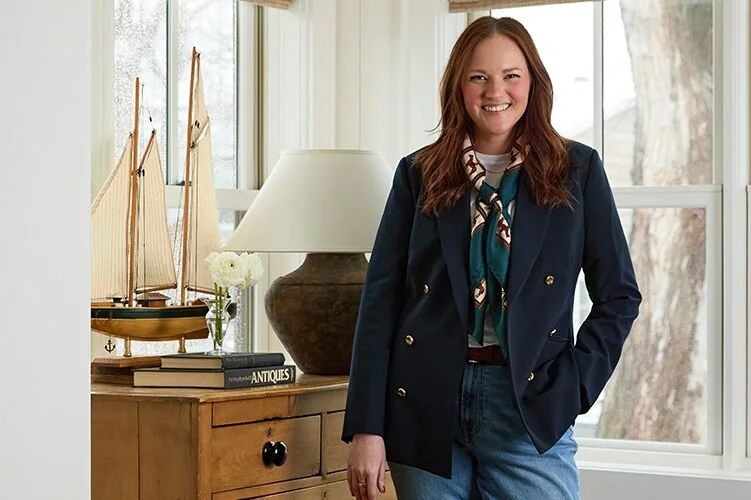
About Melissa Oholendt
Melissa Oholendt found her passion for interior design in her youth; buying shelter magazines with her allowance from picking strawberries in the backyard and painting her bedroom that perfect shade of navy blue.
However, after beginning her interior design college education in 2001, it took more than 15 years, a fast paced career for a distressed debt hedge fund in Minneapolis and a decade long entrepreneurial career in photography, for Melissa to step into her purpose in 2019, where Oho Interiors began.
Melissa has been quoted in the Wall Street Journal, Architectural Digest, LivingEtc, Domino Magazine, Rue Magazine, Business of Home, Homes & Gardens and more. You can also find her on a few podcasts such as Consider the Wildflowers and Bus Bench Babes with more coming in 2025. In 2024, Melissa launched a shop in collaboration with the luxury brand, Perigold, was named a Top 40 Expert on the prestigious platform The Expert and was a keynote speaker at The Haven Workshop in Sonoma, California.
Resources:
-
Melissa Oholendt 00:04
There used to be a day where finishes moved the needle in such a dramatic way. We're just not there anymore. Like so much of what is driving costs on builds these days really just comes down to the specialty labor and the skill sets that need to be done to build a house at that level. So it was hard for me to even get to a $500,000 number without cutting things that felt really dramatic.
Mark D. Williams 00:32
Today on the Curious Builder podcast, we had a returning guest, your favorite from OHO Interiors, Melissa Olent, and it was just great to see her again. It's been a couple months since we completed Misahoos, and this is going to be a series that we do a couple more of them. But this was really Melissa had 500,000, and I had 500,000, and we just talked openly about what we would cut from the project and still retain the authenticity of what Misahuas is and what it became. And it's really a fascinating interview, I think for for other creators and builders and designers to listen to kind of what we struggled with to cut. I think you're going to really like this episode. Without further ado, here's Melissa Olent. Welcome to the Curious Builder Podcast. I'm Mark Williams, a host. I know you want someone else, but this is all you got till someone else is the host. I've got Melissa Olent on a four or 510 time guest, hard to say. Hey, what's up? 100 times. How are you?
Melissa Oholendt 01:26
Good. How are you?
Mark D. Williams 01:27
I'm great. I was just telling you before we recorded. I I miss you. I you know we spent the last two years spending so much time, and now that Misa is completed in terms of construction, we don't get to spend nearly as much time. It's it's actually probably something we should talk about. Actually, let's start with this. You're not the. This is not the first time. It's just the first time it's really been this deep for me because you know I'm the pseudo client on on Misahoos But I've had a number of clients. Usually they're our best clients, the ones that are so emotionally involved. There's this letdown after you are done with a really intimate project that lasts multiple years. It's I mean, it's not a breakup, but it kind of feels like one. You're just kind of like, hey, your biweekly meetings are gone. You're constantly seeing and in each other's lives, and all of a sudden now it's like when you're so used to being in someone's orbit on such a regular cadence for years on end, and it stops. It's kind of destabilizing. Have have you felt that not only on Misa but on on just other projects in your career,
Melissa Oholendt 02:22
yeah, for sure. I think that we, I mean, we encounter that quite a bit on our long, our long term projects, where it's just, it's almost a sense of, I kind of relate it to like the best family reunion you've ever had, and you just don't want it to end, and then suddenly it's over, and you're sort of like left with this depression of like, but I, but I miss you, and I, I do. I feel that for Misa. I feel that for our other projects. It's, I mean, it's hard. It's really because you just you get so deep into it, and then it's okay. Well, I guess we move on. Like I, I don't quite. I haven't mastered that as a human.
Mark D. Williams 02:57
Yeah, I mean, other than time waits for no man, it just goes by. I think it's as time goes by. I think there's a special bond, though, and I think that is important to recognize. I think that's what makes it. You know, you and I will have future projects, and it just makes obviously the next time we do a Misa, it'll be special. But there's something very unique, obviously, about this home, and we've talked about it. We can talk about it again today. That's kind of the the nature of today's podcast is having you back on. And now that we're you know coming up on our two years of the iteration of Misa and being done with it, I thought we would, for the audience' sake, I thought it was kind of interesting. I just had this conversation yesterday. Someone asked me. They said, "What? I'm not really prepared to go through the whole thing just yet, as in terms of what I would do differently, because I'm still very much in the mindset of selling it and and making it successful from that standpoint, it's already been a success on so many levels. But going through, you and I had this idea maybe two months ago, and of if you had, because everyone wants to know, like, well, if you could have, if it could be a million dollars cheaper, what would it be, or $500,000 cheaper? And every project, because someone said, "Oh, I'm sure you added you went a 10 on everything. Like, no, I didn't do a 10 on everything. There are plenty of places I went a seven or a nine. There's always room to go up, and so the today's podcast really is Melissa and I independently put together a list of, and maybe we'll go back and forth. If we had to cut 500,000 from the project, what would we cut and why? What's our reasoning? And then, and then to make it on a high note, if we added 500,000, where would we add the 500,000? I thought we'd both we just each go back and forth one by one, and we'd both comment on if we like it, if we don't like it, and just kind of have a healthy debate about it because it's it's obviously fictitious. But it's a it's it's a discussion worth having because I think people, especially right now, as we're answering questions from real estate agents and trying to either justify price or explain what we did and why we did it, it made a lot of sense to us at the time because we were so deep in it, and I think it comes down to a value thing. Sometimes people just don't understand the value of. Something, especially when they're not in it, and so yeah. Anyway, that's kind of the today's, and we'll see where it goes.
Melissa Oholendt 05:06
Yeah, amazing. I want you to start though, because I I had such a hard time cutting cutting anything from the house.
Mark D. Williams 05:13
I did too, and honestly, mine mine are going to feel like honestly cop outs because, well, what I looked at, I mean, I I could tell you all five of them right now. I listed them out yesterday, and I actually was able to cut 123, 600. I was able to cut 700,000 pretty easily. You could debate on whether it changes the house or not. So I'll we'll go one by one, and then I'll let you. I'll tell you what. I'll go one by one, and you comment on each one. So it's all my list, and then we'll do all your list, and that way does it's not too confusing for the audience. All right, the first one is 100,000 in marketing. So we spent 200,000 in marketing, and this was actually not my. This is Joel, my controller, is the one that told me he's like, you still have money to give. I'm like, what else could I cut? And they're like, what about the fact that you spent 200,000 on marketing? And sure, to be clear, I wouldn't cut it, but if I had to cut something just to change the price, I guess I would cut 100. And here's, I think here's to explain to the audience: this has been a two-year marketing effort. You know, you amortize that over two years. It's not as terrible, of course, but 200,000 on marketing seems like a lot, and it is a lot. But I mean, when you do custom bags, probably 200 custom water bottles at 5060, bucks a pop. Carbon filters on these water bottles. Branding, you know, you've got the custom Delf tiles that we handed out early on. You've got you know dedicated website, a dedicated team that handles your social media content. We created an entire channel and brand, and that includes branding. I mean, we probably spent-I don't know exactly. These are just paraphrasing. Let's say I probably spent 12 to 20,000 on branding. So to come up with the brand before you were even on-I mean, you were part of it actually as we were iterating it. But like, that's a lot of money. Now, I would-I would absolutely not not do that. But I'm just explaining like that is a part of how I got to 200. I think, you know, we did a ton of activation events, so that all rolls up into marketing, right? We had live music. I had a coffee cart. We have $18,000 for a stinking trolley, you know, to bring people to and forth. Like I would actually preferred not to have that, but the city of Deephaven doesn't allow you to park on the street. So I, rather than spending 12 grand, I spend an extra six to make it a really memorable experience, and I've often, as you know, my favorite quote from Maya Angelou is, "People forget what you say, but they never forget how you you make them feel. And the whole point of all these little things is like you might forget certain parts about Misa. I do not think you will have gone through that house and not had a physical or an emotional reaction to the experiences or what you saw and felt, and that was very intentional, both in your design, of course, and also how we treated people in the experience. We we did live events, we did mailers to all the neighborhoods. I can go on and on and on. We obviously did print ads. We did a whole documentary that just dropped us, 16 minute full on documentary. If you're interested, go to misahoos.com and you can watch it. Kaylee Lemoyne video did the video. That was a two year, probably a $30,000 video, and there's a lot of other things that we did with it. So just explaining, I would I could cut that in half. Would I be as happy about it? Probably not. But that is a place I could easily cut. It doesn't really affect the house, but it does affect the broadcasting. All right, I'll stop there.
Melissa Oholendt 08:20
I well, and I think that's an interesting point because I think what a lot of people don't realize is in a project like that that those are costs that do end up being baked into the house. That is a piece of the puzzle of something like this, of going down the road of something as kind of dramatically different as a MISA, is that there is a marketing aspect of it, and there is an aspect of getting the word out about the house, and and certainly in relation to the artisan tour, but in relation to selling the house too, like that that's a piece of the puzzle. When I was thinking about things, marketing cost didn't even enter my brain, so I think it's an. I'm glad that you called it out, even though yeah, it's maybe a tiny bit of a cop out. I love you, a tiny bit of cop out, just because I mean that's a that's a big number. That's a big number, but
Mark D. Williams 09:04
and here's why it's actually not. Now that I think I'm glad Joel's the one that brought it up. So I won't disclose how many brand deals we made. Well, we made 33 brand partnerships, and there was a significant investment from these brands to be featured and to help us elevate Mesa, a lion's share of the marketing was going towards fulfilling those obligations. So, in one sense, you're getting a lot of things, and then on the other side, we're returning a lot of it. So, I,
Melissa Oholendt 09:32
yeah,
Mark D. Williams 09:33
that's why I think this is something you could cut. I don't think I would cut it if that makes sense. But then again, this was all fictitious. We didn't cut any of these things. No. I also think too at the time, and we are listing it with an agent. And I love real estate agents. I have very good friends that are agents. Ben, who's listing it, is a phenomenal friend and confidant, and and a great just someone I bounce ideas off on. Probably honestly, three four times a week, he and I talk about, but anywhere between 755 and eight oh. Five a.m. I'm talking to Ben pretty much every day. I call him after I drop off the kids, and we just check in real quick, and he just become a very close friend. But the reason I bring that up is I wanted to story tell Misa. I didn't want to list it, and I was, and I didn't, and I was very happy with what we did and how we did. I mean, we had three 700 people through the house, and I've gotten a number of letters from really high end agents saying like, you know, no agent could have done that for you. We're really, you know, the the market has seen what we've invested into the storytelling of this house. I actually got roasted the other day on Instagram. Someone commented on not on Misa, who's Instagram, but on Mark Williams Custom Homes Instagram. They said, "Do you have any other projects that you do, or is this the only one? It's getting a little bit stale after a year, and and so I love a good troll. So I wrote back. I said, actually, it's been two years. That was my comment.
Melissa Oholendt 10:49
Technically, it's been two years, buddy.
Mark D. Williams 10:52
And I said, no, we build lots of high-end homes, but they take several years to photograph. And this this one is just having its moment day. I just thought they're not wrong. I mean, obviously, we're marketing it a lot because we're trying to sell it and we're proud of it. But I just thought it was really funny that whoever this person was just like, just over it. Like, do you have do you do any other homes? I just it made me smile.
Melissa Oholendt 11:13
But on that note, I think that's an interesting thing because Misa Husa was such a special project, but it was different in that when we have a client's home, there's not as much that we can disclose. I mean, we certainly can't have these kind of conversations on a client's home, and so when we have the opportunity to have that that kind of discourse in that conversation, I don't see any problem with taking advantage of it. Sure, maybe some people are getting tired of hearing about it, but I think it's worth talking about it because we can, and there's such limited times when we're able to do that. So that, in and of itself, is an interesting marketing aspect. That I'm, I'm glad that you actually brought that up because that, yeah, that yeah, that is something you know in our own homes we can talk about that these kind of spec homes, but not client homes. It's that is that's a piece of the puzzle.
Mark D. Williams 12:01
It you know it is a it is a rub. I mean, there are certain times where clients, you know, they pay attention to what you're talking about. I've had not for me personally, but I've had other builders that have said like, "Hey, you know, you post you didn't post a video this week about my home. Are you not proud of it? I've never had that. But like, if one home gets too if too much, and that's the people that like it. I mean, I think people it's a little bit like your children, like most people want their creators, and they're attracted to the Oho brand or the MDW brand because of our personalities. It's unlikely they're working with us if they don't like your personality or you as a company. Like, why would they hire you? And so, I, I sometimes think we self-select a little bit. So, you know, most of our clients are like, you know, more and more like, and but it makes sense they picked us for a reason. They obviously like our energy, and if you are uber private, I'll respect that. I mean, I've had I've had clients before that have have said, "Hey, I haven't. We've never actually gone all the way. But would you would you sign an NDA? I mean, we did have someone early on that was going to buy the home, and the reason this was kind of surprising. It's you don't know if it's always the full answer, and they might come back. But their comment is the home is too public, and they were a very private couple. I just thought it was interesting. They wouldn't have known. The ironic part is they never would have known about the house had it not been so public. Because and then number two, it just anyway, just people find it different ways.
Melissa Oholendt 13:14
Yeah, interesting.
Mark D. Williams 13:16
All right, landscaping. We spent about 250 on landscaping, so I was going to take 100 grand out of landscaping, and I don't think in my logic was this. I don't think you would. It doesn't affect the house, and that was my main goal. And then two, the front yard is not overly robust, so the curb appeal in the front, most of the landscaping is in the back. You know the you know, and it's beautiful. The thing is, is most people don't value landscaping until they have to do it. Then they're like, "Wow, landscaping is expensive. I, one of my primary goals with Misa is it might be too expensive and it might not be your style. But I didn't want anybody to say you didn't do X, you didn't do the pool, you didn't do the workout equipment, you didn't do the the trees, you didn't do landscaping. I didn't want there. I didn't want there to be a single excuse that you didn't do something to its completion. So it's funny the things I'm backing out are those things. So I was I'm I was very deliberate in not doing that in the build. But anyway, I would take out 100 grand in landscaping.
Melissa Oholendt 14:14
I think it's a really well. I think it's a really reasonable number. Just and from $250,000 on landscaping doesn't seem wild. I don't think that was an overspend. So, cutting on it, I look at this is me. I look at the landscape and I'm like, gosh, it's beautiful and it contributes to the house. Where on earth would we limit down? Like, would we take out a tree? You know, like you know, it's it it would be hard. It would be hard. It would be Sophie's choice for me.
Mark D. Williams 14:41
Sophie's choice, basically, it's half. Okay, the next one, this one's gonna hurt. The next, the so those were the easy ones. The next three are gonna hurt a lot. 130 grand, take out the pool. That's on
Melissa Oholendt 14:51
my, it's on my list.
Mark D. Williams 14:53
Which I think is like you know, and and it's funny, I didn't because the well, just I think they go hand in hand. The next one's super controversial, so I'll save that one. So the pool, my logic with the pool is it's 130 grand. If someone wanted to add a pool, they could, but if you add a pool, it's more than 130 grand. Well, it cost me 130 to add a pool when it's done. It's probably 175 logistics, not wrecking the rest of your yard, the inconvenience of it. I mean, kind of just a nightmare to do later, honestly. And I this again. The reason we did it is because my earlier comment. I didn't want there to be a single reason why people could say, "Oh, I wish it had a pool. And again, if you're spending 6 million or six and a half million, oh, what's 130 grand? But I think the logic is that you could say that to everything. There's no one thing that says, "Oh, I could change the price of this house by 2 million. Like that doesn't happen. Like it's a it's like a credit card bill. You have to pick 20 or 30 things by 10 grand in order to get to move the needle. That's the only way to do it. But the pool was a big one, and I thought like you could have a really cool outdoor patio space, a fire pit. It'd be more of a natural backyard. So that was my. So what what what's your thoughts on taking out the pool?
Melissa Oholendt 15:58
It's on my list too. So I was on the same wavelength. I think it, you know, it it changes a little bit the spirit of the wellness aspect of things, and so that is, you know, again a hard cut. But I think it it moves the needle pretty dramatically. And like you said, we could kind of focus those, the efforts in the backyard in a different way other than your sort of traditional pool. But I again, that's a hard cut. That's a hard cut.
Mark D. Williams 16:30
This episode is brought to you by Pella Windows and Doors. I've used Pella for 21 years as the exclusive window company on every one of my builds. When people ask me who I trust for Windows and Doors, it's Pella every time. Their craftsmanship, their innovation, the top-tier service make them a no-brainer for any custom home builder or designer who demand the best. Whether you're designing something bold or building something with timeless elegance, Pella has you covered. They're also the only window company that has a lifetime warranty on all of their windows. I've gotten to know all their people at Pella Corporate, as well as locally here at Pella Northland, I'm proud to call them our partners and our friends. Visit Pella.com to learn more and connect with your local reps today. Also, for more information, you can listen to Episode One, where I interview their founders, as well as Episode 109, where we talk about the innovation at Pella. We're happy to announce our latest sponsor, Real Wood Floors. What made them to be an ideal partner is the fact that they align so well with our high-end custom homes. They're located in 25 cities across the country. They're probably pretty close to you. And what really drew me to them is the fact that they're vertically integrated. So many times when you're dealing with wood floor, you know, procuring it from different companies, having it go through middlemen, you're either short material; it's the wrong material, and so we are looking forward to leveling up that and buying direct. The other thing that I really love is their floor-made perfect match. I can't tell you how many times I've had a beautiful wood floor, but the vents don't match, or I love the wood floor, but it doesn't match my treads and risers. Knowing that they can perfectly match that is something I'm really excited about. Go check them out at realwoodfloors.com and sign up for an RW Pro account. Tell them you heard about them from the Curious Builder. Okay, this next one's going to be you're going to be surprised at what it is. The Wellness Studio. I take out the whole thing, and so it's probably I don't actually know the price of it, so I'm guessing it's 300, 400,000 somewhere in there. It's the structure, it's the Da Vinci roof. It's the problem is the backyard is now destroyed. I mean, there's no charm. There's no you can't unsee what we've created. It's like I can't even envision a backyard, but it could be done. I'm most yards don't have. In fact, I've never built a house with it, so of course you can build one without it, and it's a huge needle mover. So the wellness studio is gone, the cold tub is gone, the sauna is gone. The thing is, is like for this to be a wellness house, and you got rid of the wellness studio. I kind of felt like you just took the soul out of what we were doing. However, in talking with Joel about it, it's actually a combo. I think you actually take out the golf simulator in the basement. You move the wellness studio to the golf simulator, so you pick up 5060, 80 grand on the golf sim that goes back into the exercise studio, wellness studio. I think I've got to get a sauna somewhere down in there, which I think I can do. But it's the fact that it was a detached structure that added so much cost. So I think the net on it is about a 300 cut. Because let's say the wellness studio is 400, and I think by the time you take it, take down the wellness studio, but add it back into the golf sim, I think you're probably a net win of 3300. So I think I still am happy with it. I have the wellness studio. Unfortunately, there's no natural light. It's in the basement, but you still have the sauna, and I think you still have a robust gym. So that's how I would solve that that structure. What's your reaction to that?
Melissa Oholendt 19:53
Yeah, I mean that was. I don't know if you remember this way back at the beginning. We had considered doing miso without a well. Studio and the pool, and it just as the idea of the wellness aspect of the project really kind of took hold and really developed, there was not even a question. I don't even remember the day when you were like, "And we're not cutting that, or like, "Or we're keeping it in, like, because it was just so like, "Oh well, if this is the goal, then this is what has to be there. So it wouldn't be. Both of us are drinking our morning diet coke. Well done. I mean,
Mark D. Williams 20:26
can okay. Speaking of this, this is a joke, ladies and gentlemen. So I think Ojo and Tears is loosely being sponsored by Diet Coke. I have now. I drink a lot of coffee. I've never been a Diet Coke drinker, and now I am starting to drink Diet Coke earlier in the day, but the joke is, how about this? What if you cut your diet coke allowance so that you could keep the price up on me? Are you willing to cut your your coke allowance? No, I
Melissa Oholendt 20:50
would I would be a terrible human. No one wants that. So, all
Mark D. Williams 20:54
right. So the wellness studio is gone. Okay, the last one is the chimney. I think I can save about $75,000. Carl's gonna hate it because architecturally, that brick chimney is an anchor. Architecturally, the wood fireplace. I think that whole thing probably ends up costing 100 grand. I think the fireplace itself is probably 25 grand, something like that. Then you've got the makeup air, 7500. I'm not keeping the math. Let's call it 40. You've got the whole exterior chimney. Let's call that another 30 plus that dumb $7,000 makeup air fan on the top of the roof too, so I'm calling it a $75,000 cut. What's your react? And then I would do a gas fireplace and just a direct vent out the back. What's your thought on that?
Melissa Oholendt 21:34
Yeah, I think it would be sad architecturally to lose that, but it would be a significant savings, and I'm sure we could figure out some different way to add architectural appeal. But again, then you're adding dollars back in.
Mark D. Williams 21:47
So that that was so I cut 123456, I cut 700,000. That was 700,000. So, but here's why I think it doesn't actually matter. I think somebody buying that house because right now it's actually under under listed. It should be for if I was to build this to for somebody else, it would be 6.5. We priced it at 599 because our market doesn't know what to do with this. It's too unique, and I hate saying that because I want I wish I could have kept it at six five. It doesn't leave me a lot of options to cut down. It's a phenomenal value at 599. The market still has not said they want it, which I don't know what to say with that. Most homes just take a little longer to sell. That being said, if I took out 700,000, it gets down to five three. I don't think. I think if you take out those things, that made the house very special. I think it's still a great home. Is it still a special home? I still think it is because the inside is still the home is still. We I didn't touch a single thing really inside the house. The design is the same. All the finishes are untouched. Ian, I want to keep. I want to preserve that. The thing is, is I don't think someone's buying this house at at at five three. I think once you get to that point, the difference between five three and five nine doesn't mean a hill of beans. I think they want the pool, they want the wellness center, they want those things. I think in order to make it such a compelling number that somebody has to buy it because they they just doesn't exist. I think you got to get to probably like four five. Well, to cut a million, and that's really 2 million from what it should cost. You can't cut 2 million from this house. It's not. It's now an ordinary home, and that was the whole point of doing Misahoos was to not be ordinary, to be extraordinary. So, this is my cut. But honestly, I think even cutting it would be a mistake because someone actually a year and a half before I ever started, I I met with three four realtors, not Ben, and I explained what I was doing. And at that time, it was going to be about five three, and they all said we we loved it to have a three in front of it, like three nine. And I said, I don't think I can get there, but I said if I do, it's no pool, no landscaping, no wellness studio, and they all collectively said, "Well, you can't cut those things. I'm like, "Well, what are we talking about? You want everything, but you don't want the price to change. That's nonsensical. And so then that was our whole point of why we went all the way. So anyway, that's I want to give the audience the full perspective of these conversations that were happening back behind doors. That's my 700,000. What's uh? What's your list look like?
Melissa Oholendt 24:25
My list. Okay, I have some hard cuts in here because these are things that I love, and I I think the how it will dramatically change how the house feels. But it it you know when you were talking about how we cut things from the design side like that that those are hard cuts. I think my first one would be the level of cabinetry that we did in terms of how much cabinetry was throughout the house and some of the cabinetry details. Now I don't have a number to assign to that because I think that would be a very hard conversation with Rich.
Mark D. Williams 24:57
It's funny. I actually printed out the swarm, so we spent. 255,000. That's our cost, not margin or markup or anything else. So we spent. Let's just round it up. Let's just call it. Let's call it 300 grand in cabinetry. If you if you factor in whatever, what what number are you associating with cuts to that number?
Melissa Oholendt 25:14
I'm guessing we could probably cut about 75 to $100,000 based on really the specialty details and basically like some of the auxiliary. That's cutting probably the wet bar in the basement. That's cutting that cute little arched cabinet at the top of the stairs in the kids' loft area. That's cutting some of the you know laundry room cabinetry. Certainly cutting details like the mesh or the special corbel details that we included, and you know certainly some of the other more specialty pieces of the puzzle. I think that's probably where I would make a hard cut to get finish numbers under control for sure. What do you say? I
Mark D. Williams 25:55
mean, just well, I think I don't think that actually adds up to 100. I think you've maybe not. I think you've cut maybe 40. I think in order to be, I think in order to be 100, it's got to be a lot more cabinetry than that.
Melissa Oholendt 26:07
Okay,
Mark D. Williams 26:08
you'd have to like cut the whole, like you'd have to cut that whole wall in the in the office. The whole like you could probably do that. That's probably I don't know 15.
Melissa Oholendt 26:17
I think we would probably minimize some of the basement cabinetry, so like that lower level TV area, maybe just do a base cabinet instead of doing kind of an. I know that that's not a ton.
Mark D. Williams 26:28
No, that's another base. I think we got to take two more big cuts, and I think you're close.
Melissa Oholendt 26:33
Two more big cuts, man.
Mark D. Williams 26:35
Well, I mean, it's just that. I mean, the kitchen you're not really cutting out of anything other kitchen. The pantry is pretty expensive, but what would you cut? It's, I mean, we're not going to do melamine back there, and we didn't do that many. I mean, you could cut that that one bifold door right next above the beverage fridge, but we're talking about, you know, if you just went to open shelves, I mean, you're you're talking about like a grand. That's hardly anything.
Melissa Oholendt 26:57
This is death by a million cuts for me. It really does become that.
Mark D. Williams 27:02
Okay, here it is. Ready? You're not gonna like it, but this would, I think, cross over. I think in bedroom four or bedroom three, the cool bedroom with this leash tile, rather than that big built-in. I think you figure out in the design just a closet. I think that's probably a $15,000 cut.
Melissa Oholendt 27:16
Yeah. All right. Yeah. So that
Mark D. Williams 27:17
was all right. I've got 12 things we cut. Rich just cried in his sleep if he hears this, but other. But we actually did it. If he makes him feel better, we actually did it in real life. Okay, so that's cabinet. So that's 100 grand. All right. What else you got?
Melissa Oholendt 27:30
So I would agree. By the way,
Mark D. Williams 27:31
I I agree with you of the cuts that you're going to make. I mean, I think the most special, of course, the kitchen, the great room, the owner suite, the mudroom was magnificent. I think that was really important, and that, and especially the potting potting room was so beautiful. And of course, the dining room, you know, that built-in banquette is part of that number, is plate wall, and then of course the arched glass. If you had cut that into the sunroom, I would have had to die twice since I already lost a sunroom.
Melissa Oholendt 28:00
I couldn't do that to you again.
Mark D. Williams 28:01
All right, what you got? What's next?
Melissa Oholendt 28:03
I think the next thing on my list is very much what you had said, and this is the big needle mover. So I would cut the pool in the wellness suite. Yeah. Oh,
Mark D. Williams 28:12
both. Okay. Both.
Melissa Oholendt 28:13
Both. Yeah. I mean, that's how you're
Mark D. Williams 28:15
willing. I like how you're willing to cut the things that were more in my in my wheelhouse. I. You know what we could have done is if we had gone after the other person's stuff. Like if I went after design stuff, okay, I see, I see what you're doing. You're hunting, you're hunting with a builder bow.
Melissa Oholendt 28:28
It's honestly, it's only because like when we start talking finishes, like finishes obviously move the needle, and I don't want to downplay that. That is, I cannot. There used to be a day where finishes moved the needle in such a dramatic way. We're just not there anymore. Like so much of what is driving costs on builds these days really just comes down to the specialty labor and the skill sets that need to be done to build a house of that level. So so it was hard for me to even get to a $500,000 number without cutting things that felt really dramatic. Like and one of my things it was either going to be like cut square footage, which it felt like the only place we could reasonably cut square footage in the house would be in the basement, and keep the wellness suite pool. Well, not the pool, keep the wellness suite. But then we're sort of like again, like kind of you were doing earlier, trading one for the other. Like where do kids play? We removed kind of the TV aspect from the main level and any other level of the house, but the lower level. So, do we just have like a tiny little TV area? Like it just it started to not make sense when I started to kind of evaluate. Like, are we cutting square footage? So, yeah, that was that's my hard cut. Is the wellness my hard cut? The so those
Mark D. Williams 29:40
so those are two. I mean, you got that. You got that are pretty fast. Did you have any other cuts or not? It
Melissa Oholendt 29:44
sure did. Let's hear them.
Melissa Oholendt 29:47
I would say, and this, these are not huge needle movers again. But I, I would, we put in plumbing. We did not save on plumbing. We'll just say that on this project.
Mark D. Williams 29:57
I'll tell you what it is. Go ahead.
Melissa Oholendt 29:59
We, in every single bathroom, and kitchen, and pantry, and plotting area, and laundry room, we did not make any efforts to save on plumbing, and so I think that is a natural way that we try to approach houses: is to say like, okay, let's spend in the areas where everyone experiences it, where the homeowners experience it daily: primary bedroom, kitchen, powder room, and then everywhere else: kids' bathrooms, guest bathrooms, laundry, mudroom gets kind of a secondary, a little bit lower tier plumbing application. And so,
Mark D. Williams 30:37
let's say so we had unlacquered brass from Parent and Row and House of Roll for everything, including I didn't even think before it. We had the total bidets, which that could let's call that part of it. So let's add those in. Let's say we're at 200 grand for plumbing fixtures with toilets and all those fixtures. Do you think it's reasonable to cut 50 grand, 75 grand, 100 grand? How much do you think you can move that needle?
Melissa Oholendt 30:58
I think I could probably move the needle somewhere between 50 to 60 grand, maybe, but I think then we're going. You know, we're going from Perrin and Row, which is a very luxury brand, to a Kohler, or even going a little bit lower to a Delta. Which I don't think. Again, these are changes that like most people can't put words to, but you feel like you you would feel that in the house, and certainly like we're not getting the finish, we're not getting unlacquered brass in a Kohler or a Delta, so we're going down to polished nickel, which is okay, but we're losing a lot of the specialty details, a lot of the things that feel visually very special, and so yeah, I think we can move the needle. I think it would just feel awful.
Mark D. Williams 31:41
Yeah, yeah. Tell me how you're really. You know, I mean, and you know, this was a this was actually plumbing was a real learning. I've learned, you know, I think we'll save this for the episode that we had to redo with Carl, you and I about lessons learned. I actually think it'd be a fantastic interview for well, for I'd be here curious at that point to hear your point of view, and same with Carl's. But for me, it was so cool to have like a Julia Miller or the Kipling House ladies come through, and the designers really they they know what they're looking at because you're a designer. Like designers know, designer stuff, builders know builder stuff, architects know, and we all know a little bit of the other person's sandbox, but not to the full degree. At least not me. I was really educated on plumbing. I think I have because I I famously gave you guys a five to one veto where you guys could select whatever you wanted, and that was just kind of what it was. I felt very strong in the OHO brand and what you bring to the table, and so I I really tried to give you full rain. In one instance, I gave Kate too much rain, and that was a whole another podcast about that one. Anyway, my point being is like I famously told you like I didn't even know you could spend 150,000 on plumbing, and your line back to me was like, "Oh, I could spend a lot more than that if you wanted. And the reason I I bring it up laughingly like that is I it I'd like to think I I know more than the average builder, which tells me that most builders are not aware of those super high-end brands, even the luxury builders, because we do trust our design partners, and we should. I'm not saying we shouldn't. My point is, it makes us as the builder, who usually is the one investing as the spec home builder or the one who's aligning all the financing, like I was. Like it makes us. We're kind of going a little bit into battle without totally understanding all the levers of costs, and and maybe someone's out there saying, "Well, you should know better. I'm like, "I don't know. Try it once. You tell me if you know better. the The point is, and I'm very happy with what we did. I wouldn't change a thing. That's the thing. I think that's the whole point of this exercise is to say, "What I'm very happy with what we did. I wouldn't change a thing. Honestly, sure. There's there's little minor things that you and I, but I couldn't be happier with what we did and how we did it and what the end product was. Right now, we're playing Monday Morning Quarterback. Looking back, like if we change some things, would it even matter? I don't know. Anyway, being educated in that department and then having the designers come through and recognizing, like, thank you, thank you for the intentionality, like seeing the design community in the architect community react so strongly to what you selected, told me that that is why honestly a lot of designers and architects won't go visit builders' work because they think it's inferior and they think it's not worth their time. And that's not a negative comment. That's the truth. If you buy Ferraris and Bentleys and drive high-end cars, are you going to go look at a Toyota Tundra? I'm not saying there's anything wrong with the Toyota Tundra. I used to have one in college. It was awesome. I love that truck. It's just if you're a Ferrari guy, you're not interested in that. And I think the designers like they're interested in a totally. They're like on another planet, looking at stuff, and so are their clients, and that is the education that I got, and it did cost me money to get that education. But I don't know what do you what do you what's your what's your response to that when you hear me talk about it in those terms?
Melissa Oholendt 34:53
I couldn't agree more. I think the other piece of the puzzle is that oftentimes, and it depends on the market, but oftentimes we're coming in. To a project when maybe a builder has already set an allowance for finishes, and so you know I've been told I have been told on a similarly sized house that I need to keep plumbing costs to $50,000, and I have to look at someone and say like, we're not. It's going to be really very hard. Like I then have to go to a client and say like it's going to be very hard for you to get the look and feel of what OHO, what you are seeing from OHA online at that budget for an entire for a 5000 square foot house of plumbing. Like it's just going to be we're going to have to make so many sacrifices that it's not going to feel good. And I just want to caveat that if you're okay with that, we'll still go down that road. And so when I think about you know that conversation with builders about bringing that education of what luxury is and what brands are out there, like Kohler is not our high end, and there's nothing again, like you said, there's nothing against Kohler. Kohler puts out a great product, and I, I personally have some Kohler products in my own home, but when we're talking about clients who really love, like, are so exposed to what is out there, and see like a Thomas Crapper brand out of England, and say like, "Hey, I would really love this toilet, and we have to look at them and say like, "Hey, your average Kohler toilet is somewhere around $500.05 to $800, and that one comes in at a $2,500 cost, and it's not a smart toilet. It is a very manual toilet, and it will cost more labor wise to put it in because it is not fitted for standard U.S. plumbing. Are you okay with that cost? Like those are the levels of education that I wish every builder I could have, and conversations I could have with every builder just to say like, hey, if this is what your client wants, like putting in a line item for Delta is not is literally not serving anyone. Like the we are not creating happy clients by putting in that line item on any application. So like, could we have a conversation before those allowances are set? That's always the goal for sure.
Mark D. Williams 36:56
All right, plumbing fixtures nailed that one. What else is on nailed it?
Melissa Oholendt 36:59
So I think the other thing is that we did do, in addition to sort of the custom tile, the custom Delf tile that we had made by Ren Pottery out of Duluth, which was lovely and I think was worth every penny. We also had some custom and high-end tile that we put in the house. Again, not a major needle mover. Like this is from a cost perspective, you you can probably inform on that. I think the entire tile cost was less than $100,000, wasn't it?
Mark D. Williams 37:27
Yeah, I mean we obviously got some brand deals on that one too. So let me just look at what the retail value of that would have been. Trying to find it here live. We spent about 130,000 on on tile.
Melissa Oholendt 37:41
Okay, just kidding. Okay, I think we.
Mark D. Williams 37:44
Just kidding. Just kidding.
Melissa Oholendt 37:45
I do think that there is a cost savings we could have there. I think by measure, again, this is sort of the conversation of yes, absolutely, we could go down in tile. We did have some custom tile elements that we did through Emzer, which were phenomenal and definitely changed the feel of you know the primary bathroom. Certainly, we sourced some tile out of Australia for bedroom three en suite, and certainly we created our own mosaic border in the Jack and Jill bathroom. So certainly there were some elements there that were more custom, more more high end. I think we could take it down. I from a cost savings measure. Yeah, you could definitely cut $50,000. Are you gonna feel it? Yeah,
Mark D. Williams 38:25
that's funny. By contrast, I don't know if you. The thing is, is once you've seen this house, I'm curious. It's hard to go back. If it had never existed, could you have done it then? You know, it's a little bit like, you know, I'm thinking about my like honestly, I don't know how to describe it other than like my kid. I've often joked that Misa is kid number four for me. It's like May and Simon and Tate, my kids. Like I could never imagine their personalities being any different than what they are because that's just who they are. It's really hard for the creators, meaning you and I and Carl on Misa Who's to think about what we would change because there's so much thought and intentionality. It'd almost be like you want all the good with none of the bad because people are complex, and it'd be like what makes relationships so dynamic is the it's the complete 360 of who they are. It is our imperfections and it is our eccentric characteristics that make us unique. I like just speaking for myself. I know I'm not everyone's cup of tea. I annoy a lot of people, including my wife, sometimes or most of the time. The point is, is like I'm still the person she married. I'm still the person that you know we have a relationship with, and so it's like I know we're getting super, or I'm getting super woo on a house, but like I think this is what it is to be a creator. I think this is what it. This is the mindset that you and I have to go through when we take such extreme ownership of a particular project. Honestly, it's way easier for me personally to give up that control for another client's house. I'm not at. I'm still invested. Don't get me wrong, but I mean, how could I be more invested than this? And so, you know, that would be a different podcast for you and Carl. Is. You were to rate your investment mentally into this project versus, let's say, another project. Actually, I'll ask you now. What's what's your thought on that? If you if this was, I don't know, you give your own rating. For me, it was a 10 in terms of like effort and intentionality and buy-in. How would you rate this house compared to a client's home?
Melissa Oholendt 40:20
That's a really good question, very thoughtful question. I don't see any difference in how we approached MISA versus how we approach from a from an effort intentionality, you know, love for the project. I don't see any difference in how we approach MISA versus any other project. But I think that that is in part, you know, there's different levers that we can pull, right? Like certainly in a client's home where we have a budget that is is definitely maybe more finite or different, or our client prioritizes different things. We have to sort of pull different levers. You never asked us to pull levers on Misa. Like you never asked. I think the only time you told me to moderate was lighting, the lighting costs, and so that's why it's not on my list because we already sort of had a moderation effort on the lighting piece of the puzzle. But otherwise, like you never really said no to anything that we were proposing-the brass stars, the you know the custom metal doors that should be on my list. But they are they are remarkable. Like you never sort of told us like, hey, moderate your design. And so I think that's the one piece of the puzzle that we typically don't have in other projects. Where when we do, we have had that in the past where those projects have turned out in such a remarkable way where where we haven't necessarily had to make the that sort of I use the term Sophie's Choice, which I know is really dramatic, but we haven't had to make the piece of like, okay, well, we're going to spend here, and so that we can save here. We didn't have to do that very much, hardly at all, on Misa, and so that created, I think, what feels so special in person is because we didn't have to pull those levers. So the intentionality is still the same, but I think what's different is that you allowed us to really create something beautiful and remarkable and magic without having to, you know, really simp or save or be really have a major value engineering phase. If that makes
Mark D. Williams 42:15
sense. This episode of the Curious Builder is brought to you by Olive and Vine Socials. If you're a builder, a designer, or an architect looking to grow your brand without dancing on TikTok or spending your whole life on social media, listen up. Alvin Vine Socials specializes in Pinterest marketing, blogging, and email strategy for luxury home brands that help you turn your beautiful work into a strategic SEO-driven content that drives real traffic and connects you with your ideal clients without burning you out. Ready to grow smarter and not harder? Visit OlivinVineSocials.com and tell them the Cures Builder set to you. Just so you know, I've been working with Alyssa over at Olivinvine for three years. She helped us launch the podcast. She's helped us grow our brand at Mark Williams Custom Homes. I could not do what I've done without her help. The intentionality you have on all your projects have a large degree of our heart, and that's true. I guess this one is just unique to me because it was kind of like ideating it and creating it. Yeah, it just maybe just felt different because maybe I kind of felt like my role was the Energizer Bunny, and like there's this great verse I like the adverse of it, which is without the without a vision the people perish, and I think my one job that I do think I I think I did a good job was is I created a vision and let everyone else sort of share that vision like it was really empowering and really rewarding for me and like yes I know it was kind of like my baby and my thing that I really just wanted to put all the energy into. And I've often said that it's the hardest thing and the most rewarding thing I've done outside of like my family in terms of like effort because it took two years and it's still not done in terms of like effort for me. But it was really providing a clear lightning rod for everyone else: the the plumbers, the HVAC, the electricians, the framers. Like it's just uncommon what we did. It's very rare, and so I I think watching how they all kind of came to the plate or brought their families through when we were done, like they were so proud of it, and they should be right, Felicia. That was really a beautiful moment for me to realize that well yes it was kind of our creation and and collectively but it evolved every person from the plumber to the landscaper to pebble to you to Carl and like there are people that had louder voices obviously like you and Carl of course but everyone had a voice in this choir and so I think that part for me was was really a beautiful thing just to watch people have a voice in something that maybe sometimes other builders or designers or clients don't allow them to have a voice in it, and so I think then I think we were able to get everyone's best work because of that. Yeah,
Melissa Oholendt 44:52
I think, and I think what you did, I agree with you, and I think what you did too that was so remarkable, and I see you kind of pulling this into your project. That have been going on since Misa is that you gave kind of trades who you know normally show up, do a beautiful job, leave. You gave them a piece of ownership in this kind of really remarkable project. Of you know, you had them everyone who was working on the project sign on the you know on the the two by fours on the framing of the walls. You had moments to bring people in that gave them a feeling of what you and I and Carl, you know, architects, builders, designers get on every project, which is a sense of ownership in something like this. You gave trades who don't normally have that that piece as well, and I think what it did is a it created truly like this family feeling that you and I talk about all the time from Mesa, but also it gave them a sense of pride that is different than maybe their average project where they just show up, do the work, and leave. Like they were so excited to come back and show their families and like you know remark on the other things that the trades did, not just their parts of it, but other things that that trades did, and I think that was, I mean, that that is a ribbon that runs through the entire project. So yeah, I do I do think that you created the best work by being the visionary in that way, but also creating those kind of special moments moments of delight, if you will. Oh, I will for everyone in the project. I think that's pretty remarkable.
Mark D. Williams 46:20
How I was saying we only have 15 minutes left. We even we only talked about things we would add. Do you have any more on your cut list?
Melissa Oholendt 46:27
My only other thing again is not it's not going to move the financial needle a ton because I did that with the wellness center and the pool. But it is what I will say is that I do think and I know that there's a lot of money that goes into painting on a you know on a project of this scale, and certainly when we are changing colors and changing you know trim colors throughout the project and painting doors and you know doing switch switching colors on the inside of the door versus the outside of the door, I think one of the ways that we could have moved the needle a slight bit, and again probably by a measure of 25, 50,000, maybe no. Dang. So
Mark D. Williams 47:08
here, here's the thing: you don't know. We got a phenomenal deal on painting, considering what they did. Now we went through the absolute ringer in getting it done. Yeah. I think what changing, what simplifying the paint color palette would have done is made it less stressful, and we would have we we we would probably lost. That'll be on our Misa Curse podcast. The painting was definitely for me probably the crux of the. I mean, that was so. I mean, there was a real chance that we weren't going to make the tour. I mean, it was rough, and and we got through it. And kudos to the people that laced up their bootstraps, dug a little bit deeper in the trenches, and just got her done. I mean, it looks a lot better today looking back three months. But man, April and May were some rough sledding for that. And so there wasn't a lot. My point is, there wasn't a lot of money to cut. I think financially you cut maybe five to 10, but I think in terms of emotional stress and like time lost. I mean, what is the value of having an extra 30 days? I think that would have been huge. But anyway, I think that shows up in a different podcast.
Melissa Oholendt 48:12
Yeah, the curse podcast.
Mark D. Williams 48:13
Yeah, the curse. You know, it's funny. You and I chatted about maybe going to. We're not leave it to us. We can always talk about Misa. It's already 44 minutes, and that's okay, audience. That's all our cuts. I actually, so here's some potential cuts I considered. Maybe we'll talk real quickly about potential cuts.
Melissa Oholendt 48:27
I have one for for you.
Mark D. Williams 48:29
I had thought about cutting plaster, and I said that was 54 grand. I was like, I, I just can't. Every time I went to cut something, I was like, but that's the spirit of it. Like I went to like cut, you know. I never even dawned on me cutting. They call it 1012, grand for the glass entry into the sunroom. But like, it's not special. I couldn't do it. The floor, the wood floor. We probably won 100 grand over on the wood floor. I love that wood floor more than any other wood floor I've ever done. I, I can't do it. I certainly couldn't cut the brass or the parquet. That's the most commented thing in the whole house. I think that last your earlier comment about what you could have dialed back a little bit-it's the dial-up thing that everyone talks about. It's that last 5%-that's what really makes it successful. You take that out; it's still beautiful, it's still nuanced, but it's not-it's not unicorn status, in my opinion. Trying to think of what else I-I couldn't. I was flummoxed because I actually felt we were very intentional about what we did. I don't. That's why I think it's so hard to actually cut. I be what would be actually interesting is to have. I don't know if I'll actually do this, but it'd be sort of funny to have like three or four other people come in from outside because you and I are way too close to this thing. What would they cut? And I think you and I were cutting, but still keeping the spirit of the house. And so I agree.
Melissa Oholendt 49:45
I agree. I think because there, you know, like the white oak. You know, we did that full white oak entry, and had you and I. I remember had a conversation of like, should this be plaster? Like, should we cost save here, cut the white oak, and go plaster and. Ultimately, we made the decision not to, and I'm so glad we didn't because it is such a moment when you come in the house. I think it would have felt different, and same with kind of that banka area. We could have gone with plaster, and it would have been stunning. It would have been like just a different experience. But adding that different layer of of materiality in the house like creates just a that like movement and the storytelling throughout the house. One thing I was going to ask you because this these are things that had occurred to me, but I didn't it didn't feel fair to cut because they also do speak to the spirit of the house. What about I know that you put rock wool like between in the joist, but also between in every wall,
Mark D. Williams 50:40
kind of a nothing burger, five grand. I mean, it's not much.
Melissa Oholendt 50:43
Okay, five
Mark D. Williams 50:43
eight grand. So it wasn't much.
Melissa Oholendt 50:45
Okay. What about things like the the water purifiers and that's
Mark D. Williams 50:51
expensive. So that that so the Nya system. Now we beta tested it, so obviously it's less than this. But the retail value is about 30 grand, 35 grand. And without going into the whole value proposition right now, yeah, you could cut it because I think that one's easy to add. But again, when you go wellness house, part of this was I think it's pretty common. Like I don't know that much about cars. I keep talking about I should probably learn more about cars. But like when you prototype something, you sort of put all the stuff in it, and then you sell off of that. So I, I think we did that right. I think it was still the right thing to do to talk about, and that's also why we attracted so many brands. We have 32 brands that came to us. Not all can't we came to a lot of them, but I would say five or six of them heard about what we are doing in the wellness industry. As I've talked about a lot, is exploding. So like, I wouldn't have. I think the water is paramount. I mean, in terms of like a value point of view, like you drink. I think if anything, I've done a poor job of explaining all the wellness points of view. The problem is, it's kind of overwhelming. That's why we've done the documentary. That's why we've done this. is like our fourth or fifth podcast on Misahu. It's just, it's this is not a house. This is a living work of art. On top of it, it's it's like a wellness. It's like a wellness experiment. I mean, there's so much further. As I've had, I just had someone on the podcast a week or two ago from when this one will air, and I'm so excited for the next version and the next version because I've just sort of dipped my toes into wellness, which shows you how far industry has to go. Because right now we're kind of at the leading tip of the spear for sure in Minnesota. There's other homes in other communities in the country that are further ahead for sure than Minnesota is, and possibly even Misahoos. But for right now, we're like we're kind of the tip of the spear, and it's going to take a while for the rest of the community to catch up, but part of it depends on how people respond to it. Are people not paying for it because they either can't afford it or because they don't value it? That's pretty hard to understand right now because, like, I value it, but like, frankly, like, I can't afford my own work, so like, otherwise, I would be living in Misahu. People keep asking me, "Well, when are you moving in if it doesn't sell? Like, I don't show me a rich builder. I don't know any because, like, I don't. I I know very few builders that live in their own work, and certainly not one at this caliber. And so, yeah, I don't know. It's hard to really tease out what value is because you might value something, but you just simply can't afford it. So I don't know. I don't know more to say about that. In the not we didn't. So those were all our cuts. We didn't make it very far into ads. What would you add if you had 500 grand to add? What would you add? I'm actually really curious for your answers.
Melissa Oholendt 53:29
Well, so we had initially thought about doing part that parquet with the gold star detail into the sunroom. That was one of our initial kind of design goals. It just didn't, you know, from a when we were considering internally where to cut costs, because we knew that we were coming to the table with an expensive design, we cut that from our planning. So that's one of the places that I would probably add back in because it does feel like a moment where we could have, you know, I think there's been a few experiences of like we had the rug in the sunroom, we took the rug away in the sunroom, and it felt like it needed something. That's probably one of those areas where, like, if that was there, we probably wouldn't need a sunroom. It could have been a different feeling. I think I would add my lighting. You made me cut half of my lighting budget, which was fair.
Mark D. Williams 54:15
You know what, though, to be, I wish if that oddly enough, that would be one of the first things I would add back in, because now I know what you mean. I'm really so I do think that lighting, as I've kind of been on this journey of understanding what wellness means to me, I think it's a bit subjective here. But I am so happy with the DMF cans that we got from Aurora One and the 19% and like that warm dim, that gent. I love that. That being said, I like light fixtures even more. And real, I did again. This is my own naivety. Is I I didn't realize because didn't we cut like because I asked you at one point because at the time they went in, I wasn't super thrilled with that many cans in a bedroom, and I of course like I often do. I forget, and so I asked him like, why do we have so many cans in here? And you're like, Mark. Because you cut, I think didn't I cut 75,000 from the lighting budget?
Melissa Oholendt 55:03
You made me cut it in half of 75,000. Yep.
Mark D. Williams 55:06
I made. I like how you. I made you. I'm such a cruel master. So rude. But you're right. You're right. I. I mean, now I look at that bedroom three with like some beautiful fixtures, and I was like, ooh, yeah. I that would be more dreamy. And that bedroom is so dreamy. I think that's the. I think that's the sleeper room of the house. That's like a whole nother podcast of like, what are the? We already did the 24 moments of delight, but seeing how people can't go through the house without being like, you know, there's so many things are sort of startled by and unexpected. But for me, we just don't expect the bedroom three to be that elevated. That bedroom maybe just because you compare it to what the standard is, is so you expect an owner suite to be great, and the owner suite is great. That doesn't take away from what it is, but nobody expects bedroom three to be just like, hello, I want to stay there. That bedroom feels like I want to stay there. So anyway, kudos to you. Okay, so lighting. What else you got?
Melissa Oholendt 55:59
I would add some square footage. I I think that we we did a very well. So one of the places that I would add was certainly kind of in the primary closet. You and I had that discussion early. I think another place that I would potentially add it is in that banquette sunroom family room kind of area. Like pushing out. Basically, add
Mark D. Williams 56:18
would you add five feet on the whole back of the house. Just push it five feet in depth
Melissa Oholendt 56:23
because that solves
Mark D. Williams 56:24
all your issues in one move.
Melissa Oholendt 56:25
Yes, 100% And that I think that I think what it feels great in person. So I don't think that that is something that anyone who lives there would feel. But I think that like if I had my druthers, it just would have made furniture layout just a little bit more, a little bit easier and a little bit more flexible, but that is again something that like didn't have to happen. I think those are probably my main, my main ads.
Mark D. Williams 56:51
So I was thinking about it, and I love you know I love color. So I love what you did for color. I really do. It's one of the one of the many reasons. The scroll of why that-that if you ever want to feel flattered, just be like, "Mark, could you do a whole podcast of all my great traits? Because it'd be a whole hour for sure. But color, I love, I love your use of color. I was thinking, like, what would it cost to plaster everything in the whole house? Yeah,
Mark D. Williams 57:13
I don't actually know. I don't have a number on it. But if what we did, we did the whole main level that wasn't covered in wood, and the owner suite is like, "Call 54 grand. This is cost probably what 150 to do every single wall surface of the whole house. The the con with that is then I don't have the opportunity for color, right? Yeah. Well, so
Melissa Oholendt 57:32
you can you can color plaster. So we could. It just is. It's different.
Mark D. Williams 57:36
It's a different feel. Yeah. I. I mean. So okay. Let me ask you this. If I gave you 50 grand, what else would you plaster? Would you plaster the whole basement? Because I don't think we plaster anything different upstairs. I think the bedrooms have wood in the owner suite. We've got wallpaper in bedroom three. What else would you? What else would you plaster on the second level?
Melissa Oholendt 57:55
I I think you're right. I think upper level probably nothing. I think I would bring the plaster down into the lower level. Yeah, I think we're probably. I think I probably wallpaper more, which is my own personal esthetic. So that's probably not everyone's, but I think that I probably would add more wallpaper to the bedrooms for sure.
Mark D. Williams 58:14
Okay,
Melissa Oholendt 58:14
but so
Mark D. Williams 58:15
light fixtures and wallpaper for me would be a little bit more plaster size. Originally, I was concerned about size, but it it hit such a specific goal. I mean, the whole goal with the size was, as you know, and for the audience is, you know, our older clientele. Let's call it 55 plus. They don't want 10,000 square feet. It's too much to take care of. They likely have a second home somewhere else. They're here for the grandkids. They're here six months a year. For a young family like you and I, 10,000 square feet is also too much. Like, who wants to take care of all that stuff? So it was really I wanted to do a very elevated experience under 5000. Now I cheated because it's one foot under 5000. It's 4999, and the wellness studio puts it up over 5300. So depending, my whole goal with this was a little tongue in cheek. Was like if a client came in and I felt like they wanted more space. I'd be like, "Well, it is 5300. And if a couple came in and like I could tell they wanted it, they were on. They didn't want it to be too big. I'd be like, "Well, it's only 4900. So like, I want I I did that very intentionally with Carl to have kind of this this rocking board effect on marketing. I didn't mean I'm not sure it worked. It was maybe just a game for me to play, but just so you know where my mind was at, I don't think I would add square footage. I mean, yes, in the dinette, but now having sat in there for months on end, it's plenty big. I'm glad I added the two feet when I did because that would have been a kiss of death. What else would I add? Honestly, this is actually we couldn't have done this. I would have made the wellness center a little bit bigger. It's a little, it's a little. I would want a little more room to move around in, and so the problem is we are confined by hardcover. So the city would have said no. So honestly, it wouldn't have even been an option. They would have made us either shrink the patio, shrink the pool, or shrink the house. It's not. So I don't think it was even viable to make it. Bigger now on a different site, a bigger site. Of course, we would make it bigger. So let's just assume you pick a different site. Yeah, I was just thinking about it. Now, what's that?
Melissa Oholendt 1:00:09
Oh, I was just going to say, is that something that you would, if you had your druthers to add financials, would you change the lot location like to be lake site?
Mark D. Williams 1:00:17
That's so funny you say. Well, if you went on the lake in the cottagewood, you have to add 10 million. So now it's a 14, it's a $15 million house, not a 6 million. So I, I think you know it's just, it's a whole nother realm, and nobody that I'm aware of does a spec home at that level in Minnesota because if you're spending 16 million, you're going to build your own house, and so that is, yeah, I I wouldn't take that risk, and unless someone really wanted it and said, Mark, we want to take the risk and we want you to build it, then of course I would. But I know because we are we know that we're in a tweener. Now I do know we're in an A plus plus location, and I would never do a home like this without that. The only place that is better is on water. The problem is on water. You have to add 10 million, and so it's not really viable, and certainly wasn't viable for me. Yeah, but I, I think, I mean, I, I think the community is just unbelievable. It really is.
Melissa Oholendt 1:01:14
It is agree.
Mark D. Williams 1:01:15
I, I was just thinking about another podcast. We have to do Misa curses, but I also want to? I think we should actually do. We're going to just continue. I think the audience loves it. They keep tuning into it, and I love talking to you about it. But I think we need to do one of what we got right because we got so much right. And when we do the Misa curse, it'd be nice to have the yin yang of what we got right, what we nailed, and and things like that. Um, I'm trying to think. We got just a couple minutes, maybe one or two minutes left. I'm trying to think what else we would add. I think that was it. You know, I know you could do higher end stuff, but like, I don't think it was needed. I don't even know what you would do. It's like there's not much. There's not more cabinets I could put in anywhere. I mean, it's kind of maxed out, honestly. Yeah. It's isn't that funny? We don't think. Don't you think this is a fair statement? There's not a lot I could really add, but there's also not a lot I would really take away. Which what is? I think that tells you we did this as perfectly and as happily as we possibly could. Because if either one of us had things that we should have taken away, or we both overwhelmingly said we should have added more, I mean, sure, we could add 50 to 100 grand. I think that's about the limit. Then after that, it's like, I'm not sure what I would what I would do. What else would I add? I don't even know.
Melissa Oholendt 1:02:21
Yeah, yeah, I agree with you.
Mark D. Williams 1:02:23
Okay, I got it. I would add this is a stupid place to add money, which is why I didn't do it. Remember at the very end when I tried to throw boomerang into the into the soup? That's not a saying. I just made it up. I guess was quite a weird saying. Oh, at the flying the ointment. That is the real saying. I just went with boomerang in the soup, Australian was the garage. Remember when I wanted to completely detail out the garage with like you know bikes and and cabinets and storage and all the cool stuff? I mean, you could spend 100 grand in that garage of cool stuff. I think that would be if it was my actual house and I had fu money. I would trick out that garage with. I have a buddy I run with who talks about fu money. He's like, someday if I win the lottery and I have fu money, these are all the things I'll do. So the garage would have like cool carbon bikes, and it would have cool lighting, and it would just, it would just be a singing garage. I mean, it already is. It's super, you know, the span panels and the EV and just how clean and everything it is. But I would have dialed it up with finishes because it's a unexpected place where people walk in here, like, whoa, this garage is dialed. Because that is how people people the amount of people that commented on our mechanical room. I mean, the mechanical room is a work of art, gorgeous, and people really commented on that a lot.
Melissa Oholendt 1:03:35
My dad did, so he. I know. Yeah,
Mark D. Williams 1:03:37
that's right. Yeah, your dad loved it. You're amazing. I miss you. Thanks for talking. Thanks for talking about Misa Hus. And now, unfortunately, anytime
Melissa Oholendt 1:03:46
person who doesn't want to hear about
Mark D. Williams 1:03:49
it.
Melissa Oholendt 1:03:49
Just kidding. I was. I don't even know
Mark D. Williams 1:03:51
what that means. No,
Melissa Oholendt 1:03:52
that guy. That guy who was like, "Are you ever gonna not talk about it? Like, we'll always talk about it, sir. All right.
Mark D. Williams 1:04:00
So we have the 16-minute documentary, which I've referenced before. If people want to listen, watch it. It's incredible. It's really well done. It's on YouTube, but it's also on our website, missus.com. Brandon Doyle, who's a real estate agent, I haven't sent this to you yet. I just got it yesterday. He did an hour video from his point of view, and so I haven't even watched it. We have another one coming out that's kind of like local project esque. Oh, one thing that's sort of funny. This is going to show up under Misa, whose curses. I was talking about how stressful. The most stressful thing for me in the whole project, well, number of them was the finish line, getting ready for the two photo shoots and the video shoot and staging. I've told people that. I said the Oho team stylized and staged this thing in two days, and they're like, not possible. I'm like, I'm just telling you that's what they did, and I told them why. And the ironic part is the whole reason I did that was to have photos that I could use to market and sell the house. And now that we've gone after national publications, I'm only think I only died on me yesterday when I was thinking. I like where did I tell this to Melissa? That was an artificial deadline that we put out there. For very good reasons, but now that our hands are tied, that we can't even use any of the photos, I'm like, we could have got we could have done the photo shoot in August. There was actually we would had a whole month of just like twiddling our thumbs, being like, ah, this is so zen. Anyway, just dawned on me the other day, like, why did I work so hard for the photos that I can't use? Is that is that dawn on you at all, or not really?
Melissa Oholendt 1:05:18
No, because then I would I'd cry? I think I. But I. I yes. I see your point. I think there was some magic that happened in those that week and then the week following. Like it was a really incredible thing to like have everyone working towards that one goal and be overlapping each other in in a way that like was camaraderie building versus anything else. I just I wouldn't take away that for the world. So no, I wouldn't change that.
Mark D. Williams 1:05:47
No, I'm not sure I would change it because it also provided the artificial deadline. I mean, I was very deliberate about that. I made that deadline in June of the year before because we wouldn't have gotten you know the Channel Five press and some of the other stuff. And also, you have to choose your hard. We chose our hard in May. Everyone else chose their hard in June. It was pretty nice to like coast into the artisan tour, being like, "We've been done for a couple weeks. We've actually had three parties. You know, so that part, you know, was more of a feather in our cap to do. Kudos to the team. I mean, it was stressful, to say the least. I recognize that. I want to respect your time. I'm sure you got other things to do. And the audience, thank you so much. Well, I know we have a. I think we have one in maybe a month or two with Carl, or and then we have another one. I think we're finally. Are we finally on the schedule for
Melissa Oholendt 1:06:34
finally on the photographers
Mark D. Williams 1:06:35
and style? So for the audience, like we've got Patrick Biller and Kate Regan on Chicago, the stylist. We're going to talk about the art of well, I guess what I just talked about of shooting a house and like how it's done and engaging these shy, super uber talented creatures, you know. Well, they are. I mean, Patrick is shy. It was the only way he would come out is if he had his therapy cat Kate come with, and the only way she would come out is if we could get multiple people, so we've got like a five-person interview because, but it's I think that we that was such a magical couple of days. We had such a riot, and I'm jealous because you guys get to be on other project. I think when I called, I happened to call Patrick out of the blue about something I was creating this little book, and he happened to be on a shoot with you in Texas, and he's like, "Did you hear your ears ringing? I'm like, wait a minute, what? Anyway,
Melissa Oholendt 1:07:22
it's true. We're getting the gang back together.
Mark D. Williams 1:07:24
If you ever need a, if you ever need a stylist who just lifts heavy stuff, you can call me, and then then I'll just come just hang out with you guys.
Melissa Oholendt 1:07:31
I love it. You know that I'll you know that I'll bring Starbucks with, and well, but more than that,
Mark D. Williams 1:07:38
Coke. Yeah,
Melissa Oholendt 1:07:39
always.
Mark D. Williams 1:07:39
You're the best. Appreciate you.
Melissa Oholendt 1:07:41
You're the best. Thanks, Mark.
Mark D. Williams 1:07:44
Thanks for tuning in to the Curious Builder Podcast. If you like this episode, do us a favor: share it with three other business owners. The best way that we can spread what we're doing is by word of mouth, and with your help, we can continue to help other curious builders expand their business. Please share it with your friends, like and review online, and thanks again for tuning in.
This episode is sponsored by: