Episode 186 - Mysa Hus: The Mistakes, Risks, & Big Ideas with Karl Adalbert & Melissa Oholendt
#186 | Karl Adalbert & Melissa Oholendt | Mysa Hus | The Mistakes, Risks, & Big Ideas
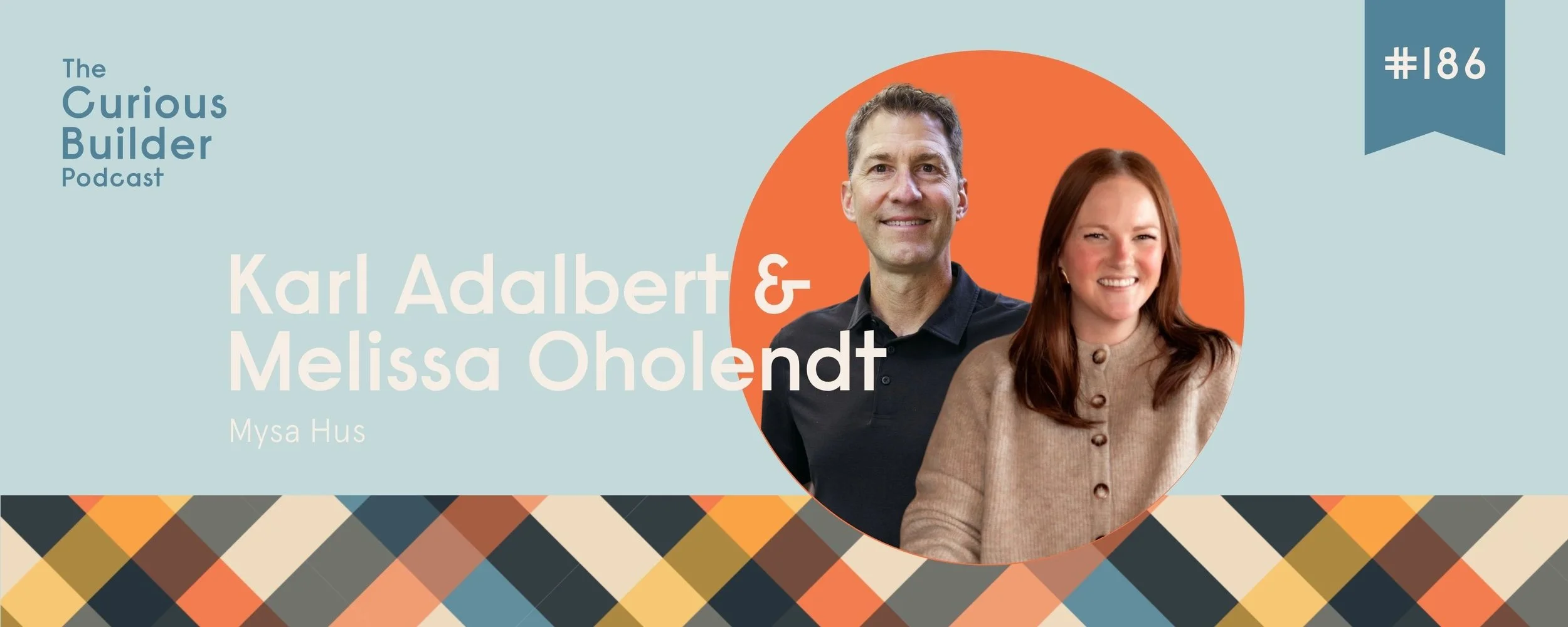
Two years, 32+ brand partners, 3,700 visitors, countless design debates, and enough Diet Cokes to fuel a small construction crew. Mark Williams sits down with Karl Adalbert and Melissa Oholendt to reflect on the wild ride that was Mysa Hus, from pitching the original vision to watching the team turn that vision into something far bigger than a spec home. They talk creativity, wellness, craftsmanship, healthy tension, and why the relationships built along the way may be the best part of the whole project.
Listen to the full episode:


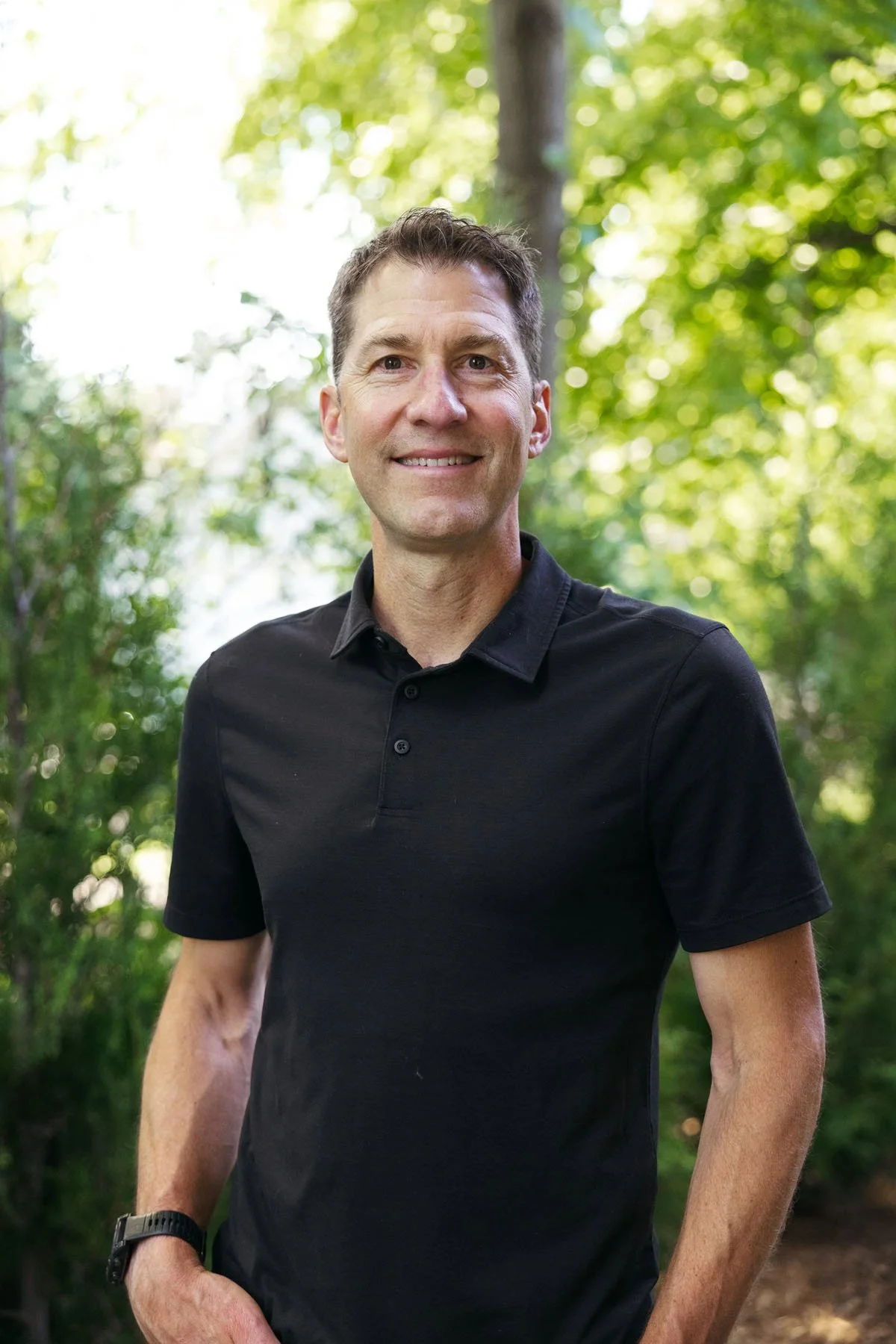
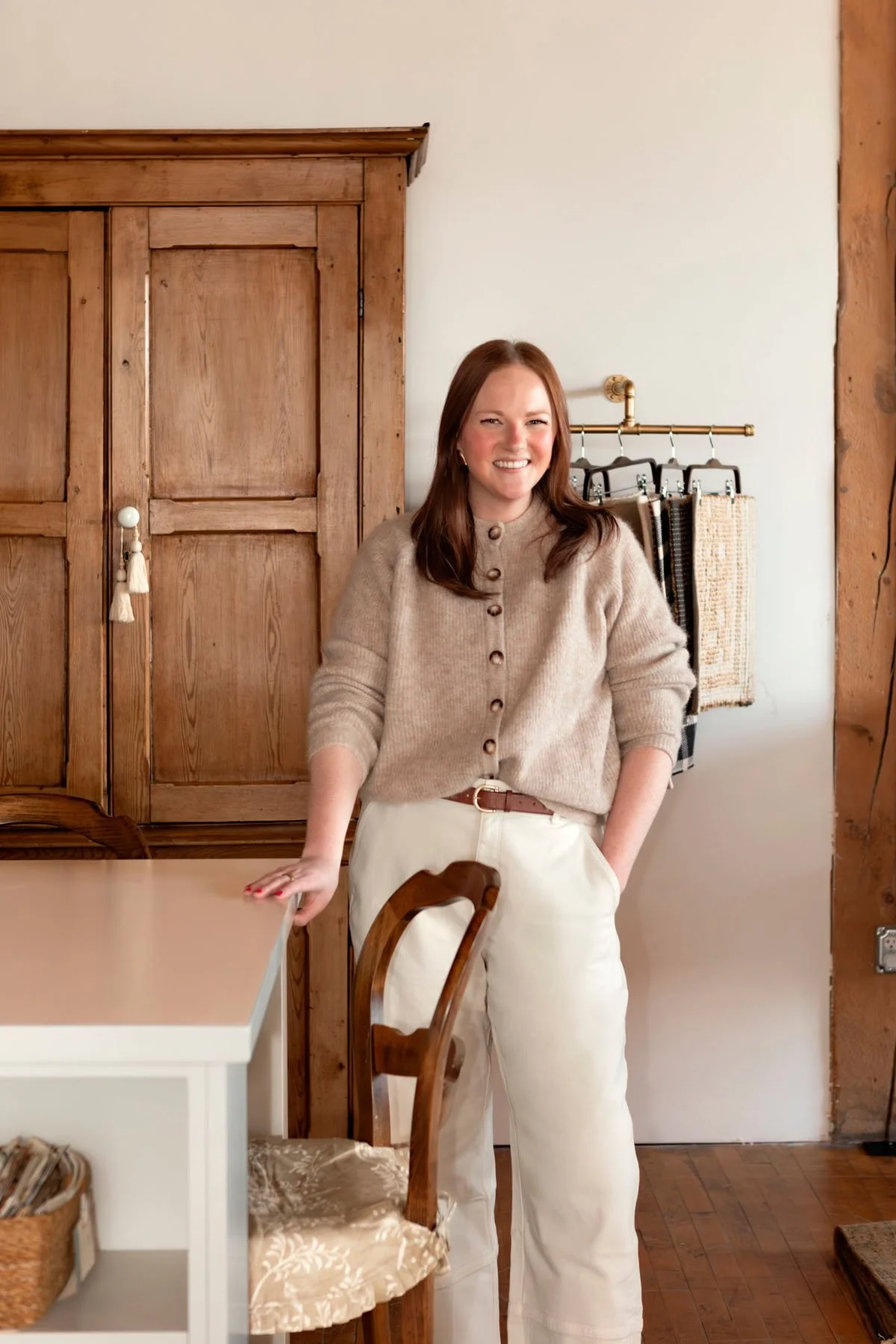
About Karl Adalbert & Melissa Oholendt
Karl’s passion for architecture is rooted in thoughtful, enduring design and a deep connection to nature. He studied at Washington University in St. Louis and the University of Minnesota before working at Ellerbe Becket and RSP Architects. In 2013, he founded KA Design LLC, a Minneapolis-based studio specializing in residential design. An ultra-runner, biker, and skier, Karl finds inspiration in nature’s rhythms.
Resources:
Melissa Oholendt found her passion for interior design in her youth; buying shelter magazines with her allowance from picking strawberries in the backyard and painting her bedroom that perfect shade of navy blue. However, after beginning her interior design college education in 2001, it took more than 15 years, a fast paced career for a distressed debt hedge fund in Minneapolis and a decade long entrepreneurial career in photography, for Melissa to step into her purpose in 2019, where Oho Interiors began.
Resources:
-
Melissa Oholendt 00:04
I think that was like one of the kind of most cool moments was getting to show people that I love the work that we get to do because we just don't often get to do that, and that I the last podcast spoiler alert I cried. Well, I
Mark D. Williams 00:16
think it speaks to the emotion. We're all human, obviously, and yet you're still required to do your best work as well. Today on the Curious Builder podcast, we had Carl and Melissa back on for their upteenth interview with me, and we really just talked about two years' reflections of Misahus. You know, we talk about you know our trip to International Builder Show early on. We talk about what it's like to play host and interact with 3,700 people that toured the home during the artisan tour and our different events. Some of those special stories, those special moments, and yes, it's a bit of a love fest. I get to tell them how much I care about each one of them. So if you're in for good vibes and the whole Misahoos reflection. You're going to love this episode. Without further ado, here is Carl and Melissa. Welcome to Curious Builder Podcast. I am Mark Williams, a host. Today we are going for Misa 3.0. I've got Carl in studio, Melissa in her Colorado studio. Welcome back to the Misa Who's Dream team, what's up, guys?
Karl Adalbert 01:21
Hey, what's up?
Melissa Oholendt 01:23
Hey, guys, I miss being there in person with you. It's so sad.
Mark D. Williams 01:27
I know you were here for the whole summer. We miss you. Yeah, we miss you. Carl's like he can't do this interview without you right next to him. So, well, for the lot more relaxed. It is the second time the charm. So, for the audience, we actually recorded a beautiful podcast, probably the best podcast the Curious Builder has ever recorded, and the mics were not on. My bad. I've made every mistake under the sun when it comes to mics. There were some technical glitches because we wanted to record at Misahu's, and we were talking about basically a two years reflection. So we're going to redo it now. We honestly have zero recollection of what we talked about, or at least me. So it's fresh. So it's fresh. This is hot, hot take. So I just really thought. I mean, we've done. I've done a podcast, obviously with Carl Solo. Done with a couple with you, Melissa Solo. We have one airing out a couple weeks before this one airs about like Melissa and I did. Like if we each had 500 grand, what would we add to the project? What would we take away, and so I thought for the audience, you know, it's coming up on two years since I had this crazy idea of the original seeds of Misahuas, and so I thought it'd be really interesting to kind of go back to the beginning, talk a little bit about, you know, how we did what we did, some of those early, early feels. Looking back, now that we have perspective, I mean, a lot has obviously changed. And then, then I thought maybe after we talk a little bit about that, we talk about the tour. Each one of us, Carl, I think this was maybe one of no your second tour because you and I had the tour together by Lake Harriet, the remodel. This, I think, this was your first tour, Melissa. Is that right?
Melissa Oholendt 02:56
Yeah, that's correct.
Karl Adalbert 02:57
Yeah, maybe the third,
Mark D. Williams 02:59
third. Yeah, and so it was really just a talk to like what went well in terms of storytelling, and then you know I have some questions about what we what are some of our favorite parts of the houses. Melissa, why don't we start with you? Why don't we pick it up? I mean, just to frame it for the audience, if you have not, if you don't know what we're talking about, welcome to the Gears Builder podcast. But Misu, this has been a two-year story home spec home build that we built together in Cottagewood. Carla is our architectural designer. Melissa is our talented interior designer, and we worked with a brand team to create the Mesa concept. And then my family is the archetype that we I asked you guys to run every decision through as like a filter, and then wellness being the last part. Melissa, you and I went out to the International Builder Show. Why don't we start with that? We'll skip kind of the early designing and all the iterations that went because it's not the greatest verbal conversation without the plans in front of us. But what do you remember? Because the International Builder Show, I was just booking my tickets now, and I was thinking, man, I'm having flashbacks of when you and I flew out there. Do you remember, like, what was your thoughts? Like, because you and I went out to pitch brands to be a part of this house, and what do what do you remember from that visit?
Melissa Oholendt 04:06
I mean, I remember being really uncomfortable.
Mark D. Williams 04:09
Why were you uncomfortable?
Melissa Oholendt 04:12
Only from the I'd never done anything like that before, engaging with brands on in in an interior design kind of perspective, and so it was very much a like we hadn't designed, you know, we had designed things. We knew what brands we were kind of going for, but we didn't know like what the reception would be. Like we didn't. I don't even think we really had the full story. I mean, we had a baked version of what Misa Hus would be, but not even the full story of what it became, and so kind of walking into that, being like, I don't know what they're gonna say. I I don't know what I'm gonna say. But I people were so receptive and so excited about even just sort of the framework that we had that you had built. That was I was uncomfortable at first and settled into it, and then it was a great trip. It was a great trip.
Mark D. Williams 05:00
Well, it's funny you say that. I think I had the benefit of two things: one, being delusionally optimistic, and then two, I had-I mean, I-I had a lot of practice with the Curious Builder pitching brands, so I was more used to that process, like how it worked. I think the magic for us in hindsight that worked so well was we gave all the brands we approached three direct tiers. Like, hey, tier one is if you do this, here's our deliverables. Tiers two, here's our deliverables. Tier three, here's our deliverables. And I think the mistake that a lot of builders make in brand work is you go into loosey goosey. And I think it's like anything else. It's honestly, it's no different than any of us designing for our clients. Like, the clearer the client communicates their goals, the easier it is for Carl to draw and for you to design, Melissa. And I think the same is true. Like I think having that clear-that's why I think brand is so important. I think that's why the Misa Huse story was a so compelling. But I think having that clear sort of lightning rod of what it was, and now it's even-I mean, think of how much clear it is now. Like we almost had Misa Holt, who's sold now. Like we've had three super interested parties on the one yard line, and that the day we're recording this, we just had one that's magically disappeared, unfortunately. But the point being is, I've already been thinking about the next version, like how to pitch. I'm literally when I thought Misa Hus was sold yesterday, I was already thinking about what would my storyline be, what would my ask be, what where do I go find the next lot? Like I was as the futurist, I'm already just like, okay, how do I line these up so when February comes, I've got the next. Anyway, I spent a little too much time thinking down the road,
Karl Adalbert 06:36
and I wasn't on the trip, but you know, I I remember you coming back really excited, and you know, Melissa. Even though you say you know wasn't fully baked, you know there was the story, and you had kind of set these parameters as far as what you were offering to to vendors, and they were excited to be part of that story. And you know, the house and their involvement it directly you know contributes to sort of the power of the house, and you know they're they're part of it now. And so the story wasn't fully evolved, and it has it had you know it it iterated both in sort of the design as well as you know the the vendors and the materials that we used on the house. So you know that that speaks to the kind of the power of sort of the story that that was created at the very beginning.
Mark D. Williams 07:25
I wonder if it's not a little bit how movie movies are pitched to producers. I mean, I think it probably is. I mean, you go, you pitch a script, you already have the actors sort of lined up. I mean, we kind of knew who the roster was, and really they they believed in the idea, and so we ended up with I think close to 32 or 33 brand partners from 22 different countries. I'm kind of proud of that, and I the house became much more international, which is exciting to us. And it was a complete for me. It was a journey of self-discovery, and I know just being kind of the I've kind of described myself as the main character in the story. You know we can move past IBS and kind of like we started in June of 25, and it took us 11 months. You know that build was the hardest thing I've ever done in my career, but also the most rewarding by far. And for me, it was a huge journey of self discovery. I've talked a little bit about before, so I won't go into depths. What was that like for you, Carl? Did you feel like? I mean, I feel like each, like Melissa commented before, like, "Oh, this is just how we design. For me, it was, it was so personal, and so maybe my experience was, I think it's always personal because Carl, I know, and that goes for both of you. You guys put so much of your personal self in each one of your designs, but did you find that you were on a journey of self-discovery, or was that kind of more just how I felt because it was I was such so deep into it.
Karl Adalbert 08:44
Oh gosh, yeah. I mean, I think I get pretty involved in in all my projects. That's just my personality. You know, my my clients as well often become very good friends, and or you know, it's people that I care about. You know, when I think about design, you know, Misahu's is you know is maybe no different than any other project, but I I do think about the the spaces and how they you know contribute to the people that are going to be living there and the lives you know how how they feel in those spaces, and Misahuas is definitely about sort of a feeling besides the story and and the look of the house and how it functions. There's there's a feeling about the place that I think everybody can sense when they when they when they experience
Mark D. Williams 09:37
it. How about you, Melissa? How would you? What have you sort of learned about either yourself or your team, you know, throughout this process? I know, again, well, I'll let you speak.
Melissa Oholendt 09:50
I think one of the things that we kind of repeated a lot and talked about a lot internally is that while we had you and your family. As the archetype, it still was really difficult to finalize decisions in a way, and I think that having a client in some ways makes a project a lot easier. In some ways, it makes the project a lot harder, depending on the client. But not having, you know, exactly what Carl said, we have these deep relationships with our clients, where we're pulling things out of them and really understanding how we can serve their lives in this house, and without having that family there to be like, "Do you play hockey? Do you need golf club storage? Like, where do you put your purse when you come in the door? Like, those were pieces that we kind of had to imagine for the family that would one day get to live there, and that honestly was pretty tricky because it sort of puts you in a the world your oyster kind of mentality, and you know not everyone operates the same way. And so we were making plans for a family that we didn't know yet, and that is tricky. But I think I think one of the more cool things that I think our team got to experience was having the ability to throw out design elements that maybe would have not passed kind of a client filter in terms of being a little bit more risky or a little bit you know something that we couldn't find a picture reference for because we were trying something new, and so we got to do those things and really be a little bit more experimental and got to do it without having to sell a client into a concept, and I think that is represented in in kind of the Misa Hus interior design is that you see these really interesting moments that you're like, that I think we found really exciting and really fun to be able to do.
Mark D. Williams 11:37
One of the things that was correct me if I'm wrong, but I think the brass stars in the floor-that was one of those moments that every single person that has come into the house has taken a picture of it. I think that's probably the most photographed thing, and it's such a small detail. I counted the other day; there's 10 of them, and just-it's so unique. And I think it's those special moments. You know, we're certainly not the first builder that has built a spec home. You know, usually builders build a spec home from themselves. I just can't afford my work, and so that's, you know, that's got because I keep getting people to tell me like, "Mark, well, why don't you just buy it? I'm like, I don't think so. I wish I could, but so it's an interesting thing. I think that led to one of the most difficult parts of it was is if you try to guess what someone will like, I think I've I've said this a lot on the podcast. I think I'm bad at guessing what other people will like. I'm really good at telling you what I like, and so a big part of this house, of course, is reacting to what I like in the in the spirit of it. And I think you know doing this a second time down the road will be so much easier because we sort of broken all the glass windows, we know what worked, what don't didn't work. You know, you know the mistakes that we made in terms of the concept. A lot of it was with me, but I think one of the things that we did really well was a clear vision. I think the always coming back to like what Misahoos is like having a foundational guiding light, and I think of like the subcontractors inspiring them so that I've never seen a team so galvanized on an entire project. And I heard a stat the other day that if one horse pulls, call it a 200 pound sled. If two horses pull together, they don't actually get to double their output. It's like triple. There's a magnifying effect if multiple people are pulling pulling together, and I think of like all the effort Carl put into it, and on thought process, and all the the time that Kate and Melissa and your team put in, Melissa, and then all the time our team and subcontractors, everyone. This is a team effort. In order to, and I know that's a cliche thing to say, but honestly, so many people lean so and we're so inspired by the Misa story, and I know it's. I'm sure people. Some people are. I got a comment the other day on social media where someone's like, "Do you have any other homes that you talk about other than Misahoos? Because we're kind of over it, which I thought, and I responded. I think I told you this, Melissa. Like, I'm sorry. Our photos take like a year after a home is done to like take photos, so it's going to take a while. It's not the only home we have ever built, but it's just you know it's like it's like your firstborn kid. You're pretty excited about talking about it. Anyway, I think having that that shining light of what it is was really helpful for the team to to kind of to galvanize around.
Melissa Oholendt 14:14
Yeah, I agree with that.
Karl Adalbert 14:16
Yeah, we saw that. I mean, I experienced it just coming in as it was being constructed, and and seeing kind of the work that sort of the craftsmen and artisans, the different subs that were involved, and the amount of detail that they each of them had to work on and had to think through, and kind of the the sequencing, and you know it it shows from the craftsmanship of the carpenters to the metal workers to all the customized things in the house, it's yeah, it it shows it shows that that that team effort.
Mark D. Williams 14:52
I was remarking to you guys last time we we did our failed interview was when we put on the arson tour. Ah, the number of subcontractors that brought their mom and dad and families through-I mean-was really special. And even last week, I went on another job site in Warwick. You know, the head of our trim team asked. He's like, "Hey, what do you have coming up next year? And we were just talking shop, and he goes, "Man, he goes, how's Misahus? And he's like, "That sure was a special home. He goes. Do you have any more homes like that? Like people are asking. Like they want to do it again. And I think when you ask people to be creative and to have a hand in it, it obviously you empower their skills. And so anyway, it was just really it was really rewarding to see people. You know, I know your dad traveled to see it, Melissa, which was a really special moment, and it was really cool to meet your dad. And I remind me again. He walked to the front door, and what was the comment he made about the house?
Melissa Oholendt 15:45
Well, we pulled up, and then we went in through the garage, and he was like, "The garage is really nice. And he's like, "Oh, these span panels; those are really nice. I was like, "Yeah. And then we get into the mudroom, and he's like, "Okay, this is a really nice house. We got to the kitchen, and he was like, "Okay, I think I'm seeing it. And then I took him out to the back of the house before we went to the upper level or the lower level. By the time we were sort of standing back behind the pool in the backyard, he was like, "Okay, yeah, I get it. I understand. It's a $6 million house, if not more. So to please a guy like Steve Moore, that's a that's a big that's a high honor for anyone, but that was honestly that was the first time that my dad has really gotten to see other other than our personal houses. Like it's the first time he's ever gotten to see a project that you know Oho has done, and that was kind of a really special moment to get to to show him that and show him you know things that we're capable of when he probably still thinks of me as like the 13 year old girl that needed to be in algebra jail and you know was to to ace those ACTs. But I I think that was like one of the kind of most cool moments was getting to show people that I love the work that we get to do because we just don't often get to do that and that I the last podcast podcast spoiler alert! I cried telling that story. Marg was probably hoping I'd cry
Mark D. Williams 17:06
again. Well, I think it speaks to the emotion. You know, you you have life. I mean, as you know, we're all human, obviously, and so you go through periods of your personal life, loss and gain, and kids and health and sickness and all these different things, and and yet we're still you're still required to do your best work as well. And so I think just I always say that there's a bit of a letdown when a house is done because you spend two years of your life in design and building with that team, and that's true of other of other homes. I've had clients in the past. I'm thinking one in particular. Her name was Carrie, and after it was about a two-year build during COVID. And when we were done, about two months later, she called me out of the blue, and she's like, "I feel like we broke up, Mark. And she and she's like, "We spent so much time together. And she's like, "Now, can you just like come over randomly for coffee? Because I just miss you and the team. And it was really sweet. It and I and it's true. I I you sort of feel that letdown, and sometimes you're kind of ready for the client. You're kind of like, okay, I'm actually glad that this one is done. But I mean, there are those special clients where you're just like, man, I you sort of miss that. You get used to that daily interaction. And Carl is my little neighbor. We spend time running and biking together, so I get to see him a lot personally. But it is different when you are also, and Carl and I are currently working on a few other remodels, so it it's different because he and I get to see each other. But I've mentioned you in a text there, Melissa. Like I don't get to see you as much anymore, and so and I do miss that camaraderie of just you know, just kind of I always call you buddy. I'm like, hey, buddy, where when are we getting together next? And I think I told you that speaking at IBS, one of my favorite memories with you, Melissa, oddly enough, was at IBS. You and I were so burned out of walking the floor. I forget what day it was. You and I sat down at some little French bistro cafe or whatever. We just sat there, and we were supposed to go meet with some more brands. And I think I either was me or you. I think we both. I just looked at each. I was like, "Are you good if we just stay here the rest of the day and just talk? Because like I'm kind of over. Because it is over. IBS can be overwhelming. I mean, it's like a million square feet and 10,000 vendors, but that was one of my favorite memories with you. It's just kind of like we're so busy with life and all these other things. It's kind of those quiet moments in between, and that really foreshadowed that what makes Misa Hu special is kind of those quiet moments.
Melissa Oholendt 19:16
Yeah, yeah, I think that that is something that, and I, you know, I don't, I don't, Ian. We experience this occasionally, but I think one of the things that made Misa so powerful is that that family aspect of it. And I think I think it came from. I mean, it certainly came from you, Mark, the head of the project. But I think the three of us and that relationship that the three of us had really infiltrated into everyone's relationship in terms of like having that relationship with the Alpine flooring guys and giving them hugs when you see them and like it just felt like a family and I think that's the thing that I wish every project could experience because there is so much power in having galvanized team but a team that truly. Like operates from a place of just true love for each other and true desire to see all of us succeed instead of feeling like any sort of animosity or any sort of like we have to get in each other. And I know we've talked about this, but it just is like it's one of those. It is one of the most powerful things I think that came out of Misa Who's for me is just to really understand how powerful a like a loving build team can like carry through the entire project.
Mark D. Williams 20:32
This episode is brought to you by Pella Windows and Doors. I've used Pella for 21 years as the exclusive window company on every one of my builds. When people ask me who I trust for windows and doors, it's Pella. Every time, their craftsmanship, their innovation, the top-tier service make them a no-brainer for any custom home builder or designer who demand the best. Whether you're designing something bold or building something with timeless elegance, Pella has you covered. They're also the only window company that has a lifetime warranty on all of their windows, I've gotten to know all their people at Pella Corporate as well as locally here at Pella Northland. I'm proud to call them our partners and our friends. Visit Pella.com to learn more and connect with your local reps today. For more information, you can also listen to Episode One, where I interview the Pella Northland founders, as well as Episode 109, where we talk all about their latest innovation with the steady set window. There were times where you called me when things were really difficult, and we'll do a later podcast on Halloween about the you know we call it the Misa curses. But like there were times where you like Mark, I love you, but like we got to fix this. But it reminded me of a family. It's no different than like a brother or a sister or a parent calling you and saying like, Hey, I love you, sister. But like right now, I kind of also want to punch you in the face, and like that's kind of normal. But I think having the honest-I mean, what worked was you feeling that you could honestly tell me that you were struggling, and I was completely oblivious to what that particular thing was. I made a huge mistake in the project. I've talked about it before on the podcast of giving up all control, thinking I just made everyone's dream come true. Like, turned out was the literally the biggest mistake I personally made on the project. And but also knowing that your there's a verse in the Bible I like, Proverbs: "Faithful are the wounds of a friend. That you could honestly, Carl could tell me like, "Mark, you're out of line, and I would respect Carl's point of view because I know that he loves me and he trusts me. And it kind of speaks to. Well, let Carl respond because he he wants to say something.
Karl Adalbert 22:25
No, I just respect was the word that I was thinking about, and that's one of the most important things for me. That you know, early on we were working together, and you know, we I just understood that you know we had a level of respect for each of our roles in the project that we felt comfortable. It wasn't without a lot of debate, and I would not say maybe some critical thinking, some criticism about parts of the design. But that's what makes it better if you have that sort of respect. And I don't know. I can lick my wounds and and and go back and and present a few more ideas. And in the end, you know, it just thinking on the way over here. You know, some of the not necessarily late changes, but I think the you know the primary bedroom and that evolution of just expanding that a bit, giving the it its own sort of identity. It's it's both a form in the room as well as the the bathroom opening up to the the deck is one of the most magical you know spaces of the house, and that was something that you know Melissa, you guys pointed out that we needed more room, or felt like this needed to have a little bit more space, and it really opened up some opportunities for for the house. And so, that's just one example of of many in the design process, at least.
Mark D. Williams 23:56
Yeah, I think people I heard it referred to as a healthy tension, and I've often I in a moment, I'll tell you each the compliment I gave you before because I think it bears repeating about why I picked each one of you, and but I think a big part of it is someone who is I don't consider myself that knowledgeable in the field of architecture or the field of design, which is one of the reasons why I hire great people and you as well. But I think letting artists do what they do, but then also challenging it to do better work. It's a little bit like you know, Carl, when you and I are running or biking. It's like you know, knowing when when someone is pushing you, you can actually go faster than you think you can because someone is pushing you. And and sometimes watching the two of you pull and expand each other's design ideas, the it ends with a better result, and I love it. If someone isn't willing to defend their idea, it probably wasn't a very good idea. And so, I personally, one of my kind of go tos has always been, Carl. If this was your home, what would you do? That's always been like one of my number one questions I've used for years. And then two is if you aren't going to fight for your idea, like I, if you are. And like you're willing to fight for it, like that's good enough for me. Like I like that because that tells me like, and you don't do it for everything. You do it for a few things, and there are a few times where you know people felt very strongly, and I like that reaction because it tells me that you deeply care about it. And I'm like, okay, that it's not like I'm overtly testing anybody, but it's more like, ooh, I can see that they're fired up about this idea. Like, give me passion over just check boxes. Like, I want passion
Speaker 1 25:28
for sure.
Mark D. Williams 25:29
I guess now I will tell you compliments. I, you know, I just like there's a space. I guess it's compliment time. You know, and and really, this goes for both of you. I guess I'll go well. I go put you together. I mean, I chose each one of you for, you know, I've said this before. You are both extremely talented at what you do, but that's not why I picked each one of you for this project. I picked you because you both knew me personally, and I knew because this project was going to be so deeply personal and intimate in terms of like getting the best out of me, I needed to trust and have a deep relationship, you know, with the person that was doing it, both for respect, for care, but also knowing that they would be able to help me do something that I've not done before. This isn't something you would do with someone to pick an architect for this first one. I mean, there will be future versions where it's a different architect, it's a different designer. There'll be future versions with a different builder. It won't even be me. That wasn't what drove me. What drove me was like I need people I care about, and I know that their care for me is also great. And you both are so talented. I don't want to take away from that, but that's not why I picked each one of you. And I've told you this compliment before because it's really your depth of character and who you are as people that has yielded the most love and the most care and the best result. And that's for me. I'll 10 years from now, I'll forget many things about Misa. But it's kind of back to that whole quote about my Angelo that I keep repeating all the time in regards to Misa: is that you will forget, you know, what people say, but you'll never forget how they make them feel. And Carl, you've done this for a long period of time. How you make other people feel is one of your greatest characteristics as a human. And Melissa, you are also very similar. And so, having bringing people together that you love, and I've told both of you before, you know, it's not meant to be woo. It's just truth. I love both of you, and in in order to, and I mean that on so many levels. And it's so cool to work with people that you can just look them in the eyes and say, "I love you. I think you're a great human being, and I'm proud that we got to do this together. And yeah, I guess there's not much more I could say about that.
Melissa Oholendt 27:39
There's so the video that Kaylee did-that like really cool 16-minute video-I've watched it a few times now, and I think there's like there's just you know there's moments where I thought it was just like B-roll. There's also moments I had no idea she she was actually filming. They captured the relationship between the three of us, and I think that you know we clearly like we laugh a lot together. I think there was a moment where I caught me giving Mark a side eye because he probably like gave a dad joke that was, you know, borderline funny, borderline not. You know, like I, I think that it, I, I think that there is something that is so special in that, and I, I very much appreciate being a part of the team and being brought in in that way because it is, it is creating something like this is truly, I mean, hopefully not once in a career kind of thing. But it it feels like in this moment it might be once in a career kind of thing because this is it's so remarkable and so special, and I think we're all so attached to it and in the same ways and in different ways. And I think you know one day when it does sell, like it's we're gonna grieve that a little bit. But I think the the relationship that came out of it between the three of us is just something that is so special that I I will never I'll never not love that.
Mark D. Williams 28:56
I feel I feel I don't know if you can ever really go back because you know we continue to evolve. I'm already in the last year a completely different builder than I was one year today from today. Like what I want to do now in the future is so much clearer, and I'm so thankful for that process to have taught me that. And I, I'm, I have said it a few times in the podcast. I actually have a call with my lawyer to figure out this, but I do. I want to. I love this idea. I want to build homes that last 100 years, and I know there's some legality of like whether you say that in your marketing or not. But like I kind of don't care. Like I want to say that because why shouldn't why shouldn't we? And I think as an industry, like why shouldn't we have loftier standards? And part of it is the materiality that we choose, the design, all of those things, but because so much of the house was centered on wellness, and because so much of the home was centered on organic materials, they call it biomimicry. You know, where you take, you know, I interviewed this guy in person, not on the on the micro Michael Wright. He's brilliant person. You know, like when you walk into a room and you like this guy is like 100x smarter than I am. Like you know what. In one sentence, like holy crap, this guy's smart. But I love what he-he's the one who taught me about biomimicry. And he looks-he points out the window, and he says, "There's 6 billion years of innovation in R and D outside. Don't you think we should use some of it? And his whole career path is-you know-he was showing me this like the wind turbines that they use to harness obviously wind turbines, but they're using the shape of an orca fin, the same technology, and mapping it so that as the orca fin glides through the water, it's super hydrodynamic. They're using that for airflow, and I was just like, "Wow, that's like I'm just using real wood from a tree. Like I'm, I'm about as basic a guy as you can get here, but that's cool. And so I guess the point is, is this home has taught me so much about sustainability, you know, longevity. But it all started with thoughts, full intention, and so each one of you had a big part to play in that because I know each one of you also embodied that in both your personal lifestyles and also your design esthetics.
Karl Adalbert 30:58
I mean, I think that the the 100 year build is also. I mean, there's a lot of factors that go into it. It's the quality of construction, obviously, some materials that you use, but it's also you know something that we've thought about deeply in this house is timelessness. We talk about wellness, but it's that also plays into sort of the. I would say you go in there and it has sort of a timeless feel to it, and both the exterior and interior, and how it fits into the neighborhood. That specifically Cottagewood, which you know has has a history and is historic in the that little area along Lake Minnetonka, and that that will also contribute to its longevity.
Mark D. Williams 31:46
Yeah,
Melissa Oholendt 31:47
yeah. I think one of the things that, from a wellness perspective, that I still find so interesting and compelling is that we that each that I think only uniquely the three of us could have brought to a project is how we took wellness and owned it in our different ways, and so you know, like you two, obviously, you are both very active and very you work out quite a bit. That's I'm not a workout kind of girly. I'm a long walk in the woods kind of girl. Like wellness for me, I had to I had to understand what that meant for me and and personify that in the house, and and so I think you know, like Mark, for you, slowing down represents an element of wellness, and I think Carl, you embody the wellness of treating your body well, and you know, working it, and I probably bring the element of I think wellness to me is creating a space where it brings together all of the people that I love and lets us hunker down and be comfortable together. And so I think, like the fact that this house hits on every element of wellness that each of us embody, like that, I think that's just such a beautiful thing that only the three of us could have created together. And I think is just one in a million for sure.
Mark D. Williams 33:00
I love that. I give Carl a lot of credit, specifically about the one in the studio that ended up being detached. And I've talked about this now a lot to real estate agents. And you know, we've had about 3700 people through the house, and so Melissa would roll her eyes because she'd hear me. Melissa, during the tour, you were good for about the first three hours, but hours four and five, you were slugging Diet Cokes, and you were like, "How soon can Matt pick me up? Because I am losing steam out here, and I was just starting to warm up my dad jokes. And I'm sure you heard me say the same. 1000, yeah, I'm an endurance talker. But where I was going with this is, I, Carl, really, you brought to a head. If wellness is important to you, then it should be important to the design, and I keep that keeps replaying in my head. I still think about that today because so many designers and architects and families and builders, the exercise studio or the or the wellness room or whatever is usually a leftover bedroom basement with no windows and it's a dark cave. And it seems so crazy that we do that. And Carl was really the first one. He's like, "Wouldn't be cool if the pool house was actually the wellness studio? Like, Mark, if you are the main character, I remember you very vividly saying this. Where would you, Mark Williams, want to work out? I'm like, I want it to be detached, so I'm away from the house, so the dropping dumbbells doesn't wake up my wife doing deadlifts or something, and I get an angry text. And then, two, of course, natural light. And now it just seems I can't unsee that. Now I'm like every house I build needs a detached wellness studio, and like I've had so many people come to the house that were involved with yoga or lifting or exercising or the cold plunge or the sauna, all of the things that whatever their lifestyle dictates, having it separated with natural light is like they're just like oh man I can't believe we don't have this. So anyway, to your point about different points of wellness, we each sort of encourage each other in different ways to what to bring out wellness.
Speaker 1 34:50
For sure. One
Mark D. Williams 34:53
thing that switching the topic a little bit here. Let's talk a little bit about the tour. So I think one of the. Maybe we'll go over this part quick, because I knew when we started in the beginning of June that I wanted to be done may 1, and the reason I wanted to be done may 1 is the artisan tour is june 1. But I wanted that free month of marketing opportunities for photos, for photography, for videography, for Channel Five, and all that stuff. So we, you know, we worked that team hard. The last man, the last 90 days was getting to the top of Everest. It was it was hard. It really was hard. But then we the the funny thing was the stress we put on ourselves, Melissa specifically for the two back to back photo shoots. One was international. One was local. They were both amazing artists. But like, wow! I tell people that you and your team stylized and furnished the whole home in two days, and nobody believes me. I'm like, well, we did it. What do you? What that was one of the harder points, I would imagine, logistically. What was? What's your memory of that now?
Melissa Oholendt 35:55
Yeah, I. Well, we we had from a personal point of view, we had two major like multi-year projects, Misa Hus and another one in Tennessee, that were cruising to the finish line at the same time, and we were supposed to install one of them on a certain timeline that got pushed. So it it was sort of an amalgamation of the team was managing two giant, giant installs at the same time, and trying to figure out, like, okay, well, if this one gets pushed, and then this one, you know, so that that piece of the puzzle was like a mind, like a mental mind game every single day. But I just, I remember, like, I remember saying to the team, like, we're this should be a week long install, and we're gonna do it in two days, and we're gonna do a really good job, and like we can do this. And there's, you know, at that point there were 10 of us, and so it was like we have the manpower, we can do this. And so it was a little bit of like a let's go team, like pep rally, we can do this. But you know, by the I think you know 24
Karl Adalbert 36:57
hours in a day,
Melissa Oholendt 36:59
we might have to work every 24 hours, and we were there late nights. I was there late nights styling shelves, and and I think that you know the end result really was worth it. There was a moment the second night where I was just sitting in the basement on this on the sectional, just being like looking around and being like, okay, I think we might be ready for this photo shoot tomorrow, and feel.
This episode is sponsored by: