Episode 187 - Rob Stein Cracked the Code to More Money, Time, & Mental Freedom
#187 | Rob Stein | Author & Keynote Speaker | More Money, Time, & Mental Freedom
You built the business, hit the goals, and made the money. So why are you still stressed out and answering emails at the dinner table? Author and keynote speaker Rob Stein joins Mark to explain why success can actually create decision fatigue, how delegating decisions (not just tasks) changes everything, and why your morning routine can't save you from a poorly structured day. Because no amount of cold plunges can fix a business built on bad systems.
Listen to the full episode:


About Rob Stein
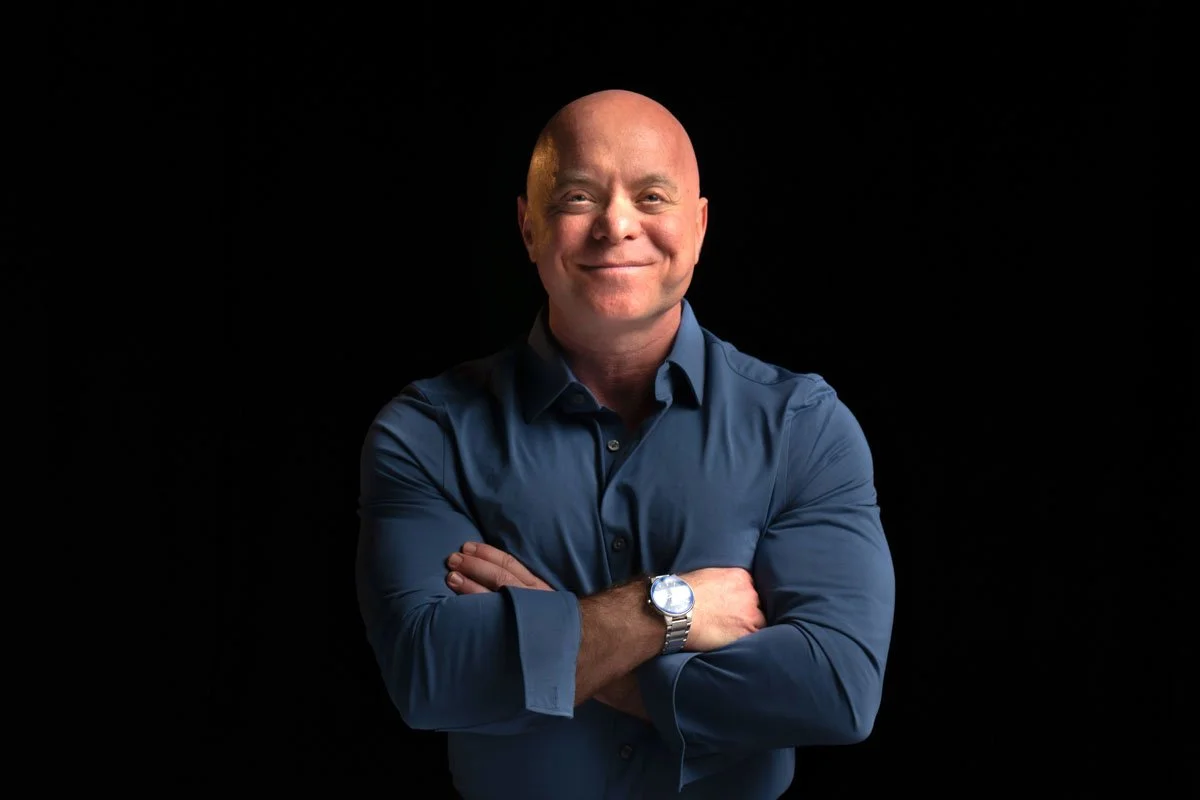
Rob Stein is a keynote speaker, Decision Architecture consultant, and entrepreneur who has spent his career helping high performers eliminate the hidden complexity that turns success into decision fatigue.
Over the course of his career, Rob has spoken to more than 50,000 people and worked with over 12,000 founders, executives, and entrepreneurs across the country. He is the author of Impossible to Fail and the creator of the Decision Architecture methodology, a diagnostic framework that identifies why success starts feeling heavier than it should and redesigns how decisions flow through a founder's life and business.
A featured TEDx Westminster speaker with a Master's degree in Education, Rob brings a rare combination of teaching precision and real-world business experience to every engagement. He doesn't just motivate. He diagnoses, redesigns, and delivers a blueprint. His work is rooted in a simple but counterintuitive premise: most successful founders don't have a work ethic or discipline problem. They have decision fatigue. And until the architecture creating that fatigue is redesigned, no morning routine, productivity system, or executive coach will fix it permanently.
Rob's work has been featured on CBS, Fox, NBC, and USA Network. He works exclusively with founders, executives and entrepreneurs who have already proven they can execute.
Resources:
-
Mark D. Williams 00:00
This episode is brought to you by All Inc. For the last decade plus, we've been working with All Inc. for all of our appliance needs. If you're local here in Minnesota, please check out AllInc.com and tell them the Curious Builder sent you.
Rob Stein 00:15
You know, I classify three classes of freedom when I consult with people, and I ask them like, "What? What do you have, and what do you want? There's financial freedom, time freedom, and mental freedom. And the people I usually work with have good financial success, some financial freedom, some or rare semblance of time freedom, but they have no mental freedom.
Mark D. Williams 00:42
I had to stop us from talking because the pre-episode was going to turn into the episode, and I asked you what you wanted out of this episode. I always like to ask a guest that, and you had not. It's today's a Monday that we're recording. Yeah, years will air, you know, a couple weeks from now. But literally today's guest that you that aired is a soundproof studio out of Nashville, and you were you had a few. We'll talk about it in a minute. Just your jazz and music background. You've already listened to the episode, which is super current. But share with us what you just said about the value you want to provide to people listening.
Rob Stein 01:15
Yes, all based on the journey I've had that hitting business goals will not make you a happy business owner. I had that huge misconception, and I hit all of my business goals, and was miserable, and had more stress on my life and marriage than ever. So there's a difference between being financially successful as a business owner and being happy. And what I found is it is the structure and decision flow of your business, that makes you happy. Not how much money is in the account,
Mark D. Williams 01:45
and you figured that out on day one. I'm sure of your business. Like you had no miscues. I was like, I we're gonna need like a 17 part mini series to go through your backstory. So I guess what I would like for this audience, because they're probably like, why is Mark so excited! Like guys, this story is insane. I mean, here's here's my brief recap. You had a musical career. You decided you were extremely overweight when your belt buckle popped off your belt buckle and killed someone in a stall. You reformed your life, became a fitness freak. You then you know started an entire business around music for a decade. Then on the side, you created another business for real estate agents. You've spoken all across the country to platforms that have reached people around the world. You've written a book. At this point, you've done body weight competition. I think my favorite little last little thing was you were in the middle of a weightlifting competition, and it was two weeks before the competition, or the weekend before, and it was your buddy's. It was his wedding, and rather than eating there, you brought like chicken noodle soup because you're probably fasting or cutting water, and like, and then the next day you went and won the competition, which I think is the cherry on top. It was probably a fake cherry, not with the calories. Right, that would push you over the edge.
Rob Stein 02:53
Yeah, you know, all of that is a pretty good summary, man. You know, it's funny what you said. Like, figured that out on day one. We've all heard this phrase, you know, 20 years to become an overnight success.
Mark D. Williams 03:02
I've not heard that. That's oh yeah
Rob Stein 03:03
yeah it's true, dude. You know, and I've been in the I've been in entrepreneurship for approaching 23 years now, and it it's it it has been an amazing story, and I'm very blessed and fortunate to have gone through it. It sounds a lot more glamorous than it is, and the reality is that if you're willing to gain wisdom from your journey, anyone can really ascend that model of of personal fulfillment. In my book, I write that we win or we learn; we do not fail. And I think that's really the biggest difference: is it's a never-ending journey of learning. You know, things go well; they don't go as planned. And if you're willing to refine and seek wisdom and really work on yourself, it can be a really fulfilling life.
Mark D. Williams 03:46
I forget who it was, and I'm not a big philosopher, but I love quotes. You know, know thyself, and you know, I think of I just you know the book for Q3, and we won't go a lot into it because I want to focus on your book, Relentless, right now. I just finished while I was on vacation, and one of the things I highlighted that was really interesting was there is no ceiling and there is no floor. Yeah, and I I like like like failure can like there's no depth to like how far you can fail. Like you can fail pretty far, and if you think you've hit bottom, I'm guessing there's a couple other layers of failure that you haven't even considered. And but success is true too. Like I think people that you know we would look at as successful, but like look at yourself. I think if you were to take a an inventory of what success means to you, the listener to me, to you, like I think it's very true that comparison is a theft of joy. And so, really, your success is all how you view it. And I'm not saying you don't model yourself after other people or you don't take encouragement for other people, but really, if you believe the person in the mirror, if you can, I think that's why, like positivity or really confidence and love,
Rob Stein 04:48
100% And again, you know, like I said in the beginning, I think a lot of business owners that are really trying to reach the potential they know they're capable of have this false perception that they're going to feel a certain way when they. Accomplish a certain thing, and it never happens. I've actually never met anyone that has experienced that, where you know you you check the box and you feel a certain way. You know people think that results create identity. I believe identity creates results, and when you structure your life and business, that you know what what I teach people how to do is not say what do you want to accomplish and how do we make it happen. It's what do you want to accomplish and how do we make that inevitable? How do we structure your life and your business and the way decisions flow into your life and business that makes those results just an inevitable byproduct of the system itself? And when you can operate at your highest level, and I define that as spending all day making the decisions that you love to make, that only you are uniquely qualified to make, rather than reacting to the success that you've built around you. That's when you can be happy. And as someone that was by earthly and outside standards successful and accomplished every business box and monetary box I wanted to check, and it was the most miserable time of my life. And I'm happy to go into that and how I figured this all out. But I believe that what I call decision architecture is the thing that can actually, really, the only thing that can actually make you happy, regardless of the perceived business success and accomplishments that you feel are necessary.
Mark D. Williams 06:21
So let's frame this up for the audience and for our conversation because, like I said, we're going to run out of the hour before we run out of topics. When you just talked about why you encourage people to do what they do, that if you look for external validation, it ends up being hollow and empty. But if you do it for yourself, there's a lot of value there. And so, yeah. Anyway, I like that quote.
Rob Stein 06:39
Yeah, 100% Well, again, Mark, thanks for having me on. You know, as I mentioned before, we got started. I love how entertaining your podcast is, but it also offers real value, real tactical value, and I'm going to aim to do that today. And you know, for all the listeners, before we get too far in, you know, do me a favor, please leave Mark a five star review for this podcast. I already did, but he, I mean, the behind the scenes work that goes into producing a globally ranked podcast that is this successful is astounding. So, just support him and Mark. Thank you again, man. Yeah, I appreciate it. Yeah, 100% So, again, my name is Rob Stein. I'm a keynote speaker. I'm a business consultant. I work with CEOs, business owners, and leadership teams on something a framework I've developed called decision architecture. And as I've mentioned, you know, building a successful business is one of the hardest things a person can do. And statistically, if you're a successful business owner listening to this, like congratulations, you're an anomaly, you're a needle in a haystack, and you know they can have a great house, a great car, their business is winning on paper. Yet from the outside looking in, you know they're crushing it. But inside, they can't turn off their brain. They're sitting at the dinner table with their family, physically present but mentally absent. Their mind is somewhere else. They're busy, but they're not productive. They are reacting all day to the success and the and the complexity that they've built. And oftentimes, they think it's it's a sleep problem. It's an organizational problem. They need team dynamics. They need a better morning routine or or a cold plunge, which, by the way, not for me. I'm a sauna guy, but really, it's it's decision fatigue and poor decision architecture. So, what I do is I help those people design how decisions flow into their life and business in the first place. And all of the things that you've mentioned that I've been very fortunate and blessed to been able to experience has been a result of me implementing this in my life, how decisions flow to me, and that's really where it's all about. You know, before I figured this out, I used to be a an overweight, underpaid middle school teacher. I was in New Jersey. We live in Texas now, teaching middle school. And what I realized while I was getting my master's in education and doing my student teaching was I love teaching, but I do not love teaching other people's kids, and I cannot do this for the next 30 years. I always had a very entrepreneurial spirit, and I felt very out of place as a teacher like that because you know God bless teachers. We need teachers; they're generally not an entrepreneurial bunch. And I spent my first 10 years teaching, building my first business in music composition and publishing. That business got me out of teaching. I built it to about a quarter million dollars a year, and became one of the top businesses in the industry. That was after a lot of just figuring out how to run a business, like a business. It was a very niche business, writing music for competitive marching bands. Very niche, but it was my passion, and I built that business to quit teaching. As I was approaching the end of my teaching career, was when I had that that belt buckle moment, as you mentioned, and that actually happened. I talk about it in my TEDx talk about building habits. But I got so overweight that I was putting on a belt that literally the buckle popped off and flew across the room and made a hole in the wall. And that was my oh my goodness! Something needs to change. Moment, and ultimately wound up finding a P90X, which was amazing. Lost a bunch of weight, lost about 80 pounds, and got into the gym, and eventually started winning natural bodybuilding competitions.
Mark D. Williams 09:54
Let me stop there for a second. Yeah, I've talked to other people, mostly off mic, about the. Moment where they realized they had to make a drastic change because a lot of people might look at somebody and say, "Oh, they're a lifelong athlete, or it's genetic, or whatever. And I'm not discounting some of those. Sure, there's some truth there. For you, like walk us through the mindset because I feel that mindset more than anything else dictates. I mean, attitude is important. Like that, attitude dictates your altitude, and so like attitude and mindset are pretty freaking powerful. You know, those are drugs that are free, healthy, and completely no ceiling on what you can do with them. Yeah,
Mark D. Williams 10:32
what was it about that moment that clicked that your whole the previous three four decades of your life didn't solve? Why was it that one moment that just flipped the switch?
Rob Stein 10:42
Yeah, you know, when I was a kid, I always got made fun of for being fat. Eventually, you know, lost a little bit of that weight, and I went to school in Philadelphia. I'm walking around Philly during college, and I wasn't skinny, but I wasn't really big. But eventually, I was very sedentary, but very busy after I graduated college, and I was standing still teaching all day, and then I would drive in my car for an hour and go play trumpet somewhere, or or teach bands somewhere. And I was eating fast food all day, just eating junk. And eventually, it was actually some lifestyle things that started happening. You know, I would start breaking a sweat going upstairs. I would get out of breath just going up the stairs in my house. I had to hold my breath to tie my shoes. It was every day things started becoming very hard, and that was a bit of a wake up call. But it wasn't enough for me to to do anything about it, and I just pushed those thoughts aside when I would have them. But the belt buckle moment when I was wearing a belt that I would usually wear three loops in, two loop in, one loop in. Now I'm just wrestling with this belt, trying to get it on. I think it took something that dramatic, like literally the buckle popping off and flying across the room and making a hole in a wall for for me to go. Oh my god, I am heading down a really bad path. I could die young. Who knows where this could go? And I had no idea how to fix it, but I knew at that moment I had to change something, and I had no idea what to do. As someone who grew up really overweight, thinking, well, that kid can do pull-ups in the fitness challenge. I can't. I'm always last in the mile. Why do I have this belly? Like I don't. I'm just not meant to look like that. And what kid, growing up in the '80s, watching you know Arnold Schwarzenegger and Sylvester Stallone doesn't want to, you know, be action figure ripped? Totally. But it just. I just thought it wasn't in the cards for me, and I had no idea what to do. I tried running. I hated running. I tried dieting. I had no idea what to do, and eventually I found the P90X home training program by Tony Horton, and it seemed to make sense. There was a lot of before and after proof of concept, as I call it. But what I loved about it, and what kind of the foundation of my whole life and business framework started from, and my book Impossible to Fail is about. Was it was just a blueprint? I plugged in the DVDs and I followed the blueprint that came with a nutrition plan, and I followed the blueprint. I'm really good at executing instructions if I just know what to do. And by that time, you know, I couldn't do more than a few push-ups. I couldn't get my heels off the ground for a pull-up. I couldn't do any of the workouts, but I tried, and I just did my best. And it was really learning how to eat that was the most transformative thing, because I did the first 90 days and I got some results. They were not great, but I realized I hadn't committed to the nutrition. And I said to myself, "What am I doing this for if I'm not going to try to get the best results possible, and I committed to the nutrition. And one day, halfway through the second round, I woke up in the morning and saw my abs in the mirror. And as someone that gets made fun of their whole life for being fat, when you see your abs in the mirror for the first time, and you go, "Who even knew I had those things under there? Like this is crazy. And that was when I realized, you know, the right blueprint can work wonders if you're willing to be consistent with it. So I just went turbocharged with it, finished the program, and that was when I had like my 80 pound, you know, little six pack and you know a little beach body, and and eventually got in the gym.
Rob Stein 13:51
But that belt buckle moment of something happening so obviously that I couldn't argue with or couldn't deny was really eye opening, and then when I did the program for six months and it worked, that was when I realized. You know, I went by that time about 25 years of my life, assuming I was it was impossible for me to accomplish a certain thing, and within six months I accomplished the thing by following the right blueprint and being consistent, and that was when I realized anyone can have life-changing results if you're willing to get the blueprint and execute it consistently.
Mark D. Williams 14:27
I, you know, I've as I've talked to other people about their moment, you know, yours is dramatic. I mean, it's it's a good story. It's and it's true, and it's what you needed. Sometimes it's a heart attack. Sometimes it is a someone in their family dies, like a like a spouse or a father figure or something like that. Sometimes it's they're motivated by realizing your point where it's like, well, wait, I can't. I have to hold my breath to tie your shoes because I'm guessing it was constricting your diaphragm, and so it's like, or whatever the reason was. But it just and. That that thing, whatever it is, challenges our status quo or challenges, and I think that's true in business. I think you know sometimes I think in part of what we'll go here as an entrepreneurship, you know, styled podcast is you know for one thing I think balance is a moment in time. I've often used this analogy that I stink at surfing, but if I ever get to the ocean, like I always like to try, and I love the water, so I'm fine with sitting in the water for three hours and getting up for 10 seconds. But the point is, like anyone's life that you look at, I'm glad that people's lives motivate you. But everyone deals with hard, and I'm not. Everyone's hard is different. Yeah. You know, you're pretty built a guy. I'm guessing your bench press and your squat. You know, for you to do a level nine effort is a lot different weight than mine. That's not the point. The point is like, what are you doing? And I think balance is like depending on your family and and business and all these things. We're always dealing with stress, and one day you got it figured out, and two weeks later you got to have nothing. But it's like, yeah, it's just are you willing to sort of like continue to go through the motions? And I think that's why it's important to surround yourself with positive people, and also people that encourage you through the failures, and like understand that, like I'm not saying necessarily looking forward to failure, but someone one time told me that failure is just the stepping block to success, and that he actually looked forward to people failing because it allowed them to go one level higher the next step, and I always remembered that as like a pretty powerful kind of mental mantra. That so, like,
Rob Stein 16:24
if you don't meet your goal, so what? Maybe you get, maybe you actually are better for it. I don't. Yeah. Well, and and the truth is, to take that further, you actually only get better from things not working out. Anything that you or any of your listeners or I have developed a skill set at is because we've practiced and messed up and gotten better. Calm seas do not make for a skilled sailor, and mastery can only be achieved through repetition. In my book, Impossible to Fail, I say that failure is only failure if it's permanent. You know, if you quit and shut it down, okay, like all right, that thing failed. But otherwise, it's just a learning experience. To me, I don't even like saying the phrase, you know, fail forward, because I think the word failure has a very permanent connotation to it. So I believe that the most important thing is taking action, and you get a result. It's either desired or undesired, and when it's undesired is when you learn, and that's when you really gain wisdom. The whole benefit of the blueprint is that when something doesn't go well, you you fall back to the blueprint or the person you're getting the blueprint from to give you that expert advice, and then at least it removes the guesswork. You know, when I started competing, I had no idea what it took to get down to 3% body fat for the stage. I think anyone can get down to beach body abs, but to get down
Mark D. Williams 17:32
to frame that up, that's probably what nine 10%
Rob Stein 17:36
beach body. Yeah, about that. Yeah, nine 10% You you know you you got your abs. You know you got that definition, that that look that you want. I had no
Mark D. Williams 17:43
idea. So 3% is what. Yeah, yeah. I mean, when you're on stage
Rob Stein 17:45
for a show, you're three to 4% and I mean, that's like the anatomy chart. Like you see the lines and the muscles. You know, your lower back feels like the back of your hand. Like it's extremely lean. And
Mark D. Williams 17:56
correct me if I'm wrong, because now I'm just interested from a physical standpoint. Like that can only be attained for short window of time. Is that right?
Rob Stein 18:02
100% It's not. It's not healthy, and it's not sustainable. It's actually a bodybuilding prep is is like a very controlled starvation, and your body doesn't know you're doing it on purpose. So it's actually pretty bad. You know, like your hormones get messed up as a male. Your testosterone goes way down. Your thyroid goes way down. You kind of enter this mini state of depression, and it's really challenging. And you do it for a very specific short period of time, but it's you're competing against yourself. The journey of what you go through, you know, you mentioned yes, I did bring my own cold chicken and broccoli to my best friend's wedding because that's what it takes. And when you when every instinct of your DNA is saying stop, you're hurting yourself. Go eat, go sleep, and you refuse to listen, and you do it anyway. It's really an incredible journey, and that's what I got out of it is the personal growth out of doing it. There was, of course, an accomplishment of you know I never thought I could accomplish this. I spent my whole life thinking I can't accomplish it, and I can, and I refuse to not do my best. But but getting down to stage level competition is very unique per individual. That's when it. That's when the universal applications go out the window. And so when I hired a coach, and I felt like such a weight was taken off my shoulders because all I had to do was what he said, and I didn't have to worry if I was doing it right.
Mark D. Williams 19:28
We're happy to announce our latest sponsor, Real Wood Floors. What made them to be an ideal partner is the fact that they align so well with our high-end custom homes. They're located in 25 cities across the country. They're probably pretty close to you. And what really drew me to them is the fact that they're vertically integrated. So many times when you're dealing with wood floor, you know, procuring it from different companies, having it go through middlemen, you're either short material, it's the wrong material, and so we are looking forward to leveling up that and buying direct. The other thing that I really love is their floor-made perfect match. I can't tell you how many times I've had a beautiful wood floor, but the vents don't match. Or I love the wood floor, but it doesn't match my treads and risers. Knowing that they can perfectly match that is something I'm really excited about. Go check them out at realwoodfloors.com and sign up for an RW Pro account. Tell them you heard about them from the Curious Builder. This episode of the Curious Builders brought to you by Olivinvine Socials. If you're a builder, a designer, or an architect looking to grow your brand without dancing on TikTok or spending your whole life on social media, listen up. Alvin Vine Socials specializes in Pinterest marketing, blogging, and email strategy for luxury home brands that help you turn your beautiful work into a strategic SEO-driven content that drives real traffic and connects you with your ideal clients without burning you out. Ready to grow smarter and not harder? Visit OlivinVineSocials.com and tell them the Cures Builder set to you. Just so you know, I've been working with Alyssa over at Olivinvine for three years. She helped us launch the podcast. She's helped us grow our brand at Mark Williams Custom Homes, I could not do what I've done without her help. What are some of the biggest things that you applied to business and to your entrepreneurship journey that you learned through that self-discovery? Because I think that's super applicable.
Rob Stein 21:16
100% Two things, really. Number one, get the blueprint, whatever it is, and this is what my impossible to fail is about, which is not like the main part of what I'm hoping to cover today with your listeners. But you know, whenever it is you're trying to do something, you got to get the blueprint from someone that's been there, done that, and has a great track record of teaching others how to do the same thing. There is a shortcut to success, which is typically avoiding unnecessary mistakes, and when you get the blueprint from someone that's done what you're trying to do and can prove they can teach others how to do the same thing, because being successful in something doesn't mean you can teach others how to do it, you are taking the shortcut. The second thing is consistency is the most boring, underrated, and essential aspect of being successful. And consistency in bodybuilding is miserable. It's do it because the difference is if I spend nine months to get ready for the stage, I'm not working any harder the day of the show or the day before the show than I am on day one of that prep nine months ago. I'm just doing it for nine months, and it gets progressively harder. And consistency is not glamorous. And I believe that in this instant gratification social media filled world we live in, you know, as as wonderful as technology and and leverage with AI is, there's no shortcut for delayed gratification and hard work and what can be accomplished with consistency, and that's the most important thing. So you asked about the next challenge, getting into real estate, getting my real estate license, and moving to the most competitive market in the country, not knowing anyone, was were you
Mark D. Williams 22:44
were you married at this time? We were, yeah. My wife and
Rob Stein 22:46
I were married, and she. So I had left my teaching career to be a full time entrepreneur. She was still a teacher, and so she still had a good salary and a great school district, and she had wonderful health benefits. And we started hanging out with a bunch of entrepreneurs, real estate entrepreneurs, and we really got the entrepreneur bug, and we decided life was good. But we sorry one
Mark D. Williams 23:06
one clarifying question: Did you decide you wanted to get into real estate before you started hanging out with those people? Oh, started hanging out with those people, and then decided to get into real estate.
Rob Stein 23:14
Question: So my dad's been in the industry for 40 years, and he's he was a successful agent manager, and then a very very successful investor, he still is, and it was after I quit teaching and I was running my music business full time. And in my business model, I got paid from public school music budgets. And around that time, something said to me, you know, maybe I shouldn't stake my financial future on public school music budgets. You know, what's the first thing to go? It's not math. And my dad one day said, "Hey, you know, and he so he hired a coach, and I saw his investment career take off when he hired this specific coach. And within a couple years, he had six figures of passive income from his investments. And his he was said, "I'm hey, I'm traveling to Seattle, where my coach is putting on a seminar, and all of his students and all of his you know network is going to be there. Do you want to come? And I said, "Yeah, that sounds cool. I'll learn about real estate, hang out with my dad, and the really cool thing about it, Mark, was it was the first time I ever hung out with other entrepreneurs. And as a teacher, like when I told my fellow teachers I was quitting my teaching job, they would say, "Like, why? Oh my gosh, you have tenure. You're making 50 grand a year. If you work really hard for 30 years, maybe you can make 60 grand a year. Like, why would you? And no one could understand. And so when I went to this conference, and I didn't have a license, I didn't know anything about real estate yet, but I knew I wanted to. And they would say, "So what do you do in real estate? And I was so afraid, Mark, that when I said nothing, but here's my aspirations, that they would just kind of laugh at me because that's what I was used to. And I remember I told one guy. And so by the way, also I'm looking around this rooftop, the schwanki rooftop over at. My dad's pointing people out. He's like, "Okay, so that guy's a millionaire. That guy's a billionaire. That guy owns 500 units in an apartment complex. This guy owns a bank. That dude flew his plane here. And
Mark D. Williams 24:51
you're like, "I own my shirt. Yeah,
Rob Stein 24:53
yeah. I'm like, "I have a music business. You know, I don't. But so I was like, "I can't believe all these people I'm around. And then, you know, the first. I says so. What do you do? And I'm like, well, I don't do anything yet, but I want to be like my dad and have this really successful portfolio, and I own this business. And he, I'll never forget. He goes, wow, that's amazing. Tell me about that. By the way, you can accomplish anything you want. I used to, you know, work this minimum wage job. Here's my card. Let me know how I can help you. You can do it. And everyone had the same response. And that was when I said, dude, entrepreneurs are cool, and I want to be around more of them, and so we really got into his circle, started coaching with his coach, and his people became our people, and it was hanging out with that group that we realized what's really possible. And the answer is anything if you're willing to go for it, and do and do the work and make the sacrifices. And so we decided to leave New Jersey, where we were born and raised, she quit her teaching job. We cut the golden handcuff, burned the docks, and became commission-only salespeople in the most competitive market in the country. Now that sounds like a terrible idea on paper, but I applied what I knew. I got a coach, and I worked really hard. And it took a long time to get it going, but after seven months, I finally had my first commissions. I closed three deals in the same week, and I made $50,000 that week. I made my annual teaching salary in a week, and that was when I said, "Okay, like there's some real potential here. And I just went all in, and within a couple years, became a top top 5% agent nationwide in sales volume and income. Became a team leader, opened my own real estate company, but that was also the journey that led me to where I'm at now, where I became a top performing agent. I was making about three, 400k in commissions, and I'm going. This is terrible. I'm working seven days a week. I have no time. This is not sustainable. More more money is more time, and like I can't do this. So let me.
Mark D. Williams 26:39
Did you did you guys have children?
Rob Stein 26:41
Not yet.
Mark D. Williams 26:42
Okay,
Rob Stein 26:42
we do now, and I said, all right, let me start a team. I'm going to start a team so I can lead a team and help my agents and manage the team. And so I started the team and worked really hard and got the blueprint and launched a team that became one of the top teams in the nation. And same thing happened. Running a team, I can't. This is way too much. At the time, one of my friends had started a business helping people launch online courses. This was when online courses started becoming popular, and he said, "Hey, have you ever thought about doing an online course for agents? Because you're a very good teacher and you can help a lot of agents. And I said, "Now this is what I'm looking for because this is that one to many. I can help a lot of people if it goes really well. And so now this is when I really became the most successful and most miserable of my life. I was running my music business still. Now I wound up selling that business last year for a successful exit, and I learned a lot about the architecture of a company to make sure it can run without you to sell it. But I was running my music business. I was still running my own business as a full-time agent, and I was running my team, and I was building what eventually became the number one online training for real estate agents in the nation. We did have a daughter around that time, and so now I'm making over half a million dollars a year. I have $100,000 sports car in the driveway. I live in a golf course community. I retired my wife and have a newborn, beautiful daughter. And everybody, and you were
Mark D. Williams 28:02
and you were miserable.
Rob Stein 28:03
I was miserable, and I had checked every box I wanted to check, and it was terrible. I had stress by that time. We were married about over 10 years. I had stress on my marriage, so much stress on my marriage. I was dishonoring my wife and daughter. Like I never got, I never really saw them. I didn't prioritize them the way I needed to. I would tell people I was a family man with a business, and my actions, and really my mindset was like I'm a businessman with a family. Like I have to, and there's a pressure when you're the sole income earner, and I and I was doing it for them, and I was doing it for me, but but none of it was working because I was working 24/7, and what good is all of these accomplishments? And I had accomplished everything you said by that point. I did the bodybuilding, I did the business, I did the this, I did the that, and it was terrible. And I remember one day my wife said that she feels like an accessory to my life, and that was like the belt buckle moment of my marriage, in a sense, I was physically present and mentally absent. I remember we went out to my favorite Mediterranean restaurant, our favorite Mediterranean restaurant, my wife and daughter, and I'm like, "This will be good. Just disconnect. And I thought I was doing okay, and eventually she looks at me and says, "What's wrong? What's on your mind? I'm like, "Nothing. What are you talking about? And she goes, "No, I know when you're thinking about your business because you just stare at your food and you eat really fast and you don't say anything, and and I realized something had to change because if not, you know, I don't know what would have happened. And eventually, I had a friend who was a very successful entrepreneur, and it was actually just a chance interaction. And he said, "Hey, I want to have you on my podcast. He was texting me. I said, "Great. How should I schedule it? What's a good time? He said, "Oh, just reach out to my assistant. And I said, "Oh, that's cool. You have an assistant that just does that for you. And he goes, "Bro, you don't have an assistant. And the thing, Mark, was what he said, and more importantly, the way he said it. Like with everything you're doing, are you crazy? And he called me. He was like, "Dude, you need to get. I can't believe how are you even functioning right now. And I had all of the, all of the objections. The no one can do it as well as I can. I don't know how it's faster for me to do it myself. And eventually, I hired and just got really blessed and hired like an amazing EA, and I won the lottery with him, and I also remember that three weeks after I hired him, he was just so great. And my wife said, "I really love your assistant because she could see the difference in me. I was present, and I and I I had to change my priorities mentally. But what I realized was it was because he was so good at what he did that I wasn't simply delegating tasks; I was delegating decisions, and there's a difference because if you delegate tasks but the decision still comes back to you, you do not have freedom mentally at all, and that's how you lead to being physically present and mentally absent. And I. I, I was still had all these decisions coming to me, and that was when I also first heard the the term decision fatigue. And I said that is what I have that I've never been able to verbalize. And Mark, at that moment, I became obsessed with designing how decisions reached me, not just tasks, but decisions to eliminate unnecessary decisions, to automate what could be automated, to delegate decisions, not just tasks, so that I could spend all day using my superpowers to move the needle furthest in my life and business to only the decisions that I can and should be making. And so now, when people say, "Dude, how do you manage like multiple businesses?
Rob Stein 31:43
You've got your health, you hit the gym, you you have family time, you don't work weekends, like you you stop at 3p.m. every like, how do you do all that? Surely you must have a morning routine or supplement or something that. And I'm no, I don't even have a morning routine. I wake up, have coffee with my wife, I have breakfast, I make breakfast with my wife and daughter. We sit down. I come to my office. But your morning routine will never outpace your daily routine.
Mark D. Williams 32:06
You know, I got to hear this. What does that mean?
Rob Stein 32:09
I get asked about my morning routine a lot because I think it's a very shiny object, and I people assume I have a 87 step morning routine. I was running a Q and A consulting call the other day, and someone asked me, "Dude, what's your morning routine? You must have a good one. I feel like because of everything you do and manage, and and I feel like I need a better one. And I said, "Dude, I don't have one. I wake up at 615, 630. I come out. I have coffee with my wife. I make breakfast with my wife and daughter. We have a couple hours together, I get into my office at eight, and I start working. And I said, "Your morning routine will never outpace your daily routine. What I mean is, people try to solve symptoms of decision fatigue, like I'm tired, I'm fatigued. I don't have the fire I used to. I surely must need more discipline, or to be more organized, or to use this AI tool, or maybe a cold plunge, or maybe I need to take more fish oil. And it's like, no, you're reaching for symptoms, not the root cause. It's the equivalent of saying, I have, I gave myself diabetes, so I'll just take insulin. Why don't you fix your diet and like they're looking for the magic bullet? Yes, and there is and and there is one, but the answer is it's the structure of your day and your life and the way decisions flow to you. So no morning routine will ever solve a poor architecture of your life and business. You know, I I got my start in real estate, so I make this analogy, and anyone that lives in a home will understand this. If you see cracks on the wall, you might have a foundation problem. So you might say, "Well, I could look into the foundation. Why don't we just patch and paint? And eventually, you see a lot more cracks in the wall, and you go, "Let's just patch and paint, patch and paint. If it is a foundation problem, eventually you're gonna you're gonna get in really big trouble and that's gonna be a huge astronomical expense and it's gonna be just terrible and that's what people are doing there the the root cause is the decision fatigue and the decision structure but they're patching and painting and it's understandable and what happened to me is you actually succeed your way to this point and people mean they start a business by themselves or with a small team, and they've got grit, and they've got discipline, and they're willing to make the sacrifices, and they succeed, and then they start succeeding. But the problem is they keep the same structure, because what gets them to the point that so you succeed your way to decision fatigue because you have to. It's not like you should have never been doing it this way, you had to do it this way. But
Mark D. Williams 34:42
it's kind of like you're a good swimmer because you're not drowning. That doesn't make you a good swimmer. It makes you a survivor. That's right. It doesn't make you Michael Phelps. Yes.
Rob Stein 34:50
And so what? So when I was at my rock bottom moment and I was had all this money and accomplishing all these things, I realized the methods I've used to get here got me. Here, but if I actually want to create some freedom for myself, time freedom, and most importantly, mental freedom-the ability to be with my wife and daughter and actually be with them-that is going to take a new way. It can't work the same way, and and so people reach for more discipline and more of the same, and it won't work. At that point, you need to redesign how decisions flow to you, not tasks. And I have no shortage of consulting clients where they go, "Well, I have a team. And I said, "That's great. Let's. But if these things are still coming to you, and you're spending all day managing your team, not using your CEO superpowers for what you really need to do to move your business forward, the deleg the the task delegation is there, but the decision delegation is not.
Mark D. Williams 35:43
So I've got a few questions here because you're on a roll, and I like yeah, just soaking it up. But a few questions I have is maybe we'll start with the easiest one first. One is what you said earlier on reminded me it hits home for most entrepreneurs. Paul Kramer was on. In fact, I made a note. I'm gonna I'm gonna mail you his book. He's a Minnesota author, but he it sticks in my head so sticky. He said I confused proximity with presence, and he was talking about what you just said about sitting at the dinner table. Yeah, you know, and I I talk one of my favorite quotes is boundaries create freedom, and I'm a big fan. I don't always have it perfect, but I really have to thank my wife for helping me understand that and see it mainly because a lot of our spouses help. You talked about the belt buckle moment. I think our marriages often are barometer of how successful our businesses are from a structure standpoint because our family suffers. Our kids say, you know, Dad or Mom, I don't see you. Are you working on the weekends? Or you're always on your computer, or you're always on your phone, and I take a great discipline in trying to limit my phone. and And there's a point where that you still have to work. I get that, and sometimes kids just don't understand. But the other day, and I took with a grain of salt. That didn't stab me super hard because I I actually think I do a pretty good job, or I should say, I know I do a good job. But my eight year old Simon, he said, "Dad, for my yes day, so I told them that when we sell Misa Hus, which is this big spec home I've been working on for a couple years here, when it sells, I told each kid they get a yes day, and it's just kind of a fun thing we do with the kids. And his yes day is gonna, and man, it's gonna pretty sobering. He said, "I want you and mom to be without your phones for a week. Isn't that a beaut? That's a beautiful thing that only a child could share, and I haven't told my wife this yet, and it's just a beautiful thing because all a kid wants is to be with you. And in fact, he's my son. It's we start school later than you guys, I'm guessing, down in Texas. But he's in the room next door playing Legos, and all he wanted to do was be at my office today, just to be near his dad. And I think entrepreneurs often forget that the role model that we set with our family, like involve them, like bring them. I've done podcasts with my kids, and they love it. I think that six. The reason success is so different, and why finances are important. But honestly, balance and everyone's balance is different. Some people can handle more stress, you know. I I think a lot of entrepreneurs. The reason I think our spouses are barometers for us is just because we can handle it doesn't make it good for
Rob Stein 38:09
us. Yes, 100% And the thing is, and I agree with you. And I don't know any entrepreneur that started the business to become a slave to their business. That's that's so funny. And ultimately, that's what happens. And so, you know, what you're saying about hey, be without your phone for a week, or when I, you know, shut it down in the afternoon, and I'm done, or we travel and I, I don't feel it's like there's a difference between, you know, you can be without your phone for that amount of time, but mentally, you need to be okay with it. And there's a difference between not having your phone and feeling like oh I got I got I'm not going to but I got to check and then you're not even with your kid even if you're with your kid or not you're not with your wife even if you're with them, but there's a difference between not even feeling like you need to because things are going and it's fine and there's no quality control issues, but that's because you know because the difference is like your business doesn't care what time it is your business doesn't care what day it is, and so these things still need to happen, but they don't need to happen by you. And so the only way that mentally you're going to be able to have the mental freedom you want, you know, I classify three classes of freedom when I consult with people, and I ask them like, what What do you have and what do you want? There's financial freedom, time freedom, and mental freedom. And the people I usually work with have good financial success, some financial freedom, some or rare semblance of time freedom, but they have no mental freedom. And I've even worked with business owners. You know, I had a consult recently with a franchise owner here. She owns four very anyone would know this franchise. Four franchises in the area. I met her on a plane in the first class cabin. She was traveling for three weeks. Financial freedom, check. Time freedom, check. No mental freedom. Overwhelmed, stressed out.
Speaker 1 39:52
It's
Mark D. Williams 39:52
that's ironic that she had time freedom but not mental freedom. Well, she got
Rob Stein 39:55
time freedom because she's making enough money to have time freedom. Interesting. You can have time freedom with enough money coming in. You can travel, but the mental freedom of like-is she actually enjoying the traveling she's on, or is she stressing about business the whole time? There's a reason for that, and it comes down to a lot of times decision delegation of people were handling responsibilities, but she was still being bombarded with decisions relating to those tasks. So you can have time freedom in traveling, but if you still need to be managing decisions that you don't, and it wasn't that she was managing decisions; it was that she was managing decisions that don't bring her joy. I have the concept of what I call the decision reserve, and anyone can relate to this. The average person makes over 35,000 decisions per day.
Mark D. Williams 40:47
That's a wild number, right? That is a wow. That is a wild number. But we're talking
Rob Stein 40:51
about you know even micro decisions. Sure, sure. Like what side of the desk am I going to put my water cup on? Like really, and all the way am I going to do any
Mark D. Williams 40:58
do you have any optics on how many of those are conscious versus subconscious.
Rob Stein 41:01
I don't. I don't. I read the study, but you know, obviously, a lot of them are pretty on the subconscious level. But the thing is that they happen, and so the concept of the decision reserve is that every decision you make withdraws from that reserve. And as a business owner, if you are having withdrawals of decisions that are not the highest and best use of your time, it really drains your soul. It drains your mental energy. That's why you might spend 15 minutes on your phone just handling, managing things, and you're like, "I am just done. It's 15 minutes, but but or 20 minutes, but you've been making all these decisions that don't bring you joy that are not the highest and best use of your time. When I do what I call my decision diagnostic, which is like the first session with someone exploring working with me, we usually figure out about half their day or more is spent making decisions that they shouldn't be making, that they don't want to make, but they feel for some reason, and why is what we uncover. What, but they feel like they have to be making it. Imagine what you could do. What would your revenue look like if instead of using that time for those lame decisions, you were using them for the decisions you want to make? And I also have a theory that we have an unlimited decision reserved for the decisions we enjoy making and that we're uniquely suited to make. For me, it's decisions related to I could do this with you all day, and have more energy than when I started.
Mark D. Williams 42:29
This episode is brought to you by Pella Windows and Doors. I've used Pella for 21 years as the exclusive window company on every one of my builds. When people ask me who I trust for windows and doors, it's Pella every time. Their craftsmanship, their innovation, the top-tier service make them a no-brainer for any custom home builder or designer who demand the best. Whether you're designing something bold or building something with timeless elegance, Pella has you covered. They're also the only window company that has a lifetime warranty on all of their windows. I've gotten to know all their people at Pella Corporate, as well as locally here at Pella Northland, I'm proud to call them our partners and our friends. Visit Pella.com to learn more and connect with your local reps today. Also, for more information, you can listen to Episode One, where I interview their founders, as well as Episode 109, where we talk about the innovation at Pella. I mean, as an extrovert, and I, you are giving all the symptoms of one as well. I, I originally started the podcast. It was completely on a whim. I was on Brad Levitt's podcast, and I didn't even know what a podcast was. This was three and a half years ago, and I was in the middle of rebranding my company. And I, my highest attribute was curiosity, and I decided not to rename my company because shocker alert. Just because you rename your company doesn't make it more sellable. Really? Yeah, shocker! Right? Turns out you might need an architecture. You know, just and so anyway. Long story short, I've often said that even if no one else listens to these episodes, I get enough. There's enough value in this interaction for me that I could do this forever because it's a human to human connection. In the first year, I did only in person interviews, so it ended up being obviously only Minnesotans because no one was flying to Minneapolis for interviews. You're welcome to, but that just but the point being is like I get so much of hearing other people's stories, and I, you know, hearing your story, and I don't know anyone that could listen to it and not find attributes of what you're sharing that that either hits a chord in their heart that sort of resonates because they're on tune, or honestly, if you're off tune and you realize maybe that's a belt buckle moment for somebody else, and either both of them have a lot of value because being in harmony with other people is also really good. And so, anyway, this thing of like encouragement, but like I could do podcasts all day long just because hearing people's stories, and at the end of the day, for me, what what sort of fuels me in this particular platform is I just like authenticity. I don't care. I said to someone the other day, I think they're a billionaire. They're very secretive, so I actually don't know. But I said it does. I think the reason that they like me is I don't care if they have $1 or $1 billion. I'm going to treat them the exact. Same, and I think sometimes uber wealthy people, a lot of people tiptoe around them a little bit. And I think if if I've told our kids like, I don't think you want to be famous. Like being famous, I wouldn't wish that on anybody. Right. And but I think this is part of it: is people treat you differently. And I think people respect people that just treat people real. And when you are authentic with other people, I find that they're authentic with you, and to me, that's the currency I want to trade in, and what I want to talk about. Yeah,
Rob Stein 45:24
100% And so, for example, when I'm doing that first diagnostic session with people, I encourage the first question I ask them is like, "Tell me about your day yesterday. What what happened? And I just want I and I encourage them like, "There's no false bravado here. Just like just be real and raw, because that's how we're really only going to be able to diagnose. And you know, if someone goes into a doctor and says, you know, fix me, I'm sick, they're going to say, okay, like let's diagnose what's wrong with you first. And while the framework I've developed for decision architecture is very universal, everyone's diagnosis is a little bit different, and we're always going to be very truthful and very transparent in that. But to your point, understanding what someone's unique superpower is, what are the decisions that only you can and should be making? Do the rest of the decisions still need to happen? Yes, but they shouldn't be made by you. You had to make them previously to get to where you're at now, but not anymore. And so much of you know, people build and become successful and create this complexity around them, but they but this internal structure doesn't change, and that's how you succeed your way to decision fatigue, whether you're a solopreneur or you've got a team.
Mark D. Williams 46:37
So two questions on that: How does? And I like what you said earlier that you know what made you successful to a certain point of your career may not be what makes you successful beyond. And I think that evolution, that change, is how does someone identify it, and what do you do about it so that it doesn't limit your future?
Rob Stein 46:54
Yes, 100% Well, the first thing you need to do to identify, and hopefully maybe people heard me talk about it today, or they heard the words decision fatigue, where they realized that the symptoms they're having-they may not be decision fatigued-but you know, I'm I have a new corporate client now, and they have a team of six, yet they manage hundreds of millions of dollars of assets, and it's more so that they started growing their team, and the business succeeded, and the structure didn't, and now the head of the company is spending their time managing the team rather than using his superpower to go out what he needs to do to really bring revenue and relationships to the company. And it's realizing about half the time that he wants to be spending is what he's actually doing on these activities, and so some of it may just need to be: look at the results of your day. We are a walking consequence of our decisions. You know, I said in my TED talk, TEDx talk, the life you live is a result of the decisions that you make. The status of your life and business is a result of the decisions that you make, and the decision architecture, as I call it, of your business. Every business has an existing decision architecture. The problem is it was redesigned for the version of your business that was growing, not where it's at now. So the first thing you need to do is be aware of, oh, hey, this is a decision problem. It's not a me problem. I don't need more discipline. If you're successful, congrats, like you've got discipline. You don't need more grit. You don't need more organization. You need to restructure how decisions flow into your life and business. So it's not about getting better at making decisions. It's which decisions should ever enter your mind in the first place. It's a decision problem. That's what it is. And I think when I help people realize. Oh, I've never been able to verbalize it. I knew it was something floating out there mysteriously, but that's what
Mark D. Williams 48:50
it is. Do you? And so, when you're saying this, I'm reacting to it in my head, thinking I've kind of been on this bandwagon lately, and I think you're a good person to talk a little bit about it. I think there's a there's definitely a correlation. I'm not sure they're the same between burnout and decision fatigue. And I'd love your. Yeah. I'm sure you have a deeper. So maybe I'll just stop with that. What is the difference between burnout and decision fatigue? Because I think if you are burned out, you have decision fatigue. Yeah. I don't. I guess just right now off the cuff, I would say just because you have decision fatigue doesn't necessarily mean you're at burnout. Do you think that's true?
Rob Stein 49:22
That's very observant, and I agree with you. Just because you have decision fatigue doesn't mean you're burned out, but that can be a symptom. And sometimes I have found burnout might just be you're not as rewarded by the work that you used to do. Maybe you need to do bigger and better things. Maybe it lost its meaning for you now that you did the thing, but honestly, the vast majority of the time, I have found burnout is a symptom of decision fatigue. Why? Because you have a unique skill set that you really should spend your day doing. You know, for me, I thought I was burnt out, and it was before I really. Understood how to delegate decisions because I was running like four businesses at the same time, but most of my day was spent running the businesses instead of doing the work and unique decision that I should be making. Decisions on forming new relationships, speaking, consulting, forming new relationships, and engaging with things like this. Those are the only things I should be doing. Most of my day was spent doing everything else that had to keep my business going, and it's miserable. So you spend three to four hours doing other stuff that needs to be done, but not by you. Stuff you had to do when you started, but you shouldn't be doing anymore. And you go, "This is miserable. I hate doing this. I'm. I don't. I have no joy.
Mark D. Williams 50:36
Two follow-up questions on this. Yeah. One is it. I think it's a common trap for owners that, or entrepreneurs. I guess they're one and the same. Maybe is that the thing that we no longer find appealing. We have a hard time sometimes delegating it because we think the person we're delegating it to also won't like it. But what I've found to be true is that if we let our filter be someone else's filter, that thing might gives them a lot of joy. Like, and I guess how I come to train this up in in conversation as a builder. Like, I used to love scheduling and planning the subs, and when I was kind of a one man band and did it all, I was I thought I was good at it. I'm sure Mike is way better. The point is, like, I have less than zero interest in doing that anymore. My team does all that. Yeah, I just use that because that's one clear thing to me. How does where I'm going with that? Well, first of all, do you feel like that is true?
Rob Stein 51:26
Absolutely.
Mark D. Williams 51:27
So then, my more important question is: How do you? How does one recognize that your filter should not be applied to that person? Yes. Well, how do you work through that? Well, you
Rob Stein 51:37
never presume what someone's going to say to something, but the truth is that what? It's a common like no one's gonna care about this as much as I do. Yes, they will. There's someone that cares a lot about doing that thing. Just because you don't doesn't mean they won't. Just like you care about things other people don't care about. I could talk all day about macros in nutrition. Most people's eyes would just glaze over, but some people like you might really like that. But the truth is, so the first thing I do with someone is what's called a decision audit, where they write down every decision that comes across their mind for a week, and we go through the process of first auditing those. We just audit them. It's almost like all of the mail going into a mailroom. It goes into a big bin, and then it gets sorted. So this is stage one. We're just auditing every decision that comes across across your plate, and then throughout the process of working together, those decisions are in this order: eliminated, automated, delegated, and protected. There are a unique set of decisions that only you should be making, and just because, and everything else still needs to happen, just not by you. And here's the proof of it, right? Because for people that aren't used to doing this, they think no one else is going to do it. Look at literally any successful business. This is what they're doing. They have people in departments that are really good and passionate about that thing. I don't care about bookkeeping. I don't want to do bookkeeping. It's I have a great bookkeeper, you know. And so when people say, "Well, what should I hire my assistant to do? Great question. Let's first figure out what you don't like doing and what needs to be done, because what I hire my assistant to do might not be the same. Should probably shouldn't prescribe you to do the same thing unless miraculously we're like the same person. So the thing is that there are people that are designed to love what you do. You know, I'm a very high D and a very high I in the disc profile, I love speaking and being outgoing. I don't like the more mundane tasks, but you know who does is a very high C. They love that stuff. They don't want to talk to very many people. That's the
Mark D. Williams 53:32
you're all red yellow, right? Exactly.
Rob Stein 53:34
Yeah. So like the truth is, there are people out there that. But I think the biggest thing is people say they won't care about this as much as I do. No one's going to care as much about your business as you do. That's okay. They don't have to. They have to love what they're doing and find fulfillment in the work they're doing. They don't have to love your business. Hopefully, they get down behind the vision. But if they enjoy working with you and you treat them well and they find value in their work and they find purpose in their work and you're compensating them well, they're going to stay with you and do a great job, and it and that. But the thing is that it comes down to delegating decisions. So I've helped. I've had no shortage of people that I've helped understand the decision matrix of their company, and maybe just some wrong people are are making not owning the decisions, or maybe this person isn't capable of owning these decisions. But when we delegate decisions and not just tasks, we first have to figure out what decisions actually need to be delegated, and are you delegating the ownership of decisions? And then we also build in at what point does it escalate to you? Are there certain decisions that you're having someone else own? Yet, if conditions A and B are present, they bring it to you. We just need to define that then, so we can actually protect those decisions.
Mark D. Williams 54:44
So, question for you, because I think everything you're saying is is hitting home for the audience for sure. It is for me. I'm super intrigued. I have a bunch of follow up stuff after or off air here. My question is, is what you're doing scalable? And I look at like how charismatic and how knowledgeable. You are, and you look at like these these leaders, like a Dan Martell. You know, his book was Q1 for us, and a lot of what you're saying are some principles of buy back your time. It's where I just hired my first assistant, Emma. She's one one and a half months in, and she told me just what you said. She's like, "Who did this for you? I'm like, "I've been you're looking at the person who did it for 22 years. She's like, "How did you do that? I'm like, "I don't know. It just needed to be done right, and so it's like I think the hard part that a lot of owners have is it's hard to quantify the ROI or like, hey, you pay someone a salary of 4050, 60,000, whatever you have to pay an EA or I don't know, maybe more. Yeah, but like you think well, because in sales at least you can understand like hey, if this person can help me build this widget, I can under I can back into the math and it makes sense. And most entrepreneurs will go get a sale first and then backfill the talent. I'm not saying it's the best way. I just think that's how most small builders think or small business owners think. Yeah, EA is kind of difficult because there's really no place to put them in the sale model other than the idea that it buys you back your time, which allows you to get more sales.
Rob Stein 55:57
Yeah, and that is quantifiable. I'll prove it actually in a second. How I literally raised my hourly rate 17x by by 17p
Mark D. Williams 56:06
now. Okay, I can't wait. Yeah, I mean
Rob Stein 56:08
it's it's legit. It's legit. There's actually a video coming out on my YouTube channel like next week about it, but because it's being edited. But no, the truth is that when you're talking about hiring someone on a salary, you generally should have about two months reserve for that salary. But so so think about this for any of your listeners. Okay, again, most people when they come on a diagnostic call with me, which your listeners will have an opportunity to do if they want, we realize they're wasting about half their day, three to four hours a day making decisions they shouldn't be making. So if we just ask, how much more money would you make per year if you got half your day back?
Mark D. Williams 56:40
That's crazy.
Rob Stein 56:42
It's it's crazy. It's really a crazy number. If you said how much more revenue would your business have if all you did was the things that bring money to your business, and they go well, and I'm like, no, no, let let's not worry about how because I'll show you how, but let's just just wave your magic wand and imagine that's what's happening right now. How much more money would your business make? And it's a it's a it's a crazy number. Everyone I talk to, even just your reaction, you're like, come on, yeah. So the thing is that yes, you delegate that time, and now it's those decisions are delegated. But it's also you're performing at a higher level, because let's say you waste six hours of your day, and then a big opportunity comes across your plate that requires a lot of decisions. You're done. You're not performing well thinking about that decision. You know, Jeff Bezos has famously said a really good CEO should make a very small amount of important decisions per day, and that's really what decision architecture is all about. So what, like, so my assistant when I hired him, he was so good, I literally got half my day back and more than doubled my income the following year, so that because I had way more time to go do the income reducing activities when I was a real estate agent, and this is what the case study is about. I was making over a quarter million dollars a year in commissions at the time, but I was doing everything myself, specifically showing my own houses and doing my own paperwork. Now, at the time, I was working with a lot of buyers, and I averaged 80 hours per transaction, because showing houses takes a long time, like a lot. Because it's also the organ. You know, if you call me and say I want to see five houses Saturday, when I was a real estate agent, that might take three hours just to organize all that stuff. And then there's the paperwork, and so my average commission was $15,000. And so when you average that 80 hours into that commission, I was making $187 an hour, and it was not sustainable. That was around the time when I was like, I really, from this real estate thing, I got it. I got to get my weekends back. So I delegated to two people. I hired a transaction coordinator at $20,000 a year, and I hired someone to show my properties for me and gave them 15% of the commission. So I'm walking away. So about 20% of each commission is shaved off, and you might say, "Dude, that's 1000s of dollars per commission. That's a lot of money. However, the amount of time I had into a deal went from 80 hours to four hours, and so I was making about 12k on a deal instead of 15 for four hours of work. So my hourly rate went from 187 dollars to $3,000 per hour. Who wouldn't want three hours, $3,000 an hour for four hours? So, what do you think I did with those new 76 hours per deal that I freed up? I went out and got way more deals and more than doubled my income every year, and I really enjoyed it. And I never worked a weekend again. So, if you are delegating, but the thing was, I hired a really good admin, really good paperwork. I used to joke, I have deals I forget about. She's that good, and someone that was really great at showing the houses. So I would go on an appointment, and I wouldn't hear from that client again until they were ready to write an offer, and I would write the offer, and negotiate and get the deal to the finish line.
Rob Stein 59:39
So when you delegate to, and I have no shortage of case studies like that of myself and my clients of how the right delegation, and so is making more money great. Yes, of course, and that's like that's an inevitable byproduct of the decision architecture method. But the real benefit is the efficiency at which your team or your business is operating. It's the mental. Freedom that you have-it's truly the joy and happiness that you have. Of hey, I'm spending all day doing what I love and nothing I don't. And not to sound cliche, but I mean that's an infinite ROI.
Mark D. Williams 1:00:12
Isn't it funny that early in your career you say yes to everything, then at a certain point in your career you you figure out how to say no, and that's a superpower. I'm not saying I think you kind of have to go through these kind of phases to understand the value of them. Honestly, I'd be very interested to see if someone can somehow compress time and avoid some of this because everyone I've talked to has somehow gone through this this period of time. Some people figure it out quicker than others, and you know that it is just what it is. But where I was going with this is so I've gone through the personally the phase of saying yes to everything, and now it's you know the ideal client you know that phase, and it's still tricky. It's not it's not that easy. It's still you still have to go through it and figure it out. But now it's almost like you put I mentioned earlier in the episode my favorite quote is boundaries create freedom, and so creating boundaries in your life so that you know that we often feel that we're letting people down, and we feel that we're disappointing people because we want to give people. We I still often argue that the, and I think this is still true that the most powerful word in the English language is "help me, and I think if you if if in in some ways when people are asking for our time, it's a different version of "help me, and and so we have to be careful who we give our help to, because if you're a lifeguard and you're trying to save a few drowning people, you know Michael Phelps is going to be fine. You don't need to go help him. Right, you need to help the person who needs a little bit more. Be intentional with your
Rob Stein 1:01:33
time. And one one of the mindset things that I I need to help a lot of top leadership or executives with when we do this, and I used to have this problem too, is it's not selfish to prioritize your own needs. I believe it's selfish not to do that, and here's why: most people that I speak to that are business owners, entrepreneurs, and I ask them what is your why. It's usually people other than themselves. So mine would be my wife and daughter.
Mark D. Williams 1:02:00
So can I stop you there? Because I think that give me an honest answer. Yeah. When you ask that question, I know what people often say, but if you dig deeper, do you really think that's the reason? Because I think a lot of people say, like, I'm doing this for legacy, or I'm doing this for my family. But you already talked about early in the episode. I say that, but you had a more eloquent way of of how you phrased it.
Rob Stein 1:02:21
Yes, yeah. So what I do is an exercise I call the the five levels of why. So usually the first answer someone gives, if you imagine a tree with roots and or trunk and leaves, the first answer people give are like the leaves. What's your why? Oh, time freedom, mental freedom. I'm doing it to give my okay, great. And then you say why. So for me, and I realize where all this came from. If you were to ask me about years ago, Rob, why are you doing this? I'm doing it for my wife and daughter. Okay, why? Oh, I want to make sure that I can give my family a quality of life I never had when I grew up because I had a great relationship with my parents, but money was super tight when I was young. It created a lot of stress in my house, and I don't want my family to go through that. Okay, why? Oh, well, because growing up, my earliest memories of my dad are being stressed about money, and my parents argued about it a lot, and I was robbed of a lot of experiences as a kid because of it, and it created a lot of stress, and I really didn't see my dad very much because he was working all the time, and I don't want my daughter to have to go through that or my wife. Okay, now we're getting somewhere, and you just keep asking why until you eventually get there. But if, and the reason is, if my first why, oh, I'm doing it for financial freedom, that is not going to keep you going when the entrepreneur roller coaster punches you in the face. It's it's not strong enough, and so now if you ask Rob, what is your why? Like it is to steward the abilities God has given me to help others. It's for my wife and daughter, and to help and to help people reach their God given potential, and that's what keeps me going. But so, for example, then, if that's my why, and I want to make sure my wife and daughter get the best I have to offer, how are they going to do that if I'm giving all my time to everyone else that asks for it? I'm sacrificing them, and I'm not. If I'm not thriving, they're not thriving. If I need to operate at my maximum potential, and have lots of energy, and be fulfilled, and be able to operate at a high level all day, I have to have a certain environment to be able to do that. And if I don't protect that, it's not going to happen. Standards are important, and standards that aren't enforced are just words and preferences. And so, enforcing your standards is not a selfish thing to do. But the thing is, when most people think of that, they think like, "Well, I'm going to. In order to protect myself, it's going to be at the detriment of others. No, you can serve others, but protect your time, and you have to. And when you realize that you're not doing a disservice or being mean by protecting your time and saying, "Hey, no, not right now. Here's a few other ways that that I can help you. No, that's okay.
Mark D. Williams 1:04:59
I think that takes. It's a long time to get there. Sometimes, especially if you're from the Midwest, and as I'm pointing to myself, East Coasters have a little easier time saying no than the Midwesters. We're we're very good at saying maybes. Yeah, but anyway, where I was going with this is that is one of the huge advantages of having an executive assistant. Yes, is they're protecting your time from you. Yes, yes, for you. Yes, and I and I think that is something. Even in the first month of having Emma, like it has been so. I should probably bring her on the podcast to like like how hard is it to work for me, number one. But like as an ADHD squirrel, but like part of it is like I don't have to make my schedule anymore. I look at my calendar. I'm like, what am I doing? Great. If someone wants to meet with me, I'd love to meet with you. Talk to Emma. Like I don't run my own schedule. Yes, and
Rob Stein 1:05:42
that's what I'm talking about with decisions. Okay, so if you hired a not Emma, that wasn't as good. And every time someone asked of your time, your assistant reached out and say, "Hey, does this time work? Does this time work? Does this time work? You'd be like, "Oh, dude, someone else is protecting your time, which means you're not just delegating the tasks; you're delegating the decisions. The thought of protecting your time never even enters your mind because that that has been delegated to someone else. That's where the magic happens, and that's where delegating decisions, not just tasks, comes into play. Because you could have hired an assistant that wasn't as good and is still bringing all this stuff to you, but she is the barrier of all of those decisions, so because those never reach you, like how many 1000s of daily decisions did you just free up by delegating those decisions? So that that's essentially how it works. So imagine that every decision you don't want to make is still made, just not by you. It's done by something else or someone else.
Mark D. Williams 1:06:40
You had kind of mentioned at the end, kind of something for the audience. I mean, I know honestly, I want to use myself as a case study. I've I have actually never had a coach, and just talking to you, and especially with the athletic background that you have, and what that I share a lot of enthusiasm is, I'd love to. We'll talk about this offline. We have to do it right now, but I'm very curious about what that looks like, but I can just reach out to you by email and kind of do that discovery call. What is something the audience, if they're interested, I mean, I'm gonna I'll read the book, and if we haven't picked our books for next year, but if it's half as good as this conversation, it's gonna have to be our Q1 book because I've got, you know, I read a lot of books, and so I like to share them, you know, with the audience, but I guess what would be some some ways that the audience could either engage with you, or you know, you'd mentioned your YouTube, you'd mentioned you know your TED talk, things like that.
Rob Stein 1:07:29
Yeah, yeah, and so yeah, I did put something together just for your audience, and it's actually something I've never offered to the public before. It's something I only usually offer for paid clients, but you know, my goal is to bring the value. You know, if someone has listened this far in the podcast, they've invested their time, and time is our best resource. And honestly, that means a lot. And that also means if someone has listened this far through, they probably resonate with what we were talking about today. And I want to be able to help them. So there's two things that I'm offering today, and it's called the decision architecture blueprint, and it's exactly for everything we talked about today, markets for people that are successful, but they now have so many decisions coming at them that they're feeling, you know, maybe burnt out or tired or reactive or they're in more manager mode and they need to redesign how those decisions flow. So there's two parts to it, and I have a special website that I designed just for your listeners, which I'll tell you about where to find it in a second. So the first thing is is the decision freedom playbook. It's an instant download. It's a six page document that walks you through the five step framework that I use with my private clients, and it starts with as we said the decision audit. You so it's identify is step one. I walk you through how to identify every decision coming to your plate, and the neat thing is, is that by the time you get through the first stage, you can actually visualize it. You can see where all the decisions are coming from. It's very eye-opening, and most people have never done that. Once you identify steps two through five, are eliminate, automate, delegate, and protect. You know, some decisions shouldn't exist at all. Maybe they used to have to exist and not anymore. Some need a system and can be automated with technology. Some require human judgment and expertise, just not yours. And then it's the ones that are really important that we want to protect. And the playbook shows you how to understand which category they go in. Now the second thing, which is the one that is usually my first session with a paid client, but which I'm offering to your audience if they want to take advantage of it, is as I mentioned the decision architecture diagnostic, and this is where we stop talking about generalized things and we customize it to their business because as I said the decision architecture framework is universal, but everyone, each business owner and each business is very unique, and it's a custom, it's a custom engagement that is designed for each person's specific life and business circumstances. So, on that diagnostic call, it's about an hour with me. We're going to deep dive into their business, the decisions they're facing. We're going to diagnose what's creating this decision fatigue, but. In this this architecture that needs to be redesigned, and it's very eye opening for them. And I would show them a general framework of how I would restructure that. And then, if people want to explore, Rob, what would it be like to have you, you know, design this custom decision architecture for me and actually install it in my business and work with me? It's typically a 90 day engagement. It's highly customized per user, and we talk about that on the call. But what I want people to know is, even if they choose not to engage, they're still going to walk away with a lot more clarity and understanding of how they can start really making some progress. I do a limited number of those calls because I'm not asking anything for them, and you can just sign up for one on the website. So what your listeners can do is they can simply go to curious.robstein.com. Robstein. Com. Again, that's Curious. Robstein. S-T-E-I-N. Com. It's a landing page that says right at the top, built exclusively for Curious Builder. You can download the the document and schedule a call right on my calendar. And this is a call with me, by the way. It's not like a team member or a webinar replay. It's a live call with me sitting in this studio right now,
Mark D. Williams 1:11:01
I'm audience. They're not going to get this episode for four weeks. Means I am going to be the first person after that. So sorry, my last name might be W, but finally I'll be first in line. Yeah,
Rob Stein 1:11:13
that's funny.
Mark D. Williams 1:11:14
Thank you so much for coming on. I'm glad your team reached out. You know, I I don't know how often, how many podcast episodes do you get on a year? I'm guessing quite a few.
Rob Stein 1:11:22
It's a lot more now, and honestly, I really have just fell in love with podcasting because you know I'm also a keynote speaker, and I've always built all of my businesses through speaking because I like to establish trust with people, and I want them to understand who I am. I don't do cold outreach, and so you know, podcasting it's like a digital stage, and if you can find the right podcast that has people that can hopefully you can offer some value to, I like that a lot. So now I'm doing about three to four podcasts a month, really ramping up. It's
Mark D. Williams 1:11:52
funny, I you know, unfortunately for me and the audience, and we do 104 episodes a year. You know, wow, you know, every Monday and every Thursday, and sometimes they're the same person because the 20-minute ones on Thursdays are just losers or winners. So a lot of times I'll have a host that just says, "Hey, 20 minutes, tell me a good fail story. But in your case, mainly because I am interested, you know, I do a fair amount of public speaking, and I'd like to do more. I love, I love being on stage, and I love educating people. But also, your book-I just had a actually a teacher, one of my best friends, oddly enough, he was my teacher when I was a kid. When I say best friends, he was my crew chief for my 100 race. He, I built him two homes. Like I was one of his editors for his book that he just released. And so, like I've always been fascinated about writing a book, and you've done both of those. So actually, I might bring you back on in fourth quarter, as you know. I always get kind of nostalgic around the end of the year thinking about goals for following, but I would love to talk with you in a follow up one of people that are because so many of my peers and people that listen to the podcast and that are part of our Curious Builder Collective, our Contractor Coalition do a lot of public speaking and like what how you know we have different business platforms, but I'd love to hear from your point of view of like what is the power of it? What can you do with it? How do you think about it? What do you? Where's the end goal with it? And it can be just enjoyable in its in its form. And then also like a book, I often think like like how does one formulate like how to write a book? And is it a vanity thing? Like I just want to have a book, which I think is fine to acknowledge. Like I just think it'd be cool to say you're an author. Like I don't know, and so it's really more the self-discovery of like what because some people feel like I hey I have a story that I have to share and I love people's callings and I think that's great. I personally don't have that or if it is I don't know what it is and so I I love hearing authors talk about their journey of like how did they decide like this was the thing and like what Paul Kramer said, I had an author on recently. He said they tell you that once you write your first one, immediately start your second one because it's like you just it now that you've sort of like have greased the wheels a little bit, you have an idea of what you're doing. It
Rob Stein 1:13:52
does, yeah. The first one was like three years start to finish from inception to publication, and I was able to get it published, and that was like, yeah, we're going to publish it right away in nine months, and I was like, okay, okay, cool. But the second one is is definitely going to be a lot faster. And yeah, dude, I'd love an opportunity to just connect with you again. You know, offer any value I can to your audience, 100% anytime, man.
Mark D. Williams 1:14:11
I love it. Well, thank you very much for coming on the podcast, and thanks to the audience for tuning in to another episode of the Curious Builder. We got Mondays and Thursdays, and have a great week. Thanks for tuning in to Curious Builder Podcast. If you like this episode, do us a favor: share it with three other business owners. The best way that we can spread what we're doing is by word of mouth, and with your help, we can continue to help other curious builders expand their business. Please share it with your friends, like and review online, and thanks again for tuning in.
This episode is sponsored by: