Episode 188 - Nick Quijano on What Custom Builders Can Learn from the Big Guys
#188 | Nick Quijano | Southerly Homes | What Custom Builders Can Learn from the Big Guys
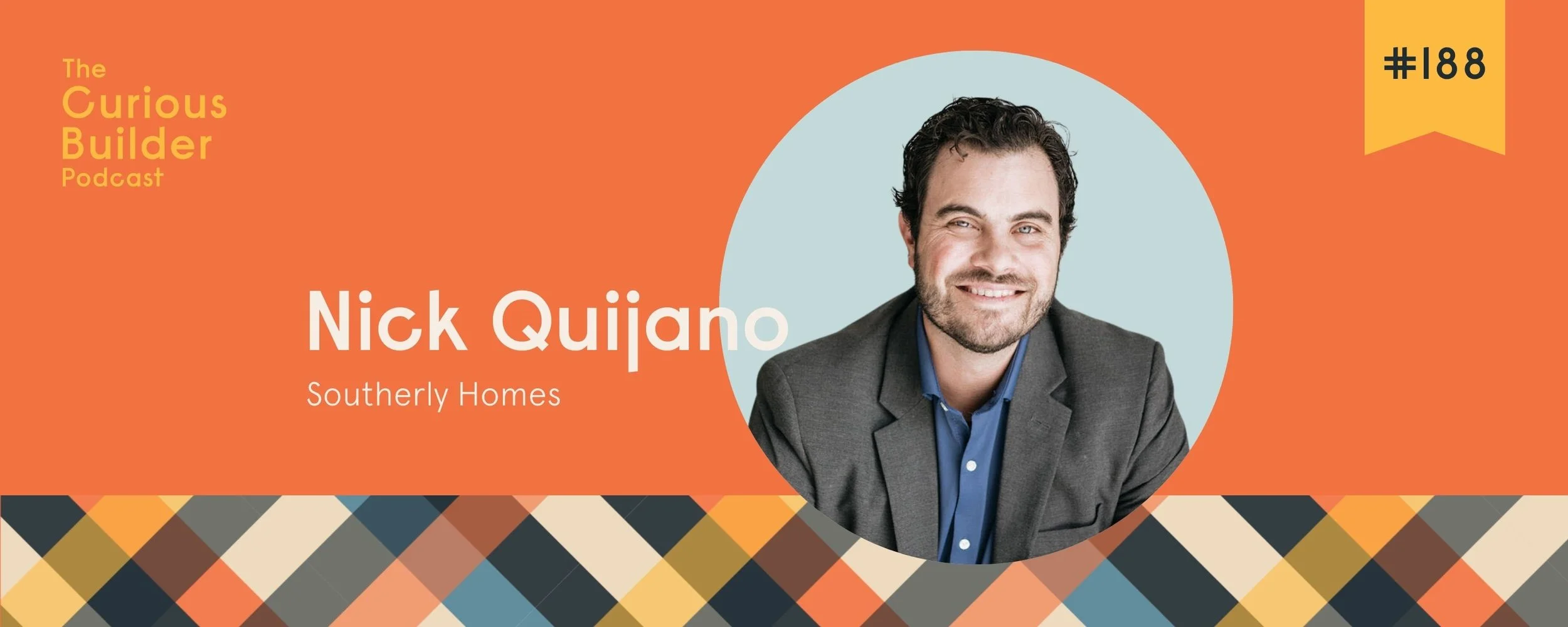
Nick Quijano went from teaching snowboarding and driving a Zamboni to building a career with one of the country’s major home builders, then launching Southerly Homes with a few kids, a mortgage, and a whole lot of faith in the plan. He and Mark get into the risks of starting a business, the systems small builders often overlook, and why production builders and custom builders have a lot more to learn from each other than they might think.
Listen to the full episode:


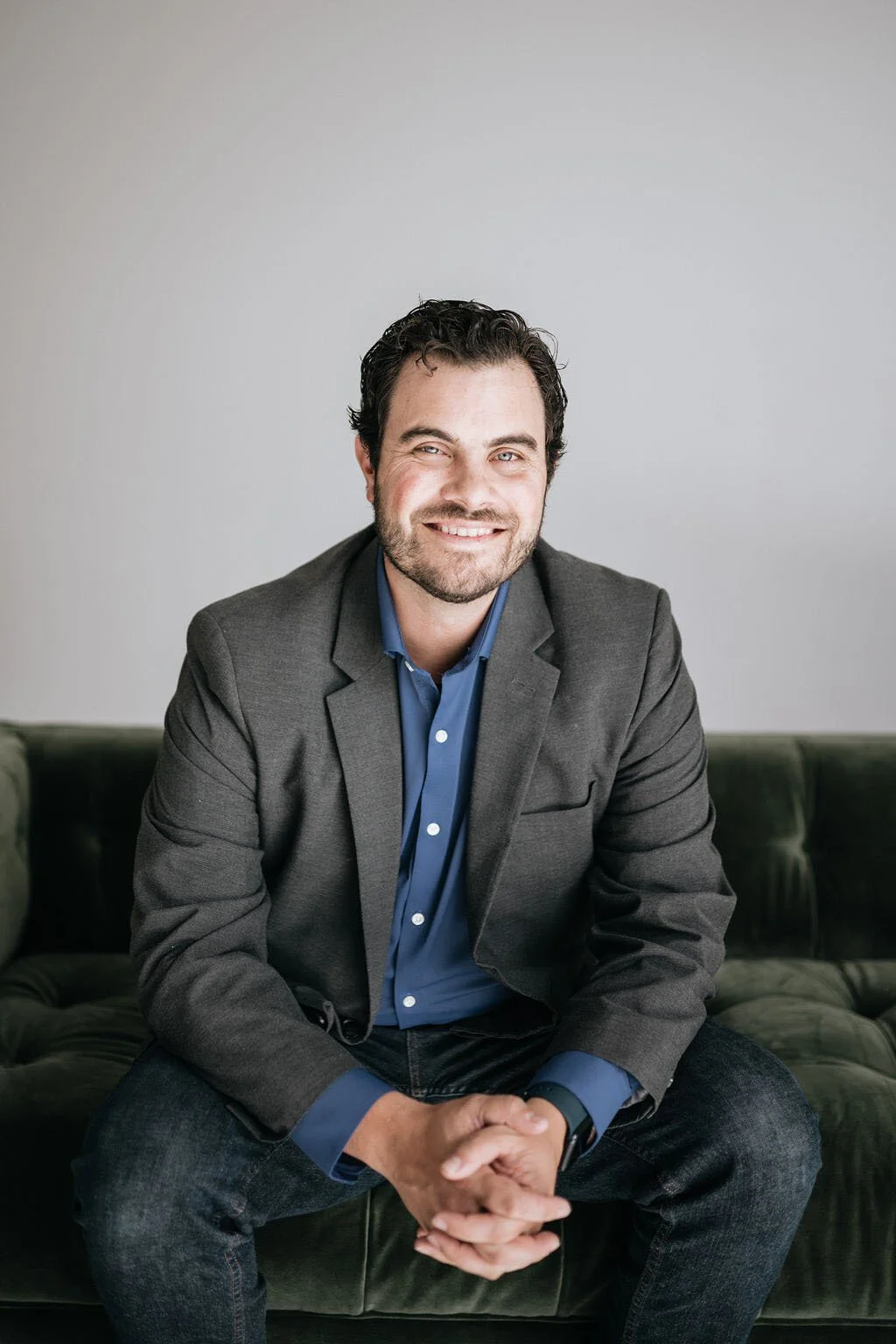
About Nick Quijano
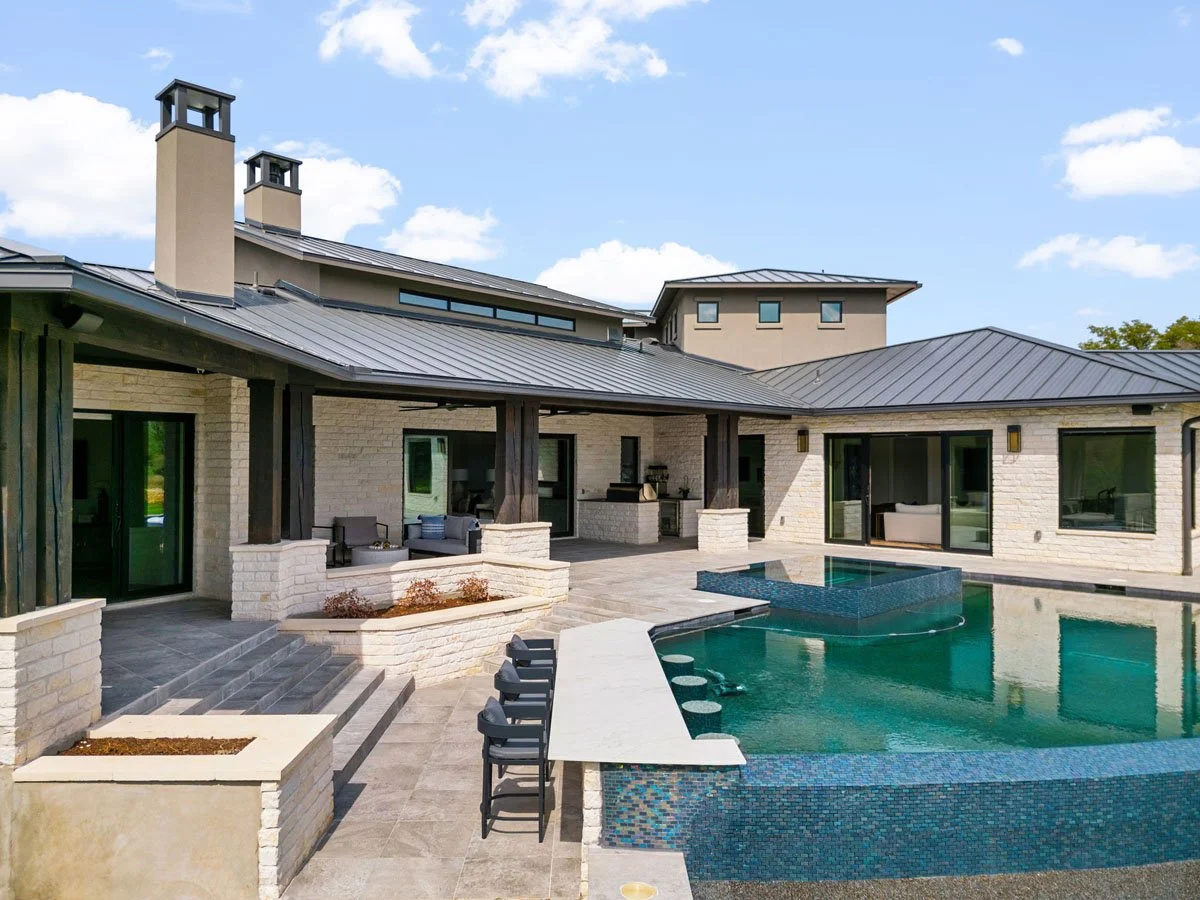
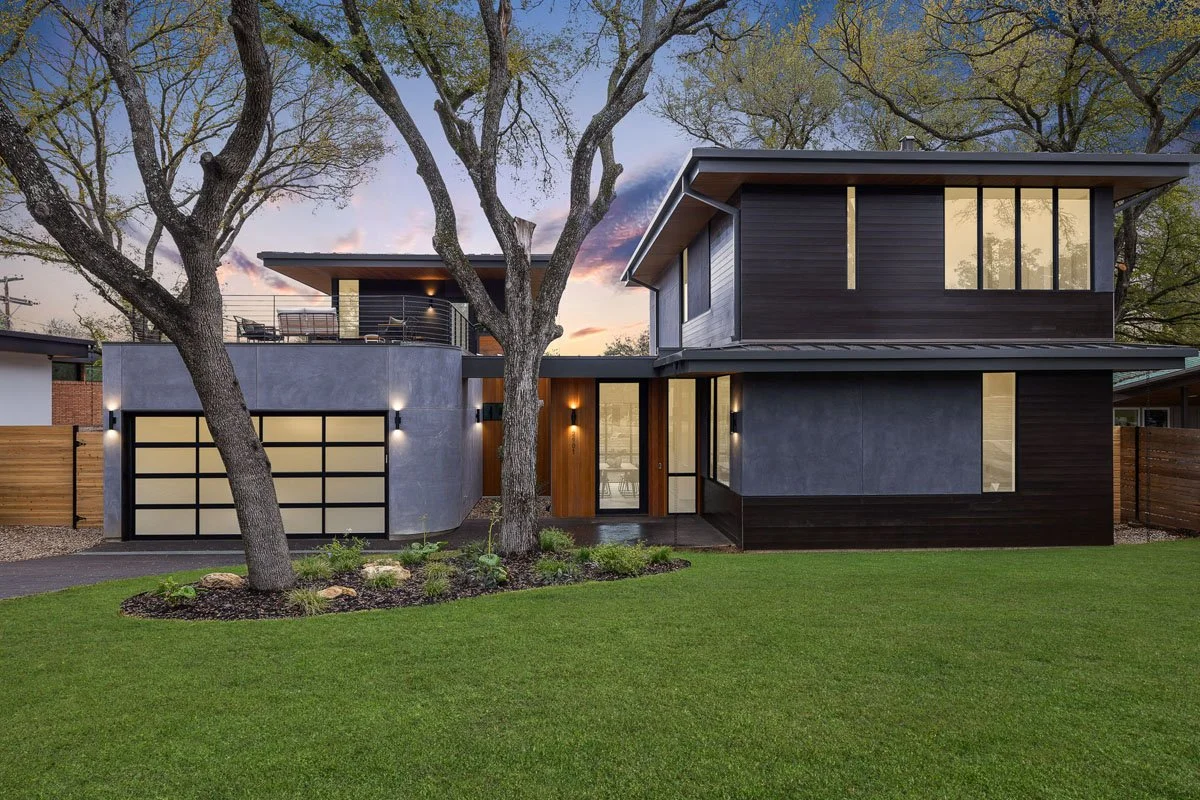
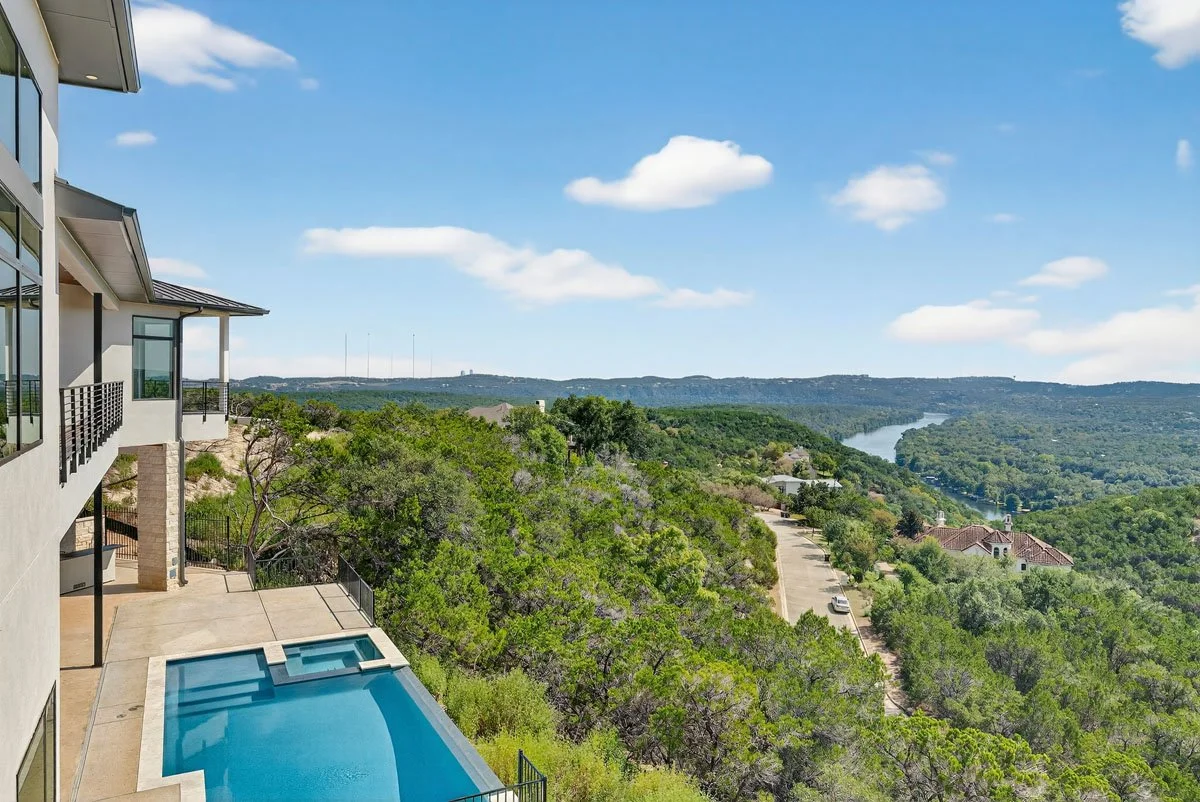
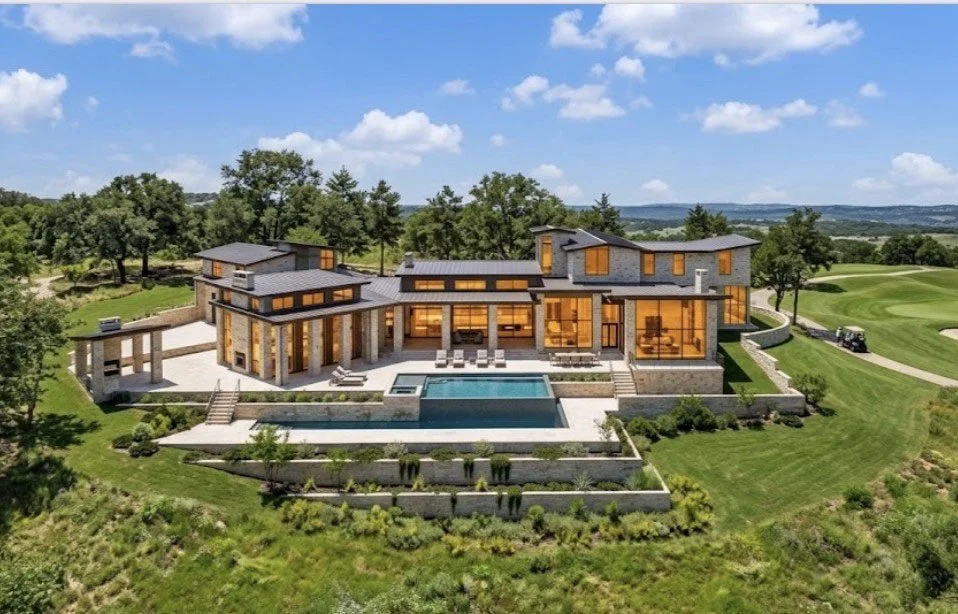
Nick Quijano is the co-founder and owner of Southerly Homes and Southerly Realty, a custom home building and real estate company based in Central Texas. With more than 20 years of experience in residential construction, real estate, infill development, and client representation, Nick brings a practical, boots-on-the-ground perspective to building better homes and stronger businesses.
At Southerly, Nick helps lead a team focused on high-end custom homes, remodels, and real estate strategy, with an emphasis on transparency, thoughtful preconstruction, build science, and creating a better client experience from first conversation to move-in. He also serves in leadership roles with the HBA of Greater Austin, the Custom Builders & Remodelers Council, and the Austin Infill Coalition.
When he’s not on a jobsite, Nick is usually with his wife and three daughters, playing or watching soccer, chasing live music, or trying to squeeze in a little time on the water.
Resources:
Visit the Southerly Homes Website
-
Mark D. Williams 00:00
This episode is brought to you by All Inc. For the last decade plus, we've been working with All Inc. for all of our appliance needs. If you're local here in Minnesota, please check out AllInc.com and tell them the Curious Builder sent you. The
Nick Quijano 00:15
grumpy builder, the the guy in Wranglers with with a can of skull, and you know that cusses a lot. That's that's kind of the stereotype, right? And just and we all make a ton of money, right? And that's
Mark D. Williams 00:30
that that is the best stereotype that doesn't exist. Oh yeah. Today in the Curious Builder podcast, we had Nick Ciano, and this is amazing episode. Nick is from Austin, leads one of our collectives down in Texas. But what I love about this is Nick's basically he grew up going through production, had a small private company as well, went back to production, and then when he left to start another company, clearly a serial entrepreneur. We spend the last 20 minutes really talking about the pros and cons of production building versus custom home building. I think it's a really thoughtful conversation. Regardless of where you are, it's going to be really interesting. If you want to fast forward to that, it's at the 45 minute mark. Otherwise, welcome to the Curious Builder, and without further ado, here is Nick. Welcome to the Curious Builder podcast. I'm Mark Williams, the host. Today we are going down to Austin, Texas. I've got Nick
Nick Quijano 01:31
Kihano.
Mark D. Williams 01:31
Kihano.
Nick Quijano 01:32
It's like Kihano Reeves, but it's spelled much more difficult. So that's not like that is
Mark D. Williams 01:37
okay. That is a great line. I like that one. Well, thanks for coming on. You and I chatted last year, fourth quarter, because you are one of our ambassadors for the Austin Curious Collective. And well, maybe we start there. I never feel like I get enough time with my ambassadors. You know, I think there we have 11 of them now in nine states. Give us a quick market update. I think you've had your first for sure. Have you had your guys' second meeting yet?
Nick Quijano 02:00
We just had our second, and and yeah, it's gone great. I mean, to be frank, I didn't really know if we were doing good or bad. I had, I didn't know what to compare it to, right? So you know, I'm I'm a member of HBA and AIC here, and those are huge groups. And you know, and I thought, oh no, we had I think we had 2122, entrepreneurs at the first collective, and I thought, oh man, I you know I I really failed this. I'm doing bad, and I started hearing from other colleagues going, other cities are having six or seven, you know. So we we we have a really unique market here in in Austin and Central Texas. So collaboration, I think, has always kind of been part of it. So this feels kind. It feels organic. You guys, you
Mark D. Williams 02:43
guys have been killing. I mean, you're basically in our new markets. We usually have two, so it's you and Frank from Moon Tower, and you guys have been doing a killer job. And you know, hats off to you. I think I told Leah, who helps me run the curious builder on the logistic side and marketing on the back end for all of us. Your first one, you had 22, which is outrageously awesome. Other than Brad Levitt, who I call him Tom Cruise, that guy can just put butts in seats like a movie, right? I mean, he just. But he's on a whole nother planet compared to the rest of us mortals. And so, because even in Minnesota, where I am, and I'm, you know, I have four different collectives, and I push it hard. We're lucky to get 2022. So when your first one was 22, I should have done a better job of telling you guys you're killing it because you guys are killing it. Austin's great, or maybe it's just great leadership. So kudos to you and Frank. You guys are doing a great job. One of my questions actually is about that. You know, I want to get into your story a little bit, so maybe we'll just ask one or two more questions about your local collective. But you know, you were, you know, you worked for a number of years for David Weekly Homes, and when you started your company, you immediately got into the HBA and kind of a leadership role. What are you? How do you find the differences between? I think they all have different values. So I'm not trying to say one is better than the other, but what did you think about the collectives going into it? Because you're one of actually you and Frank are the only two ambassadors that are not Contractor Coalition alumni and people that I didn't know personally from before, which is wild. Like every single other ambassador I've either met in person at Contractor Coalition or is an alumni. And anyway, so it's just sort of funny that you guys are the exception to the rule.
Nick Quijano 04:15
That's interesting. Yeah, I I guess I didn't realize that that we were we were like the unicorns. You are in Austin, Texas, which is not unusual for keep Austin weird, but that that works out. I mean, hats off to Frank and his team. I mean, they have been just huge, and I, I think it was just a godsend that we were all put together and being able to bring bring all these entrepreneurs together in the Austin market. I think the first meeting we had some folks coming from East Texas. I think we had one builder from Houston who drove up, so people hear about it.
Mark D. Williams 04:45
Yeah, and we'll start. We're starting one you know in Dallas Fort Worth, and we've got Isaac from Providential Homes, but he's a Contractor Coalition alumni member. Mike Weaver is huge fans of Isaac. He's like, hey, Austin is going so well. Will you start one in Dallas Fort Worth? I said, hey. Nick is or Isaac is there. Let's go. What? How do you compare the differences between what you do in your HBAs compared to what we're doing in the collectives in your market? I
Speaker 1 05:10
really think it's different, and that's that's part of the conversations I have when I'm I'm talking to other principals and and similar entrepreneurs. It's this is more like roundtable, have a collaborative story. I guess the way I I try to explain it in the bumper sticker version is that you know at some of our HBA and custom builder remodelers council meetings, member meetings that we host, and even some of the AIC meetings that we do, I guess I explain it as this is a it's a collaborative two or three roundtable, depending on how many people we have. We're sharing ideas rather than being taught something. So there's not one speaker or one panel necessarily that's up there. Of course, it does require some sort of leadership and organization to keep it going, but that is what I explain to people, and those all have their place. Trust me, I'm a huge HBA advocate, and we're heavily involved there. And some of the classes are great, some of the collaborations we do there are great too. But I'd say we have a lot of different like trade partner and sponsor involvement in some of those. Whereas the Builder Collective is, for the most part principles, and what I've realized, I guess you know, again, I've only done two of them so far. But what I've realized in having some of our our sponsors and trade partners at those meetings, the handful that we've had, they bring in their point of view on the same topics, right? So they're sitting around that same table with us, but nobody's there trying to sell you anything, right? I mean, maybe after the meeting, we can we can talk about windows or fixtures or tile and things like that. Perfectly fine. I so I feel like that's one of the one of the big differences. You can really grow as a businessman or businesswoman in in the builder collective.
Mark D. Williams 06:58
I mean, that's what I personally. I mean, selfishly, we created this whole thing to help others, and if there's not value, then we'll shut it down. But I get so much value out of it because it's no different than the podcast format. It's just that you're accelerating it faster, you know, in your local market. And you know, one of these days I'll get you up to a contractor coalition summit because if you love the collectives, you're going to love the contractor coalition because it's like three day boot camp of the all of it intensity you know eight nine hours in a row with like minded owners but I think the the whole premise of it is we have so much to learn from our shared experiences I mean I think that's why people tune into the podcast we get value from hearing other people's stories so well let's let's enough of the collectives people can go to curiousbuilder.com and check out the collectives in the state near them. But let's talk a little bit about your journey. I I think it's really interesting. I'm so excited to hear your story because I have not had a lot of the let's call it the top five builders on. You know the Pultes and the Lennar and the David Weekleys and people like that. I've had mostly custom home builders, small entrepreneurs because that's who I relate to. But your upbringing through the for working for the big, you know, the bigger production builders. I'm so fascinated because they outsell us as an industry. What 100 to one, 1000 to one. I mean, there is a lot we could learn. I believe from the production builders, even though I'm sure a lot of custom home builders may put their nose up a little bit, like oh, we're better, and that's not the point. It's a different, it's a different thing that you're you're building, in my opinion. But that's my that's my guesses. That's what I really want this episode to be about is is your story and and how you evolved and what you've learned and what we can learn from each other. And I just you have just a unique set of knowledge that I'm I'm just really excited. So let's get into it. Let's talk about your beginning.
Nick Quijano 08:41
Jump in, jump in. I love, I love to share it. So that's, it's the kind of thing that I genuinely share with new clients. Is folks ask who is Southerly Homes? You know, who are you guys? How long have you been in business? And immediately, kind of just be raw and tell the story. So let's jump in.
Mark D. Williams 08:58
Yeah. So you, what you started what 2005, 2006 with David Weekley? Is that right?
Nick Quijano 09:03
2006. That's right. Is my my second job out of college.
Mark D. Williams 09:07
What was your first?
Nick Quijano 09:09
My first job was selling selling high end landscape. Well, that's not true. My first job was I was a ski bum in Colorado, so I got to take a winter off. I was very fortunate that my parents supported my crazy decision of I don't know what I'm going to do with my life yet, and I had a one of my fraternity brothers had moved to Colorado, and he said, "Come work on the mountain with me. It's amazing. I I could not believe my dad supported it. So anyway,
Mark D. Williams 09:36
that's so first job was
Nick Quijano 09:37
teaching snowboarding and photography on a mountain, so
Mark D. Williams 09:42
that's awesome. What what resort were you on in Colorado?
Nick Quijano 09:45
Keystone. So we lived we lived down in Dillon, right by Dillon Lake, between Keystone and Breckenridge, and so worked at Keystone. I learned how to drive a Zamboni. You you know what a Zamboni is. I did. Born and raised in Texas, I'm gonna be honest with you. I didn't know what a zamboni was when I got there. Did you think it was
Mark D. Williams 10:06
a vegetable?
Nick Quijano 10:07
Well, the the manager of the ice skating rink there. If anybody's been to Keystone, there's this big pond, big lake that freezes over, and you can skate on it and play hockey and stuff like that. So one of the jobs I had was they said you're from Texas. You know how to drive tractors, right? I guess like sure. And they go, okay. Well, you want to draw a job driving the Zamboni? It's the highest paying job we have here at Keystone Lake. I think at the time paid like $10, 1025 an hour or something, right? I said, perfect. I'll take it. I had to ask my roommate. I was like, I don't know what a Zamboni is. Like, what is that? And he goes, "It's the huge machine, you know, that cuts the ice. I said, "Oh my gosh, I'm in over my head, but that was really fun. So I learned to play ice hockey, learned to drive a Zamboni, and then learned how to do photography on a snowboard while I was in Colorado.
Mark D. Williams 10:56
That's funny because wasn't Keystone at one point? Because I'm a big skier, I think Keystone at one time was no snowboarders allowed. You must have been because I'm older than you. That must have been just about the time that they allowed snowboarders there. Do you know when that was?
Nick Quijano 11:08
I don't know exactly when that was. I did hear that about Keystone and Breckenridge. I want to say they started allowing snowboarders probably late '90s, early 2000s. Okay,
Mark D. Williams 11:18
so that tracks. That's funny. Yeah,
Nick Quijano 11:20
yeah.
Mark D. Williams 11:20
You you're living. You are living my one. So I'm not someone that has a lot of regrets. My one regret, if I could even have one, would be that I didn't get to be a ski bum. And I've often thought. Remember, I asked my dad. I said, "Hey, some of my buddies are traveling in Europe, or and my dad's like, "Yeah, right, go get a job. And I'm not saying he's wrong, but like it's funny. Like some days, if I tell this story in 15 years from now, when my kids are done with whatever they're doing before they start the real world, if they ask, I'll probably say yes, only to sort of live vicariously for the the one thing I I didn't get to do. But my one fear was if I had started, would I have ever stopped? So why did you not continue to do the ski bum cycle? You actually got out of the and went to work for a David Weekly,
Nick Quijano 12:02
two two things happened. So, at some point, the snow melts. Didn't realize, didn't really think. When you're that age, are you thinking that far ahead? Probably not, right? So, at some point, the snow melts and the mountain closes. So they called that the mud season, right? And some of my friends and roommates were like, "Hey, what are you going to do during the mud season, and what are you going to do this summer? I'm like, "I don't know. I didn't think that far ahead. They said, "Well, there's no work for about six weeks, you know. So I was like, "Okay, I got to figure something out because you're living on ramen noodles at this point in life, right? And the other thing that was going on in my life is my my now wife, who was my college girlfriend, we had continued to stay in touch. She had come to visit me up there, and so our relationship kept growing even while I was living in Colorado. I started getting a little homesick and wanted to get back to Texas, and I thought I think I need to get a big kid job, and you know I think I'd like to get a little bit closer back to my girlfriend, now wife, and so I moved back to Fort Worth after during the mud season. So that brought me back, got a job selling landscape lighting with a startup company out of DFW, and so that was kind of my first real job, if you will. That job gave me an opportunity, which this is kind of funny. I love telling the story about again my now wife. We went to TCU. I tell tell my my wife that hey, I'm moving back to Texas. I'm coming back to Fort Worth. I got got a job. We're going to work together, or we're going to be able to live close to each other. And I move back to Fort Worth. The startup company offers me an opportunity to come to Austin to open an office here. So in a two-week span, I tell her, "Guess what? I'm coming back to Fort Worth. Oh, just kidding. I'm moving to Austin. So, but we continued. She was patient enough with me. We did the long-distance relationship, and I got to start to help start an office for this landscape lighting company for luxury homes, and so that's kind of part of my whole story. Is I did I worked there. I want to say it was less than a year, seven or eight months. Sold all kinds of landscape lighting jobs, but what really was kind of my inspiration for even getting into this business is was Parade of Homes. The Home Builders Association Parade of Homes was taking place in a community called Seven Oaks, kind of southwest Austin, just past the West Lake area, and we had gotten to do I think four out of the five Parade of Homes for that event. We'd sold all the lighting to them, and that experience of seeing these just big, beautiful custom homes go up, and all the chaos that somehow got organized in three or four or five days, and then getting to attend the parade of homes. I had my whole family. We all you know went and checked them out. Like that was the moment that I thought I don't want to. Want to just sell one widget? You know, I don't want to be a single part of it. I want to do that, and so I still remember the home that was my inspiration. It was a How to G home, Luis Howigi. They're still in business here. They are very well known builder. I have the utmost respect for Luis and his team, and I've gotten to share that story with him too. He loves hearing that. So that was my turning point where I thought, okay, I think I want to go into the home building business. But still, this is 2006. I'm a younger guy. Didn't you know? Was like I don't even know really what that means to go into the home building business. So I just started asking around my network if anybody knew of real estate or home building, or how do I get my foot in the door doing something?
Nick Quijano 15:44
And got I was able to get an interview with a project manager at David Weekly at the time. I didn't even know what I was interviewing for. I was like, I don't know if I'm a salesperson, a superintendent. I'm still I'm completely green, right? And they took a chance on me and let me come on as a superintendent. Funny that I have sales and building experience at this point in my career, but I'll never forget Tom was the project manager and a great guy. Still lives around here. He's retired now, but he kept going through the interview process. He was like, "I don't, Nick. I don't think you're really cut out. I don't think you know enough to be a superintendent, but like you should do sales. You should really do sales. You should sit in a model. And you know, I'm in my mid 20s at the time, and I, I just kept telling them, I don't think, I don't think I want to give up my weekends, you know, and I don't want to do commissions and all that was kind of scary. I thought I just want a steady, I want a steady paycheck. I want to learn home building. So kind of my my joke is I I sold him on the fact that I would be a great superintendent, right, and convinced him to give me a shot. So Tom took a shot on me, let me join his team as as a young superintendent, and kind of the rest you know rest was history.
Mark D. Williams 16:57
So you worked there for what 15 years?
Nick Quijano 17:01
Told total. of 16 years. There was a break there during the downturn in the '08 downturn, but yeah, total of almost 16 years.
Mark D. Williams 17:09
Wow, how you know without going into every single story, I mean, you just kind of I would imagine you just kept working way up the ladder. Walk us through what's it like to work with a big company. I mean, eventually I'm going to get to questions like how to compare and contrast in your start, how you went full entrepreneur. But let's start just kind of going up that ladder because I think it's I'm guessing it's amazing training in many reasons. You know, a lot of small entrepreneurs, you know, we are just you know we don't have those kind of organizations or those systems because we're just not that big. A lot of it, we just bootstrap and we wing it. Then we think that's great, and there's parts of it that is good. But walk us through what was it like to work for a big company like that? Now that you have your own company,
Nick Quijano 17:54
I mean, I mean, I'm probably jumping ahead in questions, but I mean, if there's anybody listening to this that's maybe thinking of getting in the industry, or maybe they have a college age kid, and you're trying to figure out how to give them advice. My advice today, and always has been, and when I've interviewed people, go try to get on with a reputable public and/or large home builder. Weekly's a private home builder, but try to get on because they have tried and true processes. That's the way to learn. You know, it's using a sports analogy, just like baseball or basketball or soccer or anything. I mean, you need as many reps as possible, right? And so, if you try to come and jump on with a company like mine or yours, right? I mean, we're doing a dozen or so homes a year. That's not a lot of reps. I mean, you you want to get in the position where all of a sudden you're carrying 12 to 24 homes by yourself as a superintendent, because that's how you see the good, bad, and the ugly. You know, you have a little bit of a safety net around you. So, I think that I think it's a great place to start. And it was definitely not my plan. I cannot take credit for how kind of lucky I am that that it worked out that way. But I'm glad that I took advantage of it.
Mark D. Williams 19:12
This episode is brought to you by Pella Windows and Doors. I've used Pella for 21 years as the exclusive window company on every one of my builds. When people ask me who I trust for windows and doors, it's Pella. Every time, their craftsmanship, their innovation, the top-tier service make them a no-brainer for any custom home builder or designer who demand the best. Whether you're designing something bold or building something with timeless elegance, Pella has you covered. They're also the only window company that has a lifetime warranty on all of their windows, I've gotten to know all their people at Pella Corporate as well as locally here at Pella Northland. I'm proud to call them our partners and our friends. Visit Pella.com to learn more and connect with your local reps today. Also, for more information, you can listen to episode one where I interview their founders, as well as episode 109 where we. Talk about the innovation at Pella. We're happy to announce our latest sponsor, Real Wood Floors. What made them to be an ideal partner is the fact that they align so well with our high-end custom homes. They're located in 25 cities across the country. They're probably pretty close to you. And what really drew me to them is the fact that they're vertically integrated. So many times when you're dealing with wood floor, you know, procuring it from different companies, having it go through middlemen. You're either short material; it's the wrong material, and so we are looking forward to leveling up that and buying direct. The other thing that I really love is their floor-made perfect match. I can't tell you how many times I've had a beautiful wood floor, but the vents don't match, or I love the wood floor, but it doesn't match my treads and risers. Knowing that they can perfectly match that is something I'm really excited about. Go check them out at realwoodfloors.com and sign up for an RW Pro account. Tell them you heard about them from the Curious Builder. How many years would you roughly stay in a position before you would kind of go to the next level. I mean, you're walk us through high level. I mean, you were superintendent, then a PM, likely an estimator. I mean, what were some of the sort of elevations as you went through the company?
Nick Quijano 21:11
Yeah. So, so the way they had it set up at the time, it could be a little bit different now, but they had different levels of call it superintendent in builder, and so you could go from superintendent to builder to lead builder to senior builder, and then there were some different paths that you could take. Generally speaking, you would either go into the purchasing, sales, or try to become a project manager. And so, in my path was to continue on through kind of the builder, lead builder, senior builder roles, and then I actually transitioned over to the sales side from there and started learning the sales part of the business. And again, that that was kind of coming out of the downturn phase. So it's we don't we all didn't have a lot of choices, right? It was like what puts food on the table, right? Okay, that sounds like an opportunity. Let's do that.
Mark D. Williams 22:00
Totally, totally.
Nick Quijano 22:01
But again, I'm so glad that then I got to go through that the sales training there. I mean, you know, I to this day I still don't think I'm that great of a salesperson. I probably wasn't even when I was at Weekly. But what what helped is because I got to go through that that builder superintendent training and as a kind of a salesperson, if you will, if you're genuine and you know what you're talking about, your customers trust you. I think
Mark D. Williams 22:27
that's I think that's pretty well said, actually. I think that is ultimately what sales becomes, right? I think the other thing is you could always fall back on your Zamboni. So you really had a backup plan. Should this whole building thing not work out, you know, your Zamboni driving skills were really honed in in the mountains of Colorado.
Nick Quijano 22:44
That's right. My kids still don't believe that, but I think it's
Mark D. Williams 22:46
that's so awesome. I love that. What? So I usually say entrepreneurs are either forced into entrepreneurship because they don't like where they are and the the grass is greener, or they have they're being held back. They have to go spread their wings because they just they feel sort of stifled or that they just they're creative juices. What was it for you? Like, can you remember back what it was like to kind of think like that when you realize like, hey, I want to step out?
Nick Quijano 23:12
I can actually. So in hindsight, I can think all the way back to when I was probably a seven year old kid and I would sell rocks, set up a table in our front yard, and and this was in Houston, Texas. And I like to collect rocks. And so if I you ask my parents today, they'll go, "Well, Nick started being an entrepreneur when he was selling rocks and Legos on the on the curb side, right? So that was probably my first entrepreneur move. But I'd say where I really got a taste for it in my adult career would be, I'd say first was forced into it. So during during the downturn 08 09, I was a builder at the time, and there were a series of layoffs. I kind of made it to the second round. I was one of them, and so that was you know that was a tough time. I'm sure there's a lot of people that went through it. So, I had just gotten engaged. I had just ordered a ring that I couldn't afford, right? So I was living in an apartment in Northwest Austin and was like, "I got what am I going to do here? I've got no savings, and you know, tried to figure it out. So I was kind of forced into it. You know, I buckled down and started sending out resumes. Started trying to figure out what am I going to do? I've got bills coming. How am I going to pay for this? I'm about to get married and things like that. And then I got a couple calls. I had made friends with quite a few of my homeowners that I had built and closed their homes for in the communities that I worked in, and a couple of them had reached out and wanted to help and see if they could get my resume out to anybody, and then all of a sudden a couple conversations started, where they would say, "Well, hey, you know, you built my home, but we got this huge attic space. We've always thought, could we turn that into like a game room? Or I remember another homeowner said, "Hey, could you help do a big?" Outdoor living and playscape, and basically design something in my backyard. And another another guy called, and you know they wanted to build some custom cabinets in their study, things like that. So here I am, just kind of handing them out, going, okay, call this trim carpenter. Here, call this painter. Call this guy. Call this landscaper. And I think about 48 hours of those phone calls went by, and it was like a light bulb went off, and was like, "Wait a minute, why don't I just why don't I make the phone call, and then I charge you know the 15 20% or whatever it is, and this is like before Google and Chat GPT, right? So you're trying to figure out, wait, is that what being a general contractor is? So that was kind of the, again, kind of forced into it. But I realized real quick, like, oh, okay, there's a need here. I have the resources. I have the knowledge. Okay, I can fill that need. And from there, kind of during that downturn time, I I was a sole proprietor, and I I started Kiano Enterprises is what I did, and we started doing I started doing remodels. I mean, really, kind of whatever we could get our hands on, but that led me into some property management, which started introducing me to real estate, and then ultimately part of the story is I went back to David Weekly in January of 2012, and that's when I came went on and started the sales and things like that. So fast forwarding, kind of all the way to right after COVID, 2121, is when I'd say the beginning of 21 is where maybe end of 20 is where the the itch started coming back. Right, so I was forced into it before I got a little bit, a little taste of entrepreneurship, and I would say I don't. I don't think I did it very well in oh 8090 10. I learned a lot of things. I did everything on my own, but I really started thinking through. And at this point, I had gone through operations management training.
Nick Quijano 26:56
I had been a salesperson. I started doing a lot of different things at weekly. Right, so it starts occurring to me like I've got the the MBA in this. I mean, we and not exactly, but you know, you're like, okay, now I kind of know all parts of the business, and I've I've just I've got this itch that keeps coming back, and so that was you know it became a it was a big leap of faith. It was something you know my wife and I prayed over, really thought through for probably almost a year before I had made the decision. I guess early 21 that okay I wanted to get help get affairs in order at my previous company and make sure my team was set up. And Josh and I had kind of started talking about maybe this could work, maybe it couldn't.
Mark D. Williams 27:42
Was Josh also at? And he just for the audience that that's your co-founder, right?
Nick Quijano 27:47
Oh yes, Josh is my business partner. Yeah, one of the co-founders here at Southerly.
Mark D. Williams 27:51
And he were you guys both working at David Weekly?
Nick Quijano 27:54
Yes, yeah. So he and I met at Weekly. We overlapped about five years. So we were two of the four project managers that kind of ran help run the Austin division underneath our division presidents, so we kind of had our assigned projects, assigned areas, if you will, and yeah, that was it. Was always kind of something that you know we'd we'd go to a finance meeting and then maybe go out to lunch or happy hour or something, and you know you always kind of like joked about it, like we're gonna go do this on our own one day. But and you realize, why would we ever do that? This is such a great company. It's a great culture. Good people. We have wonderful benefits, right? So it's something probably most everybody I would say in the corporate world jokes about or thinks about. And you know, just the stars aligned, and we decided to go do it. So, he had actually left the year prior, and he had gone to another company and tried that out. And he realized that's that was a bad decision, and so he had actually gone out on his own with one of our other founders, and they were trying a couple projects here and there, you know. And I'm kind of watching, going, oh man, this is this is exciting! You're doing it, you know. And they were doing some some scraper projects in Central Austin, and I'm like, well, this is what I'm doing for the big company, and man, that looks really fun. And then I think they had taken on, or they were working on taking on a remodel, a big remodel, which I've always been really interested in, and that's not something obviously that you could do at a production home builder building new homes, right? And so that was a big part of it for me too. I was like, I want to be able to take a house down to the studs. I want to be able to add 1000 square feet to it. I want, you know, I want to figure that out. So he and I kind of started talking as he was trying a couple projects here and there, and you know, and I called him up one day and said, "Hey, I'm I'm going to take the leap. You know, I'm going to I'm going to leave, and I just want to want to get all my affairs in order. I want to make sure you know all of my team is taken care of, and I don't you know I don't want to take care of my bosses and stuff like." That there too, so I said let's let's do it. Let's start a company. So it was it was three of us. I got it started in officially June of 21.
Mark D. Williams 30:10
Did you start? So you had this remodel kind of in the wings. I always am kind of curious. You know, do you do you go? Do you be able to spec? Do you get an investor? Do you put your money? You know, on the line. Do you go buy a piece of land, like what is the what are those first? What is the impetus to finally say yes? Let's do it. How did you guys line that up? Because it gets kind of scary. Did you have kids at this time or no?
Nick Quijano 30:30
I did. Yeah.
Mark D. Williams 30:31
And was your wife working or no?
Nick Quijano 30:33
No, my wife's not working. No time. You've got
Mark D. Williams 30:35
no safety net. You've got kids, and you're like, because I mean, this is my favorite part about these interviews is like figuring out like now as you're established and you know it's in the rearview mirror, but people don't realize like a lot of these decisions are made like as a young parent with kids. It's a lot easier. I mean, I was 23. I wasn't married. I had no kids. Like how we view risk today compared to how we. I have so much respect and tip my hat to those that start their entrepreneurship journey, when they leave, you know, I've had a number of people on before that. Like, you know, hey, I left a six-figure corporate job. My my kids were three, five, and seven. I'm just like, dude, that is some serious cojones to go go do that. And and so that was your story a little bit too. Anyway, what was that first step, did you have the jobs lined up, or was it completely? I'm going to go sell and go find one.
Nick Quijano 31:26
So I forgot exactly how you just worded it, but what what I that was the jump off point of trying to find. And I remember saying that to Josh on the phone, or maybe we went to lunch. I don't remember, but was like, Josh, I really want to do this. At the time, I was I was fortunate enough. We had my wife and I had enough money saved up. I was like, okay, you know, we can live for a year or so. Worst case, if if I fail, and but I remember telling Josh, I just need the jump off point. I mean, I've got I have three kids and a wife. I have four dependents and a mortgage, and you know all these things to figure out. I had just bought my first investment property. We bought, we have a Airbnb property, and like I have two mortgages. So that was it. I was like, we just have to find the jump off point. So basically, my jump off point that the arrangement we made is that there was a a big remodel. It was a Lakeway remodel, and kind of the the deal we made. I said, "Look, I will manage it. I'll run it. Let's put you know a percentage of everything that comes in on that remodel back to the company. But like that, as long as I can have that as kind of my income, and I think it was like a six month, seven month project. I was like, I'll buckle down. That has to be my jump off point because there was for how we started. I mean, we didn't take investor money.
Mark D. Williams 32:53
Was there? I saw that in the notes. Was there investor money to be had, or was that a conversation you even looked at?
Nick Quijano 33:00
It. We didn't go out and seek that at all. Of course, it's questions on like, well, wait a minute, how are we gonna, how are we gonna buy shirts, and how do we get an office, and who pays for the gas, and how do you, how do you do it all? So I wouldn't say something we went and sought out. But as soon as like my LinkedIn changed, or Facebook announcement or any of that stuff. The phone rang, and I probably had just me personally probably three or four almost immediate phone calls of past friends or past clients who said, "Oh my gosh, y'all are going to do something! Like I, I want in. Let me know when you need money. And I'm like, I need money yesterday, but I just had to be candid with a couple of these folks and said, what does that even look like? So that was kind of that was the jump off point on how do we figure this out? How do we bootstrap it?
Mark D. Williams 33:53
Yeah,
Nick Quijano 33:54
and that that's what we did. We didn't. I don't even think we had a company credit card for almost a year. I think we were literally off operating off of debit cards and a checkbook.
Mark D. Williams 34:05
Yeah, I remember early on. I mean, well, and it doesn't matter, but you know, just the benefit. It was good advice I got from a banker. I never everything I'd done had always been cash deals. I always pre-sold, and I was always using the client's you know money to build. But someone one time when things were good said you really ought to have a line of credit at the bank for when you have more employees. And I'm like, well, at the time I had maybe one employee or whatever it was. I'm like, okay, fine. And years later, it ended up being a super smart move because when you need the cash, and as we all know, cash and liquidity is king for all entrepreneurs. And building is you know so cyclical, but there's also the ups and downs. And you know, as you get more sophisticated in your career and understand your wip and whatnot, that's great. But early on, like you need access to cash. And sometimes, even as a sophisticated builder, if you're going to go buy land, or if you're going to make some capital investments, like just having access to cash is a really smart move. And so, but like you, I mean, I operated for a long time without any of it, which basically is no safety net. Like you are just basically going job to job. You are basically on a trap, or like a, for lack of a better description, you are on like a jungle gym in the trees, but 1000 feet off the deck. Like if you miss a ring, like you, the the fall is going to hurt a lot. How? When did you? So you guys started. One thing's you know you have such a you know because technically you've only been in business at Southerly Homes for about five six years now. Is that right?
Nick Quijano 35:28
Five five years. We turned five and we turned five in June. So which is
Mark D. Williams 35:32
incredible how far you guys have gone in five years. Kudos to you guys. My question is about leadership. What? How did you know? I mean one of the things that attracted to tap you as a curious builder collective was you know was your youth. I like younger people. I like the energy, and I I like but I liked your leadership. The fact that you were you were you have already been a leader at the HBA, and you've already been you know leading all these other things. What was it early on that said I want to be involved with these, and not only be involved, but I want to be a leader. I'm very curious. Like that-that's abnormal in my experience. That someone age is not really the the determining factor here, but more the interest level. What made you interested to be at that leader? Because from a ROI standpoint, you would have been far better off just devoting your time to sales to get more, you know, to get more sales, obviously. So, what was it about seeking leadership at the HBA and other levels that was attractive to you? Where did what what value did you see in that?
Nick Quijano 36:31
To be honest, it's not really something I seek out and try to do. At least, I guess at this point, I've always been a little bit of a competitive person. I, you know, grew up playing sports, and and so I think when you're younger, you're in your early career days, like in your 20s and 30s, you're kind of looking for that next thing. You know, how do I continue to climb the ladder or get in that leadership position, particularly if you have that competitive mindset, which which I did then. I just feel like, you know, I appreciate the youth comment. I'm I don't feel that young anymore. I'm 43. I'm about to be 44. Oh
Mark D. Williams 37:06
man, you look like you're 35.
Nick Quijano 37:09
Sometimes I get out of bed wrong and I can't walk for a few days. You know, it's the Keanu.
Mark D. Williams 37:13
It's the Keanu Reeves genetic pool. You watch a little John Wick. Anyway, go on. Yeah.
Nick Quijano 37:18
Well, that's where having a beard came from to when I got into leadership at Weekly, and in my early 30s, I had all these folks that were had they were 50 in their 60s, right? And they're like, "Who's this young guy? And it was kind of a joke, but I was like, "I'm tired of people sitting down at my desk, and I have to hire or fire or do whatever, and you know, and they're wondering who this young guy is because everyone thought I was in my 20s, and I'm like, I'm, I'm 32, I have a kid, so I thought I told my wife, I'm growing, I'm going to try to grow a beard at the time. Now I've, you know, it's been 14 something years, and now I'm stuck with it, can't get rid of it. That's hilarious. I guess until it turns gray, and then I'll then you go back. Then you want to look younger, exactly. So
Mark D. Williams 38:05
I guess I never really understood the answer to the question. Then what? Why did you seek to be a leadership role in the HBA?
Nick Quijano 38:13
I think it's just come to me. It's natural. I want to. I want to serve. I want to help other people. My business partner is the same way. He's been heavily involved in the HBA, and he's actually even in a higher leadership position than I am at HBA, and so he's on the leadership track. So I think he's first vice president this year. So it's just it's genuine for us. I mean, we both led teams at Weekly. We enjoyed helping train other people up, and so it's it's kind of like giving back to, you know, giving back to the rest of the industry, which again I think kind of goes hand in hand with our building and real estate community in Austin and Central Texas.
Mark D. Williams 38:56
I mean, I 100% agree with you, Nick. I mean, I was just curious. That's what attracted me to pick you as an ambassador, and I remember our early conversation. You know, in fourth quarter of last year, you know, I always like to try to align interests with you know, so I can help you, and you guys can help us with our mission. And especially because I didn't know who you were. Like I said, you weren't an alumni of Contractor Coalition, and it's you know our tagline basically is collaboration over competition. And you know I find that the that if you're under, not that you have to pick an age, but typically it's if you're under 45, like you are way more likely to collaborate because that is really the currency that we all operate in today. As I look around the country, but the previous the builders that are significantly older or the generation before us, you know, but obviously, you know, if we go back a little bit earlier, like before social media specifically, but also just internet in general, that people were very secret sauce. Hey, I have a secret from I don't want to share. That's my competitive edge. And like the idea that 20 years ago builders and other markets would be talking shop about entrepreneurship practices is like would blow your mind. I mean, builder 20 said. Around since the 880s, I believe. So, like, there was a mechanism for this, but it was just very private cloak and daggers. You never, especially for young people like you and I coming up, like we didn't know where to go for answer. It was school of hard knocks. You just you know run into a wall a bunch of times, make your face bloody, and I guess you figure out don't run into that wall anymore. Yeah. Um. And so, but I I needed to know that you sort of rode for the brand, and I immediately, when we talked, your comment to me still resonates. Was you know you want leadership because you want to help others, and you also want you know you want a platform for a national spotlight, for speaking opportunities, for thought leadership, and those are all the characteristics of leadership, and those are all the characteristics of people that elevate your community, and they're not just taglines of like you know Brad Levitt always is talking about the rising tide floats all boats, but it's true. And so it's it's the reason we say it so often is because there's so much value. And recently, my new favorite little line that I really like is that competition happens at the bottom and collaboration happens at the top. And I even look at you and your business partner. You know, here you are. You, but you both work for David Weekly. He left. He's kind of doing it. You maintain friends, and rather than him competing with you or viewing you as a threat, he's hey, let's do this together. I think that's awesome. I love that for you guys, and I love that for our industry.
Nick Quijano 41:16
That was definitely something I learned going back to the kind of getting forced into entrepreneurship, and I think I didn't do it. So I learned a lot of things that I did wrong at that time. Was one of my stipulations. I knew I wanted to do it again, but I knew I didn't want to do it again on my own. I knew it was going to require a team, right? So, and that was something he and I had talked about. I said, "We're let's build a team. I don't want to do this on my own. You probably don't either. Let's put our skills together, right? So, I mean, but I guess kind of back to your still probably didn't give a great clear answer on why leadership, but or why kind of those leadership positions. But it's at this point too. It's I do like to give back. I guess selfishly, I would also say that it helps build your resume not only as a person but as a company, right? And so, like I know we have clients right now, some Central Austin clients that I can tell, you know, well, I've I've been a board member of the Austin Infill Coalition, I think for eight nine years now. You know, been heavily involved in that organization, and so being so involved and being so connected there, hey, mr. or mrs. Client, if something's going to change with City of Austin development regulations, there's a pretty good chance that I'm going to hear about it a year before it happens, so we can at least prepare.
Mark D. Williams 42:46
This episode of the Curious Builder is brought to you by Olivin Vine Socials. If you're a builder, a designer, or an architect looking to grow your brand without dancing on TikTok or spending your whole life on social media, listen up. Oliven Vine Socials specializes in Pinterest marketing, blogging, and email strategy for luxury home brands that help you turn your beautiful work into a strategic SEO-driven content that drives real traffic and connects you with your ideal clients without burning you out. Ready to grow smarter and not harder? Visit OlivinVineSocials.com and tell them the curious builder set you. Just so you know, I've been working with Alyssa over at Olivin Vine for three years, she helped us launch the podcast. She's helped us grow our brand at Mark Williams Custom Homes. I could not do what I've done without her help. I love what you last what your last comment is about knowing things ahead of time by being involved. I also think by by showing you're involved in your local community, but as well as your broader community, I mean, you're you're involved in both a micro level and a macro level, right? You know, you're tied now into the country, like it or not. You know, of Curious Builder ambassadors. I mean, we're gonna we haven't even announced it yet. In fact, this is the first time anyone will know about. I just had the idea this morning that we now have close to 300 alumni across the country, and I'm trying to provide value for not just the ambassadors, because we, you and I get to talk more along with the other ambassadors, but like as a field, like a lot of us go to the International Builders Show every year. So why don't we do a meetup there? And so we're going to organize like a breakfast meetup for anyone that's coming, and sponsors will love it. They'll be there. But if nothing else, it just it brings people together. And there's there. I think the world is for a long time, we haven't been able to figure out designers and architects can build all over the country because they travel. But we know us in is heading construction physical teams that we're only, or I've often said this. I don't know if you agree with this. You're only as good as the the boots on the grounds and your trade partners. That being said, if somebody wants to build in Austin, and I have a great relationship with somebody like you and Frank. Well, guess what? I'll call you and I'll say, "Hey, I've got a client. Great. Would you guys want to be logistical partners with me? Let's do this. And I guarantee your answer is going to be yes because guess what? It's way more fun to do this stuff together. I couldn't do it without you. In in that particular case, you wouldn't have the client without me. So we'll figure it out. And I think I think that is going to be more and more common, especially as people become more and more transient in terms of how they move around the country. Because what an incredible value we can give our clients by, hey, where do you want to go in the country? No problem. We have contacts all over. Let's see if we can't make something happen. And I think that's really exciting. It's a whole new door that builders traditionally have not been able to open.
Nick Quijano 45:23
Yeah, that's really interesting, and that's because that's worked in real, like you mentioned, architects and interior designers. It also works in the real estate world, right? There's a lot of collaborate collaboration with realtors in all all different markets. So it's just as easy we can do that in the home building market.
Mark D. Williams 45:41
So let's. We only have about 15 left here, and now we've kind of laid the foundation. Let's compare and contrast. This is kind of what I meant to start with, but you just had too many details to get through. What are? Give me like two or three. What doesn't? There's not a number, but give me a couple things that the production builders do really well, and then we're gonna just frame it for the audience. Let's talk about a few things that I think back and forth. You and I think custom home builders do really well, and then let's talk a little bit about what we can learn from each other for both both industries to basically deliver better customer experience.
Nick Quijano 46:17
Okay, so two or three things the production builders would do well, at least from my experience. I mentioned training. I would, you know, training 100% has got to be one of those. Having standard operating procedures, having a playbook, so that is that is done really well. Generally speaking, not done so well at a custom home builder. So
Mark D. Williams 46:39
what's an SOP.
Nick Quijano 46:41
Mark taking notes up here. We'll have another call to work. Totally. Yeah. So
Mark D. Williams 46:47
this is a consulting call. This isn't live, is it? This is not going anywhere, is it?
Nick Quijano 46:50
I'll invoice you afterwards.
Mark D. Williams 46:51
Perfect. Okay.
Nick Quijano 46:52
So you know, having that playbook written out of the if this then what type playbook, I think is very is very important and very systematic. Having an organized purchasing kind of pre-construction process and team from the production side, I think is extremely important. And I think some of that, or I think a lot of that, can resonate over to custom home building, and it just generally doesn't. It's very difficult, but what I saw because I specifically ran when I got into ops management there. I really ran the Build on Your Lot program for Central Texas, as well as what was called the Central Living. So it was one-off custom homes where we would buy a house, tear it down, or buy an empty lot and then build a custom home. So it was I kind of ran the semi-custom part of the Austin division, right? So it's a very difficult thing to mold into production building, but it worked, and it's it's still I mean weekly is still very successful with that today, and that's because they're had the SOP you know put in place, and we're able to even kind of mold that a little bit for the building a lot program. So those are a lot of things that work really well. Taking care of customers, having a good warranty program, and I think having having those good values on just do the right thing. Those are things that I saw that work really well.
Mark D. Williams 48:20
So let's so training makes well like let's let's dilate it a little bit more. What is what specifically training is it like apprenticeship? Is it like they have a path that's spelled out? Like what does training look like in a production world compared to like most? Correct me if I'm wrong because I know I'm very guilty of it. Most training is can you sink or can you swim? Because if you can swim, you can stay on the team. If you sink, sorry, you just died. You just drowned. I think that's most people's small entrepreneurship training manual. Is survival of the fittest, and I'm not even saying it's all bad. There, we learn really quick, really fast. It's also what makes entrepreneurs really good. Is they're very strong willed and they're very nimble. Like you don't know the answer, but you're really good at figuring out. So there is. I'm not saying you go into it without training, but I'm that's I'm heavily biased because I have a high degree of figured out factor. Terrible at training. So what do they actually do in terms of training at a production company that you think is valuable?
Nick Quijano 49:18
Having a written pathway, I think you mentioned it, but I I know when I when I started, it was like here's your path. You start as superintendent. You accomplish these certain things in one year or two years. This is how you get to the next level, and kind of knowing what those goals were was very helpful. But as far as the leadership and kind of mentorship, there were there's kind of two, at least in again my experience, there were two opportunities for that. So you'd be like I was assigned a mentor, a guy who was a senior builder. We're still in touch today. He's in leadership there today. But having somebody there that kind of watches over your shoulder lets you not fail too bad. Yeah, and then. Also, having like a builder or a quality coach that helped do classes and things like that with the superintendents and builders. All
Mark D. Williams 50:06
right, that's pretty impressive. How big was your local production company when you were there?
Nick Quijano 50:12
Our team, I want to say, was around 100.
Mark D. Williams 50:16
Wow, good size. You know, and
Nick Quijano 50:18
it depended on the the years and how the market was doing, plus or minus 20 or so.
Mark D. Williams 50:21
How big is your team at Southerly Homes?
Nick Quijano 50:24
We are a powerful team of nine, including Josh and myself. So
Mark D. Williams 50:29
yeah, that's
Nick Quijano 50:31
seven employees.
Mark D. Williams 50:32
Yeah, I mean that's double me. Okay, SOPs basically I think is very similar to training. I mean you have a written you know procedural right, so you're writing everything down. I always think that's kind of daunting. Now with AI, you can pretty much just have it do it. So yay, I can skip that step. Precon team. Okay, so what are things that you think custom home builders do really well by contrast?
Nick Quijano 50:55
Yeah, by contrast, and and I would say again, one of my big reasons for the move or making the change rather, is to be nimble. To you can be more nimble. You can be more open-minded. As a custom home builder, you have the option if if a new prospective customer comes to you on either building the plan that they have that they just spent time designing, or they say, Nick, what do I do? Here's our dream, and I can put the team together. So you can customize even the entire pre-construction process for that exact customer for their exact needs. So I don't know if I'll articulate this very well, but I feel like every customer is unique, every home is unique. So you can personalize that experience. I can make our service fit the customer rather than the customer has to fit the service. And I'd say there's not nothing wrong with either one of those, right? Because obviously there's a bunch of amazing production home builders, and they do very well and dominate the market in the nation, but those are kind of two different two different ways to look at it, and that's what I like to talk to customers about.
Mark D. Williams 52:07
Yeah, I mean, I 100% agree with you with the whole nimble side of things. I love the customization, which I think still falls under that flexibility. What else do you think that custom home builders have as an edge over production?
Nick Quijano 52:20
We can be on something I really enjoy is that we can be on the forefront of new technology processes. I'm a newbie business science nerd, if you will. So I think you just had a episode last week or earlier in the week talking about rock wool and some some. Oh
Mark D. Williams 52:39
yeah, I was talking about the studio guy who was talking about soundproofing, he was that was such a funny episode because he was like not having it, and we had some pretty healthy dialog back and forth. That was pretty funny.
Nick Quijano 52:49
Yeah, yeah, I know, and I was thinking as he is talking and and telling some things about about your project, like, oh man, what are some man? I I did that wrong. I did that wrong. Totally, but that's you know I I think that's great that just being able to learn and be nimble and go okay well I have a project breaking ground right now the client told me that his daughter loves to play the piano we're trying to figure out where we're going to put her piano well I can alter like Friday morning I'm meeting with an architect on a project that in listening to that episode and learning different things about Quiet Rock and Rockwool, I'm going to throw in some different advice to the architect and the client, and that is something I think that custom home builders can do really well. Like we can stay involved, we can constantly be learning, and we can turn on a dime.
Mark D. Williams 53:38
I think another way to look, I think we can innovate very quickly because that's feedback loop is so quick, right? I think you're 100 right. I think you know for a production builder, I don't. I mean, this is a stereotype, but like you have five or six plans, you know, you can only change so many walls. It's what makes them efficient and price effective compared to us, where everything we're building something new every time, a prototype. It doesn't make it actually very efficient to do what we do. It just makes it highly customizable, but we learn really quick because we, you know, we have the ability of that again that feedback loop that is so critical. Anything else that you think custom home builders have an edge over production on?
Nick Quijano 54:15
I think we have the opportunity to to balance. You know, I think we have the opportunity to balance life too. I like
Mark D. Williams 54:22
that.
Nick Quijano 54:23
We're of course I say that, and you know, and here I am probably working six and a half days this week, the end of Labor Day weekend. But you know, we can really bring in some of our personal personal things in life. We can, you know, I just had lunch with a banker today, and we're we talked about our kids and and where our kids go to school and you know what's important to them. I think we hardly even talked about finance, you know, the whole time. And I just I didn't have those kind of conversations. And I know you and I have had some conversations like that. I didn't have that as much in the production world. It was just a little bit more corporate, and you're kind of down to business. Let's talk about start sales. Closings, so it's it's a little bit more casual. Sometimes you're in the office, so you can wear flip flops. Couldn't do that before.
Mark D. Williams 55:08
How would you? And I think you got the book I sent you, correct?
Nick Quijano 55:12
Yes. Yeah. Have
Mark D. Williams 55:13
you have you read that book?
Nick Quijano 55:15
I have not read it. So
Mark D. Williams 55:16
for the audience, our fourth quarter book on the Smile Tour is Unreasonable Hospitality. It's my favorite book in 25, and so I sent a copy to each one of our collective heads as well. I think I bought 47 copies, and I so I've been sending it to architects as like a business development thing, and just I think our industry needs such a shot in the arm in terms of hospitality and how we can you know you think of like hotels, and you think of you know spas, and you think of you know these high end experiences that we like hospitality and how we treat people, and yet name a higher touch industry than a custom home builder. It's about as high touch as it gets for especially when you consider duration. It's a lot, and so where I'm going with that question is what was hospitality and client, what was client satisfaction like for production home builders, and how do you compare it to either what motivates you to do better, or how do you think our industry as custom home builders and remodelers is by comparison when it comes to like, and I know it's a big question, so I guess I can only ask for your experience, obviously, because there's plenty of chucks in the truck that suck at hospitality as small entrepreneurs, and there's plenty of good big companies that would have great people. But as an industry stereotype, how would you compare those two? If you were to say, like, hey, production does this really well when it comes to client interface and how a client sort of gets hospitality in a clear path versus like custom home building for southerly homes, I guess. As
Nick Quijano 56:46
soon as you said that, that's what I wanted to touch on. Is I mean, our our industry as a whole doesn't matter if it's custom or production has a stereotype.
Mark D. Williams 56:53
The
Nick Quijano 56:53
grumpy builder, the the guy in Wranglers with with a can of skull and you know that cusses a lot. That's that's kind of the stereotype, right? And just and we all make a ton of money, right? And that's
Mark D. Williams 57:09
that that is the best stereotype that doesn't exist. I 100. Oh yeah.
Nick Quijano 57:13
If we wanted to make money, I would do whatever my customers do. Probably not build homes. So this is this is just passion. That is
Mark D. Williams 57:21
such a good line. People keep asking me why I don't buy Misa, who is our spec home up here in Minneapolis, because I have obviously incredible amounts of personal time and effort into it. I'm like, I can't afford my work, and and they're like, really? I'm like, show me one. I don't need 10. Show me one wealthy builder, because I don't know any. And so it's like, I love your line though. If I really wanted to make money, I would do it with my clients. Up here, it's like financial planners. I assume like a lot of them. In a lot of really, it's financial planners doing really good. I don't know what your market is. Is like some of the stereotypes. A few doctors, I guess, but most of them are financial planners or small business owners. Is who we build for.
Nick Quijano 57:59
Yeah, yeah. Well, I guess going back to your question, the customer service experience. I mean, again, being very just so fortunate that I was with a company like Weekly, where that is incredible. That that's the most important thing. I mean, build a do the right thing, build a good quality home, deliver an exceptional customer experience. That was kind of what I was trained in and brought up in, you know. And the customer satisfaction scores were there was no gray area. I mean, it was like a definitely would recommend or essentially a fail, right? So again, very fortunate. That's what my world was. We've tried to continue that on, although we don't, you know, we're we're not surveying every customer or anything like that. Now we've been lucky. I think we have 4948, five star reviews on Google. We don't really solicit those, but that's been super helpful. Maybe I I'm going to take a note. I probably should. Good ideas there. That would probably help our rankings a bit. That was a big part of it. I, the general stereotype again, going back to it, is that builders don't care. They they want to take your money. They want to do the change order and they want to move on. We we do have change orders, but I mean, I start the relationship now with I really don't want to change send you a change order. Sometimes I'm going to give you a change order with, with no markup. Like it's literally, we just need to document it and keep your project moving, right? So we we want to still deliver that exceptional customer experience. I don't know if it's a great answer, but it's a decent analogy.
Mark D. Williams 59:36
Yeah, no, I think it's good. I think it's good. I want to respect your time, right? The hour and the audiences as well. I tend to sometimes when I get into good guests, I just keep going. Well,
Nick Quijano 59:46
we'll have to have a part two and oh yeah, we'll
Mark D. Williams 59:49
we'll do a part two. Maybe we'll do it after IBS. Are you going to the International Builder Show this year?
Nick Quijano 59:54
I haven't signed up for you, but I think I probably will this year.
Mark D. Williams 59:58
All right, we got lots of I got. Lots of things to do. We're about to announce. Well, obviously, you're welcome to come to Charlotte to Contractor Coalition, and then we also are going to announce Kiers Builder Bootcamp next May. We're going to be going to Moab, actually, which is super cool. Yeah. So we do like part of. I think you know this because we've done boot camp now for two years. But you know, I want to fight the stereotype that builders are fat, hairy, lazy, flannel-wearing alcoholics. My joke is, I'm fine with the flannel and the hair, but the rest of it, you know, is, you know, whatever. But like, you know, so you do two-day workouts, you're off the goods. But mainly, the hardest thing that people have is we get rid of their phones for a couple days. I'm telling you, for an entrepreneur to give up their phone, it'd be easy for easier for them to, you know, do anything else. And but I think it's actually really needed. You mentioned one of the things that you think custom home builders do well is balance, or at least involve personal life. But I I'm a big fan of trying to create boundaries because there is a lot resting on our heads. And you know, there's that old quote: "Heavy is the head that wears the crown. You know, when you are the when you are the owner of your company, I think we love what we do. Like you said before, it's a passion project. It doesn't make it hard to work. It makes it hard to set the hammer down and to be with your kids. To you know, think of the best ideas you've ever gotten, Nick. I'm guessing they didn't happen when you were super busy. They happened when you had a moment of free time where all of a sudden these ideas could generate. And anyway, so we try to create places and spaces for things like that.
Nick Quijano 1:01:21
I think that's important. That's exciting to do because it is. I mean, it's hard for me to wind down. I get home, drive kids to all their things, and finally sit down on the couch, and then an idea pops up, and I'll I don't realize it in, and I'm doing an email on my phone, and you know, my daughter's going, "Dad, come play with me. You know, yeah, I need to stop.
Mark D. Williams 1:01:38
You know, it's funny is I, I, you know what I we did a blog a year ago. So do you know what the Japanese principal misogy is? So it's like one thing. I've
Nick Quijano 1:01:49
heard this. Remind me. Yes.
Mark D. Williams 1:01:50
So it's like one thing. So you pick one thing for the year. It can be personal, professional, whatever you want, private. But essentially, it's one thing that has a 50-50 shot of failing, and everything else in your year and day and week and month sort of gravitate towards the success of that thing. It could be losing weight. It could be running your first marathon. It could be building. Everyone's is unique. Whatever it is, but I I won't share it publicly at the moment. I just had an idea actually for mine, that has to do with my family. When you and I were talking, you mentioned something I can't remember specifically what you mentioned, but it caused me. But my point was that I that I needed that free space, that time, and now it's triggered an idea that I want to sort of experiment. Anyway, I'll tell you offline what it was. Sounds
Speaker 2 1:02:37
good.
Mark D. Williams 1:02:38
Thank you for coming on the Curious Builder, and if you're the audience, please give Southerly Homes a look online. We'll have everything in their show notes. Let's boost up his five-star ratings. He's not even asking for them, so this is the Curious Builder asking for it. And if you enjoyed this episode, please send it to a few people that you might think would get benefit of two entrepreneurs chopping it up. And if you are a builder in the Dallas area, Dallas Fort Worth, or in Austin. Head to curiousbuilder.com under Collectives. You'll see Nick and Frank for Austin, as well as Isaac for DFW and elsewhere in the country. All the states are listed. We'd love to have you there. And thanks for coming on, Nick.
Nick Quijano 1:03:17
Thank you so much for having me. Been great.
Mark D. Williams 1:03:20
Thanks for tuning in to Curious Builder Podcast. If you like this episode, do us a favor: share it with three other business owners. The best way that we can spread what we're doing is by word of mouth, and with your help, we can continue to help other curious builders expand their business. Please share it with your friends, like and review online, and thanks again for tuning in.
This episode is sponsored by: