Episode 146 - Kelly Davies Grace on LED Lights, Moldy Coffee, and Kill Switches—Is Your House Making You Sick?
#146 | Kelly Davies Grace | Travis Price Architects | Is Your House Making You Sick?
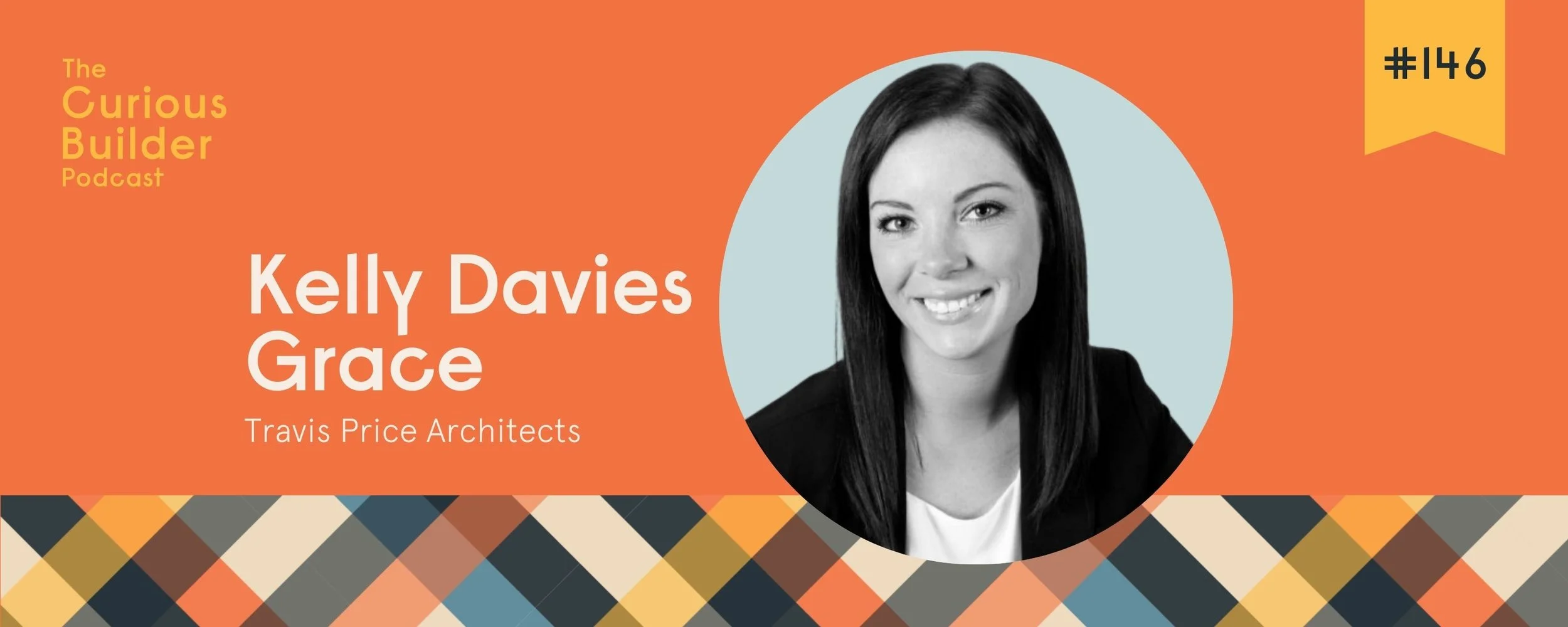
On this episode of The Curious Builder, Mark Williams and Kelly Grace talk all about building healthier, more intentional homes—think real materials, great natural light, and actually creating spaces that help you unplug and feel good. They swap stories about everything from s'mores by the fire to keeping tech out of bedrooms and why less stuff is almost always better. The conversation is filled with practical tips, personal stories, and a shared passion for creating spaces that truly support health, happiness, and connection.
Listen to the full episode:


About Kelly Davies Grace

Kelly Grace is the Managing Principal of Travis Price Architects, an award-winning Washington, D.C. firm known for its philosophy of Metaphorical Modernism — where architecture is rooted in nature, myth, and the “spirit of place.” A graduate of The Catholic University of America with both her bachelor’s and master’s in architecture, Kelly has spent more than fourteen years bringing that philosophy to life through projects that honor ecology, culture, and emotion in equal measure. Her approach bridges sustainability with storytelling, designing buildings that feel alive in their context and timeless in their character.
Resources:
-
Mark D. Williams 00:00
We're happy to announce that on March 20, sauna camp will be coming back to Minnesota for its second annual event. We're going to have three panelists talking about wellness. We've got a Mount Everest summiter. We've got two Iron Man athletes and the inventor of hostage tape. In addition, we're going to have, of course, two hours of sauna and cold plunge with some Himalayan chocolate. In between, we'll have themed saunas. We'll have story sauna, silent sauna, community sauna for different topics, and then we'll end with an amazing wood fired meal from fumo. All the details are on the curious builder podcast.com we
Kelly Grace 00:40
get deep into client stories, and it's really cool. Travis, I drank the Kool Aid in college. His whole philosophy, his ethos, is writing a poem. So we take all this information from the client, we write a poem, and the poem drives the entire form. It's everything, and it's what we go back to every time. And so you're really creating shoes that fit for these clients.
Mark D. Williams 01:09
Today on the peers builder podcast, we had Kelly Grayson from Travis price architects and buckle up buttercup. It's going to be a heck of a ride. We talk mostly about wellness, how it affects architecture and building, and really this journey as humans as we're trying to build and design these amazing spaces, how we interact with it and how we can dwell well by how we live without further ado. Here is Kelly grace. Welcome to curious builder Podcast. I'm Mark Williams, your host today, I'm joined by Kelly grace from the Managing Principal at Travis price architects. Welcome Kelly.
Kelly Grace 01:40
Hi, thanks for having me. Absolutely Glad to
Mark D. Williams 01:43
have you here. And for those watching, I've got brand new curtains, velvet curtains from a past client of mine. She said, can I give you curtains? I said, please. So anyway, I want to private curtains here. I feel like I'm doing a theater show. My daughter would love it. Well, I want to, we're going to change up the format a little bit. I told you before, you're going to get a surprise. So before we let you do you before we let you do your brief intro, and then we have some cool questions we want to dive into, I'm letting the guest before write a question that the guests after them will have to answer first. And so today, at the end of the interview, you'll get to ask your question that the next interview will get to ask. So the question that drew Beeson asked, who's a friend of mine who was in studio earlier this week, said, What was the most difficult thing that you've encountered in your career?
Speaker 1 02:30
Oh my gosh, yeah. Heavy Hitter. Just heavy hitting. Big one, right?
Kelly Grace 02:36
The most difficult thing? Oh, my goodness. Um hmm. I think to date, it was probably the beginning parts of and this started. This started happening about 10 years ago, but creeping in definitely bigger now is bringing on an envelope consultant, or an enclosure in salt consultant into our work, which I've learned a ton from. But, you know, bigger clients have more consultants. And this was probably our biggest home we'd ever done, you know, it was a close to a $20 million home, and there was consultants galore, you know, and, and, you know, it was almost like you're in the hot seat with these envelope consultants. They're nitpicking every detail of ours. And it was a bit daunting, you know, because it's, they're not hired by us, which usually consultants are kind of hired by the architect or managed by the architect. But when it's, you know, client representatives and their team, and it's so it was, um, I think it was just challenging in the sense one, they came in late. If they had come in in the beginning and design phase, awesome, we'd be cheerleading and, like dancing, but this was like, kind coming in the midst of construction. They wanted to hire this person, so it was challenging, right? Because we're having to pivot and change and just really be under the mic, the magnifying glass, so but I welcome them now, especially if they come in the beginning. That's awesome. Join me in the beginning, not when we already have finishes up or whatever, but
Mark D. Williams 04:05
I think that's relatable. I mean, everyone has had projects they've been on where either, you know, somebody comes late to the party and then has an outsized vote. It's just really challenging. I've been a big, you know, in our market, in the Midwest, you know, they typically come to the builders first, or at least in my experience, they're, they're coming to our brand first, and the first thing I do is, is establish the entire team. I'll interview them, then I'll have them interview one or two architects, one or two designers, and then we have the team from day one. Fact, today, I think it's like 15 degrees out here. We just had a nice little little snowstorm yesterday, but we did a site walk for our first site walk. So we had the whole team, architect, designers, and then we went, just because it was far away from everyone's offices, we actually went and met at the designer was the closest. We met at their studio for four hours for the initial intake meeting. And I just think it's so valuable for everyone to be at the first meeting. And I had a client a year ago where she actually. Asked me she was a little daunted by the process, and she said, Mark, when it's possible, could you please do what you can so that I don't have to repeat myself? And she didn't mean it from a negative way, like you could say, like, you know, you could see that it all depends on the nuance of how and I really give her kudos for her warmth and her vulnerability. And I think her point was, is she realized that if she that, if she repeated herself too many times, it's like she would not want to build and she really wanted to support her husband, and they and I just I it was such a mark in her favor that I did whatever I could to have the teams all together all the time, so that she could only have to say something once and or all, the team could sort of collaborate, and she could just kind of witness it. And so anyway, she
Kelly Grace 05:45
must, she must have been there at some point. You know, either she built a house before, or she's, she's not new to the communication world.
Mark D. Williams 05:53
I think she's actually really young, and this is their first house. I think she knows herself. I think she knows that it would shut her down. And so I give her credit for, you know, for giving us the kind of the social cues on what we need to to make it a successful to endeavor. And like, your point, like, if that consultant had been there from day one, like, you know, you can work with anybody, but it's a little bit hard when you've already made that 12 course meal, and then a new chef comes in, you know, right before you serve the meal. Oh, by the way, our client is gluten free and only wants food from Japan. You're like, ah, that's nothing on the menu right now. So, okay,
Kelly Grace 06:30
great analogy. That's it.
Mark D. Williams 06:34
Well, excuse me, give us the elevator pitch of who you are, a little bit about your firm, and then we'll dive right into some of our questions about really, I think, you know, you'd mentioned it right before we hit record was the percent of homes that have architects involved. I think would be a fascinating discussion. So why don't you give us the 30,000 foot view of who you are and where Travis price architects kind of does their work, right?
Kelly Grace 06:57
So, based out of Washington, DC, went to college here, started working here. As soon as I got out, started working for Travis as an intern in college. Graduate in the 28 2008 recession architects weren't hiring. Worked for a construction company for about four years on Capitol Hill. Came back to Travis's when they were hiring. And then I've been there ever since, going on 15 years now. So we design very modern, very innovative, all storytelling projects. So we get deep into clients' stories. We are literally want to know every little thing about them. And it's really cool. Travis, I drank the Kool Aid in college. His whole philosophy, his ethos is writing a poem. So we take all this information from the client, we write a poem, and the poem drives the entire form. It's everything, and it's what we go back to every time. And so you're really creating shoes that fit for these clients. It's so it's so custom. And he's been on the cutting edge of, you know, he coined the term passive solar in the 70s, so the idea of sustainability and eat green and all of these things, they're just embedded in our work. Our work is all very natural materials. It's real. We don't ever use fake stuff. So it was a perfect segue into my health journey, which really started with having kids. Well, it got deeper when I had kids, let me say that, because I've been down the food journey for probably 15 years, but then my son is my oldest son is six. So the past six years, it's just gone deeper and deeper into health. And I couldn't believe that I didn't have the full connection to buildings yet. I mean, you've got the baseline stuff, but deeper, deeper layers. So that's just where my trail has been, because I'm doing it for my own personal self to start, and then, now I'm rewriting the entire spec book for the firm. It's not like, Do you want a healthy home? It's, you will get a healthy home. It's all in there. And, you know, the conversation the beginning will get really wiggled down to how much square footage can you get to make sure that we can afford you a healthy home. Like, I'd rather you build less and better, you know, build that 300 year old home. Make it be you know, as long lasting, the Cradle to Cradle, and longevity is a big thing for us resilience. So it's just, it just makes sense. But we go deeper into the story with the clients, where it goes into health, where it's like, how do you wake up in the morning? Where do you what is the first thing you do? Do you go outside? Do you look at the sun. Are we grounding? Is there, you know, is there? There's just the health layers that get to go into that. And then then it moves to, you know, their bathroom and their kitchen. Like, how are we how are you cooking? How are you wrapping your food? No, I'm not going to put a Bluetooth, you know, phone charger in your countertop. No, like, those are the layers of the health that I'm talking about now. It's like health meets smartness, smart technology, and it's so nuanced and conflicting, but it's I just rail against it at this point. Clearly, this is not a short elevator pitch. I'm going to stop there. No.
Mark D. Williams 09:55
I mean, there's a 1,001st. Of all, I love that you write a poem. And then that poem is like the guiding philosophy. That's amazing. I would love to if you have a poem one of the when I'm talking sometime, if you have one up, I'd love to hear one. I don't know if you have one easy,
Kelly Grace 10:10
I don't have one up right now, but a lot of Ian show you homes on how they all started.
Mark D. Williams 10:14
I would love to see that I am, you know, if you're, if you're listening to this podcast, you really have to go to Travis, price architects.com, and check it out. Your stuff is gorgeous. I mean, some of the architecture and the viewpoints, you're like, this looks like Tony Stark's house, you know, in Malibu, like in the movies, like it's, you do some impressive stuff, one of the things, and it just relevant to what you just shared about kind of this health journey. We're doing a home right now called Misa house, and I'm on my own journey of, I haven't done a spec home in 18 years, and so I want this won't be about Misa, who's I have a whole separate episode about that, but basically the whole concept is like how all of our homes are pretty, you know, health forward. But this one is like a whole nother dive, because I don't have a client, so I can kind of experiment with things that I haven't before. And I've really settled on the word wellness, because I think wellness means different things to different people. And you know what, what wellness is to me, might be something different to somebody else, and so, but the more I talk about it, the more it's like a magnet, like it just attracts people. Yeah, you know, of a similar ilk and a similar style. And actually, today, we were in this design meeting I was just mentioning, and the client said, you know, budget is always a consideration. I'm not going to say an issue, because it's not, it's they have a healthy budget. But their comment was, is, do you want a tub in the primary suite? And we've seen probably the last 510, years where, now in the Midwest, anyway, where it used to always be you had to have one. You have to have one in the house, but you don't have to have one in the owner suite. And her comment was, is, I never take a bath, and it just clicked on me. The interior designer said something that just sort of clicked. And I said, you know, everything kind of comes full circle at some point in life. It seems like clothes, you know, like bell bottoms and all that kind of stuff. But I was like, the tubs have kind of been gone for a while. But I wonder if, as wellness is having its heyday right now, I think I read a stat that right now the wellness industry is 1.8 trillion in the United States. All everything you know, from THC to drinks to carbonate, blah, blah, blah to saunas, cold punch, all the things you expect, plus things we don't even know we're talking about, is going to double in the next 10 years. So, like, it is everywhere, and it's going to be everywhere. And i i My comment was, is, I wonder if slowing down, like people are deliberately taking times to, like, take breaks away from their phone, to take, you know, shut down, and kind of have, like, a mental reset, because we realize that all the stimulation is really bad for us, and it takes a lot of self discipline, because all computer electronics are very addictive by nature. Hence why they say you're a user other than, like, drugs computer, and this was, I'm paraphrasing, this from a movie. Well, it's true. I think it was called it that way. And so there's only two demographics that describe their clientele as users, the drugs. If you're a drug dealer selling drugs, your users, but anyone that signs on, it's like, what's your username, what's your user password? Like, it's meant to be addictive and and we are, our brain is not set up for that. And so anyway, where I was going with this is the bathtub, I think is going to make a resurgence. Because I think the new luxury will be, can you, can you take time to take an hour bath and relax? Can you have, you know, can you have a glass of wine and read a book? Could you read the paper? Could you just soak after a workout and just relax and like, it's gonna it's a little bit like a natural burning fireplace. Like a natural burning fireplace is way, takes way more time than a gas fireplace. But there's no question that I my opinion, that wellness, in terms of slowing you down, being more intentional like that, is that is something that's very significant. And so anyway, just your comment about that. Sorry, I went down this wormhole on that bathtub. But that's kind of what that reminded me of.
Kelly Grace 13:43
It's so so true, and there's so much research to back it at this point too. I think the I've been down the trail for a while, but so many people are just now beginning the wellness trail, you know. And they might not think they want a bath now, but when they realize that, like, there was an article just this week that came out how bathing in a really warm tub has similar effects to what a sauna can do for your body. And I was like, Wow, that's so interesting. I never would have thought that. And you know, cold plunging is great. A lot of these bathtubs, you can do both. Now you can have it in your room. Jury's out if it's great for everybody, you know, but I think it's, I think it's awesome, but some say it's not great for certain women in different parts of their life, but who knows? You know, but I think it's definitely going to come back, and I push for it well and
Mark D. Williams 14:26
think about, I mean, I don't know, it sounds like your kids are similar to my age. I have a nine, seven and five year old, and we do bath time every night. Now that's not why we're doing bath because they're dirty little mom girls that need to be scrubbed before they go to bed, but I wonder if, like, you know, having that calming time in a worn bath. I mean, you've been doing it with your baby since they're little, and then they go to bed. And I'd heard this similar thing, or Ian probably three four nights a week, and someone else told me in terms of, like, thermal culture and like your body, like, if you go from hot to cold in a short period of time, like, I don't know if it's hormones or like your central nervous system or what it is, but basically. The advice was, is have your teeth brushed like, be ready to go to bed, take a sauna, and then basically, go straight from, you know, after you take a rinse, go straight to bed, and as your body goes from hot to cold, like it knocks you out. And if you've ever taken a sauna, gone to bed like you are, lights out, yeah, really deep sleep. But I wonder if we haven't sort of been doing that with our kids for a long time, if you I mean, most parents seem to give their kids baths at night, because you're not doing it in the morning before school. But anyway, again, going to heat to cold. So anyway,
Kelly Grace 15:27
yep, 100% and I think I really do think, with the immersion of technology, that the home more than ever is your sanctuary, and you have to create that space for yourself, for your family. They say today, like 90% of people are living, you know, are indoors. And could you imagine? I mean, whether it's their office or their home, they're inside. Like you need that reprieve at home, which is why I think it's critical, you know, like when we design bedrooms at this point. I mean, I am trying my hardest to design them with kill switches for power. I want that to seriously, not just be a sanctuary, but literally cutting off your power and your Wi Fi to your room so that you don't have all of these frequencies. And that's, that's a whole deeper conversation, but I think that's where homes need to go. You know, they need to be, they need to be really worried of these, of these electronics.
Mark D. Williams 16:17
So let's talk about that. I'm actually really interested in this topic, in particular, as you knew I would be so tell me about these kill switches, because I looked into it for Misa who's my goal was to have a Faraday cage for the house where, like, the idea was, like, when my kids were in middle school or high school, could I flip a switch? And, you know, not only could you obviously shut off from a parental control, like the Wi Fi on your phone, but like, you can jump to your cellular network. But I also wanted to prevent it from prevent it from jumping to the neighbors, you know, Wi Fi, if you're in a city setting. And I was told that it's actually illegal. The jamming technology is like, the same as a police jammer, and it's actually a felony. I found this out very humorously, because if you, if you create this a cage or this system around your house, emergency signals don't work either. So smoke alarm, carbon monoxide, 911, calls. And so evidently, because I thought I stumbled onto, like, this genius idea, I could patent it and like, oh, man, every parent in America is gonna, I'm gonna quit building and just license this thing. But how just anyway, that's my little quick journey. What tell me about these kill switches and how you practically, actually apply them and how it works. Yeah.
Kelly Grace 17:22
I mean, full disclosure, we haven't done one yet, but they're in our houses that are coming under permit review right now. This is, this is where this tech is. Everything is moving so fast paced at this point, but that is something that we're drawing into our bedrooms now, and really just from a bedroom standpoint, mostly where all the power to the bedroom has a switch at the door, at the door that you shut the whole room off. No no longer is power going to your outlets. It's definitely and then a Wi Fi turn off is something that you might do, and usually your Wi Fi is not in your bedroom, but like wherever your Wi Fi is, you would shut that off, but the kill switch is mostly for things that are coming to your bedroom. Now, a lot of newer homes do have internet wired to their bedroom, or what do you call it, wireless? So that we would cut all of that too.
Mark D. Williams 18:13
This episode is brought to you by adaptive. If you're still chasing checks and juggling spreadsheets, it's time to upgrade. Adaptive is revolutionizing how builders get paid. With AI powered bill pay, automated draws, one click payments and built in Lean waivers, Faster Payments, fewer headaches and total visibility, adaptive takes care of the back end chaos so you can focus on what you do best. Building. We've used adaptive for two and a half years, and trust them to keep our projects moving and payments flowing. Learn more at Adaptive dot build and simplify the Pay Process today. For more information, you can also listen to episode 10 and episode 15. You know, I never thought about that in terms of, like, we use spheres. So it's one thing that our Wi Fi, you know, AV tech team, say is, like, it's a basically a sphere. So on a three story home or basement, main level, second story, you'd have, basically you'd stagger them so that the 360 sphere would hit all the rooms. And everyone wants good fiber optic or connections when you want it. But I never thought about turning it off every night, because why have that network going when you're sleeping? What's the point of it?
Kelly Grace 19:17
No, it's, I mean, it's the point of it is that we're all addicted to our technology, right? And a lot of us are at night scrolling before bed, and that's just something that takes a lot of practice to get out of but, yeah, turning the Wi Fi off at night. I mean, if you ever have seen those diagrams of how the Wi Fi just radiates through through a building, through a space. I mean, it's people don't believe in frequencies, but, you know, but they believe in Wi Fi. It cracks me up, right? It's like,
Speaker 1 19:44
what? That's so funny. That's so well said.
Kelly Grace 19:47
I mean, it's so funny, but, yeah, I mean, if you can, if you can get to be that diligent and turn your Wi Fi off at night, along with the power around your sleep, I think that's a critical step. I mean. You know, all of this is baby steps. It's so hard to get there right away. I mean, it costs. It takes a lot of money and a lot of work to get to some of these levels of, you know, wellness within the home without tearing it up. So, you know, it might be something where you bring over someone to look at your panel and see how it's wired and see, you know, maybe what can you shut down at night easier? And it might not be everywhere, but if it's at least like around your bed, there's so many studies about power outlets near people's heads, nothing to do with Wi Fi, but just power could be dirty electricity. You'll see a lot with like babies and their cribs up against the wall with a power outlet that might be dirty electricity.
Mark D. Williams 20:38
What do you mean by dirty electricity? What does
Kelly Grace 20:41
that mean? So take me with a full grain of salt. I hire consultants because I'm the creative designer and orchestrate all the all the experts, right? But I know enough to be dangerous here. So dirty electricity is when the frequency is basically scrambled and it's it creates high voltage spikes within the power line, within the power throughout the house, and those spikes are what can affect bodies. And it doesn't happen everywhere. But electricians, there's things that they can do to mitigate this. But I've heard it's especially high around, like dimmer switching with LEDs. You know, there's just, there's certain technologies that are not quite equipped for the power and the matching of the power, but I think it's something that everyone should look into. I'm like, I don't want to speak too much, because I definitely don't know all of it, but I know enough that it's if you follow this, some of the people in the EMF world that are going around with the EMF readers and bedrooms, especially like hotel rooms, the amount of like, Spike that's happening at a hotel bed, because you imagine all the things that are wired into those headboards in a hotel. It's like, oh, it's a load. I even saw some of the other day talking about how, you know, you're you ever realize how you feel so bad after a flight? But a lot of times, you don't realize your head is on a headrest
Speaker 2 21:58
and the headrest has a computer. Oh, wow.
Kelly Grace 22:01
And you're just, you know, like, on top of all the other parts of of planes making you sick, it's like this extra layer of, like, I
Mark D. Williams 22:09
didn't even think of that. That's wild. When you mention it like that. You are so, right? I must have a, I must have a metal head, because it doesn't bother me. But I like, but the concept, I do like, your earlier thing that people don't believe in frequencies, but believe in Wi Fi. That's hilarious.
Kelly Grace 22:23
Yeah, I mean, I think too it's hard, because we don't even know that it doesn't bother us, right? It's some of it's so minuscule, like it could be something where it doesn't give you a headache, but you have a sinus infection, or you have, I don't know, there's just ailments can act in
Mark D. Williams 22:36
different I mean, think, I think that's something that's relatable. Is like stress, it seems like I'll just speak for myself, like I'm not always aware when I'm under stress, until I relax and I realize, oh, whoa, I was carrying that stress latently. Or like, if you go get a massage, you ever done that where you lay down on the table to get a massage, and like, you relax, and as you relax, you realize, like, wow, I had no idea how tight, and I work out a ton. So it's like, is it because I'm working out? No, most of the time, like, when I have a, you know, my HRV, which is, like, this isn't meant to be a health podcast, but here we go, is, is that, like, a lot of times it's, yeah, it's stress from work. So, like, it ends up being, like, it's not stress from running 1015, whatever miles. It's the it's the stress of thinking that client and a lot of is so latent. So, I mean, that's one of the reasons why I'm such a big advocate of exercise, personally, for myself, but also just through the curious builder in general, boot camp, Sonic camp, other things that we're involved with is because, by sort of flushing it out regularly, like we don't even know all the health that we're doing and, and, yeah, our brains are just wild. I mean, they're, they're electrical instruments, right? I mean, I believe our brain gives off electrical currents, and so it's no wonder that this dirty electricity, or whatever, people are impacted by it with moods. And you don't know till, like, you get out to nature. I just recently learned what grounding was. You know, where you walk outside bare feet, and I know, like, there's grounding beds and all kinds of different stuff. But someone's saying, like, well, all you really have to do is go barefoot and go walk outside. And I'm like, Have you been to Minnesota in January? It's probably not going to go barefoot in the backyard.
Kelly Grace 24:06
It's, oh, man, I know, and I try, it's still cold. It's Yes, like, there's a difference. I think the distinction outside is earthing. But we don't need to go into that, I think. But just to segue into, like, staying on electricity for a minute. We talked about before we started the Huberman podcast, yeah, and he had a scientist on there, and they're talking about how they've been researching this for, I think, 10 or 15 years since 2000 Oh my gosh. 2000 feels like 15 years ago to me. 25 years ago, when LEDs really started coming out, they started researching this, and, you know, with lab tests and mice and mice and all this stuff, and they're finally coming out saying how bad LED lights are, and they're equating it to asbestos in today's buildings, is what this guy was saying. And it just rocked me, because I've been talking about this for strongly the past six months, because of some of the deeper research I've been doing. But you think about LED lights in school? Hospitals, in homes, in hospitals where you're supposed to be getting health, and it's because they're just full of blue frequency. They don't have the UV red light frequency that comes with incandescence. It's gone. It's not even close. Because incandescents really are similar to the Sun spectrum. They hit a full range of a spectrum. So, I mean, have you ever seen the videos of they'll take students and, like, they'll be watching them misbehave over, like, a long length of time in school, and then they'll change the lighting, and over that same length of time, they'll see the behavior change.
Speaker 1 25:35
I have, whoa, YouTube or what is this video? Oh, there's, there's several out there. I'll show you. Sounds amazing.
Kelly Grace 25:42
It's, it's, there's, it's incredible, and it's scary, because every school everywhere today is LED lights. I mean, it's in our code, which is why I'm like, I'm railing right now and trying to cheerlead the so
Mark D. Williams 25:55
let me dial down. So like, we've been using the last probably two, three years. And DMF is just a manufacturer, right? Because it can warm dim. Would even those types of cans still have the same issues, even though they're much more there, they can at least get you can affect the temperature in the Kelvin of them that still doesn't move the needle, doesn't hit the color range. That's so then the next level up that I'm aware of is, like the ketra, that I believe it can follow the circadian rhythm of like the sun, that can those do it?
Kelly Grace 26:23
Maybe that one, but from what this scientist was saying, he hadn't seen any. Now, I don't know to what level he researched and if he's heard of that one, but LED has come a long way. Like the higher quality ones, they've really figured out the flickering. That was the big problem is these lights have a slow flicker that you can't see with your naked eye, right? And that was causing a lot of mood disorder, especially like students in these places, because they don't realize that they're like, kind of under this light. So the high quality LEDs have figured that out. They've stopped the flicker. But the spectrum of light color, from my understanding, is that it's it's still.
Mark D. Williams 27:00
The problem is, I have to imagine we're still a long ways away, because think of in the last 25 years. I mean, there's no question they're better now, but I would just tour to school, because we actually have a stadium light issue right now. I know more about stadium light LEDs than any builder in the country right now. Like, yeah, so we have, we have a project right now, a huge home. It's a half mile away from a high school football field, and the client was out at night, and it's called Light spillage. They're supposed to the new, the modern lights are supposed to be designed within 200 feet, and then the light goes to dark, basically. And we're a half mile away, it looks like a 747, is landing in your backyard. It's crazy. And so the and they're under 20 year old, light technology and the new, there's really new LED lights that just came out in the last couple of years that can directionally spread now, I'm sure the light quality is still terrible, but you're outside playing football, so like, you're there for two hours. I think they can manage probably, but the point of it being we went into the school to have a talk with the city administrator, and he had just commented how energy savings was their number one, and cost and energy, right? So, like those, usually, sometimes can go hand in hand. Well, just because it's affordable, and this is something I've discovered in my own journey with Misa, who's is, just because it is earth friendly, doesn't make it people friendly and vice versa. There are plenty of things that you know that we can partake of anyway. It's just sort of interesting as you go down this journey. This journey. This is, that's what I mean about wellness. It is very subjective. It's a little bit like food what? What might you know if you have celiac or, you know, some sort of a wheat disorder of some sort, like, what you eat is a real problem, and to the other person that doesn't have that, it's just really interesting. I feel like, in some ways, there's so many options and there's so much that people sort of just tune it out, because they're like, oh my, this is another thing I have to learn about. And so it just becomes a lot.
Kelly Grace 28:43
It's tough. It's tough. I do think lighting goes beyond the food level, because I do think we're all circadian creatures, and like we really, we do align in that sense. And the deeper I learn about it, the more I learn like sun has more to do with not just our circadian rhythm, but our digestion, our hormones, every way in which our body functions is based on the sun, and we feared it for so many years. And I really think there's going to be a big shift. This is a whole nother level of discussion, but I really do hope that engineers and we figure out a way to get to get this handled great, because the blue light is in our street lights, it's in our car lights, it's in our house lights. I mean, the blue, purple. I mean, I don't know about you guys, but we're having, we have purple lights all over the place here, and it's, it's kind of tragic, too. It's not that pretty, right? It was pretty when it was romantically golden and very candle lit. And now we're like,
Mark D. Williams 29:36
I mean, maybe, maybe cost will come down. I mean, I believe I'll check into this after but I think the ketra is an is a brand name, and I just know, because I'm fascinated, I've pitched it to several clients, they just haven't been willing to pay for it. I want to say it's like six to $800 per can. So it's very expensive. The DMF cans, again, this a brand. There's multiple ones that do this, but the ones that I'm using at Misa, who's they? I didn't, I just didn't have the, honestly, the budget. Duke. Metro, because I would have done it in a heartbeat. The idea that, plus it's just cool, like, the idea that I could tell you as a client that, hey, when you wake up at 530 in the morning, you know, we've set the sun level at 20% sun and, like, because basically it gets the brightest during the midday, because shocking. That's when the sun is also the brightest, and then as it dims towards the evening. So you go through this whole cycle. And we did actually have a client who told me that she is very sensitive to LED lights, and she was willing to pay for the upgrade for it to DMF, warm, dim over traditional LED and we want she gets headaches very easily. And so we went into the AV lighting studio and we and it was really helpful, because the AV company had it going on, and they had all these light settings, and they said, Okay, this is your traditional light. And the lady was like, Oh, this is brutal. And then they did the next one. She's like, that's marginal. And then the they didn't tell them, of course, the cost. They just were saying they want to see how you react. And the final one, she's like, This is amazing. And they're like, yeah, the cost is too. And so anyway, at the end of the day, they decided on the middle road. But at least that's that discussion was not happening two years ago. I mean, we didn't even know that you could have that discussion, frankly, or I didn't, right?
Kelly Grace 31:07
Yeah. I mean, I think one of the big things that our firm, we really try. I mean, we really don't put many recess lights. If we can avoid it, we'll do it. I'm in high task areas, maybe the kitchen, but the dream for us is a beautiful wood ceiling where we uplight it, and we really just make it this golden color, and that you don't really see any light bulbs. That's our dream. You know, you might see a couple in the kitchen, in places where you really need them, but for the most part, they're hidden. You never see it. And that's a big that's something we've done long before this health discussion, and we've been doing that for for as long as I can remember.
Mark D. Williams 31:40
I think that's as an architect, you are way ahead, and I appreciate the architects I work with. You know now lighting, at least I do mostly residential construction, and I think that discussion is happening in the last two years in a way that it never did for my previous 19 years of business, where now you have, you know, legitimately lighting designers, that all they do is lighting design, or obviously, architects are usually good at that too, in terms of placement. But even they'll say, Well, an experienced lighting designer like that will take, will let them take the lead. And so we're having a lot more collaboration with that discussion. And you're right. I think, you know, when you look at really high end homes and high end architecture, usually the thing that, now that I'm attuned to it. I You're right. The all the lighting is hit, it's all like a cool restaurant. Like, why do you like the vibe? Like, why does it feel so welcoming? Because you're not being blasted out by stadium lights. For one thing, like my podcast studio right now, I've got five lights shining on my face to take away shadows. But who would want to eat like that? Or like, live like that? That'd be terrible. Yeah.
Mark D. Williams 32:37
100% interesting. What did, um, what was the conclusion of that Huberman podcast about LEDs, like, where do they where do we go from here as a country?
Kelly Grace 32:47
You know, it's funny. Obviously, they did touch on this, how it is extremely hard for anyone to pivot in a big way with this, because it's very costly. And they just said, the biggest thing you can do is what you just said, which is, get out ground, be in the sun, get that infrared whenever you can. You want to hear another interesting segue that this goes into, which is so crazy for buildings, is every piece of glass today, every building code today, makes you put film on your glass. Right? You have to have energy rated class, whatever layer of solar, band 60, or whatever you're going to add, it's got to be there. And so it's really crazy, because all of those films, block, UV light, and that's also affecting us. So it's, it's, it goes deep, and it has a big effect on energy versus health. So I don't know what the solution is to this yet, because obviously, we don't want a condensating house where it's and a cold piece of glass. But at the same time, you know, for modernism, our windows are, you know, 10 by 1010, by 20, like we have huge glass, and the fact that it can actually be a disservice to me on the other side of that glass where, I mean, I remember being pregnant and just laying in the sun behind my window. Give me that sun like I wanted it, but it was freezing out, but like now I'm like, wait, it's not even doing what I want it to do. I might as well be behind a red light panel.
Mark D. Williams 34:14
So that's interesting. I would love to talk more about that. So UV, the reason that the UV glass is, I mean, obviously we heard all kinds of UVs kids, you know? I mean, was a kid, I don't ensure they even had sunscreen. And now, obviously we sunscreen people up in the dark.
Kelly Grace 34:28
So, but let's go somewhere. Yeah,
Mark D. Williams 34:30
yeah. No, I agree. I think everything in moderation, I think is ultimately what this yields, right? Like a little bit of sun, but not like eight hours staring at the sun, right? I get it like my Am I actually one of my best friends, his wife is a dermatologist. We'll have to have her on the podcast as a because they they wear hats like, I swear they're like, you know, in a sod field, like every dermatologist I've ever met, when they go on family vacations is somewhere warm, wears like a sombrero sun hat. They're definitely afraid of
Kelly Grace 34:55
the sun. I am gonna send you this wonderful guy that I follow. He's a circadian biologist. His name is Zaid, his last name, but the amount of helpful nuggets that he puts out there, and it puts every dermatologist to shame, it's really wild. It'll blow your mind on circadian biology, which ties back to the house, ultimately. But you go ahead and you were asking about the glass.
Mark D. Williams 35:16
Well, I was asking the glass. So if you, if you so right now, the coating is to block UV light? Is that mainly in a house setting, because you're not worried about, you know, being burned necessarily, or I don't think you are. Is it mainly so that, like, wood floors aren't fading as fast? Like, what it was the main reason for UV? Or is it energy? But, you know, in a cold climate, obviously we want energy in the wintertime. In the summertime, it's it costs more money, I think, to cool a house and it does to heat it. What was that
Kelly Grace 35:40
was driven by fading fabrics and floors and furniture. I think that was a big driver of it. But it also has a huge Energy Impact. A lot of times it is, it is reverting the sunlight back out, and the coatings are different depending on your climate zone, right? So it's going to be different, but, but the problem is, it is code, you know, like you can't I mean, you could probably do a prescriptive sandwich and get away with points on certain walls where you can avoid it. Like, if I wanted to not do a film in my bedroom, maybe you, like, pick a window where you could get away with this. I think you could. I also think the inspectors never look at your glass ever. So there's that
Mark D. Williams 36:18
they only look to see if it's tempered. That's the only thing they care about.
Kelly Grace 36:22
Yeah, does it? Have a film you have no idea you want to see my bill like never so I again, I know enough to be dangerous here, but it's a question that is fresh on my mind right now, because it's wild, right? It's just,
Mark D. Williams 36:37
well, I mean, I think we've probably been aware of it without realizing. Again, today, I didn't realize how much of my design meeting was going to come into today's podcast. But the client, we had the client pick a bunch, you know, they presented a bunch of Pinterest for different rooms. And you know, sometimes when you're not picking it, I love it when a client, you know, has all their hopes and dreams and the whole team is looking at it. And two things I usually notice, one is they often don't know why they're picking stuff, and then we, as professionals, pointed out to them. So we had one client who wanted a kind of a contemporary home, and I'm not the style police, but I said, Do you realize that half of your photos have arches in them? Just, I don't have I don't have a I just have an observation. It's not a statement, and they're like, I didn't even realize that or half the walls that you picked, I think, have plaster on them, which I love. I love the organic vibe. So anyway, where I'm going with this is, like a lot of times, we don't know why we're gravitating towards something, but every single photo that they picked, every one interior, exterior, which obviously would have these when you hear the basement, exercise room, office, kitchen, every single photo had a window in it, everyone and I said, and I was laughing. I said, you have excellent taste. And I said, I also think you're a human because most of my clients do the same thing. Because in my experience in building for 21 years, I didn't know it at the time, but now I do people, in my opinion, gravitate towards the smallest, well lit room in the house. And I think they do that there's a refuge aspect to us, like, almost like an animal, like we want to be cozy. We want to be tucked in, kind of in a secure place. But then we want, we want openness. So our back is to a wall. We're out to, we're looking at all this natural light, and then we want it to feel comfortable and warm. And those are rooms with natural light. And if you could have three sides of glass, like, I mean, heck, if you get a four, great, that's now you got a parapet or something, or a skylight or whatever. But anyway, the point is, is, like I was just highlighting this to them. I said, You know what? Not every room in your house can have glass on all the walls, because we need some walls in your house. But I said the rooms that are really important to you, and the rooms that you will spend the most time in, will have the most glass and the most solar exposure. And of course, little client was like, yes, that's exactly what I want. All those things that you know from architecture, and I know from building, but we're talking about just being human, like we gravitate towards that
Kelly Grace 38:53
100% and that's why we've always gravitated, as a firm, to natural materials. Anything that's plastic or man made just doesn't feel right. And I think, I really think subliminally, there is a feeling that your body gets, an ease that you get, just like being in a small, well lit room, like when you can tactically touch wood and real materials. You just know, you know, it's natural and real. It's just those fake materials I could never, ever, never respect,
Mark D. Williams 39:28
this episode is brought to you by Pella windows and doors. I've used Pella for 21 years as the exclusive window company on every one of my builds. When people ask me who I trust for windows and doors, it's Pella every time, their craftsmanship, their innovation, the top tier service, make them a no brainer for any custom home builder or designer who demand the best, whether you're designing something bold or building something with timeless elegance, Pella has you covered. They're also the only window company that has a lifetime warranty on all of their windows. I've gotten to know all their people at Pella corporate. It, as well as locally. Here at Pella Northland, I'm proud to call them our partners and our friends. Visit pella.com to learn more and connect with your local reps today for more information, you can also listen to episode one, where I interview the Pella Northland founders, as well as episode 109 where we talk all about their latest innovation with the study set window, there's always going to be some level of compromise. Or I remember I should go back and reread. I have a book down in my basement called plastic. And basically the whole book, it's a yellow cover. It's really attractive art. Whoever did the cover on it. And basically the whole thing is about, you know, I think I remember doing the exercise, like a decade ago, like, write down everything that you touch, and I forget the numbers, but the majority of the things that you touch have some form of plastic in them. And it was just as someone who loves being outside and loves nature and loves, you know, a lot of a lot of the solutions to what you and I are both talking about is actually outside the home. And we're in the business of, you're in the business of designing it, I'm in the business of building it. But at the end of the day, we're also, how do we get people outside and one of the fastest growing segments, I would imagine the country, but for sure that my clientele is outdoor, indoor living, how do we, how do we encourage people with multi slide doors or outdoor patios or pools or saunas or whatever? How do we get people outside and being you know, I think that sometimes why having really adverse weather might help you, because I think being in Minnesota, it does get really cold up here, and I'm not sure if I'm just I've been lying to myself for 45 years, or if I'm just that crazy. But like, I find that if I go out when it's really cold, I feel so much better the rest of day. Like you're, you're, I'm sure your pores open up when you come back inside your you're all no rosy Ned like, you just, you know, like your Santa Claus or something. You got the rosy cheeks you're outside. You know that that cold wind and again, exercise, we're meant to move and however, we can get outside. And you don't have to live in Minnesota to do this. I mean, I love mountains. I mean, I was in Arizona the other day, like, get out. Climb Camelback Mountain, get outside. It's just, it's hard to do in an urban environment. And so anyway,
Kelly Grace 42:06
no, you're absolutely right. I am. I Gosh, getting people outside is critical. I mean, I think, you know, I don't know if you follow Wim Hof, your fellow Wim Hof The Iceman, you read the how we're, we're really, don't have much brown fat anymore as a species. We used to, you know, like in Finland and the Nordic countries, they bring their babies outside, and they leave them outside for hours, like they will leave them in their carriages, but they're out there and they're getting the freezing cold on their face. Because I really does something for your body. It's, it's, you know, it's, yeah, I always talk to clients about how we can do this on on their house. I mean, I, love that conversation. I love diving deep into that. And I if they don't actually have that in their wheelhouse, I push it on. How can we get you out there? How can we, how can we get you to this level of health that you may not have heard of or experienced before? I think if it's easy and convenient, people will do it. You know, if it's, it's at their fingertips. I mean, I'm in the process of designing this non tox wellness box, and it came out of being a mom who has little time but need to do all the things, right? Like, I want a sauna, I want a cold plunge, I need to do yoga, I need to get red light. I need, like, I need to do all the things, but I have 30 minutes. Can I do them in this box? Can I be grounding at the same time while doing it in this box. So I'm creating an earth and ground floor, a sauna that I can it can be a very hot, curtained off sauna, but then also there can be an entire hot room, so it can be like a heated yoga space. So it's about like creating this space that is just easy, you know, like, I love wood burning saunas, but they take a long time to heat up. So this kind of conflicts with my EMF Oh, no, EMFs. But this is what I mean. This is the way we are in tech, the beings that we are. It's everything's nuanced, right? Like I can't 8020 is about as good as we'll get. 9010 You're doing fantastic.
Mark D. Williams 43:57
That's so funny you say that so in in MISA, who's that we had the hardest decision I had to make in the house, because I wanted to create a brand around a home where, with a word, the philosophy would dictate my decisions, so that the philosophy would be kind of like my client. So because I kind of feel like, if you design a house for everyone, you sort of design a house for nobody. I don't know if that's true or not, but that's how I feel about it, because it's like and so I wanted to be very unique. Well, for me personally, the fireplace was the hardest part of the whole house, because I didn't want natural gas appliances on the inside, because of studies of off gassing of your natural gas and lead to asthma and things like that. So I want all electric there. But then I was going to go, this is when I was back in the idea that I was back in, the idea that I was gonna do electric on everything. Then someone that goes, what happens the power goes out, you should have a redundant fuel source. I'm like, that actually makes a lot of sense. Okay, fine. We'll have a gas boiler for the inflow, or hydronic heat. Blah, blah, blah, blah, blah. Anyway, long story short, is it in, you know, is it easier to just point A button at your gas fireplace and make it go on? Yes, the problem is, I really. Wanted a wood burner, but I couldn't get around the idea that, like, when it cool, when it when it first starts, and when it cools down, it can Backdraft. Especially our house is, like, a point six. It's almost passive, like doing a wood burning fireplace. And an almost Passive House is, like, stupid because, like, it just isn't gonna work. And I'm like, I can't have someone buy a multi million dollar house and then tell them, like, oh, by the way, you got to open up your windows in order to get it to start. Like, that's just gonna seem really incompetent. Really incompetent. And so I've struggled. I we spent months going around around what to do. And finally, the architect was like, Mark, you have to decide, and you have and then he this is, he was so helpful, because he's actually the reason I got into Ultra running. He's my and so, so he was the perfect architect, because he's huge into wellness, personally. And he said, What does wellness mean to you? And why do you keep wanting a wood burning fireplace so much? And so I shared this memory for me. I grew up with wood burning fireplaces as a kid, and I remember in January, it's negative 20 out or super cold, that one cold weekend we get a year, and my dad would be outside the window, and he'd have a sled full of logs. He'd bring them to the window. I'd be on the inside a little eight year old kid, nine year old kid, how old I was, and my dad would hand logs to me through the window that I would stock in the wood burning fire box, and then we'd have this beautiful fire. And that's like a really childhood formative memory for me. So I'm telling this to Carl, and he said, that sounds a lot like wellness, that sounds like a lot about peace, that sounds like a lot about having family memories with your dad, and when he said that, it completely unlocked my idea of what wellness was it I was so focused on, like, is the air healthier to breathe? Yeah, maybe it isn't. But like, what about this memory that you're establishing with your family? What about sitting down and watching a fire crackle? I haven't looked into it yet, but someone told me that there's something about watching actual natural fire burn, versus like gas burning, like there's something in it, I need to go find a study on it, because I've heard like, and I was like, this would just blow my mind. So anyway, long story short, when he told me that I'm like, You're right, I have to do wood burning, not for the air quality, because that's subjective, but for the wellness. For me is the story, the intentional slowing life down. That is what it means to me.
Kelly Grace 47:03
I 100% agree with that. I love wood burning fireplaces. I really loathe the gas ones, because, again, it's like, you see it, and you're like, so fake these logs. The whole thing, I just can't, you know, it's so I'm right there with you. I think. You know, my family started buying a cow a year, right? We started slaughtering our own cow, and then the cow from our butcher comes wrapped in plastic. I'm like, and I go to this homeopathic doctor, and she's like, really take this supplement. You'll be fine. I'm like, thank you so much. Because I'm like, I don't want to. I can't have this kind of crazy mind all the time. I just, at this point in my life, I just want joy, and joy comes from doing the best we can with what we have, but also being very educated about it and enjoying that fireplace. You know, I so
Mark D. Williams 47:52
well, and I think you touched on it earlier, the 8020 rule. I mean, don't let perfect or what is that? All That Is, don't let good enough be the No. Best is the Yeah. Best is the enemy of good enough. And, like, you know, some of the stuff to the audience listening out there. Like, obviously, clearly, you and I are very passionate about this, but like, it's not, it's not in place, in judgment, it's a place of sharing and a place of excitement and enjoyment. Like, do the thing that means something. That's why I think wellness is subjective to some people. I heard a great thing the other day, and it was, you know, with cures builder boot camp, part of what we do is we do it's like a three day detachment, no phones, no alcohol, those kinds of things. And we had a discussion one night around the campfire, and someone brought up something really important, and they said, you know, just kind of this concept of moderation and like, like, there's no question that alcohol is poison. It just literally, that's what it is. But that doesn't mean that doesn't have a place in wellness. And someone brought up a story. They're like, hey, on my anniversary, I was in Napa and I wanted to have a glass of wine. And like, that's wellness to me. And I'm like, I agree with you. I think that's totally and everyone. Alcohol is a complicated thing for a lot of people, and this isn't a judgment. I'm just sharing a story that meant a lot to me and and I agree. I could get behind that. I could totally be like, You know what? Yes, I think that has something to do with wellness. And so I think everyone is on their own wellness journey, and we love to ask people about it. We This podcast is meant to be a very vulnerable open space. I'm not an expert. You're not an expert, but we are sharing, like our passions and how it affects our work, like I'm creating an entire company. The way I'm building homes has completely changed from a year ago. Like, that's wild, right? And I and all I'm doing is like following the things that really feed me energy and feed me excitement. I'm passionate about this, and it's okay not to know everything. I think sometimes our society, we feel like we have to have everything black and white, have 100% agreement. No, we're figuring it out. We're kind of all hot dumpster fire, businesses, people, we're just trying to do the best we can. People, I know
Kelly Grace 49:49
it's funny, because I feel like I've since I've been in the space for quite a while now, it's like I'm reverting back to I'm reverting back to the basics as much as possible. So the majority of health, I think. Comes from being outside, getting the sunlight. Forget a lot of this other stuff, like do it's actually, it's free and cheap. You go outside, you put your toes in the grass, even when it's really cold, do it for a few minutes. You can handle it. And, you know, follow Wim Hof and do the breathing or something to do it. But just a couple times a week, you know, you'll feel so invigorated. It might suck in the beginning I will, but like, you'll feel so good. Yeah, full believer
Mark D. Williams 50:25
of that. I mean, this sounds like, I mean, you're very passionate about it, obviously. How do you think this affects your work? How do you think it helps you attract clients? How is this sort of, I mean, we can't help but share the things that we're passionate about. So obviously, you're talking to your clients about it. Talk to us a little bit from a business sense, what are you what are your clients telling you when you're sort of engaging with them in this way?
Kelly Grace 50:49
Yeah, I think I'm a very blunt person, if it's coming off here, but with my clients, I'm very up forward with them, upfront with them, because, to be frank, they're usually very wealthy, and not all of them, because we also have a whole shipping container business, which is a whole nother thing, where we're designing like McDonald's burgers that are the same philosophy, but cheap, which is fantastic. We're doing a lot of affordable housing in Washington with that, but just when we get to be custom with our clients, I'm constantly reducing square footage. I can't tell you how much I do that. I you know, I used to live on a boat. I had my first two babies on a boat. And if I could, I would go back. Did you really? It was awesome. I was in Washington, DC, on the water. The monument was right out there. And, you know, the furniture is built. I can't bring much on there. It's just, you really begin to get so simple with your life.
Mark D. Williams 51:38
Oh, this was your this was your houseboat. Yeah, okay. I thought, like, maybe, I thought maybe, like, on a cruise, and you had a baby while you're on a cruise,
Speaker 1 51:47
we live on boat. Okay, that makes way more sense. We live
Kelly Grace 51:49
in a live aboard community, and only left because DC got crazy with covid, so but I am. I would still be on there today if it wasn't for that. But I still work in Washington and all that. But I think where was I going with this? Oh, the biggest thing with the clients is really getting them to realize that they don't need as much square footage. And I'm constantly trying to, like, talk about the Swiss Army knife, you know, how can we do so many things with one gesture? How can we how can we make your life stress free? Like, how do you begin to really minimize in this house? My parents used to drag me out of antique shops. I love I love my parents, but I loathe antique shops now, because of all the knickknacks and the tchotchkes, and this is maybe why I went full modern for most of it. I just can't stand the fake stuff on the bookshelves, you know, like, I don't need a bunch of books that you're not going to read with a cute bookend, with a fake plant, with a picture. It's just like stuff on top of stuff. And if we could get wet, get away with all that. Giveaway, give away. Give it away. And, you know, it just get I think it really frees your mind of space too, and people don't realize it. I think it's really I think it weighs on people all the stuff around them, and I don't think they realize it. You know, holding on to a basement full of storage of whatever.
Mark D. Williams 53:10
I think a way to relate to people is ask someone if they enjoy moving. I've never met anyone other than my parents. They're on home number 19. They love moving. But other than mom and dad. Actually, the reason my mom and dad love moving is so that they stay decluttered. And my dad is just gonna say that my dad is complete minimalist. He'll live in a place for like, two to three years, and he's like, I want all new things. I want to sell everything I own and move to the next thing and start over again.
Kelly Grace 53:34
This is so funny, but that's exactly how I feel about moving. I haven't moved that much, but every time I do, I'm like, you just get rid of stuff. And I think it's actually a great
Mark D. Williams 53:42
it's super helpful. I mean, we do a lot of remodels, and, you know, a lot of people end up buying a home and then remodeling it before they move in, which is sort of, which is great, but it's kind of like cheating, because, like, someone who remodels the home that they live in, it's pretty daunting, like, it's, it takes a lot for someone to realize. I you know, we did one for a couple where they had seven or nine kids, like, they're a big family, and they moved out into a rental. I'm sure it was unpleasant experience. For sure, it was just right after covid. So you can only imagine what that was like. And we did a three story addition on their house, you know, to, you know, navigate all the kids and the different walks of life. And, I mean, think they had, I think they had anything from a baby to, like, 23 I mean, they had a massive range of kids and but the point well being is like, they won't. They wanted to go back into their home, and the things that they basically have to get rid of, it's like, I can't. It becomes real clear to them real quickly on the first meeting when I'm like, Are you planning on living in this house during the remodel? Because for me, it's actually a way that I I pick my ideal clients because the answer better be No, because I it is impossible to meet people's expectations if they're if you were in the kitchen watching the chef make your food like, you'd be like, Why is it taking so long? Why is everything bloody, and why is everyone yelling at each other?
Kelly Grace 54:54
Why isn't everybody moving at all times? What you mean you're stopping?
Mark D. Williams 54:57
Yeah, there's no bathroom breaks. People. Yeah, and did you wash your hands? And so anyway, the point being is, like, it's such a better experience when they move for them, it's better for me, and I often use myself. We had a baby during covid, and we remodeled our house at the same time, and we lived in it, which so I did all the things I told my clients not to do. So I use myself as, like, stupid material, like, don't do it. We moved out to have the baby. We actually had an Airbnb for four months while we had the baby, which is hilarious to me. And but anyway, you just use we're all humans. We're all just kind of figuring out the best we can. And sometimes there's real financial reasons. Someone just says, I can't, and that's okay, you know, fine. We just really have to talk about expectations. And so anyway, I really try to avoid that. Well, that's like, new building a new home is a lot easier from a client's point of view, because they're not there every night, every weekend, for sure. You know, the home can kind of be built in a
Kelly Grace 55:50
Yeah, it's funny. The conversations lately, I feel like that are so so all over the place, on Instagram and those places about mold. You know, it's like everything is about these moldy homes, not breathing, and all this stuff, and that it kind of is wild to me, because the a lot of mold comes from dust, you know, uncleanliness in the house. And I always joke with people about, like, Listen, if you're not drinking mold free coffee yet, like, if you don't realize that your mold has coffee. I mean, your coffee has mold in it, then, I mean, it's good that you're doing your bathroom, but you're literally ingesting it daily, because the majority of coffee has mold in it. So I'm like, How is the mold getting into the coffee? Oh, my goodness. So when they collect the beans, it sits in burlap sacks for a long time, and those sacks, it's just growing mold. So a lot of the coffee you have to, if you're a coffee drinker, you should look at the third party tested beans. Like, I use purity is the brand I like, but there's a lot now, but it's like, if you're not, you got to get there first. Like, do the little things. Not that you shouldn't rip out your bathroom, but that's like a $50,000
Mark D. Williams 56:58
Well, I think you mean do the big things, because the little, big things, like, for instance, go outside more. That's something free, cheap, easy things like that. I hear what you're saying. I think it's so funny you say that what really clicked for me when thinking about Misa, who's in the things that were going into it, is we talk about all the things that we touch, like, what you you know, you're touching things that are bad for you, or like, you know, like, I have little kids, right? And like, you know, stuff falls on the ground or eating it, or, like, obviously, gasoline smells to high heaven, so you can smell it, or, if you're at a pump station, things like that. But we never, or I shouldn't say, nobody. We rarely talk about what we breathe and what we drink and what we eat, from the standpoint of, like, is it even safe for us to do so now we might say, like, you know, right now, my kids are like, Oh, I don't like oh, I don't like that food, or I don't like that food. Sure, they're already attuned to it. But, like, our bodies are freaking amazing at purifying stuff. And, like, I think of my lungs only because this summer I was training for 100 mile race, and we had a number of Canadians fires that kept coming down into Minnesota. And it was like, you know, they have the ratings of, like, when you're not supposed to go and whatnot. Now, don't ask me if I always go, because I'm like, Yeah, screw it. And so, but the point is, I'm a bit of a hypocrite that way, because I'm like, Well, yeah. And so, like, I also don't like the idea that, like, we can do a lot, we can do hard things, we can do things that are unpleasant, but there is a certain point where, like, it's just not safe. But anyway, back to the point of a home like, we spend, would you say percent of our life? Do we spend indoors? 90% I mean, that's crazy. That is so much more than I would ever have guessed. And so the question is, our air handlers, so like, are you do UV filters? Do you do HEPA filters? Like, just stuff that we weren't asking a handful or only were asking it, maybe post covid, when everyone was going around with their masks on, I had a client who had really difficult respiratory illness. He would wear 2n 95 masks, and he basically said that if I get sick during this bill, I'll die because my lung capacity is so compromised. And so he was super careful, but it really opened up my eyes, because I've often like mold, like I tell my wife all the time when she says, I'm like, Well, I also never get sick. I think it's because of all the mold I drink in my coffee, evidently. And so
Speaker 1 59:08
I don't like, you're
Kelly Grace 59:10
also sauna, doing the sauna, and getting outside and getting so it's, yeah,
Mark D. Williams 59:17
this podcast has been all over the place. I hope people are like, what is happening. You know, what's funny, though, is we had, whenever around the around the first of the year, we talked a lot of what we didn't talk about today, but like, mental hellness, mental health, mental wellness, things like that. We're talking mostly about physical health. But I find that every everyone, I hope there's things in this episode that people be like, well, I want to know more about that, because what I love is, you know, interesting people like you. I mean, you've said 20 things now, I got to go. Thanks a lot. I have to go. I have to look into, like, a note sheet of all these things I have to, like, go look into that I don't know anything about, because now I'm just really curious about. And I think that's what makes, honestly, life fun, but that's what makes being an entrepreneur fun and in the space that we're in. Because what other space do we interact so intimately with? It's user based client I like client base better than user base, right? And I know, right? We hope people are addicted to architecture and building, please. What? So what have? What? What are you excited about here for next year in architecture, you have any really cool projects you're excited about, or something that you're
Kelly Grace 1:00:20
honestly I really hope that, I mean, I just started this whole non talks thing, not even a year ago. So I really hope that the conversation just deepens and that people are excited to build homes that are are conscious of these things, that they'll call us to say, hey, oh my gosh, I have to have a house with all of these things. Can we please sit down and design a house around my story, like that's the dream. You know, the more we can, the more we can stipple our buildings all over the world, the better we're doing cool stuff all around the country right now, but we do go global sometimes, depending on the project. So, yeah, I just, I hope the conversation just reaches more people, and I don't want it to overwhelm them. The last thing in this conversation I've realized, I mean, people do get completely overwhelmed, and they shut it down. They're like, I just can't and it really is baby steps and but it's also, you know, if you can afford it, that's why you hire the professionals. You know that know what they're doing. I think there's some stat like, only 11% of homes are designed by architects, which blows my mind. But at the same time, Ian, Ian, see that when I drive around the roads like everything looks the same. I squint. In DC, it's all about the same. You know, the new multi families are about the same. So, you know, I do think, I do really think the architect is the composer of all of these pieces, and that you need us to orchestrate all the parties and bring the best team together. You know, we really pride ourselves on that. And we're a soup to nuts firm. I mean, from the very beginning to the very end, like, we don't bring in interior designers. If it's attached, it's us. Electrical is us? I mean, we're very deep in
Mark D. Williams 1:01:50
all are you handling your own GC as well?
Kelly Grace 1:01:54
Are we handling our own GC? Like, are we building Yeah, are you building it too? So it's funny, we just closed our construction company that at the end of this fiscal year, we're closing it. We've, I've been a partner in the construction company for the past 12 years. We were building all of our, not all of ours, a handful. Maybe we would do two or three a year of our custom builds within like 45 miles of Washington. But we're going to focus on architecture. It's just, it's a lot in Washington especially, is super litigious, very litigious. And we just, we want to keep those really great client relationships in the end and do what we do best. But I do, I mean, I was full whole hog in the construction. I did all the pricing, all the pay apps, you know, the contract.
Mark D. Williams 1:02:38
Oh, man, we're gonna have, I want to do a second episode where we just talk about just balancing. Actually, we will do a second episode because this one was all, which was great, all on wellness. And I'm, I'm here for it, but I'm also, from an entrepreneurship standpoint, I'm super fascinated on, you know, balancing the two. I only know a handful of people that are both, you know, their firms are both architecture and GC. It's just a very rare, it's a rare thing that happens. How big is your firm?
Kelly Grace 1:03:06
It's small, five, I mean, but we are, but we are closing the GC side down architecture now. But yeah, it was, it was great while it lasted. Our, our main builder, unfortunately passed away about five years ago. So that kind of made a big pivot in our in our way we operate it, but it's amazing. So we didn't call ourselves design build. We were distinctly architects and distinctly contractors, because we always wanted our clients to be able to competitively bid. We didn't want to feel like there was any kind of conflict of interest and all that. And we weren't always available to build everything that we were coming out, you know, with. So it was nice, but I was the full on liaison between the design and the construction, making sure it went seamlessly.
Mark D. Williams 1:03:47
It's funny, you talk about litigious state, Washington, I can only imagine. But my my lawyer, when we were writing our contracts, and we used to do it as, oh, I still do a design retainer, but I used to capture the architect or the designer, depending on the scale of the home if it was a full on architecture. Obviously, we don't capture the architect. That's their own AIA Contract with the client, but on smaller stuff, like remodels, just to keep it simple for the client, I just do a, you know, the architect would essentially be under my whatever. And he basically just said, You're exposing yourself to more risk. And then he looked at me, he's like, but to be clear, the GC is always going to get sued no matter what happens. And he's like, because as the GC, we are doing all the work, so therefore we touch everything and so, you know, like, anyway, just the world we live in at the end of the day, you know, hopefully the contractor is really there for when things go sideways or things go really bad. You really don't ever want to go that that way, obviously, but you do need to make sure that you're buttoned up. But the problem with contracts is, like, pretty much every contract has some sort of get out of jail free card. Have you read like, so, like, the other day I got my, I have a Yukon truck, you know, basically for all my kids. And so, like, I went, the oil pan went out, and I got like, 140,000 miles on it, which I'm shocked they were covering it. But anyway, they said, Well, if you can prove. Regular maintenance, an oil change, then we won't pay for it. Well, I had to call Valvoline oil change. Track down all these oil changes. They sent me it and like, yeah, two, two times you went above the exceeded limit of, like, 6000 miles or whatever. Therefore, well, null and void, every oil change you've ever done. I'm like, Oh, for goodness sakes I've done how many oil changes and yet. But my point is is like people can always find, I think what in the world that we live in today, what you're really looking for is relationships. That, yes, there is a time and place where we need a contract, and there are clients that we need them to protect ourselves from them. I'm not saying that there's people like that, but at the end of the day, like they are trusting us to deliver on what we said we're going to do, and we're trusting them to pay us to do what we said we're going to do, and as long as both parties hold up their end of the bargain and are reasonable about it like it's going to be a great experience. I just right now I hand out all my holiday gifts in person, and so I like to do it to a to see people that I haven't seen. I went and toured someone's home today I hadn't seen them in nine years in their home. And we sat down. They asked me Ian for coffee. We talked for I said, I actually have to leave for this podcast. I said, I got to go. But it was just amazing. And like, people are so warm, and it's easy to focus on the things that are difficult in our industry, but there's so many really rewarding things. Like, we didn't get to talk about all of your, you know, kind of combat expensive housing. We'll bring that up on the next podcast, in terms of your container box, because you guys got a ton of national attention for that. And national attention for that, and I would love to know more
Kelly Grace 1:06:26
about how to do that. No, for sure, I think unfortunately, the one the first question you asked me about my life lesson, that was the one that the only lawsuit we've ever gotten into, and it's something where you realize it is better to have everybody under their own contracts. Because, yeah, they'll, they could ultimately go after you, if you're there's a lot that goes to it, but I we, we used to bring in, like, the mechanical engineer and the structural and civil all under our umbrella, but we don't do that anymore. It's like, we manage it for the client, but the client pays those folks directly. It, just from a legal standpoint, keeps it a lot cleaner. Pray to good God that it never happens again. But you know, there are, well
Mark D. Williams 1:07:07
we're doing. We actually, this will be the first time we talk about it publicly. We're doing what I'm calling the smile to her. So we're pretty strong in Midwest, and so we're going to start on the west coast in q1 from Seattle down to LA. Then q2 will be like Arizona, to say Florida, and then up the East Coast in third quarter, in the Northeast in the fourth quarter. So we'll have you back on when we hit that part. So we'll probably be third or fourth quarter. We'll bring you back on. I'd love to hear I'll make some notes to talk about the containers, and then also talk about the GC and the building side, we're also going to overlay it with a book club, a book club. So we're gonna, we're gonna, we have, we picked five books and and then, so we'll tell the audience and the guest ahead of time what book we'll be discussing, and that will just be another sort of, like, you know, another level of things that we can talk
Speaker 2 1:07:56
about on the podcast. Oh so cool, fun. Yeah. And what's the best
Mark D. Williams 1:08:00
way for people to reach out to you, just through the website? Just through the website, through your LinkedIn
Kelly Grace 1:08:04
profile at non talks. Architect is my Instagram, and then Travis price architects is our firm, so just contact us there. I'm Kelly at Travis price architects. Shoot me an email. Call anytime. I prefer phone calls this whole like not calling people in the younger generation, but please pick up the phone. It happens a lot faster. So yeah, on there.
Mark D. Williams 1:08:27
I love it. Well. Thank you very much for coming on the podcast, and thanks for the audience for tuning in to another great episode on the curious builder
Kelly Grace 1:08:34
podcast. Awesome. Thanks for having me.
Mark D. Williams 1:08:38
We have a consulting page, one to one consulting. You can book my time for one hour. Perhaps you've heard a guest where you like one of the topics. Maybe you want an introduction to some of the guests that I've had on. Perhaps you want to talk about branding or marketing, or anything that we've covered on the podcast over the last two and a half years. You can book a time at curious builder podcast.com, thanks for tuning in. Curious builder podcast. If you like this episode, do us a favor, share it with three other business owners. The best way that we can spread what we're doing is by word of mouth, and with your help, we can continue to help other curious builders expand their business. Please share it with your friends. Like and review online, and thanks again for tuning in.
This episode is sponsored by: