Episode 158 - Andrew Legge Is Turning Wool into a Building Science Powerhouse
#158 | Andrew Legge | Havelock Wool | Wool into a Building Science Powerhouse
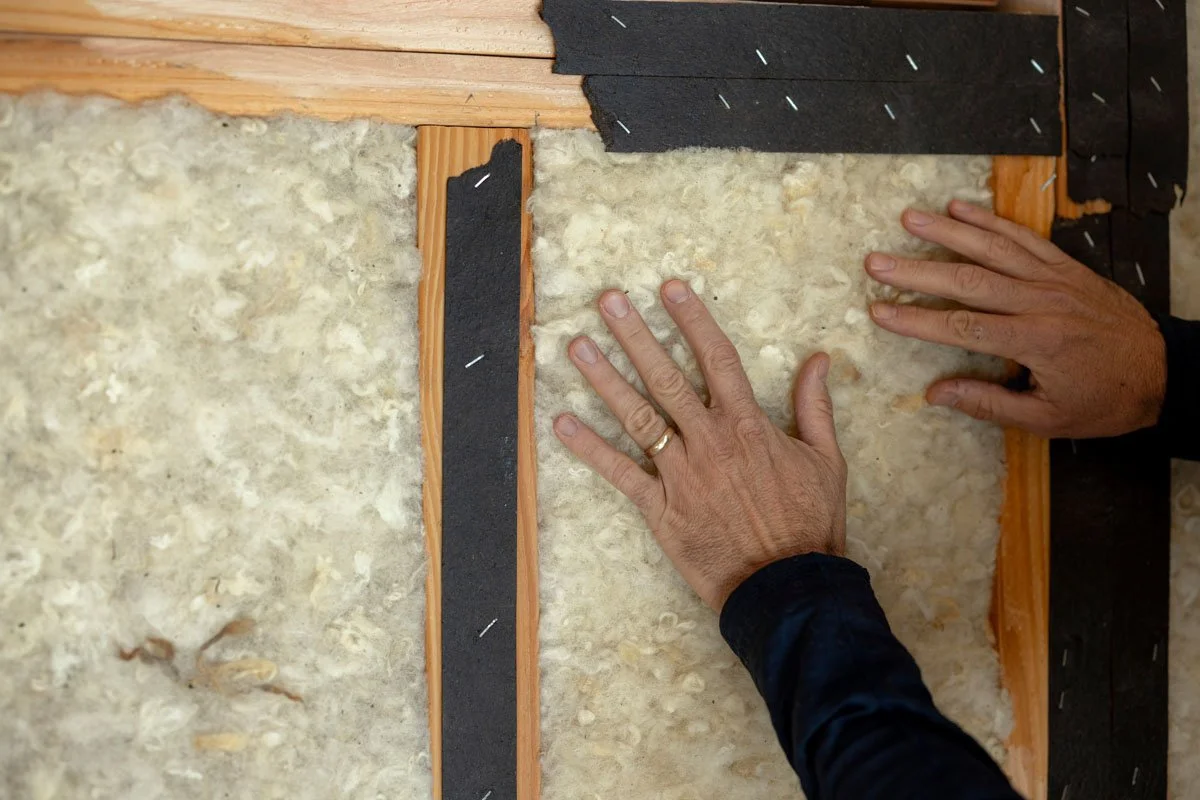
Mark sits down with Andrew Legge of Havelock Wool for a conversation that starts with sheep and ends in the walls of a healthier home. Andrew shares how a New Zealand idea turned into a fast-growing insulation company in the U.S., why builders are slow to change, and what makes wool such a powerhouse for sound, air quality, and performance. It is smart, surprising, a little crunchy in the best way, and proof that sometimes the best building product has been standing in a pasture the whole time.
Listen to the full episode:


About Andrew Legge
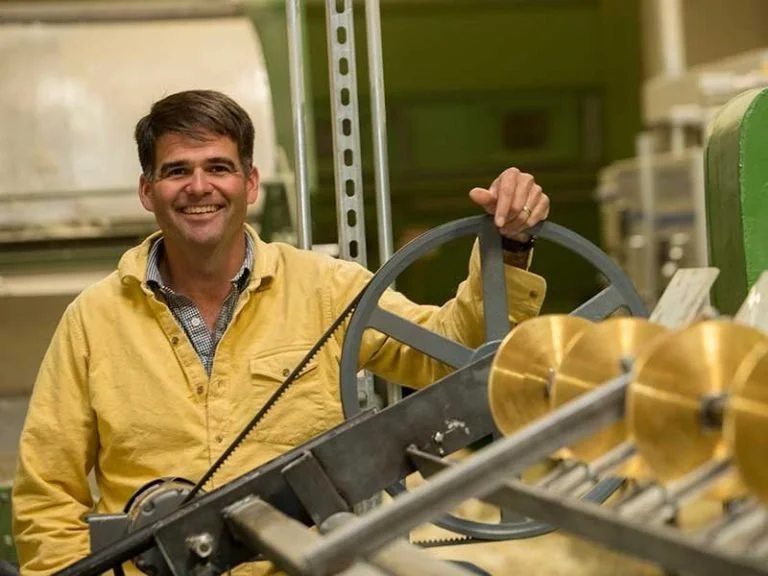
Andrew founded Havelock Wool to redefine the built environment by introducing sustainable, high-performance insulation solutions. His passion for natural materials and all things New Zealand—where the company sources its premium wool—drives his commitment to sustainability and innovation. With a deep belief in biophilic design, Andrew aims to challenge an industry known for excessive waste by promoting environmentally conscious practices that improve homes and lives.
Resources:
-
Andrew Legge 00:04
The installers, they were really the major gatekeeper, and those guys really hate change. And so what we've learned is, if you show up on a job site or in a meeting and you say, Hey, I've got this really cool new product, and it installs similarly to what you're using. Now that's a very short conversation today
Mark D. Williams 00:30
in the cures builder podcast, we had Andrew leg Ian from Havelock wool, and is an awesome episode. If you've ever seen a sheep, you know what's in the walls of your home, or what should be into the walls in your homes? Really, we talk a lot about how you take a New Zealand idea of all this wool that we have in New Zealand, start a factory in Reno and get into the biggest market, a 15 billion, soon to be $17 billion market in the United States, and insulation. And Andrew really dives into a lot of the why, as well as the what, how you do it. And really, at the end, they've got a brand new product that they're launching that you really are going to want. Going to want to stay around. We're going to put it in MISA house. And without further ado, here is Andrew leggy from Havelock wool. Welcome to curious builder Podcast. I'm Mark Williams, your host today. I've got a West Coast West coaster. I almost said a kiwi, but that's close enough. Andrew leggy from near Reno, Nevada, and he owns and founded Havelock wool, which is a New Zealand natural wool fiber company that shears sheep to put insulation in your walls.
Andrew Legge 01:30
What's up? Andrew, not a lot happy to be here. Thanks for having me on.
Mark D. Williams 01:34
I am. I'm very intrigued at this episode because, as I was, first of all, your website is killer. I can't decide if it's I went to school in Australia, and I spent some time in New Zealand, and like the merino wool, I still have the stuff that I bought 20 some years ago. Wool is just bomber. Let's start with how in the world, I guess, where I got to come right out of the gates with this, how in the world is, there's no question that it's obviously sustainable. There's sheep. But like, the idea that you would, how does this idea happen, that you see all these, these sheared sheep, and you're like, oh, I should make insulation in homes out of this and not, like, straight to like, Hey, I should sell this and make sweaters. That's like, my one question. I'm just, like, fascinated, like, how did you get into putting sheep wool in homes?
Andrew Legge 02:21
Okay, thank you. Great question. Let's be right up front about it. It was not my idea. This is, in fact, been going on for hundreds, if not 1000s of years. You know, sheep have been around. They were originally domesticated about 10,000 years ago. Their fibers have been evolving in nature as insulators, right? They're protecting the animals from the elements, hot, cold, wet, dry. They do it. Does everything well. And guess what? They need a haircut. So when you find wool populations going back over time, like, literally, sorry to dork out, but like, all the way back to, like, Mesopotamia, you know you can find structures that had wool in the walls. And that is, frankly, as simple as sheep being sheared, the wool sitting there, needing a place to go, and it being applied to a wall and therefore insulating the structure. By no means was this our i Our idea. But you know, this is something that has been going on on a very small, small and localized scale around the world for quite some time, and not so much in the US. I have spent tons of time over the last 20 years in New Zealand. It's my favorite place on the planet. And truth be told, when I was leaving the finance profession, I wanted to do something more New Zealand centric, get involved in the New Zealand Inc conversation and my accent may or may not prove to be fairly valuable for taking these amazing, innovative ideas in New Zealand and introducing them to, you know, big markets like the US and so that was the original premise. I did not set out to be an insulation manufacturer. I just learned how to do it because I got obsessed with the idea like you, I still wear wool shirts that were my dad's, and at this point they're probably 50 years old. It's an incredible high integrity fiber that kind of checks all the boxes as an insulator. And so about 12 years ago, we thought we'd give it a go, and frankly, we're still trying to figure it out.
Mark D. Williams 04:25
So walk me through this. So you're down in New Zealand, someone was already doing this at some small scale, in residence. Like, what was the impetus to, like, like, why make a business out of this? Because you were looking for other businesses too while you're down there.
Andrew Legge 04:38
Sounds Yes. So it just stuck. You know, it wasn't like I went to a and it was like, hey, this sounds like an interesting idea. Let's go do it. I actually built a house in New Zealand in 2009 and myself at the time, like many people now, I had no idea what the insulation was going to be. And guess what? It was wool. I. So that was sort of the initial start. And then, you know, New Zealand is a really friendly and fun and small place, so it's pretty easy to work your way into conversations. And I've got a lucky to have a pretty good friend network down there, and people knew I was nosing around looking for something interesting. And so I got introduced to a lot of people, and some of them wanted to do something with wool insulation on a broader scale in the US. And so that's where the conversation started. But it took two years for us to actually launch a business and give it a real go. And so it just was one of these things that at the time I was kind of living in New Zealand, and and when we actually made our way back to the US, I just started talking to friends in the space. You know, we all have friends that are builders or architects and and, or involved in real estate in some way. And I just, I love all that stuff. And so I just couldn't stop engaging in the conversation, particularly because, you know, we're not in the business of speaking negatively about the competition. But let's face it, there's some pretty low integrity stuff in the insulation space. And so
Mark D. Williams 06:09
when you look at like, profit margin, it's like, for instance, you like, I would imagine, so like fiberglass, relatively speaking, is pretty inexpensive. The majority of the of the insulation, to my knowledge, is it is fiberglass insulation of some sort of another, correct me, if I'm wrong. So maybe this is the audience, okay, when I think of insulation, I think of basically the three, four, and I'd love you to rank, like, the tiers of, you know, maybe expense, or, like, what the market position is. So like, you have, obviously fiberglass buying away has got to be number one. Is that true in terms of quantity,
Andrew Legge 06:43
you broke up a little bit, but I think you said that fiberglass is sort of the cheapest in the market. And if that is what you said, that's 100% true. Yeah, yeah, cellulose is down there too. You know, they're sort of, if you think about a spectrum of cost, I'd put fiberglass and cellulose on the bottom, and I'd put closed cell, foam and wool near the top. Now, to be honest, we've never been a multiple of whatever that box is. We've just been on the upper end of the cost. But we always knew we were going to be selling a higher end product. But we also knew that we had a better product. We just didn't, yeah.
Mark D. Williams 07:17
I mean, well, I love that. I mean, obviously it practically writes itself, the idea that, like, obviously, it's sustainable, right? It's growing continually. So I like that. I mean, most of the cost I would imagine is, you know, in shipping. And I don't know how you would hear it together, that'll come up later in the podcast. But I'm kind of curious of, how is there this much? Is there enough to sustain a market like the US, like, could it even be a major player in terms of supply. Because I think, of like, what percentage of the sheep that are being sheared in New Zealand, which I remember when I was there, there's some crazy stat there was, like, what 10 sheep per person, or just some astronomical number of the number of sheep specifically, but like, there's obviously sheep all over the world. I mean, you could obviously continue to get, you know, I assume, if a sheep is in New Zealand, or sheep is in the US, is the wool quality the same? Or is that not true
Andrew Legge 08:03
or close enough? No good question. It can vary quite a bit. But really, what it gets down to is the scouring capacity, which is that, which is the cleaning and the Kiwis are arguably the best in the world at cleaning wool. So there's a couple things going on here. One, it's hugely pastoral, as you know, because you've been there. And so they're walking around eating grass fed by rainfall, and that grass is fairly clean, so they're not picking up tons of stuff in their wool. So for one, they're starting from a better base, whereby there's not all sorts of stuff that needs to come out of that in the scouring process. And so to take a long story, and make it really short, the leftover from scouring is called vegetable matter, or VM in the US, where we're not that good at scouring, you might finish a scouring run and have 1% VM left over in the wool. In New Zealand, we are 0.1% or less. So the delta is 10x right? It's real when you're looking at those things. And basically what that means is we can then have a lot of stuff in our machinery if we're using us wool, because we're not that good at scouring. But I will tell you, I mean, this is real time. I was just in New Zealand for all of February, and a lot of those discussions were around, what could we actually do to help with us wool and scouring. And it seems crazy. There's some wool that's actually been sent to New Zealand to be scoured, and it's coming back to us, and hopefully we're going to run it, and we may start there, and that may be a way to crack this effort we all want to see happen, which is, you know, more use of us wool here in the US for insulation and acoustic panels and, you know, everything that we're kind of getting ourselves into.
Mark D. Williams 09:48
So more just just curious about, kind of like a, you know, when a cow gets slaughtered, you know, the different cuts of meat where they go. So when a sheer, when a sheep gets sheared, what percentage of it is going to black? Gets, and sweaters and all the things we traditionally like rugs. I mean, we're what percent is going to that and, like, how much is it just the leftover that is the wool is either not a high enough quality or whatever that this is like, leftover that would either be chucked away or non usable, or are you actually taken away from stuff that would normally go to, say, other uses of wool?
Andrew Legge 10:21
Yeah, really good question. So very simplistically, wool kind of runs on a micron level. And you know, if you're wearing it as a base layer, when you're, you know, skiing or running or exercising or whatever, you're probably wearing something in the realm of 16 to 19 micron it's quite soft. That's merino wool that can sit on your skin, and you'll be really comfortable. We're up around 3436 micron, which is coarse wool. That's what you see all those white coats walking around on the countryside in New Zealand that they are grow. It's a Romney type breed, and they are growing that coarse wool, which is higher micron. And then there's varying usage of that insulation tends to be the cheapest, which would be on the underside or the belly of the animal. Stuff that lives up on the on the back would might be finding its way into carpet or something of a little bit higher value than insulation. But you know, as we take up market share, there's only so much of that belly wool, and so we have to start using higher quality wool as well. And there's a whole monster conversation going on here with farmers needing more money, which means that we need to pay more for wool, which means we have to do a better job educating on this end as to why it's worth using. And so, you know, these are all the things and the nuances, and frankly, the fun of what we do all day, every day.
Mark D. Williams 11:40
I mean, we're doing this. We're doing a home right now in Minneapolis called Misa, who's and I've been building for 22 years, and the house is all based on wellness. And so I've never, you know, it's a big part of my personal life, and I've been really fortunate to try to come up with this concept. Misa means cozy and Swedish, and the house ends up being extremely International, like I'm right now, my marketing team is putting together little flags for like our tiles from Morocco. Actually, our appliances are Fisher Paykel from New Zealand. Oh, I love their I wish I had had that. I wish I had met you a year ago. Because, for sure, shooting, if I knew I could put sheep's wool into my home, I would have it. Because, you know, there's a lot of similarities on the website, we use rock wool, and we, and I think rock wool is a great product, and so, and I know even on your website, a lot of it's about education. Like, obviously they have great fire suppression. You even acknowledge that in one of your blogs about what? Yeah, I've learned a lot about insulation the last couple years. Because there's no one product that's great for the perfect for everything. Like, I think it's a little bit like, belt and suspenders, or a little bit, like, if you're a doctor, you know for surgery, there's different kinds of knives and different kinds of tools for different things. And so one thing I like on Misa, who's I really spray foam is awesome for air sealing and for really difficult spaces. But I don't I made the choice that all the off gassing that it does, I didn't want that in our home, even during the process, even though in a perfect setting, it's not going to be trapped. But I really wanted to do whatever I could to be sort of more naturalistic. But also I care about quality, too. And like I love sound deadening, and I know that you're the Havelock wool has the same principles, right? It's very It absorbs sound. But I like what you said. Tell us a little bit about the difference between muffling and quiet. Because I experienced it. I was blown away. I my whole home was full of rock wall, the interior walls, all the walls, and people now are just starting to get more familiar with Rockwell, especially in the luxury market, even though it's been around for forever. But it was interesting when I walked into the house without the sheetrock on. It honestly felt like I was I scuba dive. It felt like I was underwater, like it had this, like it felt it felt like air pressure. I felt like a I can't even describe it in words. It just felt different. Now, when the sheetrock comes back on, you get that reverberation. But how would sheep's wool have been different?
Andrew Legge 13:47
It would have been very similar. And what you're getting into is noise reduction coefficients, and that absorption of that sound and it just kills it right to like it makes it go away entirely. Ian,
Mark D. Williams 14:04
it's time to talk about contractor coalition summit at the beginning of May. We are going to be in Denver, Colorado for our first contractor coalition meetup. We're going to do a standalone event in the middle of September in Minneapolis. It's a one day crash court, a much less reduced fee. Tickets are available now if you want that goal here is it's a significant investment to spend a three four days away from your business and your family, plus just the expense of attending the conference. We wanted to create an event that was just a one day Crash Course. You can find all those details at contractor, coalition summit.com we also, in November, have our three day tail end of the year, which is going to be in Charlotte, South Carolina. So if you're interested in any of those four of events, please head to contractor coalition summit.com. DM me for any information or email me Mark at MD Williams homes.com and thanks for tuning
Andrew Legge 14:57
in if you come into our lobby, which. Frankly, is old school and ugly and full of tile, and it kind of looks like nightclub in Miami and nearly 70s, but it's loud, and it makes a lot of noise. And so we do this all the time. When people come in, we sort of say, you know, make some noise. You know, speak loud, loudly and and then follow me in here, and we'll go into the conference room, which I have laid up with our acoustic panels. It's not like a fully padded room, but we did put more than you might in the average conference room, just to kind of overdo it. And I'm telling you, it's crazy. It has exactly that same effect that you're talking about when you walk in there and that insulation is exposed, and that's the idea, and that's why we're making these acoustic panels, because you can do that, because rightfully, not surprisingly, as you've said, once that, once that wallboard goes up, you're going to get that echo back. And so one way to keep that going, of course, it's great to have that sound deadening in the cavity to help from whatever's going on on the exterior, but then to bring that back in and that that comfort and that relaxation and that completely different feel that sound panels create, that's why we created this thing to go on the exposed wall. So I'm totally with you. It's amazing. We I put them in my son's classroom. It's incredible. You know what it's done for the sound and the comfort. And then, you know, there's this passive filtration element of wool, because the amino acids are bonding with harmful chemicals like formaldehyde, nitrogen oxide and sulfur dioxide. So it really is this magical fiber, which is so
Mark D. Williams 16:34
tell me a little bit more about that. Because that I was really intrigued about that I read a stat like, again, thinking about insulation. My dad built homes in the 80s and 90s. And, you know, like a lot of builders, the code in certain parts of the country wasn't, it didn't yield the best, you know, they would put fiberglass up next to a concrete wall and then seal it with plastic and then, you know, yeah, no, right? Well, that's just what you did back in the 80s. And Ian, yeah, that was the code. That was, you still do that, which, that's insane. That's in today's world that you would That's insanity to me. That's literally
Andrew Legge 17:03
completely agree. We're not talking about where that is the case, but we've run
Mark D. Williams 17:07
into that. I mean, that state needs to check their building code. But anyway, even if builders knew it like the state, the state code dictated you had to do a bad practice, which is pretty wild. Actually it is. So anyway, they knew that. And so that obviously is a thing of the past. It's no longer here. But the only thing I can relate it to is, like, obviously, you have, like, a Styrofoam, which isn't gonna usually do that. I mean, although some styrofoams Obviously, open cell can get wet, but closed cell can't, you know, rock will, will can breathe through the thing that was interesting about natural wool, I think I said something like, it drew like, 33% more moisture in the air. And we've all felt like wool. Like, I know I'm a mountaineer and I love downhill skiing. Like, one of the things that's great about wool, like, you never really want to do a sport, especially in cold climates with cotton, because it gets wet and it gets clammy and it can lead to hypothermic conditions. But wool, I mean, you look at Sir Edmund Hillary climbing Mount Everest, like, they all wore wool, like, wool has been around forever for, you know, the lanolin protection and everything else it can do but walk me through. So you're it's this, your product is in a wall cavity. How does it dry? If it's absorbing more moisture, how does it get dry?
Andrew Legge 18:09
Again? Well, it's again, you know, sort of what's going on in that ambient air, right? You know, if you're living in a in a humid state where over the winter or the summer, there's more humidity, and then it dries out in the winter, wool is going to perform with that, right? So if you're in the wrong place against a primary air barrier, you can have those problems like you just cited, right? So you want to make sure there's an escape path. So we get partnered quite a bit with the proclima products intello plus. So you've got that air tightness and the efficiency of it, but you also are sure to have that escape path, because that moisture buildup is inevitable. And then what wool does? You know? If you look at a wool fiber under a microscope, you're going to see a pretty cool thing happening with the five follicles, which is where a lot of the magic happens, and that's essentially its ability to take moisture, wick it, move it to the inside of the fiber, hold it, and then when that ambient air changes, it can push it back out. And then, all the while, it's a keratin so it's protein based like your fingernail, so it's not going to support the growth of mold, so it literally is this like, wildly high integrity fiber that, you know, as I said earlier, was kind of evolved as an insulator, and therefore, I think it puts it 1000s of years ahead of r, d departments.
Mark D. Williams 19:31
I think, I mean, I think you're, you know, to be curious to see, you know, we can talk a little bit about sales and volume and dollar amounts and all that, kind of just trying to understand, well, for one thing, I assume it's less than 1% of the US market, right? It's got to be our goal is to get about half a percent. Okay, yeah, so I knew maybe less, maybe less. And so where I was going with this question is, I was talking to Harvey that we were working with them potentially as a sauna company sponsor. They're out of Finland. Ian and their US bases out of Texas. And because our Misa, who's home, is getting a lot of national attention, we have like, 32 brand partners on the project. And really, because it's prioritizing wellness, and I feel like in the US, I mean, I'm sure you see it on the west coast, but we see it here. I mean, think of like how, you know, like na drink explosions over the last couple years and but just like all kinds of different things, and they were taught, you know, spas and saunas have obviously, if they're not dominating your fee for the last three years, you must not have social media, because they're everywhere. And there's more. There's a lot more coming. Like, those are just, those are not, those are old things that are just sort of being, sort of re celebrated in the US market. And I was really telling that this lady from Finland was just saying. I said, Well, why do you want to be why is the thermal culture industry so fascinating to the US? I feel like all I'm doing is getting blasted by contrast therapy. And she said, Well, each part of the world has a deep history in thermal culture, like Japan has their thermal hot springs. And you've got, you know, the Russian bath houses, or you've got, you know, you go to Finland, of course, the sauna and, you know, Iceland and so like, but she's like, the US is a very young country. The Native Americans had, you know, the sweat lodges and things like that. But really, as a country, we're pretty young. And so the reason that we are gravitating towards thermal culture so strongly is it's kind of a human thing, and we are just late to the party culturally. And so she talked about, there's a stat I read the other day. I've quoted it many times, that the wellness industry in the wellness industry in the United States is 1.9 trillion, and accompanies way more than just home building. It's everything, and it's expected to double in the next nine years. That's 3.6 trillion. Where I'm going with this is, I think, the number of people that have reached out to me because of our marketing around Misa, who's being wellness. I've had a number of people that have Lyme disease, people that have mold, allergies, a lot of people, there's not products, until you suffer from these. And I to be clear, I don't, but I'm, I'm very interested in what they tell me. Like EMF frequencies, our industry is now starting to wake up and ask more questions. It's still a small percent, one or 2% of the people are asking me this, but it's going to grow a lot more. And I think of a like, I just met two people, maybe four or five months ago, where they wanted to build a home that was very health for because wife had a terrible Lyme disease. But now knowing that you could go with natural insulation for the whole house being wool, like I bet, that would be music to her ears. So I think, anyway, I think you're at the right place, the right time in the US, because this market is exploding with anything that has to do with health.
Andrew Legge 22:24
So one, I hope you're right. I think we thought we were further along when we started 11 years ago. But, you know, it's a it's a function of, make your own luck in this case, and that's just figure out how to hang around. But we, for sure, have you know, enjoyed watching people show up and buy our product every single day, and then what that's meant for us. But one like, one thing that we're incredibly proud of is we get calls from the chemically sensitive crew all the time, and more often than not, they've tried some other insulation medium, and they haven't been able to tolerate it. And so, you know, we quickly put a sample in the mail and we send it off to them, and we have not yet, knock on wood, we have not yet not become the insulation of choice for people in that obviously really troubling space. So again, it's just kind of the the power of will, and it doing what it does, which is why we do what we do. How?
Mark D. Williams 23:23
Um, let's do a little time out here. I want to talk a little bit about business stuff, but let's go back a little bit. How did you sort of be, what was your pathway to journey? You know, big part of what I do on the podcast is talking to entrepreneurs, like, how does the business work? Like this is fascinating. We've we've talked mostly about the what and a little bit about the why. But, you know, you travel a lot internationally. It sounds like you mentioned that you lived in in Saigon for five years, so Ho Chi, Minh City. Now, what were you in? Was that during post Vietnam where, like, walk us through some of your world travels, because you're pretty well traveled.
Andrew Legge 23:54
Guy, yeah. I mean, you know, I grew up outside New York City, so, you know, after undergrad, I went there and thought, Okay, I, you know, I'll just work and do what everyone else does. And that was incredibly boring. And that led to San Francisco, where I felt like I could have a job, but also recreate, you know, pretty hard on the weekends, which is what I really like to do. So that was great. That lasted for a little while. And then, actually, I met my wife, and she had a furniture business. She was doing her manufacturing in Asia. I'm talking really fast for a reason, because this is a long story. Long story. I don't want to put anybody to sleep, but that's what led us to Saigon, and I was just kind of doing some fun stuff, and then caught on with a with a really interesting group of guys. Their firm is called Dragon capital, and we were kind of doing cool stuff to open the capital markets in the country, and we had a shareholder register of some of the greatest institutions from around the world, and we just had fun making that, that investment case, and telling that story, but that was a profession that I was really trying to get out of, and that kind of just led me to ultimately resigning and in a great way, and staying involved with the firm for another almost 10 years. Years, but then, you know, having the time and the interest and maybe a little bit of experience to go piling into this New Zealand thing that I was super excited about after we had, you know, built a house there and started to learn about what was going on in the country. And so what started as an effort to just kind of take this cool innovation, great marketing, great stories, and take them to a bigger audience in the US that aligned well with my accent, that's kind of how this started. And then it turned into, wow, I guess we're going to go manufacture this stuff on our own. And then we went through every single trial and tribulation you can think of by starting with carding machines, which are hundreds of years old in the technology. And then you're basically aligning the fibers, creating a film, cross slapping it, and then needle punching it, which is quite slow. And then we learned the hard way that the insulation installer community doesn't like products that are any different than what you're used to. That took us a couple years to get around. And then we finally, quite recently, went out and bought a real piece of non woven processing equipment in Italy. And then we that takes about two years to arrive. So we set that up in
Mark D. Williams 26:19
middle of 24 and I'm sorry, what does this machine do?
Andrew Legge 26:22
That's what makes our insulation bats. And
Mark D. Williams 26:26
it does, how did you do it? How did you do it? Before that, we
Andrew Legge 26:28
were doing it through that carding and needle punching process, which is, you know, when you start to get into entrepreneurial discussions and running a business, particularly a production type business, you know, you spend a lot of time on bottlenecks, and that needle punch is a monster bottleneck. You can't go faster there and then where. What we really learned the hard way is the idea was to just say, Okay, we're stuck with this speed, but we'll just run the machines longer when the demand curve starts to tell us that we need to. Well, when you're running old machines. Guess what happens when you run them longer, they break more, and so when those machines break more because you're asking them to do more, you introduce a whole set of headaches that you just didn't foresee.
Mark D. Williams 27:22
When it comes to quality, craftsmanship and performance, Pella sets the standard whether you're building custom homes or designing a timeless space. Pella offers innovative window and door solutions that blend beauty and efficiency with showrooms and experts around the country. Pella makes it easy to find the perfect fit for your next project and their team to support it. Build with confidence. Build with Pella. Visit pella.com to explore products and connect with your local rep. Today. For more information, you can listen to episode one or listen to episode 109 where we bring on Pella owners and founders at Pella Northland, as well as their innovative team behind the steady set innovation. So you're in New Zealand, you have this great idea, and you're thinking, hey, I love this wall, all the potential for it. You're probably on this road to discovery. Of course, you know, trial and error, 100 different things. But walk us back to the beginning. How does someone set up a factory? So you have a factory in Reno, walk us a little bit through that. I mean, most of the listeners are builders, architects, designers, and we've obviously had some other companies on that have larger but I think it's kind of interesting. How do you start a manufacturing facility that doesn't seem like a light lift by any means. And, like, how did you know what the market potential was in terms of making money in margin? Because I don't think of insulation as a is it a high margin business? Like, why? Like, how did you when you thought of a when you thought of a business model? Like, how did you have the guts to be like, Hey, we're going to make this go. Like, where was the opportunity?
Andrew Legge 28:46
The opportunity was the comfort level. So it started with kind of business school box checking exercise of this ginormous $15 billion market at the time, roughly right, forecasted to be about 15. I think we're at 17 and rising now. And so it was this general, very basic view of like, wow, these products are all garbage. I talked to a lot of architects and builder friends and said, Hey, we're thinking about doing something with wool. Would that be interesting? And that went on for a couple of years. We even got to some installation installers who said, Yeah, new, innovative, high quality products would be great to introduce into the market. And so that was kind of where we built our comfort level. And then, frankly, I like to live at the upper end of the market, and I'm sort of comfortable communicating value to people. I'm not interested in competing on volume and razor thin margins. There's other companies out there that do that very well. So we knew we were in for a long conversation. And frankly, we missed the market a bit because we thought that there were people out there that, you know, we could sort of explain that this was an option to and then they would just sort of take it on, because insulation is 1.8% of construction costs. And, you know, it's a little bit naive to say it's a rounding error to use. A better product, but against a construction budget, it kind of is. And then we kind of said, okay, like there's this gargantuan market, and we're after a quarter to half a percent, we should be able to achieve that. And then if you look at the way that we make our product, you want to talk about sustainable so our 20 foot containers have 20,000 kg in them. That's probably some of the best logistics in the world because of the way that
Mark D. Williams 30:27
will because it can compress. Yeah, yeah.
Andrew Legge 30:31
We use a 600 ton press in New Zealand, so it's maximum density in that 20 foot box, and then in our facility,
Mark D. Williams 30:41
it'd be like, a jack in the box when you open it, like, if it would just like, it'd be like, the never ending, like, it's like, you know, it's like when you put a Dawn dish soap in your kid's bath, and it like, just, like, it just never stops bubbling. That'd be like, Havelock wool, you know, the wool that never stops. And it'd be
Andrew Legge 30:59
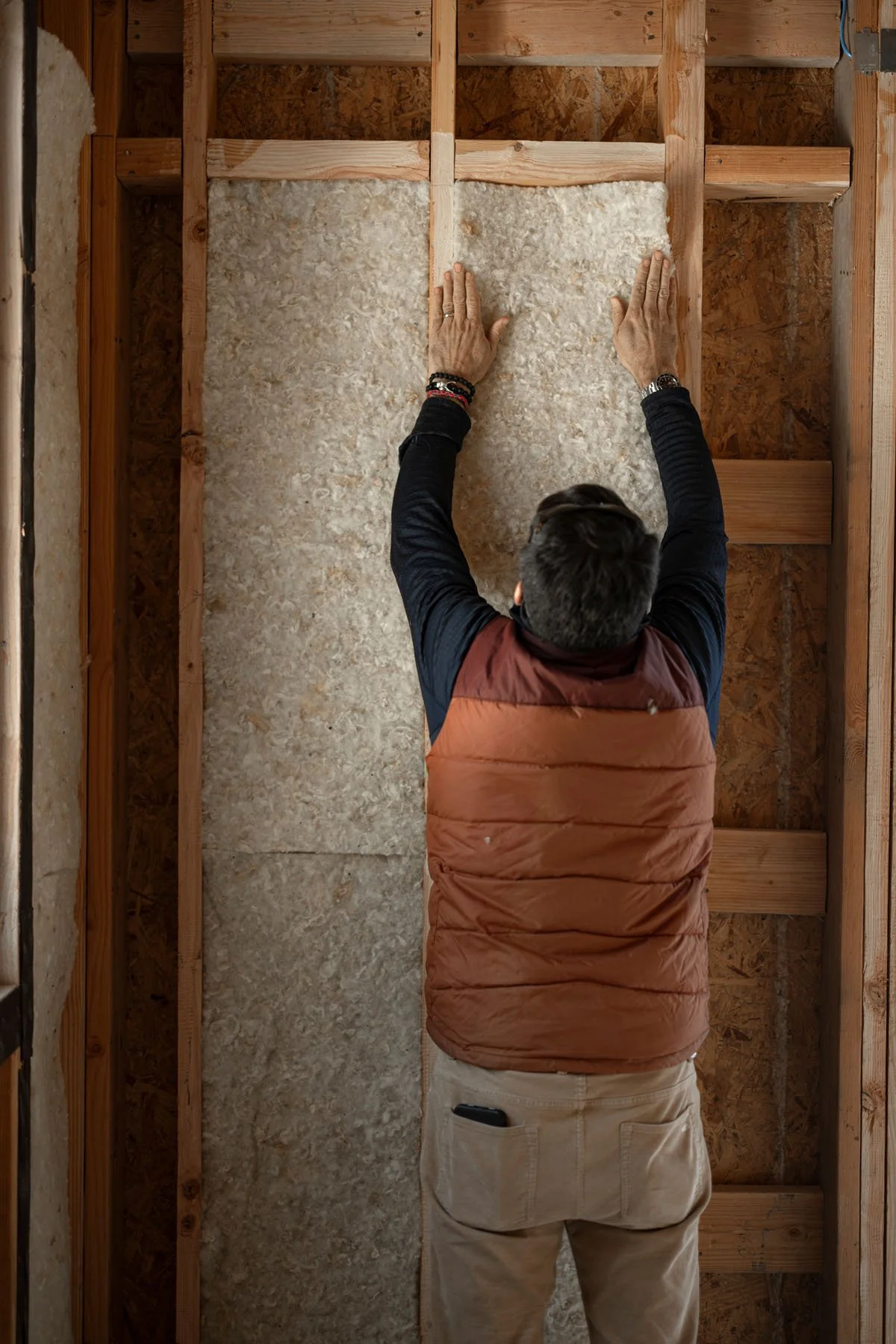
like, literally, and like when you cut the straps, we used to cut the straps off with a grinder. They're metal straps. They'll fly 50 feet across the factory. It obviously didn't take us long to realize we needed to be a little more careful with that. It's kind of amazing, the way that works. And then and then with the manufacturing, it's, it's basically electric motors. So the amount of power we use is de minimis. I've actually put our power bill on Instagram before, just for fun. So in terms of making the product, it's not expensive. And so ultimately, what you're paying for is the fiber, right? And so we thought, Great, let's just go communicate, and we'll get the small number of people that we want to use our product to, we'll be able to convince them that it's worth the extra money. And so here's what we always knew, or to some degree, we thought we knew, but part of there was part of this that we that was the the hard part of the learning curve. If you say you want half a percent of the market, right? That's half of a house for every 100 that gets built, right? And so for us to be able to insulate half of a house is the easiest thing in the world. We can do that all day long, but to go out and have 100 conversations every time you want half a house, that was what we missed, and we never thought that we would need to become a direct to consumer manufacturer. But what happened was, as we started out, we were having lots of conversations with friends and family, and they were using our products every time. And then we were also following the traditional channels to market, which would be builders and architects and installation installers, and we were having this great reception, and all these smiles and back slapping. And then guess how much they used our product, zero. Why? And so, I think that, you know, we call builders, architects and installers, the trade and so. And then we obviously break that out and segment it, and we have, you know, our favorites, and you know, that's a whole separate conversation. But if you keep the trade as the trade, I think it's fairly easy to say that the trade doesn't like change very much. And so we would literally have these wonderful conversations with architects, go to lunch and learns, oh my god, this is amazing. This is one of the coolest things I've seen in five years. And then we, like, great, let us know about projects, and we would never hear anything. And of course, we would follow up. I think you and your audience know all too well about builders and new products and, like, we would get better traction there than anywhere else, but where it's also a big job to keep your client happy. And, you know, introducing things from left field isn't always what you want to be doing. And then the installers, they were really the major gatekeeper. And those guys really hate change. And so what we've learned is, if you show up on a job site, I mean, I'm sort of, you know, creating a scenario out of thin, thin air, if you show up at a job site or in a meeting and you say, Hey, I've got this really cool new product. And it installs similarly to what you're using. Now that's a very short conversation. And what we've learned by buying all of our new gear is that now we can show up and say, Hey, we've got this really cool new product. These are the attributes, and it installs exactly like what you're using now, then you can get a lot further in that conversation. And that's what's happened to us in the last year and a half, maybe two years, because of the new machinery that we bought. And that's why I think we're seeing everything change, and it only took us eight years to get there.
Mark D. Williams 34:39
I mean, honestly, I think you're gonna explode. I mean, I mean, I'm gonna try it. I think it's really fascinating. You know, we're building, I want to build a cabin, so maybe we'll try it there. But the point, the point being, is, it's actually kind of a very Scandinavian just like a square box rectangle. I mean, you'd see them all over New Zealand too, from a sort of a minimalistic box. It's pretty easy to. Insulation as well. I like it on the website. It was pretty funny. Like, there was a comment about, like, something like, it was almost fun to extol. You still work. But like, the idea, like, you know, everyone has been around insulation where it's like itchy, and if you bet you know, it's like fiberglass in the air and all that kind of stuff. But it's like, I love the idea that, like, someone would be like touching. I feel like you could have a social media like Bonanza with your product, like, you could sleep on it, you could put your pillow, you could make a sweater out of it. Like, I just love the marketing potential. I would have been, yeah, I would have been on your marketing team just saying, like, oh, the whole world will have this a half a percent, no problem. But yeah, I mean, you're right. I mean, anytime you, you meet with somebody, and they, you know, that initial inertia, that surge of, like, Yeah, that's cool, but it's there is logistics. And you're right. I mean, even when we even our misuse project, we had to go directly to manufacturer. We had to get a drop shipped on a 16 Wheeler because our insulator refused to do what I want to do. And so sometimes the builder has to, and you know, not every builder is probably as familiar with sort of brand work or Ambassador work as is I've sort of learned over the last three, four years. But like, if someone really is passionate about it, like, you can figure it out. I think the problem is, is that most builders also don't want to change. You know, they they want to do their thing. Now, you know, if you're curious about changing, if you want to innovate, like, I kind of feel like, if you're not innovating, you're sort of dying. And so, like, I think it's, I love new products and I love exploring. And, yeah, not every product you try is going to be a home run. That's okay. I think you need to be transparent with your clients. Or sometimes, you know, I don't know the price point, on, on, on compared to traditional. But, like, I would probably go into a client and say, Hey, this is something we want to try. It's a it's an education moment. I think the real question is is, can you get builders? Are they willing to educate their client? And that is a rare person to your point, because there's only so many. I mean, it's not like your client is going to you're already trying to a sell the client, and then once you get them in, like, there's a lot of decisions that we as home builders make that our clients are not aware of. Like, they trust us. We have a great reputation, but they're not asking me, like, hey, where do you source your two by fours from, or your two by sixes from? Like, they're just like, No, you're my like, they want to know. The pretty stuff they're asking that is asking the designer, like, hey, where does our chandelier come from? Like, and most people, at least in carpet, would know that, hey, wool, wool carpet and wool rugs are more expensive than polyester. They're also, if they even have a shred of knowledge, they're also, like, it's also probably going to last longer, but it's also more expensive. So they usually know some of that. And so anyway, I think you have a lot going for you, and I'm kind of excited to see where you go with it.
Andrew Legge 37:26
Well, I appreciate that. You know, there's, there's one thing that that we it's like sort of a mantra that took us a long time to arrive at, and it's actually been really fun to to kind of get the gears turning with my builder buddies. And it's, it's something that just sort of really resonates with us, which is a very simple concept or premise, like, why do we build structures to protect us from the elements? Like, ultimately, that's what we're doing, right? And so we've been very comfortable asking the question for a long time, why are we taking a low integrity, cheap fiber and jamming it in that protective layer, which is the envelope, right, versus spending a little bit more for a higher integrity material, right? That doesn't necessarily just need to be wool, but like a better material that's going to perform better in that protective layer. And I think, frankly, that conversation is getting much more of the attention that it deserves in today's building. And I think that's great, whether that includes wool or not. Frankly, doesn't matter. It just means that we're able to think intelligently about the importance of the envelope and how we construct it, and if it happens to be, well, that's great for us, but at least engaging in that conversation and helping people make informed decisions, because, you know, you know, way better than we do that people building a Home like very rarely have they done it before. And so they're learning as they go. They're relying heavily on their architect or their builder or both. And, you know, there's a lot of naivete, and there's a lot of, you know, playbooks that get pushed on people. And so one of the things that we really enjoy doing is educating and helping people make informed decisions. And we end up quite a bit with all the necessary caveats, because we're not building scientists, but we end up quite a bit in that conversation about high performance building. And you know what the best way to build the envelope is. And then, of course, we're happy to make referrals to people who do know more than we do, but I think that that's been a really fun evolution in the space to see this move slow, though it is, and not mass market, but at least this move into thinking about better materials and how we can employ them in the space
Mark D. Williams 39:56
from you know, as an owner, where do you think. Your time is best spent in terms of, like, a lot of us. I mean, in the beginning, you were drinking through a fire hose. You were the Swiss Army knife. You're MacGyver, right? But so like, now you're 11 years in what you know, what does your week look like if you were to do an audit on your time and say, Okay, here's my pain point. Here's what I can sort of defer to other people. I mean, you alluded to, like, maybe a marketing arm, or people that are basically making all these calls, because it's unsustainable for you to make every one of those calls. But how do you and then the third part is, is like, how are you reinvesting your time so it's the best return on investment of your own time?
Andrew Legge 40:33
Now? Yeah, great question. And I think that you know founders and entrepreneurs like you have to constantly ask yourself that, because it evolves. But if you if you're playing your core strengths, I mean, mine is definitely business development, product development, and thinking about ways to take this really cool fiber and do new and exciting things. An example of that is we're launching an air filter, which makes all the sense in the world that it should be made out of wool, and we're really excited about it, actually. That's that was super cool. It's pretty awesome. We just dribbled it out on Instagram yesterday. We're hoping to have it on our website in the next week or so. But for me, what I can tell you is that I've spent a lot of time sitting at my desk in the factory, and that is not the best use of my time, and so I'm working really hard to minimize that and put a great team in place that can do all of that without me, and that really gets down to production and the associated engineering, and we've got a great
Mark D. Williams 41:34
team for that. I'm looking at it right now that is so cool now that you talk about scalability.
Andrew Legge 41:44
Yeah, I mean, Mark, I've had that photo for like, six weeks. It has been so hard for me to not put that out, but the filters are actually sitting at our facility. They're ready to go. Truth be told, we're just waiting for the boxes that we're going to mail them in, but we're really excited about that, and we've partnered with some folks in New Zealand. It's their technology in the filter media that has been accepted by NASA and is on Artemis, because it does something that nothing else in the world does.
Mark D. Williams 42:18
Can I get some of these for me? So who's 100% Oh, dude. Because it's too late to put I can't undo the walls, and I'm happy with what I did. But this is just another way to sort of upgrade. How does it relate to, like, HEPA filters and all the other stuff. This is, like a pre filter.
Andrew Legge 42:35
Well, what you see there is just your sort of basic, you know, cold air return filter. What's going in? But like, we're just starting with the real basics, but we can get to four inches. We can get all the way into filtration in dedicated air purifiers, like we are just these guys have been doing it for a while, and we're doing it in partnership with their technology. But like, I think you're gonna see us run a pretty long way here. Well, what I
Mark D. Williams 43:03
love about it, you're creating multiple I mean, you've already got the acoustic panels I was gonna talk to you about that offline. I'm in a studio right here. I would love to get some Havelock sound panels in here so that one can see it. I just care package, yeah. Well, like the samples, I want to see some of this stuff. I mean, touching and feeling. There's something that's nice about things that about things that are tactile. I think one of the things that attracts so right now, I'm working with some investors, and they've done very well. And sometimes, when you're in financial service, well, this actually applies to you, because I don't know exactly, but you know you were doing capital, so you're raising money. Like, I think sometimes when people make a lot of money, it's black and white, it's spreadsheets and like, yes, it goes up, but like, there's not as much. Like, if you can't touch it and feel it, I think something not, there's not enough money in construction, honestly. But I think the one thing that construction does amazingly well, and architecture and building is like, it's a tangible thing. You can touch, feel, you can live in it. And I think a lot of times when people have been very successful in life, like, they're like, I want to build something that lasts. I want to touch I want, I would like my money to do something that I can either inhabit as a home or maybe an investment, like an apartment building or it gives place. And so like I've seen as I've reframed my narrative, as I engage with potential partners for things that I want to do where liquidity is needed, it seems that the number one driving factor is not the return on their money, and it's not it's usually they want to help me, which is wonderful that people feel that strong. Maybe I need a lot of help. Maybe that's it too. But then two is that they trust what we're going to do. But I think the biggest reason is that they can actually see their money create something that they're proud of. And I think how would you comment to that?
Andrew Legge 44:41
Well, I think that's an amazing thing for you to be aware of. And I think that there are groups of investors that kind of span, you know, all the way from being only return driven to and in fact, we've been through this. We haven't taken on any outside capital, and we've thought. About it at times, and in fact, we are now, but a space, as I've been through this journey as a founder, that you know, we saw a sort of triple bottom line, then we saw ESG, and what I've seen now, and I think it speaks to what you're talking about, particularly amongst the investment community, is impact. And the impact space. I'm not an expert on it by any stretch, but what I've seen there is really quite cool, because these are businesses that are making an impact, but you don't have to apologize for making a profit, right? And in some in these early stages of like, investing in sustainability and trying to feel good about what you were doing, it was almost like it would be bad to make money, and in fact, now it's totally fine, and of course, encouraged to make money. But if you're making an impact, that's the real driver. And there are impact conferences out there, there are impact investors that focus on the space, and I think that's kind of what you're referring to. Is like, show me the impact of the business, you know, tangible and otherwise. And that tends to be a take a an investment group that takes on a long term horizon, and you can really have some fun with that, because you're not sitting there, you know, with a fund on your back that needs you to perform over three to five years so they can sell it to the next investor. And so I really have enjoyed what little I've started to learn about the impact space over the last few years. And I completely agree with you that, you know, I still have a lot of friends in the space where it really is just about what's going on on paper, versus building something, and particularly building something that's going
Mark D. Williams 46:43
to last. What is there anything else you guys have in the works? I mean, this air filter thing, I think is going to be a game changer, because what I like about it is it's affordable. Everyone in the I mean, well, not everyone is going to build a new home or remodel. The fact that, I mean, literally any home that has a furnace has a filter in it. Plus, I mean, who knows what other other filters, if this is or not, if when this is successful, it's really unlimited. Because now, I mean, you could literally be known as like the you could be the filter company like that could be, you could actually just do that. I mean, the multiple on how that can grow is pretty because you have, you still have the same story about health and wellness and sustainability, but now you have something that costs like, 50 bucks, 100 bucks, 200 bucks, whatever it is, I assume that it probably also lasts longer. Or how does that relate to, you know, performance and things like that. Because people at some point are gonna be like, well, that's great, but I also need it to perform.
Andrew Legge 47:36
So here's one of the really cool things, right? And you know, I'm sure you know more about air filtration than I do, but it really gets down to probably not particle capture. Particle capture, like, let's really simplify it. It's particle capture, and then it's, it's system load, right? And so when you raise the MERV rating, which is more particle capture, you're also raising the pressure you're putting on the system, right? It's working harder because there's less air moving through there.
Mark D. Williams 48:06
And that's like your everyone's had, every builders had, like, their a coil freeze up because their homeowner doesn't clean their, you know, their furnace, and then it gets ice on it, and then, you know, that's a whole nice nightmare because, but basically, the whole point is your furnace is working so hard to cool. And turns out you just needed to get a new furnace filter, right.
Andrew Legge 48:24
So this there's some amazing advantages here in sustainability and carbon capture, but just on pure performance of the filter, you've got MERV 11 and Merv 13. That's delivering a MERV eight load on the system right, and that's sort of unprecedented. So if you look at that post that I put up yesterday, and you scan over one or two to the video, you'll see where there's like a car filter, and there's very little disruption in airflow. And then there is our product, which is the ecostatic technology, where, similar, the airflow is not disrupted. And then there's sort of the competitive filter dropped on, and the airflow goes away. And that's, I didn't
Mark D. Williams 49:14
think about car filters. Holy smokes, dude, you're gonna need, you're gonna need to triple the size of your factory if this filter thing goes work. I mean, this is, this could be the gold ticket right here.
Andrew Legge 49:24
Well, also, there's a whole nother play here, which is grease in industrial kitchens, and will does an incredible job of taking that out of the equation. So talk about protecting, you know, motors and airflow, when you can grab that grease and get it out of the equation. Like, it's like, to be totally honest, back to the original premise. Like, I've always wanted to have this platform that we could add other products on wool is something that has always grabbed my attention, but it's never been just about insulation, and very much so. Like, I think it's a. Basing that we offer that product. But if you think about the value of wool, it kind of stinks to shove it in a wall cavity. It deserves a front row seat. And you know, that's what we get out of the acoustics and and the acoustic panels and the passive filtration that comes with those guys. But now, yes, we're going right to it with these filters.
Mark D. Williams 50:20
Do you have to worry about, how does it work with patents? I mean, wool has been around forever. Is it the system in which you deliver it that gets the patent? How do you protect yourself from copycats? Or are there other are there other products? Are there other manufacturers doing this as well,
Andrew Legge 50:36
the filtration stuff that you're as enthusiastic as I am about that's all patented, yeah, the insulation and the acoustics are not, I don't know that they are patentable, right? And, you know, we're just people who enjoy making a great product. We don't want to get tied up in litigation, defending a patent. That's not what we're about.
Mark D. Williams 50:59
And you, I saw, I saw recently a press release, what is your involvement with Home Depot? Because it seems like you've you're selling into Home Depot. Are you selling in full bath? Because that's a pretty big move. What is that?
Andrew Legge 51:09
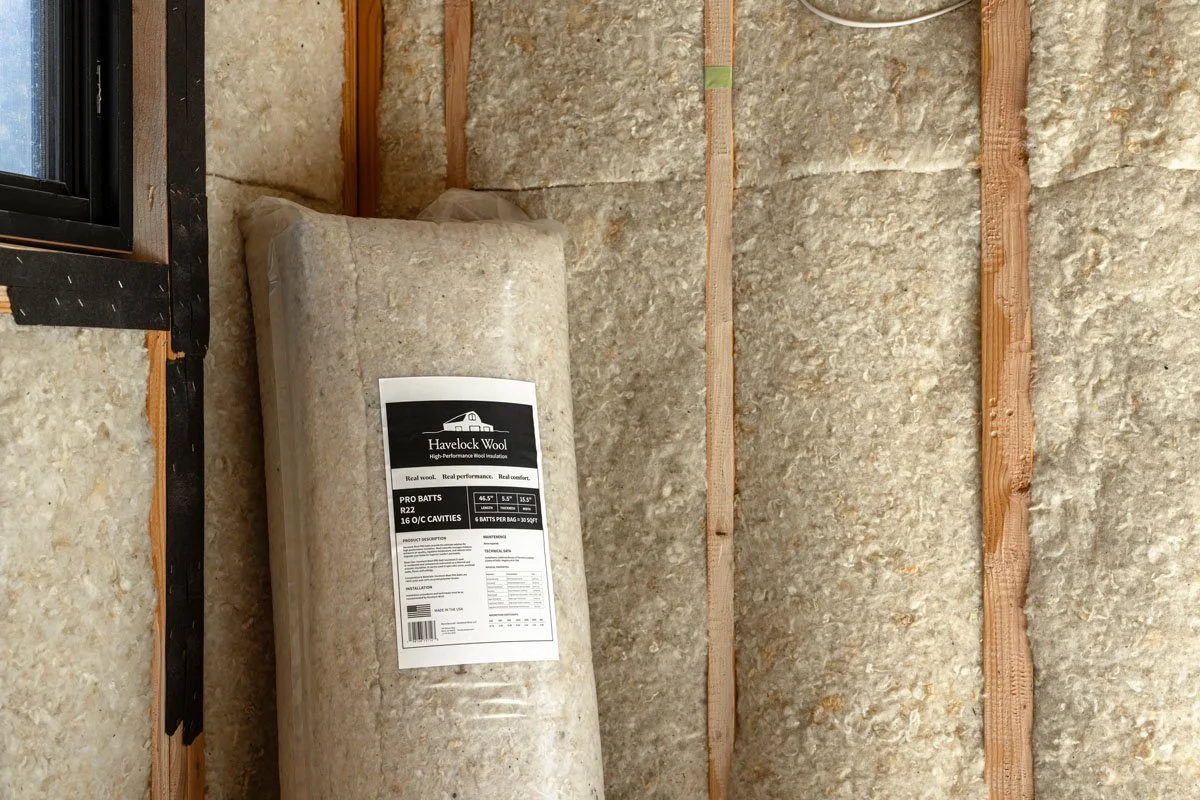
Yeah, we've had a lot of cool stuff happen, and I think we finally have a seat at the table, which is really inspiring. I think it goes back to this, this premise that we talked about, which is we can now show up in a conversation and say, Look at this cool product. This is what it does, as you referenced. It's borderline fun to work with. And for you professional installers, you can install it just like anything else, right? The big thing for them, which is totally understandable, is they need to know how long it takes to install a product, and when you bring them a new one, sure they'll make their margin because they buy wholesale, not retail. But then it's really about how fast can they get it in the walls and move on and and they need to be able to estimate that. So when you've got our old flimsy bats that need a staple, they install it once because the homeowner wants it, and then they don't want to see it again. Well, now we've got a bat that installs like everything else. They're using rockwool more and more. So we can tell them, just price it like rockwool if you've never worked with Havelock, and you'll make a little extra money because you'll actually move faster. It cuts easier, and it's easier to work with than rockwool. And so that's all led us into a great place for how to get more people to use our stuff.
Mark D. Williams 52:21
How does I had a question for either shoot? It's on the tip of my tongue, I lost it. One of the questions that we've been doing here as we kind of wind down the episode, we let each previous guest ask a question for the next guest. And I always mean to start with it, but I'm always so excited that I forget to the end and so and you'll get to leave a question for the next guest. So this question was from Tyler Farrell, from Killer construction. He's out in Utah, out in Park City, does incredible homes. In fact, you should definitely reach out to him and be like, hey, you know, I answered your question and set up a meet and greet, because he's an amazing builder as well. I've got some
Andrew Legge 52:58
good buddies in Park City. That'd be fun to talk to him. Actually, we probably know a lot of similar people.
Mark D. Williams 53:02
So here. So he had something, if you listen to his episode will air the week before yours, so you can listen to his he had this thing that's called the chip list. Basically, he keeps a list of all the people that have sort of slighted him, wronged him. That's a bit of a more of like people that doubt him, said he couldn't do it. That's what helps motivate him. His question is, is, what do you love about your job? Or what is it that drives you? For him, it's a chip list. It's proving people that doubted him wrong. What's your intrinsic motivation? Or, in that case, it's extrinsic. Someone is sort of whipping his psychology to go. But what is it that drives you? I think, is the root of what he's asking.
Andrew Legge 53:39
Yeah, yeah. I like this question. Thanks for asking it. Tyler, education and informed decisions is what really gets us out of bed every day. There's a lot of people that step into this space that really don't know what they're doing, and it's kind of crazy, because you're you're building a house that you're going to live in, and it's your opportunity to get it right, and you're taking advice from from a lot of people who, frankly, from our perspective, shouldn't be in charge of your health. Having the opportunity to say to people like, hey, these these materials are cheap for a reason. If you want to use them, use them right. But know what you're getting yourself into, and ask the right questions and make sure you get what you want. Like that we hear all the time like, oh, well, let me ask if that's going to be okay. It's like, hold on a second. It's your house. You should be able to do whatever you want in that space. And of course, for us, it's the conversation is often about including wool or not, but we don't pitch We will advocate for wool because we love it, but we literally spend our time and our attention helping people get their questions answered and make informed decisions. And that. Has made this so easy to deal with all of the headaches, which are endless, but every day, being able to get in this conversation challenge people about the opportunity to use a better product and think about the importance of that is is as exciting today as it was 11 years ago.
Mark D. Williams 55:23
That's a great answer. I love the part that it's cheap for a reason, like getting it. So I'm going to re ask you the question again, but instead of and maybe you can't untie it, because a lot of the company is you. But how would you answer this question for yourself as an entrepreneur? Take away Havelock wool specifically and like, what is it that drives you to want to be an entrepreneur? What is it that excites you and really is the reason that you do what you do?
Andrew Legge 55:51
I think you got to find your passion. And, you know, sometimes it takes you a couple times to get there. And money, ain't it? That's for sure. This is the least amount of money I've ever made since I left.
Mark D. Williams 56:04
That's that is the best. Okay, that's a sound bite right there
Andrew Legge 56:07
that that doesn't do it. I got tons of really wealthy friends that are really unhappy. Can I stand to make a little more money? Sure that would help pay the bills a little bit more easily? But it doesn't matter, because it doesn't change the other answer, like, you've got to be able to get up and get excited and, like, have this conversation, like we're having right now. I've been grinding through this business and, like, taking all of the lumps and all the pain, and it's still so easy to show up and get excited about these conversations. So I think that it's way easier said than done. Go find what you're excited about and figure out how to make some money doing it, because the rest is a waste of time. Amen.
Mark D. Williams 56:55
I mean, you can't end that episode any better than that. That is amazing. I agree 1,000% oddly enough, this morning, I had two good friends of mine. We were sitting down, and one of them has done very well, and it just was kind of in a dark spot, if you will. And he's just like, you know, when you've sort of quote made it, he's like, it sort of feels empty and hollow. And our counsel to him was like, find something you're passionate about. Find something that gives you meaning and purpose. And I've mentioned many times, I'm an excitable fellow, but I, you know, the curious builder for me was something that I was burned out about three years ago, a business I was just burned out about that time, and this totally relitified me talking to other owners across the country or the world, yeah, and just understand that. Like, honestly, we're all doing similar things in different silos. Like, it's more the spirit of it, and, uh, that is similar, right? And like, you and I could talk to someone making kombucha bottles, and we'd find something like, Oh, tell me more about like, I just am so curious about and I think that curiosity lies at the root of a lot of passion and a lot of people that are creators. And I think I've said it's not I've never been bored in my career, that's for sure. But it's nice when your passion sort of align. And then one I think, don't you think that sometimes, one time, sometimes the passion can, can recreate or Ignite, you know, passion in another area for me, I always say that the curious builder sort of kind of woke me up again and made me excited. But really, Misa, who's my Spectrum I keep referring to that. You know, you're gonna have to come see it, because we'll have Havelock Wolf. Have Havelock wool filters, and I can't wait for this. It has made me fall in love with building again, because I was in love with I've been in love business for a long time, and just like marketing and all the stuff that goes with it, but I kind of fallen out of love with building too, because I've been doing it for 22 years. So, like, I I needed something different and so that. But it was that end of the road that sort of led to the recreation of a new brand that you know that is where now I'm more excited than I've maybe ever been. So I think that reinvention continues to kind of spin the wheel for us entrepreneurs, because you're like, now I'm excited again.
Andrew Legge 58:56
Yeah, I hear you 100% and actually, that leads into my question, is it okay to go there?
Mark D. Williams 59:02
Yeah, that's where I was gonna go anyway. What's your question? Okay, cool.
Andrew Legge 59:05
So my question is, how do you ensure that you can stay in touch with your basis expectations over time? And what I mean by that is, when you go down this journey, you have to be ready, willing and able to accept change, but you also need to stay in touch with your basis and celebrate the wins. And so we tried to do that last last fall with Lowe's and Home Depot, because, you know, we're all stressed out about, oh god, how are we going to deal with all this? And what a pain in the ass. And these guys are a nightmare. And la, la, it's like, hold on a second, guys, we created a product from a presentation in a laptop to. A manufacturing facility to that that's now sold at two of the largest retailers in the world. So we, and we're not good at it, right? But like, how do you stop and say, Wait a minute, we are winning. Because you're constantly just looking at the next challenge and what's not going your way. But I think it's really important across this journey that has ups and downs, which we all know but like, how do you keep yourself in check with some of those original goals and aspirations and enjoy it when you hit the mark?
Mark D. Williams 1:00:39
Yeah, yeah, okay, that's a great question. I'll have to succinct that one up. That's pretty long question. I thought I asked. Yeah, sorry. No, no. I think it's like, how do you ensure that you stay in touch with your basis? Basically, like, how do you make sure that the foundation of what's driving you is still your guiding light as it changes down the road? Is that essentially a summary of it? There you go. Yeah. I'll give them, I'll give them, I'll give them some context. Thank you very much for coming on the podcast. We'll have everything that show notes. I think there's gonna, you're gonna have a lot of interest those filters. That is, I did that's a game changer. Can't wait. Thanks for tuning in to curious builder podcast. If you like this episode, do us a favor. Share it with three other business owners. The best way that we can spread what we're doing is by word of mouth, and with your help, we can continue to help other curious builders expand their business. Please share it with your friends. Like and review online, and thanks again for tuning in.
This episode is sponsored by: