Episode 160 - Hot Takes Only: Wellness, Grit, & the Daily Grind Live at Sauna Camp
#160 | Live at Sauna Camp | Erin Ayala, Alex Larson, Alex Neist, & Ryan Rivard | Wellness, Grit, & the Daily Grind
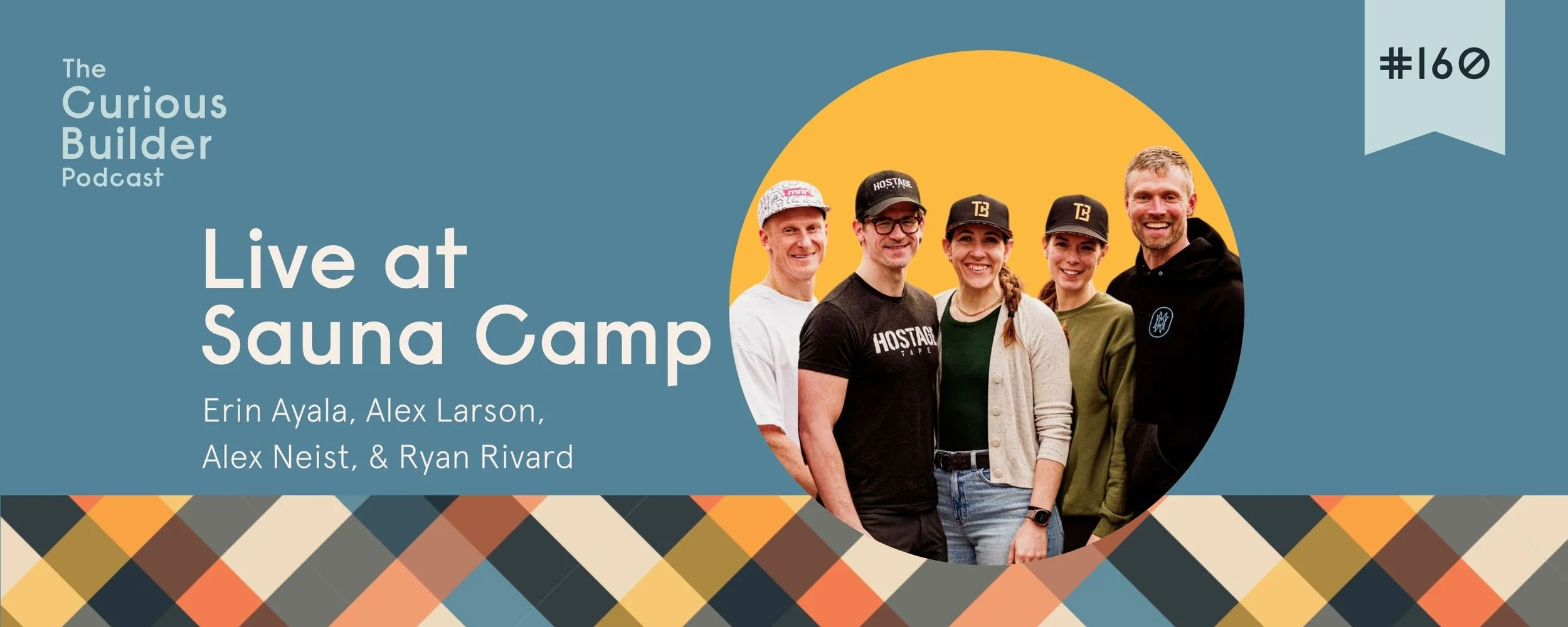
What do climbing Everest, finishing a 200-mile gravel race on a single speed, getting on Joe Rogan, and raising kids who actually want to hang out with you have in common? They all showed up in this live Sauna Camp panel, and the conversation did not disappoint. Mark sat down with Erin Ayala, Alex Larson, Alex Neist, and Ryan Rivard to dig into wellness, resilience, and why the boring daily grind is actually the whole game. This episode hits different when you're already sweating.
Listen to the full episode:


About Sauna Camp

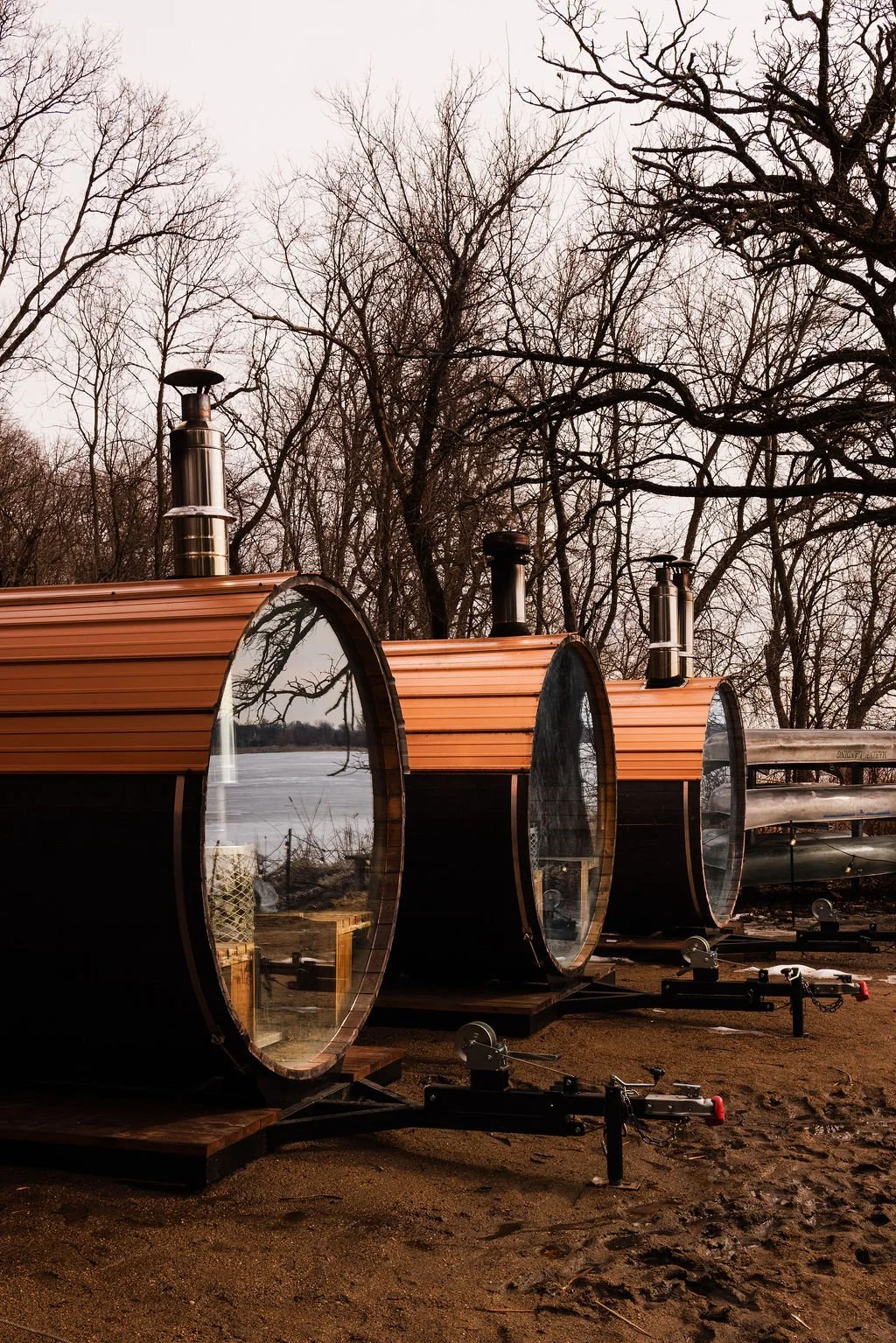
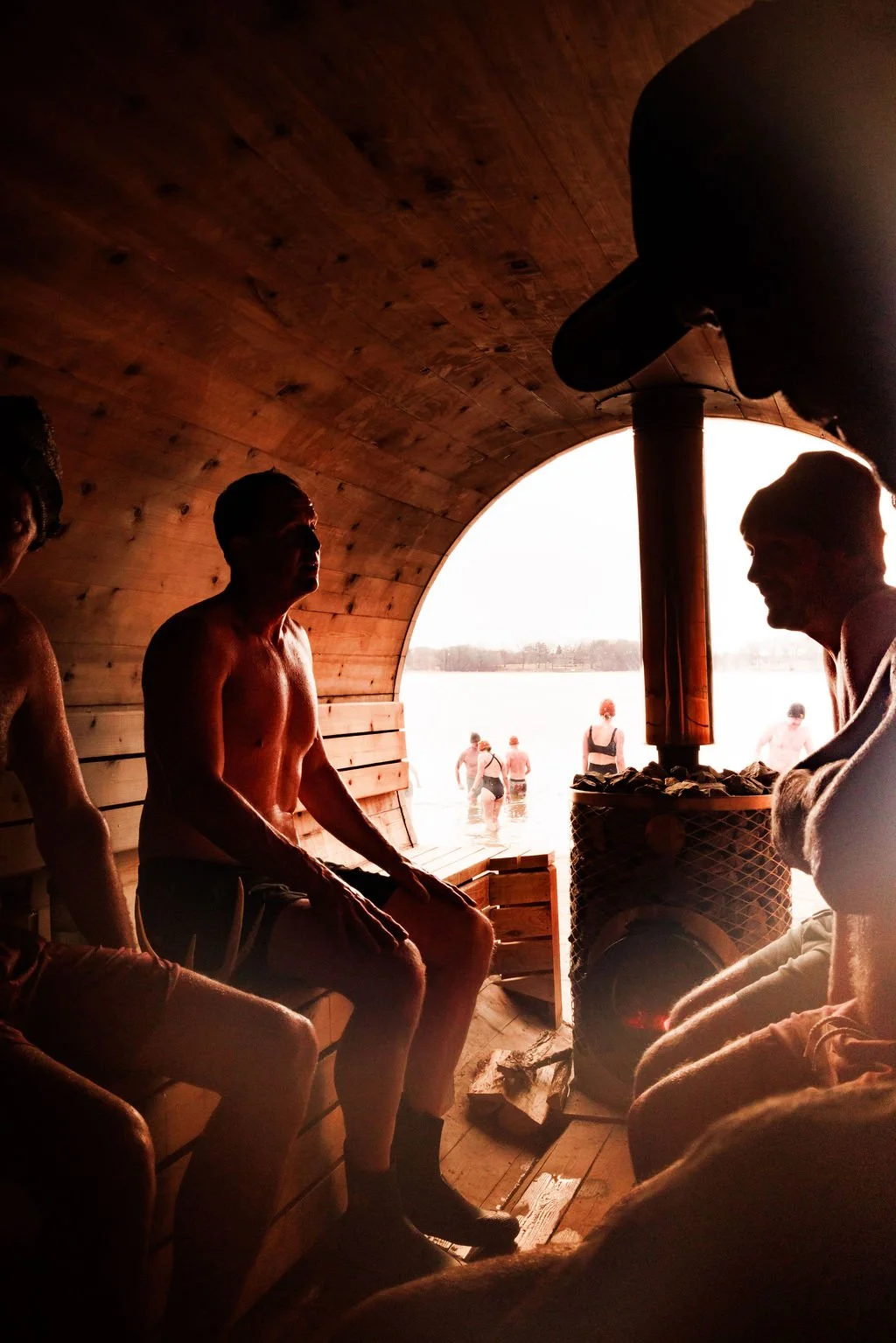
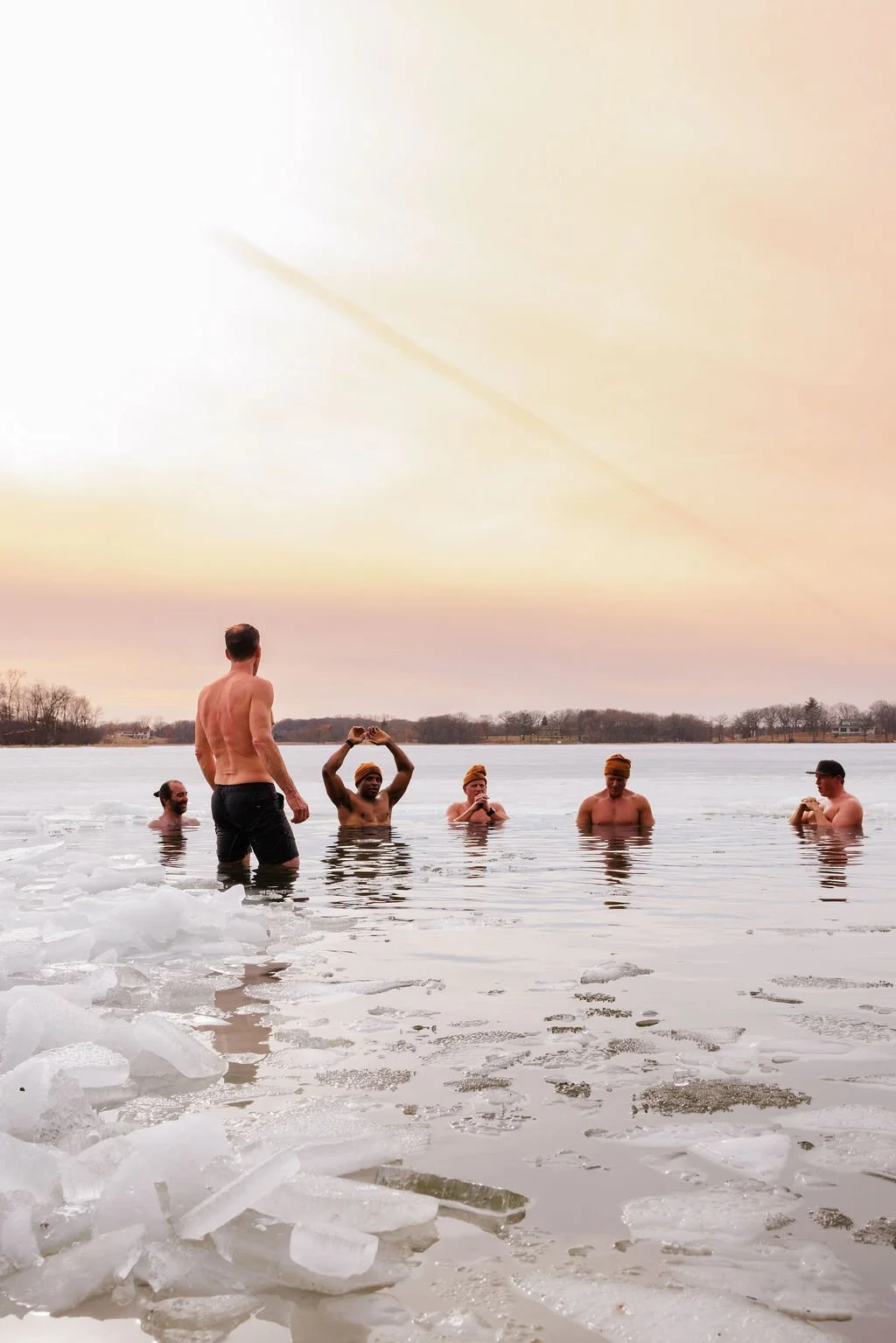
Our goal with Sauna Camp is simple—create space to pause, breathe, and connect. This half-day sauna retreat is designed to be a stepping stone toward bigger adventures, bringing builders and industry pros together for a full-body reset through sauna therapy, cold plunges, and guided breathwork. The event focuses on more than just physical wellness—it’s about building relationships and fostering a sense of community. You’ll have the opportunity to chat with others in the sauna, share experiences, and learn from each other’s journeys.
Resources:

-
Erin Ayala 00:03
You know, I can't be good at all of the things. There is not enough time for that. So where do I want to direct my energy and then go all in and do it intentionally? And then the same thing applies for my career. I'm not for everyone, and that's okay. And so it's knowing that, and then, like going all in for the things I am really passionate about.
Mark D. Williams 00:30
I want to do a big shout out, first of all, to all the guests that said, Yes. First of all, I'm not quite sure why. The best part is, is two of the people up here, actually three of you, I've never met in person. Alex and I know each other for the last couple of years, but I've never met Alex nice in person before. Ryan and I have gotten to know each other a little bit over the last year, and Aaron was a recommendation from Alex. So I'm gonna let each one of them introduce themselves. Last year, we did some breath work this year because we're here sort of celebrating wellness, and just kind of changing it up a little bit each year to keep it fresh. That's really the whole podcast today. Each we've got iron men, iron women, Everest summiters, and then you have Alex and I, and so we'll, we'll kind of go through not this, Alex, the other. Alex, I shouldn't have put the two. Alex's next to each other. This is going to be a little fun, a big shout out to our sponsors. So we've got a few sponsors in the room. If you're a sponsor, please stand up so I can give you your due. We've got Dakota County lumber over here. Sonny Bowman couldn't make it, so Luke, we've got Mark Cabrera with Pella. We've got Mike Weaver with Emser and with wellness 360 we've got sauna water. Jeff was not able to make it, but down at the saunas this year, we actually have sauna water. So if you remember last year, there's water stations down there for your water bottles. But there's also this really cool sauna dedicated water that has nutrients and electrolytes and things, because when you're down there sweating for a couple hours, you're going to need some sort of salt replacements. We have packets of element as well that I would recommend putting in your water. Did I miss anybody? No, oh yes, concrete science, where's Chase? Hicks? Thank you, Chase. I think that is that's it. So let's get started. I'm gonna give everyone a chance to just do a quick intro of who they are and and then we'll get going. So Ryan, why don't we start with you cool?
Ryan Rivard 02:20
Ryan Rivard here, and yeah, originally from Chicago, Ian area, but been in the Minnesota area for the last seven or eight years. I have four beautiful children and a lovely wife, and we live in the Minnetonka area, an endurance athlete, and really just love the outdoors and being a part of these kind of things. I happen to be the Everest summoner, so we'll get into that. But yeah, just excited to be here.
Alex Neist 02:54
My name is Alex nice. I am a local Minnesotan also, and I'm the founder of hostage tape. Yes, I had the balls to call it hostage tape, so I'm sure, if anybody wants to know why, we can get into that later. But I played football at the University of Minnesota. I'm a former football player. That was my whole life and and then I became an entrepreneur.
Alex Larson 03:14
So I'm the other Alex, Alex Larson, and I'm from the Duluth area, if you're familiar with area ESCOs, like a little small Finnish town. So I told Mark that I would come and speak as long as I could sauna and cold punch, because we did sauna camp for you. Yes, when I remember you telling me about it last year for the first one, and I was like, Oh, that's so fun. I want to come. So when you offered me to come and speak, I was absolutely so excited. And I'm a registered dietitian by profession. I started Alex Larsen nutrition in 2018 I went full time in my business in 2021 I've got three young kids, and I work exclusively with endurance athletes, so runners, cyclists, triathletes, Nordic skiers. And it's the best job in the world. It's really fun.
Erin Ayala 04:05
Erin iyala, I'm a licensed sports psychologist, certified mental performance consultant, and a member of the usopc mental health directory. So think of me as a mental health therapist or psychologist for high level athletes. Most of my athletes are endurance athletes, all different shapes, sizes, levels, experiences. And then I'm also a very avid endurance athlete myself. Gravel cycling is my number one. I'm a unbound 200 finisher. I'm going for my fifth 200 on single speed this year. And then I've done a handful of marathons, Iron Man, Lake Placid, 50, k is, you name it, I'm down for it. So I'm the owner and founder of Scott eSports psychology, which is based in the West Metro, and I founded that in 2023 All right,
Mark D. Williams 04:51
and if you're here, you probably know who I am, so I'll spare you my question. The first one is, I think wellness means a lot of different things to different people. I feel like right now, in the United States in particular, maybe the world, I feel like wellness is having its well deserved day. I'm certainly here for it. But you see explosion of na drinks. You see, you know, different clothing lines I can't look down on my Instagram and not be served some new clothing line that I have to try out because it might make me run faster. But it's also interesting, as right now I'm building a spec home called Misa house, which you probably also have seen on our social platforms. And so it's coming into our professions, our personal life. And what's been kind of fun for me with the curious builder, is to kind of merge the two worlds. When I started Sonic camp and boot camp, it was really to say to fight the stereotype that, you know, that builders were fat, hairy, flannel wearing alcoholics. And, you know, I'm fine with the flannel and that facial hair, but the rest of it, you know, might be served somewhere else. And so, you know, the whole point of jokes aside, is like, I think we can all live better, and a lot of it is just having these kinds of conversations. And each one of you are inspiring to me in different ways, and also have different viewpoints on wellness. So that's really going to be the first question to each one of you, and maybe we'll, we'll start with Alex Larson. First is, like, what does the term wellness mean to you?
Alex Larson 06:08
Yeah, I mean, for me, when I visualize it, I don't think there's like, a look to it, but I think of like as, like, a holistic standpoint of both nutrition and mental health and happiness and having balance in in your life. It's not just about, you know, even though I'm a dietitian, it's not just about eating your vegetables and and limiting your sugar. It gets it's feeling good, having energy, being able to sleep well, have stress management. Like all of those elements are a part of the puzzle of wellness.
Ryan Rivard 06:40
Number you Ryan? Yeah, that's a good question. So give you a little more background, because obviously people dove into their background a little bit as well. 23 years sober, and, you know, run a marketing agency for last 13 years, and then the last three actually help high achievers kind of create more alignment in their life. So doing these different successes in my own life, realized that there were still things that were missing. It wasn't necessarily like money or family, but there were other alignment and so when I look at wellness as a whole, I think holistically, you know, I think, you know, nutrition and fitness are kind of the first two pillars. You got to get those definitely. But I also look at, like spirituality. I look at holistic aspects of, you know, if you're connected with a higher power or God or something like that, how you treat your family, how you treat your friends, and how you show up, you know, do you say something and you actually follow through on it. So I think wellness as a whole is kind of, you know, this holistic approach to everything that you're doing in life. And what I like to say is the way that you do anything is the way that you do everything. So the little things in life matter. And I think that that, how
Alex Neist 08:00
about you, Alex, so I think, for me, when I think of wellness, I think of, how has it changed? How has my definition of wellness actually changed because of being an athlete my whole life, it was always, am I, you know, putting the work in the gym? Am I doing what I need to do to be a better football player? But now, as a 46 year old, you know, I've got one of the biggest sleep brands on the world. Now, it's more I'm very mindful of my mindset, way more than I ever was when I was a kid. Like I just never really thought about, how am I showing up here mentally? That is probably more of what I work on now than anything. Because when you're an entrepreneur and you're going through all the stuff that we go through, it's more of a mental challenge than anything, and getting your mind right every single day, and going through those ups and downs and so that's probably more when I think of what wellness is to me now it's that paired with, how am I sleeping? How am I getting great sleep? How am I helping hundreds of 1000s of other people get great sleep, right? So they can show up every day
Erin Ayala 09:01
to add to what others have said, I think it's really important, and this starts to get into the how to do wellness is. Wellness is going to look a little bit different for every single one of us in this room based off of our personal value systems and our moral compass and what we want to stand for and how we want to show up. And so for me, wellness is and this is what I really help athletes and clients with and try to do myself, knowing it's the self awareness and knowing your value system personally, and then showing up in ways that align with that consistently and playing the long game, right? And there are a lot of quick fixes. A lot of you know we think of fit fluencers And the wellness industry right now, a lot of monetizing, a lot of Instagram. My spouse is always like, oh, Instagram tricked me again. You know, new purchase, and it's like, it's really thinking about those actions on a daily basis. Are they aligning with your value system and who you want to be as a person? And chances are, the sleep, the nutrition, quality, relationships, those foundations are going to help you. With those things.
Mark D. Williams 10:02
Think, obviously it's named. But like, curiosity, you know, when we are interested in something, you know, I worked with Alex when I tried for my when I did my first 50 miler, and it was really like, okay, if I'm going to fuel my body, like, how do you go through that? And, like, I think a lot of people are more interested in learning about themselves. And I don't know, I don't know about the youth. It'd be really interesting. There's some younger people here. It'd be really interesting to ask people like your son, Alex, you know, like as a teenager, like, what do they see? And I know we have a huge influence on our family, I often wonder, like, what I have three kids? Like, what will my kids remember? You know, my wife is an avid runner, and I'm very active in what I do, and they see that,
Mark D. Williams 10:41
I'm really curious, like, what, how that will leave in imprint, and I you want it to be a positive one, but I think we also have to be aware that, you know, a lot of these things out of balance can be negative. You know, obviously, you know, in especially in nutrition, there's eating disorders, you know, we talked about substance abuse and, you know, you can be obviously excessive in almost anything, right? And so it's interesting as we grapple with how to deal with wellness, it's just kind of interesting how it keeps to evolve. I think someone once said that, like, if anyone tells you they have balance figured out, like they're a liar, like it's kind of like surfing. You might do it for like, a few seconds, unless you're like, you know, LAIRD HAMILTON, or somebody should have him up on the podcast. But you know, it's like that for that one second you feel balanced. So that's gonna be my next question. Like, what would be like? What are things that are key to, like, your balance in association with wellness? And I know you could go a lot of things, so let's just pick maybe one or two things that you feel like really help you. Maybe. How about this? You're unbalanced in your day, through the entrepreneurship, the struggles of life, parenting kids, whatever, what is, one thing you can turn to that helps you restore balance,
Erin Ayala 11:49
slowing down. I think taking taking those micro moments throughout the day to check in with myself, that's huge, especially because so much my work is, you know, really high quality conversations that I have to be fully present for. And we live in a society where we are just filled with distractions, whether they're push notifications or slack or team messages or this or that, and just slowing down and and being quiet and present with myself is really important. So for me, mindfulness meditation is a huge part of that, and breath work. But again, there's no right or wrong, I think, and that's the thing that I'm starting to learn the older I get, is wellness is going to look a little bit different for everyone, and that's okay, but it's really important to check in with yourself to figure out what that's looking like for you and how it's changing.
Alex Larson 12:34
Think for me, setting boundaries is really important, and sticking to them, having a lot of flexibility in my day, and just rearranging things constantly, and being okay with that, and then also giving myself grace, where, if a situation that I'm in is not ideal for me to get in a really great lunch, or maybe I'm like, due to order groceries, of like, okay, I'm gonna make the best of this decision, and I'm just gonna Move on. I'm not gonna like him and HA and HA and feel guilt ridden or shame myself for not eating a perfectly balanced lunch, and just like those types of things, like really for me, keep me going when because my life, I feel like it's constant chaos. Just the fact that I had a two and a half hour drive down here to just sit in my own thoughts was amazing. I hadn't had it been a while, so just making sure to take some time to to do things that fill my cup, like being here today, I think is really important.
Alex Neist 13:31
I think for me, it's kind of like what she said about slowing down, where I take self care, like, very seriously, because, you know, as the man of my family and of my business, if I'm not taking care of myself, I can't take care of my wife, my kids, my employees and all the people that use my product. So I'm very intentional about when I get up in the morning, I'm slowing down, and I'm not one of those guys that likes to get up early and then I'm like, go, go, go, go, go. And I'm working. I try to get up, I try to slow down. And I have a routine of sauna, some cold plunging, some meditation, some red light, all these different things that I like to do that slows down, focuses on what I need to do, so that I'm centered and I'm just dialed in for then the flurry of being an entrepreneur from like 10 o'clock on for the rest of my day,
Ryan Rivard 14:26
yeah, so, you know, mimicking a lot of the conversation, I think, you know, outside of having some really non negotiables in my life, you know, booking time on my calendar for those kind of things, like not having any meetings right away in the morning, because that's my time to do my physical activity or read or whatever it might be. But I think one other thing too that helps me get more centered back with like my mission or my purpose in life is also being of service to people. I think. A lot of times. You know, when you're in your head, it's easy to kind of go down this rabbit hole, and you get overwhelmed and overwhelmed and overwhelmed. And I find that going out and helping somebody else does two things for you. One, it immediately gets you out of your head, right? And you're you're asking what you could do for them. But two, you're reminded of that purpose. You know, they're actually getting value from something that you're driving. And you know, you're helping them, they're helping you in the same kind of sense. So I think that that's a great way for me to kind of recenter and kind of refocus on what I'm supposed to be doing.
Mark D. Williams 15:34
What do you is it, you know, as we are now middle aged, I think it's safe to say, is there something today that serves you better, or something that's changed from when you were younger in terms of wellness, like maybe when you were in your 20s or 30s, you thought like this brought you clarity or help. But as you've gotten older, you've either left that behind, or you've changed it, or you realize, like, Whoa, that actually was toxic, that wasn't actually helpful at all. Like, basically, how is your we've heard a little bit about mindset, but how has your mind changed when you look back? And we have so many questions we want to ask every single person, every single one from this point on. We'll just, if you feel like this question,
Ryan Rivard 16:16
just type in for it. I'll respond to it. I think for me, it's sleep like you know, obviously, that's my company, and that's what I do. I help people optimize their sleep. But I think I'm 46 years old. For 40 years of my life, I did sleep was an afterthought for me, and which is crazy when you think about being an athlete, being a college athlete and a pro athlete, sleep wasn't even on the table. We sleep a third of our lives, and I just never thought about it, and so for so much of my life, that wasn't in my universe of thinking, whereas now it's a huge priority of what I do and where I focus, and really almost, if I don't get great sleep, I can't function, and I can't be the man that I need to be to show up every Day.
Alex Larson 17:00
I think for nutrition, it's such an evolution, just in, like the research and what we know about it, but also now that, like, from my early 20s, when I became a dietitian, and I was like, Yeah, you should be able to get all your nutrition from food. And now, like this busy mom of three and running a business, and I'm like, no, maybe, maybe people do need a little bit of supplementation, and maybe they do need to have a little bit more focus on behavior change and learning, and that's why, like Ian and I have become such good friends, because I'm so fascinated in the psychology and the understanding of why people make their food decisions. And so for me, I feel like from a wellness standpoint, it's definitely shifted over the years, just for those reasons, it's
Erin Ayala 17:41
definitely shifted for me. I think, you know, even through grad school, training to become a psychologist, I always assumed, and that's when I also started my marathon running. Essentially, if I registered for a marathon, that I'd have to set boundaries to train for the marathon, and so then I'd have to exercise. And I'm very much prone to being a quote, unquote workaholic, because I'm so passionate about what I do and when I do something, I'm all in. But I think I was chasing this thing that I didn't yet know what it was. And we get a lot of that, like, I'll be happy when, I'll be successful when. And that's what I was looking toward, that that achievement culture when, really wellness, that to me, is understanding there is no end point. The work my my career, my marathons or endurance endeavors like that, is the vehicle for mastering me as a craft and me as a person. And that process for me is wellness. It's consistently leaning into the difficult thoughts and feelings, instead of trying to avoid them or run from them or get rid of them. It's understanding that wellness doesn't mean the absence of difficult thoughts or feelings, that stuff is going to come up, it's messy. That's what life is, and that's okay. And then having the strengths and resources to navigate adversity when it happens.
Ryan Rivard 18:54
I mean, I think looking back like as a child, you know, it's natural to gage your levels of wellness, success, and all these things based on essentially what I call, like the limiting factor. So you look at your parents and what they've done, or you look at your friends and what they've done. And I think as I've gotten older, I realized that the circles that I run with are constantly elevating and evolving and changing. And you know, it's hard to see a future that you haven't experienced yet, because all of your projections of what you could be in terms of wellness are based on the experiences that you've had in the past and the people that you're around in the past. And so if they haven't created something of the success or the wellness in your life, you know, they will say, Oh, well, you know, it can't be done, or this is where it's at, or, and you kind of take that for, you know, a reality in your own life. And then you when you kind of start to evolve, you realize that there really are no ceilings. Ian, you can create whatever you want. And so it's just kind of putting yourself into that mindset shift. Shift of like, all right, what is it defined in your life? If wellness is that thing, then go out and create it and then find people that are also doing those things to elevate and you don't feel like you're alone in that process. So when
Mark D. Williams 20:20
it comes to quality, craftsmanship and performance, Pella sets the standard whether you're building custom homes or designing a timeless space. Pella offers innovative window and door solutions that blend beauty and efficiency with showrooms and experts around the country. Pella makes it easy to find the perfect fit for your next project and their team to support it. Build with confidence, build with Pella. Visit pella.com to explore products and connect with your local rep today. For more information, you can listen to episode one or listen to episode 109 where we bring on Pella owners and founders at Pella Northland, as well as their innovative team behind the steadystate innovation. I really appreciated that you guys' answers were amazing. I'm gonna go back and listen to that. That was like, wow, shifting gears. A little bit about this kind of more gears into, like, training. So let's talk a little bit about goal setting, probably, as it pertains to, like, a race, right? It might be, doesn't have to be a big race, right? It could be your first half marathon. Shout out to Leah. She's decided, off the couch, she's gonna run her first marathon. Where is Leah? Oh, she's outside. Well, anyway, kudos to her. Anyway. So it doesn't have to be this big, grandiose thing, but a lot of you have there's been Iron Man's training for Everest, whatever Alex has trained for, as well as a professional athlete, all that goes into it. Walk us a little bit through, like, what makes you decide to sign up for
Mark D. Williams 21:39
a goal like that? Like, what was the driving factor? And let's talk a little bit about, how do you maintain the focus? A question I get asked a lot is, like, you know, if you're training for, let's say, 100 mile trail race, like, you know, that might take 910 months, or it might take multiple years to get your ligaments set up, your foundation, you fail a lot on your way there. But with that poorly framed question, What have you got for a couple answers. We'll start with Erin. She seems to enjoy this one.
Erin Ayala 22:04
My favorite framework is, I call it the scary, joyful new framework. And this is something that I thought of on like, probably one of my wild training runs or something. And it's like, I always try to, each season, have one race or event that's scary, like, it's like, I don't know how this is going to go down. I don't know if I'm going to be able to do this. I don't know if I'm going to be able to reach this goal, right? And that's the one that really pushes me and challenges me to lock in. It scares me enough to stay dedicated. And then I find one that's joyful. There's like, the community is great, the vibes are awesome. Like, you see people you haven't seen in a year, you know, whether it's the aid stations or just the vibe, or the other events that they have where it just, it fills your cup, it keeps you going, and then the new because otherwise I'm going to get bored and complacent. And so new discipline it might be, you know, I didn't run for eight years, and then I returned to it. I did a first I did my first triathlon in a decade last year, which was hilarious, like, so just like, really keeping myself on my toes is also really fun, and that's what helps me with the motivation and sustainability. Is I'm always mixing it up a little bit.
Alex Larson 23:11
I think you and I were actually texting about this a couple months ago, because when we live up here and we're bike riders, we ride the trainer most winter long. And if you've ever ridden a bike trainer in the middle of winter. It's brutal mentally. And so you and I both were just, you did a week in Arizona in February, and I was so jealous, and I just said, like, why do we do this? That was like, a question. And then I think I made a joke of, like, Well, I do like noticing, like, the muscles in my legs, like, I do appreciate, like, feeling fit is a good feeling, and the challenge of setting a goal and accomplishing it, there's nothing like the euphoric high that you get with the endorphins and you finish a race like you that sense of accomplishment and the community is amazing. Like when I say I have the best job ever, it's just because I get to work with really fun clients who have similar interests that I do. And like, working with Mark was really fun. He made me laugh too much, though that was a problem. So I ended up at one point being like, you're gonna work with Mary on my team for a little while, because, like, he just, like, found my number and like, could just make me laugh a little bit too much. I was like, I can't be serious.
Mark D. Williams 24:20
It was like a cartoon character to you, yeah? You have the double wham. You sweat more than anybody else, and you also are, like, the saltiest person, yeah, yeah. Like, yeah.
Alex Larson 24:28
It was, it was interesting experience working with Mark. So, like, that's to me, what I think is why I do what I do is just because I love all of those things.
Alex Neist 24:38
I'm going to approach this question from a different angle. I'm not training for anything. Maybe I'm the only one up here not training for anything. I just like work seven days a week on my business. But I think I find that I'm drawn to try to find something to do. Because when you're an entrepreneur and you run your own business, you find yourself you get into that rut. Just doing the same thing every day, right? And then it gets boring, and you're looking for novelty. You're looking for things to challenge you. I mean, that's why we're entrepreneurs, as we love the challenge. We love building things. And so I would say, I'm always looking for, what can I do that challenges me? What can I do that as a challenge or something different that I can, I can do. So that's just, I think, built into the way that we think. So I'm always looking for it, but I haven't found it yet.
Ryan Rivard 25:31
Yeah, I mean, I think touched on a few of them, this notion of, like, a misogyny kind of thing, you know, something hard and challenging, new that we do every year. You know, Everest in general, is definitely a different beast in terms of why I wanted to do it. There's a lot of depth to that and a lot of answers to that. But I think, you know, even last year, I did five different events in five different months, including an Iron Man and Leadville 100 in that timeframe. So I found that in my life sometimes, you know, the workouts tend to balance the amount of stress that I'm also going through in my life, but I'm trying to move past that a little bit more as well, and I think so lifetime games. I'm working with 10,000 brand and doing that one in April, and then rim to rim to rim is on the bucket list for maybe the end of May. So some, some fun stuff there. But I think in training for stuff, I think it's important to you know, just like, like you said, I mean, push past what you think might be acceptable or capable of doing it. And certainly, you know, giving yourself time to prepare for those things is always good. But what I really love about these things, especially Everest, because, you know, certainly it's a physical endeavor, but the mental aspect that went into climbing Everest is far greater than the physical aspect. And so I think, you know, being prepared for those things, and also being prepared for the come down, when you, you know, descend, so to speak, from these different events that you do, because they're that that's a real thing. You know, when you're done with the Iron Man, or you're done with the marathon, you know, you're kind of like, All right, well, there isn't some, like, big parade, and
27:22
it's called the Iron Man Blues. It's a real, yeah, it's
Ryan Rivard 27:24
a real. It's a real thing. And believe me, I felt it after Everest, too. So, you know, it's just kind of like preparing yourself mentally for that. And I think what it helps is it creates that fortitude so then you can go off and do other things. And I, you know, I was listening to Alex huddle, climb type A and he was talking about why he does this stuff, and the fear that goes into it. In the association. He was saying, Well, I try to put myself into a place where the fear is actually real and like way beyond what I would think. Because if you don't, you tend to fictionalize this stuff in your life, you tend to fictionalize the fear. You tend to fictionalize the challenges in your life. And so I kind of look at it from that perspective too. I think it's a very humbling thing to do things that are harder than you anticipate, because then when you come back home and you're doing the daily grind of life and kids and activities and everything else, it seems a little more peaceful. It seems a little bit like you've gained some more perspective on that. And I think that's that's something that we all need and to be reminded of, that every year is a good thing.
Mark D. Williams 28:30
You all touched on, or at least the last three of you touched on that. Let down. Let's talk a little. Let's drill in on a little bit on that one. I'm curious. I experienced that for after the 50 miler. But oddly enough, I didn't experience it after the 100, which is interesting. And I also failed. I was pulled off the course at mile 66 there was wildfires, so I didn't complete my goal. And I was surprised how at peace I was. And a lot of people asked, and I don't know what changed. I think what for me, personally, what happened after the 50 was you had spent six, seven months training for it. You do the event, you have this, you know, peak moment, and then I was left with like, well, what's next? That's like you, and now I feel much more prepared mentally for whatever is my next endeavor. How have you guys handled sort of the melancholy or the blues on the letdown, and have you found peace with it, or is it still something that continues to happen? You mean, you don't
29:27
just sign up for a race like the next day.
Erin Ayala 29:29
That's what most people do. I think I plan for it, just like I plan for anxiety, previous jitters, other forms of adversity. Like, I recognize it's a part of the process, and that, like, looking for the quick fixes or registering for the next race, which I have totally done, isn't really going to be the fix. I have to work through it, just like I have to work through the pain cave while I'm in the races and all of the other like, it's a part of the experience.
Alex Larson 29:58
I think of being a. Endurance athlete as like, periodizing your training and periodizing your life, like that training piece is part of your life and training for that race, and then you can shift into an off season and have something else that you add, that you can add back into your life that you weren't able to do while you were training, something to look forward to when you get done with that race. I think sometimes it's important to know that you don't always have to be training for an event or striving for something. You can kind of shift into a different season.
Alex Neist 30:27
I'm going to take a different angle again on this one. This is more of a business related so, you know, when I think about, like, climbing Everest or doing something amazing like that, for me from a business context, it was always I got to get on Joe Rogan, like, that's like the Mount Everest of anybody that's got a product or that's creating something, and we finally did it right. And so when I finally got on Rogan, and he's talking about our product, and he uses it, he it's like, you're like, you're at an all time high. It's this dopamine crazy, like, you can't believe, like, you did it. So it's like, now what
Mark D. Williams 31:03
you come on the curious builder podcast,
Alex Neist 31:07
you know, this was it, right? So it's like, that happens the first time, and you just can't believe it, like, you know, so, and then subsequently, like he mentioned us four more times. So that's cool. It's like, it's almost like, all right, can I get him to do it again? And so I don't know. For me, it's just, I just keep going, like, you do it, and then I've gotten used to it. Now, when you get those highs, and I just keep going and I say, All right, what can I learn from that? How can I take it and keep going and keep going and keep going. Because at the end of the day for me, it's, I'm playing the long game. I'm not playing the short game of getting on Rogan once, or to try to win this or do that. It's, How can I do this for 20 years? How can I keep going and do something even bigger than just, you know, being on, like, say, Joe Rogan.
Ryan Rivard 31:56
So, yeah, it's, I mean, again, I think last year was kind of event to event to event. You know, Everest was, was very much that I had intentionally trained done two other mountains across from Everest, as a preparation for that, I went out with NIMS day from the documentary 14 peak. So he's a friend of mine. And, I mean, I trained three, four hours a day for a year and a half. And when I'm saying I trained, I like, these were high intensity trainings for a long time, because I really did not want to be the guy that was not prepared. You know, having a family and coming home and the risk associated with it. But I think, you know, coming down from that too, it's funny. I still think about it a lot, a lot of people would come up to me and they're like, oh, it's amazing. What's next? And I'm thinking to myself, I'm like, I don't know. I mean, have you climbed Everest? Like, what do I need to do next? You know? And so take a nap. Yeah. I mean, maybe the moon. I, you know, I'm at Ohio. I'm just like, you know, I don't know. I mean, I think Joe Rogan, that's, yeah, Joe Rogan, yeah, for sure. You know, I think it's, it's just kind of understanding, again, the why and why you're doing it. And then when you come down, you know, giving yourself just as much patience to recover from that and actually absorb the information that happened during that event. Everest is a monumental event, and you know, personally, probably not going to do it again. I don't actually recommend it for anybody, but you know, it's one of those things where you know the amount of training, right? If you look at like, how much effort you put into doing something, whether it's starting a business, whether it's starting a family, whether it's doing a marathon or an Iron Man, I mean, you're putting a lot of intention, a lot of mindset into it, a lot of focus. And so it kind of becomes this narrowed thing for a long time, and when you're done with it, all of a sudden, then the blinders come off, and you have all of these other things that are happening in your life that you kind of zoned out for a really long time. And I think what that taught me is that if I focus on more intentional things in my life, and really kind of narrow in on that and don't have such a large spread, it's easier for me then to, one, be successful at those things, and two, to say no to other things that aren't going to be as helpful or as useful in my life. And that's also been really great then for when it comes to my family or when it comes to my business or opportunities, like this kind of stuff. So I think being patient with yourself is the biggest thing, and being mindful of the fact that no matter what you do, you have to descend at some point. And honestly, when it comes to Everest, that's when more people die. Truthfully, I. Because they're not prepared for that. They're all prepared for the endurance of what it takes to get to the summit. And they completely then are shot, and they're like, All right, well, I'm only halfway there, and you got to come back down. So I think being mindful of that is super important.
Mark D. Williams 35:20
Most of the people in the room own a business. What are the things that and you all do too. What are the things that you've learned transitioning from some of these physical goals and accomplishments and training? How have we sort of applied these to our respective businesses, and how have they helped outside of just, like, obviously, the stress and like, just like, how you cope, but how would they help? Like, maybe goal set in your business, or the same principle, like, Hey, this is a hard thing I'm going to do. This is what I'm going to push my business to.
Alex Neist 35:55
I'll start. So I think this is one of those things, again, being an athlete my whole life, being a football player, when you're on the outside looking in, most the average person will look at whether it's an athlete or somebody who started a business and that you just see the highlights of like, all the amazing things you did, and you don't realize the monotony of the daily grind of going to practice, putting in the weight room, putting in the same fundamental Foot drills that you're doing every day that all translated so well to starting a business. And so I'm so grateful of my athletic, you know, life, because if I hadn't had that, I wouldn't be the entrepreneur that I am now. And everything I learned then is applicable to being a successful entrepreneur now, because literally, it's every day you get up and I'm doing the same boring stuff every single day, but if I don't do that and have that, then I can't grow a business that's going to stand the test of time for 20 years. And so I would say that, and it's something that most people don't know. Like most people that think they want to start a business and be an entrepreneur, that haven't been athletes, don't know that, and they don't know that behind the curtain, that's what we're all doing every single day.
Mark D. Williams 37:03
That reminds me of something I heard recently. To interject here was that people vastly overestimate what they can do in one year and drastically underestimate how much they can do in five years. And I think you speak a little bit, you know, you hear about Tom Brady or Drew Brees and like the mental reps or the footwork or the mundane practice, like it's not sexy, and in fact, it's a brutal grind, but it's doing that same thing over and over and over again, and where it can yield. And I think it's very applicable to business. I think a lot of us, myself included, you know, you want this next big idea, or you want to get that big sale, or whatever it might be, and those are all important things, but sometimes it's a slow and steady that's the most effective.
Alex Larson 37:45
I think there's so many similarities between sports and business. Just for me, I've been reading this book or listening to an audible, at least the gap and the gain. It's like a high achievers and mindset around entrepreneurship, and I just see so many similarities in terms of, like, it's a grind. You're always trying to strive for, like, this ideal that might not even be attainable, and you have to also take the moments to think about how far you've come and appreciate that and give yourself that credit. Yeah, and it is a grind. And I convinced my husband to start his own business. Like, business last year. And so he sometimes is like, this is so much work. And I'm like, yeah, it is, but it's so worth it. At the same time
Erin Ayala 38:33
for me, I think knowing my again, my value system and my non negotiables and like, what I want to stand for and who I want to serve and what I want to be good at, because I can't do it all. And that applies to both sport as you know, someone who likes all of the endurance things, you know I can't be good at all of the things. There is not enough time for that. So where do I want to direct my energy and then go all in and do it intentionally? And then the same thing applies for my career. I'm not for everyone, and that's okay. And so it's knowing that, and then, like, going all in for the things I am really passionate about, right? And then, ideally, there's a need for that. And then when there is and you go all in, and you've got the passion and you've got the wellness to sustain it, then it's a pretty cool piece of the puzzle, like you're putting this really cool thing together, but in doing so, it's also knowing you know that there are going to be clients that that you really piss off or that piss you off and and they're also going to be clients who send you these really heartfelt text messages or emails talking about how you changed their life. And just like in sport, you know you're going to have those workouts and those events where you feel like quitting and throwing in the towel and you're like, why do I do this? That also happens with careers, especially business ownership, because sometimes you make some really expensive mistakes. But then there's also those. Moments where you get those really heartfelt messages and you have to hold on to those and then same thing for sport, it's like pay attention to the progress and the gains that are below the surface, because it's not always about the place or the race time or how you compare to compare to others. And that. Same thing for business, it's not always about the bottom line, because we're all growing in different ways behind the scenes and, you know, ways that they've noted, like, it's that daily grind that makes you better. It's not that outcome,
Ryan Rivard 40:30
you know, Mark to piggyback off of your your comment, I had a mentor growing up, very successful individual, and he was always investing in so many different business ideas and trying to hit home runs. And he recently retired, and I remember sitting with him, sharing this Everest story, and he was sharing with me that, you know, out of all of the investments that he ever made, he made the most money at the job that he went to every day, and that was, you know, it was a very insightful thing for me. And I've realized that, you know, in life, like the come down kind of following up from this, this last question, I think the reason that we get that happening in our lives is because we're so focused on the goal, right? We're so interested in achieving that goal, and in anything in life, whether it is a certain level of success or getting your business to a certain revenue, or, you know, doing something in the family, whatever that looks like, once you achieve it, you know, then you have this kind of like, then what scenario? And I think you start to become unhappy, right? Because then the goal needs to be further and further and further out. And what I've found is that, like business, if you are not really dedicated and thoroughly loving the process of what you are doing. It doesn't really matter what the goal then is, because you won't ever be happy in that. And so I think that, you know, like the come down, like it, you know, training for these events, if you really love the process of it, then whether or not you finish the 100 mile race, that's the joy of it. You're, you're doing the thing that you love doing. You know, you get to run every day, you get to train you get to build a business that's, you know, meaningful for other people and yourself. That's the love that comes into it. It's not about how much money you make or whether or not you make it to the top of Everest. It's about whether or not you get the opportunity to do it. So I think if, if anything, that's kind of what I put back into my business, is that, you know, anytime I'm kind of worn out from it, I got to remember again, like that, why and why I'm doing it so well. Said,
Mark D. Williams 43:00
it's time to talk about contractor coalition Summit. At the beginning of May. We are going to be in Denver, Colorado for our first contractor coalition meetup. We're going to do a standalone event in the middle of September in Minneapolis. It's a one day reduced fee. Tickets are available now if we wanted to create an event that was just a one day crash course, you can find all those details at contractor coalition summit.com. We also, in November, have our three day tail end of the year, which is going to be in Charlotte. So if you're interested in any of those events, please head to contractor coalition summit.com. DM me for any information or email me Mark at MD Williams homes.com and thanks for tuning in injuries and failures and setbacks in our business. What are the parallels that we've learned through injuries in training or failure and also, obviously in our businesses? What are some of the things that stand out that you've then applied back, maybe for a future race or back into your business that helped you achieve something kind of level up, really,
Alex Neist 44:06
I'll tell the story real quick. So I like to look at challenges that happen to us as this. This is making us better. This is making us stronger. And two years ago, we became the partner of the UFC. We were the official sleep aid of the UFC awesome. It was a huge mistake. We should not have done it. It was way too much money right to do something like that. Like, it was way too early for us to venture into that sort of a large partnership. But, like, that kind of a lesson for me says, Okay, what can I learn from this? How can I pivot? How can I be better? And so I always look at challenges like that as a way that this is sharpening my sword to become better and to continue to improve. So regardless of how good or bad it is, I know I shift how I see it and say, This is making me better. This is making me stronger. Because someday when this becomes a billion dollar company, how am I going to run a. Billion dollar company if I can't handle these issues. So this is all setting me up for down the road, once I get there, then I'll be able to handle anything by that point, I
Erin Ayala 45:14
like to think of injuries. I mean, I've been fortunate in that I haven't had many, many injuries. Knock on wood. But I work with a lot of athletes who have some of which have been catastrophic. You know, spinal cord injuries leading to paralysis, post concussive syndrome, things where they they can't return in the way that they they had been. And it it goes really to like meaning and purpose, and figuring out, how do I want to like when I fast forward, say, five years from now, 10 years from now, 15 years from now, how will I want to have looked back on this chapter of my life, and how can I show up in a way that I'd be proud of given the circumstances? Because we can't change the circumstances and and that perspective can be really helpful for the for, like, the smaller injuries that just suck and they're really inconvenient, and maybe you can't do an event because of it, or a business setback where you're like, well, wish I wouldn't have done that. You know, it's, it's really an opportunity to see it as, like, Okay, this, this is highlighting, like, a weakness in my system, right? So it may be, it's an efficiency issue or a product quality issue, or, you know, something about communication within the team, like, Okay, this wouldn't have happened if so then, how do we grow? How do we improve that? Right? And then same thing for injuries, often, especially for endurance athletes, like chronic honor overuse, stuff. So, okay, what are the muscle groups or, like, what are the things that we need to do to target to help make this stronger for the next round?
Alex Larson 46:45
I like a good comeback story. So if, like, there's an athlete that's injured, or if I get injured, or if I make a mistake or set back in my business, I'm always like, I like to have a little bit of wallowing, and then I'm like, All right, let's get to work. Let's like, let's plan out the comeback and like, for me, that's, that's usually where I go to with, with those types of things,
Ryan Rivard 47:08
you know, thinking about it, similar to what you said, I think life gives you lessons and blessings, and by that, I'll give you an example. So the first two mountains that I did in preparation for Everest were at the end of 2022 and my goal was to come back in April of 23 six months later, to do Everest. And in January, I got hit in hockey. Used to play at Penn State. I got hit in hockey and tore my knee. And it really, you know, frustrated. The whole process really kind of, then made me question, alright, is this really what I'm supposed to be doing? And instead of, you know, giving up on that opportunity, I said, Okay, what? What do I need to do to heal? And what I found out is, not only did that give me an opportunity to heal, but I had more sponsorship opportunities for the event, more news coverage of the event. And most importantly, in 2023 there were more people that died on Everest than the 10 years prior. And so that was the world looking out for me and saying, Hey, this isn't the year to go. And so while I looked at it as like this lesson, and I was very frustrated by the process, in the end, it ended up being a huge blessing for me, because I was able to then go back the next year and be successful and come home alive to my family. So I think in life, you know, there's certainly going to be things that you're pulled towards and you're drawn towards, but I think that in the end, you'll find out whatever that is, and the you know, your internal compass will kind of lead you there. And if it truly is meant to be, it will then happen. But it just might not happen on your time frame. It might happen later on. And then if you allow it to do it in that direction, and you allow to kind of flow in that direction, I think it ends up becoming so much better than what you had planned or participated in initially.
Mark D. Williams 49:20
So you get, I'm sure a lot of you guys get asked for advice, encouragement. I mean, you guys are actively in coaching roles in a variety of what would you tell yourself if you were to go back in your mid to late 20s or 30 or pick any time you want. What would you tell yourself that you know today that you would tell yourself that would coin my favorite phrase for Mike Weaver, compress time. You know, a lot of us have learned all these things through trial and error, and maybe there is no other way to do it other than that. But if you could go back, what would you tell yourself? That wasn't one of the questions, by the way, I
Erin Ayala 50:04
think I'd tell myself to go for it. I think, you know, for so long, I am very much a achiever, kind of perfectionistic, wanting to do things the right way. I care a lot about quality and integrity and and because of that, I think I can. I want to wait for the right time, or I don't want to step on toes. I don't want to go for something if I'm not ready. And so I'm really good at, like, procrastination, learning and preparing and studying and not always implementing. So I think the advice I would say like, like, embrace the messy action and go for it.
Alex Neist 50:43
I'll go, I would have, I would have taught myself EQ, right? So there's IQ and there's EQ. I was the kind of guy. I always had the IQ growing up my whole life, and I didn't understand EQ emotional intelligence until I got later in life. There was actually this great book that I read never split the difference. By Chris Voss, if you guys haven't read that book, read that book. It's phenomenal book. When I read that book, my whole life shifted and I realized, holy shit, like EQ, my ability to actually have difficult conversations and deal with people on this other level never existed. My dad never taught me that as a kid. So I would go back hand that book to myself and say, Dude, learn EQ. Learn how to actually deal with people on this other level that I never did, you know. And I think it translated because I was the most uncoachable dude as a young kid. And, I mean, I was a quarterback. So of course, I had a I had a mindset and ego that you kind of have to have, like a lot of quarterbacks, aren't really that coachable, but it was something that I wish I could change and have learned when I was younger.
Ryan Rivard 51:57
I think there's a couple things. The first thing for sure would be don't take anything personally, good or bad. You know, you'll have compliments, you'll have insults, you'll have clients that seem to be your best friend, and then, you know, it's a commodity. You know, you'll have friends that change, and, you know, flow through your life, you'll have experiences that change. You'll have businesses that change. You'll have all of these kind of things. And so try not to take any of it personally. Just enjoy it, you know. And I think that that would help get over a lot of the fear, the anxiety, the anger, whatever it is that associates, especially when you're younger and starting your own businesses or families, or any of that. Yeah, and then I think also, you know, just don't make any assumptions about anything either. Just because you've been in a process for a long time doesn't mean that you know all of the things in it. Just because you've been in a relationship for a long time doesn't mean you know them entirely, right? I mean, I think communication and having those kind of skill sets are are important to have and and to keep learning, to keep being inquisitive from that. And so I think if you're, you know, able to learn from, you know, my son, who's eight, to my father, who's 73 I mean, I think that that's a great life, and yeah, and enjoy that. Because if I don't also do it for myself and look back, you know, this year and laugh about all the mistakes and how many times I fell in my face, then I'm not really growing. I'm not really like enjoying that process either.
Mark D. Williams 53:36
So one of the things that I struggle with the most personally is quiet and stillness. And I don't think I'm alone, if you i so. Not surprised. Shot news alert, my wife wish I would be a lot. She wishes I was sponsored by hostage tape all the time. Not surprised. I think Alex came up here at my wife's behest. Sorry, honey. Anyway, what are how have you struggled with it? How have you sort of adopted, I mean, Alex, you talked about your morning routine. I really appreciate what it's interesting I saw at the end of the day to kind of calm down. It's interesting that you start that. That's I'm gonna have to think about that anyway. Hijacked my own question, just some internal things. Now you realize what I have to deal with. So how do you find stillness? How do you find it's kind of along the lines of even rest days. A lot of athletes have the hardest time with rest days. I know. I do. You know. So anyway, again, poorly framed question. How do you handle stillness? How do you seek it out? How do you find kind of those quiet moments when I'm guessing your type A personalities are like, drive, let's go.
Alex Larson 54:54
I take advantage of when my kids go to school and daycare that little like, do. Because I usually don't start taking calls until nine, so that little like 45 minutes in the morning is definitely really great when we have a snow day and my kids are home, I'm like, torture, but yeah, I just, I try and take advantage of, like, those quiet times in my house. And then when I really just feel internally like, I need a break. I will just tell my husband. I'm like, Hey, I'm gonna get out of here, get out of dodge and just be gone for a couple hours and do something for myself. So yeah, it's sometimes really hard spring break for my kids. Since then a couple weeks, like trying to mentally prepare myself for that and take some time for some quiet for me, but it's hard because there's when I have those moments of peace. I'm also like, well, I have this to do list in my head of, like, do I just sit and relax, or do I get some laundry done? Or do I, like, clean up a bathroom? Or, like, it's there's always something I can be doing. So it is really hard sometimes to just sit.
Alex Neist 56:06
I would say, I mean, I kind of already talked about it earlier, but I'm a workaholic. I work seven days a week. I probably sit at my desk and I work, you know, everything, even Saturdays and Sundays, and I find myself struggling to not do that, and I'm even to the point where, like, I'm thinking, I think to myself at night, so when I'm done working, we'll have dinner as a family, and then, rather than just sit down on the couch and maybe, like, kind of chill out and turn off, I'm thinking, I can't stop, so I'll go downstairs, go to my office, and I'll get on Tiktok. And I'm doing Tiktok lives, and I'm selling them. I'm always doing stuff because I feel like, if I'm not, I'm wasting time, and I'm wasting the opportunity not doing it. I still don't know how to turn that off. I still struggle with that. And the only, the only thing I can think of is I'll go to the gym, I go to the lifetime, and that's like, one of the best ways I can unplug, go there, and then when I go into the sauna at Lifetime my phone is sits outside, and I can't do anything with it. I just sit there, I listen to maybe like a podcast. And that's, that's a lot of my best ideas come is when I'm sitting in the sauna, like something will come to me. But that's probably the best way that I can, like, unplug and slow down, along with my morning routine, but I struggle with it. Still. Do you worry about burnout? Well, I do, but what I find is as long as I'm trying to do my morning routine, I'm doing my sauna, I'm doing my my workouts, I'm doing those things that severely reduces burnout. But I think the other thing that I that I try to remind myself, is I try, I need to find other hobbies. I don't have a hobby, and I think that's a problem, because I think if I'm not like, I used to, a long time ago, I used to do like, flag football, because football was my first love, and so I'm like, That's a great hobby I should be doing. Then I was playing tennis. I don't do any of that stuff anymore. And I'm afraid that if I don't try to find those hobbies again, I'm on a fast track towards continuing burnout, for sure. So yes, it's in the back of my mind and what I need to do, like, What hobbies do I need to find? But then it's almost like that's another thing that's going to pull me away from my family, even more than I'm already pulled away from them, because I'm even though I'm in the same house, I work from home. I'm literally just 24/7, so,
Ryan Rivard 58:38
so one of the things that I implemented many, many years ago was yoga. I did it because I don't like doing it. Truthfully, you know, like, Mark to your point, I would rather do 100 burpees than, like, sit and do yoga. I mean, I just, I love burpees. I don't love yoga. You know, that's just kind of how I am. So I intentionally take Mondays as the first day of the week to do that, and that's my one day off. And honestly, there is no way for the amount of volume that I put in, especially when I was training forever, is to not get injured. So that's a huge thing. But the other thing, like, there's, there's plenty of hours. I mean, you go ride your bike, right? And gravel ride, I mean, you got plenty of time to zone out and, like, think or go for a run, like, you can start thinking about it. So I think sometimes, like, getting into opportunities flow state, like in mountain biking, for instance. I mean, you, have to be present with what you're doing, otherwise you're probably going to get wrecked. So those are things where I'm having opportunities to just like, be very intentional. But one of the things I've been really leaning into is, you know, maybe to help you out with the hobby. Thing is, you have children. I. What are their hobbies, right? And leaning into that. So my son, for instance, really has gotten into snowboarding and skateboarding, and so Wednesday night is our night, and I take him down to a skate park, third layer, and we just skateboard for a couple hours, like I engage in what his hobby is, because I know, like you, if I'm not doing that, I'm going to be working and I'm going to be on my computer, I'm going to be on social media, creating something, and I will never be done with that. Like there is always going to be hours of that. But what I also know is that I have a 19 year old who's a freshman at Madison, and I have an eight year old, and I have two more in between. And you know, I'm reading about these facts, about 75% of the time that you spend with your children happen until about the age 12, and I have three above that age, and I keep thinking to myself, all right, did I really spend that time intentionally with them? And my son has about four more years. And so that's where, again, I'm trying to really be mindful about that with him, and that's where I engage in those hobbies. And sometimes, you know, especially with my girls, I have three girls that are older than him, and it's hard, like, you know, I'm not always into dolls and all that other stuff, but what I would do is, you know, like, one of my daughters really likes creating nails. Like, she actually sells them. She's 12. So we would go and, like, just do our nails. So some days, you may see me with my nails painted, you know. And I don't really care about that stuff, but they care about it, you know. And it's really important for them, and it helps me get out of my own head too. Like I said, being of service and just kind of being in those things, you know, it's nice that my son likes to snowboard and do other things that I like to do. It's kind of fun. But I also have other, you know, other people in my family that I try to focus on as well. And so just thinking of things, whether it's going for a hike or playing a game together, or going out on the lake, or whatever we can do, because all that stuff goes by quick, and, you know, again, to each their own. I'm not judging anyone on working seven days a week. I have certainly done that and done everything in between. I just think that there's so many other things that once that work is done, or once that thing is completed, or once the kids are out, there's going to be even more of a gap or a hole in my life. And so if I'm not engaging in that and filling up my cups in different areas, then I'm going to be missing out.
Alex Neist 1:02:26
I saw that infographic a while ago. I'm sure you guys have maybe seen it, where it literally shows you, when you see it visually representative, how much time you spend with your kids, and then how it drastically drops off after a certain age, it like frightened the hell out of me when I saw that, and so I'm very mindful of that. And then I saw that Disney Cruise commercial. Have you guys seen that? Oh my god, if you guys haven't seen it, go to YouTube tonight, type in the Disney Cruise commercial of the dad and his son. It put me to tears. And I watched it like five more times, and I could not stop crying because it so emotionally taps into this core of especially in my family, where we go to Disney every year, and it's become this thing that is just part of my our family and what we do. And it makes you very aware that in the next two years, my son's gone, and I don't have a lot of time spent with them. So And
Ryan Rivard 1:03:22
on that note, too, just adding to that real quick, Disney, by the way, isn't a sponsor, so just but the other thing is, your parents, you know, if they're still alive, the amount of times that you have left spending with them, it's pretty, pretty small. I mean, if you counted it up, it's probably like 15 times left. Like, think about that, right? So I'm fortunate enough to live next to my parents, and my dad, as I mentioned, is 73 I still get him out every Saturday, we ride the air dine bike and, like, we will ride the air down bike for two hours if we have to in the in the winter, or we'll go out, and I got an electric mountain bike, and we do that like spending time with with all of those kind of people. I mean, I think is a great way to just kind of recenter yourself, because it goes fast
Mark D. Williams 1:04:14
just to respect everybody's time. And usually I'd open this up for a couple of questions, but you're going to be Ian saunas for the next two hours, so you can ask as many questions as you want. I just want to say one of the most enjoyable parts of hosting a podcast is, I know several you have podcasts too, but like, when you get to hear people's thoughts, it's kind of like you ever like, I found myself several times losing track of where we're going, and just kind of like, so entranced with what you're saying. So I just want to thank each one of you for your lives and your perspective. And you know, this is probably not a normal thing for the curious builder to be talking about, you know, because there's a lot of people. The reason I record these live, obviously, you're here, but it's also, I mean, there's 1000s of people that will listen to this episode, and you don't know. How these messages will impact other people and so thank you for what you've shared and being open and authentic about it.
Ryan Rivard 1:05:08
That's a wrap. Thank you, Mark,
Mark D. Williams 1:05:14
thanks for tuning in the curious builder podcast. If you like this episode, do us a favor. Share it with three other business owners. The best way that we can spread what we're doing is by word of mouth, and with your help, we can continue to help other curious builders expand their business. Please share it with your friends. Like and review online, and thanks again for tuning in.
This episode is sponsored by: