Episode 172 - Design NEVER EVERs: Good Design Outlasts Trends
#172 | Mark Stankey & Matthew Byers | PLAAD | Design NEVER EVERs: Good Design Outlasts Trends
PLAAD's Mark Stankey and Matthew Byers join Mark for a deep dive into what actually makes a home authentic, and it turns out the answer has a lot more to do with composition than cost. They talk through never evers like windows to nowhere, soffit returns gone wrong, and why a quiet, well composed exterior beats a gable smashed mansion every time. Stick around for the courtyard story that proves the best design lessons sometimes come straight from the client.
Listen to the full episode:


About Mark Stankey & Matthew Byers
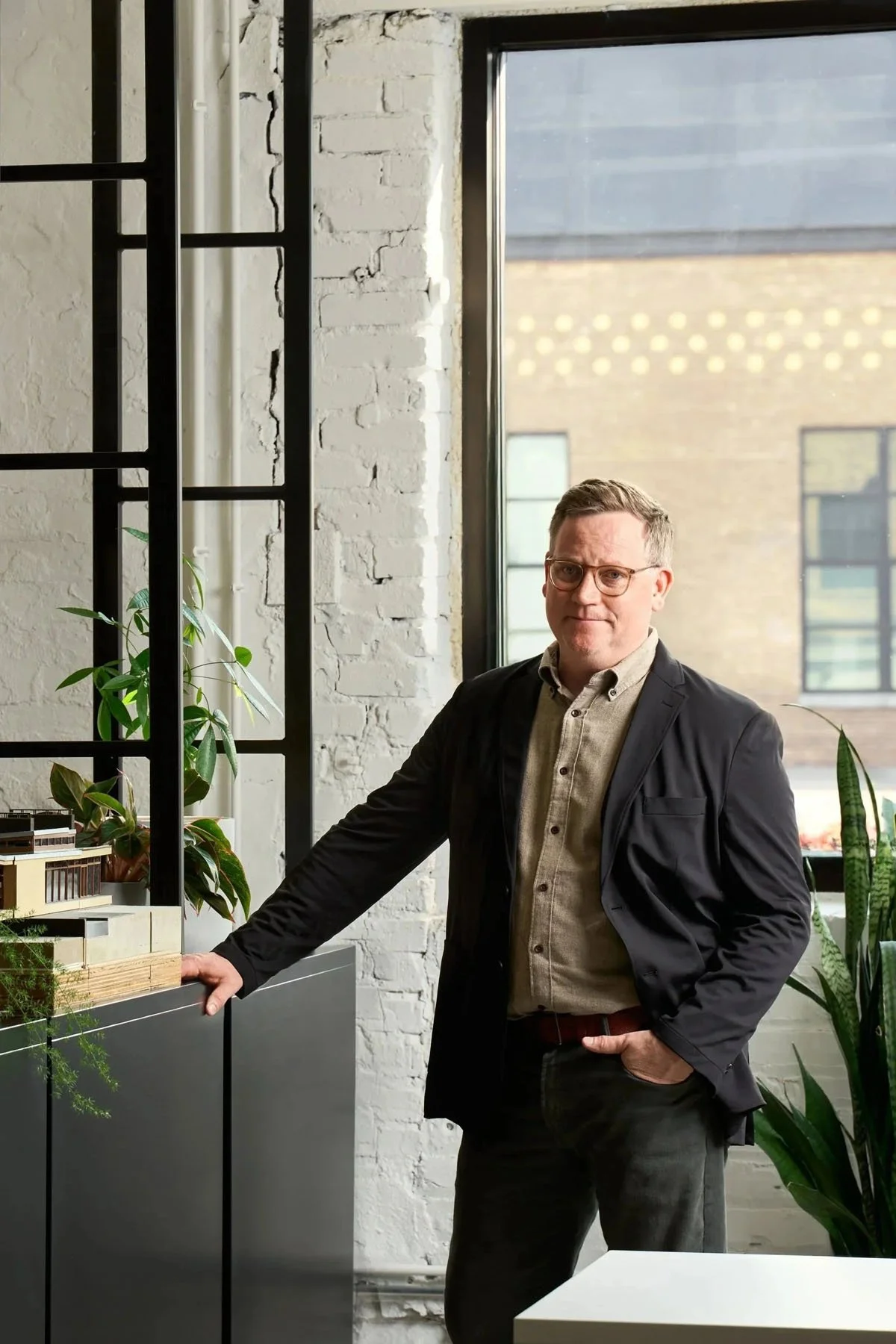
Mark Stankey is a licensed architect with extensive experience in residential, commercial, and retail design. He approaches each project as a conversation—working closely with clients and collaborators to find creative, practical solutions that improve daily life. He believes that thoughtful design can enhance how we live, work, and move through the spaces around us.
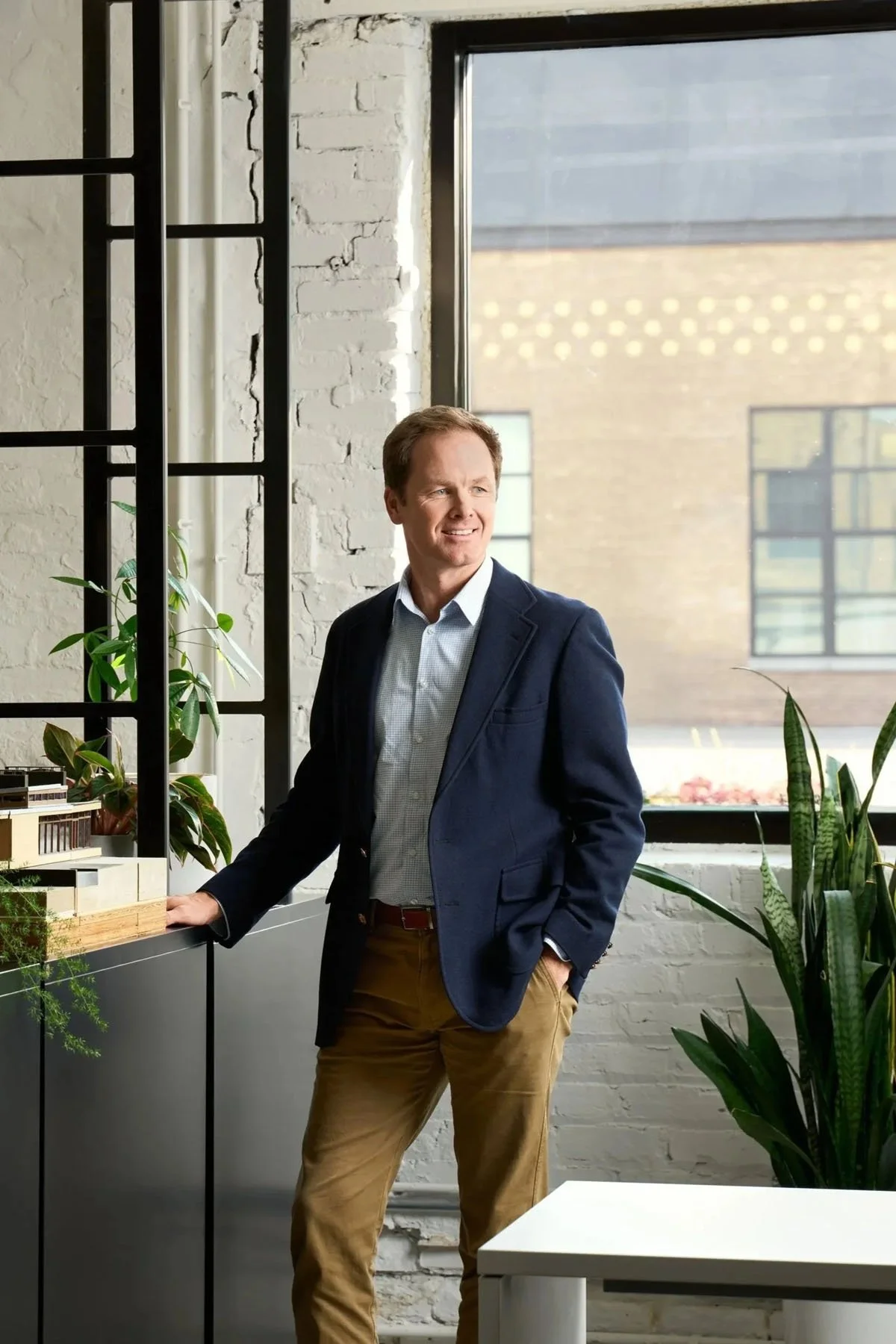
Matt Byers is a licensed architect and educator with broad experience in residential, corporate, and commercial design. Throughout his career, he has successfully designed and managed a diverse range of projects, developing a keen interest in the relationship between structure and landscape and how people inhabit and move through these spaces.
Resources:

-
Mark Stankey 00:04
We never root ourselves in trend ever, but that doesn't mean you don't sometimes accept parts of trend and use them in a composition, but it should never be the trend gun. The difference between great composition is the antithesis of that is trend gun, and that's why AI doesn't scare us that much.
Mark D. Williams 00:34
Today, in the Cures Builder podcast, we had Plaid in, and we had Mark and Matt in from Plaid, which is a local architecture company. We spent an hour and a half touring Misahus, and we really wanted to talk about just the real deep thought of storytelling that goes into architecture, and this is going to be a really educational episode, especially for those that really love design and love architecture, and want to know why sometimes do architects and designers - it's not a false label, but they care so much about the work. There's a reason behind it. There's a why behind it. There's going to be a lot of education in this one. Without further ado, here's Mark and Matt from Plaid. Welcome to Curious Third Podcast. I'm Mark Williams, your host today, live from Misa Whose, I've got Mark Stanke and Matt Byers with Plaid, an architecture firm here in Minnesota. Longtime listeners, first time interviewees, welcome guys. We finally got it on the books. We're here, we've done
Mark Stankey 01:25
it.
Mark D. Williams 01:27
I think this episode is going to be really exciting. We just spent an hour, little hour and a half, almost, touring Misa, and to avoid it just being a straight up puff piece, which I'm happy with, but I'm sure the audience is probably annoyed with me talking about Misa for the last two years of their lives. I really, the reason I wanted to bring you in today, and we talked about this a couple years ago. Mark was like, well, you're happy to talk about your business, and you know, we'll have everything in the show notes, of course, and we'll talk about your architecture practice and things a little bit like that, but it was more about like the state of the union of architecture, and you had shared something on a client that we.. it was, I think it's hilarious, and I think it's a needed discussion. Julian Miller was actually just in their day from Yawned Interiors, and she was asking specifically about the level of finishes at Misa Huss, and she basically looked me in the eyes and said, "Thank you for doing this. Why don't more builders do this as a spec home? And there's a pretty big conversation, and we can go into some of it, but you had said something that's always stuck in my head, and you had kind of laughed about never evers in architectures, and I really appreciated there was a time where we had a client that came in, and they actually, they had decent taste, but they didn't know what they were referring to, and they, and they, they want to know about the cost, and so they were pointing to different pictures of different things, and you kind of, in a very tactful way, had said, I consider that one of my never evers, and so one of the things I want to do in this website, or website on this podcast, is talk about to inform people what they don't understand, because I think people gravitate towards good design and good architecture, even if they don't know what they're seeing, because they feel different. So, anyway, I thought we'd start - that's kind of the intro to the audience, so they kind of know where we're starting from, but I don't know what you guys think of that intro, but that's kind of where my mind has been at, thinking about this interview.
Mark Stankey 03:07
Yeah, well, I'd say that the never ever is a little bit of a misnomer, because there's always a caveat to it, but I do remember that day, and it was one of those circumstances where it was, we're potentially going to have to part ways with that client, because they didn't understand at the moment, and not to their fault, or whatever, but they're asking for something that was going to be inauthentic, and I think a lot of the never evers we'll talk about are rooted in something not being authentic in our eyes, at least, and we're probably going to make some people upset by some of these. I mean, it may be controversial, and I hope that isn't taken that way, but I do think it's, it's a necessary conversation, or I think it's certainly a necessary conversation in our office, but as we talk about it, Matt and I will probably use a lot of analogy to speak to it, because it's probably one of the best ways to verbally frame it up, because I think people can see it in other arenas in life, but when it comes to residential architecture and interior design, it's.. it's harder to see it and recognize it. I think
Mark D. Williams 04:25
I just listened to a podcast called Founders, and it's a gentleman on the East Coast, and Matt's nodding, because I think he's heard it before, but he does basically single people that reads their book and just kind of recaps it. But Johnny Ives is a very famous designer for the iPhone, right? And Steve Jobs, when he came back on, I think they had.. I was just listening to this a couple days ago, mowing the yard. It was like 140 different lines, and they narrowed it down to like seven. And the whole point was.. and now we all know, we all have an iPhone right here now, I think, and it's like they're beautifully designed, and there is something that we gravitate towards: simplicity, ease of use, and like good. Design helps not only sell the product, but it really defines what the product is, and as someone like I'm a fan of it, I don't feel like I'm very good at it, but I love, I know when I see good design, because I just find myself being drawn towards it. Explain a little bit of, like, maybe either your process or what you see from the eyes of an architect, because I think one of the reasons why Misa, who says, been interesting for me, as I tour potential clients, through builders, designers, and architects, have been the ones that have reacted the most strongly to this house, because I feel like, at whether it's your training or your mindset, architects in general are better at thinking about storylines than the other groups I've mentioned. Do you agree with that? And if so, why do you think architects are better at reading storylines?
Mark Stankey 05:50
I think architects are better at reading storylines. I think, and interior designers, and anybody who's interested in crafting space, I think maybe the additional time and education in the process has helped evaluate and understand where value is, and I think we have to make that decision every day, where to put value, right, or where to put effort. Obviously, all this takes resources, and we have been down the road of all of us, I think, have been down the road of putting resources in places where it doesn't end up in real value, and evaluating something quickly is hard to do from anybody's perspective, but I think from an architect's perspective, we have to think about it on the daily of being able to evaluate, am I going to touch this every day, am I going to want to buy this every day, am I going to use this every day, as opposed to getting impressed by something that maybe is shallow, or.. and that's a very hurtful word in some projects, where they are going for something very facade-based, that is like just the quick wow factor, it's the sugar hit in food, right? Yeah, versus something of substance that will be there for the long haul, and a good example of that, I'm going to use that situation we had where we ran into that never ever thing, and it's try not to be too mean or whatever, but when in the office we've seen, we've noticed this trend where exterior, and I'm going to speak to this in only exterior design, because if we started talking about never ever is on interiors, that is a much bigger, much longer list, and it's not always never ever, there's always a caveat. So, we have a philosophy: there's no bad materials at all, never, not, it's bad composition, and you know, Matt and I say, in the office, there's steak, tastes great, ice cream tastes great, ice cream on steak tastes like crap,
Mark D. Williams 07:51
that's amazing. I love that analogy about being
Mark Stankey 07:54
able to edit and be able to be able to compose, and we also talk about this analogy of the Rubik's Cube in the office, and there's all these different colors when it comes to creating an architecture design on each side of the cube, and it's our job to keep all those together, and I think what we see is now in some residential circumstances individuals or teams focusing on just what would be facade level just bolstering of a project, and a good example of that is having a dormer that goes to nowhere, a window to nowhere, and we've seen this recently is via one story house, and it's designed with three dormers that are just blackened out and they go into a truss opening. Now, historically, if you have windows that go up to an attic, and they're useful, and they create ventilation, but it's this really strange approach that it's like if you can't marry an exterior composition to a plan to have windows benefit the inside of your everyday life, and it's just there for facade. It says a lot about not only that piece of architecture, but that individual, right, that's going to be in that house. It's speaking for you. So, from our perspective, you see something that's like, hey, we got windows up here, there's all this opulence going on, but really behind the curtain, it's there's nothing there, and it's I equate it to the person who wants a Ferrari Testarossa, and goes out and buys a Fiero, and puts fiberglass on it, and it's like it's a Testarossa, and it's no, it's a, that's a Fiero with fiberglass on it, you know, it's it's missing the point of driving a Ferrari and having a gated shifter and feeling the click and hearing a 12 cylinder engine rev and feeling road handling to that level, and that smell of leather, the different things, one is a projection of opulence that isn't really there, and the other is something that would be, have humility, that would say, I'm going to design a really wonderful one level home that doesn't engage these door. But still be able to have the talent to do it in a way that it's all cohesive and the composition is intact and beautiful, but it maybe isn't so forefront, like outwardly bragging, but you go inside and there's richness and there's value and there's things that they're putting resources and things that you're going to touch every day and are going to be more of substance over the long haul, and so that is one example of a never ever, and why it's a never ever.
Mark D. Williams 10:28
I think it's a great analogy. I think I like what you said, that there's no bad material, just bad composition. I think that's really important. I think I like watches, and you can get a Timex watch for a couple 100 bucks, you can get a Patek Philippe, for a couple 100,000 and so it's like they both tell time, and so it depends on what your use is, but I think there's something about a story, and I think they're.. I still think, by the way, speaking of protectfully, I think they have one of the best sales slogans ever. I don't know if you've ever seen them in a magazine, where it says, "You never own one, you simply keep it for the next generation. Dang, that is a good way to spend a lot of money on it, but anyway, going back to the value of time, I lately, and I think this, I wonder if it doesn't happen as you get older. It's not that you appreciate finer things, I think you pay more attention to the details because you're comfortable with who you are, and I think your confidence level, as you get older, you become more, I think you become more at peace with who you are as a person, as a family, and you know we're young dads that have families, and like, you know, when the kids are little, little, you know, there's certain things. I remember this is weird, I think. Well, I guess we're going there. I like, I also like nice clothes, and so it's like, but I remember the first, like, eight years, I was like, I never, I would come home from work, I would change into a cotton t-shirt, because I know I was gonna get throw up on it, and it's like that oil in, like the milk throw up, or whatever, is like you cannot get it out. I know Matt's just dying, that's what we talk about in the Here's Builder podcast, real stuff, but it's like very applicable, like this is crazy. I'm ruining it, but it's like I wanted it, but that's real life, like composition wise, like if I am burping a baby, like I'm not gonna wear my nicest suit of clothes, if you will, and going back to the home, which is interesting about a home, is everyone has a story to tell about their own home, and this is a quick testament to a client of mine. They did very well. It was the first million dollar home I ever built, which is funny now, because now I can't even build under that just with the cost. But at the time, I'll never forget, I always tell the story, because it had such heart to it, and they came out of a very simple, like Rotland or Rylan home, and they had done well, and they wanted to build a nice home for the family, and we're sitting in her great room, and she starts crying, and she said, "Mark, my friends don't have the same resources that I have, and I feel like they won't be welcome in my home, and I don't want to say her name, and I said Sarah, no, definitely not. I said Sarah, I said the fact that you're reacting this way, anyone that comes to your home is going to feel welcome, because you make people feel welcome, but the spirit of her love and the care for other people, like that, filled her house with love, and this is kind of a clumsy way to go back to this full story about what people prioritize, but I think you're right. I think when people are educated about what a home can, it does represent a lot of their values anyway. That's kind of when I hear this story about, like, if you put on, like, a put-on, right, it's fake, it's not real. And I think in architecture, my dad built a lot in the 70s and 80s, they're very practical ones. How quick can you make them? How cheap can you make them? Because you know, you look at the 40s and 50s in the world, you know, World War Two boom, they just need housing, right?
Mark D. Williams 13:27
And if we lose fact that we're still creating homes for people to live in, like, there is a necessity there too. But he said he now, he calls them gable homes. He goes everywhere, I see all I see is gable homes. I got gables on gables on gables. He's like, what are we doing? And he wasn't even big at architecture. Ian, he can say, like, wow, this is kind of crazy. What the homes have become.
Matthew Byers 13:44
Mark said, you made a great point a few months ago. You said, you know, the invention of the plated truss. Oh, I love this right, ruined authenticity. And I think this was going back to his authenticity, I think, is really important. I look at, you know, as a teenager, you're young and rambunctious, and you do want to, you know, you want to be flashy, maybe, but as you grow older, you get more comfortable with yourself, and you think more about authenticity, the finer things in life, and I don't mean expensive things, I mean real, authentic things that bring you joy, the invention of the plated truss, right, my tech truss, or any of these wood frank trusses allowed builders and designers and architects to forget about necessary structure in a home, right, when you can span 40 feet with a truss, with a single truss, now you don't have to think about the interior layout of the home, or the relationship of the windows to the exterior, or the relationship of the floor plan to the roof, that I think did a somewhat of a disservice to the industry. You can build them bigger, faster, cheaper.
Mark D. Williams 14:53
Just because you can doesn't mean you should,
Matthew Byers 14:55
exactly. Yeah, a lot more, and you know the fact that you have to in a. Authentic construction, not to say that using trusses is inauthentic, but excuse me, traditional construction, where you have ridge beams, right, where you have to think about where you're landing structure and how you're framing that, and how someone in the field might be framing that by hand, that I think even just recognizing that helps the design along to a more authentic design, there's a reason why colonials look the way they do. There's a reason why salt or salt box houses look the way they do, or you name it. I live in a Victorian brick colonial, or not brick, excuse me, a brick Victorian from the 1800s There's a reason why it functions the way it does. And living there for 10 years now I'm still educated on a daily basis. I'm like, well, damn, that's why they did that. That's because that's what they had on hand at the time, and that's how they would have built it at that time. So, I think that was a really astute point that you made, that that invention, whether or not I mean it was a good invention, it made it cheaper to build homes, and as you said, post war made that more accessible to more people, but that shortcut, I think, started to take root 100%
Mark Stankey 16:06
There's a study, if you listen to 99% Invisible Design podcast, they.. there's a thesis out there that they're blaming all McMansions on the gusseted plate once that came around, and I think what's happened to build on what Matt saying is I think when we got away from building with individual members and all these things, people got devoid or divorced from thinking from a human scale, and we started being able to do things at larger scale, and not at this point. This is another never ever, and it's not really a never ever, but this is the context of it, is I have no idea why we keep going bigger and bigger and getting away from human scale. The thing that drives me insane is we see these tours, and it's steeper and taller, and the scale is so inhuman, and there's no little detail left, and I'm, I'm wondering why, and I don't know if it's an American thing to drive towards bigger, and like it's a, it's a
Matthew Byers 17:01
math estimate, less bigger, better, and this is
Mark Stankey 17:05
once again speaking only from an exterior standpoint, but it's strange to me, because it's, it's going away from being human, and I would say I think that getting away from the craft, which we've seen, there's less craft that we're seeing, which is unfortunate, that that extra, that bigger, and I'm just going to touch on it quickly, and I'll get off of it, but the amount of gables, the amount of articulation is an enormous problem if
Mark D. Williams 17:39
you're looking to level up your business in 2026 and beyond. The Contractor Coalition Summit is the place for you. If you've been a listener to the show, you know that this has been the single biggest factor in how I've leveled up over the last couple years. It's had a huge, profound impact on my business, my personal life. It's what helped me launch the Curious Builder. In fact, our second event of the year is a little change, september 15 in Minneapolis. We are doing a one day event, so for the last four years we've always done three day events, sometimes four day events, and we wanted to recognize that it's a significant investment in yourself, which is definitely worth every penny. I've talked many, many times about that, but for some people it's just out of reach. So we wanted to do a one day crash course event. Obviously, we can't cover all that we can cover in a four day event, but this will be a major, major upgrade to whatever you are doing if you haven't been to one. So that'll be September 15 in Minneapolis, and then our last one of the season will be another three four day event in Charlotte, North Carolina. All the details can be found at Contractor Coalition summit.com From a builder standpoint, because I love architecture, but you know, I do hear like the ciders and the roofers, and like I don't believe a cider and roofer should be in charge of architectural design, but the one thing that they do know, they know how water runs, they know where ice goes, and at your own detriment, a builder who doesn't listen to their siding and roofing partner is asking for problems. I mean, you talk about never ever, you know, we have to do continuing education just like you do, and we see like roof rakes or kick out flashing that's gone wrong, or you'll have a roof dying inside of a window, like what do you think that window is going to look like in five years, 10 years. Heck, it might not even make it a year. And so, some of the basic principles, the systems, and the claddings, and climate, you know, just because you can do certain things, let's say in Arizona, does not make.. you should not do that in Minnesota, with minus 30. You know, I had an architect, very talented, and not that we couldn't have solved it, I think we could have, but I also. I would like to now, in my mind, build 100 year homes. I'm not sure I'm ready to put that into print, but I think I am, and I'm sure my lawyer would hate me for saying this, but I want the.. it's.. I think the intention is more important than the actual doing of it, and what I mean by that is, like, if I intend to build a 101st, of all, be dead, I have no idea if it'll be last, but that's not. My point, my point is, if I try with everything that I know today, that's all anyone can ask of anybody, but we have the technology. I mean, I live in a 1919 house that's over 100 years old. The technology exists if we're smart enough to get out of our own way and actually think intentionally about it.
Mark D. Williams 20:14
And so, anyway, going back to the story, is like we had this real flat roof house, and you guys actually toured it, it was the metal house medicine, like super cool house, but originally there were skylights, big skylights, like three foot by three foot skylights in every shower on the second level that opened to a flat roof, and I'm like, I kind of have a never ever, not that you couldn't ever solve it, because I know there's great technology companies out there, but like, man, you are cutting a hole in the roof, and it's minus 30, and in the most moist room in the house, and so I basically told the client, I said I'd never just, I mean, I'm always there for team collaborative, and I told the client, the architect ahead of time, I said I'm super uncomfortable with this detail, and I think it's important for us to be honest, I didn't throw him under the bus, because I said it in front of him very genteelly in front of the client, and I just said, this is my concern, I want, I have to warrant to your home for decades, and this is something that's that I think has a higher risk of failing. And the client was like, I didn't really like it anyway. I'm like, well, thanks for speaking up now. But anyway, I guess my point is, we do need to listen to our people, because, like, you know, I mean, there's, yeah, anyway, nothing.
Mark Stankey 21:16
And I want to go down that road a little farther with that, is we're seeing this over articulation. I think that's misguided design intent of what the market wants or should want, in my opinion. Let me give a couple examples, like you had already identified, we're seeing gables smashed together against dormers with a one foot water run out, which is not a lasting solution. We're seeing very dangerous, what I would, what we would consider dangerous. We're interested in the lasting architecture of, you know, plenty of Alpha. We're interested in creating things that are lasting, not only built to last, but esthetically to last. So, if we don't do the esthetic part, if we don't do the composition right, people aren't going to want to be in that house for 200 years. Here's a good example, how to study that, and how we frame that up. If you go and take a street view image of every house down Summit Avenue, none of them, or rare occasion, are they articulated as much as what we're seeing in the luxury market in certain circumstances, and they still hit yard all day long on what's being done.
Mark D. Williams 22:25
I love that they hit yard.
Mark Stankey 22:27
Why is that? If you study it, it's because the composition of those exteriors and use of material far exceeds what we're doing. I think the misguided understanding from a design perspective, is more articulation means opulence and luxury, and that's good, versus really good composition, being quiet and restrained, having the time it takes to design something that doesn't have six different art articulations on the front facade, and is still beautiful 150 years after it was created, still hitting yard on something that we've had a bunch of time to improve, which we still haven't. So there's your study, and if somebody, I'd be happy to argue that with someone. Now, that doesn't mean articulation is terrible, but just used in moderation. It's like anything, if, if you take our overview, overly articulated facades as a design trend, and when we have problems with hitting the trend gun too hard on something, that's one that I think is is pretty rampant, because it looks like we're putting gables on everything, like a giant mansion, and putting it in a giant smoosher, and you have all these gables on gables, so anyways, that's something that is is difficult now. The one thing I would say to that, in as a caveat, there are architectural styles, if you're rooted in them, they do warrant having gables next to gables, like let's say you have a certain type of tutor that has a gutter down in the middle, that is warranted, right, but it better have a good reason. Yeah, anyway, that was a long time. No, I tried, but I think it's important to say,
Mark D. Williams 24:10
I think it's.. I think we have to slow down, as we mentioned, you know, Misa, who's here. A lot of the things that ended up being in this home was for my personality. I created a lot of things to calm me down, and the reason I'm bringing it up is, I think, as I think what happens is, as a business owner, because this podcast, we're often just talking about entrepreneurship and how hard it is right now, we're talking very specific about design, but I think they actually come hand in hand. Sometimes we have to actually do less to do better work, and I could not, I think I could build maybe two, maybe three, Misa, who's at one time, maybe I'd have to get a bigger team, and I had mentioned you guys when you first came in, but the amount of attention and effort and collaboration to execute something like this for two years takes a colossal amount of effort, energy, and leadership, and clarity of vision, and one thing that we, you do, and what I try to. Do with our clients too is like they're the client is the story, and that's what really gives shape to the blank page for you as the talented designers and architects and the interior designers as well. And then my job, obviously, is to build it and execute it, but on top of L, we're all we all need to make money, and I think the reason this kind of goes full circle is I think you know when we go really fast, our own detriment. There's this great quote that says, if you want to go, if you want to go fast, go alone. If you want to go far, go together. But it does take more time to go as a group. It does take more thoughtfulness. I think the value, at least my value statement, is, and I think this is why it's important for a builder like you might listen to this podcast, and this might not be for you. That's okay. There's all kinds of structures that need to exist. There's a huge continuum of homes, right? And you know, my I give a lot of credit to my dad. He often reminds me, as much as he is proud of his son, and he's proud of the work that I do, he often will tell me, don't lose sight of the fact that, you know, I keep saying their name, Tim and Mary Goltz, shout out to them if they ever listen to Curious Builder. I built them a home in like 2007 a little tiny yellow house, one gable, because a super simple house with a little portico on the front. I have a family picture of them, and I bet they're just as happy in their house as someone would be in this multi million dollar home. And, like, I want to make sure that, as a human, as much as I love my craft, and I love my craft, and I want to do really high-end work, that I don't lose sight that it's still somebody's home. I mean, I know Matt, you camp, right? We, I camp too. I don't know if Mark does, but, like, you know, you sent me the picture of the water bottle on the canoe, or you're in somewhere, wherever it was. But, like, a tent, I'm always reminded of how simple life can get, you know. We, our clients want, you know, large homes, and that's fine, but, like, a constraint, even a size, and it's all we're all dealing with first world problems here. But when you go sleep in a tent on the ground, you're like, oh, wow, a three foot by five foot space is actually pretty luxurious when it's raining out, you know. And so it's, I think, perspective is really important, I guess, is all I'd offer there.
Mark Stankey 26:51
I also would like to talk about it in the value, value and cost perspective, and we use the analogy of food all the time, and food and architecture and design have a lot in common. How you make meals and how you do really great, there's a lot of great ingredients, and there's a lot of.. it's all about composition, right? But it doesn't have to be the most, except for AMS. You
Mark D. Williams 27:14
don't like cilantro. I love cilantro.
Mark Stankey 27:17
You know what Matt loves shellfish. Oh, he loves shellfish.
Mark D. Williams 27:25
You eat nothing that has to hold its breath. That's a very interesting.. I feel like I want to make you a shirt with that. You don't like fish, huh? Plus cilantro,
Matthew Byers 27:34
everything else.
Mark D. Williams 27:35
Wow, this is.. I kind of want to dive down this road. This about.. this sounds pretty.. that's a never ever.. how many things are never underneath the ocean for this guy? He's
Mark Stankey 27:42
got never-enders for food. Looks like pneumonia. Don't eat it. That is so funny. Yeah, but when it comes to like composing a really great meal, it doesn't have to be the most expensive ingredients, right? It's just done with care and time. We look at architecture the same way, so think of like a really great Italian pasta - it's not, it's made with humble ingredients, but it can be done really well. So, I think that's another misconception - is people think of it like architecture is a luxury, it's only for expensive homes, that is not true. We crafting a space just because it's done with less expensive materials. When we talk about architectural durability from a design perspective, is we take a what we like to take a more careful approach, and more of an adapt, what a little bit more of an academic approach of site phenomena when we study things, and this is getting back to that Rubik's Cube I mentioned earlier, and that is, you see, this in other architecture, that isn't what you'll hear, is like not foresighted architecture, that's a really quick way of saying something that's way more way deeper, but it comes down to studying the sun, studying the site, studying where its places on the globe, where rooms are arranged, how you walk outside, what you're going to be doing at that time of day, and I think that are those are all sides of the Rubik's Cube, right? And I think what happens is with quick design, you know, they take the Rubik's Cube, get yellow finished, throw it on the table, client comes by, sees the yellow, and goes, oh, I like the yellow, but it takes six to months to a year to pick up the other sides of that cube and realize, oh, you know what, red's pretty busted, and so is blue, and it takes time to figure that out. It also takes time to get that right, so it doesn't mean it takes a lot of money from a resource perspective and material to do that, but we think it's really important to get those things right, and that doesn't mean it's opulent, that doesn't mean it's fancy, that doesn't mean it's a luxury, it's something that should be done for any amount of resources you put to.
Mark D. Williams 29:56
That might be one of my favorite analogies I've heard in a long time, that one. Ian, I'm gonna be using that one for a long time, because it's so visceral and so visual, the way you, you said, and you're right. I mean, think of like the trend of shiplap, which you know we do have some, and ship lots been around for a long time. I mean, you spoil the East Coast, it's been around forever, and there's a reason for it, but man, the early 2000s it's like, oh my word, we ship lapped as builders, oh my word, you couldn't have a wall without Ship Lan, and I was like, the cat's meow, that's all you did was ship lap, right? But it was a trend you called the trend gun. We got a little excited, we turned that thing into a Gatling gun of ship lap, and we just went to town, and you know it's time and place, but it is funny. So, let me ask you this, How do you handle trends, and like, what's the difference between a trend and like something that's classic, because a lot of our higher-end clients, they'll come to us now, and you know, my job is an interviewer, really, not only on this podcast, but my clients, right? So they'll come to me and say, this is our budget, this is what we want to do, and I'm really looking at their body language, because we have a lot of talent in this town, and so it's really like, okay, who's the right fit, personality wise, skill wise, all these different things to fit this narrative together, because we're still trying to figure out their value statement, and they aren't trained the way you are, or even I am. A lot of them, but a lot of them are coming from a place of, in some ways, we don't know any better. It's whether it's cultural, you said that earlier, like, is it a cultural thing for the US? Just want bigger, better, faster. I think there's a big truth to that, but I think the more sophisticated buyer has had the benefit of traveling, you know, and not just to Europe, but just in general, and I think they come back and they stayed at a really cool old home, or Airbnb, or they're a little hostel, or a little whatever it is, and they realize, like, oh, I just like how well thought out that was, and kind of, the, you know, there's a book called Purple Cow, like, if all the cows are black and white, and your purple, yours is different in some ways, being classic and timeless is like the new purple cow, because it's, it, everyone's been doing the gable on gable everything, and all of a sudden you do, people think you've reinvented the wheel, you're like, no, I just went back really a long time ago and went to something really classic,
Mark Stankey 32:02
I I've got a couple examples,
Mark D. Williams 32:05
yeah, yeah, go,
Mark Stankey 32:06
wow, this one's interesting. It can go a couple different directions, but one is one is an example I'll use, and this is also where there there's no app, you can't speak in absolutes, and this is where this is important. The diff we never root ourselves in trend ever, but that doesn't mean you don't sometimes accept parts of trend and use them in a composition, but it should never be the trend gun. The difference between great composition is the antithesis of that is trend gun, and that's why AI doesn't scare us that much, because composition is composition, trend gun is AI is just throwing something and throwing the trends at it, and just cover it in, and we see that happen, which is really too bad. That doesn't mean you can't use Shiplap, but you shouldn't put it everywhere, and it better be rooted in authenticity within its composition, and oh, I'm gonna, that could go on a whole.. this wasn't
Mark D. Williams 33:07
great,
Mark Stankey 33:08
I got a whole other chapter,
Mark D. Williams 33:09
keep going, but
Mark Stankey 33:10
this is a good example, and why you have to have a caveat, White Farmhouse is dead forever, Instagram forever. Oh, well, is it? Is it dead if it's on a farmstead? Is it dead if there's a barn in the background? Is it dead if it's literally in an agrarian field? It's not. That means it's authentic. It's just dead if it's not in an authentic place. And that's the funny part, is we speak in absolutes, and it doesn't make sense. That's why it goes really helpful to go back into your brain and into your heart and go, is it authentic? Am I driving a Ferrari, or am I driving a Fira with fiberglass? Is it authentic? If White Farmhouse is totally all right if it's in that setting, however, if the trend gun and the whole streak gets shot up with boom boom white farmhouse, it might be a problem, right? So that's one way to think about it. On an interior standpoint, though, it that's where the trend gun gets hit worse, and composition is so important. It's all composition, once again, steak tastes great, ice cream on steak tastes like crap, and it always has to come back to that. That's why you never put a bullet in a material or put, you know, or a way of thinking or doing things. And secondarily, this is the next chapter I wanted to go down, and I hope this is okay, Matt. Please bolster on this. We're seeing people doing seemingly traditional architecture, or in the, in the, in the scope of what we're doing, and there's a ton of people who are doing a great job, by the way. I would love.. I don't know if it's okay to plug our competitors. Yeah, of
Mark D. Williams 34:58
course,
Mark Stankey 34:59
Murphy. And those guys are crushing it, like we're talking about great X, truly traditional detailing, like Tea Dan Nepth. Guys over there are once again hitting the yard, that kind of stuff. If you're doing traditional work and it's rooted in an understanding of historically it started here, even if you're altering it some, and it's inspired, but it has roots, and you can explain that, and you have a why that's wonderful, but on the other end, we're seeing these semi-traditional houses that you walk up to, and it looks a little bit like a grab bag or a KFC bowl, of like, I grabbed a little, you've been a grad,
Mark D. Williams 35:38
he's been to a grad party the last couple weeks, but the sounds of it, I
Mark Stankey 35:41
get a little bit of like this might be Tudor, but I don't know, and this one is like spam, I don't, I don't know what this is, and you're walking up to it, and once again, it's okay to reinvent stuff, it's okay to be have an adaptation of something that has been done before, but if we're kind of inventing stuff out of the blue, and then still calling it transitional or traditional, I just, I think it's really helpful to have a foot in some sort of grounding of why you would do a style or a take. Now, once again, there's people, there's a bunch of our competitors and colleagues that are doing an excellent job of that, by the way, really well, but there are there's people who are not doing as good of a job in that arena, and, like, for instance, here's a good never ever, the standard soffit return we see on everything that needs, that's like the crux of residential architecture, but now here's the caveat. Will we use that? Yes, if we're doing like a federal or a Georgian and colonial, and the freeze has to return and die correctly. Yes, that's going to get used. But, of course, it's the easiest thing to do. And what I think is hilarious is, you'll drive by what is quote unquote a tutor home with what would be a colonial or federal return, but that dumbed way back down to have like an aluminum soffit on it, and but they're like, but that's a tutor, and you're like, oh my gosh, like it's the quickest one off to see, and be like, oh, and that doesn't have to be luxury or opulence, that's just being open to understand how to change the end of your fascia, like that's it, that's important. And,
Mark D. Williams 37:26
well, this.. well, I agree, but this goes back a little bit, in some sense. We, it's to our own detriment if we don't listen to our trade partners, but that particular detail might be, we listen to our trade partner too much, because it's easy. So, a lot of times things get done incorrectly, because it's the easy thing. Or, how many times have I heard my career? Well, that's just how we do it. And I'm adjusted naturally. Before the curious builder existed, I was the curious builder, and I still am. And I'm just a curious person, but why? And I mean, I live - this won't surprise you. In high school, I was voted the most talkative person in school, but it was because I always.. I know, but I used to sit in the front row, even though it was a W for Williams, you'd think I'd be in the back, but I would raise my hand all the time. I always wanted to know why, and my drives my wife actually bananas, because she just wants me to do whatever she tells me to do. Sorry, honey, but I need to know why. Like, if you can explain to me the reason behind what you want, then I feel like I don't, you know, it's a little bit like give someone a fish or teach them how to fish, and I hate fishing, so it's a bad analogy. But, like, the point is, I like catching, and I like fishing, but help me understand what is the intent, because I feel like if you tell me that now, you don't have to keep repeating it to me, because now I'm like, "Oh, okay, well, where else can I apply that? And that just helps me evolve as a person, which is great. He's so polite. May I, may I
Matthew Byers 38:45
think it's Simon Sinek, is it not? Start with why. Yeah, great book. Read that, and that's so applicable in design, out of design, in any industry. Start with why. Why are we doing this? If it's a marketing campaign, why are we doing this if we're designing something? Why answering that question will get you 90% of the way there. And so I think that's often missed, and why we see lazy composition, lazy design, or what we've been railing against for the last 45 minutes is that question wasn't asked, and I think there's a different answer for every client, and that's part of our responsibilities as architects and designers, is to mine the why, right? And sometimes it's tough to uncover. It takes a while with certain clients to open up, and now we understand, oh, that's the impetus for that decision or that desire in the home. You know, wouldn't I hate to always go back to my home, but it's just it continues to unpack for me design choices that were made when I, when we first moved in 12 years ago, I said I'm ripping, I'm ripping these, these drapes off, I'm ripping, I'm gonna rip out all the gold wallpaper, right, it's. True age-appropriate Victorian wallpaper, and it's metallic gold. Hated it, you know. What 10 years later, I don't want to rip it out, because I had a dinner one time, about five years ago, with candlelight. I'm like, ah, I looked around, I said, hot damn, that's why, right? That's the why, because it reflects the light. When the house was built, it was done with candlelight. I'm looking out here at the color of the light. Now I know it's all artificial, but it's - we developed around fire as a species and as a culture, and we're drawn to that, right? And that it hits something deep that I don't know if we can ever put a finger on it, but you're drawn to fire, you're drawn to that color spectrum. And when we have, you know, I'm looking around and seeing all the finishes on the fixtures, it reflects that light, it picks up the sparkle at night, and that's really important to pick up on. And so, when I looked around at my dinner party, look at, we have no lights on, we have candle, but I can, there's a glow on the walls, and that's incredible. Let's get back to that, I
Mark D. Williams 41:04
When it comes to quality, craftsmanship, and performance, Pella sets the standard. Whether you're building custom homes or designing a timeless space, Pella offers innovative window and door solutions that blend beauty and efficiency with showrooms and experts around the country. Pella makes it easy to find the perfect fit for your next project, and their team to support it. Build with confidence, build with Pella. Visit pella.com to explore products and connect with your local rep today. For more information, you can listen to episode one, or listen to episode 109 where we bring on Pella owners and founders at Pella Northland, as well as their innovative team behind the Steady Set Innovation. Every builder and probably designer can relate to this, is like inevitably you design a home, it gets more expensive than the client wants, you then do every least favorite word, value engineering, so we, we constrict whatever it is, and with the go through this process, which is very normal, and then usually clients do one of two things, they either add back right away, because they know they're gonna add it anyway, and that's what they want, or you fight it the whole time, and they add it back anyway. But now it's really a detriment to the project, because you're adding it in mid flow, versus like from the get go. And anyway, but sometimes people have to discover it on their own, and as I can only do so much, you know, you're in charge of your own dinner, what to order, I mean, but if you have, you know, the steak with ice cream, you might decide, you know, what, I don't, I want them separated. No problem, we'll make you another steak. And, but I had this right now, I have a client who they spent all their time eating outside, and but we constricted the outside space due to costs, and we're through framing, and they, the space is now up so they can visually see it. We walked out there, and they're like, we spend all our time outside, we can't do this, and it wasn't a none, you know, boo boo, that kind of, that's not my role, right? My role is no problem. How can we help you get what you want? They're like, let's add this flat roof with the screens, and let's do, and we think was like $55,000 ad, and they were in before they were so budget, $1,000 over, but when it was something that they valued and they wanted, and it fit their life, they said. We spend all our time here, and I'm somebody who personally always.. this is my value statement. If you use it, it's worth it. It's a very simple value statement. If you drive that Ferrari versus the Fiero, and you want to spend three, 400 grand on that Ferrari Testarosta, but you drive it in the dirt, and you drive it 220 days a year in Minnesota. Personally, on my value statement, I think it's worth that kind of money because you use it, but the person who buys it and leaves it in the garage and just looks at it, never does anything for me. Maybe they have a different value statement than me, but I'm like, oh man, I just feel like you're missing something here. And I often share that example with people before we get into design to let them know, like, help me understand what you value, and we can make these moments that you invest your money in to be something that you are really happy with, because I've never had a client at the end come back and say, I wish I wouldn't have spent money on that thing I love, but they always will say I wish I would have spent money on the thing I didn't do that I loved.
Matthew Byers 43:58
Mark, can you talk about E Ling's facade.
Mark Stankey 44:04
Oh yeah, absolutely. The surprise bars
Matthew Byers 44:06
out in Coeur d'Alene. Okay,
Mark Stankey 44:07
can I speak to one thing first? And Matt, you said this earlier, and just because we - I'm only going to focus on this little soffit return thing, because if we go into different directions, get bigger. But Mark, you also said this is asking the why it's interesting, and you said reaching back to find answers, right in time, like I'm going to simplify, I'm not going to do what it's current, it's regionally we have, if you go back 100 years, we have probably, I don't know, six times the amount of even rake overhang options as we do today, and there were all regional and reasons for them, and it came down to you had mentioned this before, our partners who are executing because they were executed because of a certain way in a region, and for that style, and there's a purpose behind why they looked that way, and it had to do with its function. Ian, or how the material operated, and then we kind of got once again along with the truss gusset and all that, and manufacture, we got away from that, and it became all kind of uniform, where I think trying to understand and going back and understanding why rake overhang looked like that and what it did functionally, right, that's really important. So I was just going to mention, just as, because we're only focusing on that one thing, I think that makes things authentic. But E-Links, yeah, we have a client in Quarterly, and that hopefully we're going to get to photograph this house soon, and it's probably our most aggressively modern or capital A architecture project that we've done, and probably the most thoughtful, and our client came to us and said, and I hope I'm talking, speaking to the right things that you want me to, but that she wanted an ephemeral house, and that she was really obsessed with the water and the sky, and she had this amazing quote. She's like, you know, without the sky you don't have the beautiful aspect of the water because of the reflection. Then she came back to us and said, I want a house where there's no wood and it's 100% glass, and I just experienced the water, and I'm like, and she's like, I also love steel and concrete. She said, I'm
Matthew Byers 46:25
an above ground steel and concrete type of gal, steel and concrete world. 83 years old, and it's amazing. Oh my gosh, how do we do
Mark Stankey 46:33
this? And then, first off, we're in a development in Coeur d'Alene, on the lake, that is one of the most stringent traditional situations,
Matthew Byers 46:43
mountain like rustic mountain houses, yeah.
Mark Stankey 46:46
And she's originally natively from China, and she wanted her house to be traditional from a traditional sense. She wanted to be a Chinese courtyard house, but in a modern interpretation, which has no hallways, and then also had to respond to Chinese traditional aspects of all sorts of things of how spirits move in. One, you can't have doorways align and spirits move in
Mark D. Williams 47:15
this. I can't wait to see this. So, that sounds amazing.
Mark Stankey 47:18
What we ended up having to do, and this is how we solved all of it, because she didn't want any articulation, she wanted a solid steel and glass box. So to get past Architectural Review Board, we took a photograph of the water with the reflection of the sky in it.
Matthew Byers 47:39
By the way, the reason I asked is because I'm looking at, oh yeah, the interference pattern of the two waves in the pool out there, yeah,
Mark Stankey 47:44
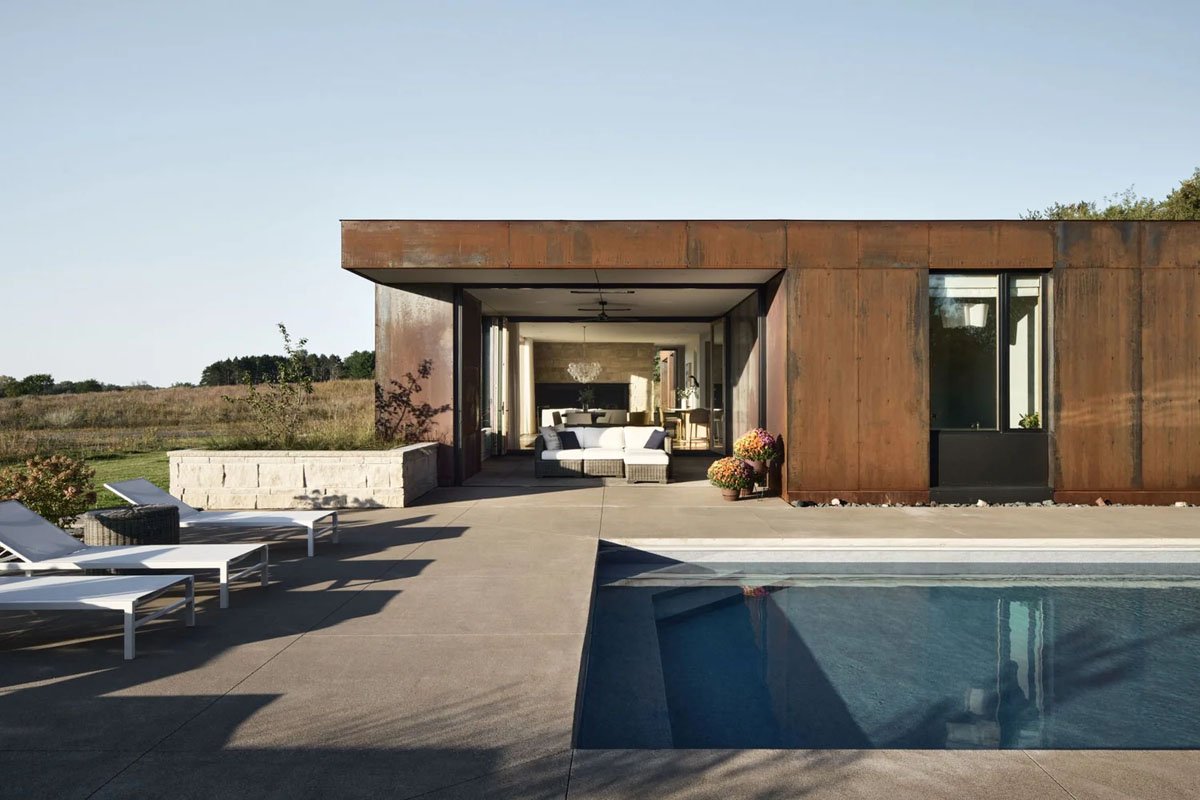
and we looked at the inner, like basically waves in the sky, where you took these images similar to the De Young Herzog de Meuron had done, and we translated it into a an image done by pixelation across a giant steel panel wall, so the whole project is either glass or this large wall that is at close range looks like individual holes, and at 200 yards at night, when it is illuminated, has the appearance of water on the sky in it, but the other part is, is we had to have this open for egress purposes, so the entire facade opens like bifold doors as well, and not to mention it doesn't have any hallways, so we had to find a way to do that through the courtyard, but the intent of this is we put a lot of effort into our facade with
Matthew Byers 48:37
snow,
Mark Stankey 48:38
and we, we put that in front of the design review board, and they were compelled enough to be like, "Wow, you've thought way more about architecture in a sense that we'll pass it, we'll let you go, because if this is this much representative of where it's places on the globe, you've put plenty of time and effort into it, and we think that we'd like to have it here this way. Well,
Matthew Byers 48:59
yeah, and they were their design review guidelines, or their design guidelines? It needs to be representative of the region, it needs to be, it needs to be authentic, and mountains out there, that means all right, big two by siding with big rusticated stone and cedar shade roof and Yellowstone Lodge type, and he said, actually, this is more site specific than anything else in the development, and here's why. And it was that story of saying we took the client's image of liquid lane that you can see from the home and made this glowing lantern that changes during the day. And I think the more, maybe the more compelling thing for me is, yes, it glows at night like a lantern. It's gorgeous, very subtle, but during the day that it records the shadows of the sun coming through, so there's it's never the same on the floor, because you know the sun's constantly moving both in the zenith, but also across the sky, so it's always a dappled shadow effect on the ground changes constantly, and I think that's it's a living house, and I think that's more important to me than the fact. That it glows at night, that it creates that sense of time and recording of time. I think we called it the recording.
Mark Stankey 50:05
It is, yeah, it's there. It's basically the recording of time and place. So, what does it mean to be authentic? Right, this is not a shot at the other home in the development, but there's like a, like, truly a water wheel on the front of a house, like, like a functioning water wheel. And I was like, flashbacks. All right, well, that's one way to live, and not ours. Our take is,
Mark D. Williams 50:26
what is it, turning dirt or a gold mine? There's probably no water up on this thing, like
Mark Stankey 50:30
some waterfall, yeah. But the point is, is our interpretation of authentic is this: if we have a courtyard that represents our client that brings her back to her childhood, if, and that makes her happy. That's important, and that's authentic. If we have a completely different modeled archetype of a home that doesn't look like anything from China, but it responds, the spaces respond to the same as they did when she was in China, and it represents her. That's authentic when we have a piece of architecture that sits somewhere on the globe that records time and place, and that's meaningful to our client, that's authentic if it is made of materials that came from this earth and are the earth tones and blend into the landscape. Well, that's authentic. So, if we just slap something down from esthetic standpoint, just because this object looked however, I don't know, I think it can be an argument made both ways, but I think it's way more telling to have a piece of architecture that tells a story about where it sits on the globe and how it interacts with water and how you, you move through your day, and how it gives you memories of how you grew up and represents you as a person, and is doing all the meaningful things that make life worth living. Then that's authentic, and so it doesn't always have to be seen in a traditional lens, it can be seen in a lot of different ones, and once again, it all comes back to composition and studying, you know, why we're doing this at all.
Matthew Byers 52:06
Well, and we learned, too, you know, listening to clients, we had this vision for the courtyard, of course, it's our vision, right? And it's how we wanted to finish the interior of the courtyard. We pushed and pushed and pushed, and she kept on saying, "No, no, we wanted a landscape, the interior, the courtyard to bring the landscape into the home because the courtyard is surrounded on three sides by glass, so it is room, and that's something that we learned as architects. It was fantastic. She taught us. We said, you know, she didn't want hallways, and I said, well, how you gonna get to your room? And she said, I'm going through my, my other room, the courtyard. And I said, well, but that's outside. She said, it doesn't matter, it's still a room, I can go through it to get to the bedroom. It was her daughter that talked her out of it, so we do get, you know, three, four feet of snow best idea, but it was the idea that the courtyard is considered in her mind no different than any other room in the house, just doesn't have a roof over it, but we kept on pushing, so we really want to bring that landscape into the courtyard, so you can experience it holistically from the inside of the home, and she said, "No, it's going to be it's not concrete, it's tile, very similar to what we're looking at out here, but it was bare, completely bare. We kept pushing her and pushing her, and on one of the trips, she got teary-eyed and said, "No, this is the reason why I don't want anything in there, and she was relating a story to her childhood, of her childhood home, and we said, well, there's the why, you know, it's not ours, we're trying to impose a design concept that we thought would be really successful, but listening to her why, I think, and that ended the conversation, we said, you know what, Ian, that's good enough for us, and that's the why, let's respect that, no more questions, and I think that push and pull with the client was really, really bad. I
Mark D. Williams 53:44
think that's why it's important. I've often told my clients, when we interview, don't surround yourself with yes men and women, surround yourself with people that will ask why, that will dig deeper. And we had a client, I'm not a private person, as you likely know, and otherwise I won't have a podcast either. And so, but she was very private, maybe one of the most private clients I've ever had, and I never understood the true why, and it wasn't my place, but long story short, they have a blind on every room in the house, even the front door, and I really had a hard time with that, and and I think the designer and the architect got it a lot quicker than I was younger, my career, probably not as good a listener. I'm only marginally better now. And the point was, was I just couldn't understand, but it was her home, it's what she wanted. But we had such a good relationship that she didn't get offended, that I kept trying to push and do different things. I'm like, well, what if we didn't do blinds? What if we did curtains, or what if we did frosted glass, or all these things I didn't want to do, because I'm just like, why, and I'd never really understood the true, I suspect there's something that happened obviously a long time ago that wasn't my business to know, or she wasn't open enough to share about it, but now I look at it differently, taught me a very valuable lesson as a younger builder. That you know, I kind of push back three times as kind of my rule, and on the on the third time, like I've said my piece enough times, I'm not, it's your home, I will do it for you, you know, I'm, you know, I joke, I haven't had anyone do this, but like, you know, if you want a purple house with white polka dots, like, I'll build it for you, like it's your home, I will do it for you, I'll find, can I please find a cool way to do it, so it looks great, but, like, no one has taken me up on that particular offer, but I don't want to lose them, thankfully, but I don't want to lose sight that, like, it's still their home, but I think I often tell them, and I'll use this story, but, like, that I want you to know how much I care about your home, and I think it's important that we do care, and we inform you, at the end of the day, the choice is still yours, and I had.. I had a.. that's cringy. I had this beautiful home. He loved Frank Lloyd Wright, and in his kitchen, he had a.. he didn't want to spend the money for a high-end fridge freezer, where it'd be flush with all the cabinetries, beautiful green mapped white oak everywhere. He loved wood, but he had read it before. He was an engineer, which is my kryptonite, and he wanted a two inch air reveal around the fridge, and he read this GE stainless steel looks like it belongs in dorm room fridge was the best one on the market, he, no, he said I could go 20 years without replacing this fridge, and I was just like dying inside, because they had cut everywhere, but this kitchen was beautiful, and I want to take a photo of it, and so that's my ego, and I said, Mike was his name, and I said, Mike, I said, can I please tell you, and we, what we fought, and he'd get pretty upset about it, and I just, just couldn't get it, I'm like, you know, it was always about money, I said, I've never done this for a client before, I can't believe I'm doing this, I will pay for the upgrade to go to Wolf Sub Zero on it, it won't cost you a dime more, and his response was no, because you'll screw me some other way. And I said, Mike, if that's how you really feel about me, why are you even building with me? Because, like, everyone has an opportunity, if that's really what you think, to damage the other person, you know, financially. If that's really.. if you don't, the trust is the most important thing.
Mark D. Williams 56:57
And I said, it took two bull-headed men, me and him going at it on this thing, and the designers had made peace with this long before I had same with the architect. I was just, could not get rid of this fridge. I'm like, what are we doing, people? This thing is so ugly, and, and he taught me a valuable lesson that three times no more. I mean, this is what he wanted, it was his home, and I just had to accept it, and I'm not terribly upset with how I went through that, because I think he knows I cared about it, but I finally got to it, where I said, "Do you want my opinion, or you just want me to do what you want me to do? And he goes, "I don't want your opinion, I just want you to do what I say. And I was like, and from that point on, he never asked me for my opinion for the rest of the build, and he's still very.. he loves his home, he's very happy, but he made it very clear that he was not interested in my opinion. It was a humbling lesson for me. I'm proud of the home, and it's a beautiful home, and they're great clients. They came to me, so they're actually one of only two clients that came to me. It was early, and so, like, it, the relationship is sound, but it was a kind of a.. it was a humbling, and just a sort of a career lesson that I needed to learn anyway.
Matthew Byers 57:59
Well, like,
Mark D. Williams 58:01
yeah,
Matthew Byers 58:02
I'm just gonna toot your horn a bit here. We're just talking. We had a check-in with one of our team members yesterday at lunch. We like to do that every so often. And I said one thing that you can learn from Mark, and Mark's very good at it, is, you know, yes, it is the client's home, and they get to ultimately make the decision. It's our job as architects and designers to educate them on why solving yellow at the detriment of all the other colors could be a bad idea, and but it's not just to say I don't like the design, I think it looks bad. Come at it to say all right, if we do that, here are the six downstream results that you're not seeing, that we see, just because this is our profession, that we see as potentially detrimental to that decision, or as a consequence of that decision, that you don't see. You educate them on that. Oftentimes, they'll say, "Ah, all right, I can get on board with you if they don't, you've done your best, and there's nothing more you can do. It's their home, and we have to respect that. But it's our job to say, but have you thought of green, blue? I
Mark D. Williams 59:10
agree, that's reframing it and helping paint the picture. I think is always good. Conflict management, honestly, in anything you had one, you have one last thing, and then we'll close it down.
Mark Stankey 59:20
Be great, and my the minute I say it, I think you're gonna love this. One of our first larger homes that we did out west was a house in Coppermond. He's
Mark D. Williams 59:30
already laughing. Can we just say they're friends
Mark Stankey 59:33
of ours? And first off, this is a.. we love this house. We love them. They're great. They're a peak client, and it is a true post and beam house on in on the mountain in Coppermont, on the run, and wonderful people, beautiful homes. We've had the
Matthew Byers 59:50
luxury of staying there as a family, and my kid now thinks that that's how most people ski.
Mark Stankey 59:53
Yeah, it's been, that's been dangerous, but we're building this home, and we're. Getting very far along, and Matt and I have different roles in the office, as you know, and we don't - we don't even get to get into that, but our client is friends with both of us, and we respond differently to different things, and during the whole frame, giant timber frame all the way up, and we get a call one day to Duluth on the way to Duluth. Remove that column. What is this column doing here? Like
Matthew Byers 1:00:25
that column,
Mark Stankey 1:00:26
and I'm like, what do you mean? Up two thirds, and it's been in the drawings the whole time. Now we had a design specifically, had it designed so that it's right at the end of a couch, and it would be right at the end table location where you have like a drink or something that can be put on this column. We had an idea to design it all in, and it would be perfectly placed. I will say, but we pushed back with our client and friend, like similar three times. We gave them the wise, the Rubik's Cube, but at the end of the day, we had to remove the column and come up with the structural change on a giant timber, I mean a very large timber, very
Matthew Byers 1:01:06
big bucket flange,
Mark Stankey 1:01:08
huge bucket flange, and it had a lot of ramifications that Matt went to bat and dealt with that I just got to kind of do mr.
Matthew Byers 1:01:20
cranky pants over here,
Mark Stankey 1:01:21
but why it's been great is there'd been a repeat client since then, and it's still a joke. We jokingly like we're gonna make the column out of cardboard. Oh, that's funny. Outside their house at Copper Mountain, they're like looking for work, and it'd be the call, like he was out of work, and like.. and to this day I saw him last week at a grad party, and I'm like, the column would have worked, and just still laugh and make a big.. now I mean, now
Mark D. Williams 1:01:51
it's become.. I mean, it's sort of.. and then like a fight with your spouse or something, like then years later you argue about whatever that was big at that time. It's like a funny thing.. I mean, that's honestly what friendships are based on, and stories, and all these failed things that happen or don't happen, that's it's really that's the mark, actually, of a good relationship, I think,
Mark Stankey 1:02:08
right? And, but that's true to your point, it's we can give the why, we can show the other sides of the Rubik's Cube, that it can affect one of them being cost, and all these other things, but at the end of it, if we give all of our whys back out the reasons why we did something, and the clients is still no, we have to respect them and say we're crafting this house like we're crafting a suit or a dress for you. Yeah, I understood it's your, it's your own. We gotta back off and like now I gotta timber column, you know.
Mark D. Williams 1:02:38
Well, I want to respect your time, and I know it's funny, because it's remember when I actually had asked you guys, like two years ago, to come on the podcast, and then last year, and it's like I always know that if we can get you to the table, like, we could do, like, three more hours, easy peasy, with the two of you. So we're gonna have you guys come back, we're not gonna wait three years for the next one, no worries, it's like a fine vintage, which just got better with time. Mark, thanks for tuning the Curious Builder Podcast, live from Misa Whose Over and Out. Thanks for tuning in to Curious Builder Podcast. If you liked this episode, do us a favor, share it with three other business owners. The best way that we can spread what we're doing is by word of mouth, and with your help, we can continue to help other Curious Builders expand their business. Please share it with your friends, like and review online, and thanks again for tuning in.
This episode is sponsored by: